Category: Missing In Action (Page 5 of 5)

Missing In Action: MIRRORS

Broken By Silence

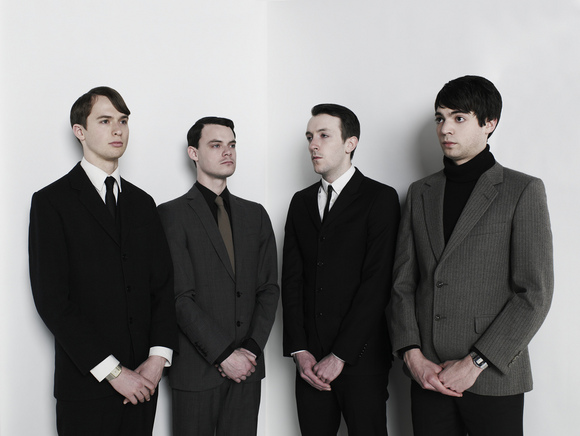
Photo by David Ellis

In 2013, it would appear electronic pop music is as popular as ever with classic acts such as OMD and PET SHOP BOYS producing some of their best work since their heyday. And with them come many new acts who have been inspired by the innovators.

But one comment often keeps being repeated whenever ELECTRICITYCLUB.CO.UK discusses particularly the new all-male synth acts on the scene with its colleagues and friends: “They’re not MIRRORS!”

Founded by James New (lead vocals and synthesizer) and Ally Young (synthesizer and backing vocals) in 2008, the pair were soon joined by James ‘Tate’ Arguile (synthesizer) and then Josef Page (electronic percussion) a few months later.

New and Arguile had actually been members of one-time indie hopefuls MUMM-RA who were signed to Columbia Records and had supported THE KILLERS in 2007; their best known song ‘She’s Got You High’ was used in a Waitrose advert and an episode of ‘The Inbetweeners’.

In 2009, MIRRORS released two self-produced singles ‘Look At Me’ and ‘Into The Heart’ which showcased an updated post-punk electronic sound. With New’s majestic vocals over their surreal, cinematic atmospheres, MIRRORS designated their music pop noir. After a few false starts image wise, MIRRORS settled on a look based around 20th Century European Modernism.
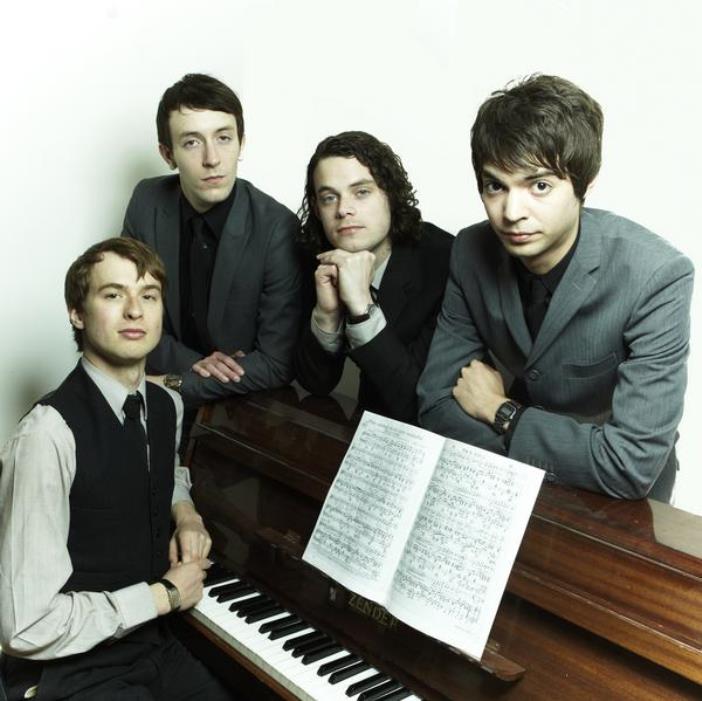
James New told ELECTRICITYCLUB.CO.UK: “We were fed up with how everything looked around us and we were definitely fed up with this celebration of scruffy indie rock music”. Relocating to Brighton, they impressed with their live shows locally and were eventually signed by FAT BOY SLIM’s label Skint Records with a tour supporting DELPHIC following not long after.

The quartet had a distinct vision and after aborted sessions with noted producers Richard X and Ed Bueller, their debut album was recorded and self-produced in a rural Sussex farmhouse before being mixed in New York by Jonathan Kreinik of DFA fame.

The resultant long player ‘Lights & Offerings’ was a wonderfully cohesive, seamless body of work that expressed the hopes and fears of young manhood. Following the philosophy of the Bauhaus movement’s founder Walter Gropius in uniting art and technology, the album crucially possessed an intelligent balance between precise electronic beats and emotive vintage synthesizer melodies.

James New had certainly kept his promise when he described the album as a collection of “really great pop songs” that contained “very densely produced, heavily layered, emotional, soulful electronic music”. Epic tracks such as ‘Fear Of Drowning’, ‘Somewhere Strange’ and the sub-11 minute ‘Secrets’ showed depth and ambition while there was accessible but cerebral synthpop in ‘Searching In The Wilderness’, ‘Hide & Seek’ and ‘Ways To An End’. And to show off their versatility, there was the beautiful electro cover of cult Country & Western number ‘Something On Your Mind’.

Despite delivering a fine debut album, MIRRORS didn’t get the recognition they deserved. There were several possible reasons for this. By the start of 2011, there appeared to be a synthpop backlash following the success of LA ROUX, LITTLE BOOTS and even LADY GAGA during 2009-2010.

Certainly the music press only seemed to embrace bands with a rogue electronic element if there was an obvious guitar backdrop (see THE KILLERS, LCD SOUNDSYSTEM and WHITE LIES). But ultimately, they wanted combos with beards, guitars and preferably no synthesizers at all (see KINGS OF LEON and MUMFORD & SONS!)
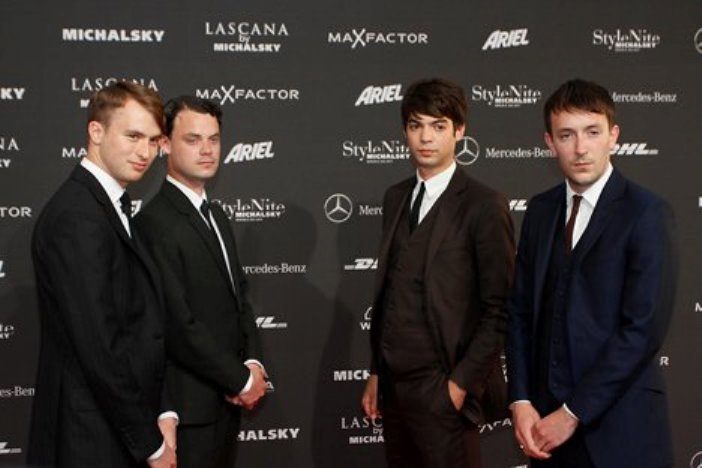
It would be fair to say that MIRRORS probably also suffered from being compared to HURTS, particularly in Germany, the one market where MIRRORS were expected to prosper and the only country where the quartet undertook a full headline tour. HURTS’ ‘Wonderful Life’ had been a No2 hit there and while the arthouse monochromatics of both acts indicated they each had a common goal to subvert the perception that bands needed to wear jeans and be hairy in order to attain any kind of credibility, musically the two acts were kilometres apart.

HURTS were more TAKE THAT and SAVAGE GARDEN cleverly dressed as ULTRAVOX, while MIRRORS really were the illegitimate offspring of OMD and DEPECHE MODE! But even the European public didn’t quite see it like that and certainly HURTS were able to attain more promotional momentum thanks to the weight of the Sony Corporation behind them!

While it could be expected that the real music brigade would be resistant to MIRRORS and their thoughtful aspirations, there was a surprising refusal to accept them within the electronic community itself. Electronic music didn’t die post-grunge but had mutated into numerous sub-genres and cottage industries.

But there was many a petty jealously embroiling as this band seemingly appeared out of nowhere and picked up on the distinctly European legacy that had been left behind back in the day to satisfy the synthobic territory of the USA with the advent of MTV. Comments like “Synth Britannia throwbacks”, “credit crunch KRAFTWERK” and “OMD tribute act” were among those banded about.

Then there was OMD’s drummer Mal Holmes’ amusing quip that “MIRRORS do OMD better than OMD do OMD…” – although complimentary, the comment may have inadvertently had an adverse effect. It was known to have got up the backs of several OMD fans who felt that OMD could do no wrong, despite them delivering a disappointing comeback album in ‘History Of Modern’! Ultimately, it was as if some wanted MIRRORS to fail.

Photo by David Ellis

Of course, OMD were one of MIRRORS many influences. The invitation to support the band on their 2010 European tour proved to be a blessing and a curse. While opening for OMD put MIRRORS firmly in front of an audience who were most likely to embrace them, it also drew comparisons due to the shared musical and sartorial roots of both bands.

The tour was a great success and enabled MIRRORS to undertake a headlining sojourn of Deutschland but the decisions to accept invitations to open for OMD in June and September of 2011 may have been ill-advised in hindsight.

With MIRRORS also playing events such as Back To The Future – Tomorrow Is Today with Gary Numan and John Foxx plus Godiva Festival with HEAVEN 17 and BLANCMANGE as well, MIRRORS were now being perceived as a Synth Britannia support act! James New later admitted: “I think we’ve made without realising it, maybe a record that was slightly more derivative than we hoped to make. We can be honest about that!”

This must have been preying on the band’s mind because prior to the Autumn batch of OMD dates and a slot at Bestival sharing the bill with SANTIGOLD and ONETWO, MIRRORS cancelled their appearances to “write new material”. Many followers of the band sensed all was not well and this was confirmed in a statement a few weeks later when Ally Young announced he was leaving.

The reason appeared to be good old fashioned musical differences; “We were coming to the point where writing the second record had begun. I felt like I’d taken it as far as I could perhaps emotionally as I wanted to” Young said in December 2012, “we were writing things that were good but I didn’t feel like I wanted to be part of it anymore. I didn’t know what I wanted to do at the point but I did know it wasn’t that!”

MIRRORS parted ways with Skint Records although a belated remix album ‘Deconstructed’ was issued before Christmas 2011. But it appeared as though MIRRORS were done and dusted.
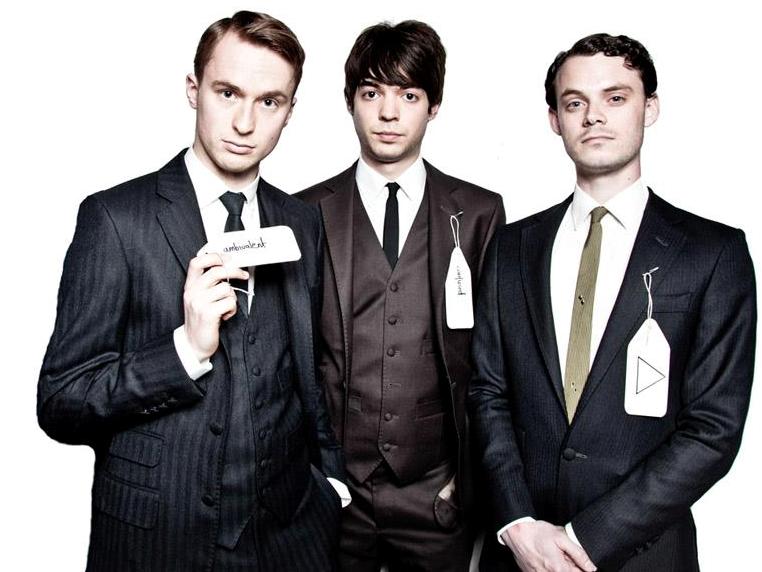
Then at the start of 2012, the remaining threesome announced the release of an EP ‘This Year, Next Year, Sometime…?’ which featured two newly recorded songs ‘Dust’ and ‘Shooting Stars’; the remaining songs were various works-in-progress or demos.

While it appeared to be nothing more than a stop-gap, it showed that Messrs New, Arguile and Page were still determined to pursue their artistic ideals just as DEPECHE MODE had with ‘A Broken Frame’ back in 1982 after Vince Clarke left. Using a wider palette of possibilities including more prominent guitar and conventional bass, the sparser direction still retained their essential melodic components. It proved if nothing, that MIRRORS were in still business although between premises and working from home.

Meanwhile after producing an aborted second album for Britpop influenced rockers VIVA BROTHER, Ally Young teamed up with their singer Lee Newell to form LOVELIFE and uprooted to New York. While still very much synth and sample led, the duo developed a sound based more around R’n’B grooves which were very much influenced by their new urban surroundings. Appropriately enough, they toured North America supporting THE NEIGHBOURHOOD while their first two EPs ‘El Regreso’ and ‘The Fourth Floor’ were well received; from the former, the HARD-FI meets OMD template of ‘Brave Face’ was a particular highlight.

On the MIRRORS front, things have been slightly less clear. Although a single ‘Hourglass’ backed with the superb ‘Between Four Walls’ was issued via Bandcamp in Summer 2012, New and Arguile reformed MUMM-RA for a one-off show later that Autumn. Fast forward to April 2013 and MUMM-RA have released a new download only EP. Other than a low-key gig in the Czech Republic at the FIS Ski Flying World Cup in February 2013, MIRRORS have remained silent. However, it is understood the band’s management have been answering enquiries for live bookings from various parties in 2013, although none of these have actually come to fruition.

Meanwhile, New has contributed vocals to two songs with production duo FOTONOVELA, best known for their work with MARSHEAUX and co-writing the OMD song ‘Helen Of Troy’. The vibrant first song from the sessions was ‘Romeo & Juliet’ while the magnificent second number ‘Sorrow’ is still to be aired publically. Whatever happens, MIRRORS are greatly missed and one wonders what the reaction to ‘Lights & Offerings’ might have been had it been released in the more sympathetic climate of 2013, a year which has seen KRAFTWERK headline Latitude and synthpop trio CHVRCHES get signed to Virgin Records.
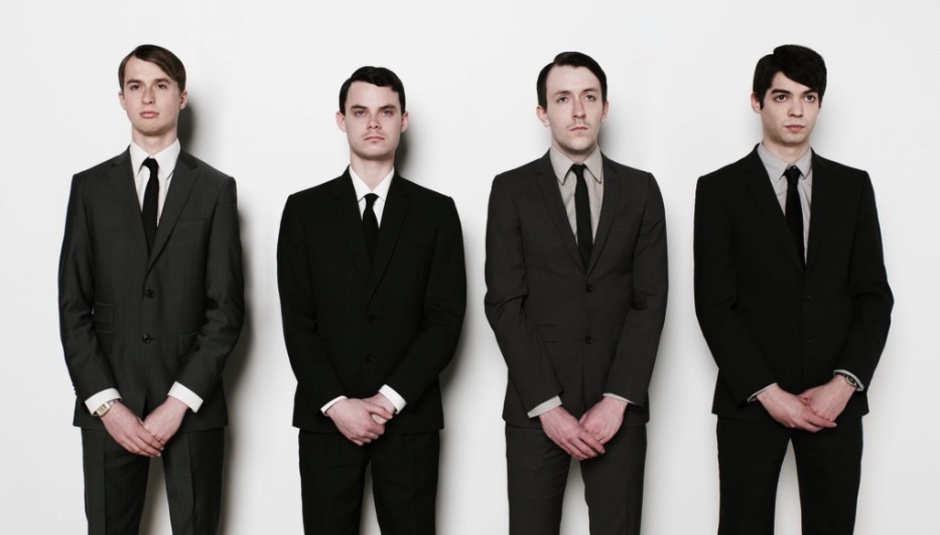
Photo by David Ellis

After two and half years, what remains is the music and it is only after some distance that there can be an objective reassessment. Thus ‘Lights & Offerings’, with its associated bonuses, remains an impressive body of work. OMD’s Andy McCluskey once said MIRRORS had the potential to become “the DURAN DURAN of modern synthpop”. Even if that prospect is to remain unfulfilled, it really would be shame if there was to be no more great music from MIRRORS.


‘Lights & Offerings’ is still available via Skint Records

The EP ‘This Year, Next Year, Sometime…?’ and single ‘Hourglass’ are available as downloads via Bandcamp from http://mirrorsofficial.bandcamp.com/

https://www.facebook.com/theworldofmirrors

http://theworldofmirrors.blogspot.com/


Text by Chi Ming Lai
26th August 2013

Missing In Action: CHRIS PAYNE

Best known as a member of Gary Numan’s band between 1979-89 and for co-writing VISAGE’s ‘Fade To Grey’, Cornishman Chris Payne was also DEAD OR ALIVE’s musical director when the band were touring their ‘Youthquake’ album.

A graduate of Medieval music, he even mastered a reed instrument called a Cornamuse. Now domiciled in Normandy, he happily chatted about his period with Gary Numan, the genesis of ‘Fade To Grey’ during soundchecks on ‘The Touring Principle’ in 1979 and his post-Numan band DRAMATIS.

Can you remember much about your audition for Mr Numan? 

Oh yeah. I remember as if it was yesterday. I had finished Music College and was taking some time out working for our local council taking down trees. I turned up in my ‘chain saw’ gear ie workman’s jacket, large boots and sporting a very bad moustache with hair like King Charles II. All that was missing was the chain saw!

Is it true you hadn’t ever played a synthesizer before that?

I had never played a synth before. Bluffed my way through the audition pushing every note under the sun and making it look as if I had a clue. The real bonus for me was playing the viola and Gary, being a big fan of stringed instruments, loved the sound.

After the audition I remember events moving very swiftly, and before I knew it we were in Shepperton rehearsing for the ‘Old Grey Whistle Test’, a live BBC TV music show that used to broadcast every Tuesday night.

Later that evening, we were told that a spot had come up for us on ‘Top Of The Pops’, which at the time was the ‘God’ show for music as MTV etc didn’t exist. Four weeks later ‘Are ‘Friends’ Electric?’ was at No1. Was it hard work? No, not at all. I loved every minute of it.

From September 1979 we were just continually touring and recording, were all young at the time, and had plenty of energy and enthusiasm. I won’t mention names but I remember hearing on Radio 1, a well known band being asked about life on tour and they complained about how tough it was, and how people didn’t realise what they had to go through. I just thought… OK!!!!

You don’t realise how lucky you are to be in your position, after all what’s better, a world tour when you’re 23 years old or working in a factory making car batteries (a job I did as a student)?


Did you have any inkling that something was about to happen when you were on Old Grey Whistle Test and Top Of The Pops doing ‘Are ‘Friends’ Electric?’ in the same week?

It was a frantic few days and as it was happening, I think we all sensed that something was about to happen. Not only did it happen but at such a pace!

I didn’t realise at the time but Numan’s label Beggars Banquet were on the brink of bankruptcy and Gary’s success not only made his own career take off but also saved the label. Imagine if Beggars had gone under. They’ve a lot to thank him for.

You appeared on a number of Gary Numan albums including ‘The Pleasure Principle’ and ‘Telekon’, usually playing viola, but would be called on to play keyboards occasionally. What would you normally be asked to do as it would appear Gary handled many of the synth parts himself in the studio?

Actually Gary was extremely generous letting me play a lot of parts on ‘The Pleasure Principle’. We shared the workload, although he had created all of the parts. It was interesting as the main synths were a Minimoog and Polymoog.

No guitars, just drums, bass, synths and viola of course! My only issue was trying to stay awake, as these were all night recording sessions after the pubs had shut. You’re correct, by the time ‘Telekon’ came along Gary played most of the keyboard parts.

What are your overriding memories of the first two Gary Numan tours?

Well they were both phenomenal, and bear in mind nothing had ever been seen like it before with these great futuristic sets and lighting effects etc. Far too many great memories of these days, you’ll have to come and see me and I’ll spend a few hours chatting about it… we did two world tours with both of these sets and my regret is we didn’t tour abroad with ‘Warriors’, which also looked amazing.

Which Gary Numan songs were your favourites, either because of your contributions or from playing them live?

It’s no secret that my favourite track was ‘Down In The Park’. It was truly spine tingling to play with its anthemic power, and I loved playing the piano intro to it before launching into the thunderous Polymoog chords.

With VISAGE’s hit single ‘Fade To Grey’, what inspired you and Billy Currie to recording togther?

It just sort of happened and became our soundcheck song during the first tour back in 1979, with Ced Sharpley adding some drums. That’s basically how it developed. As Billy was intending to leave and rejoin ULTRAVOX after the tour, he wanted to record it as a kind of souvenir of the time spent with Gary Numan and myself as the other keyboard player. He organised the recording at the late Martin Rushent’s studio, and we (Billy, Ced and myself) went in and recorded it the day after the tour finished.

By the way, the entire song except vocals was recorded in a day…those were the days! And the rest is history…

This became such a signature track. What do you think was the key to its huge success?

The key to its success… A Minor!!! Ha ha!

But seriously! It was part of a movement which, image wise, was very strong. This will always help the promotion of a song. Technically it was very simple, relying on a cyclic movement from A minor to D minor and using the A minor as a pivot chord to re-introduce the verse. Plus it had a very strong but simple chorus… “Ohh-OOH we fade to grey”! It also had a certain atmosphere, which was relevant to the times.


How important were synthesizers in the shaping of music post-punk and why was there such a huge success rate during this period?

It was important and it enabled non-trained musicians to be able to express themselves. The beauty of a synth is that you can use your imagination to create all manner of soundscapes, atmospheres – call it whatever, without the need to be a great player.

Some people remarked on how soul-less the synths were compared to real instruments. If you ever heard Billy Currie playing his solo ARP Odyssey, you’ll realise how wrong that is. He was a phenomenally expressive player who could make the instrument scream and growl, and also sound very emotive.

I’ve since spoken to many players of early synths and it’s interesting that we each in turn have a different favourite. Mine was the Minimoog. A classic little demonic monosynth that could play the most intrinsically beautiful sounds, and also shake a building down to its foundations that you were playing in.

Is there an artist from that era whom you felt was particularly innovative in embracing the synthesizer technology?

Obviously KRAFTWERK plus the other German bands mentioned before, Jean-Michel Jarre and YELLOW MAGIC ORCHESTRA. As mentioned, Mr Currie, and let’s not forget Gary Numan who had probably the most influence on the commercialisation of synths.

You toured the skies but it all suddenly ended with Gary Numan’s three farewell shows at Wembley Arena in April 1981. What were your own emotions and thoughts during those gigs?

Because of the immense scale of that production with the three back-to-back concerts and sell out crowds, half of me thought that this was crazy stopping at that moment with such huge interest and the fact that nothing had been seen like this before and if it could grow bigger. Who knows what would have happened? It was also sad and a bit disconcerting as I had been in regular employment for the last three years. On the other hand, Gary had made this decision and it was a case of moving forward with DRAMATIS and looking forward to a new adventure.


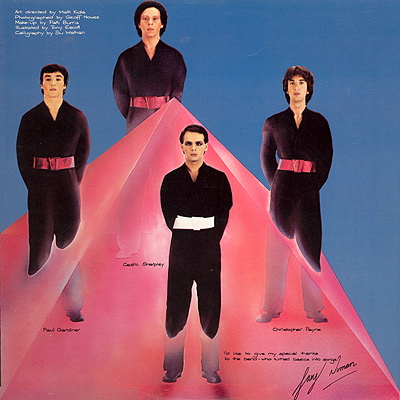
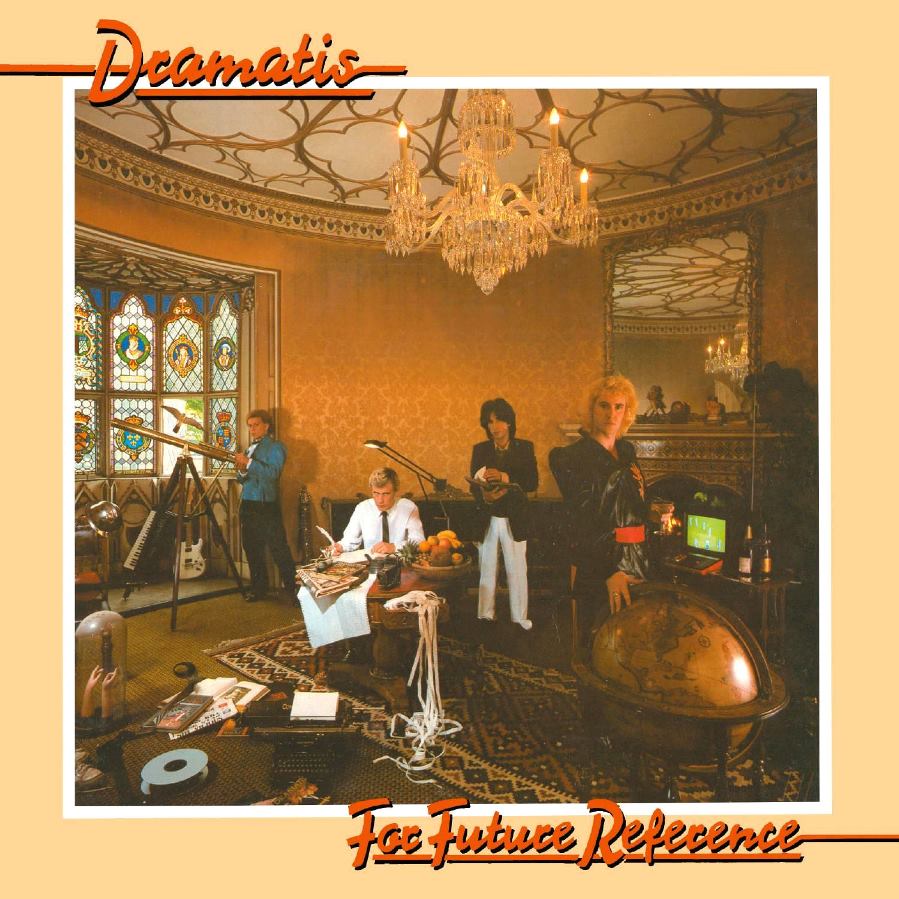
You formed DRAMATIS with RRussell Bell, Ced Sharpley and Denis Haines from the Gary Numan band and released the album ‘For Future Reference’ on Elton John’s Rocket Records in late 1981. Simon Heyworth who worked on Tubular Bells was the co-producer. How do you look back on the recording of that?

Oh God, it was a mess! I never understood why we spent ages recording it in one of the best studios in England at the time, a studio called Ridge Farm, only to remix it in London, which was bloody awful.

All this messing around when we had perfectly good mixes drove me to despair. It took forever, cost a fortune, we had to re-do the cover of the album and when it was finally released, Denis left the band! Having said that, the time spent at Ridge Farm was brilliant. It was a really inspirational environment and had a great pub in the village just up the road. Needless to say where we were most evenings.

RRussell and Denis were the main vocalists for DRAMATIS. But Gary Numan sang on the terrific ‘Love Needs No Disguise’ and you even did a lead vocal on ‘Turn’. Was there initially a reluctance for someone to take up the mantle of fronting DRAMATIS, especially as you were all more used to the role of being seasoned multi-instrumentalists?

That’s an interesting point. In retrospect, RRussell should have been the only vocalist (apart from Gary’s contribution) as this would have set a certain continuity. I don’t know why it ended up with Denis and myself singing. Turn was my composition, which explains why I sang it, but I really have a shocking voice, my wife Dominique will verify that! I remember that it took about two to three days to get it. No ‘auto tune’ to save the day in those days…

Interestingly, I remember that Adam Ant’s ex-wife Eve, who I was sharing a flat with at the time, suggested we tried out a hairdresser friend of hers who was looking to sing in a band. His name: Boy George! Imagine if he had joined DRAMATIS?

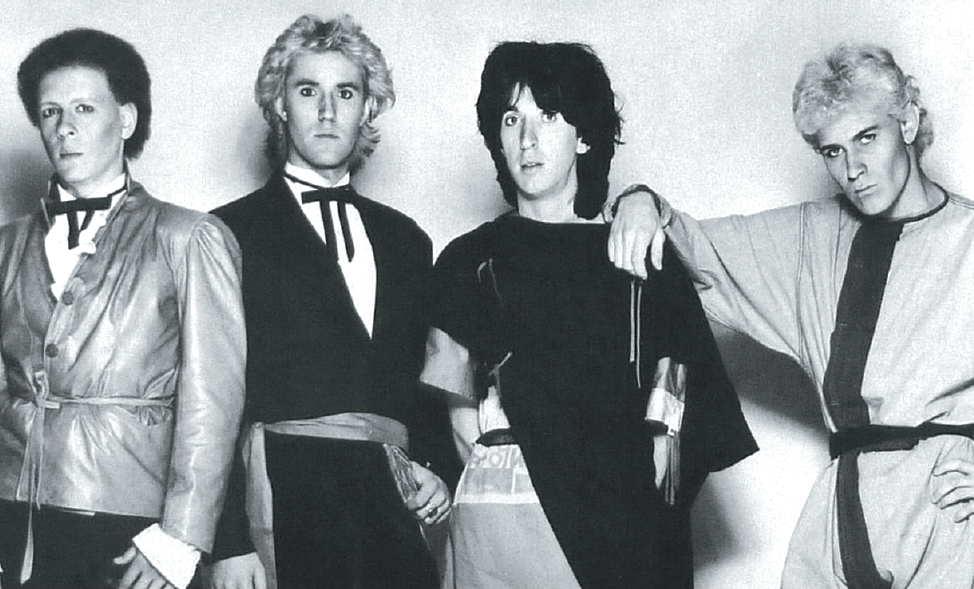
Photo by Brian Aris

In hindsight, why do you think Gary Numan’s fanbase didn’t take to DRAMATIS in large numbers?

I don’t know. Perhaps we didn’t have a strong enough identity? The music was too removed from the Numan style? Badly promoted? It could be a combination of all of these or other factors. It might even have been my dodgy haircut!

After ‘For Future Reference’, DRAMATIS did some cracking singles like ‘Face On The Wall’ and ‘The Shame’. ‘I Can See Her Now’ even got into the lower reaches of the chart and you toured in your own right. Was a second album ever close to completion?

We were working on quite a few songs for a second album. But I think we just lost our way and enthusiasm for the project with all the problems that beset us. Maybe we’ll release them someday?

You rejoined Gary Numan’s band for 1983’s ‘Warriors’ tour and remained until 1988. But in between, you also did a stint touring with DEAD OR ALIVE after they secured a No1 with’ You Spin Me Round’. Do you have any amusing recollections of that DEAD OR ALIVE tour? What was it like working with Pete Burns?

I actually stayed officially until 1990. As for DEAD OR ALIVE, that was a fun tour. Three weeks or so and I wish it could have gone on. It was a summer tour as well, which made it feel even more like a holiday. As for anecdotes, there are loads too many to mention here. You’ll have to buy a copy of my eBook ‘My Numan Years’ due for release soon.

Pete was great, and actually very shy. He kept a low profile and after the shows went back to his room with his wife Lynn. The drummer Steve Coy was also really nice and a serious nutcase. Tim Lever (keyboards) and Mike Percy (Bass) were also great. In spite of the image, I found them to be just a typical down-to-earth bunch of scousers!

You returned to play viola with Gary Numan on Complex at a few of ‘The Pleasure Principle’ 30th Anniversary shows in 2009 to a rapturous reception. What was it like to be back on stage with him?

It was fantastic. The only downside was that I’d loved to have done the tour. I hadn’t realised how much I’d missed live work. I’ll have to get DRAMATIS back together!

Rusty Egan recently invited you to write a song? 

Rusty tracked me down on Facebook. At first I thought it was a joke and that some one was scamming me for a laugh. But after some careful further investigation, I knew it was for real. The latest I heard was that two of my contributions including a co-written track with producer Nigel Bates were shortlisted along with contributions from Midge Ure, Youth etc. But you just never know if they’ll eventually make the final cut.

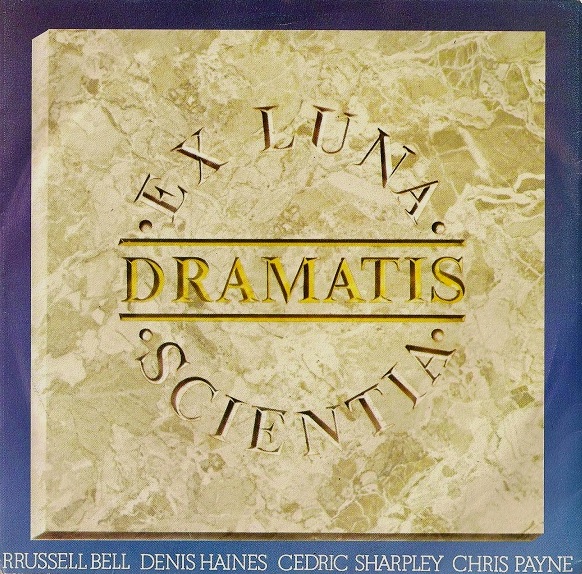
DRAMATIS’ first single ‘Ex Luna Scientia’ celebrated the spirit of NASA. How do you see the future of space travel now that the Space Shuttle has flown its last mission?

Sad in a way. We have moved on in science so radically in the last few decades but we still know so little (apart from how to destroy ourselves). We still can’t account for 94% of the mass of the Universe, which is really quite worrying.

Perhaps the missing parts are this great energy force which the Chinese called Qi (or Chi). I have recently completed studies in Chinese medicine and I’m actually a practitioner over here in France. My aim will be to discover the mysterious Qi and who knows after that… maybe DRAMATIS will make a comeback? “May the Force be with You”


ELECTRICITYCLUB.CO.UK gives its sincerest thanks to Chris Payne

http://www.chrispaynemusic.com/

https://www.electroniccircus.co.uk

http://www.electronicmusiclibrary.com

http://newwavecomplex.com/dramatis.html


Text and Interview by Chi Ming Lai
25th October 2011

Newer posts »