In 1977, Russell and Ron Mael opened their ears to the burgeoning electro-disco sound as heard on Donna Summer’s ‘I Feel Love’ and were put into contact with her producer Giorgio Moroder.
With aspirations to work with a band, the Munich-based Italian set to work with the first fruit of labours being the tremendous ‘No1 Song In Heaven’. Released in 1979 on Virgin Records, it hit the UK single charts a few months before TUBEWAY ARMY’s ‘Are Friends Electric?’.
While the parent album ‘No1 In Heaven’ also featuring ‘Beat The Clock’ and ‘Tryouts For The Human Race’ did not sell well, it retrospectively became highlighted as the landmark electronic pop album that heralded the emergence of the synth duo with acts like YAZOO, SOFT CELL, BLANCMANGE and PET SHOP BOYS following not long after.
Photo by Jack Lorenz
SPARKS’ career trajectory has since seen them become spread into collaboration, production and musicals. The Maels had discovered Patricia A Noël, a Los Angeles-based model-turned-singer playing Farfisa organ and doing background vocals with The Mick Smiley Band at the Troubadour in West Hollywood. Having learnt about electronic instrumentation from working with Giorgio Moroder on ‘No1 In Heaven’, they wanted to apply those techniques and processes with Noël as the Maels’ very own Donna Summer.
Written and produced by SPARKS at Larrabee Sound Studios in LA, perhaps unexpectedly Virgin Records gave the brothers total freedom to work with their protégée on ‘Is There More To Life Than Dancing?’. Acting as the Maels’ Harold Faltermeyer on programming was future film composer Gary Chang.
Only released as a 5 track picture disc in the UK with limited availability elsewhere and surprisingly not issued at all in the US, ‘Is There More To Life Than Dancing?’ became a mythical album that no-one had ever heard. There were even rumours that it was SPARKS in-joke with Noël actually being a varispeeded Russell Mael! Noël’s vocal delivery was different from the more soul oriented disco diva, so gave the record a more leftfield edge despite being aimed at the dancefloor.
Taking cues from Moroder’s MUNICH MACHINE side project, at nearly 10 minutes, ‘Dancing Is Dangerous’ was hypnotically catchy with Noël’s histrionic vocals closely imitating Russell Mael’s own intonation. Declaring that “dancing is dangerous gently embraces us, then won’t let go ’til the end of our days…”, the track length allowed for trancey instrumental breakdowns to highlight the sequencer and synth craft that would have made Moroder proud.
Seguing into the ‘Is There More To Life Than Dancing?’ title song, it saw Italo-styled male backing vocals from Oren Waters dropped in while Noël’s own were more Donna Summer asking that euphoric rhetorical question while encapsulating glitterballs and Studio 54.
Punctuated by gospel tinged voices from Julia and Maxine Waters, ‘The Night They Invented Love’ also brought in some frenetic conga madness from noted Brazilian percussionist Paulinho Da Costa and nocturnal sax from Herbie Hancock Quartet member Michael Brecker. Meanwhile the accompanying arpeggios recalled another disco pioneer, Frenchman Marc Cerrone whose ‘Supernature’ has been a huge international smash.
Photo by Jack Lorenz
With a smoother Liza Minnelli cabaret lead from Noël, ‘Au Revoir’ provided a less convincing theatrical outlier with a unexpected fade but ‘I Want A Man’ provided the rousing energetic finale; with icy string synths and bubbling effects but also bass guitar, lyrically this was however more throwaway in its repeated declaration of desire.
Like with the solo Giorgio Moroder electronic disco albums ‘From Here To Eternity’ and ‘E=MC2’, side one was the superior set but overall, it was a joyous celebration of hedonism. A worthy companion album to ‘No1 In Heaven’, ‘Is There More To Life Than Dancing?’ deserved a more receptive audience but it was not to be and became a SPARKS collectors curio. There would an aborted attempt by the Maels to write for the Belgian-based popster Lio, but this led to a collaboration with TELEX instead and SPARKS would continue a well-documented up-down-up-down-up career over the following decades.
Meanwhile Virgin decided not to take up the option on a second album, so Noël continued modelling but would release one more album ‘Peer Pressure’ with American new wave band THE RED WEDGE before a career working on radio and TV commercials while also co-owning two recording studios in Los Angeles.
Photo by Jack Lorenz
Long deleted but with growing interest in the wider career of the Maels thanks to ‘The SPARKS Brothers’ documentary in 2021, they reissued ‘Is There More To Life Than Dancing?’ on their Lil Beethoven label in 2024. As well as the original album and bonus single edits, it contained three previously unreleased songs; of those, the blippy female empowering statement ‘I Never Want To Be A Mother’ would, with more work, have made an ideal sixth track on the album if the tracklisting format of ‘No1 In Heaven’ had been totally aped.
“It was inspiring to work on this album and inspiring to work with Noël. We hope that people will rediscover what a lost gem this record is” said SPARKS in the press release for the reissue of ‘Is There More To Life Than Dancing?’; the missing part of the electronic disco trilogy which sits between ‘No. 1 In Heaven’ and ‘Terminal Jive’ has been found again and can take its place alongside other similarly spirited diversions such as the Peter Baumann produced ‘Welcome To Joyland’ by Leda and the Klaus Schulze produced self-titled long player from Jyl that have previously only been heard and appreciated by the cognoscenti.
PolyDROID is the solo electronica adventure of Irishman Brian O’Malley. First released in November 2013, ‘Machines Of Pure & Loving Grace’ was the project’s long playing debut.
An explorative record capturing a chilling cinematic grandeur within its bleeps, blips, arpeggiations, blistering synth riffs and swelling synth pads, ‘Machines Of Pure & Loving Grace’ was something of a creative distraction for O’Malley who in parallel was becoming big news as a TV and film director.
Since his debut feature film ‘Let Us Prey’ in 2014, O’Malley has gone on to direct episodes of AMC+ Spaghetti Western ‘That Dirty Black Bag’, ‘The Ex-Wife’ for Paramount+, Amazon spy drama ‘Alex Rider’ and Channel 5’s ‘The Cuckoo’, with the MGM+ series ‘Nine Bodies In A Mexican Morgue’ being his most recent work, soon to be broadcast on the BBC.
Opening ‘Machines Of Pure & Loving Grace’ and using commentary on the development of transistors and semi-conductors, ‘Rectification’ set the scene for this celebration of technology with a ‘Shine On You Crazy Diamond’ styled introduction, before seguing into the crystalline melodic hypnotism of ‘Not Too Neat’. Enhanced by icy vox humana sound design heard on Gary Numan’s ‘The Pleasure Principle’, as the tension built around ‘Ode To An Android’, the ominous surroundings were the backdrop to a celebration that equally asked questions.
‘Day Of Rest’ brought ivories into the soundscape of spacey sweeps and buzzy sequenced synthbass before climaxing into rhythmic barrage of sound penetrating the core. Bringing vocoder into an electro backdrop, ‘Enhance 224’ was sparse but no less dramatic while the pulsating ‘You Are Transparent’ whirred and collided before O’Malley’s deep filmic mind was reflected in the almost gothic ‘Only A Cell’. Closing with ‘Ode From An Android’, this offered a haunting reverbed piano-shaped only rendition ‘Ode To An Android’ but then taken over by the icy vox humana machine where the message ended.
Released as limited edition CD and later appearing only for a short period on streaming platforms in 2023, ‘Machines of Pure & Loving Grace’ totally falls into the category of a Lost Album. With it now being made available as a 2025 version in high quality audio formats on Bandcamp, the time was apt for ELECTRICITYCLUB.CO.UK to speak to Brian O’Malley about his almost-forgotten PolyDROID debut.
How did the idea to do a solo cinematic instrumental come into fruition?
I had done a lot of music in an electronic band as a teenager in the second half of the 80s with my friends, initially under the name MAN SERIES and then as THE PRESIDENT LIPSTICK, but that creative musical avenue came to an end in the early 90s and I found myself attracted to film directing.
My directorial career subsequently blossomed and I became a successful TV commercial director, eventually moving into feature films. This took me through my 20s and most of my 30s until the 18th of March 2008 when I discovered Jean-Michel Jarre was playing ‘Oxygene’ live in the Irish National Concert Hall in Dublin. I managed to buy one of two remaining tickets and I was totally blown away. I came home after the gig inspired to make electronic music again after a 17 year hiatus. I immediately went online, bought the Arturia Collection and a MIDI keyboard, and I never looked back. I fell back in love with making music, and I found making music alone really suited me.
The decades of music listening I had absorbed from many genres found its way into my music. It was quickly obvious to me, that by way of osmosis, I had become a far more discerning and capable composer than I had been as a teenager. And as I was obsessed with films, listening to a lot of soundtracks, these compositions tended to be very cinematic. I also pretty quickly found myself drawn back to hardware synths and I started to buy up a lot of the synths I had lusted after as a teenager.
Inspired initially by the immediacy of soft synths and then to the tactile inspiration of hardware synths, I created the PolyDROID name and released my first album ‘Machines of Pure & Loving Grace’ on Cold Beats Records in 2013. That happened really easily. I was posting music on Facebook and they approached me asking if they could release an album. So an almost 2 decade hiatus from music creation kind of exploded into a fully finished album with a strong central theme throughout, which made it quite cohesive.
Unsurprisingly, Vangelis and John Carpenter are big influences on ‘Machines Of Pure & Loving Grace’, were there particular works you loved?
I think my number one inspiration in both music creation and film making is ‘Blade Runner’, followed closely by ‘Once Upon a Time in the West’. I discovered ‘Blade Runner’ on VHS when I was around 12 years old and it had a massive impact on me. It disturbed me greatly but I was also mesmerised by its singular beauty. I rediscovered it when the “Director’s Cut” was released in 1992, by which time I was in Art School, and it entered my life again in a very big way. It has never left me and remains an incredibly important work of art in my life. Through ‘Blade Runner’ I discovered Vangelis, and through cinema I discovered the likes of John Carpenter and my favourite composer Ennio Morricone.
Ennio’s inspiration to me has been his use of melody, but in terms of electronic composition, Vangelis and Carpenter used synthesizers in a way that tapped into the strange and melancholy, creating a sense of an authentic otherworldliness that I found mesmerising. My personal John Carpenter favourites are ‘Escape From New York’ and ‘Halloween III’. I find both of these have a stark, cold and apocalyptic atmosphere but they’re not without emotion. Somehow the repetitive synth sequences weave in between very simple but quite emotive melodies and chord changes that take you on an uncomfortable but often very reflective journey. Vangelis is all about ‘Blade Runner’ for me, but I do enjoy pretty much everything he did in that era with particular favourites being ‘Pulsar’, ‘To The Unknown Man’ and ‘La Petite Fille de la Mer’.
Given your background as a director and writer, had ‘Machines Of Pure & Loving Grace’ been conceived as a Sci-Fi short story at any point?
I actually had never considered that, but now you’ve said it, and reflecting on the themes that it covers, that’s a really interesting idea. The challenge with Science Fiction always is – how do you bring something to the screen that matches the ambition of the idea? There’s a reason whilst amongst the tens of thousands of sci-fi movies, there’s only a handful that resonate and have stood the test of time. Of course a short film doesn’t have the same weight on its shoulders as a feature film, but my mind always pulls me toward feature length work, so now you’ve got me thinking…
So “The individual is only a Cell”?
This is taken from the George Orwell book ‘Nineteen Eighty Four’. O’Brien uses this analogy to describe the party’s philosophy on power. It’s the idea that the individual has no power. But many individuals working together on a single goal become a far more powerful entity. I found that really intriguing because the concept leaves little room for the self. It requires everyone to be aligned in a single goal or belief in order to effect the change that the whole is pursing. Should one person become unaligned, or disagree, they can be ejected and deleted with little change to the whole.
And whilst the album is now 12 years old which is pre-AI, people had already begun to live completely separate lives on social media, which in itself is an entity made more powerful as its numbers increase. And whilst social media has allowed us all to meet people we wouldn’t have otherwise, and for some of us it has enriched our lives, the fact is we’re all serving a monolithic corporation who mines our information for its own benefit. Big Brother is in our hands and we invited it to into our homes.
But going back 12 years, this disconnect from real life and a decreasing desire to show compassion or simply politeness to strangers, which I saw filter out into the real world, led me to wonder what would that do to us in the long term as individuals sat alone at our keyboards? Would we find, as decades passed, as individuals we were experiencing an absence of real world compassion and social interaction, and come to look for that compassion and love by artificial means? Would we know if the people we were interacting with on line were even real? And would my generation find ourselves in our 70s and 80s, which will be the mid-to-late 21st century, being cared for and shown compassion and consideration by things that aren’t alive in the flesh and blood sense?
This is all pretty bleak dystopian stuff, and I’m a very positive person, but I do think these kind of ideas are somewhere in our future in some shape or form and serve as great sources of inspiration for all kinds of art. In this instance, it inspired the themes of my album.
Which was the key track for you, the one that enabled everything else to fall into place?
‘Ode To An Android‘ was the track that felt like a strong centre piece to hang everything else on. When I play live, I usually end with that because it’s pretty anthemic and has pretty epic end to it. It’s a track that evolved as I played live and I could see how audiences were responding. So it eventually became a more extended track, which I’ve included in the 2025 edition as the ‘Sentient MiX’. I consider it to be the best and most complete version.
Its origins are from a job I was doing in Buenos Aires. I had this very modern, stark white hotel room and this brand new white Apple MacBook, and the whole environment I returned to in the evening felt very sci-fi, contrived, and a little cold. I came up with that bassline, which was quite complex and playful compared to anything I’d done before or since, and the rest of the track flowed. I do wonder if I hadn’t been away at the time and staying in that room would the track have ever happened? I’m inclined to think not as my experience is that creativity is often a direct result of your surroundings.
Was there an element of storyboarding in the way you did the running order? I say this because the ‘Android’ odes come in two variations, at the end and second like a signature theme that appears after the first scene in dramas and comedies?
Yes, definitely. As there are no lyrics in the traditional sense, I wanted it to at the very least feel like something that was taking you on a journey in the musical and tonal sense. And I hoped that as a whole it would feel like you’d experienced an arc of sorts. The final track, ‘Ode From An Android’, was intended as a response back from said Android, speaking to us, as humans.
You can just make out the words spoken in the fade out which are “nothing will die, no never, nothing will die…” – these are part of the words spoken to Joseph Merrick by his metaphysical Mother in the final moments of David Lynch’s film of ‘The Elephant Man’. It always felt like he was drifting to another plane, where he would continue to exist without the pain he had suffered whilst he was alive. I found it very moving and liked the idea of an artificial being, which isn’t bound by time, life or death, saying these words back to us, telling us organic organisms that in some form we will continue to exist.
I don’t believe in an afterlife, but energy never ceases to exist. So in some way, as the energy in a wave or the wind in a storm, we will continue to exist. I was exploring the idea that in our final moments an artificial being would understand that concept, and may sympathise with the ending of a person as conscious life form, choosing to ease us into that final transformation with some tenderness. It’s the idea that the artificial lifeform, which could simply be turned off, believes that we as humans have some sort of existence beyond our physical death.
A number of classic vintage synths are listed in the credits, what particular ones were you finding the signature textures that you desired?
At the time I owned a Roland Jupiter 8 and System 100 (101 and 102 modules), which played a big part in the sound. I also heavily used my Jupiter 4 and my Korg Monopoly, both of which I still own.
But at that stage, the Jupiter 8 or the Jupiter 4 tended to be the synths I started a track with. The Jupiter 8 is of those perfect synths, which is known for its bright, 80s pop sound. I discovered through the use of cross modulation, detuning and the layering of sounds in Dual Mode, it could become a very aggressive and oppressive sounding behemoth, akin to what we associate the CS80 with. Its covered in candy coloured buttons and orange graphics, but there’s a darker personality in that machine which I found not just really inspiring, but incredible versatile. Unfortunately I was forced to sell it some years back for financial reasons, but I got a lot of use from it.
The Jupiter 4 on the other hand is the most unique of the Roland Jupiters and has an almost organic quality to it. Despite its single oscillator and only four voices, it has a remarkable presence and it’s without a doubt my favourite synth of all time. My wife bought it for me and I’ll never part with it.
I now find myself with a very nice collection of vintage and reissue synths – Roland Jupiter 4, SH-101, Juno 60, Multimoog, Korg Monopoly, MS-20 Module and MS-20 Mini, 700s FS, Sequential Pro One, Oberheim OBX, ARP Odyssey and 2600 FS. It’s a formidable collection of synths, which I’m very fortunate to own.
Are there any favourite tracks for you on ‘Machines Of Pure & Loving Grace’ or is it a single body of work to you that can’t be separated?
When I wrote the album, ‘Ode to an Android’ was my favourite. But with the passage of time, the track that resonates with me the most is ‘Enhance 224’ (‘Blade Runner’ reference). There’s a melancholy to it which really speaks to me and it’s the one track that I listen to and wonder where the ideas came from. I don’t recall writing the track and I’m surprised by many of the choices. I wonder what brought me to that mindset and how I could get back there? I also enjoy the drum programming, which may have been influenced by the KUEDO album ‘Severant’, and which I feel contrasts the mournful tone nicely. And within the machine music is a very gentle and musical melody which I think has a certain sadness to it.
Whilst I do see it as a single body of work, I have at times dropped back into it and find I can play it in almost any order and enjoy it. I think the tracks stand on their own two feet, even ‘Ode from an Android’, but as a whole they feel greater than the sum of their parts.
‘Machines Of Pure & Loving Grace’ was initially released as a limited edition CD of 150 but since that time, things have changed considerably and you put the album on streaming services in 2023, what are your thoughts on how entertainment and art is now consumed?
When I first released it and it had that CD run, it felt very much like an album wasn’t a legitimate release if there wasn’t some sort of physical release to support it. I don’t think I feel that way anymore, though I do worry that music is now so easily accessible, and consumed without any real thought given to it, that it’s difficult to find an audience that takes the time to listen to music that isn’t part of the mainstream.
Having said that, I’ve come to understand the power of Bandcamp in this respect, which has become a kind of shop front for those not represented by labels. And that feels very legitimate. And now that I’ve put the 2025 version of the album up on Bandcamp and removed it from Spotify, I feel that it now has a home that’s alive and waiting to be discovered by people who are seeking out new music rather than using it as background distraction. That’s very exciting.
In terms of TV and cinema, I think streaming has created a whole new world of TV which has meant the standard of TV now is very high. But I do think for feature films, it somehow diminishes the value of a film. If a movie is never released in the cinema, do the public consider it a ‘real movie’? I’m not sure they do, I think they just see it as content. I was very fortunate that my two films, ‘Let Us Prey’ and ‘The Lodgers’ had cinematic and physical releases, so they are very much real films. But if and when I do a third one, will it only ever exist on a streaming service? And if so, will it simply disappear from peoples’ thoughts after a few weeks? The next few years will be very interesting in this regard.
With the success of your directing career since the release of ‘Machines Of Pure & Loving Grace’, your own music has taken a backseat, but have you been slowly working on a follow-up?
It took so much of my focus to break into TV that I felt if I moved my attention back to music I might falter, so I allowed it to take a back seat for a number of years. In the last few years I’ve been fortunate to get pretty consistent work doing TV drama and I once again feel that itch to make new music. This interview for ELECTRICITYCLUB.CO.UK and reissuing my first album on Bandcamp has inspired me to get that second album finished and try release some other work I did in the past which never saw the light of day.
The PolyDROID catalogue will expand over the coming months and I’ll endeavour to once again make it an active part of my creative output. I also have a fully complete album with my friend Aidan Casserly (MAN SERIES/EMPIRE STATE HUMAN) under the name of KuBO, which is song-based, dark electronic music and some of the best music I’ve ever made. We released a 7” single with Peripheral Minimal Records called ‘This Desolation’ some years back, and an EP on Cassette called ‘Subway Subconscious’, but I hope we get the full album released soon.
I’ve also been very fortunate to have met a group of likeminded people through the 2016 BLANCMANGE documentary ‘You Keep Me Running Round & Round’ and that has evolved into a sort of musical kinship. Myself and Aidan have a musical bond and friendship with Mike Wilson (100 POEMS / producer of the BLANCMANGE doc), Peter Fitzpatrick (CIRCUIT3) and Brian Christopher (AMALGAMATED WONDERS OF THE WORLD), all of whom are magnificent Synth Lords. On an almost daily basis, through a group chat, we share and encourage each other in our various musical projects. It’s very inspiring but also very supportive. There’s a kindness in the group which I think a lot of men never experience, and I’m sincerely grateful for it.
As a director, does your mind ever instantly clock what music you want accompanying the scene? Which composers or artists, when in film or pop have impressed you in the last 10 years or so?
Often I’ll find the kind of music I think is right for a project while I’m working on my shot lists and storyboards. I find that having the tone of the music you have in mind playing whilst visualising a scene really helps you to bring the project alive, whilst also helping you to avoid conventional or straightforward storytelling techniques. I’m always drawn to directors like Michael Mann or Brian DePalma, who are very much about designing their scenes and set pieces. And having a piece of music or a sound in mind really helps me to look at a scene or a set piece from a fresh perspective and bring it to life in my head in a manner that I may not have otherwise considered.
I’ve been fortunate to work with some great composers on my films and TV series, most of whom I’ve worked with more than once. Steve Lynch did ‘Let Us Prey’ and ‘The Cuckoo’, whilst Stephen Shannon did ‘The Ex-Wife’ and ‘The Lodgers’ (alongside David Turpin). Other artists I’ve worked with only once but hope to work with again are Raffertie on ‘Alex Rider’ and Chris Roe on ‘Nine Bodies in a Mexican Morgue’.
It’s great when you find people who understand what you want and can deliver on that. Whilst I have a very open mind regarding instrumentation in my directorial work, I have tended to veer towards scores with heavy electronic elements. Even scores like ‘The Lodgers’, which is very organic, was still processed through tape delays and samplers to give it a very strange, otherworldly atmosphere.
When I look on my work as a whole, whilst each soundtrack has its own personality, there is a collective cohesiveness to much of it that I like to think is because I’ve steered it somewhere that reflects my voice and intentions as a director. But also because of my background in music and specifically synthesizers, I can give feedback that encourages exploration from a slightly different angle.
Whilst doing ‘The Ex-Wife’, we were struggling to find the right kind of music for the climatic car chase. The bigger we made the music, the less effective the sequence became. I recall saying to Stephen Shannon the composer, try something that’s in contrast to the fast action, something midtempo with Oberheim OB8 pads and a bit of TR-808. Something more tonal than action oriented. That’s not really a music note, what does that even mean? But being a brilliant composer and fellow Synth Lord, he got the vibe I was reaching for and he quickly returned the perfect piece of music.
When I have those moments as a director I’m really grateful for the massive role electronic music and synthesizers have played in my creative life. Without it, I’m not sure I would have found my voice as a film director.
PolyDROID returned to the live arena at ICE MACHINES in May and you are back for another event in August?
May 10th 2025 saw Brian Christopher of AMALGAMATED WONDERS OF THE WORLD launch a new live musical collective called ICE MACHINES which featured PolyDROID, CIRCUIT3, EMPIRE STATE HUMAN, 100 POEMS and AMALGAMATED WONDERS OF THE WORLD.
We’re following up this first successful show with another live show to fomally launch an accompanying album ‘ICE MACHINES: The Album – For The Joy of Synths & Friendship’ which was released on July 11th. The 11 track album features an original track and a cover version from each artist and is available now exclusively on Bandcamp. The PolyDROID contribution is a cold and desolate cover of the Simon & Garfunkel classic ‘The Sound Of Silence’, plus an original track inspired by a certain Number Six.
So there will be a live performance of the entire album on Saturday August 9th at The Bernard Shaw in Dublin.
ELECTRICITYCLUB.CO.UK gives its warmest thanks to Brian O’Malley
‘Machines Of Pure & Loving Grace’ is available as a 2025 download edition containing an extended Sentient Mix of ‘Ode To An Android’ and the updated iX MiX of ‘You are Transparent’ direct from https://polydroid.bandcamp.com/
The next ICE MACHINES takes place on Saturday 9th August 2025 in The Racket Space at The Bernard Shaw, Cross Guns Bridge, Drumcondra, Dublin 9, D09 XW44, Ireland – playing live will be PolyDROID, CIRCUIT3, EMPIRE STATE HUMAN, 100 POEMS and AMALGAMATED WONDERS OF THE WORLD while there will be a DJ set from ELECTRICITYCLUB.CO.UK – go to https://buff.ly/JKnwvKC for free VIP Guest List 🎤🎹☘️
‘ICE MACHINES: The Album – For the Joy of Synths & Friendship’ is available digitally on Bandcamp at https://icemachines.bandcamp.com/
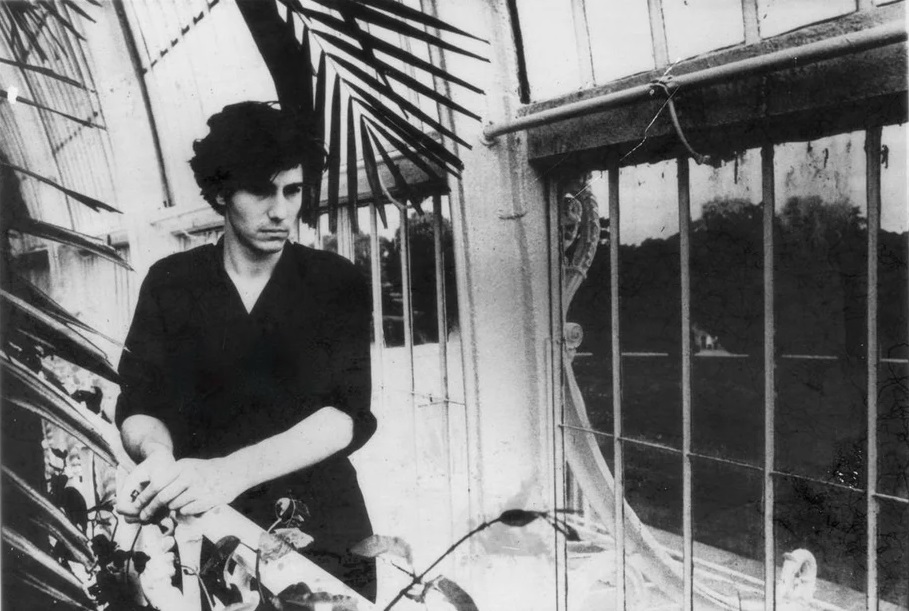
Henry Badowski emerged from punk having been briefly in CHELSEA, THE DAMNED and KING (the punk band featuring Captain Sensible, NOT the mulleted DM wearing combo who did ‘Love & Pride’!)
But the times they were a changing and the multi-instrumentalist found himself somewhere in-between the more melodic but artful form of new wave and the emerging sound of affordable synthesizers.
Summer 1979 saw the release of Badowski’s debut single ‘Making Love With My Wife’, a quirky anti-rock ‘n’ roll ode to the joys of marital sex; it later appeared alongside Gary Numan and John Foxx on ‘Machines’, a long playing showcase compiled Virgin Records of acts that used synthesizers as their primary instrumentation that also included OMD, THE HUMAN LEAGUE, SILICON TEENS and DALEK I LOVE YOU.
Issued on Deptford Fun City Records, a UK subsidiary of IRS Records co-founded by THE POLICE’s manager Miles Copeland III, it was this link that led to Badowski transferring to A&M Records for the backing that a major label could provide. “Initially my school friend James organised me joining CHELSEA, which was one of Miles’ acts” remembered Badowski, “I didn’t stay for long, but returned to the office a year later when Mark Perry (who founded the ‘Sniffin’ Glue’ punk fanzine) took me to Pathway Studio to record the ‘Making Love With My Wife’ / ’Baby Sign Here With Me’ single. Miles heard the KING John Peel version of ‘BSHWM’ and liked it. Following that, he became more involved with my situation and eventually introduced me to A&M.”
However, there had initially been scepticism about allowing ‘Making Love With My Wife’ to be included on the ‘Machines’ compilation with its explicit synthesizer association; “It was debated in the office whether or not it should be included on ‘Machines’” said Badowski, “Miles was actually against the idea as he thought I should be marketed as more ‘neo-English prog’.There was a drum machine on ‘Making Love With My Wife’ but apart from that there were no synths involved. I later added a synth noise deliberately on top for inclusion on the compilation. Silly, really!”
But while ‘Baby Sign Here With Me’ featured a Vox Continental, real drums and real instruments, the Matrix studios sessions involved an EMS AKS, Roland Promars, Prophet 5 and a Boss DR55 drum machine with an early CV/gate sequencer was used to link up the Promars and the DR55. “I’d had the EMS for a while so I was familiar with it” Badowski recalled of the recording, “I’d also had a few introduction sessions at Morley College for the basics. Linking the Promars to the DR55 was fun. I can’t remember what model the sequencer was but we got there in the end.”
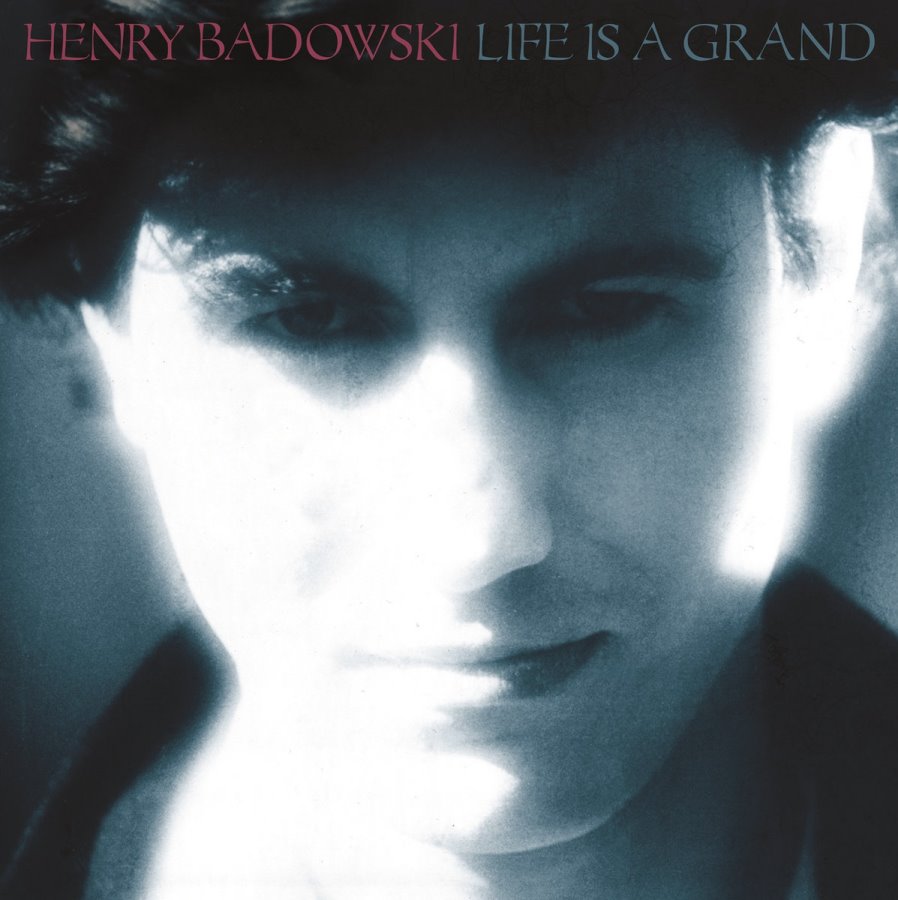
Henry Badowski’s only album ‘Life Is A Grand’ was named after the English slang word meaning a thousand pounds. “A grand will always make your life easier” Badowski said, “A thousand quid would go a long way – you could buy a second-hand E-Type Jaguar or a trip to New York on Concorde. Even today, if you’ve got a grand in your pocket, you’re feeling good – life’s alright”.
Handling vocals, bass, saxophones, keyboards and percussion, this was a true solo record although former CHELSEA bandmate James Stevenson would contribute guitar and additional bass while Dave Berk and Aleks Kolkowski respectively provided drums and violin. On the opener ‘My Face’, ‘The Warm Jets’ were strong in a wonderful update of Eno’s ‘Needles In The Camel’s Eye’. Meanwhile, the quirky ‘Henry’s In Love’ provided a kind of prequel to ‘Making Love With My Wife’ but with the twist of the telling of his personal joy in the third person.
Continuing the love theme, the charming ‘This Was Meant To Be’ could have been TELEX but as much as he was enchanted by the new wave of European electro-pop, he admitted the song “was most probably inspired by ‘Funky Town’ by LIPPS INC”!
With the air of Syd Barrett, ‘Swimming With the Fish in the Sea’ saw the working relationship with co-producer Wally Brill blossom as he provided the lovely pad on ‘Swimming With The Fish In The Sea’ courtesy of a Prophet 5; by coincidence Brill had also co-produced ‘The Eyes Have It’ by Karel Fialka which also appeared on ‘Machines’
While the ‘Life Is a Grand’ title instrumental pointed to David Bowie’s ‘Low’, the ROXY MUSIC sax ‘n’ synth B-side ‘The Numberer’ written by Andy MacKay was a more explicit influence. However, like the elegant wordless album closer ‘Rampant’, both were born out of creative necessity: “I’m not a prolific songwriter and struggled with completing the quota for the album, hence the two instrumentals!”
‘Silver Trees’ had this wonderfully whimsical quality but Badowski denied that he was a hippy at heart: “I was too young to be a hippy and struggled with being a ‘punk’ and definitely rejected becoming a ‘new romantic’ despite being tarted up on the back sleeve of the LP which was not my idea!”.
Released in Summer 1981, the album did not sell as Badowski admitted: “I never promoted it, despite Miles offering to pay up to 6 people to form a band, plus offering me support slots for major tours. To be honest, I was disappointed with ‘Life Is A Grand’ as the plug was pulled when it started going over budget. The sleeve was a disaster and I lost enthusiasm. I had an idea for a sleeve involving items or life enhancing situations you could buy for a thousand pounds. It never happened and I felt pressurised into putting up with the sleeve as it became. It’s unfinished business as far as I’m concerned, but it is what it is and I’ve accepted that now”.
Despite this, his one-time band mate Captain Sensible described ‘Life Is A Grand’ as “A work of genius from start to finish”. With its very English mix of humourous surreal poetry and bouncy avant pop, Badowski looks back on what turned out to be his only album with some pride: “I think the LP managed to achieve its own identity without me specifically channelling anyone in particular”.
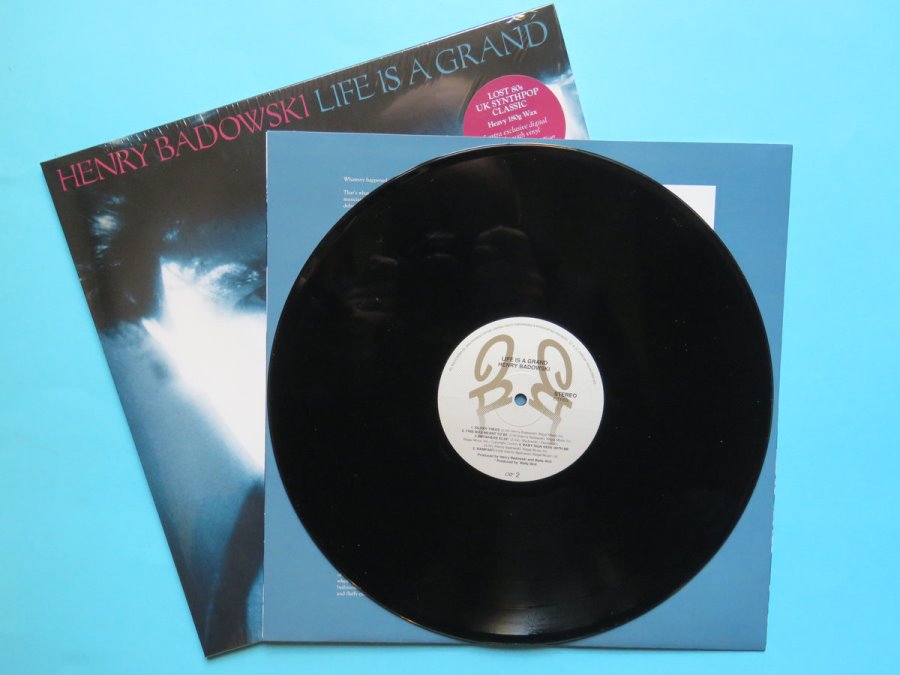
Over the passing decades, ‘Life Is A Grand’ would gain legendary lost album status and ultimately led to a 2025 reissue by Caroline True Records, something which has flattered Badowski: “The whole ‘cult’ thing has become a pleasant surprise and has happened over the years. I had no idea the album was so well received. I would get lovely emails from people, plus positive comments everywhere as the internet developed. I won’t even begin to speculate on how it happened. Thanks everyone, glad you like it!”
But was that follow-up to ‘Life Is A Grand’ ever a possibility? It seems not; “I had a handful of tunes kicking around but struggled to write lyrics” he lamented, “There really wasn’t a sufficient amount to justify a follow-up. I’d lost my Dad as well which slowed things up a lot. The songs that exist ‘happened’ rather than having me sit down with a quill and parchment.”
ELECTRICITYCLUB.CO.UK gives its sincerest thanks to Henry Badowski
“It’s nice to hear B-MOVIE are finally getting a chance to release their forgotten gems”: Matt Johnson
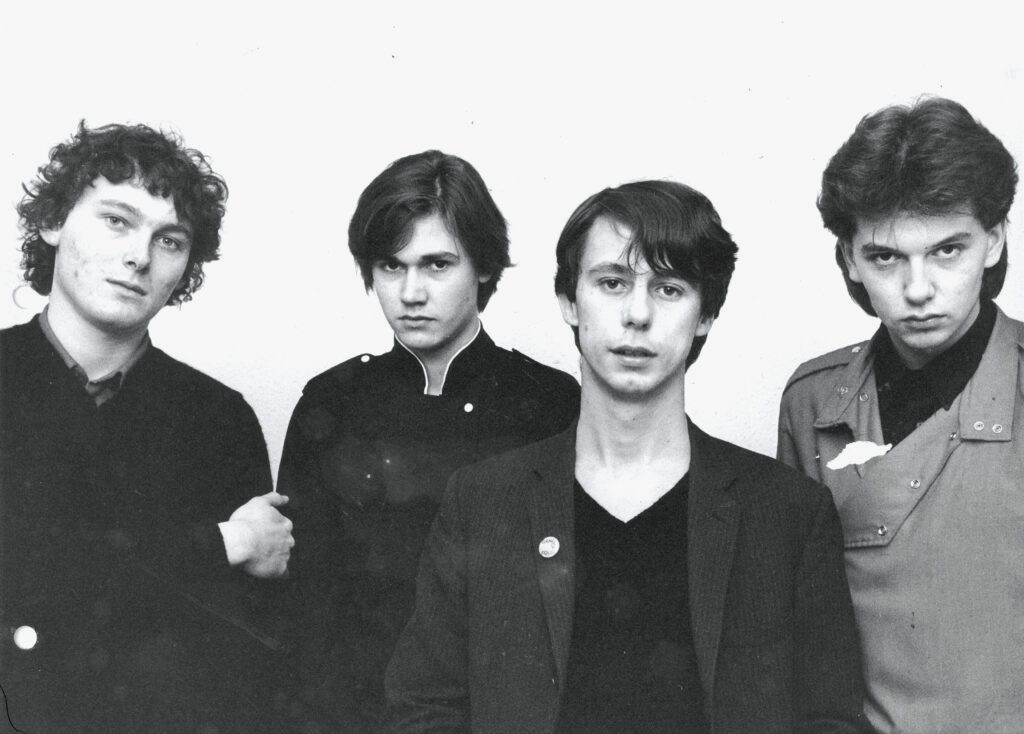
Comprising of Steve Hovington (vocals + bass), Paul Statham (guitar), Rick Holliday (keyboards), and Graham Boffey (drums), while B-MOVIE had already released 2 EPs on Lincolnshire independent label Dead Good in 1980, it was their inclusion on 1981’s ‘Some Bizzare Album’ compiled by Futurist DJ Stevo Pearce which put them on the wider map.
Their song ‘Moles’, alongside contributions from then-unknown bands such as DEPECHE MODE, SOFT CELL, BLANCMANGE and THE THE was one of the album’s highlights. Having previously included them in his ‘Futurist’ chart for music paper Sounds, Stevo continued his support and subsequently became manager of B-MOVIE while SOFT CELL and THE THE were also added to the expanding Some Bizzare roster.
B-MOVIE’s synth-laden new wave brought them to the attention of Phonogram Records who saw the band as their answer to DURAN DURAN and SPANDAU BALLET. While B-MOVIE could do pop as proven by their best known song ‘Nowhere Girl’, their pessimistic post-punk demeanour meant the quartet had more in common with JOY DIVISION, THE CURE and TALK TALK rather than the New Romantics. If they have a 21st Century equivalent, then the nearest comparison would probably be WHITE LIES.
Ever the shrewd operator, Stevo insisted on a 2-for-1 deal which included SOFT CELL for Phonogram to sign B-MOVIE. Marc Almond and Dave Ball got to No1 with their cover of ‘Tainted Love’ in 1981 to begin an outstanding run of a five Top3 singles into 1982, but B-MOVIE were unable to breakthrough into the UK Top40 despite releasing a trio of excellent singles in ‘Remembrance Day’, ‘Marilyn Dreams’ and ‘Nowhere Girl’.
Photo by Peter Ashworth
Stevo Pearce loved chaos but chaos ultimately destroys and the struggle for success, coupled with internal tensions led to Boffey and Holliday departing the band. Severing ties with Stevo, the album they had demoed lay dormant for over 40 years and legend had it that the tapes were under his bed. But the recordings made during this period had actually been stored in Universal Music’s huge vault. After years of enquiries and negotiations, B-MOVIE have acquired the rights back to these tapes and with their restoration, the 1982 debut LP that “never was” is now available under the fitting title of ‘Hidden Treasures’.
The fact that these recordings were shelved back in the day by record label and management politics is nothing short of criminal, but “better late than never” goes the saying and anyone who has ever been entranced by ‘Remembrance Day’, ‘Marilyn Dreams’ and ‘Nowhere Girl’ will LOVE this collection. And for those long standing fans who actually bought their records, the CD has the bonus of addition of B-sides, 12” versions and ‘Moles’ which featured some magnificent synth playing from Rick Holliday.
Those three Some Bizzare era singles need no introduction from the anti-war anthem ‘Remembrance Day’ to the anti-fame art rock of ‘Marilyn Dreams’ but one that should have been a single was ‘Polar Opposites’; although there is what is now widely accepted as the perfect take in the 1981 John Peel session version, this version on ‘Hidden Treasures’ is shorter, grittier and slightly faster in the vein of Leeds’ GANG OF FOUR. Meanwhile the jagged album opener ‘Citizen Kane’ captures that psychedelic Liverpool flavour of the times, coming over like a cross between THE TEARDROP EXPLODES and ECHO & THE BUNNYMEN.
Very different to the arrangement of the 1981 John Peel version, the intense Cold War angst of ‘All Fall Down’ with references to Ronald Reagan may capture another time, but its words are chillingly relevant again and an indicator as to why this compendium of recordings from 1981-1982 sound so on point in 2025.
‘Ice’ is feisty gem of song with a hand played synth bass battling with frantic rhythm guitars and a speedy drumming run from Graham Boffey that would have made Stephen Morris proud, while the bright synth melodies on ‘La Lune Lunatique’ mask the shadier lyrical overtones. Less post-punk and much more of a melodic electronically styled pop song, ‘Crowds’ is not that dissimilar from say OMD or A FLOCK OF SEAGULLS and points towards the more commercial sound that Phonogram had signed B-MOVIE for. But as a complete flip to that mood, the gloomy progressive drama of ‘Beginning To Fade’ makes an ominous ‘Hidden Treasures’ closer.
The CD bonus tracks include longer takes of ‘Remembrance Day’ and ‘Marilyn Dreams’ but it’s the mighty ‘Nowhere Girl’ with the extended Rick Holliday’s concert piano and synthbass intro breakdown that excels as a classic 12” version. Of the B-sides, the remix of ‘Institution Walls’ from the second of the Dead Good EPs and ‘Scare Some Life Into Me’ both capture the raw vocal anxiety in Steve Hovington’s paranoia. Meanwhile the icy drum machine laden ‘Film Music’ was Holliday’s instrumental excursion into the monochromatic Mittel Europa atmospheres of ‘The Third Man’ and ‘The Spy Who Came in from the Cold’.
While the fragmented B-MOVIE led by Hovington and Statham did release a debut album in the disappointing ‘Forever Running’ in 1985, it is the three singles from this ‘Hidden Treasures’ period that are held in the highest esteem, so much so that the American electro-rock band THE FAINT used ‘Remembrance Day’ as the basis for their own ‘Southern Belles in London Sing’ in 2004. At around the same time, B-MOVIE reformed with their original line-up and despite the departure of Holliday again in 2022, continue today.
‘Hidden Treasures’ provides the missing links to ‘Remembrance Day’, ‘Marilyn Dreams’ and ‘Nowhere Girl’, along with the context as to why for a period, B-MOVIE were judged to become the next big thing. It didn’t happen for them, but this lost album superbly restored by Roger Lyons puts them on an equal footing with many of the best post-punk synth-laden bands of the era.
Absence can make the heart grow fonder and this case highlights how despite the passing of 43 years, B-MOVIE’s music from this period really has stood the test of time.
ELECTRICITYCLUB.CO.UK was one of the last media platforms to interview the late German electronic pioneer Klaus Schulze shortly before his passing on 26 April 2022.
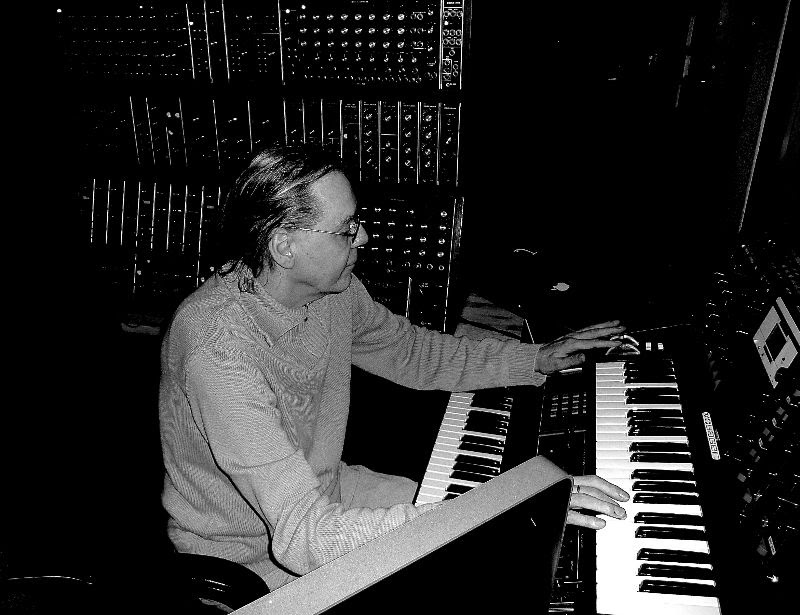
Klaus Schulze lived in his own cosmic sequenced world and his albums ‘Timewind’, ‘Moondawn’ and ‘Mirage’ are still held up as fine examples of The Berlin School. Klaus Schulze said to ELECTRICITYCLUB.CO.UK: “Every album I do is my best – everyone has its time and its own history and circumstances, though there are some albums that are more in my mind than others are! Really, when you work on something it is the latest and best you’ve ever done and so it always is my favourite record. It’s as simple as that.”
Wider interest in Klaus Schulze’s music was renewed after he worked with Hans Zimmer on ‘Grains of Sand’ on the ‘Dune’ soundtrack; “The world has finally caught up with a true pioneer” said Zimmer in 2021, “A master, an influence and influencer on countless others, still connecting us all with a deep sense of humanity and mystery”
Literally never one to sit still, Schulze left behind a vast portfolio of work including material that was unreleased for various reasons. Following up his posthumously issued final album ‘Deus Arrakis’, the poignant closing piece of which was ‘Der Hauch des Lebens’ (translated into English as “The Breath of Life”), ‘101, Milky Way’ is a real treasure from Klaus Schulze’s archives.
The album began at the end of 2008 as a soundtrack commission from a German film production company for a documentary about computer hackers. Klaus Schulze being Klaus Schulze ended up creating a complete album. The eventual documentary film ‘Hacker’ directed by Alex Biedermann only ended up using small sections of the music as a soft backdrop.
With the blessing of his estate, ‘101, Milky Way’ is now available for the first time; comprising of three lengthy pieces and two comparatively shorter ones, this previously lost album is a fitting way of maintaining his legacy. Across 15 minutes, ‘Infinity’ offers a grand sweeping ambience with occasional indigenous vocal chant samples and violin that gradually builds and then descends into a bubbly otherness. Only 5 minutes long, ‘Alpha’ recalls Jean-Michel Jarre’s more atmospheric moments.
While sequencer patterns have been notably absent so far, these drift in during the second third of the most classic Schulze of the pieces ‘Multi’; this goes on a hypnotic journey of over half an hour complete with spacey string machines, and then chattering percussive interventions and cosmic pulses for the drive into the home straight. The much shorter ‘Meta’ follows the atmospheric path over gentle rhythmic backbeat before over 18 minutes, ‘Uni’ offers a sedate intro before it bursts into a cacophony of buzzier and more jagged sounds and textures.
Some might not be so keen on the digital elements on ‘101, Milky Way’ when compared to his imperial phase albums but as Schulze said to ELECTRICITYCLUB.CO.UK: “I have spent many years fighting the various technical aspects from so many different machines that I absolutely enjoy turning on everything – and Boom, it’s all there. I certainly would not want to go back to having to tune everything… or patch my way through every single part of an analogue synth”.
A welcome release that captures the essence of 21st Century Klaus Schulze, ‘101, Milky Way’ is like a greeting from wherever he is now in the universe and fittingly continues his vast electronic legacy. No doubt there will be more to come from his unreleased archives and the man himself would approve.
In memory of Klaus Sculze 1947 – 2022
‘101, Milky Way’ is released by SPV as a gatefold double LP Edition, CD and download
We use cookies to ensure that we give you the best experience on our website. If you continue to use this site we will assume that you are happy with it.





Follow Us!