Formed in Spring 2008, CHEW LIPS rode on the wave of synth friendly female fronted acts of the period that included LITTLE BOOTS, LA ROUX, LADY GAGA and LADYHAWKE.
Less overtly poppy than the L-Word foursome, the music press more closely associated CHEW LIPS with THE TING TINGS and YEAH YEAH YEAHS. The latter were vaguely exploring an electronically enhanced direction, as showcased on the single ‘Zero’, but despite proclamations by YEAH YEAH YEAHS’ singer Karen O that the band had adopted the synth, the resultant album ‘It’s Blitz’ was more like a glitterball new wave record that was still very guitar driven.
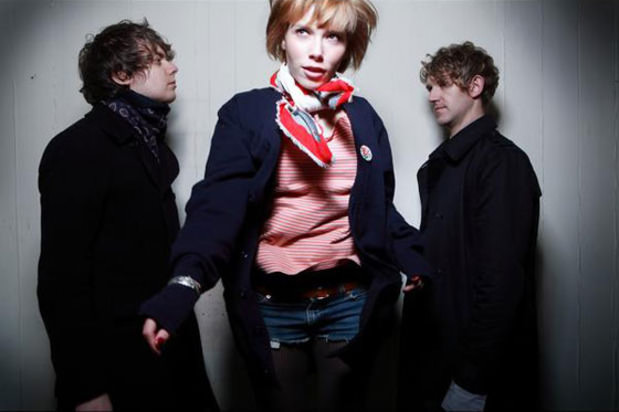
Comprising of singer Alicia Huertas (better known to her friends as Tigs) and multi-instrumentalists Will Sanderson (synths and guitars) and James Watkins (bass guitar and synths), CHEW LIPS were actually much closer to the concept of what YEAH YEAH YEAHS would have sounded like if they really had gone all electronic.
With their “8-bit Casiotone drone-disco”, they quickly attracted the attention of hip tastemakers like BBC 6Music’s Steve Lamacq who invited them to record a radio session after only a handful of gigs. In 2009, the trio were signed to the ultra-hip French record label Kitsune who had launched LA ROUX and DELPHIC.
With a melancholic edge amongst all the blips and blops, the impressive ‘Salt Air’ showcased an accessible promise with pulsing sequencers and drum machines chugging away augmented by some octave shifting bass and occasional guitar like a female fronted NEW ORDER. Meanwhile, the bleepy second single ‘Solo’ had a charming distorted percussive rattle that came over not unlike THE TING TINGS accompanied by a Boss Doctor Rhythm!
CHEW LIPS’ live act was one of their strongest cards with Tigs being a particularly adept front woman. Indeed, her cheeky, flirtatious demeanour recalled Hazel O’Connor. Although Will Sanderson tended to be stuck behind synths, James Watkins generally played bass guitar and his bouncy movements were reminiscent of a certain George Andrew McCluskey. Indeed, CHEW LIPS would at times look like OMD fronted by Debbie Harry! As well as the tunes, the music was enhanced by club friendly sonic bass booms, so CHEW LIPS attracted the sort of audience who found LITTLE BOOTS or LA ROUX too glitzy and preferred their electronic pop with a slightly gloomier edge.
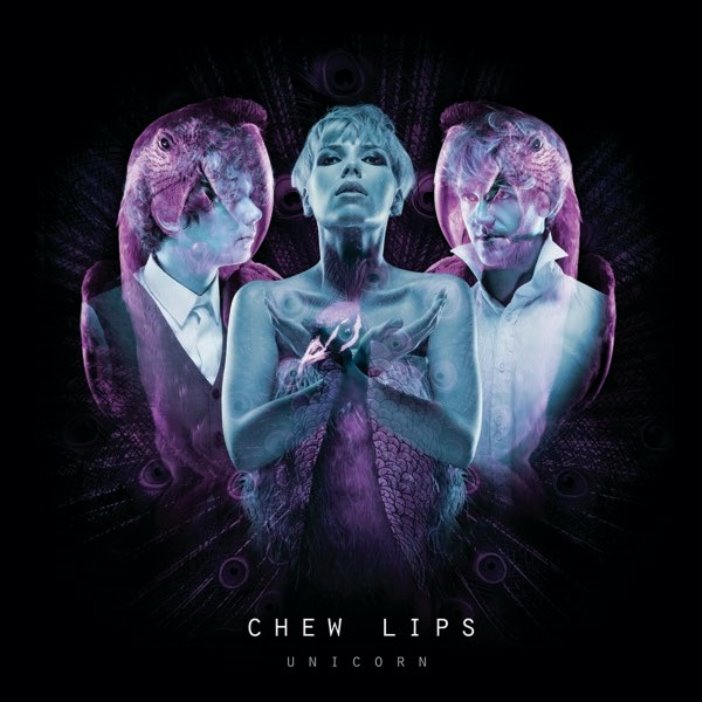
Signing to ATC Management whose founder Brian Message also co-managed RADIOHEAD, CHEW LIPS took the plunge in 2010 with their debut album ‘Unicorn’. Released independently on their own Family Records, it was produced by David Kosten who had steered BAT FOR LASHES for her first two albums. In a brave move, the threesome decided not to include the two singles that had gained them their initial acclaim and focussed totally on brand new material for the ten track collection.
The launch single was the short and immediate ‘Play Together’. A natural development of FC KAHUNA’s ‘Machine Says Yes’, it connected with the Electroclash movement of a few years before while also acting as a worthy successor to ‘Salt Air’. Referencing the post-punk era, ‘Karen’ was brilliant electronically assisted indie pop with hints of guitar-driven NEW ORDER.
It wasn’t all uptempo as ‘Too Much Talking’ and ‘Eight’ proved CHEW LIPS could do dark ballads, while ‘Slick’ gradually built itself to a climax around some initially minimal backing. Indeed, the band displayed a knack for songs that were short and sharp with no progressive doodling. ‘Toro’ played with new wave funk of GOSSIP while one of the album’s highlights ‘Two Hands’ captured the drama of classic DEPECHE MODE.
There were other Synth Britannia elements too with some Mellotron choir providing an ‘Architecture & Morality’ grandeur on the album’s closer ‘Gold Key’ while offset by an unexpected FM rock guitar solo. But with its haunting piano motif, Kling Klang rhythm section and sparkling OMD styled synth runs, the best song from the ‘Unicorn’ sessions was the beautiful iTunes only bonus track ‘Rising Tide’. The wonderfully spirited, soulful lead vocal from Tigs made it one of the most accomplished tunes from the 2008 school of female fronted electro.
All–in-all, ‘Unicorn’ was an intriguing, enjoyable debut that pointed to a promising future. But the album was not without its faults. Clocking in at just over 30 minutes, the tracklisting lacked immediacy and the exclusion of ‘Rising Tide’ from the main feature was a real oversight. A trick was possibly missed by not including the two Kitsune singles as well.
Whereas the intent was probably to give fans value for money and make the album more of an artistic statement, to not have two of the strongest and ‘best known’ songs on the debut long player might well have put off curious but casual newcomers. These listeners could have grown into some of the less immediate material had they initially bought the album for ‘So’ or ‘Salt Air’.
Sometimes, there is only one chance to make a good impression. But although the band did not hit the commercial heights of say LA ROUX, the strategy worked and in 2012, CHEW LIPS were signed by Sony Music.
The first single as a duo ‘Do You Chew?’ showcased a more R ‘n’ B focussed direction influenced by RIHANNA, while the vibrant, punchy pop of ‘Hurricane’ was issued in September 2012. In interviews at the time, Tigs and Watkins declared they had more commercial ambitions compared with when they were recording their debut.
However, the long awaited second album has yet to appear. In April 2013, the URL of CHEW LIPS website appeared to have expired and turned into a mysterious travel blog. Their most recent Facebook page update was in Summer 2014, although the last music related message was November 2013.
But in April 2015, Tigs returned to the public spotlight to run in the London Marathon in her role as a Cancer Research ambassador. She had been diagnosed with cervical cancer several years previously, but continued to work after having undergone treatment. She was given the all clear in November 2010 and had since run a number of races in aid of the charity.
With Tigs’ tireless fund raising work, music has understandably taken a back seat. But in a domestic electronic pop market today that is perhaps lacking feistiness and sparkle, CHEW LIPS are greatly missed. Whether a second album will ever see the light of day remains to be seen…
CHEW LIPS debut album ‘Unicorn’ was released by Family Records
Without doubt, Jo Callis is one of the unsung heroes of the Synth Britannia era. The Rotherham born guitarist first found fame during the post-punk era with THE REZILLOS.
Formed in Edinburgh where Callis was studying at the local college of art, they scored a Top 20 hit ‘Top Of The Pops’ in 1978. THE REZILLOS fragmented after one album so Callis formed SHAKE and then joined BOOTS FOR DANCING before releasing a solo single ‘Woah Yeah!’ in 1981. His manager when he was in THE REZILLOS was Fast Records supremo Bob Last who also looked after THE HUMAN LEAGUE.
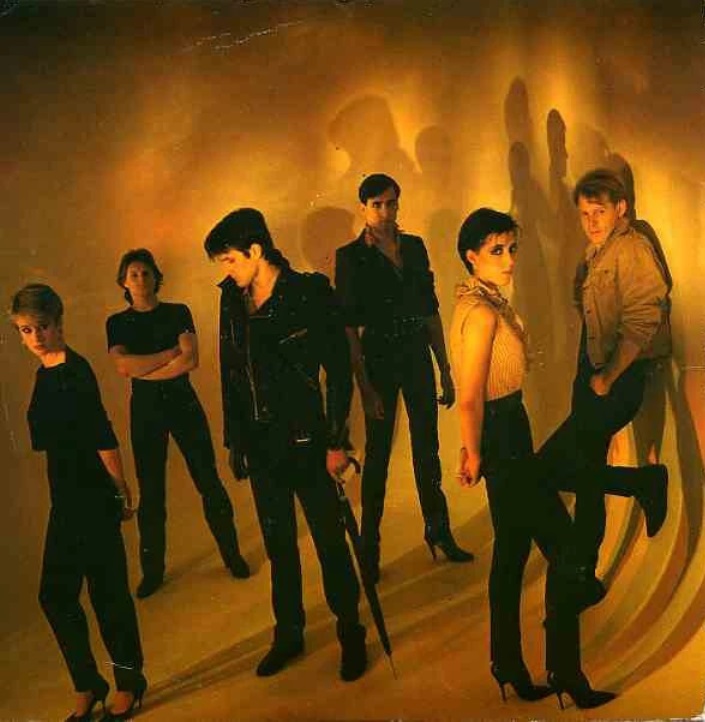
Following the well documented split between Phil Oakey and Adrian Wright with Martyn Ware and Ian Craig Marsh in 1980, the former pair continued as THE HUMAN LEAGUE with Ian Burden recruited as an additional musician plus Joanne Catherall and Susanne Sulley as backing vocalists.
Despite this line-up recording the band’s first Top 20 hit in ‘The Sound Of The Crowd’ under the production supervision of Martin Rushent in 1981, THE HUMAN LEAGUE felt they could benefit from the input of an experienced songwriter… enter Jo Callis! He joined just in time to record the Top 5 breakthrough single ‘Love Action (I Believe in Love)’ although he did not feature on the single’s cover photo.
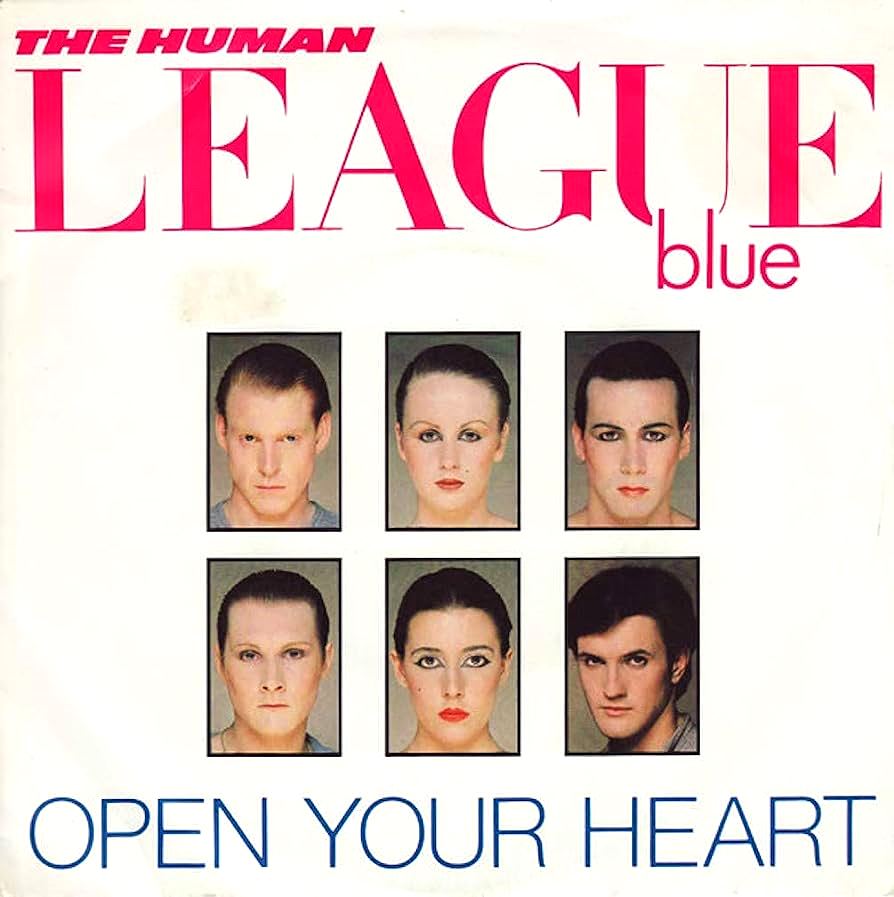
His first public outing as a songwriter for THE HUMAN LEAGUE was with the psychedelic synthpop hit ‘Open Your Heart’. The parent album ‘Dare’ was released shortly after and has since being hailed as an iconic recording of the period.
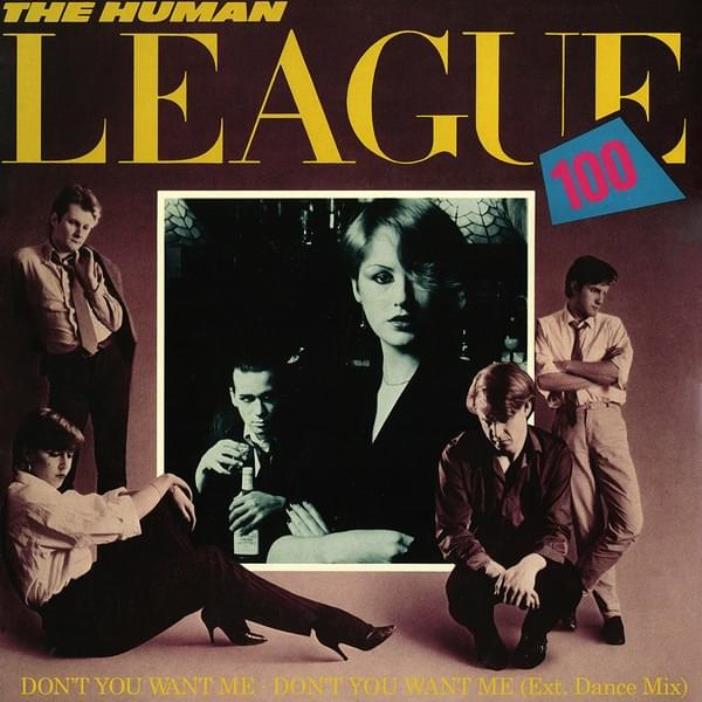
Jo Callis’ three year tenure with THE HUMAN LEAGUE directly contributed to their imperial phase; classic numbers in The League’s catalogue such as ‘Seconds’, ‘Darkness’, ‘Hard Times’, ‘Mirror Man’, ‘(Keep Feeling) Fascination’, ‘The Lebanon’, ‘Life On Your Own’ and ‘Louise’ were all co-authored by him. But his most famous song with the Sheffield electronic pioneers was ‘Don’t You Want Me?’ which reached No1 in both the UK and US charts. However, after a difficult gestation for ‘Hysteria’, the follow-up album to ‘Dare’, Callis left THE HUMAN LEAGUE in 1984 to concentrate on his own songwriting.
Post-League, Callis co-wrote Feargal Sharkey’s’s ‘Loving You’ before partially returning to THE HUMAN LEAGUE in 1990, penning two songs ‘Heart Like A Wheel’ and ‘Get It Right This Time’ for the ‘Romantic?’ album. Another Callis co-write ‘Never Again’ appeared on 1995’s ‘Octopus.
More recently, Callis has been in the news in his adopted homeland as a result of ‘Don’t You Want Me?’ being adopted as a football crowd anthem by the supporters of Aberdeen FC. The song was given a boost in download sales as a result of The Dons victory in the 2014 Scottish League Cup.
With his profile at its highest since his HUMAN LEAGUE days, Callis is about to return to the live circuit with his new band FINGER HALO, playing alongside ANALOG ANGEL at Glasgow’s Classic Grand on FRIDAY 15TH AUGUST 2014. Now well and truly “back-Back-BACK”, he kindly chatted to ELECTRICITYCLUB.CO.UK about his career.
THE REZILLOS made it into the Top 20 with ‘Top Of The Pops’ in 1978 but briefly, what happened that led you into becoming a free agent in 1981?
THE REZILLOS split up (mid tour) around 1979, probably at my instigation more than anything else. From there, I formed SHAKE along with former REZILLOS rhythm section Ali Paterson and Simon Templar, and remained signed to Sire, THE REZILLOS’ former label. With the addition of Troy Tate (later of TEARDROP EXPLODES fame) on guitar, we released a four track EP followed by a single ‘Invasion Of The Gamma Men’ and gigged quite consistently.
The initial EP was pretty well received and the lead track ‘Culture Shock’ garnered a fair amount of Radio1 airplay. But with little record company support, things eventually just fizzled out. Broke, we eventually parted company with Sire.
From there, I joined local indie leftfield punk / funk outfit BOOTS FOR DANCING, whom I really enjoyed playing with. They could have been contenders, but bottled out of going for gold so to speak, so there was no future there for myself. Around the same time I had also been making in-roads into The League camp, who were in the process of re-inventing themselves after a split up scenario of their own, with a view to help them with new material.
What did you think when you were first offered THE HUMAN LEAGUE job by Bob Last and told you’d have to play a synth?
My memory of events here is that I simply got together with Adrian Wright, whom I was friendly with at the time, in order to do a bit of writing, which led on to my quite significant contributions to THE HUMAN LEAGUE’s canon of tunes. Although, with hindsight, I guess that the ‘svengali’ Bob Last would have certainly been pulling a few strings and making some subliminal suggestions behind the scenes, and certainly encouraging my association with Adrian.
Around that time I was also feeling a little jaded with the guitar, particularly as an instrument for composition, and felt that a change was in order. I wasn’t exactly sure what kind of change, but the opportunity of The League, synths and moving with the times certainly appealed.
Is it true Martyn Ware showed you how to use a synth at Monumental Pictures studio?
Yep, with the then fledgling HEAVEN 17 / BEF still sharing the same studio space as the ‘new’ League, Martyn Ware kindly spent a day running me through all the basics of subtractive synthesis, and also pointing me in the direction of the keyboard playing equivalent to Bert Weedon’s legendary guitar tome ‘Play In A Day’ (in another move encouraged by the venerable Mr. Last no doubt). I had soon purchased a second hand Roland SH09 synth, and began patching away when at home in Edinburgh.
Did you have a favourite synth?
I still have a great love for the old SH09, its big Bro’ the SH2 and its progeny the SH101. But the Roland Juno 106 is still hard to beat. I do still have (hopefully) working examples of ’em all. Although primarily a vintage Roland fan, I do have the odd bit of Korg and Yamaha kit, and of course the wonderfully proletarian Casio VL Tone… required equipment in my League days, we all had one in our make up bags!
Did you ever feel the tension between the two parties as the shifts changed at the studio?
Oh yes, but more in general. We would all hang out together in my early days with The League whilst in Sheffield writing the material that would ultimately comprise ‘Dare’ etc. It all seemed quite light hearted initially, but I was aware of quite deep rooted competition and rivalry between Philip and Martyn. But there was a mutual degree of respect all round.
I had to laugh really, having come out of a fairly similar situation myself recently and being aware that Bob Last had carefully handled THE HUMAN LEAGUE split with the benefit of knowledge gained from the chaotic split up of THE REZILLOS, Bob having managed both bands. So there were no handbags at twenty paces, unlike the biliousness of THE REZILLOS’ break up which was arguably fuelled by the divisive music press of the day – I did feel I was somewhere between a rock and a hard place on occasion though.
What was the creative dynamic between you, Phil Oakey, Adrian Wright and Ian Burden?
With Adrian, I would generally pick out the best of his formative ideas, develop them with him and add parts etc.
Phil and I would often find that we could graft together independent ideas we had, which would compliment each other… or else Phil would add lyrics and melody to one of my backing tracks which would just have a working title – ‘The Lebanon’ for example, came about in this way, even retaining the original title in the finished article.
With Ian, himself being a (very good) bass player and myself a guitarist, we could plug into amps and jam out ideas old school stylee sometimes. And when Jim Russell (originally Martin’s engineer, then later a band member), a seasoned drummer who’d played with the like of CURVED AIR and MATTHEWS SOUTHERN COMFORT was around, we’d have a power trio and just jam all day…
Joanne and Susanne contributed to the quality control, they were very down with what was happening in the clubs and what ver kids were digging at the time, so if they liked what they heard, then it was definitely worth persevering with. They were total Duranies then, and had previously been BAY CITY ROLLERS fans (a fine Edinburgh band – check out their version of ‘Rock & Roll Love Letter’). But their big love was JAPAN. Strangely, we seemed to listen to a lot of Grace Jones and JUDAS PRIEST during the writing of ‘Dare’.
What was the first song you wrote for THE HUMAN LEAGUE?
‘Open Your Heart’, if memory serves – originally started on the guitar and provisionally entitled ‘Women & Men’.
Legend has it that Phil freaked when he saw you brandishing a guitar during the recording of ‘Don’t You Want Me?’?
Ha! Axeophobia I believe it’s called, a rare condition and one most unusual in the case of a JUDAS PRIEST and SAXON fan! I remember Phil once saying: “I’d happily have you play the guitar on tour Jo, so long as the jack lead is only six inches long”. Classic! I feel he probably suffered from the much more common complaint; ‘Callisophobia’.
The main riff of ‘Don’t You Want Me?’ was appropriated from the guitar line of ABBA’s ‘Eagle’? Discuss!
Aha! The passage to which you refer to is definitely ABBA inspired and was originally the bassline to the bridge section of ‘DYWM’ – the “Don’t, Don’t You Want Me, You know I don’t belieeve it! Etc” bit. Martin Rushent picked it up and turned it round and made it into the top line of the intro passage… so it’s all his fault, ‘onest Guv!
How do you look back on the ‘Dare’ album now?
With my head tilted to the right, and squinting with one eye. ‘Dare’ was the result of a unique coming together of an unlikely bunch of switched on, eccentric, bloody minded individuals who, against all odds and with no great ‘industry’ expectation, created a truly wonderful work of electro glam pop – timeless, wonderfully sparse, most influential, and a true combined vision, very much the sum of its parts.
How were those ‘Dare’ tour dates, especially with those temperamental synths and taking the Linn Drum Computer out live?
Tours can be the absolute best and worst times of your life condensed into a relatively short period of time – so, careful what you wish for sometimes. We fortunately had a terrific tech and road crew on the ‘Dare’ tour which eased a lot of the potential pain, no MIDI or computer sync in them days. We had to have the Linn Drum reloaded (by cassette tape) half way through the set as its memory could not contain the entire show, we switched to the Roland TR808 for one song during the reboot! The synths all seemed to perform reliably and well, despite the abuse I would give mine on occasion. Made from Tiger tank and Me262 parts them Roland Jupiter 8s!
Things seemed to be going swimmingly for the follow-up album with the releases of ‘Mirror Man’ and ‘(Keep Feeling) Fascination’, but it all started falling apart around the recording of ‘Hysteria’?
That’s right, it was all taking far too long and frustration was setting in. We had to try and follow the unexpected success of ‘Dare’ and I think a fear of failure began to loom. The pressure maan!
The two versions that were released of ‘I Love You Too Much’ indicated there was some confusion in the band over direction?
That track actually had a synth playing back through a guitar Wah Wah pedal on it – which was my idea. As I recall the first version on the ‘Fascination!’ import EP was produced by Martin Rushent and the ‘Hysteria’ version was by Chris Thomas… or was it Hugh Padgham?
‘The Lebanon’ had a bit of a mixed reaction didn’t it?
I love a bit of contention, it was pretty much guitar driven, which is down to me again, but I think it sat okay in The League repertoire and Phil was actually quite enthusiastic about the style and direction it took. It went down well with the BIG COUNTRY / SIMPLE MINDS / U2 crowd of the time, almost a bit of a crossover track. The music press of the day, particularly the NME were fond of ripping the pish out of the lyrics, but in a very affectionate and ‘onside’ way. I still think it’s possibly the strongest tune on ‘Hysteria’, and one I’m very satisfied with personally.
Martin Rushent left the sessions apparently over something Susanne said… what was the straw that broke the camel’s back in your case?
I tried so hard to keep everyone together at that time, we weren’t too far away from having a follow-up album finished with Martin, I thought I’d managed to patch the ship up so to speak at one point, but things soon fell apart again.
Do you look on the ‘Hysteria’ period with much affection?
Not greatly.
When THE HUMAN LEAGUE said they wouldn’t tour ‘Hysteria’ because they couldn’t perform your songs without you, what that just an excuse on their part?
Never heard that one before… dunno really.
You sort of returned for ‘Romantic?’ in 1990… how did you come to contribute ‘Heart Like A Wheel’? and ‘Get It Right This Time’ ?
I’d always left things open ended, and had said I’d always be happy to contribute to writing at any time. I did initially offer them a song called ‘One For The Angels’ for ‘Crash’, the album after ‘Hysteria’, but they didn’t take it – perhaps not quite enough water had passed under the bridge by then, but I’d had such a good response from publishers etc.
With ‘Heart Like A Wheel’, and having been working a lot myself on various projects with Martin Rushent at Genetic Studios around that time, when The League came to thinking about the follow up to ‘Crash’ (which would become ‘Romantic?’), I thought there might be a good opportunity to try and get ‘the old team’ back together again, which I did manage to achieve for a couple of tunes at least. I was kind of middle man there, having a foot in both camps – helping The League out with a bit of writing now and then, and working on various production / writing projects with Martin.
I also co-wrote ‘Never Again’ with Phil for the ‘Octopus’ album, and will be revisiting ‘One For The Angels’ with my new band FINGER HALO!
With Martin Rushent on board, it looked like there was an attempt to recapture the magic of ‘Dare’. But why did things not really work out with that album as a whole either? Any thoughts?
As an addendum to the previous question; I had hoped to resurrect ‘The Old Brigade’, for the entire album, but I think Phil wanted to experiment with different producers, doing a couple of tracks with each. ‘Heart Like A Wheel’ did well for all concerned I think, so it often pays to not burn bridges… and ‘Never Say Never Again’.
Mention must go to Martin Rushent, now sadly departed. A true maverick, a passionate if headstrong fellow and one of the greatest cutting edge producers of all time. He always followed his gut instincts which invariably led him in the right direction. I learned so much from Martin and he was great fun to work with.
Noddy Holder describes ‘Merry Xmas Everybody’ as his pension, is it like that for you with ‘Don’t You Want Me?’?
As a huge SLADE fan, Noddy is seldom wrong, These days, I tend to view ‘Don’t You Want Me?’ more as a kind of capital investment, to trade with. In basic, cynical economic terms, ‘DYWM’ to me is something akin to what Cornflakes are to The Kellogg company.
You are still active in music, what are your upcoming plans?
What would you consider your proudest achievement?
An old acquaintance of mine who served with The Royal Marines during The Falklands campaign told me that he had The League song ‘Seconds’ running through his head all through the conflict, which helped him keep focus and get through serious life or death circumstances.
That instance in particular, and other, albeit rare, occasions when somebody has remarked that your music has had a positive impact on their lives, are moments when I realise that what we do, we happy band of wandering minstrels, really can have great value to humanity, and it’s not just about self indulgently fannying about, having more control over our lives and never having to grow up, as I might have previously thought. I speak for all performers, entertainers, composers, authors and artists. I think we oil the wheels of life in many respects.
And as the Big Man Winston Churchill once said: “If you find a job you love, you’ll never work again” – now there’s an achievement in itself! These are the things that dreams are made of (and nightmares sometimes but…)
And finally, why do you think guitar synths never really caught on?
Quite simply Chi, I think that the technology had moved so rapidly then that you could use a regular guitar, with a few ‘bolt ons’, and pretty much do anything that a dedicated synth guitar could do. Also a lot of guitar players who loved the ‘Synth Guitar’ idea didn’t really think that the instruments themselves were particularly good as guitars. That Roland G-77 looked really cool though, but they never made a left handed version, the c***s!
ELECTRICITYCLUB.CO.UK gives its warmest thanks to Jo Callis
Special thanks to Ian Ferguson
FINGER HALO featuring Jo Callis play the Classic Grand, 18 Jamaica Street, Glasgow G1 4QD on FRIDAY 15TH AUGUST 2014 alongside ANALOG ANGEL
Undo Records are to release ‘History 1984-1991’, a special compilation box set of the lost French technopop act VIENNA.
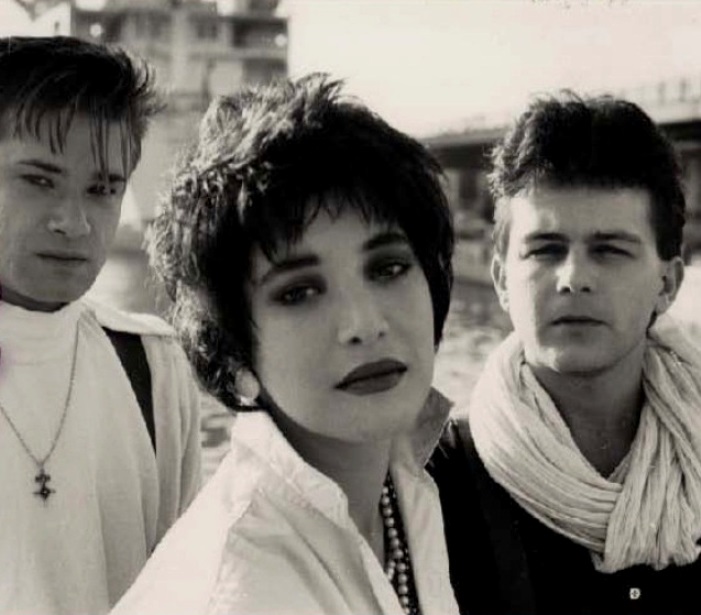
Formed sometime in 1984 under the name ACADEMIE, they comprised of vocalist Odile Arias, her brother Dominique and Thierry Martinez. Impressing with a demo that caught the attention RCA Records, they went on to support noted French band INDOCHINE who had an international hit with ‘L’Aventurier’.
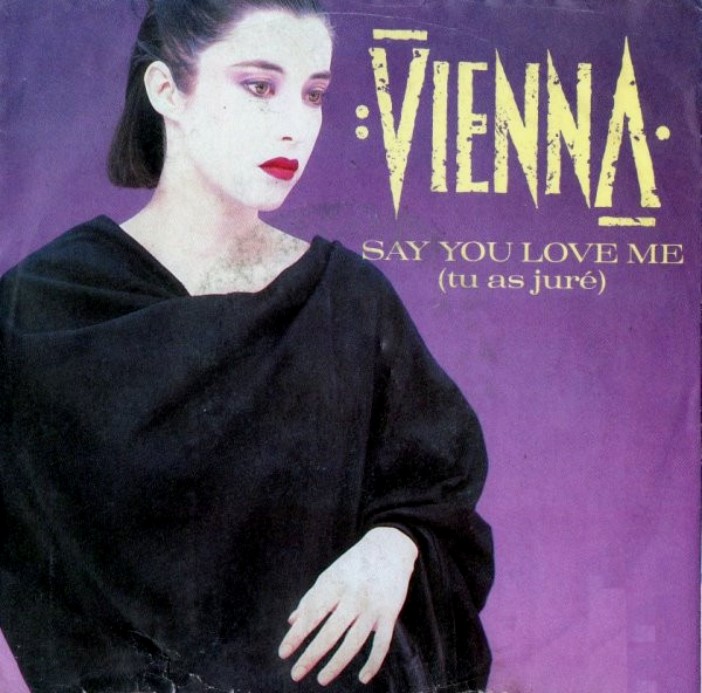
Changing their name to VIENNA, their 1984 debut single was the sublime ‘Say You Love Me (Tu As Juré)’. Coincidently having named themselves after the ULTRAVOX song, Warren Cann later appeared as a guest drummer on INDOCHINE’s album ‘7000 Danses’!
Influenced by KRAFTWERK and Synth Britannia acts such as DEPECHE MODE and OMD, VIENNA sounded like a dreamy, less industrialised cousin of HARD CORPS who had supported DEPECHE MODE during the ‘Music For The Masses’ tour. But the DM connections didn’t end there for Odile was Martin Gore’s girlfriend during this period, having met at a DM show after VIENNA signed to Mute Sonet France in 1987. She can be seen as part of the Mode entourage in the D A Pennebaker documentary ‘101’.
Another great single ‘Pour Ne Pas Me Toucher’ produced by Rico Conning (best known for his ‘Blind Mix’ of DM’s ‘Strangelove’ with Daniel Miller and co-producing Gore’s ‘Counterfeit’ covers EP’) was issued shortly after but by 1989, VIENNA were no more. Odile Arias continued briefly as a solo artist, releasing ‘Reste Avec Moi’ in 1990.
Fast forward to 2014, and those singles plus B-sides like ‘Viens Dans La Chambre’ have been given a chance to shine again by Undo Records. ACADEMIE material such as ‘Push Me Down’ and the solo recordings have also been gathered on CD1 of this 4 disc set. CD2 is made up of the ‘Lost Mute Album’ while CD3-4 comprise of unheard demos including a Karl Bartos produced instrumental of ‘Pour Ne Pas Me Toucher’.
As can be expected, the sound quality is variable, ranging from full studio masters to cassette recordings but several numbers like the sparsely chirpy ‘Rendez-vous Sur La Mer Noire’ and the moodier ‘Un Dernier Dimance Avant La Guerre’ are wonderfully exquisite diamonds in the mine that have now been unearthed. Odile’s exquisite Gallic allure provides much of the enjoyment to the synthesized soundtrack.
In an exclusive interview, Odile Arias answered some questions that ELECTRICITYCLUB.CO.UK put to her about VIENNA and her time in the DEPECHE MODE circle…
When you listened back to the tapes to produce this compilation, what memories did it bring back to you?
Mainly, the first image that came back to me was either the home studio I used to work in or the ‘machines’ I used to work with for the making of this or that particular song, or the emotions or facts that had inspired it to me.
But then after a moment, it started bringing back this huge patchwork of snapshots from the eighties which I was indeed happy to recall and remember and get drowned in.
It’s a bit like the kind of feeling you can have when you bump into a close friend you haven’t seen for so many years but you’re still attached to. I am not a nostalgic person, so to me it felt nice though a bit strange to feel linked again to this part of my life. It focused on feelings that I am glad to recognize as still being part of me, but that I have other ways to express now.
Which of your songs do you think particularly stand the test of time?
Well, considering the combination of lyrics and melody, I think that the ones from the CD2, which we called the ‘Lost Mute Album’, remain very interesting and efficient. Even now, I still enjoy listening to ‘Naufragés’, ‘Un Dernier Dimanche Avant La Guerre’, ‘La Terre Est À Nous’, ‘Aller Trop Loin’ or ‘Viens Dans La Chambre’, and I’d still be very glad to sing them. But it’s quite hard for me to answer, there are so many different fields in music. Some people really like the sound of the eighties, some others definitely hate it.
To me, a good melody by itself, can always stand the test of time. I think its’ much harder to make a song where both the lyrics and the melody will stand it, and the lyrics that I wrote were definitely much better later on. For example, I’ve never really liked ‘Say You Love Me’. I don’t know why the record company choose this one song for the single? Even then, I had much better ones. The manner of thinking of most artistic directors I have met will always remain a mystery for me.
You had the opportunity to do a version of ‘Pour Ne Pas Me Toucher’ with Karl Bartos?
We all used to be very fond of KRAFTWERK and Karl Bartos was a friend of our first producer, Maxime Schmidt who had been involved in some KRAFTWERK’s promotion or production and with whom he shared the same passion for cycling. After meeting him in Paris, Karl came to visit us in this studio in Belgium while we were working on the first version of this song. He clicked on the melody and once back to Germany he created this own new version of the song with a friend of his, and Maxime gave us the option to release it if we wished to. It was so amazing!
Well on the other hand, working with them on that song implied that I would have to go to Germany alone, not with the band I mean, and then work on our music without the band. It was quite hard to decide, I was really puzzled.
Karl’s version also sounded very much “KRAFTWERK” style and not really “VIENNA” anymore. My admiration for KRAFTWERK was so strong that I thought I might not be able to defend my own notion of this “VIENNA” sound, so that in the end, right or wrong… and probably wrong though… I didn’t go!
Why did the debut album from VIENNA originally never actually get finished / released?
Our first record company, RCA/BMG, was waiting for a really successful single before investing any money in an album. But we didn’t stay long enough with them. Maybe they didn’t bet on the right songs also. Very quickly deep disagreements arose between us and Maxime Schmidt.
We then shifted to Mute Sonet France, with more interesting producers and sound engineers, something humanely and musically much closer to our expectations, more stimulating also, but then again they still shared the same marketing approach. That’s why the ‘Lost Mute Album’ is merely a projection of what our first VIENNA album could have been.
Retrospectively, with hindsight, I think we should have given more concerts so as to defend the songs that we wished to use in an album.
Do you think your close relationship with DEPECHE MODE helped or hindered you?
Neither one nor the other I think, I mean «professionally».
I was very determined not to use my relationship with Martin to obtain benefits for VIENNA. That was really important to me. I didn’t feel like boasting or using this nice feeling so as to promote myself or my band and become more famous through it. For example, I never took any pictures of me with Martin… which I regret now, of course, so if anyone still has any of these, I would certainly be very happy to see them and of course have them! Rather hard to believe in the Facebook world! But on the other hand, it certainly helped me in my musical and personal development.
Martin encouraged me a lot to go on and keep working on my own music. With the greatest simplicity and humility, he introduced me to his own way of working, to different practices and approaches. I could just enter the studio while he was recording ‘Counterfeit’, his first solo album with Rico Coning, and stay with them, listen, learn…
And I’ve also learned a lot from the DM concerts, from backstage on the ‘101’ tour. Martin also introduced me to the Elvis world and to the country music which was totally unknown to me. Well, it’s quite a shame but I’ve grown up mostly listening to either French songwriters or classical music. I still had lots to learn. Then again, what better music lesson indeed than witnessing the birth of ‘Personal Jesus’ or ‘Enjoy the Silence’?
What did you do after VIENNA dissolved?
I’ve released one single with Mute Sonet France and wrote some of the songs that can now be found in the VIENNA Box. I made a demo with Bertrand Burgalat with a French cover of ‘A Letter To A Friend’, but we never released it. I took Church Organ lessons at the Conservatoire de Musique of Marseille. Big sound with no plugs and wires, rehearsing alone in a dark and gloomy empty church, (a childhood dream of mine!), and also an introduction to counterpoint, harmony, and a basic ways of writing music on paper.
I followed my Italian fashion photographer boyfriend, Antonio Capa, in Italy and worked with him as a collaborator, but never stopped writing some kind of easy piano sketches to be reused later on, like some kind of intimate musical note book .
After having converted my analogical home studio into a digital one, I wrote a lot of new songs, mostly with just piano, voice, and very light arrangements, giving more importance on the lyrics, with the idea of offering them to French singers who could be interested. I ended up with a very warm response from Michel Coeuriot, a quite famous French producer I had always been very found of, and who used to work with my favourites French songwriters. He was willing to work on the arrangements of my songs and offered me to start doing so immediately.
This was the beginning of a very exiting collaboration that finally decided me to try to stay in Paris, where I moved with Antonio. Unfortunately while working on the final demos, Antonio fell seriously ill, having a cancer, so I suspended the project to just care for him until he died, in Italy. Then I had to quickly find a new way of living and of supporting my own self, afford a place to stay, find a job, everything. Financially, it was no longer possible for me to go on with the music in Paris. I was in Italy then and I sure preferred to stay there.
Are you still doing music?
Now I live in Italy, by the sea, in this beautiful wild Liguria, were I met a huge diversity of amazing musicians. I am still doing music, of course: giving a hand to the mix for some concerts, playing the accordion with great amatory band, GLI ILLUSTRI CUGNI who play covers of Fabrizio De Andrè (a very famous and important Italian’s poetry songwriter I discovered while living here), giving local concerts singing French songs from the sixties with local fellow musicians in my little band ODILE ET SES COPAINS, giving piano lessons also.
Nothing professional, just a different, simpler and more humble approach of music, where I am still learning and discovering things with lot of fun and the freedom that success most of the time… I think… robs you.
ELECTRICITYCLUB.CO.UK gives its warmest thanks to Odile Arias
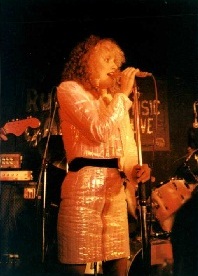
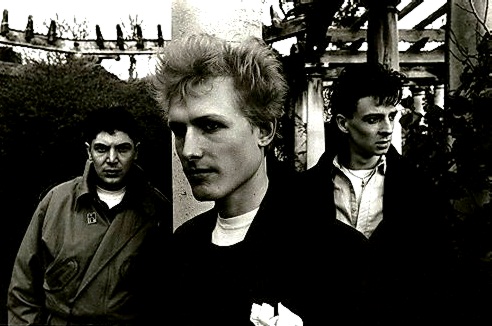
Nottinghamshire’s FATAL CHARM were, like several bands during the post-punk era, on the cusp of the big time on several occasions during their career but never quite broke through despite opening for ULTRAVOX and OMD.
Despite the nucleus of Sarah Simmonds and Paul Arnall having recorded a number of outstanding singles, they never got the recognition they deserved.
First making waves on their local scene in 1979 as an all male new wave band, they made contributions to a Dead Good Records LP sampler ‘East’ which also included those great white synth hopes B-MOVIE who later featured on the legendary ‘Some Bizzare Album’. However, it was only when Arnall recruited Simmonds as lead vocalist that FATAL CHARM began to make real progress.
The fresh female fronted outlook impressed and eventually led to tours supporting ULTRAVOX and OMD in 1980. The excellent first single with the new line-up ‘Paris’ was issued on Double D Records in 1981 and produced by Midge Ure. Indicative of their potential, ‘Paris’ had been given a low key independent release in 1979 voiced by the band’s main songwriter Arnall. But with the lyrics unchanged and now embroiled in Simmonds’ feisty passion, it gave a freshly charged sexual ambiguity to the long distance love story written in the days before the Channel Tunnel.
This new version reflected the synth flavoured sound of the period and obliquely connected FATAL CHARM with the New Romantic movement. Meanwhile, its more guitar driven flip ‘Christine’ showcased the band’s punkier roots that had more of an affinity with BLONDIE and X-RAY SPEX.
However, line-up changes and label issues stalled any momentum gained on the ULTRAVOX and OMD tours via flexi-disc giveaway ‘Western Laughter’ / ‘Dark Eyes’.
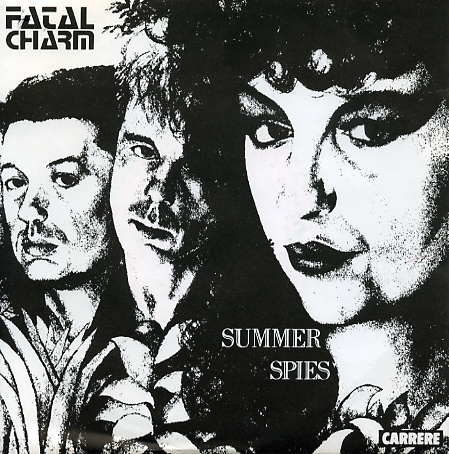
It wasn’t until 1984 when FATAL CHARM released probably their best known song ‘Summer Spies’ that things started moving again. Issued on the Carrere label, the single was championed on BBC Radio 1 by Janice Long and even edited into a jingle for Long’s show. Crossing the sweeps of OMD with the classical resonance of ULTRAVOX, ‘Summer Spies’ featured Simmonds’ dramatically melancholic voice alongside her own serene whispers. The single’s popularity subsequently led to an appearance on Channel 4’s prestigious music show ‘The Tube’ but unfortunately, a hit was not forthcoming.
The follow-up single ‘King Of Comedy’ kept up the standard while its amusing B-side ‘We’ll Just Wait For Your First Hit’ reflected on the frustrations of trying to secure a record deal.
Indeed, record label politics were to be FATAL CHARM’s Achilles Heel. And with Carrere Records distracted by their surprise No1 ‘Move Closer’ by Phyllis Nelson in Summer of 1985, the debut album ‘Endangered Species’ slipped out largely unnoticed.
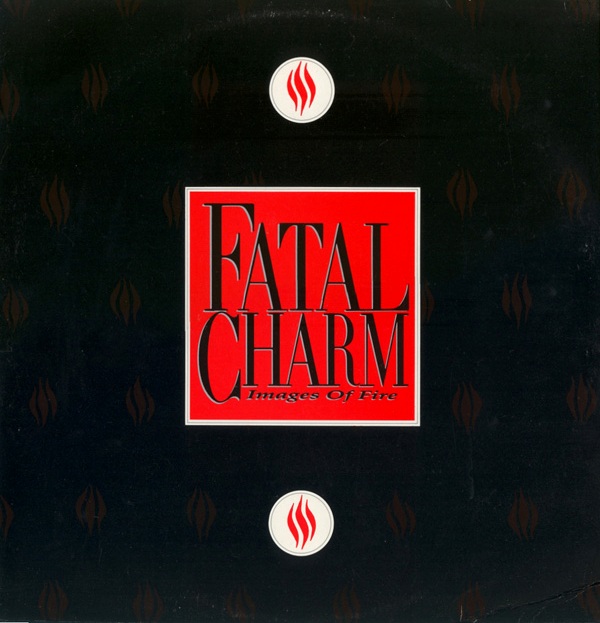
But 1986 saw the band sign to Native Records and the release of another excellent single ‘Images Of Fire’ saw them secure airplay during the crucial daytime slot on Radio1 from early afternoon DJ “woo” Gary Davies.
It made the UK Independent Charts and FATAL CHARM appeared to be on the ascent again. However, the next single ‘Lucille’ was not afforded such treatment and repeating history, the parent album ‘This Strange Attraction’ did not emerge until 1989 due to record label issues. Released on their own Really Great Records, Simmonds and Arnall were tiring of the label upheavals that were stalling FATAL CHARM’s progress.
So coinciding with the post-Second Summer Of Love environment in the wake of Acid House, the duo changed their name to STATE OF GRACE and signed to 3rd Stone while FATAL CHARM was placed in hiatus. They released ‘Pacific Motion’ in 1994 which led to a deal with RCA in the US for their 1996 album ‘Jamboree’. STATE OF GRACE continued until 1998 while Arnall also ran a parallel solo project UNDERGROUND HOUSE ORCHESTRA.
In 2005, FATAL CHARM relaunched and issued the self-released ‘Pop’ via their website. More rock orientated than their previous work and featuring new versions of material such as ‘Paris’ and ‘Western laughter’ alongside new compositions, for the first time FATAL CHARM appeared to be in step with the contemporary music scene, thanks to the success of acts such as CURVE and GARBAGE. ‘Pop’ reinvigorated interest in FATAL CHARM, leading to the self-released compilation CD ‘Plastic’ featuring all their singles and B-sides from back in the day including the free flexi-disc from the ULTRAVOX and OMD tours.
Today, FATAL CHARM continue to play live in their home city of Nottingham and occasionally record. Paul Arnall and Sarah Simmonds kindly took time out to chat to look back at their career…
How did the FATAL CHARM sound come into being and who were your influences?
Paul: In the mid ’70s, I worked at a record shop called Select-A-Disc in Nottingham. As the concept of dividing artists by genre didn’t exist in those days, it was constantly a voyage of discovery; CAN sat next to CHIC, FUNKADELIC next to FREE etc… so my influences were many.
At the time of forming FATAL CHARM, I was probably listening to a lot of new wave stuff – WIRE, TELEVISION and TALKING HEADS along with CHIC and CAN.
When did you become interested in using synthesizers and what was your first synth?
Paul: In the early ’70s I played in a band with a very talented keyboard player, Paul Simons, he’s a bit of a boffin. Around ’73 he made his first synth, a couple of years later he reproduced his first Minimoog copy; you’d really have to look at it very closely to realise it wasn’t the real thing. It sounded amazing and even had the same tuning problems when it got hot. It was used on the first FATAL CHARM demos along with a Solina string machine, and the first keyboard I owned, a Hohner clavinet. Paul still dabbles making synths; the last time I saw him he was working on a Moog Modular 55 and still had some spare Minimoogs for sale, he can be contacted at svitch@ntlworld.com
How did Midge Ure become interested in producing you?
Paul: I’ve no idea; it was all handled by our then label Double D…
Sarah: Of course, we went on tour with ULTRAVOX before we recorded with him, but I think it was a package deal!
‘Paris’ in particular does have his stamp on it. What do you remember about recording it and how do you think it stands up now?
Paul: The version of ‘Paris’ produced by Midge is really no different an arrangement to the original, the major difference was we were able to use Midge’s Yamaha synth which gave it his sound. ‘Paris’ is a song of its time and not one of my favourites.
Sarah: Ha ha! Yes, it goes too fast for Paul these days! We have played it a couple of times in the last couple of years but Paul grumbles too much so we have to leave it out!
You toured with ULTRAVOX and OMD in 1980, how do you think FATAL CHARM went down with those audiences and what are your own favourite memories?
Paul: The response was fantastic, sadly we had no single to promote… not great planning from our record label. But very fond memories as it was the first time we’d played venues of that stature.
Sarah: I have a memory of wearing a leotard with a pale green and pink jacket over the top! Not one of my better fashion choices… I also remember playing at the Hammersmith Odeon in London and having to go onstage without a soundcheck. The audience were already coming in and we were frantically setting up, while roadies checked that everything worked. Seat of the pants stuff – character building!
‘Summer Spies’ is the song you are best remembered for. Can you remember its genesis and how the song’s expansive atmosphere developed in the studio?
Paul: Hmm, it was 30 years ago!!!! It was influenced bizarrely by HOT CHOCOLATE… I was having a post-gig pint and a HOT CHOCOLATE song was playing on the juke box. I noticed it had no fills in the drum track. It was something I’d always wanted to try so that was my starting point as I really liked the idea of a constant rhythm. I’d come up with this nice rhythm pattern and basically jammed around it with a Roland Jupiter 4.
Originally it was all Jupiter 4 and 606 drum box recorded at home on my old Akai 4000DS. We were able to get some studio time in Chappell Music 8 track studio, we replaced the 606 with the Linn Drum and added grand piano. My original intention was for it to have no guitar on it, but when I went down to do the 12″ version we needed to expand it. Our engineer suggested a guitar solo but I had no guitar with me. Eventually they searched around and found an old Yamaha guitar with no top E or B strings so the guitar solo was played just on the G string.
‘Summer Spies’ got a lot of radio play with Janice Long being a particular champion while you also appeared on the TV show ‘The Tube’. Do you have any thoughts in hindsight why it didn’t become a hit?
Paul: Our record label Carrere were a small label and to be honest, really didn’t understand us. I think ‘Summer Spies’ was released at the end of July, it picked up some nice airplay but had no tour to promote it. And in fact, it was Sarah that got us ‘The Tube’ appearance… by that time it was November. Even so, our chart position the next day after ‘The Tube’ was 97, I think it had dropped to around 130 by the time the chart was released as the shops had sold out.
Sadly there were no copies left in the warehouse to ship out to the shops. As it was coming up to Christmas, all the pressing plants were busy doing the Christmas runs. By the time they’d pressed more, it was mid-December and too late, c’est la vie…
Sarah: Carrere’s boss admitted later that the song should have been a hit, and apologised.
Your debut album ‘Endangered Species’ finally appeared in 1985. Why did it take so long for it to be completed and how did it affect the band’s momentum?
Paul: This was a quick release if you compare it to RCA who took over 2 years to release the STATE OF GRACE album. The album was recorded over 2 weeks, early ’85 I think. It took so long because as mentioned, Carrere didn’t understand us… on one occasion when listening to a batch of demos, the
A&R guy stopped the tape and asked us why the song was so slow! I looked at Sarah, she looked at me and we both knew we were doomed… ‘Hold On’ was later released on ‘This Strange Attraction’.
1986’s ‘Images of Fire’ was another great single of yours which appeared to cross Kate Bush with ULTRAVOX?
Paul: I loved Kate Bush and loved the first 3 ULTRAVOX albums; I can’t say either of them influenced ‘Images of Fire’.
Why did the parallel STATE OF GRACE and UNDERGROUND HOUSE ORCHESTRA projects emerge alongside FATAL CHARM?
Paul: STATE OF GRACE was a forced name change; our label 3rd Stone believed, and rightly so, that the FATAL CHARM name had been around for too long to be able to get interest from major record labels. They were proved right as we were signed to RCA New York in ’93.
UNDERGROUND HOUSE ORCHESTRA is just a platform for me to release my own recordings. I originally planned to do one off albums under different guises across different genres of music. My first recording was as Space Harriers in Transit (trash pop), followed by Projectile (trance) released on Native Records, Fantastic The Feedback (pop) and Bombshell (homage to CAN)… but even I got confused so I decided to cover the lot under tUHO.
FATAL CHARM returned in 2005 with the album ‘Pop’ and you seemed to be in synch with the scene at the time with acts like GARBAGE and CURVE?
Paul: As my main instrument is guitar, I just fancied re-recording some of the old songs with just guitars and minimal keyboards, as I can never leave anything alone. Some more keyboards were added when I remastered the CDs in 2010.
Despite all the upheavals, the core of FATAL CHARM remains Paul Arnall and Sarah Simmonds. What has enabled you both to still be able record and perform together after all these years?
Paul: Ever since 1981 when the original line-up split, it’s just been the two of us, whether as FATAL CHARM or STATE OF GRACE, what can be better than recording and performing with your best friend.
Sarah: Ah, thanks Arnie! And we always have a lovely cream cake or other tasty snack when we meet J.
FATAL CHARM still play live occasionally in the Nottinghamshire locality. Are there any future plans?
Paul: This spring or early summer we’ll be playing again as STATE OF GRACE (we fancied a change)… we’ll be playing songs from all decades.
Is there anything you would have liked to have done differently back in the day?
Paul: Get a decent manager!!!!
ELECTRICITYCLUB.CO.UK gives its warmest thanks to FATAL CHARM
Their singles including ‘Paris’, ‘Summer Spies’ and ‘Images Of Fire’ are all collected on a CD entitled ‘Plastic’ which is available from their website along with their debut album ‘Endangered Species’, 2005’s comeback ‘Pop’ and all the STATE OF GRACE material.
A selection of FATAL CHARM’s music is available via Amazon and iTunes including their most recent collection ‘April 13’ and a reworked 2010 version of ‘Summer Spies’
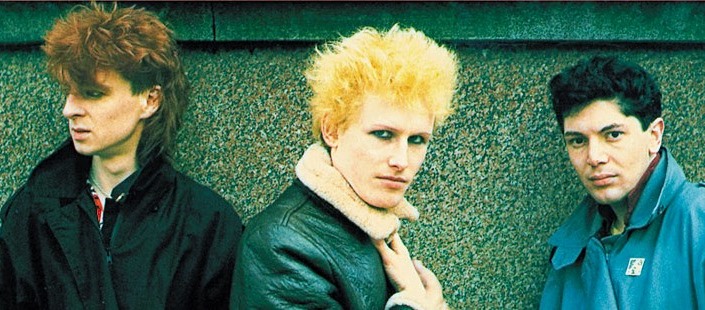
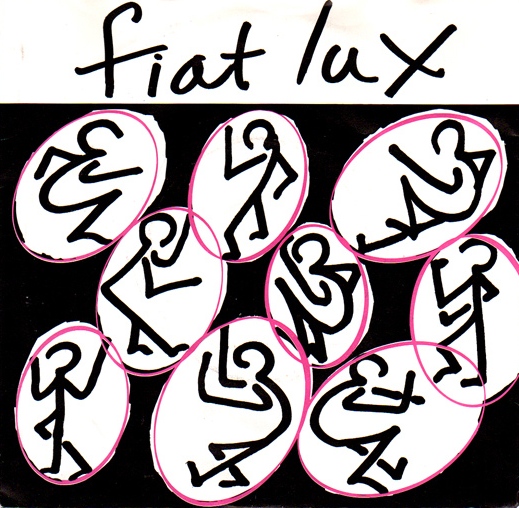
Named after the Latin phrase meaning “let there be light”, FIAT LUX were one of the most promising of the new synthesizer based acts that emerged following the success of DEPECHE MODE and SOFT CELL in 1981.
Founded in 1982 by drama graduates Steve Wright (lead vocals) and David Crickmore (guitars, bass, keyboards, backing vocals), the pair had met at college in Wakefield. They formed JUVENILES, a new wave band that had two songs on a 1980 independent compilation called ‘Household Shocks’; Crickmore was the more flamboyant of the pair, wearing make-up and dying his hair regularly although Wright was no less outrageous, with the visual persona of a more butch Marc Almond!
Still intent on pursuing an acting career after his studies, Wright joined the Yorkshire Actors theatre company where he met noted musician Bill Nelson who had been the leader of cult prog rock band BE BOP DELUXE and scored a UK Top 10 solo album called ‘Quit Dreaming & Get On The Beam’ in 1981.
Suitably impressed by a demo Wright had given to him, Nelson produced two tracks ‘Feels Like Winter Again’ and ‘This Illness’ for release on his Cocteau Records label in November 1982. This was an important symbol of recognition as only the year before, Nelson had produced A FLOCK OF SEAGULLS ‘(It’s Not Me) Talking’ and its release on Cocteau had brought the Liverpool quartet to the attention of Jive Records. The subsequent deal eventually led to them breaking America with hits such as ‘I Ran’, ‘Space Age Love Song’ and ‘Wishing (I Had A Photograph Of You)’
As a calling card, ‘Feels Like Winter Again’ was musical triumph. Driven by Nelson’s resonant drum machine, the cutting mix of synth and treated guitar over an electronic pulse juxtaposed with real bass guitar made an emotive statement, even without Wright’s sombre tale of broken love affairs. The song didn’t just feel like winter, it sounded like winter… chilling and resigned but simultaneously pretty with a glint of light in the darkness. The B-side ‘This Illness’ was more moody and featured Bill Nelson’s distinctive E-bowed infinite guitar alongside some sparkling synth work.
Wright and Crickmore had been performing live as a duo under the name HE’S DEAD HERMAN but had wanted to expand their line-up as FIAT LUX. The musician they enlisted was Bill Nelson’s sax and keyboard playing brother Ian who they had met independently on the Wakefield gig circuit. The bolstered line-up was timely as ‘Feels Like Winter Again’ had gained radio airplay from notable DJs on BBC Radio1 such as Peter Powell, Kid Jensen and Janice Long.
This attention also got them a support tour with BLANCMANGE and led to them signing to Polydor Records in March 1983. With a £60,000 advance for the first year, among the new equipment purchased were a Roland Jupiter 8 and a Roland TR808 drum machine while the next recording sessions were produced again by Bill Nelson. However, Polydor’s A&R were unhappy with his take on ‘Photography’ which had been agreed as the band’s first major label release. This was a particularly unfortunate period for Bill Nelson as later in the year, he had his cutting, trebly mixes rejected by GARY NUMAN for his ‘Warriors’ album. However, Numan later admitted in hindsight that Bill Nelson’s production vision may well have been “ahead of his time”.
A brand new version of ‘Photography’ produced by Hugh Jones, who had worked with SIMPLE MINDS, THE TEARDROP EXPLODES and ECHO & THE BUNNYMEN, was issued that summer. Less immediate than ‘Feels Like Winter Again’, ‘Photography’ took several listens to appreciate as its structure was unconventional. But the interplay between Wright’s crooning lead vocal and Crickmore’s repeat staccato harmony was a total delight. The song’s climax was led by a bursting lift from Nelson’s sax but despite its steadfast power, ‘Photography’ lacked an obvious hook for it to be a hit and didn’t chart.
In a softening of the blow, FIAT LUX went on a well received tour opening for Howard Jones in December 1983. On a crest of momentum from that particular success, a new single ‘Secrets’ was readied for the start of 1984. This beautifully haunting ballad was bolstered by what appeared to be a violin solo; it was actually performed using a Yamaha CS80 by Mike Timoney, a musician who had played on ‘Are We A Worker?’ from CHINA CRISIS’ first album. ‘Secrets’ reached No.65 in the UK so progress was gradually being made.
In Spring 1984, the band issued their outstanding fourth single ‘Blue Emotion’. In an age of greed and “self help – help yourself”, the song was, like BUCKS FIZZ’s ‘Land Of Make Believe’, a veiled warning on the dangers of Thatcherism! Musically, this was their most accessible offering yet with a fabulous sweeping ‘2001’ theme from Ian Nelson via a MemoryMoog and the now trademark Wright/Crickmore Vox Matrimonium. Unfortunately, the rousing tune and the political sentiment went over the heads of most. It only reached the heady heights of No. 59 in the UK singles chart despite an appearance on an Old Grey Whistle Test synth special also featuring KRAFTWERK, Jean-Michel Jarre and Howard Jones.
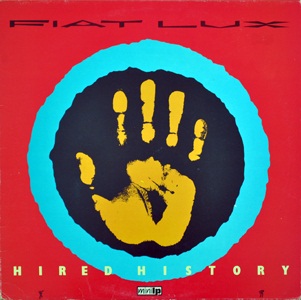
Sensing stagnation and with the debut album still not ready, Polydor swiftly issued a six track EP ‘Hired History’ containing ‘Photography’, ‘Secrets’ and ‘Blue Emotion’ plus their corresponding B-Sides as a stop-gap. All the singles were sequenced onto the first side thus exposing the trio’s penchant for less accessible theatrics on the second side.
‘Sleepless Nightmare’ in particular sounded like Bertolt Brecht gone electro although the funky ‘Aqua Vitae’ (which ironically sounded like something from Gary Numan’s ‘Warriors’) showed some promise for the upcoming album. Autumn 1984 saw the release of the disappointing ‘House Of Thorns’ but this blip was nicely overcome by the brilliantly superior pop of ‘Solitary Lovers’ not long after. However, neither made an impact on the charts and the album shelved by Polydor.
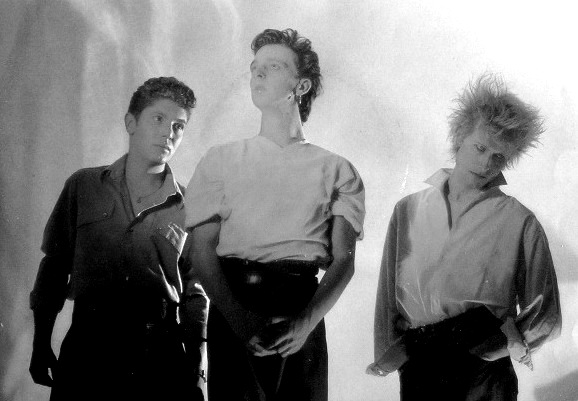
Disillusioned, Crickmore departed FIAT LUX shortly after. Wright and Nelson soldiered on briefly but without the chemistry of the founding Wright/Crickmore axis, FIAT LUX were not the same and they quietly disbanded.
After FIAT LUX, Crickmore rediscovered his love of folk music and founded THE DURBERVILLES. The combo went on to present a folk show on BBC Radio Leeds and still tour regularly. Meanwhile, Steve Wright joined cult electronic act CAMERA OBSCURA (not the Glaswegian hipster faves) but eventually left music altogether to work in television. Ian Nelson continued to work with his brother Bill. However, he sadly died in April 2006 on his 50th birthday.
But with the accessibility of the internet, in around 2008 several music bloggers were offering a FIAT LUX compilation entitled ‘Fact Ut Vivas’ for free download… this turned out to be a high quality rip from master tapes of their shelved debut album, allegedly leaked by FIAT LUX themselves after their contract with Polydor ended.
From it, the brooding uptempo North European melancholy of ‘Breaking The Boundary’ was easily as good as BLACK’s ‘Everything’s Coming Up Roses’ while ‘Embers’ came over like a distant cousin of PINK FLOYD’s ‘Wish You Were Here’. FIAT LUX were always keen to combine electronics with real instruments such as sax, marimbas, drums, bass and guitars so here they were going virtually the whole acoustic hog. Featuring all the Polydor singles minus ‘House Of Thorns’, ‘Fact Ut Vivas’ would have made an impressive debut flaunting FIAT LUX’s instrumental versatility and diversity. Alas, this missing album is why FIAT LUX are still one of the forgotten acts of the Synth Britannia era.
Apparently, discussions between reissue label Cherry Red and Universal Music (who now own the FIAT LUX tapes) to release ‘Fact Ut Vivas’ began in 2009 but have so far come to nought. The band only officially released 13 songs in their recorded career and none are presently available even digitally! However, anything is still possible; but until a formal release is sanctioned, make Google your friend… there could a nice surprise 😉
We use cookies to ensure that we give you the best experience on our website. If you continue to use this site we will assume that you are happy with it.






Follow Us!