
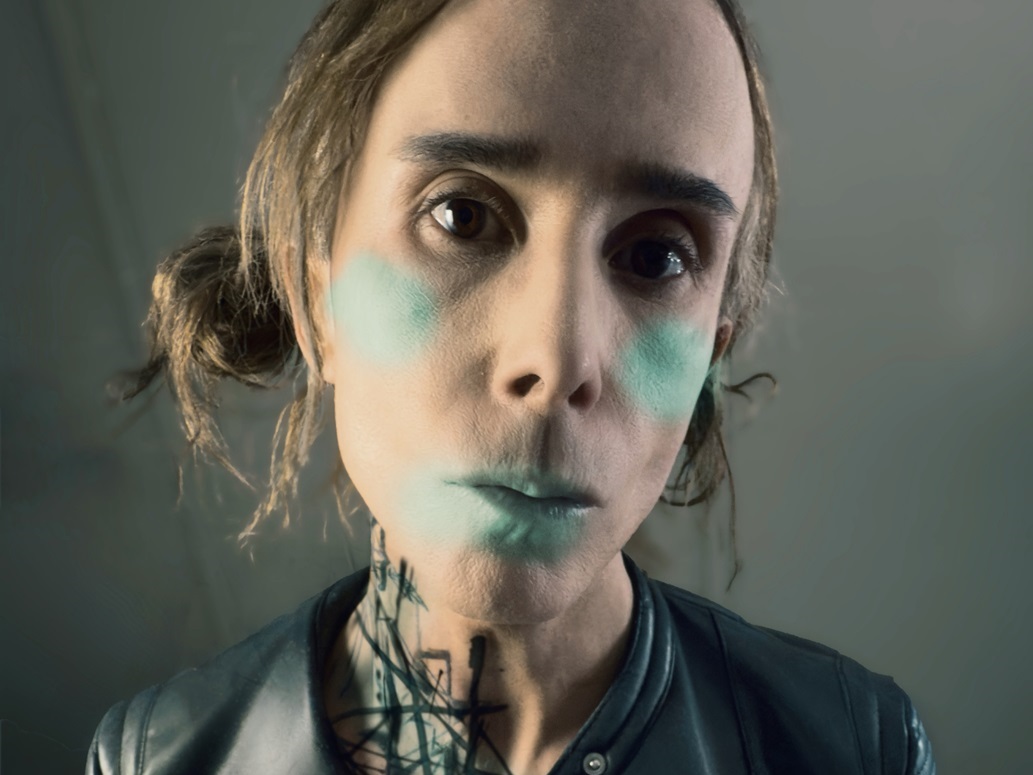
Featuring the hit singles ‘6 Underground’ and ‘Spin Spin Sugar’, SNEAKER PIMPS’ 1996 album ‘Becoming X’ turned out to be quite prophetic for one of its members Chris Corner.
While he would take on lead vocals after Kelli Ali’s departure on the subsequent albums ‘Splinter’ and ‘Bloodsport’, Chris Corner would soon venture out on his own as IAMX.
After the 2004 debut IAMX long player ‘Kiss & Swallow’, Corner relocated from London to Berlin which proved to be the ideal backdrop for the recording of ‘The Alternative’, ‘Kingdom Of Welcome Addiction’ and ‘Volatile Times’; this trilogy captured an electro Gothic aesthetic that combined the theatrics of Weimar Cabaret with themes of sex, alienation and dependency with strongly melodic songs swathed in an accessible grandeur.
Also a visual artist who has directed for Gary Numan, after making videos in Los Angeles to accompany the singles ‘Come Home’ and ‘I Come With Knives’ from the album ‘The Unified Field’ which brought in Jim Abiss (who had engineered ‘Becoming X’) as co-producer, Corner relocated there in 2014. The West Coast of the USA has been his creative base since and led to very productive period with ‘Metanoia’, ‘Everything Is Burning’, the instrumental record ‘Unfall’, ‘Alive In New Light’, the ‘Echo Echo’ acoustic album, ‘Machinate’ and the two volume ‘Fault Lines’ series among the works released.
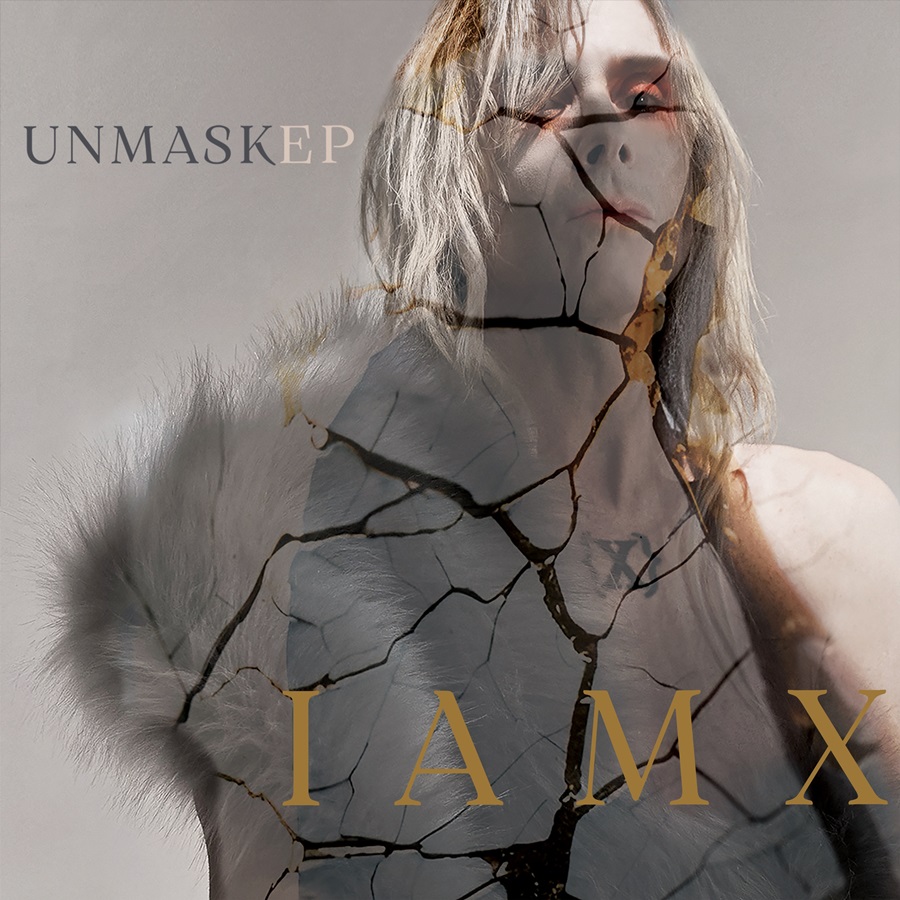
Continuing his unconventional creative public therapy, Corner embarks on another European tour as IAMX to coincide with the release to streaming platforms of the previously tour-exclusive 4 track EP ‘UNMASK’ and the remix collection ‘IAMIXED’.
Chris Corner kindly spoke to ELECTRICITYCLUB.CO.UK about his career to date and his transition into darker alternative electronic sounds to herald his next creative chapter.
You moved to Berlin in 2006 and then Los Angeles, how important has location been to your creative mindset?
Super important. It’s been essential to my stability, mental health, creative flow, and finding my purpose and my place. Environment is very important to me.
I lived a lot of years in the city and I thought it was kind of sexy and exciting and cool, but in the end, it pretty much led to a breakdown and mental health crisis. It wasn’t just the city, it was like combined city stimuli and overwork and existential crises and all of those combined.
I’ve moved from London to Berlin, that was a great move. Again, it was like each one was sort of relieving mental pressure, I think. And arriving finally here, which is very much just pure nature, is just what I’ve always been looking for.
I moved from Berlin to LA, spent a few years there, and then ended up in the desert out near Joshua Tree. First, spent a few years there, kind of indulging that kind of alien space and just sort of stayed in the area.
I still have everything here. I still have my creative spaces and I still have parties and people come out and still do all of those human things. But I think that quick and easy access to the universal feeling is what I’ve always been looking for. That shows in my, not necessarily in the work or the quality of the work, but just the life feeling that I’m carrying now. And it’s been essential.
Although you have always used synths, what prompted the shift into darker electronic sounds and use of modular hardware?
As much as I love analog and digital synths, there’s this sort of workflow that always felt limiting and a little bit strict. You know, you always have oscillators, you always have frequency modulation, you always have this, you always have that, a filter. In fact there’s a certain structure that is a little bit limiting.
The beauty of modular and this modular mindset is this sort of limitless, experimental way of piecing things together. I’ve always been looking for that, whether it be inside the box with plugins and digital synths and things like that, or outside.
When modular came into my life, it was introduced to me by cEvin Key from SKINNY PUPPY. It just opened this doorway into another space of electronic music that I’d always been yearning for, a more organic, creative, immediate space while also being hands on. A little bit like when you sculpt things.
I still feel like humans need to sort of be in contact with what they’re doing. And that’s one of the frustrating things about always working in computers, that we miss this tactile thing. Modular gave that back to me in a weird way because obviously I grew up with electronic music, but also I’m a guitarist and I have a traditional instrument background. And I can play piano and write songs in those ways. So modular brought a bit of organic energy into that electronic realm. The spontaneity and unpredictability of it made it feel more human than anything else.
What are your favourite electronic tools at the moment for the creative and production process?
There’s a really superb modular piece of gear called Morphagene, which is basically a granular sampler. It’s very expansive in its scope and you can do incredible things with it, manipulate things that you put into it in very, very unpredictable and otherworldly ways.
That’s a great thing, and it’s also a hands-on thing. In the box, if I’m working on my laptop or on my desktop computer, in my digital audio workstation, I would be using plugins like Portal. It’s a very interesting plugin by Output, an effects unit, but it also reacts in very unpredictable ways. And then I’ve got traditional mods of traditional synthesizers, like the SEM by Arturia.
I’m always looking for something that is pretty much going to surprise me.
How did excellent songs on ‘UNMASK’ like ‘Artificial Innocence’ and ‘There Will Be Times When I Will Need To Hurt You’ come to be left off the ‘Fault Lines’ albums series?
They weren’t ready when those albums were being finished. They were always on the periphery, not quite lyrically part of that story. For instance, ‘There Will Be Times When I Need To Hurt You’ was an incomplete song from many, many years ago. I started that in my time in Berlin, so that’s how old that one is, ancient. But it never made it onto any of the albums. It just wasn’t complete.
Certain things get thrown to the back of the room and you just sort of forget about them actually. There are many moving parts, particularly if you’re producing your own music and you’re working by yourself all the time. There’s nobody else to sort of reflect what could be. You’re kind of responding to the moment quite often. And it’s only now and again you have this feeling of like, “Oh, I need to really be organised and figure out what the hell I have here.”
But most of the time I’m really just working within my own head. I’m very unorganised in that machine. It’s just the way that I’ve always done things. It’s always, if I can keep it all in my head, then it must be relevant for what it is now, rather than thinking I should crowbar something in. So that’s my theory, that I subconsciously know what needs to go on that album. Those songs were just floating around.
When we tried to do the more fractured approach of releasing things in between albums, not necessarily being so structured about it, ‘Artificial Innocence’ was also kind of bugging me. I knew there was something special in it that I wanted to explore, and it wasn’t quite finished. So they just came to the surface.
And really, if I’m honest, sometimes by accident I accidentally find something that I’d forgotten about. And ‘There Will Be Times…’ was one of those tracks where I just found it and then realised, “Oh, it’s not gonna take that much to bring this into my modern self”. So yeah, it’s a bit of accident, it’s a bit of knowing, it’s a bit of different timing with those two tracks.
How do you look back the making of your two ‘Fault Lines’ albums?
It’s a combination of dread and pride. It’s been a super chaotic time personally. So the fact that those albums were able to be made at all, I’m pretty proud of. Cause there’s a lot of life distractions, but in it there’s a lot of intimacy and privacy that I just can’t help but write about. That’s how I always am.
So I’m not looking too deep into that right now. I think in a few years I’ll look back and try and process this with a bit more clarity and distance. But generally, I’m proud of them.
Even though I can always pick apart my work and say, “Yes, I see that is flawed because of this” or “That’s great because of this” sometimes you just have to complete and move on. That’s generally a high priority for me. I don’t think too much about perfectionism in the bigger picture, even though there is a certain element of perfectionism within the technicality of doing my work.
For me, it’s more about prioritising movement and getting things out. Sometimes I’ll hit it really well with a whole record, and sometimes maybe not. I’m pretty proud of all my work, so I’m proud of those too.
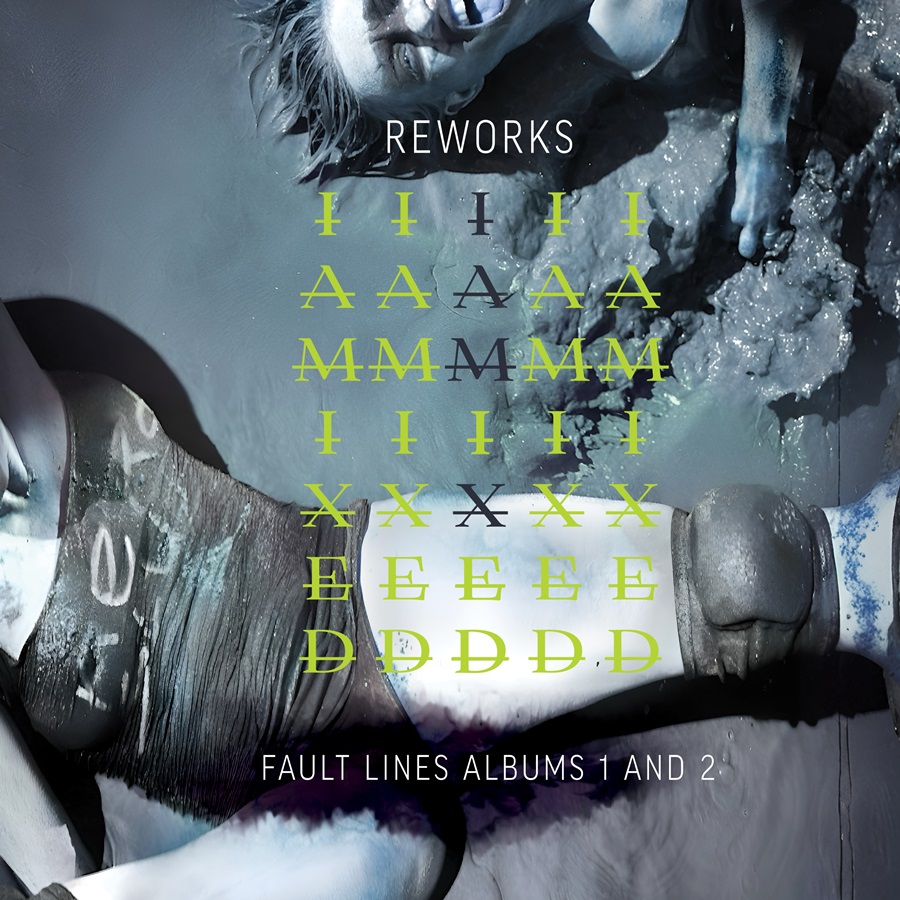
‘The Truth (Mimetic Hexes Rework)’ is really good, so for ‘IAMIXED’, how did you choose which songs to have reworked and did you set a brief for the various remixers or did you give them total interpretive freedom?
How do we pick them? Probably a mixture of randomness and some kind of personal need to exorcise my ghosts. I think ‘The Truth’ was super precise in its meaning about what was happening at the time to me privately. So I felt like I needed that to go on. It was super relevant to me. And then other ones are more like, “Well, that’s just a banger, so let’s do that”.
I also left a couple of choices to the remixers where they could decide which track they wanted to do. Like the Holy Braille track, I think they decided they wanted to do ‘Disciple’. So it was a combination of those things.
‘The X ID’ (clubdrugs Rework) is really good and might be the best of the ‘IAMIXED’ set, but is there a favourite for you?
It depends on my mood, depends on what I’m doing in the day, depends where my head is. If I’m driving along the road and suddenly I remember, “Oh, that’s that song,” and I like that. I think they’re all amazing. And I’m not just being kind of an ass-kissing, people pleaser. I truly believe that.
What is the lot of the independent artist now? You have proved it can work but what have been the pitfalls?
Yeah, surviving as an indie artist is exceptionally challenging. I think the hardest thing is the financial insecurity. You’re basically selling a product that is unpredictable, and you’re selling a product that’s based on culture and art. It’s a vague product if you do it in a way that is not a commercial cash grab. If you do it with your heart, culture changes, technology changes, everything’s changing all the time, and the pace of things is accelerated.
The biggest challenge is adapting, and the constant anxiety about having to adapt just to be able to sell a product, and being aware of that fact. I could say, “Well, maybe I should just always think about writing hits…” but I’m not in it for that.
You have to really balance this feeling of survival with love. That’s the sticky thing about being in the art business of any kind. Everybody’s looking for authenticity, unless it’s pop sh*t of course, but to have authenticity, you can’t constantly compromise for financial security. So what if my own authenticity isn’t sellable? Then what does that mean? Does that mean I have to change myself, change my product?
The anxiety is a bit of an engine, and it does drive you to improve your methods. I don’t think it necessarily improves your art, because it can add a level of doubt all the time if you’re not financially successful. I don’t like that about the music business, because I’ve met many incredible people over the years, and they’ve made incredible art and sold nothing. But I guess that’s just life. It’s an unpredictable, wishy-washy, intangible business. We’re constantly grabbing for what we can know about it and understand to make the best move.
There’s no structure apart from the structure that you make yourself. So you’re constantly creating your own industry in a way. Nobody ever comes to you and says, “You’re doing this”. You just have to create it on every level — not just the music these days. You have to create everything: content, tours, so much. That’s the lot of the indie artist.
How are you handling today’s social media world in terms of the IAMX brand, have you accepted and altered your approach over the years?
No, I haven’t accepted it. I wish I did. And I’m trying. We’re trying to dig a bit deeper now, experiment with a bit more of a creative approach to respond in different ways. I’m trying to get my head into it more.
It’s always been lacking because I hate it. I can say that with certainty. I’ve questioned whether I hate it or I’m just avoiding it and being lazy, but I think I just hate it. It’s just not attractive to me, the whole thing. I’m trying to find a way in, to be able to provide what I do best—which is the content to a certain degree—and to be mildly connected to it. I think a social media person needs to be good at doing that, but also have this deeper connection to the creativity of the project that’s happening. It needs to be very responsive.
It’s a difficult thing to find, because I don’t know if anybody likes social media anymore. Does anybody like it or is it just a grinding poison? I don’t know. It’s a very strange area, that whole thing. It offers a lot — well, it promises a lot all the time. It’s constantly promising you this thing, and that’s the addiction. You think that you can promote yourself massively, and you can grow, and you can do these things, and there’s always possibility, but it doesn’t quite do it unless you’re doing fucking rage bait or something like that. So I question the whole thing.
I will continue to try to lean in. In the past I’ve just sort of cut myself off and didn’t do anything. Neither did it create some kind of mythical character of “Oh, he’s so mysterious and great, I’m gonna follow him”. That didn’t work either. So it’s like, okay, you’re either there or you’re not.
There used to be a time when artists and musicians could just not do interviews, not do anything publicly, and that would make it more interesting or attractive. Unfortunately, I don’t think those days exist anymore. I think those days are dead. So yeah, I’m trying.
Do songs such as ‘President’ and ‘Think Of England’ (which you haven’t performed for a while) still resonate with you, especially with the various tensions and flashpoints around the world?
Yeah, they do. I’m pretty proud of quite a few of those old songs in terms of how they’ve held up lyrically. I think there is a certain timelessness to what they’re talking about. Some things have changed, but generally it’s always talking a little bit about the human condition in general.
So until AI takes over everything, I think we’re still gonna be connected to those things that those songs are always talking about. The yearning for change, critique of people in power, all those things. Gender interest too. When I was talking about my own androgyny and all that kind of stuff, I did not think culture would go there. So gender interest, that’s definitely a nice surprise. There’s definitely topics in there that I’m glad have held up.
In 2011, you talked of ‘Volatile Times’ so is it timely to bring songs like ‘Ghosts Of Utopia’ and ‘Music People’ back or are you wholly focussed on moving forward?
Sometimes I catch a glimpse or a memory and ‘Ghosts of Utopia’ might come into my head, and I’m like, “Oh sh*t, that’s pretty cool”. Talking about the divided hearts of America, and that was before Trump. Politics is just a reflection of our worst intentions, right? So it’s not rocket science in a way.
I remember working on ‘Volatile Times’ and the records — I don’t know if it’s the same for other artists — because I produce everything, they deeply consume me for years. So I do like to go back to certain things. But as a whole, I feel like I exhaust most possibilities with them, spiritually at least, and then I move on.
Maybe with a lot of time. Like with a track like ‘Bernadette’, I feel like I want to go and tweak that now. But I definitely grind them into the ground when I’m working on them. They consume my whole life and my being.
I often don’t feel like I need to go back to them, possibly for live, but live is more of a response to mood as well. It’s usually building upon what’s happened on the previous tours, adding bits and bobs. It’s rarely a whole revamp of everything.
So was ‘Bernadette’ from ‘Volatile Times’ someone you knew?
Yes.
One song that still remains in your setlist is ‘Spit It Out’, why do you think that one endures?
Maybe it’s because I feel like I never finished it and it bugs me to hell that I keep wanting to try and it’s never done. People like it. I don’t know if they necessarily like it in the way that I think they do. It’s difficult to know. I don’t always have a clear perspective on what it’s all about.
People like to sing along in the chorus. It’s one of those things that you see elevates people during the show, but other tracks do too. It could just be that it’s a kind of toxic worm in my brain that won’t get out and I need to keep chipping away at it. Or maybe it’s just a good song. I don’t know.
You once did a cover of DURAN DURAN’s ‘The Chauffeur’ and even performed it at an event in Japan with Simon Le Bon back in 2003, why that song and how did that duet come about?
When I was a little kid, my sister was obsessed with DURAN DURAN and she would play the albums. I liked it a lot, but that track particularly — it was a B-side — had this heaviness and slightly more serious, dark feeling that surprised me. Because as a kid you had this cool sexy boy band, right? So when that popped up, it was a doorway into sexuality and stuff that got my imagination going.
When it came about, I was in Tokyo working on stuff for a company that Simon co-owned. They were doing this compilation and they liked IAMX and wanted covers of things. I chose that, not for the benefit of Simon, but because I loved the song and it had this childhood yearning that I felt like I could do something with, because I was that kind of artist myself and interested in that.
He really loved the version. I think he felt flattered too, and the whole thing was a sort of mini-bromance for a bit. Then he decided to come on stage while I was performing it at that little festival we did. Interesting time.
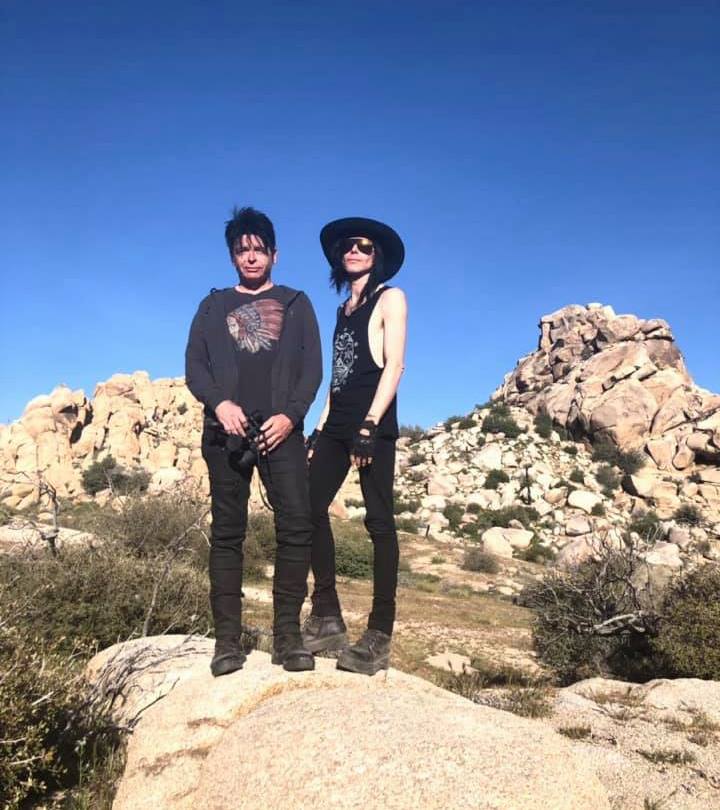
You’re friends with Gary Numan who did remixes of ‘Spit It Out’ and ‘Happiness’ while you have directed his videos ‘I Am Dust’, ‘My Name Is Ruin’, ‘Intruder’ and ‘Saints & Liars’, have you tried making music together?
No. It was always avoided. It’s interesting. I think from both of our perspectives we kind of knew that was not the thing to be doing together. We’re both very clear and purposeful about our own projects. I think we can support each other in slightly different ways, but this idea of two titans clashing on the same page never felt right.
We got the chance to work together around the video thing, and that was great. He really loved my video work, so that just felt like the way to go.
I don’t feel like I need to do that with him. I still consider him a close friend. I think that kind of collaboration can actually damage things weirdly enough. I’ve had that in the past where collaborations are just unusual. It’s a unique way to relate to someone creatively. It can actually be super uncomfortable and intimate. It can be super light and cool too, but I think with our personalities, it probably would have been uncomfortable.
You are playing Infest in Manchester and also the two UNITY festivals in Germany, what are your plans in terms of presentation and content? Do you approach festivals differently from your own shows?
You are forced to approach festivals differently anyway. I try not to, but you have to loosen your grip. It’s so technical dealing with it, and festivals are generally chaotic, so there’s a certain amount of letting go involved. That’s quite difficult with IAMX shows because I’m pretty exacting. It just feels good for me to be exacting. So there is that. I don’t particularly like festivals, but having said that, I’m going to do my best to make these extraordinarily exciting — adding a quite special setlist, maybe some old tracks that haven’t been played for a long time or never been played at all.
So it’s going to be a pretty unique set, that’s for sure. It’s going to be super bombastic and highly energetic, but also incredibly emotionally intense for everybody. I want tears and sweat. Grinding thighs.

What is next for you? Where is your creative mindset now taking you?
I’m slowly injecting a bit of writing into my weeks. I am writing, and there are a couple of exciting things happening. On a private level I’m trying to get myself into a new creative compound space. I’m moving to another location, so I’m building that up. It’s a lot of work, but exciting.
I’ve got a new person in the project, which is very cool. I’ll be writing the new record fully and properly in the fall. I’ll be doing shows until then, but also writing a little bit, preparing, mentally gathering my thoughts and material. Then the next step is to release a new record in the spring. And that’s pretty exciting to me, even though I don’t really know what it is yet. I’m kind of looking forward to it myself.
The beauty of this life is that it does always feel exciting, even if you’re not quite sure what the fuck is happening. There’s just this feeling of possibility. I love that about art and this lifestyle. Regardless of the financial challenges, it always provides a sense of excitement and purpose.
ELECTRICITYCLUB.CO.UK gives its sincerest thanks to Chris Corner
Special thanks to Victoria Jayne at Team IAMX
The ‘UNMASK’ EP and ‘IAMIXED’ are released to streaming platforms via Unfall Productions, also available as downloads from https://iamx.bandcamp.com
IAMX live dates in 2026 include:
Thale Unter dem Himmel (31st July–1 August), Hildesheim M’era Luna (9th August), Leiria Extramuralhaus (21st August), Manchester Infest (21st-23rd August), Oberhausen UNITY (18th–19th September with VNV NATION), Berlin UNITY (2nd–3rd October with VNV NATION)
Tickets to all upcoming shows are available now at https://iamxmusic.com/pages/iamx-live
https://www.facebook.com/IAMXOFFICIAL
https://www.instagram.com/iamx/
https://bsky.app/profile/iamxofficial.bsky.social
https://open.spotify.com/artist/223iUzG0kb5V166FJP9ovD
Text and Interview by Chi Ming Lai
22nd May 2026
Follow Us!