Tag: Miss Kittin (Page 2 of 2)

FRAGILE SELF Interview


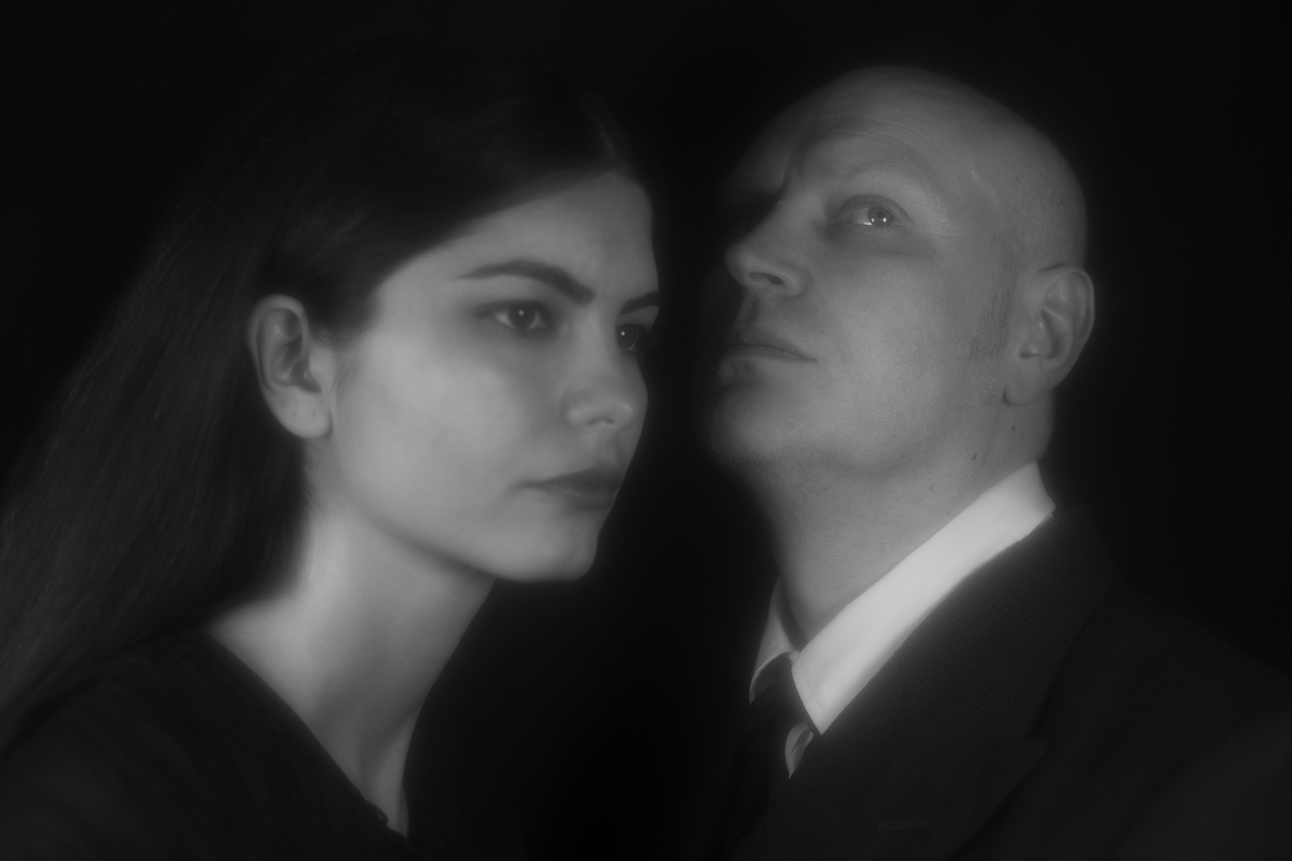
Several years in the making, the first self-titled product from FRAGILE SELF is an ambitious statement on mental health and the human condition.

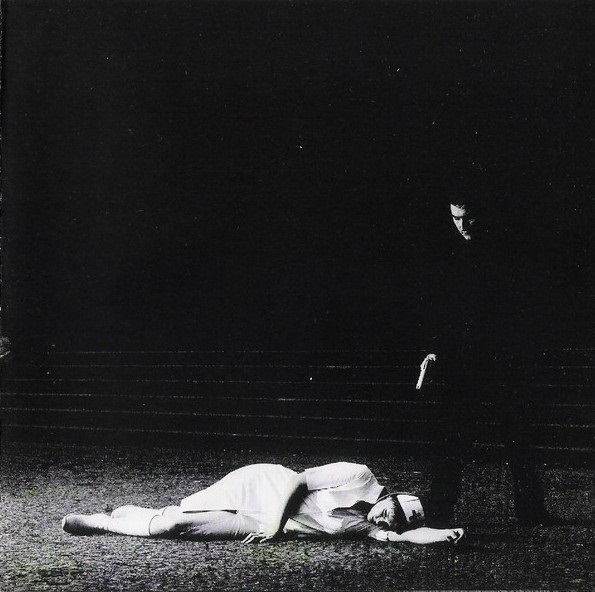
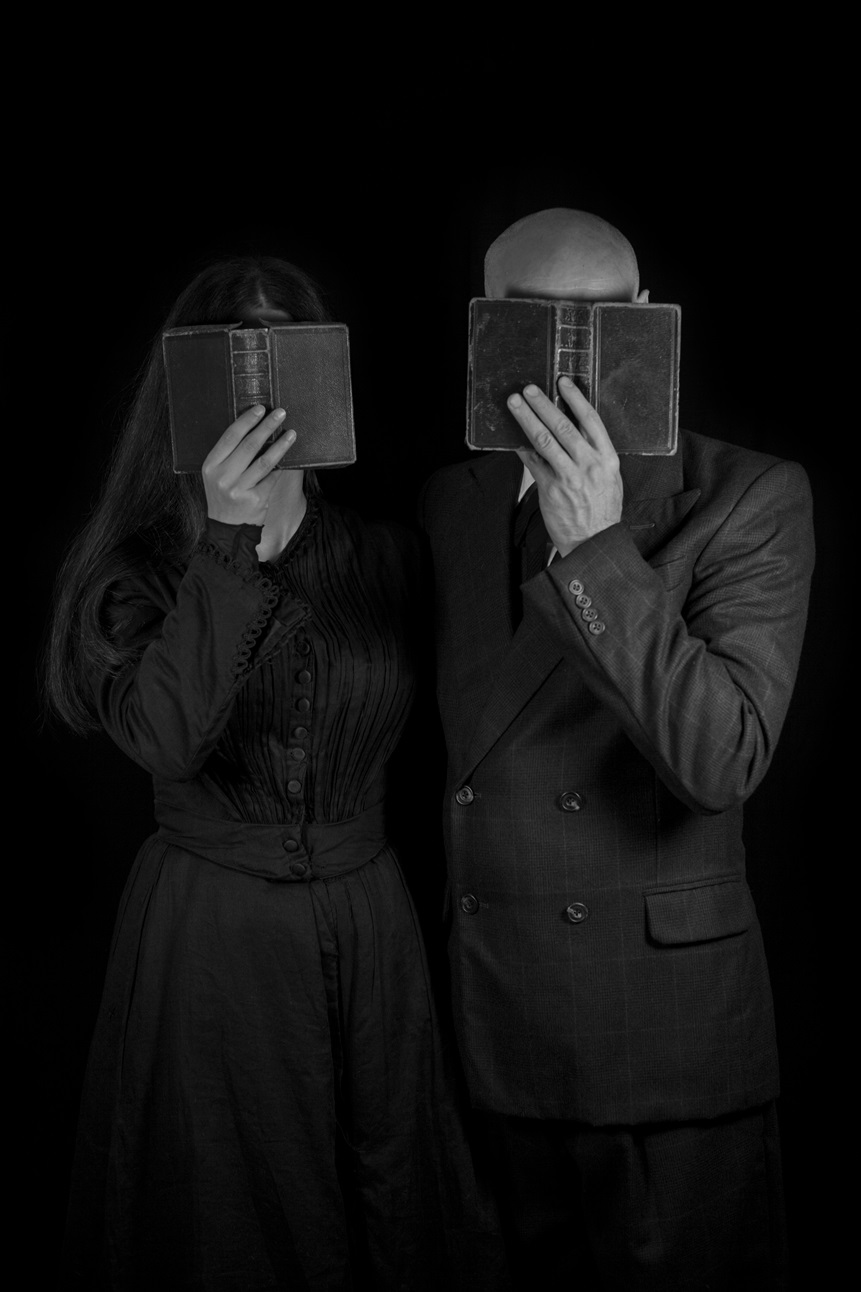
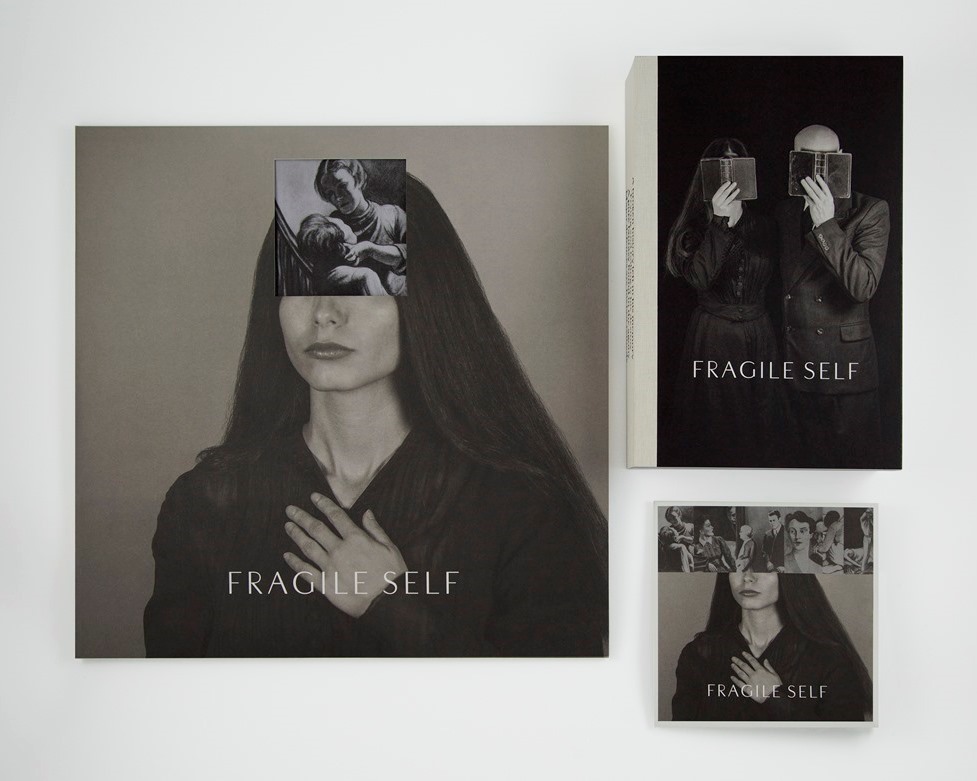
Released as a CD, vinyl album and a 480 page book which starts and ends with reconstructions of ‘before and after’ treatment for mental illness, the thoughtfully conceived project is the work of Anil Aykan and Jonathan Barnbrook.

The couple are best known for their iconic visual designs for DAVID BOWIE and JOHN FOXX. Among the subjects inspiring their music are Sigmund Freud, the founder of psychoanalysis and Bertha Pappenheim, the first patient of psychotherapy.

While the music is by its nature, not an easy listen, over ten crafted electronic tracks, ‘Fragile Self’ is intense but ultimately compelling. Anil Aykan and Jonathan Barnbrook kindly chatted about their fragile selves…

How did FRAGILE SELF come about?

Jonathan: I love music, it’s the reason I design record covers, that emotional relationship between visuals and sound is something that has always fascinated me, so it got to the point where I felt that the next step to really push myself creatively was by controlling and experimenting with both music and visuals together.

Anil: FRAGILE SELF enabled me to communicate the things that are important to me, express parts of me which I believe others would find inadmissible. I have never had up until now a tool which has been so liberating. Even when I wasn’t actively making music I am inclined to sound; the expressive capacity of human voice; speaking words, tension in speech, muttered sentences, obsessively repeated words, speaking becomes singing… I always record or note down what I find interesting when I am on the bus or walk in the street.

The subject matter of the album – mental health is quite unusual, did you feel that electronic instrumentation was the most appropriate way to express this subject?

Anil: It is unusual subject matter, but I briefly studied Art Therapy, so I was naturally interested in the subject but the specific thing discussed in the songs is mental health in relation to creativity – how far do you go towards abnormality when you are being creative and at what point does it become madness? There is also the more classic side of the pain inherent in a love song. It is just that the love in the songs here is directed towards people who have mental disorders such as narcissism or borderline personality disorder. They are of course metaphors for any kinds of love though.

Jonathan: I’ve been obsessed with electronic music since about the age of 11. The thing that interests me most about it is the changing of electronic voltage that affects pitch, timbre and time. It is like you are playing with the building blocks of the universe. The same thing that makes the sound of drum, drives the human heart to beat or fires neutrons in the brain that define consciousness. Also you will guess of course, I share an interest with Anil in more unusual and extreme states of mind.

Who has influenced the music of FRAGILE SELF?

Anil: ‘Minimal Wave’ is a big influence, bands such as OPPENHEIMER ANALYSIS and DEUX. I also really like LADYTRON. COCTEAU TWINS are very important – not just because of the way Elizabeth Fraser uses her voice but also the way they played with language. English is not my first language so when I sing in English I feel I notice more the words as abstract sounds more – this is as important as the meaning of the lyrics I write.

Jonathan: You’ve probably guessed that I’m obsessed with JOHN FOXX, He creates quite experimental music but within the confines of ‘pop’ music and with a very singular view of the world, that’s inspiring for me. Also how could I not be influenced by Bowie, not just musically but also with the way he takes influences into his music from all areas of art.

Do you each have set roles?

Anil: I am responsible for all the lyrics and most of the melodies, drums etc, I used to be a drummer, so rhythm is very important to me.

Jonathan: I tend to centre more on the arrangements and sounds. I really like the technical side of electronic music, not just production but how you can for instance create complex sounds just using simple sine waves. I help a little on the words and also make some of the melodies, but the poetry and atmosphere are very much Anil.

You mention melodies, so is FRAGILE SELF very much ‘pop’ based as opposed to being experimental, because the ‘Minimal Wave’ sub-genre can be notorious for its lack of tunes?

Jonathan: It was important that the songs followed a traditional pop structure, but what we brought into that was quite avant-garde, be it sound generation or subject matter. So there is a lot of darkness and psychosis but it is contained within a format that we hope people find easy to access. Having said that after the album comes out we will be periodically releasing remixes – that are much more experimental which explore the psychology of the songs in a less structured form.

The inevitable question, have you gone the hardware or software route with FRAGILE SELF?

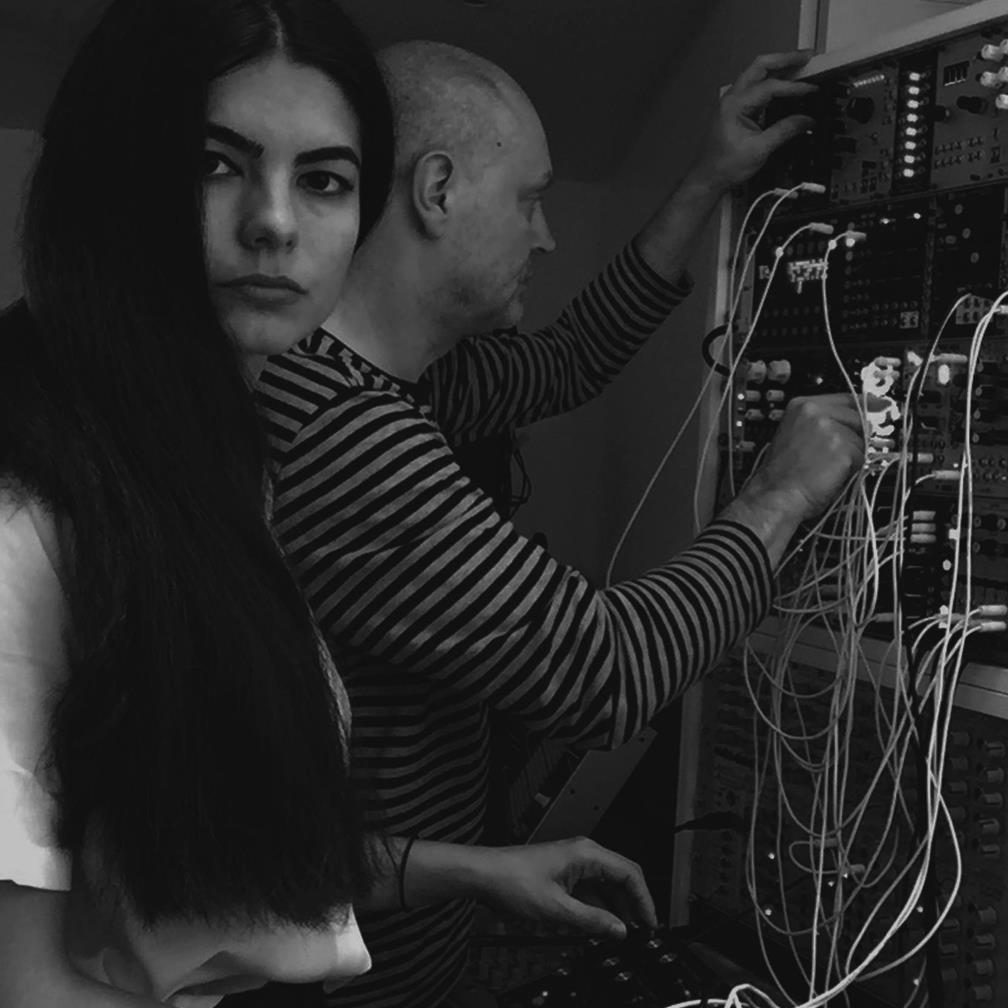
Jonathan: It’s interesting because we came to music from design, so we were very comfortable with using software for all of our creative works, however as we have progressed as FRAGILE SELF, particular on the later tracks, we have been using more and more hardware. Now we now have a huge Eurorack modular system which we experiment on a lot. A physical interface does make a real difference to the sounds you make and something generative like modular synthesis is really inspiring.

So as visual artists, how would you like to present your music?

Anil: For us the two absolutely go together, it’s not like we’ve finished the album and now it is onto the visual design. One influenced the other, the images changed the sounds we made, and the sounds had to have the exactly the right images to express them.

Jonathan: Actually It wasn’t like that in the beginning. Initially I was so desperate not to be dismissed as another “designer playing with his laptop”, that I didn’t want to do any visuals at all but it just developed naturally and we realised since we have control of the music and visuals this was the chance to do something quite pure, new and absolutely on our terms with the role the visuals had.

Anil: One of the album releases is a 480 page book and I think it is the best expression of FRAGILE SELF. It was a chance to show all of the influences on the songs, our thoughts around them. Where the lyrics are from. However we were quite careful not to say too often “this song is about this and this” but give a more poetic interpretation to give people room to create their own meaning and resonate in their own lives. That is very important.
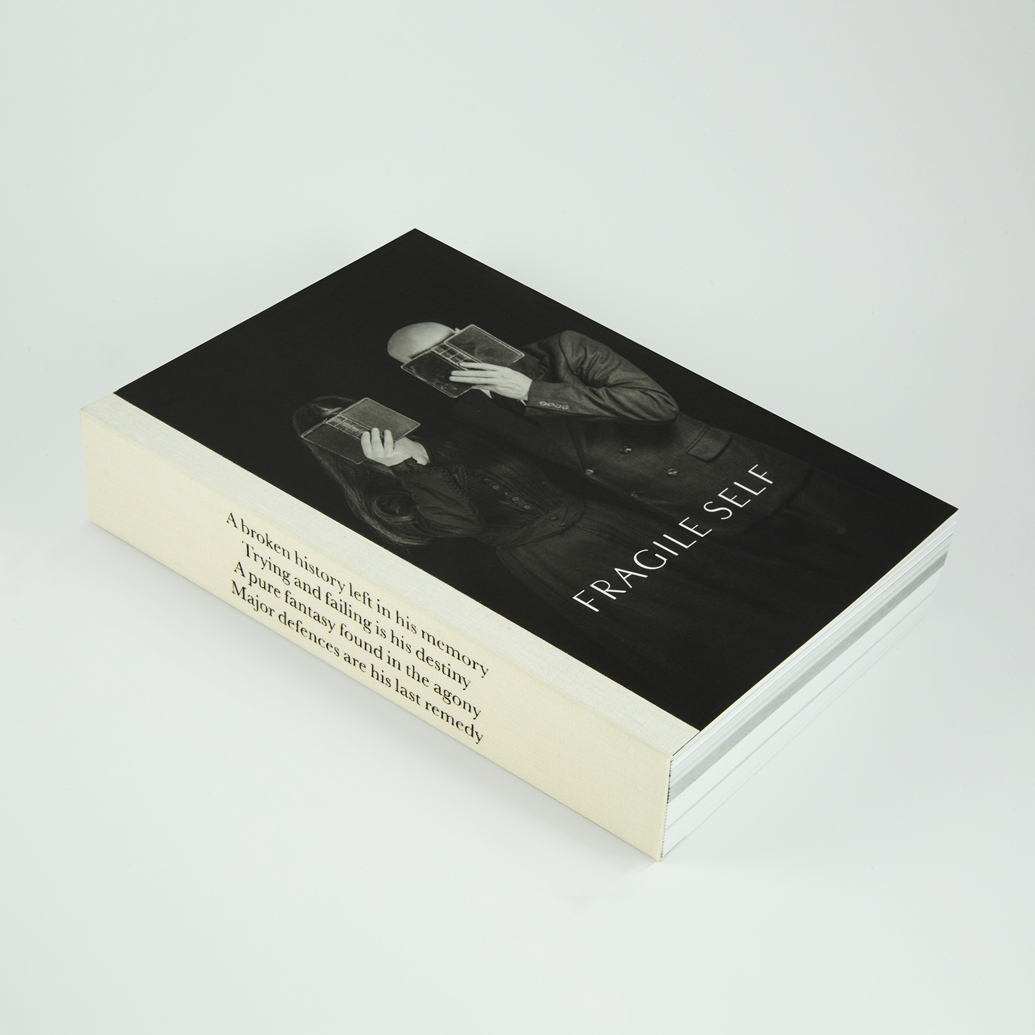
The art funk of ‘Bertha’ interestingly utilises what sounds like a plucked sounding texture, how did the track come about?

Jonathan: There is a drastic change of sounds and rhythms throughout the song, I wanted to give it the feeling of classic German 1930s ‘cabaret’ like it was a theatrical event that you would see on stage where the performance would change melody or pace several times.

Anil: The song is about Bertha Pappenheim, one of the first patients of psychoanalysis, who was “treated” by Doctor Breuer and Freud. She was a highly intelligent and like all women at that time, she was repressed with no opportunity to be herself. She had a nervous breakdown at age 21 but emerged as a creative leader and social reformer eight years later. When I started making this song, I was in Istanbul, there must be an influence from being there. I think the best music scene of Turkey was the 70s funk that my father listened to. The juxtaposition of the heavy subject and funky groove just felt right for this song.

‘Patients’ does possess some unsettling rhythmic fervour?

Jonathan: The song uses lyrics taken out of a doctor’s handbook, so it was important that the singing had that unemotional, repetitive feeling that medical text has when dealing with things such as birth, death or madness. These are intense, hugely important events, but are treated in a very pragmatic way.

Anil: Our songs always start with a conversation between lyrics and drum beats – the emotion created between them and the way the change of rhythm can change the meaning. This is very different from the more conventional approach of drums providing a structure of the songs. To us they are everything, the melody and the development of the lyrics are usually a development or a variation of the rhythm.
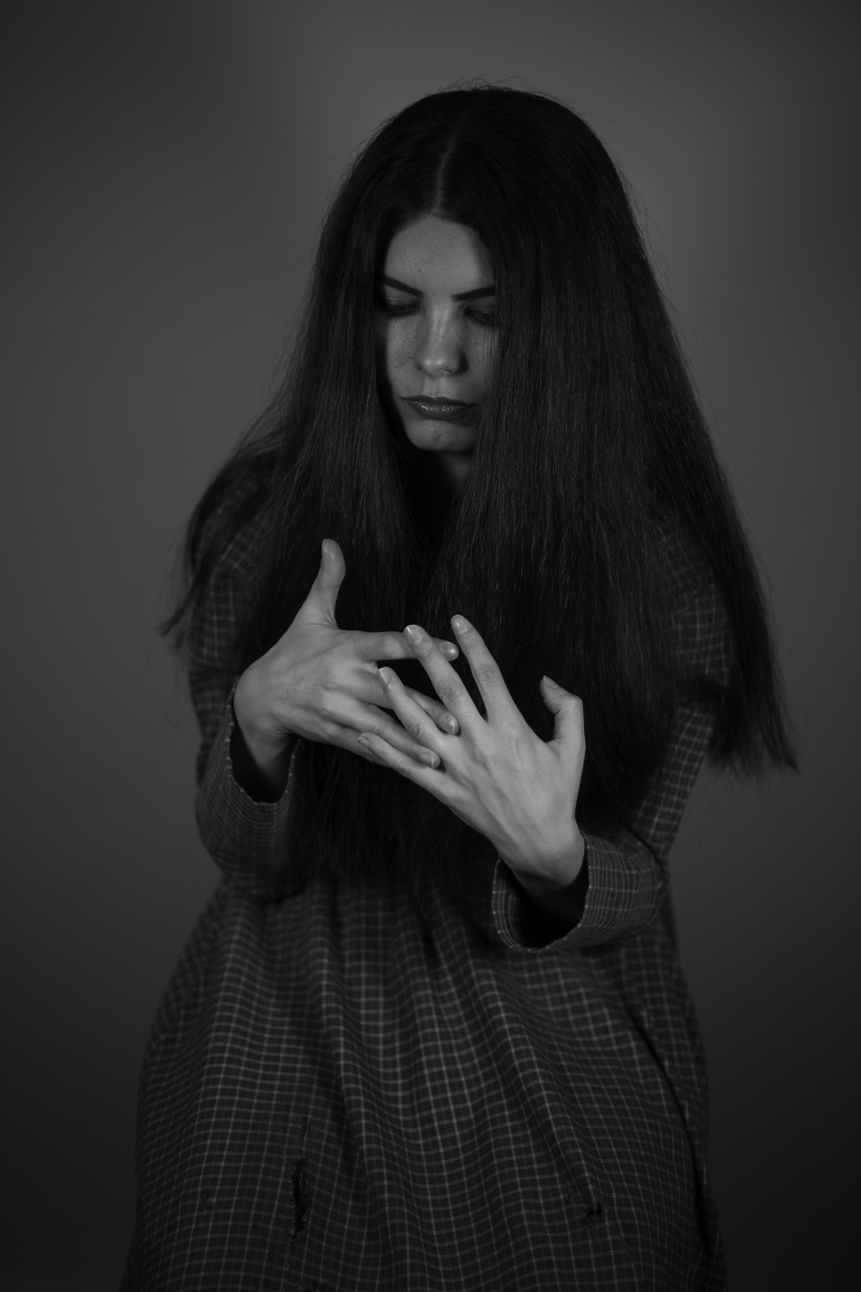
To casual listeners, the deadpan vocalisation does recall MISS KITTIN but compliments the stark electronic backing throughout the album? Any thoughts?

Anil: I take your comment as a compliment! I find the tension between being very expressive with the voice and suppressing emotion in the voice really interesting. A lack of emotion can often just heighten the feeling when you are delivering lyrics which are full of pain or darkness. It can also have an interesting brutality which further pushes the emotion.

Jonathan: I love Anil’s voice. When we were recording the vocals it was very clear that Anil’s accent should come through. Meaning that if the words were not perfectly said, it added more authenticity about where Anil comes from and feeling to the songs. The accent and the deadpan vocals also the give the same feeling as when you hear NICO or GINA X PERFORMANCE – you immediately associate their accents with a certain dark psychology.

Which tracks are each your particular favourites on the album?

Jonathan: Well I really like the last 2 tracks, ‘Need For Sanctuary’ and ‘Journey Taken’, the way they end the album, they really do what I remember albums are supposed to do when you listen to them in their entirety – take you on a journey deeper into the psychology of the album. The dark sounds in particular on ’Need For Sanctuary’ are a sound palette I really love.

Anil: I like ‘Bertha’ – most because of the subject matter but also the sound. ‘Deperson’ is the most personal song on the album, after I recorded the lyrics I had to go out. When I was walking around I was still totally consumed by the music and the meaning of the words. I felt so alienated from my surroundings and saw the world in a very singular way. I think that is a good mark of creating a song that is honest and authentic.

Who do you think FRAGILE SELF will appeal to?

Jonathan: We don’t really know who the audience is, and in some ways it is important not to limit the project by worrying too much. Obviously there will be people who will be interested in the graphics work of the studio, but it is a serious attempt to show how visuals and music relate so we hope it will appeal to people outside that.

Anil: We might even get some psychotherapists interested too!

Is the concert aspect of presenting the work somewhere you would like to venture?

Anil: Definitely, we really want to see how people directly react to the music. Also being on stage and singing these songs is going to be a very emotional experience that I am keen to try.

Jonathan: It is another big project entirely though – how to translate all of this into a live form. Obviously people are expecting something visual from us on stage, so we are planning that right now, again something new and very exciting for us.


ELECTRICITY.CO.UK gives its grateful thanks to FRAGILE SELF

‘Fragile Self’ is released by Sugarcane Recordings / Daperson Society on 4th November 2019 as a vinyl LP, CD and 480 page book with download code, pre-order from http://www.fragileself.com/vinylcdbookdownload
Download also available from https://fragileself.bandcamp.com/

http://www.fragileself.com

https://www.facebook.com/fragileself/

https://twitter.com/fragile_self

https://www.instagram.com/fragile_self/


Text and Interview by Chi Ming Lai
2nd November 2019
MISS KITTIN Calling From The Stars

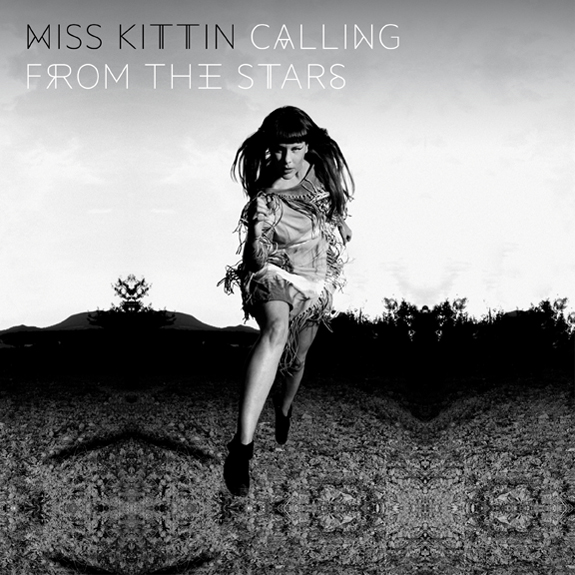
For her third solo album, the one-time Queen of Electroclash MISS KITTIN has ambitiously issued a new double opus entitled ‘Calling From The Stars’.

Grenoble born Caroline Hervé first found fame in the electronic revival of the early 21st Century, working with THE HACKER, FELIX DA HOUSECAT and GOLDEN BOY although she did not actually release a solo record until 2004’s ‘I Com’. Her most recent album ‘Two’ was in 2009 and her second collaboration with THE HACKER. But for ‘Calling From The Stars’, she has recorded alone within the cocoon of a closed mezzanine in her flat. She said: “I think I wanted to write very simply this time… I’m not writing with so many metaphors any more – it’s actually very hard just to write simple things. I just wanted to write very good, strong melodies.”

The collection begins well with the compelling minimal synthesized templates of ‘Flash Forward’ and ‘Come Into My House’, both percussively vibrant with pulsing bass and danceable rhythms. ‘Come Into My House’ has the particular bonus of what sounds like an electronic cat being sucked though a vacuum cleaner! New single ‘Bassline’ though is a little steadier while the ‘Calling From The Stars’ titled track is spaced out with primitive string machine washes, MISS KITTIN nonchalantly and charmingly deadpan.

Heading back into rawer techno, ‘Life Is My Teacher’ captures some hypnotic rhythmical atmospheres. Vocalising in English and Japanese, ‘Maneki Neko’ is trademark Kittin, its chorus not wholly unlike ‘Rippin Kittin’, her cult club smash with GOLDEN BOY in 2002. Much more mechanical though is ‘Tears Like Kisses’ but something completely unexpected is her cover of REM’s ‘Everybody Hurts’.

Musically, it sounds like an outtake from ERASURE’s ‘Other People’s Songs’ collection and is at odds with the remainder of ‘Calling From The Stars’. This effectively begins the more sedate half of the album although much of the material is actually far too lively and percussive to be considered ambient. But it’s not particularly dancey either!

‘Only You’ presents a drifting electronic soundscape with Ms Hervé scatting the song’s title in a Dot Allison stylee. On the following track ‘Cosmic Love Radiation’, the sequencer pattern drives the track along quite obtrusively while again, the title is again repeated vocally… it’s as if she has forgotten to write any words!

Of course, KRAFTWERK have made a career out of this trick, but those used to MISS KITTIN’s witty lyrical observations on tracks such as ‘You & Us’, ‘1982’ or ‘Frank Sinatra’ may be disappointed with this approach. ‘Ballad Of The 23rd Century’ is a potential science fiction series theme and quite pretty in places but as this second part of the album progresses, there are fewer vocals and more lengthy bursts of experimentation; ‘Sunset Mission’ for example does turn into a bit of a laser gunfight while ‘I Don’t Know How To Move’ collages piano, voice samples and reverbed snaps with a repeated squelch mantra over its seven and a half minutes.

But like with that other double album out at the moment, THE KNIFE’s ‘Shaking The Habitual’, ‘Calling From The Stars’ is a very challenging listen to attempt in its entirety on one sitting. MISS KITTIN’s offering is perhaps more immediate at the beginning but ventures into more abstract territories that may reap rewards on return visits. It is certainly a brave project and for that, MISS KITTIN should be commended.


‘Calling From The Stars’ is by released wSphere Records

MISS KITTIN’s 2013 European Tour includes:

Barcelona Razzmatazz (30th April), London XOYO (1st May), Brussels Les Nuits Botanique @ L’Orangerie (3rd May), Berlin Berghain (8th May), Paris Le Trianon (17th May)

https://misskittin.com/

https://www.facebook.com/misskittin


Text by Chi Ming Lai
26th April 2013

MISS KITTIN Interview

It’s the year 2000. The new millennium dawns without a world war, a global financial crisis or a nuclear melt down.

After all the hyper-inflated fin de siecle techno-paranoia, the year 2000 is just, after all, another number. In the jubilance of a virginal century, empty, ripe for imprinting with a new decadence, a celebratory embrace of the technology which has not in fact fractured begins to emerge. With a dash of appropriately saturnine nostalgia robotic disco, full of copyist Moroder pastiche meets the chin-stroking club sounds of techno, it forms a new sound which for better or worse, becomes dubbed Electroclash.

It’s a movement which defines, in many ways, the way pop is presented in the 21st century: girls and boys behind synthesisers / girl vocalists with boys behind synthesisers / boys with vocoders mixing techno beats with pop sensibilities / girls with vocoders mixing ethereal vocals with pop beats.

One of the first duos to be identified with Electroclash – it could perhaps be argued that they were founders, or considered a blueprint for the club pop produced over the next handful of years – are MISS KITTIN & THE HACKER. Particularly their semi-sardonic paen to nightclub celebrity culture ‘Frank Sinatra’: “Every night with my star friends – We eat caviar and drink champagne – Sniffing in the VIP area – We talk about Frank Sinatra…”

MISS KITTIN (real name Caroline Herve, but she much prefers to be addressed by her stage moniker) had been a much respected radio and club DJ both in her home town of Grenoble, and in clubbing meccas like Paris and Chicago, with friend and fellow Grenoble DJ Michel Amato aka THE HACKER, she recorded ‘Frank Sinatra’ for techno/club label International DJ Gigolos in 1998 on an EP aptly called ‘Champagne!’.

Her recording partner THE HACKER explained what they were trying to achieve in an interview with Australian clubbing site InTheMix:

“We wanted to bring back some human feelings to electronic music, and also, very important, some lyrics and with MISS KITTIN’s words it was perfect. At last electronic music had something to say! Another thing was that I wanted to use classic song structure in an electronic style.”

‘Frank Sinatra’ was a minor club hit but in the heady new millenium, clubbers and pop fans eager for a fresh sound embraced the track – and Electroclash generally – like water in the desert that generic techno and bland pop had become. With European, US and UK hits from GOLDFRAPP, LADYTRON and CLIENT at last, for the first time since the disco era, the pop charts and night clubbing had truly fused. Following their ‘First Album’ in 2001, she then collaborated on  FELIX DA HOUSECAT’s ‘Kittenz & Thee Glitz’ and GOLDEN BOY’s ‘Or’ which maintained her cult profile. She did not actually release a solo record until 2004’s ‘I Com’. ‘Batbox’ eventually followed in 2007 while another album with THE HACKER called ‘Two’ arrived in 2009.

Whilst the charts sadly seem to have mostly left potent synth pop behind – for now – the acts who made their names in the early 2000s have influenced a new generation of artists who continue to hold up the flag for synth music: GRIMES, VILE ELECTRODES and many more.

MISS KITTIN, having spawned an entire decade’s musical movement, continues to write, record, perform and DJ to critical and public acclaim. She has just finished her new album ‘Calling From The Stars’ – the first she has written completely alone – and is about to launch her solo live show in the Europe. The first half of ‘Calling From The Stars’ offers up all of the elements that have made MISS KITTIN one of the most popular names in electronic music: simple yet evocative lyrics set to an undeniable electro-flavoured techno beat. The second is a more ambient take, witnessing Kittin’s minimal techno credentials take flight over the ten instrumental tracks.

She spoke with ELECTRICITYCLUB.CO.UK about going it alone and spiritual songwriting…

Why did you decide to produce this album completely alone?

I was just writing future ideas, sketches I had in my mind. I brought them to Pascal Gabriel, my producer friend I love to work with and who has worked with GOLDFRAPP, ANDY BELL and LADYHAWKE. When I brought him my tracks he said “they’re finished – you don’t have to do anything to them”. He was the one to tell me to write the album alone – it surprised me!

Where did you record and mix the album? Do you have your own studio set up?

I have a little room – a closed mezzanine in my flat – where I have my little set up. I go in there only when I have ideas – I don’t try to work there every day.

How long did it take to write ‘Calling From The Stars’?

Some tracks I wrote a long, long time ago and never thought would be good enough to release. The rest were made here and there, and not under any pressure at all. I write tracks very quickly: I can make three tracks a week and then none for a while.

What equipment do you use in your studio?

I have a computer, a few synthesizers, a few drum machines. The room is so small they are stored in cupboards, and because it’s right under the roof, I can’t even stand up in there – I can only sit. When I have an idea, I take a synthesizer out of the cupboard, a microphone and my computer with some plug-ins. I also make some tracks when travelling – my equipment list has always been very small. It proves you can definitely write music without a big studio – in the end it’s the ideas that count.

What’s your favourite synthesizer to use?

My favourite synthesizer is the Jupiter 6. It’s the first synthesizer I really wanted to buy, and I bought mine more than 10 years ago in Geneva. Unfortunately when I moved to Berlin and then Paris, it broke and I can’t switch it on any more.

Can you get it fixed?

It’s so heavy and I live on the 5th floor so I haven’t had it repaired yet. But in my home town, a company called Arturia make vintage sounding plug-ins, like a version of the MS-20. I definitely like the vintage sound and these are great plug-ins. I get the sound I want from them by spending a lot of time using delays and filters. I use Cubase to compose – I think I’m one of the last people on the planet to use it.

How do you get the sounds you want from such a sparse set up?

There is always a way to make it sound good – in fact, the less choice I have the better, because it causes me to experiment more with the sounds I have.

Can you tell us about the album – what is it about?

I think I wanted to write very simply this time – I found out that the more straight and simple you write, the stronger are your emotions and the messages you want to transmit. I’m not writing with so many metaphors any more – it’s actually very hard just to write simple things. I just wanted to write very good, strong melodies.

You’ve mentioned elsewhere that it’s a spiritual album – can you explain what that means?

It’s not spiritual in the sense that I’m turning into a hippy! You can be spiritual, punk and a model – you can be all of these. But when you live life as an artist, travelling around the world discovering many different civilisations, countries and cultures, you live in a very peculiar way. You realise that even if you play in front of millions of people a year, it doesn’t make you more important than a woman you see working by the side of the road in Peru. Being a travelling musician confirms to you that although we are very different as human beings, we are also totally alike. It makes you very humble, and also develops your radars to deal with other dimensions.

Other dimensions?

The more I grow, the older I get, I see how disconnected we are from these different dimensions. I see it every day, in the street. People to work and back, but do they really think why they are here, and why they are who they are? Do they make the same mistakes again and again? I’ve always wanted to understand these things and music, and the life I’ve been through, has given me some answers. This is what this album is about.

Do you see that as a big leap from your previous releases?

These questions are what all my previous albums were about as well – searching, digging, understanding, questioning yourself, digging into certain parts of yourself which are darker.

You’re performing live as a solo act for the first time, too. Performing as a solo electronic act is difficult if you want to be more than a microphone and a laptop. Why did you decide to do this tour alone?

For me, intellectual stimulation is very important and I don’t get that in clubs much, clubs are not very intellectual places. *laughs*

I’m now attracted by other things – even if I love to DJ and won’t stop, I will probably move towards just playing more special gigs and not like I do it now. The live show is the perfect transition.

You say the show will contain tracks from the whole of your back catalogue. How did you choose which tracks to perform?

You know what, I think it’s not too good to talk about the live show, I don’t want to spoil it for my fans – I want them to be surprised. I don’t want to tell you what it’s going to be like.

Is there anything you can tell us about the tour?

I cannot give you all the secrets of the recipe, I’ve been working at this for twenty years and doing my first solo live show ever – it would be totally sad to give you the secrets. You have to see it for yourself.


ELECTRICITYCLUB.CO.UK gives its warmest thanks to MISS KITTIN

Special thanks to Debbie Ball at Create Spark

‘Bassline’ is available digitally now as a two-track single b/w ‘Come Into My House’ via wSphere. It will be expanded into a four-track EP release on 25th March 2013 to include one exclusive cut ‘Motown’ plus from ‘Calling From The Stars’.

The album ‘Calling From The Stars’ will be released in the UK and Europe by wSphere Records on 22nd April 2013

MISS KITTIN’s 2013 Live Dates include:

Barcelona Razzmatazz (30th April), London XOYO (1st May), Brussels Les Nuits Botanique @ L’Orangerie (3rd May), Berlin Berghain (8th May), Paris Le Trianon (17th May)

https://misskittin.com/


Text and Interview by Nix Lowrey
9th March 2013

Introducing ELEVEN:ELEVEN


One act flaunting their potential right now Stateside are Texan duo ELEVEN:ELEVEN.

Comprising the celestial voice of Sicca with the instrumentation of Jake Childs, their electronic sound recalls a variety of influences including Italo Disco, Hi-NRG, Electroclash and BERLIN…no, not the one-time divided city with the Brandenburg Gate as its focal point but the LA combo led by Terri Nunn who had a worldwide smash with ‘Take My Breath Away’.

Prior to selling their souls to the F-14, BERLIN were the flagwavers for Eurocentric synthpop in the US with brilliant songs such as ‘The Metro’, ‘Masquerade’, ‘Pleasure Victim’ and ‘Now It’s My Turn’. While their song titles like ‘Electric Sex’, ‘Little White Lies’ and ‘No Words’ are very BERLIN-esque, what ELEVEN:ELEVEN do differently is Sicca avoids Terri Nunn’s rock histrionics which occasionally made BERLIN sound like ULTRAVOX fronted by HEART!

Sicca is much more feline and restrained while Childs provides a sparse, futuristic soundtrack sans guitars. ‘Little White Lies’ in a case in point, driven by an arpeggiated bassline and dressed with portmento synth stabs while Sicca sounds rather seductively detached.

From their debut EP of the same name, ‘Infection’ is more Studio54 with hypnotic hints of BOBBY O and GIORGIO MORODER while ‘Pawn’ is precise mechanical electro disco with a poker faced stare. Crucially, Childs gives the songs dynamics with syncopated high and lows which are free of the disease in current mainstream pop where four-to-the-floor thuds are just thrusted into oblivion.

‘No Words’ recalls MISS KITTEN & THE HACKER, capturing a tense nightlife seediness. Short but sweet with a swirling middle section, who needs an extended dance mix when the point is made in two and a half minutes? In keeping with the modern trend for a series of EPs and singles eventually leading to a long player, ELEVEN:ELEVEN are currently working on a concept entitled ‘Through The Veil’. This will steadily see the release of a track one-at-a-time, culminating in a finished album. So far, only ‘Little White Lies’ and No Words’ have seen the light of day. But based on these two numbers, the other eight tracks are now anticipated with great interest…


The music of ELEVEN:ELEVEN can be heard at https://soundcloud.com/weare1111

http://www.facebook.com/the.eleveneleven


Text by Chi Ming Lai
2nd July 2012

Newer posts »