Category: News (Page 2 of 5)

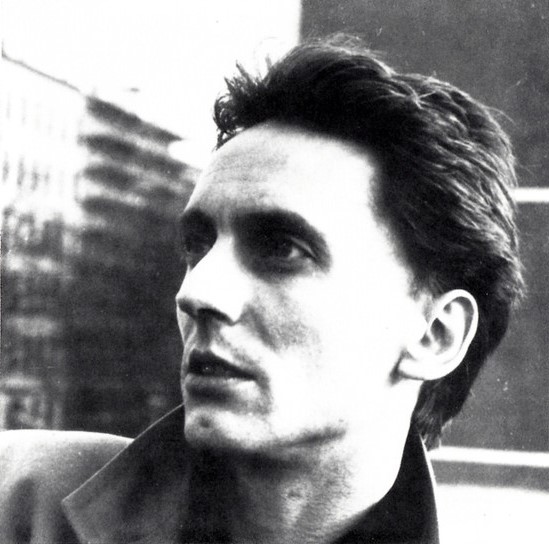
MANUEL GÖTTSCHING 1952 – 2022

The pioneering German musician Manuel Göttsching sadly passed away peacefully on 4th December 2022 aged 70.

During a career spanning over five decades, he released over 30 albums in a variety of guises, working with the likes of Conny Plank, Harald Grosskopf, Lutz Ulbrich and the late Klaus Schulze who died earlier this year. His website simply said in tribute: “When your fingers touched the strings of a guitar, the world stood still. May it stands still and bring you back to us whenever we hear you play. The void he leaves behind we want to fill with his music and loving memories.”

Having studied classical guitar from an early age but with ambitions to be a drummer, Göttsching began his recorded career with Klaus Schulze in ASH RA TEMPEL; their self-titled album in 1971 was engineered by Conny Plank and seeded from sessions of free-form improvising. Comprising of just one track per side of vinyl, the building eerie atmospheres of ‘Traummaschine’ and the noisier rock of ‘Amboss’, the record was hailed as a Kosmiche landmark.

After Schulze departed, Göttsching continued ASH RA TEMPEL with other musicians and collaborated with psychedelic advocate and acid guru Timothy Leary on ‘Seven Up’ in 1972. But it was obvious that the Berlin-based multi-instrumentalist felt restricted by the band format, as evidenced by a solo record ‘Inventions For Electric Guitar’ which was billed as the sixth ASH RA TEMPEL album.

Signing to Virgin Records in 1977 who also had other German acts like FAUST and TANGERINE DEAM on their roster, he shortened the moniker to ASHRA and released what many consider to be his first masterpiece ‘New Age Of Earth’.

Exploring more progressive instrumental territory, Göttsching used an Eko Rhythm Computer, ARP Odyssey and his signature keyboard, a Farfisa Synthorchestra to compliment his meditative transient six string style that was for texture as much as it was for melody. The wonderful 20 minute ‘Nightdust’ and the gently percussive ‘Sunrain’ were just two of the jewels on this beautiful treasure trove of a record while ‘Ocean Of Tenderness’ captured a glorious widescreen ambience.

While Göttsching continued solo on 1978’s worthy follow-up ‘Blackouts’, he expanded the line-up of ASHRA to include drumming synthesist Harald Grosskopf and guitarist Lutz Ulbrich on the next two Virgin albums ‘Correlations’ and the more rock and vocal-led ‘Belle Alliance’. In a 2020 interview with ELECTRICITYCLUB.CO.UK, Harald Grosskopf remembered: “We never talked about commercial intentions. Our main interest was having fun and producing something original. I liked the freedom of not thinking about whom we could reach or sell to what we had made. The combination of the three of us simply made it what it was. Everybody had ideas and had the chance to put them into the album. Manuel played a very melodic guitar. In those days, maybe Carlos Santana was a bit of an influence on him.”

Göttsching’s next masterpiece came almost by accident; having reunited with Klaus Schulze for a concert tour and returned home, he decided to improvise an extended piece based around an understated Prophet 10 sequence as something to listen to on his recently purchased Walkman for an upcoming flight. Influenced by minimalist trailblazers Steve Reich and Philip Glass, the end result was the hour long ‘E2-E4’ which was eventually released in 1984.
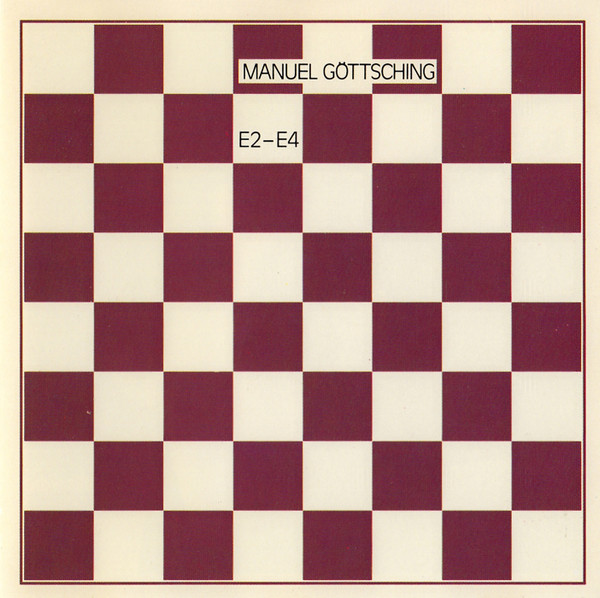
Using a gentle but hypnotic backbone and an extended guitar solo in the second half, despite press criticisms on its initial release that it was inconsequential muzak, ‘E2-E4’ became an influence in the development of Balearic house and ambient techno, so much so that it was sampled for the club track ‘Sueño Latino’ in 1989 which was a favourite at New York’s Paradise Garage. Manuel Göttsching also composed music for fashion designers such as Claudia Skoda and Wolfgang Joop as well as theatre productions like ‘Dracula’ while continuing to perform live; an ASHRA band reunion in Japan with Harald Grosskopf and Lutz Ulbrich resulted in the release of two live documents in 1998.

Previously unreleased archive recordings such as the wonderful ‘Dream & Desire’ collection and the six volume series ‘The Private Tapes’ would also attract interest. 2000 saw Manuel Göttsching and Klaus Schulze return as ASH RA TEMPEL to play the Royal Festival Hall in London for Julian Cope’s Cornucopea Festival and release an album ‘Friendship’. A few years later, there were live performances of ‘E2-E4’ including one at the esteemed Berlin techno club Berghain in 2006 to celebrate the 25th Anniversary of its recording. In 2013, Göttsching returned to London to perform at Oval Space with deep house producer Henrik Schwarz.

Manuel Göttsching appeared live as recently as September 2022 performing with Hans-Joachim Roedelius of CLUSTER at the Zodiak festival in Berlin.

https://www.manuel-goettsching.com


Text by Chi Ming Lai
12th December 2022
DAVE SMITH 1950 – 2022

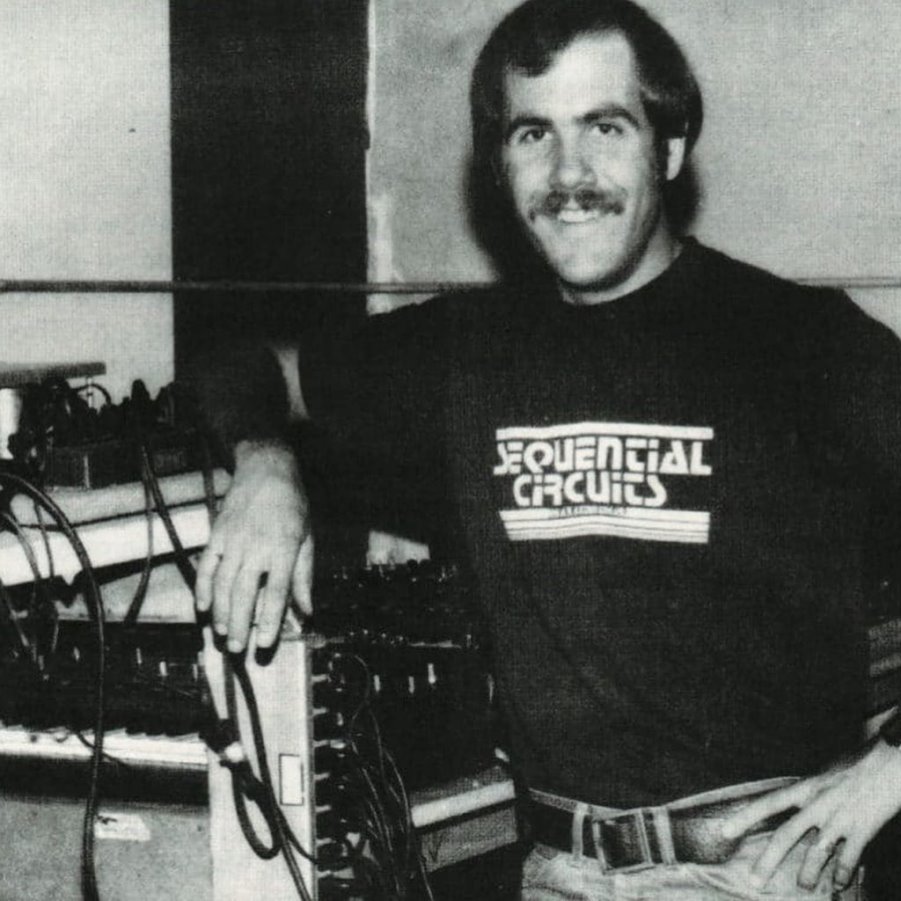
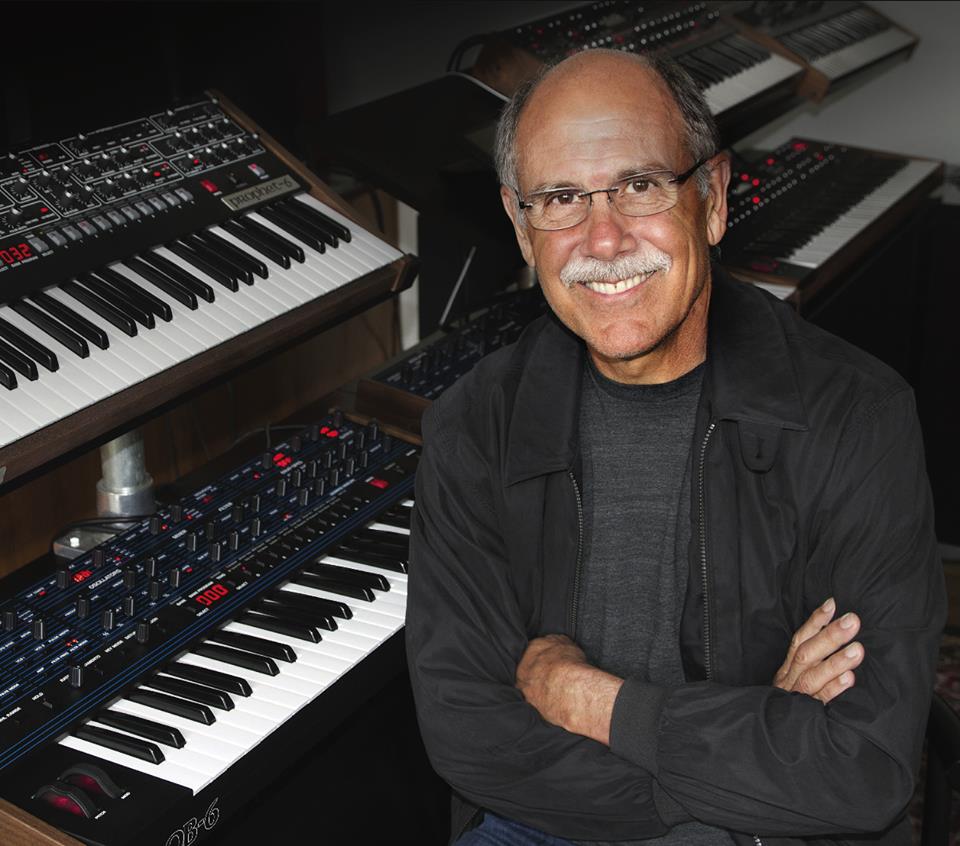
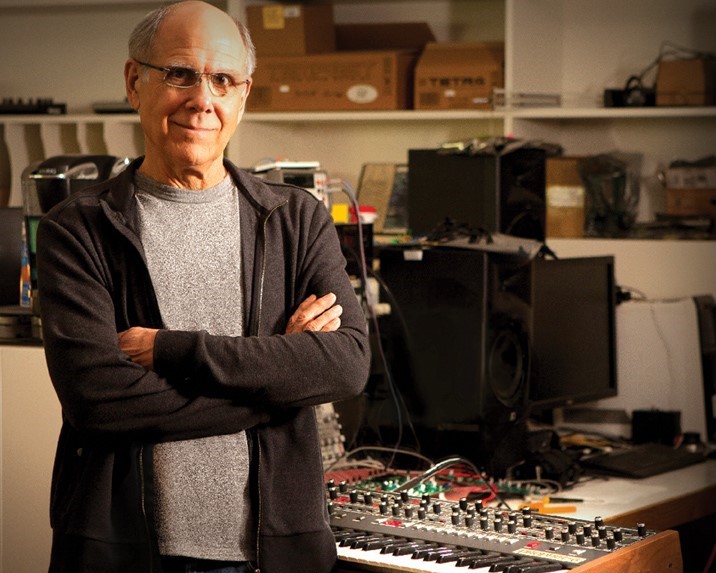
Dave Smith, the synthesizer pioneer and one of the Godfathers of MIDI has sadly passed away aged 72. 

Through his company Sequential Circuits, the American revolutionised electronic music with his practical solutions and a unifying spirit within a very competitive marketing environment. In a statement, Sequential announced “It is with heavy hearts that we share the news that Dave Smith has died. We’re heartbroken, but take some small solace in knowing he was on the road doing what he loved best in the company of family, friends, and artists.”

The list of acts who used his instruments over the years reads like a who’s who of music: YELLOW MAGIC ORCHESTRA, KRAFTWERK, PINK FLOYD, TANGERINE DREAM, DEVO, JAPAN, OMD, NEW ORDER, SOFT CELL, DURAN DURAN, YAZOO, ULTRAVOX, ERASURE, THOMPSON TWINS, TALKING HEADS, BERLIN, PAGE, PSYCHE, KID KASIO, MIRRORS, VILE ELECTRODES, MAISON VAGUE, RADIOHEAD, SOFT METALS, KITE BASE, FM ATTACK, BETAMAXX, ULTRAFLEX and CIRCUIT3 among many.

Born in San Francisco, Smith became fascinated by music via the family piano. He later played guitar and bass in bands while studying Electrical Engineering and Computer Science at the University of California in Berkeley. Mesmerised by ‘Switched On Bach’ by Wendy Carlos, he visited a music store to try out a Minimoog and ARP Odyssey. He favoured the Bob Moog instrument and securing a credit union from his then-employer Lockheed, he acquired one with the serial number 1340.

Exploring his Minimoog while using a TEAC 4 track reel-to-reel, he identified a need for a low price analogue sequencer to work with Moog and ARP synths, so launched a company in 1974 to produce a 16 step machine called the Model 600. The microprocessor controlled Model 800 digital sequencer followed.

But his 8-step Model 700 Programmer, which set up sounds on Moog and ARP synths that could be recorded to memory and recalled at the touch of a button, sparked Dave Smith’s epiphanal moment; why not combine microprocessors with synthesizer integrated circuits to create a programmable synthesizer?

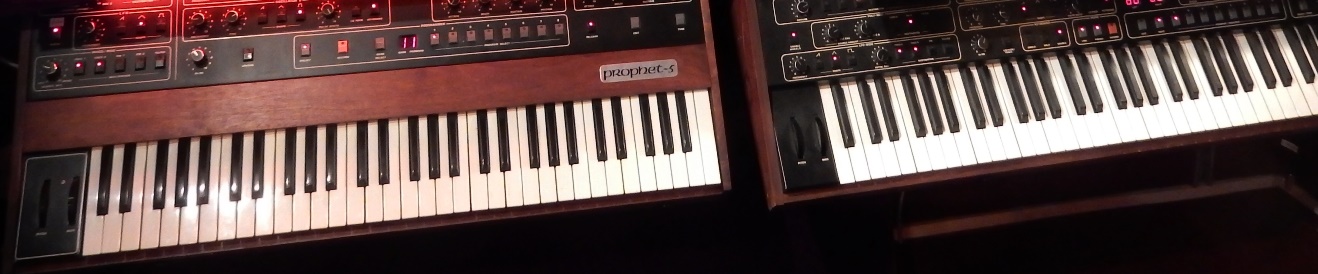
With neither Moog or ARP seemingly on the ball to come up with such an instrument, Smith gave up his day job to work full-time on designing what became the Prophet 5. Demonstrated at the popular NAMM trade show in 1978, it was the world’s first fully programmable polyphonic synthesizer. Among the first purchasers were veterans such as Rick Wakeman, David Bowie and Tony Banks but with its use of silicon chip technology, it was also affordable compared with the Polymoog or Yamaha CS80. The new guard such as Gary Numan, David Sylvian, Richard Barbieri, Dave Ball, Nick Rhodes and Paul Humphreys made it top of their shopping list when their record label advances came in.

Commenting on its usability, Paul Humphreys remarked “The Prophet 5 is one where I can imagine a sound and build it myself. I can programme it inside out” while Richard Barbieri said “I’ve never found anything that sounds as lush, warm and beautiful”.

Chris Payne who played with Gary Numan remembered “I bought my first Prophet 5 whilst touring in the States. I spent an entire night messing around with it editing sounds and trying desperately to create some cool strings. Sadly with the tiredness and overwhelming enthusiasm I created a string sound which was a lot worse than the preset. But having said that, this synth was a game changer and I purchased another one for live work. Our other keyboard player Denis had the Prophet 10 and I’d love to know what happened to that…”

The Prophet 10 was the twin keyboard variant of the Prophet 5 which was prone to overheating problems, but it was the ProOne, a monophonic version of the Prophet 5, that proved to be more popular, with Vince Clarke, Howard Jones and Tom Bailey among its exponents.

In 1981, after meetings with Tom Oberheim and Ikutaro Kakehashi of Roland, Smith presented a paper outlining the idea of a Universal Synthesizer Interface to create a standard means of synchronising electronic instruments manufactured by different companies. He and Sequential engineer Chet Wood designed an interface based on Roland’s Digital Control Bus. Also working in association Yamaha, Korg and Kawai, the Musical Instrument Digital Interface or MIDI was born in 1983 and remains in use today. Smith and Kakehashi were awarded a Technical Grammy for their innovation in 2013.

Despite these successes and presenting the first MIDI compatible digital drum machine in the Drumtraks, Sequential’s fortunes were taking a downturn thanks to success of the Yamaha DX7 and E-mu Emulator samplers.

The very expensive Prophet T8 with its wooden piano weighted velocity sensitive keyboard turned out to be a white elephant and although Howard Jones liked using it to control his DX7, Billy Currie of ULTRAVOX remarked “I got it thinking it would be a competitor to the Yamaha CS80 but the action was always far too heavy.”

The Prophet 2000 sampler and the Prophet VS using vector synthesis were unable to regain the lost commercial momentum and Sequential closed in 1987 with the brand purchased by Yamaha, although the Japanese company never issued any products with that name. In 1989, Smith joined Korg to refine the vector synthesis concept of the Prophet VS on the Wavestation which was subsequently used by ENIGMA, ORBITAL, THE FUTURE SOUND OF LONDON, DUBSTAR, OZRIC TENTACLES and on the soundtrack of ‘The X-Files’.

After working on the software side of synthesis, Dave Smith Instruments was established in 2002 with the analogue-digital hybrid Evolver being the first in a new product line. Meanwhile the bright yellow Mopho was a compact but powerful monophonic that proved to be very versatile when used in a live context. Martin Swan of VILE ELECTRODES described it in 2011 as ”a modern take on the Sequential Circuits ProOne. The Mopho is a combination of that and the Moog Source, which was the first monosynth that had memories. Obviously, it really helps for playing live to switch from one patch to another. It’s kind of old school vintage synth in one way but it’s got a modern aesthetic as well. It’s very muscley!”

Reviving the Prophet name, the 08 polyphonic featured a 100% analogue signal path and a front panel with rotary controls using potentiometers while maintaining digital interfaces. It was popular with the next generation of synth musicians; James New of MIRRORS was particularly enthused, saying in 2010 “it seems to do a bit of everything. It sounds like an old Moog and it’s part digital so it doesn’t go ridiculously out of tune!” while bandmate Ally Young added “the way the sound is created in the DS is totally analogue and the pretext of the Prophet is that it’s not a homage to the Prophet 5 which Dave Smith and Sequential Circuits obviously made… it’s if he never made the Prophet 5 and was going to make one now, this is what it would be”

The expansive bi-timbral Prophet 12 combined two hybrid analogue-digital six voice synths into one package and was endorsed by Taylor Swift. Ever the one for collaboration, Smith brought in Roger Linn to co-design the Tempest drum machine sequencer while he teamed up with Tom Oberheim for the OB6 inspired by his classic SEM sound.

But in a gesture of goodwill and with the encouragement of Roland’s Ikutaro Kakehashi, Yamaha returned the Sequential Circuits brand to Smith in 2015. The Prophet 6 and Prophet X followed as the first genuine Sequential products in several decades while in 2018, the Prophet 5 was reissued to mark its 40th anniversary. In a far cry from the company’s 1987 demise, its multi-million dollar revenue streams led to Sequential being bought in 2021 by Focusrite, the British audio technology company which had been established by recording studio trailblazer Rupert Neve.

Dave Smith had been scheduled to appear at NAMM 2022; his untimely passing will not only leave a void at that event but throughout the music world. Often pictured smiling and occasionally enjoying a Margarita, his impactful life can be truly said to have changed music making forever.


Text by Chi Ming Lai
2nd June 2022

VANGELIS 1943 – 2022

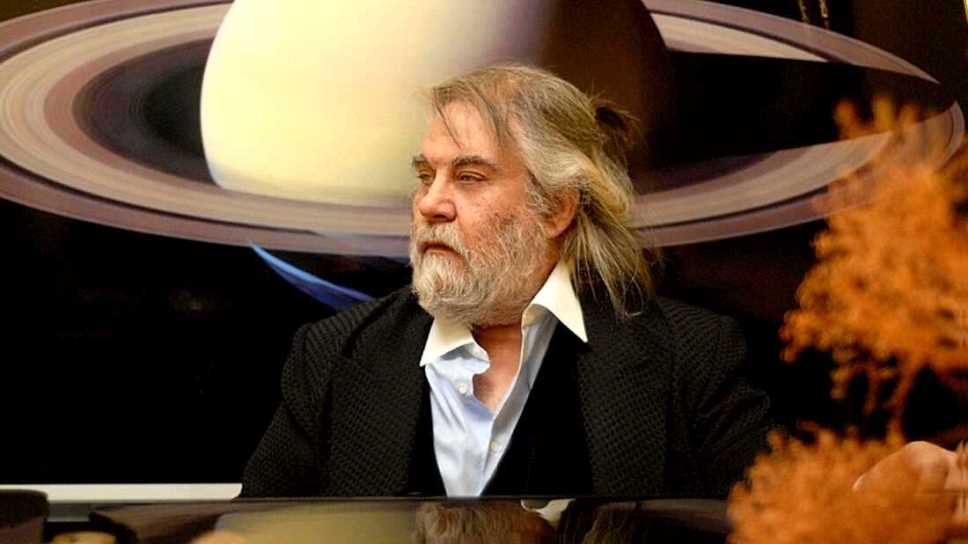
The esteemed Greek composer Evangelos Odysseas Papathanassiou, best known to the world by his stage name of Vangelis has sadly passed away aged 79.

A self-taught musician, although Vangelis found fame as the keyboard player of prog rockers APHRODITE’S CHILD who were fronted by Demis Roussos, he first became known in Greece for writing a song called ‘Summer Dream’ which featured in the 1968 film ‘Operation Apollo’. While a member of APHRODITE’S CHILD, he composed a number of soundtracks including ‘L’Apocalypse des Animaux’ which accompanied a 1970 French documentary series directed by Frédéric Rossif.

After APHRODITE’S CHILD disbanded, Vangelis was invited by Jon Anderson to join YES to replace Rick Wakeman. Although he opted for what was to become a remarkable solo career, it was the beginning of a friendship that would lead to occasional collaborations and later, three unlikely hit singles in ‘I Hear You Now’, ‘I’ll Find My Way Home’ and ‘State Of Independence’.

Releasing his first album ‘Earth’ as Vangelis in 1973, his style involved him playing virtually everything including guitar, various ethnic instruments, drums and percussion. Relocating to London, he established his iconic Nemo Studios complex near Marble Arch. There he recorded 1975’s ‘Heaven & Hell’ to start what was to be a series of imperial albums. 1976 saw Vangelis’ first space themed long player ‘Albedo 0.39’, the key track of which was the cosmic ‘Pulstar’ whose stabby synth lines were later sampled by Gary Numan for the song ‘Strange Charm’ in 1986.

Vangelis’ wider breakthrough came with the 1977 album ‘Spiral’ and it was here that he debuted the Yamaha CS80. An incredibly complex synthesizer, the CS80 boasted a ribbon controller which allowed for the application of pitch-bends and glissandos polyphonically, while also boasting velocity-sensitive and after-touch qualities. He put these to effective use on ‘To The Unknown Man’, a three part piece over nine minutes which was to become one of his most captivating recordings. But while much of Vangelis’ work possessed a sedate symphonic quality, he proved he could funk it with the best of them on ‘Dervish D’, which utilised a spinning Roland System 100 sequencer core with a brilliantly played jazz-inflected solo.

In 1979, Vangelis was to present his best work yet in ‘China’; although he had not visited the country at the time of record, he became fascinated by its people and culture while observing a connection between ethnic Greek and Chinese music. Using traditional instruments and compositional styles alongside ring modulated synthesizers, ‘The Tao Of Love’ was to be the album’s centrepiece.

Vangelis was continuing to make his name in soundtracks and ‘Opéra Sauvage’ featuring the mighty ‘Hymn’ was to become his most successful album in the US to date. However, it was in 1981 with ‘Chariots of Fire’, the David Puttnam produced movie which told the story of two British athletes at the 1924 Paris Olympics that set him towards a lucrative career in cinema. Composed after watching three run throughs, the film’s opening ‘Titles’ with its iconic six note melodic phrase became an international hit single. The soundtrack won an Oscar for Best Original Music Score.

His next soundtrack for 1982’s ‘Blade Runner’ was to be his most celebrated work but also most troubled. Capturing the futuristic dystopian unsettlement of the story based on Philip K Dick’s ‘Do Androids Dream of Electric Sheep?’, although nominated for a BAFTA and Golden Globe as Best Original Score, Vangelis felt unable to issue a soundtrack album at the time of the film’s release due to creative differences with director Ridley Scott.

The magnificent ‘End Titles’ would not appear until 1989’s ‘Themes’ compilation, while the 1994 ‘Blade Runner’ album omitted much of the original music that appeared with previously unheard tracks such as ‘Rachel’s Song’ featuring the voice of Mary Hopkin now included; the evocative piece was later sampled by THE FUTURE SOUND OF LONDON for their single ‘My Kingdom’.

Rarely giving interviews, Vangelis’ preference for low profile made him an ideal film composer with ‘Missing’, ‘Antarctica’, ‘Bounty’, ‘Bitter Moon’, ‘The Plague’, ‘1492: Conquest of Paradise’, ‘Alexander’ and ‘Twilight of Shadows’ among his other movie credits.

Vangelis adopted a more classical approach on ‘El Greco’, ‘Mythodea – Music for the NASA Mission: 2001 Mars Odyssey’ and ‘The 2002 FIFA World Cup Official Anthem’ but following an inspirational video call with Dutch astronaut André Kuipers from the International Space Station, 2016’s ‘Rosetta’ saw a return to the electronic music to celebrate the European Space Agency probe launched in 2004 to perform a detailed study of comet 67P while flying past Mars and several asteroids along the way.

‘Nocturne: The Piano Album’ from 2019 was another recording inspired by Vangelis’ passion for space, while his final album ‘Juno to Jupiter’ in 2021 continued the theme with a work inspired by NASA’s mission with the Juno space probe to explore Jupiter, featuring opera star Angela Gheorghiu as the “voice” of Juno.

Vangelis leaves behind a vast legacy with some of the best electronic instrumental music ever recorded.


Text by Chi Ming Lai
19th May 2022

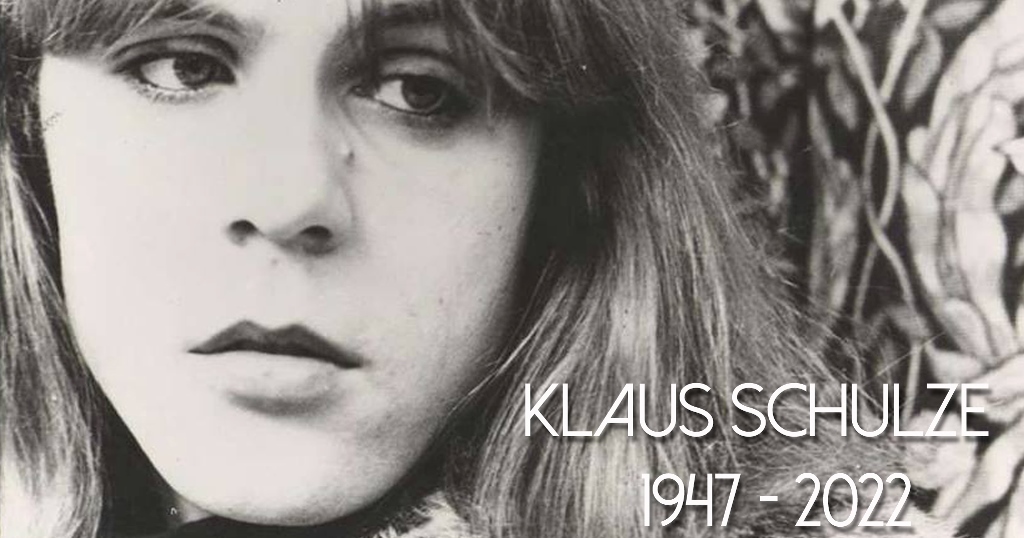
KLAUS SCHULZE 1947 – 2022

The German electronic music legend Klaus Schulze has sadly passed away at the age of 74 after a long illness.

Despite this, his passing was unexpected as Schulze was set to release a new album ‘Deus Arrakis’ this summer on SPV. He had collaborated with Hans Zimmer on ‘Grains of Sand’ aka ‘Herbert’ for the end credits of the new ‘Dune’ 2021 film adaptation directed by Denis Villeneuve.

Trained as a classical guitarist, Schulze took up the drums and was a member of TANGERINE DEAM and ASH RA TEMPEL, remaining with them for only their debut albums.

Disillusioned with both drums and guitars, he embarked on a solo career using keyboards and electronics, simply because it would take him on a creative journey into the unknown. Coinciding with the advent of synthesizers and sequencers to free him from the constraints of a conventional band where the discussions that went on were often longer than any music being played, his own improvised compositions lasting for almost half an hour at a time were the antithesis of modern pop songs and more akin to his musical hero Richard Wagner.

Schulze saw synthesizers as an opportunity to develop original tone colours and saw little point in using them to imitate real instruments like trumpets as Keith Emerson had done, reasoning that if he wanted to have the sound of an orchestra, he would then use one. He even occasionally donned a full face helmet for live appearances in the days when DAFT PUNK were still in short trousers!

Whenever cultural commentators talk about vintage synthesizers stacked up like telephone exchanges in the formative years of electronic music, Klaus Schulze is likely to be one of the key figures they are referring to. Unlike his contemporaries, Schulze had a playful approach with a physical element that encompassed a minimalist groove, a legacy of his earlier explorations as a drummer. During his concerts where he usually performed new material, he would sit crossed legged in front of his complex with his back to the audience while the cosmic trance-like soundscapes poured out.

His 1972 debut solo album ‘Irrlicht’ had been organ driven but its follow-up ‘Cyborg’ brought an EMS VCS3 into the armoury. Acquiring an ARP Odyssey, ARP 2600 and assorted Crumar keyboards, the wider breakthrough came with 1975’s ‘Timewind’ which was released internationally via Virgin Records and its associated imprint Caroline.

Winning the prestigious Grand Prix Du Disque International in France, the success of ‘Timewind’ allowed Schulze to up-the-ante with the purchase of a Moog IIIP modular system and the opportunity to record 1976’s ‘Moondawn’ in a multi-track studio having used just two-track equipment previously; the album was also notable for featuring Harald Grosskopf on drums with the union sparking the WALLENSTEIN sticksman’s own interest in synthesizers to record his acclaimed 1980 solo debut ‘Synthesist’.

Schulze was by now well into what many consider his imperial phase and adding PPG modules to his set-up, released his wintery 1977 masterpiece ‘Mirage’ on Island Records, supported by two lavish concerts at the London Planetarium and planting the seed for New Age in the process.

Harald Grosskopf rejoined Schulze for the ambitious 1978 double opus ‘X’ which also incorporated strings in a record comprising of “Six Musical Biographies” in honour of figures such as philosopher Friedrich Nietzsche, King Ludwig II of Bavaria, composer Friedemann Bach and ‘Dune’ author Frank Herbert. Interest in the latter was developed further on an actual album called ‘Dune’ featuring Arthur Brown on vocals in 1979.

The next two albums ‘Dig It’ and ‘Trancefer’ saw Schulze embrace new digital technology and the Crumar GDS system while 1991’s ‘Beyond Recall’ brought in sampling. A reunion with Manuel Göttsching of ASH RA TEMPEL came on the appropriately titled ‘Return Of The Tempel’ on 1995’s ‘In Blue’. Then released in 1996 on the Eye Of The Storm label founded by the production team behind SNAP!, ‘Are You Sequenced?’ saw Schulze venture into dance music in his own inimitable way with perceptively shorter pieces – “My style of music is always the same” Schulze once said, “but the expression is different with each piece…”

With almost as many live documents as studio recordings, soundtracks, classical, opera and his alias Richard Wahnfried, Schulze’s portfolio contained over 130 albums in many guises including collaborations such as ’The Dark Side Of The Moog’ series with the late Peter Namlook and the supergroup GO with Steve Winwood, Michael Shrieve and Stomu Yamashta, as well as productions for ALPHAVILLE and DEAD CAN DANCE’s Lisa Gerrard.

Schulze even made a cameo appearance in the 2001 German TV murder mystery ‘Klassentreffen – Mordfall Unter Freunden’ as a member of a fictional band THE WANDERING STARS performing at the school reunion, alongside KRAFTWERK’s Florian Schneider on double bass and ALPHAVILLE singer Marian Gold for a cover of ‘Those Were The Days’!

Literally never one to sit still, ‘Deus Arrakis’ was his next musical salute to Frank Herbert, remaining true to his characteristic style and dreamy sheen while remaining open to sonic experimentation. The crystal lake is somewhat emptier tonight but somewhere up there right now, Klaus Schulze is probably having one almighty synth jamming session with Florian Schneider, Edgar Froese and Peter Namlook…


Text by Chi Ming Lai
Photo by Guido Harari
27th April 2022

HAROLD BUDD 1936 – 2020

Minimalist composer Harold Budd has sadly passed away at the age of 84.

He was known for his calming impressionistic soundscapes which he recorded as a solo artist and working with the likes of Brian Eno, John Foxx, Robin Guthrie, Andy Partridge, Bill Nelson, Jah Wobble and David Sylvian among many.

Widely acclaimed as an ambient music trailblazer, he developed a style of piano playing which he referred to as “soft pedal”. Born in Los Angeles, Budd actually began as a jazz drummer while serving in the US Army. He graduated from the University of Southern California in 1966 with a degree in musical composition.

He gained a good reputation within California’s avant garde scene, but retired temporarily in 1970 and began a teaching career at the California Institute of the Arts, although his first album ‘The Oak Of The Golden Dreams’ appeared in 1971. Returning to composition in 1972, Budd began an extended cycle of works which eventually would become ‘The Pavilion of Dreams’; produced by Brian Eno in 1976, it was released on Obscure Records in 1978.

Harold Budd continued his association with Eno, utilising both acoustic and electric piano for what were to become two of his best known albums; ‘The Plateaux Of Mirror’ from 1980 and ‘The Pearl’ from 1984 were marvellously sparkling atmospheric works, both enhanced by electronic treatments from the former ROXY MUSIC synthesist.

Budd’s collaborations with Eno saw him experiment more with synthesizers on his solo albums, with 1986’s ‘Lovely Thunder’ and 1988’s ‘The White Arcades’ exploring subtle electronic textures to compliment his distinctive ivory style with an austere depth.

1986 also saw the release of ‘The Mood & The Melodies’, an album recorded with COCTEAU TWINS comprising of evocative instrumentals as well as songs. This album was the start of a long and successful artistic relationship with Robin Guthrie, with whom he recorded a beautiful experiment in duality ‘Before The Day Breaks’ and ‘After Night Falls’ in 2007. The pair continued the standard with ‘Winter Garden’ recorded with Eraldo Bernocchi in 2011, while a new Guthrie / Budd long player ‘Another Flower’ had only just been released.

2000’s ‘The Room’ was a solo return to more minimalist climes while in 2003, ‘La Bella Vista’ captured Budd improvising on piano unawares in the Los Angeles living room of U2 producer and Eno associate Daniel Lanois. But collaboration was where Harold Budd seemed to be happiest and he recorded a notable trilogy of works with John Foxx.

Both Budd and Foxx had worked with Eno previously so had common ground. Released in 2003, while ‘Translucence’ was classic shimmering Budd, ‘Drift Music’ was a more subdued ambient affair. However, 2011’s ‘Nighthawks’ with the late Ruben Garcia was a soothing tranquil nocturnal work with tinkling ivories melting into the subtle layered soundscape in keeping with its Edward Hopper inspired title.

This was all despite Budd declaring that ‘Avalon Sutra’ issued on David Sylvian’s independent record label Samadhisound in 2004 was to be his “Last Recorded Work”. Meanwhile a performance at Brighton Dome in 2005 was billed as his last public performance. However, he did return and performed live as recently as 2019 at Knoxville’s Big Ears Festival.

Despite being a comparative late starter to recording, Harold Budd became extremely prolific in the latter half of his life. He has an extraordinary back catalogue worthy of investigation and his list of collaborators are an indicator of how highly he was thought of as an artist, despite his preference for a much lower profile.

Harold Budd’s music is played almost on a daily basis at ELECTRICITYCLUB.CO.UK and while his aural presence will remain, his understated artistic integrity will be missed.

https://www.haroldbudd.com/


Text by Chi Ming Lai
8th December 2020

« Older posts Newer posts »