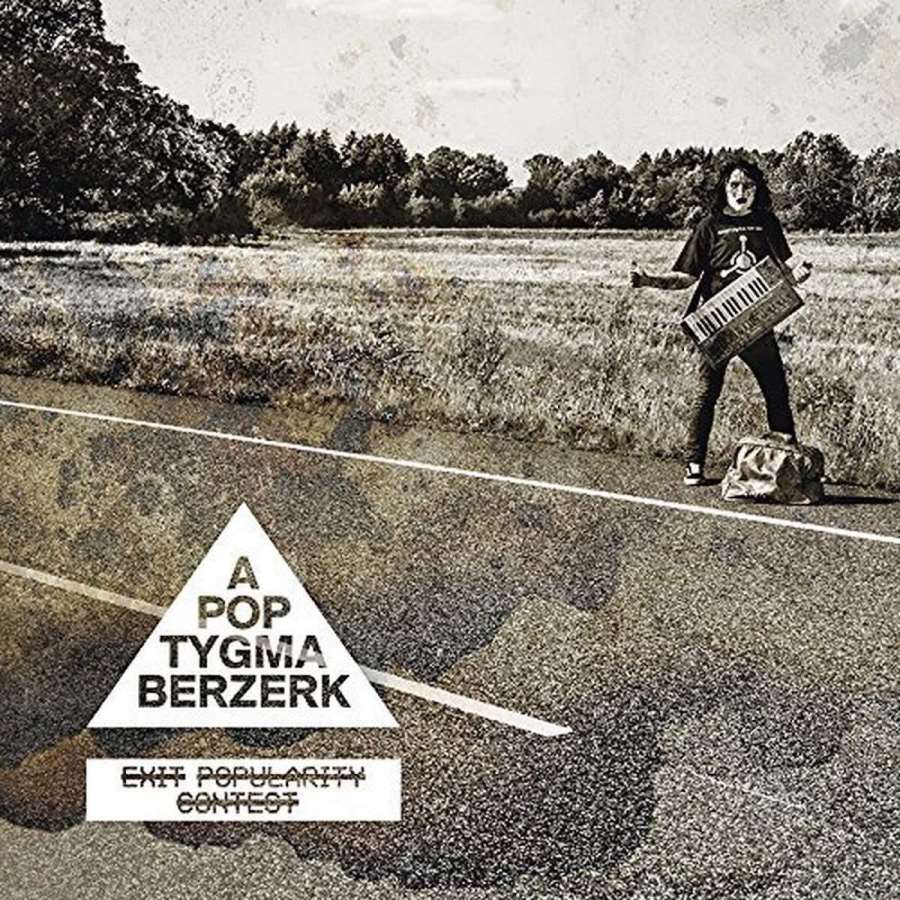
APOPTYGMA BERZERK have long been hailed as the best EBM act since FRONT LINE ASSEMBLY.
The founding member Stephan Groth has experimented with many a metamorphosis. But it has to be said that the Norwegian wizard is at his best while “emulating the analogue soundscapes of innovators like KRAFTWERK, TANGERINE DREAM, JEAN-MICHEL JARRE, VANGELIS and KLAUS SCHULZE, and the driving motorik Krautrock rhythms of NEU!”.
With his latest opus ‘Exit Popularity Contest’, APOP reinvents its core values, keeping closely with the drive to produce futuristic pop; this is synthwave fed on the essence from the pioneers of electronica, further elevated to the art level of sci-fi soundscapes.
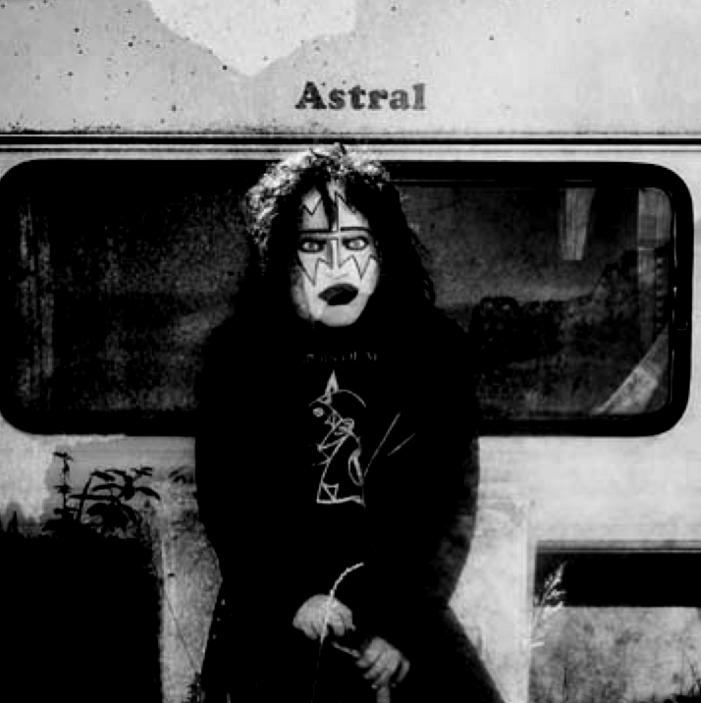
The release is cleverly clad in the backstory of certain TP; an individual under the Reality Displacement Program who has started a new chapter in his life. However, wiping the slate clean from being a successful recording artist to a rural life in a new society to “start over, fit in and become a normal person” is not working out as expected.
The idea of Tabula Rasa has been challenged by the innate inability to be anything else but an artist. The journey has resulted in TP making music from his “deepest wellspring”, challenged by the quest to find “the source”, helped by multiple analogue synthesisers resurrected from the community vault. The outcome becomes known as “conducting voltage to choose sides”, or to the listener, a journey through an unexpected, peculiar and unbelievable mash-up of ideas and sources.
‘For Now We See Through A Glass, Darkly’ could have taken its simplicity from the works of KRAFTWERK, congealed with JEAN-MICHEL JARRE‘s ideas, a concept that whilst the “doors of perception are ajar: would it not be majestic to force them wide open?” On ‘The Genesis 6 Experiment’, “the Old Testament’s Rosetta Stone, unlocks understanding of mythology, legends, ancient history and religious belief” – is the chess match between two players going to finally see its resolution in ‘The Cosmic Chess Match’? Can the “Irresistible Force” be stopped?
The symbiosis of synth gentleness and extraordinarily deep train of thought manifests itself in ‘U.T.E.O.T.W’, while ‘Rhein Klang’ acts as an oscillating source of “electronic lifeblood”, VANGELIS style. The most poignant track on the long player must be the Wilder-esque ‘The Devil Pays With Counterfeit Money’, a political statement urging for standing up to the fraudulent ordinary, for the rejection of common rules and regulations, for the “exit from the popularity contest”. It is vital to degrade the beast we all feed. Wrapped up in KRAFTWERK sounding elements, the piece is wholesome and urgent; a superb synth work.
‘Exit Popularity Contest’ is what Martin Gore’s ‘MG’ should have been. APOPTYGMA BERZERK excels in instrumentals, achieving the same aims as JEAN-MICHEL JARRE’s productions. For a chameleon act, the Nordic synth king has created a coagulation between the good old synth era and the future of electronic pop.
If you’re expecting ‘Kathy’s Song’, you’ll be disappointed, but after all “…and man created machine, and machine, machine created music, and machine saw everything it had made and said ‘Behold’.”
Amen.
‘Exit Popularity Contest’ uses the following instruments: ARP Odyssey, Moog Source, Korg MS20, WintherStormer Modular, Kawai 100f, Logan String Melody II, Roland SH2, Roland SH5, Roland VP330 Vocoder Plus, Roland Juno 60, Roland CR8000 Compurhythm, Siel Opera 6, Simmons Claptrap, Boss DR55 Doctor Rhythm, Sequential Circuits Drumtraks, Elektron Machinedrum, Vermona DRM1 Drum Synthesizer.
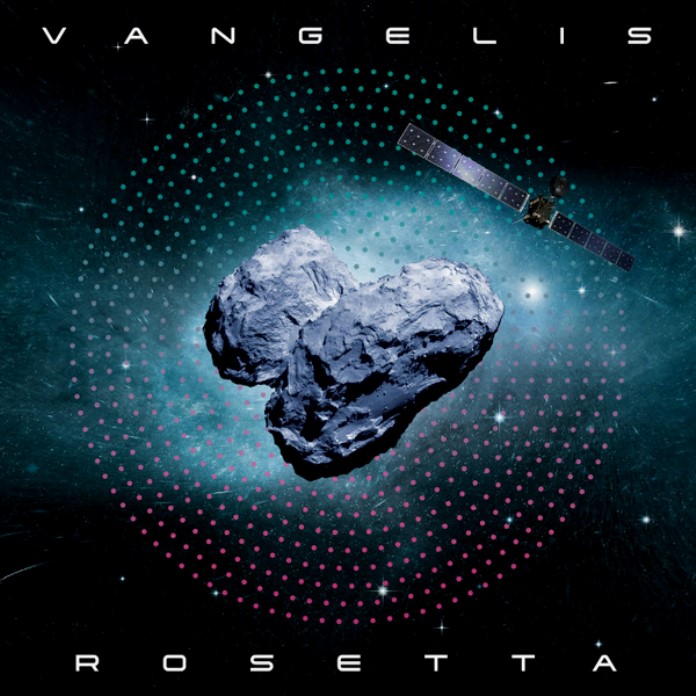
Space travel and synths were just made to go together. But while new Brighton artist JØTA pays tribute to the Soviet Space Programme of the Cold War era, Greek veteran VANGELIS brings things right up to date with ‘Rosetta’, his new album dedicated to the space mission of the same name.
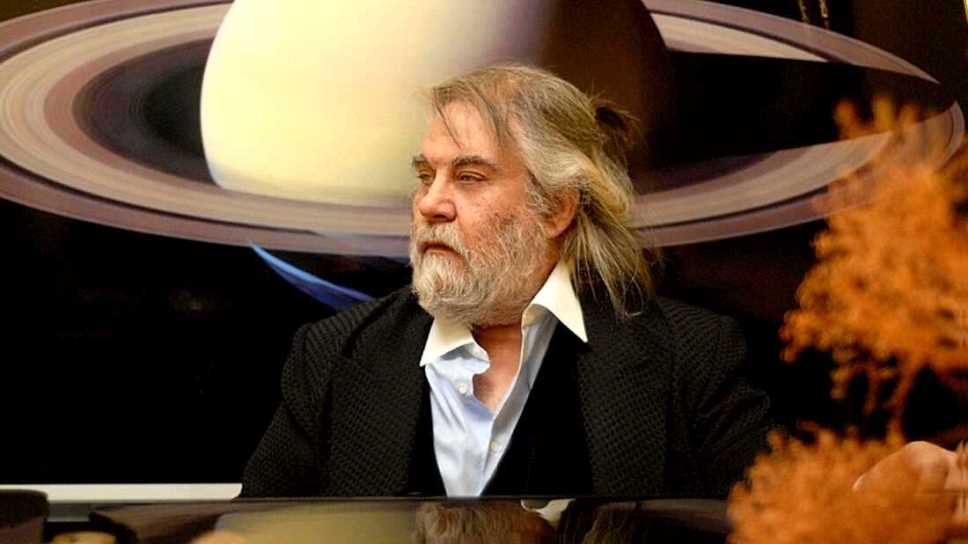
Born Evangelos Odysseas Papathanassiou, the keyboard virtuoso was a member of prog rockers APHRODITE’S CHILD with the late Demis Roussos. After they split, VANGELIS considered an offer to join YES as a replacement for Rick Wakeman, but went out on his own.
Embarking on a notable solo career, his symphonic electronic style, as exemplified by wonderful iconic works such as ‘Pulstar’, ‘Dervish D’ and ‘To The Unknown Man’, won him many admirers. He even had a couple of UK Top10 hit singles in ‘I Hear You Now’ and ‘I’ll Find My Way Home’ as part of a successful partnership with YES lead singer Jon Anderson, while another of their songs ‘State Of Independence’ was an international hit for Donna Summer.
Of course, VANGELIS is best known for his award winning soundtrack work. But such is the timeless quality of his compositions, his music has appeared in period dramas like ‘Chariots Of Fire’ and ‘1492: Conquest of Paradise’ as well as cult science fiction films, most notably ‘Blade Runner’.
Launched in 2004, Rosetta was built by the European Space Agency to perform a detailed study of comet 67P while flying past Mars and several asteroids along the way. In 2014, Rosetta manoeuvred next to the comet and its lander module Philae successfully reached the surface.
VANGELIS was inspired to compose the album following a video call with astronaut André Kuipers from the International Space Station. But this is not his first musical foray into space having produced ‘Albedo 0.39’ in 1976; indeed, the frantic sixth ‘Rosetta’ track ‘Albedo 0.06’ is a reference that past work. he said: “Mythology, science and space exploration are subjects that have fascinated me since my early childhood. And they were always connected somehow with the music I write.”
The sweeping ambience of ‘Origins (Arrival)’ and the widescreen atmospheres of ‘Starstuff’ both provide a fitting introduction to ‘Rosetta’. But the drama unfolds with the orchestrated moods of ‘Infinitude’ and the ivory laced ‘Exo Genesis’. Continuing the journey, ‘Celestial Whispers’ drifts soothingly into the ether and acts as a gorgeous space lullaby with its gentle voice samples and cascading tuned melodies.
The ‘Rosetta’ title track actually takes a slight detour, courtesy of a dreamy harpsicord motif reminiscent of John Barry and Roy Budd, before returning to the mission with the expansive soundscape of ‘Sunlight’.
The tricky landing of Philae onto the P67 comet could be likened to aiming a paper dart at a passing car and berthing it on the roof, so the climactic overtures of ‘Philae’s Descent’ document the tension and the spark. And so with ‘Mission Accomplie’, ‘Rosetta’s Waltz’ comes as a classic VANGELIS symphony, full of thematic melody and expressive vibrato to celebrate the euphoria of the achievement.
‘Perihelion’ brings back the tension with the sequencer pattern and rockist fusion tracing the probe’s journey as it reaches the closest point to the Sun within the comet’s orbit. But as Rosetta’s mission comes to its conclusion, ‘Elegy’ and ‘Return To The Void’ are laced with melancholy, although the latter’s bleeps act as a symbol of hope as data continues to be gathered and sent back to earth while the probe continues to travel across the cosmos.
Carl Walker from the European Space Agency said: “what VANGELIS wanted to do was share a lasting memory of our Rosetta mission through his music”; this he has achieved. As most humans will never travel into during this lifetime, this cinematic soundtrack without a film will stimulate thoughts and images like any good piece of music should.
While naturally, ‘Rosetta’ is not the liveliest recording VANGELIS has ever made, its spacey and sometimes abstract movements are proof that he continues to reign supreme in his field. Those Jean-Michel Jarre fans who may not have wholly embraced the ‘Electronica’ concept might find something to like here.
‘Rosetta’ is released by Decca Records / Universal Music in CD, vinyl LP and digital formats
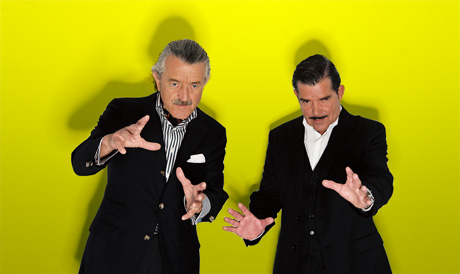
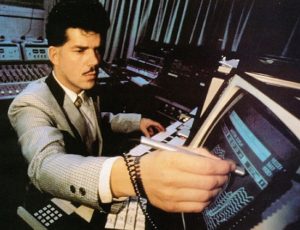
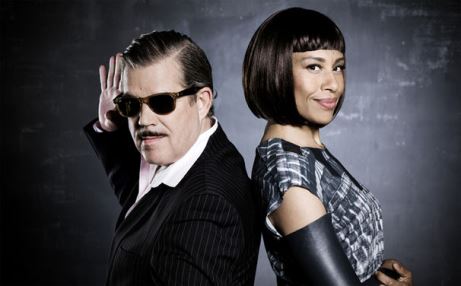
Boris Blank founded YELLO at the end of the 1970s, together with Carlos Perón.
They were soon joined by singer Dieter Meier, and the Swiss group became one of the most respected and influential electronic acts in the world. Reduced to a duo after Perón left for a solo career in 1983, YELLO’s best-known songs include ‘Oh Yeah’, which featured in ‘Ferris Bueller’s Day Off’, and ‘The Race’, which was a Top 10 hit in the UK.
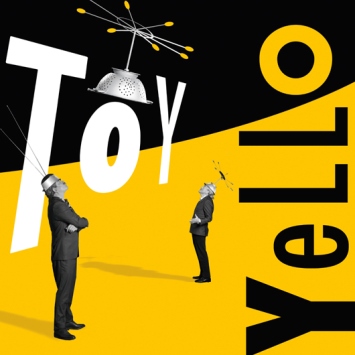
YELLO recently thrilled fans by announcing live Shows in Berlin in October. Boris Blank took a few minutes to speak with ELECTRICITYCLUB.CO.UK about the shows and YELLO’s new studio album, ‘Toy’.
The upcoming shows in Berlin are being billed as YELLO’s first live gigs, so how are they different from 1983’s ‘Live at The Roxy’?
The Roxy was more of a twenty minute gig, which was not a full live concert as we are playing now in Berlin – fully 90 minutes. It was very well prepared at the time with the Fairlight sampling machine. A few little things were live – and Dieter’s voice, of course, was live – but the rest was from this media.
This time, in Berlin, the richest track, ‘Tied Up’, will have fourteen people together with me and Dieter on stage. So, there will be some real live musicians on stage, as well – that is the difference between New York and today. People ask, after 38 years – the hardcore fans of YELLO – why don’t you do this for us? So I think it is time to share our music and our visuals with our YELLO fans.
Will you be playing some of the classic material? Will we, for example, get to hear ‘Domingo’ live?
‘Domingo’ is not on the list – no, I am sorry. There will be more famous tracks – ‘Oh Yeah’, of course. There will be other tracks like ‘The Evening’s Young’ and many other tracks from our old list of YELLO music. There will be ‘Tied Up’ – a very wild track. There will be bits of ‘Liquid Lies’. There will be some old tracks, of course, as well as the new YELLO tracks – and hopefully they will also become classic tracks in the next 25 years.
‘Toy’ has the classic YELLO sound, but it also feels more mature and refined. In the studio, did you have a vision of how you wanted the album to sound?
When making the music for YELLO, I never think about a certain aesthetic or a certain kind of concept. It just comes out. When you work every day, like I do in my studio, more as a painter than like a traditional musician, then things come up that I never knew before. I just make music for fun, of course – it should be fun all the time. At the end, that is the result, reflecting more or less my fantasy from the past months and years that I’ve been working on those tracks.
What is interesting and makes me very happy – it is sort of a compliment – is when people say, “You know, Boris, I can say after three bars that this is your music or this is YELLO music”. That is still, I think, the case with this album, as well. You can feel it or hear the characteristics.
You mentioned the Fairlight, and your use of it is famous. Your old machine currently lives in Australia. Is it right that the lucky owner inherited your library of sound files?
The reason is that the hard drive didn’t work anymore, so I sent the whole Fairlight to Australia to have the system fixed. They played out all of my old library, which was immense – it is a huge library – and sent it back to me on two or three hard disks.
It is very nice going back into those sounds. I’m not using them for this album, but the next time that I find some space, I would like to recover or recycle those sounds with the newest technology for sampling and go deeper – like with a microscope, going deeper into the molecules of all those sounds – and make new sounds.
It is a tragedy for me, because there was a lot of heart and sweat in those old samples. I recorded everything at the time. I threw a snowball at the studio wall and worked it into a bass drum in the end – things like this. It is nice to go back and see, in retrospect, how I worked at the time; how my mind and my feeling for sounds today has changed. It is a funny kind of history – a documentary for myself – to dig out all those old sounds and recover or recycle them.
Do you work more these days with computers or do you prefer hardware synthesizers?
I do have, for sentimental reasons, still, the ARP Odyssey and a few other ones, but I hardly work with them because I am not an emotional or sentimental person. I work today with the newest plug-ins which are available.
Of course, it keeps my mind and my brain in a good condition. I think that, if I want to have a really dirty Moog type of sound, I can do this as well using some tricks. So, I am not a traditionalist – I am looking to the future.
We know you are a fan of THE NORMAL’s ‘Warm Leatherette’ / ’TVOD.’ Are you also a fan of FAD GADGET or other early electronic artists?
FAD GADGET, of course! I am also a fan of musique concrète. I am a big fan of Pierre Boulez, of course, György Ligeti, and even some parts from Karlheinz Stockhausen and Raymond Scott. They are real pioneers in using electronic music. They are big influences for my own music, as well. They gave me the original kick to start making electronic music.
At the shows in Berlin, Dieter will be front and centre, but is there a chance that we will get to see some of your collaborators – perhaps Malia and Fifi Rong?
Fifi Rong and Malia will be live there. Fifi will sing two tracks, Malia one track and two tracks in a duet or collaboration with Dieter. We are looking forward to keep them happy, of course!
You worked with Malia on another project, ahead of the YELLO album. How did you come together?
It is kind of a long story, because friends of Malia came to me and asked a few times whether I would like to collaborate with her to produce four or five demo tracks that she could use to get a new contract. Finally, we started working between YELLO works, over about two years.
It was not enough doing four tracks – why don’t we do a whole album? On and off, she came to the studio and we worked together for at least two years. She is still a good friend of YELLO, of course, so that is her voice – it fits well on our new album.
In the past, you have worked with Shirley Bassey and Billy Mackenzie, who are two of the great vocalists of the last century. Malia’s voice sounds just as rich.
Yes, she has a special touch in her voice. It is not a colour which you find every day on this planet. She has a really special characteristic to her voice. She is one of the most respected Nina Simone interpreters; so, yes, she has a great voice. She has something alive and emotional in this voice, which is very unusual.
You recently collaborated with Jean-Michel Jarre, what was that experience like?
The experience with Jean-Michel Jarre was, if you compare it to chess players, like if you send a move to your friend in Stockholm or Tokyo. He was in Los Angeles and he sent me the track which he would like to collaborate on with YELLO for his album. As our move, Dieter and I sent him back some voices and a story, which Dieter came up with, and a few rhythmic and sound ideas from myself.
We haven’t met so far, but it was a nice experience and I admire his musical life a lot. I remember ‘Oxygene’. When I was very young, l thought “Wow, this is a whole other world of electronic music” – you know, it had the characteristic that Krautrock, all the German electronics, had at the time.
It was a pleasure and a big honour for us to be on this album, in such great company, with MASSIVE ATTACK and all these great people involved in the project.
YELLO released a music-making app called the Yellofier. Do you think you could see YELLO making a commercial track using that technology?
There are some sounds – some parts, some fragments – on the new album which I had done with the Yellofier. Also, we are developing some more effects or features for the Yellofier quite soon. I would like to get in a collaboration to build some hardware or a sampling machine that has the architecture I wish to work with – an expanded version of the Yellofier – just limited somehow. But that is an idea for the future.
ELECTRICITYCLUB.CO.UK gives its warmest thanks to Boris Blank
Special thanks to Duncan Clark at 9PR
‘Toy’ is released via Polydor / Universal Music on 30th September 2016, available as a CD, deluxe CD, double LP and digital download
YELLO appear at Kraftwerk Berlin on 26th, 28th, 29th and 30th October 2016
Released last October, ‘Electronica 1: The Time Machine’ was JEAN-MICHEL JARRE’s first album since 2007’s ‘Téo & Téa’.
It was a worldwide collaborative adventure where the French Maestro “had this idea of merging DNA with musicians and artists of different generations, linked, directly or indirectly, to electronic music in a kind of sharing process in a world where we’re more isolated than ever by our smartphones and the Internet”.
During its five year mission, the ‘Electronica’ sessions produced an excess of tracks, thanks to the number of willing contributors who embraced Jarre’s ethic to write in the same room, as opposed to remote working via the web. “Electronic music is all about connections” he said, both practically and figuratively. ‘Electronica 1: The Time Machine’ featured AIR, TANGERINE DREAM, Vince Clarke, John Carpenter and Laurie Anderson; so for those who were unaware of any electronic music before AVICII, it came as something of an education.
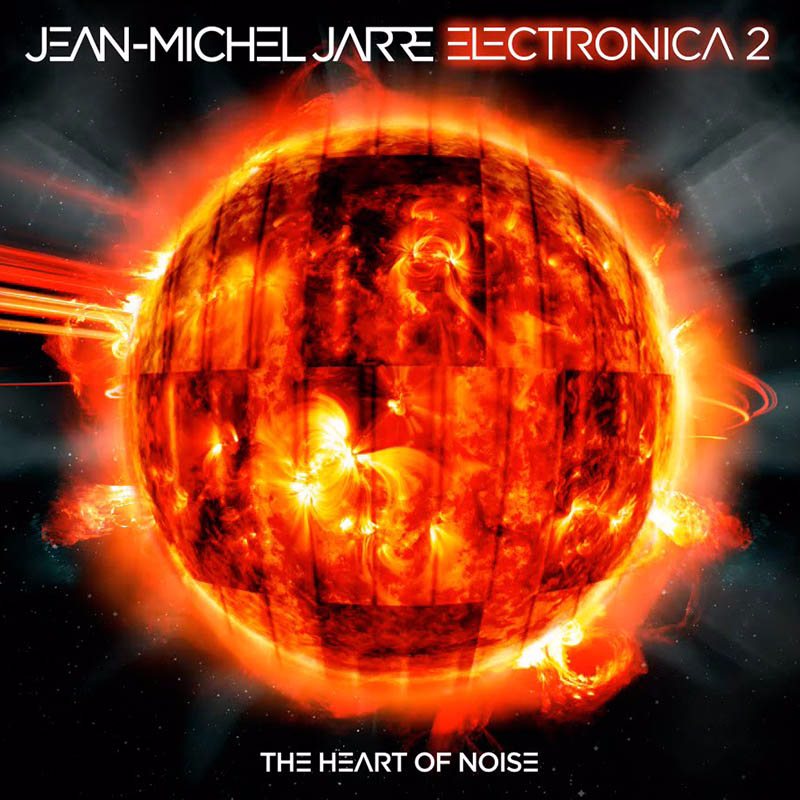
The second instalment ‘Electronica 2: The Heart Of Noise’ has no less impressive a cast, with PET SHOP BOYS, THE ORB, YELLO, Peaches, Gary Numan, Hans Zimmer and Sebastien Tellier all willing conspirators in one of the ambitious music projects ever undertaken.
Photo by Constantin Mashinsky
‘The Heart of Noise, Pt. 1’ featuring French techno kid Rone begins with an almost Morricone aesthetic, as if the Italian composer had used synths. After a marvellous impressionistic start with an enticing filmic ambience, the more uptempo second part sees Jarre taking classic trance melodies along for the ride, utilising steady beats and percussive mantras without being obtrusive.
‘Brick England’ with PET SHOP BOYS is classic mid-tempo Euro disco, with Tennant and Lowe not breaking ranks with a rockabilly tune or anything. But Jarre’s ribbon controlled lead synth does sound as though it might break into ‘The Final Countdown’! Following on, ‘These Creatures’ with experimental singer / songwriter Julia Holte takes things downtempo with a gentle blippy soundscape. Holter provides some wonderfully angelic vocals and voice samples, as the dreamy build swims along seductively.
PRIMAL SCREAM are a surprise inclusion although their flirtation with harder electronic forms on ‘Autobahn 66’ and their cover of ‘Some Velvet Morning’ justifies their presence. However the basis of ‘As One’ is a speeded up take on ‘Come Together’ from ‘Screamadelica’ and sees pitch shifted voices alongside vocoder processed tones that could easily be mistaken for GRIMES going happy hardcore.
The unlikely friendship between Gary Numan and Jean-Michel Jarre has resulted in ‘Here For You’, possibly the most purely electronic work Numan for many years. Significant in its absence of crunching guitars, Jarre himself amusingly described this stomper as “Oscar Wilde Techno”. Whatever, it is certainly the darkest thing Jarre has ever recorded
‘Electrees’ sees an eagerly awaited collaboration with award winning soundtrack composer Hans Zimmer epic. Jarre’s father Maurice of course won Oscars for his work on ‘Lawrence of Arabia’, ‘Dr Zhivago’ and ‘Passage To India’. Zimmer has a varied CV including BUGGLES, HELDEN and even producing a single for THE DAMNED, but first worked on fusing the traditional orchestral arrangements and electronic instruments in 1980 with English composer Stanley Myers who wrote ‘Cavatina’, the theme to ‘The Deer Hunter’.
With a cinematic sheen, ‘Electrees’ harks back to Zimmer’s synth roots with choral samples and synthesized strings, recalling Moby’s ‘God Moving Over The Face Of The Waters’.
A non-musician collaboration comes in the form of ‘Exit with National Security Agency whistleblower Edward Snowden. Frantic and tense with a stop / start structure, it slows for a monologue by Snowden. The track’s political slant is thematically closer to 1988’s ‘Revolutions’ with a chip tune influence that soundtracks a spy chase and “finding a way out”.
On the other side of the coin, the brilliant ‘Gisele’ with Sebastien Tellier is very melodic and unsurprisingly Gallic, the gathering of two French talents sounding not unlike Serge Gainsbourg gone electro. THE ORB’s distinctly spacey textures make their presence felt during ‘Switch On Leon’. They actually first worked with Jarre on a remix of ‘Oxygène 8’ in 1997, but it was said at the time that he was unhappy with the results so the track was subsequently issued as ‘Toxygene’ by THE ORB themselves. Whatever the story, water must have passed under the bridge for the two parties to reunite.
‘What You Want’ has the unmistakeable snarl of Peaches over an electro hip-hop backbeat. With her characteristic diva humour coupled with some asexual madness, it’s a diversion from Jarre’s usual template that will horrify fans of ‘Oxygene’ with its dubstep and rap elements.
Meanwhile, ‘Circus’ with German producer Siriusmo is very dance pop with DAFT PUNK robot voices in abundance; while good fun, it begs the question as to what a collaboration with Guy-Manuel de Homem-Christo and Thomas Bangalter would sound like. No questions as to how a YELLO versus Jean-Michel Jarre co-write would turn out like as ‘Why This, Why That and Why’ delivers the expected; Dieter Meier gives his distinct droll while Boris Blank and Jarre provide an airy blend of soothing atmospheric backdrops.
‘The Architect’ with house trailblazer Jeff Mills is hypnotic, orchestrated Detroit techno that provides an accessible entry point to the genre. But more appealing to a handbag filled dancefloor is ‘Swipe To The Right’. Possibly another politically coded piece or the use of Tinder, the brilliant song partners Jarre with Cyndi Lauper. No stranger to electronic forms, particularly with her under rated ‘Bring Ya To The Brink’ album of 2007, there are big bass riffs galore for a great poptastic exploration that is both catchy and danceable. A sample from the Minipops rhythm box that appeared on ‘Oxygene’ even drops in for possibly the standout track on this collection.
To close, the album finishes with two solo compositions ‘Falling Down’ and ‘The Heart of Noise (The Origin)’; the former floats a vocodered vocal over a distinctly harder-edged mechanical pulse, while the latter is a third variation on the title track. It would be fair to say with ‘Electronica 2: The Heart Of Noise’, the results cannot help but be mixed.
ELECTRICITYCLUB.CO.UK was told by Gary Numan that Jean-Michel Jarre “is one of the nicest people I’ve ever met in my entire life” – so obviously he didn’t want to upset anyone and decided to release everything! However, such is the method of modern music consumption, the listener can be more brutal and from the two volumes, a great 16 track ‘Best Of Electronica’ playlist can easily be constructed. While Electronica 2: The Heart Of Noise’ is not as consistent as the first instalment, there is something for anyone remotely interested in electronic music. The choice is yours.
In August 2015, METROLAND’s sound engineer and close friend Louis Zachert, aka Passenger L, passed away.
The year had begun on a high for METROLAND with the critical acclaim for their Bauhaus conceptual opus ‘Triadic Ballet’.
Praise on the album was accorded from Andy McCluskey and Rusty Egan, two electronic pioneers who both also later witnessed METROLAND’s live presentation dedicated to Passenger L at the Electri_City_Conference in Düsseldorf.
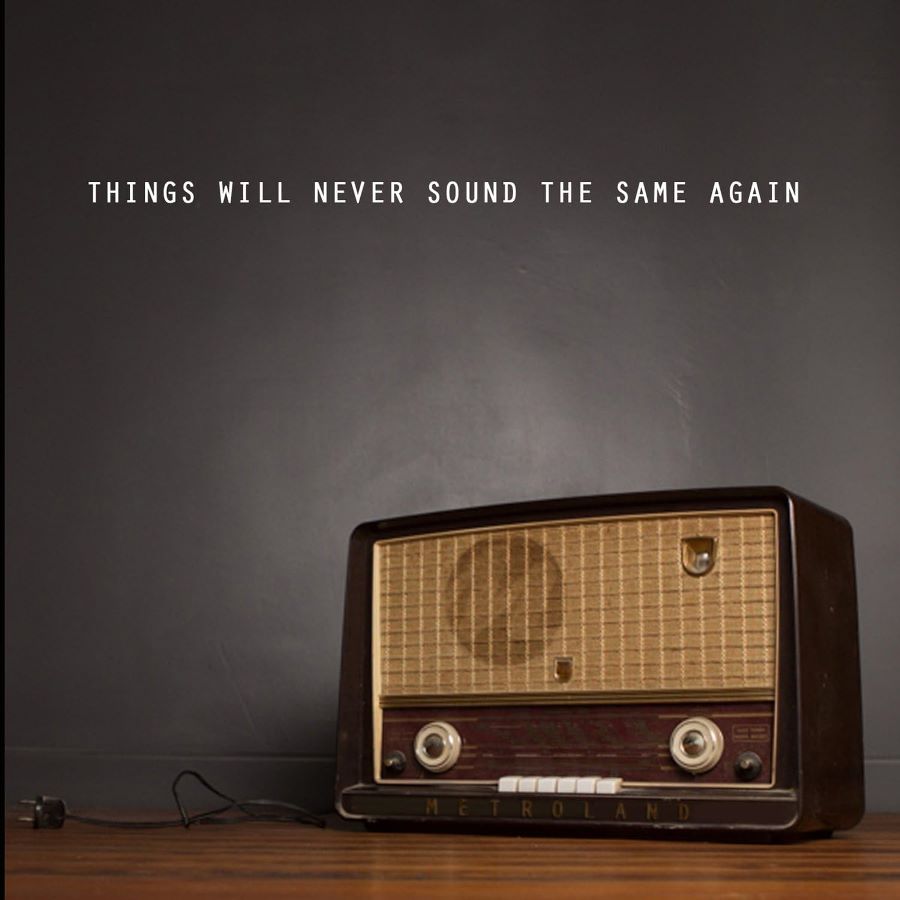
The Brussels based duo have recorded ‘Things Will Never Sound The Same Again’, a musical eulogy created from scratch as their way of paying homage to their fellow passenger. A key figure on the Belgian independent music scene, each of the track titles describes or embodies what Louis Zachert meant to Passengers A and S, from his witty e-mail headers and the name of his recording studio to his genuine love for electronic music and life itself.
Understandably, ‘Things Will Never Sound The Same Again’ has a much darker overtone compared with the energetic colour cast of ‘Triadic Ballet’. Despite the mellower sound, there are still bright analogue melodies and pulsating rhythms that celebrate moments and memories. The opening ‘Vie (Mental Impressions Reproduced By Electronic Means)’ is an example of the darker template that embodies the obvious feelings of loss.
But as the French word for ‘life’, Louis Zachert wanted to translate impressions of daily life into soundscapes using analogue synthesizers or as METROLAND put it: “Synthetic music used to express feelings, precisely that what we tried to achieve with this tribute”.
And with the appropriately titled ‘Synthetic Sound’, Passengers A and S are doing what they do best, placing tightly sequenced patterns in cohesion with mechanical percussion and resonant arpeggios. Using grainier textures, both ‘Good Moaning’ and ‘This Little Thingy’ continue with this deeper outlook, not quite funereal but most definitely solemn.
The steady bass driven ‘Things Will Never Sound The Same Again’ title track follows along similar lines and it is certainly interesting to hear METROLAND using simulated wah-wah guitar sounds next to symphonic synth strings. But the life celebration begins in earnest with ‘Brother’ which despite its brighter melodic overtones, is offset by an honest human vocal.
“We sometimes used to tease Louis with a song by the band MODERN TALKING ‘Brother Louie’… you should then have seen the look on his face… priceless” recalled Passengers A and S, “we kindly invited someone to provide vocal samples for our brother from some Basildon rooted band that we all used to like very much. And so, with a poppy undertone, the Basildon sound and voice, this became our own ‘Brother’ (Louis) song…”
The uplifting ’Music / Machine’ with its Jarre-esque melodies and early HUMAN LEAGUE bass motif is not an original song but a METROLAND remix of MUSICOCOON, a project involving Louis and his friend Philippe Malemprée. Kindly donated, its presence is in honour of Louis as the last piece of music he ever worked on. It comes at just the right moment and does what any successful eulogy should do, providing comfort and optimism with Passenger L living on in the music.
With this in mind, the best way Passengers A and S can pay tribute to their friend is to be themselves; and this is captured on ‘Under The Roof’, probably the most characteristic METROLAND track on the collection. ‘Under The Roof’ was also the name of Louis’ mastering studio…
‘Quo Vadis’ is Latin for “Where are you going?” and has a lovely until we meet again tone about it; but it was originally recorded two decades ago with a female vocalist. “There was one song entitled ‘Passing By’, which had this mellow melody we always liked… but it never worked out. Louis’ spirit, somehow gave it what it needed, and we both believe it was Louis who made it happen this time. Louis gave us the inspiration and correct drive to finish what we started there, he was with us and still is”. And thus “The last song on this tribute sums it up” say METROLAND, “Where are you going Louis?… No matter where, you remain with us forever”
Throughout history, sadness has inspired beautiful art and wonderful music. Yes, ‘Things Will Never Sound The Same Again’, but while this chapter is tinged with sorrow, this touching memorial brings a sense of closure while not forgetting the man who helped get METROLAND to where they are today; it’s fair to say Louis Zachert would have loved this.
We use cookies to ensure that we give you the best experience on our website. If you continue to use this site we will assume that you are happy with it.

 ,
,  and
and  , won him many admirers. He even had a couple of UK Top10 hit singles in
  and
and  as part of a successful partnership with YES lead singer Jon Anderson, while another of their songs
  was an international hit for Donna Summer.
 and
and  as well as cult science fiction films, most notably
  .
.
 . But the drama unfolds with the orchestrated moods of ‘Infinitude’ and the ivory laced ‘Exo Genesis’. Continuing the journey, ‘Celestial Whispers’ drifts soothingly into the ether and acts as a gorgeous space lullaby with its gentle voice samples and cascading tuned melodies.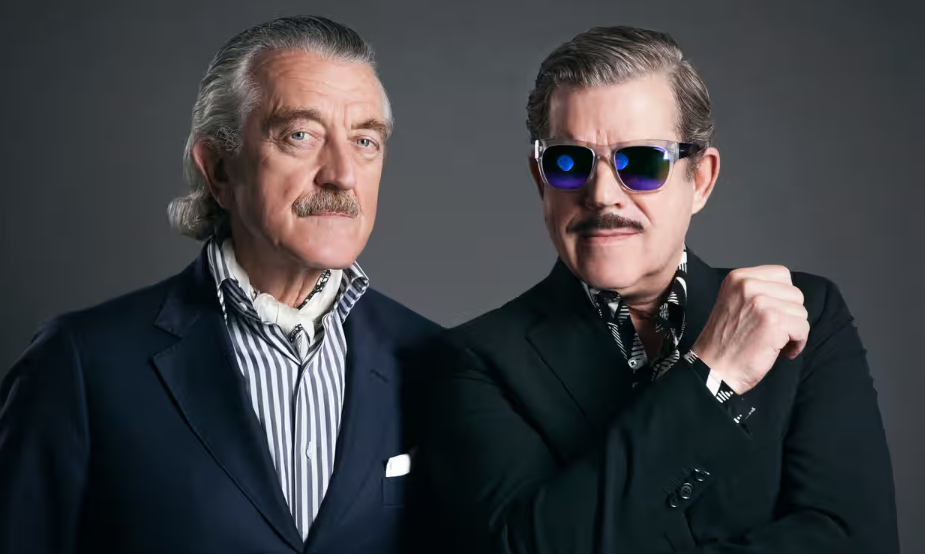
 .
.
 featured AIR, TANGERINE DREAM, Vince Clarke, John Carpenter and Laurie Anderson; so for those who were unaware of any electronic music before AVICII, it came as something of an education.
 has no less impressive a cast, with PET SHOP BOYS, THE ORB, YELLO, Peaches, Gary Numan, Hans Zimmer and Sebastien Tellier all willing conspirators in one of the ambitious music projects ever undertaken.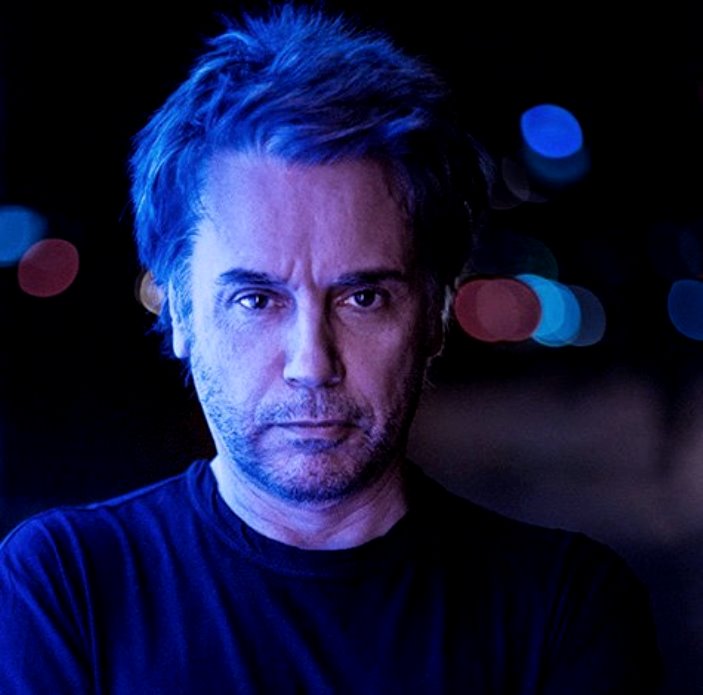
 album of 2007, there are big bass riffs galore for a great poptastic exploration that is both catchy and danceable. A sample from the Minipops rhythm box that appeared on ‘Oxygene’ even drops in for possibly the standout track on this collection.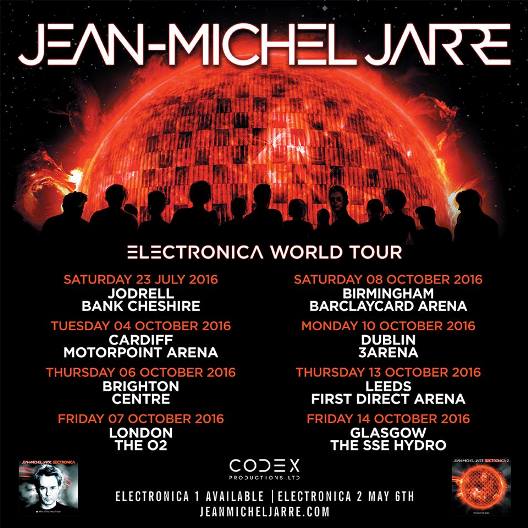
Follow Us!