“I don’t like country & western, I don’t like rock music… I don’t like rockabilly! I don’t like much really do I? But what I do like, I love passionately!!”: CHRIS LOWE
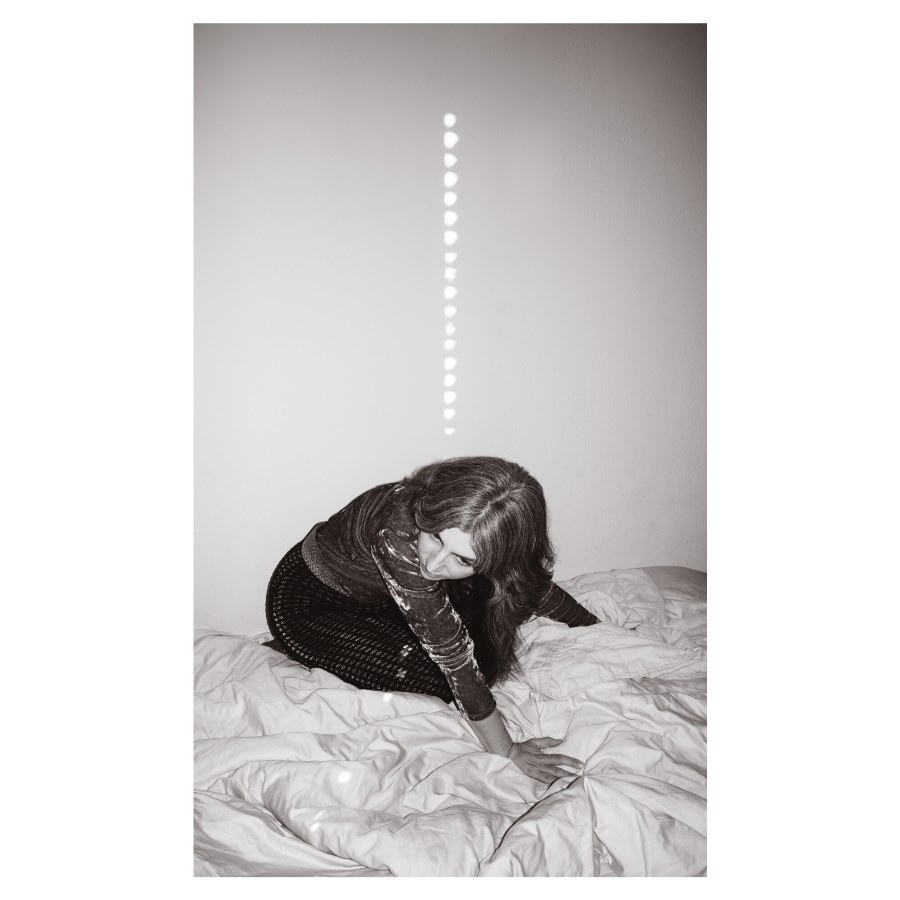
Following the critical acclaim of 2024’s ‘Something in the Room She Moves’, Los Angeles composer and art-pop auteur Julia Holter returns with ‘Materia’.
Holter’s musical world has always thrived on fluid, atmospheric electronic textures, blending classic avant-garde sensibilities with an idiosyncratic pop instinct. On ‘Materia’, that signature fluidity is pushed even further into ethereal synth landscapes, jazz-inflected phrasing and hypnotic vocal collages.
Initially conceived around re-evaluations of that previous album’s key track ‘Materia’, this is a companion record expands into a rich, self-contained tapestry of re-imaginings, tour-written pieces and unreleased ideas. Of the album’s thematic anchors, ‘Materia 2’ pairs an otherworldly machine pulse with subtle fretless bass, evoking the surreal haze of Julee Cruise. Meanwhile, the closing ‘Materia 3’ shifts to a deeper Wurlitzer motif in a slowed-down take intended as a subtle homage to peak CD-era hidden tracks.
Photo by Dicky Bahto
But originally released as a standalone single during her 2024 tour and opening proceedings, ‘The Laugh Is in the Eyes’ sets a captivating tone. Built on delicate synths and tumbling rhythms, its instrumentational blend would not feel out of place on a Jansen Barbieri Karn (JBK) recording. Holter floats her plaintive vocal over flutes and shifting polyrhythms, creating a balance of tension and joy.
An exquisite piece of avant-pop, ‘My Lost One’ introduces understated keys and a hushed whisper before it expands into an eccentric, dreamy blend of fretless bass, flute, sax, and soprano vocals that accelerate into a cerebral, euphoric climax. Driven by a gentle rhythm box, ‘Fantasy’ is arguably the most immediate and luminous offering here. Layered with shimmering, crystalline synths, Holter’s vocal guides a waking dream as the arrangement unfolds gradually around her, taking unexpected yet glorious sonic turns.
A striking vocal collage experiment exploring the concept of time, ‘Clepsydra’ sees complex vocal layers intersecting to deliver a brief, provocative piece of artful elegance. But spanning over 10 minutes and improvised by Holter alone, ‘My Twin’ is s sprawling piece floats in lounge ambience, bossa nova rhythms and angelic minimalism. Less a traditional song and more a vocal art installation, it features her engaging in an intimate, layered dialogue with her own mirrored voice.
Written during a turbulent period marked by motherhood, personal grief and global unrest, ‘Materia’ reflects an artist navigating heavy emotional terrain through pure compositional curiosity. This is a satisfying sophisticated listen that highlights Holter’s avant-pop mastery as both composer and vocalist with a body of work that is perhaps even better than ‘Something in the Room She Moves’.
The Dublin-based electronic explorer Peter Fitzpatrick is best known under his CIRCUIT3 moniker his melody-driven synthpop that wears its classic Synth Britannia influences proudly on its sleeve.
Yet, on his latest long player, ‘Metanoia – Music From Therapy’, Peter Fitzpatrick takes a sharp, courageous detour. He steps away from the comfort of structured pop songs to construct a deeply personal, spacious and quietly expressive suite of minimal instrumentals. A Greek term meaning “a transformative change of heart”, ‘Metanoia’ serves as a sonic diary of the slow but ultimately liberating process of modern psychotherapy. Rather than using words, Fitzpatrick chooses to let his analogue instrumentation do the talking.
The record opens with the disquieting ‘Cracked Eyes’. Reaching back into the fragile memories of childhood, its slow-moving sonic aural clusters are highly reminiscent of Brian Eno’s ‘Neroli’, floating in a sea of beautiful, melancholic isolation. This transitions into ‘Mood’, an abstract piece that captures those feelings which are still too shapeless to name.
‘Imperfect’ introduces gentle, rhythmic pulses that lend a distinct Germanic quality to an otherwise eerie haunting atmosphere with an icy Kosmische precision. The darker mood deepens on ‘Burnout’, where shady, bubbling modulations evoke the rich, textured work of Richard Barbieri formally of JAPAN. Then the clouds part as ‘Where Are We Going?’ introduces an acoustic piano, bringing a sudden burst of daylight in a moment of peaceful reflection.
Photo by Jackie Hudson Lalor
The second part of the album explores the mechanics of recovery. ‘Shielding From The Past’ utilises an ambient drone that is beautifully countered by a melodic call, acting as a metaphor for the psychological walls people build and the courage it takes to dismantle them. ‘What If Everything Goes Right?’ blends a cascading sequencer run with the haunting snaps of a synthetic male choir in a hopeful highlight to savour.
The emotional centrepiece of ‘Metanoia’ is undoubtedly ‘The Hope’, an 11 minute collaboration with Vince Clarke; here he applies his signature melodic textures to Fitzpatrick’s cerebral lattice. The resulting soundscape echoes Clarke’s ambient collaborations with Martyn Ware on ‘Pretentious’ and ‘Spectrum Pursuit Vehicle’ for an expression of restraint where hopelessness and hope exist alongside each other.
‘Metanoia’ is CIRCUIT3’s journey into electronic minimalism for a vulnerable and deeply cinematic piece of art. It is an illustrious body of work that deserves to be savoured for its undoubted and intended therapeutic possibilities.
New York duo BUNNY X returns to the characters of their debut “teenage nostalgia” album ‘Young & In Love’ and sees them navigating the glass towers of ambition as post-grad working girls for their new record ‘Love On A High Floor’.
However, set against the backdrop of Wall Street excess and the New York City real estate boom, ‘Love On A High Floor’ is also an exploration of the seductive promise of the American Dream and the disillusionment that often follows its pursuit. Yes, greed is not good…
Now comprising of Abigail Gordon and Jenny Bates, this is BUNNY X’s fantasy nostalgia recalling career ambitions, office romances, cocktail bars, late-night taxi rides taxi and penthouse suites. Mutating their retrowave sound, the marvellously breezy and uptempo opener ‘Starting Dreams’ sees Don Dellpiero producing and captures the excitement post-graduation and entering the workplace on a fit of “officewave” that is heavy on synthetic drums.
If Jane Wiedlin has adopted more of Stephen Hague’s characteristic electronic production style on ‘Rush Hour’, ‘True Confession’ is how it might have sounded! Working with the still oddly monikered SELLOREKT / LA DREAMS, it was originally one of his instrumentals ‘Another Dance’. Continuing this alliance, ‘One Touch’ adds a bit of subtle funk to the optimistic “truemance” backdrop with our heroines having “never felt like this before”; it features original BUNNY X member Mary Hanley and radiates optimism alongside some playful sophistication.
‘Even If We Don’t Talk’ is more characteristically retrowave in its nocturnal air while ‘After Hours’ plays on the same field at a steadier pace with a guitar solo thrown into the gameplay. As ‘Love On A High Floor’ heads into its second half, ‘Take Me Away’ gets things lively again although as a song, this is perhaps less convincing on the production front compared to those occupying the first half of the record.
Produced by GOSTEFFECTS, ‘Night Moves’ does what it says on the tin as its moody atmospheres take hold in the bedroom where secret desires can no longer be kept inside. The sultry ‘Love On A High Floor’ title song is mostly spoken word and adds acoustic guitar but perhaps lacks a groove, something that could also said about ‘Business Trip’ which comes over slightly sluggish in its reflection of the darker side of ambition and “the cost of doing business”.
Another that began life as a SELLOREKT / LA DREAMS instrumental titled ‘Before’, ‘Believe in You’ ventures into more AOR territory and could be HEART if axed up thanks to its rousing vulnerable vocal delivery. Closing with yet another redeveloped SELLOREKT / LA DREAMS instrumental, ‘Lovers’ closes and explores the deepest of yearnings in a desperate plea of hope for a love that is deeply desired. Also featuring Emma Ballantine and Darryn McHardie of THE LIGHTNING KIDS, the latter’s the guitar solo gets all ‘Purple Rain’.
Certainly the first half of ‘Love On A High Floor’ is a joy and amongst the drama in the world right now, that is much needed. But as this album’s intent is to see both the glitter and the cracks of love and life, this fantasy nostalgia presents a more realistic representation of this ‘Working Girl’ era than the neon-lit VHS grid lined DeLorean night drives that characterise other “retrowave” offerings.
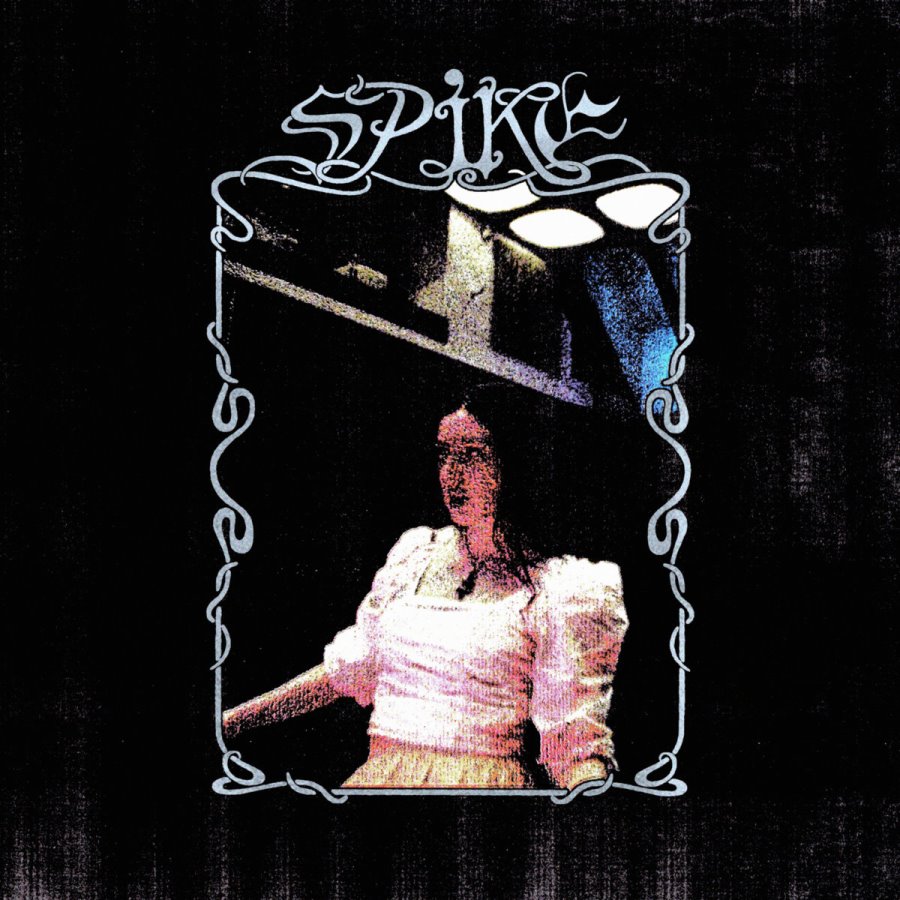
Spike is the synthpop project of Hannah McLoughlin.
Under her own name, she released an experimental electronic soundscape EP ‘The Tower’ in 2020 and was a regular performer at Cafe OTO. But adept at flute, EWI and synth, Spike plays more to her singer-songwriter instincts, influenced by leftfield artists such as Rose McDowall, Chris & Cosey and Frank Tovey.
Her self-titled debut long player embraces drowsy avant pop, angst-laden synth-punk and droning hauntology. The song that got Spike wider attention, her deadpan electronic cover of Warren Zevon’s ‘Werewolves Of London’ is included and its gothic reimagining effectively sets McLoughlin’s avant pop manifesto to deliver a brand of macabre disco dealing with the undead and the inhuman.
A sombre Italo-based number set around the hook of PET SHOP BOYS ‘Heart’ and a squelchy bass sequence, opening song ‘Disappear’ shouldn’t work on paper with McLoughlin’s anxious contralto, but it does and is a total pleasure. Following on, ‘Breaking The Wave’ is marvellous DIY synthpop with hooks galore while ‘Dying On The Vine’ takes the pace down for an emotive lament.
‘Unending’ references Ursula Le Guin’s Sci-Fi novel ‘The Left Hand of Darkness’ and recalls BOOK OF LOVE in its rhythmic patterns as McLoughlin showcases her fragile vocal range over deeper rumbles. The melancholic Motorik rave of ‘Tiquetonne’ interpolates ‘Con Te Partiro’ aka ‘Time To Say Goodbye’ as made famous by Italian tenor Andrea Bocelli and again highlights the eclectic world of Spike.
The frenetic pace of ‘Event Horizon’ adds further tension to the despair in its black hole narrative and clears the air for the wonderful Sci-Fi moods of ‘Fortuna’, McLoughlin’s knowing tribute to synth pioneers Delia Derbyshire and Daphne Oram. Following the serene hymn of ‘No More’ that draws from the minimalist folk sensibilities of Vashti Bunyan and Sibylle Baier, the ‘Spike’ album closes with the glorious angelic oompah of ‘You’re Missing’ which sees our heroine emulate the sadly departed Trish Keenan of BROADCAST.
Short and sweet, this varied debut showcases Spike as a delightfully odd talent who provides a fresh playful take on electronic avant pop seeded by that uniquely British eccentricity. Vulnerable and visceral, despite the melancholic traits, this record is something of a joy!
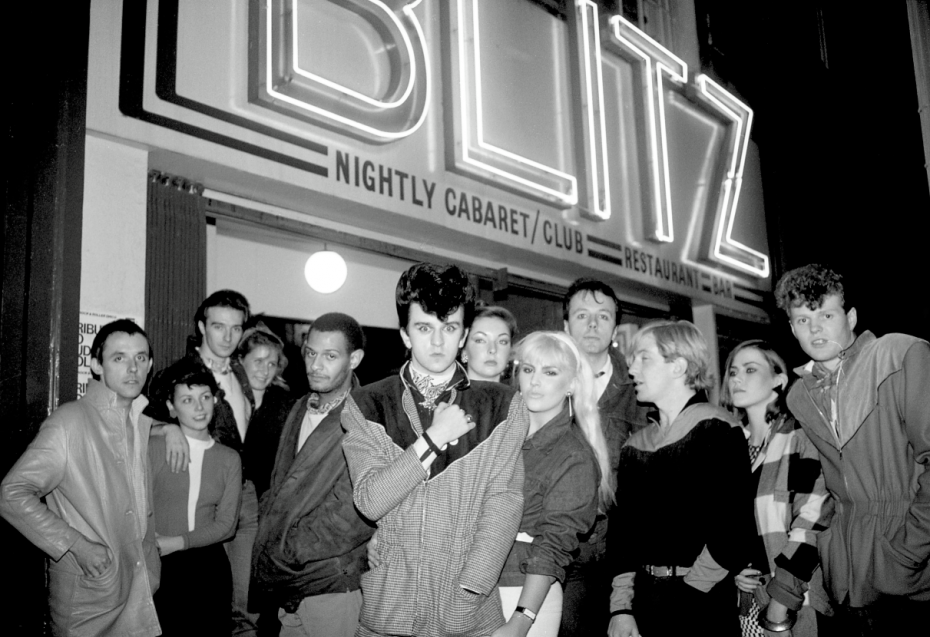
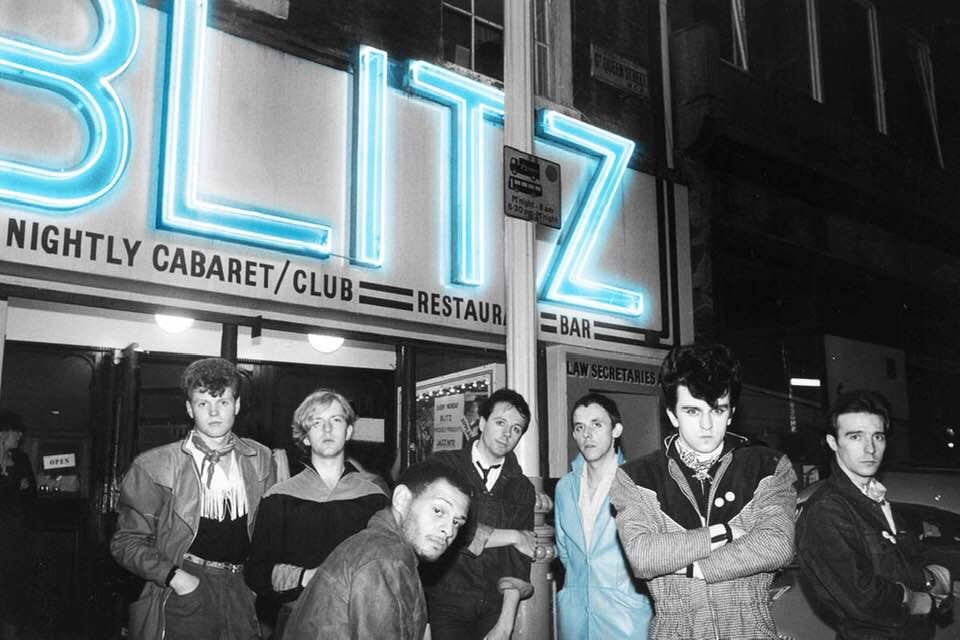
The Blitz Club aesthetic did not emerge from a vacuum. It was forged in the stark friction between punk’s dying embers and the pristine allure of the synthesizer.
More than just a band, VISAGE became the ultimate studio collective, drawing talents from the ranks of MAGAZINE and ULTRAVOX to create a blueprint for the decade to come. Formed in late 1978 as a direct reaction to the shortage of electronic dance music to play at The Blitz Club, after the demise of RICH KIDS, former members Midge Ure and Rusty Egan recruited The Blitz Club’s figurehead, Steve Strange, to front the project.
With studio time allocated to RICH KIDS left over, Strange, Ure and Egan cut a cover of Zager & Evans’ ‘In The Year 2525’ as one of several demos also including ‘The Dancer’. Although Ure and Egan were still contracted to EMI, the label turned VISAGE down. However, the demos soon caught the ear of producer Martin Rushent who conveniently kept an office directly above The Blitz Club. At the time working for the Warner Brothers subsidiary Radar Records who had found success with Nick Lowe and Elvis Costello, Rushent was intending to launch his own Genetic Records imprint.
Photo by Sheila Rock
With their primary bands on temporary hiatus, ULTRAVOX’s Billy Currie, along with MAGAZINE’s Dave Formula, John McGeoch and bassist Barry Adamson were swiftly co-opted. Convening at Rushent’s new studio in Reading, this synthesized super group began shaping an album. The first fruits of these sessions was ‘Tar’, released as a single on Genetic Records in the autumn of 1979. However, Warner Brothers short-sightedly pulled the plug on the label. It was a monumental miscalculation; Rushent had been in discussions with several acts said to have included JOY DIVISION and SPANDAU BALLET.
Despite the setback, the fallout from this period acted as a catalyst that would alter the career trajectory of those involved. Midge Ure joined Billy Currie in a re-launched ULTRAVOX and to pay for new equipment, Billy Currie accepted an offer to join Gary Numan’s live band on his first concert tour while Midge Ure headed stateside to fill in for an absent Gary Moore in THIN LIZZY. Meanwhile intrigued by the synthesizers that had entered his studio, Martin Rushent invested in a Roland MC-8 Micro-composer and a LinnDrum Computer.
Meanwhile, VISAGE was placed on ice until a new deal was brokered with Polydor Records via ULTRAVOX’s new management team, Morrison-O’Donnell who looked after THIN LIZZY. As all the other members were already signed to other labels, Steve Strange was the only signatory on the contract with Morrison-O’Donnell then filtering payments to each relevant individual.
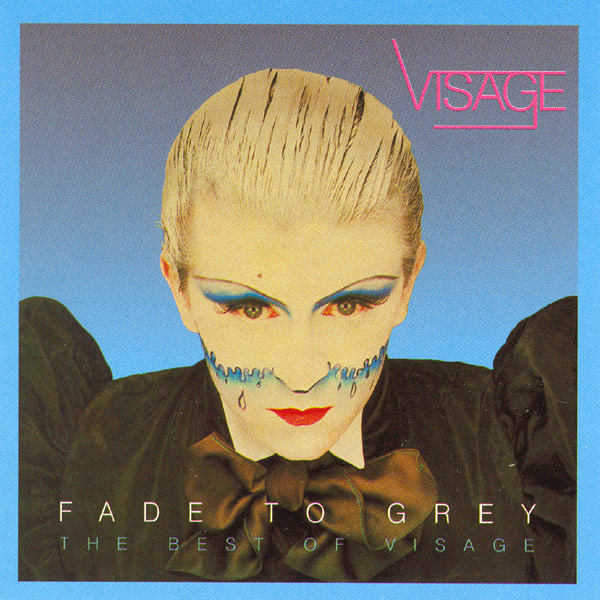
During gaps in their day jobs, Ure and Currie continued to construct the VISAGE album, with Ure effectively taking the production helm. Needing one final track to complete the long-player, Currie brought in an instrumental called ‘Toot City’ which he had co-written with keyboardist Chris Payne that had been shaped during soundchecks on the Gary Numan tour. With Ure drafting lyrics and a melancholic melody line, the track was transformed into ‘Fade To Grey’; it would become an international smash and the 1981’s best-selling song in West Germany.
Photo by Sheila Rock
There are still very public arguments about how the royalties in VISAGE were split, but although he did not play on ‘Fade To Grey’ or a number of the other tracks like ‘Moon Over Moscow’, the late John McGeoch did very well out of his share of the eponymous VISAGE album; he confirmed in an interview before his death that he was able to buy a house while bandmate Howard Devoto recalled that in contrast to the less-financially fruitful MAGAZINE, “It enabled him to enjoy the finer things…”
Visually, Steve Strange conjured an exquisite mutation of Edwardian dandies and Weimar Cabaret but while others that came out of The Blitz Club like SPANDAU BALLET and CULTURE CLUB eventually achieved greater global commercial saturation, VISAGE truly encapsulated the New Romantic aesthetic in a sound that fused symphonic classical overtones with the electronic dance beat of Neu Europa.
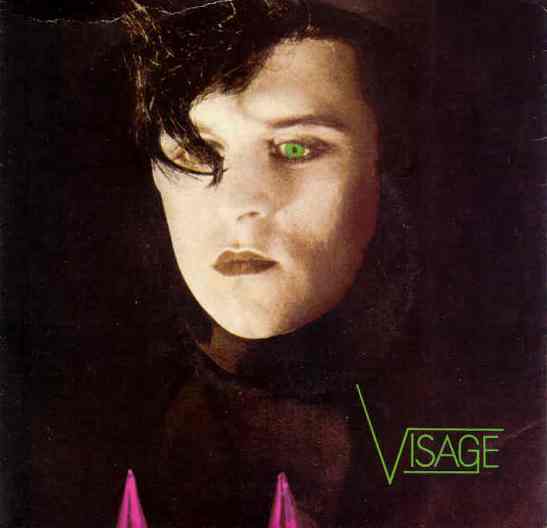
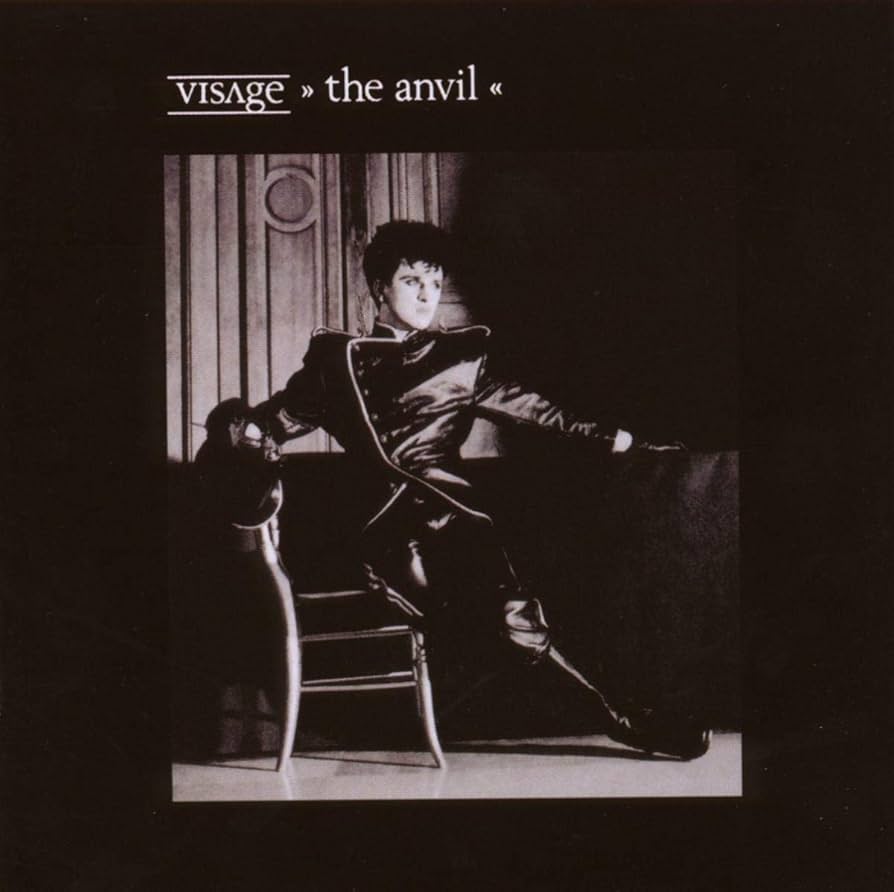
Despite further hits including ‘Mind Of A Toy’, ‘Visage’, ‘The Damned Don’t Cry’ and ‘Night Train’, members gradually left over the first two albums ‘Visage’ and ‘The Anvil’ so by the appalling third album ‘Beat Boy’ in 1984, only Strange and Egan remained. Morrison-O’Donnell had also left but had renegotiated with Polydor for their charges Ure and Currie to be accounted for outside of the original Steve Strange signed VISAGE contract.
Years later, the VISAGE sound rippled through modern electronic pop. Kelly Osbourne’s ‘One Word’ in 2005 and Kylie Minogue’s ‘Like A Drug’ in 2007 stood as highly obvious, if not blatant, sonic pastiches of ‘Fade To Grey’. More recently, that particular evergreen has featured in advertisements for Gris Dior and Coco Crush.
VISAGE returned in 2013 with just Steve Strange remaining but he passed away suddenly in 2015. While there have been posthumous albums of VISAGE outtakes and reworkings since his death, there is known to be a solo album that he wrote and recorded with ‘Beat Boy’ bassist Steve Barnacle between 2013-2014 that remains unreleased.
VISAGE was a tree that grew, broke in places and sadly had branches that died. ELECTRICITYCLUB.CO.UK presents a synthcentric guide to the extended axis of the ultimate New Romantic ensemble.
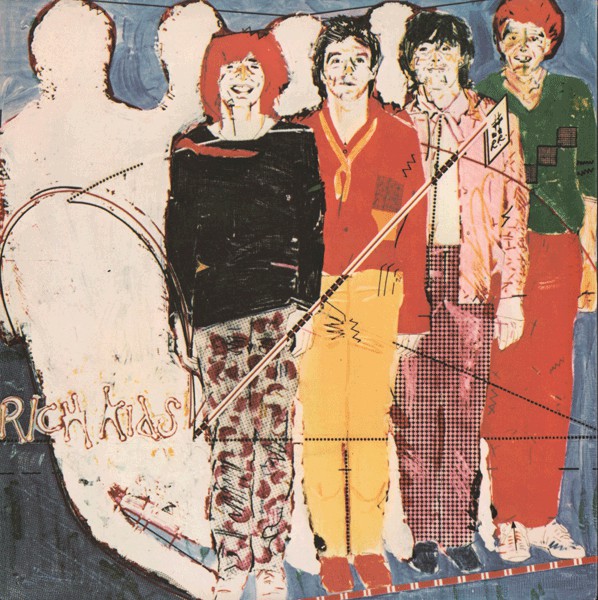
RICH KIDS Marching Men (1978)
Comprising of Midge Ure, Glen Matlock, Steve New and Rusty Egan, RICH KIDS had already the debuted the power-pop of ‘Rich Kids’. But ‘Marching Men’ was darker, acting as commentary on the new Nazis like The National Front. A vital catalyst for VISAGE, it was notable for Ure’s first use of his new Yamaha CS50; it featured in his 2024 tour as the song became relevant again with the normalisation of racist views by Reform UK.
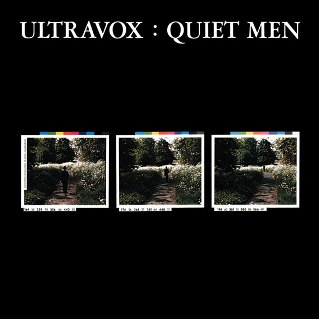
With John Foxx still fronting ULTRAVOX, the band were on the cusp of a breakthrough working with Conny Plank on ‘Systems of Romance’. Tracks like ‘Quiet Men’ featured cutting electronic percussion from Warren Cann but the classically trained Billy Currie was taking on a greater role with his soaring ARP Odyssey solo acting as a sonic beacon. This was the kind of icy art pop with European electronic influences that could be integrated into the concept of VISAGE.
Available on the ULTRAVOX boxed set ‘The Island Years’ via Universal Music Group
Recorded during VISAGE’s first-ever studio session but shelved for years, this cover of the Zager & Evans’ one hit wonder was a total musical twist of the original’s acoustic folk bleakness with its transformation into a cold electronic pulsar. Steve Strange’s vocal delivery was appropriately detached with vocal backing by Ure whose effective synth arrangements were punctuated by Egan’s early synthetic percussion.
The Howard Devoto-led MAGAZINE provided three members to the VISAGE line-up; guitarist / saxophonist John McGeoch, bassist Barry Adamson, and keyboardist Dave Formula. ‘Permafrost’ was the sinister closing track from ‘Secondhand Daylight’ which showcased Formula’s chilling atmospheric synth work, Adamson’s noir edge and McGeoch’s angular textures. This would provide VISAGE with some post-punk credibility.
A spiky critique of smoking, ’Tar’ was the first VISAGE single and released on Martin Rushent’s Genetic imprint through Radar Records. Dominated by John McGeoch’s bleating sax and Billy Currie’s cutting ARP Odyssey, Radar Records had funding pulled from its parent company Warners just as the single was released, stalling any potential it had. Tired of all the business hassles, Adamson would leave but return as a session player.
Available on VISAGE album ‘Visage’ via Universal Music Group
Ure accepted Currie’s invitation to join ULTRAVOX following the suggestion of Rusty Egan, thus solidifying a cross-pollination with VISAGE. ‘Sleepwalk’ was the first fruit of labour and a mighty opening salvo for the band’s new era. Again working with Conny Plank and with hints of KRAFTWERK throughout, it proved that synths could be aggressive and melodic all at once as ULTRAVOX entered the UK singles charts for the first time.
Available on ULTRAVOX album ‘Vienna’ via Chrysalis Records
As the new line-up of ULTRAVOX charted, MAGAZINE regrouped to make their best album ‘The Correct Use Of Soap’ produced by Martin Hannett. While notable for ‘A Song Under The Floorboards’, another highlight was the jittery ‘Sweetheart Contract’. With Adamson’s bass acting as the heartbeat, Formula’s shimmering keyboard lines and McGeoch’s inventive guitar turned a tale of bureaucratic romance into a post-punk masterclass.
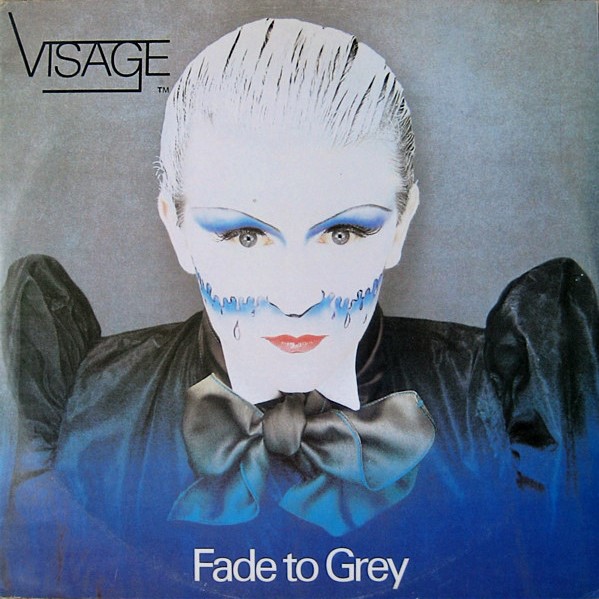
The absolute pinnacle of the New Romantic movement, ‘Fade To Grey’ was built on a mesmerizing Moog bassline for a tune composed by Chris Payne and supplemented by Billy Currie’s ARP Odyssey. With lyrics and topline later added by Ure, it was elevated by Brigitte Arendt’s spoken words en Français while the song built to a climax of cinematic grandeur.
Available on VISAGE album ‘Visage’ via Universal Music Group
Following his formal departure from MAGAZINE and VISAGE, John McGeoch joined SIOUXSIE & THE BANSHEES who despite being more guitar-oriented, had been popular on the dancefloor of The Blitz Club. ‘Spellbound’ was a tour de force of urgent acoustic and electric strumming and intense gothic imagery. But sadly McGeoch would later have a nervous breakdown and would depart in late 1982 for THE ARMOURY SHOW.
Available on SIOUXSIE & THE BANSHEES album ‘Juju’ via Universal Music
By MAGAZINE’s fourth album ‘Magic, Murder & The Weather’, John McGeoch had departed. On the art reggae of ‘The Great Man’s Secrets’, Barry Adamson’s inventive basslines remained an anchor while the mystery continued via Howard Devoto’s enigmatic vocal expression and Dave Formula’s expressive, swirling keyboard textures. The song’s artful structure and tense atmosphere reflected the strong musicianship contained within.
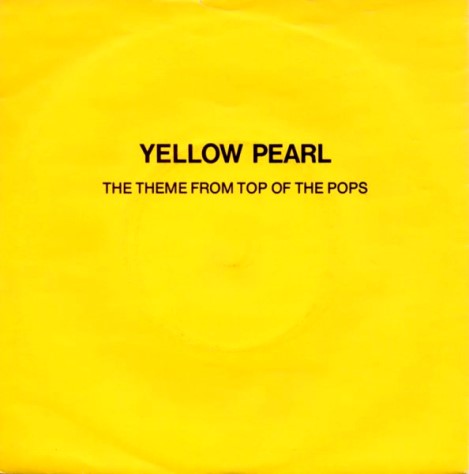
German music formed a large part of the music at The Blitz Club and even Irish rocker Phil Lynott frequented it. ‘Yellow Pearl’ was a LA DÜSSELDORF inspired co-composition with Ure, while Rusty Egan later played drums on the remix which became the ‘Top Of The Pops’ theme. With ‘Yellow Pearl’ demonstrating how the VISAGE blueprint was penetrating the mainstream, it was almost forgotten that this was the frontman of THIN LIZZY!
Available on the THIN LIZZY album ‘Greatest Hits’ via Universal Music
With the glorious ‘Again We Love’, every aspect of VISAGE’s collective talents clicked in unison, both vocally and instrumentally. From the dramatic start and the eerie atmospheric melancholy to the stupendous percussive climax and echoey fade, this was probably the song that got closest to recapturing the grandeur of ‘Fade To Grey’. Something of an almost forgotten jewel, Midge Ure performed it on his 2026 ‘A Man Of Two Worlds’ tour.
Available on VISAGE album ‘The Anvil’ via Cherry Pop
Taking a break from ULTRAVOX and have left VISAGE, Midge Ure hit the UK Top 10 with his cover of ‘No Regrets’; THE WALKER BROTHERS version has been played at The Blitz Club. On the B-side was the beautifully eerie instrumental ‘Mood Music’. Driven by a LinnDrum and stark piano notes before being joined by haunting gothic choirs in the chorus, the track conjured up images of abandoned theatres just as ‘Vienna’ had done.
Available on the MIDGE URE boxed set ‘The Gift’ via Chrysalis Records
VISAGE were in a state of limbo following the departure of Midge Ure. But with John Luongo who had remixed ‘Night Train’ involved in a production association, Steve Strange, Rusty Egan, Billy Currie and Dave Formula plus new bassist Steve Barnacle explored the sound of New York electro. ‘Pleasure Boys’ was hard and aggressive with lyrics full of hedonism. But by now, the New Romantic audience had moved on.
Somewhat of a curio backed by Warner Brothers, Rusty Egan produced and arranged this cover of ‘The Twilight Zone’ with assistance from Fairlight programmer JJ Jeczalik of THE ART OF NOISE. While it was packed with a relentless electronic pulse, futuristic sound effects and orchestrated stabs, it lacked a tight arrangement. But turning a haunting jingle into an extended dance track was always going to be a challenge.
By the ‘Beat Boy’ album, the original collective had dissolved, leaving just Strange and Egan at the helm. Recruiting guitarist Andy Barnett, the resultant album was a collection of overlong turgid rock. Featuring saxophone by Gary Barnacle who had played on ‘Night Train’, the one saving grace was ‘Love Glove’. A pretty song which conversely featured metaphors about fisting, it harked back to the more cinematic songs on ‘The Anvil’.
Available on the VISAGE album ‘Beat Boy’ via Cherry Pop
Despite VISAGE imploding, Steve Strange still fancied himself as Billy Idol. So STRANGE CRUISE was set up for him to fully exploit a Trans-Atlantic pop-rock sound away from the New Romantic bubble he had been associated with, as exemplified by the single ‘Rebel Blue Rocker’. However, as with the ‘Beat Boy’ album, Strange’s voice was left vulnerable and exposed without Midge Ure’s production and coaching.
Originally on the STRANGE CRUISE album ‘Strange Cruise’ via EMI Records, currently unavailable
After the demise of ULTRAVOX, Billy Currie released his first solo album proper ‘Transportation’. One of its key tracks ‘India’ saw Currie collaborate with former SIMPLE MINDS bassist Derek Forbes. The instrumental track actually began life in 1986 for the aborted WORLD SERVICE side project but the end result was a satisfying energetic adventure that combined the musical signatures of ULTRAVOX and SIMPLE MINDS.
Originally on the BILLY CURRIE album ‘Transportation’ via No Speak, currently unavailable
STEVE STRANGE & VISAGE MARK 2 Diary Of A Madman (2007)
Steve Strange had been performing VISAGE songs on the Here & Now revival tours so he created a “Mark 2” version of VISAGE with Ross Tregenza, Sandrine Gouriou, Steven Young and Rosie Harris. The line-up produced by just song ‘Diary Of A Madman’ which was co-written with Tregenza and co-produced Dave Formula. Rawer than the lush cinematics of classic VISAGE, it was available as a digital download in return for donations to Children in Need.
Originally released as a download single in aid of Children In Need, re-recorded version available as ‘Diaries Of A Madman’ on the VISAGE album ‘Hearts & Knives’ via Blitz Club Records
Continuing his ‘Sweetheart Contract’ if via satellite, ‘Satellite Sweetheart’ was perhaps unbelievably Dave Formula’s first solo album. Conceived around his childhood memory of seeing Soviet cosmonaut Yuri Gagarin at the Amalgamated Union of Foundry Workers in Manchester, opener
‘Elvis In Space’ was a Latin jazz instrumental track in tribute to the first man in space with Formula in stellar form on organ and synth.
The classic hit line-up of ULTRAVOX reunited in 2009 and things had gone well enough to record a new album ‘Brilliant’. An optimistic message of intent to be savoured, the opening song ‘Live’ was ‘Dancing With Tears In My Eyes’ without the imminent nuclear holocaust! The instrumental breakdown, which dropped to a magnificent pulsing sequence, piano and lone bass drum before the climax, was pure LA DÜSSELDORF.
Available on the ULTRAVOX album ‘Brilliant’ via Eden Recordings/EMI Records
While the ULTRAVOX reunion was in full swing, the VISAGE one kept stopping and starting with Rusty Egan eventually leaving due to creative differences. An album featuring a new line-up including Steve Barnacle, Robin Simon and vocalist Lauren Duvall was completed although much of it was underwhelming. It wasn’t all bad and ‘Shameless Fashion’ sounded like it could have been one of the better tracks off ‘Beat Boy’.
Available on the VISAGE album ‘Hearts & Knives’ via Blitz Club Records
When Steve Strange and Rusty Egan were mooting a VISAGE reunion, Midge Ure had declined to take part but was persuaded by Egan to “loan” a song that could be worked on. That turned out to be ‘Become’ which would ultimately appear on Ure’s 2014 album ‘Fragile’. While the VISAGE version would not appear until the year after and was inferior, it highlighted more what could have been with this elegant piece of art pop.
STEVEN JONES & LOGAN SKY featuring STEVE STRANGE Corrupt State (2017)
Recorded shortly before his tragic passing, this collaboration paired Steve Strange with latter day VISAGE keyboard player Logan Sky and singer Steven Jones. From the album of the same name, ‘Corrupt State’ was a moody minimal synth track with a biting political edge. Delivered over haunting layers of Pan-European electronic textures, Strange’s vocals came over stark and desolate in contrast to the mannered tones of fellow Welshman Jones,
Available on the STEVEN JONES & LOGAN SKY album ‘Corrupt State’ via Etrangers Musique
MIDGE URE & RUSTY EGAN Glorious – Single mix (2019)
Initially a sketch co-written with Chris Payne for what became Rusty Egan’s ‘Welcome To The Dancefloor’ project, as with ‘Fade To Grey’, Midge Ure added lyrics and a topline to ‘Glorious’, bringing the VISAGE story full circle. Remixed for his ‘Soundtrack 1978 – 2019’ collection, the track was polished up and given space for Ure’s vocals to soar. Despite the decades that had passed, the spirit of The Blitz Club remained as vital as ever.
We use cookies to ensure that we give you the best experience on our website. If you continue to use this site we will assume that you are happy with it.












Follow Us!