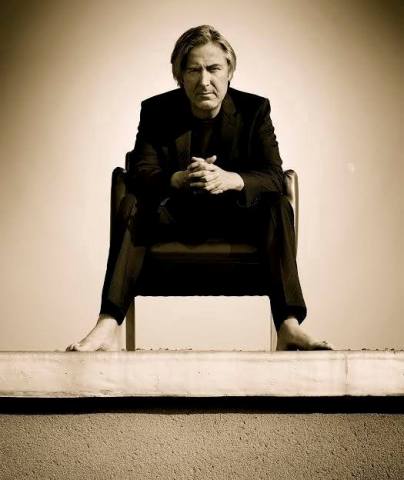
JOHN FRYER is the renowned producer, engineer and musician who was also a member of THIS MORTAL COIL.
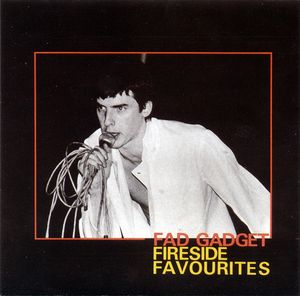
He cut his teeth with Daniel Miller and Eric Radcliffe at the legendary Blackwing Studios co-engineering the first recordings of FAD GADGET. Fryer achieved mainstream success when he was asked to co-engineer a fledgling synthesizer band who had just signed to Mute Records. That band was of course DEPECHE MODE and he was involved in their run of Top 40 singles between ‘New Life’ and ‘Leave In Silence’.
Fryer also co-engineered YAZOO’s debut long player ‘Upstairs At Eric’s’. He soon used his engineering experience to become a producer in his own right, working with COCTEAU TWINS, MODERN ENGLISH, SWANS and NINE INCH NAILS.
Simultaneously, he was also the only constant along with 4AD founder Ivo Watts-Russell in the musical art collective THIS MORTAL COIL who featured Elizabeth Fraser, Lisa Gerrard and Alison Limerick among its highly regarded cast of guest vocalists.
He also recorded with STRIPMALL ARCHITECTURE singer Rebecca Coseboomas as DARKDRIVECLINIC, releasing an album ‘Noise In My Head’ in 2011.
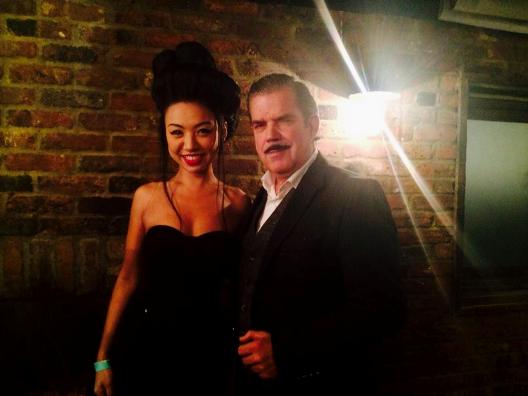
His latest project is SILVER GHOST SHIMMER with vocalist Pinky Turzo, the sound of which is described as “inspired from the vocal groups of the 60s like THE SHANGRI-LAS with a twist of Glamour and Decay to their Sugar Coated Noise Pop Couture”.
Fryer will be making appearance at ‘A Secret Wish’ on SUNDAY 19TH APRIL 2015 in London with a special DJ set that will cover the range of his work for 4AD and Mute.
Hosted by Nordic friendly blog Cold War Night Life, ‘A Secret Wish’ follows on from the success of last March’s ‘An Evening With The Swedish Synth’; the line-up will also feature live sets from SISTA MANNEN PÅ JORDEN and VILE ELECTRODES.
JOHN FRYER kindly chatted to ELECTRICITYCLUB.CO.UK about his varied career and what he may have in store for his DJ set at ‘A Secret Wish’…
How did you first become acquainted with recording synthesizers?
Well, that’s an easy question, as soon as I walked through door of the studio for my 1st recording sessions, as it was Daniel Miller making a SILICON TEENS song.
You first become known co-engineering FAD GADGET with Eric Radcliffe. What are your memories of being in the studio with Frank Tovey and do you have any particular favourite tracks of his?
It was great working with Fad (Frank) even though he was making electronic music; he had a punk ethos, so anything goes. One of my best memories of Fad was, he was doing a song called ‘The Box’ and he wanted to have a claustrophobic vocal sound, so we recorded him in a box (well, a flight case) to get the boxy close sound.
What did you think when you were first presented with DEPECHE MODE by Daniel Miller?
They were four very shy guys and Daniel thought they were the future of synth pop, and he was right.
The sounds on the ‘Speak & Spell’ album sit neatly within the mix. Did they require much treatment or did you get the opportunity to give feedback and suggestions to Daniel or Vince as they programmed?
‘Speak & Spell’ was made on a 8 track tape machine, so lot of tracks had to be recorded together onto one track, or bounced together once they had been recorded, we didn’t have the luxury of what you had today in the digital world. So a lot of time and careful planning had to go into the recordings.
What was your own preferred or most flexible synthesizer during your time at Blackwing Studios?
That’s a hard question, but one of my favourite things was the sampler when it came out, as it opened up so many new doors of how to record and anything that made a noise became a new instrument.
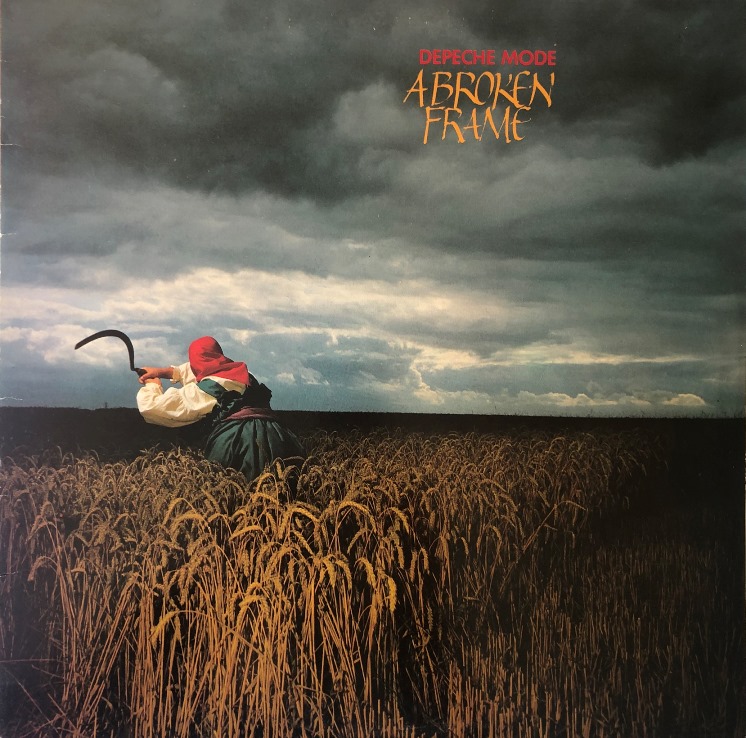
By ‘A Broken Frame’, the equipment became more sophisticated with things like the PPG Wave 2, Simmons drums and Roland TR808. What were those like to work with?
Technology was moving so fast in the 80s and it was great to be working with Daniel Miller, because as soon as there was a new synth or drum machine out, Daniel would bring it into the studio.
I remember Daniel driving out to Roger Linn’s place to pick up one of the first Linn Drum Machines so we could use it on the album.
You also co-engineered YAZOO’s ‘Upstairs at Eric’s’ at around the same time, how different was this compared to working with DEPECHE MODE? Did you get embroiled in any of the tensions at the time?
It was so different working with Vince and Depeche. Vince wanted to go super pop, he wanted to be the new ABBA and Depeche now with Martin writing wanted to go darker. They both wanted to record at the same time and it was best they were kept apart, so Eric decided to make a new studio in his house for Vince, hence ‘Upstairs at Eric’s’. Why it was called upstairs I don’t know, as the studio was on the ground floor?? I stayed working at Blackwing with the other three.
You went on to produce COCTEAU TWINS, as a well being a member of THIS MORTAL COIL. How were you achieving those ethereal textures that were predominantly sourced from using guitars rather than synths?
By the time 4AD started using the studio on a regular basis, the AMS RMX16 Digital Reverb had been made and it became my trade mark sound on the 4AD records. As for guitar sounds, a lot of the sounds come from Boss Pedals, so everything was saturated with FXs so you couldn’t really hear the source sound and had no idea if it was keyboards or guitar. Still doing the same today…
Did Elizabeth Fraser have any vocal techniques that presented an interesting challenge for you as a producer?
No, Elizabeth is a great singer, no problem with her voice… it’s just that she was so shy, it was painful to see her struggling with her shyness at times, but once she started singing everything was fine.
You co-produced on NINE INCH NAILS’ debut long player ‘Pretty Hate Machine’. What was Trent Reznor like to work with and was that focus and single minded determination that he is known for now, present in him even then?
It was great working with Trent, we had fun pushing the envelope. We tried to make the album as hard as possible at the time of recording.
We were very proud of the sound of the record and couldn’t wait to play it to the head of the label (Steve Gottlieb) when he came by the studio.
After listening to the play back of the album, his face was full of horror and his mouth was wide open and all he could say was, “you have ruined this record” so we were super happy with that… job well done.
Which recordings that you have worked on, are you most proud and why?
Well of course, my album by DARKDRIVECLINIC and my soon-to-be released album by SILVER GHOST SHIMMER, you can check out our new video of ‘Soft Landing’ on Youtube….
What can people expect from your DJ set at ‘A Secret Wish’?
It will be a pimped up set of 4AD and Mute tracks like you’ve never heard them before, and the only way you can hear the tracks like this is when I DJ them.
ELECTRICITYCLUB.CO.UK gives it grateful thanks to JOHN FRYER
With additional thanks to Simon Helm at Cold War Night Life
JOHN FRYER will be appearing at ‘A Secret Wish’ hosted by Cold War Night Life on SUNDAY 19TH APRIL 2015 at The Lexington, 96-98 Pentonville Road, London N1 9JB. Playing live will be SISTA MANNEN PÅ JORDEN and VILE ELECTRODES.
One musician taking electronic music into some intriguing fusions is Beijing born Fifi Rong.
Now resident in London, she first came to prominence as a member of THE TENORIONS but has since embarked on a journey which has involved collaborations with Tricky and releasing her first album ‘Wrong’ in 2013.
With influences such as COCTEAU TWINS and MAZZY STAR, Fifi Rong’s development of her own traditionally inspired brand of crisp electronica has resulted in her most impressive body of work to date.
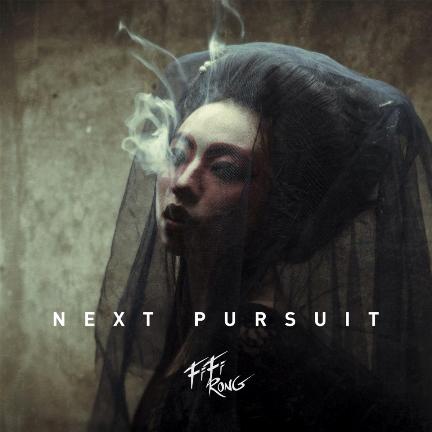
The six track ‘Next Pursuit’ EP combines the vocal mystery of Kelli Ali and the quirkiness of MOLOKO with an exotic beauty. The title track is a particular highlight but there is much more. The eerie ‘Intimacy’ plays with a sparse backbone and comes over like a less intimidating PORTISHEAD while ‘Breathless’ sees Miss Rong play with her native Mandarin language for a unique, downtempo culture blend.
‘Wishes Fault’ ups the tempo and melodically references the more traditional aspects of the Far East with a hypnotic resonance. The windy acoustic excursion ‘Cold In You’ is an interesting diversion in the manner of Lana Del Rey that showcases Fifi Rong’s versatility before the closer ‘Equality’ which takes a spacey R’n’B template and adding the vocal menace of Róisín Murphy.
Fifi Rong has manifested her own dream laden template with her hypnotic vocals as a focal point. With the release of a new EP ‘Next Pursuit RMX’ and an upcoming show at The Barfly in London’s Camden, she kindly spoke to ELECTRICITYCLUB.CO.UK about her career so far plus her upcoming collaboration with YELLO.
Since arriving in the UK, you have undergone an artistic journey of several years to reach your ‘Next Pursuit’?
Yes. In fact I had undergone a whole life journey to reach my life purpose i.e. music right now. However, the journey is not as rollercoaster-ish as before. Now, it’s a momentum of constantly reaching for better production skills, new ideas and more authentic ways of capturing my current thoughts and philosophy. Music should mature as the artist matures, and I demand growth as an artist.
What first fascinated you about the approach to music here compared with what you may have been accustomed to?
The UK embraces all kinds of experimentations in music genres. There’s a sense of freedom here, and I never felt any limitations of what I can or what I can’t. That matches my personality really well.
If it’s not new or it’s been done before, I’m not interested, and that sense of freedom to create is important to me. I was never really apart of the Chinese group, so I was not accustomed to anything. They thought I was weird.
When you first become known in the UK, you were using the Yamaha Tenorion. What interested you about using electronically derived sounds and processes for your music?
I get bored of traditional sounding genres easily. I would be learning an instrument, and get bored before getting good at it, and plus I don’t find the idea of playing someone else’s awesome composition with my own interpretation very attractive. The space to create in a given genre or an instrument is a lot narrower than what the computer can offer, unless one imposes limitation on him or herself.
MAZZY STAR appear to have been a strong influence on you, has there been anyone else?
I wouldn’t say MAZZY STAR is a strong influence as much as Martina Topley-Bird or COCTEAU TWINS. I would say Chinese folk/traditional style is an inherent element, and then there was Brit rock, R’n’ B, neo-soul and dub reggae, UK garage… now I’m digging MOUNT KIMBIE, BURIAL, FLYING LOTUS types of sounds. As I said, I get bored easily.
How would you prefer your music to be described?
Hmm! Maybe new / hybrid / alternative singer-songwriter / producer… I know this is not the most satisfying answer, it’s arguable whether singer/songwriter is a genre, but without it, my music can be misunderstood as just music with no songs. But that is untrue.
Your own recording of your Tricky collaboration ‘Only If I Knew’ pointed to a crisper, less claustrophobic approach?
Yes, it’s one of my approaches or varieties, but it doesn’t mean I won’t go back to my earlier sound. I just do whatever feels right for the track at hand.
One fascinating aspect of your music is how you use Chinese harmonic interplay within your melodies and vocals to provide quite a unique sound alongside the Western and African derived dance styles. How challenging is it to mix it all together to produce a coherent piece of work?
There’s no challenge at all. It’s like asking me how challenging is to speak English with a little Chinese accent? It’s natural to me, both my music and my accent.
Can you remember when you first had a dream in English and what it was all about?
Yes, when I was a little kid I had a dream speaking English fluently and living in a Western country while I didn’t know a word of English. And when I woke up I was utterly disappointed. However the good thing is, my dream always comes true 🙂
‘Next Pursuit’ is a brilliant track with sections of tempo and rhythm variation. What inspired that?
It’s a co-production with Sadsic, the tempo is the original 140bpm I did, but the rhythm variation is thanks to Sadsic’s addition.
What is ‘Next Pursuit’ is about?
There are more conformists in the world who will tell you to be realistic and do what you should with the best intention than that tiny percentage of people who are living their dreams and tell you yes go for it.
‘Next Pursuit’ is essentially about the attitude of not settling for less and making compromises in life and be honest with myself. There are pressures from both sides, family, friends and people in general thought the music path is almost an impossible one, unrealistic, and I should get a real job in return of years of education. Then there are people in music attempting to influence me towards their ways. It is a tougher problem as sometimes I can’t tell if it’s good or bad straight away, more commercial doesn’t mean worse, but whether I’m comfortable with it, it will take a long time until I realise.
Videos are a part of your artistic ethos. How important is it for you to present a visual aspect of your art to compliment the music?
I would walk around all day thinking about music but I not how I look. I’m essentially just a music maker who spends most time in my home studio. Now my music has integrated into live performance so I have to wear those additional hats you see. So I need to think about what you see, some of the time.
Your music has had a positive response in the UK and Europe. But has there been much reaction to what you are doing back in China at all?
Yes, interestingly as I haven’t promoted or released there. In China, most social networks here are blocked, but they always get their ways around to find the music and upload it on their equivalent Chinese social sites.
You were spotted at the launch party for Boris Blank’s ‘Electrified’ box set and are now working with YELLO. How did your collaboration come about?
Yes, we are collaborating on the songs ‘Electrified’, ‘Big City Grill’ and one more track hopefully. Boris Blank reached out to me by email and said he really liked my music and the way I do my harmonies in my tracks. And that’s about it! 😉
Where would you like to take your music next for your second album?
More to my current music tastes I think. I don’t know until I start making it. It will be a documentary of where I am right now. Sometimes it’s not good to think too much… music and intention don’t go well together, for me at least.
ELECTRICITYCLUB.CO.UK gives its warmest thanks to Fifi Rong
Fifi Rong plays The Barfly in London’s Camden on WEDNESDAY 29TH OCTOBER 2014, tickets are available from www.mamacolive.com/thebarfly
Although not a household name, Neil Davidge was a pivotal part of Bristol’s MASSIVE ATTACK for nearly 15 years.
Davidge effectively became one half of the group alongside 3D following the departure of original member Mushroom and a temporary hiatus by Daddy G. He is also well-respected in the film and computer game music industry, notably composing the music for ‘Halo 4’. His unique, unparalleled depth and clarity of production creates the enigma of tension, darkness and beauty, the musical equivalent of a siren, calling sailors to their sweet doom.
This year has seen the release of his debut solo album ‘Slo Light’ which features Claire Tchaiowski, Cate Le Bon and the legendary Sandie Shaw. Having appeared on collaborations with BEF and THE SMITHS, Shaw flexes her vocal chords over a sub bass growl and a Barry-like string arrangement on the new single ‘Riot Pictures’.
Davidge kindly spoke to ELECTRICITYCLUB.CO.UK about his stellar musical CV and shared some fascinating ‘behind the scenes’ stories of his musical production work.
How did the collaboration with Sandie Shaw come about and what was it like working with such a legend in the studio environment?
My management company, after years of frustration sending me links and CDs of different singers and me turning them down, asked me to give them a list of people I’d like to work with. I put together a mixture of artists both current, not current and dead who I’d be inspired to work with.
One of the first names on the list was Sandie. I told her this a couple of weeks ago when we were shooting the video for ‘Riot Pictures’ and she said she did the exact same thing, sent a list to her management saying who she’d like to work with. She had only two names on her list however, Nigel Godrich and me. Her managers emailed mine asking if I’d be interested in working with her on the very same day I sent my list. It’s exhilarating working with Sandie, she has a huge store of positive energy. It’s like she’s fully tapped into a power that most of us only get to experience a trickle of.
‘Riot Pictures’, your collaboration with Sandie is very cinematic and orchestral and a lot less electronic than your previous single ‘Gallant Foxes’ which had an almost motorik / early KRAFTWERK feel to it in places…
Yeah. music is how I choose to communicate. Is it naff to say that notes and sonics are my words? I couldn’t care less about what form or style that music takes, that’s not the crux of it. I need to say what I’m feeling as honestly as I can, be authentic and run with my instincts. So to keep to a particular set of words stifles me, it’s too self conscious and careful, too business-like. I’ve gotta be able to grab the sharpest tools for the job to make my point.
What motivated you to put out ‘Slo Light’ earlier this year?
I guess it was time for it. I’ve never made a solo record, I’ve hidden behind others, particularly MASSIVE ATTACK. I’ve always said that being an artist and being a celebrity are two very different skills. I’ve been an artist for many years but you’ve heard my music through listening to other people’s albums and watching movies. I’ve avoided having to stand in front of that music until now. When I decided to leave MASSIVE ATTACK following the album ‘Heligoland’, I’d had enough (at least for a while) of producing but I still wrote songs that I wanted people to hear. I’ve still managed to engineer it so that someone else has the spotlight of course, whether that’s Sandie or Cate or Claire.
Do you have a favourite track off of the album?
Right now it’s ‘Riot Pictures’, tomorrow it’ll be a different one.
I’d like to talk about some of your work with MASSIVE ATTACK. When you were working on ‘Angel’, did you ever imagine that the track would end up for years to come as the “go to” piece of music that TV directors would reach for when they needed to evoke a REALLY dark and angst-ridden atmosphere (eg typical ‘Crimewatch’ scenario run-down housing estate with major drug problems and gang violence)?
Ha! No, you can’t predict that kind of thing, many have tried. That’s one of the best and most frustrating things about music. It’s not a science. However one sees it, as divine, as chance, as persistence, once in a while, maybe only once in a career do you hit on something really special. We knew the track was good, we knew we were onto something with that album in general but we were told by many that there wasn’t a single on ‘Mezzanine’. It turns out we didn’t really need a single. ‘Angel’ was on every other movie or TV show.
The stunning Liz Fraser vocalled ‘Teardrop’ is probably the most iconic song you are associated with and have worked on. Is it true that it was conceived while you were hanging around waiting for the band to turn up at the studio?
The music was. Those days I did shifts separately with each of the guys, Mushroom would come by first. I was fiddling around on the keyboard, playing this harpsichord sound and came up with the riff. Mush walked in as I was playing it and wanted us to work round that idea. He and I put together a groove and added some piano. It sat on the shelf for a while until Liz said she’d be up for doing something. I made a tape of four ideas and that was the one she went for first.
There is also a story floating around that Madonna nearly ended up with the song, can you shed some light on that?
Yes, not the song but the music. We’d already recorded a first pass with Liz to the version Mush and I had pieced together but he didn’t like what Liz had done… so, without telling anyone else he sent the backing to Madonna who loved the track. That was the beginning of the split with him. He wanted to take the track and produce it himself (with my help) for her. I refused to get involved. He and Dee had a huge row about it. So I reworked the track, only keeping the harpsichord part and Liz, losing all the stuff Mush and I had done together. It’s a shame it finished up having to be like that but the song just got better.
How would a typical MASSIVE ATTACK song come together in the studio?
Is there such a thing as a typical MASSIVE ATTACK song? It changed over the years. For ‘Mezzanine’, we’d often find a loop to begin with, a sample from one of Dee or Grants collections. From there we’d build, generally losing the loop once we had an idea. On ‘100th Window’ and ‘Heligoland’, however we decided not to use samples and instead jam ideas until we found something cool as a starting point.
It’s always been a fairly random process. We’d often spend more time pulling things apart than we would building, trial and error, often with me doing the building up when I was on my own. Dee and I would talk a lot about the tracks too, fairly abstractly. He’s not a musician, so his language is based more on the visual interpretation of music and that would give me enough of an idea to then present him concrete musical ideas, which he and I would then edit and distort.
On another Liz Fraser voiced track ‘Black Milk’, there was the controversy over the use of the MANFRED MANN EARTH BAND sample from the song ‘Tribute’. Were the band not fully aware of the issues from using such a significant element of the original track? Or was it very much part of the mindset of the times to “take your chances”?
I suppose to some degree there was that underlying mindset, but I think the main problem was a lack of communication. When we were in the finishing stages, their manager asked me if there were any samples he should clear. I mentioned the ones I knew of, including that one but I didn’t know the name of the track, and it turned out that Gee had also mislaid the vinyl.
I wasn’t officially producing the album when we were working on it (that was something that became recognised at the end), so I wasn’t keeping detailed notes of samples used and relying on them to keep a track of the titles. And in the rush to get the album released (we’d already blown one deadline and one tour), I think it just got forgotten about. Until a fan spotted the sample and told Manfred Mann, it was the furthest thing from everyone’s minds. That was a harsh lesson. We almost had to recall the album. In the end they settled amicably. It was because of ‘Black Milk’ that I pushed the guys to not to use samples and instead create our own.
Aside from your work with MASSIVE ATTACK, you are probably best known as a composer of the soundtrack to ‘Halo 4’. Has this resulted in you generating a following of gamer fanboy / fangirls?
I think I’m better known for scoring that game than I am for my work with MASSIVE ATTACK…
Did you have any inkling of what you were letting yourself in for when you took on the ‘Halo 4’ project?
I did, I’d been playing it myself since it first came out and you’d have to live in a cave not to know see just how huge the gaming industry had become. It’s overtaken the music and film industry certainly in terms of sales, creatively it may still be lagging behind but it’s still a very new industry with plenty of ambition and passion.
When writing music for a computer game, at what stage do you tend to get involved and what tends to trigger inspiration for you during the composition process?
It’s fairly normal to be involved way before they have the graphics in place, which is the opposite of a movie where you’ll normally see a rough cut at least before writing. For Halo 4 mostly I had to work from a short description of a scene / character and art stills. As we progressed some early build game capture footage was sent over but after a while I gave up trying to work to that. Eager to find an emotional connection, I read as many of the Halo books and played the previous games in order to immerse myself in that world and then filled in the gaps with my imagination.
You have recently been working as soundtrack composer on the film ‘Monsters [Dark Continent]’, how did that particular job come about?
My agent (COOL music) had been tracking the film’s progress and in particular the career of the director Tom Green. My agent made the connection with Lol Hammond who’s the music supervisor for Vertigo films.
Lol was very aware of my past with MASSIVE ATTACK and knows Grant (Daddy G) from the band. He put my name forward and I went to see a preview of the movie in their offices in London. Tom met me after along with Allan Niblo the producer.
We had a brief chat about life and things and Allan asked me if I had any questions for Tom, I said… “can I please score your film?”. It’s good to be polite!
After Trent Reznor’s ‘The Social Network’ and now with both JUNKIE XL and M83 working on ‘Divergent’ and ‘Oblivion’ respectively, there seems to be a shift towards film companies using contemporary musicians to help score major motion pictures. Do you think there is a particular reason for this?
There’s actually a lot of ex-band musicians who are very successful film composers, Hans Zimmer, Danny Elfman, Vangelis and Craig Armstrong amongst many others all started in bands. There’s quite a tradition for engaging people from the ‘music for music’ sake side of the entertainment industry. But yes, we’re seeing more high profile bands being asked who are still very active as artists. I guess one reason could be the influential people in the movie industry are getting younger and are less likely to get excited by a ‘traditional’ orchestral score. I suspect the opportunity for marketing to capitalise on a bands profile to further add credibility to the movie is the clincher though. Like with ‘Tron Legacy’; the DAFT PUNK score gave that movie a coolness it otherwise would have lacked.
To be able to mainly work on music that is seen as ‘credible’ and ‘uncompromising’ is a rarity these days, how grateful are you that you seem to be in this position?
Very grateful, even though I work stupid hours and miss out on many of the things people take for granted like weekends and holidays, and well, generally sleep. I can’t get excited unless there’s a real creative challenge and a purpose to the music beyond making as much cash as possible. I wanna be moved when I listen to music, especially my own.
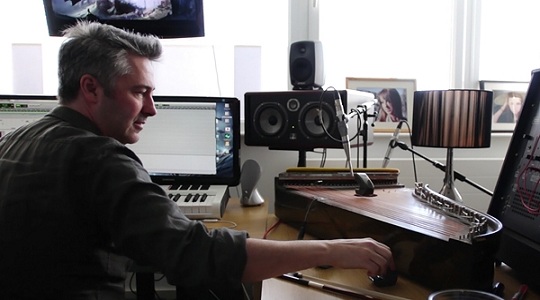
What sort of equipment do you use in the studio and how do you go about your composing?
I’ve got several computers, stacked with software, I do an awful lot with that stuff. Sometimes the whole track is conceived and finished in the virtual domain. I also have a bunch of guitars and several old school keyboards, drum machines, some drums and percussion, an old trash can, metal sheets plus a Kantele (bit like a dulcimer) which I play with e-bows.
I’ve never been one to simply ‘play’ an instrument, I’m always looking to find personality and something unique in the instrument whether real or virtual and often that will get the creative process going. That might mean me using drum beaters on the guitar or mangling a keyboard through effects till it’s unrecognisable.
But there’s still room for traditional composition, sitting and bashing out chords on the keyboard, me singing along to find the top line melody. I’ll start with something simple and then layer it up, pull it apart just leaving the good stuff then layer that up, maybe doing that 100 times before I settle on something I’m happy with. From there I might invite a singer, musician, arranger or combination of to jump off from where I left off and see what they can bring to the table, which I then further arrange and / or put through the ringer. It sounds chaotic but actually it can be quite natural a process, following your instincts and curiosity until you arrive at a place that feels right.
You strike me as a real workaholic, do you ever get any downtime to do any non-music based things?
I do work hard, I always have, and that’s ultimately my choice but as an industry we’re expected to work all hours and deadlines for movies in particular are often quite insane … so it’s expected too. The few hours a day I have free I spend playing with my 20 month old son, going to the cinema with my daughter or Skyping my eldest daughter who’s now working in London. If there’s anything left over I’ll veg out with a good TV series. I just recently did ‘True Detective’, often in 20 min chunks, loved the score on that.
Finally, is there any advice you could give to up and coming producers who would like to make headway in either music / film / game soundtrack production?
Get involved in everything that’s even remotely connected with music, work with as many people as you can. Don’t just sit in your bedroom making tunes that no-one will ever hear and expect to get noticed. You’ve got to get out there when you’re starting out, make those connections, be useful, be generous, be easy to work with. From there, you’ll get a ton of useful experience and if you don’t get that big break land in your lap, maybe someone you’ve built up a good working relationship will and that can be your way in.
ELECTRICITYCLUB.CO.UK gives its grateful thanks to Neil Davidge
Special thanks to Sacha Taylor-Cox at Impressive PR
The parent album ‘Slo Light’ is available as a CD, vinyl LP and download via 7Hz Recordings
GAZELLE TWIN premiered her new album ‘Unflesh’ with a special performance at Birthdays in London’s trendy Dalston district.
The live presentation showcased a heavier sound that has distinctly moved away from the cinematic hauntronica of debut album ‘The Entire City’ and interim EP ‘Mammal’.
The moniker of Elizabeth Bernholz, GAZELLE TWIN has acquired an impressive host of admirers and collaborators including John Foxx, Gary Numan and Clint Mansell. ‘Unflesh’ has with artistic violence allowed the Brighton based songstress to exorcise her demons.Indeed, the closing number of the evening is appropriately titled ‘Exorcise’; an impressively aggressive cross between PINK FLOYD’s ‘One The Run’ and KRAFTWERK’s ‘Home Computer’, it is accorded some extra uneasy resonance by Bernholz’s deadpan commentary.
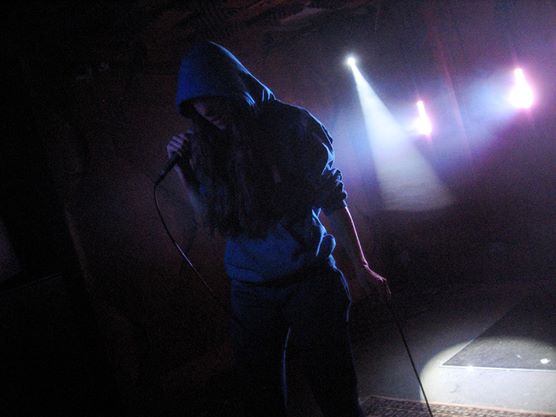
Clothed in a school-blue goodie with a head stocking and brown wig replacing the mysteriously veiled Elephant Woman look of her shows supporting JOHN FOXX & THE MATHS in late 2011, GAZELLE TWIN’s new material has a more threatening intent, focussing on the more industrialised template introduced by ‘Belly Of The Beast’ and new single ‘Anti Body’.
The ‘Unflesh’ title track and ‘I Feel Blood’ are even barer but no less unsettling while ‘Guts’ follows a similar path but adds an almost PRINCE-like funk groove. Indeed, much of the material on ‘Unflesh’ is strangely danceable…
Elizabeth Bernholz kindly spoke with ELECTRICITYCLUB.CO.UK before her ‘Unflesh’ showcase to discuss her latest incarnation of expression.
How would you describe the differences in the way you’ve conceived ‘Unflesh’ compared with ‘The Entire City’ and the ‘Mammal’ EP?
The writing process has simplified. I restricted myself so that I ended up with a more direct and quite a lo-fi sound. There are connections with ‘The Entire City’, the first full length thing I ever wrote and produced, but the relationship with ‘Unflesh’ is minimal. It has been written very much with live performance in mind.
Titles such as ‘Unflesh’, ‘Belly Of The Beast’, ‘Guts’ and ‘Anti Body’ indicate you still have metaphysical concerns?
That’s something I can’t switch off. But I don’t want to. There are rarely moments where I’m not considering the wider meaning of all things, on a day to day basis. I’ll make a sandwich and think of the former life of all the ingredients, all these particles that are being slammed together to ultimately end up as my sh*t…
I like that sort of thought process. I’m hypersensitive to everything around me all the time. This is not always useful. I suffer from anxiety and have numerous phobias that mostly arose from childhood. I have overcome most of them through making music, and this record is very much a continuation of that process.
The ‘Unflesh’ project has been supported by a striking audio / visual component. The faceless girl in the school-blue sportswear… is the character in any way autobiographical?
100%. It’s from a memory of school, 16 years ago. I chose to confront a difficult experience from that time, by re-embodying it. The difference is that this time I’m in control. A pretty simple exercise in self-help when you think about it… people will continue to be baffled and weirded-out by it, but that’s OK. That’s the fun part of it. That makes me want to do it even more.
When we last spoke, you described recording an album as being “a bit like doing a thesis”. Has that still been the case with ‘Unflesh’?
I researched anatomy – more as a hobby than being very academic about it. I’m especially interested in disease and mutations in nature. I have always enjoyed finding rhymes in nature – in structures, behaviours, rhythms etc. I also researched a lot of artists and artworks that deal with similar themes. I find doing this really rewarding and enlightening. There is so much out there to absorb.
Since ‘The Entire City’ was released, THE KNIFE returned with the uncompromising ‘Shaking The Habitual’. What did you think of it and has it has any bearing on your own artistic directions for ‘Unflesh’?
I had pretty much finished writing most of ‘Unflesh’ by the time ‘Shaking The Habitual’ came out, but I love that album of course and proudly align myself with its stance on politics, including the politics of performance art and how gender is dealt with in popular culture. Uncompromising is the key. They are one of the best conceptual performance groups out there right now. I wish there were more.
Claire Boucher aka GRIMES fedback to you about the demo of ‘Anti Body’. I SPEAK MACHINE aka Tara Busch has also reworked ‘Anti Body’. Do you feel an affinity with any of the current crop of female artists in electronic music?
I am asked this a lot… I guess because I am openly challenging the gender issue in performance. In the end, my interest is only in ideas. I might feel a great affinity with a very aggressive, masculine, male performer like Stefan Burnett (DEATH GRIPS) as well as a female artist who is exploring similar territory.
I think it’s important not to make the distinction about gender being the reason behind it. Over emphasis can sometimes push the divide even further. I fully support other artists who are female of course, and I stand firmly behind the feminist and the LGBT debate which is very important to keep in the forefront of the mind.
GAZELLE TWIN, in its very essence, began as statement against a commercially driven world (and music industry), which constantly wants to remind me of my own sex and tell me what I’m supposed to do with it.
Your musical connections with JOHN FOXX & THE MATHS and the MemeTune collective have led to further collaborations with people such as Stephen Mallinder via the WRANGLER project. You’re building up quite an impressive CV of collaborators?
It’s insane… I was thinking about some of the people I’ve encountered or worked with over the last year and I’m incredibly lucky to have had introductions to legendary figures like John and Mal, and also GARY NUMAN. It’s heavily down to my manager Steve Malins who is the chief orchestrator of all these connections and is really talented at connecting people very naturally, from very quite different backgrounds. Robin Rimbaud (aka SCANNER) has also introduced me to some amazing people too, such as WIRE’s Colin Newman and Chris and Cosey of THROBBING GRISTLE. All of this is a privilege and I’m very grateful for that, but long may it continue.
I visited MemeTune a few months back and was strangely drawn to the Polymoog… was there a particular instrument or device that you saw out of the vast collection at MemeTune that particularly fascinated you?
Every time I go there, I notice something new and become lost in the awe of all these incredible instruments surrounding me. Of course I am impressed with the rare synths like the CS80 and the enormous wall of modulars, but the thing that blew me away most of all was actually the simplest… The Plate Reverb – which is just a huge wooden box containing one sheet of metal, an amp and a dampener, with one big metal dial on top to change the tension of the metal. You turn it on from downstairs in the studio and can hear everything going through it upstairs. It’s really, really incredible.
You’re known for experimenting with vocal processing in your music. Have there been any new techniques that you’ve discovered which have shaped this album and perhaps your approach to live work.
The majority of my new material is about spoken and often whispered lyrics rather than sung. There’s a certain skill to achieving that in a live setting because it requires a different kind of performance. In contrast, I have also included a lot of chest voice passages which feel great to perform. I have tried to emulate techniques from Bulgarian Folk singers for these elements, bending my voice into new shapes. There’s still a fair amount of processing going on in this record, but it’s more upfront than anything I have done before.
You’re playing live to showcase the album. How do you feel about live work? Is it something you want to do, or feel you have to do?
Performing live requires so much effort. Not just working the songs into a live format, then rehearsing over and over and over again (which I really hate), but to then have to get through the nerves, deal with the gamble of the sound being alright after soundcheck (it SO often isn’t), and then to recover quickly after all that stress and do it all over again… It’s a hard job, but I consider it a challenge. I do want to perform more and try to garner more satisfaction from the process.
What are your hopes and fears for the future?
Good Health / Bad Health (respectively)
ELECTRICITYCLUB.CO.UK gives its sincerest thanks to Elizabeth Bernholz
Special thanks also to Jeff Schofield at Type PR
‘Anti Body’ is released by Anti-Ghost Moon Ray / Last Gang as a digital download and limited 12″ vinyl. It features the exclusive track ‘Phobia’ plus remixes by WRANGLER and I SPEAK MACHINE
‘Unflesh’ will be released later in 2014
Forthcoming GAZELLE TWIN 2014 live appearances include: St Gallen Grabenhalle (28 May – with PLANNINGTOROCK and BERNHOLZ), Hamburg Vogel Ball Festival (2nd August) and Glasgow Old Fruitmarket (3rd October – with WRANGLER and SCANNER)
Polly Scattergood made her debut in 2009 with a self-titled album released on the iconic Mute Records.
With key influences such as Bjork and Kate Bush, it combined jubilant experimental pop with her innocent, affected vocals.
Following her debut which featured the startlingly disturbing ‘Nitrogen Pink’ and soon to make a guest appearance on BEF’s ‘Dark’ covers album with a kooky rendition of ‘The Look Of Love’, Polly Scattergood is back and her new single Wanderlust’ realises her potential.
It is a slice of deliciously wired avant pop in the GOLDFRAPP vein, disconcerting but delightful like COCTEAU TWINS and rousing with an air of fragility.
It’s been nearly four years since her debut album and Mute Records have said Scattergood “has created a more mature, yet still innately unique, Sophomore album”.
Commuting between Norfolk and Berlin to record her new album ‘Arrows’, the schizophrenic nature of these two very different parts of the world appears to have had a startling effect on ‘Wanderlust’. The album is out in the summer.
‘Wanderlust’ is released by Mute Records and available from 1st April 2013 via the usual digital outlets
Polly Scattergood plays Sebright Arms, 31-35 Coate Street, London E2 9AG on 27th February 2013
We use cookies to ensure that we give you the best experience on our website. If you continue to use this site we will assume that you are happy with it.

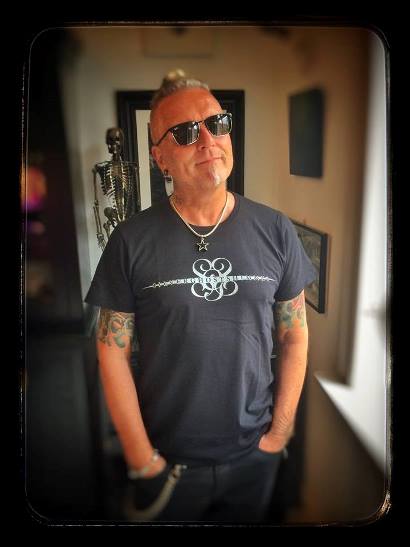 JOHN FRYER is the renowned producer, engineer and musician who was also a member of THIS MORTAL COIL.
  How did you first become acquainted with recording synthesizers?
 By ‘A Broken Frame’, the equipment became more sophisticated with things like the PPG Wave 2, Simmons drums and Roland TR808. What were those like to work with?


 is available as a CD, vinyl LP and download via 7Hz Recordings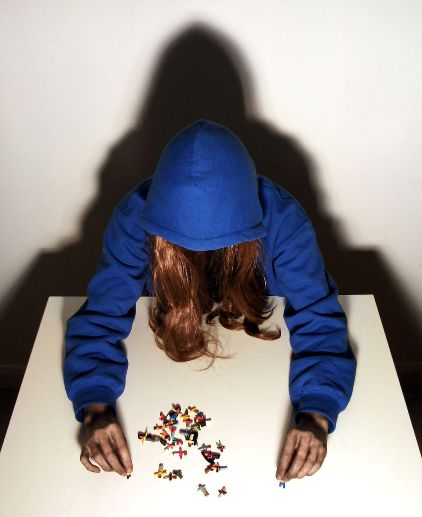





 is released by Mute Records and available from 1st April 2013 via the usual digital outlets
Follow Us!