Tag: Stephen Mallinder (Page 2 of 3)

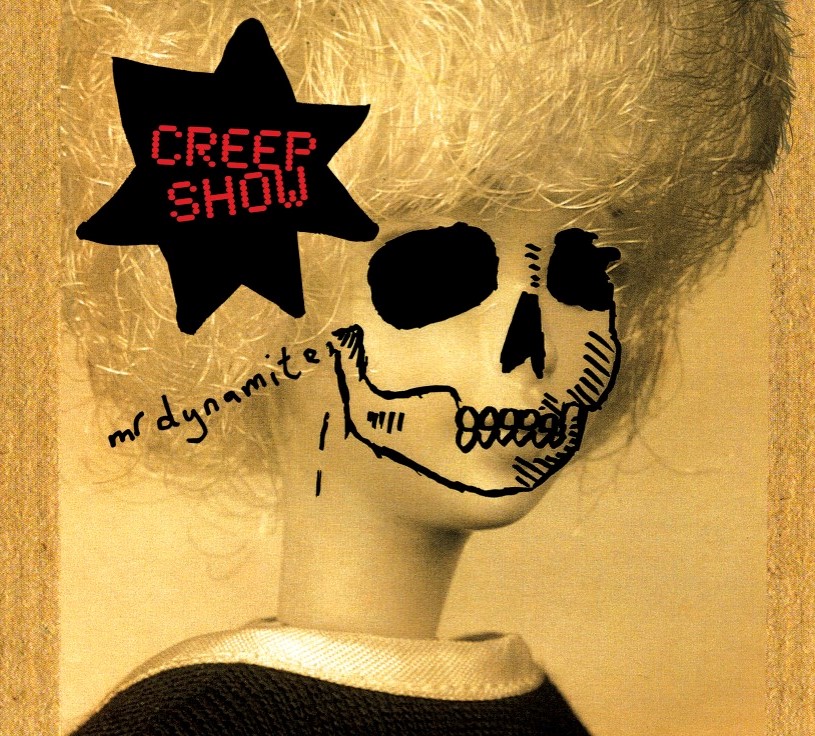
CREEP SHOW Interview

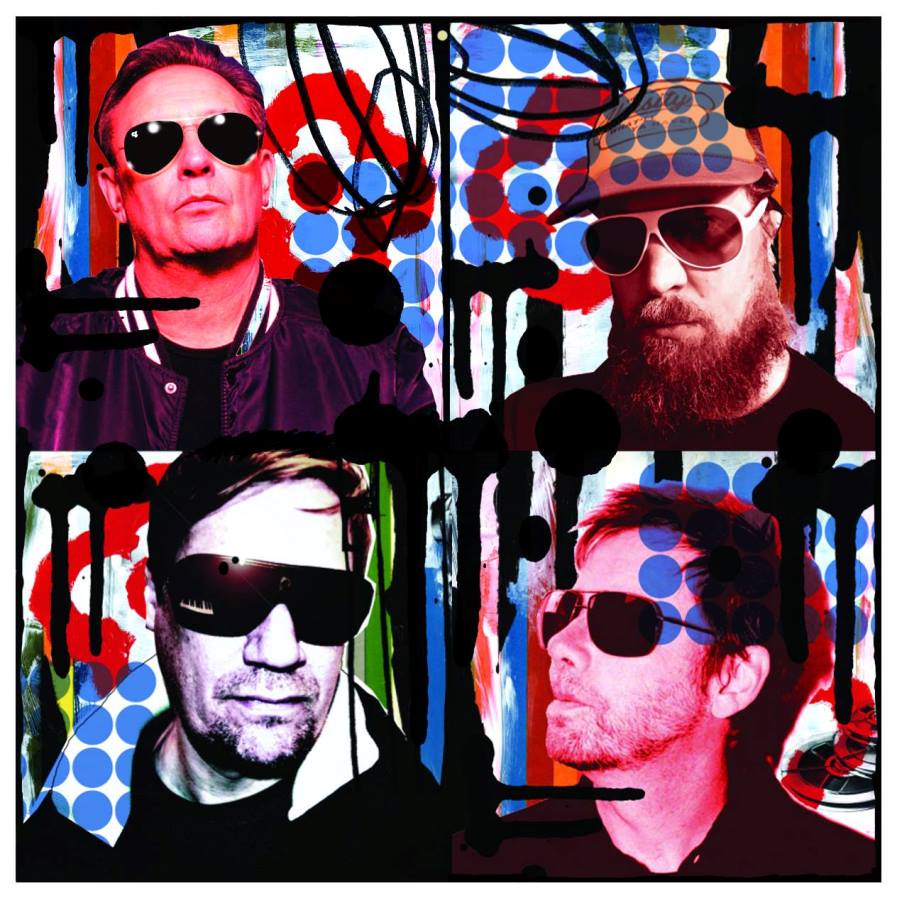
CREEP SHOW sees a dream team collaboration between US singer-songwriter and professed synth-lover John Grant with the established experimental electro triad of Stephen Mallinder, Benge and Phil Winter, collectively known as WRANGLER.

The two parties started to develop a working relationship after the latter remixed Grant which then lead onto live dates at The Barbican and The Royal Albert Hall. The resulting link-up has since given birth to the ‘Mr Dynamite’ album. It’s a meeting of minds that in the words of Mallinder is: “…a Hydra. A beast with multiple heads and voices, so no one is quite sure who is saying and doing what. Everything is permitted and everything is possible”

CREEP SHOW spoke about the gestation of the album, the impact of Benge’s studio relocating to Cornwall and some of the tech involved in the making of ‘Mr Dynamite’.

WRANGLER opened for John at The Royal Albert Hall, was this a calculated attempt by John to engineer a collaboration between both parties? 😉

Mal: Well, we’d already collaborated by this point as John and myself had been talking and WRANGLER had done a remix of ‘Voodoo Doll’ from the ‘Grey Tickles, Black Pressure’ album. It was around the time of the Albert Hall show that we’d been asked to work together and play at the Barbican, so the Albert Hall was just a nice cherry on the cake of us joining forces. We were very chuffed being asked to play, it was a lovely gesture by JG and all the team.

Phil: I just remember it being a very surreal evening, but we were made to feel very welcome.

Benge: I think at the time it was the biggest gig we had done – and certainly the poshest! It doesn’t get much posher than the Royal Albert. We even got to meet The Queen (Kylie Minogue)!

JG: Everything I do is carefully calculated which is why I am also a real estate magnate.
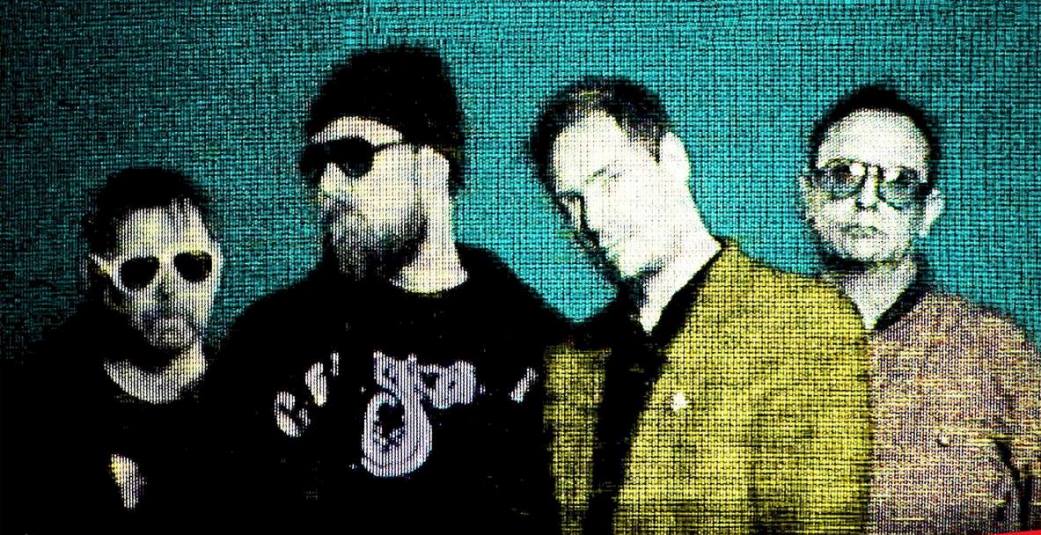
With John involved, how did this change the working dynamic of WRANGLER?

Mal: I don’t know if anything had to change too much as we all integrated so well; we worked in the studio with consummate ease. It was just nice to have another element, another tangent to go to, another voice – quite literally when John did vocals. But we all worked on every aspect of the tracks together, no roles were defined which is exactly how WRANGLER work anyway. It was fun though, so just a case of going from being a wonky tricycle to being a wonky car… the fourth wheel was very handy.

Phil: Yeah, nothing really changed, we just had another pair of hands (that could even play chords) and another mouth to feed !

Benge: It was good to find out that John is as up for experimenting with sounds and ideas as we all are. We deliberately don’t usually have many boundaries when we work together as WRANGLER, so I guess it could have been problematic adding in another personality to the mixture, but John is so open minded and up for experimenting that it felt really natural.

JG: It’s always the perverts who are up for “experimenting” – I’m calling my solicitor!

Were they any prior decisions on the direction for the album or did things evolve organically?

Mal: Well the three of us did some preliminary sketches, as John was on tour, but they were very broad ideas that quickly changed when we got together. Plus John had already sketched out the ideas for ‘Mr Dynamite’. After that, it was just all hands on deck but there was no prior discussion about what it should sound like … apart from f*cking great.

Phil: Even if there were, they disappeared very quickly once we realised we were heading in roughly the same direction .

Benge: Before we started, I was asking myself, how is this going to work vocally as Mal and John are stylistically polar opposites – there was a lot of room for it to go horribly wrong! But the interesting thing was that the addition of John’s new dynamic, lyrically, vocally and musically mutated what we do as WRANGLER into something completely new and unique. Originally we weren’t going to have a new band name, we would have been called “Wrangler featuring John Grant” or “John Grant featuring Wrangler”. But we felt we had created something that had its own strong personality

JG: I felt it was very organic and soon we had settled into a comfortable atmosphere of resentment, competitive pettiness and sardonic laughter.
How did the songwriting process work on ‘Mr. Dynamite’?

Mal: We were backstage after his show at the De La Warr Pavilion and John played me the ideas of rhythms for ‘Mr. Dynamite’ that he’d done. We took it all into the studio and then began working on it.

Phil: Do you mean the track, or the album as a whole? Either way it was pretty much the same, get a load of sequences, a beat , and then play and sing over the top .

Benge: And then shove it all through a pitch shifter and flanger.

JG: For my part, Benge and I sampled every single word into an old Akai sampler from the 80s and then played them at different pitches on a keyboard.

Whose idea was the big girlie backing vocals on ‘Endangered Species’?

Mal: I’ll let JG answer that one, but suffice to say we were all happy with it. John and I sat in the studio with the girls and let them rip through it. It was great as they all loved the tracks… when we got to sing on ‘Modern Parenting’, they made the right connections to George Clinton and FUNKADELIC so we knew it was going to work.

Phil: John’s… great call, we’d never do anything like that, love it!

Benge: I think originally John had put some backing vocal parts in at the end of that one, then he casually said “why don’t I get Culture Club’s original backing vocalists to redo them?” – when we realised he wasn’t joking, it was a no brainer.

JG: I don’t mind taking credit for this one. Mary Pearce, Maria Q and Zee Asher have worked with CULTURE CLUB for yonks and I just wanted an excuse to be in the same room with them again as they have toured with me and they are fantastic as you can hear.

Alongside the obvious CABARET VOLTAIRE influence, much of the synth bass on ‘Mr Dynamite’ is reminiscent of classic electro like ‘Bassline’ by MANTRONIX, how much of an influence is era this on your work?

Mal: That period is so important to us all. Technology-wise Benge’s studio is massively invested in that sound and we all love that period as it represents a very dynamic collaboration between machines and people. The whole idea of drum machines, synths and basslines all talking to each other in a very live way. We all grew up with that sound, and on opposite sides of the Atlantic, so it is an important way for all four of us to connect. Phil and I have been friends, and worked together, for years and the whole electro period is our provenance – put on an Oberheim DMX drum machine and Juno bassline and we turn to liquid.

Phil: I guess if we have a default setting it’s that sound, but I’d like to think there are wider aspects to our sound.

Benge: Yes, but when you walk round the studio and you are confronted by a corner of the room that has a DMX, a Roland SH101, Oberheim 4-voice and a Claptrap all connected together, it’s hard not to slip into electro-mode, even just a little bit.

JG: Yeah, that’s just part of my DNA, the synth basses of the 80s – the SH-101 from Roland is beyond all human understanding.
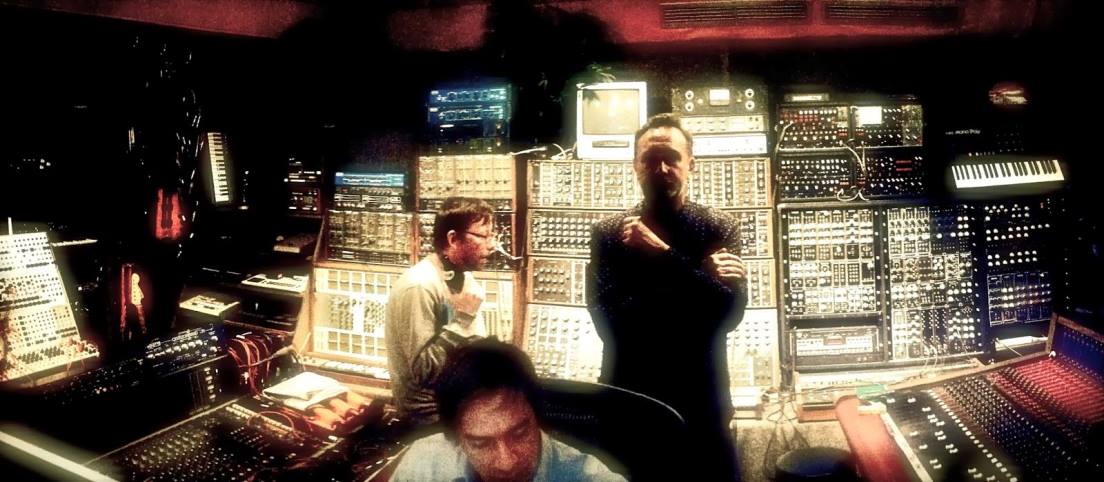
MemeTune studio and its synths has now relocated down to Cornwall, has the change of location had any effect on the music making process?

Mal: Well, it takes a little bit longer to get to, but once we’re there it means we have no distractions. When MemeTune was in Hoxton, there were too many people and places to tempt us out so the working process different. But wherever it is we’ll go and work – I think using ‘Space 1999’ as an inspiration, we need to have a MemeTune Moonbase.

Phil: Obviously, it’s a very different experience to working in a studio in London. But as mentioned, it’s all about the people really (and the dog).

Benge: What’s nice now is when people come down here, it’s a total lock-in. No-one can escape for days on end! It’s a good focus. And yes, even Rothko (my dog) gets involved.

JG: I always feel completely invigorated and inspired by the beauty of Cornwall and Benge’s amazing studio, so it certainly affects me. Sadly, I never saw the London MemeTune studios 🙁

John’s professed love of the Roland Juno 106 is well-known, how well-used was this synth on the album?

Mal: Not at all!

Phil: I think the CS80 has taken his heart ❤

Benge: Or was it the Sequential Prophet VS?

JG: It is indeed the CS80 (the greatest synth of all time) and the Prophet VS which have stolen my heart. But the Juno 106 is still precious to me.

So were there particular go to synths on this album?

Mal: There is always ‘synth of the week’ – usually the one that’s just come back from the Keith the Synth Cobbler – but that’s always changing. There’s a particular little Akai machine that’s been made to work its socks off in the last few sessions.

Phil: I seem to remember the Roland SH2 and the Minimoog providing a lot of the basslines .

Benge: As always at MemeTune, there’s a lot of interplay between all the instruments. Keyboards, drum machines, effects units, analog sequencers, modular systems all get connected together in millions of ways. It’s impossible to keep track of it all
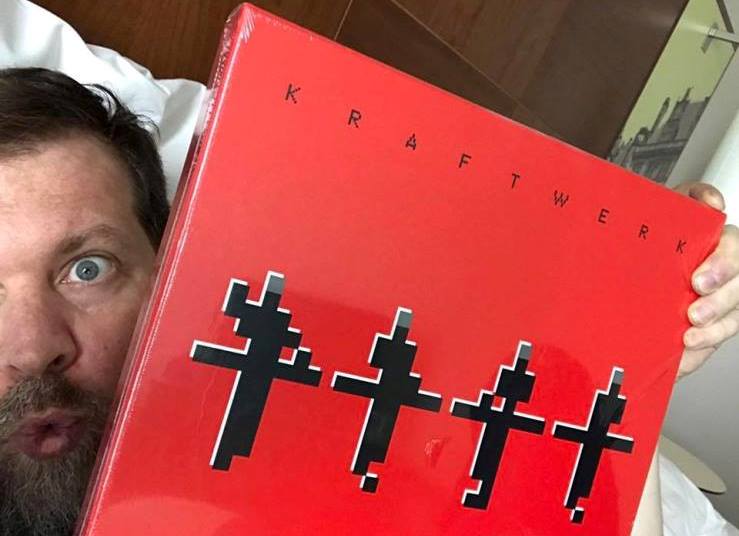
‘Fall’ in places is akin to a lost ‘Autobahn’ era KRAFTWERK track, do you think electronic artists will ever stop paying homage to the German meisters?

Mal: Who? Never heard of them!

Phil: Why would you?

Benge: I’ve heard of an English band called Craftwork

JG: My mother did a lot of craft work as well and there were latch hook rugs all over the place. But to answer your question: I hope not.

‘Safe & Sound’ is a wonderful mix of old-school crooner vocals and analogue electronics and is ELECTRICITYCLUB.CO.UK’s favourite track on ‘Mr Dynamite’, can you each select a favourite from the album and why?

Mal: ‘Endangered Species’

Phil: Impossible, sorry!

Benge: I like the way ‘Fall’ turned out – I think it’s got a simplicity and beauty and groove that I’m into at the moment

JG: ‘Endangered Species’ for me too. Loved doing that vocal and lyrics and the combo of bassline and pad makes my legs go all rubbery.
So… ‘Mr Dynamite’ a glorious one-night stand of an album or the start of a continuing meaningful relationship between all the parties involved?

Mal: It would be so rude not to call after such a memorable night!

Phil: And I need my scarf back!

Benge: It wasn’t goodbye, it was au revoir.

JG: What they said…


ELECTRICITYCLUB.CO.UK gives its sincerest thanks to CREEP SHOW

Special thanks to Danielle Carr at Bella Union

‘Mr Dynamite’ is released on 16th March 2018 by Bella Union in CD, vinyl LP and digital formats

CREEP SHOW 2019 live dates:

Sheffield The Foundry (5th October), Liverpool Arts Club Loft (6th October), Bristol Trinity Centre (8th October), London Scala (9th October), Hove Old Market (10th October), Newcastle Boiler Shop (12th October), Glasgow Art School (14th October)

http://creepshowmusic.com

https://www.facebook.com/creepshowmusic/

https://twitter.com/CreepShowMusic

https://www.instagram.com/creepshowmusic/

http://www.johngrantmusic.com

https://www.facebook.com/mallinderbengewinter/


Text and Interview by Paul Boddy
21st February 2018
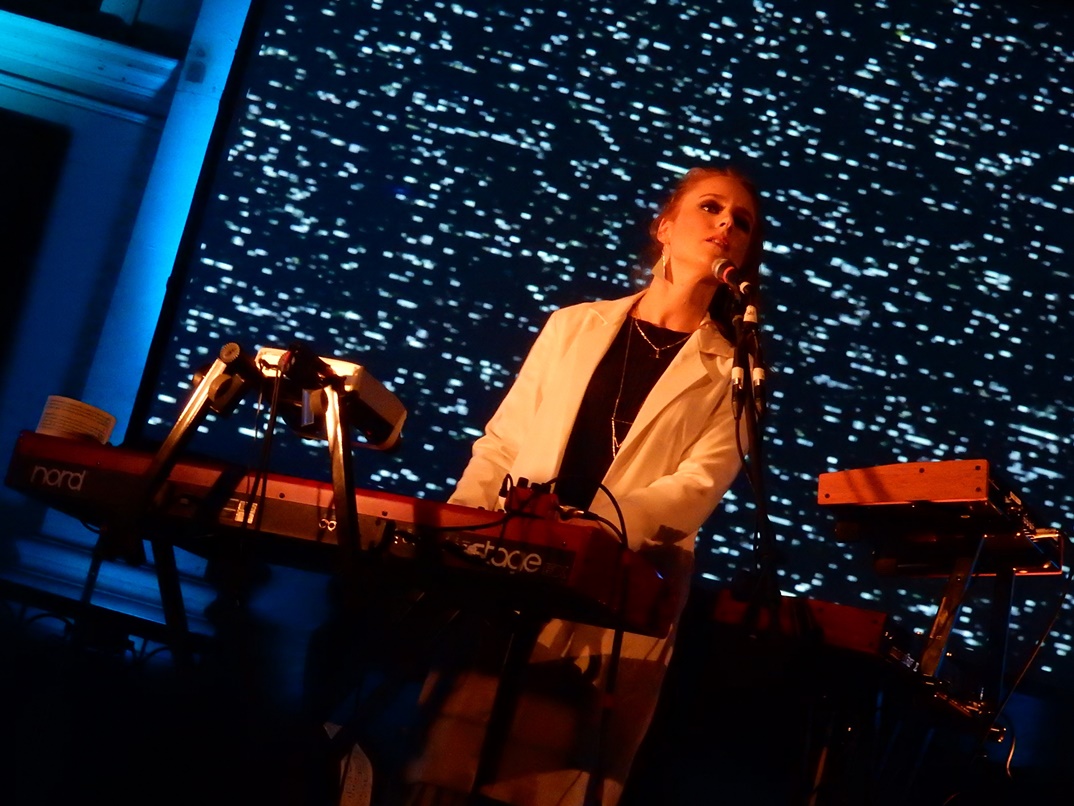
HANNAH PEEL Live at St Leonard’s Church

It was at “a meeting of minds on memory / art / music / literature / film” curated by Kirsteen McNish of Vine Collective in association with Alzheimer’s Research UK that Hannah Peel launched her acclaimed second album ‘Awake But Always Dreaming’ with an emotional live presentation in the heart of London.

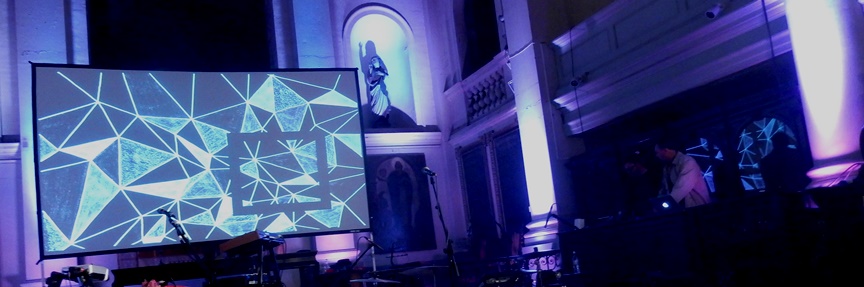
Only a stone’s throw from her basement studio where most of the album was recorded, St Leonard’s Church in Shoreditch was the setting for an event to raise awareness of the effects of memory loss and dementia.

It is said that one-in-three people will develop dementia. The charity Alzheimer’s Research UK aims to defeat dementia through studies in prevention, treatment and cure. The experiences of Hannah Peel with her own grandmother’s gradual decline into dementia inspired ‘Awake But Always Dreaming’ and the event featured a number of artists from different fields, each with their own story to tell on the issue.
wrangler-shoreditch-church-01

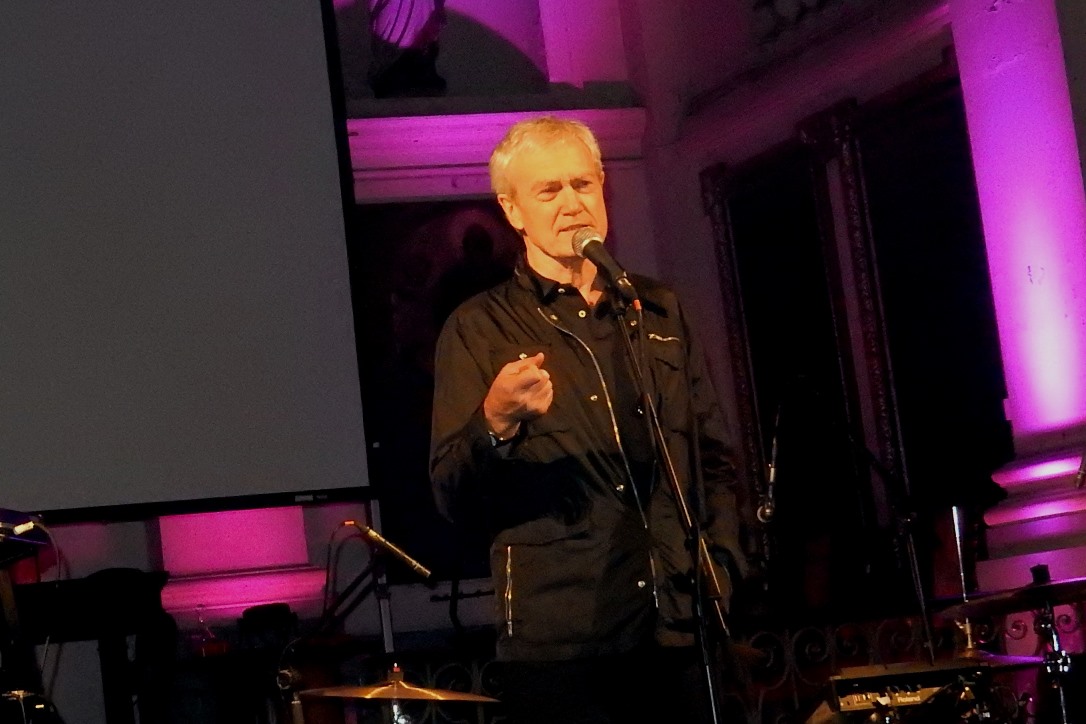
First up was poet, writer and filmmaker Lavinia Greenlaw and her short film ‘The Sea Is An Edge And An Ending’. At times deeply upsetting, it was indeed a moving “study of the impact of dementia on our sense of time and place”. To continue the theme, director and choreographer Shelly Love introduced her more surreal short film ‘Scratch’ where “A lone character inhabits a subterranean world. Stuck between worlds, she fails to move on…”

In between, music was provided by WRANGLER’s Stephen Mallinder and Phil Winter with a DJ set described by Mallinder on Twitter as “all kinda ‘tings with @disco_rdance visual magics”. Beginning sedately, as the evening progressed, the soundtrack got louder and more distorted. But whether this was a creative aspect to proceedings or the electrics at the church struggling to cope, it was difficult to tell.

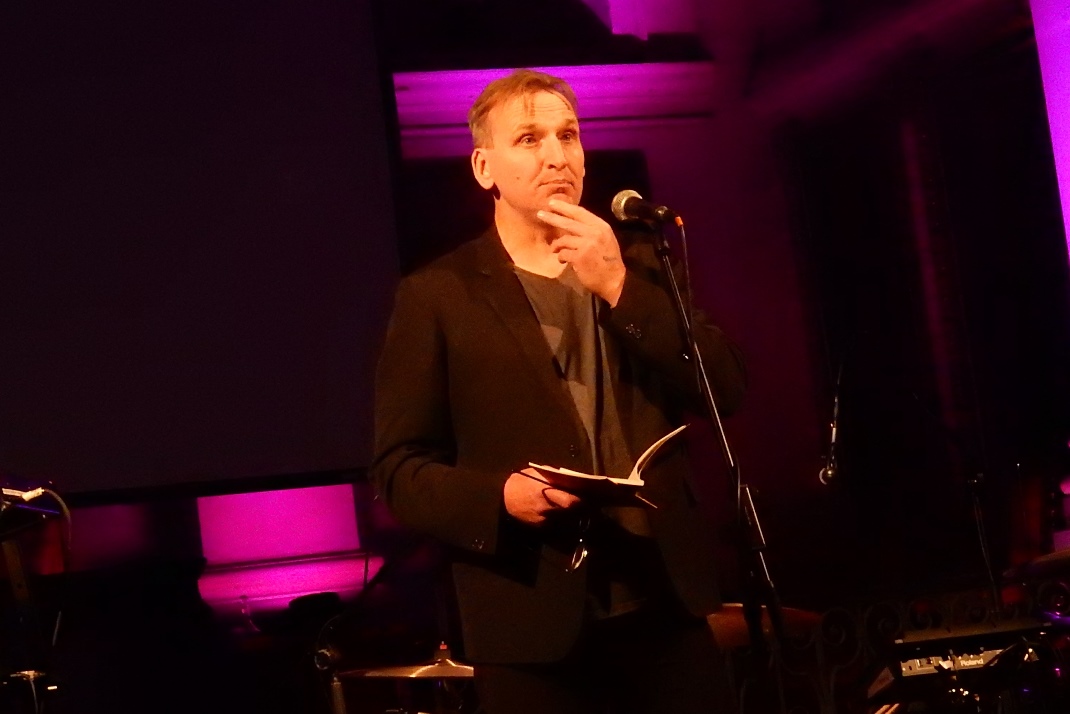
A special guest took to the stage in the shape of one-time ‘Doctor Who’ Christopher Eccleston; the actor lost his own father to the dementia and has become a supporter of Alzheimer’s Research UK. He read two poems ‘Apart’ by Robin Robertson and ‘Straw Weight’ by Will Burns with his passionate charisma clearly projecting through and holding the attention of all present. Alzheimer’s Research UK’s Christmas campaign advert ‘Santa Forgot’ was also shown.

Produced by Aardman Animations and featuring a voice over by Stephen Fry with music composed by Hannah Peel, it imagines a world without Santa Claus; it touchingly ends with the little girl Freya whispering to Santa “I believe in you”.

Electronic pioneer John Foxx could be considered Hannah Peel’s mentor having brought her to wider attention via JOHN FOXX & THE MATHS, so it was highly fitting that he eloquently introduced her to the stage.

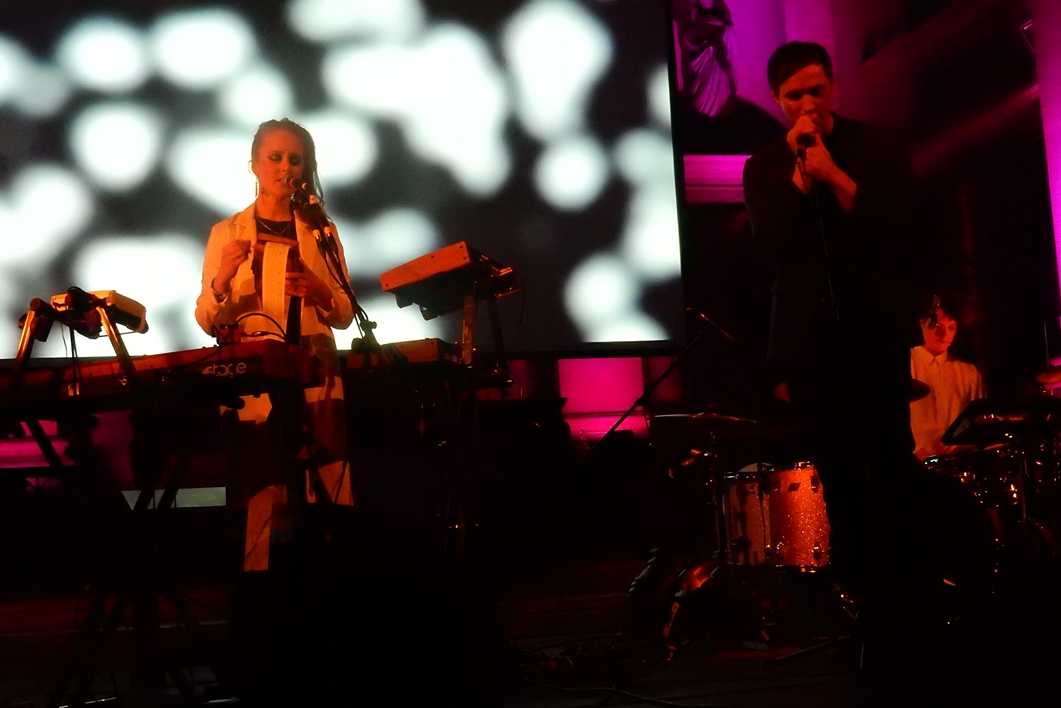
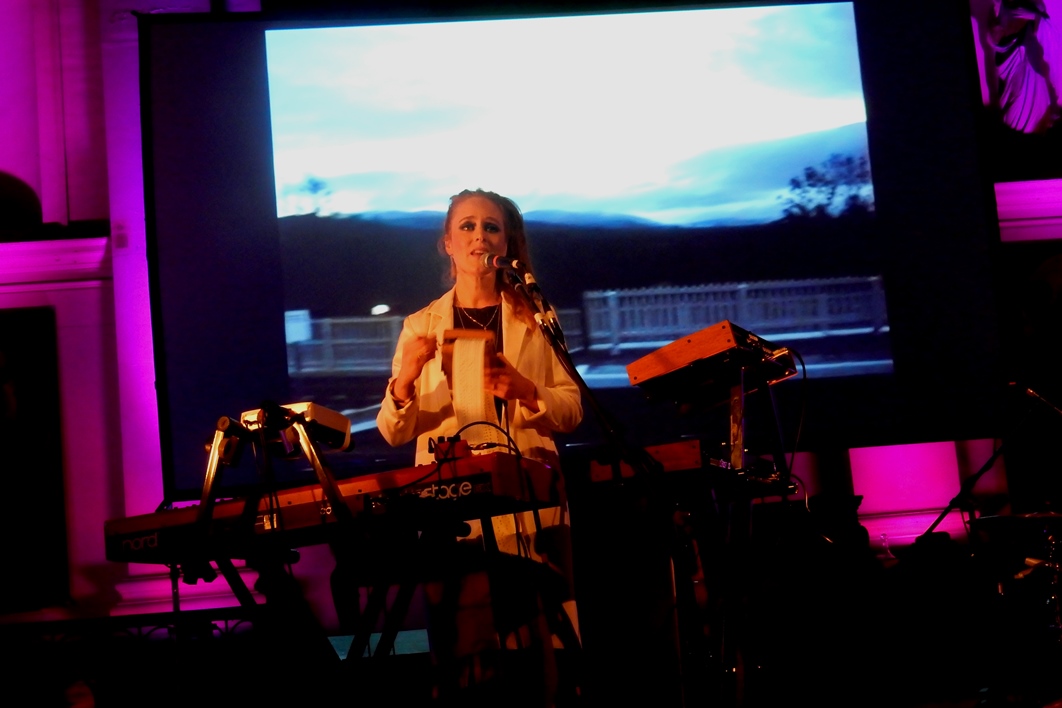
A short piano only intro of ‘All That Matters’ acted as an overture before the thrust of driving synth bass and sparkling arpeggios of the fully synthesized version filled the church hall. Meanwhile second song in, ‘Silk Road’ from her interim ‘Fabricstate’ EP was a surprise but welcome inclusion in a set based around the album ‘Awake But Always Dreaming’.

The poignant ‘Don’t Take It Out On Me’ highlighted the main theme of the evening before the spacey cocoon of the ‘Awake But Always Dreaming’ title song showcased Peel’s progression as an artist, with its looming, hallucinogenic squeals. It was augmented by the complimentary percussive colours of Daisy Palmer, a fabulously intuitive drummer who only played what was required and avoided the excesses found with some better known electronic based combos.

The set was enhanced with films produced by Daniel Conway and By Emmaalouise Smith comprising of mind maps and Super 8 home footage to visualise the fracturing of memory and this was particularly striking on the haunting moods of ‘Tenderly’.

‘Standing On The Roof Of The World’ and ‘Hope Lasts’ added a few noisier textures as Miss Peel made effective use of her two Dave Smith Mopho x4 synths, one now specially customised with a new keyboard to suit her soloing technique.

But the crowd were in total silence for an impressively forlorn performance of Paul Buchanan’s ‘Cars In The Garden’ on music box. Joined by Erland Cooper, her producer and bandmate from THE MAGNETIC NORTH, on harmonies, the on-stage banter between the pair revealed a closeness that can only come from being locked in a studio together as Cooper joked about Peel’s white stage outfit resembling a lab coat.

The beautiful vocal melodies on ‘Invisible City’ continued the mood before the main segment of the show closed with the two-movement ‘Foreverest’. Mutating into a heavy Glam laden stomp with screeching violin, it provided a fitting off-kilter soundtrack to the futility of the rat race while forgetting the importance of loving relationships.

Returning for an encore, the heartfelt and very personal ‘Conversations’ provided an emotive focal point as to the evening’s aims. But not wanting to finish things on a downer, Peel’s encouraged the crowd to sing along to a ‘Rebox’ rendition of ‘Tainted Love’. Despite forgetting the words to the third verse and the dark lyrics, it provided the hopeful lift that was needed to ensure the evening’s message rang home.

While it was full of drama and tears, there was the optimism and hope that only art and music can provide. With Hannah Peel’s own story of how her grandmother was able to singalong to Christmas carols despite having suffered from memory loss for several years, it is said that “Researchers have found that playing music from someone’s young adult years, from around 18 to 25, is likely to provoke the strongest response. As patients enter late-stage dementia, music from their childhood may prove more powerful”.

With this information to hand, ELECTRICITYCLUB.CO.UK is all for harking back and celebrating the past if it goes any way towards improving an individual’s quality of life.


‘Awake But Always Dreaming’ is released by My Own Pleasure in CD, vinyl and download formats and available direct from https://hannahpeel.tmstor.es/

http://www.hannahpeel.com

https://www.facebook.com/HannahPeelMusic

https://twitter.com/Hanpeel

https://www.instagram.com/hannahpeelmusic/

For information on the work of Alzheimer’s Research UK and how to donate, visit http://www.alzheimersresearchuk.org/

Laura Barton’s article for The Guardian ‘Awakenings: Hannah Peel on how she harnessed music’s power to cut through dementia’ can be read at: https://www.theguardian.com/music/2016/nov/23/awakenings-hannah-peel-on-how-she-harnessed-musics-power-to-cut-through-dementia


Text and Photos by Chi Ming Lai
28th November 2016

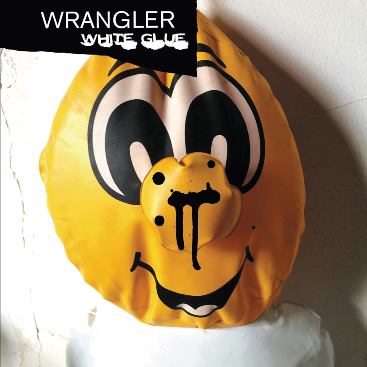
WRANGLER White Glue

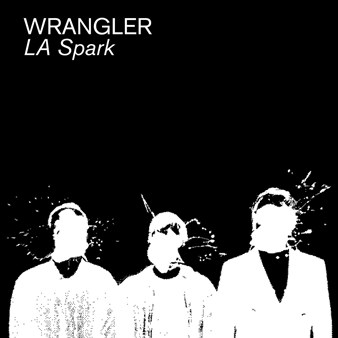
After the release of their debut album ‘LA Spark’ in 2014, 2016 has seen a ramping up of activity in the WRANGLER camp, with June’s modular synth remix album ‘Sparked’ being shortly followed by a new collection of 9 tracks which make up ‘White Glue’.

There was also a high profile support slot for the band when they recently appeared at The Royal Albert Hall supporting US singer John Grant which has now blossomed into a forthcoming live collaboration between the two. For those unfamiliar with the make-up of the band, WRANGLER comprises Stephen Mallinder (ex-CABARET VOLTAIRE), Phil Winter (TUUNG) and Benge (JOHN FOXX & THE MATHS).

When played back-to-back with ‘LA Spark’, its successor is less dense texturally (there are fewer string chords) and features far more complexity in its interlocking of monophonic synthesizer parts. As with its predecessor, the order of the day is primarily linear, hypnotic electronics/sequencers with Mallinder’s vocal used as more of a textural instrument rather than a topline melody. The usage of Benge’s smorgasbord of vintage analogue synths with their slightly wonky tuning gives the album an edgy and unstable feel in places which suits the generally dark nature of the material.

Album opener ‘Alpha Omega’, with its dual note bassline starts off like a deconstructed analogue version of ‘Enjoy the Silence’ with a sound not dissimilar to that of one-man modular freak SOLVENT. Vocoders are used to mask Mallinder’s vocal here – “Alpha Omega, a favour for a favour…” and contribute to the robotic nature of the sound. At 2:42, things even turn a bit synthpop with a catchy 10 note riff coming out of nowhere to join the sequenced backing track.

‘Stupid’ sees a higher, almost falsetto vocal from Mallinder over a texture of interlinked hypnotic monophonic synths. The track’s rhythmic heart could almost be described as “funky” and the modulated synths which punctuate throughout the track combine to create a fantastic robotic electrofunk feel.

‘Clockwork’ with its title and ‘Computerwelt’ sound palette gives an obvious nod to KRAFTWERK whilst ‘Stop’ easily has the standout lyric here, with its anti-consumerism mantra: “Stop spending money that you don’t have / Stop buying sh*t that you don’t need!” As well as a generalised statement, the couplet itself could easily be applied to a few synth nerd trainspotters who get bitten by the bug and can’t stop investing in new modules (although Benge wouldn’t consider himself one of these!). The outro musically scaled synth line on ‘Stop’ adds in a touch of GARY NUMAN for good measure.

‘Real Life’ takes the listener to a futuristic motorik/robotic dance floor, referencing Acid House but without the over-obvious 303 clichés. It also introduces some welcome musical and tonal shifts which help differentiate it from most of the more linear pieces here. The best way to describe album closer ‘Colliding’ would be if AIR had originated in Düsseldorf rather than Versailles – the track has flanged Solina-style strings, vocodered vocals and the kind of lead melody sound that would have happily sat on the second side of ‘Autobahn’.

‘White Glue’ tends to work best when listened to as a whole, the combination of Benge and Tuung’s electronics with Mallinder’s vocal wash gives the listener the feel of a continually moving synthetic soundscape. For some listeners there may not quite be enough melody here as some of the vocal parts are melodically flimsy to say the least. But for fans of Benge’s work with JOHN FOXX & THE MATHS and Mallinder’s with CABARET VOLTAIRE, there is a plethora of synthetic delights to enjoy.

All in all, ‘White Glue’ is a worthy follow-up to ‘LA Spark’ and the upcoming collaboration with JOHN GRANT is sure to help bring the band to an even wider audience.


‘White Glue’ is released by Memetune in CD, vinyl and digital formats on 23rd September 2016

WRANGLER perform a collaborative set with JOHN GRANT at The Barbican in London on Saturday 22nd October 2016 as part of Rough Trade 40, more information at http://www.barbican.org.uk/music/event-detail.asp?id=20075

https://www.facebook.com/mallinderbengewinter/

https://twitter.com/wearewrangler

http://memetune.net


Text by Paul Boddy
19th September 2016

A Short Conversation with WRANGLER

WRANGLER are Stephen Mallinder AKA Mal (ex-CABARET VOLTAIRE), Benge (JOHN FOXX & THE MATHS) and Phil Winter (TUNNG).

Since talking to ELECTRICITYCLUB.CO.UK back in April 2014, the trio have followed their debut release ‘LA Spark’ with a modular synth remix album ‘Sparked’, a live show at The Royal Albert Hall and a follow-up album in the shape of ‘White Glue’.

With a new single ‘Stupid’ recently unleashed as a trailer for the new long player, Mal, Benge and Phil kindly spoke about developments within the band and the forthcoming collaboration with US singer / songwriter John Grant.

‘White Glue’ is an intriguing title, is there a specific meaning behind it?

Mal: Well, I think I’ll let Phil go into the detail as it came from his idea, which was based on the exoticness of the Spanish translation of “White Glue”. Unfortunately we’d got that completely wrong, we actually meant the Italian translation “Colla Bianca” which as you can see started to sound a bit like a sh*t cocktail so went with the original, always a good idea, as we loved that anyway!

Phil: ‘White Glue’ is used to repair damaged record sleeves, of which I have many, the bottle I found had the mentioned translations which we played with and then discarded!

How do you see the new album differing from your debut ‘LA Spark’?

Mal: Well for me it expands on some of the sounds we used to make ‘LA Spark’ so has the connection, but seems to take those rhythms and sounds to another level.

We use and misuse technology, that’s what WRANGLER are about, so each release is another chapter in the story, just as ‘Sparked’ was. Everything should be a progression but also have some relationship, to build on the past.

For me personally there are themes that come out of ‘LA Spark’, which was a rather bleak and cautionary narrative in relation to human impact on the world. In turn ‘White Glue’ is a response to the corruption, exploitation and mindless materialism that engulfs us. It’s hard not to respond to a world that is dominated by elites, plutocracies and chumocracies.

Benge: To me, the difference this time round was we had quite a lot of the tracks written and in a playable state a long time before we finally recorded and mixed them in the studio, and we were playing them in our live set for ages which really helped flesh the music and arrangements out. It’s kind of the first time I’ve worked that way and it really changes the dynamic of a song when you play it and refine it in front of an audience before committing to tape. Having said that, the rest of the album was done in the studio in intense late night modular synth jams that none of us were in control of. That combination of refined arrangements and live studio experiments is where we ended up.

Phil: The time frame of the recordings definitely had an impact on the eventual sound of the record.

With ‘LA Spark’ we would generally work on a track until it was done, but with ‘White Glue’ we would start a track and then not work on it for ages, as other ideas/tracks had sprung up that we got diverted by.

But having that space in the working process really worked, as it meant we could live with them ie DJ them out or play them live before committing to the album.

The ‘Sparked’ modular remix album concept was an interesting one. Were you surprised by some of the mixes you were given?

Mal: Well you could say yes, as they were all wonderful in their own way and made the hairs on the back of my neck stand up. so surprised that way. But in another way, not surprised at all as we had such respect and admiration for those artists. We directly approached them to work with us and I’m eternally grateful for them agreeing and contributing… everyone’s a Maserati, as the old saying goes (including the one we did).

WRANGLER recently played The Royal Albert Hall as support for JOHN GRANT, how did that come about?

Mal: Well we first met John a couple of years ago when we played ‘Sensoria’ with CHRIS & COSEY, and realised what an aficionado he was of electronic music. We stayed in touch and all became good friends; he’d asked us to do a mix of ‘Voodoo Doll’ from his latest album and then the Albert Hall gig came up and we were invited, I guess having seen us play and knowing our music, JG thought it was a good fit. A very generous and clever man.
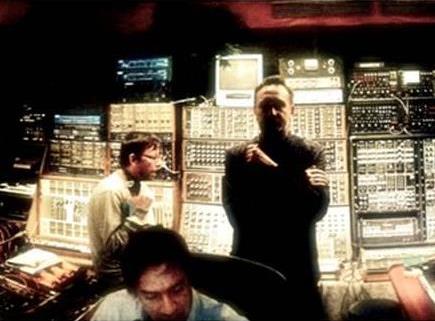
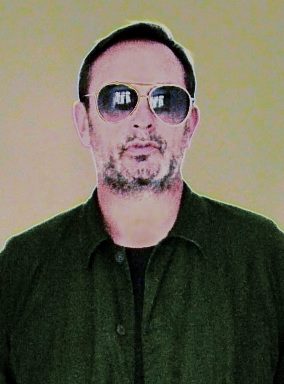
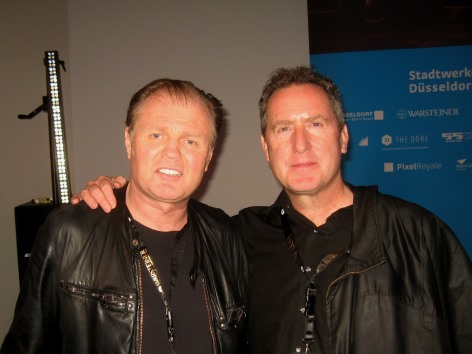
How did you approach playing such a prestigious venue? Were there any nerves beforehand?

Mal: I don’t really get nervous. I think having played for so many years, you realise if you start to think about all things that can potentially f*** up, you’d be a quivering wreck. So “excited” is a better word and if things really screw up, I’ve been known to tell jokes – the last thing Benge says to me every time I’m about to go onstage is “no jokes!!” so I tend to be pretty minimal now when we play. To be fair it’s not very cool and they’re sh*t jokes so he is right.

Benge: Our thinking was if we can’t have a huge screen behind us on that massive stage then we would go the opposite way and just use 3 small TV monitors, one in front of each of us and go minimal. Actually on the night, JOHN GRANT and his stage team were really generous and gave us the full light show as well, which we didn’t expect as the guest act. That was really cool of them.

Phil: It’s such an awesome space, but everyone involved was so helpful and welcoming that it was very enjoyable.

This show has led onto a forthcoming live collaboration with John Grant at The Barbican celebrating 40 years of the Rough Trade label, what can we expect from that?

Mal: Hopefully it will shift a few perceptions from both sides, but maybe less for us as we’ve all been writing and have quite a few tunes already sketched out. John has been busy touring so we started the process a month or so ago sending roughs over, but I caught up with him and he’s done some really cool sketches and rough mixes – we seem to be on the same flightpath – and we have a week or so together writing in the studio. It should be fun, we can take a break from our other roles and enjoy the process. Am hoping it will blow a few minds!

Benge: I’m really looking forward to spending time in the new studio working on this. It is such an unpredictable situation working with loads of wonky machines and so many wonky minds, anything could happen.

Phil: Expect the unexpected!

Because of the practicalities of taking the MemeTune studio equipment on the road, how do WRANGLER go about performing their music live?

Mal: Well it’s a bit of a mix and match process, so we capture and loop some of the key parts from the delicate studio gear then take the more robust equipment out with us on tour. It makes it very live and flexible, but we can build in the other parts to maintain the WRANGLER sound.

Phil: It’s a constant balancing act between the practical and the wished for!

The synth world is currently going a mad for synth hardware (modular and otherwise), would you have any advice to give to people wishing to invest in such gear?

Benge: My view is that you should try and create your own unique voice in the world if you are a creative artist. What you use is not as important as how you use it. Having said that, I love the fact that there is now so much more opportunity to use analogue hardware gear than ever before. You don’t need to scour the depths of eBay in remote far away countries to find exotic gear any more. Making music has never been more exciting than now.

ELECTRICITYCLUB.CO.UK was present at the really entertaining lecture ‘Growing Up A Little Bit German’ which you gave as part of the ‘Boing Boom Tschak’ event during the Brighton Fringe Festival. How important still is the musical DNA of KRAFTWERK to the sound of WRANGLER?

Mal: Oh I think KRAFTWERK remain the benchmark for electronic music and I can’t see that ever changing. Not just the sounds themselve which still cut through for their purity, clarity and richness, but also the process. KRAFTWERK taught us all that less is more. I still listen to the albums and appreciate the sophistication of the mixes – always the correct delay, always the complimentary frequencies, the right timbre, everything in the right place and to the correct degree.

They still work because of the simplicity and symmetry which is the basis of beauty. WRANGLER understand that, although I think sometimes it’s nice to mess it up. If KRAFTWERK are sophisticated beauty, WRANGLER are the rebel twin occasionally getting tarted up for a mucky night out.

What are your future aspirations for WRANGLER?

Mal: To write some great music, maybe try and position what we do in different contexts and allow more people to appreciate it. But really, just to continue enjoying it and ruffling a few feathers on the way.

Benge: We have only ever done our music to please ourselves. We think the perfect sound doesn’t exist yet and if we can keep trying to find that sound we will be doing something incredibly worthwhile.

Phil: More of the same please, but maybe turn the clap up a bit!


ELECTRICITYCLUB.CO.UK gives its grateful thanks to WRANGLER

Additional thanks to Steve Malins at Random Management

‘Stupid’ is released as a download single on 9th September 2016

The new album ‘White Glue’ is released by Memetune in CD, vinyl and digital formats on 23rd September 2016

WRANGLER perform a collaborative set with JOHN GRANT at The Barbican in London on Saturday 22nd October 2016 as part of Rough Trade 40

https://www.facebook.com/mallinderbengewinter/

https://twitter.com/wearewrangler


Text and Interview by Paul Boddy
6th September 2016

ELECTRI_CITY_CONFERENCE 2015

Dance To The Future…

Düsseldorf paid homage to its electronic music history with a three day event of lectures, discussions and live music.

The ELECTRI_CITY_CONFERENCE celebrated the work of pioneers like KRAFTWERK, DAF, RIECHMANN, NEU! and LA DÜSSELDORF, as well as reflecting the city’s worldwide influence on bands such as NEW ORDER, THE HUMAN LEAGUE, DEPECHE MODE, CABARET VOLTAIRE, VISAGE and OMD.

A year in the planning, organisers Rudi Esch and Carsten Siewert assembled an impressive line-up of artists, musicians and academics which read like a ‘Who’s Who?’ of electronic music.

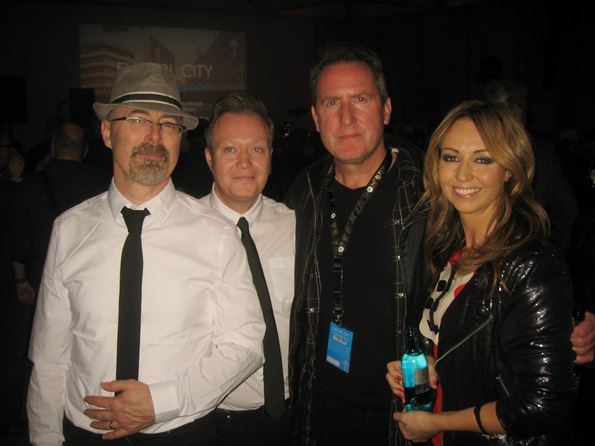
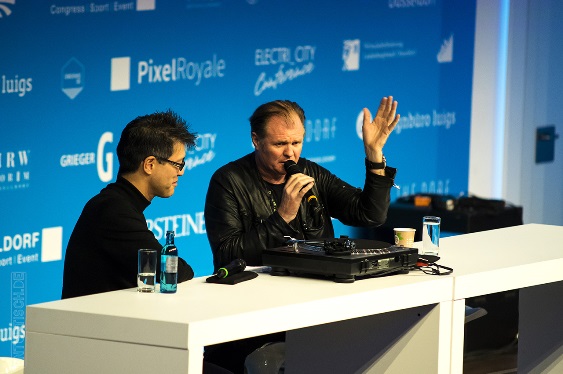
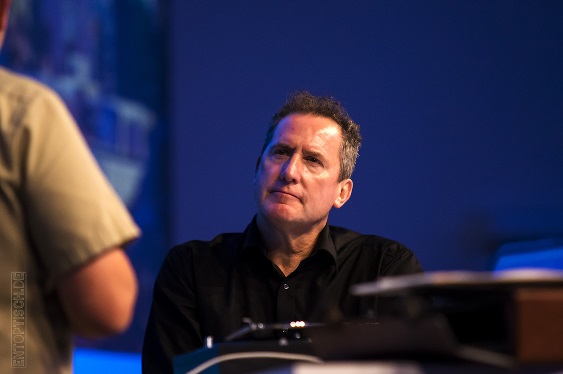
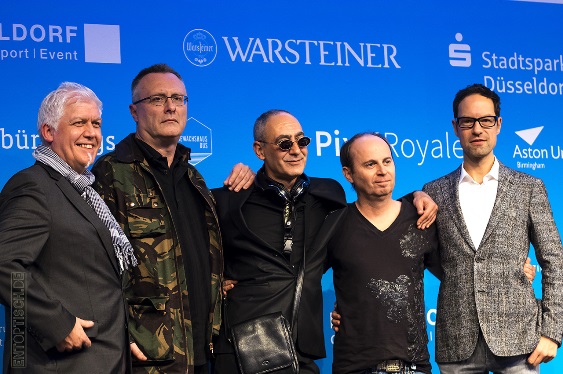
It included names such as Benge, Gabi Delgado, Ralf Dörper, Rusty Egan, Harald Grosskopf, Peter Hook, Stephen Mallinder, Andy McCluskey, Daniel Miller, Mark Reeder, Michael Rother and Martyn Ware.

Also present was Dr Uwe Schütte, whose academic conference ‘Industrielle Volksmusik for the Twenty First Century – Kraftwerk & the Birth of Electronic Music in Germany’ at Aston University helped inspire the seeting up of the event.

While there have been numerous books about Germany and in particular KRAFTWERK, few have been written by people who were actually there at the time. Esch’s own book ‘Electri_City: Elektronische Musik aus Düsseldorf’ was published in 2014 and provided a much needed eyewitness account.

It fully related the Cold War tensions within Der Bundesrepublik that inspired many young Germans into pursuing adventures in art, music and cinema as a matter of self-expression and cultural identity.

The book’s success in Germany provided much of the impetus and momentum to curate this lavish gathering of kindred spirits. The first of the special guests taking part was Peter Hook who talked to Rob Keane about German influences on the UK’s post-punk scene and in particular, JOY DIVISION.

It was Ian Curtis who first introduced the others to KRAFTWERK. After the charismatic vocalist’s passing, the surviving band members became NEW ORDER and as they became more electronic, they acquired five Prophet 5s costing £2000 each.

This had only been made possible by the posthumous success of JOY DIVISION.“God bless him, Ian… without him, we wouldn’t have been able to afford these machines to make electronic music…” Hooky said, “what happened in NEW ORDER was as the technology developed, it enabled you to buy the machines that KRAFTWERK were using. I’d love to watch them do something, I really would. Because for all the coverage you get of KRAFTWERK, you never actually know HOW they did it!”

But despite KRAFTWERK being the pioneers of electronic music, Ralf and Florian had been so impressed by ‘Blue Monday’, they arranged to meet its engineer Michael Johnson at Britannia Row Studios where it was recorded. “They wanted to book into the studio we used…” remembered Hooky, “and they wanted to use our engineer, because they wanted their next record to sound like ‘Blue Monday’, which is most ironic because we spent years trying to sound like them!”

KRAFTWERK had a look round Britannia Row but unimpressed with the old fashioned, faded grandeur of the studio, they cancelled the session. “I took that as quite a compliment” quipped the Salford Bass Viking playfully.

Hooky also reminisced about how he was very impressed by fellow Mancunian Mark Reeder’s mastery of speaking German while on JOY DIVISION’s only visit to Berlin in 1980.

But when he asked how Reeder had become fluent so quickly, the then Factory Records representative in Germany answered: “you can learn any language when you’re starving!”

Mark Reeder himself formed part of panel discussion on the German impact of the Düsseldorf Schule to give his ‘Englishman in Berlin’ point of view. As the man often credited with introducing Italo disco to NEW ORDER, Reeder’s recent film ‘B-Movie – Lust & Sound In West Berlin 1979-1989’ captured the spirit of the divided city and highlighted how a similar document about Düsseldorf would now be quite timely.

The ELECTRI_CITY_CONFERENCE was not just about lectures and talks, but about live music too. Cologne’s EMOTIKON opened proceedings with some incongruous generic pop funk, so it was a welcome relief when HEAVEN 17 took to the stage at Zakk for the sold-out show.

Headlining their first ever concert in the German art capital, HEAVEN 17 gave one of their now famous electronically focussed sets which also featured material that had spawned from THE HUMAN LEAGUE Mk1 when Martyn Ware was a member.

Inviting him to join the band, Phil Oakey remembered how Ware turned up at his house with ‘Trans-Europe Express’ under his arm and told him “Look, we can do this!”. The song that best summed up the occasion was ‘I’m Your Money’, a synthetic train ride with multi-lingual business phrases that captured the essence of a European Union.

To follow a fine performance from HEAVEN 17, Daniel Miller’s aftershow DJ set reflected his influences and subsequent signings for Mute Records to conclude an excellent first day.

With a packed second day, Friday’s numerous academic and theoretical proceedings were concluded with a Krautrock discussion in German by a panel of veteran musicians that included one-time ASHRA member Harald Grosskopf, Michael Rother from NEU! and WALLENSTEIN’s Jürgen Dollase.

Whereas Germany has usually been associated with purer forms of electronic music, its kosmische outlook has influenced many rock and alternative bands too. However, Dollase’s continual ranting about the joys of LSD proved tiresome and was exemplary evidence to children as to why they shouldn’t do drugs!

The panel was later opened up to questions from the audience so ELECTRICITYCLUB.CO.UK took the opportunity to ask Michael Rother about his first three solo albums.

‘Flammende Herzen’ , ‘Sterntaler’ and ‘Katzenmusik’ were produced by the late Conny Plank and featured CAN’s Jaki Liebezeit on drums. Did he have a favourite?: “I don’t really have favourites, there are individual tracks I enjoy more, it depends on mood and circumstances. It would be unfair really to have a favourite album” Herr Rother replied, “Of course, I try to highlight Conny Plank’s contribution, he was so valuable… we wouldn’t have been able to record NEU! or the second HARMONIA album or my solo albums without Conny, so he’s all over the place in my music… thank you Conny”

Opening the second evening’s musical line-up, Dublin’s TINY MAGNETIC PETS have been championed by Rusty Egan and their appearance in Düsseldorf was their first in Europe.

The trio’s main strength was their engaging lead singer Paula Gilmer, while Sean Quinn’s synth soloing was also enjoyable. But the occasional rattle of an acoustic drum kit was a distraction and the trio sounded much better when Eugene Somers took to exclusively electronic percussion.

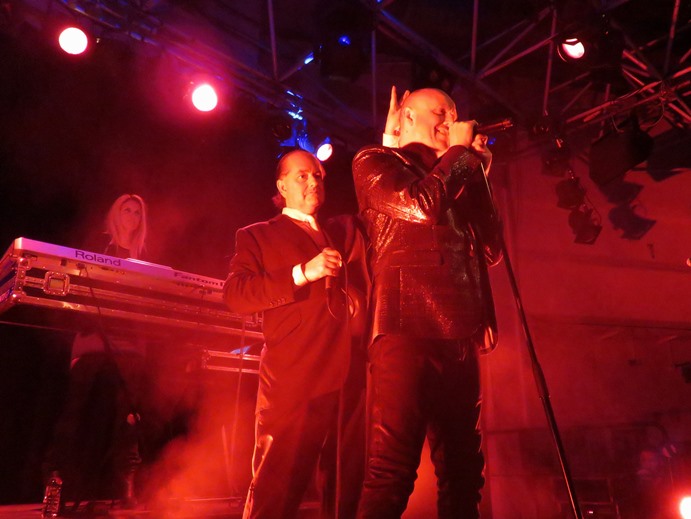
WRANGLER, fronted by Stephen Mallinder who had lectured earlier in the day, delivered a screeching set of dystopian vibes and cold wave mechanics, demonstrating how the Düsseldorf gene has mutated into marvellous pieces such as ‘Lava Land’. Mallinder’s drowning gargoyle vocal was particularly striking within the venue’s effective stereo panning capability.

Incidentally, the trio’s incumbent synth collector extraordinaire Benge has recently relocated his MemeTune studio to rural South West of England, in an echo of Conny Plank’s legendary countryside complex which KRAFTWERK, NEU! and LA DÜSSELDORF all recorded in.

Michael Rother delivered a career spanning set of his works including NEU! evergreens like ‘Hallogallo’, ‘Neuschnee’ and ‘Seeland’. There was also the welcome airing of material from his HARMONIA days too. Accompanied by Hans Lampe, formally of LA DÜSSELDORF, the drummer was unbelievably metronomic throughout, providing the hypnotic heartbeat to these much loved numbers. With assistance on bass and synth from a computer, the glorious symphony of ‘Karussell’ from ‘Flammende Herzen’ was a joy to behold. Watching enthusiastically in the crowd was OMD’s Andy McCluskey who remarked in passing to ELECTRICITYCLUB.CO.UK that ‘Flammende Herzen’ was the most played album on his iPod!

With another fine evening of live music over, proceedings then moved over to the famous club Dr Thompsons for the aftershow party featuring Rusty Egan.

Originally a location for a factory making floor wax, Egan’s DJ set reflected electronic music’s past and present, much to the approval of both TINY MAGNETIC PETS and METROLAND whose tunes got an airing on the dancefloor.

Day three featured SØLYST aka Thomas Klein who warmed up early attendees with an ambient percussive soundtrack that suited the time of day perfectly. Meanwhile, the Rusty Egan vs ELECTRICITYCLUB.CO.UK discussion about the influence of Düsseldorf, Berlin and Bowie on the New Romantics brought up some amusing anecdotes from his Blitz Club and VISAGE days. “KRAFTWERK was all in time!” he retorted in a fascinating and at times, hilarious chat. On DAFT PUNK, he said “The reason why DAFT PUNK wear robot helmets is cos they can’t show their faces… cos THEY STOLE EVERYTHING! But they did it brilliantly!”

The conversation even turned to THIN LIZZY’s Phil Lynott who frequented the scene and recorded the synth friendly single ‘Yellow Pearl’ co-written with Midge Ure that featured Egan on drums. Also featuring Billy Currie, Egan confirmed that it was a VISAGE song in all but name. ‘Yellow Pearl’ was heavily influenced by LA DÜSSELDORF and was to later gain iconic status as the theme music to ‘Top of the Pops’ from 1981 to 1986, showing just how far reaching the influence of German electronic music had become.

Wolfgang Flür’s now famous video messages on the world wide web have been a delight to many in electronic music circles and in his absence, a special broadcast was prepared by the former KRAFTWERK percussionist for the conference.

Following on, Andy McCluskey and Rudi Esch presented some light hearted but music fan friendly banter in what was billed as The Electri_City Show. Discussing a variety of records Esch had brought along from his own personal collection, the OMD frontman mentioned how he was a big fan of LA DÜSSELDORF: “Thinking about LA DÜSSELDORF and NEU! – the biggest loss to the scene is Klaus Dinger”. Following his death in 2008, Klaus Dinger was hailed as a legendary drummer, having popularised the Motorik beat.

But as Michael Rother once pointed out, before 2004 nobody cared about NEU! “It’s great that people are thinking about NEU! and LA DÜSSELDORF” said McCluskey, “they should be up there with KRAFTWERK”. However as documented in Esch’s ’Electri_City_Musik_Aus_Düsseldorf’ book, Dinger was known to be a difficult character and that didn’t help his reputation. “It’s the Van Gogh thing” added McCluskey, “you have to bloody die before people think you’re a genius”

Of course, OMD combined various influences to achieve their distinctive template. But what is not often realised is that it is closer to LA DÜSSELDORF than it is to KRAFTWERK, especially on ‘Architecture & Morality’: “It is great that the city of Dusseldorf has woken up to the fact that KRAFTWERK and other musicians changed the world. Whilst KRAFTWERK cement their position in the pantheon of the museums and the books, LA DÜSSELDORF and NEU! were very important. They also did something that was beautiful and different. And OMD unconsciously were combining the two, the electronic sound with the organic…”

The Techno / Industrial panel in Deutsch fittingly included DAF’s Gabi Delgado and DIE KRUPPS’ Ralf Dörper as well as Ramon Zenker, the man behind FRAGMA. It would be fair to say that neither sub-genre could have had its roots in any country other than Germany. Delgado caused some amusement when he casually lit up a cigarette in the middle of the discussion, reinforcing the rebellious and confrontational aura of DAF.

During the interlude, many went to take a look at the Monster Formant modular synthesizer, owned by local enthusiast Siegfried Brückner, which was being demonstrated in the foyer. Six years in the making and featuring a gobsmacking sixteen VCOs plus many other features too numerous to mention, it was an impressive sight that looked like one of those vintage telephone exchanges.

To begin Saturday night’s live music proceedings were Zurich based combo LEN SANDER; their languid style of trip hop has become a favourite of Rusty Egan who also lists LONDON GRAMMAR among his current favourites. They provided a cerebral build before the appearance of two of the most impressive synthesizer duos in Europe at the moment.

With the amount of equipment VILE ELECTRODES possess, they could fill Klingklang itself. Using their more streamlined European touring set-up, the Home Counties couple are now effectively adopted Germans having impressed enough during their tour of Germany supporting OMD in 2013 to land two Schallwelle Awards. Splendid new songs like ‘Pulsar Timing Array’ and ‘Stark White’ from the just released EP were evidence of their continuing progression.

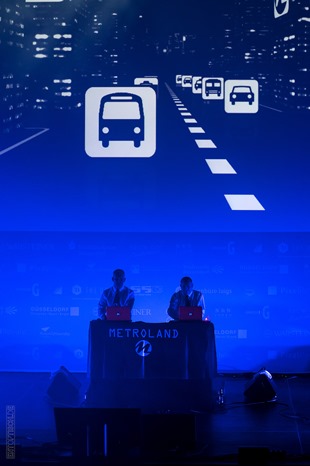
With a more minimalist set-up, METROLAND were the perfect act for the weekend to honour the artistic legacy of Düsseldorf. Their second long player ‘Triadic Ballet’ was a conceptual audio installation themed around das Staatliche Bauhaus. The perfect realisation of Walter Gropius’ theory of uniting art with technology, with a combination of crisp electronics and art school visuals, the Belgian duo gave a wonderful presentation that was appreciated by all those present including Andy McCluskey and Rusty Egan.

Closing the event, escapist trio DELTA turned out to be the most disappointing of all the bands participating, their landfill indie totally at odds with the weekend’s ethos. Meanwhile Düsseldorf duo BAR fared much better, their synth laden dreampop augmented on occasion by singer Christina Irrgang’s use of a recorder. However, these two acts highlighted the lack of a clear headliner to finish the weekend on a true high.

Overall though, the ELECTRI_CITY_CONFERENCE was fabulous weekend with representation from both sorcerers and apprentices of the Düsseldorf scene. With the English translation of the ’Electri_City_Musik_Aus_Düsseldorf’ book due in 2016, the story of what the city has contributed to the world can only spread further.

French icon Jean-Michel Jarre said recently: “Electronic music has a family, a legacy and a future…” and there was nothing more truer than over these three days by der Rhein.


ELECTRICITYCLUB.CO.UK gives its warmest thanks to Rudi Esch and Carsten Siewert

Additional thanks to Tom Steinseifer, Roger Kamp and Tapio Normall for the use of their photos

‘Electri_City: The Dusseldorf School of Electronic Music’ is due to be published in English by Omnibus Press sometime in 2016

The ‘Electri_City – Elektronische_Musik_Aus_Düsseldorf’ compilation is released by Grönland Records.

http://www.electricity-conference.com/

https://www.facebook.com/ELECTRICITY.Conference


Text by Chi Ming Lai
Photos by Chi Ming Lai except where credited
8th November 2015

« Older posts Newer posts »