Author: electricityclub (Page 17 of 434)

“I don’t like country & western, I don’t like rock music… I don’t like rockabilly! I don’t like much really do I? But what I do like, I love passionately!!”: CHRIS LOWE

“Good taste is exclusive”: NICK RHODES

HISTOIRE DE COEUR Lost French Synth-Pop 7’ers & Euro-Bombs

If the Yé-yé girls of yesteryear like France Gall, Sylvie Vartan, Jacqueline Taieb and Françoise Hardy had been born 20 years later and had access to producers with synths and drum machines, what would they have sounded like?

A new compilation ‘Histoire De Coeur – Lost French Synth-Pop 7’ers & Euro-Bombs’ released by Caroline True Records goes part way into realising that fantasy, although as the press release says, these Quarante Cinqs were “Virtually neglected until now – only the heads knowing…” – featuring singles released between 1980 to 1989, this was a period “celebrating the chanson of the past” while “updating that for a new generation and a new dancefloor.”

Curated by self-confessed Francophile John Kertland of Caroline True Records with sleeve notes by him too, one thing that certainly stands out is the sense of fun and adventure. This European outlook shines brightly from the dull Britain of that time with the Wednesday afternoon and Sunday closing that those narrow-minded culturally-stunted Reform supporting types want to return to… as Kertland puts it himself, this was “A golden age of Synth-Pop – Post-Disco… inventing the future… Delving into a relatively unexplored Niche French Music”.

Opening with the title song by Corinne Tell from 1987, ‘Histoire De Coeur’ offers tense synth funk with digital slapped bass and synthetic strings. From the same year and shaped by similar percolating digital bass, Fanny Forest’s ‘Les Lolitas Des Magazines’ makes use of DX7 pan pipes and brass stabs to embellish an archetypical Europop tune. Meanwhile, Fabienne Stoko’s cute ‘Poupée’ takes its lead from Belgian-based poppet Lio in its quirky rhythmic stutter but twists with its gothic choir.

From 1989, the Italo disco flavoured ‘Sauve-Moi’ from Valene comes with barrages of Simmons drums and the spring of real slapped bass while continuing in the Italo vein, especially in its keyboard lines, is 1984’s ‘Illusion’ by Kelly Way. The oldest track and of 1980 vintage is Sonia (not the lass from Liverpool!) whose ‘Sur Ma Musique’ has its own character but naturally harks back to the previous disco era despite the abundance of synths.

Opening the second half, the moody ‘Amour Combat’ by Tangui recalls German songstress Sandra’s ‘Stop For A Minute’ which also came out in 1987. Technology was moving at an unbelievable pace in this era and the amusing ‘Meteo’ by Praline Et Toni captures a love connection between an Apple Mac speech synthesizer and an amorous lady. Another duet and first released in 1984 by French disco label Carrere, the sweaty eponymous ‘Generation Egoiste’ combines deep male vocals with a Jane Birkin-like wispiness over a “Relax-ing” rhythmic pump and a DMX snap that is all very “Tout Tout D’Suite”!

From that best year in pop music, 1981’s ‘Vacances A Deux’ by Kira is the most synthpop track on the compilation and fans of Elli & Jacno or Lio’s ‘Amoureux Solitaires’ which was written by the duo will love this. An outlier comes from actress Geraldine Danon who plays synths on her own instrumental ‘Electric Eyes’ and it is her that adorns the album front cover of this collection; incidentally it was the B-side to her single ‘Dans Mes Yeux’ which was co-written by Italian singer Roberto Zanetti aka Savage which also deserved inclusion… maybe for Volume 2? Closing with ‘Faites Vos Jeux’, Nani Antoni gives it the full melodramatics over the smoky synthetic backing.

It would appear most of these tracks have been transferred from the original vinyl singles so crackles abound but this was before the mass takeover of CD, so likely to have been how these songs would have been heard for the first time. However, this does not spoil the enjoyment and there is a warm nostalgic listening vibe that is the antithesis of the fake deliberate “in the box” distortion that many modern synth acts employ to sound edgy but who end up unlistenable!

More “Euro-Bomb” than “Synth-Pop”, if you enjoyed the Ace Records compilation ‘C’est Chic! – French Girl Singers Of The 1960s’, then ‘Histoire De Coeur – Lost French Synth-Pop 7’ers & Euro-Bombs (1980-89)’ will appeal in its gathering of some charming electronically-driven takes on that elegant chanson style.


‘Histoire De Coeur – Lost French Synth-Pop 7’ers & Euro-Bombs (1980-89)’ is available as a vinyl LP and CD via Caroline True Records from https://carolinetruerecords.com/collections/frontpage/products/histoire-de-coeur-lost-french-synth-pop-7-ers-euro-bombs-1980-89 or https://ctrmusic.bandcamp.com/album/histoire-de-coeur-lost-french-synth-pop-7-ers-euro-bombs-1980-89


Text by Chi Ming Lai
29th July 2025

BACK TO NOW: NOW ‘82 Yearbook with Ian Wade + ELECTRICITYCLUB.CO.UK

Hosted by PopRambler Iain McDermott, ‘Back To NOW’ is a podcast that celebrates all things related to the variously compiled world of pop and how our favourite compilation albums shaped our lives and now fondly stand as time capsules for our own musical journeys.

Chi Ming Lai of ELECTRICITYCLUB.CO.UK was honoured to be invited back to Back To NOW after his debut appearance in 2024 about the ‘NOW ’81 Yearbook’. On this new episode, he joins Ian Wade, author of ‘1984: The Year Pop Went Queer’, to discuss the ‘NOW ’82 Yearbook’ 4CD set and its companion 3CD set of “Extras”.

The start of 1982 saw a continuation of the amazing Autumn of 1981 with the third singles from albums by SOFT CELL, OMD and JAPAN all hitting the Top5 while the synthesizer pioneers who were ahead of their time like KRAFTWERK and THE HUMAN LEAGUE saw tracks first released in 1978 become Top10 Hits with ‘The Model’ notably dropping down the charts before getting to No1. There were chart breakthroughs for SIMPLE MINDS and ASSOCIATES while YAZOO, CHINA CRISIS, BLANCMANGE, A FLOCK OF SEAGULLS and TALK TALK impressed with their debut long players.

However later in the year, there was a backlash against the synthesizer as exemplified by the Musicians Union tabling a motion to ban synthesizers from recording and live performance. Meanwhile musically, the fiddle and banjo romp of ‘Come On Eileen’ by the Celtic soul incarnation of DEXY’S MIDNIGHT RUNNERS becoming the biggest selling single of 1982 in the UK gave indicators that public may have had enough of all things electronic.

But you cannot halt progress and advances in music technology like the Linn Drum Computer and the Fairlight CMI were to become the perfect tools for producers like Trevor Horn and Tony Mansfield to continue adventures in modern recording with DOLLAR, ABC and SPANDAU BALLET as well as Captain Sensible and Mari Wilson among the beneficiaries. Meanwhile DURAN DURAN truly became the teenyboppers band of choice with their ‘Rio’ album eventually going platinum but if the year before had been 1981 B.C.C. – before CULTURE CLUB, then the end of 1982 saw the emergence of the two Georges, O’Dowd and Michael.

Of the year, the Now Music official website said: “1982 saw the first huge hits from a wealth of new artists including CULTURE CLUB, WHAM! and TEARS FOR FEARS, as well as an incredible line-up from artists who had established their chart presence in the prior 18 months and would produce some of the greatest tracks of the decade; DURAN DURAN, SPANDAU BALLET, ABC, HAIRCUT 100, SOFT CELL, THE HUMAN LEAGUE, and a newly solo Adam Ant.”

In a lively conversation, Iain McDermott, Ian Wade and Chi Ming Lai cover topics as diverse as the importance of Smash Hits in their coverage of pop, predict the possible inclusions for the upcoming NOW ‘Vault ’82’ collection and the unlikely trio of chart toppers from West Germany, thus proving that despite it being the country that seeded innovative electronic music, its cheesy home-grown Schlagermusik could also unexpectedly crossover as grandparents bought their one single of the year!

As Smash Hits Editor David Hepworth said in their end of year review, there were “no patterns” to pop in 1982.


ELECTRICITYCLUB.CO.UK gives its warmest thanks to Iain McDermott

Tune into past episodes of ‘Back To NOW’ via https://linktr.ee/poprambler

https://shows.acast.com/backtonow

https://www.facebook.com/poprambler

https://www.instagram.com/poprambler

https://www.threads.net/@poprambler


Text by Simon Helm
25 July 2025

Lost Albums: PolyDROID Machines Of Pure & Loving Grace

PolyDROID is the solo electronica adventure of Irishman Brian O’Malley. First released in November 2013, ‘Machines Of Pure & Loving Grace’ was the project’s long playing debut.

An explorative record capturing a chilling cinematic grandeur within its bleeps, blips, arpeggiations, blistering synth riffs and swelling synth pads, ‘Machines Of Pure & Loving Grace’ was something of a creative distraction for O’Malley who in parallel was becoming big news as a TV and film director.

Since his debut feature film ‘Let Us Prey’ in 2014, O’Malley has gone on to direct episodes of AMC+ Spaghetti Western ‘That Dirty Black Bag’, ‘The Ex-Wife’ for Paramount+, Amazon spy drama ‘Alex Rider’ and Channel 5’s ‘The Cuckoo’, with the MGM+ series ‘Nine Bodies In A Mexican Morgue’ being his most recent work, soon to be broadcast on the BBC.

Opening ‘Machines Of Pure & Loving Grace’ and using commentary on the development of transistors and semi-conductors, ‘Rectification’ set the scene for this celebration of technology with a ‘Shine On You Crazy Diamond’ styled introduction, before seguing into the crystalline melodic hypnotism of ‘Not Too Neat’. Enhanced by icy vox humana sound design heard on Gary Numan’s ‘The Pleasure Principle’, as the tension built around ‘Ode To An Android’, the ominous surroundings were the backdrop to a celebration that equally asked questions.

‘Day Of Rest’ brought ivories into the soundscape of spacey sweeps and buzzy sequenced synthbass before climaxing into rhythmic barrage of sound penetrating the core. Bringing vocoder into an electro backdrop, ‘Enhance 224’ was sparse but no less dramatic while the pulsating ‘You Are Transparent’ whirred and collided before O’Malley’s deep filmic mind was reflected in the almost gothic ‘Only A Cell’. Closing with ‘Ode From An Android’, this offered a haunting reverbed piano-shaped only rendition ‘Ode To An Android’ but then taken over by the icy vox humana machine where the message ended.

Released as limited edition CD and later appearing only for a short period on streaming platforms in 2023, ‘Machines of Pure & Loving Grace’ totally falls into the category of a Lost Album. With it now being made available as a 2025 version in high quality audio formats on Bandcamp, the time was apt for ELECTRICITYCLUB.CO.UK to speak to Brian O’Malley about his almost-forgotten PolyDROID debut.
How did the idea to do a solo cinematic instrumental come into fruition?

I had done a lot of music in an electronic band as a teenager in the second half of the 80s with my friends, initially under the name MAN SERIES and then as THE PRESIDENT LIPSTICK, but that creative musical avenue came to an end in the early 90s and I found myself attracted to film directing.

My directorial career subsequently blossomed and I became a successful TV commercial director, eventually moving into feature films. This took me through my 20s and most of my 30s until the 18th of March 2008 when I discovered Jean-Michel Jarre was playing ‘Oxygene’ live in the Irish National Concert Hall in Dublin. I managed to buy one of two remaining tickets and I was totally blown away. I came home after the gig inspired to make electronic music again after a 17 year hiatus. I immediately went online, bought the Arturia Collection and a MIDI keyboard, and I never looked back. I fell back in love with making music, and I found making music alone really suited me.

The decades of music listening I had absorbed from many genres found its way into my music. It was quickly obvious to me, that by way of osmosis, I had become a far more discerning and capable composer than I had been as a teenager. And as I was obsessed with films, listening to a lot of soundtracks, these compositions tended to be very cinematic. I also pretty quickly found myself drawn back to hardware synths and I started to buy up a lot of the synths I had lusted after as a teenager.

Inspired initially by the immediacy of soft synths and then to the tactile inspiration of hardware synths, I created the PolyDROID name and released my first album ‘Machines of Pure & Loving Grace’ on Cold Beats Records in 2013. That happened really easily. I was posting music on Facebook and they approached me asking if they could release an album. So an almost 2 decade hiatus from music creation kind of exploded into a fully finished album with a strong central theme throughout, which made it quite cohesive.

Unsurprisingly, Vangelis and John Carpenter are big influences on ‘Machines Of Pure & Loving Grace’, were there particular works you loved?

I think my number one inspiration in both music creation and film making is ‘Blade Runner’, followed closely by ‘Once Upon a Time in the West’. I discovered ‘Blade Runner’ on VHS when I was around 12 years old and it had a massive impact on me. It disturbed me greatly but I was also mesmerised by its singular beauty. I rediscovered it when the “Director’s Cut” was released in 1992, by which time I was in Art School, and it entered my life again in a very big way. It has never left me and remains an incredibly important work of art in my life. Through ‘Blade Runner’ I discovered Vangelis, and through cinema I discovered the likes of John Carpenter and my favourite composer Ennio Morricone.

Ennio’s inspiration to me has been his use of melody, but in terms of electronic composition, Vangelis and Carpenter used synthesizers in a way that tapped into the strange and melancholy, creating a sense of an authentic otherworldliness that I found mesmerising. My personal John Carpenter favourites are ‘Escape From New York’ and ‘Halloween III’. I find both of these have a stark, cold and apocalyptic atmosphere but they’re not without emotion. Somehow the repetitive synth sequences weave in between very simple but quite emotive melodies and chord changes that take you on an uncomfortable but often very reflective journey. Vangelis is all about ‘Blade Runner’ for me, but I do enjoy pretty much everything he did in that era with particular favourites being ‘Pulsar’, ‘To The Unknown Man’ and ‘La Petite Fille de la Mer’.

Given your background as a director and writer, had ‘Machines Of Pure & Loving Grace’ been conceived as a Sci-Fi short story at any point?

I actually had never considered that, but now you’ve said it, and reflecting on the themes that it covers, that’s a really interesting idea. The challenge with Science Fiction always is – how do you bring something to the screen that matches the ambition of the idea? There’s a reason whilst amongst the tens of thousands of sci-fi movies, there’s only a handful that resonate and have stood the test of time. Of course a short film doesn’t have the same weight on its shoulders as a feature film, but my mind always pulls me toward feature length work, so now you’ve got me thinking…

So “The individual is only a Cell”?

This is taken from the George Orwell book ‘Nineteen Eighty Four’. O’Brien uses this analogy to describe the party’s philosophy on power. It’s the idea that the individual has no power. But many individuals working together on a single goal become a far more powerful entity. I found that really intriguing because the concept leaves little room for the self. It requires everyone to be aligned in a single goal or belief in order to effect the change that the whole is pursing. Should one person become unaligned, or disagree, they can be ejected and deleted with little change to the whole.

And whilst the album is now 12 years old which is pre-AI, people had already begun to live completely separate lives on social media, which in itself is an entity made more powerful as its numbers increase. And whilst social media has allowed us all to meet people we wouldn’t have otherwise, and for some of us it has enriched our lives, the fact is we’re all serving a monolithic corporation who mines our information for its own benefit. Big Brother is in our hands and we invited it to into our homes.

But going back 12 years, this disconnect from real life and a decreasing desire to show compassion or simply politeness to strangers, which I saw filter out into the real world, led me to wonder what would that do to us in the long term as individuals sat alone at our keyboards? Would we find, as decades passed, as individuals we were experiencing an absence of real world compassion and social interaction, and come to look for that compassion and love by artificial means? Would we know if the people we were interacting with on line were even real? And would my generation find ourselves in our 70s and 80s, which will be the mid-to-late 21st century, being cared for and shown compassion and consideration by things that aren’t alive in the flesh and blood sense?

This is all pretty bleak dystopian stuff, and I’m a very positive person, but I do think these kind of ideas are somewhere in our future in some shape or form and serve as great sources of inspiration for all kinds of art. In this instance, it inspired the themes of my album.

Which was the key track for you, the one that enabled everything else to fall into place?

‘Ode To An Android‘ was the track that felt like a strong centre piece to hang everything else on. When I play live, I usually end with that because it’s pretty anthemic and has pretty epic end to it. It’s a track that evolved as I played live and I could see how audiences were responding. So it eventually became a more extended track, which I’ve included in the 2025 edition as the ‘Sentient MiX’. I consider it to be the best and most complete version.
Its origins are from a job I was doing in Buenos Aires. I had this very modern, stark white hotel room and this brand new white Apple MacBook, and the whole environment I returned to in the evening felt very sci-fi, contrived, and a little cold. I came up with that bassline, which was quite complex and playful compared to anything I’d done before or since, and the rest of the track flowed. I do wonder if I hadn’t been away at the time and staying in that room would the track have ever happened? I’m inclined to think not as my experience is that creativity is often a direct result of your surroundings.

Was there an element of storyboarding in the way you did the running order? I say this because the ‘Android’ odes come in two variations, at the end and second like a signature theme that appears after the first scene in dramas and comedies?

Yes, definitely. As there are no lyrics in the traditional sense, I wanted it to at the very least feel like something that was taking you on a journey in the musical and tonal sense. And I hoped that as a whole it would feel like you’d experienced an arc of sorts. The final track, ‘Ode From An Android’, was intended as a response back from said Android, speaking to us, as humans.

You can just make out the words spoken in the fade out which are “nothing will die, no never, nothing will die…” – these are part of the words spoken to Joseph Merrick by his metaphysical Mother in the final moments of David Lynch’s film of ‘The Elephant Man’. It always felt like he was drifting to another plane, where he would continue to exist without the pain he had suffered whilst he was alive. I found it very moving and liked the idea of an artificial being, which isn’t bound by time, life or death, saying these words back to us, telling us organic organisms that in some form we will continue to exist.

I don’t believe in an afterlife, but energy never ceases to exist. So in some way, as the energy in a wave or the wind in a storm, we will continue to exist. I was exploring the idea that in our final moments an artificial being would understand that concept, and may sympathise with the ending of a person as conscious life form, choosing to ease us into that final transformation with some tenderness. It’s the idea that the artificial lifeform, which could simply be turned off, believes that we as humans have some sort of existence beyond our physical death.

A number of classic vintage synths are listed in the credits, what particular ones were you finding the signature textures that you desired?

At the time I owned a Roland Jupiter 8 and System 100 (101 and 102 modules), which played a big part in the sound. I also heavily used my Jupiter 4 and my Korg Monopoly, both of which I still own.

But at that stage, the Jupiter 8 or the Jupiter 4 tended to be the synths I started a track with. The Jupiter 8 is of those perfect synths, which is known for its bright, 80s pop sound. I discovered through the use of cross modulation, detuning and the layering of sounds in Dual Mode, it could become a very aggressive and oppressive sounding behemoth, akin to what we associate the CS80 with. Its covered in candy coloured buttons and orange graphics, but there’s a darker personality in that machine which I found not just really inspiring, but incredible versatile. Unfortunately I was forced to sell it some years back for financial reasons, but I got a lot of use from it.

The Jupiter 4 on the other hand is the most unique of the Roland Jupiters and has an almost organic quality to it. Despite its single oscillator and only four voices, it has a remarkable presence and it’s without a doubt my favourite synth of all time. My wife bought it for me and I’ll never part with it.

I now find myself with a very nice collection of vintage and reissue synths – Roland Jupiter 4, SH-101, Juno 60, Multimoog, Korg Monopoly, MS-20 Module and MS-20 Mini, 700s FS, Sequential Pro One, Oberheim OBX, ARP Odyssey and 2600 FS. It’s a formidable collection of synths, which I’m very fortunate to own.

Are there any favourite tracks for you on ‘Machines Of Pure & Loving Grace’ or is it a single body of work to you that can’t be separated?

When I wrote the album, ‘Ode to an Android’ was my favourite. But with the passage of time, the track that resonates with me the most is ‘Enhance 224’ (‘Blade Runner’ reference). There’s a melancholy to it which really speaks to me and it’s the one track that I listen to and wonder where the ideas came from. I don’t recall writing the track and I’m surprised by many of the choices. I wonder what brought me to that mindset and how I could get back there? I also enjoy the drum programming, which may have been influenced by the KUEDO album ‘Severant’, and which I feel contrasts the mournful tone nicely. And within the machine music is a very gentle and musical melody which I think has a certain sadness to it.

Whilst I do see it as a single body of work, I have at times dropped back into it and find I can play it in almost any order and enjoy it. I think the tracks stand on their own two feet, even ‘Ode from an Android’, but as a whole they feel greater than the sum of their parts.

‘Machines Of Pure & Loving Grace’ was initially released as a limited edition CD of 150 but since that time, things have changed considerably and you put the album on streaming services in 2023, what are your thoughts on how entertainment and art is now consumed?

When I first released it and it had that CD run, it felt very much like an album wasn’t a legitimate release if there wasn’t some sort of physical release to support it. I don’t think I feel that way anymore, though I do worry that music is now so easily accessible, and consumed without any real thought given to it, that it’s difficult to find an audience that takes the time to listen to music that isn’t part of the mainstream.

Having said that, I’ve come to understand the power of Bandcamp in this respect, which has become a kind of shop front for those not represented by labels. And that feels very legitimate. And now that I’ve put the 2025 version of the album up on Bandcamp and removed it from Spotify, I feel that it now has a home that’s alive and waiting to be discovered by people who are seeking out new music rather than using it as background distraction. That’s very exciting.

In terms of TV and cinema, I think streaming has created a whole new world of TV which has meant the standard of TV now is very high. But I do think for feature films, it somehow diminishes the value of a film. If a movie is never released in the cinema, do the public consider it a ‘real movie’? I’m not sure they do, I think they just see it as content. I was very fortunate that my two films, ‘Let Us Prey’ and ‘The Lodgers’ had cinematic and physical releases, so they are very much real films. But if and when I do a third one, will it only ever exist on a streaming service? And if so, will it simply disappear from peoples’ thoughts after a few weeks? The next few years will be very interesting in this regard.

With the success of your directing career since the release of ‘Machines Of Pure & Loving Grace’, your own music has taken a backseat, but have you been slowly working on a follow-up?

It took so much of my focus to break into TV that I felt if I moved my attention back to music I might falter, so I allowed it to take a back seat for a number of years. In the last few years I’ve been fortunate to get pretty consistent work doing TV drama and I once again feel that itch to make new music. This interview for ELECTRICITYCLUB.CO.UK and reissuing my first album on Bandcamp has inspired me to get that second album finished and try release some other work I did in the past which never saw the light of day.

The PolyDROID catalogue will expand over the coming months and I’ll endeavour to once again make it an active part of my creative output. I also have a fully complete album with my friend Aidan Casserly (MAN SERIES/EMPIRE STATE HUMAN) under the name of KuBO, which is song-based, dark electronic music and some of the best music I’ve ever made. We released a 7” single with Peripheral Minimal Records called ‘This Desolation’ some years back, and an EP on Cassette called ‘Subway Subconscious’, but I hope we get the full album released soon.

I’ve also been very fortunate to have met a group of likeminded people through the 2016 BLANCMANGE documentary ‘You Keep Me Running Round & Round’ and that has evolved into a sort of musical kinship. Myself and Aidan have a musical bond and friendship with Mike Wilson (100 POEMS / producer of the BLANCMANGE doc), Peter Fitzpatrick (CIRCUIT3) and Brian Christopher (AMALGAMATED WONDERS OF THE WORLD), all of whom are magnificent Synth Lords. On an almost daily basis, through a group chat, we share and encourage each other in our various musical projects. It’s very inspiring but also very supportive. There’s a kindness in the group which I think a lot of men never experience, and I’m sincerely grateful for it.

As a director, does your mind ever instantly clock what music you want accompanying the scene? Which composers or artists, when in film or pop have impressed you in the last 10 years or so?

Often I’ll find the kind of music I think is right for a project while I’m working on my shot lists and storyboards. I find that having the tone of the music you have in mind playing whilst visualising a scene really helps you to bring the project alive, whilst also helping you to avoid conventional or straightforward storytelling techniques. I’m always drawn to directors like Michael Mann or Brian DePalma, who are very much about designing their scenes and set pieces. And having a piece of music or a sound in mind really helps me to look at a scene or a set piece from a fresh perspective and bring it to life in my head in a manner that I may not have otherwise considered.

I’ve been fortunate to work with some great composers on my films and TV series, most of whom I’ve worked with more than once. Steve Lynch did ‘Let Us Prey’ and ‘The Cuckoo’, whilst Stephen Shannon did ‘The Ex-Wife’ and ‘The Lodgers’ (alongside David Turpin). Other artists I’ve worked with only once but hope to work with again are Raffertie on ‘Alex Rider’ and Chris Roe on ‘Nine Bodies in a Mexican Morgue’.

It’s great when you find people who understand what you want and can deliver on that. Whilst I have a very open mind regarding instrumentation in my directorial work, I have tended to veer towards scores with heavy electronic elements. Even scores like ‘The Lodgers’, which is very organic, was still processed through tape delays and samplers to give it a very strange, otherworldly atmosphere.

When I look on my work as a whole, whilst each soundtrack has its own personality, there is a collective cohesiveness to much of it that I like to think is because I’ve steered it somewhere that reflects my voice and intentions as a director. But also because of my background in music and specifically synthesizers, I can give feedback that encourages exploration from a slightly different angle.

Whilst doing ‘The Ex-Wife’, we were struggling to find the right kind of music for the climatic car chase. The bigger we made the music, the less effective the sequence became. I recall saying to Stephen Shannon the composer, try something that’s in contrast to the fast action, something midtempo with Oberheim OB8 pads and a bit of TR-808. Something more tonal than action oriented. That’s not really a music note, what does that even mean? But being a brilliant composer and fellow Synth Lord, he got the vibe I was reaching for and he quickly returned the perfect piece of music.

When I have those moments as a director I’m really grateful for the massive role electronic music and synthesizers have played in my creative life. Without it, I’m not sure I would have found my voice as a film director.

PolyDROID returned to the live arena at ICE MACHINES in May and you are back for another event in August?

May 10th 2025 saw Brian Christopher of AMALGAMATED WONDERS OF THE WORLD launch a new live musical collective called ICE MACHINES which featured PolyDROID, CIRCUIT3, EMPIRE STATE HUMAN, 100 POEMS and AMALGAMATED WONDERS OF THE WORLD.

We’re following up this first successful show with another live show to fomally launch an accompanying album ‘ICE MACHINES: The Album – For The Joy of Synths & Friendship’ which was released on July 11th. The 11 track album features an original track and a cover version from each artist and is available now exclusively on Bandcamp. The PolyDROID contribution is a cold and desolate cover of the Simon & Garfunkel classic ‘The Sound Of Silence’, plus an original track inspired by a certain Number Six.

So there will be a live performance of the entire album on Saturday August 9th at The Bernard Shaw in Dublin.


ELECTRICITYCLUB.CO.UK gives its warmest thanks to Brian O’Malley

‘Machines Of Pure & Loving Grace’ is available as a 2025 download edition containing an extended Sentient Mix of ‘Ode To An Android’ and the updated iX MiX of ‘You are Transparent’ direct from https://polydroid.bandcamp.com/

The next ICE MACHINES takes place on Saturday 9th August 2025 in The Racket Space at The Bernard Shaw, Cross Guns Bridge, Drumcondra, Dublin 9, D09 XW44, Ireland – playing live will be PolyDROID, CIRCUIT3, EMPIRE STATE HUMAN, 100 POEMS and AMALGAMATED WONDERS OF THE WORLD while there will be a DJ set from ELECTRICITYCLUB.CO.UK – go to https://buff.ly/JKnwvKC for free VIP Guest List 🎤🎹☘️

‘ICE MACHINES: The Album – For the Joy of Synths & Friendship’ is available digitally on Bandcamp at https://icemachines.bandcamp.com/

https://www.facebook.com/polydroid

https://www.youtube.com/channel/UCtSYUCvWizEh2LW3DQ8yDeg

Information on KuBO:

https://peripheralminimal.bandcamp.com/album/this-desolation

https://electricitysupplyboard.bandcamp.com/album/subway-subconscious-ep


Text and Interview by Chi Ming Lai
22nd July 2025

CLAUDIA BRÜCKEN & JOHN OWEN WILLIAMS Interview

Photo by Ray Moody

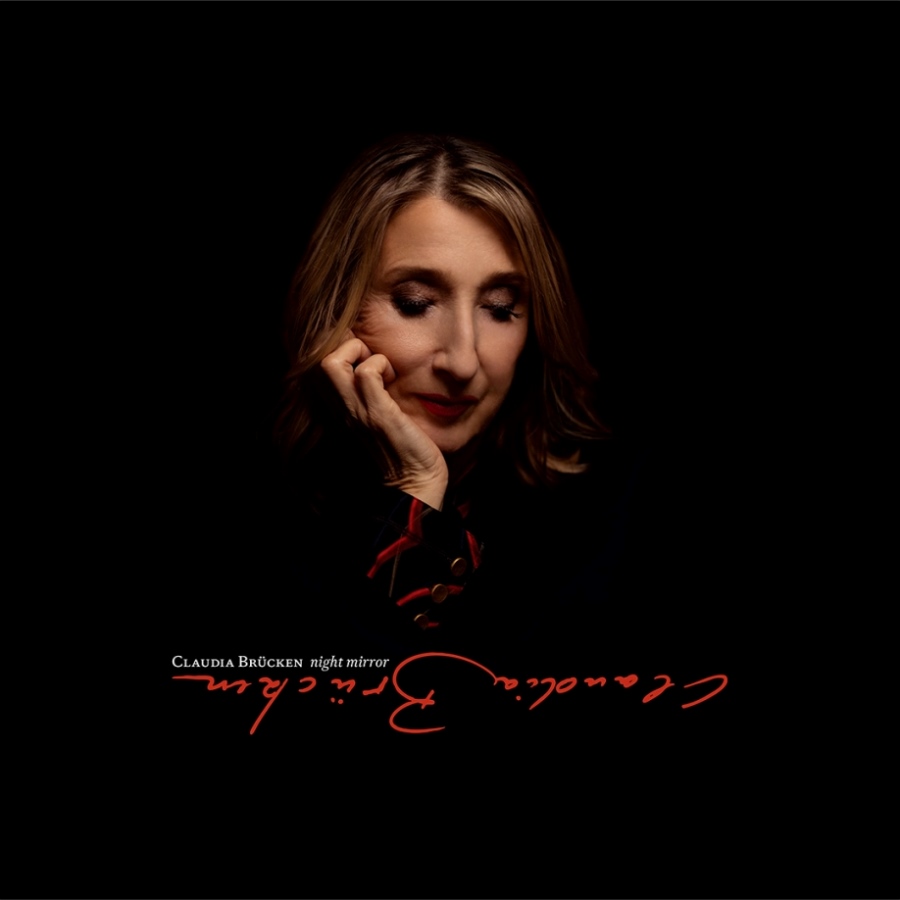
Best known for the mighty singles ‘Dr Mabuse’, ‘Duel’ and P-Machinery’ with PROPAGANDA, Claudia Brücken’s fourth solo album ‘Night Mirror’ sees her somewhere “Between two worlds, looking for answers in the shadows.”

Working again with John Owen Williams for the first time on a full-length long player since the 2014 solo album ‘Where Else…’, in the decade long interim, Claudia Brücken released ‘Beginn’ with Jerome Froese and ‘The Heart Is Strange’ with Susanne Freytag and Stephen Lipson as xPROPAGANDA.

Employed as an A&R executive as well and at the BBC for many years on their radio sessions, John Owen Williams’ production credits have included BLANCMANGE, THE PROCLAIMERS and THE HOUSEMARTINS. His more traditional style of songwriting saw Brücken adopt the acoustic guitar for ‘Where Else…’ but while similar colours shape the nocturnal moods of ‘Night Mirror’, there is a stronger electronic component than its predecessor for a record which showcases “the Claudia you know, and one that you don’t yet know”

Claudia Brücken and John Owen Williams chatted to ELECTRICITYCLUB.CO.UK about how the cocktail of electronic and organic textures came to sonically define ‘Night Mirror’.

Photo by Anton Corbijn

You both worked together on ‘Where Else…’ and it went well enough for you do another record, how would you describe your creative dynamic, are you sitting in a room together?

Claudia: It starts with me and John meeting up, I travel over to his place where at the end of his garden, he has a studio. We work on songs mostly from 11 until 6…

John: I’ll play Claudia some ideas and she’ll say “no”, “yes” OR “maybe” *laughs*

But if she says “I really like that”, we’ll dig in deeper and look at the music to make it so it’s unique to us…

Are you writing organically because ‘Where Else…’ had this acoustic flavour?

John: The songs mainly originate on acoustic guitar and then become transposed into electronica. So the process wasn’t that different from ‘Where Else…’ except the instrumentation was a bit different.

So that was over 10 years ago, how have your approaches evolved and what is ‘Night Mirror’ reflecting?

John: ‘Night Mirror’ is lyrically about reflection and living in the present and looking forward to the future in a nutshell. I would work late into the night with the ideas that had originated in the daytime and then pinged them over to Claudia at 3 o’clock in the morning so she was cognizant that we were changing things…

Claudia: Yes, often when you pinged, I was awake and then I would listen to the songs at that point, so they are like “night objects”.

John: We inhabit these songs, we live inside them.

How long was this process because the xPROPAGANDA album ‘The Heart Is Strange’ took a while, was this a shorter gestation period?

Claudia: John and I have been working together all these years and we enjoy it, but after ‘The Heart Is Strange’ which John also involved in on as a writer, we just kept going. We were wondering whether to continue writing for xPROPAGANDA, but then we just thought that what we were doing, it was a Claudia Brücken album.

John: We’ve been working on ‘Night Mirror for about 2 years.

2 years is quite short for making an album these days! *laughs*

Claudia: Yes, John really knows how to push a project forward and keeps the eye on the ball! *laughs*

How did this become an album of “the Claudia you know, and one that you don’t yet know”?

Claudia: There are some really personal lines that really describe some parts of me, so this record is more personal in that sense compared with xPROPAGANDA or an electronic album…

John: There are different styles while all the songs inhabit the electronic world, there are different types of songs within it, they are unlike anything Claudia has ever done before.

I agree, ‘Night Mirror’ has a traditional feel but with strong electronic embellishments which is quite unusual today…

Claudia: That’s very interesting you say that…

John: Our references in electronica are quite different, mine started with Walter Carlos ‘Switched On Bach’ and in the 70s, I worked with Bob Margouleff and Malcolm Cecil who were part of TONTO’S EXPANDING HEAD BAND, I promoted their album ‘It’s About Time’, they had the first polyphonic analogue synthesizer which powered ‘Superstition’ and other Stevie Wonder hits. Also Edgar Froese ‘Epsilon in Malaysian Pale’ was a big influence on me and then I managed BLANCMANGE as well as producing quite a few tracks. Claudia is more KRAFTWERK…

Claudia: Yes, just different worlds.

It’s a highlight of the album but why are there ‘Shadow Dancer’ and ’Dancing Shadow’ variations of the same song? Was this like a ‘Jewel’ / ‘Duel’ situation?

Claudia: I’ve always been a fan of remixes, songs can go this way or that way. So we had ‘Shadow Dancer’ and then John, you made a different version?

John: Phil Bodger who mixed the album came up with a new riff that became the heartbeat of ‘Dancing Shadow’. It gained a new life for itself and had a heavier bass synth linked to it… it was so good that it was worth a different approach. It is basically the same track…

Claudia: …yes, but more of a laid back angle. It’s almost got a bit of reggae in there…

Yes, ’Dancing Shadow’ has this dub approach?

John: I worked at Island Records and was quite influenced by ASWAD, BLACK UHURU and Bob Marley. Quite a few of the songs on ‘Night Mirror’ have a reggae lilt to them, ‘Funny The Things’ has got that.

Claudia: When you work at night, you end up approaching things in different ways… we were just exploring all kinds of fusion basically Chi.

‘Rosebud’ is classic driver friendly pop, was it obvious this would be the lead single?

John: We left the releases of the singles off the album to Demon and their promotion team, we felt each song was strong enough.

The opening number ‘My Life Started Today’ has this lovely ‘Satellite of Love’ vibe about, was that intentional?

Claudia: It wasn’t intentional but ‘Transformer’ by Lou Reed is one of my favourite albums. I’ve always liked his deliverance, that “sprechgesang” and it’s something I’m not unfamiliar with. You have influences so that will come out somewhere ad we don’t really sense ourselves in that way.

On a similar theme at the tougher end of the spectrum, ‘Sound & The Fury’ reminds me of THE STOOGES but with an electronic backbone?

Claudia: It’s great that it gives you that sense of attitude.

John: I love ‘Sound & The Fury’, I love my guitar playing on it, it’s so punky… it’s THE CARS meets NEW YORK DOLLS and there’s a bit of HAPPY MONDAYS and NEW ORDER there too.

Claudia: It’s a “don’t give up song”

There are surprises like the banjos on ‘Funny The Things’ and ‘Sincerely’ with its flamenco and flute flavour, yet both become very sequenced in places for some twists, how did these more unexpected mixtures come into mind?

John: Well, Claudia didn’t like the banjo to start with and wasn’t sure it should be there! But I think she’s grown accustomed to it.

Claudia: In the end, I decided I didn’t want to be discriminating against any instruments. I thought that if John really hears that banjo sound at that point, go with it.

John: I had produced a BLANCMANGE track called ‘Why Don’t They Leave Things Alone?’ which my friend Simon Elliston played flute on, so I realised that flute does work well with electronica; he came down to the studio and played on 2 or 3 tracks, and on ‘Sincerely’, it really works.

Claudia: Yes, it’s really groovy, I really like that 70s reference. I like having real instruments and real players, that’s a nice thing.

John: And of course it didn’t harm JETHRO TULL *laughs*

Are those real or virtual orchestrations across the ‘Night Mirror’ album?

John: They’re virtual, I used the Birmingham Symphony Orchestra and it’s fantastic. I played a lot of these string parts and I’m not a trained keyboard player, so these are all sounds that I evolve and eventually find the right status.

It IS amazing what you can get coming out of your computer these days…

John: They sound real don’t they…

‘The Only Ones’ is a pretty pop number with spritely acoustic six strings, bass harmonics, sax and pizzicato sitting over a drum machine, can you tell us a bit about that one?

John: That’s a track that Jason Mayo helped us with, he had a system called Knobula which is advanced polyphonic foot pedals and he helped programme this track with me. It’s got a Vangelis-inspired middle eight.

Claudia: We wanted it to sound a bit like ‘Blade Runner’…

John: It’s like a 50s song with 60s recording techniques, 70s electronica and 80s ABBA harmonies.

Do you have any favourite songs from the album, the ones which give you most satisfaction?

Claudia: I kind of like them all for their stories and the worlds they draw you in. I like ‘To Be Loved’ a lot but it’s ‘Shadow Dancer’ that I really like. But I just like to listen to the album from beginning to end because it takes you into different kinds of zones.

John: ‘Sincerely’ is one of my favourites because it manages to paint an aural picture, the acoustic guitar works well, the electronica works well and Claudia’s vocals are fantastic. That’s something that permeates the whole album, there’s a lot of harmony singing going on, a lot of tracking and stacking of vocals that gives it a unique flavour I think.

It terms of mixing, there is a Dolby Atmos mix alongside the standard stereo, how did the approach differ?

John: David Kosten did the Dolby Atmos mix, I would provide him with 20 stems per track, a lot for these songs are running 150 tracks! There’s a huge amount of tracking going on, they’re all like jigsaws. So he would want 20 different parts and then he would try to replicate them the mixes of the album in Dolby Atmos. When we went down to hear it, it blew our minds away, it just sounds incredible. He has a 12 speaker system in his room, you sit in the middle and it’s like being transported to a different world.

Claudia: It’s a different sound experience, it not something I hear every often, I normally just listen to things in stereo so it’s a very unusual way of listening and I really enjoyed it, hearing what can be done.

As a closing question, have you any thoughts on AI and how if might affect music making in the future, particularly your roles as singer and producer?

Claudia: I have to get my head around it more, it’s unbelievable what it can do really, I want to be quite cautious with it. I have to get to know it more but its mind boggling what it can do, just taking voices so I’m having mixed feelings.

John: It’s frightening but exciting! I don’t want to use it really, I’m quite happy to use my own brain cells to construct the world that Claudia and I share, so I don’t want anything else getting in the way.

Claudia: I like the analogue world.

Are there any live dates planned for ‘Night Mirror’?

Claudia: The album could be performed but there’s no tour planned; I think it’s important people get to know the songs first before we even think about it. But I have some dates with xPROPAGANDA in Germany in December performing ‘A Secret Wish’ and ‘The Heart Is Strange’.


ELECTRICITYCLUB.CO.UK gives its sincerest thanks to Claudia Brücken and John Owen Williams

Special thanks to Stuart Kirkham

‘Night Mirror’ is released by Demon Music Group in a variety of formats including vinyl LP, vinyl LP + 12” EP, CD, CD+EP and Dolby Atmos Blu-Ray, available from https://claudiabrucken.lnk.to/nightmirror

https://www.claudiabrucken.co.uk/

https://www.johnowenwilliams.com/

https://www.facebook.com/ClaudiaBruckenMusic

https://www.instagram.com/claudiabrucken/


Text and Interview by Chi Ming Lai
18th July 2025

HYPERBUBBLE: The Singles Interview

Having spent the last 7-8 years channelling their inner Carter & Cash on their Country Moog album ‘Western Ware’ and documentary film ‘Cowgirls & Synthesizers’, Texan bionic bubblepunk couple HYPERBUBBLE take a step back with ‘The Singles’ to go forwards.

Presenting 17 synthpunk tales of supermarkets, cyborgs and sexy surveillance, HYPERBUBBLE have always embraced the idea of the singular form, whether physically, digitally or virtually…

Focussing on the earlier phase of the catalogue from 2004 to 2016, the collection comes remastered on neon green vinyl and CD via the Texas punk label Kaniption Records. Not only that, the package comes with a HYPERBUBBLE sticker, an 11″ x 17″ poster, 3 club cards, an autographed valentine, and a download code for ‘The Singles’ album + 16 bonus tracks including 7 previously unreleased remixes.

Jess and Jeff DeCuir chatted to ELECTRICITYCLUB.CO.UK from across the Atlantic about cats, 1-800 numbers, secret agents, UFOs and the art of the singles compilation in the fun colourful world of HYPERBUBBLE…

So we are old enough to have been in the era of the 45RPM single at its peak as well CD and cassette singles, but what would you define as a “single” in this streaming era?

Jeff: I think it’s defined as the song you pick to represent the album, so it may not have anything to do with the physical format that it’s on, although some of the songs on this collection have been vinyl 7 inchers. Sometimes the single will be before the album to give an idea of the concept, the cover art and the vibe, something that’s going to be representative.

Jess: It’s the earworm that you can’t get out of your head, it’s definitely representative of the best of the album, the one you want to push up front that might get more airplay.

Jeff: In terms of thinking what Jess was saying, in terms of selecting the songs, you tend to choose one that might be very concise and not one with a long excursion in the middle eight that goes off on an experimental journey! Something that is more in the indie pop realm to send out to represent the album to get that message across quick.

Would you also say the “single” is the song that is perhaps the most “visual” because it’s usually the one you make the video for?

Jess: THAT’S GOOD! I hadn’t thought of that…

Jeff: I’d never thought of that either, when you said that, it made me think of record cover art for the singles releases, that’s the same kind of idea.

It was the “visual” that got me into HYPERBUBBLE through the ‘Candy Apple Daydreams’ video, it’s a catchy song in itself anyway but the video summed up what HYPERBUBBLE were about in that 3 minutes…

Jeff: I think that’s pretty perceptive of you… maybe we were consciously branding and thinking along the same terms. I mean if we were going to do one video, what’s it going to say about the group? There’s the whole cat thing, the espionage thing, the technology, a bit of political messaging woven into the pop lyrics in a subversive manner…

Jess: …solving mysteries! *laughs*

Jeff: Yeah! When we sat down with the directors of the video and threw in our own ideas, influences and concepts. That particular video had everything from the British TV series ‘The Avengers’ to American cartoons like ‘Scooby Doo’ where they’re following paw prints on the floor with a magnifying glass! *laughs*

Jess: There’s something about ‘Candy Apple Daydreams’ that harks back to PINK FILTH, our band before HYPERBUBBLE. There was a song on our pink vinyl album with a lyric that went “Pineapple pinwheel, strawberry sweet surprise”, so ‘Candy Apple Daydreams’ really fits into that whole aesthetic, that bubblegum pop mixed with punk and synthpop.

Jeff: I have a really fun fact about the instruments used on ‘‘Candy Apple Daydreams’, it was done on an Ensoniq EPS that used floppy disks. This particular keyboard had passed through several bands but it started off with MINISTRY, so still had all their drum and bass samples on it. We thought it was really funny all those harsh aggro sounds were now being used to record songs like ‘Candy Apple Daydreams’! *laughs*

At one point though, the keys were getting stuck so we had to take it in to an electronics store… they opened it up and there was all this fine white powder clogging everything up!! We had to spray it out! *laughs*

Jess: YOU NEVER TOLD ME THAT JEFF! I couldn’t wait to get rid of that keyboard, it was too heavy, too big! *laughs*

So was there a reason for ‘The Singles’ album in the sense that you’ve been busy doing the ‘Western Ware’ Country Moog album and the ‘Cowgirls & Synthesizers’ film, it’s almost as if you’re reminding people that for all the fun of your “cowboy” period, you are a synthpop band?

Jeff: Chi! You’ve got that 100% right! It was a refocussing. When I brought the idea up with Jess, she asked the same thing, what is the reasoning behind doing this? My line of thinking was exactly what you said. In more physical terms, when you go to your phone and look up HYPERBUBBLE on any streaming service, the most recent things that come up are the “cowboy” and movie stuff. Our earliest records are all the way at the bottom! *laughs*

We have gone through all kinds of experimental excursions doing soundtracks and actual films and concept records, so ‘The Singles’ is a reframe of the group.

Jess: There was something about having a curated collection or “best of”, we just had our 25th wedding anniversary and I realised the band is about that old as well. This was a good time to take a look back and so people don’t have to search arounds as like Jeff said, things get buried online.

I remember Jeff used to make fun of me when we started dating because I used to always play this cassette tape of SQUEEZE singles that I had since I was a teenager and he said “you know there’s a whole bunch of albums by this band?”; he bought me all the CDs of their albums but you know, I just loved having all those hits singles, memorising all the lyrics… I know we’re not SQUEEZE but this was a chance to do something fun and visually oriented like that. Jeff did the lion share of that on the artwork and even rehashed an old image and made it look cool and new.

Jeff: Different people have different feelings about “greatest hits” records, there are the snobs like me who go “you need to have the entire catalogue” but ‘The Singles’ compilation is the specific mixes that were released as singles and typically, they are different versions and edits from the albums. These sorts of things depend on the band as to whether a singles compilation makes sense. But when we were making ours, we were aware that these singles tend to have Jess on lead vocals, are very short and they tend to be very upfront and structured in very pop format. So it was an easy compilation to make, so then it was “how do these songs hit you when you line them up in order?”, it was about the psychological reaction to it while we were editing.

Jess: There’s no mistake that this is a summer release as well 🙂

Jeff: I think a singles compilation also kind of tells a story, it’s a history album… you can see hear the band starting with more minimal instrumentation and having a more simplified structure and then getting into dance and funk, then getting into instrumental ambience, and then getting into multi-tracked layered vocals like on the ‘Candy Apple Daydreams’ album. You get to hear the band progress.

For the tracklisting, are there rules? Because rules help control the fun 😉

Jeff:  Yes, in editing, we were fitting the maximum you could on one side of vinyl for best sound. Jessica was very good as a sounding board for a lot of that stuff. It was easy at the beginning because we had put those songs out as “singles” in one form or another. There were maybe a couple that didn’t get used for one reason or another, so we were sort of left with what we have, it was easy to do.

Jess: We were lamenting the loss of ‘Another Ride’ which didn’t make the cut…

Jeff: Yes, we did put it out as a digital single when we first released the ‘Solid Pop’ album but I didn’t like the mix, it didn’t feel like it fit sonically… we did one of those things were we tried to re-record it and do an updated version. But we realised what’s really special about these songs is they captured us at a particular stage in our lives where we were really fresh and hot and into these tracks to have the energy to dedicate to them, and the moment is captured there in those recordings. So to redo them, it didn’t have the same spirit. Unfortunately, the bass on that was too loud, that was the biggest crime and it had a synth line that was just hard to make sound good with the rest of the record. So the running order had to have a flow to them as well.

Now ‘Leon’ was a song that people were going to want to have on the record but at the same time, it was not put at the beginning of the album where it should have been chronologically with stuff from the first album because it didn’t fit in with the flow, it was more suited as the denouement for the album. While sequencing, we imagined ‘MoogZilla versus Korgatron’ as the climax, ‘Leon’ as the denouement, and ‘Hot Pink’ as the credits rolling at the end of a movie.

So although the basic album runs chronologically, there are exceptions like ‘Welcome To Infinity’ which ends Side A when it should be after the Candy Apple Daydreams’ songs?

Jeff: Yes, that was the idea of being on vinyl, that’s a semi-instrumental song that fades and goes into wind synthesizer effects so it feels like you have to flip the record over to see what’s next.

Obviously you can’t fit everything on, so was it quite easy to not include the stuff from ‘Dee Rocks The Galaxy’ or the Manda Rin collaboration and focus on just HYPERBUBBLE?

Jeff: I think that’s true, me and Jessica talked about that…

Jess: …I was reflecting on our live shows and what were the high energy songs that we performed again and again, it’s like that so things do need to be streamlined with no collaborations, although that could be a whole other album, collaborations with HYPERBUBBLE *laughs*

Jeff: Something else Jessica said was not to include live versions because it would break the mood of it all being studio. And a singular experience.

One of my favourites is ‘Non-Biodegradable Hazardous Waste Disposal’ which is just a mad song but immediate and very catchy, what was on your mind when you wrote that?

Jeff: It’s actually a politically motivated song in the sense that it was about surveillance and having your communications being easily read… a lot of that is being done in the name of safety but at the same time, I was wondering “who is the person who actually does this job?”, it’s a very voyeuristic job so does it take a particular personality to do it? It’s a little pervy, you’re spying on people. It brought to mind an old movie from 1967 called ‘Attack Of The Eye Creatures’ where these guys are spying on people on their first date and getting too excited about it. It was a sarcastic look at all that.

Jess: It’s funny, when I’m singing it live, I should be thinking about the words more than I am, I kind of just like the beat and the rhythm of it. I think of it more like a toxic relationship so I would emphasise certain words when doing it live with lots of eye connections with the audience and pointing.

Jeff: Yes, it’s being sung like a love song, it’s very methaphorical!

It’s like your ‘Every Breath You Take! *laughs*

Jeff: It really is, it’s the techno version! The key line that lets you know this relationship is possibly being related to technology, it goes “another lonely cybernetic spy, you got a lovely pair of X-Ray eyes”, and then the Brain Wilson line “inside-outside-CIA”

Jess: It’s very Brian Wilson with a nod to THE BEACH BOYS with the “bah-bah-bah-bah” vocals.

What inspired the quite surreal ‘Chop Shop Cop’?

Jess: Mostly Jeff’s brain! *laughs*

Jeff: I think ‘Chop Shop Cop’ was quite surreal in that it was a collage of lyrics that was cut ‘n’ paste to break things down to abstraction. It was made to create imagery and based on 70s television cop shows that we were raised on but also shows like ‘The Prisoner’, this idea of having a number instead of a name. It’s our way to mock and question authority, talking about the ego and the intention of those who are in authority. It was playing around with the theme but also poking a bit of fun.

You mentioned ‘The Prisoner’ and your visual aesthetic on your artworks is very bright colours like ‘The Prisoner’. I’ve been rewatching ‘UFO’ and one thing about that and the way other series like ‘Department S’ are filmed isn’t how you would do it now, it’s like the colours make it otherworldly… was this on your mind when doing HYPERBUBBLE in that it’s as much a visual art project as it is musical?

Jeff: I think ‘The Singles’ cover looks VERY ‘UFO’ and if you look at the chronology of our shows, Jess looks like she’s come off ‘UFO’ and also ‘Jem & The Holograms’, the packaging of those particular products. In ‘The Prisoner’, it’s a very clear-cut difference between the monochromatic clothing Number Six and the various Number Twos are wearing, and the variety of colors in the clothes that the villagers are wearing. They’re in a daze, not really aware and haven’t come down on one side of the fence, they’re just floating around *laughs*

Jess: We watch a lot of Italian sci-fi from the 60s as well. This is all old school now because whenever you say ‘The Avengers’, everyone is thinking of the Marvel Universe. But back in the day, when my parents were dating, they were watching the 60s British cult TV show ‘The Avengers’ and ‘The Prisoner’ so that’s where my love of those came from. I remember when Jeff and I would first watch ‘The Avengers’ and they were all in black and white, and then when they went to colour… WOW! How the colours popped out from Emma Peel’s lipstick to her hair and her cute catsuits, it was a cool look. So it was very vibrant and combined with the whole spies and mysteries thing. I loved that whole idea of retro-futurism, something that harks back to the past but there’s something futuristic about it.

Jeff: Yeah! Atompunk!

So for each of you, which are your favourite three key tracks on this album?

Jess: That’s a tough one! I can start off by saying one of the three is ‘Leon’; that’s for sentimental reasons, Leon was my first cat and Leon was like no other cat. I mean everyone that met that cat saw that this cat thought it was a dog! It would want to follow us around the neighbourhood, he would put his little paw on the door knob, sitting up on a stool and meow until I let him outside. I should not have let him go outside but he was one of those cats! *laughs*

Jeff: I think ‘Synesthesia’ is one song that represents everything sonically, artistically, constructionally and thematically what we’re about, I would go with that, there’s a lot of neat things going on. To me, ‘UFO Beach Party’ I like a lot because the message on that is important, it’s about inclusion and that’s a message that needs to be voiced at the moment. Now ‘Psychic Connection’…

Jess: …aaargh, you stole mine! *laughs*

Jeff: You know, when we were putting the album together, ‘Psychic Connection’ was one that actually had a technical problem in it because it didn’t have a good low end synth playing. So we had to do a little bit of re-recording and remastering, I replayed some bass Moog to give it more body because we couldn’t lose that one! There’s a certain mysterious vibe to it and the delivery of Jess’ vocals is really cool on that.

Jess: I agree totally 100% with that, but ‘Psychic Connection’ was going to be my second, I’m going to claim that. Performing it live, I can’t even describe the audience impact because that was one where I made sure I made eye contact even though I didn’t have my glasses and couldn’t see! As soon as the low end of the synthesizer chords came in, there was just this connection. The BLONDIE influence is there for me when I sing that song, I was channelling Debbie Harry who was one of my heroes growing up. Just the vibe of that song, the mysteriousness and sexiness of it, it’s a very sexy song, telling people to check out my 1-800 line which has innuendos too!

Then ‘Candy Apple Daydreams’ would be another one because for all the reasons you mentioned Chi, it encapsulates us as a band and who we are. It was another one that was so much fun to perform live.

What are you hope you hoping to achieve with ‘The Singles’ if anything? Is it streaming as an entity of its own or is it physical only?

 Jeff: It’s on all the streaming platforms… it’s was what you were saying at the beginning, it’s definitely meant to refocus. There has been a lot of buzz about the film ‘Cowgirls & Synthesizers’ which we’ve spent the past three years promoting. There’s a DVD coming out so that’s another reason for ‘The Singles’ so if people are going to be checking out HYPERBUBBLE online, they’re going to be taken to a wham-bam version of the best of our stuff. It’s directed at newcomers and made for the streaming sites to go to the top of the list or as “newly added”.

Jess: I’m even thinking more grassroots or whatever you say, it’s also for our fans who enjoy collecting our music and having that one stop shop with something you can hold in your hand that has all of these really cool songs by this one band.

Jeff: That’s true what Jess says, otherwise we would have made this just digital….

Jess: …there’s people who enjoy packaging and take good care of their stuff.

Jeff: We wanted that Christmas Day feeling because we remembered buying vinyl back in the day, you open it and shake it to see what stuff comes out. So we really wanted to give the experience of “WOW! You get this sticker and it comes with cards and a poster! WOO!” *laughs*

Jess: That’s really true, this is like an opportunity that probably won’t happen again and because we’re not going to keep recycling these songs… it’s got to be “what’s next?”

I wanted to ask you about this whole notion of “playing the algorithm”, it drives me mad all these acts releasing singles every few weeks in this scattergun approach with no thematic connection to any body of work?

Jeff: There is something about having a body of music in one place, especially when we’re talking about vinyl. When I hear from young and up-and-coming musicians talk about the algorithm, my feeling is you need to go down to the photocopy shop, put up posters and let your friends know that you’re playing at the club down the street and don’t rely on that algorithm! In fact, make it super hip to shun it and snub it! When you are in a small scene, you become a family of like-minded people and then you’ve got a scene that’s yours instead of paying for promotion ads and nonsense like that!  So what I’m saying is, we don’t care, we don’t worry about that! If you look at the pre-sales we’ve been having , we see the names and recognise all of them.

Jess: If you’ve been around long enough and people like you, if they want to find your music, they will find it. But there’s something to be said for getting your music out there, I still feel like “wow!”, I don’t know that the algorithm can help with that at all! This whole notion of the algorithm, I agree with Jeff there… people are just slaves to that and in my mind, it’s not the real world. I mean, this whole how much we’re having to promoting on social media? There should be other modes, that’s why bands play live and that’s why bands go on tour.

Jeff: Sitting at home doesn’t always pay off, it’s the people buying the records we’ve met on this journey. We didn’t meet ELECTRICITYCLUB.CO.UK because we were chasing an algorithm, we went to England and met you at an underground music event put on by a local punk rock influenced promoter! *laughs*

Jess: It does make me miss the MySpace days a bit! This was how we connected with a lot of these UK bands and it was so easy! *laughs*

Jeff: Absolutely! We were very much a MySpace band!

What are your future plans?

Jeff: We’re working on the licensing for the DVD release of ‘Cowgirls & Synthesizers’ for hopefully towards the end of this year.

Jess: I’d love to have a streaming capability for the film… you can shoot high but to be honest, Amazon aren’t accepting documentary submissions of any kind, but maybe someone in the know could help us to navigate that? But people who just want to get their hands on the film, the DVD is kind of the first step. The cinema screenings were very limited and unique but being able to see it in your own home is great.


ELECTRICITYCLUB.CO.UK gives its heartfelt thanks to HYPERBUBBLE

‘The Singles’ is released as a neon green vinyl LP with poster + sticker + download card + club cards + autographed valentine as well as CD and digital formats, available from https://hyperbubble.bandcamp.com/album/the-singles

https://www.hyperbubble.net/

https://www.facebook.com/hyperbubble

https://www.instagram.com/hyperbubbleofficial/

https://open.spotify.com/album/0EFruXFNSdraMMiqABb6zL


Text and Interview by Chi Ming Lai
15th July 2025

« Older posts Newer posts »