“I don’t like country & western, I don’t like rock music… I don’t like rockabilly! I don’t like much really do I? But what I do like, I love passionately!!”: CHRIS LOWE
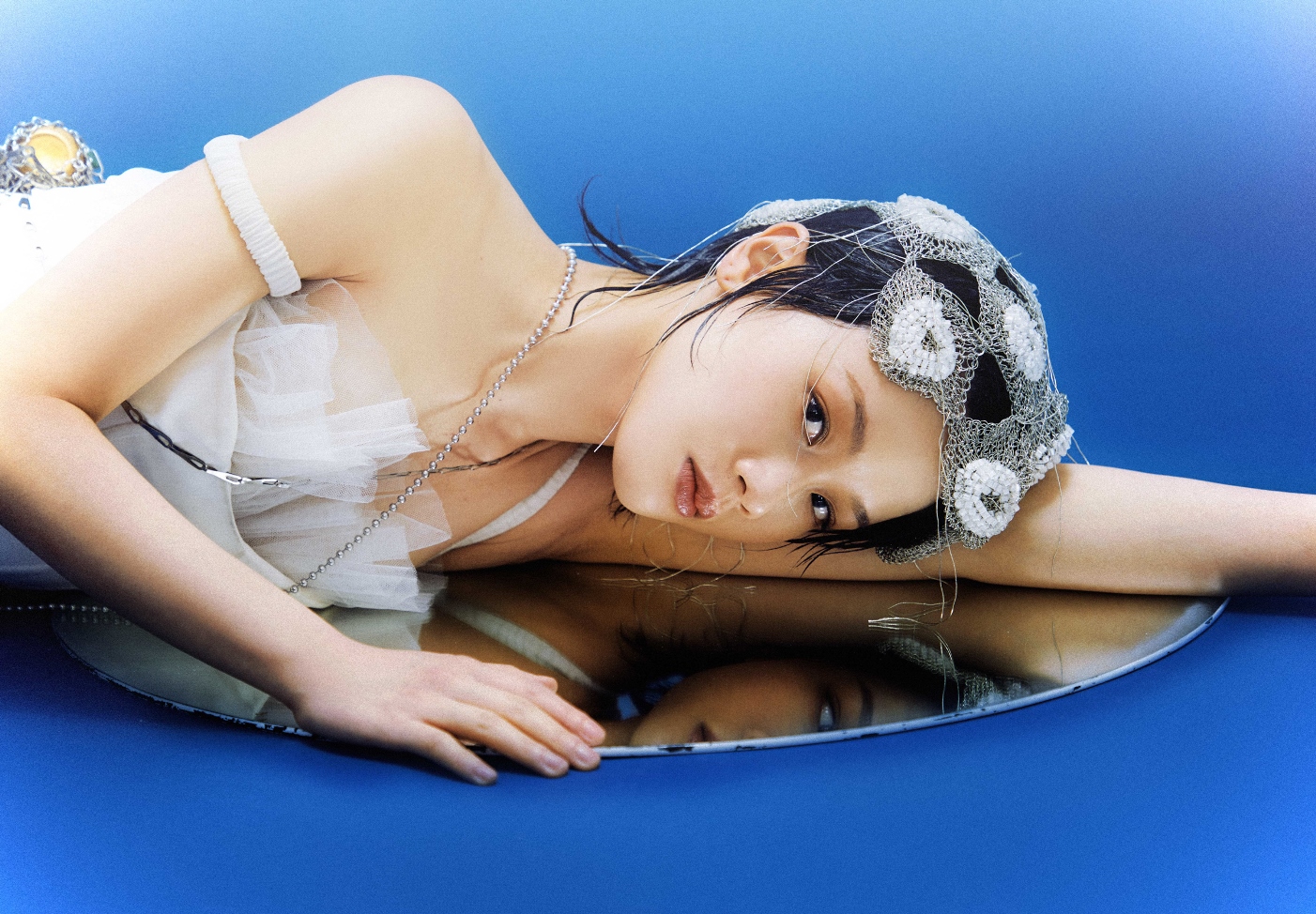
Music needs some mystery every now and then, and that comes with SCINTII, the musical vehicle of Taiwanese singer and producer Stella Chung.
SCINTII released her first EP ‘Mica’ in 2017 which explored glitch and leftfield dance in a manner reminiscent to Dot Allison who made her name in ONE DOVE, particularly on its smoky title track. Meanwhile ‘Papier’ exuded the menace of GAZELLE TWIN although within a more chilled setting.
Her second EP ‘Aerial / Paperbags’ featured the gorgeous ‘Terminals’ and led to the Shanghai-based artist signing with Houndstooth, the independent label established in 2012 by the London superclub Fabric.
Comparisons are easy to make with the Beijing-born FIFI RONG as both have an exotic trip-hop influenced sound and ‘Deux’ could easily be mistaken for the Chinese YELLO and TRICKY collaborator with its eerie but accessible underground sound. SCINTII’s hypnotic new single ‘Times New Roman’ has been produced by Danny L Harle, best known for his remix of CHARLI XCX’s ‘After The Afterparty’ and his uplifting single ‘Super Natural’ in collaboration with Canadian starlet Carly Rae Jepsen.
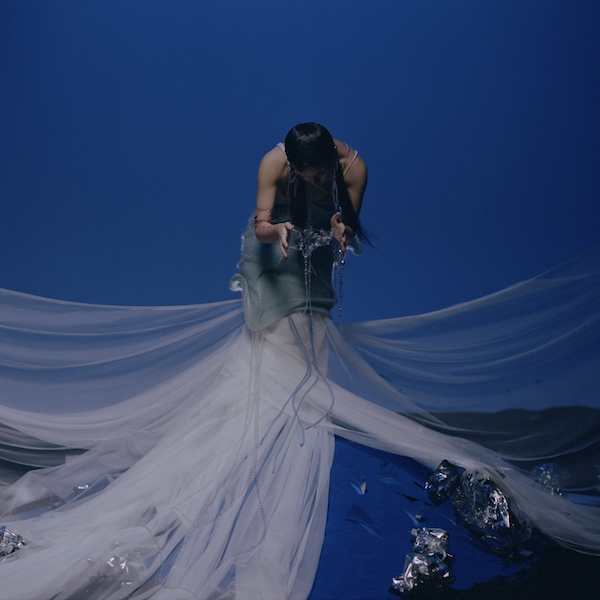
The main melody came into SCINTII’s head while walking round a shopping mall. Using an interesting and intelligent analogy for the tune, she said: “Times New Roman is one of the main languages used in graphic design and this song is about finding that language for myself as an artist”.
The moody video for ‘Times New Roman’ has been directed by Kynan Puru Watt and produced by Dede Wen, capturing a deep icy austere. Alluring atmospheric with an understated rhythmic edge, ‘Times New Roman’ is beautifully elegant electronic pop and hopefully a sign of more to come.
Switzerland’s YELLO have never been an act to over-expose themselves in relation to the product that they’ve released.
Previous album ‘Toy’ was released in 2016 and prior to that ‘Touch Yello’ came out in 2009; so after a four year gap we now have the duo’s latest work ‘Point’.
According to their label Universal, ‘Point’ takes the classic YELLO aesthetic of albums such as ‘Stella’, ‘One Second’ and ‘Flag’ and “twists it into something ultra-modern.” the sound “part spy film, part Dali-painting, part strobe lit dance floor, part 4D car chase and part deep space torch song. It’s YELLO, absolutely on point.”
Within the first 10 seconds of album opener ‘Waba Duba’, there is no mistaking that this IS YELLO; the track is based around a tribal Dieter Meier chant and punctuated with staccato horn stabs which recall their biggest hit ‘The Race’. Thankfully ‘Waba Duba’ doesn’t take itself too seriously with gibberish-style lyrics “Do you want me to do/Don’t take me for a fool/I’m only happy man/I jump out of the can”. All in all, ‘Waba Duba’ is a feelgood track with enough synth parts to satisfy fans of their more electronic work.
‘The Vanishing of Peter Stong’ starts like an EBM track with a menacing synth bassline, but the live drums and vocal narrative from Meier takes the piece into a completely different direction. Throughout the album comparisons could easily be made with THE ART OF NOISE, both acts are known for their sampling with Boris Blank having a huge sample collection (400,000+). ‘The Vanishing of Peter Strong’ features more rhythmic vocal sampling and the kind of production sheen that Trevor Horn and Stephen Lipson cultivated with their associated ZTT acts.
‘Way Down’ features an offbeat skanking backbeat and a welcome female vocal layer above Meier’s trademark talking growl. Beautifully produced again with an amazing clarity to the drum sound; cinematic horns and echoed synth arpeggios excel on a short three minute track that doesn’t outstay its welcome.
‘Out of Sight’ starts like a distant cousin to KRAFTWERK and ‘Boing Boom Tschak’ before being joined by a “dum dum” vocal bass line which again echoes THE ART OF NOISE. The vocal sampling and stuttering of LES RYTHMES DIGITALES’ ‘Jacques Your Body’ seems to be an influence too…
‘Arthur Spark’ is far more electronic in nature, with low-slung synth bass sequencer work and APOLLO 440-ish vocodered vocals. A KRAFTWERK-style drum pattern dips in out of the track and subtle guitar work features throughout. What is admirable here is that five tracks in and each track has its own atmosphere with original sounds and none of the tracks become overly repetitive or linger around for too long (actually none of the songs on ‘Point’ are in excess of four minutes in length).
‘Core Shift’ features a fantastic synth breakdown at its 38 second mark, again another stunningly mixed track; if one worked in a hi-fi shop ‘Point’ would make a great sonic fidelity demonstration album.
‘Rush for Joe’ is a cheeky John Barry-style spy theme-in-waiting with added Korg M1 organ bass sounds, whilst album closer ‘Siren Singing’ features the only guest vocalist on the album with an appearance from British based Chinese artist Fifi Rong. ‘Siren Singing’ is an ambient downtempo piece which draws ‘Point’ to a more introspective conclusion. The only track not to feature Meier’s vocals and without him, results in a piece which is pretty un-YELLO like.
The deal breaker with YELLO has always been Dieter Meier’s vocals, he’s always been a storyteller rather than a singing vocalist, and there is no deviation from that template here. Arguably ‘Point’ would function better with more guest vocalists, but he is part of the duo’s signature sound and as album closer ‘Siren Singing’ proves, his absence ends up being missed.
From a production point of view, ‘Point’ is stunning throughout and although there are no huge stand-out tracks here, the album is a concise re-affirmation of the YELLO sound and long term fans will adore it.
‘Point’ is released via Universal Music, available as a collector’s box, CD, deluxe CD, vinyl LP and digital download
What do John Foxx, Midge Ure, Tony Fennell and Sam Blue all have in common? They have all, at some point, been the lead singer of ULTRAVOX.
While Fennell and Blue are now largely forgotten, having only recorded one album each in ‘Revelation’ and ‘Ingenuity’ respectively, there are endless debates about whether the John Foxx or Midge Ure fronted ULTRAVOX is the valid and definitive one.
Like with the Peter Gabriel or Phil Collins led versions of GENESIS, both have their own sound and different audiences, while there are some who even like both. But whatever, the four piece ULTRAVOX comprising of Warren Cann, Chris Cross, Billy Currie and Midge Ure was undoubtedly the most commercially successful, scoring thirteen Top 30 hit singles in the UK over a period of four and a half years, as well as five Top 10 albums including a greatest hits collection.
How John Foxx departed the ULTRAVOX fold and Midge Ure came to join at the encouragement of Rusty Egan, following the first VISAGE sessions at Genetic Studios that included Billy Currie, is now more than well documented. The new quartet soon embarked on a US club tour in 1979 to test the water with their new material.
The thread between the two line-ups was German producer and engineer Conny Plank; he had offered to finance an album himself, such was his faith in the band. When interest came from Chrysalis Records and an offer of two days free studio time to make demos, ULTRAVOX opted to use their opportunity to complete a fully recorded version of ‘Sleepwalk’. It saw the new line-up of the band beef up their Motorik inclinations with lots of “fun-fun-fun on the autobahn” and Chrysalis duly offered a deal to the quartet.
ULTRAVOX were despatched to RAK Studios in London to record an album which was to be given the title of ‘Torque Point’ before the band and label settled on ‘Vienna’. With Ure’s background in power pop with SLIK and THE RICH KIDS, dynamic catchy choruses were to become a new trademark to go with a greater use of synthesizers, while there was a conscious move to utilise more of Billy Currie’s classical music training via his piano, violin and viola playing.
Released in Summer 1980, one of the key tracks on the ‘Vienna’ album was the robotic spy story of ‘Mr X’ which was voiced by Warren Cann and clearly influenced by KRAFTWERK. With its tight Compurhythm backbone, it was an idea that dated back to the John Foxx-era as its hook was very similar to his ‘Touch & Go’ on ‘Metamatic’ released in early 1980. But ‘Touch & Go’ had been premiered live by ULTRAVOX before Foxx departed.
Another standout was the lengthy instrumental ‘Astradyne’, a glorious statement of intent that was the perfect opener. Under the spell of German acts like LA DÜSSELDORF and RIECHMANN, there was a fantastic interplay between the band and a final celebratory section coming from an unexpected lift. Billy Currie told ELECTRICITYCLUB.CO.UK in 2012 that “Midge came up with that final section lift taking it out of the long ARP solo. I double it! It is a very good strong keyboard part. I used to say at the time: ‘Only a guitarist could come up with that!’, I meant that as a good thing!”
There were more guitar driven songs too with Ure adopting the chunky flanged sound that had been showcased by his predecessor Robin Simon which blended well with the Minimoog, ARP Odyssey, Oberheim OBX and Yamaha SS30 that were in the ULTRAVOX keyboard armoury. ‘Passing Strangers’ was the hit single that never was while ‘New Europeans’ featured a lyric written by Warren Cann which hit the zeitgeist with a narrative about a young man whose “modern world revolves around the synthesizer’s song”.
Meanwhile ‘All Stood Still’ was verging on heavy metal in the vein of THIN LIZZY, perhaps unsurprising given Ure’s time as a stand-in-guitarist for Phil Lynott’s combo when Gary Moore went AWOL before their US tour with JOURNEY; it was this link that led to THIN LIZZY’s managers Chris O’Donnell and Chris Morrison looking after the business interests of ULTRAVOX. Complete with thundering Moog bass, powerhouse drums and Jimi Hendrix impressions using an ARP Odyssey, ‘All Stood Still’ rocked so much that many listeners were unaware it was a tune about a nuclear holocaust…
Sandwiched between ‘New Europeans’ and ‘Passing Strangers’, ‘Private Lives’ was like a less frantic amalgam of the two but if the ‘Vienna’ album had an under rated track, then it was ‘Western Promise’. Relevant today in light of questions about the British Empire’s past role in colonisation, slavery and genocide, the mighty tune used the Far East as its location with a distorted Ure ranting “Oh mystical East, you’ve lost your way, your rising sun shall rise again. My Western world gives out her hand, a victor’s help to your fallen land” like some totalitarian dictator…
But the tune which the wider public remembered most was the title track. When Conny Plank heard the demo of ‘Vienna’, he imagined an old man at a piano in a desolate theatre who had been playing the same tune for forty years. And when Billy Currie came to record his ivory parts, that was exactly the feel which Plank had engineered for the now iconic track. As for the Roland CR78 Compurythm intro, Warren Cann told ELECTRICITYCLUB.CO.UK that it was perhaps his proudest moment when he presented his idea to the rest of the band and went “How about this?”.
With the ‘Vienna’ reaching No2 as a single and No3 as an album in the UK charts, ULTRAVOX were getting the success they deserved. But for the follow-up ‘Rage In Eden’, they adopted a completely different approach. Whereas lyrically, a fair portion of the lyrics had been written by Cann, this now shifted primarily to Ure.
Although the ‘Vienna’ album had been written and played live before recording, the band decided to decamp to Conny Plank’s residential countryside studio with no material pre-prepared. Living in each other’s pockets for three months, the sessions were tense and that impression came across in the music. Released in Autumn 1981, ‘Rage In Eden’ began with the optimistic spark of ‘The Voice’ and possessed the Motorik thrust of NEU! while maintaining some marvellous symphonic pomp.
Photo by Brian Griffin
Creative tensions that had now emerged between Ure and Cross on one side, and Currie on the other who responded with his magnificent middle eight ARP Odyssey solo and a very proud ivory run. But aside from that, ‘Rage In Eden’ was a paranoia ridden affair. However, many of its tracks were mighty.
Chris Cross’ trademark triggered Minimoog bass synth came to the fore on tracks like ‘We Stand Alone’ and ‘I Remember (Death In The Afternoon)’ with Billy Currie working more with the Oberheim OBX for his soloing, although neither was a particularly cheerful affair. In between, there was the tape experimentation of the title track which used the chorus of ‘I Remember’ played backwards to give an eerie Arabic toned “noonretfa eht ni htaed… rebmemer i ho” vocal effect.
Also making a prominent appearance was the Linn LM-1 Drum Computer, a machine that used digital samples for its sounds which Warren Cann acquired, fascinated with furthering the possibilities of programmed percussion that had been opened up. Speaking to ELECTRICITYCLUB.CO.UK in 2010, he surmised that “Drum machines lent a new dimension to music on two fronts; one, the hypnotic element given by perfect unwavering tempo, and two, the ability to endlessly layer, edit, and re-edit rhythm tracks.”
‘The Thin Wall’ dramatically merged synthesizers, guitar, piano, violin and Linn Drum for a formidable yet under rated hit single, but then the album entered a dense phase of indulgence with the deeply rhythmic but overlong ‘Stranger Within’ and the meandering ‘Ascent On Youth’. The melancholic interlude ‘The Ascent’ provided some relief despite its intensity before the haunting conclusion with the sparse mental breakdown of ‘Your Name (Has Slipped My Mind Again)’.
Not as accessible as ‘Vienna’, only two singles were lifted from ‘Rage In Eden’ whereas its predecessor had four; ‘Rage In Eden’ was ambitious and loosely conceptual but it may have been too much for some, including the band.
So for 1982’s ‘Quartet’ album, ULTRAVOX worked with George Martin, most notable for his work with THE BEATLES. The sound was brighter, more structured and stripped of the density that had characterised the albums with Conny Plank, perhaps coinciding with the use of more digital hardware like the PPG Wave 2.2 and Emulator.
The catchy ‘Reap The Wild Wind’ opened proceedings with an immediacy that was less angular and experimental that anything on ‘Vienna’ or ‘Rage In Eden’ although this poppier approach may have alienated any John Foxx-era fans that had stuck it out into the Ure-era.
However, the quasi-religious pomp of ‘Hymn’ had the anthemic thrust of the previous two albums and in ‘Visions in Blue’, ‘Quartet’ had its own ‘Vienna’ but aside from those, ‘Mine For Life’ and ‘Serenade’, overall it was something of a disappointment. While the mighty motorik attack of ‘The Song (We Go)’ offered some percussive edge, the middle second side trio of ‘When The Scream Subsides’, ‘We Came To Dance’ and ‘Cut & Run’ proved lacking in the delivery of their verses despite strong choruses.
‘Quartet’ had been a big budget effort with recording in George Martin’s Air Studios in London and Monserrat plus a tour with a huge grey gothic stage set to support it, as documented in the ‘Monument’ concert film and soundtrack.
By this time, ULTRAVOX took out a huge amount of equipment live which caused many logistical headaches. There were nearly thirty keyboards and electronic gadgets on stage including ARP Odysseys, Minimoogs, PPGs, Emulators, Oberheims and assorted Yamaha keyboards including the CP70 electric grand piano which could take up to three hours to tune in soundcheck! Then there was Warren Cann’s infamous percussion console ‘The Iron Lung’ which had the Simmons SDSIII, SDSV and SDSVII drum synthesizers, Roland TR77 and CR78 drum machines, a Linn LM-1, a LinnDrum and various effects processors like the Roland Space-Echo.
So things became more simplified by ULTRAVOX’s standards for the next album ‘Lament’ released in Spring 1984, with the recording sessions taking place in home studios and self-produced. Largely gone were Billy Currie’s trademark synth solos with the ARP Odyssey although its replacement, the OSCar made a fleeting appearance in that style on the closing song ‘A Friend I Call Desire’. Meanwhile Warren Cann had acquired the MIDI compatible Sequential Drumtraks and there were more obviously programmed rhythm tracks than on previous ULTRAVOX albums while the band seemed quite pleased with their new Yamaha DX7.
But one new keyboard acquisition proved to be a major disappointment in Sequential’s giant Prophet T8. “I got it thinking it would be a competitor to the Yamaha CS80 but the action was always far too heavy” remembered Currie, “It was the only other synth that had a totally polyphonic touch-sensitive keyboard. It was about £4000… a bargain!”
The album contained many varying different styles as the band battled for a clear direction. ‘One Small Day’ was a decisively hands-in-the-air rockist statement in the vein of U2 and SIMPLE MINDS. Meanwhile the brilliant ‘White China’ was a full fat sequencer number about the eventual 1997 handover of British ruled Hong Kong to Red China that developed on NEW ORDER’s ‘Blue Monday’.
Using Far Eastern ethnic influences with a nod towards JAPAN’s ‘Tin Drum’, the title song was an exquisite but obviously mournful ballad. But the album’s highlight was the magnificent ‘Man Of Two Worlds’, an electro Celtic melodrama featuring a haunting female Gaelic vocal from Mae McKenna with doomed romantic novel imagery capturing a feeling of solitude in an unusual mix of synths, programmed Motorik rhythms and manual funk syncopation.
Notably a re-configuring of ‘Sonnenrad’ by NEU! guitarist Michael Rother from his ‘Sterntaler’ album which Conny Plank had produced and given a copy to Billy Currie, ‘Dancing With Tears In My Eyes’ was yet another song about a nuclear holocaust. While it might have been a depressing subject to revive, there was the spectre of ‘Protect & Survive’ when Mutually Assured Destruction lingered in the minds of the population. Released as a single, ‘Dancing With Tears In My Eyes’ reached No3 in the UK singles charts, ULTRAVOX’s biggest hit since ‘Vienna’.
ULTRAVOX had been a consistent singles band but after eleven successive Top30 hits, it seemed as good a time as any to release a greatest hits for the 1984 Christmas market. At the time of release, ‘The Collection’ was novel. Not only did it feature all thirteen Midge Ure-fronted era singles to date, but in ‘Love’s Great Adventure’, it also included a brand new one too. It was a perfect package that could be played from start to finish, from ‘Dancing With Tears in My Eyes’ to ‘Lament’ via ‘The Thin Wall’, ‘Vienna’, ‘Sleepwalk’, ‘Reap The Wild Wind’ and ‘All Stood Still’.
After four albums in five years, it was time for Cann, Cross, Currie and Ure to take a break, but instead, the ULTRAVOX frontman took a busman’s holiday. There was Band Aid and then a solo career which yielded a UK No1 in 1985 with ‘If I Was’, a song Ure had co-written with Danny Mitchell from the band MESSENGERS who had played support and augmented the live ULTRAVOX set-up on the previous two tours.
After an appearance at Live Aid, when ULTRAVOX reconvened in 1986 for the making of their next album, the quartet imploded with Warren Cann unceremoniously fired from the band due to musical differences. By now, Cann had more or less given up the notion of live drums while the other three favoured a back-to-basics approach with more live instrumentation.
Despite Conny Plank returning to produce, the resultant ‘U-Vox’ was poor. The title said it all, a band with something missing. The album saw ill-advised excursions into funk, brass and folk with the latter being a rather sombre collaboration with THE CHIEFTAINS about the threat of a nuclear holocaust called ‘All Fall Down’.
Most of the other tracks on ‘U-Vox’ were uninspired pieces of rock, with the lame ‘Moon Madness’ being a particular low point. Despite this, there was a genuine highlight in ‘All In One Day’, a magnificent song about ‘Live Aid’ which featured an orchestral arrangement by George Martin. However, after an underwhelming arena tour, ULTRAVOX split. Midge Ure continued his solo career to varying degrees of success while Chris Cross left music to become a psychotherapist and Warren Cann moved to Los Angeles.
Meanwhile, Billy Currie made three attempts at reviving the ULTRAVOX name. However, the first one featuring Marcus O’Higgins as singer and a returning Robin Simon on guitar was blocked; when the recordings from these 1989 sessions were finally released as ‘Sinews Of The Soul’ under the name HUMANIA in 2006, the booklet notes saw Billy Currie launch into an almighty tirade against Midge Ure and Chris Morrison who had taken on the role of sole ULTRAVOX manager after Chris O’Donnell moved on.
An interview that Currie gave to Beatmag that year was no less frank. There was now a lot of bad feeling, so any possible future activity involving the four members of the classic ULTRAVOX line-up was now unlikely… or so it seemed. In 2003, Ure was playing a significant amount of ULTRAVOX material on his ‘Sampled Looped & Trigger Happy’ tour.
Then in 2009, the impossible happened and the classic line-up of ULTRAVOX reunited for the ‘Return To Eden’ tour following an offer from Live Nation, who their former manager Chris O’Donnell was now working for. The show went on two triumphant European stints and things went well enough for a new album to be recorded, with writing taking place at Midge Ure’s log cabin retreat near Montreal in Canada.
Co-produced by Stephen J Lipson, the ‘Brilliant’ album’s title song chorused a cautious optimism in a bittersweet comment on pop culture. Meanwhile as the album opener, ‘Live’ came as message of intent like ‘Dancing With Tears In My Eyes’ but without the imminent nuclear holocaust as its superb instrumental breakdown dropped to a magnificent pulsing sequence, piano and lone bass drum reminiscent of LA DÜSSELDORF.
One of the main talking points about the ‘Brilliant’ album was Ure’s voice which now possessed a fragility and honesty only could have come from battle-hardened life experience. But fans were polarised about his use of the Melodyne, an audio pitch modification tool not dissimilar to Auto-Tune. In his defence, Midge Ure told ELECTRICITYCLUB.CO.UK in 2015 about how “it’s a tool and no different from any of the plug-ins that I use when I make music. It’s a bit like saying ‘why do you use reverb on your voice?’… well, it’s because it suits the song and makes it more interesting.”
The excellent ‘Satellite’ recalled former glories and even recycled the violin solo from the album version of ‘The Thin Wall’ while the percolating sequences and rhythmic snap of ‘Rise’ emulated Giorgio Moroder for a 21st Century update of ‘Western Promise’.
‘One’ and ‘Remembering’ captured the chromatic romanticism of Europe with its classical influences although the soaring stadium rock pandering of ‘Flow’ was not to everyone’s taste. However, this blip was countered by the whirring ARP Odyssey lines on ‘Change’ which featured some majestic widescreen inflections glossed with beautiful ivory runs bouncing off a shuffling percussive pattern.
Closing with the resignation of ‘Contact’, a sensitive statement about the emotional detachment caused by modern technology, ‘Brilliant’ was a better album than many expected and righted the wrongs of ‘U-Vox’. There was another successful European tour and it looked as though the old wounds between the four had healed.
Then came a surprise run of dates opening for SIMPLE MINDS on the arena leg of their ‘Greatest Hits+’ UK tour at the end of 2013 but after that, it all went quiet. Speaking to ELECTRICITYCLUB.CO.UK, Midge Ure said that “We always said we were never getting back together to take over the world as a band and pretend we were a bunch of teenagers, we all have other things that we do. And we said that if and when something interesting pops up, we would get-together and do it”. But in 2017, Billy Currie made a statement on his website that his tenure with ULTRAVOX was over and even sold his beloved ARP Odyssey MkII on eBay!
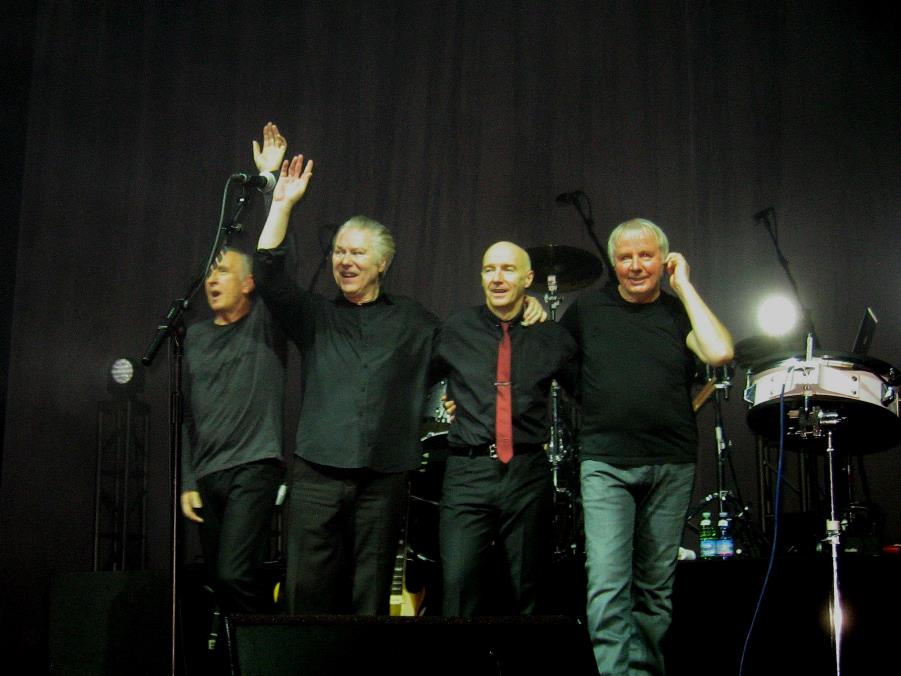
Despite this, the legacy of this particular incarnation of ULTRAVOX lives on, with Ure going out on the road in 2019 with his solo band to play the ‘Vienna’ album in its entirety on ‘The ‘1980 Tour’ as a testament to its artistic longevity. And now there is a 40th Anniversary boxed set complete with a new 5.1 surround sound mix by Steven Wilson. ULTRAVOX also brought the sound of the NEU! axis to a mainstream British audience and even re-exported back to Germany – in acknowledgement, Ure had the music of Michael Rother played before the shows of ‘The 1980 Tour’.
Photo by Chi Ming Lai
Meanwhile, there has also been a substantial and diverse ULTRAVOX legacy within modern popular culture. The Manchester pop duo HURTS effectively played on being TAKE THAT dressed as ULTRAVOX, especially with their single ‘Stay’ and its accompanying promo video. Meanwhile for their quintet reunion album ‘Progress’, TAKE THAT themselves interpolated ‘Vienna’ for a song called ‘Eight Letters’ which resulted in the rather unusual credit “written by Barlow / Donald / Orange / Owen / Williams / Ure / Cross / Cann / Currie”!
But the biggest ULTRAVOX legacy can be found in the stadiums of the world via the Teignmouth rock trio MUSE. It is not difficult to imagine Midge Ure singing ‘Starlight’ while ‘Vienna’ has been borrowed not once but twice, first on ‘Apocalypse Please’ where the middle eight bass synth section was more or less lifted note-for-note while the second time was more obviously with the drum intro to ‘Guiding Light’.
ULTRAVOX were indeed a jigsaw sequence, but no-one could see the end.
‘Vienna’ is released as a 5CD+DVD and 4LP clear vinyl boxed set by Chrysalis Records on 9th October 2020
Jean-Claude Van Damme, the self-styled “Muscles From Brussels” makes an unexpected appearance in the video to French duo AaRON’s new single ‘Ultrarêve’.
Translated as “ultra-dream”, it sees Van Damme indulging in some movement artistry while in a deserted Los Angeles car park before moving out into the Californian landscape and ends with him conducting the waves somewhere on the Pacific coastline.
The star of ‘Bloodsport’, ‘Double Impact’, ‘Universal Solider’ and ‘Street Fighter’ actually trained in ballet for five years and even gamely demonstrated his skills to Jonathan Ross in 1993 during a TV interview to promote ’Nowhere To Run’.
Martial arts and dance have much in common; Bruce Lee was the 1958 Crown Colony Cha Cha dancing champion of Hong Kong while more recently, Jackie Chan who attended the China Drama Academy in his youth, took part in a Bollywood inspired sequence choreographed by Farah Khan to close his 2017 film ‘Kung Fu Yoga’.
The Belgian family Van Damme were among the team behind the simple but striking film, with his daughter Bianca directing and his son Kris operating one of the cameras.
AaRON’s debut album ‘Artificial Animals Riding On Neverland’ came out in 2007 and was popular in Europe. All three of their albums to date went Top10 in France. The union with Van Damme came about when he approached Simon Buret and Olivier Coursier about providing music to a film project he was working on.
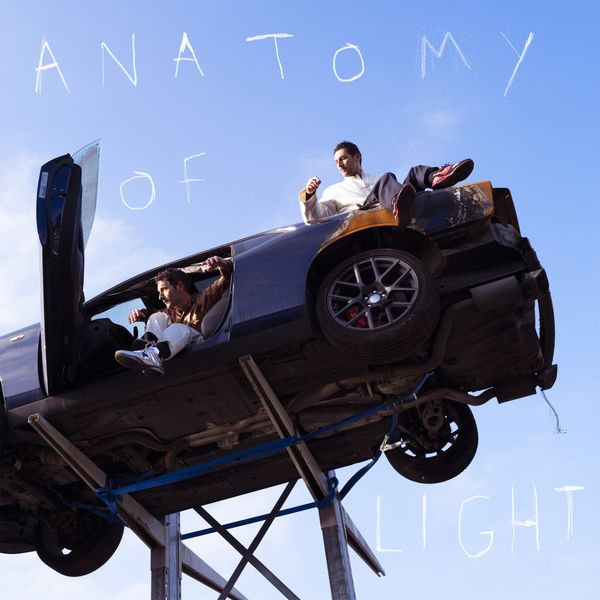
It was during their discussions and exchanges which were then interupted by Covid Crisis that Buret and Coursier then pitched a visual concept to Van Damme for ‘Ultrarêve’, a song that he had taken a particular liking to from their new album ‘Anatomy Of Light’.
AaRON’s best known song is probably the piano driven ballad ‘U-Turn (Lili)’, partly thanks to its inclusion in the film ‘Je Vais Bien, Ne T’en Fais pas’ and the pair composed music for the soundtrack of the 2013’s ‘Les Yeux Fermés’ directed by Jessica Palud.
AARON have an inherent drama in their music as was demonstrated on their previous single ‘Le Rivières’ released earlier in the summer. But the rhythmic hypnotism of ‘Ultrarêve’ takes on a trancey electronic template more akin to ‘Blouson Noir’ which featured another Hollywood legend John Malkovich in its video.
LINEA ASPERA released their self-titled debut album in 2012. A collection of dark but danceable electronic pop, before any new listeners had an opportunity to discover and savour them, the duo had already disbanded in 2013.
One of the nearest partnership comparisons from the past was Cosey Fanni Tutti and Chris Carter. But a bit like OMD, LINEA ASPERA produced clever electronic pop with scientific themes acting as symbolism for the less-savoury side of life. Counterpointing Alison Lewis’ telling of terrible things were the beautiful melodies and engaging rhythm construction of Ryan Ambridge.
The duo resurfaced in 2019 with the release of the ‘Preservation Bias’ compilation of EP tracks and rarities, leading to a reunion with live shows around Europe including a triumphant gig at Electrowerkz in London and the announcement of a second LINEA ASPERA album. While under her ZANIAS moniker, Lewis has fully involved herself into instrumentation, programming and production, for ‘LP II’ she has left that all to Ambridge, with the two working remotely in different countries and using Dropbox for the three distinct stages of instrumental / vocals / mix.
Channelling her anxiety and anger, Lewis’ emotive and intense vocal delivery with the spectre of Lisa Gerrard looming uses words that intelligently relate the trials and tribulations of the human condition to aspects of physics and astronomy. Meanwhile Ambridge uses analogue production techniques with his synths and drum machines, so that they really do sound like they could have emerged from a bygone era.
The vocal and instrumental elements combine for a vintage minimal electronic pop sound, but with the twist of an accomplished singer as opposed to the off-key out-of-tune vocal efforts that have often spoiled music of this type in the past.
With a sparkling arpeggio in homage to THE KNIFE and their ‘Silent Shout’, the opening song ‘Solar Flare’ is glorious, with an almost gothic folk delivery over the quietly pumping backing to provide a unique resonance, using the science of the stars as a metaphor for the observation of pain and suffering.
Using a steadier paced octave shifting bassline and the ominous tones of a string machine, ‘Redshift’ uses another astronomy phenomenon for Lewis to bear her soul, declaring “I’d like to choose you to fill the void”. ‘Equilibrium’ combines HI-NRG with darkwave, recalling the American duo SOFT METALS with its looping techno hypnotism. The harrowing words “Take my flesh, take my bones, I don’t use them anymore” document more of Lewis’ existential woes over Ambridge’s mechanised setting .
But with building bursts of synth, the longest track on the album ‘Entanglement’ sees Lewis saying she is “not used to feeling good”. But despite her declaring “you couldn’t fascinate me more” and “this is the warmth”, is it all over as she asks herself “am I spinning back to earth?”.
Despite using a bright keyboard hook, ‘Entropy’ gets serious about the gradual decline into disorder in some parts of the world; with elements of classic SOFT CELL in Ambridge’s infectious electro backdrop, Lewis offers in her statement of resignation that “well it all falls apart, just like everything else does” in a manner which lyrically could be Marc Almond.
With Lewis disillusioned again with love and announcing that the girl who doesn’t need anything is actually a fantasy, ‘Decoherence’ connects to more physics themes via a cosmic synth lattice leading to a metronomic backbone helped along by an enticing bassline triplet.
On the superb ‘Event Horizon’, the cutting synthesized hooks, disco drum box rhythms and supreme vocals confirm how LINEA ASPERA have become such a highly rated and beloved duo and why their magnificent melodic melancholy has been so missed over the past few years.
The solemn ‘Wave Function Collapse’ closes this second LINEA ASPERA album away from the uptempo nature occupying most of it with a moody quantum mechanics analogy. In distress, Lewis cannot help her venting her frustration, with the glaring admission that “I can’t do this anymore, I made the right choice this time and it’s making me ill…”
Science and electronic pop are natural bedfellows but despite the pain and anguish through this record, LINEA ASPERA have paradoxically made a very seductive one. Delightfully uncluttered with each part having its role, ‘LP II’ maintains a dark austere without being depressing. As well as being emotive, it is catchy too and highlights why LINEA ASPERA floor the competition. ‘LP II’ may be just eight tracks after eight years, but it is quality over quantity, so up yours Daniel Ek, the rather (he)artless CEO of Spotify.
LINEA ASPERA’s return of has been well worth the wait and with BOY HARSHER having gained much of the attention recently for their brooding style of electronic pop, while they are very good, LINEA ASPERA are even better.
Welcome back Alison Lewis and Ryan Ambridge, modern electronic pop is so much better with you both together as part of it.
We use cookies to ensure that we give you the best experience on our website. If you continue to use this site we will assume that you are happy with it.



 ‘Times New Roman’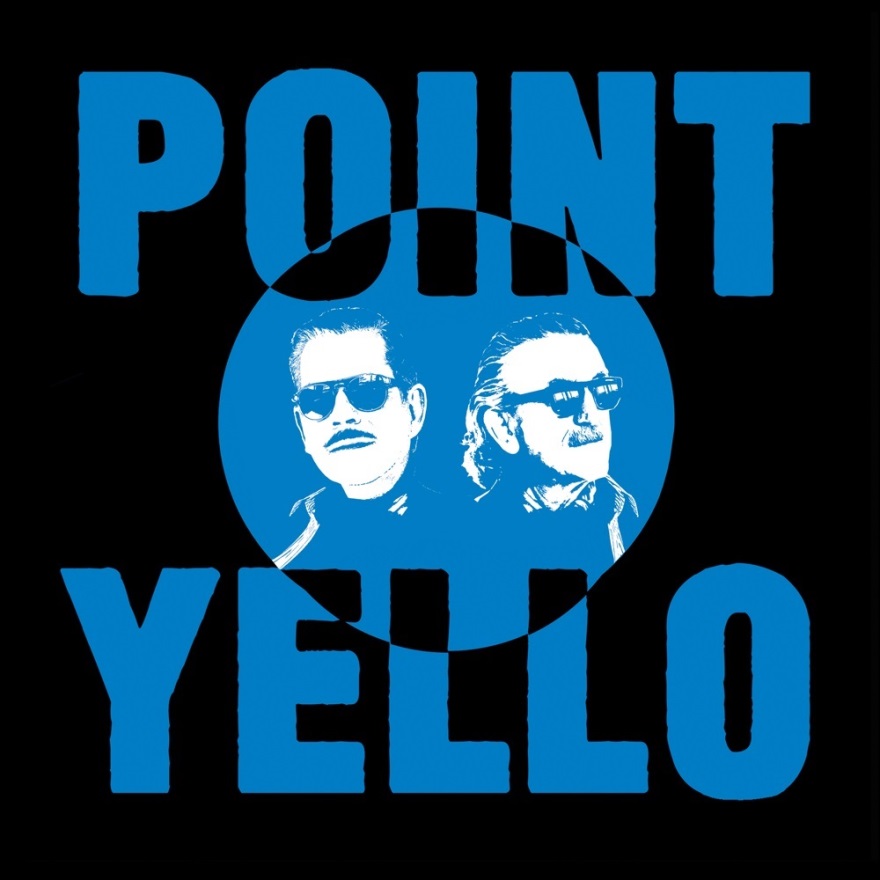
 takes the classic YELLO aesthetic of albums such as ‘Stella’, ‘One Second’ and ‘Flag’ and “twists it into something ultra-modern.” the sound “part spy film, part Dali-painting, part strobe lit dance floor, part 4D car chase and part deep space torch song. It’s YELLO, absolutely on point.”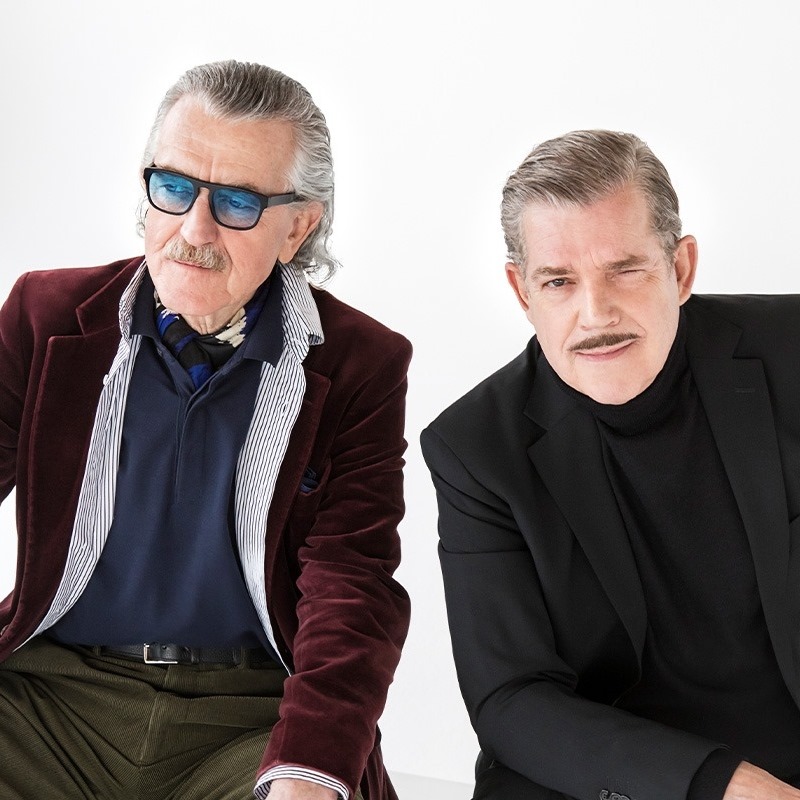
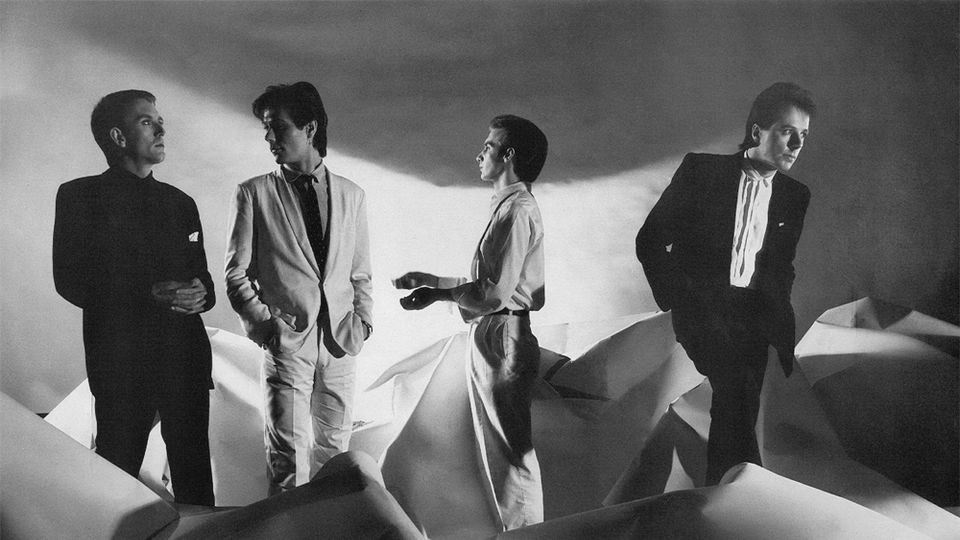
 album was the robotic spy story of ‘Mr X’ which was voiced by Warren Cann and clearly influenced by KRAFTWERK. With its tight Compurhythm backbone, it was an idea that dated back to the John Foxx-era as its hook was very similar to his ‘Touch & Go’ on ‘Metamatic’ released in early 1980. But ‘Touch & Go’ had been premiered live by ULTRAVOX before Foxx departed.
 began with the optimistic spark of ‘The Voice’ and possessed the Motorik thrust of NEU! while maintaining some marvellous symphonic pomp.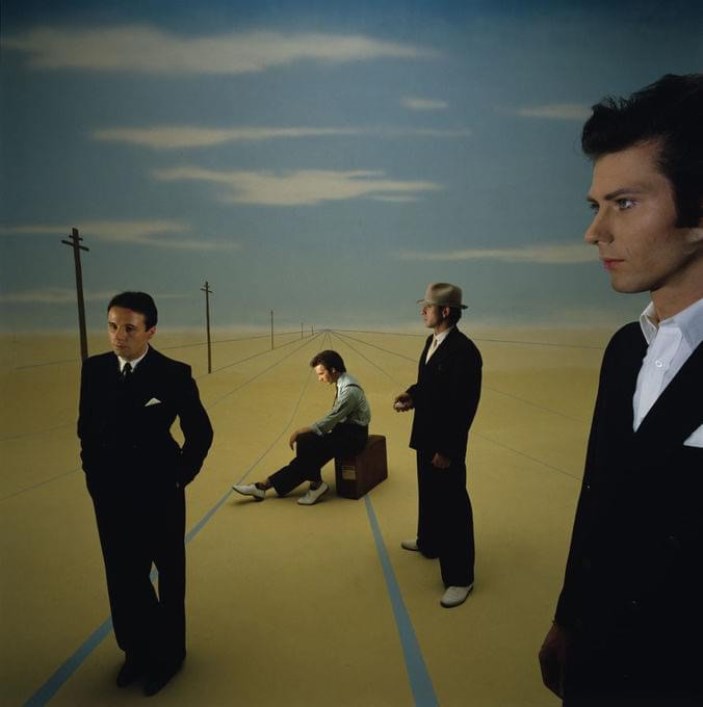
 album, ULTRAVOX worked with George Martin, most notable for his work with THE BEATLES. The sound was brighter, more structured and stripped of the density that had characterised the albums with Conny Plank, perhaps coinciding with the use of more digital hardware like the PPG Wave 2.2 and Emulator.
 concert film and soundtrack.
 was novel. Not only did it feature all thirteen Midge Ure-fronted era singles to date, but in ‘Love’s Great Adventure’, it also included a brand new one too. It was a perfect package that could be played from start to finish, from ‘Dancing With Tears in My Eyes’ to ‘Lament’ via ‘The Thin Wall’, ‘Vienna’, ‘Sleepwalk’, ‘Reap The Wild Wind’ and ‘All Stood Still’.
 was poor. The title said it all, a band with something missing. The album saw ill-advised excursions into funk, brass and folk with the latter being a rather sombre collaboration with THE CHIEFTAINS about the threat of a nuclear holocaust called ‘All Fall Down’.
 tour following an offer from Live Nation, who their former manager Chris O’Donnell was now working for. The show went on two triumphant European stints and things went well enough for a new album to be recorded, with writing taking place at Midge Ure’s log cabin retreat near Montreal in Canada.
 album’s title song chorused a cautious optimism in a bittersweet comment on pop culture. Meanwhile as the album opener, ‘Live’ came as message of intent like ‘Dancing With Tears In My Eyes’ but without the imminent nuclear holocaust as its superb instrumental breakdown dropped to a magnificent pulsing sequence, piano and lone bass drum reminiscent of LA DÜSSELDORF.
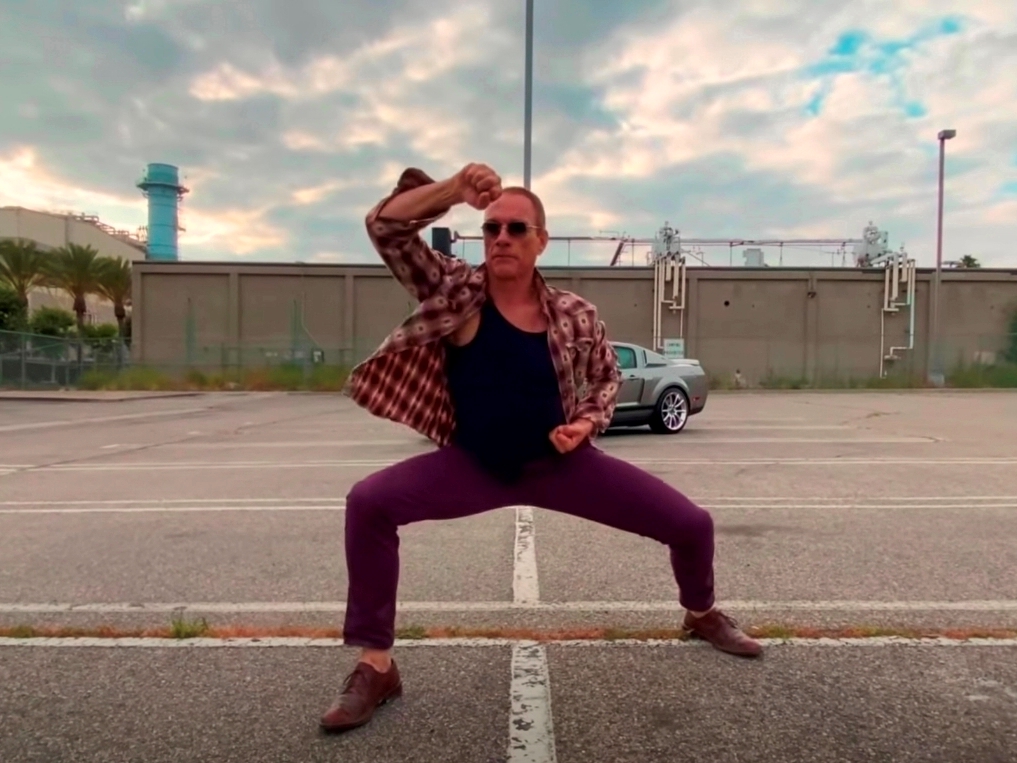
 , a song that he had taken a particular liking to from their new album
  .
.
Follow Us!