Category: Interviews (Page 52 of 117)

FRAGILE SELF Interview


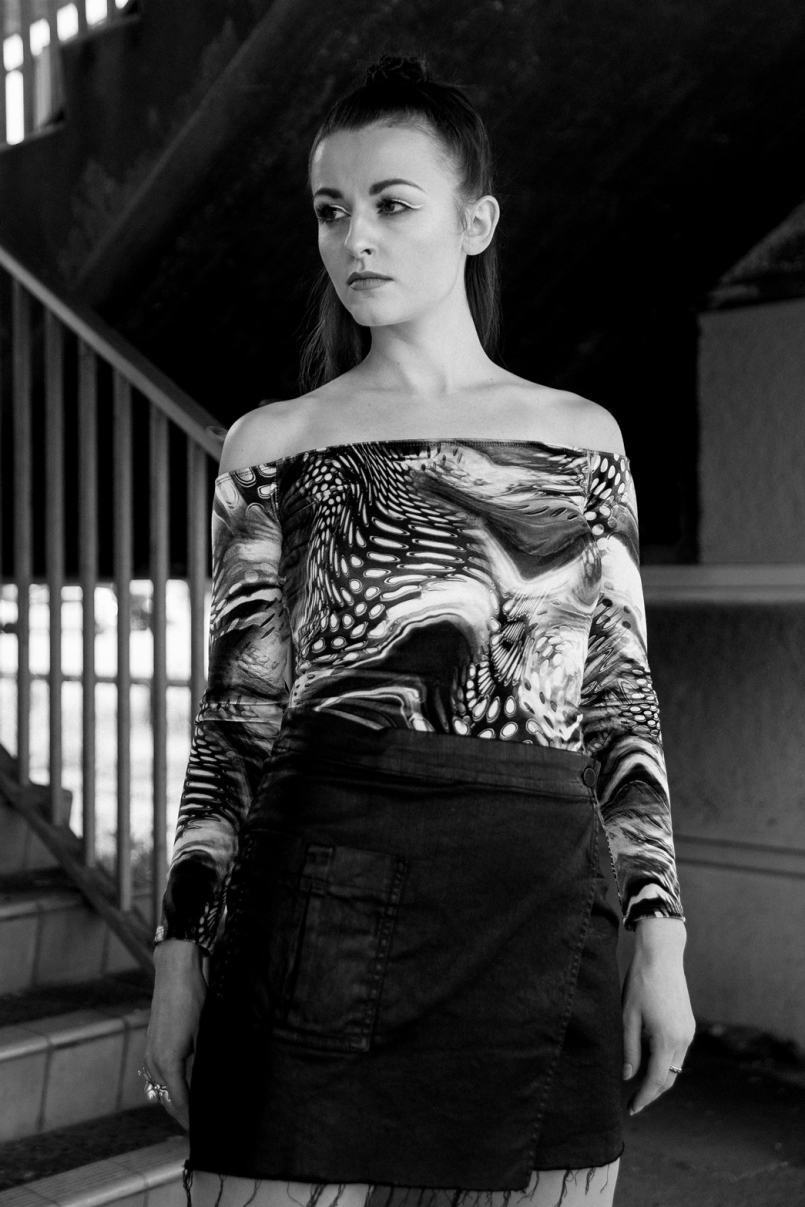
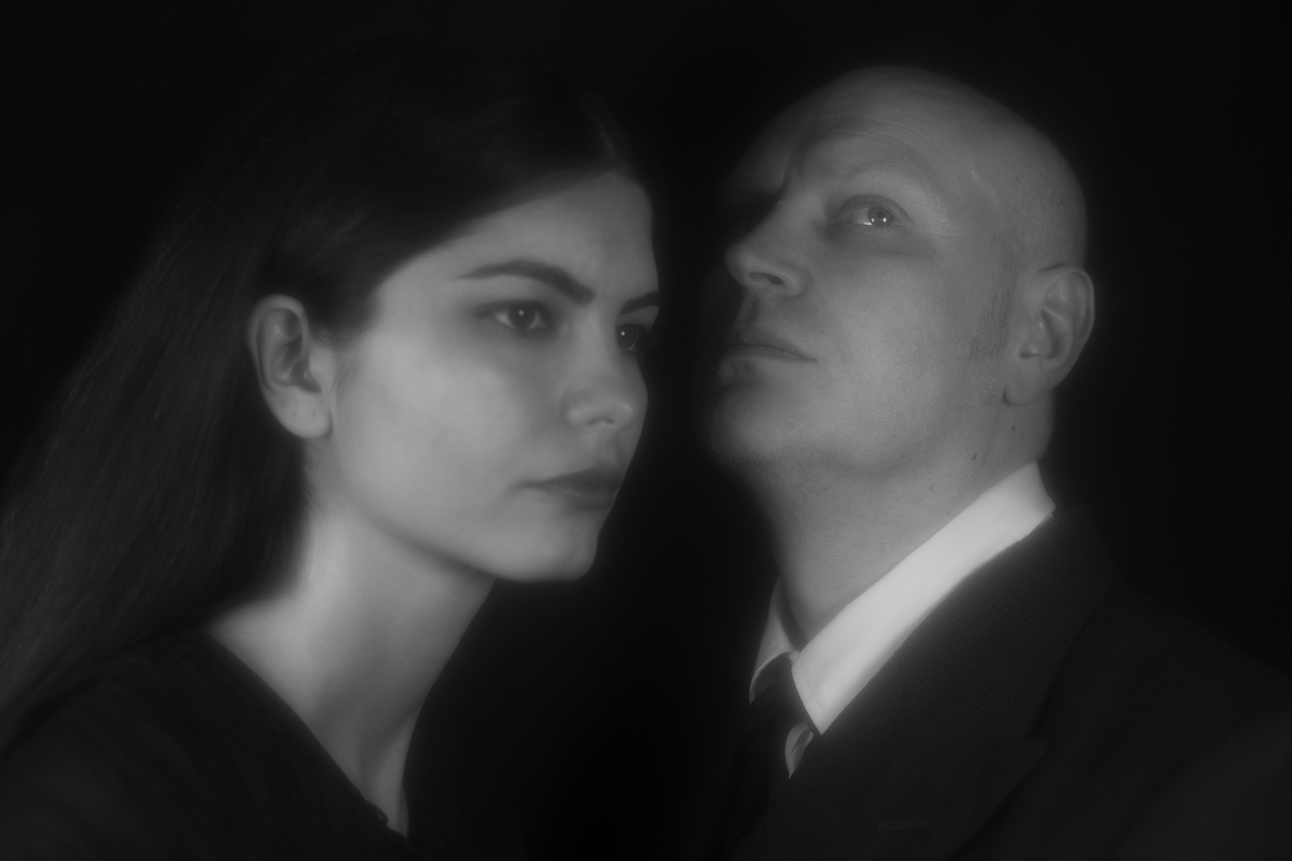
Several years in the making, the first self-titled product from FRAGILE SELF is an ambitious statement on mental health and the human condition.

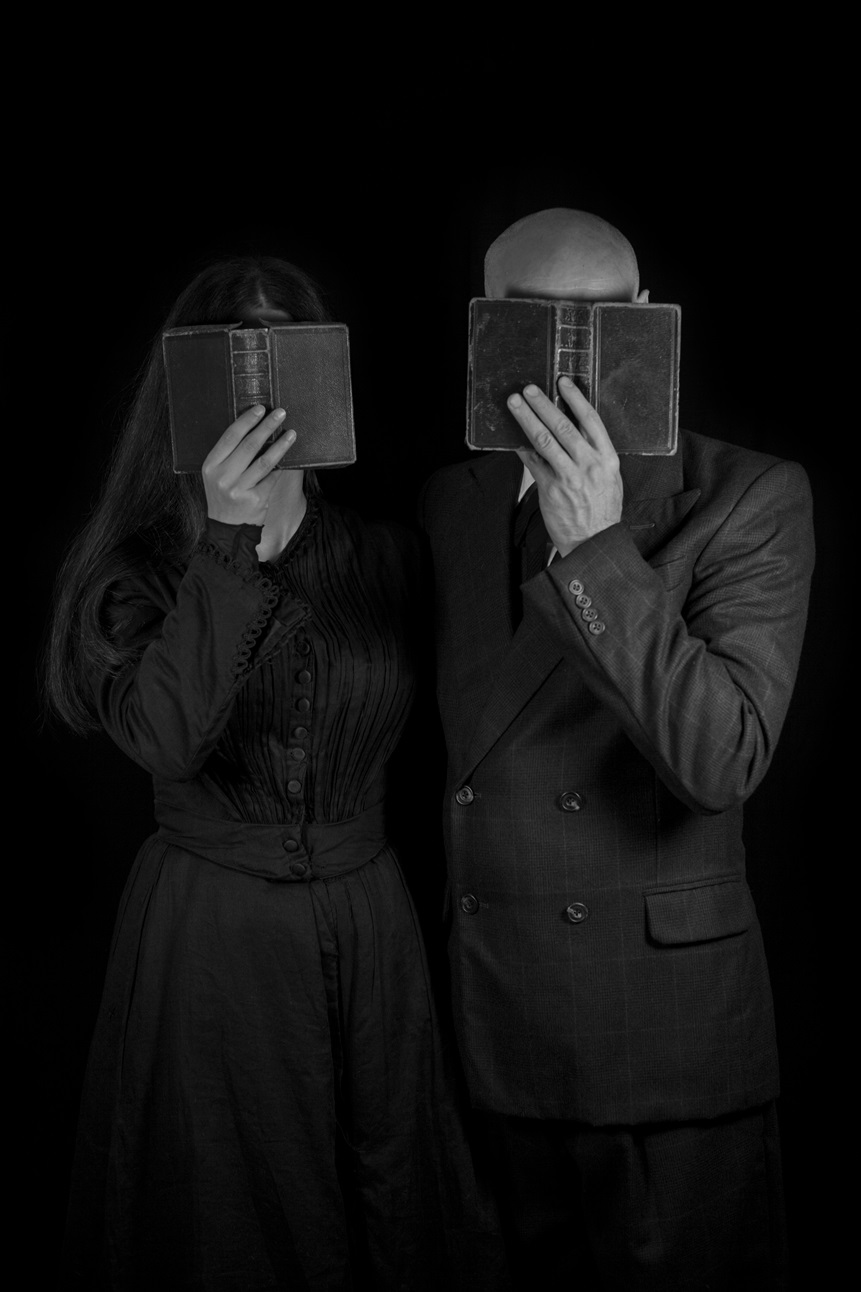
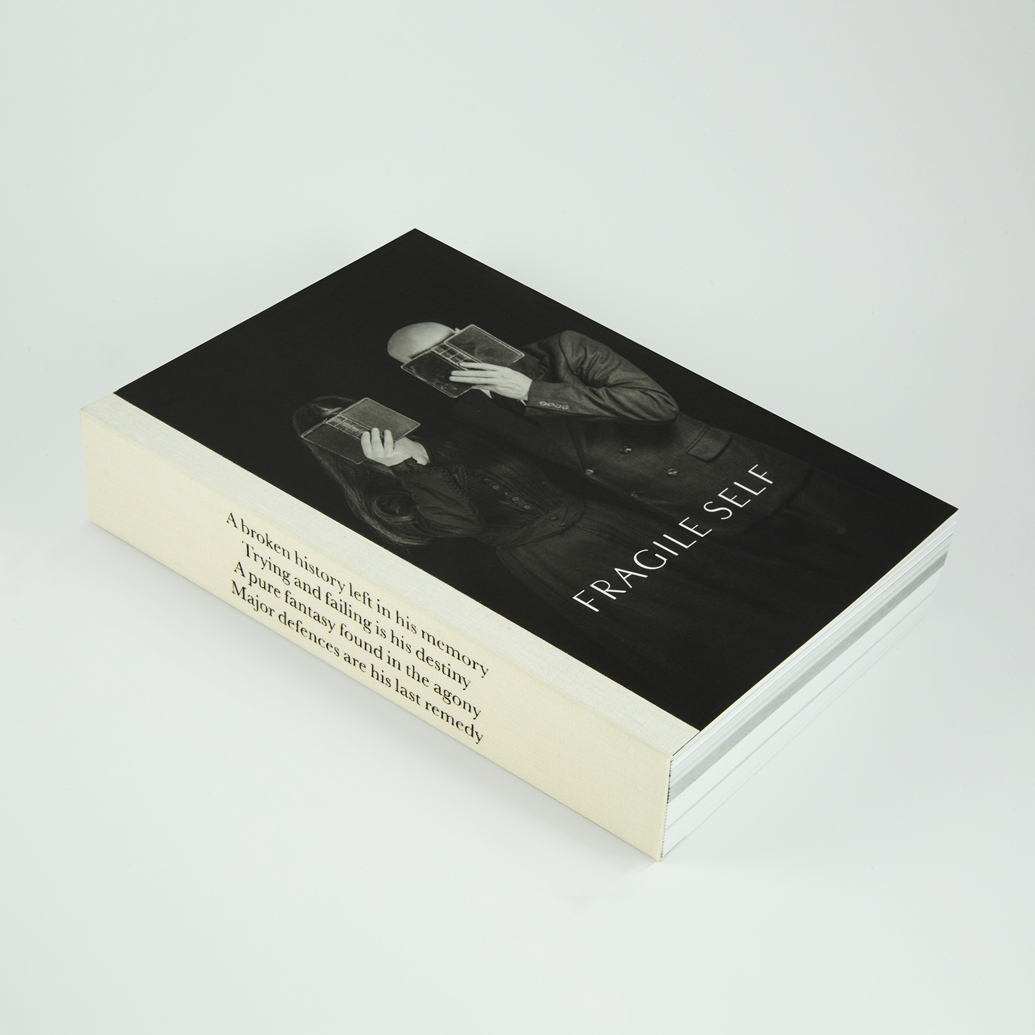
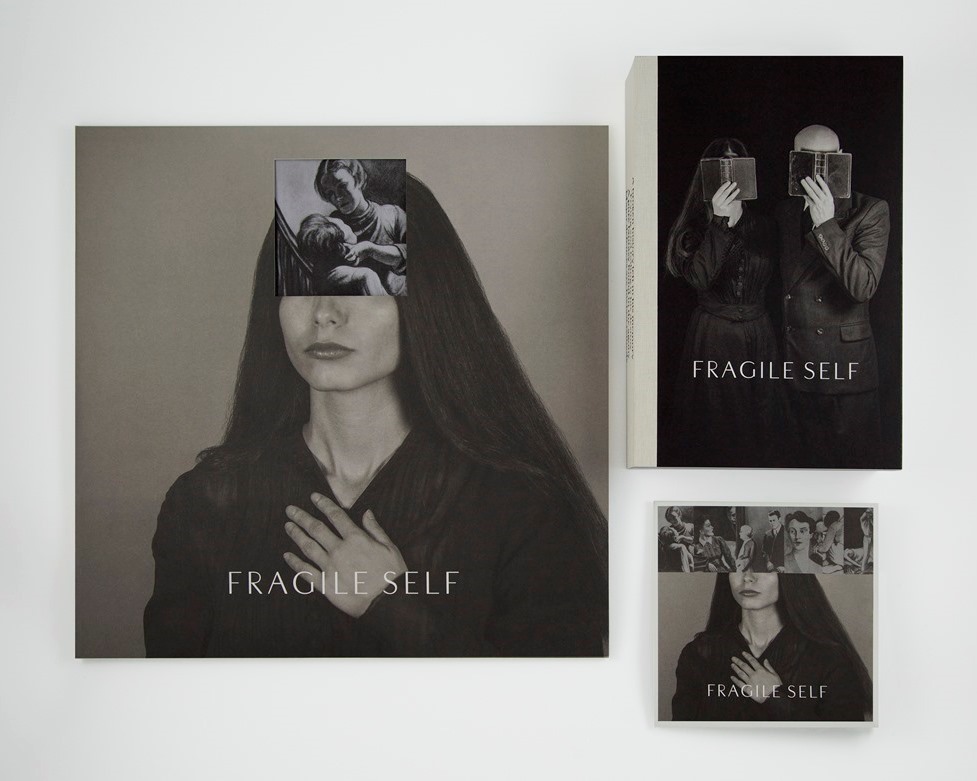
Released as a CD, vinyl album and a 480 page book which starts and ends with reconstructions of ‘before and after’ treatment for mental illness, the thoughtfully conceived project is the work of Anil Aykan and Jonathan Barnbrook.

The couple are best known for their iconic visual designs for DAVID BOWIE and JOHN FOXX. Among the subjects inspiring their music are Sigmund Freud, the founder of psychoanalysis and Bertha Pappenheim, the first patient of psychotherapy.

While the music is by its nature, not an easy listen, over ten crafted electronic tracks, ‘Fragile Self’ is intense but ultimately compelling. Anil Aykan and Jonathan Barnbrook kindly chatted about their fragile selves…

How did FRAGILE SELF come about?

Jonathan: I love music, it’s the reason I design record covers, that emotional relationship between visuals and sound is something that has always fascinated me, so it got to the point where I felt that the next step to really push myself creatively was by controlling and experimenting with both music and visuals together.

Anil: FRAGILE SELF enabled me to communicate the things that are important to me, express parts of me which I believe others would find inadmissible. I have never had up until now a tool which has been so liberating. Even when I wasn’t actively making music I am inclined to sound; the expressive capacity of human voice; speaking words, tension in speech, muttered sentences, obsessively repeated words, speaking becomes singing… I always record or note down what I find interesting when I am on the bus or walk in the street.

The subject matter of the album – mental health is quite unusual, did you feel that electronic instrumentation was the most appropriate way to express this subject?

Anil: It is unusual subject matter, but I briefly studied Art Therapy, so I was naturally interested in the subject but the specific thing discussed in the songs is mental health in relation to creativity – how far do you go towards abnormality when you are being creative and at what point does it become madness? There is also the more classic side of the pain inherent in a love song. It is just that the love in the songs here is directed towards people who have mental disorders such as narcissism or borderline personality disorder. They are of course metaphors for any kinds of love though.

Jonathan: I’ve been obsessed with electronic music since about the age of 11. The thing that interests me most about it is the changing of electronic voltage that affects pitch, timbre and time. It is like you are playing with the building blocks of the universe. The same thing that makes the sound of drum, drives the human heart to beat or fires neutrons in the brain that define consciousness. Also you will guess of course, I share an interest with Anil in more unusual and extreme states of mind.

Who has influenced the music of FRAGILE SELF?

Anil: ‘Minimal Wave’ is a big influence, bands such as OPPENHEIMER ANALYSIS and DEUX. I also really like LADYTRON. COCTEAU TWINS are very important – not just because of the way Elizabeth Fraser uses her voice but also the way they played with language. English is not my first language so when I sing in English I feel I notice more the words as abstract sounds more – this is as important as the meaning of the lyrics I write.

Jonathan: You’ve probably guessed that I’m obsessed with JOHN FOXX, He creates quite experimental music but within the confines of ‘pop’ music and with a very singular view of the world, that’s inspiring for me. Also how could I not be influenced by Bowie, not just musically but also with the way he takes influences into his music from all areas of art.

Do you each have set roles?

Anil: I am responsible for all the lyrics and most of the melodies, drums etc, I used to be a drummer, so rhythm is very important to me.

Jonathan: I tend to centre more on the arrangements and sounds. I really like the technical side of electronic music, not just production but how you can for instance create complex sounds just using simple sine waves. I help a little on the words and also make some of the melodies, but the poetry and atmosphere are very much Anil.

You mention melodies, so is FRAGILE SELF very much ‘pop’ based as opposed to being experimental, because the ‘Minimal Wave’ sub-genre can be notorious for its lack of tunes?

Jonathan: It was important that the songs followed a traditional pop structure, but what we brought into that was quite avant-garde, be it sound generation or subject matter. So there is a lot of darkness and psychosis but it is contained within a format that we hope people find easy to access. Having said that after the album comes out we will be periodically releasing remixes – that are much more experimental which explore the psychology of the songs in a less structured form.

The inevitable question, have you gone the hardware or software route with FRAGILE SELF?

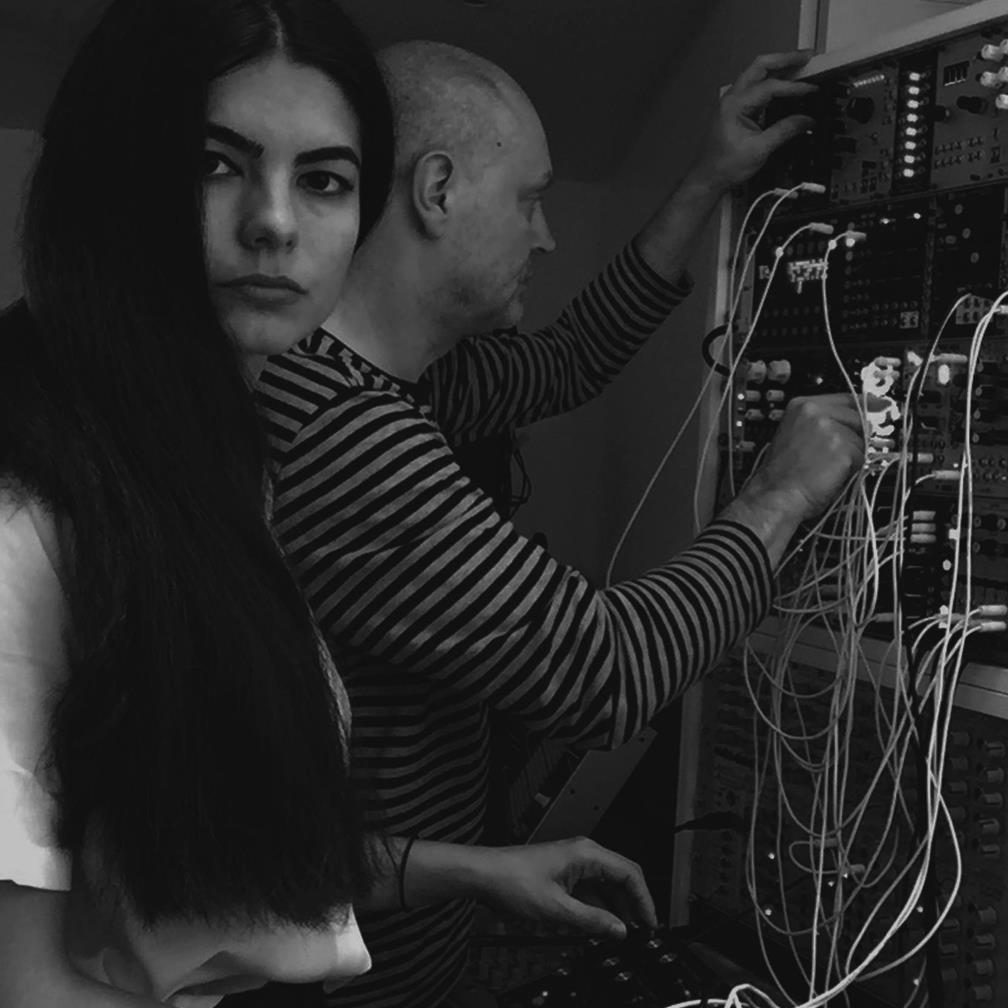
Jonathan: It’s interesting because we came to music from design, so we were very comfortable with using software for all of our creative works, however as we have progressed as FRAGILE SELF, particular on the later tracks, we have been using more and more hardware. Now we now have a huge Eurorack modular system which we experiment on a lot. A physical interface does make a real difference to the sounds you make and something generative like modular synthesis is really inspiring.

So as visual artists, how would you like to present your music?

Anil: For us the two absolutely go together, it’s not like we’ve finished the album and now it is onto the visual design. One influenced the other, the images changed the sounds we made, and the sounds had to have the exactly the right images to express them.

Jonathan: Actually It wasn’t like that in the beginning. Initially I was so desperate not to be dismissed as another “designer playing with his laptop”, that I didn’t want to do any visuals at all but it just developed naturally and we realised since we have control of the music and visuals this was the chance to do something quite pure, new and absolutely on our terms with the role the visuals had.

Anil: One of the album releases is a 480 page book and I think it is the best expression of FRAGILE SELF. It was a chance to show all of the influences on the songs, our thoughts around them. Where the lyrics are from. However we were quite careful not to say too often “this song is about this and this” but give a more poetic interpretation to give people room to create their own meaning and resonate in their own lives. That is very important.
The art funk of ‘Bertha’ interestingly utilises what sounds like a plucked sounding texture, how did the track come about?

Jonathan: There is a drastic change of sounds and rhythms throughout the song, I wanted to give it the feeling of classic German 1930s ‘cabaret’ like it was a theatrical event that you would see on stage where the performance would change melody or pace several times.

Anil: The song is about Bertha Pappenheim, one of the first patients of psychoanalysis, who was “treated” by Doctor Breuer and Freud. She was a highly intelligent and like all women at that time, she was repressed with no opportunity to be herself. She had a nervous breakdown at age 21 but emerged as a creative leader and social reformer eight years later. When I started making this song, I was in Istanbul, there must be an influence from being there. I think the best music scene of Turkey was the 70s funk that my father listened to. The juxtaposition of the heavy subject and funky groove just felt right for this song.

‘Patients’ does possess some unsettling rhythmic fervour?

Jonathan: The song uses lyrics taken out of a doctor’s handbook, so it was important that the singing had that unemotional, repetitive feeling that medical text has when dealing with things such as birth, death or madness. These are intense, hugely important events, but are treated in a very pragmatic way.

Anil: Our songs always start with a conversation between lyrics and drum beats – the emotion created between them and the way the change of rhythm can change the meaning. This is very different from the more conventional approach of drums providing a structure of the songs. To us they are everything, the melody and the development of the lyrics are usually a development or a variation of the rhythm.
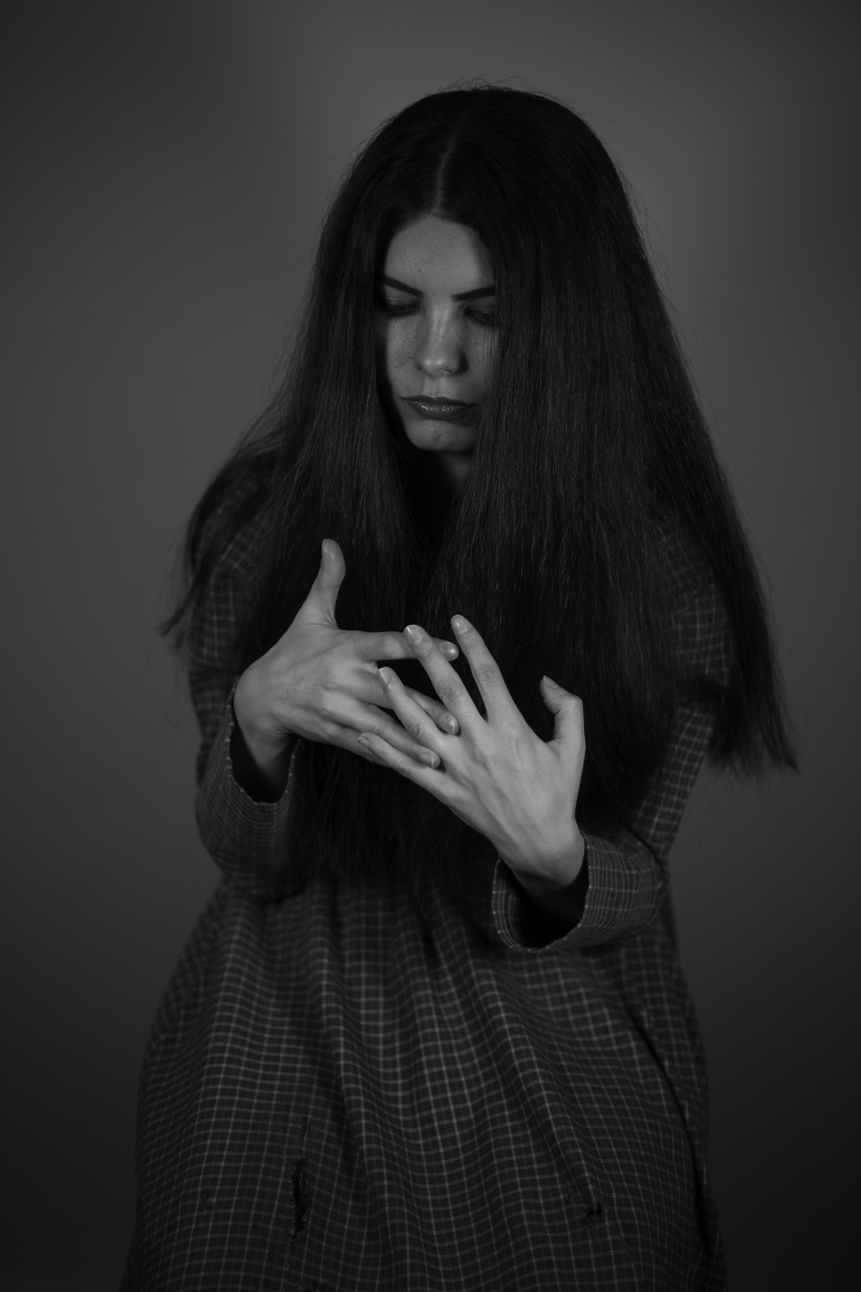
To casual listeners, the deadpan vocalisation does recall MISS KITTIN but compliments the stark electronic backing throughout the album? Any thoughts?

Anil: I take your comment as a compliment! I find the tension between being very expressive with the voice and suppressing emotion in the voice really interesting. A lack of emotion can often just heighten the feeling when you are delivering lyrics which are full of pain or darkness. It can also have an interesting brutality which further pushes the emotion.

Jonathan: I love Anil’s voice. When we were recording the vocals it was very clear that Anil’s accent should come through. Meaning that if the words were not perfectly said, it added more authenticity about where Anil comes from and feeling to the songs. The accent and the deadpan vocals also the give the same feeling as when you hear NICO or GINA X PERFORMANCE – you immediately associate their accents with a certain dark psychology.

Which tracks are each your particular favourites on the album?

Jonathan: Well I really like the last 2 tracks, ‘Need For Sanctuary’ and ‘Journey Taken’, the way they end the album, they really do what I remember albums are supposed to do when you listen to them in their entirety – take you on a journey deeper into the psychology of the album. The dark sounds in particular on ’Need For Sanctuary’ are a sound palette I really love.

Anil: I like ‘Bertha’ – most because of the subject matter but also the sound. ‘Deperson’ is the most personal song on the album, after I recorded the lyrics I had to go out. When I was walking around I was still totally consumed by the music and the meaning of the words. I felt so alienated from my surroundings and saw the world in a very singular way. I think that is a good mark of creating a song that is honest and authentic.

Who do you think FRAGILE SELF will appeal to?

Jonathan: We don’t really know who the audience is, and in some ways it is important not to limit the project by worrying too much. Obviously there will be people who will be interested in the graphics work of the studio, but it is a serious attempt to show how visuals and music relate so we hope it will appeal to people outside that.

Anil: We might even get some psychotherapists interested too!

Is the concert aspect of presenting the work somewhere you would like to venture?

Anil: Definitely, we really want to see how people directly react to the music. Also being on stage and singing these songs is going to be a very emotional experience that I am keen to try.

Jonathan: It is another big project entirely though – how to translate all of this into a live form. Obviously people are expecting something visual from us on stage, so we are planning that right now, again something new and very exciting for us.


ELECTRICITY.CO.UK gives its grateful thanks to FRAGILE SELF

‘Fragile Self’ is released by Sugarcane Recordings / Daperson Society on 4th November 2019 as a vinyl LP, CD and 480 page book with download code, pre-order from http://www.fragileself.com/vinylcdbookdownload
Download also available from https://fragileself.bandcamp.com/

http://www.fragileself.com

https://www.facebook.com/fragileself/

https://twitter.com/fragile_self

https://www.instagram.com/fragile_self/


Text and Interview by Chi Ming Lai
2nd November 2019

A Short Conversation with KOMPUTER


In association with Cold War Night Life, SATURDAY 30TH NOVEMBER 2019 at Electrowerkz in London will feature the live return of KOMPUTER.

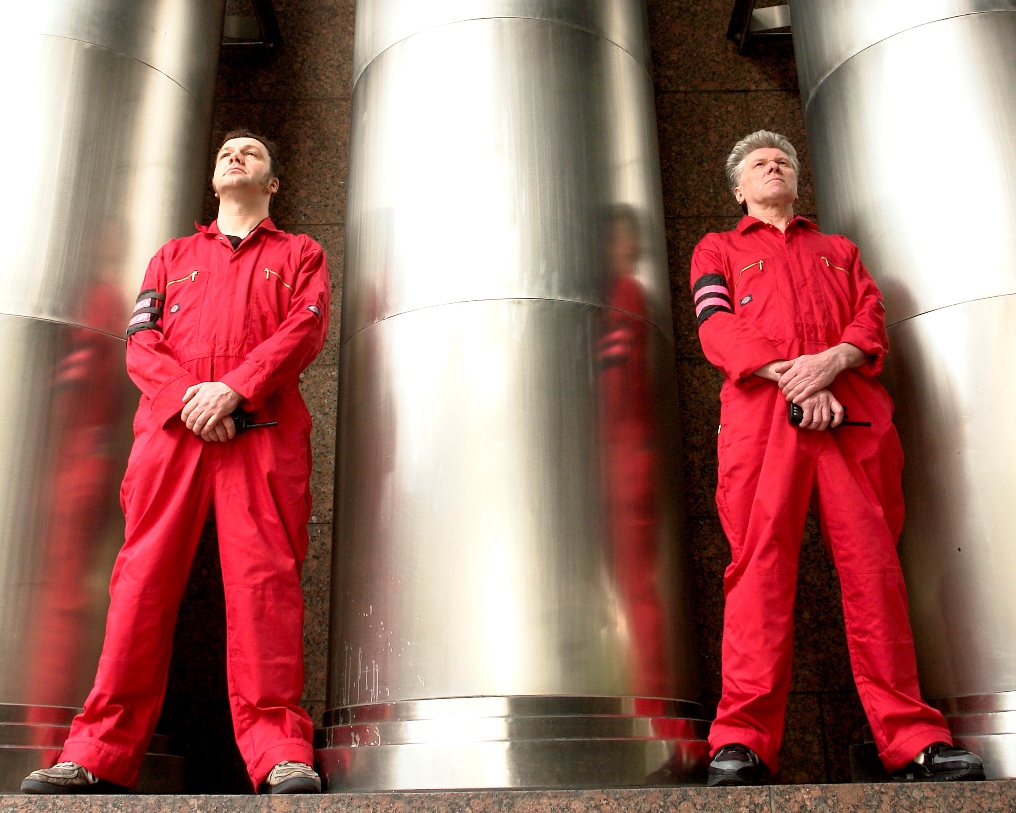
Veterans of three albums released on Mute Records, KOMPUTER were a reaction to the hangover that was Britpop. But taking a leaf out of the low monobrow antics of OASIS, the duo of Simon Leonard and David Baker decided “instead of ripping off THE BEATLES we’d rip off KRAFTWERK”.

Their first release ‘EP’ in 1996 set out to create some heavily KRAFTWERK influenced numbers and more than made up for the lack of new material from Kling Klang. ‘We Are Komputer’ was their very own take on ‘The Robots’, while there was also the marvellous tribute to the first female Cosmonaut ‘Valentina Tereshkova’ which mined ‘The Model’. Best of all though was the blippy ‘Komputer Krash’ while ‘Oh Synthesizer’ was an electronic hymn in the vein of ‘Neon Lights’, right down to the near identical schlagzeug stance and leadline melody.

A debut album ‘The World Of Tomorrow’ in 1998 followed featuring the marvellous train ride that was ‘Terminus Interminus’ and a tribute to their home city ‘Looking Down On London’, the ‘Metroland’ mix of which was sampled by OMD for their 2010 tune ’The Right Side?’.

Indeed, sampling was the next path KOMPUTER would take and with the discarded vinyl they sourced on visits to Spitalfields Market, 2002’s ‘Market Led’ was produced. But an exclusive track more in keeping with their more traditional electronic sound ‘My Private Train’ appeared on the 2003 Lucky Pierre compilation ‘Robopop Volume 1’ which also included CLIENT, SPRAY, MY ROBOT FRIEND, WHITE TOWN, EMPIRE STATE HUMAN, VIC TWENTY and MACONDO.

With advances in technology, the third album ‘Synthetik’ in 2007 explored virtual synths using traditional song structures and more experimental ideas. From it, ‘Headphones & Ringtones’ was a witty observation on how music consumption had changed in the 21st Century, while ‘International Space Station’ captured a glorious spirit of unity.

Leonard and Baker had actually been collaborating since 1982 as the synthpop combo I START COUNTING who had a pair of albums released by Mute Records and opened for ERASURE.

Then the pair mutated into the more dance driven FORTRAN 5 who also had three albums on Mute and recorded a hilarious ‘Derek Sings Derek’ cover of ‘Layla’ featuring a camp theatrical monologue by the late comic actor Derek Nimmo.

Highlights of their eight album catalogue were compiled for the excellent ‘Konnecting…’ retrospective in 2011 and with this special live reunion, Leonard and Baker have promised material from their I START COUNTING and FORTRAN 5 periods as well as KOMPUTER. In a break from making preparations for the show, David Baker had a quick chat about Russian history, OMD, Daniel Miller and more…
‘Valentina’ celebrated the first woman in space, what fascinated KOMPUTER about that mission and the Soviet space programme in general?

It was actually more inspired by BONEY M! We had always loved ‘Rasputin’, we even did a cover version. We wanted to do a song with a narrative that documented someone’s life. Simon had a book on the history of space exploration, which is where we discovered the mostly neglected story of Valentina Tereshkova.

‘Oh Synthesizer’ must have lit the touch paper of those obsessed with the “K” word, can you remember what the response was like to the debut self-titled EP?

It was like a similar to someone’s recent recollection of one of our earliest gigs: “My memory of that Garage gig is a very animated and upset young man in an ill-fitting jumper, spilling Tuborg about the place, screaming at the top of his voice, ‘WHAT IS THE FACKING POINT?!’”

How did you feel about OMD sampling ‘Looking Down On London’ for ‘The Right Side?’

Very pleased. Sting asked if he could do a version of ‘Looking Down On London’ as ‘Looking Down On Sunderland’ for some charity thing. We said no because it’s a silly idea and he’s a twat. But we love OMD, ‘Tesla Girls’ in particular and it does a great mash-up with ‘Hersham Boys’ by SHAM 69.

‘Terminus’ is one of your most popular tracks, what was its genesis and do you have a favourite mix?

A seemingly infinite airport / station, JG Ballard, ‘The Bridge’ by Iain Banks. We actually did a track a few years ago called ‘The Bridge’, but that was about Suicide Bridge. It was very good.

Daniel Miller’s Mix, the Memory Man mix was our favourite. The COSMIC BABY mix was chosen to be the lead track but we always preferred Miller’s. COSMIC BABY’s mix was a swap, we did a remix of his track ‘Lucifer’, which was very good.


ELECTRICITY.CO.UK gives its sincerest thanks to David Baker

https://komp46.wixsite.com/komputer

https://www.facebook.com/KomputerOfficial/

https://twitter.com/komputerdave

https://www.instagram.com/komputerdave/

https://open.spotify.com/artist/1gEqsqT3mT13pTcUhEyzzs


Text and Interview by Chi Ming Lai with thanks to Simon Helm
Photos courtesy of David Baker
2nd November 2019

IMI Interview

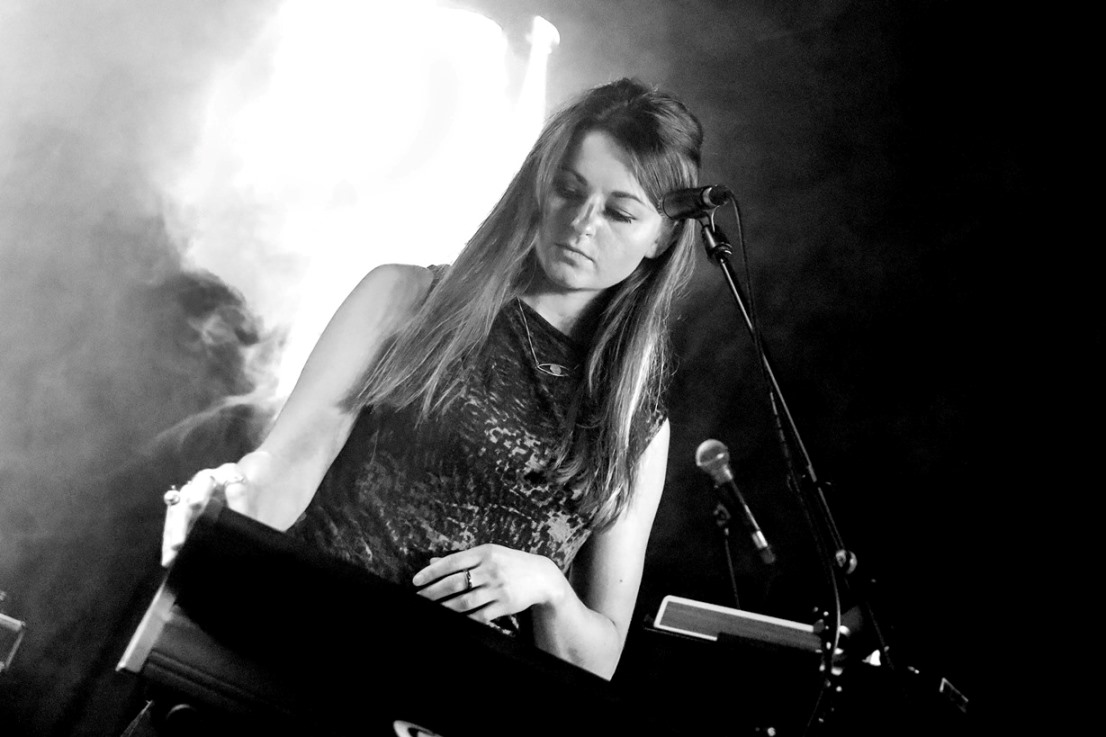
Leeds based singer / songwriter IMI has made a fine impression in 2019 as one of the most promising new synth acts of the year.

Blessed with a glorious soprano in the vein of Alison Goldfrapp and Tara Busch, what has also stood out, despite having only released a single and EP so far, is the widescreen aesthetic of her music with sharp electronic melodies and inventive arrangements.

Of her single ‘Margins’ from the ‘Lines’ EP, one-time Numan sideman and co-writer of VISAGE’s ‘Fade To Grey’ Chris Payne said: “Very impressive. She has an amazing voice and very nice synths to surround it.”
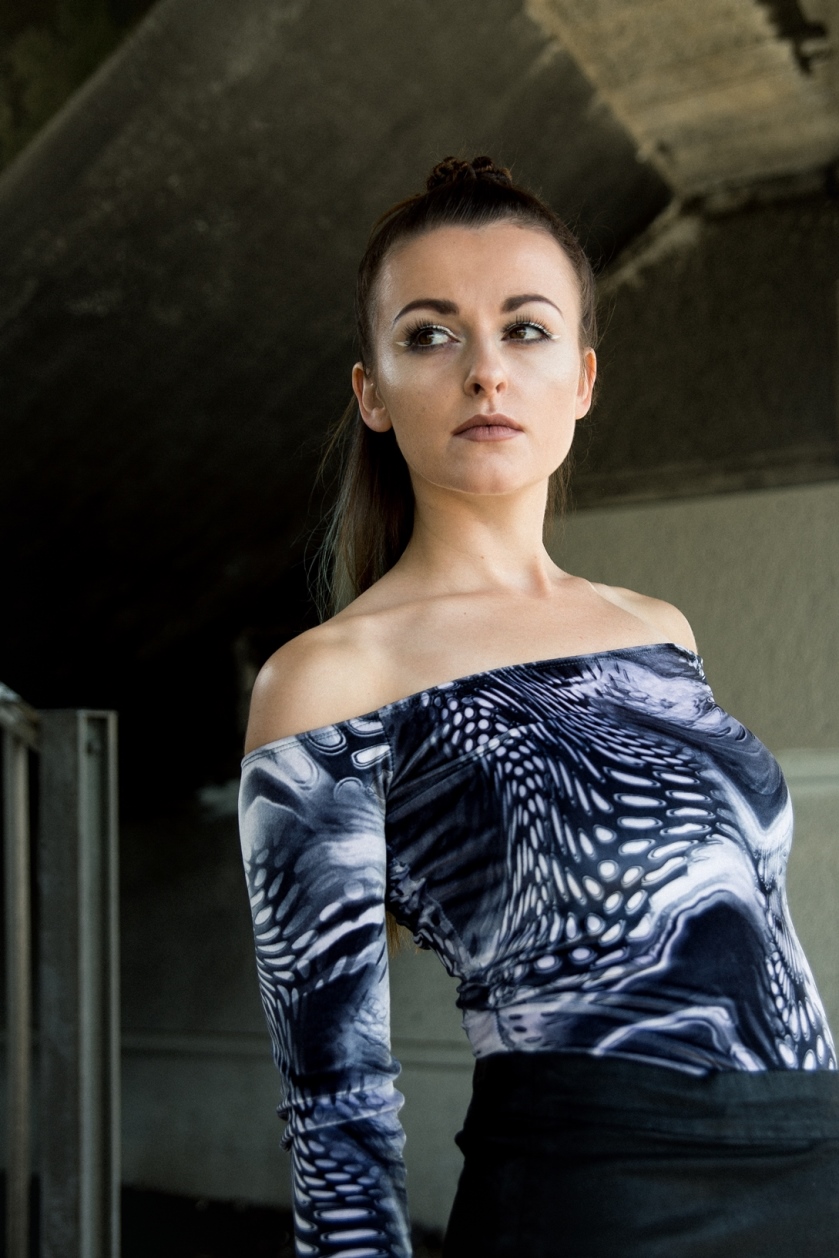
Encapsulating the filmic ambition of GOLDFRAPP circa ‘Felt Mountain’ and its delightful oddness, IMI is undoubtedly one of the keys to a sustainable synthy future. She will be playing at Electrowerkz in London on Saturday 30th November 2019 alongside REIN and KOMPUTER.

IMI kindly talked about her past, present and future…

Your sound has an interesting mix of electronic, trip-hop and classical, what is your own musical background?

I was classically trained from the age of 8, but I only started embracing that side of my voice over the past few years when I realised I could re-contextualise it within a more electronic setting.

I didn’t really start listening to electronic music until I moved up to Leeds in 2012 for University where I was exposed to the likes of PORTISHEAD and James Blake.

In 2014 I formed the dream pop band LENIN which gave me my first taste of performing live and ultimately inspired a continued fascination with writing and performing music.

Your voice is incredible, what’s its range? Do you see yourself as a singer, or a songwriter first?

Thank you, my range is about E2 – C5 give or take. Singing was ultimately what led me down the path of music when I was younger, but I often shun my responsibility as a singer as I’m more fascinated by sound design and songwriting.

How did the melodic synth element enter the fray?

It’s hard to pinpoint exactly when this happened, as I had been noodling with software synths in GarageBand from when I first got my MacBook Pro in 2011 when my friends and family all chipped in to help me buy it for my birthday. Since then I have been led by my same naive curiosity to create something I haven’t heard before, whether it’s some weird wonky synth or an amalgamation of seemingly polar opposite sounds.

Your father was a New Romantic?

My Dad was away in the Navy a lot when I was young, so years later when I was studying at college, he would help me catch up and teach me all about music history and the bands he listened to growing up.

He loved an eclectic mix of THE STRANGLERS, ROXY MUSIC and David Bowie; him and my Mum shared a few common interests in bands like VISAGE and I seem to remember hearing ULTRAVOX’s ‘Vienna’ on full blast which my sisters and I would sing along to triumphantly!

To the casual listener, GOLDFRAPP springs to mind with your work, have they been a favourite act of yours over the past few years?

I hadn’t actively listened to GOLDFRAPP until 2016 when I remember getting really into the ‘Felt Mountain’ album. I had just graduated and left education for the first time in my life and was honestly struggling with the realities of the real world. This album came to me like a shining beacon of light, reminding me of the potential for music to transport you to another place, which is the encouragement I needed to continue writing. The result of which was ‘Margins’, or at least an early version of it.

Your first single ‘Born For What?’ was an eclectic mix of styles and it’s a good song, although in hindsight it sounds as though you were undecided on your sound?

‘Born For What?’ was the beginning of a more industrial sound, which was exciting for me at the time as I had felt relatively trapped within quite a melancholic musical space. It was a stepping stone in allowing me to get where I am now, safe in the knowledge that I am not confined by style or genre.
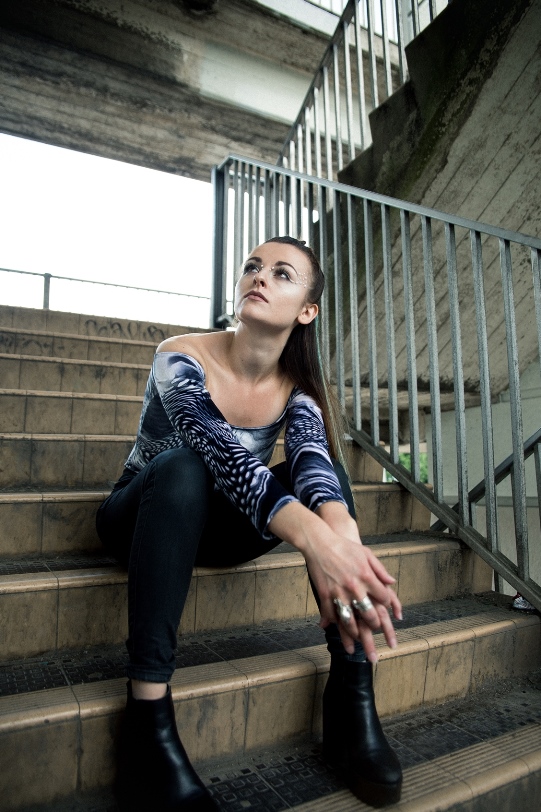
Then came ‘Margins’ which was something of an epic, how did that come together?

‘Margins’ was written almost a year before the other tracks, and it was one of those strange songs that just materialises in front of you. It went through several transmutations after its initial inception, originally written for piano and vibraphone. Before I brought it to the studio, I re-harmonised several elements of it and reimagined it with a synth backdrop. The same theatrical drama shone through, but the industrial electronic aesthetic balanced out its ethereal nature.

What was it like to make your first promotional video for ‘Margins’?

Being a solo artist makes it difficult to create a visually appealing music video on a budget, especially for someone who hates being in front of a camera.

Luckily filming in a garage in the freezing winter of Leeds took my mind off of my anxieties, and director Joey Haskey’s experimentation with colour and lighting offers a visual feast that I think translates the vibrancy of the track.

Was ‘I Feel Alright’ written from your own first-hand experience? Also, it features a quite pronounced anthemic lead synth theme too…

This song was written after a few years of struggling with some personal issues and it was a celebration of finally feeling ok and feeling hopeful about the future. It will always hold special value to me for that reason, and when times are difficult, I’ll often look back and acknowledge that I’ve conquered that feeling before and I can do it again.

‘The Fence’ starts minimally with a lone synthbass note and then gradually builds, you do have a sense of drama?

‘The Fence’ was one of the few tracks to unravel in front of me lyrically. It originally started as a location recording I took when I was at home in Cornwall. The recording was of an electric fence, and the very idea of a fence conjured up that old saying “the grass is always greener”. It’s quite easy to look at other people’s lives and think they have it all sorted, only to make yourself feel worse about your own situation.

This song was my oath to try to view my own life through a different perspective so that I wasn’t always longing for the other side of the fence. The original location recording didn’t make it to the final recording, but the instrumentation was designed to reflect the growing solidarity of my statement.

With the video for ‘The Fence’, you opted to give a director freedom to do a visual interpretation rather than appear in it yourself? Were there any particular reasons?

I was initially going to have more of a live video setup for this track, but when a mutual friend showed me Deni Pesto’s work, I completely U-turned on the idea as his work resonated with me in a way I can’t really describe. When we were exchanging ideas and he sent over some mood boards, it was as if he had literally leapt into my mind. That sort of cohesion of understanding in collaboration is quite rare so I was happy for him to take the lead and create what he thought was right. I think it is a beautiful video in itself, and like my own music, it is fairly ambiguous and the viewer/listener can draw what they need from it.

Photo by Simon Helm

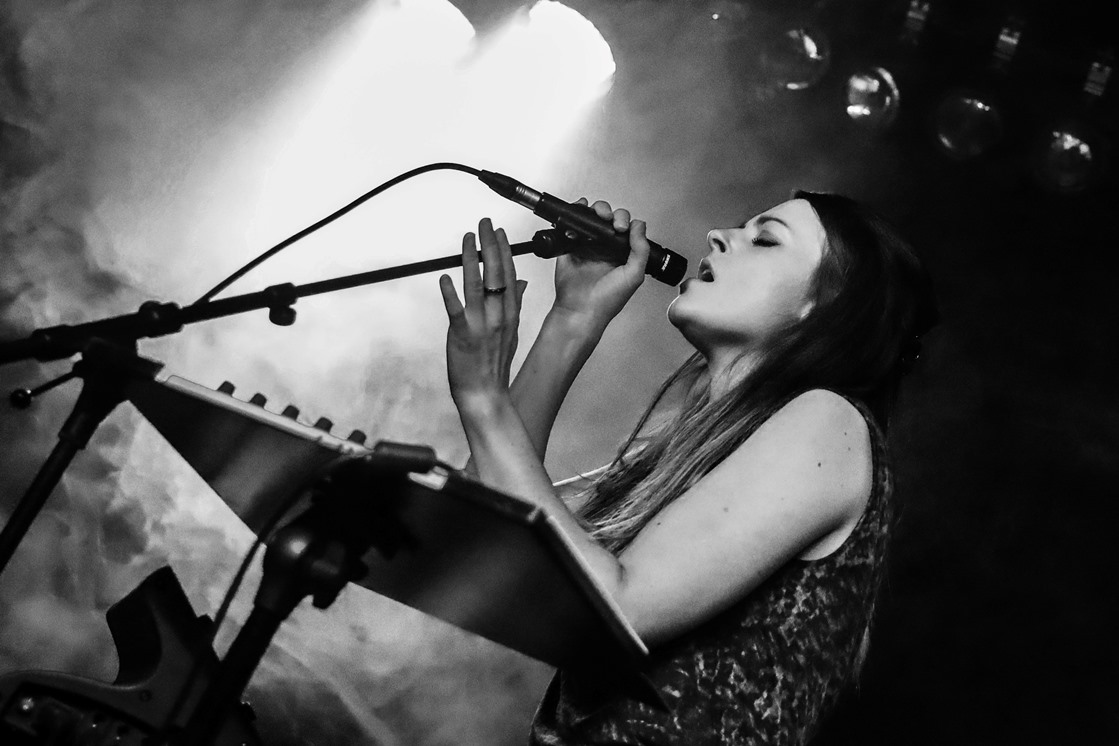
Presenting electronic music live has its own challenges as you found for a moment at The Finsbury gig recently… how does it feel to perform alone, compared with a band, orchestra or choir?

It can be quite stressful when technology fails you and there’s nothing else to pick up the slack, but when things go right it can be extremely cathartic and it’s one of the few times I feel completely present in the moment. I’ve had the vision from the beginning to get involved with a visual artist to add another dimension to the live show.

I played a show at my college a few years ago and had three large white balloons suspended from the ceiling with lights illuminating them and offering an immersive space to absorb my music in. While balloons might not be the most feasible thing to replicate, one of my next challenges is to see how I can create a little of that magic on stage.

Your keyboard of choice is a Moog Sub Phatty, with so many instruments on the market, what made you decide on that particular one?

I bought my Moog Sub Phatty for my old band LENIN, so I was looking for something that could produce some big bass and lead lines while I was singing. At the time I didn’t know much about synthesizers, but it is really tactile and it’s not too complicated to understand so it was the perfect starting synth for me.

How are you finding exploring different hardware and software in the studio, what tools have you particularly taken to in your recording process?

When I’m writing, I only have access to predominately software (with the exception of my Moog Sub Phatty and some Teenage Engineering Pocket Operators), so I’ll often map out different ideas with the Arturia V Collection which has an expansive array of sounds. For the past four tracks I’ve recorded, I’ve worked with Matt Peel who has a growing collection of synths and other wonderful things in his studio The Nave in Leeds.

Each time I go there I discover something new, the last time we were recording, Jacob Marston of DEAD NAKED HIPPIES was playing on some old Simmons drum pads to create the thunderous toms in ‘The Fence’. I’m currently looking for my next investment for my home set-up, some of the Roland Boutique range are looking like appealing options but any suggestions would be greatly appreciated.

You will be opening for REIN in London, what can the audience expect if they arrive at Electrowerkz early?

I’m working on some new material at the moment that I might share in London. But as it stands, this will probably be my last performance with my current setup. It’s been a challenging but equally wonderful few years since my first single release and I’m hoping to celebrate this and to share this with others in November.

Photo by Simon Helm

What are you own hopes and fears for your future in music?

When I was writing this music, my visions were far grander than were feasibly possible and it’s quite easy to feel deflated when things don’t meet certain expectations, especially when there’s no-one else to share and balance the burden. Something that I think is important for me moving forward is to work with others and I’m really excited at that prospect as I am keen to learn from others and expand my understanding of music.


ELECTRICITY.CO.UK gives its sincerest thanks to IMI

The ‘Lines’ EP is released by Bibliotek, available as a CD or download direct from https://imimusicuk.bandcamp.com/album/lines

https://www.facebook.com/imimusicuk/

https://www.instagram.com/imimusicuk/

https://open.spotify.com/artist/0GKGK6KIlrmJM4C4UJGMJI


Text and Interview by Chi Ming Lai
Photos by Portia Hunt except where credited
16th October 2019

THE INVINCIBLE SPIRIT Interview

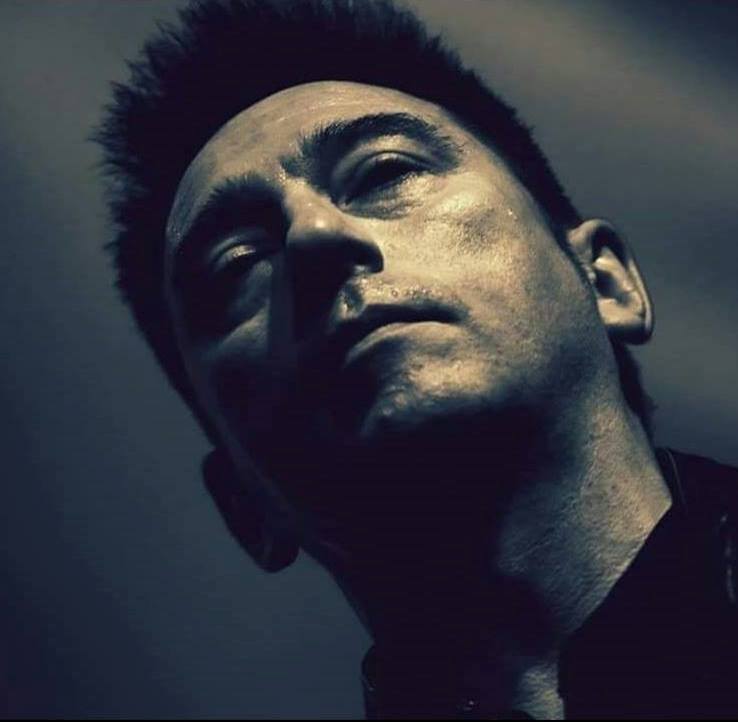
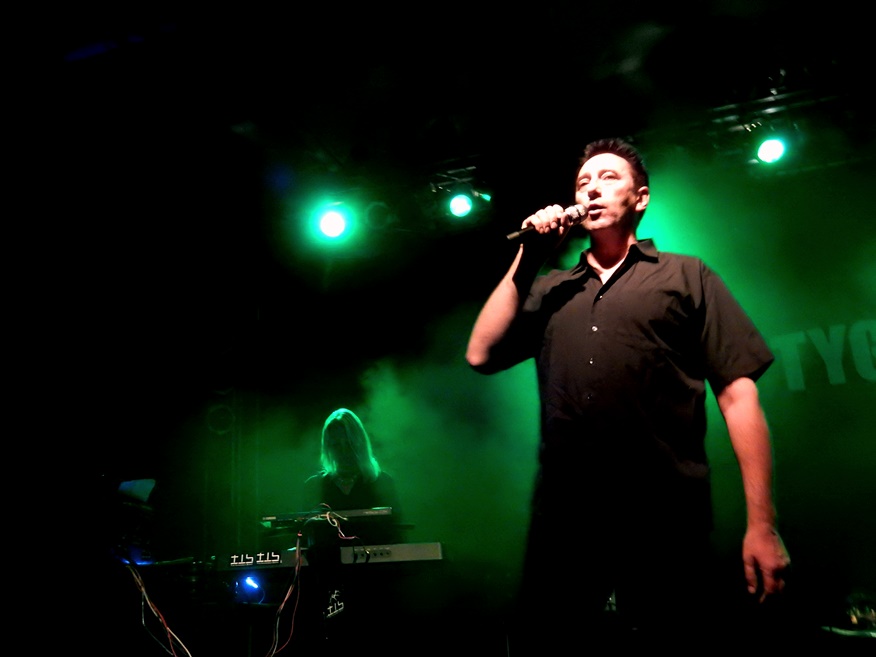
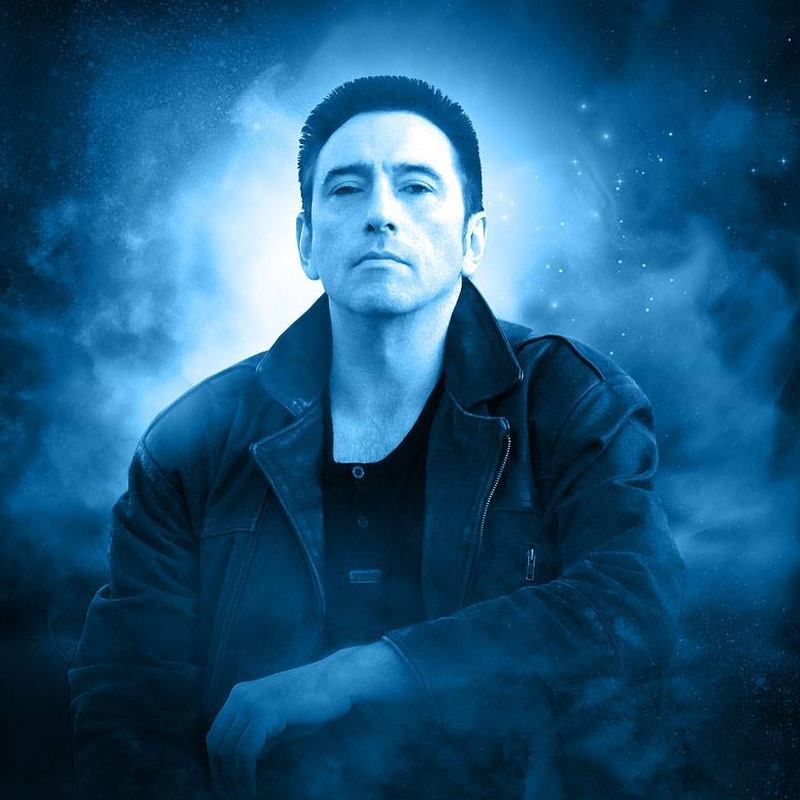
The musical vehicle of Thomas Lüdke, German EBM veterans THE INVINCIBLE SPIRIT first gained wider recognition in Europe with ‘Push!’ in 1986.

THE INVINCIBLE SPIRIT’s debut album ‘Current News’ featuring songs like ‘Make A Device’ became a cult favourite, inspiring Norwegian electro rockers APOPTYGMA BERZERK along the way.
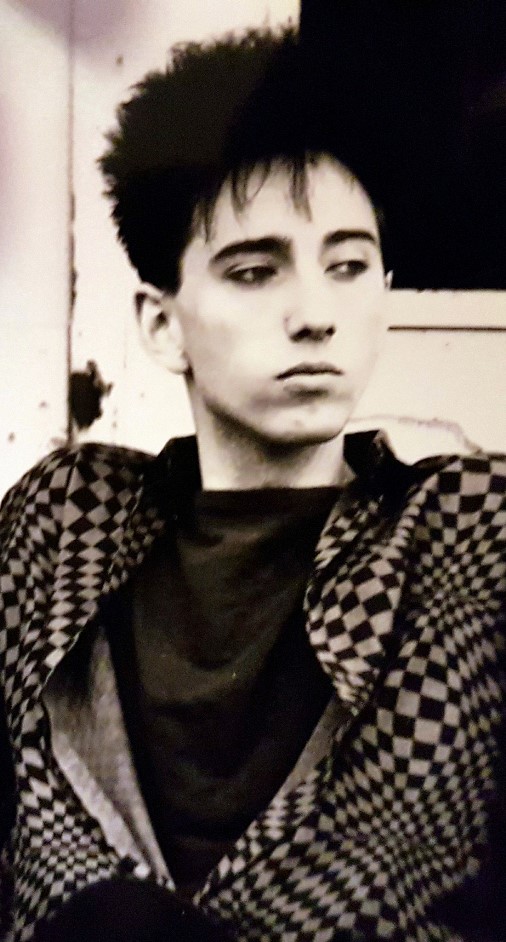
Meanwhile, Thomas Lüdke’s towering stage presence and dark alternative club sound made THE INVINCIBLE SPIRIT an appealing concert proposition.

Beginning life as THE INVINCIBLE LIMIT, Thomas Lüdke has also been involved in side projects such as GOD IS LSD, SOMA and THE MAO TSE TUNG EXPERIENCE. Although currently very active on the live circuit with a notable opening slot with APOPTYGMA BERZERK on their recent Summer tour, THE INVINCIBLE SPIRIT’s last album ‘Anyway’ came out in 2015.

A single entitled ‘Nein!’ was issued in 2017, but with the release of possibly his most accessible song yet in ‘Coming Home’, Thomas Lüdke has promised a new album very soon. In a break from recording, Thomas Lüdke spoke about the past, present and future of THE INVINCIBLE SPIRIT.

How did THE INVINCIBLE SPIRIT come to its tense Teutonic electronic sound?

I never had the impression of sounding particularly Teutonic. But the harder electronic bass sounds, I liked very much when I started to make music. Maybe it’s the influence of the dark basement where I started. 🙂

Many people also claimed the early TIS sound was very grim. I, on the other hand, always had a positive attitude. Probably you cannot just deny its origin. 🙂

Was it always your intention to work solo in THE INVINCIBLE SPIRIT?

No, in the beginning I always wanted a band. And I formed this band for my first project. But since there were different opinions in the approach, I decided to start a second project with THE INVINCIBLE SPIRIT. There I composed the music alone and had only guest musicians for live performances.

Had DAF and DIE KRUPPS been much of an influence on you?

DIE KRUPPS rather less, but mostly it was FAD GADGET, KRAFTWERK, DAF and JEAN MICHEL JARRE (in that order). In addition, during my childhood I was influenced by Rock ‘n’ Roll (Beatles, Buddy Holly) and Country (Johnny Cash). My dad liked to hear this music and he also played me DAF for the first time. 🙂

How did you decide that you would express yourself in English rather than German?

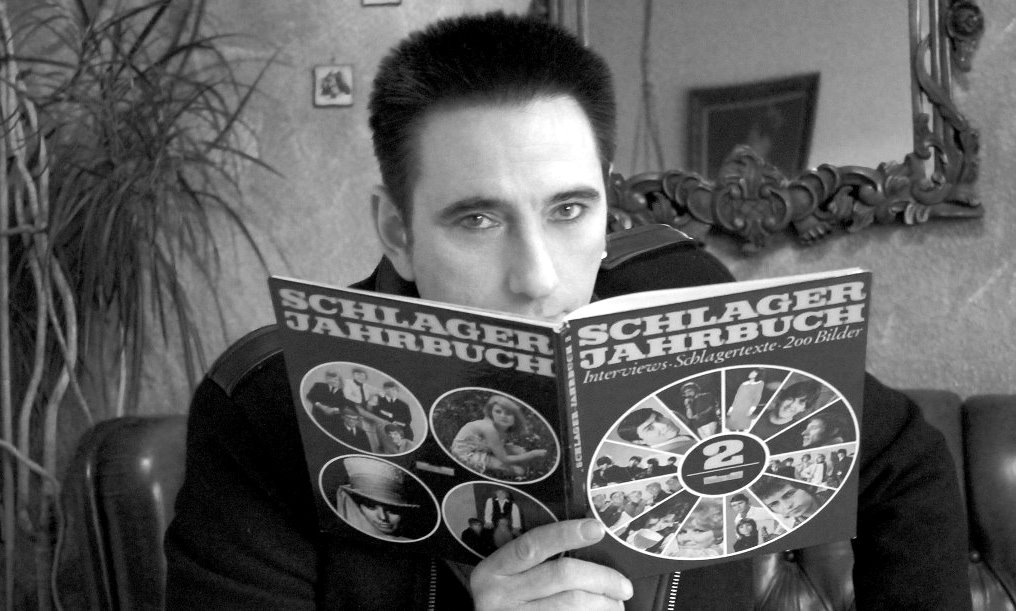
I think English words sound better with my music. Maybe I’m also negatively influenced by Deutsche Schlager music, I do not really like this kind of music. 🙂

Your breakthrough was with ‘Push!’, can your remember what happened from recording the song to it getting heard?

When the song was finished in one night, I went to my favourite nightclub the next day and the DJ played the song. The response was immediately very good. Many people came to the DJ and wanted to know if this is already available. Also my record label Last Chance Records was immediately enthusiastic and released the record in a short time. It was almost an instant success.

How do you look back on the ‘Current News’ album released by ZYX Records?

I did ‘Current News’ under a certain pressure of time. After the success of ‘Push’, the label wanted to quickly release a long-playing record. I was very dissatisfied with some songs and especially the studio sound. This could have been better. Nevertheless, it seems to have been received well by many people.

What synthesizers and machines were you using then? Did you have a favourite?

I have worked a lot with Kawai SX-210, Casio CZ-5000, Yamaha TX-802, Yamaha TG-77 and Yamaha RX-5. I first used the built-in sequencer of the CASIO CZ-5000 for ‘Push!’ and ‘Make A Device’. Later I used the Atari ST with the Notator / Creator software. The TX-802 is still one of my favourites. Except for the RX-5 drum machine, I still have all the devices.

Was ‘Make A Device’ a reflection of the Cold War tensions of the period?

Of course, like many people back then, I was also worried that somebody would “push the button”. But otherwise I was and am rather an apolitical person. But ‘Make A Device’ is more about not falling into lethargy and getting your life under control. But of course, it cannot be ruled out that the “Basic Sadness” was created by the signs of the times. 🙂

You recorded two more albums ‘The Rollercoaster Revolution’ and ‘Can Sex Be Sin’, but then things went comparatively quiet for THE INVINCIBLE SPIRIT until the ‘Faster Life’ EP, what happened?

There was a burden of ‘Push!’. My music for some time was always reduced to this song. Also the record label and the management wanted me to do something like ‘Push!’ again. Also in this business, you often meet people who just want to take advantage of you. When I realised this, I needed a break and distance from these people. I still played live and composed new songs. But I just did not publish these songs anymore.

What made you decide on a ‘comeback’?

As I said, I did live performances all the time. The spark was only in the year 2012, it flared up again at a performance at the WGT in Leipzig. The audience’s resonance was so overwhelming that I decided to get really active again, but this time with the plan to take everything completely in my own hands, without a record label or management. So in 2015, I founded my own record label.

The 2015 album ‘Anyway’ had a lot of songs, it was like you had a lot of feelings bottled up to channel into music again?

On ‘Anyway’, there are many songs that have emerged over the years, but these usually were only in a demo song character. For ‘Anyway’, I picked it up again and composed it to the end. As a result, the album became very varied. I’ve never followed just one musical genre anyway. I like being diverse.

Was the mighty ‘Hate You’ based on personal experience? Had making the song been cathartic?

‘Hate You’ is more to be seen with a smile. I did not really felt hate for anyone or anything when I wrote the song. But of course, it’s fun to let out the feelings during live performances. In addition, ‘Hate You’ for me is the official successor to ‘Push!’. So for live performances, I mix the songs a bit together. 🙂

Do you feel that the modern environment of social media, downloading and streaming makes things easier or more difficult for an artist like yourself?

Well, on the one hand, it makes me a bit more independent of the music industry. On the other hand, the ways a song distributes itself on the internet are hard to control for a small label.

YouTube and Facebook etc are difficult to contact. When I uploaded ‘Push!’ to my YouTube channel for the first time in 2015, the channel was closed for a few weeks and I was accused of copyright infringement. I then clicked through YouTube for a long time and also clicked the hook for a legal dispute. Then it was quiet again and they finally understood. 🙂

What is ‘Irregular Times’ which was recorded as THE MAO TSE TUNG EXPERIENCE about?

It is about a teacher who despairs of the increasing lack of interest in his students. And he holds that out to them, in an ironic way. The original singer of the song Wilfried Peffgen was a teacher. Unfortunately, he died a few years ago, at the age of 70.

The new single ‘Coming Home’ has already been performed live and is maybe lighter than some of your other material, what was it inspired by and how did it develop as a song?

Actually, I had been working on a different song when I had the idea to the main melody of ‘Coming Home’. I stayed with it and finished the song in one day. The text basically treats the feeling of coming home from a few concert days and looking forward to seeing the familiar faces again.

You recently remixed ‘Backdraft’ for APOPTYGMA BERZERK and toured with them, how did this kinship begin and continue?

It was Per Aksel Lundgreen, who wrote me a few months ago on Facebook and made me the offer for the remix. Back then, he told me the story of how Stephan Groth of APOPTYGMA BERZERK became inspired to make music himself after hearing the ‘Current News’ album. Stephan liked my remix and he offered me, to support APOP on the German tour.

What do you think has been your proudest moment as THE INVISIBLE SPIRIT, either with an occasion, or a song or an acknowledgement?

This was the moment at the E-Tropolis in Oberhausen, when Stephan from APOP first told the story that he became a musician himself through my music. I have already been told this by some bands, but no-one has publicly stated so far. That made me very proud. 🙂

What’s next for THE INVINCIBLE SPIRIT?

Work on a new album is in full swing. Unfortunately, everyday life occasionally throws you back a little. Otherwise, it would already be finished. But I’m still in a good mood 🙂


ELECTRICITYCLUB.CO.UK gives its warmest thanks to Thomas Lüdke

‘Coming Home’ is released as a digital single via the usual platforms, while the album ‘Anyway’ is also still available

THE INVINCIBLE SPIRIT play 6 Jahre KatzenCLUB-FESTIVAL in Munich with DIVE + TYING TIFFANY on Saturday 2nd November 2019

https://www.the-invincible-spirit.de/

https://www.facebook.com/InvincibleSpiritOriginal/

https://twitter.com/invinciblesp

https://www.instagram.com/the.invincible.spirit/

https://open.spotify.com/artist/5leTuVWMEcXFeyMuFeCv5J


Text and Interview by Chi Ming Lai
14th October 2019

A Short Conversation with FADER

Photo by Piers Allardyce

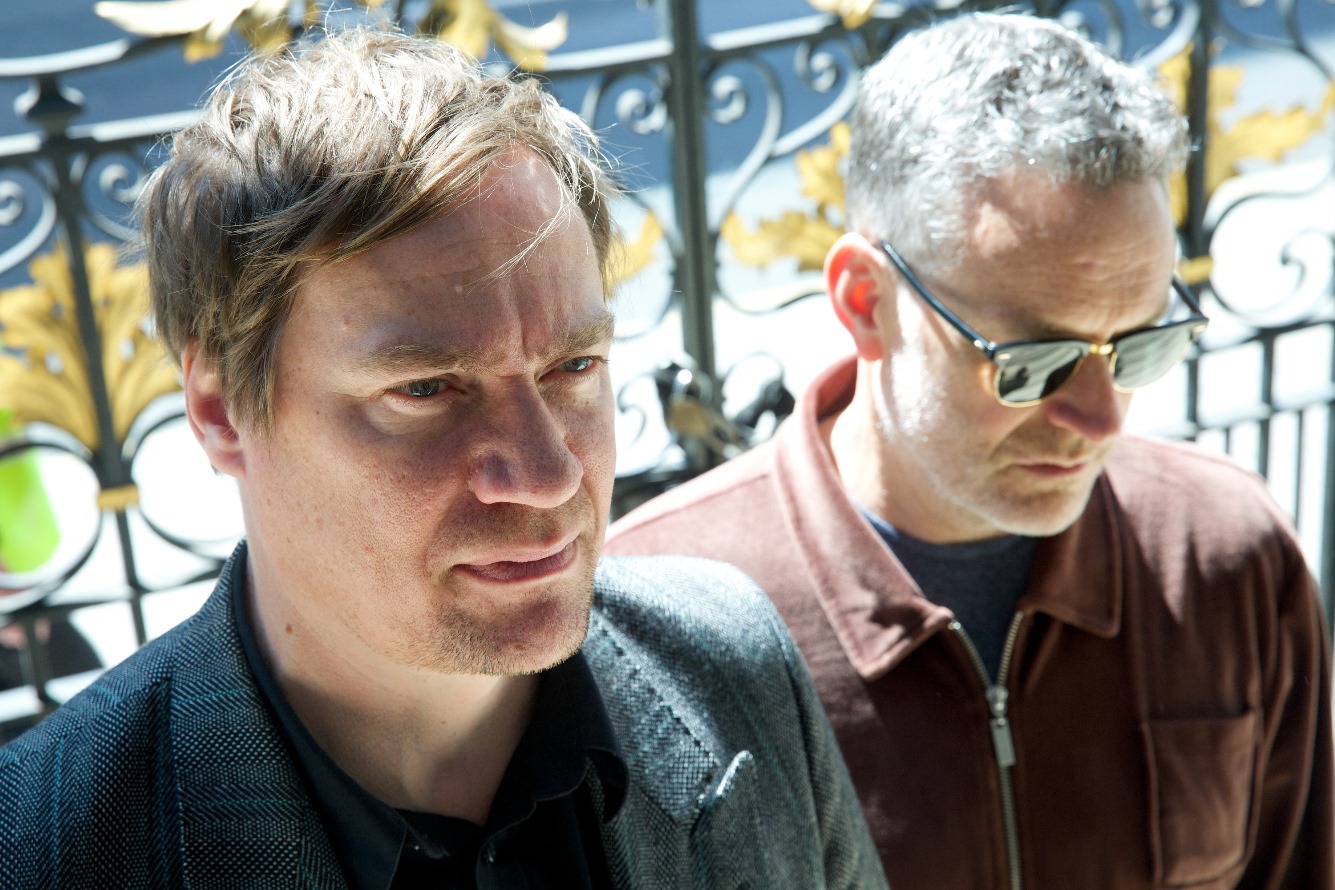
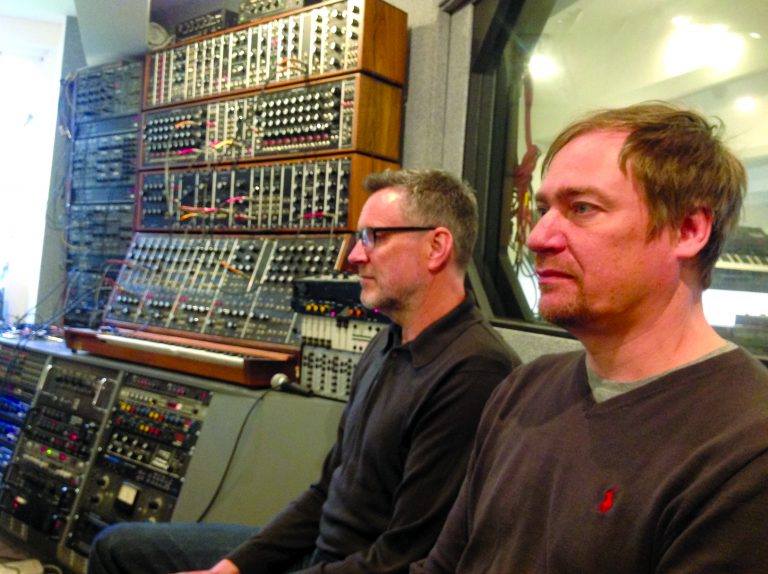
Together, Neil Arthur and Benge are FADER. While Arthur is front man of BLANCMANGE, Benge is best known for his work with WRANGLER, CREEP SHOW and JOHN FOXX &THE MATHS.

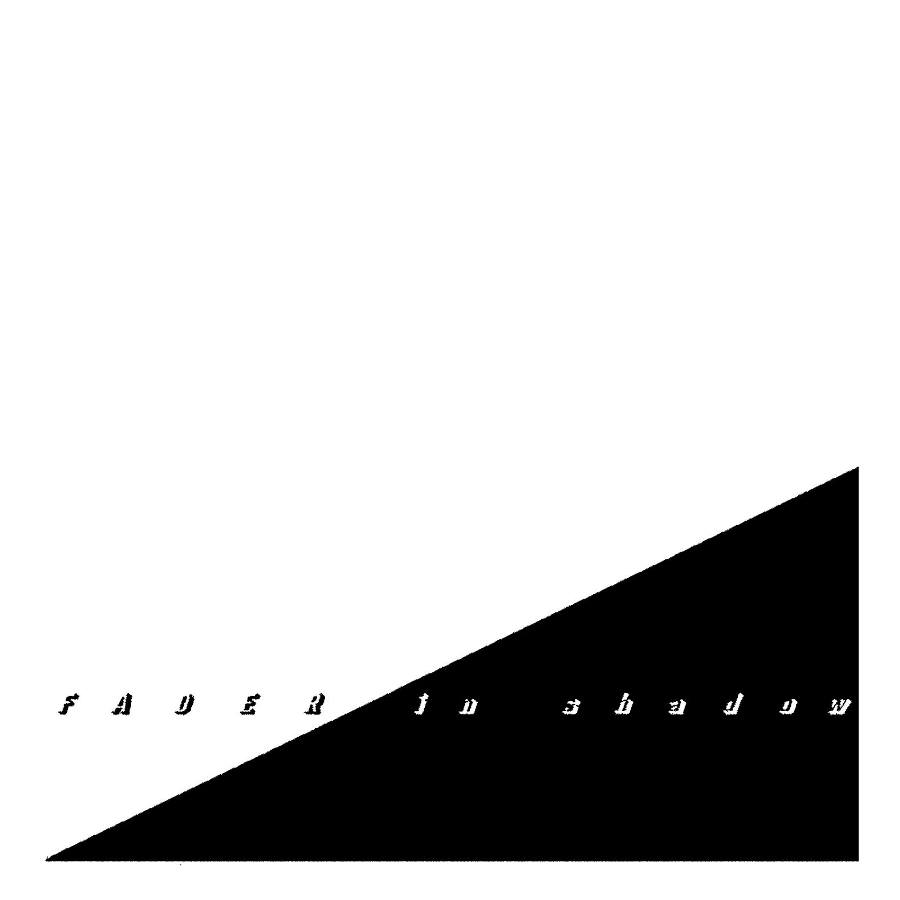
Following the critical acclaim for their 2017 debut long player ‘First Light’, a second FADER album entitled ‘In Shadow’ is about to be unleashed for public consumption at the end of October.

Perhaps musically more introspective than its predecessor, ‘In Shadow’ however finds Neil Arthur expressing an understated frustration and anger with the world at large.

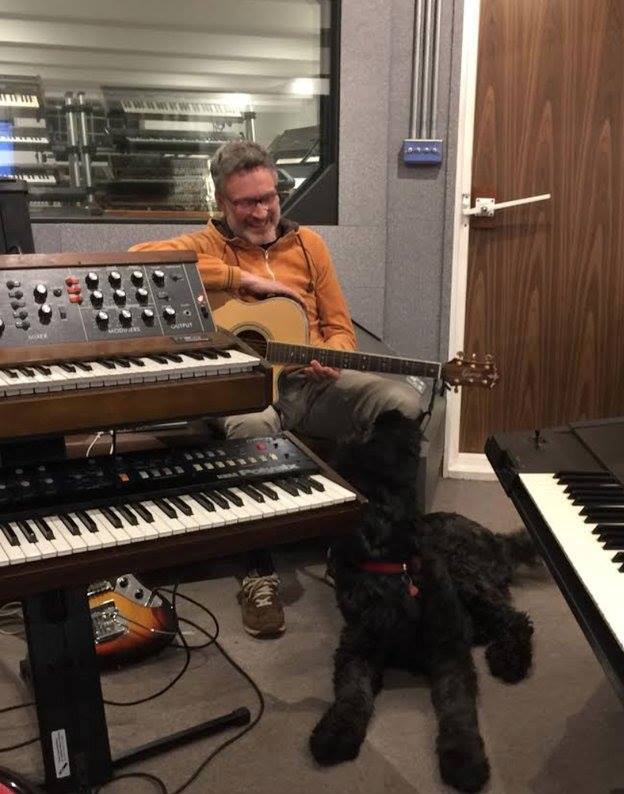
Neil Arthur and Benge kindly spoke bout their latest collaboration and its more minimal approach.

How do you look back on the making and reception of the debut FADER album ‘First Light’?

Neil: The making was more or less the same approach, in terms of how we work. That is, initially remotely, exchanging files and a number of conversations online and by phone.

The reception seemed to be favourable, although it would have been good to sell a few more I guess. Creating the first album was an exciting step into the unknown, as we’d not worked together before, but after a couple of FADER and a brace of BLANCMANGE recordings, I’m constantly surprised, in a positive way, at Benge’s approach and the results therein.

Benge: The first album was a bit of an anomaly for us both really. It came out of a very unusual situation, and the results took us both by surprise, which is always a good thing.

On that album, I had written 90% of the music beforehand, on a trip to LA a few years before I had met Neil. The tracks had been sitting on a hard drive waiting for someone to put vocals on them. I was lucky enough to meet Neil one day and the idea was suggested that we collaborate on an album project, and FADER was born.

The reception was really great to the debut – maybe because no one was expecting it, and maybe also because it had a fairly unique and original sound to it, which was the result of the unique process we had gone through to get it made.

The follow-up ‘In Shadow’ as the title suggests, appears to be darker and moodier in tone?

Neil: When Benge sent over his initial instrumental ideas, I thought the tracks were more melodic than those on ‘First Light’, which I thought would lead to a lighter tone and feel, but when it came to doing the lyrics, I just followed my noise and went down a moodier path!

Benge: The second album also came about in quite an odd way, because neither of us had sat down together and decided to write new material for it really. It was another case of me sending a whole bunch of tracks over to Neil, and him listening to them all and hearing a sonic theme and then working on the vocals and lyrics and responding to my tracks.

I have a way of working sometimes where I will set up a synth and a sequencer or drum machine in the corner of the studio and leave it there for a week or so, with a tape to record any little sketches I might come up with while I am exploring. After several months, I found I had a bunch of tracks that sounded like they might work as new FADER material, because they had a certain simple melodic structure to them that I thought Neil would get his head round and twist it all up with his vocals. So as I say, I sent them all over to him in a zip file and waited for a response. A few days later these amazing songs started popping up in my in box. It was really exciting for me.

Has insomnia been a factor and given more time for deeper thinking?

Neil: Well, for various reasons I don’t sleep to well or when I do get some rest, I don’t sleep for long. That does lead to some early morning mind wanderings.

Is the core of the creative dynamic to be in the same room for each song’s conception, or is remote working the fastest, most practical method?

Neil: The practicals dictate on the whole how we work. That said, I like this method, at first working remotely, exchanging ideas, as the project starts to take its shape. It’s like getting a musical present or surprise, each time I see a WeTransfer arrive from Benge. As I mentioned earlier, always a surprise!

But when you do get together at the MemeTune base in remote Cornwall, it must be a wonderful place to work with no city distractions?

Neil: It’s a brilliant studio to work in and when the perspective is needed, there’s always the dog to be walked up on Bodmin, the pub, the coast or a bike ride.

Benge: Yes, that’s my favourite bit of the process, when you get together in the studio and you can hear an album take shape. It’s a magical thing. The songs begin to make sense (if that’s possible with Neil’s lyrics!), and the things that need to be done on each song reveal themselves all of a sudden.

Sometimes it’s a case of maybe adding a synth line, tweaking an arrangement, or maybe taking things away and simplifying the track as much as possible.

Is ‘Always Suited Blue’ fuelled by a dislike of politicians maybe?

Neil: I have a dislike for some politicians, the careerist, self-serving, bullying type, who are no use, to man nor beast, but no, it’s not fuelled by that.

Some of the album’s vocals are deeper than say the more recent BLANCMANGE work, like on ‘What Did It Say’ and ‘Reporting’? The latter just captures a total air of resignation…

Neil: I think from memory, I did some of the vocals sitting down. That could have got me taking a more intimate and deeper tone. I’ve always had a pretty low voice, maybe it’s breaking!

The approaches to ‘Midnight Caller’, ‘What Did It Say?’ and ‘Whispering’ are quite minimal?

Neil: Benge and I spend a lot of time editing out during the mix stage, to see how little is needed to complete the track. Sometimes there’s a tendency to add layers, because you can and maybe there’s an idea that seems to work with the one that’s already there. But if the original sound, or part is standing up for itself, why add to it? So we don’t, we save that idea for another song, another time.

‘Enemy Fighter’ pulls out a bit of drum n bass, but what might it be referring to, is it literal or metaphoric?

Neil: Lyrically, it centres on a characters moment of reflection, while in the heat of a battle and in a certain death situation. The tuned vocals seemed to fit.

What sort of instruments were you largely turning to for ‘In Shadow’, had there been any particular paint palette set behorehand?

Benge: The songs were each borne from a handful of monosynths and polysynths as I mentioned before, all of them being from the late 1970s or early 80s. If I remember correctly, the main ones were Korg DV800, Roland Jupiter 6, Oberheim Xpander, Roland SH101 and then some early digital drum machines, like the Casio RZ1, Korg DDD1 and Roland TR505.

So what was this Butler 100 synth Neil was referring to in his last BLANCMANGE interview that Benge later commented didn’t exist? *laughs*

Neil: Ha ha, I think when we did the interview you misheard. We had been using a Buchla synth. It got Benge and I inventing imaginary synth names – the Jeeves 2000, Wooster V2. PG 808 etc.

Benge: My favourite synth of all time – the Lambert & Butler Sound Modulator 400

NEAR FUTURE have done and CREEP SHOW + KINCAID are going out live, would that be a possibility for FADER in the future?

Neil: We do talk about that. It would be great. How about the Minack theatre?

Benge: Or the Eden Project gift shop?


ELECTRICITYCLUB.CO.UK gives its sincerest thanks to FADER

Additional thanks to Steve Malins at Random Management

‘In Shadow’ is released by Blanc Check Records on 25th October 2019 in CD and download formats, pre-order from https://fader.tmstor.es/

https://www.facebook.com/WeAreFader

https://twitter.com/WeAre_Fader


Text and Interview by Chi Ming Lai
30th September 2019

« Older posts Newer posts »