“I don’t like country & western, I don’t like rock music… I don’t like rockabilly! I don’t like much really do I? But what I do like, I love passionately!!”: CHRIS LOWE
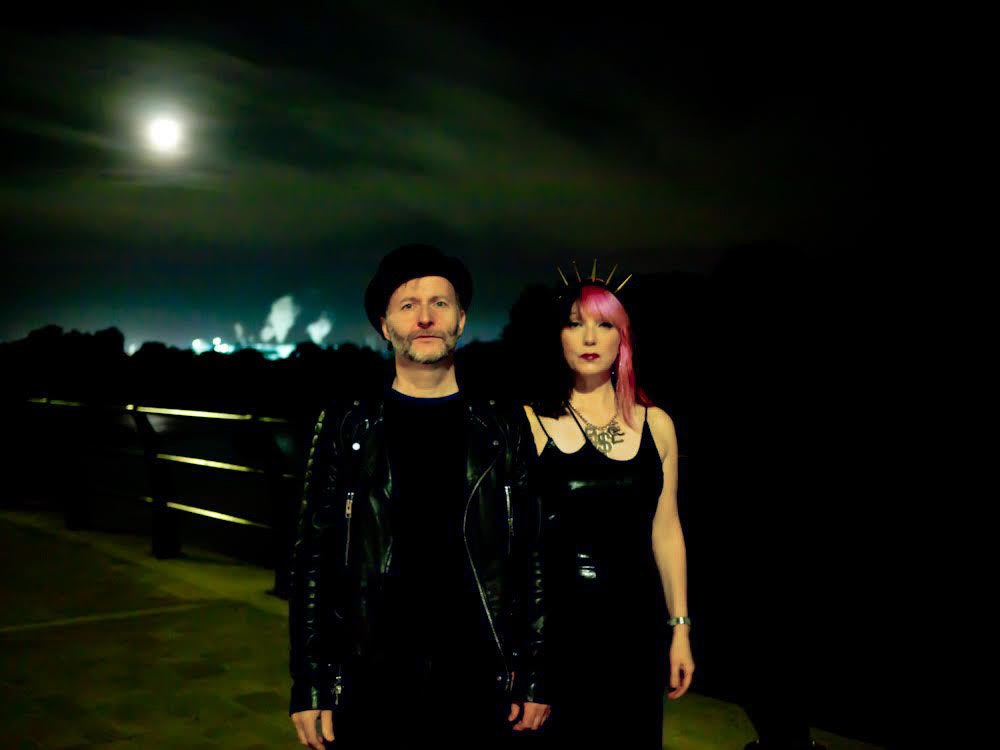
Having released their debut EP ‘Skin’ in 2013 and followed-up with numerous singles and other EPs since, tech-punk electronic pop duo FERAL FIVE finally unleash their debut album ‘Truth Is The New Gold’.
Comprising of Kat (lead vocals, synthetic AI voice, guitar, synths, live coding + percussion) and Drew (bass, beats, synths, guitar, percussion + vocals), the duo take listeners into their own Feraltropolis. The palette of tools and instruments range from traditional bass and guitar to up-to-the-minute AI with electronica in between.
Exploring the theme of light pollution, the album begins with windy chimes and synth passages on the fine squelch laden ‘Silver Sky’; with some great vocals and backing, it is reminiscent of the quirky but accessible INTERNATIONAL TEACHERS OF POP meeting GOLDFRAPP.
But throbbing and bleeping, the title track sees Drew’s sinister vocal tones add menace in that THE THE on the ‘Some Bizzare Album’ fashion alongside the heavily flanged guitars as the track freefalls within its aural cocoon. Adopting a deeper contralto, Kat offers reality versus “doom-scrolling” commentary on ‘Roll It With Me’, a wonderful track that displays a musical kinship with VILE ELECTRODES ‘Little Death Capsule’ in its pretty arpeggiated hooks.
Meanwhile ‘Camouflage’ provides an ominous groove countered by Kat’s vocal as she aims to hide from this world overly dominated by social media and the like. However upping the vocal scale, the shuffling reggaefied ‘Skin In The Game’ is appealingly reminiscent of DUBSTAR. Within a mysteriously eerie soundscape, ‘Dreaming’ is more of an art piece than song that gradually gathers pace while another atmospheric excursion ‘Regenerate’ acts more as an interlude, all be it a poignant one.
An appeal for unity, ‘Golden Rule’ is spacious with an air of SIOUXSIE & THE BANSHEES parachuted into Twin Peaks while sonically referencing the ‘Superstition’ era, ‘Gravity (Dazzle Me)’ adds a psychedelic vibe to proceedings. Cut from a not dissimilar kaftan, ‘Pet Show’ presents electro-hallucogenic effects that bring in a strange otherworldly presence.
Exploring truth in an uncertain digital world, ‘Truth Is The New Gold’ reflects on similar topics to Rodney Cromwell’s ‘Memory Box’. With their examination of how today’s world is now stranger than fiction, the end result will likely appeal to fans of DUBSTAR and INTERNATIONAL TEACHERS OF POP.
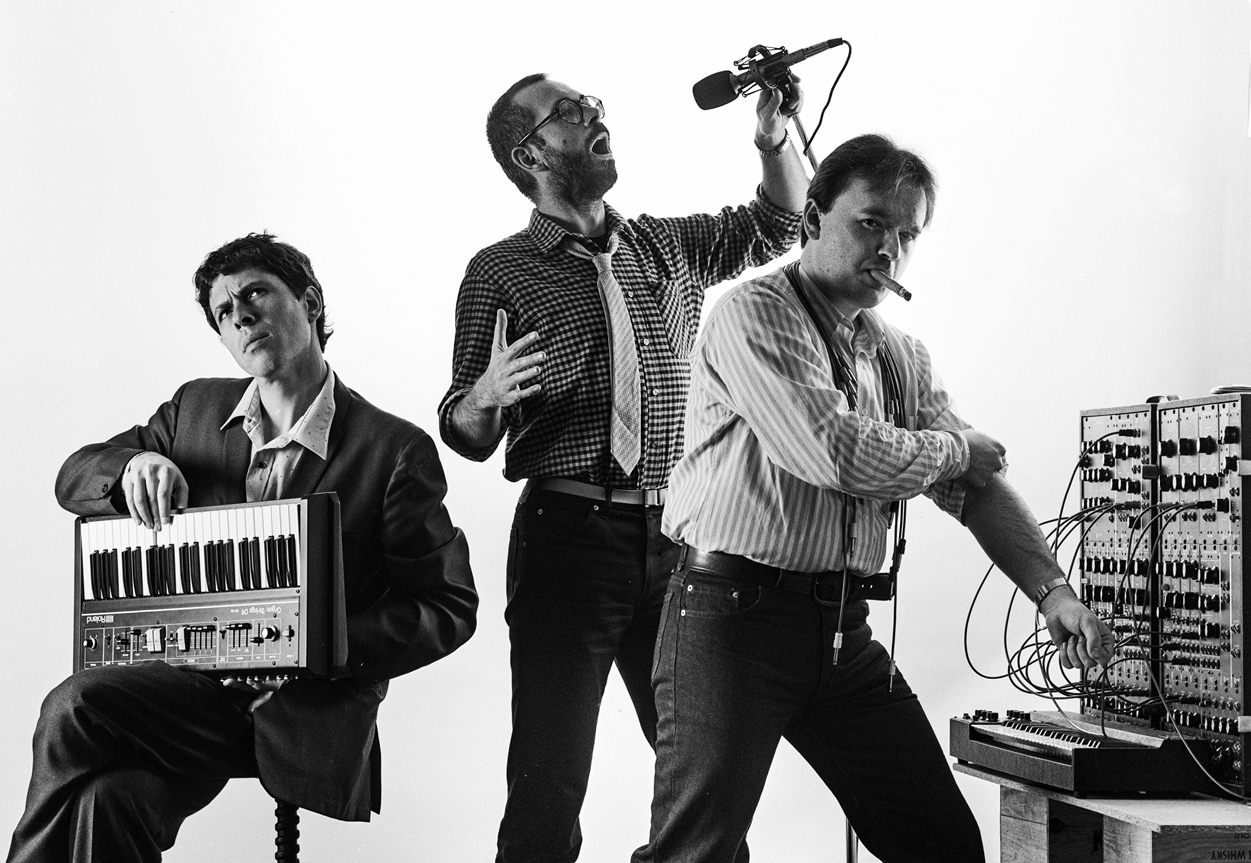
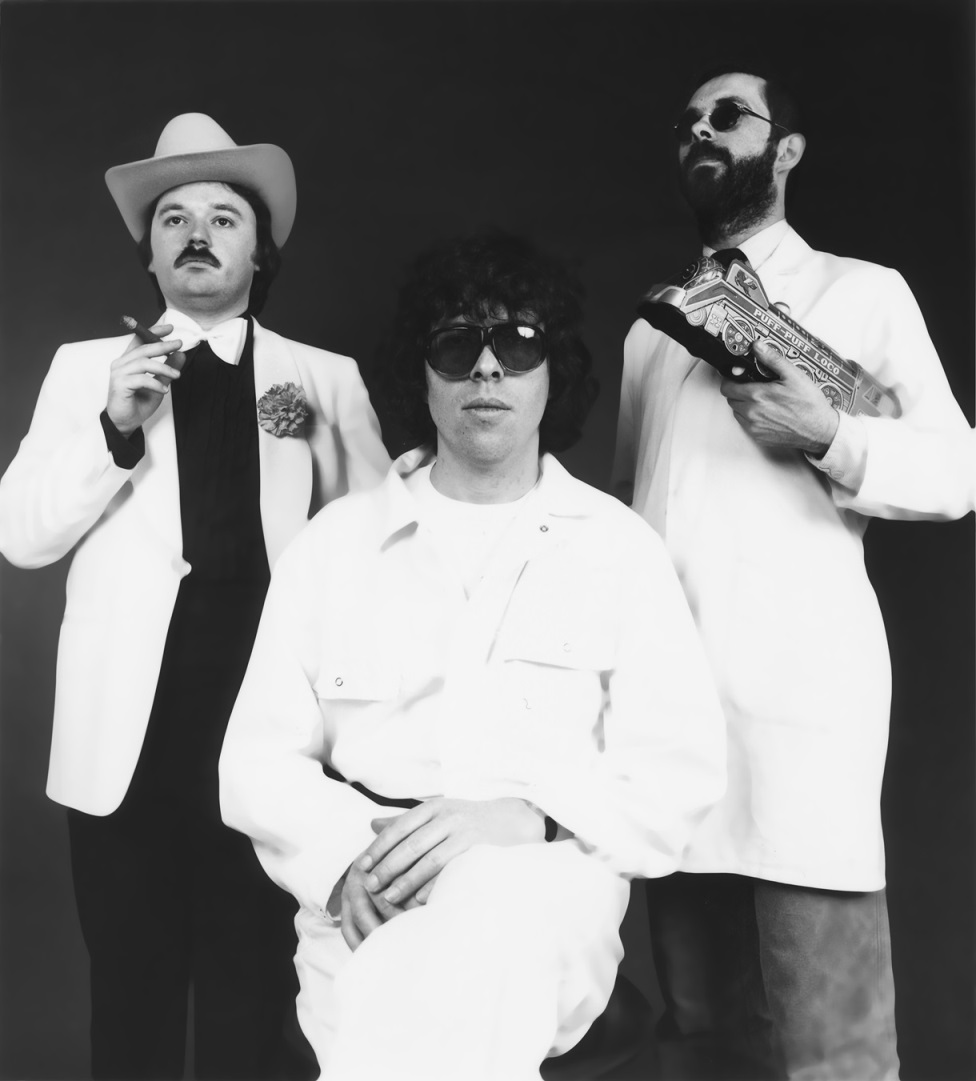
Belgian synth trio TELEX are to release a new box set of their studio albums on Mute this Spring.
Their 1979 debut album ‘Looking For Saint-Tropez’ featured three unusual and striking electronic reinterpretations of rock ‘n’ roll through the ages including ‘Rock Around The Clock’, ‘Twist À St. Tropez’ and ‘Ça Plane Pour Moi’. Pre-dating SILICON TEENS, the fictional teen synth band devised by Daniel Miller, the new partnership with Mute is highly fitting with the one-time apprentice providing a new home for the sorcerer.
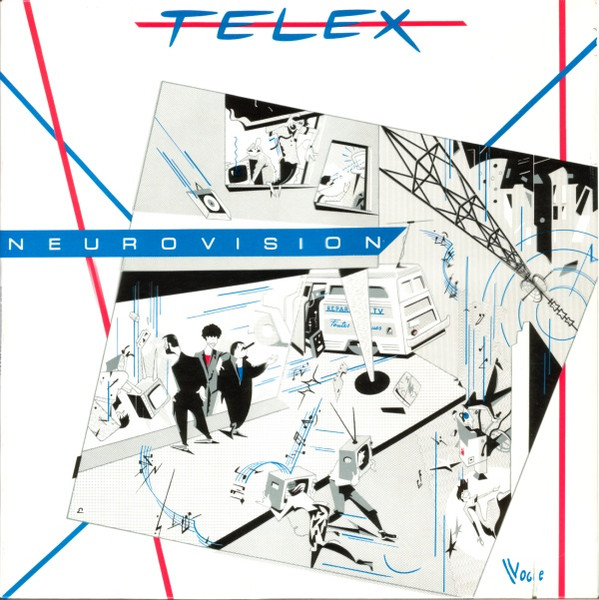
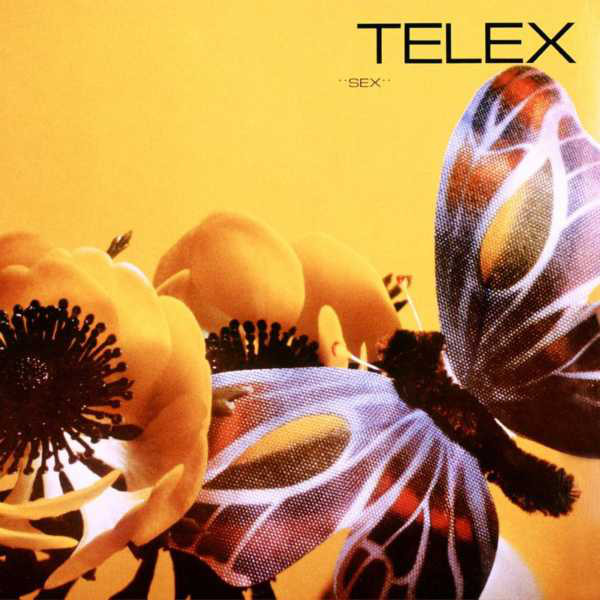
As well as ‘Looking For Saint-Tropez’, the ‘TELEX’ box set will also contain ‘Neurovision’ (1980), ‘Sex’ (1981), ‘Wonderful World’ (1984), ‘Looney Tunes’ (1988) and ‘How Do You Dance?’ (2006); all the albums have been remastered and newly mixed from the original tapes by band members Dan Lacksman and Michel Moers.
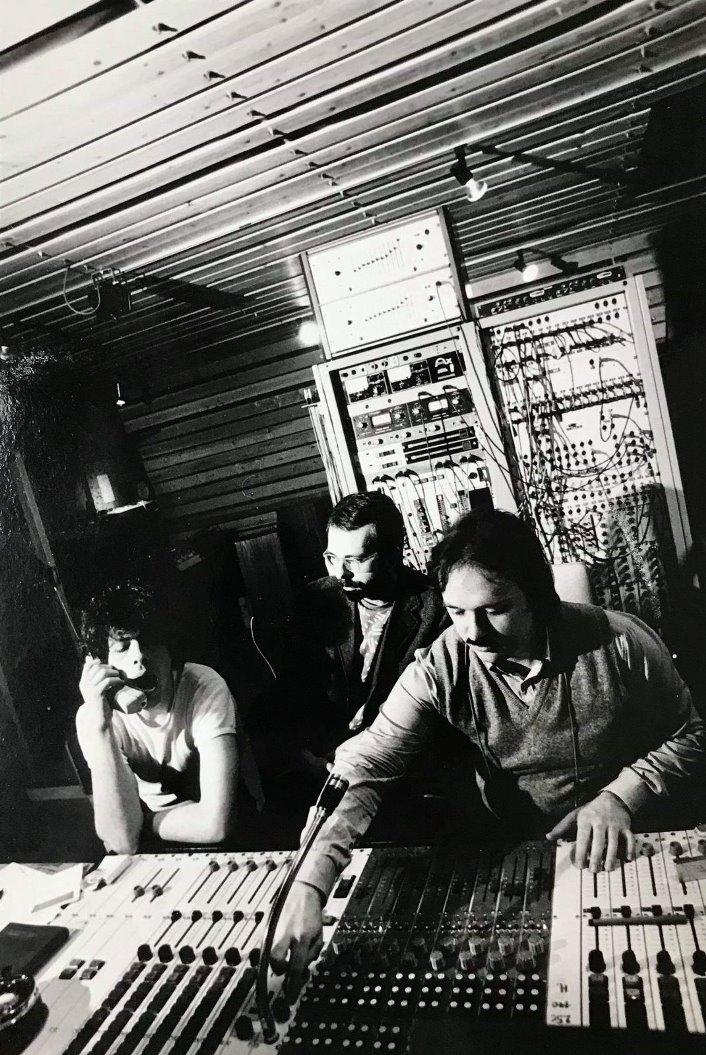
The Brussels-based threesome of Michel Moers, Dan Lacksman and Marc Moulin were already experienced hands when they formed TELEX in 1978. But they trailblazed and subverted during their imperial phase, crossing paths with SPARKS and YELLOW MAGIC ORCHESTRA along the way. Representing Belgium at the 1980 Eurovision Song Contest, their bouncy song ‘Eurovision’ with its deliberately banal lyrics sending up the whole charade featured a Situationist performance that puzzled most watching on TV but delighted many others.
Recognised as techno, house and synthpop pioneers thanks to seminal tracks such as ‘Moscow Diskow’ and ‘Haven’t We Met Somewhere Before?’, TELEX were to later remix DEPECHE MODE and PET SHOP BOYS. But after Marc Moulin sadly passed away in 2008, TELEX were formally retired.
Blessed with another opportunity to present their impressive legacy to a new generation and established music fans who may have missed them first time round, Michel Moers and Dan Lacksman spent a joyful hour chatting to ELECTRICITYCLUB.CO.UK about their time as TELEX…
TELEX joining the Mute family is quite appropriate isn’t it, like it was meant to be?
Michel: It should have been earlier… *laughs*
We had a very long contract so when we could get out of it, the first thought was “Mute is the best”; so we tried and it was the right move, we didn’t ask anybody else. The next day, we received an email from Daniel Miller saying “yes OK, let’s talk”.
Dan: We couldn’t believe it because it was our dream. “What would be the best company to reissue the albums?” and of course it was Mute. It’s great.
Michel: We loved ‘Warm Leatherette’, it was like a punch! Then SILICON TEENS came after TELEX, but at the time I wasn’t aware it. KRAFTWERK were a big influence but as “The Belgian KRAFTWERK” (*laughs*) with Belgian humour and cartoons, it was more related to our environment and personalities. English humour is better known around the world.
Dan: Belgian humour quite is surreal, similar to Monty Python which was very popular here because it was completely absurd. Also there are two cultures in Belgium, the French one and the Dutch one. It’s a mixture of both. I am French speaking but my grandfather was Flemish so I can feel both sides in me and a lot of Belgian people, especially in Brussels, they are a mixture of cultures.
Michel: In Belgium, we are much closer to English humour than French humour.
There are new mixes of the albums but what do you mean by that, as that might ring alarm bells for some, like dance remixes etc? *laughs*
Dan: It’s not every title, it’s about 60%… when we first started to remaster, some of the mixes we were listening to and thinking “it’s a pity, there is too much reverb” or whatever. But then the idea came to try a new mix but sounding similar to the original. So we decided to try one and if we don’t like it, we don’t do it! But it worked very well, so well that finally we listened to every album and we decided which titles we thought were ok for mastering and which ones we should attempt a new mix. And so that’s what we did.
Michel: So it’s new mixes, NOT “remixes”, that is more related to dance… the main thing we did was to take tracks away…
Dan: …to simplify…
Michel: The first album was our main reference and we probably didn’t succeed after because there were so many new machines to try… so with these new mixes and less tracks, the six albums are more a whole, you can really feel more of a thread….
Dan: All the songs are original, we didn’t replace anything, the vocals are all the original ones and no cheating, well…
Michel: …sometimes calibrating my timing or my pitch! *laughs*
Dan: The bass was played manually in those days, no sequencer which is why it was grooving, Marc had an incredible groove but sometimes, there were parts we replaced but very few really…
How did ‘Moscow Diskow’ come together, the idea of going to a club behind The Iron Curtain?
Michel: The original idea was to make lyrics, French words that English or American people were using, like “fantastique”. It was putting all these words together, some more personal ones like my girlfriend was called a “French Garçon” and things like that. It came together with the idea of a train…
Dan: So I thought, what about the hi-hat, it would be the train, a steam train which would be a completely surrealistic concept. So I started from there and added a kick drum and claps, there is no snare and I did the “woo-woo” sound with two oscillators and an envelope controlling the pitch. It was done very fast. We didn’t specify a 130 tempo, it was just a knob, like “what about this?”. We had to first record the drums on three tracks before we could do the keyboards as always, it was very spontaneous. It came like this, et viola!
Michel: At the time, the Moscow graphics were very well used, we liked to play with clichés… if we were writing the song now, we would choose another town…
‘Rock Around The Clock’ is TELEX’s only UK hit and the ‘Top Of The Pops’ performance is still great performance art… but it crossed over, even my mother liked it!
Michel: We also did a cover of ‘La Bamba’ and it is also slower than the original like ‘Rock Around The Clock’ so that old people can even dance to it *laughs*
The idea was to show who TELEX were, as people would know the original and hear the difference. It was an easier way to show who we are and that the audience may like an original song of ours. TELEX were like making a “History of Music”, so ‘Rock Around The Clock’ is rock, ‘La Bamba’ is South America, ‘Dance To The Music was black music…
Were you surprised to get the call to be on ‘Top Of The Pops’?
Michel: No, because maybe the reason we were asked was because they had a new Quantel machine to make new kinds of images and special effects. We were probably the only band around at that time with electronics where they could make these images that had not been made before. So it was more for them to play with their machine *laughs*
Dan: The rule on ‘Top Of The Pops’ at that time for international artists was that everything had to be live, but they wanted to experiment with this machine. So the day before, we went to the BBC and they filmed us to prepare some effects that they would insert the next day when we were performing, they were running the effects in sync and then they would put the live image and some effects, so when we did the “da-da-da” and the picture swirling, it was great, it true that it fits with the music.
Was it your idea to read the newspaper or the ‘Top Of The Pops’ director? *laughs*
Michel: It wasn’t the director, his reaction was “Are they bored? They don’t want to be there” *laughs*
No, we liked sometimes to use the anti-cliché of pop music you know… in pop music, everybody is smiling and moving, so the idea was to do the contrary. One of the main comedy characters we liked was Buster Keaton…
Dan: …he never smiled!
Michel: So we thought, “what would he do?”… you didn’t dance, just *does swaying arm movement*
Dan: NO! *laughs*
PET SHOP BOYS did the newspaper thing in 2009, I don’t know if they got the idea from you?
Michel: They also don’t dance… at the end of ‘Eurovision’, I take a picture of the audience but now, everybody has an iPhone and is taking the picture so it’s funny. The idea was reversing the process.
So ‘Rock Around The Clock’ saw you covering an old song, you also covered an quite new song at the time ‘Ça Plane Pour Moi’ and Dan, you have a connection because you did the synths for Plastic Bertrand on ‘Tout Petit La Planète’? Was this cover deliberate because of your connections?
Michel: Well, it was to please our producer as it was the same record company *laughs*
Dan: But we thought it would be funny to do as it was a very fast track, to make it slower and add vocoder…
Michel: It was part of that “History of Music” idea, add some punk plus it was the only way you could make people understand the words! *laughs*
As the box set shows, TELEX became notable for their cover versions, which were your favourites and which songs do you wish you had recorded?
Michel: There are two that have not been released sung by me but they are probably not TELEX enough… my idea would be to keep the backing and have someone who sings well! *laughs*
With people who sing well, what they sing is usually boring to me. Maybe it’s not the same in England but over here, it’s for radio but the singers sound like…
Dan: …that’s maybe because of the voice program that is everywhere and it’s just physical performance, it’s not singing anymore… like why? Maybe people are just accustomed to it, even if it is out of tune, it doesn’t matter but when you stick Autotune on, you have no more feeling.
When you did ‘On The Road Again’ in 2006, had you been aware of ROCKETS’ version which similarly used vocoder?
Dan: I was not aware…
Michel: I was aware after… the idea of ‘On The Road Again’ was simply because we were making a new record after so many years of silence. Now I know the ROCKETS version but it was a few weeks after our version came out, Italian TELEX fans were sending me pictures of these guys full of blue. Often the same things can be produced all around the world without realising, like the invention of the telephone, we didn’t know.
So ‘Eurovision’, did the song come first or was it TELEX entering Eurovision that inspired it?
Michel: The song was written for Eurovision, but the idea was to make a photo of what it is, people being well-dressed and at that time there were borders… well, there are borders now! *laughs*
But the idea was all these borders were open for one night and after that, they would close and anyway, the image would go through armoured cables so it was like war. At that time, Peter Gabriel had written about something similar on ‘Games Without Frontiers’ and also Robin Scott as M with ‘Pop Musik’; in fact, we met him at Cannes before the contest and asked him whether he would be interested in making lyrics for us, but he said “I’ve done that already with ‘Pop Musik’”, so I finally did it myself.
Was there a selection competition back home?
Michel: Yes, we had one, there were 10 contestants and we won the competition… but when we were asked by the record company, we thought they were crazy, it was not what we really wanted to do, it was not our music. We thought about it for 2 weeks and said “let’s go for it” as it would be like the epitome of pop music.
So the country was behind you?
Michel: Maybe not the country, but the people at radio and TV on the jury liked it. But all the other competitors were very normal… *laughs*
Dan: Boring, nothing special… we were completely different…
So they were more like The Singing Nun, Dana or Nicole type of entry?
Dan: EXACTLY!
Michel: But The Singing Nun would have had a chance! *laughs*
I am already imagining in my head the idea of TELEX covering The Singing Nun song ‘Dominique’! *laughs*
Michel: In fact, Dan and Marc did it!!
Dan: We did an electronic version with Soeur Sourire, it was a complete flop! *laughs*
So back to Eurovision, how were you choreographing your performance and moves?
Michel: The moves began before because there were normally three rehearsals and we couldn’t achieve one. There was a rule that everything you hear had to be seen, so all the instruments. So if you hear a drum, there should be a drummer. But everything we had was in three Moog modules so there was nothing to see, that was the first argument in the first rehearsal. Then the other argument was about electricity!
Dan: Yes, they didn’t like us because everything was supposed to be live which was not correct, because they said we could come with a backing tape, but everything on tape must be on stage! Simple! So like with ABBA, it was a backing tape, they didn’t play for real but the voices were real. So for us, it was the same thing, we sent a tape but the “drums” I made with the Modular Moog, so you don’t see a drum, you just hear “drums”.
When we were starting rehearsals, the director says “STOP! I hear a drum, where is the drum?” So I had to explain the drum sound was made with this instrument. “OK, we don’t see anything” he said, but I asked if they gave us some electricity, we could push a button and see the sequencer going on… “OH NO! NOT POSSIBLE!” but the director asked if the singer could push a button and fake it. So Michel just pushed a button, nothing happens on the Moog, no wire, nothing so it was completely… and then the song went on and Michel couldn’t hear himself…
Michel: The real time, I couldn’t hear myself, I don’t know if they did it on purpose but I couldn’t hear the three backing singers so my voice is a bit stressed, that’s it! *laughs*
And then?
Michel: Just before our turn on stage, we met Johnny Logan…
Dan: He won by the way…
Michel: I said “I’m sure you are going to win” and he replied “If I win, it’s good for me but if you win, it will be good for music”, that was so nice.
So you wanted to win, or come last but how did you actually feel when Portugal gave you those points? *laughs*
Michel: It was very mixed in our mind… we were chosen to go and then our British and American record companies thought we would win! It was the 25th Anniversary of Eurovision and we heard they would like to change the rules… so they changed the rules to a public vote, so this was very difficult for us! At the same time, we could feel we couldn’t win and it took some years to recover some balance! *roars of laughter*
Dan: We didn’t take it especially seriously, but we were surprised that everybody else was so serious, it was almost a pity to see the two young girls Sophie & Magaly from Luxembourg completely destroyed and crying when they didn’t get points. We were sitting, we had nothing and understood “OK”, so we hoped we were last. And then suddenly Portugal gave us 10 points! WHY? And then Royaume-Uni give us one point (this is why the first box set is called ‘Belgium… One Point’) and Greece three points! We were not last and it was a poor group from Finland… everyone was very serious and we were a bit apart.
Michel: All the organisation was very strict, it was like being in an airport which I understand… we didn’t win but in the long run, people remember us and every year, we have 30 seconds of fame…
Dan: …because of the strange stuff that happened on Eurovision…
Yeah, I’m one of the guilty ones who keeps posting up the ‘Eurovision’ clip… *laughs*
Dan: You’re not the only one!
I don’t know if you are aware when ABBA won in 1974, the UK gave them nil point!
Michel: There’s a lot of politics now…
Dan: It’s more difficult than ever, you have the two semi-finals and then you have the final, it’s getting very completely crazy.
‘The Man With The Answer’ from ‘Sex’ seems to show an affinity with YELLOW MAGIC ORCHESTRA featuring the late Yukihiro Takahashi, did you feel a connection with any of the other electronic music acts?
Michel: At that time, no, we didn’t listen much to each other… it’s really funny but maybe we were a bit shy but we were on the same stage in Paris with YELLOW MAGIC ORCHESTRA on TV and we didn’t speak to each other which was stupid… but finally Harumi Hosono came to the studio to make a cover of our song ‘L’Amour Toujours’ with a Japanese singer Miharu Koshi.
Dan: Just an anecdote with Harumi Hosono, it was incredible because he could speak only Japanese, no English, no French; there was a French guy living in Tokyo to translate but he didn’t need him because for the work, we understood each other perfectly because it was the same equipment, the same way, it was fantastic, he would programme the sequencer and find the sounds, we were very close technically, those three days were really incredible.
Michel: It could be astonishing that we don’t really relate to your question because Belgium is so small and we were all working apart, we had other jobs, it’s not like having a success all around the world, we couldn’t live on just music. So we were not really part of an electronic scene like London where we would have to go out every night or even in Belgium because even if we were invited somewhere, we wouldn’t go. Also, we were a bit older than most people because we had done things before musically, so we didn’t have the same needs or same way to live. But Belgium is, well, was an island… *laughs*
But one act that you did connect up with was SPARKS. Was bringing them in to collaborate on lyrics on the ‘Sex’ album part of a conscious effort on TELEX’s part to be more international and accessible like on ‘Haven’t We Met Somewhere Before?’ and ‘Long Holiday’?
Dan: It was a coincidence because I was working with a Belgian singer called Lio with Marc Moulin at the same time as TELEX, she was an incredible big success and she was doing TV everywhere in the world. Once in Paris, she was on the same programme as SPARKS. Then Russell Mael proposed that she make her next album in English and offered to write the lyrics. So they arranged to work at my studio in Brussels but Lio never came! We were recording the ‘Sex’ album at the same time so we met, they listened to the album and proposed some English lyrics…
Michel: I had made some French lyrics that I couldn’t make work in English so it was ok.
Dan: So Russell and Ron stayed in Brussels, coached Michel with the singing and they liked the city and came back to make their own albums. They would take the tram to the studio and people would recognise them, so they would sign autographs and it was great, they really liked it *laughs*
Michel: The SPARKS tram! *laughs*
I always thought ‘Haven’t We Met Somewhere Before?’ should have been a hit single in the UK…
Michel: We didn’t write songs to be hits, it’s nice when it comes but we did things we wanted to hear.
In the UK, there was this strange thing of the ‘Sex’ album being released as ‘Birds & Bees’ with different tracks including a new single ‘L’ Amour Toujours’; you did two versions of ‘L’ Amour Toujours’ and I preferred the earlier one on ‘Birds & Bees’ over the reworked ‘Wonderful World’ version…
Michel: I think there are even more versions… *laughs*
At that time, we felt that song could be a hit and maybe we were searching for a way to make it more clear and that’s why there are different versions, maybe we didn’t make the right one. That’s the song Harumi Hosono made with Miharu Koshi. There are maybe 5 or 6 versions on the tapes… sometimes we lost our way because there were so many new machines… that was his fault! *laughs*
Dan: We experimented a lot…
Michel: So compared to KRAFTWERK, we didn’t make as many new songs and they made remixes… they also had a strong image, we didn’t really care about showing ourselves… someone once asked us after the 2006 album ‘How Do You Dance?’, “why do you make music like DAFT PUNK?”…
By ‘Wonderful World’, the digital technology had taken hold, how did you find working with it? ‘Raised By Snakes’ is good but it could be any variety of acts at the time?
Dan: It’s funny you mention ‘Raised By Snakes’ because it’s a pre-sampler track. I didn’t have the Fairlight yet there is this chord; I remember that we had the idea to put on this chord all the time so I put it manually into the multi-track. We put the chord on a quarter inch tape and I had a zero lock and a return button, so to record it, I played the multi-track, then I sent the chord “ding” and then I returned to zero ready for the next time. So it would have been more easier with a sampler but it was just before, it’s funny. Of course, the result is the same.
With the Fairlight from 1983 plus the Synclavier, these were the first digital synthesizers and it was impossible not to have one… on top of TELEX, I had my studio SYNSOUND and people came to me to put electronic sounds on their records so I had to have the whole palette. That’s why I kept buying these novelties at the desespoir of my wife *laughs*
Which were your favourite synths?
Dan: Well, I would say it’s the Oberheim OB6, it’s quite new but it’s the one I use the most because every time, the sound is so inspiring, it’s completely analogue and so it’s great. It’s polyphonic also so you can do almost anything. But of course if you want a real good bass, there is nothing like the Minimoog and if you want some more sophisticated analogue sounds, there is nothing like the Moog Modular, they are all complementary.
Michel: Don’t ask me! *laughs*
I made demos but I don’t go into the final thing, I must confess, I just use Logic now… I’m more interested in composing, but of course it is important to use the right sound.
Dan: I use plug-ins too.
And what was the synth or piece of equipment that was most disappointing, the one didn’t meet expectations?
Dan: It’s easy, the Simmons drums because I could do better sounds with the Moog Modular. It’s not good enough, you only had one envelope and with this envelope, you can control the pitch and the length of the sound. But you would need two envelopes to make it good, one for the pitch and the other for the filter for example which you can even do on a Minimoog! I bought a module and five pads because it was quite popular at the time. The pads are in the attic, they are beautiful by the way, but I almost never used it.
What are your own TELEX career highlights?
Michel: To me, it’s really the first album ‘Looking For Saint Tropez’ because we made music that was really fitting with what was on the market, the idea was so simple, not many things were polyphonic. So for me it was the best period, discovering things and after, it was trying to find the same enthusiasm with new things. But our first album and single ‘Twist A Saint Tropez’…
Dan: … it was very spontaneous… Marc asked me one day “what about making an electronic group together?” and it was great idea. And then we needed a singer, and Marc reminded me of this singer Michel Moers who we worked together with. So we had a rendez-vous in my studio to try something, what can we do? And then Marc and Michel said “Maybe let’s take a French song and make it completely electronic? Oh what about ‘Twist A Saint Tropez’ by LES CHATS SAUVAGES?”; so we switched on everything and then in one day, we finished the track. I did a quick rough mix and put it on a cassette because Marc was seeing a friend who was working for RKM Records. It was played to the boss Roland Kluger and the next day we had a contract! It was so quick!
Michel: The nice thing about all this is that although we made a cover, we prevented ourselves from listening to the original, it was a cover made from our memory. That’s why it’s so different. This is why it’s important for me, it was an exciting period.
What are the highlights of your career Dan?
Dan: What career? *laughs*
It was always great to work… in the beginning, we were discovering, then we were experimenting so some days were a bit, I would say, disappointing but the next, we would listen back and think “that’s great” because sometimes you would be thinking too much or whatever. Before TELEX, I did some records on my own but I never liked it frankly, I am not extrovert so I prefer to be in the studio. TELEX was perfect as it was something we did together, but it was something made in the studio so that we don’t have to make concerts. Later, I had a lot of work with other artists at my studio, synthesizers were really popular so I was working every day.
Dedicated to the memory of Marc Moulin 1942-2008
ELECTRICITYCLUB.CO.UK gives its warmest thanks to Michel Moers and Dan Lacksman
The ‘TELEX’ box set is released by Mute as a 6 piece set in coloured vinyl LP and CD variants on 14th April 2023, pre-order from https://mute.ffm.to/telex_boxset
A musician, singer, songwriter, graphic artist, photographer, filmmaker and tattooist, Shannon Hemmett has many creative talents.
The Canadian is best known internationally as the keyboardist and backing vocalist of Vancouver post-post-punk band ACTORS whose most recent album ‘Acts of Worship’ was their best body of work to date and saw Hemmett taking on a more prominent role.
Running in parallel is LEATHERS, an electronic pop project fronted by Hemmett which also sees ACTORS leader Jason Corbett act as collaborator and producer. Although primarily synth-led and more immediate melodically, LEATHERS is pop music with darker sensibilities seeded by her love of the imperial phase DEPECHE MODE long players ‘Black Celebration’, ‘Music for the Masses’ and ‘Violator’.
The debut LEATHERS EP ‘Reckless’ was recorded over several years and finally released in 2021; the title song was an infectious slice of melancholic synthpop with an alluring vocal despite the heartbreak express by our heroine while exuding a darker spectres, ‘Day For Night’ allied itself to the moody atmospheres of CHROMATICS and ‘Missing Scene’ rocked with a cavernous gothique.
While some songs on the ‘Reckless’ EP like ‘Phantom Heart’ were maybe not that far removed from ACTORS, the following year saw the release of LEATHERS’ brightest single yet in ‘Runaway’, a glorious escapist pop tune that was one of ELECTRICITYCLUB.CO.UK’s 30 SONGS OF 2022.
A more Motorik but ethereal number ‘Ultraviolet’ followed-up ‘Runaway’ last Autumn to coincide with confirmation of plans for a full-length LEATHERS album. To tie in with the recent release of a new single in the detached dark disco of ‘Highrise’, Shannon Hemmett kindly took time out and chatted to ELECTRICITYCLUB.CO.UK about the ethos and background of LEATHERS.
How did the idea for a more synth-based music vehicle come about?
It was a natural progression, exploring the sounds and aesthetics that were inspiring to us. We weren’t thinking too hard about where we would end up genre-wise.
LEATHERS is electronic pop rather than EBM or dance, had any particular artists been inspirational in the concept?
Melodies are important to Jason and I as songwriters, so I imagine some of that comes from our love of 80s era songwriting where strong melody is a key ingredient. I tend to listen to music outside of the genre we’re creating within. Right now I’m enjoying a lot of dark techno and the 90s revival that’s going on lately with shoegaze and grunge.
Closer scrutiny reveals LEATHERS to have begun with the release of ‘Missing Scene’ in 2016, why did you choose that track to launch with?
When LEATHERS was in its infancy, ‘Missing Scene’ was the first track we wrote and recorded. So it wasn’t so much a choice, but the only song completed at the time!
The release of ‘Missing Scene’ was before the first ACTORS album ‘It Will Come To You’ in 2018, so did the international success of the band put a hold on LEATHERS?
The idea was to develop LEATHERS in the background while ACTORS toured and continued to release its own material as well. With this more gradual timeline, I was able to develop my songwriting, and my confidence as a performer in real world situations with ACTORS.
The ‘Reckless’ EP was the first body of work as LEATHERS and the title track has this dreamy melodic quality, were the lyrics autobiographical?
I think all music has some kind of connection to our personal experiences, sometimes it’s clear to the writer, and other times it’s more veiled and under the surface.
‘Day For Night’ has a beautiful OMD meets Twin Peaks vibe about it, how did that come together?
We wanted to write a ballad as a counter to the wall of guitar in ‘Missing Scene’, so that was our starting point. I also wanted to direct the ‘Day For Night’ video myself, so I filmed it on my iPhone and edited it in iMovie. It was a super lo-fi video, but I like how it turned out. I spent a lot of time on the lighting and the colour palette so it would have a Lynchian feel.
In a similar situation with Helen Marnie of LADYTRON’s first solo album ‘Crystal World’ which was produced and co-written by band mate Daniel Hunt, the ‘Reckless’ EP saw you working with a bandmate Jason Corbett, did you feel that it was better to keep things in-house? How would you compare your creative dynamic with LEATHERS to ACTORS?
Jason is just my preferred writing partner, together we have a broad set of skills in music and the visual arts that compliment one another. For LEATHERS, the writing process starts with me recording demos on my own, and then I bring them to the studio, where Jason gets involved as producer. ACTORS is Jason’s project, so he is lead songwriter, and then when it comes time, he’ll bring us into the studio to add our parts as needed.
Keeping it in the family, when LEATHERS goes out live, Kendall Wooding and Adam Fink are backing you?
Yes. Kendall is multi-talented with various instruments (guitar, bass, keys, voice etc) and I wanted live drums, so having Adam with us as well was a no-brainer. We debuted the live line-up at the US dates this past fall.
Instrumentally, what synths are you favouring?
We use a lot of the Sequential synths, especially the Prophet-6 and the OB-6 on the recordings. The Roland Juno-6 and 106 are favourites of ours too.
LEATHERS has a less ambiguous image than what has been presented on the artworks of ACTORS while it has allowed you to explore making your own videos, how important is visual aspect to your music?
I have a visual arts background in photography and graphic design, so I produce my own photos, videos, and album art. For me, the visual presentation is a crucial part of the project. All my favourite bands have a strong relationship between their music and their visuals. It’s inspiring and creatively satisfying when the music and the visuals work together to create a defined aesthetic.
With the forthcoming LEATHERS album, are any of the ‘Reckless’ songs being carried over or have you started with a clean sheet?
The song ‘Reckless’ will carry over to the new record because it was the first LEATHERS single release with Artoffact Records, but everything else will be brand new material.
Is there anything you can say about the new album, like its title, any particular favourite tracks to look out for or your own personal satisfaction in its realisation?
We’re almost done recording and mixing the new songs, and the pre-order for the album will start in April. We’ll be releasing a new single called ‘Fascination’ with the pre-order, along with a new video directed by Wayne Moreheart.
How do you think the LEATHERS album will be received, do you hope ACTORS fans will crossover to it or do you think it will have a different audience?
We can’t wait to have a full album of material out for our fans. A lot of ACTORS fans already cross over, but we’re seeing some growth into a different, more pop oriented fan base which is super cool too.
What is next for you, with both LEATHERS and ACTORS?
Both ACTORS and LEATHERS will be playing the Dark Force Festival in New Jersey on April 1st. LEATHERS will also be playing the Verboden Festival in Vancouver on May 13th.
Do you have any unfulfilled ambition, either creatively or personally?
Releasing the full length record will be a major milestone for us. And if I’m allowed to dream a little, I’d love to see LEATHERS as a musical guest on ‘Saturday Night Live’ one day. Let them know!
ELECTRICITYCLUB.CO.UK gives its grateful thanks to Shannon Hemmett
The singles ‘Highrise’, ‘Ultraviolet’ and ‘Runaway’ plus the ‘Reckless’ EP are released by Artoffact Records and available from https://leathers.bandcamp.com/
Formally of synth-tinged Portland band FRINGE CLASS, front woman Madeline Goldstein went solo in 2019 having discovered Ableton to free herself of the traditional band format.
Relocating to Los Angeles, her debut album ‘Forget This’ in early 2020 collected a variety of sonic electronic experiments with the vocal presence of Julee Cruise captured on ‘Dreams’,
While hazier impressionistic overtures emerged from the opening track ‘A Feeling’ and there were also the shimmering soundscapes of ‘Control’, 2021’s ‘Lost In Heaven’ let in some sparkle and acted as a stopgap single before 2022’s ‘One More Day’ signified a revitalised approach in more song-based structures. With brighter synth hooks amongst the dreampop and a deeper vocal register in a fabulously delivered performance recalling Mari Kattman or Megan Louise, it was undoubtedly a step forward.
Her best yet, Madeline Goldstein’s latest single ‘Seed Of Doubt’ is the first song from the soon-to-be-released ‘Other World’ EP that promises a narrative on “the restlessness of alienation and isolation, the longing to move, to feel power, and to flee”. It is a brooding slice of gothwave in a manner akin to LEATHERS, tinged with some ghostly allure thanks to a haunting soprano delivery.
Despite the sense of unease, like all good gothic-flavoured tunes, there’s a romance in the vulnerable uncertainty while chilling Numan-esque synth passages point towards visions of castles and forests as the song’s rhythmic lattice builds. This imagery is captured in the video put together by Goldstein and Chad Fjerstad which begins with grainy and nocturnal street footage in the intro before snapping into daylight and rock formations to portray isolation in nature. The visual accompaniment jumps around to show a forlorn Goldstein sitting in a hotel room while also containing grainy night vision footage.
The self-composed ‘Seed Of Doubt’ has been produced and mixed by Matia Simovich whose credits have included BOY HARSHER and BODY OF LIGHT, as well as one-time TANGERINE DREAM member Peter Baumann. Madeline Goldstein will soon be on the bill with Catherine Moan and Primer for a live gig at The Virgil in Los Angeles hosted by Das Bunker.
Madeline Goldstein, Catherine Moan + Primer play Das Bunker at The Virgil on Santa Monica Boulevard in Los Angeles on Friday 3rd February 2023 – tickets available from https://dasbunker.org/
Born in Dresden, Jennifer Touch presented her first recordings in 2014 although only released her first album ‘Behind The Wall’ in 2020.
But the now Berlin-based daughter of DDR flower-power children presents her second album ‘Midnight Proposals’ in February 2023. Unlike her autobiographical debut, Touch was inspired by John Steinbeck’s book ‘Grapes of Wrath’ when she started to work on a follow-up.
The album’s first taster was ‘Summerchild’, a song born of frustration containing a narrative of powerlessness while seeking self-freedom. Although this track was inspired by Touch’s own childhood as were most of the tracks on Behind The Wall’, it acts as a bridge to ‘Midnight Proposals’ as it discards the shackles of adolescence. Meanwhile the second minimal industrial taster ‘Gudrun’ pays tribute to Touch’s grandmother, a child of the Second World War who was forced to abandon many of her own dreams.
With the newly issued Zanias like single ‘Sacred Type’ and the imminent release of ‘Midnight Proposals’, Jennifer Touch spoke to ELECTRICITYCLUB.CO.UK about her career to date and the making of her “Post-Wave-Cold-Pop-Acid-Romance” opus…
Your 2020 debut album looked at your life ‘Behind The Wall’, how do you look back on the making of that record now?
It was a very important step for me as an artist to focus on selecting existing songs, and combining them with new ones. It was an intense and difficult project important to surrender to. I was searching for my very own artistic language that has started with the ‘Chemistry ‘EP, and I remember it being a time when I was stepping out of my normal social life to stay focussed and not influenced – for way too long. I was working so hard because I thought I had to give it all in order to reach the next level and to be a true artist. My album had to be done this way though. It was my idea of being an artist back then and it was authentic to me. Shortly after that, the pandemic happened, and as I had already spent months in isolation out of choice, I was just ready to get out again. Boom! You never know what’s happening tomorrow.
You were introduced to synthpop and new wave by your father, what artists inspired you?
There are always so many, across all the arts. Writing, painting, film and music, Elvis, Allen Ginsberg, Iggy Pop, Georgia O´Keeffe, Depeche Mode, PJ Harvey, Patti Smith, DAF, Cure, Madonna, Sonic Youth, Silvia Plath, Truman Capote, David Lynch, Anne Clark, Elastica, Cause for Alarm, Nirvana, Bikini Kill, old American Psychedelic Country and Folk Music, Gottfried Benn. And Lacrimosa. I was listening to them non-stop when I was 16, it was weird but so dark and romantic, perfect for my teenage heart. But I mixed it with punk rock and Siouxsie’s ‘Hong Kong Garden’. Mostly I´m inspired by a certain authenticity and a stoic but eclectic vibe that is definitely rare. People who just walk their path no matter what. That can also be normal people around me, people who I feel are artists, you know? The way they talk, look, create their own world. Today it’s so hard to stick to your authenticity with all this social media crap.
‘Chemistry’ could be considered your breakthrough song, what was that about?
This song is – surprise – about being in, and leaving an unhealthy relationship. I was sitting in my studio on a rainy Sunday when I wrote and recorded this song. It just happened, and there was a flow to it as if the sadness and anger were showing me the way. But I tried to keep the song as unemotional as possible, as to not just put my sh*t on to others. To keep a space for the listeners to sink into the song with their own thoughts and reflections. It’s interesting how people seem to love this song. I think it’s a nice one but not my best. But it’s a very honest piece of work, and people can always feel that.
You channelled good old Jim Osterberg in ‘Iggy’s Sight’?
I was messing with this bassline of ‘I Wanna Be Your Dog’, that he must have taken from another song originally too. I just wanted to play around with it, and imagined Iggy as a woman, then the lyrics came to me. He is one of my guides in the art world, and def a future vision of how to become older and remain cool and musically interesting. He inspires me and I have a huge portrait of him in my studio. He watches over my work like: Are you sure?
They say the first album documents a lifetime up to that point, while the second album captures a much shorter period. So what is the concept behind ‘Midnight Proposals’?
The pandemic changed the whole production process, especially doing a vinyl, now labels now had to wait almost 8 months to receive their test pressings. I had to be quick and efficient if I wanted to release something the next year. For months I was not feeling creative at all, still exhausted from the Pandemic struggles. That was until I realised if I changed my work process I could create something really good.
The concept was to approach a good art piece in a more efficient way of creating, and to surrender myself to a fixed amount of time. To deliver a blueprint, an essence that shows my artistic language at exactly that moment, honest and clear. The pandemic changed me. Time has a new meaning to me. It’s a huge treasure and comes in boxes – a box of isolation, a box of freedom, a box of creation, a box of touring, a box of reflection.
I had a period of 4 months to create something, after the endless and numb isolation times of the pandemic, followed by an intense and busy summer. I hadn’t a single song finished (just one set of lyrics) before I started, so it really was a blank page. I was full of impressions and had a vision, so I had to trust myself that the good stuff will come together. I was determined to use my creation time differently, and to be more disciplined and clear with my output. Artists don’t need to spend a year in a bubble to make a good record. A good artist can drift in their own universe, but work efficiently and enjoy a social life simultaneously. That is the fuel and support. It took me 1 month to research the perfect equipment to stick to over the whole time of creating the album.
I already had a topic and feeling in mind, and I couldn’t sleep some nights because I was thinking of the perfect synths and drum machines that were also affordable. Because everything was limited, including time and equipment, so I had to be very picky and disciplined. The whole process was incredibly healing, and I love to work like that. Quick without being sketchy. That is my most important rule: To give in the very best you have – and to embrace it as it is, to let it breathe.
2019’s ‘Seven’ EP released after the first version of ‘Chemistry’ was a more techno-based offering, so how did you decide you wanted to continue with songwriting?
Over the years, songwriting became my favourite challenge as a musician, I’m much more interested in creating a good song than a cool techno track. An album for me is song work, because I consider myself to follow that musical tradition, also called Pop. I try to recreate and evaluate. I’m not very good at making longer dance tracks yet, but I’m more and more keen on nailing down the essence of a composition. Songwriting is a big effort, but it can be so rewarding. Like doing maths with your feelings. Creating a more open and longer dance track requires another way of dramaturgy that I’m just not so drawn to. Who knows what happens next though.
Many recent albums have just had 8 tracks on but ‘Midnight Proposals’ has 13, did you have a lot on your mind that needed expressing?
Yes I did and there is much more. Ultimately if the songs were crap there would be less, but all 13 songs (12 on the vinyl) are part of the story I want to tell. And two of them are more like interludes. The label picked them all. And the listeners should be able to spend some time with it, because they pay money for this artwork.
How has your writing and production process changed between the two albums, do you have any favourite synths and tools?
Besides the shorter amount of production time, I also changed my tools and equipped my studio with new stuff. Again, I worked mostly with machines and not so many plug ins: Drawmer 1970 Compressor, a Vermona Reverb, Doepffer Dark Time and Dark Energy, lots of analogue Guitar Delays and Reverbs, Guitar, Bass, Percussions (like a triangle, claves, bells), some Drum Machines (DDD-1, Alesis SR16, Kawai R100, Emu Drumulator Plug in) and a Poly Korg and Waldorf Blofeld Keys Synthesizer.
I was happy to use different microphones I borrowed from a friend. As I had to produce the record in a pandemic winter, I had to be more independent with my mixing techniques, I had no other options. The first album was finished at Devon Analogue Studios, where I could add some sounds and effects I didn’t have in my studio. This album is recorded, mixed and engineered entirely with my own equipment. For the very final mix, I went to a friend’s studio next door. He has these awesome analogue compressors, so I was able to do the final frequency tweaks. It’s always good to go somewhere else for the final touch, where you can hear another sonic spectrum of your work.
‘Rumors’ is an interesting track in that is it quite avant-pop, accessible yet tinged with anguish, how did this come together?
That’s a nice description. I don’t really know how this came together, I sing about this Pop-music-moment of a new relationship or love, that we can’t enter from a totally neutral place. We all have our experiences and worries, and it’s sometimes hard to believe something healthy and nice can just happen to us. I think the excitement that something great is happening to you, mixed with hazy hope and still one foot in the door makes this song so full of different vibes. Happiness packed in a pop song with a small portion of darkness, as always.
You have mentioned the “different freedom boys seemed to have”, do you think that is the case in music?
It´s the case everywhere. If you want be a free woman (or an as female identifying person) you still pay a price. Also for queer people or for any diversity, it´s still such a tough path. I can only speak from my experiences in music business as a straight, Cis woman, but you are always judged and compared to other women, whether it is your look or your content. You are not as good as ABC, or you are better than XYZ, but you are too old, too young, too sexy, not sexy enough, too pretty, too weird… you know.
It never changes, and girls are raised with this competitive state of mind, where it becomes normal to question ourselves and others constantly. It’s just what we have to deal with. Why can’t we just do our thing and exist NEXT to each other, instead of ABOVE or BELOW. This sucks and has nothing to do with artistic development, trial and error. Society has to develop an eye for the little details, take a closer look and give us a break. Put in some effort. Question your boxes. Actually I made a song about this feeling called ‘A Day.’ It’s on ‘Midnight Proposals.’
You play with different vocal styles and tones on the album, from sung, spoken and shouted with ‘Prayer’ using a deep pitch shift?
Yeah, it was fun. I wanted all the different personalities that exist in my voice, and the different shades. After years of singing I feel more free to use my voice. It´s an instrument, influenced and inspired by so many great female vocalists.
‘Sacred Type’ is like synthpop Siouxsie but also shows a musical affinity with Berlin-based artist Zoe Zanias, do you feel any kinship with other female electronic artists in the city?
I feel a kinship with any woman out there, especially in music and the arts because it´s a tricky area as mentioned above.
My songs have been created in a very intimate and safe environment, but they will undoubtedly be compared to songs by other women. I just respect these women and celebrate them for what they achieved, because we all stand for any other woman out there. However, I rarely follow them as I try to do my thing.
‘Twisted’ has this great dissonance about it with these eerie harmonics?
Yes, totally, it’s a twisted song. The elements fight against each other but come together as well in a weird way. The synth sound bothered me, but after some struggles, it worked out so I kept it. It shows the theme of the song. It’s imperfect and there is disharmony. So it is human and I love that.
The closing track ‘Strings’, musically it’s like THE CURE meeting Gary Numan?
I feel it’s such a 90s ballad, more NIRVANA or something like that. I´m sure the guitar line is not new, but my focus was on my voice and recreating a song that probably never existed, but has been stuck in my head since I was a teenager. It’s the counterpoint to the song ‘Rumors’. The ending of the story that started with song 2.
Do you have any particular favourite tracks ‘Midnight Proposals’, if so, why?
I think ‘Prayer’ and ‘Gudrun’ are my favs atm but I really love every song.
Who do you hope that ‘Midnight Proposals’ will appeal to? How do your techno fans react to the song-based material?
I have no idea. I also don’t think I have techno fans at all. My music has always been something between a track and a song. I always tried to write songs, even when it was music for the club. The songs are what appealed to me in this moment, and I think this is my most authentic work to date. I´m very proud of this record, but also super nervous how it will be received. The songs are my babies and I want them to be enjoyed, accepted and seen without being judged or in comparison.
What is next for you?
I really hope that I can go on tour with this album, so at the moment I am working on my live set and some merch. I’m also dreaming of setting up a Jennifer Touch live band in the future, to go on tour together. And I would love to work with artists from other areas, like painters, writers, film makers, maybe in a residency in another part of the world.
Next to making music I’m also kind of a writer, and I often think about publishing a lyric book. But I try to keep the flow with things, I don’t want have too many fixed ideas of what’s coming next.
There has been a lot of disappointment over the last years, but I’m cool with it now. As an artist you are that creative part of a society that has to adapt quickly, showing reflection but still sticking to your core values. If you can harness this and realise your own worth, it can be a very exciting path to walk.
ELECTRICITYCLUB.CO.UK gives its sincerest thanks to Jennifer Touch
We use cookies to ensure that we give you the best experience on our website. If you continue to use this site we will assume that you are happy with it.








Follow Us!