

Photo by Peter Lindbergh
With his synthesized symphonies and live extravaganzas, Jean-Michel Jarre has helped popularise electronic music.
Widely acknowledged as one of the godfathers of electronic music, ‘Machines: A History of Electronic Music’ is a new book that sees him present a definitive illustrated history of electronic sound. It will feature detailed descriptions of more than 80 instruments to illustrate shifts in electronic sound over the years with contributions from the likes of Hans Zimmer, Gary Numan, Vince Clarke, Pete Townsend, Nick Rhodes, Gillian Gilbert, Johnny Marr, Nicolas Godin and Armin van Buuren among others.
“This book is a journey through these machines” he said, “those I acquired, those I tamed, those I imagined, and those that shaped my musical language – and which together tell one possible story of today’s music… and like a gold prospector, my obsession is to extract a few nuggets from them.”

Born 24th August 1948 in Lyon, Jean-Michel Jarre was the son of the Oscar-winning composer Maurice Jarre, whose iconic works included ‘Lawrence of Arabia’, ‘Doctor Zhivago’ and ‘Grand Prix’. Although his father left the family home when he was 5 years old, his maternal grandfather was to prove highly influential in his musical development. While he studied classical piano, his mother would take him to jazz clubs where he became aware of how music could be “descriptive, without lyrics”; like any inquisitive teenager, he began to experiment.
While having addition lessons with Jeannine Rueff of the Conservatoire de Paris during his studies, he began to use tape loops, radios and other electronic devices. He was introduced to the Moog Modular in 1969 while working with the Groupe De Recherches Musicales led by musique concrète trailblazer Pierre Schaeffer and his apprenticeship was completed at the studio of the influential German composer Karlheinz Stockhausen in Cologne. These experiences were to prove key to Jarre’s future musical direction. He made his first synth purchases, the EMS VCS 3 and EMS Synthi AKS, which the two most affordable instruments on the European market at that time.
His first solo single was ’La Cage’, an avant-garde mixture of harmony, tape effects, and synthesizers, while his first solo album ‘Deserted Palace, emerged in 1972. But it was while working as a jobbing musician on television soundtracks, adverts and ballet commissions that Jarre was to discover his forte and sound. Among those he worked with were French pop icon Christophe, Yé-yé girl Françoise Hardy and disco star Patrick Juvet.
The young musician recorded a cover version of Gershon Kingsley’s ‘Popcorn’ under the moniker of THE POPCORN ORCHESTRA in 1973. It was a fairly faithful rendition but was to prove inspiring, as when working on his first electronic album proper in 1976, Jarre adapted a melodic phrase from ‘Popcorn’. It was to become the main theme of what was to become the lead single to his breakthrough album ‘Oxygène’. With its brutal skull artwork by Michel Granger, ‘Oxygène’ was a glorious six part work themed around the environmental plight of planet earth with segues to link its surrealistic chapters.
The highlight of side one, ‘Oxygène Part II’ was a perfectly progressive terrestrial romp with pulsing sequences, Eminent strings, Mellotron choir and AKS waves, all set to a swung Keio Minipops backbeat; this elegant masterpiece found itself a regular home as the soundtrack to television documentaries on the universe. The dramatic ‘Oxygène Part III’ would later be borrowed by DAFT PUNK for the ‘Tron Legacy’ soundtrack while on side two, ‘Oxygène Part V’ channelled Terry Riley’s ‘A Rainbow In Curved Air’ before ‘Oxygène Part VI’ brought a hearty combination of pop melodies, windswept moods and snaky mechanical rhythms to conclude an accessible benchmark in electronic music.
But when Jarre took ‘Oxygène’ to the record labels, he was rejected. However Francis Dreyfus, head of Disques Motors, saw potential in Jarre. Although he ran what was primarily a jazz label, Dreyfus gave ‘Oxygène’ a low key limited release of 50,000 copies at the end of 1976. The album was a domestic success that led to it being licensed to the rest of the world. With ‘Oxygène Part IV’ becoming a huge international hit single, Jean-Michel Jarre became a household name with his film star looks certainly not a hindrance.
Following up a monster international hit record was never going to be easy, but 1978 brought ‘Equinoxe’. While the lead single ‘Equinoxe Part V’ was not a hit on the level of its predecessor, it was a fine trailer than led to those who loved ‘Oxygene’ to wait for the album; it successfully cemented the French Maestro’s position as one of the world’s leading electronic pioneers.
‘Equinoxe’ was conceived as representing a day in a person’s life. As well as expanded multitrack recording, the record benefitted from the use of the customised Matrisequencer 250 designed by sound engineer Michel Geiss. The album’s eight parts were rich in melody and rhythm. The absolute highlight came with ‘Equinoxe Part IV’. With layers of pulsing Matrisequences driven by the custom-made Geiss Rhythmicomputer, the track has often been remembered for what appeared to be synthetic alarm clocks bridging the chilling Eminent string machine and a fabulously brassy chorus melody as blocks of neo-gothic grandeur punctuated its closing phase.
Meanwhile, ‘Equinoxe Part VII’ provided a mesmeric symphony before the closedown with a band in the rain and the slowed-down ‘Equinoxe Part V’ variation ‘Equinoxe Part VIII’. Although ‘Equinoxe’ did not quite match the sales heights of ‘Oxygène’, it confirmed Jarre was not a one-hit wonder.
In 1979 to celebrate Bastille Day, Jean-Michel Jarre presented the first of his huge pyrotechnic-assisted extravaganzas at the Place De La Concorde. It raised the bar in outdoor live presentations as a million people attended this concert to merit inclusion in the Guinness Book of Records.
‘Oxygène’ and ‘Equinoxe’ had achieved global sales of around 6 million and when 1981’s ‘Les Chants Magnétiques’ aka ‘Magnetic Fields’ was released, Jarre rounded off his imperial trilogy. While not quite as consistent as its two predecessors, ‘Magnetic Fields’ had its brilliant moments to herald Jean-Michel Jarre’s entry into the digital age.
Incorporating the Fairlight CMI to create the “sound of mountain” and many other musique concrète ideas directly into his rhythmic structures, water splashing and hydraulic train doors were injected into the mix. Featuring the klanky Korg Rhythm KR55, as exemplified by the single ‘Magnetic Fields Part II’, this was a much more percussive album than either ‘Oxygène’ or ‘Equinoxe’ had been.
‘Magnetic Fields Part I’ was a three part suite that possessed a urgent energy while the pulsing ‘Magnetic Fields Part IV’ was a direct musical cousin of the more immediate moments from its predecessors. But at the end of ‘Magnetic Fields’, Jarre’s eccentricities were on display with ‘The Last Rumba’, a fun “home organ” instrumental that did exactly what it said on the tin although its lightness was incongruous with the metallic, avant-garde textures could be heard on the rest of the record.
As Jarre’s studio sound expanded, so too did his geographic footprint. Becoming the first Western rock musician invited to play live in Communist China, the five live performances in Beijing and Shanghai to an audience of around 120,000 people included the debut of the Laser Harp. Jarre also composed new material for the occasion with highlights including the dramatic ‘Arpegiator’ and catchy ‘Orient Express’.
But one particular track stood out, a traditional rearrangement with The Peking Conservatoire Symphony Orchestra, retitled ‘Fishing Junks At Sunset’. This beautifully paired centuries-old traditional instrumentation alongside the Fairlight CMI to provide a wondrous, ambient travelogue capturing a nation opening its heart to the world. The highlights of the historic sojourn became the 1982 live document ‘The Concerts In China’ with a new elegiac studio track ‘Souvenir Of China’ added while there was also a full-length documentary directed by Andrew Piddington.
With his profile at a high thanks to his China visit, a compilation ‘The Essential Jean-Michel Jarre’ was released and aimed at the more casual cautious listener. It however highlighted that his synthesizer symphonies were not suited to sub-three minute edits. While it sold well, Jarre grew increasingly cynical regarding the commercial forces dominating the music industry and staged his own unique protest against the “silly industrialisation of music” with ‘Music For Supermarkets’ in 1983.
Created as incidental music for the ‘Supermarché’ art exhibition, the album was pressed as a limited edition of exactly one copy before being auctioned off as an art piece in Paris for 70,000 Francs with the master tapes destroyed in the presence of a bailiff. Jarre allowed Radio Luxembourg to broadcast the album uninterrupted on a single occasion with him actively encouraging fans to “tape it”. However, the broadcast was on the AM band in mono so the resultant bootlegs were notoriously poor. But fragments of ‘Music For Supermarkets’ survived and a key movement morphed into the track ‘Blah Blah Café’ for his next artistic adventure.
1984’s ‘Zoolook’ utilised a vocal palette sampled from 25 spoken languages. While THE ART OF NOISE may have pioneered using the capabilities of the Fairlight CMI as an independent instrument, Jarre pushed the technology into deeper emotional territory.
The album’s crowning achievement was the stunning 11 minute opener ‘Ethnicolour’. The multilingual voices provided some dramatic Fourth World overtones before exploding into a blast of ethno-funk. Driven by the syncopation of bassist Marcus Miller and drummer Yogi Horton over an overdriven LinnDrum program while decorated with the surreal guitar textures of Adrian Belew, Jarre’s first real band-formatted experiment was an innovative triumph.
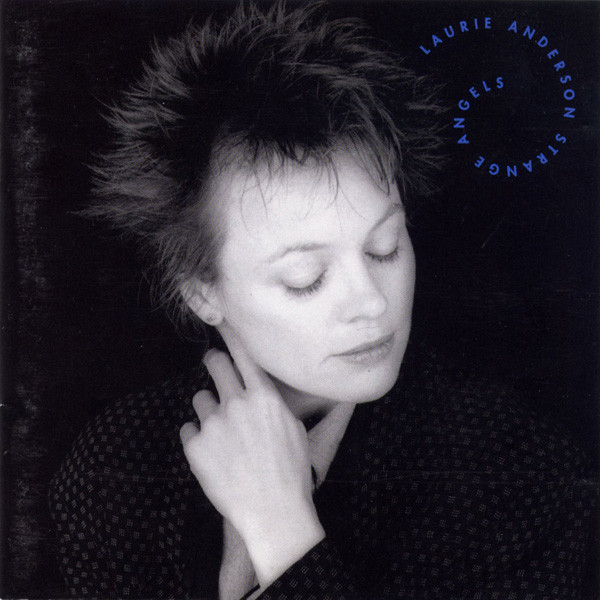
Meanwhile, fascinated by Jarre’s ideas of imaginary languages through sampling, Laurie Anderson provided glossolalia for the ethnically flavoured ‘Diva’, the second part of which had seen seeded on ‘Music For Supermarkets’ for the first of what would be three collaborations over the coming years.
1986’s ‘Rendez-Vous’ seemed explicitly designed for the skyline scale of outdoor mega-concerts that Jarre had first attempted in 1979. Less dependent on the Fairlight domination of ‘Zoolook’ with the Elka Syntex analog polyphonic and Seiko DS-250 digital additive synth among Jarre’s new toys, while there were highlights in the anthemic ‘Fourth Rendez-Vous’ and the Wendy Carlos-inspired gothic splendour of ‘Second Rendez-Vous’ where the old Eminent made an appearance, the most poignant composition in Jarre’s entire catalogue came with ‘Ron’s Piece’. Also known as ‘Last Rendez-Vous’, it had been written for astronaut and saxophonist Ron McNair to perform and record aboard the space shuttle Challenger as part of NASA’s 30th Anniversary celebrations.
Tragically, the Challenger disaster prevented this historic moment from occurring. The subsequent massive outdoor show in Houston went ahead under an emotional cloud, with Grammy-winning musician Kirk Whalum performing Ron McNair’s part on stage as a moving tribute. On the ‘Rendez-Vous’ LP itself, the haunting lines were played by French jazz veteran Pierre Gossez.
The ‘Rendez-Vous’ period also produced a fascinating curio in ‘Moon Machine’, a B-side to the ‘Fourth Rendez-Vous’ 12-inch single. Leaning into percussive industrial overtones rather than obvious melodic hooks, the track earned a dedicated cult following in underground club circles, championed by taste-making DJs like journalist John McCready.
However with bigger stadium extravaganzas came creative declines as the spectacle was beginning to swallow the music. Cracks in the artistic foundations began to show with 1988’s heavily Roland D50 driven ‘Revolutions. Perhaps one of the least satisfying of Jarre’s full-length studio adventures, the record’s solitary saving grace was ‘London Kid’ which featured the processed guitar twang of THE SHADOWS’ Hank Marvin.
The release of ‘Revolutions’ coincided with the chaotic and very wet Destination Docklands live shows in London; it would prove to be Jean-Michel Jarre’s biggest folly although his hands had been tied from the start. Larger than any music spectacle that had been seen in the UK previously, the show was intended to illustrate history of the area and would publicise its planned regeneration. Originally a one-off event in September 1988, it was to feature fireworks and searchlights while entire buildings for would be used for giant projections. There was also to be a floating stage which Jarre called his “battleship”.
However, Jarre was in a constant battle with Newham Council and the London Fire Brigade over logistical and safety concerns which led to the concert (due to have 200,000 paying attendees) being refused a licence just weeks before it was due to take place. In the end, a compromise was reached with the single event split into two smaller concerts in October to spread the crowds while the show was scaled back. With heavy rain across both nights, the crowds who watched from what is now the location of the ExCeL Exhibition Centre were soaked while Jarre’s “battleship” was not permitted to leave dock. Meanwhile, a further Health and Safety inspection decreed that all the instruments were turned off so both concerts ended up being mimed.
1990 saw the release of ‘Waiting For Cousteau’, a dedicated tribute to French oceanographer Jacques Cousteau. The album was something of a structural mixed bag, split between a 3 part Caribbean-flavoured romp named after Cousteau’s ship ‘Calypso’ and its nautical title track. Clocking in at 20 minutes on vinyl but stretching to a full 40 minutes on the CD version, the extended ambience baffled casual fans who cruelly dubbed it “Waiting For Music”. In reality, it was a masterful ambient excursion in the finest Brian Eno tradition. Stripped entirely of rhythmic elements, its long synth sweeps and echoing piano notes provided an incredibly satisfying, deep-listening experience that remains Jarre’s most underrated work.
With the mixed responses to both ‘Revolutions’ and ‘Waiting For Cousteau’, a new compilation ‘Images’ came in 1991 featuring the B-side ‘Moon Machine’, 4 re-recordings and 2 previously unreleased compositions ‘Eldorado’ and ‘Globe Trotter’. Written for the cancelled Teotihuacan solar eclipse concert scheduled for that July, ‘Globe Trotter’ was a rapid fire sequencer-led excursion that embodied the accelerated nature of Jarre’s worldwide fame through his live extravaganzas; even if the wider public didn’t know his music, they knew his name and what he did.
The advent of the new decade had seen electronic music move from the concert halls to the raves and Jarre felt compelled to respond. 1993’s ‘Chronologie’ was his overt flirtation with techno culture, with attempts to sit his ARP 2600 and Minimoog next to the digital workstations of the era such as the Roland JD-800 and Kurzweil K2000.
The results were mixed, frequently sounding in places like an awkward imitation of UK acts like 808 STATE, complete with turntable scratching. While the single ‘Chronologie Part 4’ caught a few glimpses of past glories, it was ‘Chronologie Part 6’ that truly worked. Recalling the rhythmic urgency of ‘Equinoxe Part 4’, it delivered an effective blend of pulsing hooks, layered string machines and unexpected Gallic accordion counterpoints.
Realising that his core audience were missing the warmth of his pioneering analog aesthetic, Jarre delivered ‘Oxygène 7-13’ in 1997 as a direct sequel to his landmark breakthrough. Bringing his vintage gear out of storage including the VCS 3 and Synthi AKS, Jarre thrived under the self-imposed limitations of the hardware but using modern digital recording. Sonically familiar yet different, the material possessed far more soul than the sterile patches of digitalisation than had featured in Jarre’s more recent work.
The brilliant opening track ‘Oxygène 7’ brilliantly married the subtle 6/8 Minipops rhythmic drive of the original ‘Oxygène Part IV’ with the melodic spectres of Vangelis’ iconic ‘Blade Runner’ closing theme. Meanwhile, ‘Oxygène 8’ cemented Jarre’s link with trance music as his spacey analog textures sat fully at home with modern dance rhythms.
The era also saw Jarre embracing the remix culture that he had helped spawn. For the 1998 World Cup held in France, ‘Fourth Rendez-Vous’ was completely overhauled by APOLLO 440. Re-titled ‘Rendez-Vous ‘98’, the track became the signature tune for ITV’s coverage in the UK, successfully blending Jarre’s classic fanfare with breakbeats that appealed to fans of THE CHEMICAL BROTHERS and UNDERWORLD.
The turn of the millennium saw Jarre redefine his approach and 2000’s ‘Metamorphoses’ was widely promoted as Jarre’s first true vocal record. Featuring guest spots from the likes of Natacha Atlas on the alluring Eastern flavoured ‘C’est La Vie’ and a duet with Laurie Anderson on the moody ‘Je Me Souviens’, the standout track was ‘Hey Gagarin’, a propulsive tribute to the first man in space.
Featuring Jarre’s whispering voice, it contrasted against heavily processed vocal treatments as the track lifted off and orbited beautifully over an electro-disco throb reminiscent of Giorgio Moroder. The ‘Metamorphoses’ album was perhaps a bit too long but as his most ambitious body of work to date with many artistic diversions, it highlighted that Jarre had a path mapped out for making music in the 21st Century.
But after the ‘Interior Music’ installation commission for Danish premium hi-fi manufacturer Bang & Olufsen, strange things happened as Jarre then embarked on a jazz odyssey! Released in 2002, ‘Sessions 2000’ contained six tracks named after the days they were composed with collaborator Francis Rimbert. It later transpired that this ploddy new direction turned out to be a way of Jarre fulfilling the remaining part his contract as quickly as possible with long time label boss Francis Dreyfus who he had a personal and legal falling out with in 2001
After the forgettable noodlings of ‘Sessions 2000’, ‘Geometry Of Love’ in 2003 was an improvement. Commissioned by club entrepreneur Jean-Roch as lounge music for the exclusive ‘VIP Room’ nightclub in Paris, it leaned into a downtempo chill-out aesthetic and initially came out in as a limited physical release in France. But something of an outlier, ‘Geometry Of Love Part 1’ was shaped by a stuttering, atmospheric beat and sounded like a PET SHOP BOYS instrumental.
2004 saw the release of yet another compilation ‘Aero’ which was designed primarily to showcase Jarre’s greatest hits remixed in 5.1 surround sound for DVD-Audio. There were several new tracks, most notably the floaty ‘Aerology’; embellished by a delicate cascading piano motif, the piece clearly showed the influence of classic Italian dream trance exponent Robert Miles, an artist who had himself borrowed heavily from Jarre’s blueprint.
Falling under the spell of the period’s popular dance acts like ATB, 2007’s ‘Téo & Téa’ polarised fans. While it successfully utilised modern hardware like the Minimoog Voyager and Access Virus Polar, its aggressive Euro-trance style completely baffled long-term purists. While it proved Jarre was determined not to stand still, but club-ready workouts of ‘Téo & Téa’ lacked the compositional distinctiveness of his finest works.
Those who were still holding out for a vintage analog return got what they wanted in 2007 when Jarre revisited ‘Oxygène’ again; with the assistance of Francis Rimbert, Claude Samard and Dominique Perrier, he performed the entire album live in a studio in Belgium, without tape or hard disk playback. Including three additional transition pieces, the event was issued as a DVD titled ‘Live in Your Living Room’ and supported by concerts at Paris’ Théâtre Marigny and London’s Royal Albert Hall.
Another retrospective pause arrived with 2011’s ‘Essentials & Rarities’ anthology, which finally brought Jarre’s rarer work prior to ‘Oxygène’ work like ‘La Cage’ and its B-side ‘Erosmachine’ into the digital era while also receiving makeovers. Best known for his aggressive club banger ‘Le Rock 01’, VITALIC’s high-octane reworking of ‘La Cage’ united two entirely different generations of French electronic music to affirm Jarre’s wider influence. A few years later, a budget compilation ‘Essential Recollection’ collected his most immediate moments with sympathetic fades that captured the essence of his electronic wizardry. It acted as a prelude to the release of Jarre’s first new work since ‘Téo & Téa’.
During the 8 year break from issuing new studio albums, Jarre had embarked on one of the most ambitious undertakings in electronic music history. The ‘Electronica’ project was driven by Jarre’s desire to examine the shared DNA of electronic sub-genres across generations. He spent 5 years travelling the globe to compose and record in the same room as his collaborators, totally rejecting the detached option of trading files over the internet that now characterised musical collaboration. It resulted in two substantial volumes, both of traditional double album length.
Released in 2015, the climactic opening salvo of ‘Electronica 1: The Time Machine’ was the title track in collaboration with BOYZ NOISE aka Berlin DJ Alexander Ridha. But a major highlight was ‘Automatic’, a double-headed collaboration with Vince Clarke who described the Frenchman as “the most famous person I have ever met”; the 2 part track beautifully balanced both their programmed melodic signatures. Meanwhile the tuneful trance of ‘Stardust’ with DJ Armin Van Buuren, Jarre provided a “glowstick” moment and beamed listeners into the infamous Gatecrasher club.
One of the final musical statements by Edgar Froese of TANGERINE DREAM, ‘Zero Gravity’ stood as a historic pairing while ‘A Question of Blood’ with “The Master Of Horror” John Carpenter had the drive of an unreleased sci-fi movie theme waiting to happen. But the closer ‘The Train & The River’ with classical pianist Lang Lang beautifully integrated elegant acoustic piano movements over Jarre’s trademark interlocking sequencer riffs.
As the collaborative experiment continued its journey into 2016, ‘Electronica 2: The Heart Of Noise’ proved to be even better. ‘Brick England’ with PET SHOP BOYS delivered classic mid-tempo European disco as Neil Tennant and Chris Lowe stayed firmly within their signature pop delivery, while Jarre’s pitch-bending lead synthesizers soared over the top with an anthemic intensity. Jarre then took a sharp turn into the deep moodiness of ‘These Creatures’, partnering with Julia Holter for a delicate blippy soundscape defined by her angelic vocal treatments.
Meanwhile, an unlikely friendship was forged between Jarre and Gary Numan on the superb ‘Here For You’. Entirely absent of the heavy, industrial guitar crunch that dominated Numan’s 21st-century output, the track stood as his most purely electronic work in decades. Jarre himself dryly described the stomping song as “Oscar Wilde Techno” yet it was easily the darkest, most menacing atmosphere he had ever committed to tape.
After decades of composing lengthy synth symphonies, there must have been times when Jarre must have just wanted to do a pop tune. This he managed in a quirky collaboration with Cyndi Lauper; ‘Swipe To The Right’ had big bass riffs galore for a great poptastic exploration reflecting on the use of dating apps in modern relationships.
However, things took a political detour on ‘Exit’, a frantic chase featuring a spoken-word monologue by NSA whistleblower Edward Snowden. Its tense stop-start nature with its underlying anxieties regarding personal liberty and data technology felt like a direct thematic successor to the ‘Revolutions’ title track of 1988.
Meanwhile, ‘Gisèle’ with Sebastien Tellier restored Gallic order, offering a gorgeous pop structure that sounded like Serge Gainsbourg reimagined for the electroclash generation. Despite THE ORB having had their remix of Oxygène Part 8’ that became ‘Toxygene’ rejected by Jarre in 1997, the parties reunited on ‘Switch On Leon’ with bubbly water floating under the bridge. And in the union with YELLO, ‘Why This, Why That &Why’ read the memo with Dieter Meier providing his characteristic delivery as Boris Blank and Jarre conjured up an airy blend of soothing backdrops.
Ultimately, the sheer scale of the ‘Electronica’ project meant that the results were bound to be slightly uneven on occasion. As Gary Numan fondly noted, Jarre was genuinely “one of the nicest people I’ve ever met in my entire life” and this endearing trait clearly meant he couldn’t bear to leave anyone on the cutting room floor. But at their best, a number of tracks on both volumes of ‘Electronica’ stood shoulder-to-shoulder with his finest works.
Following the massive undertakings of the collaborative years, Jarre turned his attention back towards his solo legacy, releasing sequels to his most iconic works in quick succession. To mark the exact 40th anniversary of his breakthrough, the end of 2016 brought ‘Oxygène 3’. To simulate the creative pressures of 1976, he set himself a tight 6 week recording window and limited his arrangement palette to just eight instrumental elements per track. Even though ‘Oxygène Part 17’ attempted an evolution, the results unfortunately felt underwhelming.
Stylistically related to the ‘Oxygène 8’, ‘Oxygène Part 16’ provided a brilliant high point before the looming doom of the album was illustrated at the end by the symbolic noise of a re-entry burn up. Ultimately ‘Oxygène 3’ felt like a rushed unfinished project and in comparison, was the weakest link of that trilogy.
After releasing a series of themes and incidental music for the news network France Info as ‘Radiophonie Vol. 9’ in 2017 and yet another complation ‘Planet Jarre: 50 Years of Music’ featuring previously unreleased tracks including ‘Coachella Opening’, ‘Herbalizer’ and ‘Aor Bleu’, Jarre then turned his mind to his next sequel ‘Equinoxe Infinity’. Centred conceptually around ‘The Watchers’, the mysterious binocular-clad figures present on Michel Granger’s original 1978 artwork, Jarre described the record as “Equinoxe on steroids”; the longer gestation period allowed for a far more realised body of work than ‘Oxygène 3’.
The glorious arpeggiator driven ‘Flying Totems (Movement 2)’ was rich in melody and recalled Vangelis while putting the Minipops and Eminent into action, ‘Robots Don’t Cry (Movement 3)’ was Jarre as most people love and remember him as the hypnotic 6/8 swing was offset by a wonderfully grainy Mellotron. With the first third of ‘Equinoxe Infinity’ being the most satisfying, could this material have contributed to making a better ‘Oxygène / Equinoxe’ hybrid sequel?
More recently, the understated ‘Amazônia’ which accompanied a 2021 photo exhibition by Sebastião Salgado of the same name was seen by some to be underwhelming in its audio only context. Meanwhile originally planned as a collaboration with his mentor Pierre Henry before his death in 2017, the eventual ‘Oxymore’ released in 2022 perhaps too avant-garde for some tastes in its mission to pay tribute to his hero, despite comparative highlights such as the spacey uptempo romp of ‘Sex In The Machine’ and the rumbling menace of ‘Epica’.
Since 2015, Jean-Michel Jarre has issued 6 long playing recordings of original material including a pair of double albums while KRAFTWERK have released zero. While the creative momentum might appear to have waned of late, Jean-Michel Jarre is still a big live draw with shows throughout Europe since 2025 and new material often being performed in defiance of becoming a nostalgic museum piece.
Not every single album has been an artistic triumph, but Jean Michel-Jarre has never stopped experimenting with new tools or expanding the boundaries of his electronic world. He is considered the Godfather of Trance and has been well-regarded within the dance music fraternity with figures such as Jeff Mills, Moby, 3D, Gesaffelstein and Siriusmo all agreeing to take part in his ‘Electronica’ project. For his continuing passion alone as exemplified by his new book, the electronic music universe owes him a massive debt of gratitude.
Jean-Michel Jarre once said “Electronic music has a family, a legacy and a future…”; a form that was once seen as a novelty and a threat is now everywhere, thanks in part to the French maestro.
‘Machines: A History of Electronic Music’ by Jean-Michel Jarre is published by Thames & Hudson on 5th November 2026, further information at https://jeanmicheljarre.com/news/machines-a-history-of-electronic-music
https://www.facebook.com/jeanmicheljarre
https://www.instagram.com/jeanmicheljarre/
Text by Chi Ming Lai
24th August 2026


Follow Us!