Author: electricityclub (Page 117 of 440)

“I don’t like country & western, I don’t like rock music… I don’t like rockabilly! I don’t like much really do I? But what I do like, I love passionately!!”: CHRIS LOWE

“Good taste is exclusive”: NICK RHODES

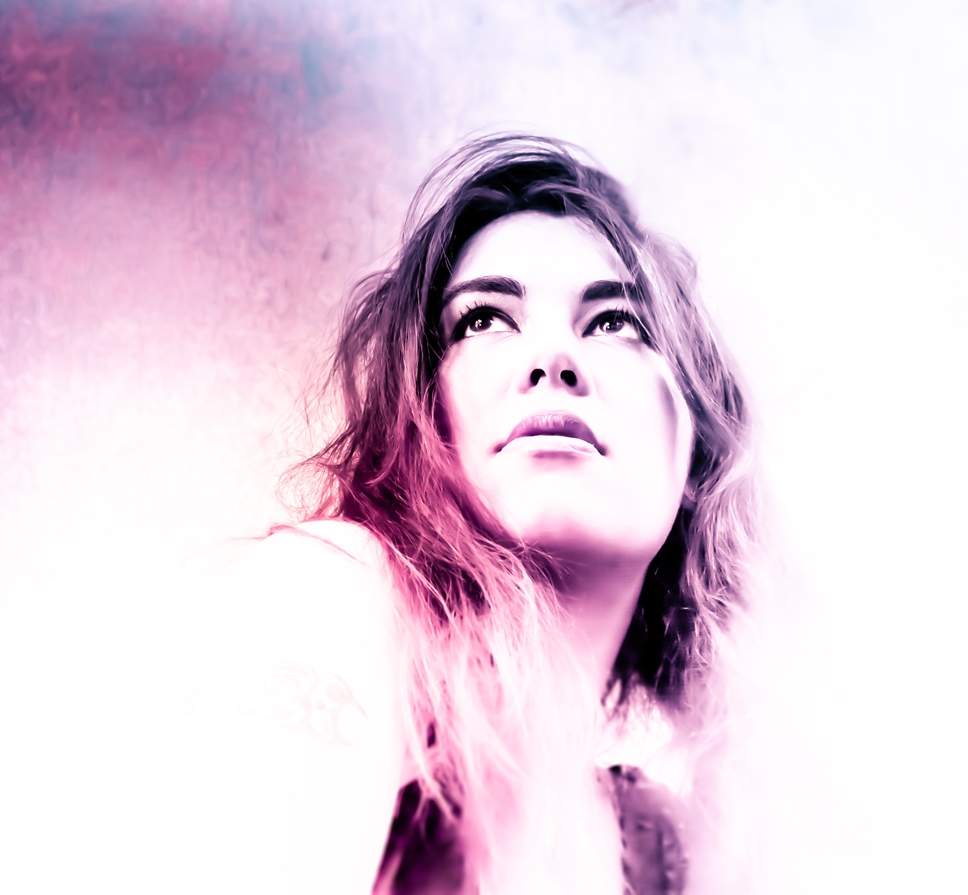
LAURA DRE Interview

With her debut album ‘Moving Spaces’, Laura Dre has presented an impressive musical statement that positions her between the sophistication of Nina and the gothier overtures of Kat Von D.

A musician, producer, graphic designer, model builder and gamer, the German-Filipino songstress has many talents. While she may be a new name in synth, Laura Dre offers a cooler take on electronic pop, the five decades old form having recently had a mainstream boost internationally  thanks to THE WEEKND with Max Martin-assisted tunes such as ‘Blinding Lights’ and ‘Save Your Tears’.

Previously the front-woman of feisty electro-rock combo VINYL BLACK STILETTOS whose second EP ‘Electrical’ was produced by PET SHOP BOYS programmer and engineer Pete Gleadall, Laura Dre has a fascination for yesterday’s tomorrow, with the rainy dystopian air of ‘Blade Runner’ lingering with a mysterious sexual tension.

Laura Dre spoke to ELECTRICITYCLUB.CO.UK about her creative ethos and how artistic independence has empowered her to be ‘Moving Spaces’…

You have been making music for a number or years, particularly with a more alternative rock edge so what inspired you to focus on synths, had there been any artists from this ilk that turned you onto this instrumentation?

My love for alternative rock, grunge, punk and metal was quite strong up until I discovered electronic artists. I think it all started with German electronic artists in 2003 that had a cross-over between synths and indie sounds in their music: STEREO TOTAL, MIA; 2004: SPILLSBURY (Electro-punk); 2006: PEACHES, FISCHERSPOONER, GOLDFRAPP, YPPAH and in 2007: NEW YOUNG PONY CLUB.

I love the bold expression and simplicity of PEACHES, the synth melodies and alluring vocals of GOLDFRAPP, the rhythmic syncopation and ambience whenever I listen to a YPPAH record, and the mesmerising synergy of instruments from NYPC. Of course, there was also a lot of 80s and 90s EDM growing up – all this has influenced me what I do today.
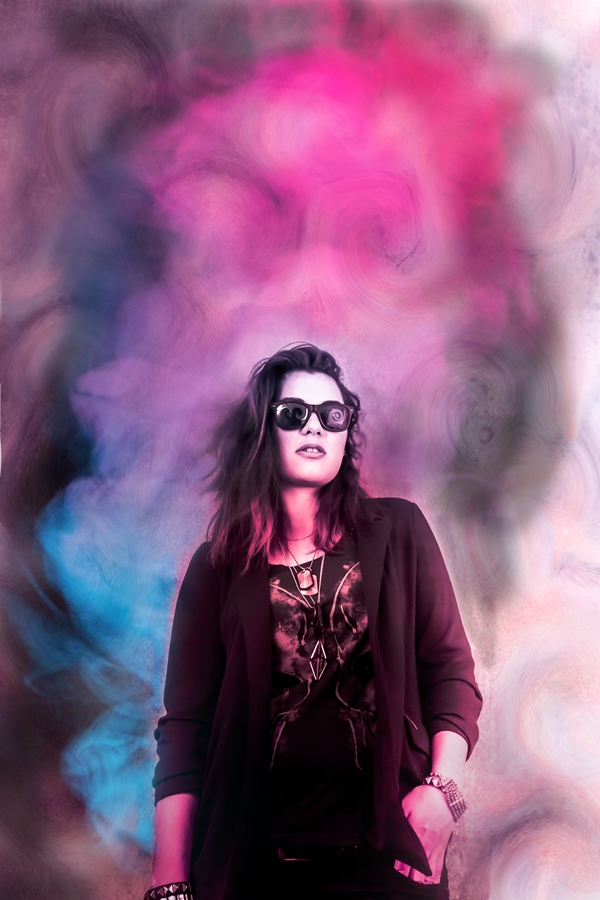

In your writing process, are you quite “synaesthesic” in approach with your musical imagination?

Almost. If we are purely talking about sounds itself, then I most often have already a particular synth sound in my head whilst writing my song. The good thing is, I know exactly what I’m looking for and how it’s made of (ie saw, square, sine, triangle) and then I would modulate / manipulate / shape the sound to match the sound in my head, with LFOs / envelopes and additional effect plugins. It really helps being familiar with a synthesisers functions and controls, which I learned during my time at University studying music production.

I scored 10/10 when my tutor was testing us if we recognise wavetable sounds. So that already gave me a good indication of my ability to identify sounds and reconstruct them from scratch.

You apply a strong visual aesthetic to your artwork, photos and social media, how important do you think this is as an artist?

I think this goes hand-in-hand with music and visuals are very important these days to promote the music you’re doing, to grab people’s attention and to express music on a visual level. Since we live in a world full of advertisements, it’s even harder now to cut through the social media noise to stand out, so that’s why I think it’s really important to have images accompanying the music as well as portraying the artist itself.

From my own personal opinion, I found it even more important that this is carried out through ORIGINAL images / content, something that the artist creates themselves rather than using other people’s artwork like I see it often happening on Instagram. Aren’t you bored of seeing the same image shared over and over by multiple artists?

Yes, it may look aesthetically pleasing to someone who just wants to see specific kind of images, but on the other hand it’s unoriginal and basically it’s stealing other people’s artwork, causing potential copyright infringements. I’ve seen it often happening that other people’s artwork is not even credited, which is bad practice. I also don’t see the logic in doing these things because it’s not really contributing to the artists’ music or image itself. I’m sorry to be blunt, but it comes across as ‘visual portfolio of stolen images for lazy artists’. That’s my personal opinion and it’s something that people don’t have to agree with.
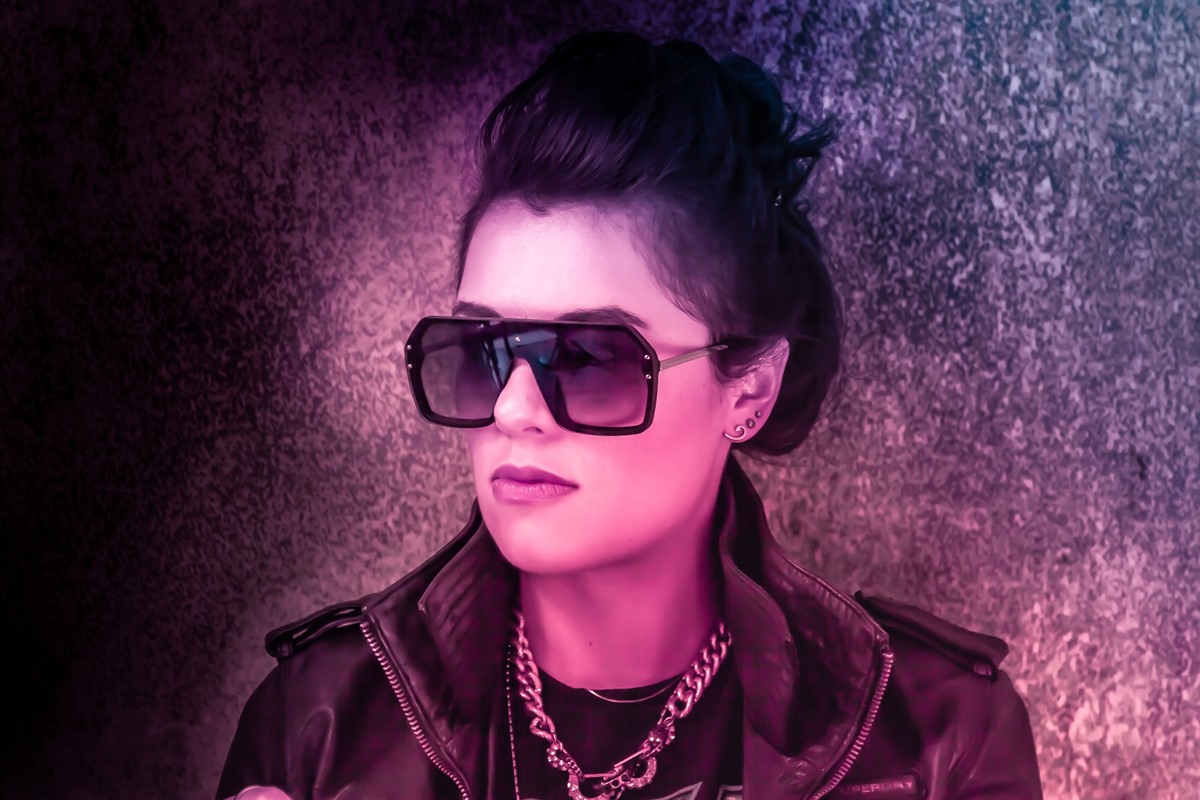

Did you ever consider hiding your face like some of the acts who featured in ‘The Rise Of The Synths’? Can it ever be “just about the music” as some claim in that film?

I have no shame in saying that I’ve not watched this film, just like I never heard about synthwave until last year. No, I have no reason to hide my face, personality nor sexuality. I think hiding is a personal choice – whatever makes you feel comfortable.

Do you have any guilty pleasures in terms of inspiration, unexpected loves like Country & Western or Schlagermusik?

I’m not a fan of German Schlagermusik, but I wouldn’t mind classic Country music (ie Johnny Cash), Hillbilly stuff, Psychobilly Rock N’ Roll, and some Benny Goodman and Bobby Hutcherson here and there. I love Oldies, Jazz, Classical Music, 90s Hip Hop – I can pretty much listen to any genre as long as the music is good.
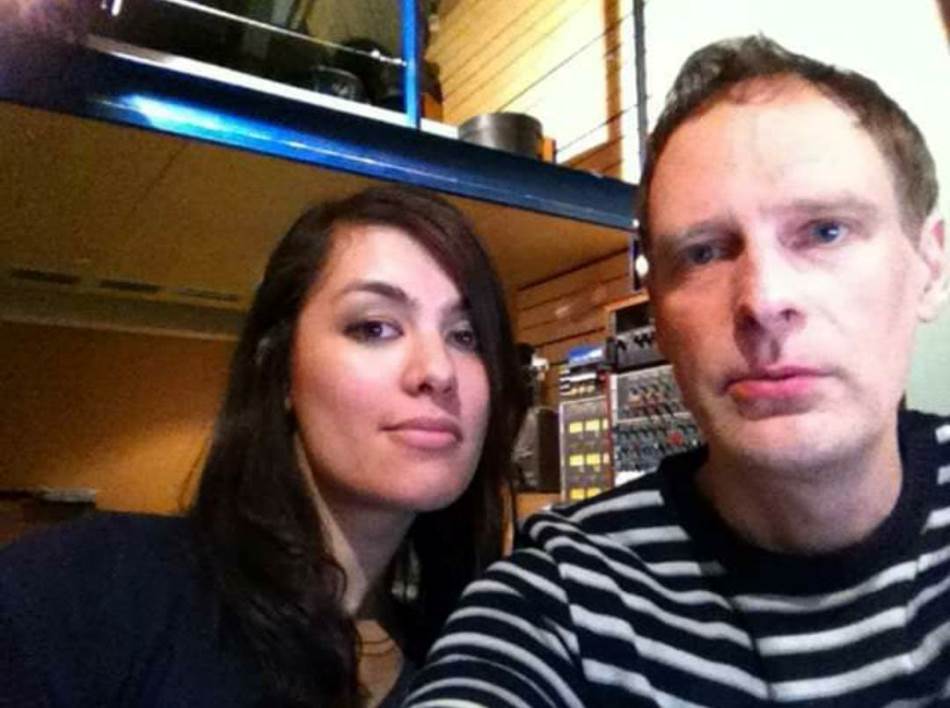
Robert Harder, who you worked with in VINYL BLACK STILETTOS, mixed the ‘Moving Spaces’ album, how would you describe your creative dynamic?

It’s easier to work with someone when you know that person and what they are like. With Robert, he always worked with the cool bands that I admired (SOHODOLLS, WHITE ROSE MOVEMENT, WHITEY etc) So I had no doubt that he would be a good fit for my sound, which he has proven with my very first VBS EP from 2011.

In terms of dynamic, we both work remotely and super quick. He puts a lot of effort into mixing my music creatively and the vocal production, like he added this wonderful dreamy outro on ‘I Wanna Be Your Only One’ which I originally did not have. I absolutely love it!

What tools were you using on the album, was there any particular hardware or software that you turned to and enjoyed using?

I don’t own much analog hardware, mainly just a good pair of speakers (Focal Twin 6 BE), a good valve microphone (Telefunken AK-47 MkII) and a UA6176 – the rest is done in the box. To me it’s never been about the gear you own, to make music with. One could have the most expensive Studio equipment, but if you’re not a good songwriter you will still make crap music, no matter how expensive your gear is.

The same principle applies for recording – you could be recording at Abbey Road Studios with the world’s best sound engineer – I will repeat this again: it doesn’t matter if everything is top range, your songs will still be cr*p if you’ve never learned how to write and compose good songs.


Were you tempted to bring out your bass guitar or were you strictly adhering to the synth aesthetic?

I’m not afraid to use any kind of instrument at all, as long as it fits the track. In my case, the bass guitar doesn’t really suit my music, so I will only use my guitar here and there, where it complements the melodies and harmonies I create. At the end of the day, I’m not here to please people by strictly adhering to a limited range of instruments or musical style or aesthetics.

I see my music as complete different entity not connected to anything, except the electronic genre (which is super broad) but with 80s infused sounds in a modern way.

So did ‘If Looks Could Kill’ begin life as one of your rockier tracks?

That was the third track I created out of the ‘Moving Spaces’ album, and initially I did a fast 4/4 beat with modulation on the synths, but due to an accident during transfer, Robert had to re-program my drums on this track and accidentally gave me back a 2/4 beat, which I totally loved because it was so 80s! Like Michael Sambello’s ‘Maniac’. I’m so glad this happened, because it just sounded better! I wouldn’t call it ‘rockier’ but in my head I visualised an image of an 80s pool party and this song playing in the background. I mainly create music to images in my head.

The ‘Moving Spaces’ title song launched you solo to the wider world, why did you pick that as the track to premiere your synth sound with?

I let Outland Recordings pick the track, I wasn’t really fussed which track went out first as I loved them all. Besides that, it’s better to let the average listener pick, because as a producer / artist, I often can’t see the forest as a whole, I can only see individual trees.

How did Outland Recordings become involved? Was the ‘Moving Spaces’ album already recorded? Was it important for you to have a label?

No, it wasn’t fully recorded. I had 8 songs at the time I started looking for a label. And yes, it was important to me to get a label because I made a deal with my Instagram crush. The deal was that she would have to go out with me on a date if I get a record deal. So 100% motivation right there! 😉

‘All Day, All Night’ has this lovely PET SHOP BOYS feel, right down to the instrumental break, are you a fan?

I’ve seen PET SHOP BOYS live on their ‘Nightlife’ tour in Bremen, it was my very first concert ever. My friend had a spare ticket, so that’s how I ended up there. I still love ‘For Your Own Good’, but I wouldn’t say I’m a big fan. They are okay. If I have to pick a 90s EDM act, I’d prefer ORBITAL, THE ORB, FAITHLESS, UNDERWORLD or THE FUTURE SOUND OF LONDON. If ‘All Day All Night’ sounds like PSB to some listeners, then that’s fine, but I had no intention of making it sound similar to them. What I had more in mind with this song was a modern version of 80s Citypop.
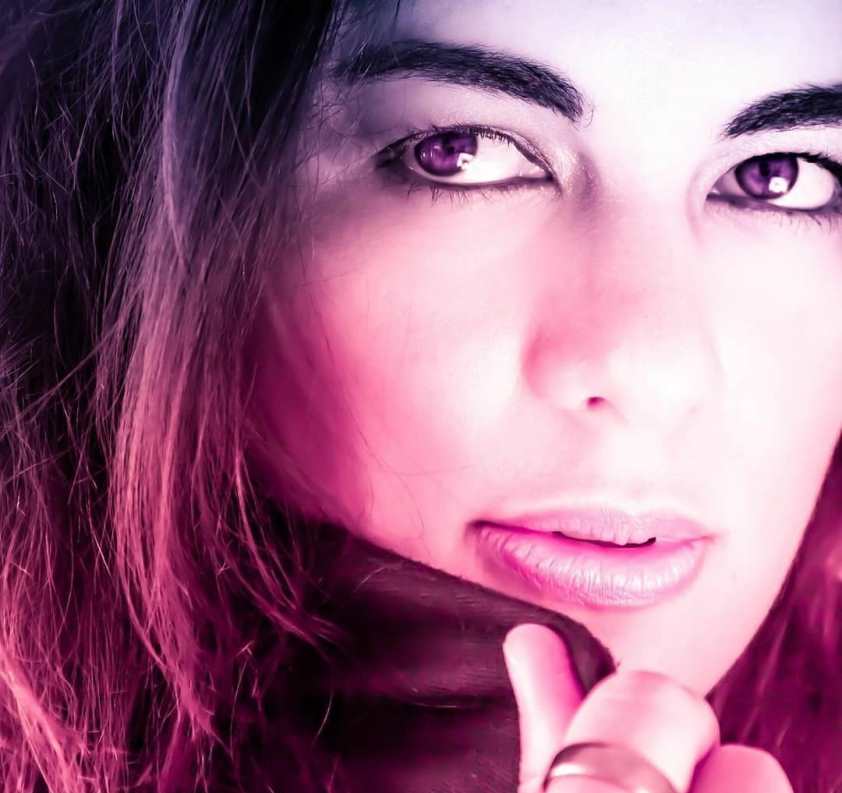
‘Superficial Cyberlove’ gets quite gothic and then goes all EBM, how was this track conceived?

Gothic? *laughs*

I never had this in mind when I composed it. I visualised something more 80s cyberpunk in my head, like ‘Blade Runner’ meets techno. Sci-fi and Neon Club vibes.

While unrequited love is the theme of the album, how much of the lyrical content is you playing a character and how much is autobiographical?

The lyrical content is a mixture of both. The feelings are from my real life experiences whilst the setting and vibe of the songs have different imaginative settings, for example ‘Superficial Cyberlove’: Whilst the lyrics are about having a crush on your ideal model that you shaped inside your head, this model has a set and certain type of partner in their mind, thus they’re all ‘superficial’ and you’ll never be good enough for that person.

Then, we’re also connected to our computers on a daily basis, so people cyber-stalk the one’s they like and possibly develop deeper feelings for them that are unrequited, to the point that they are letting go of them (‘I Turn Away From You’). To bring the lyrics together with the music I chose a ‘cyberpunk’ setting in this instance, that I try to convey with dark retro sounds, tempo and intensity of the song that gradually increases.


Are you actually an ‘Ice Maiden’ in real life?

Hahaha! I don’t know how other people observe me, but my ex-girlfriend was certainly an ‘ice maiden’, and so is the girl that I made a deal with.

‘I Wanna Be Your Only One’ mentions ‘Bonnie & Clyde’, but which couples, either real or fictional have most inspired you?

Catra and Adora from ‘She-Ra & The Princess of Power’ *laughs*

They are obviously fictional, but they have a very complex relationship that made the whole story of the show really good, I could watch this over and over! I’m not surprised there are many fans out there that want a Season 6 now!

You sing that ‘Loving You Is A Beautiful Sin’, but how do you see the world at the moment in its quest for equality, tolerance and being free from the threat of violence?

I think as humans in this current state of the world we have a lot of things to combat that unfortunately will not change overnight, such as Asian-hate-crime, homophobia, climate change, poverty, trans rights, domestic violence, wars, human trafficking and rape amongst many, many other things that are problematic.

It’s horrible when we think about these things and the fact that they all exist somewhere in the world. I think this is an ongoing quest that will not be resolved for the next centuries sadly. I still like to dream about a world where currency and poverty doesn’t exist, where all life forms whether alien or human are equal, which is Gene Roddenberry’s world – it’s the reason why I’m so fond of ‘Star Trek’. Who you love should not be an issue, but sadly in many countries, it still is.
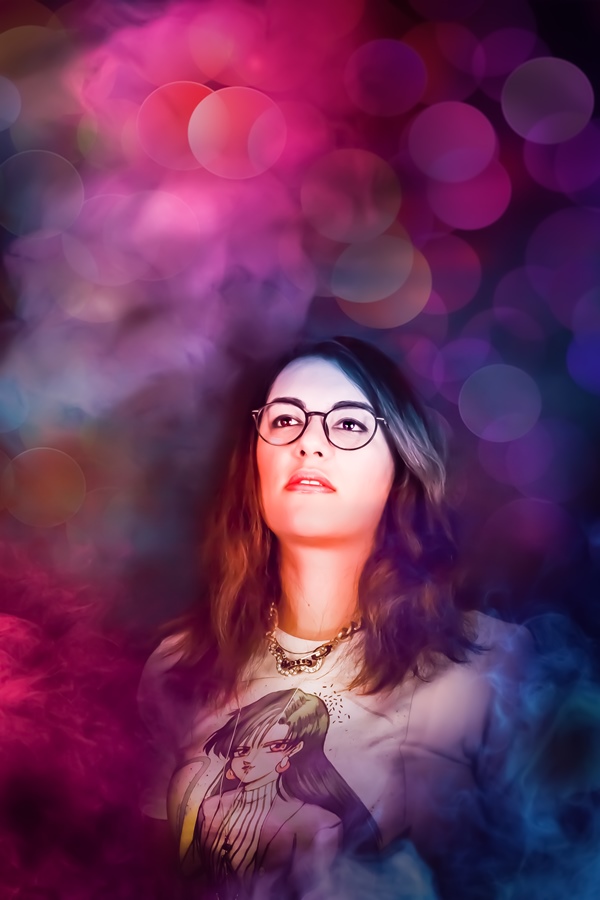

Which are your own favourite songs from the album and why?

I don’t have any favourite songs, they are all my “babies” so I love them all. 🙂

Is playing live as a solo synth artist on the cards for you or is the recording of a second album first more likely?

The second album is nearly done! I will have it finished by end of September, then it will be mixed and mastered by Robert Harder again. Once that is done, I will perform live shows again, hopefully with the first stop being Tokyo, Japan.

What are your hopes and fears as the world begins to open up again?

My fear is that every damn venue will be booked up! Hahaha. I think most bands are getting ready now to start playing live shows soon, which might become a nightmare in terms of wanting to book a time slot. As for hopes, I’m hoping that Japan will open their borders soon so that we can start booking my first tour.


ELECTRICITYCLUB.CO.UK gives its warmest thanks to Laura Dre

Special thanks to Outland Recordings
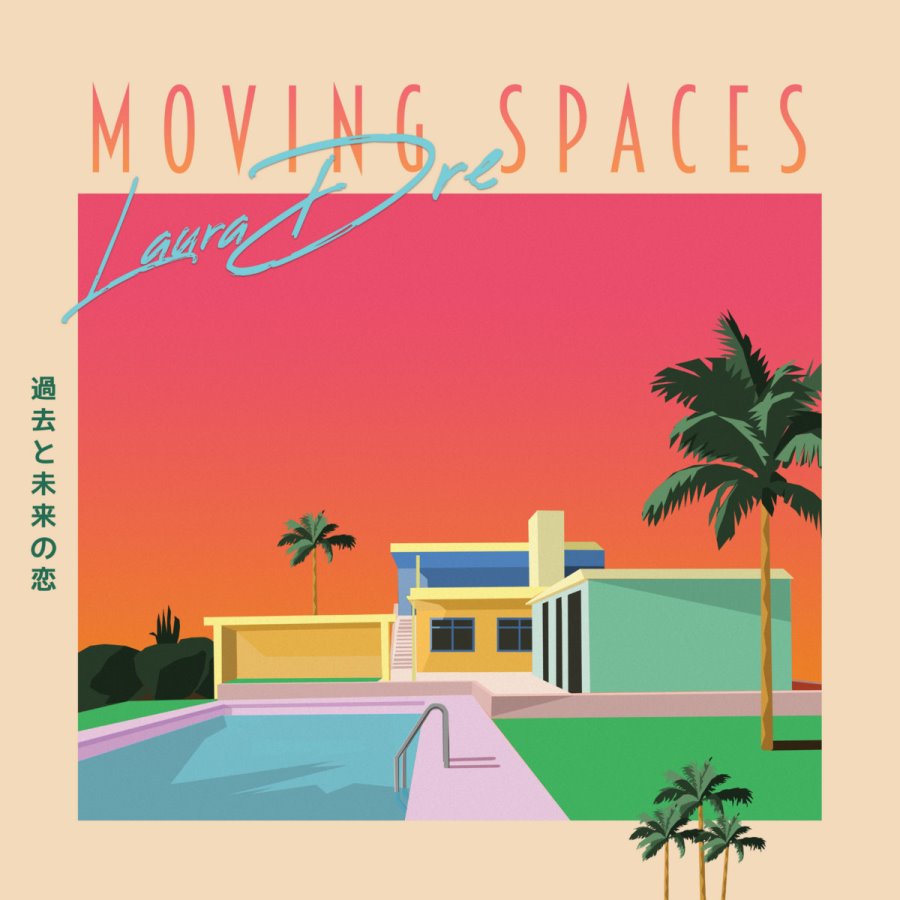
‘Moving Spaces’ is released by Outland Recordings, available in CD, blue vinyl LP, cassette and digital formats from https://lauradre.bandcamp.com/

https://lauradre.com/

https://www.facebook.com/lauradreofficial

https://www.instagram.com/lauradre/

https://twitter.com/LauraDreMusic

https://www.twitch.tv/lauradreofficial

https://soundcloud.com/lauradre

https://www.youtube.com/channel/UC-i6CW5oGLsKIOOIHV9sEHA/

https://open.spotify.com/artist/1AdbxZ3LVADmRfwzJxZwrS


Text and Interview by Chi Ming Lai
Photos by Wiebke Kreinick, except studio selfie by Laura Dre
1st August 2021
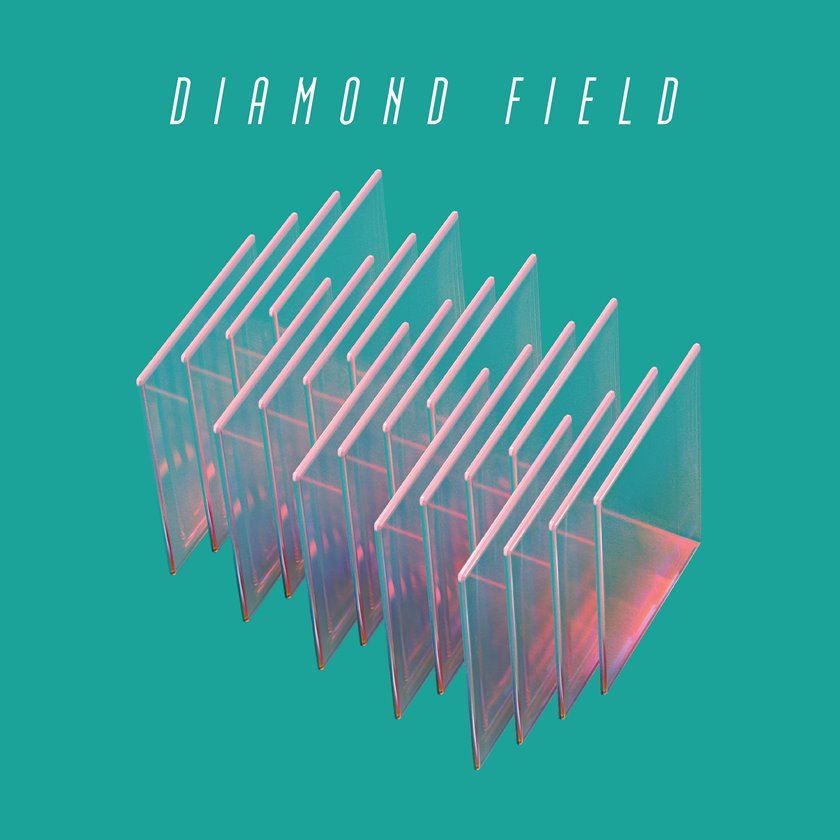
DIAMOND FIELD Diamond Field

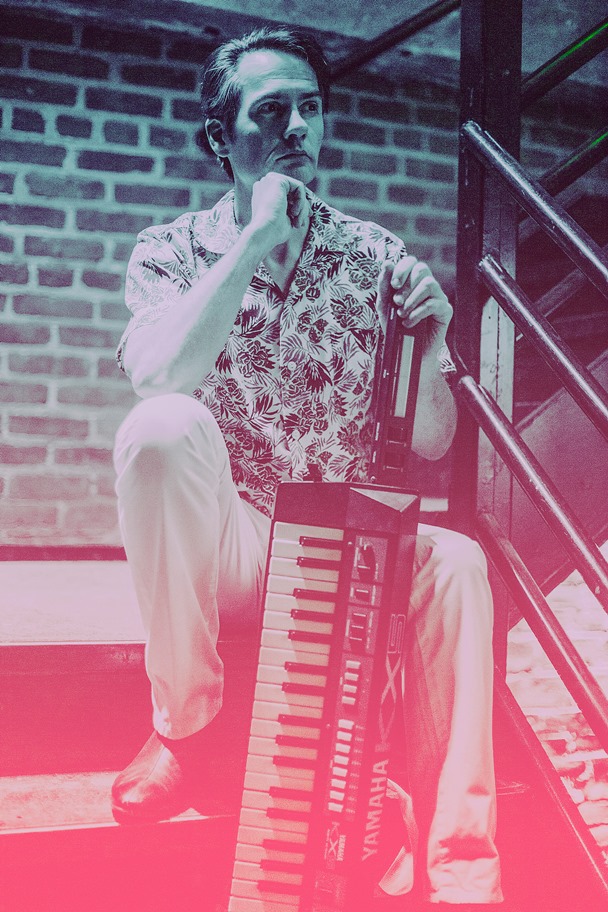
DIAMOND FIELD is the musical vehicle of Andy Diamond, the New York based Kiwi who despite associations with the North American synthwave movement, looks to studio icons such as Hugh Padgham, Peter Wolf and the sadly departed Rupert Hine as his heroes.

The songs ‘Won’t Compromise’ with BMX freestyle godfather Bob Haro and ‘Freedom Pass’ with Dana Jean Phoenix reinforced the perception of a purer synthesizer affinity. But the self-titled debut springs a surprise by mixing traditional instrumental colours with electronic production techniques.

So as can be expected from an artist whose production moniker is named after a Pat Benatar song, electric guitars, live bass and real drum feels are combined with drum machines, sequencers and synths. But the stars of the record are the songs and each of their various international guest vocalists recruited and recorded via the joys of the internet.

With stabbing keyboard themes plus a combination of solid synthbass and loose live sounding drums, ‘New Situation’ with Nina Luna taking lead vocals provides a driving opener that comes over like a more sprightly take on TEARS FOR FEARS ‘Head Over Heels’ if it had been reinterpreted for use in ‘Pretty In Pink’.

Then comes the brassy electro-funk of ‘Bring Back Love’ with Matthew J Ruys approximating Stevie Wonder and the riff laden ‘Glowing In The Dark’ featuring Kiwi songstress Miriam Clancy which sexily rouses like BERLIN before providing an effective slowed tape stop. The college radio rock of ‘In This Moment’ though crosses the darker shades of ECHO & THE BUNNYMEN and THE CURE while referencing SIMPLE MINDS ‘Chelsea Girl’, although the synth riffs along with Nik Brinkman’s mannered delivery point to fellow New Yorkers NATION OF LANGUAGE.

However, the exotic rhythmic moods and jazzy cosmic solos that shape ‘Spills Like Love’ make for a joyous turn from Cody Carpenter that is the antithesis of his work with his Horror Master father, while ‘It’s Your Time’ sung by Becca Starr of Scottish retrowavers THE VAN DAMMAGE offers a percolating rock-infused stomp with a passionate vocal.

With a backing track like NEW ORDER’s ‘Your Silent Face’ reworked by OMD, ‘A Kiss Apart’ is superb and sees a velvet performance by Belinda Bradley of New Zealand collective SELON RECLINER; akin to the other Belinda, Ms Carlisle crossed with Marcella Detroit (who co-wrote ‘Little Black Book’ with THE GO GOS front woman), a gorgeous chorus and some great synth interventions in the instrumental break recall Mute trio PEACH who contributed ‘On My Own’ to the ‘Sliding Doors’ soundtrack.

And speaking of Belinda Carlisle, Chelsea Nenni of LATE SLIP pays homage on ‘Used To Be’ which plays with that sunny rock flavour that THE GO GO’s once took to No1 with ‘Beauty & The Beat’.

With bursts of gratuitous sax and the vocal presence of Kyle Brauch, ‘Look To The Stars’ goes very New York in its mighty machine generated groove. But ‘Out Here For Love’ is the ‘Mighty Wings’ of the collection and as that did on ‘Top Gun’, it ends DIAMOND FIELD’s eponymous debut with Matthew J Ruys returning to give proceedings some blue-eyed growl in the manner of LIVING IN A BOX’s Richard Derbyshire.

This may not be the album that those who have liked DIAMOND FIELD’s previous singles will be expecting at all. It is much more of a pop offering but that isn’t a bad thing as this is the sort of optimistic album many need right now.

Although written before the worldwide pandemic, many of the lyrics deal with hope and positivity. The quality of songwriting is high, something that a lot of synthwave and modern synthpop is lacking.

Applied with engaging productions and arrangements, the music captures the spirit of the pioneering MTV era and classic Brat Pack movie soundtracks. Like a high tech K-Tel compilation album but from the baton of one conductor, this is perhaps the most cohesive multi-vocalist album since the only long player to date by KLEERUP which combined electro-soul, synthpop, Italo, kosmische and ambient. DIAMOND FIELD has successfully thrown in new wave, synthpop, funk, R ‘n’ B and AOR into one escapist pot.

People are very nostalgic right now, whether for the 70s, 80s, 90s or 00s because anything is better than what has happened in the last 18 months, but DIAMOND FIELD has shown that the present and future are going to be alright.


‘Diamond Field’ is available in vinyl and cassette editions through Sofa King Vinyl at https://sofakingvinyl.com/ as well as digitally via the usual online platforms

https://diamondfieldmusic.com/

https://www.facebook.com/diamondfieldmusic

https://twitter.com/diamond_field

https://www.instagram.com/diamond_field/

https://open.spotify.com/album/108IiQzFu9eRr9vPulJoJn


Text by Chi Ming Lai
Photos by Claire Price
30th July 2021

TOBIAS BERNSTRUP Interview

Gothenburg-born Tobias Bernstrup is a performance and visual artist with five officially released albums to his name, as well as numerous video installations, collaborative exhibitions, interactive works and gaming projects.

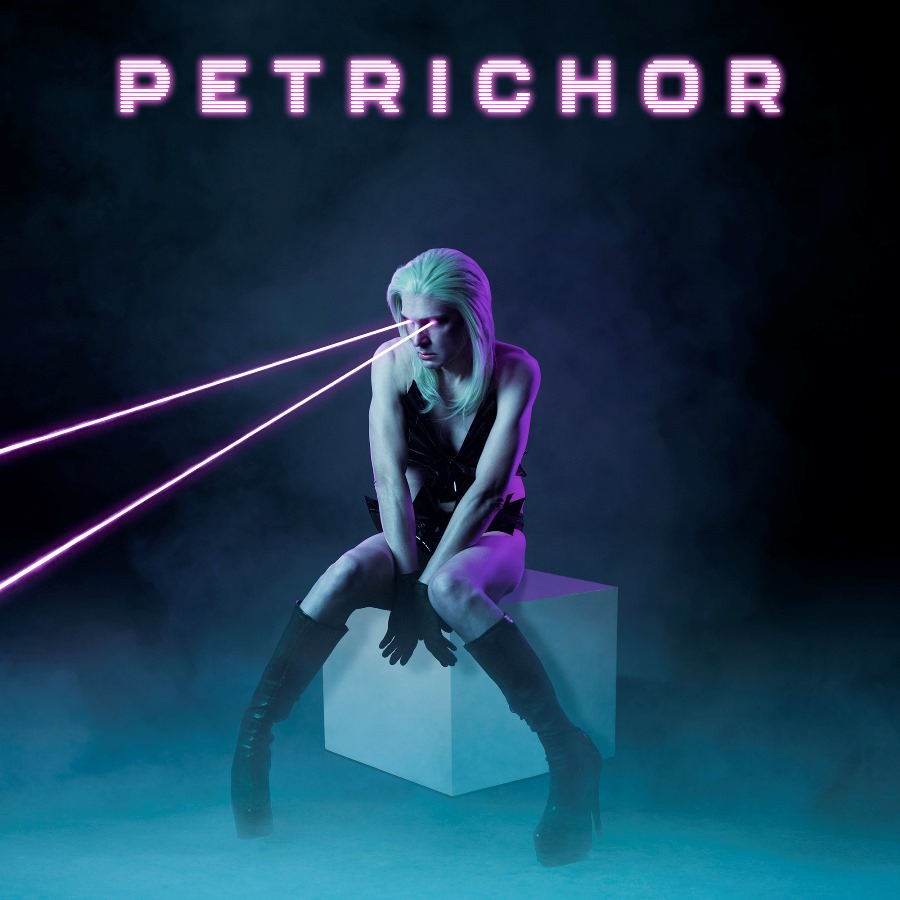
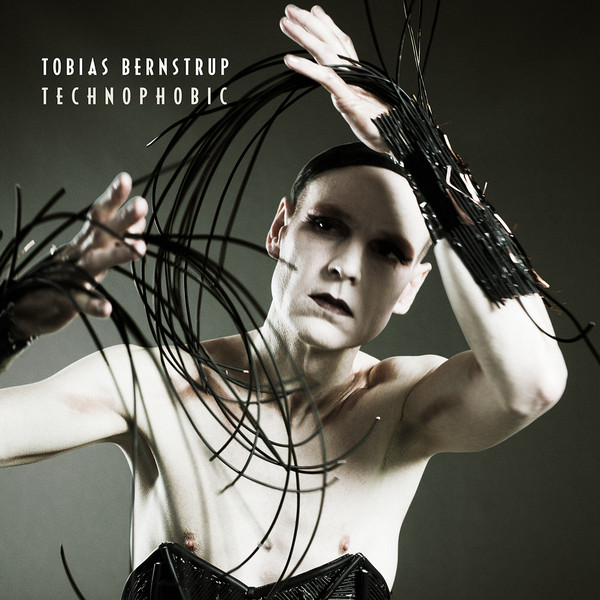
Following up 2018’s ‘Technophobic’ long player, his sixth album ‘Petrichor’ refines his Italo Noir template with intelligent political and historical observations like “a Film Noir in cold blue and pink light that you can dance to”.

With his striking stage persona, Bernstrup is an intriguing androgynous figure who speaks for the outsider, raising questions about society’s representation of identity in his gender-crossing live performances and visual presentation.

With the imminent release of ‘Petrichor’, Tobias Bernstrup spoke to ELECTRICITYCLUB.CO.UK about the making of the new album, collaborations, his artistic ethos and continuing motivations.

What was the genesis of your Italo Noir sound?

I grew up listening to Punk, Metal and Postpunk but always loved Italo Disco. When I started making electronic music after years of being a drummer, I knew that I wanted to make Italo inspired music with a darker more melancholic sound. I also wanted to create a darker image to this sound when designing performance costumes and sleeve art.

How would you describe the concept of your new album ‘Petrichor’ which means “a pleasant smell that frequently accompanies the first rain after a long period of warm, dry weather”?

The initial idea for the sleeve photo was to include raindrops or rain atmosphere. During the research, I came across reading about the Petrichor phenomenon.

I had several cinematic images in my head; the end scene of ‘Bladerunner’ or an episode of ‘Miami Vice’ when Sonny Crockett walks alone on a rainy street. I love how the rain enhances scents, colors and creates reflections.

The first single ‘Private Eye’ appears to be about the surveillance society?

The inspiration to the lyrics came from a Bitcoin Scam email that circulated. The emails say they hacked into your computer and recorded you visiting adult websites. They threaten to distribute the video to your friends and family within hours, unless you pay into their Bitcoin account.

Sweden has been at the forefront of cashless payment, but how do you feel that you can’t even buy bread or fruit without someone watching you? Does that make you ‘Technophobic’?

No, but I am aware. It is a new world order, if you don’t own a smartphone or have internet connection, you will be excluded from the society. It is so obvious when you see beggars asking for money and everyone replies I don’t have cash…

How do you look back on the ‘Technophobic’ album, the title song was particularly good?

The album had a quite coherent synthpop vibe throughout but a more cold, synthetic, metallic and modern sound than previous productions. On ‘Petrichor’, I wanted a warmer sound so I decided to mainly use old-school drum sounds like the Oberheim DMX, LinnDrum and typical 80s synthesizers.

Do you have any preferences for your electronic template, do you like hardware synths and drum machines or have you entered the world of software?

I work in between analog and digital tools. When it comes to playing and recording the physical touch of a hardware synth is superior. I often use Korg PolySix for basslines and Roland JX-8P for pads. When it comes to software instruments, mixing and plugins I always go for analog circuit emulation.

The music industry has changed a lot even since ‘Technophobic’, have you reconsidered your strategies as an artist about making albums and promotion?

I had a more open process when putting together the album. It started releasing a bunch of singles during the process to see where they landed.

That helped me writing and finalizing the remaining tracks.

In your opinion, is the album as a format still relevant in music consumption?

Yes I believe so, even though many people rather listen to single tracks and playlists. Listening to an album is like reading a book. If you have the patience to do this, it can be very rewarding. There has been a revival in making shorter albums again with 8-10 tracks. This is a good thing. it fits better with the pleasant vinyl LP format. And it’s difficult to make long albums with 14-18 and keep up the quality and interest. There are some exceptions. THE CURE’s double LP ‘Kiss Me, Kiss Me, Kiss Me’ is still such a great album without a dull moment. It has variety without being eclectic.

Looking back, aspects of 2015’s ‘Romanticism’ album explored some different directions compared to your earlier albums and more recent singles, particularly with the ballad ‘Dorian Gray’, the Latin moods of ‘Laterna Magica’ and the classic Eurodance of ‘Revolution’?

The song writing and recording process was very different during ‘Romanticism’. I worked during a focused period of 2 months in a studio with a very open and experimental mind set. At that time, it was important for my development to try something new.

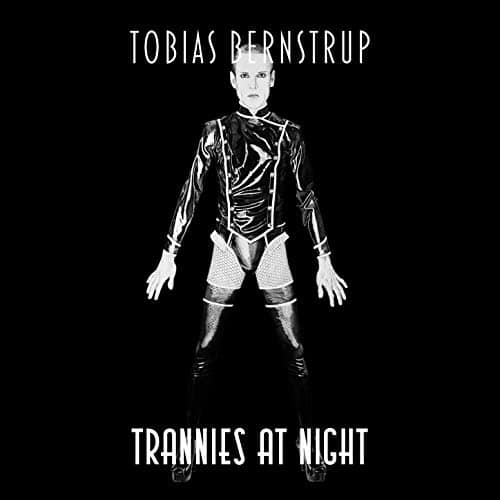
The recent compilation ‘Trannies At Night’ gathered your earlier work before 2012, how do you see your development as an artist and do you have any favourite songs or memories from that period?

In the beginning there was more simplicity, but less production. Sometimes there was a more powerful and directness to it. As I got more production skills, I have to make more effort in order to find that simplicity which makes a great song. Limiting your toolbox and arsenal of instruments is a good way of doing this.

What was the inspiration behind your most recent single ‘Only One’?

It a typical Bernstrup track, It started with that Jan Hammer-like bassline and the lead sound melody and those marimba sounds that I just love. It reminds me of Ken Laszlo’s ‘Tonight’ – one of my all-time favourite songs. Lyrics came naturally when just playing with words and vocal melody.

You sing of a “stranger on the screen”, “disposable love” and a “devil in disguise” on ‘Stranger’, it’s strange that in this modern world, some people care more about influencers online who they’ve never met rather than those near them like family and friends?

Interesting thought. Well, the lyrics could describe someone being disconnected from reality. The initial idea was to write from the perspective of someone having an addiction to online dating in a dangerous self-destructive and abusive way.

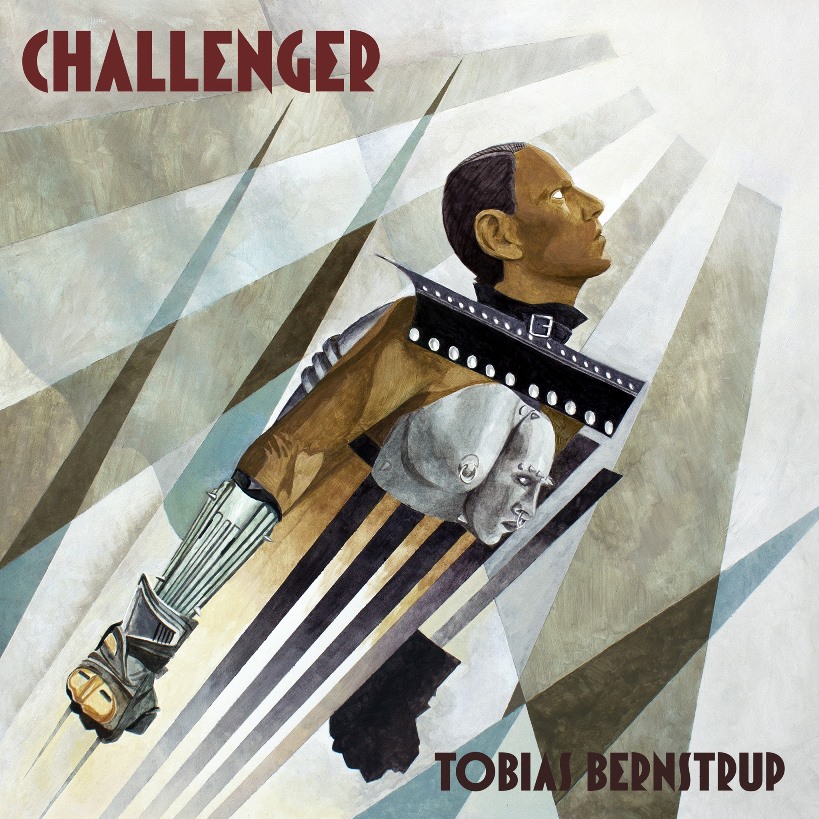
Is ‘Challenger’ referring to the 1986 space shuttle tragedy?

Yes, I remembered that day as a teenager. During the production of the new album, I watched a couple of rocket launches. Technology and space exploration has always interested me. The Challenger disaster was a very tragic one as there had been warnings from engineers about the dangers of launching posed by the low temperatures of that January morning.

There is a more instrumental template on ‘Loderunner’ rather than using full lyrics?

The original idea for this track dates back to 2002 or 2004. I wrote an instrumental track for one of my art exhibitions that was an interactive video game piece. The musical theme itself was inspired by the musical score for the 1998 video game ‘Unreal’ composed by Alexander Brandon & Michiel van den Bos. The title refers to a C64 computer game.

You have quoted J Robert Oppenheimer on ‘I Am Become’?

Yes, the words are slightly rearranged but from a TV interview were Oppenheimer recalls the reactions after watching the Trinity nuclear bomb test. The dangers and dark sides of technological inventions is a theme that I often return to. With every new invention a new catastrophe is invented.

Which songs are your own highlights from ‘Petrichor’?

‘Only One’ has the perfect Bernstrup sound and has the perfect walking tempo when listing in headphones. ‘Petrichor’ delivers a very nice atmosphere and I love that Fairlight CMI flute sound. ‘Loderunner’ has that energetic drive and mood you can find in a great video game.

It’s interesting that as a performance artist, you haven’t produced many videos recently to accompany your own songs, is there any particular reason?

At the moment music videos are not that important to me anymore. But that can change of course.

How do you balance between your art exhibits and your music?

They often go hand in hand. During the work with exhibitions I often stick to a theme that leaks into my music writing process as ideas for song lyrics or visuals.

You have collaborated in the past with SARALUNDEN and TRANS-X while APOPTYGMA BERZERK, COVENANT and ITALOCONNECTION have done remixes, are there any more interesting partnerships happening?

I wrote lyrics and did vocals for a track on the new ITALOCONNECTION LP ‘Midnight Confessions Vol1’. It’s a song called ‘Rainbow Warrior’ that brings up LGBT rights and environmental activism mentioning historical dates of events – the sinking of the Greenpeace ship Rainbow Warrior in 1985 and the Stonewall riots in 1969.

In 2017 on ‘Utopia’, you asked “where are you now?”, so what are your hopes and fears for the future?

After the Covid outbreak, we have hopefully learned that nothing should be taken for granted, that “we are so fragile”.


ELECTRICITYCLUB.CO.UK gives its sincerest thanks to Tobias Bernstrup

Special thanks to Marc Schaffer at Nadanna Records

‘Petrichor’ is released by Nadanna Records on 20th August 2021 in CD with 7 bonus tracks and 18 track digital editions, limited black or transparent magenta vinyl LP with lyric inner sleeve, A3 poster + numbered postcard available in October

The CD can be pre-ordered from https://www.poponaut.de/tobias-bernstrup-petrichor-limited-edition-p-20549.html

http://www.bernstrup.com/

https://www.facebook.com/TOBIASBERNSTRUPOfficial/

https://twitter.com/tobiasbernstrup

https://www.instagram.com/tobiasbernstrup/

https://open.spotify.com/artist/7qMxLMZgfIeZloY2EjWiPt


Text and Interview by Chi Ming Lai
28th July 2021

SHOOK System

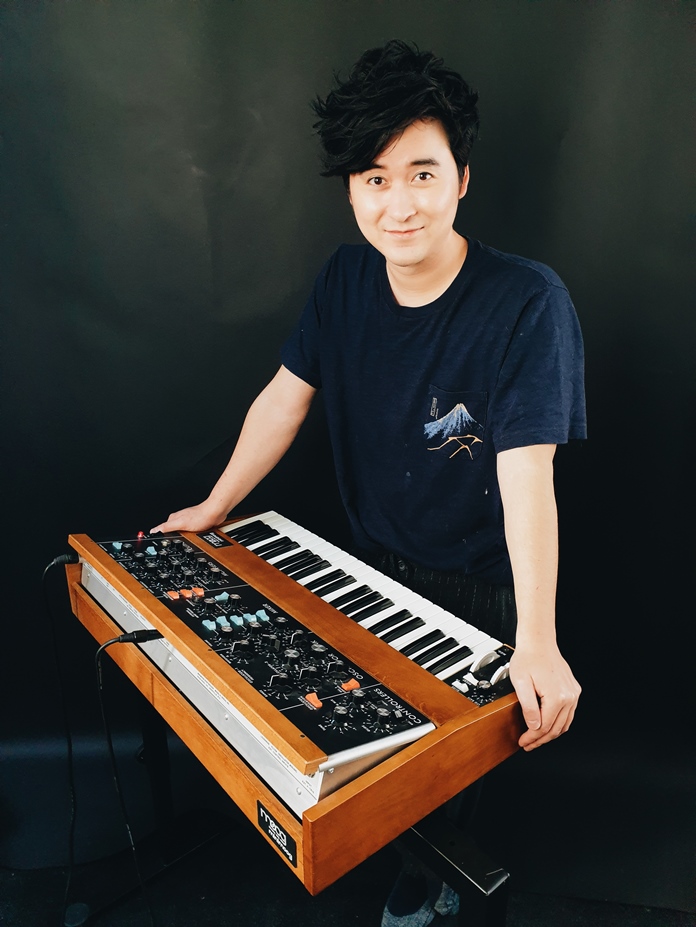
“What I try to do is create a balance between a synthetic almost robotic sound and human emotion” Jasper Wijnands said.

SHOOK is the Dutch musician’s nom de théâtre and over the years, his albums like ‘Continuum’, ‘Bicycle Ride’ and ‘Music For City & Nature’ have explored classical music, the jazzier side of synth and the Japanese derived sub-genre of Citypop which has its roots in YELLOW MAGIC ORCHESTRA’s self-titled debut long player.

For his new album strategy, he made a track public online every fortnight towards a formal full length release.

Of course, there have been other new methods of long player promotion with MAN WITHOUT COUNTRY releasing each side of an album separately, while the three EP method has been adopted by many. A fair number of listeners are old-fashioned and would prefer to hear the whole body of work in one go, but artists need to do as they must to get recognition for their babies.

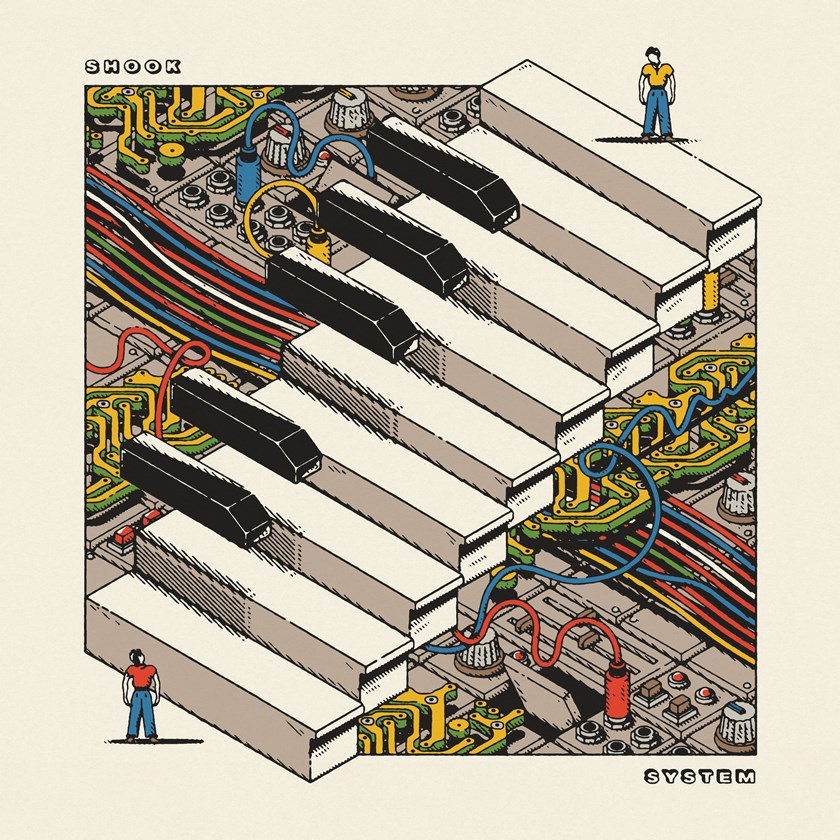
So conceptually across eight tracks as a statement against the ‘System’, the album investigates the paradox of infinite online freedom and the way it imprisons people. So how does it all thread as a single listen?

The opening ‘System’ title track presents digital slap bass and synthetic drums in a funky protest song that owes a debt to Prince and makes a call that “we need to shut it down”, while acting as a commentary on photoshopped social media culture, ‘Digital Dissatisfaction’ features the charming tones of Juliet over an electro-jazzy backdrop. ‘Sometimes’ follows a similar template, with Wijnands tightening his trousers for some falsetto delivery of his own as Juliet compliments with her counterpoints.

The percolating ‘Data’ takes a vocoder assisted night drive into the metropolis, but the pulsating energy of ‘It’s Time’ adds piano with expressive pride. The lovely Citypop instrumental ‘Process’ is what many love about SHOOK with Ryuichi Sakamoto being an obvious reference.

With a motivational message to embrace the moment, Juliet returns for ‘Hurry Up’ with its girly pitch shifted charming all as Wijnands indulges in a few Bernie Worrell-inspired keyboard runs. Closing with a few more regal Princely vibes, ‘Systematic’ is a cousin of the opener but is a touch repetitive in places so disappoints slightly as an ending

Technology and the virtual world can consume life and ‘System’ both celebrates and criticises it. Anyone who has enjoyed SHOOK’s in the past will love this album and the various themes on a lyrical and musical level.

If you like your synth with a bit of funk and jazz alongside a few Citypop vibes, then look no further.


‘System’ is available now in vinyl LP and digital formats direct from https://shook.bandcamp.com/album/system

https://www.shookmusic.com/

https://www.facebook.com/shookshookshook/

http://instagram.com/shookmusic

https://open.spotify.com/album/2GoEaA0pizqVWzgqPzuLHv


Text by Chi Ming Lai
26th July 2021

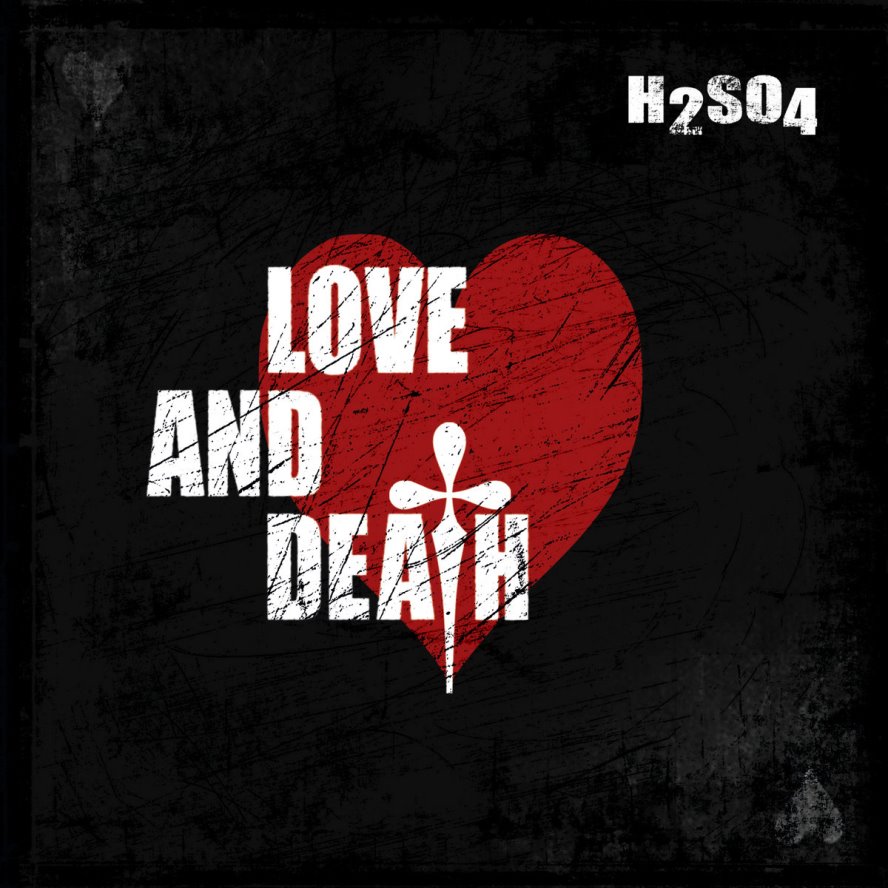
H2SO4 Love & Death


H2SO4 began in 1998 as a remix project when CODE reworked songs by Rhythm King signings SULPHUR. It led to the release of an album ‘Machine-Turned Blues’ with the  music appearing on TV dramas such as ‘The Sopranos’ and ‘Six Feet Under’.

Following the departure of Andy Phillips after the second album ‘Glamtronica’, Graham Cupples and James Butler continued as H2SO4. In collaboration with production duo BOMBAY MONKEY, they present a concept album about love versus death. “We hope this album has you rooted to your seat, interested in what happens next: a story of love and death unfolding before you” said Cupples.

So the fittingly titled ‘Love & Death’ begins with a subtle tabla backbone for ‘Machines Love’ as the expanding club-infused feel penetrated by trancey strings provides a sombre-toned dance tune. As the title suggests, ‘Gangsta’ exudes a grittier indie wah-wah funk while ‘We Are In Motion’ extends the electro-groove before concluding with PET SHOP BOYS styled atmospherics. ‘Don’t Delete Me’ thpugh crosses ‘Floatation’ by THE GRID with the dizzy buzz of ‘Summer Madness’ by KOOL & THE GANG yet deals with the fatalistic prospect of the ultimate deletion…

The downtempo vibe of ‘Missing You’ contrasts with the propulsive triplet driven Bowie-referencing ‘Hello Spacegirl’ which makes a sparkling indie disco floor filler. Meanwhile, a sinister trip-hop flavour is the order of the day with the stark ‘Weirds Me Out’ as the haunting piano piece ‘No Poems’ does not brighten the mood much either.

But saving the best until last, ‘We Are Millions’ is a slice of electronic pop that Tennant and Lowe would be proud of and acts as a call to action in uniting the world to finish ‘Love & Death’ on a more positive note.

Not a cheerful affair by any means but very real, this collection of heavy electronic prog will not be for everyone, especially those seeking escapism, but ‘Love & Death’ will provoke deep thought that captures these uncertain and heavy times.


‘Love & Death’ is released by LO-TEK and available from https://h2so41.bandcamp.com/

https://lo-tek.co.uk/artists/h2so4


Text by Chi Ming Lai
23rd July 2021

« Older posts Newer posts »