Category: Interviews (Page 38 of 117)

AESTHETIC PERFECTION: The Industrial Pop Interview


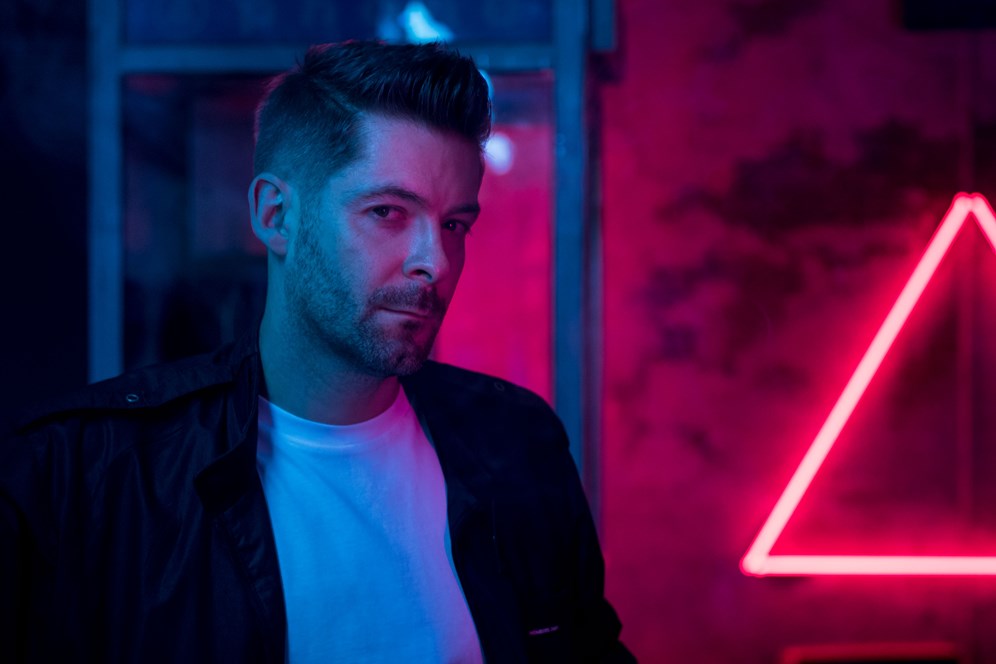
Los Angeles-born, Austrian-based artist Daniel Graves is the main man behind AESTHETIC PERFECTION.

It’s an industrial pop project that can veer in and out of electro, EBM, goth, alternative rock, metal and aggrotech, thanks to Graves’ love of artists such as diverse as Justin Timberlake, Darren Hayes, Michael Jackson, David Bowie, Trent Reznor and Marilyn Manson.

Following 2019’s ‘Into The Black’ album, Graves announced a 2021 schedule of releasing one AESTHETIC PERFECTION single per month funded by his Patreon supporters. It is a return of sorts to Graves’ singles only experiment of 2016-2018 which allowed him the freedom to broaden his vocal and production horizons, with the result being one of the best recordings of his career in ‘Rhythm + Control’.

The most recent single ‘Gravity’ has been produced by Rhys Fulber of FRONT LINE ASSEMBLY. It reflects on Graves’ struggles to keep his feet on the ground as he loses touch with reality, crushed beneath the weight of existence, while slowly being pulled away from it. It’s a feeling that many can relate to. Daniel Graves gave another enlightening interview to ELECTRICITYCLUB.CO.UK about the future of music and how he is responding to an ever changing market place.

After your singles experiment of 2016-2018 which included ‘LAX’, ‘Love Like Lies’, ‘Rhythm + Control’ and ‘Ebb & Flow’, you produced an album ‘Into The Black’ in 2019. And now you are back with a run of singles at a rate of one per month, why have you returned to this “singles” format?

I’ve always believed the singles format to be the way of the future. From an artistic point of view, I looked at the creation of ‘Into The Black’ kind of like a commission; as if I were a sculptor or painter. It wasn’t something I would have created had I been left on my own, but I enjoyed the process and am happy with the result.

That doesn’t mean I think the way forward is albums. If anything, the pandemic has accelerated the streaming and singles model. I’m watching my friends and colleagues absolutely devastated because the records they’ve been releasing in the last 12-14 months get no traction. The social media timeline turns over every 3-4 weeks, and in order to stay in the public consciousness, you’ve gotta keep up.
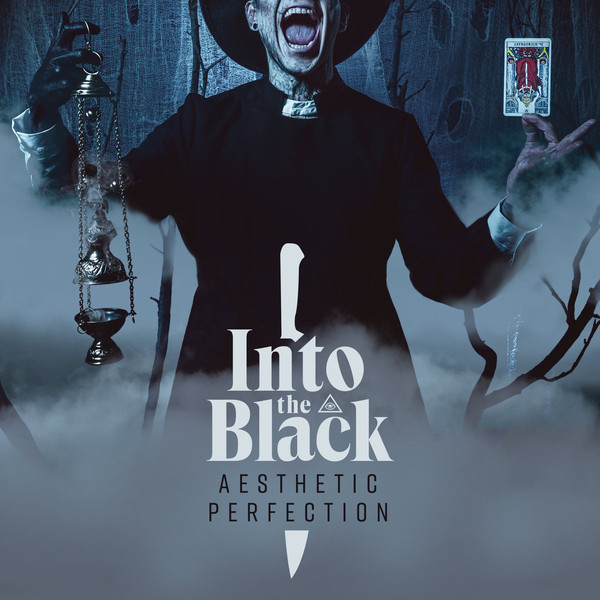
So how do you look back on ‘Into The Black’, the pros and cons of making it and then the promotion after?

Working on ‘Into The Black’ was a lot of fun, and I did enjoy the singular focus that takes place when trying to complete a big project. I wasn’t on social media trying to promote myself or worrying about tours or any of the ancillary stuff that comes with being an independent musician – I was just locked into the creative mindset.

However, that’s a double edged sword, because you’re not really seeing what’s going on in the world around you. I feel like great artists know how to “read the room” and figure out how their voice fits into the world at large. That’s hard to do when you’ve got your nose buried in a big project.

The promotional aspect is very difficult, because even before the pandemic, “the churn” as I like to call it, moves quickly. You’ve only got a small window of time to drum up interest in your project, and getting people to sit down and consume (and digest) 10 new songs is an impossible task. Back when you could tour, there was some amount of wiggle room, as live shows gave you the opportunity to showcase that new music, and continually remind the world you exist. However, these days, you’ve got your couple weeks and then the door closes.

Do you think your very eclectic music tastes are partly contributing to your mindset to not lock AESTHETIC PERFECTION into any one style or ethos?

I grew up on artists like NINE INCH NAILS and David Bowie and Michael Jackson… artists who continually evolved and took risks. I sort of just assumed that’s what you did when you were a creator. As I got older and more involved in music, I found myself quickly losing interest in bands and artists who didn’t evolve. It shaped my entire creative worldview and made evolution a part of my artistic DNA. Whether or not that helps success or hinders it is anyone’s guess. Perhaps in an alternate universe where I’d stayed the course and rehashed ‘A Violent Emotion’ for the last 12 years, I’d be a megastar!
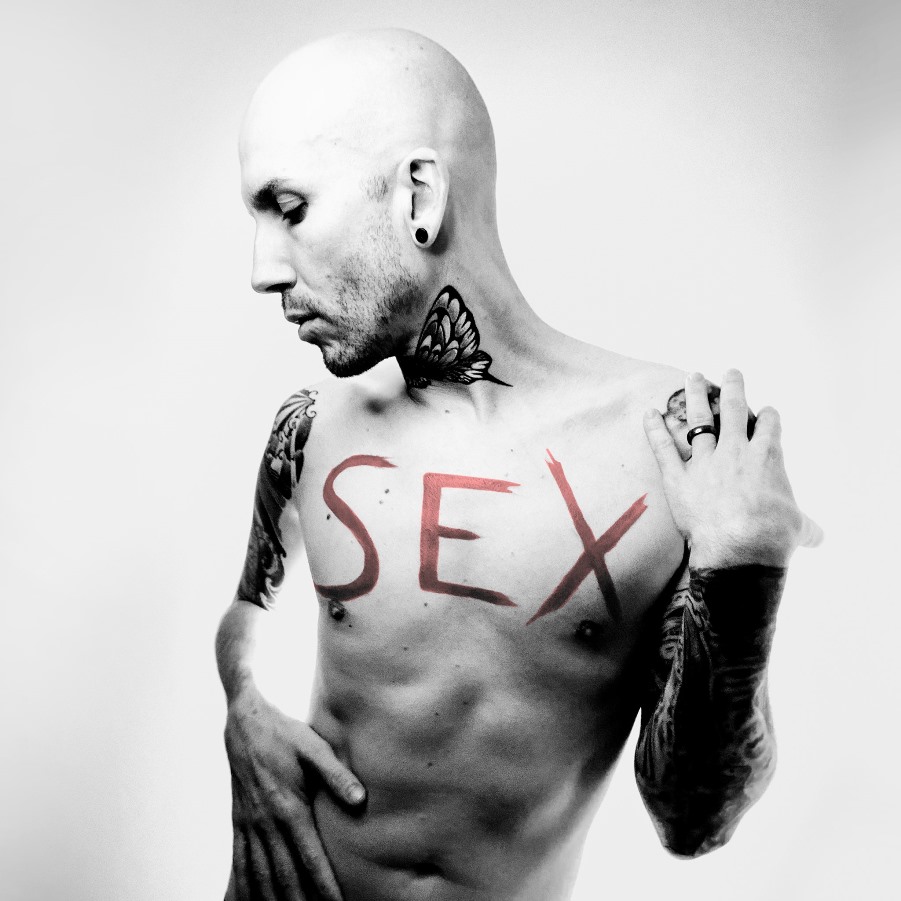

The first single of the schedule ‘S E X’ has a wonderfully deviant tone about it?

I don’t often write songs about sex. I was never sure why until I started writing ‘S E X’. As a creator, I’ve always tried to say things that I haven’t heard from other artists… or I at least try to add new perspectives to subjects and themes.

I suspect, on a subconscious level, I was never inspired to write about sex because so many other artists were doing it. You can’t turn on the radio without hearing a song about sex… so what could I possibly have to offer that would add to the conversation?

However, at some point, I realized that even though there are tons of songs out there about sex, there aren’t a lot of contemporary songs about love and passion. ‘S E X’ is really my way of trying to capture and express THAT view of sexuality.

‘Party Monster’ is reflective of the approach you took on ‘Rhythm + Control’ with a heavier guitar take, twinned with a more electro version, in this case by Deadbeat?

“Deadbeat” is the de facto moniker I adopt whenever remixing my own songs for the club. If you take a look through my discography, you’ll find a number of Deadbeat remixes (usually of tracks that aren’t clubby by nature). The electro version of ‘Rhythm + Control’ should by rights be referred to as a Deadbeat Remix actually, but it was the original version that was completed before Jinxx came through and cut the guitars (which was really just an afterthought). Technically, the version with the guitars is the remix, but it was just so much better than the “original”!
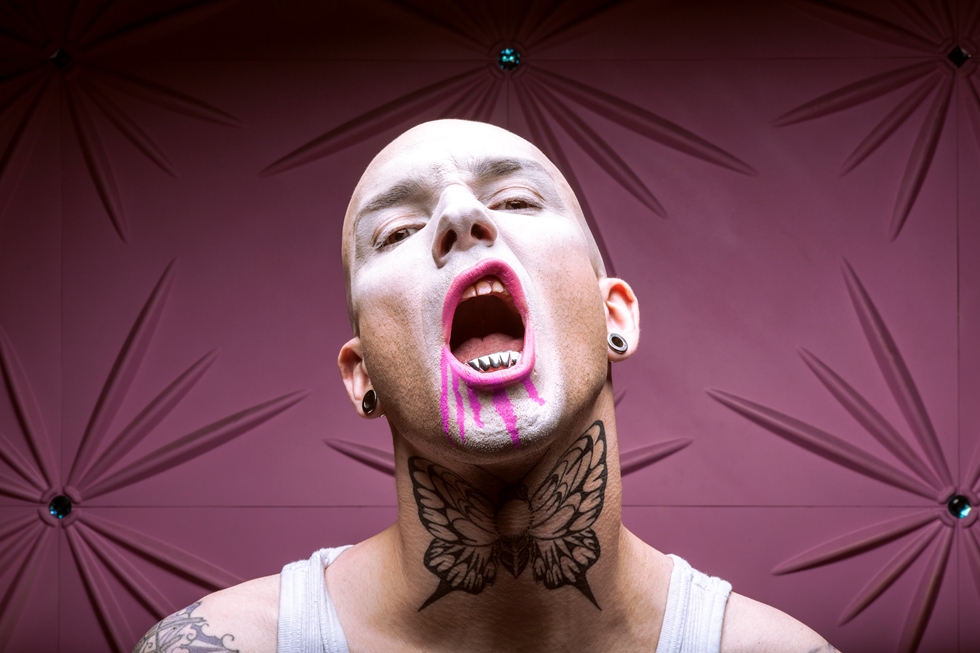

‘Dead Zone’ is classic industrial pop AESTHETIC PERFECTION, what inspired that track?

I’ve spent a lot of my time in lockdown reflecting on myself, my life, and my work. The endeavor has been simultaneously traumatic and transformative. It feels almost as if I’ve gone into a cocoon, a dead zone, if you will, to work through all these things – hopefully, to emerge on the other side as something better.

With your known love of pop, what have you thought about THE WEEKND’s recent Max Martin produced synth excursions ‘Blinding Lights’ and ‘Save Your Tears’?

To be 100% honest, I’m not as in love with the synthwave vibes of THE WEEKND’s new tracks as I was with his earlier work. I totally understand WHY these songs were produced that way (that style is HUGE right now), but as someone who is not personally a big fan of retro genres, it doesn’t speak to me so much. They’re well-crafted productions with top notch songwriting, but they don’t feel fresh to me.

In my mind, art is about using inspiration from the past to build something new and exciting in the future. Synthwave really is at odds with my musical philosophy in that regard. However, I *do* feel like synthwave is starting to craft its own identity apart from the nostalgia factor. A lot of the offshoot genres like Industrial Bass Music or EBSM are fresh and really getting my attention.
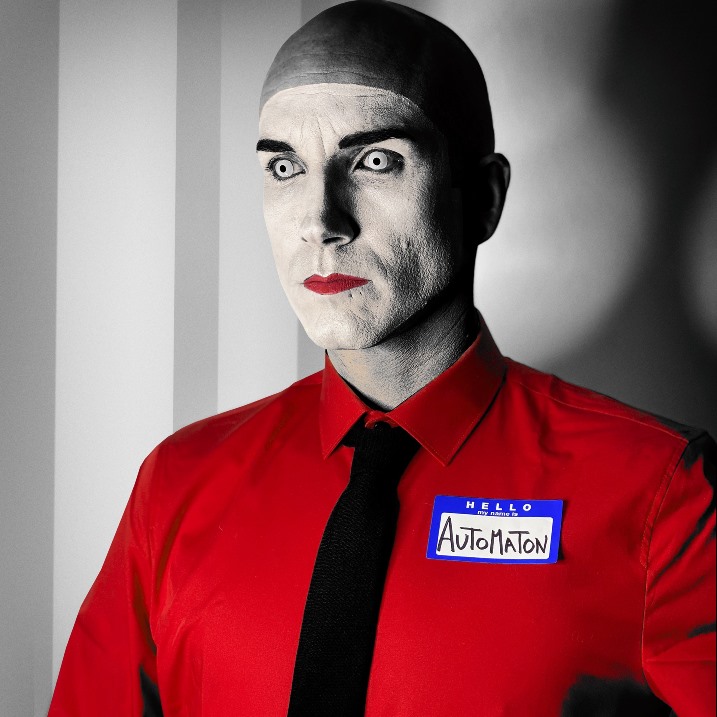

‘Automaton’ and ‘Gravity’ were both produced and mixed by Rhys Fulber of FRONT LINE ASSEMBLY, how did that association come about?

Facebook Messenger! I literally just wrote Rhys a Facebook message asking if he’d be interested in producing some music with me. As luck would have it, we had a number of friends in common and decided to start working on a couple tracks together. I feel like Rhys’s experience with industrial, metal and pop really make him uniquely suited to both understand and help me realize my musical vision. Definitely looking forward to more collaborations in the future.

Will you eventually compile these 12 singles as an album, or perhaps do a compilation including the 2016-2018 work?

Part of the promise of this project was that if I reached a certain number of Patreon supporters, I would collect the singles and release them as an album sometime next year. It was a very ambitious goal, I wasn’t exactly sure if I would be able to hit it. To my surprise (and many others as well) we hit it within 3 months. Which just goes to show how incredible the level of support is from my fans and from my community.

However, I also have no illusions about the state of the music industry. First of all: The world at large does not care about re-releases. They want NEW material and nothing else. Second: The world at large does not care about albums. Both of those things work against my plans, but I think if I do a very small run of physical releases (probably exactly the count of my Patreon supporters so each of them have a chance to get their hands on one) it will be okay. A good artist knows how to read the room, right?

Regarding the singles from 2016-2018: All those singles were already released on the deluxe edition of ‘Into The Black’ in September 2019!

There appears to still be demand for the long playing format, but is it cost effective for you as an independent artist now?

If there’s demand for the LP format, I don’t see it. I see people talking about it online, but I believe those people to be the vocal minority. Like my Facebook page is filled with people demanding I return to the sound and singing style of ’A Violent Emotion’. However, when you look at the actual metrics, like sales and streams and all of that, you see that the silent majority has a different opinion. When observing the actual metrics of CD sales and how LPs perform against singles in the world of streaming, a very clear picture emerges: Albums are losing ground more than ever before.

Again, it’s my job to read the room. So if the trend changes, you can bet I’ll be back on the album horse. However, I currently see no reason to invest months or years of my life into producing an album when people are only gonna listen to one or two songs and have the rest be forgotten in a matter of weeks.

Which is the upcoming single everyone should be looking out for that might spring a surprise?

The single for June is absolutely coming out of leftfield. It’s an AESTHETIC PERFECTION take on the beloved European concept of a “Summer Hit”. I expect a bunch of VERY p*ssed off people! I’m also planning a Christmas song for December so… get ready!
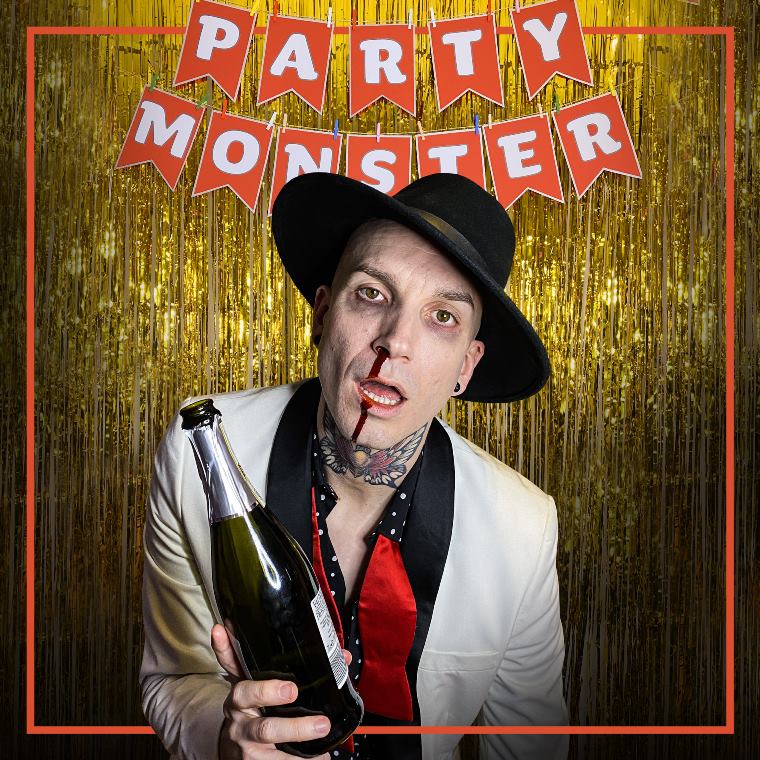
Have you a personal favourite out of this campaign?

‘Party Monster’ and ‘Dead Zone’ I think are great examples of my dedication to both brutal honesty and experimentation within the AESTHETIC PERFECTION framework. They may not be the most popular songs of mine, but they certainly mean the most to me.

Have you been able to make any future plans despite everything, how do you think things will pan out?

I’m an artist. I thrive in chaos. I’ve also learned to make the best of a bad situation. I feel like no matter what happens, I will be ready and willing to face it head on.


ELECTRICITYCLUB.CO.UK gives its warmest thanks to Daniel Graves

‘Gravity’, ‘S E X’, ‘Party Monster’, ‘Automaton’ and ‘Dead Zone’ are available to download, along with the AESTHETIC PERFECTION back catalogue from http://aestheticperfection.bandcamp.com/

Information on Daniel Graves’ Patreon is at https://www.patreon.com/danielgraves

http://www.aesthetic-perfection.net/

https://www.facebook.com/aestheticperfection

https://twitter.com/daniel_graves

https://www.instagram.com/danielxgraves/


Text and Interview by Chi Ming Lai
17th May 2021
DANZ CM Interview


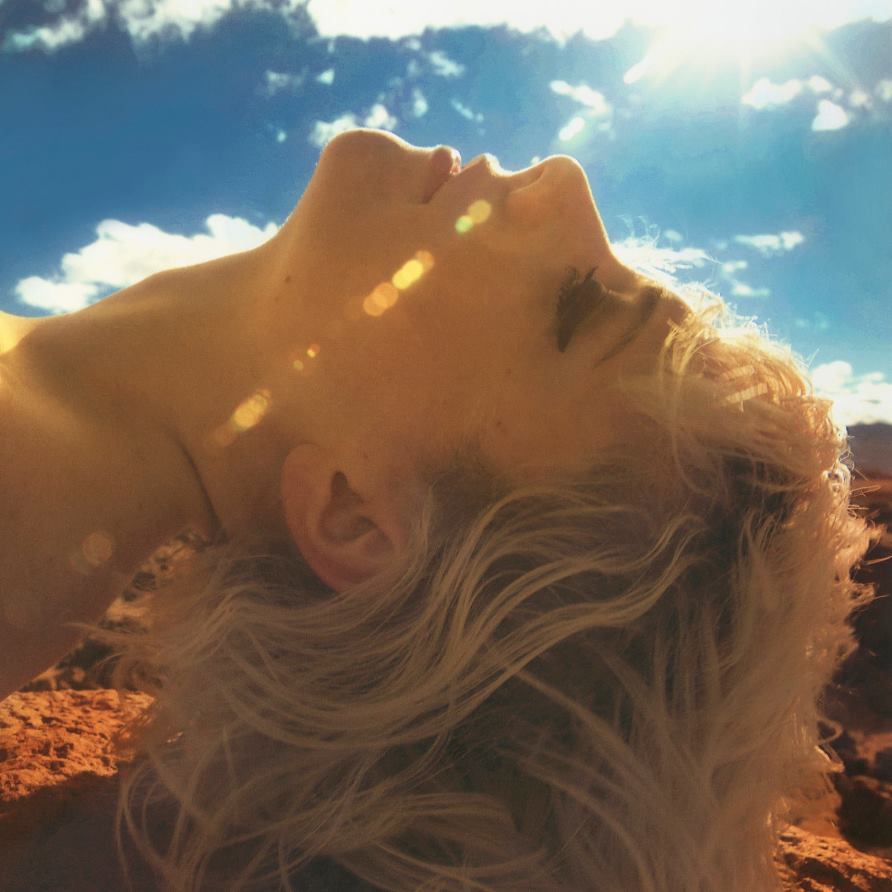
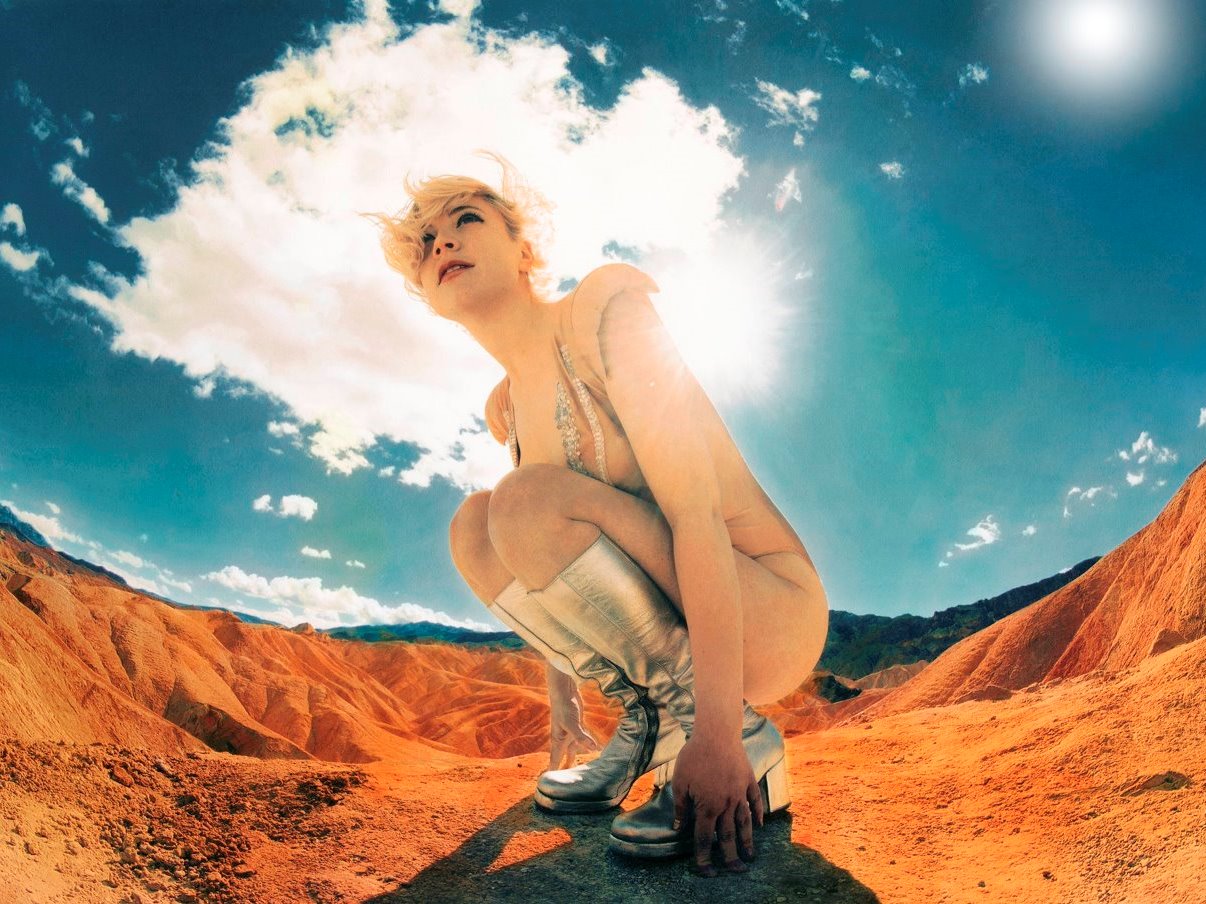
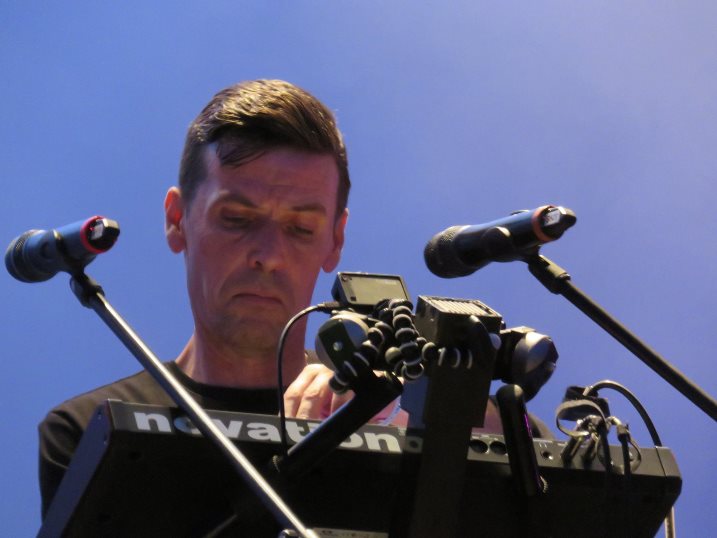
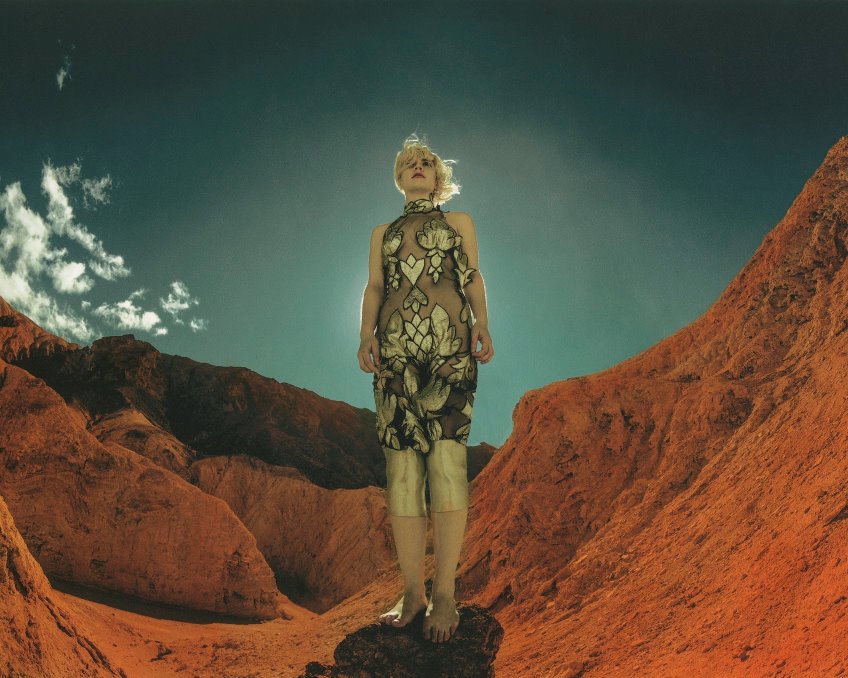
DANZ CM, the artist formally known as COMPUTER MAGIC is New York-based Danz Johnson, a musician, producer and vocalist fascinated by everything ‘Synth History’ has to offer.

As a result, she has been able to overcome her shyness to produce her own music and engage with some of the biggest names in electronic music. “I outgrew COMPUTER MAGIC. I outgrew the shy bedroom pop girl a long time ago” when she announced DANZ CM and her first album under that name ‘The Absurdity Of Human Existence’.

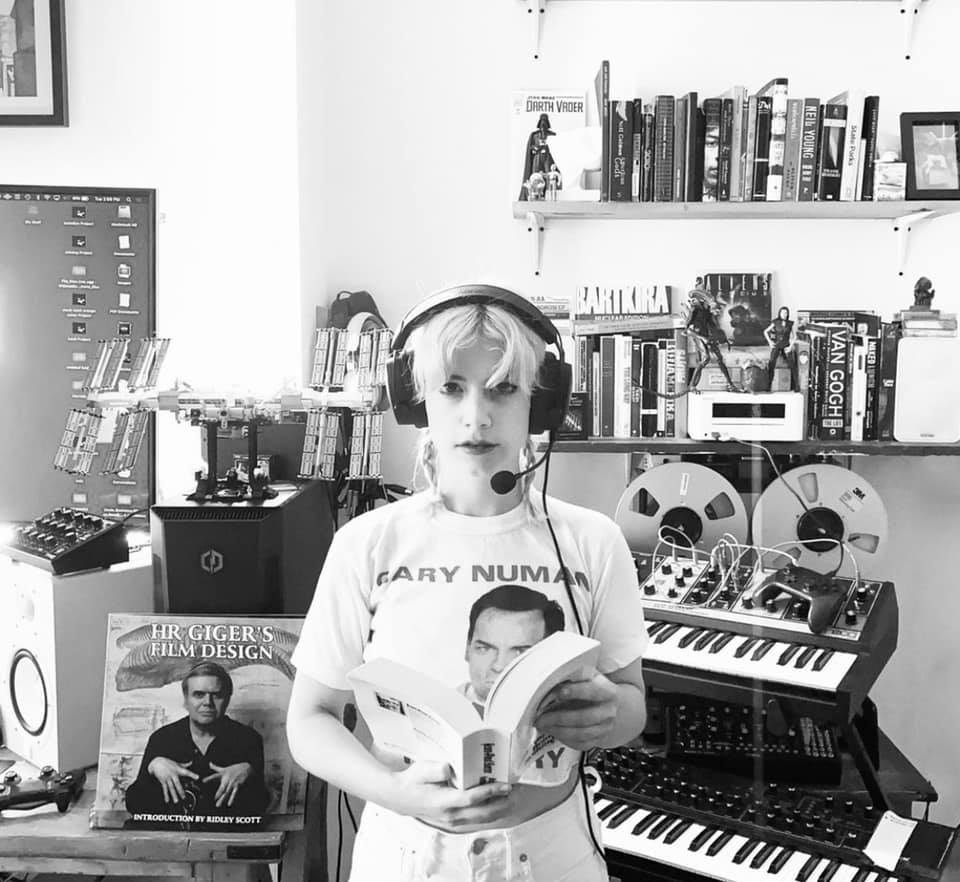
As well as releasing a fistful of albums and EPs since 2012’s ‘Scientific Experience’ which made its release debut in Japan, she also started the ‘Synth History’ online platform which to date has interviewed Gary Numan, Vince Clarke, Rick Wakeman, Dave Smith, Suzanne Ciani, Pete Townsend and James Murphy amongst others, while a well-researched podcast on the career of Wendy Carlos attracted much acclaim.

Danz Johnson chatted to ELECTRICITYCLUB.CO.UK about her creative process, song inspirations, leaving behind COMPUTER MAGIC and ‘The Absurdity of Human Existence’…

Why did electronic music become your choice of artistic expression as opposed to say indie rock, punk, R ‘n’ B, folk or country which many American kids can and do get into?

I started out with electronic music because that’s what I had. I didn’t even know I could make music before I downloaded Ableton one day and tried. Prior to that, I had been obsessed with listening to music. I had my own music blog when I was super young. I’d listen to music all day long, even throughout class. I could always hear music in my head even when I wasn’t listening to it – I’d fantasize about whole songs through – like a radio station in my brain.

Eventually, I just decided to try, and found out the ability of hearing music in my head translated to making music by ear. I still have never memorized notes or chords – but I could transpose a song just by listening to it. If I had picked up a guitar first, maybe I’d have started with rock.


The album title ‘The Absurdity of Human Existence’ indicates you may have been going through an existential crisis, so is it a concept album of sorts?

It’s definitely somewhat of a concept album. I went through some difficult emotional realizations when I was writing it. I was dating someone who was really narcissistic.. it really messed me up. For some reason it felt like a last straw. I realized throughout my whole life, I was, for some reason, susceptible to people like that – like a target. A realization which finally broke me. Is everyone in the world out to get everyone else? Do people really only care about themselves? Is it me? Why do I feel guilty?

I always saw the world through rose colored glasses – that people generally have good intentions, but suddenly that view shifted… I saw flaws everywhere and also in me. But not in a bad way, in a very accepting way. That’s how the world is, after all. Everyone comes from a different place with a different upbringing with a different mind and yeah – bad things happen to good people all the time. And I think that was a big step in growing up. Despite the emotionality, I think it was something I needed to go through artistically and as a person.

How would you break down ‘The Absurdity of Human Existence’?

I kind of see the album in different stages, albeit the tracklisting is loose. The beginning of a relationship gone south (‘Not Gonna Stand By’), realizing what’s going on, feeling bad about it and helpless (‘Domino’, ‘Idea of You’) – Trying not to let your low self-esteem get the best of you (‘My Other Self’) – Finally breaking (‘Breaking Point’, ‘Low’) – Picking yourself up, knowing that you’re capable (‘I Don’t Need a Hero’, ‘Something More’) – Falling in love again (‘Don’t Stop’) – And the last song is important (‘Human Existence’) because it encapsulates it all. Existence is absurd, emotions in themselves are as well, but as far as we know, you only live once so you might as well make the best of it.

I should point out that the idea of Absurdism really saved me when I hit my lowest during this period, which is when I wrote ‘Breaking Point’. That’s when I titled the album. Oftentimes as human beings with reactive emotions, we feel depressed when we’re not in control of our situation. Letting go and realizing that – the universe can be random and accepting it – helped immensely.

Was the pandemic crisis another trigger in your artistic psyche?

To be honest – I wrote, produced and recorded this entire album before the pandemic! Everything including the title was written and recorded beforehand. The only thing the pandemic did was delay the release. It did give me time to find a good mastering engineer – Joe LaPorta. He really did a great job.


You have already stated the reasons on your own social media as to why you decided to stop being COMPUTER MAGIC, but has the name change affected profile momentum or was it a smooth transition like when Gary Numan was no longer TUBEWAY ARMY even though he was TUBEWAY ARMY?

Looking back, I wish I had the money to hire PR. It would have been nice to get the word out via online publications in addition to my social media channels. I put out everything myself on my own label, Channel 9 Records. In turn, my PR budget runs parallel to what I can personally afford.

I don’t have a $20k budget for hiring PR being given to me by a label as an advance, or by my parents. I need to have that money saved up and ready before the release is set if I want to get written up in Pitchfork, Rolling Stone, etc. A reputable PR company costs upwards of $5-10k a month – that’s not even counting billboards and wild postings – posters you see on the streets of NYC and other major cities. But there is also the cost of pressing vinyls – which is important to me, mastering – which is important to me, and videos. It’s a lot of money and it all adds up if you want to release something properly.

I needed to figure out what I couldn’t live without – and that was the substance. The music, the tangible vinyls, the videos to coincide with the songs. People will eventually find out about the album. Maybe I’ll be dead and it’ll be in forty years, but I know it’s good and I put my all into it. Whatever happens afterwards is a bonus.

The name change has really just been word of mouth. One thing I didn’t take into consideration was all of CM’s Spotify followers. I had twenty thousand that weren’t notified of the release, and I had to start from scratch. But the name change needed to happen. It just felt right for me.

The difference between your pop-oriented debut ‘Davos’ album and the melancholic innocence of songs like ‘Lonely Like We Are’ from the ‘Obscure But Visible’ EP , to the darkness of the ‘Danz’ album are quite marked, so things already were heading in a new direction in your mind?

Yeah – I think so, but not on purpose, just subconsciously. I think the main factors that influence my work are the unfolding of my life, external inspirations and the increase in knowledge concerning music production. If you’re making art, it’s unhealthy to be stagnant and always have the same output.

On ‘Danz’, the widescreen other worldliness of ‘Nebraskaland’ seemed to spark your interest in the expansive spaces that are captured in the photos and videos for ‘The Absurdity of Human Existence’?

I wrote ‘Nebraskaland’ on tour! When I play live, I hire a session drummer, the amazing Ignacio Rivas Bixio. We were driving and I think my friend Mo was tour managing. We were out in the middle of nowhere – all in our own zones in the tour van. I think Ignacio was playing ‘DOOM’ on his laptop, Mo was listening to the ‘Serial’ podcast and I was on my headphones working in Ableton. I saw a truck that said ‘Nebraskaland’ and it just stuck with me. The song is about the endless open road – one of my favorites. It goes with ‘Absurdity’ for sure.

‘Idea of You’ set the scene as your first DANZ CM single release, what was its genesis?

‘Idea of You’ is basically about falling in love with someone for all the wrong reasons, a complete facade. You want to feel “the feeling” of falling in love, so you ignore all the red flags when you should really be running in the opposite direction. It’s about feeling fooled, whilst simultaneously feeling stuck because in your heart you want it to work out. In the video we wanted to capture that. My boyfriend – Matthew James Reilly – is a director. During quarantine we couldn’t get a big crew, so we just flew to the middle of Death Valley the two of us and made the video. I think it really does the song justice. To me, the house represents the relationship that I’m slowly realizing isn’t real.

The almost title track ‘Human Existence’ is gorgeous, one of the best of 2021 so far, it’s like OMD been fronted by CHROMATICS, had there been any particular influences in its arrangement?

I just wanted to make something uplifting to portray the way I was feeling. To me, the song means acceptance of circumstance. I didn’t aim for any particular sound, it just came to be honest. I used the Prophet 6 – which is mostly analog except for the effects. I wanted epic pad sounds.

‘Breaking Point’ taps into that chilling arpeggio template that some would say is very ‘Stranger Things’, how did that come together?

Like I mentioned earlier – I really hit a low. It was after the departure of the toxic relationship. I was really questioning myself and who I was. I started taking a benzo type of drug, which I would not recommend to anybody dealing with depression. When that wore off, I went through the worst withdrawals. I was hallucinating when I would leave my apartment. I didn’t feel like I was a real person, like my existence was futile. I felt like everything was meaningless. Pretty dark stuff. And that is when I wrote ‘Breaking Point’.

Never in my life did I capture my emotions as vividly as in that song. So much so that it’s hard for me to listen to it even now without tearing up. Eventually, I started reading about Nihilism, Existentialism and Absurdism. The last one stuck with me, and I think saved me from that dark hole, which is what the album is named after.


Being DANZ CM appears to have freed you to explore different styles in your music, it appears THE CURE’s ‘Fascination Street’ is an inspiration on ‘I Don’t Need a Hero’?

I love THE CURE – particularly ‘Friday, I’m in Love’ and ‘Pictures of You’. I’m going to be honest – ‘Fascination Street’ is not a song I’m too familiar with. So if there is a familiar style there, it intrinsically comes from their other music.

There’s the surprise of the fragile disco feel of ‘Not Gonna Stand By’ and you rocking out a bit on ‘Something More, two songs with quite opposing feels?

So – ‘Not Gonna Stand By’ was the most challenging song to record off the record. I wanted to use all live, acoustic instruments, to stay true to 1970s disco. I initially composed everything in Ableton with software synths. Then I had my friends come over to re-record everything with the real thing. My friend Danny Meyer played sax, Emily Holden played violin – which I layered to sound like an orchestra, Owen Biddle played bass and I went into a studio to record Ignacio on drums. It really was a fantastic experience and gratifying to make. I never brought a bunch of people together to make a song like that before. Danny did some awesome improvisation on the sax parts. I mean – they were all amazing.

‘Something More’, I wanted to be like a 1970s old school rock anthem, mixed with a Devo vibe. I suck at guitar, but somehow made it work. I wanted very angular guitar parts. Luckily, since I play by ear, it’s easy to find singular notes on the guitar – but harder to play chords. There are a lot of singular guitar riffs, layered with other singular guitar riffs to make chords.

In terms of production for this album, what is your home studio set-up and what was the process for fine tuning it?

I write and record everything in my apartment. For mixing, I sent ‘Absurdity’ off to Claudius Mittendorfer in London. Then for mastering it went over to Joe LaPorta in New York. Writing, recording and producing are like second nature to me at this point. They all kind of coincide.

Making the record was a lot of hard work. I’d literally drive myself crazy working on songs up until I couldn’t stay awake anymore. It also took an emotional toll as you can imagine, getting all that stuff out. l was happy when it was complete.

The sound of your music, even on your earlier material like ‘Fuzz’ and ‘All Day’, is quite accomplished while maintaining a gritty edge. Is there any advice you would give to aspiring musicians recording on a limited budget, especially when recording vocals and drums?

Stay true to yourself. You are essentially what makes your music unique! There is no other you in the world. As for vocals, don’t be afraid to ask for privacy when recording. I almost never record vocals in front of anyone else because I’m self-conscious. For drums – get experimental. I always mix electronic with acoustic, which is why I tour with a drummer and record live drums on a lot of my tracks.


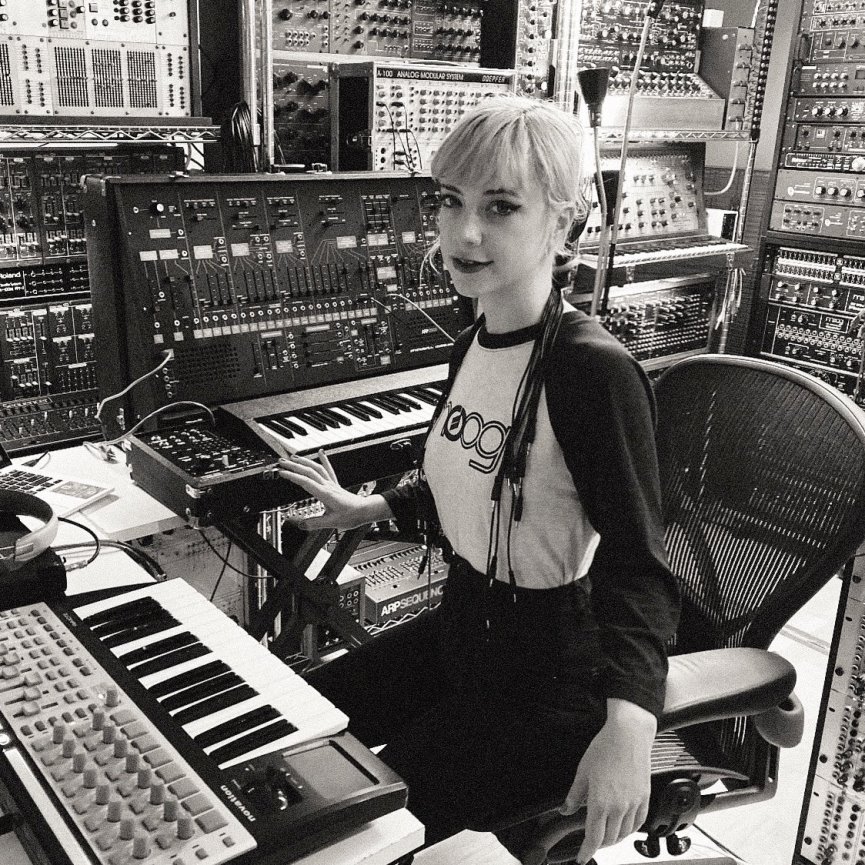
You’ve posted up photos of yourself using vintage gear like the ARP 2600 at The Synth Sanctuary, did that end up on any of ‘The Absurdity of Human Existence’ or is that for another project?

I was interning there for a bit, dusting off synths. I didn’t record anything there except stuff for a potential upcoming podcast episode on ARP and some Minimoog. But that place is great, and Jay who owns it is an awesome dude and musician.

What are your own favourite synths? Is there a particular synth you covet?

Prophet 6, Moog Minitaur and Omnichord; they are my go-tos and have been for the past few years. I would like to someday own a CS-80!

You’ve immersed yourself in ‘Synth History’ with your online interview and podcast platform, what have been the most rewarding aspects of putting this together for you?

I think just meeting other people who want to nerd out about synths. I’m really happy I started it, it seems to bring a lot of people joy.

Who else would you’d like to interview or feature for ‘Synth History’?

Trent Reznor, Thom Yorke, Paul McCartney.

You run your own Channel 9 label, how do you see the future of music distribution and consumption?

I think it’s leaning towards artists thankfully. It’s easier to be in touch with fans directly.

Do you miss performing live or do you see DANZ CM being only a music and video entity?

I can’t wait to perform live as DANZ CM FKA COMPUTER MAGIC!

What’s next for you?

I have no idea. But I hope something fun.


ELECTRICITYCLUB.CO.UK gives its sincerest thanks to Danz Johnson

Additional thanks to Hal at Albedo PR

‘The Absurdity Of Human Existence’ released by Channel 9 Records as a cloudy blue vinyl LP available from https://channel9records.com/ or digitally via the usual outlets

The COMPUTER MAGIC back catalogue is available at https://computermagic.bandcamp.com/

https://www.zdanz.com/

https://www.facebook.com/zdanz

https://twitter.com/danz_cm

https://www.instagram.com/danz_cm/

https://www.synthhistory.com/

https://open.spotify.com/album/1oqWGdeaLx3Y6YgI4ibku4


Text and Interview by Chi Ming Lai
13th May 2021

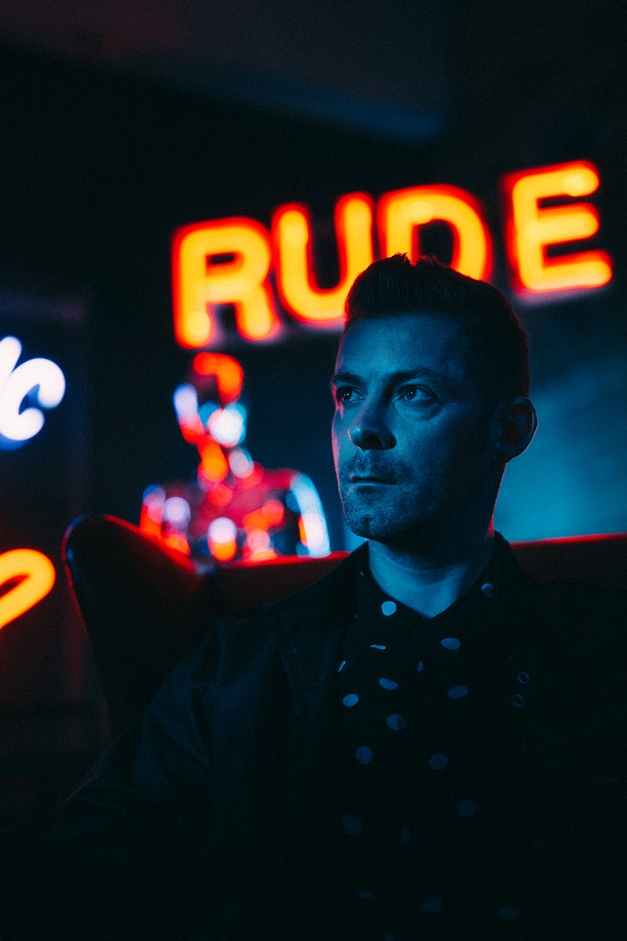
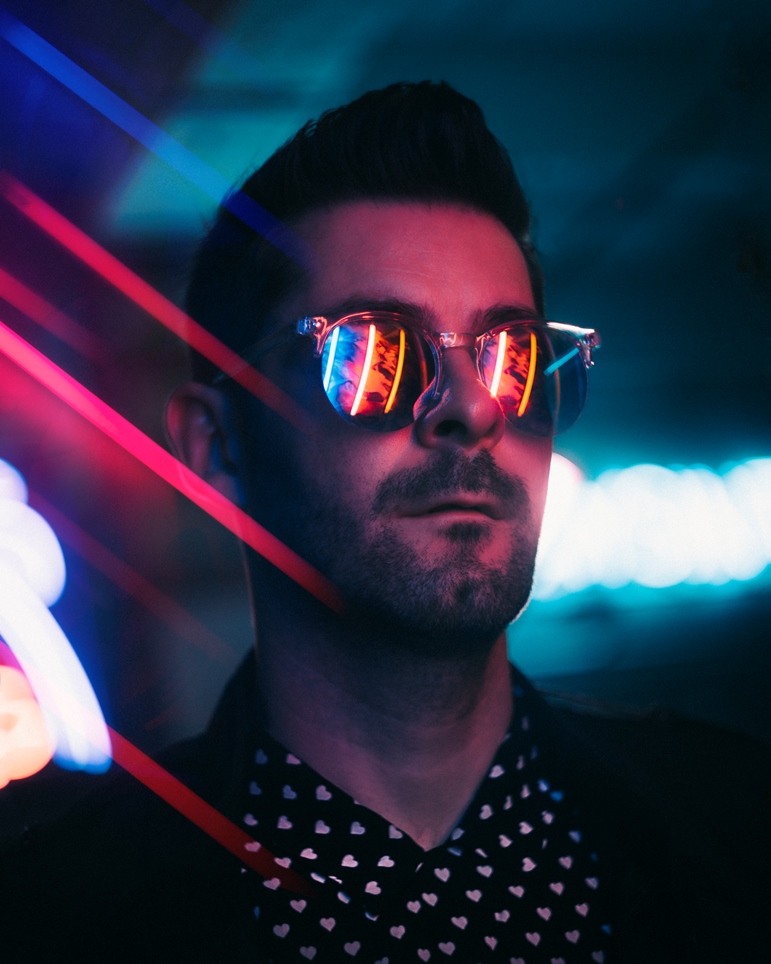
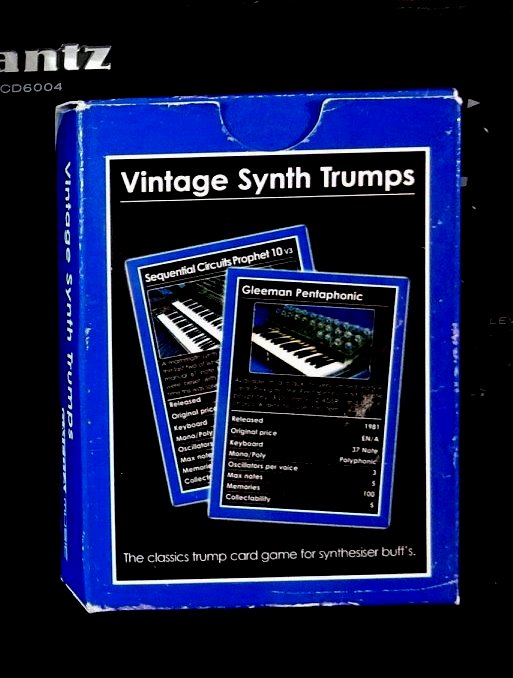
Vintage Synth Trumps With MICHAEL OAKLEY

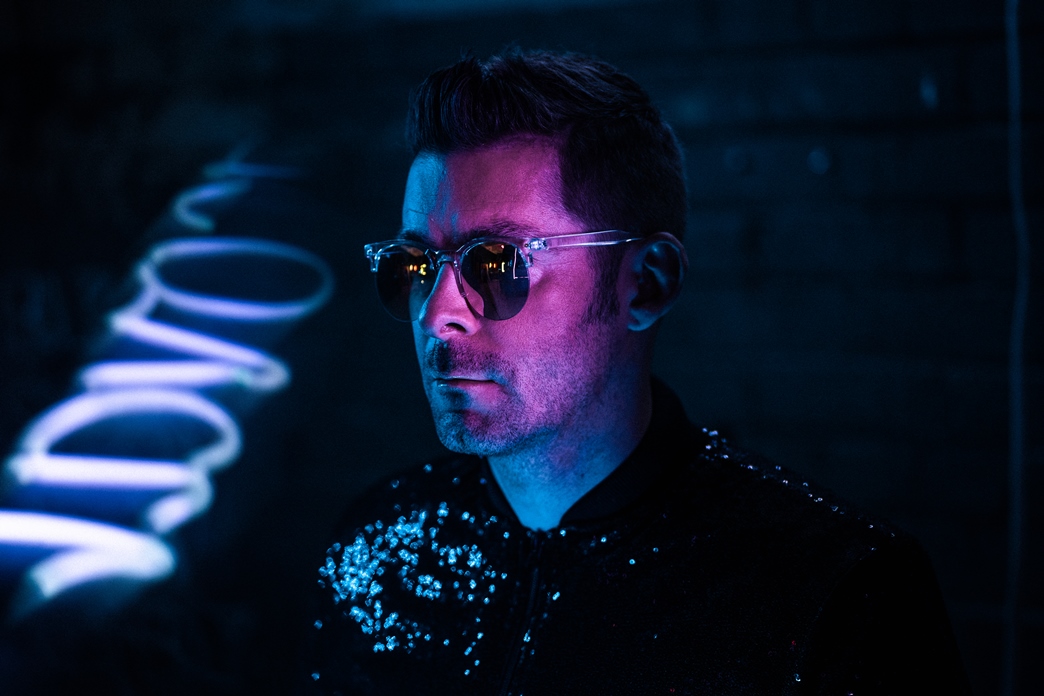
Canadian based Scottish singer / producer Michael Oakley first came to wider prominence with his debut mini-album release ‘California’ in 2017.

Like many of his fellow countrymen, he looked towards America and ‘California’ did as the title suggested, embraced a sun-kissed Trans-Atlantic vibe conjuring images of open-topped sports cars with his melodic synth-flavoured pop.

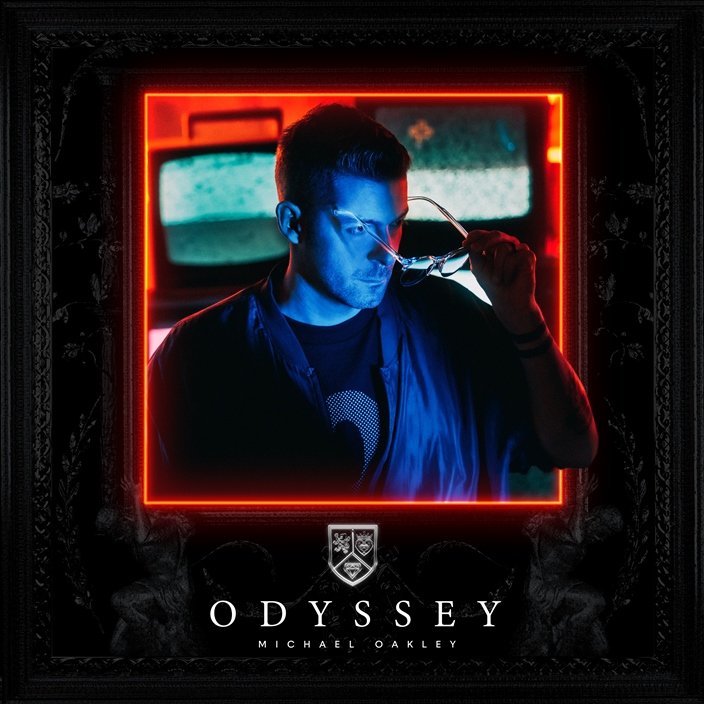
Embraced by the synthwave community, for his debut album proper ‘Introspect’, he signed to NewRetroWave Records in 2019. Utilising more Yamaha DX and Fairlight derived sounds to capture the spirit of producers such as Trevor Horn and Stephen Hague, one of the ‘Introspect’ highlights was the mighty Italo statement of ‘Left Behind’. The album also saw Oakley work with established artists such as Ollie Wride and Dana Jean Phoenix, with the associations continuing on his new soon-to-be-released album ‘Odyssey’.

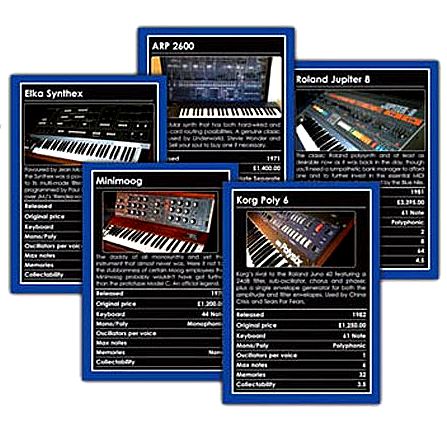
Michael Oakley chatted about the making of the ‘Odyssey’ album with ELECTRICITYCLUB.CO.UK while playing a round of Vintage Synth Trumps.

And the first card is the Roland Jupiter 8, have you ever played one?

I haven’t played a Jupiter 8 but when I was a kid, there used to be a chain of music shops in the UK called Sound Control.

One day I was in, they happened to have a Jupiter 6 which I always felt was the nicer of the two sound-wise.

I’ve got a few Jupiter 8 plug-ins, I’ve got the Arturia one and the Roland Cloud VST which I’ve used on this album, although I like the sound of the Juno more.

You basically get two type of synthesizer; there’s the Japanese ones like Yamaha, Korg and Roland which have a very coloured, synthetically warm kind of sound and then American ones which I probably prefer because they have more of an idiosyncratic quality like those from Oberheim, Dave Smith, Sequential Circuits. I like the unstable ghostliness of those, they were a favourite of Ulrich Schnauss, that’s how he gets his sound. If I want warm character types of sounds, I would go for the Japanese synthesizers.

With your new album ‘Odyssey’, what would you say was your approach this time round compared with ‘Introspect’?

When I started ‘California’, I just wanted to make the kind of music that I liked, it was a very open modus operandi. Whereas ‘Introspect’, I had this thing about not repeating the same steps that I’d taken, I never like to do that. So I made ‘Introspect’ a tribute to the more synthpop sounding stuff I liked as a kid such as NEW ORDER and PET SHOP BOYS or Italo disco. But also, the synthwave sound was already starting to become very plagiarised with copycat acts and I didn’t want to be part of that. It felt like the right time because I’d just signed a deal with NewRetroWave. So I wanted to do something special as the label was paying for things, there was more hands on the wheel and ultimately more pressure.

So fast forward to ‘Odyssey’, I sat with this for a little while and I decided I wanted to move into more 90s territory. I think there’s three type of people who listen to synthwave, there’s 80s aficionados who might be more middle of the road with it, then there’s metal fans who like the darkwavey guitar-based stuff and then other camp which I come from is the trance fans who like 90s dance music.

Synthwave uses a lot of dance production techniques, that’s what makes it sound modern. I was inspired by GEORGE MICHAEL, ENIGMA, ACE OF BASE, HADDAWAY, THE BELOVED and MOBY’s ‘Play’ album, all that type of stuff! It’s weird, you have these potential things but you end up looking back and think “it’s not really like HADDAWAY is it?” *laughs*

So it’s been written over 2 years, the longest I’ve taken to write an album and I only wanted to do it when I felt like it. So it’s a Tapas menu of different things and they don’t sound like each other.

I hate it when an album has two songs which sound the same, that bores me. I liked to be presented as a listener of an album with different tempos, styles, moods and themes, it feels like you’re on a journey.

You’re co-writing with Ollie Wride?

All of the songs on this album with the exception of the intro track are co-written with Ollie Wride. We started to work with each other on ‘Introspect’ and I was working on his album ‘Thanks in Advance’, we just have a great partnership when we write together.

For me, Ollie is the best songwriter within the scene and if you get the opportunity to work with someone like that, you step back a little bit and take counsel from them in the process, I trust him.

We talk a lot; on ‘Glasgow Song’, I was on a Skype call with him telling him what the song was about, my life in Glasgow while I was growing up and sent him over ideas, a whole monologue, like a letter about it all.

I sent some lyrics that I had and he worked with that to carve it into something really magical. I do write lyrics and I did on ‘California’ but I don’t necessarily feel I enjoy writing lyrics. I had it planted in my head who I wanted to work with on this album, writing with Ollie was my priority. He’s my brother, we’re great friends now as a result of all of this.

When you work with somebody else in that co-writing situation, it stops you from being self-indulgent. It’s easy for me to write about my life but you can end up with a very myopic “ME-ME-ME” view and you write in a way that isn’t open for others to make it their own experience. The songs I don’t really relate to are the ones which have been written in a way that are from a very selfish viewpoint. The songs which are a little bit more ambiguously open-ended, they’re the ones where I see myself in the song.

Oh the next card, and it’s an ARP Odyssey…

I’ve never played an ARP Odyssey but recently, I downloaded Daniel Miller’s sample pack full of drum sounds for Ableton created on his ARP 2600 which was previously owned by Elton John! I’m looking ahead to what I want to do next, and I’m conceiving all of the drums being made on analogue synthesizers so I’m collecting sounds for that.

Vince Clarke also did a sample pack, he is the king for that, especially on the ‘Chorus’ album and the ‘Abba-esque’ EP, those type of drums which don’t sound drum machiney!

What sort of an album would you have made in 1981?

I would probably be somewhere between PINK FLOYD and VISAGE!! I would definitely have done something a bit like Jean-Michael and THE HUMAN LEAGUE with the direction they were going in from ‘Travelogue’ to ‘Dare’.

You make a statement with the ‘Odyssey’ title track that something different is coming with that ‘Rachel’s Song’ homage meeting PINK FLOYD acoustic guitar!

Yeah, you’re probably right… I did a similar vibe on ‘Introspect’ with an intro track as a way of saying “here’s the album… it’s sad but triumphant”. There’s definitely a ‘Blade Runner’ thing going on and later in the track, there’s a Vangelis CS80 brassy thing, I love a lot of his mid-80s stuff like ‘The Mask’ and there’s one that he did called ‘City’ which is all Korg M1, it’s amazing!

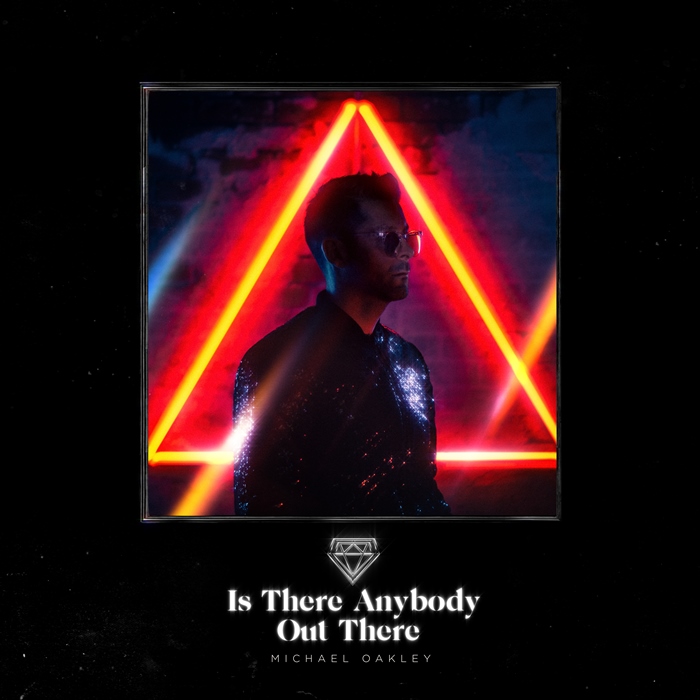
‘Is There Anybody Out There?’ is an uptempo dance number but reflected on your youth in Glasgow, like a cry for help?

Absolutely, it’s about the lack of connection and looking for it, the way you get lost in vices in order to look for that connection. For me specifically, that story is in the 90s, I was in my mid-teens and got myself into drug culture, it was a big thing where I came from and with the older boys who I hung about with, you went down that rabbit hole of smoking weed and taking ecstasy, that song is about getting into that. At the end of the song, it’s then a cry for help to get me out of this because I’d taken it too far.

It’s interesting because I had done a version of that track and sent it to a good friend of mine, Jon Campbell from THE TIME FRQUENCY who had a string of Top10 hits. He said “this mix sounds great but it’s too much like me! Gimme a week, I’m gonna do you a mix, I don’t normally do this but I love the song”. So he sent me a mix and it captures a certain magic, so that’s the one I use for album… he quipped “my mix sounds like you!” *laughs*

‘Is There Anybody Out There?’ is very relatable to now…

Yeah, it’s got many layers and relatable to people at home, not being able to socialise or connect, that genuine experience.

Having Hayley Stewart aka Mecha Maiko on backing vocals gives the song an eerie feeling to too?

Yes, I had a call with her and Dana Jean Phoenix to be part of the album as I wanted a very female centric backing harmony sound to it like PET SHOP BOYS have on their early album ‘Please’. I always feel that contrast of a male lead vocal with female backing vocals adds a certain flavour. NEW ORDER did it on ‘World’ as well, it’s more poignant, it makes more of an impact on records, especially with guys like Neil Tennant or Neil Tennant who are not the greatest singers. So Hayley brings that ghostly ethereal sound which is why I used her on ‘Is There Anybody Out There?’.

I didn’t ask Dana to be on that track because she sounds better on stuff like ‘Babylon’ and ‘Glasgow Song’ because she has the more diva soulful voice, in your face whereas Hayley is more textural so she’s more prominent on ‘Queen Of Hearts’. They are both just incredible singers.

The video for ‘Is There Anybody Out There?’ has bits that are like ‘Addicted To Love’ for the synthwave generation, is that one girl or twins?

Haha, that’s the magic of television! We filmed that at Neon Demon studios in Toronto, the girl we hired Murphy, and we said to her ‘Addicted To Love’ as a reference and also MGMT ‘Little Dark Age. So we had a split screen with two Murphy’s who were different, one with a keytar and one with a keyboard plus there are some other scenes. She was fantastic, it was filmed over an 8 hour day and she spent most of the time getting done in make-up by Amy Harper, and she was a one-take wonder! Cool, next!

Our next card is a Korg 800DV…

Out of all the Korg synthesizers, the one I liked most was the M1. I know it’s not analogue per-se, but it was a great workstation. They were still selling that synth 10 years on because it was so good, it was the first that was famous for the presets. You had the classic M1 piano that was on all those house records like BLACK BOX ‘Ride On Time’ and “Universe” was the other one, a gorgeous choir patch with fluttery things in the background. I’ve used a lot of M1 sounds on the new album.

I used to own a Wavestation which was really nice too… Korg have done some nice stuff, I see Behringer have released their reimagined version of the PolySix; the PolySix is that classic synthwave based sound you hear on all those records that everyone is chugging out, it’s like “let’s get a TR707 and a PolySix bass and away we go!” *laughs*

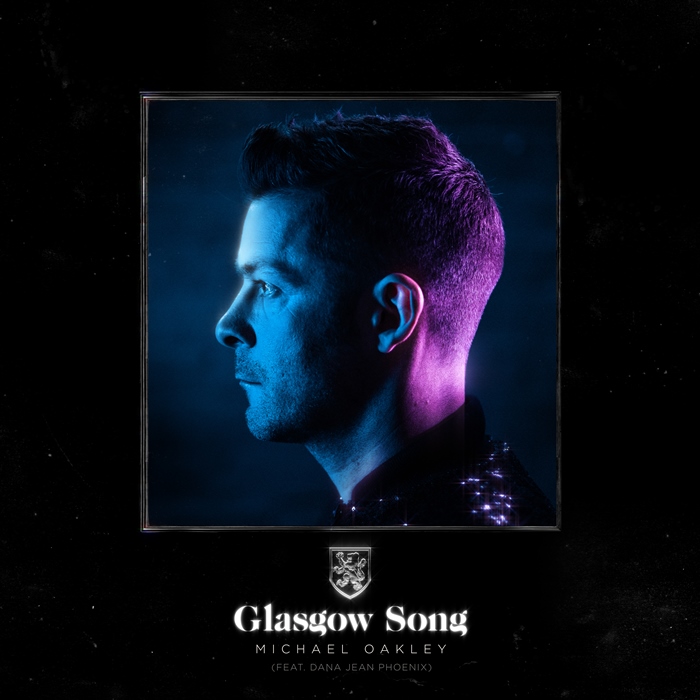
There’s ‘Glasgow Song’, a big ballad duet with Dana Jean Phoenix that also has bagpipes and a TEARS FOR FEARS rhythm sample from ‘Shout’?

I definitely took a nod to TEARS FOR FEARS for that 100%, all of those sounds are Fairlight samples… I tracked them down and recreated it. When you listen to ‘Shout’, it’s in B flat but that actual sounds are pitched wrong! I know it works in the track but I pitch-shifted those agogô sounds to B flat and be in tune with the track, it was just an interesting realisation! I went for that same effect, even right down to the panning.

Are the bagpipes real?

Yes, I reached out to a genuine Scottish piper, Lorne MacDougall and told him I didn’t want it too crazy so that it didn’t sound like a tourist walking in Edinburgh! What you hear is what he played, he layered that up with 14 different takes and I mixed it all in to sound like a bagpipe band. I must say, that was the only decision where it could go either way, it was either going work or be really sh*t!

It’s an obnoxious instrument and very on the nose, in your face, loud and proud. Was definitely a hard one to tame. I did have some issues in the production to make it fit in the track, but I managed to find the right balance with military drums and guitar supporting. I’m glad I persevered because it packs an emotional punch which really hits the message about how home is where the heart is, no matter what you think of where you come from. You have a love / hate relationship with the place but home is always where the heart is.

‘Queen of Hearts’ offers some more uptempo fare and uses what sounds like a classic Linn Drum Computer?

Those drum sounds are from a company called F9 Audio, it’s this guy James Wiltshire of FREEMASONS who makes incredible sample packs, it was from one called Grid Trilogy. They worked so well, they have a retro sound but they’re dancey as well. The problem with a lot of retro sounds is they don’t have the low end that you want when you do dance music, the kick doesn’t have the punch which you need in a club. These drums were cutting but had the right low end.

So you were after a meatier version of the Linn sound?

Oh yeah, the pack was done so that the drums could be dropped into Ableton as the hits were done individually and you can see the processing he’s done on it, I didn’t have to do anything to them myself as he had made them sound so good. It was probably the only time when I’ve been using drum samples that I didn’t really need to do anything apart from EQ the group to tame the highs, but they were perfect.

Another card, the Octave Kitten…the same company made the Voyetra which NEW ORDER and EURYTHMICS used…

I like the Voyetra, and I know one of the presets was used on ‘Bizarre Love Triangle’, the little “dit-dit, dah-dah, dit-dit” that sounds like a banjo! I have the plug-in version and I only bought it because I know Ulrich Schnauss uses it. I did nearly buy a Behringer Cat, but I bought their Pro-1 which I eventually sold to get a Deep Mind 12.

The Behringer Deep Mind 12 is their version of a Juno 106 but I think it’s better, it sounds like one but offers way more options for the unison mode for one of the oscillators in the effects section, just some of the routing options as well.

It’s been called a “Juno 106 on steroids” and even though I haven’t used it much yet, I’m gonna keep it for my live show and I will find a use for it. I mostly stay in the box when I’m recording, 95% of the time. The only synthesizers that I use for recording are an Ensoniq VFX, a MR rack and a TS10, nothing sounds like the Ensoniq range, they are the most gorgeous sounds, out this world bell tones and really ethereal pads.

‘Wake Up’ is a bit Steve Winwood? Had it been more intention to have more guitar on the album, like strummed acoustics?

I definitely wanted more acoustic guitar and electric but used in a textural way, not in a heavy blazing way. It adds a certain contrast to the synths. There’s a lot of guitar on ‘Wake Up’, that’s John Kunkel, while Derek Elliotson (who I record my vocals with) played acoustic guitar. It gave it more of a TEARS FOR FEARS ‘Songs From The Big Chair’ vibe, I just go with whatever works.

Was it a reaction to what’s going on in synthwave?

I love the synthwave scene, they’re been very amazing to me and adopted me where everywhere else, the door was closed. I’m very grateful for them rolling out the red carpet for me but my criticism of the scene comes from me wanting to protect it. It’s wonderful because of the original songs, that’s the thing and they’re dressed up in retro clothing.

But unfortunately like when a band like OASIS came along, for every OASIS there’s a CAST or a SUPERGRASS,. So for every act like THE MIDNIGHT, there’s a truckload of people who are just copying that sound and it doesn’t add anything new. It frustrating because it’s hurting the scene and the good music in not being listened to in favour of the spam posting of all this other stuff which are literally low-bar entry productions. It’s like when someone listens to TIMECOP1983 or THE MIDNIGHT, and they do the equivalent of drawing a stick man trying to be a Van Gogh, that is just sh*t! *laughs*

I would always encourage musicians to carve their own identity and never follow trends, because if there is a large contingent of people copying other people’s sounds, that in one way is good because you will stand out when you come out with something new.. whether or not that will be appreciated is another completely different matter. I think some of my choices have definitely been reactionary to the scene and I’ve avoided clichés, I never use the same presets twice in my music, I’m very careful about that.

‘Babylon’ features more strums and sax, what’s doing the solo?

The sax is Jesse Molloy who plays on THE MIDNIGHT’s records, but there’s a lot more tropical sounds on ‘Babylon’ like if Robert Palmer did a track with ENIGMA! *laughs*

The solo is all synths, I actually dug into the Roland JV1080 for that, especially the flute and Taj Mahal presets, to picture being in The Hanging Gardens Of Babylon. It’s about meeting my wife, there’s a lot of songs about her on the album. In biblical terms, Babylon was the first civilisation next to heaven, this is the closest to heaven you can get, it feels like Babylon being in this relationship.

The music is very mysterious and even the intro was a nod to the start of FRANKIE GOES TO HOLLYWOOD ‘Welcome To the Pleasure Dome’, all these bird sounds and being in paradise. *laughs*

The final card and it’s a Prophet 5!

Yes, I would love to own one but for now, I’ll just have to make to with Arturia! There are some Prophet sounds on ‘Babylon’, it has that gorgeous pad sound. It was what I was saying that you can hear the difference between a Prophet 5 pad sound and a Jupiter 8, you hear that creamy, unstable oscillation like ‘In The Air Tonight’ by Phil Collins or Peter Gabriel ‘Mercy Street’, the records are endless… oh the Prophet is the ultimate pad sound 🙂


ELECTRICITYCLUB.CO.UK gives its sincerest thanks to Michael Oakley

‘Is There Anybody Out There?’ is available now via the usual digital platforms

‘Odyssey’ is released by NewRetroWave on 14th May 2021 in a variety of vinyl LP, minidisc, cassette and CD formats as well as digital, available direct from https://newretrowave.bandcamp.com/album/odyssey

https://www.michael-oakley.com/

https://www.facebook.com/MichaelOakleyOfficial

https://twitter.com/MichaelOakleySW

https://www.instagram.com/michaeloakleyofficial/

Vintage Synth Trumps is a card game by GForce that features 52 classic synthesizers


Text and Interview by Chi Ming Lai
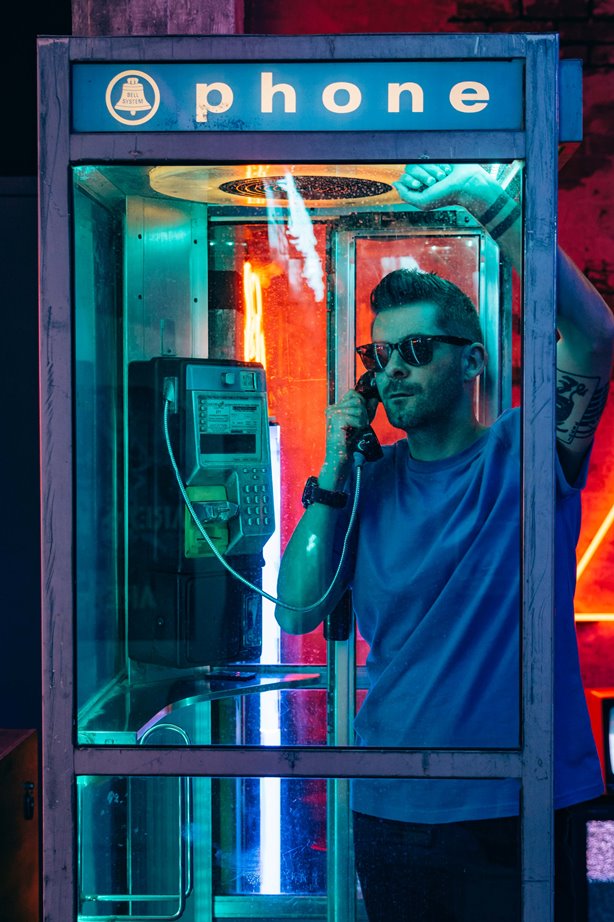
Photos by Jon Simo and Brad A Kinnan
7th May 2021
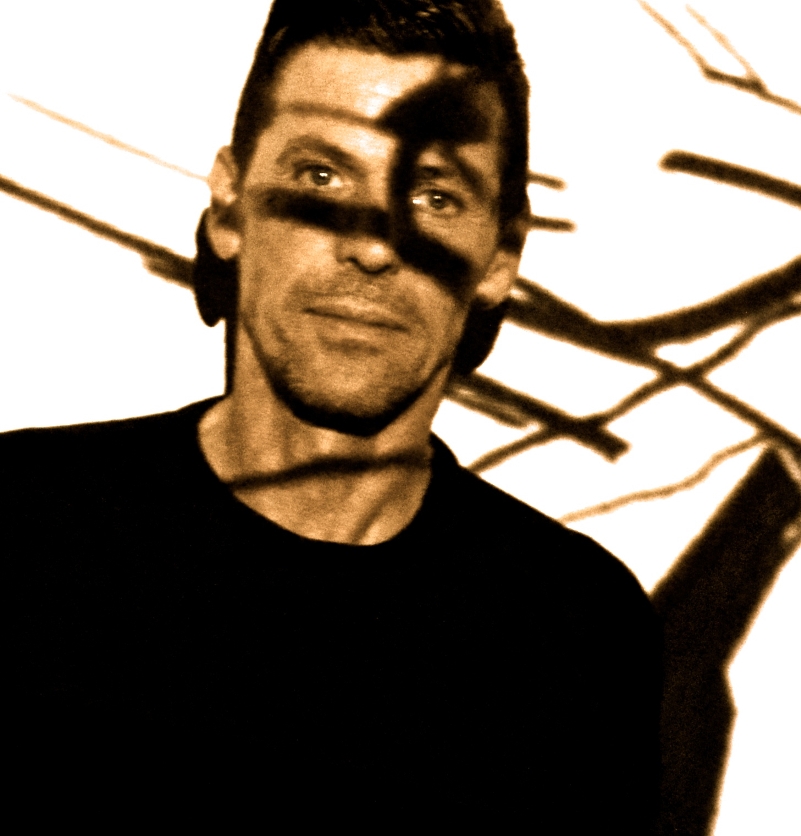
ERIC RANDOM Interview


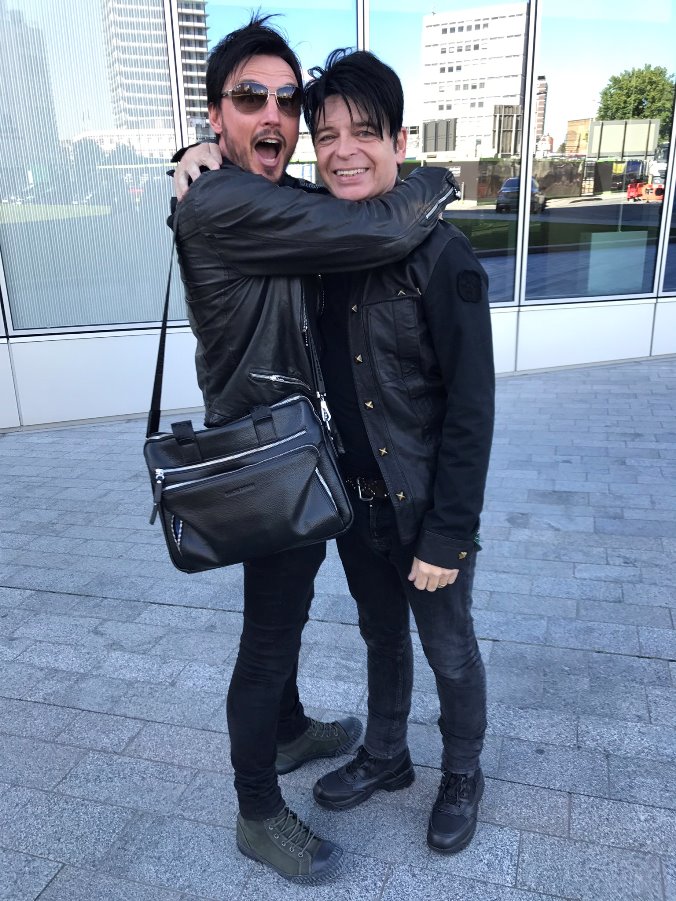
A veteran of Manchester’s influential post-punk movement, Eric Random has been making music for over 40 years and while he remains something of a cult figure, his curriculum vitae is impressive.

Eric Random’s musical journey began as a roadie for BUZZCOCKS and with their late frontman Pete Shelley, they formed THE TILLER BOYS who opened for JOY DIVISION at The Factory as emblazoned on Peter Saville’s iconic “Use Hearing Protection” FAC1 poster.

When Eric Random released his first solo record ‘That’s What I Like About Me’ in 1980, it was via BUZZCOCKS’ New Hormones label. He also appeared as a member of JELL on the ‘Some Bizzare Album’ with the track ‘I Dare Say It Will Hurt A Little’.

Meanwhile THE TILLER BOYS mutated into FREE AGENTS which led to him meeting CABARET VOLTAIRE. In 1984, with the production input of Stephen Mallinder and Richard H Kirk at their Western Works studio, Random released the alternative club favourite ‘Mad As Mankind’, a slice of soulful tabla-infused electro.

As one of THE FACTION, Random backed Nico, best known as the chanteuse of THE VELVET UNDERGROUND, on her final studio album ‘Camera Obscura’, produced by former Velvet John Cale in 1985.

Although he continued with sporadic FREE AGENTS releases produced by Martin Moscrop of A CERTAIN RATIO, by the start of the 21st Century, Eric Random had gone into hiatus.

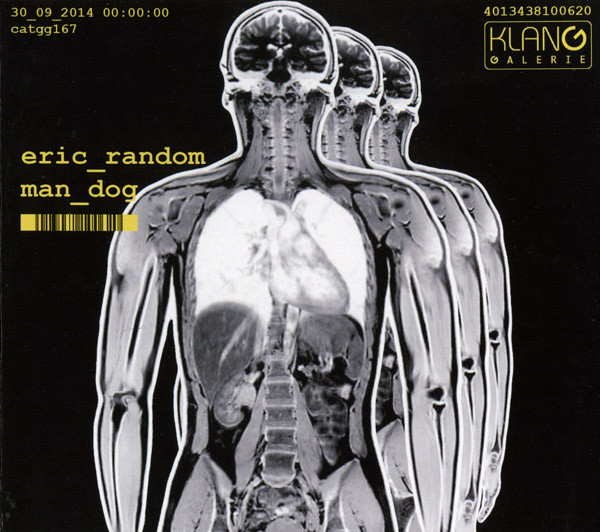
In 2014, he made his comeback with the ‘Man Dog’ album on Austrian label Klanggalerie Records and returned to the live circuit, opening for A CERTAIN RATIO and WRANGLER, as well as performing at the 2016 Electri_City_Conference in Düsseldorf.

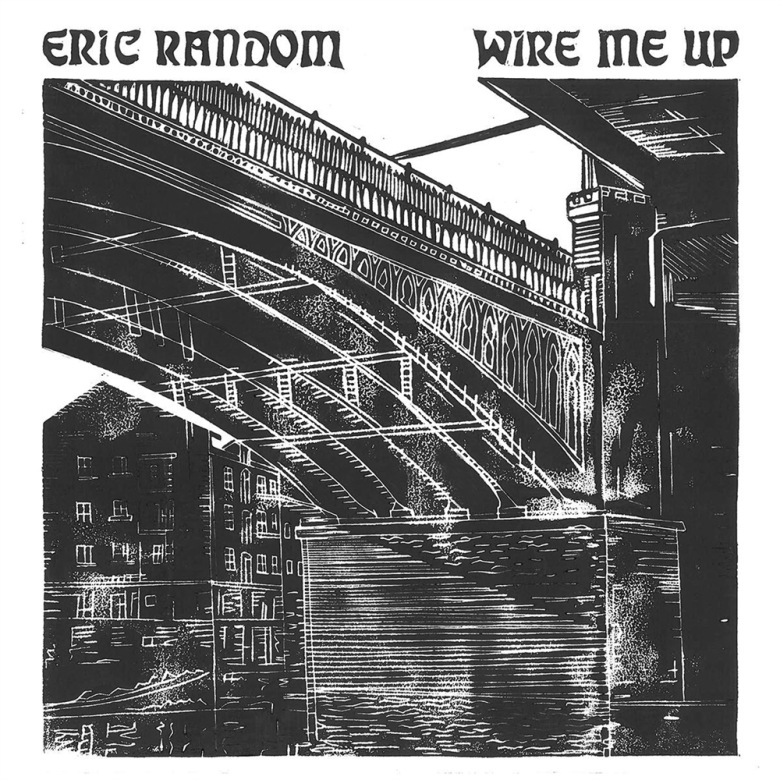
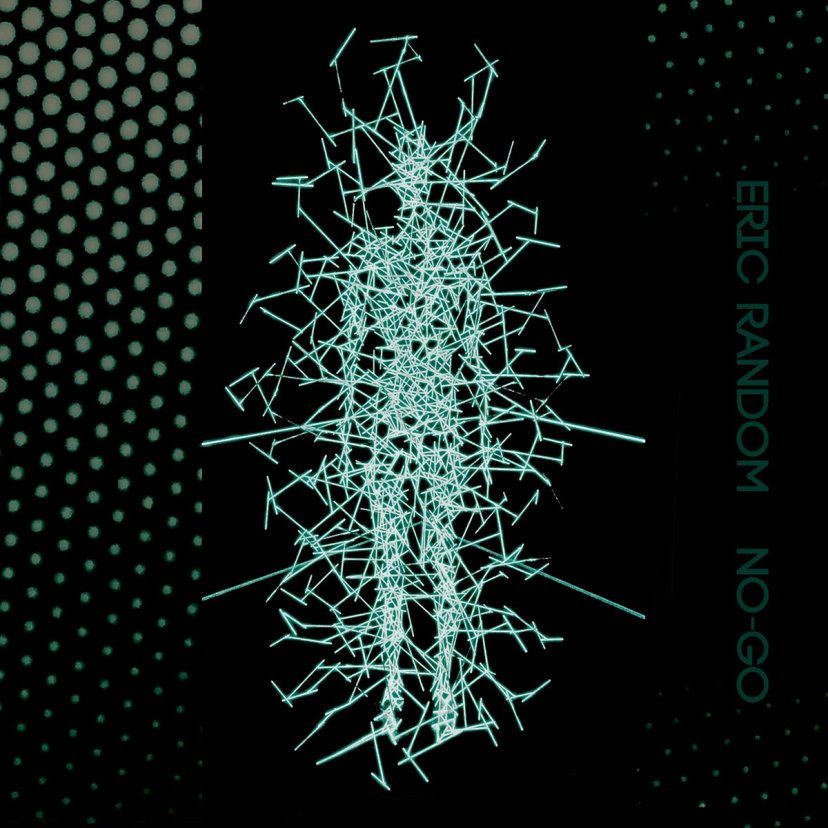
2019 saw Random release ‘Wire Me Up’, an excellent double album of predominantly electronic instrumentals while his new recently issued long player ‘No-Go’ develops on its dance template with a reintroduction of vocal textures, both natural and sampled as well as robotic.

Echoing FAD GADGET, NEW ORDER, CABARET VOLTAIRE and KRAFTWERK, despite the sinister if melodic nature of ‘No-Go’, a high groove factor is present within the programmed rhythmic lattice, a likely consequence of Random’s period of studying percussion in the Himalayas back in the day.

Eric Random spoke to ELECTRICITYCLUB.CO.UK about ‘No-Go’ and his refocus on electronic music over the years since his return.

Having been involved in post-punk, early electronica and world music, working with people like Pete Shelley, Richard Kirk, Stephen Mallinder, Nico, John Cale and Nusrat Fateh Ali Khan, when you returned from hiatus in 2014, you opted to focus on electronic music, what had been the motivation?

My return to releasing music and live performance in 2014 was concentrated on a more electronic aspect. The motivation being that as I would be working as a solo artist once again, I wanted to revisit my earliest influences. Not just to rekindle my love of music from a certain era, but to take a fresh contemporary look.


Had the technology improved to the point that it was a no-brainer?

Although the influx of new technology was exciting, I also relied (and still do) on some old favourites, such as Roland, Korg and Yamaha analogue synths and drum machines.

What was your first synthesizer and what was it like to use?

The first two synths that I owned were a Korg MS10 and I also had a Crumar Trilogy. This was a huge Italian-made synth, really nice but incredibly heavy to cart around.

What equipment set-up do you opt for these days in the studio, are there any particular tools of choice?

As I mentioned earlier, when in the studio I still go to my analogue gear along with a mix of modular units also some Moog, Electron and MFB gear.

At around the same time, had you been aware that Stephen Mallinder was making a return as part of WRANGLER, did you maintain a kinship with each other over the years?

As friends for more than 40 years, we did lose touch for a while, both being off on travels in different parts of the world. Then we met up again when asked by Walter Robotka to do a ‘Double Vision’ event in Vienna. With Stephen being such an easy going guy, we took up again as though we had only just recently seen each other. He also went straight back to being an inspiration with my first taste of a WRANGLER performance.


How do you look back on those first three comeback albums ‘Man Dog’, Words Made Flesh’ and ‘Two Faced’?

I see the first three Klanggalerie albums as somewhat of a re-learning curve, not only on the technical side of recording but also in writing the kind of work I want to produce. ‘Man Dog’ being the transition between the kind of music I was making just previous, which still showed some of the ethnic and slight jazz influences to the now purely electronic.

Your recent music has featured guest singers, ethnic vocal samples, your own voice and vocoder treatments, how do you decide what suits particular tracks, if at all?

The vocals on these albums are mainly through vocoders or various effects. Not usually starting out with a definite sound in mind, sometimes a case of trial and error. Mostly working my voice into something that’s textured and sinuous.

2019’s ‘Wire Me Up’ was a primarily instrumental set and had less “vocals” than on ‘Two Faced’, had there been any particular reasons for this direction?

‘Wire Me Up’ was intentionally more instrumental orientated as it was a vinyl release for Sleepers which is a club inspired label. The song format for me seems to, not restrict but can contain the accompanying music to a degree. So purely instrumental tracks allow the different kinds of sounds to open up and expand, giving certain parts more significance.


Was ‘Systematic’ from ‘Wire Me Up’ a nod to KRAFTWERK?

My appreciation of KRAFTWERK is quite evident when listening to ‘Systematic’, but there was no actual conscious decision to pay homage.

Also from ‘Wire Me Up’, the lengthy ‘You Seem The Same’ managed to fuse colder sounds with a real groove which was an interesting contrast?

Yes, I find fusing darker emotional, more unsettling sounds that have a sense.

You opted to release ‘Wire Me Up’ on Sleepers Records, after the previous three were on Klanggalerie. But you have now returned to Klanggalerie for ‘No-Go’, so is a label still important for an independent artist of your standing?

For playing their part in keeping physical formats alive and staving off complete digitisation of the industry. This and the discomfort I feel at the thought of selling myself, even after all these years of releasing albums make labels very much important to me.

‘No-Go’ continues your pursuit of a techno-based dance direction, but although the Detroit influences are there rhythmically, your music continues to maintain a Northern Industrial vibe. So the surroundings you grow up in never really leave your psyche?

I suppose the experience of growing up in a bleak industrial city in decay that was Manchester in the 60s will be part of me forever. Along with the sense of alienation and paranoia often felt in the 70s as a teenager when on the city streets. All of which must play a part in what I still produce today.

‘Synergy’ is a great opener that signals a natural progression from ‘Wire Me Up’, had your approach altered much while making ‘No-Go’?

Compared to ‘Wire Me Up’ in which I kept to a very immediate, raw almost improvised approach which just naturally progressed. ‘No-Go’ was written with more definition of process, more sculptured and manipulated over a period of time.


The wonderfully dark and blippy demeanour to ‘Compulsion’ is like a doomy PET SHOP BOYS, how did that come together?

I can see where you’re coming from suggesting these comparisons. I first wrote it as a brooding, dark groove track. Then I had the idea to do a vocal which was less processed than my usual style, which gave it that dreamy kind of retro feel.

‘Dirt’ does do what it says on the tin with them rather gritty sounds, what were you doing to construct those?

The overall sound and texture of ‘Dirt’ comes from running a sequence into modular VCOs then feeding them through a bitrazer and delays to achieve a gritty chaotic feel.

The Sci-Fi disco of ‘Fundamental Phenomena’ has an enjoyably futuristic quality, are you a fan of those kind of books and films? Any particular ones?

Sci-Fi disco, definitely my kind of thing, I love the greats like Philip K Dick, Isaac Asimov and Harlan Ellison. One of my all-time favourite movies is ‘Fahrenheit 451’, watching this as a youngster on TV was a game changer.

‘What Does It Feel Like’ is a bit more unusual and goes away from the dance template of the other tracks on ‘No-Go’ with that creepy arpeggio line, had the track been inspired by anything particular?

Wanting to briefly step away from dance type rhythms, I began working on this track by experimenting with the bass sequence producing an almost uneasy feeling of imminent threat. Then added to this the excitement and chaos of the synth lines that cut across the rhythm.

Which are your own favourite tacks on ‘No-Go’?

My two personal favourites are ‘Dirt’ for its lyrical relevance and being the first thing I wrote just as the lockdown in March 2020 occurred. The other, ‘Is The Sun Up’ because it has that cold space to it and is set to strong hypnotic beats, then goes on an aggressive tangent at the end.

What’s next for you, is live work still of interest or has everything that’s been going on made you think being stuck indoors is not such a bad thing after all?

As for the future, a couple of projects that were postponed or had to be rethought due to the situation of the past year will hopefully see daylight. First of all, a track I wrote with THE POP GROUP’s Mark Stewart should see the light of day. Coming out on the Texas based label Emergency Hearts also, a track featuring a vocal trio from Mark, Stephen Mallinder and myself. As for performing again, well it’s a very uncertain. I actually had gigs in LA, SF and across Europe which were cancelled last year. Apart from the pandemic there is also the political climate and Brexit all piling on the difficulties of travelling to do gigs in Europe. We shall see.


ELECTRICITYCLUB.CO.UK gives its warmest thanks to Eric Random

‘No-Go’ is released by Klanggalerie Records as a CD and download, available direct from https://klanggalerie.bandcamp.com/album/no-go

https://www.facebook.com/theericrandom/

https://twitter.com/theericrandom

https://eric-random.bandcamp.com/

https://www.ltmrecordings.com/eric_random.html


Text and Interview by Chi Ming Lai
1st May 2021

ADE FENTON Interview

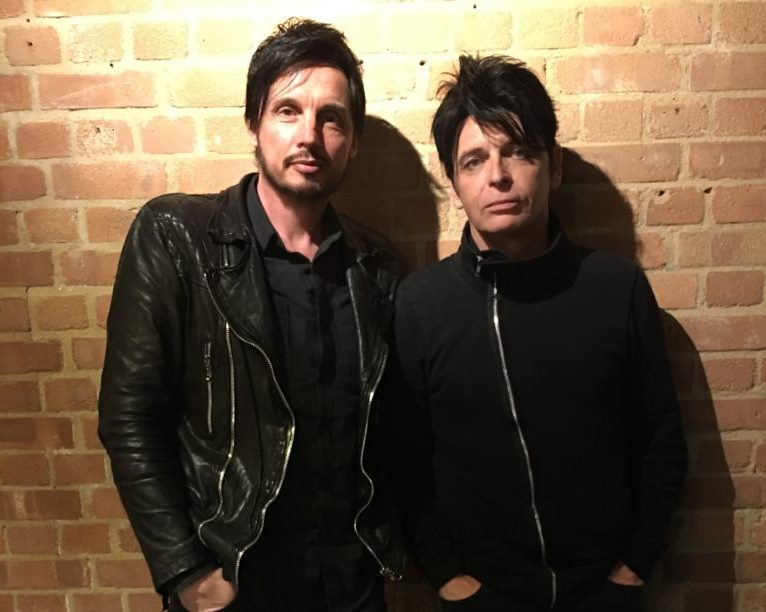
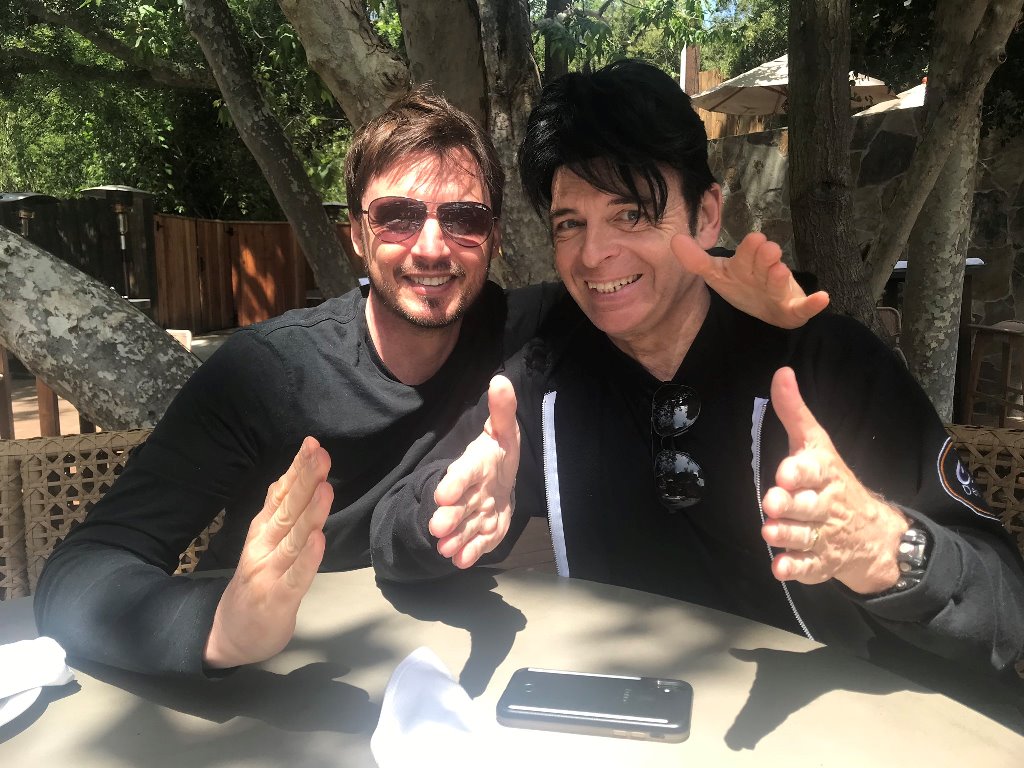
Ade Fenton is the producer and techno DJ best known for his work with Gary Numan over the past fifteen years.

As well as the albums ‘Jagged’, ‘Dead Son Rising’, ‘Splinter (Songs From A Broken Mind)’ and ‘Savage (Songs From A Broken World)’, there has also been the collaborative soundtrack to the film ‘From Inside’ and ‘Artificial Perfect’, Fenton’s only full length long player to date on which Numan sang four tracks.

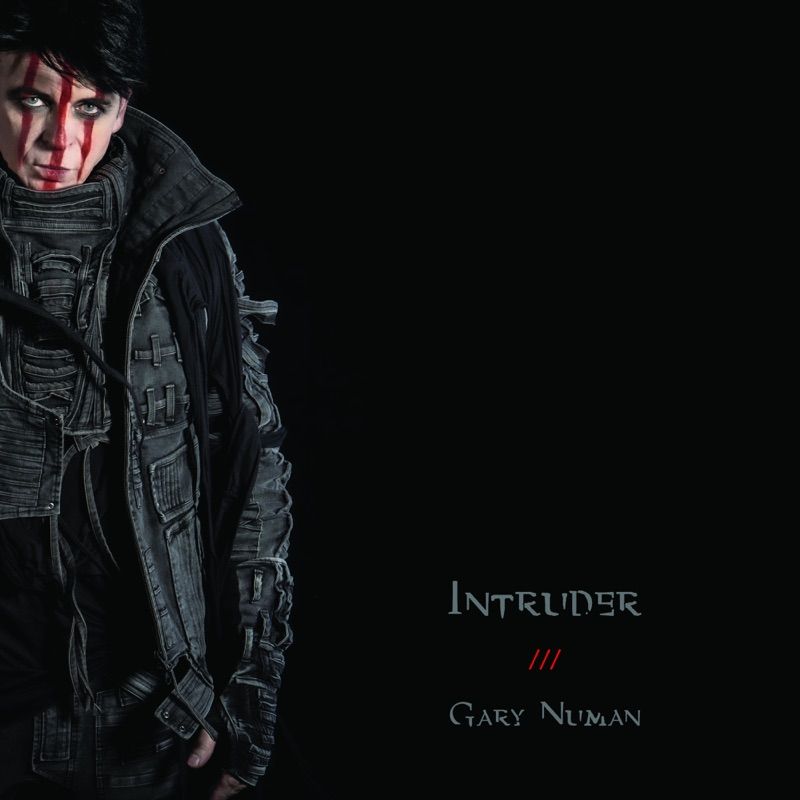
Meanwhile, Ade Fenton has also been working with Gary Numan on re-recordings of the albums ‘Sacrifice’, ‘Exile’ and ‘Pure’ which originally came out between 1994-2000. The new album ‘Intruder’ sees Fenton continue his fruitful relationship with Numan which has also previous included joint DJ sets, one notably at John Foxx’s 2010 Short Circuit event at The Roundhouse in London.

The concept of ‘Intruder’ sees Planet Earth expressing emotions of betrayal and hurt as it is attacked by responding with a virus! The songs previewed so far such as the title song, ‘I Am Screaming’ and ‘Saints & Liars’ have been threatening yet anthemic, capturing that sinister synchronicity of art projecting life!

With the release of ‘Intruder’ imminent, Ade Fenton kindly gave an in-depth interview to ELECTRICITYCLUB.CO.UK about his productions past and present for the veteran electronic pioneer.

How did you come to first work with Gary Numan?

We got to know one another through a mutual friend and after an initial period where he mistook my quietness for arrogance, we started to get along very well. We were at a party at his house and he’d heard some stuff I’d been making for ‘Artificial Perfect’ and really liked it.

At the time, he’d had a few production issues with ‘Jagged’ and so, slightly worse for wear, offered me the track ‘Scanner’ to work on. After a couple of weeks I delivered it to him, he loved it and we did another few. Again he really liked what I’d done and that was that. Here we are, 15 years or so later and on our fifth album together. Fairytale stuff really when you consider I grew up with posters of him all over my bedroom wall.

You were sort of working on ‘Jagged’ and your own album ‘Artificial Perfect’ ‎simultaneously, how did you keep focus and was there ever a temptation where you might come up with an idea and think “oh, I’ll keep that for my own record!”?

It might have seemed as though there was an overlap but actually, ‘AP’ was long in the making. I’d been working on ‘AP’ on and off for ages, simultaneously managing a pretty full on DJ schedule, but what really got my juices flowing was a break up with a girl at the time. I look back on ‘AP’ now kinda hiding behind a cushion to be honest. I had little experience in writing actual songs at that point, so I really was learning on the job, but it was something I felt I really needed to do. ‘Jagged’ came a bit later, so no there was never that temptation. Even if there had been temptation, this was my first album working with Gary and I wanted to impress him, so if anything it would have been the other way around.

‘Jagged’ polarises listeners, how do you look back on it now?

Well, it will always hold a special place in my heart actually. It’s the album that really started things off for me and Gary in terms of our partnership, so I’m perhaps a bit biased. I do get why some people find it a tough listen, but it was meant to be exactly that. Gary wanted to make his heaviest record yet, so we absolutely went for it.

Interestingly, ‘Jagged’ was one of the last records that Gary mixed himself, as his ears had started to deteriorate by then, so some of the dense feel of the album is partly down to that.

With that in mind, Gary has decided that he’s going to put out another version of it at some point, which will be mixed by Nathan Boddy and myself. It will be interesting to see how much of a difference it makes working on it again all these years later.

Gary Numan was known to be going through a creative rut with the first version of ‘Splinter’ which had been intended to be a very heavy collection of tracks all running at the same mid-paced tempo, but was this concept ultimately flawed?

Good question. No, it wasn’t flawed as at the time, it was what he’d envisaged. As it panned out, ‘Splinter’ became a very personal album to Gary, telling of his story with depression, so there were obviously musical moments of extreme emotions, from the heavy and intense ‘Here In The Black’ to the despair of ‘Lost’.

So how did the return to the unreleased outtakes that had roots in previous albums and other projects happen to produce ‘Dead Son Rising’ in the interim?

As Gary has stated in his autobiography, at that time he was going through a period of depression and the anti-depressants he was taking had had a big effect on him in terms of creativity and work ethic. By this time, we’d become incredibly close both personally and professionally and so it hurt me to see one of my best mates feeling so sh*t. I’d heard some these outtakes and knew straight away that we could turn them into something very cool.

So, he just let me get on with it and eventually the tracks had developed so much, he finally sat up and took notice. At that point, it was finished pretty quickly as the creativity was back, and he was firing on all cylinders. I look back on that period with a mixture of emotions but actually, by the time the album was done, it felt like we’d created something pretty strong.

In what way do you think making ‘Dead Son Rising’ ultimately helped to clear the decks to focus on ‘Splinter’?

After the initial setbacks, Gary and I wrote and developed the songs for ‘Dead Son Rising’ jointly, so for ‘Splinter’, Gary’s mojo had returned and it was very much a Gary Numan album, with me producing his songs. His depression had, inadvertently, provided a wealth of feelings to inspire ‘Splinter’ and once he started to send me the demos, I felt he was back.

Clearly, the difficulties he’d experienced in making ‘DSR’ had proved cathartic and so everything, from the ‘Splinter’ concept to the songs to the imagery, was clear in his head from day one.

‘Splinter’ eventually became an album of varying tempos with ‘Who Are You’ being a quite fast paced surprise. You love techno but it doesn’t really permeate as such into Numan’s music, or does it?

There are perhaps very subtle hints at what I used to make in my techno days, but I’ve never allowed it to become a feature of Gary’s music, that just wouldn’t be right. But, my understanding of that kind of groove certainly helps with tracks like ‘My Name Is Ruin’, ‘The Fall’ and ‘Love Hurt Bleed’ for example. The heavy kicks and basslines in those tracks certainly lean on the power that a four-to-the-floor groove can create.

With the ballad ‘Lost’, how did you manage to persuade Numan to use his voice naturally with a minimum of effects?

Lots of arguments! Well, maybe a couple. In my opinion, and certainly the position I took at the time, was that the story that song tells is exactly why Gary’s vocal should be exposed and almost naked. He’s laying it all on the line, telling us all what happened in his life, so let’s have the vocal upfront and not swathed in reverb and delay. It should sound as though Gary’s in the room with you, two feet away. I love that song, and unusually for me, I can still go back to it now and honestly say I don’t think I’d produce it any differently.

‘My Last Day’ was an appropriately apocalyptic end to ‘Splinter’, a variation on the Polymoog “vox humana” sound dominates the track, but how did you go about reconstructing your interpretation of this texture?

Cor, these are great questions. For starters, that song, as you may know, is about someone Gary knew who was diagnosed with terminal cancer. Imagine knowing your last day on earth is just around the corner. Imagine knowing you won’t get to see your kids grow up.

What would your last day be like and what would you say? These are all almost unbearable questions that some people have to face. So, as a producer how do you create those feelings through music? Gary and I talked a lot about that before we made ‘My Last Day’. I found it incredibly hard to work on that song, not musically or technically, but emotionally, I was a wreck. It’s such a beautiful song, incredibly sad, yet we felt like it should have this enormous and grandiose ending.

Gary had sent me the demo with the Moog style string sound dominating the mix, so for me it was a case of building on that. The sound Gary used was a patch from Spectrasonics Omnisphere and I added my own by creating a patch on my Access Virus Ti, which I used a lot on ‘Splinter’.

The ‘Savage’ album managed to be dark and intense but the more metal elements of previous long players were dialled down this time round, had that been a conscious decision?

Kind of. It wasn’t a pre-meditated decision, but it became obvious after song two or three that this wasn’t going to be that kind of album. I remember that we worked on ‘Bed Of Thorns’ first, of which Gary’s demo had been very Middle Eastern flavoured. I don’t remember which came next, but as the demos flowed in from him, we talked about it and both agreed that this album should be predominantly electronic. The power would come from big synth bass sounds rather than thrashy guitars in the most part. Ironic and frustrating then, that we were disqualified from being number one in Billboard’s Electronic Chart for not being electronic enough. Ridiculous.

When ‘And It All Began With You’ premiered, many listening were held in their tracks, a ballad as good as anything on ‘Telekon’, how did it come together as a recording?

Yeah, it’s another beauty isn’t it. When Gary sent me the demo, it blew me away. The vocal range reminded me of Chris Isaak, so the idea was very much to compliment that by using Steve Harris to create some guitar textures which would tug at the heart strings and we achieved that using the fantastic Eventide H9.

It was then a case of keeping the other elements really subtle, from the gentle and very simple drum groove to the random apreggiated synth pattern. I’m not sure if anyone noticed but I also recorded a thunder storm and ran it through the entire duration of the track. It seemed to add a lovely texture to everything else that was going on.

‘When The World Comes Apart’ managed to combine the classic synth elements of Numan with his more industrial rock sound successfully, is it a battle in the studio to reach this kind of compromise aesthetically?

Technically, it’s not a difficult thing to achieve but the challenge is getting it to sound contemporary. As most fans know, since I started working with Gary, I’ve tried to re-introduce some of the classic Numan sounds, but I’m resolute in making sure it never sounds pastiche. So, vocals at the top of the mix, anthemic string sounds, and synth bass sounds driving the songs. I think we’ve managed to achieve a modern sound, with subtle hints towards Gary’s legacy.

‘Savage’ proved to be Numan’s most successful for years plus there were still great songs like ‘It Will End Here’ left over. Had this been a comparatively straightforward album to make compared with the others, particularly in terms of studio rapport?

‘It Will End Here’ wasn’t left over, it was written specifically for the ‘The Fallen’ EP. It was only straightforward in the sense that we completed it from start to finish in 7 or 8 months, whereas ‘Splinter’ for example, had taken around 18 months. I’m not sure whether that was down to any kind of studio rapport though.

During the making of ‘Splinter’, Gary had moved to LA, so clearly that hindered its progress. With ‘Savage’, we absolutely nailed our working process and it came together quite quickly. Over the years, we’ve obviously developed level of trust for one another, so we generally leave one another to do our thing, then come together at the crucial stages.

So is the new Gary Numan album ‘Intruder’ part of a ‘Broken’ trilogy?

No. Although ‘Intruder’ is another theme based album, it’s definitely the next step rather than an additional piece of that ‘Broken’ jigsaw. ‘Intruder’ has a different feel to it than ‘Splinter’ and ‘Savage’, the use of incredible musicians like Gorkem Sen and Elizabeth Bernholz and a slightly different approach to creating the sound palette, sets it apart from the previous two.

What were your own first synths and what are your studio tools, keyboards and software of choice these days?

Crikey, well my first ever synth was a Korg Poly 800, many, many years ago. These days my studio is a mixture of analogue and digital. My DAW of choice is Logic Pro, and has been since Logic 5 I think, which I run on a Mac Pro. I run a huge selection of software synths and FX, including Spectrasonics Omnisphere and Trilian, the full NI suite of which Reaktor and FORM are my weapons of choice, a big Arturia collection with my go to instruments being the Buchla Easel, SEM V and Pigments, U-he’s Zebra and Zebra HZ, FXpansion’s Strobe and Cypher and for software processing I use Soundtoys, Waves etc. amongst many others.

On the hardware side, I use Arturia’s fantastic PolyBrute and MiniBrute 2S, with a MatrixBrute Noir on order (yippee), Analogue Solutions Leipzig-S and Vostok Deluxe, Access Virus Ti2, Waldorf Blofeld, Elektron Analog Keys and a MFB Urzwerg Pro for step sequencing.

My MIDI controller keyboard is a NI Komplete Kontrol S61 and I also use a Maschine Mk3 for making beats. For processing, I use an Eventide Eclipse and a Sherman Filterbank. Last but certainly not least are my beloved speakers, which are the PMC 228’s.

On ‘I Am Screaming’, the classic Numan elements of electric piano and drum machine shape the intro, but there’s this new element of Turkish musician Gorkem Sen bringing a Yaybahar to the palette. The melodies of Middle Eastern music have been a feature in Numan’s music over the years in viola or software form, but what inspired using an actual traditional ethnic instrument and what were the challenges of recording it?

Gary had spotted a video on YouTube of Gorkem playing the Yaybahar and sent it to me. We were both blown away by the sound this thing was making, so I suggested getting in touch with Gorkem. It took a bit of time to sort out, but eventually Gorkem agreed to do it.

Gorkem recorded the Yaybahar at his place and sent me the stems. It was pretty straightforward and we’re eternally grateful to him for allowing us to feature his unique instrument on the album.

Elizabeth Bernholz aka GAZELLE TWIN features on the ‘Intruder’ album too and she has magnificent haunting vocal range. With everything going on, did she have to be recorded remotely? What challenges does this present to you as a producer?

She did yes. I’ve known Elizabeth for a few years now. She’s a genius and I’m a huge fan of her work and everything she creates, both sonically and visually. She recorded her vocals remotely at her studio pretty late in the day actually. That was because we were still tweaking away at the tracks and we wanted to have a clear idea of what we thought would work for her.

I’d had a chat with her prior to her recording her stuff, so she knew which direction we wanted it to take, but honestly, when she sent the vocals back for ‘The End Of Dragons’, I sat in my studio screaming “f****ccckkkkk!” very loudly. We’d made a fairly grandiose, orchestral sounding intro to the piano version of the song, but when she added her immense vocals to it, I nearly fell off my chair. I can’t thank her enough for the unique layer she’s added to the album and I hope it’s the first of many collaborations with her. Recording remotely wasn’t really a challenge with her, or with any of the other musicians on the album. It’s not like we had a choice, so we just got on with it.

Which track from ‘Intruder’ has been your favourite to work on?

Tough question, so I’m going to have to choose two. ’I Am Screaming’ and ‘The Gift’. I loved the challenge of introducing some of the elements you mentioned in a previous question to this album’s sound. As a producer, I’m very aware that my priority is to deliver what Gary wants, not what I want.

But, because of the trust I mentioned previously, he allows me to try stuff, some of which sticks and some of which doesn’t. So, using a CR-78 and a modern take on the Roland CP30 piano sound was something I wasn’t sure Gary would go for, but running it through some heavy tape saturation and Soundtoys Decapitator gave it a lovely bite. I think I enjoyed those tracks in particular because there’s a lot of space in the verse sections to be able to experiment with sound design. Also, Gorkem’s contribution to ‘The Gift’ especially, takes it to another level altogether.

What next for you? Will there be a full length follow-up to ‘Artificial Perfect’ and are there any guest vocalists you have in mind?

I really don’t know about that. I have no desire to do a follow up, but I would like to work on some more collaborations. I’ve been working on a score for a boxing documentary called ‘In The Company Of Kings’ recently, that’s pretty much finished now so I think it’ll be a collaboration, then another Gary album.


ELECTRICITYCLUB.CO.UK gives its grateful thanks to Ade Fenton

Additional thanks to Steve Malins at Random Management

‘Intruder’, the new album from Gary Numan produced by Ade Fenton is released by BMG on 21st May 2021, info on available formats at https://garynuman.com/

‘From Inside’ is still available as a CD or download from https://garynuman-adefenton.bandcamp.com/

https://www.adefenton.com/

https://www.facebook.com/adefentonproduction/

https://twitter.com/adefenton

https://www.instagram.com/adefentonofficial/


Text and Interview by Chi Ming Lai
16th April 2021

« Older posts Newer posts »