Category: Interviews (Page 39 of 117)

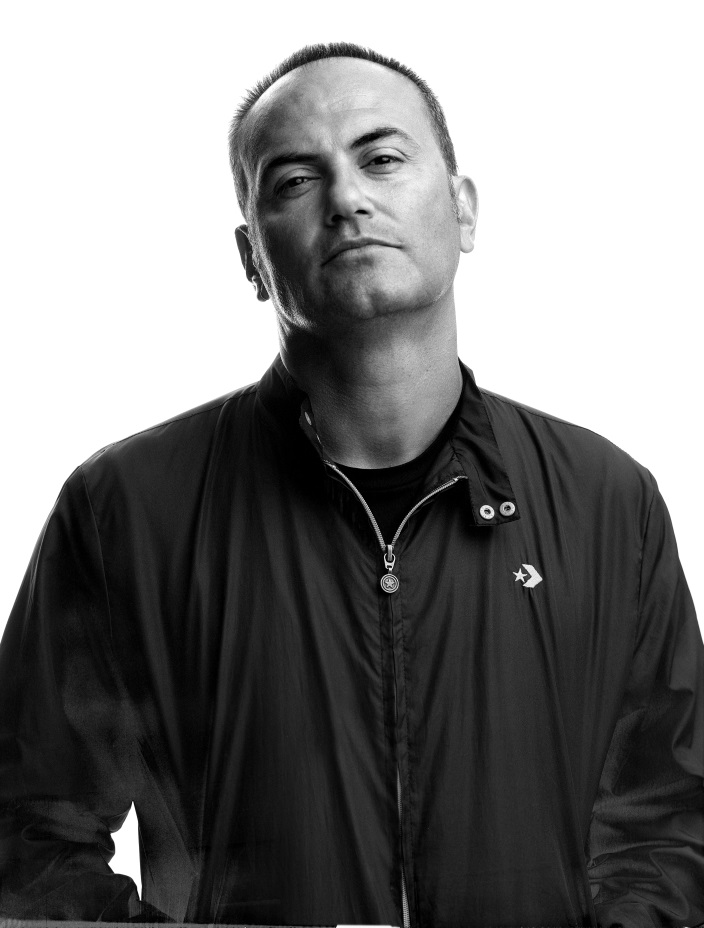
PETER HOWELL Interview

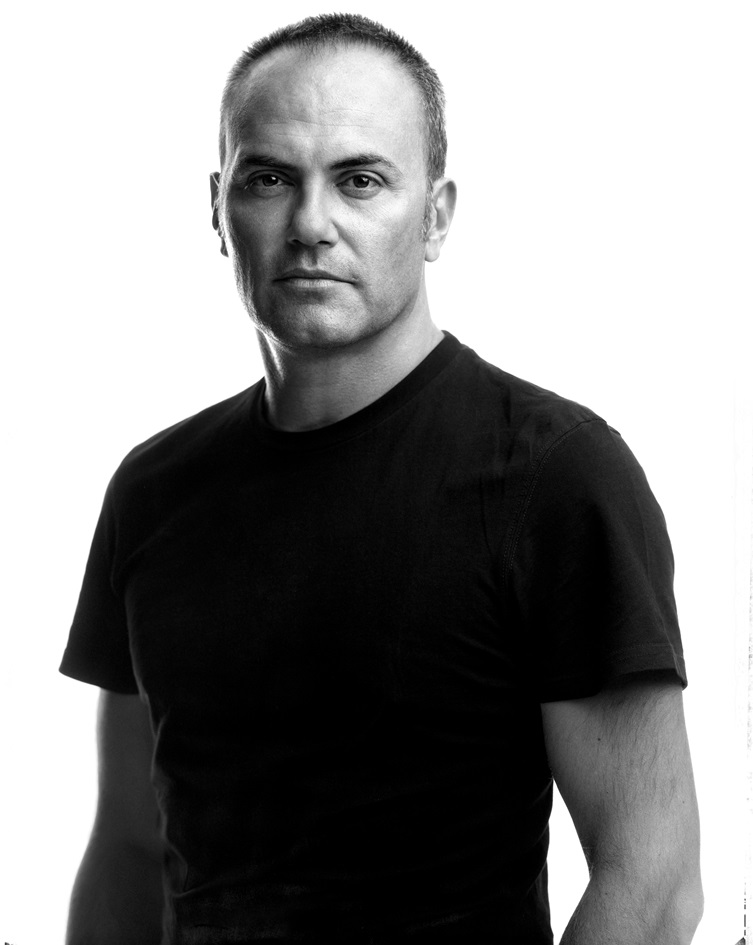
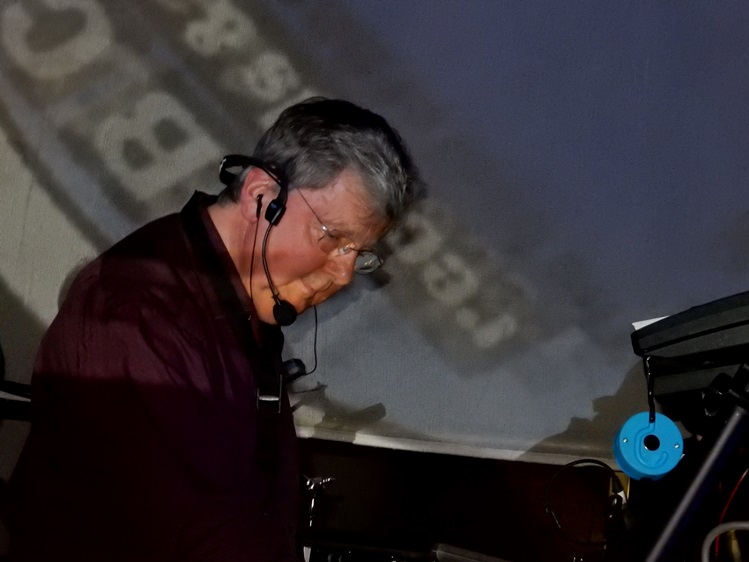
Photo by Chi Ming Lai

Electronic pioneer Peter Howell is best known for his period in the BBC as a member of THE RADIOPHONIC WORKSHOP.

His most iconic piece of music is the 1980 version of the ‘Doctor Who Theme’, originally made famous by Delia Derbyshire with her electronic realisation in 1963 of a composition by Ron Grainer. Howell joined in 1974, having already recorded a number of psychedelic folk albums with John Ferdinando under various guises.

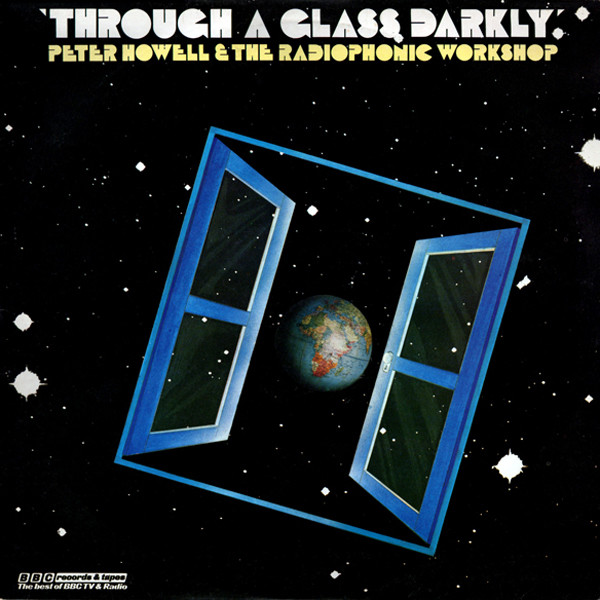
Using and abusing technology to create new sounds, for television, as well as music for ‘Doctor Who’ and other BBC programmes, Howell released the acclaimed album ‘Through A Glass Darkly’ in 1978. After The Workshop disbanded in 1998, Howell moved into academia, working as a lecturer at the National Film & Television School. Meanwhile in 2012, he published ‘Your Music on Film’, a handbook for film composers.

In 2009, Howell reunited with his former colleagues Paddy Kingsland, Roger Limb and Dick Mills under the baton of The Workshop’s archivist Mark Ayers for a special concert at The Roundhouse in London. It was the first time that THE RADIOPHONIC WORKSHOP had ever played live as a unit and interest from a whole new generation of fans was such that in 2014, they embarked on a UK tour which also included festivals such as Glastonbury, WOMAD and both Bestivals. More recently, this band of musical veterans have also performed at prestigious venues like The Science Museum, The National Portrait Gallery and The British Library.
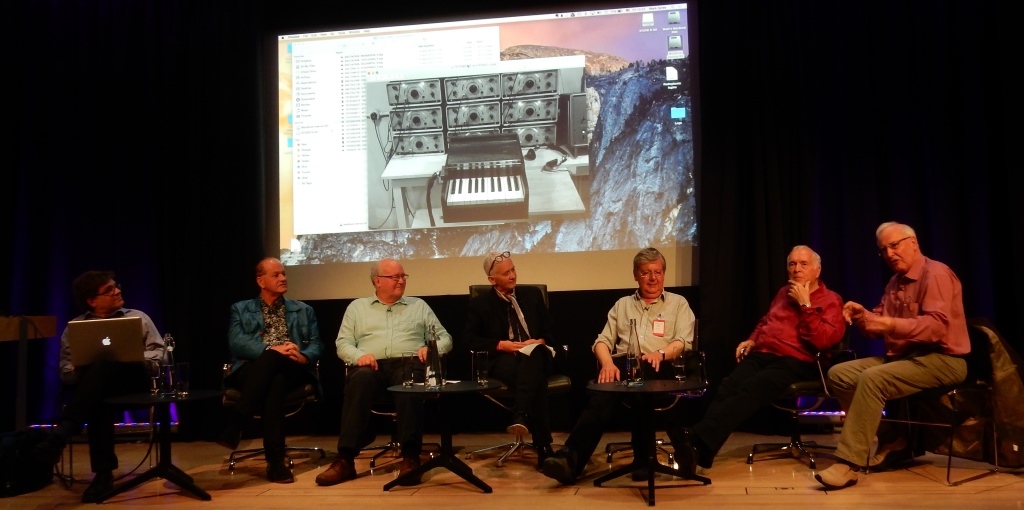
Photo by Chi Ming Lai

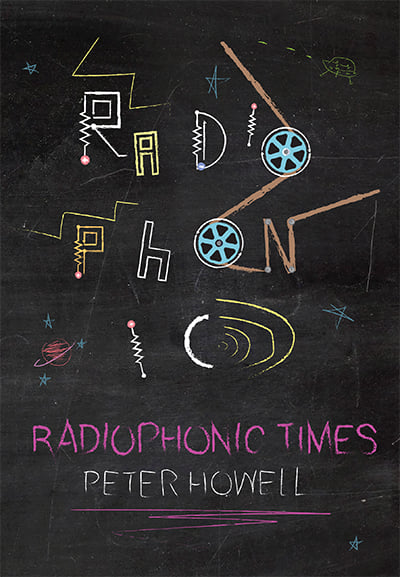
‘Radiophonic Times’ is the new autobiography of Peter Howell, published by Obverse Books who also presented the world with ‘An Electric Storm, Delia, Daphne & The Radiophonic Workshop’ in 2014. With the ethos of The Workshop is still going strong since its formation in 1958, he kindly spoke to ELECTRICITYCLUB.CO.UK about his ‘Radiophonic Times’

What inspired you to write a book?

People had suggested someone from The Workshop ought to write a book, but I never thought I would be the person despite the fact I had written stuff previously. I was writing before I was composing, way back when I was 12!

But it was mainly because of the band stuff that came along and I thought it would be neat to do a book that was like a parallel thread of modern stuff to do with the band and historical stuff, bouncing the two off one another. It was a bit different so I gave it a try. I had to look for a publisher and Obverse have been great because I needed somebody I could talk to as I was a bit green to all this. It’s been good, I’ve enjoyed it.

Have you had formal training as a musician, what were your main instruments? There’s a photo of you with a lute!

Haha! My training is minimal, I’ve just got a fascination with all sorts of musical instruments. When I was back in Hove with my parents, I used to travel to Hayllars Music Shop in Brighton every month and they’d have something in the window that wasn’t very expensive that would make another noise.

So I’d accumulated all these different bits like a mandolin, lute, glockenspiel , all that stuff that makes noises. I got interested in doing it from the ground up, not from any training at all. John Ferdinando and I teamed up to do the ‘Alice Through The Looking Glass’ album and that used all these instruments I’d gathered.

As a part of the 60s psychedelic folk scene, how aware were you of the emerging electronic music movement. Did you ever go to clubs like UFO at the time?

No, I think this gave me a qualification to be in THE RADIOPHONIC WORKSHOP that I didn’t take any notice of anything else! I was completely oblivious to anything! *laughs*

I was just interested in making sounds and recording them. It never occurred to me I was part of anything of any genre, it’s only been after the event that John and I surprisingly discovered that we’d been labelled as “psychedelic folk”.
How did you become interested in using tape manipulation and electro acoustic sound design in music?

I was interested in producing artistic material from very clumsy machines, and they were clumsy in those days. I’ve still got my Revox down in the studio and it’s a very clunky device *laughs*

That’s what I was fascinated with… the other day, a book that I had very early on that I’m very sorry to have lost, you’d be very shocked at how old fashioned it looked, a sound recording manual produced by people like Abbey Road Studios and the like. All the machines in it looked as if they were from the Second World War with big Bakelite knobs on everything, men in very baggy trousers with turn-ups! *laughs*

It was like a bible to me, I used to look at it all the time. I was interested in the idea of producing an artistic audio something out of the most unlikely things. On ‘The Walrus & The Carpenter’ from the ‘Alice Through The Looking Glass’ album, we actually used an old telephone and wired that up to record through the mouthpiece.

In those circumstances, you experiment with stuff and it’s the result of the experiment that inspires you to write the music, it’s not the other way. The more academic way of doing music is to acquire a skill and then look for a way to use it, whereas this was round the other way, acquiring a sound to see what can do with the sound to write the music. I regard it as “inside out” composing rather than “outside in”.

So all this interested to you applying for a job as a studio manager at the BBC?

Yes, that’s right. In the interview for that, I was chatting about what I was doing with my Revox and all the stuff, I think that got me the job.

How did you come to join THE RADIOPHONIC WORKSHOP?

There was a senior studio manager who was at the mixing desk, I was the junior studio manager playing tapes and LPs. I got given tapes to play with blue leader on them… at Broadcasting House, the leader was yellow for the cues and red for the end. These tapes that had blue leader on them, the sounds were amazing! So I asked about these tapes with the blue leader on them and I was told “that’s THE RADIOPHONIC WORKSHOP”.

By coincidence, I was doing some amateur dramatics at the BBC who had their own theatre group and while we were at The Cockpit Theatre in Paddington, somebody mentioned that they had a load of synthesizers upstairs. In those days, there was basically only one marketed synthesizer which was the EMS VCS3 and they had three of them that these days would set you back about £10,000! *laughs*

So me and this other guy played around on these synths and we did some music for the show. When somebody at the BBC heard these, they suggested that I should be in THE RADIOPHONIC WORKSHOP. In the end, I applied for an attachment for three months and that’s how it started.
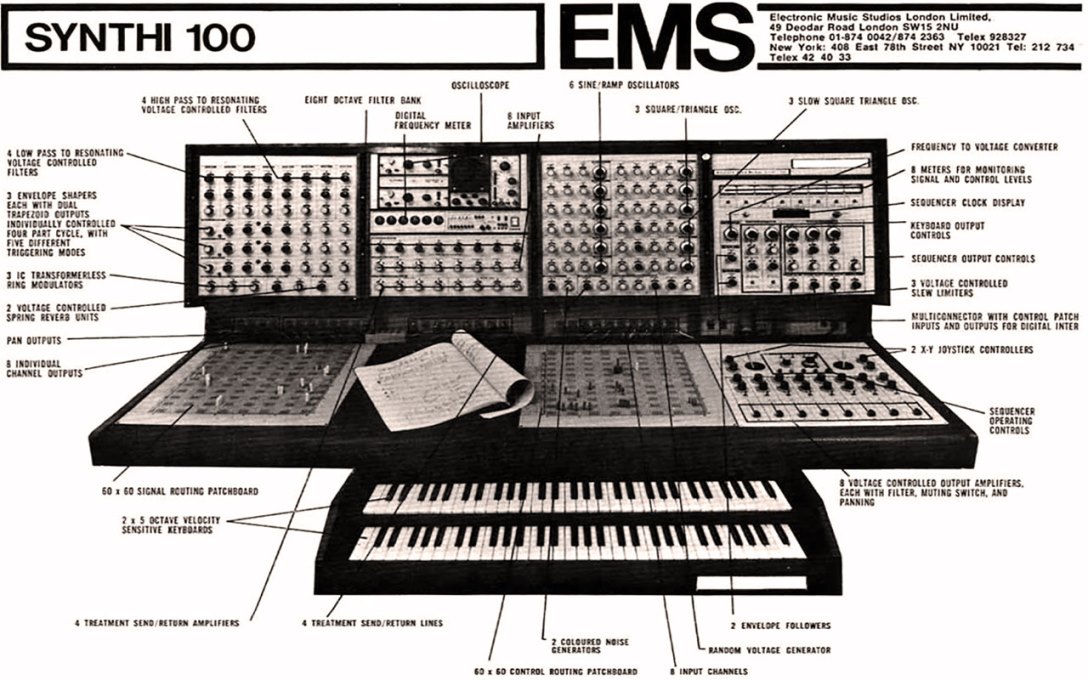
What did you think when you saw the huge EMS Synthi 100 Delaware there?

I thought “maybe I should start with the small one first”! *laughs*

It was enormous, it was the size of a Welsh dresser so I graduated to it later on. It didn’t fulfil its early promise for me I think you could say.

It was a very big device, it had a gigantic number of controls on it, some things that it did, nothing else did at all and it had a 256 note sequencer which was pretty unheard of at the time. It had this wonderful matrix switching panel which was really groundbreaking.

But the problem with the Delaware was however hard you tried, you could never really get it to make full sounds, it was a bit thin. The very front of ‘The Astronauts’ LP track is the Delaware, there’s a sequence of notes that I knew it could do well. There’s another track called ‘Secret War’ which has sounds made on the Delaware and as long as you knew what it was going to give you and not try anything else, it was absolutely wonderful. I didn’t find it was something you could use for a whole piece.

The VCS3 and AKS were loved by musicians but maybe EMS never made another synth as good as those again because the Polysynthi was horrible, it never made a decent sound no matter what knob you turned and Vince Clarke said it was “the worst sounding synth ever made”

I think it was a mixture of a lot of things and I think it had a lot to do with the filter. When you look at subsequent synths, the quality of the filter was very important, especially one that could have a bit of drive in it for some “oomph”. Things like the Moog were known for their filters and that was probably the shortcoming of that machinery. But EMS really were groundbreaking at the time and if it did nothing else, it introduced us to the fact that here was a machine that was making sounds that you had never heard before, you genuinely hadn’t, that was the excitement of it. Now that’s impossible to say these days.

There was also the possibility of not being able to get “that sound” again!

Haha! You’re dead right there! It’s all very well for everybody to love the old days and get all nostalgic, but there’s one thing I’m not nostalgic about and that’s machinery forgetting what it was doing yesterday! These days, the ideas of memories and coming back to something to carry on working is wonderful, everybody takes it for granted. I was so paranoid at not being able to get back to the same sound again, I would either work through the night in order not to walk away from it or alternatively, make a cassette recording of me dictating all the settings so that I could come back to them, that’s where we were at! *laughs*

So I can be forgiven for being a big exponent of laptop based stuff and I’ve got some really favourite high level software that I use, this is all nirvana to what it was! *laughs*

There was this mysterious dial marked Option4??

Haha! Yes, that was on the Delware! There were no wires attached to it, it was simply so that the facial panel could look more symmetrical! *laughs*

But we did use it because there comes a point in “your tweaking of the tweaks” as it were, some people have what I call ‘finishitis’ who, through lack of experience, can’t finish… they don’t know when something has been completed, so they assume there is always something else you can do to it.

So that’s a habit that you’ve got to get of very fast if you’ve got deadlines. Some of the BBC producers loved coming across to Maida Vale because it was a trip out from Broadcasting House or Television Centre and they could put their feet up and get into doing stuff. But there comes a point when you feel like saying to them, “why don’t we give it a bit of Option4 to finish it off?”, you know! *laughs*
Photo by Chi Ming Lai

You were often considered to be The Workshop member who had a pop sensibility as there was a move from the more music concrete approach to straightforward synthesis. Were you still encouraged to be experimental?

Well, Paddy Kingsland definitely when I arrived at the Workshop was the person who was associated with pop and rock. His output really put electronic tune making on the map I think.

He was able to use synthesizers in such a pure and direct way that his style revolved around being tuneful as well as being electronic. If I did go in that direction, it was inspired by his work really.

As far as I was concerned and it still applies to this day, I am equally experimental and melodic. Some of the latest music on my website has got that sort of trend. You will find there is experimental stuff at the front of a track and it then crystallises into more thematic stuff.

I think it’s a perfectly reasonable question to ask how much was dictated by what the directors want, we were a service department, weren’t just toodling around and being paid for it. We needed to supply programmes with what they wanted, so you are guided by what the programme needs.

‘The Astronauts’ needed a big theme for the early space race, so that was an example of where you could be experimental in a lot of soundtracking satellites talking with one another and thematic stuff which is more melodic. All the way through, I’ve tended to try and ride both horses at once
Your work on ‘The Astronauts’ in 1978 was very Wendy Carlos meets Vangelis, did they inspire you?

I think panic was inspiring me! *laughs*

In the book, it refers to how ‘The Astronauts’ came about. I was unwisely persuaded to run a session with live musicians because there was a lot of money backing it and probably the first and last time it was available for music. It was a European-wide venture and there was money coming in from everywhere, so it was decided to spend it on musicians. It was passable, it wasn’t awful but there was nothing special about what we did.

By the time I got back to the studio upstairs, I hated every split second of it frankly. I wanted to add some synth lines and the deadline was the next day. So I started fiddling around on the ARP Odyssey and I came across a random control voltage effecting a filter at the same time as an automatic repeated note. So it was going “dah-dah-dah-dah-dah” but every time it sounds, the filter is in a different position.

I added some tape echo to it and discovered that if your tape echo was slower than you would normally expect, you could get the echo to occur after the following note. So “note1” sounds, but the echo doesn’t occur until after “note2”. So if “note1” and “note2” are “da-dah”, then it goes “da-dah-da…”. So if you progress that through to a series of runs, you get semi-quavers appearing in between the runs in an interesting galloping sort of effect. That was the basis of the track, it was genuinely experimental as far as I was concerned. I didn’t know really what was going to happen. Once I got that bassline, that was it. So using this inside-out system, once you get a sound that is strong enough, everything else follows. It’s like a blossoming flower.

Do you think that music was influential on acts like TANGERINE DREAM because they started to sound like what you did on ‘The Astronauts’ when they went off to do all that soundtrack work?

I occasionally heard stuff that I thought might have had associations, but we didn’t imagine we were connected to the outside world *laughs*

We were like inhabitants in a computer game really, existing in our bubble and we never met the public who heard our music on these programmes, we only ever met the directors of the programmes who came to us. So it was a hermit-like existence. You read a lot of people have been inspired by The Workshop but it was quite surprising to us as we were just doing our thing *laughs*

Is it true there was a rivalry between you and Paddy Kingsland at The Workshop?

Oh the rivalry was NOT on Paddy’s side at all, but it was slightly on my side! It wasn’t his fault, but I did feel I was regarded as a slightly less good Paddy Kingsland. I had ability on keyboards, it wasn’t massive and I had talent, but it was evenly spread across guitars and keyboards *laughs*

I didn’t think my keyboard side was represented enough in people’s opinion of what I could do at the BBC, so that was one of the reasons why I decided to do the ‘Through A Glass Darkly’ album, the whole of the first side of which relies quite heavily on keyboard work, not just synths but a Steinway, I went the whole hog *laughs*

If there was rivalry there, it was entirely my fault but I felt I needed to up my game a bit!.

Yes, there’s nothing like a bit of creative tension…

…absolutely!

What are the challenges of writing incidental music compared to a theme? Did you compose to moving images, have a brief or story board?

You basically look at rough cuts of the film, story boards are no good at all and scripts aren’t much good either! When I was doing ‘Doctor Who’, one of the most disappointing things looking back is the ludicrous number of trees they cut down to make these redundant scripts that they’d send everybody, great fat ones! The pink one was the shooting script, the yellow one was the editing script, every single episode, there was another one!

And I didn’t look at any of them! What’s the point? The important thing is what’s the picture I am actually writing to. Until I got the rough cut, I didn’t waste the time of actually doing any work on it. Because I respond to the film itself, I didn’t want to fire all my ammunition too early. You need to keep your powder dry I think is the expression *laughs*

What do you remember about reworking the ‘Doctor Who Theme’? Was there a weight of responsibility?

It was tampering with an institution and I did it with a lot of trepidation. I agreed with Brian Hodgson and ‘Doctor Who’ producer John Nathan-Turner beforehand that if I and others didn’t think it was going well, we would actually shelve it and nobody would know it was even being done. So we had to be quite secretive about it. I remember when I had the bassline and one or two bits, I went to Paddy as he was doing some trials of incidental music for John Nathan-Turner and asked him “ought I to continue with this or not?”; he thought it was alright *laughs*

It gradually evolved and took me six weeks overall. I tried lots of different bits of gear in The Workshop. One of my concerns was people could meet in the pub afterwards and say “oh, I know what he was playing for that! It’s a so-and-so and it’s the third preset along”, I hated the thought of that happening. I still hate the thought of that happening to this day! *laughs*

So I went out of way to find unexpected uses of bits of gear. The CS-80 was only ever used for the bassline, nothing else. The ARP did the “oooh-wee-ooooo”, the Roland Jupiter did the middle eight with a tremolo sound because it’s got a good arpeggiator on it and so it went on, every part really was from a different place.

Some of it was quite a lot of work. For instance, towards the end of the opening theme, there is a sound that is like a Catherine Wheel, a “swoo-swooosh-schwhhh”, that was a whole session on its own. It was done with different multitrack tape using match flares and all sorts of things old style, cutting the tape up, feeding it back through echo, looping it, all the rest of it. I’d master it onto a ¼ inch stereo tape and play that onto the main multitracks. So there were bits that were like sub-contracted out to a different session and then brought back in again.

There was a lot of work involved in trying to get an organic sound environment. I was pleased that I sort of got that because it’s something that Delia Derbyshire had with her version. You’ve got to admire her with what was at her disposal, she really did invent a whole sound world for that piece. I was very keen to try and do the same thing.

One of the most difficult sounds to emulate would have been the attack of the bassline?

That’s right, if you listen to the bass on mine, it has exactly the same “gulp” sound in front of each phrase that Delia had, and I make no excuses about being inspired by what she did, because that was such a lovely effect, almost like the bass was tripping over itself. It’s not four square predictable, it’s got that “lurch” feel to it that I really liked. I did that by reverse reverb which is taking the bassline that was played accurately along the way, turning it upside down and playing it into reverb, re-recording that and turning it upside down before setting it back a tiny bit, so that you have lead-up sounds to the bass notes. That way, you’ve got this feeling of tripping over.

You’re doing all this tape manipulation stuff, but then comes the Fairlight which makes it all much easier?

Moments like that are quite pivotal. If I had been somebody who utterly loathed the idea of digital, that would have been the end of my career frankly. The way things were going, they were heading in that direction. Oh I loved it, several of us loved it too much and then Kate Bush comes along with her ‘Never For Ever’ album and I felt like never touching it again. All the Fairlight stuff was so wonderful and fabulous on that album, so that brought me up a bit short!

I realised you can’t expect to survive on one bit of gear, it’s that same as going back to the Delaware. When this wonderful new thing arrives, you think “oh my God, this is the end of life as we know it”, but it isn’t and it did add lots of very interesting things. But you have to be proportionate I think.
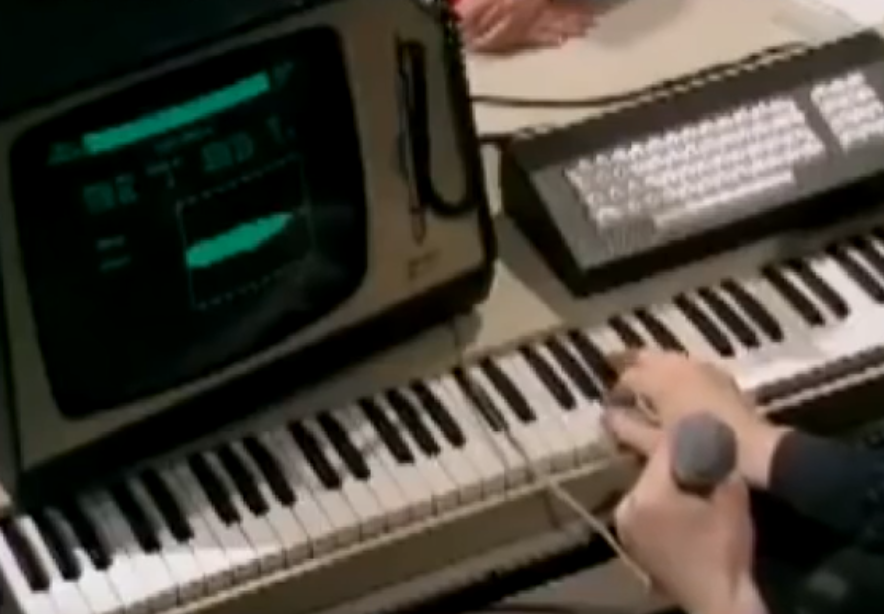
You demonstrated the Fairlight to school children on TV in 1982 and with its “smaller box than you’d expect for a computer”, it’s all very ‘Look Around You’… what do you remember about doing that?

It’s very twee! Whenever you do television, you realise how utterly false the whole thing is, however live it might be! Everybody is so aware of getting it right and doing it like you did it in rehearsal and all the rest, it was not my greatest hour! *laughs*

Of course that clip got spoofed with you inventing drum ‘n’ bass… *laughs*

Yes, it was nothing more than we all deserved! *laughs*

What makes it funnier now is the indifferent girl at the end obviously comes over not very keen on drum ‘n’ bass…

I didn’t find out who did it, but I became aware of it through a student, at the film school I taught at, who sent me the link. But then the day after, he sent me an email apologising for sending it to me thinking I’d be terribly upset. But I told him I’d never laughed so much in my life! It was hilarious! *laughs*

Were there any instruments in The Workshop that you never got on with?

I had an arms-length relationship with the Delaware but I got on with it, but I never really went for the PPG or the Oberheim. With the PPG, you felt you were already using the Fairlight and it’s doing it better. Meanwhile similarly with the Oberheim, people were saying they were very beefy sounds and they sort of were, but I don’t think it warranted the effort for me.

But when we came onto stuff like the rack-mounted gear, something like the Yamaha TX816 which was eight DX7s in a rack was fantastic. You could do the most amazing things, sometimes playing all eight at once, some slightly detuned, all sorts of things. A lot of the Yamaha and Roland gear was generally speaking, pretty up there. I didn’t go for Akai samplers when virtually the rest of the planet was going for them, I liked the Roland library and their samplers with the standalone monitors so you had a little bit more information about what was happening, you weren’t looking through a little window all the time, it was things like that.

We were very idiosyncratic, you could find somebody in The Workshop who liked something you disliked so it really didn’t matter as each of us had our own projects, we were actually hardly collaborating at all.

How did you get on with FM synthesis programming on things like the DX7 and TX816?

John Chowning, the guy that invented FM synthesis actually game to see us. I liked it a lot but as with everything else, I liked “playing the whole room” so I didn’t like relying too heavily on one thing for total solutions, because I actually think it leads to sound a bit vanilla for me.

You use the DX7 live as your keyboard controller, what’s that triggering?

My keyboard is controlling laptop based synths that are local to me and occasionally via MIDI lines, synths that are with the others. And the same goes in reverse, it sounds ludicrously complicated but we’ve got it down now to a reasonably workable solution.

Mark Ayres is the hub, he is responsible for the timeline, the video on it, click tracks that all come out to us via Ethernet connected personalised monitors, so each of us have control of sixteen tracks just for our monitoring. It historically goes back to our concert at The Roundhouse in 2009 when we relied on The Roundhouse to provide our foldback and never again, because it was so difficult.

We realised that our sort of material is so varied that you need to be far more specific about your foldback. If you are a rock band and basically using the same line-up for most numbers, you can virtually predict whatever your set-up will be ok when you play the next thing. Not for us, we’ve got so many different sorts of material that we needed a customised way of dealing with it. That describes it roughly.
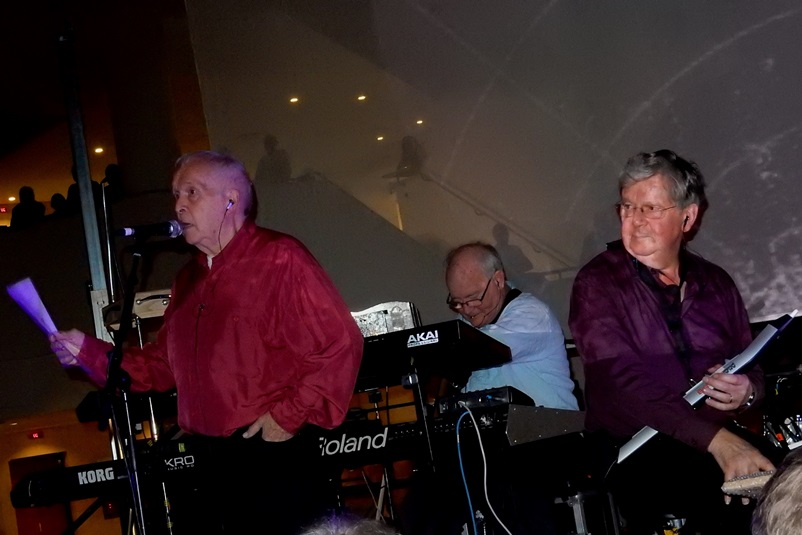
Photo by Chi Ming Lai

You use an Akai wind controller on stage too, are you trained in wind instruments?

It goes back to Hayllars and buying lots of instruments. I learnt recorder, penny whistle and I learnt some clarinet and flute. The fingering on the wind controller is most like the flute because you can actually choose what fingering you have, I really enjoy it. I’ve also got a Launchpad Pro matrix that I use for more sound based stuff and I play guitar as well.

How have you needed to adapt the stage set-up for touring purposes and practicalities in live shows?

One thing that came out of The Roundhouse concert for me was ways not to do it. I really didn’t like the experience, one of the things that I thought was absolutely stupid to have done was to put the synth keyboards in the way of me and the audience. You’ll see now since when we went out on tour, I had the keyboards placed sideways so that I have an open view of the audience. When I play guitar or wind controller, I am towards the audience and for me, I’m playing to somebody. At The Roundhouse, I could have been in a study somewhere, I just felt totally disconnected. So that’s one thing that I’ve appreciated doing, that’s worked and Mark has done the same so we are backed onto one another.

THE RADIOPHONIC WORKSHOP have been performing as a live entity for some time now in the last few years. But being mature musicians, touring is not a natural thing to want to do for the first time? *laughs*

No! Cliff Jones, our manager kindly realised that we wouldn’t be sleeping in the van! *laughs*

So, the accommodation we’ve had has been quite good, it’s not the Hilton but they’re comfortable hotels. We have probably spent an inordinate amount of our earnings as a band to making sure we’re feather bedded *laughs*

Mark Ayers has mentioned that it could all be done on laptops but visually wouldn’t be very exciting for the audience?

One of the reasons I turned round and also that I’m playing different instruments was to help with the visuals. I’m not an enormous fan of the presentation style of KRAFTWERK these days, to me they look like a series of chartered accountants standing behind their laptops. So I didn’t really want that to be the way we came across.

Also, we’ve got a live drummer Kieron Pepper and that made an enormous difference right from the start… it also made it a bit more complicated but probably it ups the excitement value, certainly when we get round to doing our finale which is a very extended nine minute excursion which lands into the 1980 ‘Doctor Who Theme’ and I think that proves the value there. In fact, we have two drummers, Bob Earland who is an electronic wizard but also a drummer who was trained by Kieron so the two of them are occasionally drumming together.

There’s also the video projections?

We’ve got videos for everything bar one thing and we regard that as quite important as our audience from the word go were looking at their television so used to hearing our stuff with visuals. I think it would be quite difficult for them to suddenly have nothing but us playing on stage. So we’ve kept that in mind throughout, but it does make it a great deal harder to do, but it’s what the audience enjoy.

Mark has so many good suggestions in problem solving along the way which has been invaluable, his input has been phenomenal from the start. There have been a few ideas where I’ve been doggedly trying to get it to work and there comes a point when somebody else in the band says “why don’t we stop doing this because it’s not working?” *laughs*

For instance, using vocoder live if there’s too much coming off the drum kit, not to be recommended at all! *laughs*
Photo by Chi Ming Lai

You’ve influenced a whole variety of musicians, producers and DJs, who out of the more recent generation do you think best encapsulates the spirit of The Workshop?

There’s tons of stuff but I’m really bad at making mental notes of people, because part of the problem is I don’t get hooked on one person. I am full of admiration of what they are all able to do, I feel in the stuff I’m writing now, I’m just a member of their band to a certain extent.

Nobody is pretending that pioneers can carry on being so, they are the people treading the new ground and there’s fabulous stuff around. And it’s not just pure electronic stuff, it’s also production values and some things are quite extraordinary. It’s what keeps me going really, I’m fascinated by how people are achieving things. I love Tim Exile’s stuff, he’s somebody who uses technology live in a completely off-the-wall spontaneous manner, he’s helped Native Instruments develop a few plug-ins, one called Mouth which I use.
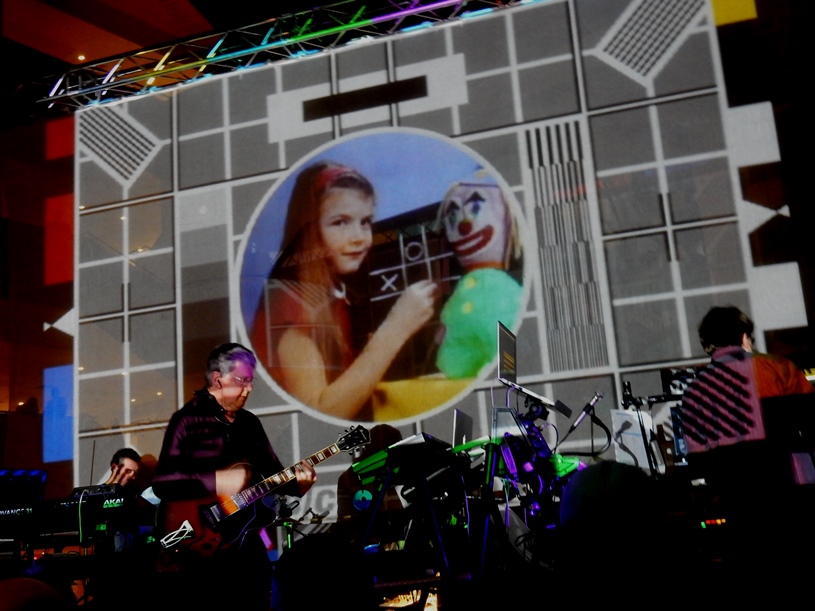
Photo by Chi Ming Lai

What have been your favourite pieces of work in your career?

When you ask composers what are their favourites, they may choose things they were up all night writing which means they are much more memorable.

For me, it’s often stuff people probably wouldn’t think twice about, I love what I did for a Channel 4 series called ‘Reality On the Rocks’ with Ken Campbell, the comedian trying to discover the details involved in quantum physics; in the 90s because of the producer choice internal marketing policy within the BBC, we were able to offer our services to other networks.

Obviously, I am delighted with the success of the 1980 ‘Doctor Who Theme’, because it’s been a calling card for me, I can’t possibly not mention that and it was very enjoyable to do.

‘The Astronauts’ too but we are going a long way back, there are things in the meantime that you are pleased with for different reasons. I did the title music for ‘Cardiff Singer Of The World’ for a couple of years and that was all done on glass rims, you get pleased with things for particular reasons.


ELECTRICITYCLUB.CO.UK gives its warmest thanks to Peter Howell

Additional thanks to Stuart Douglas at Obverse Books

‘Radiophonic Times’ by Peter Howell is published by Obverse Books, available now in paperback or electronic formats from https://obversebooks.co.uk/product/radiophonic-times/

https://www.peterhowell-media.co.uk/

https://twitter.com/peterhowelltalk

A ‘Radiophonic Times’ playlist compiling a variety of works throughout Peter Howell’s career can be heard at https://open.spotify.com/playlist/1lvTOEdEUGcucgGRc6zhFE


Text and Interview by Chi Ming Lai
12th April 2021
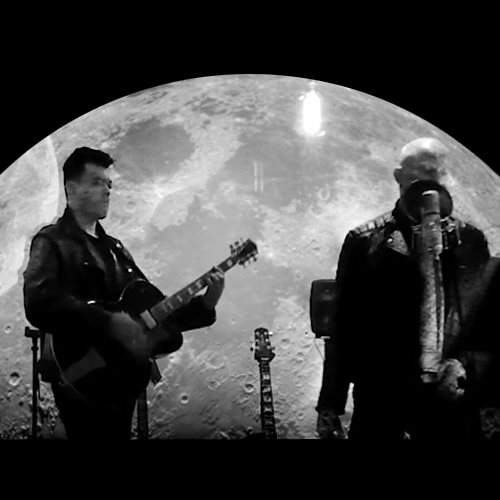
SILVER MOON Interview

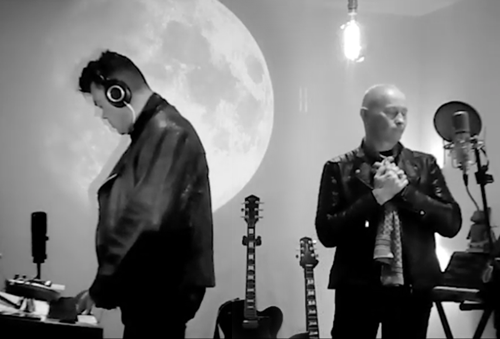
Comprising of vocalist Aidan Casserly and musician Mike Wilson, SILVER MOON captured a musical journey in synth, indie and pop about love and life on their first album ‘Empty Rooms’ released at the end of 2020.

Aidan Casserly is best known as the man behind EMPIRE STATE HUMAN while Mike Wilson heads up Ditto TV and Playworks TV who produced the 2016 documentary film ‘You Keep Me Running Round & Round’ which looked back at the life of Irish electronic music enthusiasts as they gathered to attend the first concert in Dublin by BLANCMANGE.

Esoteric and challenging the minds of potential listeners, an eclectic range of styles sees SILVER MOON explore anything from opera to country & western for their own technologically constructed falsetto tinged art rock.

Not content with sitting on their laurels following ‘Empty Rooms’, the Irish duo now have a new EP ‘All The Stars’ with five completely new compositions with their own distinct air of poetry and theatre ready to unleash onto the public. The Irish duo chatted to ELECTRICITYCLUB.CO.UK about their considered artistic ethos…

How would you describe the concept of SILVER MOON and how has it differed from your previous musical outings?

Aidan: Firstly, thank you for this opportunity to chat with you. It’s a great honour. I’ve written and produced about 40 albums since signing EMPIRE STATE HUMAN to Ninthwave records. Being an artist is my living dream, and one I always wanted to do since I was about 6. Staying creative is a major part of this lifestyle and I do something creative every day of my life. It’s a natural state of mind.

Working with Mike on SILVER MOON since July 2020, has been a joyous and natural experience. The way we work with him doing the music and me doing vocals/lyrics helps define the sound and gives it great gravitas and individuality, from my previous bands and releases as I now release under the name of SEBASTIAN & THE DREAM, with 4 albums coming over the next 12 months.

Electronic pop / acoustic / intimate and reflective piano and voice; this difference is essential, as a big part of the growing into oneself as an artist, is visualisation of an end point. I see SILVER MOON as much as I can hear it.

Mike: The concept behind SILVER MOON is really great songs created with a theatrical, maybe even an avant-garde twist with a strong identity. We’ve been exploring bold black and white imagery revisiting some of the pioneers of early film in our videos.

Two things differ from other projects:

1) ‘Freedom’: I work fulltime in the creative industry. With SILVER MOON, I am not composing, producing or responding to a client brief. It’s all ‘ours’ with no commercial pressure. That’s hugely liberating.

2) ‘Teamwork’: We are a creative team, Aidan words and vocals, while I compose and produce.

But the SILVER MOON concept is more than music, it’s cinematic. We are joined with JessB, JessM, Abbey and Oscar on the visual and digital side of the work. That visual presentation of the work is a huge part of what we are creating, and how our audience engages with us.

With being involved in several different projects, are there times when ideas blur?

Aidan: No not really. We’re both very focussed and professional in outlook and work ethic. I think the best creative people I’ve met are that way. Bluffers in this game get found out. So that important characteristic of doing rather than just talking about doing it, is such a confidence boost when collaborating.

Mike: When producing ideas do blur across things – from a new instrument, to a new piece of software – it’s like a new toy – you want to bring it out to play with everyone! Every day at work we are constantly moving from production to production – from making a pop video, to producing a show. That keeps everything fresh and on track to a deadline.

Your press release A-Z shows the breadth of your influences, is this a reaction to modern music becoming far too compartmentalised with stupid sub-genre designations like Tropical House and Footwork?

Aidan: I always felt genres were stifling and the holding on to them a really negative trait. I have released a wide range of styles and albums, as it’s what my own musical tastes are. I’m eclectic. I’ve composed films scores (‘Amityville Toybox’), written poetry books and recorded spoken albums. Yet I love electronic pop, and that particular medium has given such immense pride to me. Working with Wolfgang Flür or having a number one in the US iTunes dance charts with a cover of John Carpenter’s ‘Halloween’, mean a lot to me, as they break through barriers and genres. I always look forward and never backwards as a rule. It’s a shark mentality I guess.

Mike: Hahaha! I had to Google ‘Tropical House’ and ‘Footwork’! Growing up with my Mum and Dad’s records it was T-REX, next to Johnny Cash, alongside ABBA – with THE CHIEFTAINS in there too! And always The Beatles. My collection today is similar – I’ll stick on THE MURDER CAPITAL alongside SAULT. So, you are probably right, that it is some form of genre rejection – or at least calling it out. A huge part of the attraction is the variety of our influences.

You recorded much of your debut album ‘Empty Rooms’ during the pandemic, how was it having that spectre looming and did it affect the way the music was constructed?

Aidan: Funnily enough, the backdrop of the pandemic never features in any theme or lyric, so the only impact in reflection is that the use of lockdown time, was to stay creative and positive. Construction of the music came directly from Mike. At times we would discuss a type of song or indeed a lyrical theme in advance. As a guide or just to whet the appetite.

Mike: The pandemic had an impact in an unexpected way. Aidan and I never meet, or even speak – we text each other! It’s all very ‘Gen Z’! I send a backing track with basic instrumentation and scoring of a demo.

Aidan sends back the vocals, and I set about writing, arranging and producing. I rarely if ever comment on the vocals or lyrics, and similarly Aidan rarely comments on the music. We are not a conventional band. I think the pandemic and lockdown had some sort of influence on that approach.

The closing track ‘Ode To The Lost’ was inspired by an iconic piece of music… now tell the truth, did you hear this melody via Elvis Presley’s ‘GI Blues’ movie or watching the Offenbach opera ‘The Tales Of Hoffmann’?

Aidan: Truthfully, I was only aware of the classical piece. It’s a wondrous and almost essential composition. I wasn’t aware of that Elvis version. Lyrically, I wanted to create a David Lynch ambiance in words. Like you were peering over the shoulder of the writer / singer, into their most intimate moments. When Mike brought up the idea of writing a contemporary lyric to it, I was at first intimidated but soon after I felt it was a real challenge to take in both hands. Lyrically it’s one of my favourites from the debut album ‘Empty Rooms’.

Mike: Elvis of course! I love classical music, and it’s a bit of theme for our ditto TV shows to end on a big number – ‘Conte Te Partiro’ – with confetti canons! I felt a classical twist at the end of the album would round off the listening. Aidan’s original lyrics alongside those synths. Wow! On Elvis… ‘A Pocket Full Of Rainbows’ and ‘Blue Moon’ are fabulous songs, a big influence.

For your first single ‘Flames’, you mentioned NEW ORDER and Country & Western in the same breath, but that’s not as weird as it sounds as the Mancunians’ did ‘Love Vigilantes’?

Aidan: Yes it’s an odd marriage. But like the Odd Couple, its differences offer its charm. I was more aware of the musical drive in the demo Mike sent me. It was something raw and unforgiving. The flame metaphor was something that came quite quickly.

Mike: It’s back to my folks records again – Ennio Morricone sitting alongside Jean-Michel Jarre!

Which have been your own favourite songs on ‘Empty Rooms’?

Aidan: For me when I complete an album, I rarely listen back. It’s always the journey to completion that excites me. When I listen back now, I hear moments and memories. ‘Winter on Earth’, for its almost Scott Walker/Billy Mackenzie depth is a highlight. As is ‘I Dance’ which I wrote lyrically about Louise Brooks. ‘Shadows’ has a Billie Holiday impact for me. Ethereal and sad. Finally, ‘Luminous’ has the foot tapper radio hit appeal.

Mike: The title track ‘Empty Rooms’ – the first thing we wrote. It’s dramatic and contains many influences. Spanish guitar, 80s clashing drums and a bubbly acid house bass! We enjoyed the process so much we said – let’s make an album! And hey presto!

You seem to have been on a roll because you have a new EP ‘All The Stars’ of five completely new songs, were these originally intended for ‘Empty Rooms’?

Aidan: None where intended for ‘Empty Rooms’, all were written fresh. We decided to go straight into writing and recording a new EP, on the back of our live streaming event in December. It’s gave us great impetus and motivation to grab the challenge of a new EP so soon after a full album. I really think songs like ‘Gin Song’, ‘A Soldier’s House’ and ‘Sides’ are so moving and memorable. We were patient and focused and I think this approach works wonders on a song like ‘Kiss them awake’.

Mike: All new songs, with an all new composing and production approach. I wanted to really push the sound forward. For sure electronics, but there is added live basses, yet more guitars, banjo, harmonica – there is even an accordion in there!

There appears to be much more of an Americana influence on this new EP and maybe some Roy Orbison creeping in?

Aidan: I absolutely love The Big O. What an angelic and iconic singer. Where Johnny Cash wore black for the disenfranchised and disconnected, Roy Orbison sung to the human condition of melancholy. I take any references as a great, great compliment. Thank you.

I totally agree with the Americana reference. We talked about this and it’s again new territory, as I’ve always seen myself as a European style artist, so it’s been very appealing for me to add something else.

Mike: I hear that too, that’s the banjo and Gretsch! I’ve been listening to lots of Marc & The Mambas and Nick Cave too. It certainly has that feel. Musically the EP is much more coherent than the first album, the songs sit together really well.

You named yourselves after the David Sylvian song from ‘Gone To Earth’? Which is your favourite body of work involving him?

Aidan: Apart from his JAPAN catalogue I love David’s ‘Brilliant Trees’ album. The depth to which he can take the listening is inspirational and when the mood is right, he can often be otherworldly. I recently covered ‘Forbidden Colours’ for SEBASTIAN & THE DREAM, and I kept it simple, just piano and voice, and I was floored by the lyrics. Almost beyond poetry and I am a big, big lover of Petey. Neruda, Lorca, Sylvia Plath and Lord Byron are some of my favourites.

Mike: ‘Secrets Of The Beehive’ (and ‘Orpheus’ in particular). It’s a production reference point for me. David Sylvian has an uncompromising high quality bar in his creative output. Something I greatly admire. If you are going to do something make it as good as you possibly can.

How do you see the future of releasing music and how the financial aspects might develop?

Aidan: Generally for full time musicians, I think the pandemic is ripping up the rule book. It’s been a great leveller and it doesn’t care if you a million seller or a twenty seller, as music as a business is now changed forever. It’s forcing bands, record labels, promoters and venues rethink their models and many will not return to pre Covid-19 days. Once you take away the fear, you are left with resilience, and that human strength could very well save us.

Mike: A great question. I think it’s a hugely challenging and also weirdly an exciting time for artists. Live will come back. But I think releasing music and media will blur. More Bandcamp, SoundCloud, non-label supported releases. Patronage and subscription models. NFTs. There is so much innovation. Artists will stretch across media – music, film, visuals, digital. This is a transitional time. Selling music and gigging will not be a primary source of income for many artists, or indeed only how audiences will want to engage.

Who do you hope SILVER MOON might appeal to? What’s the future for you?

Aidan: Finding an audience is tough for any act, and having a great album doesn’t guarantee one. You can plug a song to death and you can approach DJs, Bloggers and music sites until you’re blue in the face. No guarantees. No definite results are offered. Once you get past hard work, focus and talent, good old fashioned good luck and right time / right place are so important.

SILVER MOON has the potential to appeal to those who like pop music to think by. Romance with a touch of melancholy and poetry. If you want some beauty and warmth then come to us. We’ll gladly offer you some.

Mike: Opportunities like this interview are really great to share our story and raise awareness, it’s really appreciated. I hope SILVER MOON appeals to folk who like thought out, well produced music, made with a sense of theatre. The singles have a pop sensibility, while the album tracks give a different flavour.

For the future… more music, more videos… I would love us to present the project in a live cinematic setting, that would be very cool.


ELECTRICITYCLUB.CO.UK gives its sincerest thanks to SILVER MOON

‘All The Stars’ EP is released early April 2021, the album ‘Empty Rooms’ is available now direct from https://thesilvermoon.bandcamp.com/

https://silvermoon.live/

https://www.facebook.com/SilverMoonMusic

https://twitter.com/SilverMoonMusi1

https://www.instagram.com/silvermoon_music/


Text and Interview by Chi Ming Lai
24th March 2021

RUSTY EGAN: The Blitzed Interview

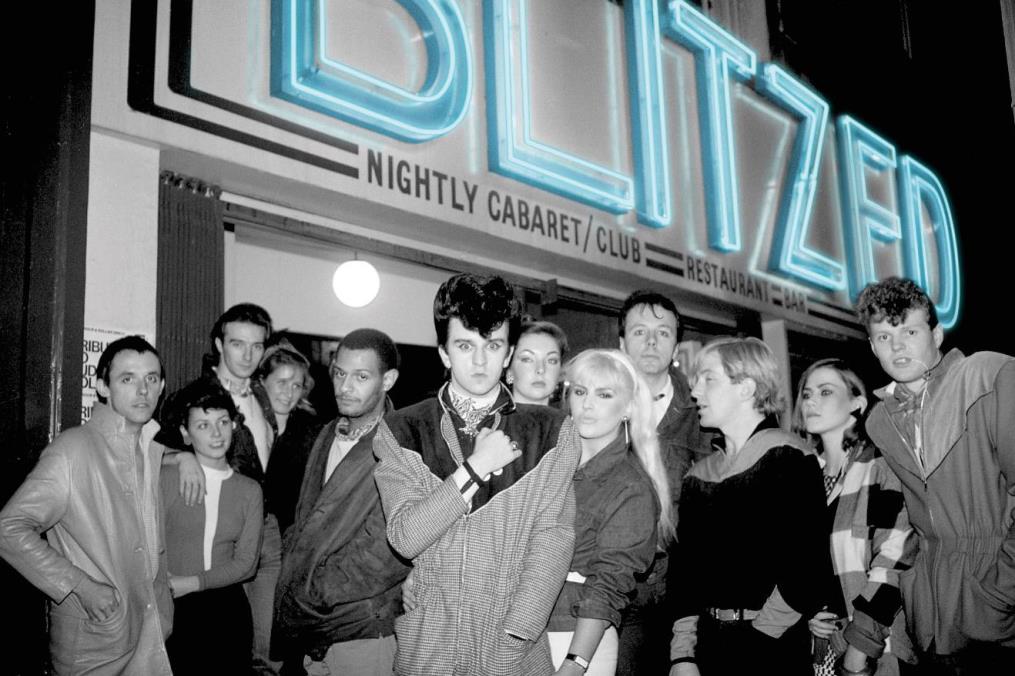
‘Blitzed’ is the new Sky Arts documentary about the colourful London club night attended by aspirational young people driven to escape, express and create.

It was the start of the Thatcher era and before it was infiltrated by leg warmers, deely boppers, fluffy dice, yuppies and soddin’ Pat Sharp, the clientele of The Blitz were planting the seeds that were to shape the eighth decade of the 20th Century.

With the late Steve Strange acting as its Pied Piper, these personalities who emerged from a movement that got labelled The Blitz Kids, The Cult With No Name and The New Romantics were to have a big impact on popular culture. They included  costume designers Fiona Dealey and Michele Clapton, journalists Robert Elms and Dylan Jones as well as royal hat maker Stephen Jones. They tell their stories of that flamboyant period alongside the usual suspects of Rusty Egan, Boy George, Steve Dagger, Princess Julia, Gary Kemp, Marilyn, Andy Polaris, Chris Sullivan and Midge Ure.

While those not fully immersed in the history of The Blitz Club will delight in the 90 minutes of ‘Blitzed’, aficionados of New Romantic history will be disappointed to see many of the same old faces repeating variations on anecdotes told many times before. Meanwhile others will despair that music is not the main topic of discussion, although it would be fair to say that TV specials looking at key hit songs by VISAGE, ULTRAVOX, SPANDAU BALLET and CULTURE CLUB have been a plenty on Channel 5 lately…

However, some new faces do appear and Darla Jane Gilroy’s recollections of being chosen to be an extra in David Bowie’s ‘Ashes To Ashes’ video after he graced The Blitz are delightful. The inclusion of Elly Jackson of LA ROUX though is questionable; obviously chosen as an example of a modern day Blitz Kid because of her “Flock of Tilda Swintons” hairdo and having a No1 with the synth-driven ‘Bulletproof’ in 2009, she comes across as blissfully unaware of the long term influence of The Blitz but then she did aspire to be a folk singer as a teenager!

Another frustrating aspect of ‘Blitzed’ that could have been better researched is when David Bowie is mentioned in his position as the Godfather of The Blitz; a fair proportion of the archive footage accompanying this section is from after the club closed including his spiky-haired ‘Glass Spider’ period in 1987 and in one clip, the ‘Earthling’ period of 1997!

Reliably entertaining in ‘Blitzed’, resident DJ Rusty Egan makes some memorable and amusing observations of the time. Acting as co-consultant and providing new music for the documentary, the recently released soundtrack album additionally features period pieces by his former protégés SHOCK and RONNY as well as inspired by tracks from artists such as WE ARE BRANDO and TINY MAGNETIC PETS who he would be playing at The Blitz Club if it was still around and hadn’t closed in Spring 1981. The interconnected collection concludes with a live version of David Bowie’s ‘Where Are We Now?’ by Boy George.

Edited down from an amusing conversation that went on for nearly 4 hours, Rusty Egan chatted about the making of the ‘Blitzed’ documentary and its accompanying soundtrack.

It looks like the ‘Blitzed’ documentary has gone down well with the general public?

Yeah, it’s been very well received by the GENERAL public. But within the community of actual Blitz Kids, I put together a list of 50 or so of the most important people that went to The Blitz like John Galliano who would have been 18-19 year old students and part of the hub… I shared it online and called it “The 50 Blitz Kids Who Were Too Cool To Be In A Documentary About The Blitz”! *roars of laughter*

The quip went down well with them because they were being labelled too cool, it’s got a funny juxtaposition; of course, a lot of them couldn’t be squeezed into 90 minutes anyway!

So I acknowledged them by doing a video for a track called ‘Catwalk’ which is part of the ‘Blitzed’ soundtrack… I told them I wouldn’t be in the documentary unless I did the music! It was my chance to right some wrongs, the sound I was trying to get on the accompanying OST album, whether I wrote it, produced it or got someone else to do it, was not a retro album or another compilation with ‘Ashes To Ashes’ or ‘The Model’ which it easily could have been, it’s a different thing!

‘Catwalk’ appears to have the same chord progression as ‘The Model’ by KRAFTWERK?

NO! It’s the same chord progression as ‘Turn To Dust’ which Boy George sent me which I stripped down and added my sequence. So it was that music which accompanied the video footage of KRAFTWERK. But with that chord progression of ‘The Model’, you could sing 50 or so reggae or dance tunes over that…

…yeah! ‘Ride On Time’ by BLACK BOX is one!!

Well there you go!! I could probably do a mash-up of ‘The Model’ with ‘Ride On Time’! The DJ Robin Skouteris did one mixing ‘Fade To Grey’ with ‘Magic Fly’ and HURTS ‘Wonderful Life’ and even dropped PET SHOP BOYS in! He could stick the song ‘New Romantics’ by Taylor Swift with Dolly Parton and Mark Ronson in a never ending mix, unbelievable what he can do with the technology of today!

It would be fair to say people who had been more aware of The Blitz and its history have said many of the same people who were in the BBC’s ‘A Fine Romance’ 2001 documentary were in ‘Blitzed’?

When the producers said they wanted my help and said they wanted the phone numbers of Midge Ure, Boy George etc, I thought “oh, same old sh*t!” – so there was a bit of bartering, I said I’d to it if I did the music and I got paid!

Chris Payne did a piano and violin version of ‘Fade To Grey’. I thought I should put bass and drums onto that and extend it, cos you know I love an extended, and then for people like you, there’s a three and a half minute version there! *laughs*

Now, there was Chris Payne, Rusty Egan and Oscar Egan, there was no Midge Ure or Billy Currie, just us three making a version of ‘Fade To Grey’ at 105 BPM. I think it’s a good beautiful piece of music with wonderful arpeggios from Chris, low voice by me and my ex, the French speaking Belgian girl Brigitte. I am still in contact with her so I asked her to reprise it, we did as good as we could without Midge or Billy in our remake of ‘Fade To Grey’.

It’s all in my home studio, not in Abbey Road! Everybody says they’ve liked what we’ve done, that’s it! It’s not like I’ve added a rapper! I didn’t add a dance beat, I just made it clearer and louder with a middle break. It’s not like I had Abbey Road, the mixing desk of Conny Plank, Alan Parsons producing, Michael Rother on guitar and made a pile of sh*t! If I did that, you’d be right to have a go! It’s a labour of love!

Some more seasoned enthusiasts did not really find out anything new from watching ‘Blitzed’, it could have benefitted from the perspective of say, actress Eve Ferret who actually performed at The Blitz and Jacqueline Bucknell who brought David Bowie down that night…

I gave the producers a list of everyone, you know me, I’m very inclusive… Marilyn actually didn’t want to do it, I had to phone him up and told him “it’s better to be in it than not in it”… I do agree with you, but you’re discussing something I had no control over.

Overall, were you happy with how ‘Blitzed’ turned out?

NO, I LOOK FAT!

Yeah, a white shell suit is not a good look on you even if it’s Ralph Lauren!! *laughs*

They told me everyone wears black, please wear white!!!! But yes, I’m pleased with the documentary because when was the last time fashion was intertwined with music? You don’t look at THE KILLERS and go “what are they wearing?”, they’re just a band from Las Vegas! You don’t look at NEW ORDER and go “what is Barney wearing?”, they’re not a fashionable band.

SPANDAU BALLET were very ambitious and eventually successful, but you helped them out?

Steve Strange fancied Martin Kemp so wanted to put SPANDAU BALLET on at The Blitz. But he asked me to take a look and advise them what to do, so I did! Gary Kemp could sit there in his mansion and talk about how he knew if he jumped on that stage, he could take the scene… but he didn’t know Richard James Burgess, he didn’t know how to make a dance record, he didn’t know what a synthesizer was, he was just a young kid.

That SPANDAU BALLET comeback song ‘Once More’ in 2009, it was so bloomin’ middle of the road, it needed its own government safety film!! *laughs*

Ouch! They wanted to be pop stars, as did DURAN DURAN and DEPECHE MODE, they wanted to make pop music.

‘Blitzed’ is not a music documentary but were you surprised ‘Vienna’ only got mentioned for 15 seconds and ‘Fade To Grey’ for about 30?

I actually didn’t want them to play ‘Vienna’, I didn’t want them to play ‘Ashes To Ashes’, cos I didn’t want them playing the same songs… having that clip of Bowie doing ‘Heroes’ on ‘Top Of The Pops’ probably cost them £20,000! The labels have a chart of what songs are worth and they run it like a business, and because they go on the premise that they generally can only sell a song once, the price can be very high!

So what’s your favourite moment on ‘Blitzed’ that isn’t you?

I loved Boy George in it… y’know he could have died several times over the decades, but I saw a happy Boy George who had a whiter smile than me, happy to tell people he was a thief because he had no money and lived in a squat… thing is, Steve Strange was also a thief but lied about it! They had nothing and wanted to be wearing the latest clothes! They wanted to go clubbing every night and that cost a fortune!

Whereas although I went to borstal like in the film ‘Scum’ and I learned to survive with billiard balls in a sock to protect myself, I was always nice and said “come and stay round my house” and they would rob me sadly! Looking back at those people from 40 years ago, they are many who never made it, I could list a load of people. Y’know, it’s lovely to be an old man with my bus pass and to get my jab, having people I knew when I was 20 like Eve Ferret contacting me on a daily basis.

A lot of people don’t like me, they like Steve Strange and feel I shouldn’t be taking any of the glory on ‘Blitzed’. Even a friend of mine who I got DEPECHE MODE tickets for on the last tour wrote “it’s not all about you Rusty”… but I didn’t make the documentary, I’m just a bloke in it! I’VE GOT NO CONTROL OVER NOTHING!

Your new song ‘When We Were Young’ features prominently in ‘Blitzed’, it’s quite obviously influenced by Gina X’s ‘No GDM’ but I just wanted to say that its co-writer Zeus B Held has heard it and says he’s not going to sue you! *laughs*

Well, if he did, he wouldn’t be suing me, he’d be suing Paul Statham of B-MOVIE who came up with the music! He sent me the bassline and synthline, I put in a straight four LinnDrum beat and made it bigger. But ‘No GDM’ was a song I heard in Düsseldorf and brought in to play at The Blitz and it inspired so many people in the UK like FASHION and DEAD OR ALIVE because it was produced by Zeus B Held, ‘Nice Mover’ was another one from the album that I played.

So yes, I agree 100% that there’s a link! But the end result with the lyrics about “Tonight’s the night, we danced to Iggy, Ferry and Bolan, hey, we found love when we were young” became perfect for ‘Blitzed’.

‘When We Were Young’ manages to be retro-referencing but modern, and that’s quite a tricky thing to achieve…

You know that’s what I was trying to do, cos you kept moaning “Rusty, can you stop trying to be modern?!?” *laughs*

It’s my sound but we are in 2021 and I don’t want to be on at Rewind or Let’s Rock between Limahl and Kim Wilde! I’ll be hopefully doing Rusty Egan Presents VISAGE 1980-2021 at W-Festival in Belgium this August, performing the first two albums with Zaine Griff, Chris Payne and Dave Brookes before OMD headline on the Saturday night.

It’s is so difficult to write anything completely original! If I spoke to Ralf Hütter, he would say that to do KRAFTWERK, he had to put his blinkers on, turn everything off, turn off American Forces radio, turn off the TV with its schlager music, go into the lab at Kling Klang, be German and go into himself as to who he is!

So what was unique about the era captured in ‘Blitzed’ and why could it not really happen today?

As you know, I still go to night clubs and I went to one called The Box in Soho which I’ve been to about 20 times. It’s been going for about 7 or 8 years and is described as the “Studio 54 of today” and “The Blitz Club of today”. There are creative people in their 20s there who love Lee Bowery and Boy George, the sort of people who support LGBTQ+, would watch the Channel 4 drama series ‘It’s A Sin’ and love the music of the 80s or similar. They are creative types who can’t make a living from what they do, but might be influencers…

I met with the owners of ‘The Box’, the club started in New York and it was attended by the richest people in the city, the dot com millionaires, the “in with the in-crowd” types! They were putting on people miming to Lady Gaga songs and freak shows of people putting knitting needles through their nipples as entertainment. So it was loads of rich people throwing away money that flew in their letter box while they were asleep on their friends or so-called models on Instagram, all while the DJ is playing Kanye West!

But it sounds like a nightmare! That doesn’t interest me! So I suggested them putting on original artists and musicians, but they said they didn’t want to do it as they were making loads of money with people coming in six nights a week! Everything was about money!

The thing is, The Blitz was real, we were all broke, we were all thieves or on the dole, we were no-ones! The Box looks like The Blitz, but it’s not!


ELECTRICITYCLUB.CO.UK gives its warmest thanks to Rusty Egan

‘Blitzed’ is available on demand via Sky

The ‘Blitzed’ soundtrack album is released by Future Music and available now via digital outlets

Rusty Egan, Zaine Griff, Chris Payne and Dave Brooks perform the music of VISAGE 1980 x 2021 at W-Festival in Belgium on Saturday 28th August 2021 – tickets are available from https://w-festival.com/en/

https://www.facebook.com/rustyegan/

https://twitter.com/DJRustyEgan

https://www.instagram.com/rustyegan/

https://www.mixcloud.com/rustyegan/

https://open.spotify.com/album/3BXZJhaZG3Qf87umwTLM5d


Text and Interview by Chi Ming Lai
22nd March 2021

RHYS FULBER Interview

Few, if any musicians on the electronic music scene could claim to be as prolific as the duo of Rhys Fulber and Bill Leeb.

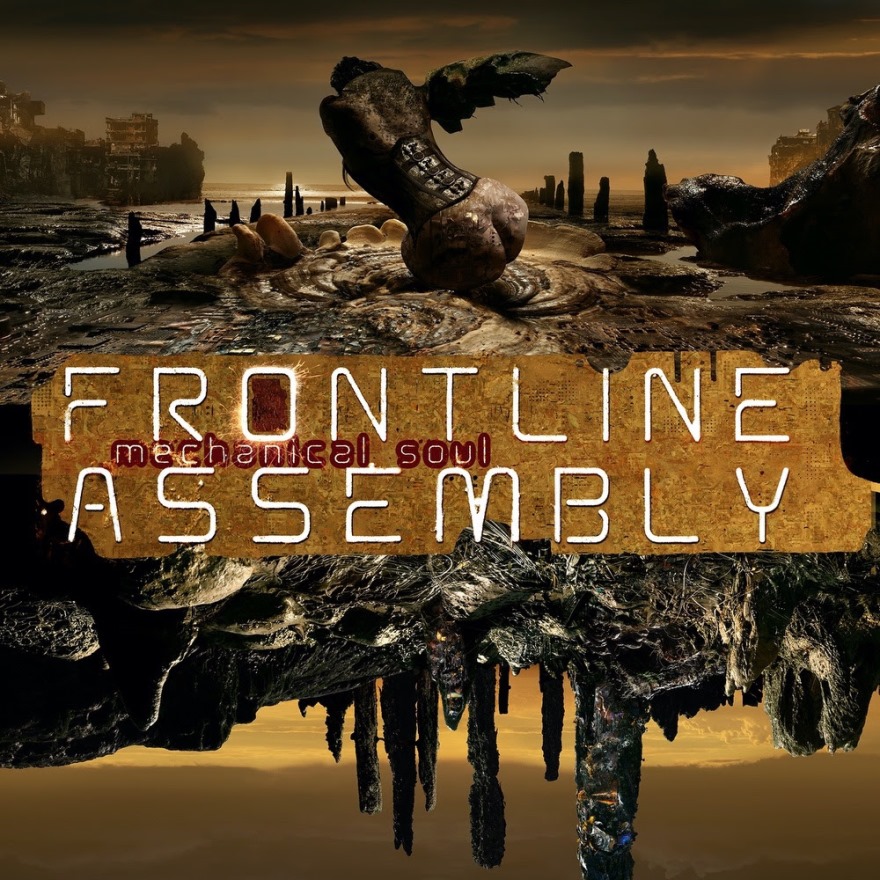
The Canadian-based pair have collaborated as FRONT LINE ASSEMBLY, DELERIUM, INTERMIX and NOISE UNIT and have also brought their musical talents to several other diverse projects over the last 35 years. Rhys Fulber kindly took time out of his busy PR schedule to talk about the new FRONT LINE ASSEMBLY release ‘Mechanical Soul’ and a selection of some of his high profile side-projects.

How important was the influence of your father on you getting into music?

Hugely important. His record collection alone was a solid foundation for anyone, but then the fact our dining room was a jam space from when I was 5 or so meant there were always instruments set up to mess around with. The keyboard player in the bar band he played with had a Minimoog, so I remember playing with that when I was 7 or so. I also started playing drums maybe even earlier than that.

Who were your earliest musical influences?

KRAFTWERK is number one. My parents took me to a show when I was 5 and I still remember it. After that it’s Pete Shelley’s ‘Homosapien’ album and all the BUZZCOCKS original LPs. Their music really connected with me when I was young and still does today.

What kind of effect did growing up in Canada have on your music?

Vancouver was still very colonial when I grew up so we got more of the British music scene than the US, as well as Canada promoting a lot of their in house bands so we had our own take on things in some ways. Also Vancouver was a world class studio city already in the 80s so there was a culture of that in Vancouver. All the studios we worked in were first rate, and connected to a famous Canadian musician, like Bryan Adams or Paul Dean.

How much have the themes of ‘Mechanical Soul’ been influenced by the situation of the pandemic?

I think maybe lyrically a bit. I was still living in LA when we started the album so we were already used to working remotely, so it wasn’t a big change for us in that way.

What have been your other sources of song material for the album?

I had clips of music from various things and times that we pulled together as the basis. One was meant to be for my solo techno material as well, so it was a bigger variety of starting points that usual. We used to get in a room together and write all the music so this one is different in that way. I had some track ideas and Bill made suggestions to them and then added vocals and lyrics, so in some ways we both focused on our roles more than in the past in a way.

Were there any particular synths or pieces of technology that had an impact on the making of ‘Mechanical Soul’?

Each one had a different key piece. I added that to the liner notes; which was the featured instrument on each. For instance, the main riff of ‘Alone’ was from a borrowed Moog Model 15 reissue that I just recorded jams on for a day and pieced those core elements together from that. The single ‘Unknown’ has a lot of a Roland Alpha Juno 2 synth I think I have only used on maybe two other songs over 20 years or so…

You have two featured songs out of the 157(!) on the recent ‘Cyberpunk 2077’ computer game. What is the story behind ‘Drained’ and ‘Subvert’, were they written specifically for the product?

Yes, they were. I was put in touch with one of the music supervisors as just a general contact, because he had worked for a label FLA had released for in the past and he just asked if I would be interested in submitting some ideas to this new game project. I had submitted a total of 6 or 7 tracks and they chose those two. The song ‘Stifle’ on ‘Mechanical Soul’ was one of the tracks that didn’t make the cut. Bill liked it so we developed it into a Front Line song. Two tracks on my last solo album ‘Ostalgia’ were also from those sessions, and the ‘Cyberpunk 2077’ material spawned the rest of that album as well, as it was done at the same time.

In pre-pandemic times, FRONT LINE ASSEMBLY co-headlined with DIE KRUPPS on the ‘Machinists United Tour’, what are your recollections of those shows?

It was a pretty good tour. Just adding another name band does a lot for the draw it seems, so we had some shows that we hadn’t had in a while in places like Munich for instance.

What means most to you? Recording new material or playing live?

Well, you can’t have live without the studio for this music, so I think the studio means more to me although I really like both.

Sampling has always been at the core of your musical projects, what have been the highs and lows of creating songs using this creation method?

Sampling is just like another form of synthesis to me so it’s hard to extract it as a separate thing now. We didn’t think too much about what we sampled other than if it sounded good. I still think that holds true now, though I have just gotten much more covert with how I do it now. Random and obscure sources, for instance.

‘Voices’, which featured on the INTERMIX album, has always been a favourite. What are your memories of working on this album?

I don’t remember that album too well. I remember the mix room and the gear we used, but it’s not exactly clear. It was a busy time and we made that album fairly quickly as a way to experiment with new ideas without committing them to FLA. So it was like a testing site album.

From the same album, ‘S+M=y’ features a sample from Clive Barker’s seminal horror film ‘Hellraiser’. Was there a specific process with getting the “we’ll tear your soul apart” dialogue cleared, or was this an early case of let’s sample it and hope no-one will notice?

We didn’t think that way then at all. We just sampled whatever. It wasn’t until ‘Millennium’ (1994) that we had to atone for our sins!

In terms of commercial success, the DELERIUM track ‘Silence’ sticks out. The original version still stands up, but how did you feel when the trance versions brought the track to a more mainstream audience?

It was pretty surreal, like you are somehow disconnected to it. But who can complain about a magic moment like that? I think hits have to be accidents, because nothing about that was planned.

You have produced for other artists, notably working on KANGA’s superb eponymously titled album and ‘Automaton’, the upcoming single by AESTHETIC PERFECTION. What do you think makes a good producer?

Someone who can make an artist comfortable and not afraid to try new things and push themselves. It’s usually done with lots of support and being careful with words and constructive criticism.

You have worked with co-collaborator Bill Leeb for over 30+ years now. What do you feel helps to keep that relationship fresh creatively?

It is mainly around a similar taste and we still listen to new things. I think our working relationship is better than ever because there has been so much trust built up.

How influenced are you by current forms of music?

Moderately. I think you can’t have stale beats in electronic music, so it’s good to hear what the current sounds are to keep your sound fresh without jumping too much on one thing. As you get older you realise being yourself is the most important, but buying new shoes and a jacket really helps.

Do you feel that the Industrial format is a bit of a straitjacket? Is this a reason why you have pursued several side projects?

It doesn’t have to be, but I think the audience wants the bands they like to deliver the sound they were drawn to. When you go too far off that they feel betrayed somehow. It’s easier just to have another banner to keep everyone happy.

Your CV of outside artists you have worked from a production / remix perspective with is pretty incredible including MÖTLEY CRÜE and MEGADETH as well as Alice Cooper, Sarah Brightman, Sinéad O’Connor; do you find working with other artists more or less stressful than working on your own material?

It really depends. Both can be very stressful. Working on your own, you can lose perspective which can really slow things down, whereas with a band or something there are more ears in the room.

You have been pretty vocal about the way that streaming sites such as Spotify give musicians a raw deal when it comes to royalties. What musical formats do you tend to generate most of your income from?

It’s hard to answer that because I get income from so many places now after so many years in the business, and sometimes it’s really random; suddenly one song will get used somewhere and you get a blip, so I can’t complain too much. I just think YouTube and Spotify is devaluing art in many ways and it’s hard to steer away from ‘free’ for a lot of people once the toothpaste is squeezed from the tube. I much prefer the model Bandcamp have come up with, where you get some streaming and the appreciation of tangible product as well.

You are stuck on a desert island, what is the one piece of electronic gear you would have with you and why?

My Waldorf Q+. It literally can do it all, and very well!


ELECTRICITYCLUB.CO.UK gives its warmest thanks to Rhys Fulber

Special thanks to Gary Levermore at Red Sand PR

‘Mechanical Soul’ is released by Metropolis Records, available in double vinyl LP, CD and digital formats from https://frontlineassembly.bandcamp.com/album/mechanical-soul

A selection of Rhys Fulber solo material is available from https://rhysfulber.bandcamp.com/

http://www.mindphaser.com/

https://www.facebook.com/frontlineassembly/

https://www.facebook.com/rhysfulbermusic

https://twitter.com/f7a

https://twitter.com/rhysfulber

https://www.instagram.com/front.line.assembly.official/

https://www.instagram.com/rhys_fulber/

https://www.metropolis-records.com/artist/front-line-assembly


Text and Interview by Paul Boddy
Photos by Chris Escamilla, Bobby Talamine and Simon Helm
26th February 2021

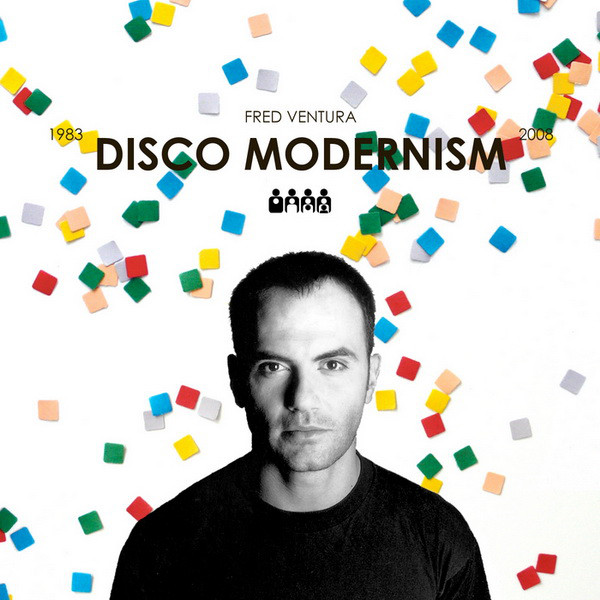
FRED VENTURA Interview

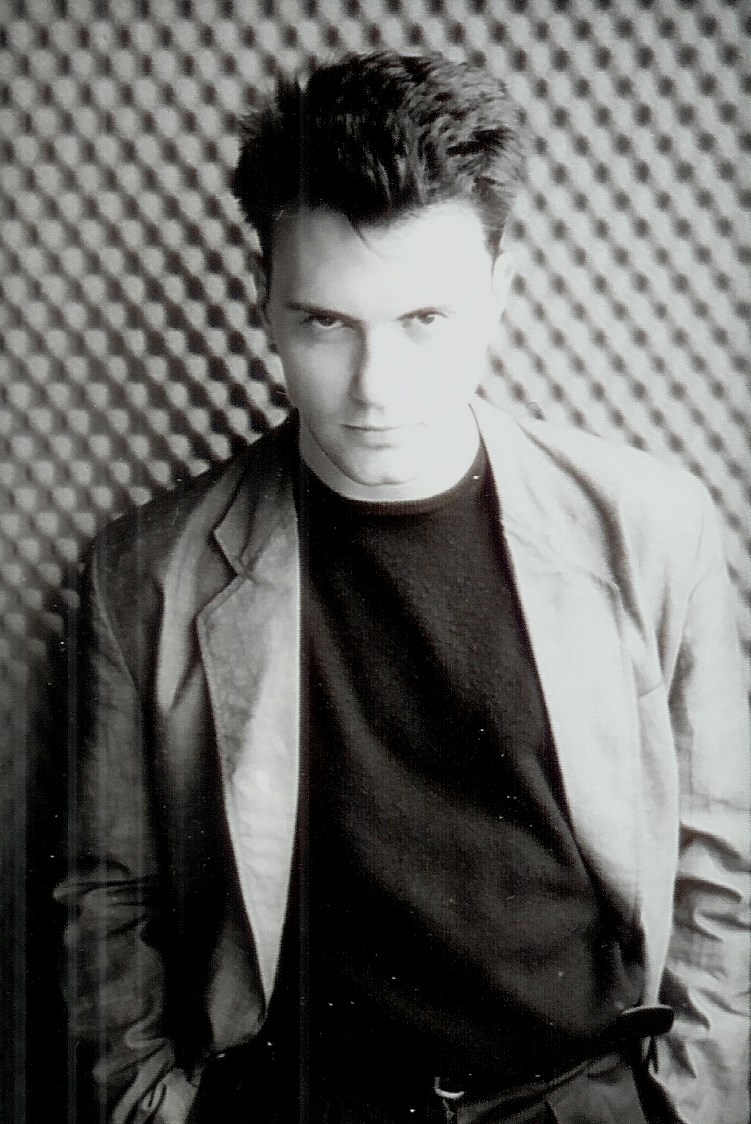
Fred Ventura is the Italo Disco legend who had a number of European club hits such as ‘Wind Of Change’, ‘Heartbeat’ and ‘The Years (Go By)’ between 1984-1989.

Born Federico Di Bonaventura in Milan, he generally wrote and sang his own material, something that perhaps wasn’t so prevalent in the world of Italo Disco. The first Fred Ventura solo single ‘Zeit’ took its lead from his passion for German language pop and ‘Der Kommissar’ by Falco in particular, although it baffled Italian audiences! And while his music was later influenced by NEW ORDER and PET SHOP BOYS, it would be fair to say that some musical transfer also occurred in the opposite direction.

On ‘Late Night Train’, there may have been some data exchange with Messrs Tennant and Lowe for the sparkly synth riff from ‘Domino Dancing’, while 1987’s ‘Imagine (You’ll Never Change Your Mind)’ and ‘Heart’ have much in common. Meanwhile recorded in 1985, ‘You Want Me’ has some striking musical similarities with NEW ORDER’s ‘Shame Of The Nation’. But by the release of his first album ‘East & West’, Fred Ventura was already disillusioned with where European electronic dance music was heading and looked towards Chicago House for solace.

Continuing to record in a variety of guises and later running his own Disco Modernism label, he formed ITALOCONNECTION with engineer and producer Paolo Gozzetti with the aim of using classic vintage sounds while looking towards the future. Although they did not release a single in their own right until 2012 with the rousing ‘My Rhythm’, Fred Ventura’s reputation was such that ITALOCONNECTION were immediately in demand as remixers.

In 2010, the pair reworked HURTS ‘Better Than Love’ while in 2011, their radio mix of THE HUMAN LEAGUE’s ‘Never Let Me Go’ was actually BBC Radio 2’s preferred version for airplay. ITALOCONNECTION released their self-titled debut album in 2013 which comprised of their own tracks as well as productions and remixes for other artists, so 2017’s ‘Metropoli’ featuring ‘Humanize’ could be considered their first album proper.

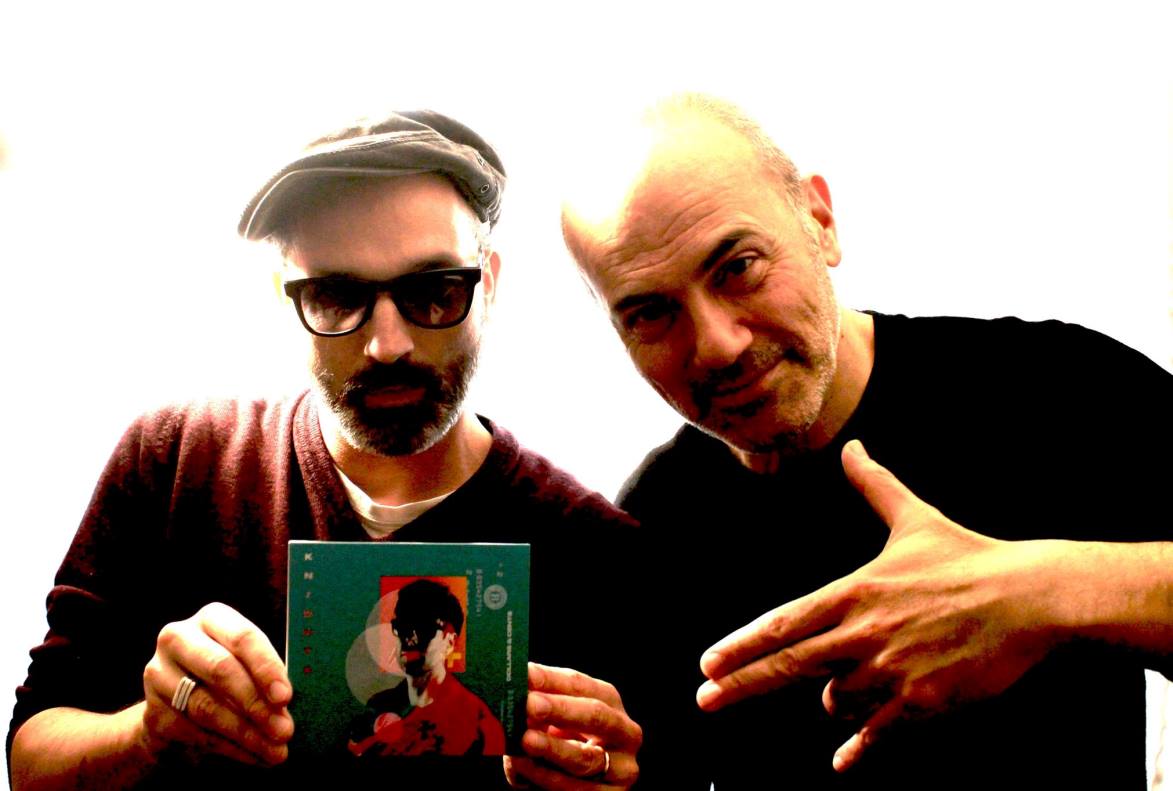
Some of their more recent productions can be heard on three songs for ‘Dollars & Cents’, the 2019 debut long player by Britalo exponent KNIGHT$.

With the release of a new ITALCONNECTION album coming soon, Fred Ventura kindly took time out to chat with ELECTRICITYCLUB.CO.UK about his career to date.

What got you interested in the sound of electronic music?

My first contact with electronic music was around the mid-70s, KRAFTWERK ‘Radio-Activity’ and Giorgio Moroder productions were innovative and pretty unique to the ears of a 13-14 year old boy living in in the suburbs of Milan, even if it was punk rock that grabbed my attention in 1977.

You have been quoted as saying ‘Blue Monday’ by NEW ORDER was the record that changed your life, can you remember the first time you heard it?

‘Blue Monday’ was such a positive shock for even someone like me who was already a fan of JOY DIVISION and NEW ORDER. At the time I was starting producing myself some electronic demos and one morning I woke up and switched on my radio and heard ‘Blue Monday’ for the first time, it was played every hour for 24 hours, it was the record of the day for the station, I remember checking it every hour for almost all day…

You started with a Roland Juno 60 and Oberheim DX, what led you to choose those as your first instruments? How did you find them to use?

It was not easy to buy the more expensive synthesizers like the Jupiter 8 or the LinnDrum so we had to start with cheaper instruments, more affordable but good enough to sound credible. After using a few other instruments that were rented, I decided to buy the Oberheim DX and a Juno, they sounded fantastic to me and easy to use, I still own both of them.

What can you remember about making your first single ‘Zeit’ in 1984?

‘Zeit’ was the first thing I wrote with a new awareness, after ‘Blue Monday’ I felt legitimated to flirt with dance music and ‘Zeit’ was my personal idea of disco, I was very naïve but I knew what I wanted. The main goal was to make a record, I went to the Disco Magic label office, there I met Roberto Turatti who proposed for me to go in the studio with his partner Miki Chieregato to produce the song for a 12”, a dream come true, I was 21 and full of hopes…

When did you realise there was some sort of an Italo Disco sound emerging, although of course it wasn’t called “Italo” then?

I started to feel part of a sort of movement a bit later, at the beginning it was all about individuals trying to propose their own brand of dance music. Common influences were THE HUMAN LEAGUE, and HEAVEN 17, Bobby Orlando and Patrick Cowley… near the end of 1984, all those Italo records were charting in Italy and starting to spread all over Europe

Did you consider SAVAGE and RAF as rivals or brothers in arms?

I never felt rivalry with any of my contemporaries, I’m still a good friend with SAVAGE and I love ‘Self Control’ by RAF.

You signed to Time Records and had this European pop career, how do you look back on that period as a “star”?

I was not conscious of my sort of popularity, “success” came too late and short, I was already bored of the evolution of the Italo sound, all the producers were becoming more and more commercial. I felt totally out of place when the BPMs were jumping to 140. Chicago House was getting big in the clubs, I thought it was time for a personal revolution and I quit the scene…

What were your own favourite songs that you recorded in this phase of your career? How do you think they stand up in the pantheon of European pop music?

I’m not that proud of the records I made from 1986 to 1989, I still like the songs but I’m not so in love with the production, the introduction of digital sounds and sampling were changing the feeling of my own demos. By the way, ‘Wind Of Change’ still sounds good to me and is still getting great feedback during my performances.

The UK never really embraced Italo Disco BUT would accept it through the back door via PET SHOP BOYS and NEW ORDER, were you ever frustrated by the hypocrisy especially from the British press? One journalist admitted “Despite the fact that I love the PET SHOP BOYS as much as I loathe MODERN TALKING, I have to admit that musically, they’re not that different!”

Honestly, our main goal was to reach the European market, we felt the UK market was too complicated to reach, considering how many extremely good productions were coming from there. I love the PET SHOP BOYS and NEW ORDER and I have to admit they were my biggest influence. Probably our biggest limits were the lyrics and the Italo-British accent, something that in the rest of Europe was never noticed

In some ways, you were unusual as an Italo artist who wrote and sang their own material, which was not always the case with a number of acts from the genre?

Yes, this was the main difference between me and other Italo artists, songs were written mostly by their producers, I still regret about accepting to record ‘Night & Day’ that was written by my producers of the time, Farina and Crivellente.

Did you feel the ‘character’ artists like Den Harrow and Baltimora tarnished the credibility of Italo Disco?

The fact that many of the “so-called” Italo artists were miming didn’t help to make it a credible genre of music, that’s for sure, but today at last, people are into the music, not the gossip or the fashion.

How did you think electronic dance music has been developing over the years since then?

The evolution of electronic music, it’s been always been associated with technology, after analog synthesizers, we had FM synths, then samplers, then plugins and laptop. There’s not that much left to discover nowadays, so everybody has the possibility to give a look back to old technology and refresh it with a contemporary attitude. It’s a great feeling to be able to use such a variety of old sounds and new technology together, the most important thing to me is to try to use all the knowledge to create something that sounds modern.

Did you ever get frustrated enough to want to make a guitar-based album like Karl Bartos did?

During my career, I have been able to fulfil almost all my music desires, I have made various albums and projects under different names, from my post-punk band STATE OF ART to VIBRAZIONI PRODUCTIONS to BEDROOM ROCKERS, via Milano 2000 Records and Evolution Records, they were all very important steps in my career. From 1990 until 1994, I was running Evolution Records, a label dedicated to house and techno. After that period, I made a few albums under the name VIBRAZIONI PRODUCTIONS, downbeat stuff, soulful and jazzy. Then in 2001 together with Enrico Colombo, I did an album as BEDROOM ROCKERS for Universal Italy.

So how did ITALOCONNECTION come into being? Is the concept as the name suggests?

ITALOCONNECTION is the result of over twenty years of friendship and occasional creative meeting between me and Paolo Gozzetti. In 2010, we decided to join forces and give more continuity to our electronic raids using the ITALOCONNECTION pseudonym. The aim is to revive the glories of the early 80s Italo Disco and Synthpop in a modern form.

When was the point when you realised there was still a big love for Italo disco? Did you feel vindicated at all?

Now is more than 20 years since this sort of Italo revival started, travelling around Europe made me realise how big the interest was for this genre. Nostalgia for the past makes people dig and rediscover old music, today there are so many revivals happening at the same time. Actually I never had a vendetta plan in my life, I’m enjoying these moments because I’m having the possibility to produce new music for an old audience but also for a new one that is discovering Italo thanks to the web.

A sign of this was when Italians Do It Better released the 1984 demo version of ‘The Years (Go By)’ with its corresponding instrumental in 2011, how did this come about?

Back in the day, thanks to Myspace, I was able to get in touch with Italians Do It Better and after listening to several of my unreleased songs, they decided to release the demos of ‘The Years’, my most popular song which I wrote together with Turatti and Chieregato back in 1984. I was very happy to make these demos available on vinyl, considering also that I was a fan of the Italians Do It Better sound.

You co-produced three tracks with Britalo artist KNIGHT$, what do you think about these acts who have been influenced by you?

I have to admit that is a great feeling to see new acts showing respect for so many Italo artists and producers, I would never even imagined that one day, I would have become an influence for somebody.

ITALOCONNECTION is now your main project, what does it give you that perhaps wasn’t possible in your solo work?

The opportunity to collaborate with somebody who shares the same feeling and attitude is a real gift, ITALOCONNECTION is a real team and we enjoy every side of our work, playing live together is definitely the thing we love more.

Is there anyone ITALOCONNECTION would particularly like to do a remix for in the future?

I really would like to remix NEW ORDER, PET SHOP BOYS and Paul Haig. Recently we had the opportunity to remix Etienne Daho, another of my favourite artists so all is possible.

What is happening next for you, either solo or with ITALOCONNECTION?

A brand new ITALOCONNECTION album is on the way, it took a while to produce the right follow up to ‘Metropoli’, considering also that we have been busy producing and remixing other artists. The album also will feature a host of special guests, more news coming soon…


ELECTRICITYCLUB.CO.UK gives its warmest thanks to Fred Ventura

Special thanks to Sebastian Muravchik of SNS SENSATION and HEARTBREAK

The compilation ‘Disco Modernism (1983 – 2008)’ is released by Clone and available via the usual digital outlets

A selection of music by Fred Ventura can be obtained digitally from https://fredventuramuzik.bandcamp.com/

ITALOCONNECTION ‘Metropoli’ is available from https://italoconnection.bandcamp.com/album/metropoli

https://www.facebook.com/Fred-Ventura-320089268041361

https://www.instagram.com/fred_ventura_muzik/

https://www.facebook.com/italoconnection

https://www.instagram.com/italoconnection/

https://open.spotify.com/artist/4wJf9Xnypopb0m96Up3xtC

https://open.spotify.com/artist/2H89jjAoarp9VqMxT8W0et


Text and Interview by Chi Ming Lai
17th February 2021

« Older posts Newer posts »