Richard Barbieri releases a new album ‘Under A Spell’, but despite beginning his recorded career in 1978 with JAPAN, it is only his fourth full-length solo offering.
Preferring a collaborative format, when JAPAN disbanded after five albums, Barbieri continued working with his former band mates David Sylvian, Steve Jansen and Mick Karn. It was while he was in JBK with the latter two that he met Steven Wilson of NO-MAN and PORCUPINE TREE who recorded and performed live with the trio.
This led to Barbieri joining PORCUPINE TREE and playing on nine of their albums. During this period, Barbieri also recorded an album with Tim Bowness of NO-MAN and two albums with Steve Hogarth of MARILLION.
His most recent release was the five part ‘Variants’ EP series that comprised of unreleased tracks, new material, live versions including his JAPAN composition ‘The Experience Of Swimming’ and the aural curio ‘1979 Rehearsal Room’ which was based around an atmospheric cassette recording made in rehearsals for the band with which he made his name.
Inspired by strange dreams that Barbieri was having triggered by the anxiety and isolation caused by the pandemic, sombre atmospherics are very much the dominant template for ‘Under A Spell’, capturing dark textures, introspective moods and cerebral downtempo rhythms over its nine tracks.
The unsettling demeanour of ‘Serpentine’ is a particular case in point, inspired by a nightmare that Barbieri had and aurally illustrated by sinister piano, jazzy vibes, schizophrenic cries and the fretless bass of Percy Jones.
While there are no conventional vocals, previous collaborators Rylander Love and Steve Hogarth have their voices manipulated and treated by Barbieri as if they were another instrument, with the phrase “Wake up, wake up, come back alive…” making its eerie presence felt on the album closer ‘Lucid’. Richard Barbieri had a quick chat about the making of ‘Under A Spell’ and the upcoming ‘Quiet Life’ deluxe boxed set.
Had the “clearing of the vaults” for the ‘Variants’ series helped with a direction for ‘Under A Spell’?
Not really. The ‘Variants’ series of EPs was a way of staying creative without having the pressure of making a follow-up to ‘Planets & Persona’. When I was finally ready to make another album, the Covid virus began to take hold in Italy and the UK. From that point on, I had to make a quite different album to the one I intended.
How does ‘Under A Spell’ differ from ‘Planets + Persona’ in terms of concept, sound design and additional musicians?
It’s more introspective and essentially a home recording, though it does feature a good amount of musical performances from the same group of musicians on my recent works. Some performances were recorded remotely and some I derived from past recording sessions and used them again, but in different contexts. The concept and working process of ‘Planets…’ was outward looking and expansive in nature. ‘Under A Spell’ is informed by vivid dreams and a strange and surreal exterior atmosphere due to the first strict lockdown in the UK.
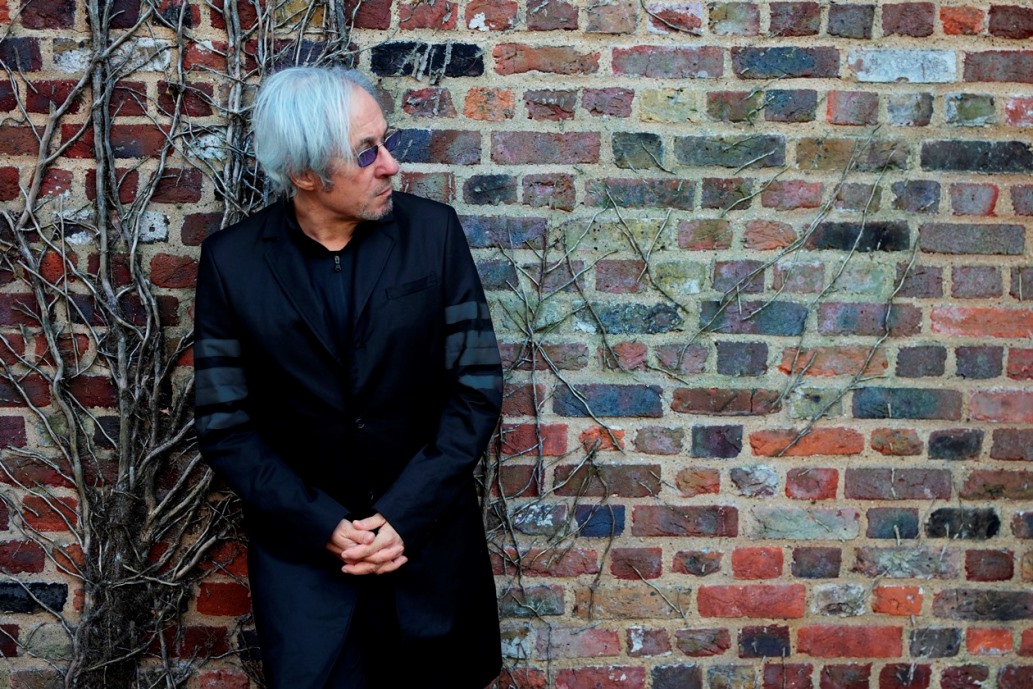
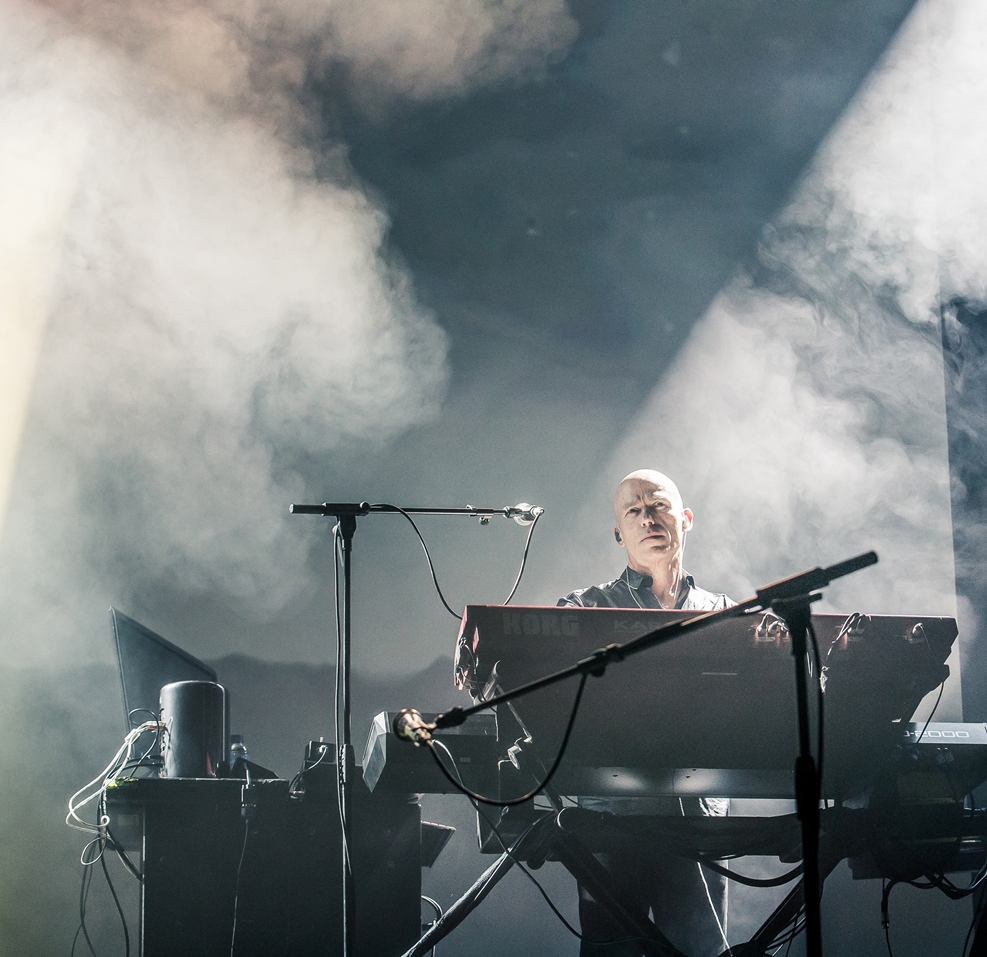
Photo by Carl Glover
With everything going on outside, had this affected your approach to ‘Under A Spell’?
Definitely. It also changed the compositional process because I focused even more on the atmospheric and textural elements. I let things evolve and tried to make it a very immersive listening experience.
Is there more use of software this time around or are your vintage synths still very much present?
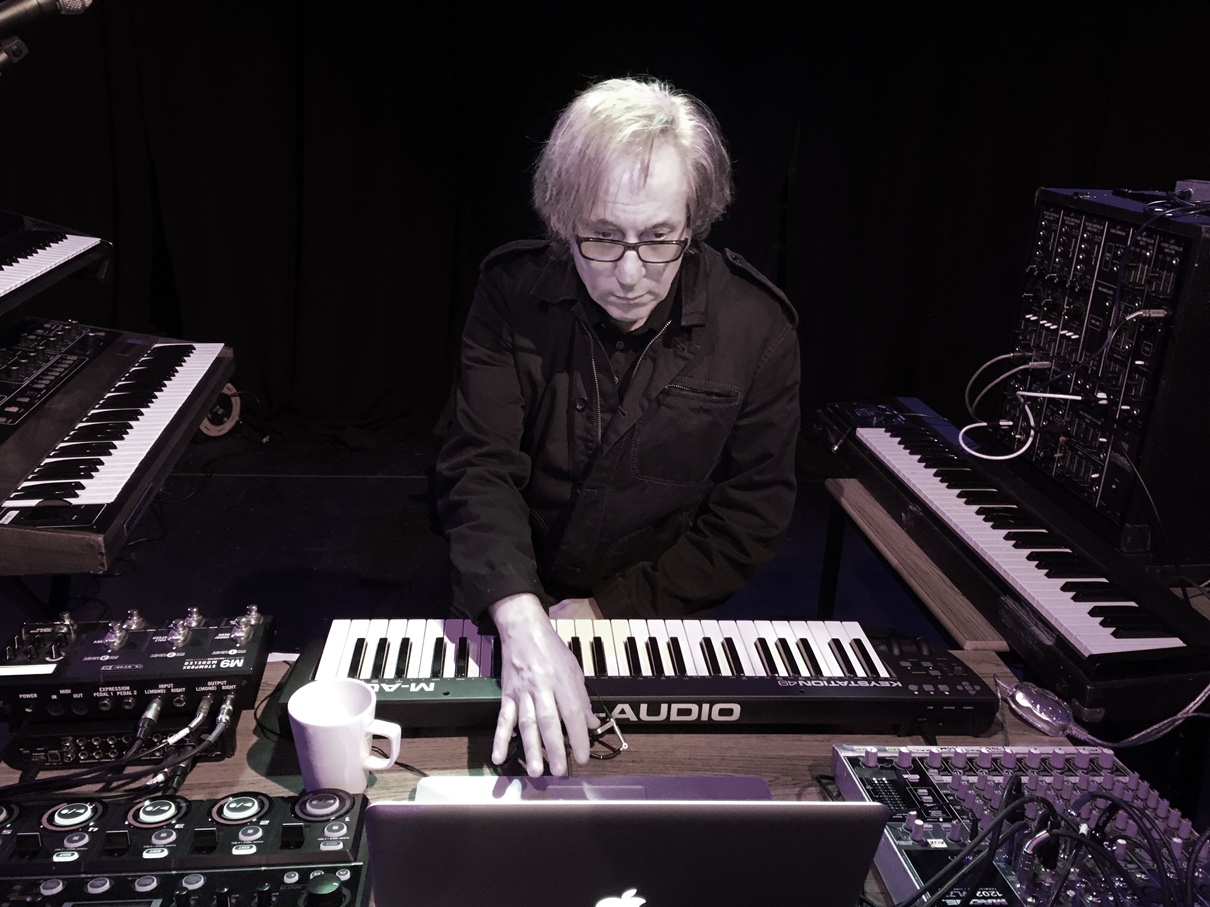
I use a bit of everything. For the first time, I have a dedicated work room / studio so I have all my gear to hand. I used the usual old analogues (Roland System 700 Lab series, Prophet 5, MicroMoog, Yamaha CS-01) and some newer analogues like the Dreadbox Medusa and NYX. Also the Roland SE-02 mono synth. I used some Arturia software instruments, especially the CS80 emulation.
What is your favourite track on ‘Under A Spell’ and how did it come together?
Although it’s probably the hardest listen, I managed to completely achieve the atmosphere I wanted on the opening title track. It has a full complement of performances, some improvised and some heavily processed and mangled. The basis hinged around a jazzy vibraphone progression that I had wanted to use for a long time, combined with muted acoustic guitars and trumpets and whispering voices. I think it sets the scene very well.
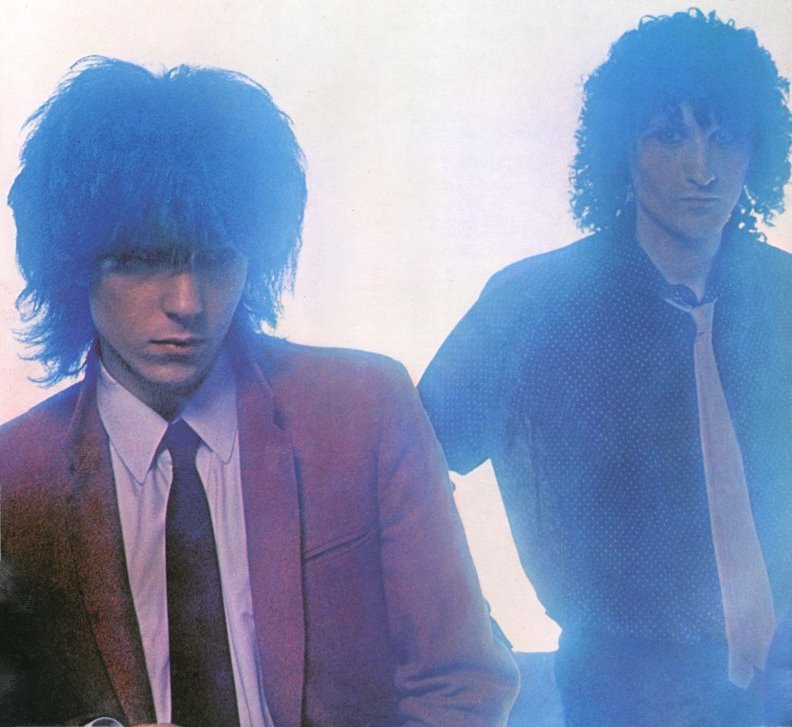
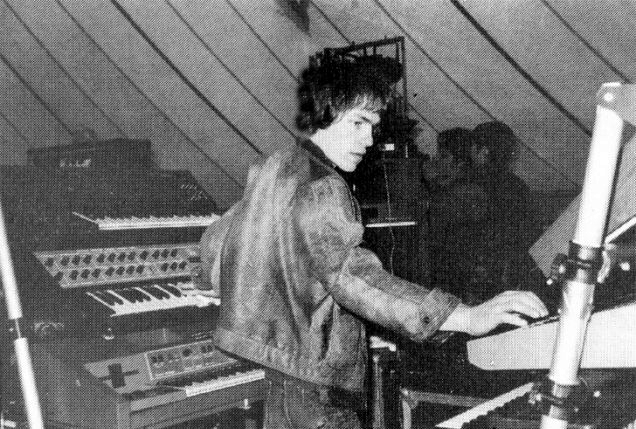
Photo by Fin Costello
JAPAN’s ‘Quiet Life’ album gets the deluxe boxed set treatment in March 2021, how does it stand up for you 41 years on and how do you look back on your own contributions?
I’ve heard the remaster of the album and it sounds wonderful. It’s my favourite JAPAN album and that particular period represents the happiest time for me as a musician. My contributions became an integral part of the band sound for the first time really.
I love the textural elements, the orchestrations and how the electronics blend with it all. It’s very much an album of that time but it stands up well and I think it has a beautiful organic quality. It’s a sophisticated work made by kids.
ELECTRICITYCLUB.CO.UK gives its warmest thanks to Richard Barbieri
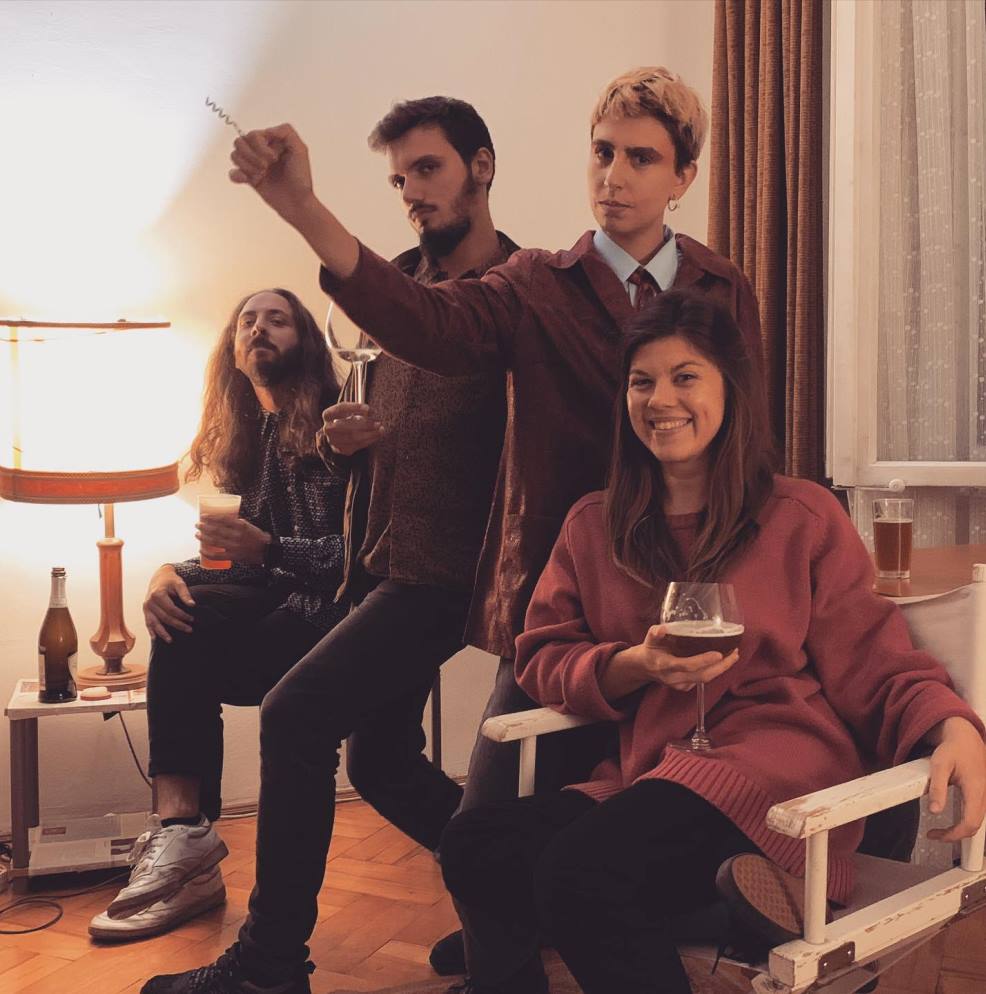
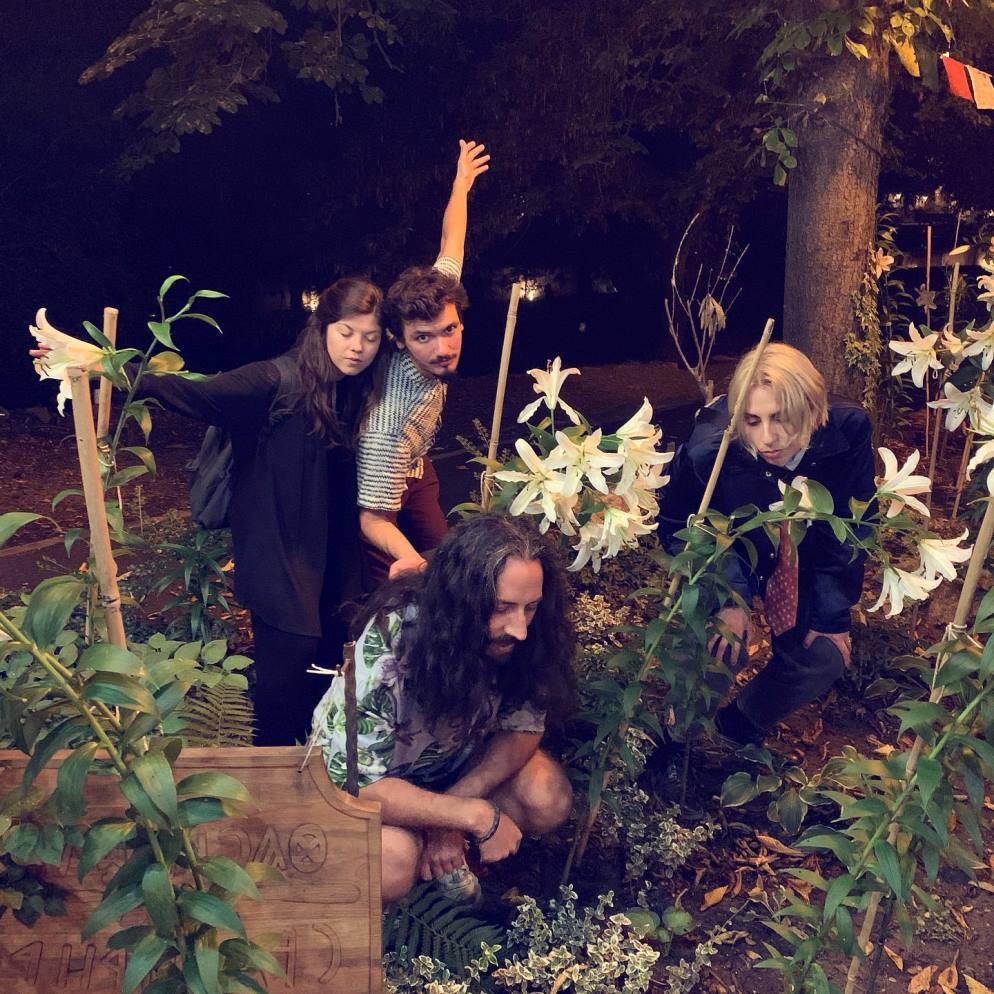
Comprising of Teodora Retegan, Andrei Bobiș, Paul Bucovesan and Oana Pop, ZIMBRU are a synth assisted Romanian art pop quartet with a strong TALKING HEADS influence.
Their promising 2019 debut EP ‘Little Creatures’ offered haunting forlorn vocals, synthy hooks, art school sensibilities and intriguing rhythmic backdrops for the dancefloor.
‘Terejo’ with its rhythmical neo-funk motif imagined what TALKING HEADS might have sounded like as a more electronic band and perhaps unsurprisingly sounded like a female fronted LCD SOUNDSYSTEM.
Showcasing the varied musical facets of ZIMBRU, the ‘Little Creatures’ title song was moodier, constructed around a prominent off-beat and an incessant electronic drive. Their most recent single ‘The Ground’ released in August 2020 reflected the sadness many were feeling around the world in difficult times and acted as something of a cathartic release for the band.
Eager to play live again, ZIMBRU will perform at the Berlin Mixtape virtual concert on THURSDAY 11TH FEBRUARY 2021. Originally conceived as a single band event, it has since developed into a project where six Romanian singers will each a cover song that has a strong connection to the city of Berlin.
The songs were selected by LOLA Magazine based in Berlin while all the singers are managed by Cirkular in Romania. Teodora Retegan from ZIMBRU will be one of the singers while the instrumental parts for all of the songs have been produced by Andrei Bobiș who incidentally is a co-founder of Cirkular. Other featured singers include Sofia Zadar, Geo Aghinea and Adame Wolf among others.
In a break from preparations for their upcoming online event, Teodora Retegan and Andrei Bobiș from ZIMBRU talked about the band’s career to date.
How did ZIMBRU come into being, specifically as a band using electronics?
Andrei: ZIMBRU came into being over e-mail! Teo, Oana and I used to play in another band called LIGHTS OUT and about a year after that was wrapped up, I sent Teo this silly song idea and she recorded some cool vocals and then we realized we really missed each other and spent the next three years writing songs basically. Oana and Paul joined in 2018 and that’s when we started putting a live show together. I guess we liked a lot of artists that have cool arrangements featuring both electronic and acoustic stuff mashed together in interesting / peculiar ways.
The ‘Little Creatures’ EP title and that band name indicate that ZIMBRU have a strong TALKING HEADS influence?
Andrei: We definitely love TALKING HEADS and have danced to many TALKING HEADS records over the years, so I’m sure that plenty of that has subconsciously made it into our music. However the title is not a direct reference to the TALKING HEADS album. It was one of those placeholder titles (until we think of a better one, never actually thinking of one) that kind of started making more and more sense as our debut EP came together. Our latest single ‘The Ground’ has a strong TALKING HEADS influence, as a lot of it was written as I was reading Byrne’s book ‘How Music Works’ – especially the chapter on their work on ‘Speaking In Tongues’ and ‘Remain In Light’.
What other bands have inspired ZIMBRU?
Andrei: Uuh, tough one, a list feels like a weird thing to do so I’ll do the next best thing and point you towards some of the playlists we have curated over the past two years under the DJ BIVOL moniker which are available on our Spotify artist profile.
What was it like to grow up in Romania with the more artistic aspirations you had in your psyche? Was it easy being around people at school who might have preferred football or waiting to be called up for national service?
Teodora: Usually it’s not very desirable to explore this as a career (that goes for anything in the arts department) because there is a lot of poverty in Romania and of course parents would prefer their children having stability and picking a career that would ensure a monthly income. I think most humans have artistic potential, but it’s hard to express it under capitalism because if you can’t monetise it, you don’t stand a chance in doing it more than a hobby. That is very heartbreaking to me. I have been privileged enough to be supported by my family so here I am, trying.
‘Dog Heaven’ was your debut single, how do you look back on it now?
Andrei: Not a single per se, though, as it never had an actual release other than the live version. Uhm, it has been so long since we played it or listened to it that it’s like listening to another band really, but maybe time passing hasn’t really changed anything about it? I bet I’d still be pretty pumped to play it if playing music was still a thing.
How did you decide between singing in your own language and English?
Teodora: Honestly I don’t know how much of a conscious decision it was. Growing up in post revolution Romania, we had all these brands and music channels and fast food chains entering our country and for a while we thought all things western were Jesus Christ. You could hear English songs on the radio and you thought “ah this is so cool, can I do that?”. Romanian is beautiful though, I’ll try to write more in română.
Both ‘Terejo’ and ‘Dyo’ sound like an enigmatic female fronted LCD SOUNDSYSTEM? Have they been an inspiration to ZIMBRU, in particular with their use of electronics?
Andrei: Yeah, definitely an influence, we even used to do a cover of ‘I Can Change’ live, though probably more of an influence in their use of cowbells than their use of electronics.
The union between art and music is particularly prevalent in ZIMBRU’s video for ‘Divination’, how important is this ethos to you as a band?
Andrei: Well, we put our hearts into the songs and everything we make around the songs, be it videos, photos or anything else – and I guess that’s the highly relevant part, creating some sort of context for the music that means something and is truly genuine. However not taking ourselves too seriously is also a thing that matters, so you know, which art, what music?
Your most recent single ‘The Ground’ has been described as your saddest (which is quite fitting with the current situation) and it calls for kinship with Mother Nature, please describe the song’s genesis?
Teodora: My father was doing some gardening in lockdown and I joined him on this particularly windy day, I think we planted radishes and lots of onions. Here comes the cliché part *ah revelations* where after months of isolation, I start feeling connected to the soil, I shove my fingers in the ground like I never knew it was there all along. So I went into a permaculture spiralling spiritual phase and made everybody watch documentaries about the ground, probably annoyed them a bit, and after a while the song came to life. Maybe I did not annoy them that much, we’re nature loving hobbits…
The do-it-yourself video for ‘The Ground’ makes a strong visual statement, how did you come up with the concept?
Teodora: We wanted something simple and filled with love. We made it one afternoon in Oana’s garden and it’s probably one of my favourite days up to this point. There is something magic about seemingly mundane activities such as hanging out with friends outside. It’s a small treasure I don’t want to take for granted again.
Is ‘Slow Disco’ actually a metaphor as opposed to being about dancing?
Andrei: Actually it is quite a literal title, the early instrumental version sounded like a disco track that was slowed down. As with ‘Little Creatures’, it was a placeholder title that stuck and started to make a lot more sense as time went on. Looking through the studio computer, I actually found that before it was named ‘Slow Disco’, it had yet another placeholder title, ‘Indina’, can’t quite remember why.
What is the band’s format and ethos with presenting music live?
Teodora: I think we often laugh about how we want to be punk on stage. I am not sure it’s the energy we exude but we sure as hell want it to be. Maybe after more than half a year of not doing any shows we will be 100% punk!
ZIMBRU have a small back catalogue so far of several singles and an EP, what are your future plans for recording and releases?
Andrei: I don’t know what kind of plans you could possibly make given the context. We’d love to write new things and that’s about the only thing on our mind right now. We don’t really sit on our music so you’ll be hearing from us soonish (fingers crossed).
Does the increasing profile of MOLCHAT DOMA from Belarus give you any encouragement with regards alternative Eastern European acts making breakthroughs to Western audiences?
Andrei: I think a lot of music coming out of Eastern Europe is either sold as a token – like MOLCHAT DOMA – or as an exotic item to western audiences, like a lot of acts that play music with “oriental” influences, for example. Both are equally bad. Of course, I’m more than happy that these acts have found an audience, but it doesn’t mean much. The one thing that is exciting is that it feels that some of the gatekeeping events like showcase festivals have become increasingly accessible.
What are your hopes and fears as a band and as people as 2021 begins?
Teodora: My hope is that we’ll write more songs about nature and non-human animals and maybe do something more on the activist side of things. And my *personal* and kind of two years in the future dream is to start a queer commune and a sanctuary! I might never stop if I start talking about fears, so I’ll be nice and spare you!
ELECTRICITYCLUB.CO.UK gives its warmest thanks to ZIMBRU
Special thanks to Ingo Tegge at Goethe-Zentrum Klausenburg
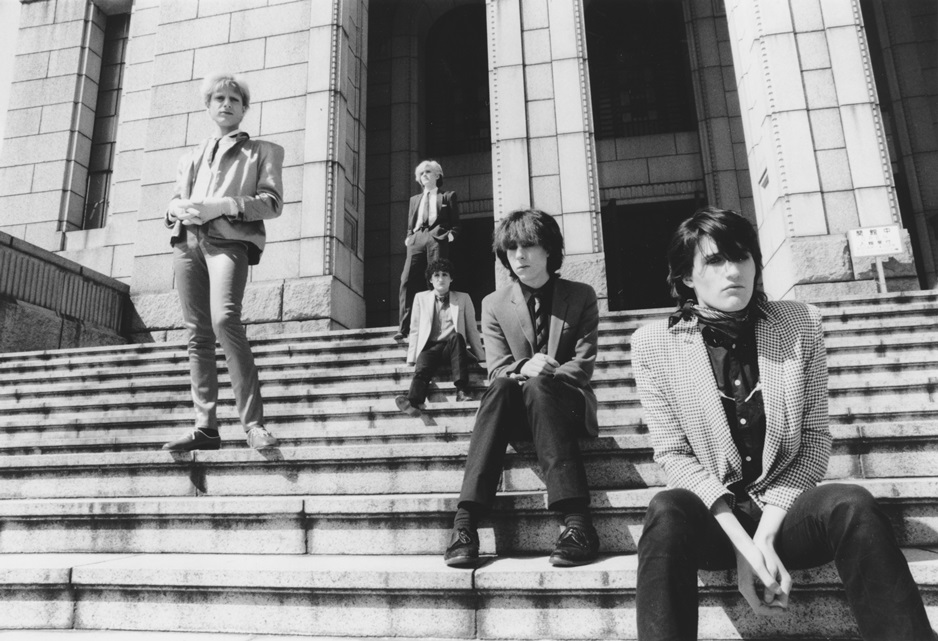
Although JAPAN had something of a shaky start with their first two albums ‘Adolescent Sex’ and ‘Obscure Alternatives’ in 1978, the seeds of an more electronically assisted direction were sown on the Giorgio Moroder produced single ‘Life In Tokyo’ in early 1979.
Now acknowledged as the bridge between growly funk-rock JAPAN and the more familiar, mannered and artier version of the group recognised by most today, ‘Life In Tokyo’ was a key interim milestone in their career as the first recording that the band were happy with.
The classic quintet line-up of JAPAN with David Sylvian, Mick Karn, Steve Jansen, Richard Barbieri and Rob Dean had found enormous success in the country of Japan as well as having more moderate but significant sales in Holland and Canada. So their German-owned label Ariola Hansa persevered, while manager Simon Napier-Bell was still convinced he had group of future stars on his hands.
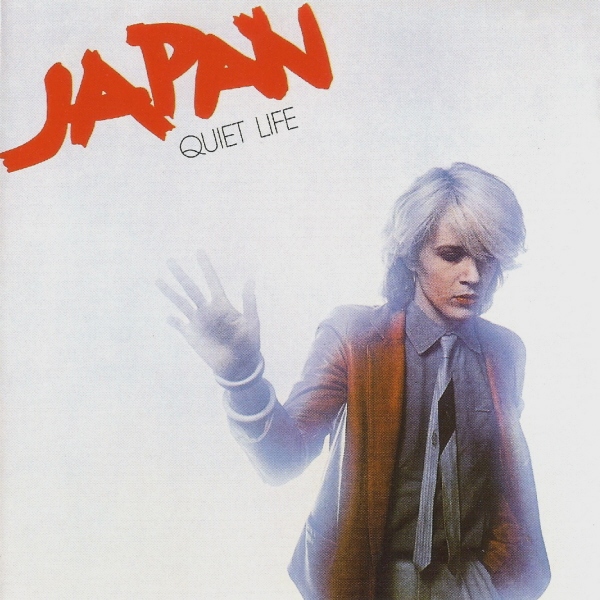
For their third album ‘Quiet Life’, front man David Sylvian adopted a more crooning baritone style of singing. Meanwhile Mick Karn’s distinctively fluid fretless bass was pushed right up to the front, intricately complemented in the rhythm section by drummer Steve Jansen. Taking in a more atmospheric European approach compared to their earlier work, guitarist Rob Dean and keyboardist Richard Barbieri provided the exquisite textural backdrop.
Produced by John Punter who had worked on ROXY MUSIC’s ‘Country Life’, JAPAN had found a willing conspirator in the studio who not only believed in them, but who they got on well with on a personal level. The Englishman loved the band so much, he even went to tour with them to mix their live sound. But as the quintet embraced synthesizers, sequencers, E-Bows, muzak and orchestrations, some critics accused JAPAN of being a lavish Roxy rip-off.
‘Quiet Life’ was issued in December 1979 in Japan, Canada, Holland and Germany before being given a UK release in January 1980. Although the album peaked at No72 in the UK, it was a major step forward as a quality timeless work that all five members of the band were collectively satisfied with.
Despite their melancholic outlook on life and their detached demeanour, the public eventually caught up with JAPAN when their style was embraced by the New Romantic movement, with the title song even belatedly becoming a UK hit when released as a single in September 1981. ‘Quiet Life’ consolidated JAPAN’s success in Japan itself, reaching the Top30.
Their audience also expanded in Europe, pointing them in the right direction and towards Virgin Records who released the albums ‘Gentlemen Take Polaroids’ and ‘Tin Drum’ before the band finally disbanded in late 1982 after their biggest ever concert tour which took in the UK, Europe and the Far East.
With a new remaster of ‘Quiet Life’ by Miles Showell at Abbey Road and boxed set due, Rob Dean kindly gave an eye witness account into the making of an album that still stands up 41 years after its UK release.
Between the ‘Obscure Alternatives’ and ‘Quiet Life’ albums, JAPAN were in a state of transition from the growly glam funk of ‘Adolescent Sex’ to the mannered artful combo people remember them for today. How conscious had this been as David Sylvian’s voice completely changed, while Mick Karn came to the jazzy fore with his fretless bass playing and your own guitar style moved from rock to something more textural?
Well I think a band owes it to itself (and its audience) to evolve and grow. The first album was basically a band in its infancy attempting to make a cohesive record with a large list of original songs that had been accrued up to that point. The second was a band more accustomed to playing as a live unit and finding its identity with its newest material.
There is always I think an indication of the direction a band will take somewhere from one album to the next. For ‘Adolescent Sex’, it was ‘Communist China’, for ‘Obscure Alternatives’ it was ‘The Tenant’. It all comes down to influences and what the band was generally listening to moving forward.
By the time of creating the material for ‘Quiet Life’, it was KRAFTWERK, Eno, Moroder, Peter Gabriel and Bowie of course to name a few. So to answer your question, I think we all felt that ‘Quiet Life’ had to be drastically different to what preceded it and the band as musicians were finding their own respective voices. Clearly Mick’s approach to bass and David’s change in vocal style were strong motivators in this. For myself (and Steve and Rich I’m sure), it felt like a logical progression also.
‘European Son’ (which didn’t actually get an official release until 1980 on the Japanese edition of ‘I Second That Emotion’) and ‘Life In Tokyo’ were two songs recorded in that interim period but both are quite different to the majority of the material on the ‘Quiet Life’ album, how was it finding your feet as a band with a new direction?
Obviously ‘Life In Tokyo’ was seen as a “one off” with Giorgio Moroder at the helm. Had it been a big hit as was hoped by all involved at the time, then perhaps it would have been a logical step to have him produce the third album. If he had, then I’m pretty sure it would be quite different. For one thing, he pushed for co-rights on tracks that he produced.
‘European Son’ was in some ways a song that would suggest that Giorgio wasn’t needed to create an electro-disco song. The reason it didn’t get released until much later was purely because it was never totally finished. Live, we played it in a few different incarnations but I did not record any part I was happy with on it, and that is mainly why. I was concerned foremost about not creating ‘Life In Tokyo version II’. So that one was a bit of a struggle.
As far as “finding your feet with a new direction”, the notion doesn’t really enter into it. You don’t really think about it, other than creating parts for songs that you feel fit and that you are all happy with just as you always do.
Can you remember your thoughts when the band were presented with the songs for ‘Quiet Life’?
Most were presented in the rehearsal studio as they always had been, with David playing a chord structure on guitar and us all starting to build from that. I do remember clearly that he and Rich had been working from home on the germ of an idea which was the song ‘Alien’ (which was at one time going to be the album title, until we learned that Ridley Scott’s film of the same name was due for release!) and in this embryonic stage, it was very different – a slow, brooding, somewhat uncompromising piece. I guess we all felt it wasn’t working and so it was shelved and resurrected in a far more palatable form later on.
In terms of arrangement, what was discussed between the band members? What was the dynamic at the time?
I remember we were in a cab on our way to a first meeting with John Punter and David Sylvian mentioned for the first time using orchestration on a couple of tracks. This was a surprise, but not in any way a negative one. It felt right, considering the songs that we were creating and their more epic scope. As far as general arrangements, we all knew when we were onto something that worked I’d say. We were all very positive about what we were doing and where the new material was going.
How crucial was producer John Punter in the realisation of the ‘Quiet Life’ album?
When we met John Punter, we all hit it off straight away. His warmth and enthusiasm was infectious and from our first meeting, we had nothing but positive thoughts about the forthcoming album sessions. He made the entire experience a relaxed and enjoyable one for everyone involved, and I think that comes across in what was produced.
John Punter co-produced ROXY MUSIC’s ‘Country Life’ but apparently Bryan Ferry wasn’t too impressed about him working with JAPAN?
He told us that he bumped into Bryan Ferry at AIR later on and was berated for working with us. Whether in jest or not, I can’t say. I guess Bryan Ferry must have thought we were invading his territory or something.
What was it like to work at AIR Studios in terms of atmosphere, environment and equipment? Was Richard Barbieri quite lost in the range of keyboards and synthesizers that were available there for example?
AIR had a wonderful atmosphere. The four studio complex meant there were always interesting artists to brush shoulders with and converse with upstairs in the cafe and pool table area. It was impeccably run and a very positive environment to work in. The studios themselves were all state-of-the art. Despite what you might think, there were not banks of musical equipment to be used other than grand pianos, though. Any instruments other than our own would be rented from outside.
It was cool to go to the nearby pub for a break and be sharing a pint with the likes of Chris Thomas, and John Cale… yes, even David Sylvian went to the pub! I think it helped that John Punter was so well-known and liked around AIR. THE PRETENDERS were there recording their debut album. Chrissie Hynde was very nice to us but the rest were kind of jerks. One day we arrived at the studio and the guitarist, James Honeyman-Scott had left us a bag full of cheap make up. He thought it was funny. We caught him giggling with his band mates about it, like kids playing a prank in the playground…
Would you be recording the songs one by one, or would there be several things going on at once depending on mood and ideas?
Generally the aim would be to get a definitive take of the drums first, then bass, and so on. Some days would be designated for a particular song and some for a particular instrument, it varied. If there was a problem with one, we would move onto another.
The title track was pivotal and is now held up as an iconic electronic pop single. Can you remember how the song developed and how everyone worked their parts in, because it does sound very much like a joint effort where everyone is firing on all cylinders?
‘Quiet Life’ was pretty much totally realised in our dingy rehearsal room in Willesden. I think the bass part was very integral to how the song developed. As was expected, Mick and Steve worked very tightly together. Sometimes we left them to work on their parts for a while and then added to that. I think the sequencer was part of the strong foundation too. The E-Bow solo was improvised in the studio, but the rest of the guitar parts were already established.
‘Fall In Love With Me’ featured a blistering E-Bowed lead line from yourself, how did you find adapting to this technique, had it opened up a whole new world for you?
Well actually, there is no E-Bow on that track. The verse guitar part is distorted fuzz guitar. But I was however very happy to discover the E-Bow. For a while, I was endeavouring to create thick sustained lead lines with mixed results. Invariably when recorded, they would sound trebly and thin when placed into a track. The E-Bow eliminated this. It was as if it was made for me.
Both ‘Fall In Love With Me’ and ‘Halloween’ had these fading endings to when the band stops playing, had there been any debates as to whether to have them like “live band endings” at full volume or were the fades intentional as a concept?
Some songs are created to end and others not. When recorded, those didn’t have distinct endings but kind of kept steaming ahead. In the mixing stage, the idea of long fades seemed appropriate for both. It just so happened that they just about made it to the end of the takes!
And within the context of the album, they worked in respect to the start of the next track. In the case of ‘Fall In Love With Me’, it’s just one of those driving, insistent rhythms that as a musician you are enjoying so much you don’t want it to end, so a fade eliminates that conundrum. Plus, John Punter loved a long fade!
Although lyrically, many of the songs on ‘Quiet Life’ have this doomed romantic demeanour about them, ‘Halloween’ was about the Cold War aftermath of Berlin and the rockiest track on the album? It screams rather like the film of the same name…
Well I think the title conjures up darkness and menace and therefore there needs to be some urgency to the guitars too. A scream seemed appropriate. Even the auto-wah guitar figure in the middle section tied with the synth emphasizes that.
‘Alien’ allowed to you play at being Robert Fripp, had he become a big influence on you by this time? Who were the other guitarists you may have looked to for inspiration on the ‘Quiet Life’ album?
When you have a new toy, you naturally want to play with it! In this case there were two, the E-Bow and my new Gibson RD Artist guitar with its Moog designed active electronics which proved to be a match made in heaven for me. Both very instrumental in the new sounds I was creating. My strongest influences then were naturally Fripp, but also John McGeoch (I was a huge MAGAZINE fan), Ricky Gardiner, Carlos Alomar and Earl Slick.
You didn’t play on the en Français piano mood piece ‘Despair’, so what happens when you are told that your contribution is not required for a track?
I saw ‘Despair’ as something of a companion piece to ‘The Tenant’ from ‘Obscure Alternatives’. I wasn’t instructed to not play on it, it was my own decision. I am always of the mind that if it is not essentially necessary, then why contribute? I didn’t want to play some cursory E-Bow if the piece didn’t require it and that’s how I felt in this case. Often when I wasn’t needed, I would be reading quietly in a corner somewhere or perhaps playing Space Invaders upstairs. Sometimes if it was anticipated that this would be a lengthy period, then I would catch a film matinee.
In the case of ‘Despair’, there was a bit of labour over Mick’s efforts in trying to play bowed double bass on it. Although he was unquestionably a talented multi-instrumentalist, in this case it defeated him and an outside session player was brought in. Memorably Kate Bush was in Studio 1 and invited to listen to a mix of it by Jon Jacobs, the tape op who had worked with her on ‘Never For Ever’. She sat cross-legged on the floor while we all sat around quietly and when it was over, in typical KB fashion she said “Oh wow, it’s so big, isn’t it?”
The ‘Quiet Life’ album includes a reinterpretation of THE VELVET UNDERGROUND’s ‘All Tomorrow’s Parties’ but that wasn’t originally recorded during these sessions, but appears to originate from the same time as ‘European Son’ at DJM Studios? How did the decision to do a cover get made? Did you like the song yourself?
I was of course familiar with the song from THE VELVET UNDERGROUND. I had seen Nico live a couple of times and loved her voice, too. As a band, it was not unusual for us to take someone else’s song and adapt it and this was no exception. I personally was very happy with how it turned out. I think we changed it up sufficiently to put our mark on it. It was way better than Ferry’s rather average version, which came much later, I might add!
The ‘Quiet Life’ album was notable for the use of an orchestra on ‘In Vogue’ and ‘The Other Side Of Life’. The end results were quite beautiful but how was the challenge for the band of integrating your parts into this classical template?
In both cases, the band tracks were complete (except the finished vocal which would be added last). So it was not a case of us adapting to the orchestral arrangements but the exact reverse. Ann O’Dell was given a rough mix of both to write her score around. So in the case of ‘The Other Side Of Life’, for instance, I think the already recorded instruments would have influenced the feel and approach that Ann O’Dell took with the score. The orchestra played off the syncopation of the bass and drums in the long instrumental outro quite noticeably too.
It is on record that ‘Quiet Life’ was the first album that all five band members were totally satisfied with… in an album of great moments, do you have a particular favourite moment?
I think it was actually standing in the studio while the orchestra were playing on ‘The Other Side Of Life’. Listening to an orchestra playing live to the music you helped create is a real buzz, I can tell you. It took those tracks to an entirely other level. I almost got a stiffy! As a track it was a new high mark of maturity for us.
The instrumental ‘A Foreign Place’ was recorded during the album sessions and shelved, although it came out as a B-side in 1981. Was there any other material that you worked on like ‘Can’t Get Enough’?
Like what? We never had a song with that title! But to answer your question, the band were always very low on unreleased material. Basically what was recorded was officially released… eventually.
The ‘Quiet Life’ album cover photo session with Fin Costello saw the band captured behind glass, yet the finished artwork only had David Sylvian on the front! A sign?
The original concept for the album cover when it was still titled ‘Alien’ was of five fold-out panels with each panel a photo of each of us with our own concept. I don’t think there was ever any doubt that David’s would be the front panel. I’m sure that’s what Simon Napier-Bell and Hansa had in mind. Plus from ‘Obscure Alternatives’ onwards, Fin Costello was always putting him front and centre. By that point, it was already a given so no surprise to anyone.
So you had this great album in the can but the UK label doesn’t want to release any singles off it, not even the magnificent ‘Quiet Life’ title song, and a cover version of ‘I Second That Emotion’ was released instead. Was this a Simon Napier-Bell intervention? What did the band think?
I wouldn’t say it was SNB’s doing. As a creative entity where the band was concerned, he was a bit of a non-starter and by that time, his input was somewhat minimal. All he could do was suggest and that mostly fell on deaf ears. I’m sure it was Hansa being desperate after the lack of success with ‘Life In Tokyo’ which must have seemed like a no-brainer. By that point they were panicking and really had next to no idea how to market us. So a song that people ought to be familiar was all they had to relate to (despite rumours to the contrary, the song was our choice, however). After all, they were all BONEY M and Amii Stewart. They didn’t have a clue. And I think us being associated with that label didn’t help our credibility either.
‘Quiet Life’ was undoubtedly JAPAN’s breakthrough record, how did you feel when the album was embraced by the New Romantic movement and then the title song was a belated hit single in 1981?
Unfortunately having left and living in California by that time, I was as you can imagine somewhat removed from that. Still, you always have to believe in yourself and it wasn’t a surprise. It was, of course, well-deserved and definitely not before time. I was proud to have been a part of it. It would have been nice to have performed just once on ‘Top Of The Pops’ but I still have enough good memories of that time to keep with me.
What are your thoughts on the ‘Quiet Life’ album now with this deluxe reissue, does it still trigger any emotions 40 years on?
For many many years, anything that referred to those times felt like I was talking about a different person. Of course recently, I’ve been recording again and so I’ve grown to be more comfortable with that period of my life and in a small way, I have been assisting BMG with this reissue. I just want it to be the best it can under the circumstances and something the fans will appreciate. To me at this time, it’s all about the fans and their continued support. It’s something I am very proud of. Six people working towards the same goal. A time of great adventure, creativity and happiness. I’ll stop now. There’s something in my eye…
Of course, this era of JAPAN have their legacy, most notably in the form of DURAN DURAN, do have you any thoughts? ?
I like to think that without us, there might not be a TALK TALK… but why does everyone keep referring to a character played by the actor Milo O’Shea in ‘Barbarella’? I don’t get it…
ELECTRICITYCLUB.CO.UK gives its warmest thanks to Rob Dean
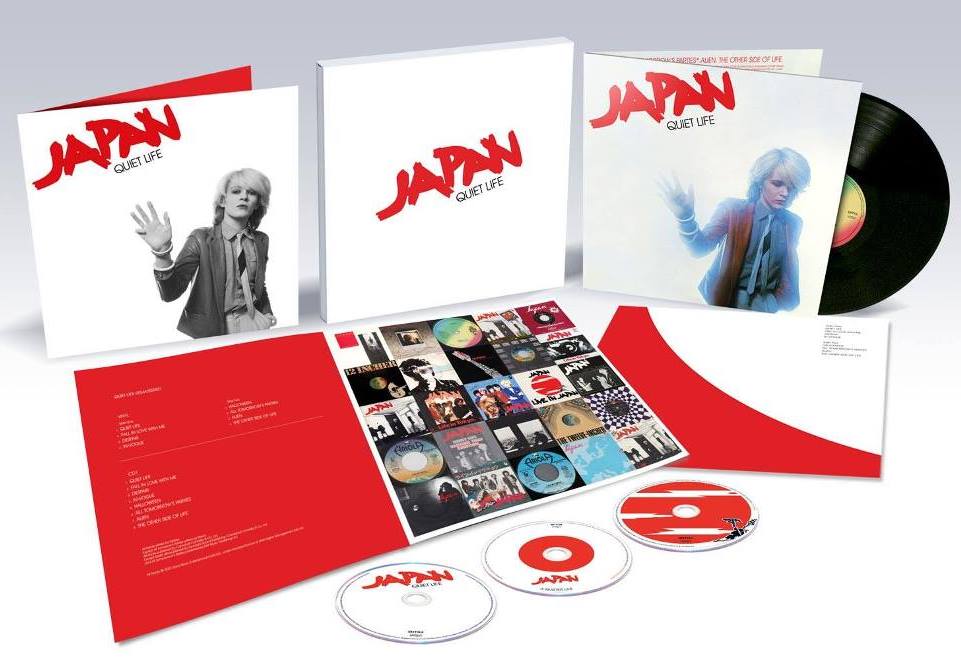
‘Quiet Life’ is reissued by BMG on 5th March 2021 as a 3CD+LP Abbey Road half-speed remastered deluxe edition boxed set featuring the original album and non-album tracks ‘Life In Tokyo’, ‘European Son’, ‘I Second That Emotion’ and ‘A Foreign Place’, as well as the full 1980 ‘Live at Budokan’ concert
It has been a tough 2020 for everyone, but one of the shining escapist highpoints has been ‘Megawave’, the most recent album from Toronto synthwave siren Dana Jean Phoenix.
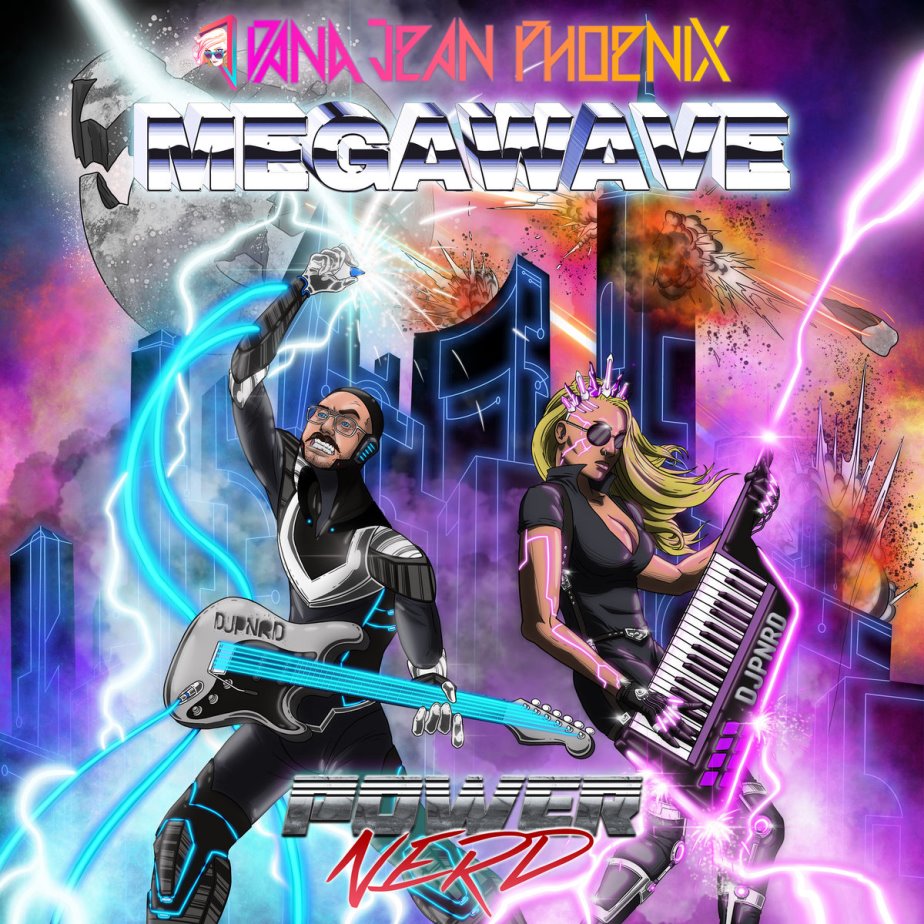
Recorded in partnership with Viennese electro-rockers POWERNERD, ‘Megawave’ expands on their previous collaborations over a full-length DJPNRD work, lending a thematic consistency that has perhaps not been captured on her previous releases.
Futuristic, danceable and fun, ‘Megawave’ has been just the intergalactic tonic that this planet has needed. Dana Jean Phoenix kindly took time out to talk about the making of the album and the new ‘Cobra Kai’ inspired promo video for the slinky title song.
How did you first come together with POWERNERD?
Powernerd Paddy initially reached out to me to collaborate on the song ‘Flame’ from POWERNERD’s album ‘Testosterossa’. We played live together in Vienna, and continued collaborating on tracks for my album ‘PixelDust’ and their album ‘Far From Human’. It’s always such a wicked time whenever we collab and play live together.
In terms of creative dynamic and chemistry, what was the process with regards writing and recording?
We initially talked about what vibe we wanted for the album. Paddy would send me tracks and I’d get to work on the vocals. I felt I could lose my inhibitions more at the microphone because Paddy was so game to try anything. Then, we’d touch base about each track to see what tweaks or additions were needed. It was a very fun, exciting, and reciprocal exchange back and forth.
You’ve played live across the world over the past few years, had that been a factor in the eventual sound of the ‘Megawave’ album? It’s a quite joyous record!
Thanks, and absolutely! For me, capturing the energy of live synthwave shows I’ve played was important in creating these songs. I’ve been fortunate enough to tour Europe, Canada, and the US a few times, and it’s afforded me the opportunity to see which songs really resonate with an audience in real time.
It’s also allowed me to discover things about myself as a performer and what kind of music feels most exciting and joyful to play and share with others.
How did it feel to be making a cohesive album artistically as a body of work as it would be fair to say that in the past because you’ve worked with lots of different producers, your previous albums have been more collections of songs?
I really enjoyed this approach. I often like the different moods and perspectives that emerge from working with various producers and their unique styles. With Paddy, he’s quite prolific and versatile and there’s always an edge and playfulness to his ideas. It always felt fresh and it kept me inspired to try new things, all while keeping cohesiveness and a good flow throughout.
Photo by Hayley Stewart
Although you concentrated on lyrics and vocals on this album, you got your keytar out a couple of tracks on the album?
Performing with my keytar, Jareth, is the best. When I play the keytar, it feels like I’m donning a superhero cape – some other side of me emerges, particularly during a solo moment. I’m sure guitar players can relate. So, it was fun to jam on solos for ‘Figure Me Out’ and for ‘Fight These Robots’. Jan-Friedrich Conrad played some absolutely killer key solos on ‘Sunrise Stance’ and ‘Living Rent Free’ and Paddy’s guitar solo on ‘Figure Me Out’ is pure fire.
So what is ‘Figure Me Out’ about, or is the answer in the question? That choosing a different cassette intro is also a nice variation on what has maybe now become an overused idea 😉
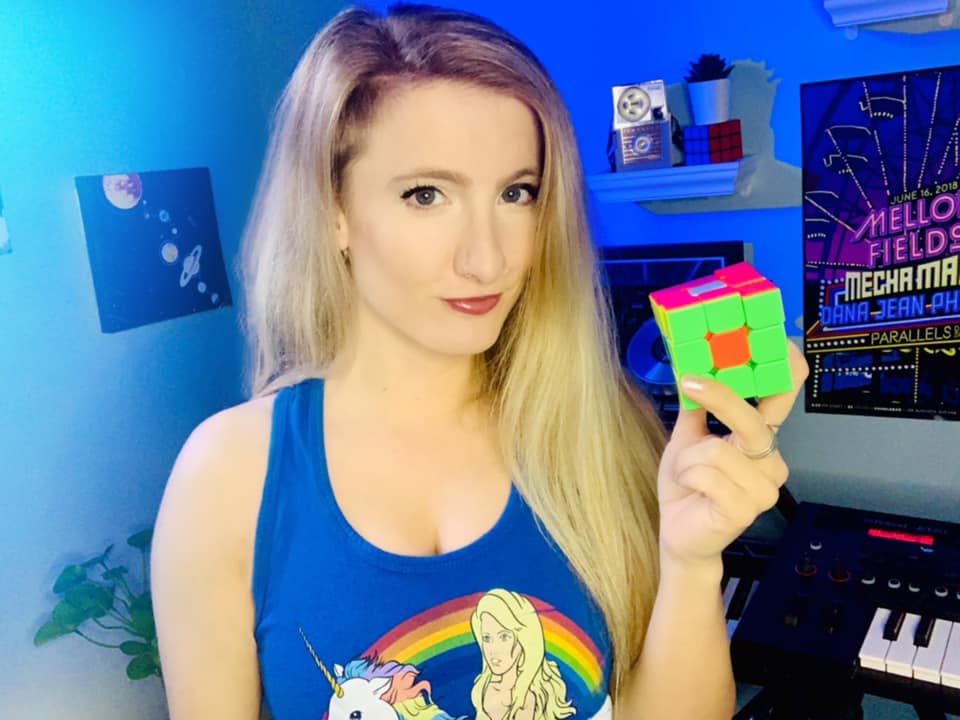
I was really into solving Rubik’s cubes at the time, and the song for me is about likening the complexities of a relationship to the world’s most famous 3D puzzle. The process of finding solutions (or learning algorithms) can be extremely frustrating and requires patience, consistency, and understanding. Sometimes it can feel like you’re taking several steps backward in gaining clarity, but perseverance, belief in yourself, and allowing yourself to see from a different perspective can carry you through.
I love the cassette intro – a sort of subtle way to set the listener up for a nice easy-going synthwave album, and then bam, the opening beat of ‘Figure Me Out’ is like a sucker punch. It lets the listener know they’re in for a fun and funky ride.
The ‘Figure Me Out’ lyric video with you doing the Rubicks Cube was such a great concept, a lesson to many as to what can be done with presenting a visual aspect to music, how did you put it together?
The director of the video, PHATT al, suggested I solve a Rubik’s cube as the lyrics of the song floated across the screen. I loved that idea and thought it would be so cool to have Powernerd Paddy and I interact too, (despite me being in Toronto, and him in Vienna). The most fun was sending Paddy a matching cube to make it look like we were sharing the same one 😉 It’s a really well directed video and a fun way to introduce the first single of the album.
What was going through your head when you wrote ‘Fight These Robots’, was this harking back to your childhood and watching ‘Transformers’ cartoons?
To me, ‘Fight These Robots’ is a metaphor for resisting complacency and questioning the status quo. It’s arguing that societal change happens when people join forces and fight for the greater good collectively – a plea for togetherness, not divisiveness.
The ‘Transformers’ cartoons are definitely cool and all – but I gotta say, that ‘Metalhead’ episode of ‘Black Mirror’ definitely shook me. I was envisioning those shoulda-been-cute, but terrifying robot dogs while I was singing “dee da deee da doo dee doo”.
Was ‘Megawave’ both you and POWERNERD channelling some of those classic Jam & Lewis productions?
Personally, Jam & Lewis are always a part of the vibe I’m channelling. My obsession with them started when I saw them in Janet Jackson’s ‘Control’ music video and realized they were the producers for so many of her best songs. Then when I discovered THE TIME and realized they were in that band too – it cemented in my mind that they were the coolest dudes ever. Their music always makes me smile, and they have such an unapologetically signature sound.
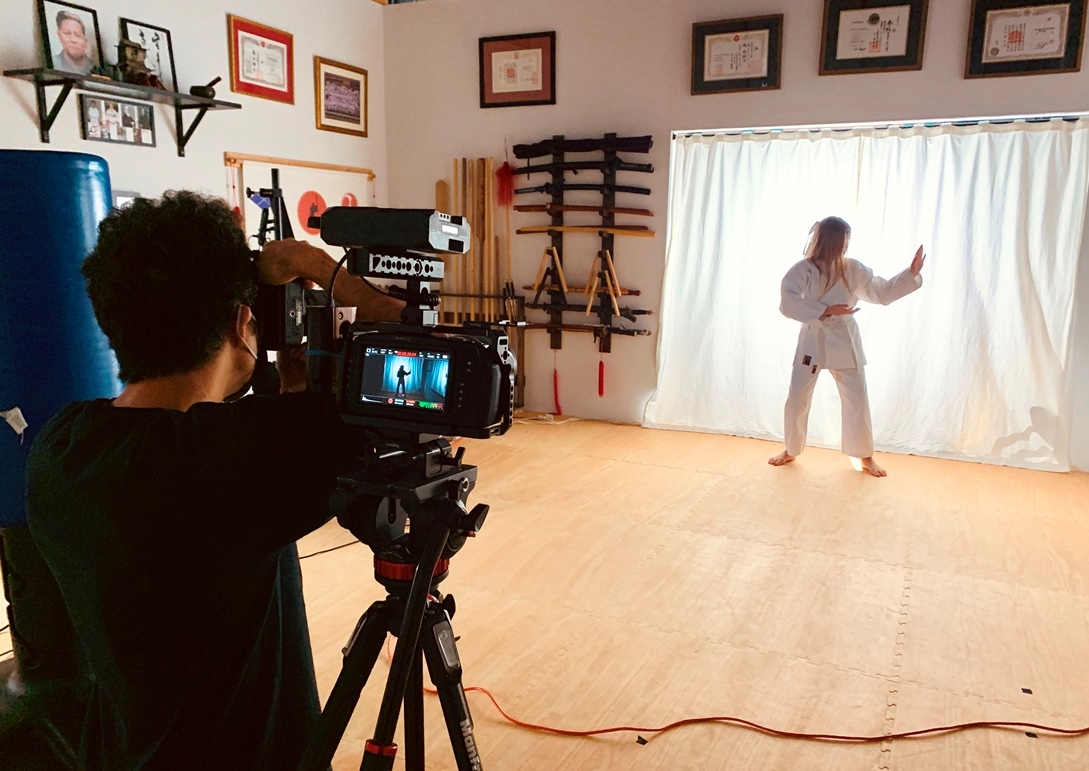
How did the video concept come together? Are you a fan of ‘The Karate Kid’ and ‘Cobra Kai’?
Filip Vukcevic, the director, approached me with the idea of paying homage to ‘The Karate Kid’ and ‘Cobra Kai’, which was perfect, as I had just finished ‘Cobra Kai’ season 2 and totally loved it. It’s such a funny and well-executed spin-off of the movies. Filip is an amazing director who I also worked with on my ’Only For One Night’ video.
He has a real passion for storytelling, for going all out, and thinking outside the box. We had a great time planning, casting, and shooting. I’m proud of how our nod to the ‘The Karate Kid’ turned out and it’s always an added bonus when a music video gives a song new context. I feel ‘Megawave’ video captures the young-love message of the song, but also makes it about finding strength in oneself.
‘Living Rent Free’ plays with some soft midnight funk?
If you’re talking sexy funk, then yes, that was mission number one with the album. ‘Living Rent Free’ was the first track Paddy and I created for the album. When he sent the instrumental, I was in the midst of rehearsals for a theatre production. On my lunch break, I remember waiting in line at a local coffee shop and listening to the instrumental for the first time on my headphones. I was very excited and couldn’t help but dance in line, as it was exactly the sound I had in mind for the album. We had talked for a few weeks about the vibe, and direction, and then Paddy delivered 1000% from the first track.
There’s a delicious dancey groove to ‘Sunrise Stance’ and some great synth solos, had it been a conscious decision to keep the ‘Megawave’ album quite lively and uptempo?
Oh yeah. Performing the songs live is always a consideration when creating an album, and it’s so fun to perform lively, up-tempo songs. Jan-Friedrich Conrad’s synth solo added such magic and captured the intensity and playfulness of the lyrics.
Saying that, ‘New Technology’ takes things down a bit and is more soulful, have you any particular influences in this area and what is the song itself about?
I was definitely feeling a Sylvia Striplin ‘You Can’t Turn Me Away’ energy, but in a falling in love with a cyborg kind of way. I was also listening to a ton of Jamiroquai’s album ‘The Return Of The Space Cowboy’ at the time, so that was definitely an influence.
It’s about that buzz and excitement you feel when you interact with someone on a similar frequency, and how technology allows us to connect with people we never had the opportunity to do so with before. The synthwave scene in general is a great example of likeminded people coming together because of technology.
You chose to bolster the album with remixes of ‘Figure Me Out’ and ‘Fight These Robots’? Was there any particular thinking behind this?
It’s always awesome to include more talented friends on the album. STRAPLOCKED and I collab’ed on the songs ‘All Day Heat’ and ‘Iron Fist’ and performed together at NEON Retrofest in Rhode Island. I love NEW ARCADES’ music and it was so great to hang out with them in London when we played an Outland show together in 2018, and again when I played an Outland show in London in 2019. Both artists did amazing remixes.
‘Moves Moves Moves’ is back on the dancefloor and closes ‘Megawave with more electro-funk vibes, how do you look back on the making of this album?
The making of this album occurred during a time of significant personal transition for me. In hindsight, I was on the precipice of having to make some really tough but necessary decisions in my life. Songs that make me want to dance really hit me, as they can offer pure joy and a way to celebrate good times, and also offer catharsis and a way to cope through trying times.
For me, the album is about self-discovery, empowerment, and remembering to spread joy and positivity, even in times of uncertainty. It’s also a love letter to collaboration, nostalgia, and good times. I wouldn’t be here without the help and guidance of so many key people I’ve worked with, which includes Stu and Brett of Outland Recordings. I’m quite chuffed (see what I did there?) to have the album on their label.
You recently did a song called ‘Freedom Pass’ for the ‘Vehlinggo Presents: 5 Years’ compilation with DIAMOND FIELD, is he someone you would like to do more work with?
Of course! Working with DIAMOND FIELD on ‘Freedom Pass’ allowed me to explore a different sound in the retro scene. I really dig the pure beachy / summery feel but with a more pop / rock edge in that song. It was fun to sing about being independent while also embracing my super girly side. DIAMOND FIELD is a really great guy to work with, and so super talented.
Have you been back to the studio yet? Is there anything on the horizon?
There’s been so much to digest and unpack this year – some pretty heavy questions about what the future holds, and how we can best move forward with more kindness, understanding, and more time for reflection. I’ve been writing and journaling quite a lot lately and jamming on some ideas for new material. I’m really excited to hunker down in the New Year to take those ideas off the page – and hopefully, when safe to do, onto the stage.
With everything going on, what are your own hopes and fears for the future?
My hope is that we all get to experience and share music together under one roof again someday soon.
My fear is that it may take a little longer than we initially anticipated. I feel incredibly lucky to be a part of a scene that fans continue to engage and support with so much enthusiasm online.
This past year has shown me that despite difficult times, the human spirit is incredibly resilient. With that knowledge, now more than ever, I feel optimistic about the future and the day we can all come together again.
ELECTRICITYCLUB.CO.UK gives its warmest thanks to Dana Jean Phoenix
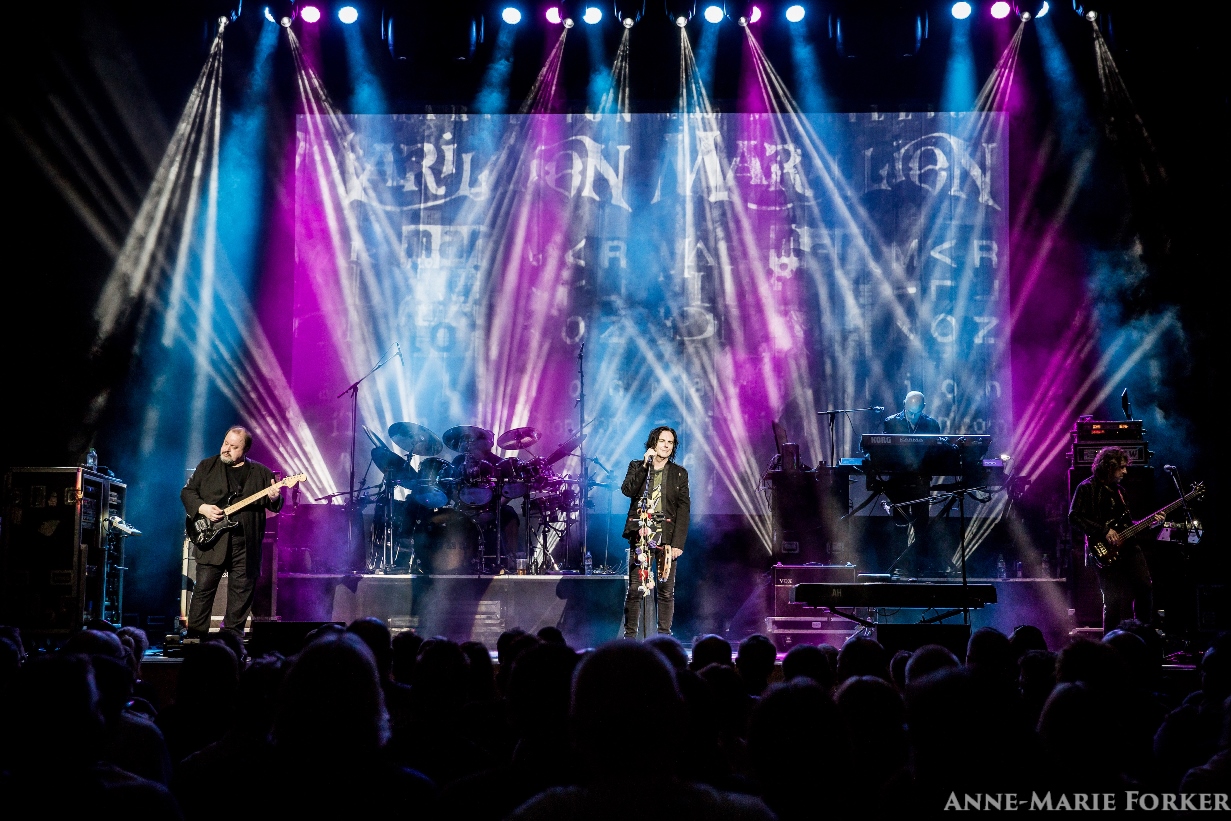
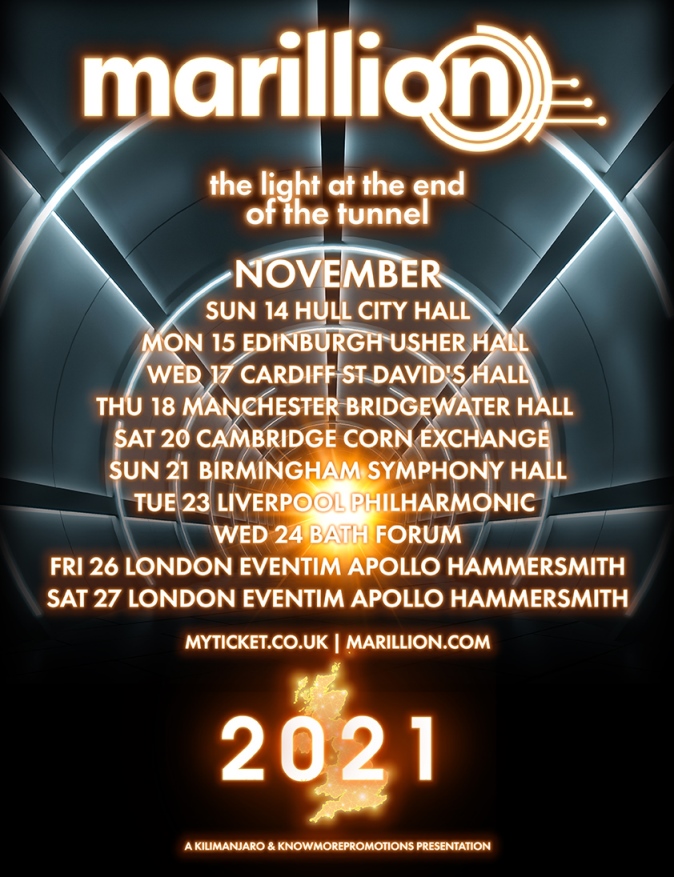
MARILLION have seen ‘The Light At The End Of The Tunnel’! In these long dark days of recent times, the prog veterans hope to shed some light across the stages of Britain with a 10-date tour in November 2021 culminating in 2 nights in London.
Presently, MARILLION comprise of Steve Hogarth (lead vocals, keyboards + percussion), Steve Rothery (guitars), Pete Trewavas (bass + guitar), Mark Kelly (keyboards) and Ian Mosley (drums + percussion).
For many years now, MARILLION have enjoyed a unique relationship with their fanbase and together they pioneered the concept of crowdfunding in music via the sponsorship of an American tour in 1996.
Despite a difficult 2020 for all, MARILLION united with their family of faithful fans for the online Couch Convention weekend in September which raised £31,530 for their crew who have been hard hit financially by the pandemic.
Of the weekend, Mark Kelly said: “What a weekend it was! We were totally stunned and knocked out by everyone’s involvement in everything that went on, from Steve Rothery’s late night cocktails to Pete’s Bass Masterclass. Ian’s Drum Q&A and my early morning fun run and all the music, chat and fancy dress in between. It was fun for us to be in the audience, too, reading and reacting to all your comments as the shows were streamed. The crew tip-jar was overflowing with your generosity, you raised a substantial sum for our wonderful crew. The money will go a long way to helping them survive a difficult year. Thank you!”
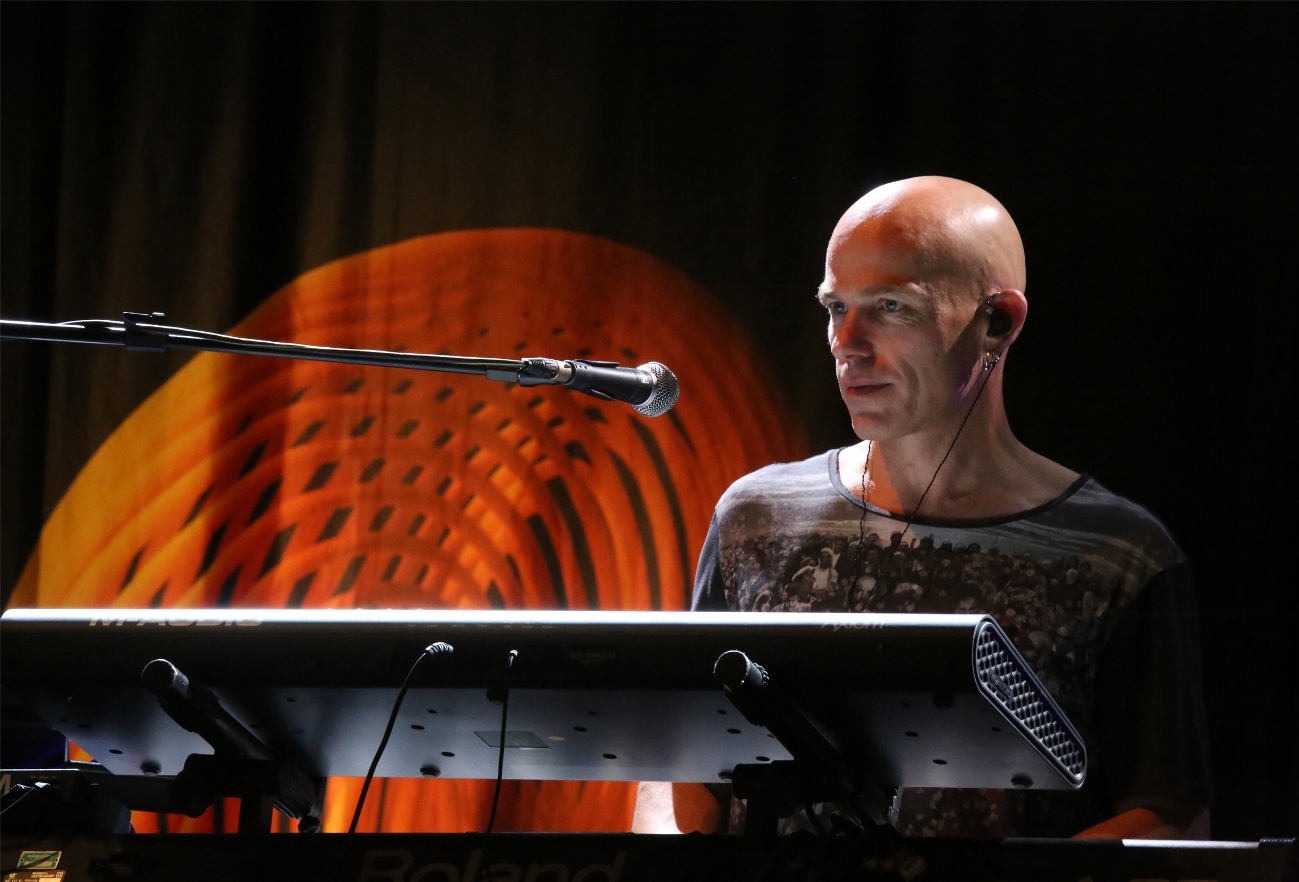
Mark Kelly kindly took time out from recording the new MARILLION album to talk about the use of keyboard technology in the band, being crowdfunding trailblazers and the modern day streaming business model among many other topics.
Thanks for taking time out of what I am sure is still a busy schedule to chat with us today…
No problem, I was hoping to home by now but I’m stuck in traffic on my way back from the studio.
Is that working on ‘Marathon’ (Mark’s forthcoming solo project) or MARILLION material?
‘Marathon’ is finished, this is for the next MARILLION album… Number 20! Funnily enough on the tour next year we play the Cambridge Corn Exchange almost 40 years to the day of my first gig with the band, in the same town.
I’ve been a fan all that time and it doesn’t feel like 40 years…
You’re right, it doesn’t feel like 40 years at all. You hear older people say time flies by and now I know where they are coming from.
Folk coming to this interview may wonder why we are speaking with you, but there is crossover between what you do and our usual fare, Vince Clarke for example is a GENESIS fan…
Funny you should say that, I was reading an article on one of the sites like TechRadar and they listed the Top 30 synth players and Vince Clarke was number 5 or 6 which surprised me. But thinking about it, there is a lot of crossover with the electronic stuff like TANGERINE DREAM and KRAFTWERK which is very much in the prog genre… Krautrock… the early days of synthesiser music and progressive rock were both experimental
So how are you all surviving the lockdown?
We’ve had a pretty good year by luck more than anything as we had already decided we weren’t going to tour this year. All we had in the book was ‘Cruise To The Edge’ which got cancelled back in April. So we didn’t need to change our plans much at all and for me it gave me the chance to do a solo album as we were in lockdown for 3 or 4 months.
We had just started work on the MARILLION album and had to stop. We are back in the studio now having resumed work on the album at the end of the summer. We are at that stage now where we’ve done a lot of jamming, have quite a lot of ideas and just need to get them past the arranging stage really. We are quite slow these days, we will jam then take those and jam around them again, working on the ideas we like to see what comes out and eventually they start to take shape as songs and that’s where we are at now.
We have 20 or 30 pieces, some lyrics and I’ll be optimistic and say by early next year we will have an album ready to record.
That’s great news both that you are busy and all keeping well. Moving on can you give us a recap of Mark Kelly, the early years?
I never saw being in a rock band as a viable career opportunity, it was something I did for fun playing on the local pub circuit. The guys I played with didn’t take it that seriously. I’d been an art student then switched to electronics as I wasn’t really enjoying the art stuff.
MARILLION were the opening act for the band I was playing for, Mick Pointer (the then-drummer) and Fish came up to me and asked if I fancied joining MARILLION.
I didn’t really know who they were and only watched them because our guitarist said “you should watch this lot, you’ll like them” and that was my start at becoming a professional musician.
It’s interesting as the documentary on the ‘Script For A Jester’s Tear’, MARILLION’s 1983 debut album boxset shows you as having, as a band, quite a drive and determination to succeed?
That was one of the things that attracted me to MARILLION was how serious they were about it all. Everyone back then talked about making it and back then, that meant as far as we were concerned getting a record contract with a major label.
Everyone was laser focussed on it, it wasn’t a hobby. We turned professional and that meant giving up any job you had and signing on the dole. Making a living back then as a gigging musician was hard, God it’s much harder now, and we actually did manage to feed ourselves.
We would play 5 or 6 nights a week in pubs and you would get paid 100 quid which I suppose wasn’t bad, it was a slog though we were determined.
The ‘Script…’ album… I joined at the end of ‘81 and we had signed within a year and were recording the album by Christmas 82. At the time, it didn’t seem to happen that quickly but looking back it did.
The great thing about the early days of MARILLION was wherever we went, we picked up new fans. There was a real buzz about the band at grassroots level where there wasn’t much from the mainstream press. We had a session on the Friday Rock Show and Sounds wrote about us but we weren’t cool enough for Melody Maker and NME!
So looking back it did happen pretty quickly, we were selling out Hammersmith Odeon by the time the first album came out…
I remember back in the day looking at that very prog thing of listing all the keyboards that you used on the album credits…
That’s funny cos as a kid, I remember pouring over the sleeve of ‘The Six Wives of Henry VIII’ by Rick Wakeman and the bird’s eye view looking down at all the keyboards that were labelled. Of course there was no internet, so you had to look things up in the library or rely on keyboard magazines. I think I was just trying to emulate my heroes, they all listed what they played so we did the same…
The equipment you used was pretty much top of the want list for the period. I have often thought, did you hire it in or how did the band feel about you blowing the entire advance on a new keyboard rig?
I was thinking about this the other day and I was lucky. The A&R guy at EMI, Hugh Stanley-Clarke, was a real keyboard fan and he also represented Thomas Dolby and he said “you’ve got to get an Emulator and you have to get a PPG 2.2” and these were really expensive.
To give you an idea, the PPG was about £6000 and the Emulator about 5, so that’s £11,000 on 2 keyboards. Around the same time, I bought my first house and that was £23,000! And those weren’t the most expensive if you think about, something like the Fairlight which was £30,000 or… what was that thing Keith Emerson played, the Yamaha GS1 that was about the same price!
You had a Jupiter 8 as well?
I loved my Jupiter 8, that was what another £3000…
So most of the advance went up on A-frames next to you on stage?
You’re not far wrong actually. We bought a drum kit and some amps, but I spent about 15 grand on keyboards so I was lucky. At the time, we got the money and bought the gear.
Advances in that technology was going leaps and bounds at the time and you were probably one of the last people to record an album before MIDI came in. I think you had the DX7 the next album, ‘Fugazi’?
I think I got that just after that. Folk were buying things like the DX7 but you couldn’t really do anything with it. It wasn’t until I bought a Juno 106 and could link that and the DX7 together with a MIDI cable to stack the sounds, it was then you could say, my God listen to this. The opening bars of ‘Misplaced Childhood’ are the sound of the DX and the Juno together. At the time it was groundbreaking.
I had a Commodore 64 computer and a guy at Hansa Studios in Berlin where we recorded ‘Misplaced Childhood’ showed me a box you plugged into the back of it. It was a Steinberg 16 track sequencer, the box had MIDI In and Out and you could record stuff and play it back. It was really basic, but at the time it was amazing to be able to do that.
With the technology, did you feel you needed to keep up with things like sampling?
I loved it, it was a great time to be getting into keyboards, at that time there was a lot of great things happening with the technology. There was a shit period in keyboard development…
The early analog stuff of the 70s and those early polyphonic synths like the Prophet 5 and the Jupiter was great through to the late 80s with iconic keyboards like the Korg M1 and the Roland D50, then in the 90s there were a lot of sampling keyboards that weren’t that good.
Then you had all the VST instruments that weren’t all that good either, but now a lot of those are really nice and you can get lots of interesting sounds. It’s all a bit too easy now I suppose, a bit like recording…
Do you not find the amount of choice you have in the libraries for these instruments can be counter-productive when you can spend hours just flipping through string sounds?
You’re probably right. I don’t use the software where you can hit a button and it writes for you, gives you chord progressions and stuff. I’ve dabbled with it but the stuff that comes out is great sounding but uninspiring. You have to differentiate between something that sounds good and the actual music you are playing.
For me, I search for sounds that are inspiring and make me be creative in what I play and I feel I am much more prolific these days than I used to be and part of that is having this amazing palette of sounds at your fingertips.
So are you more software or predominantly hardware based these days?
I’m totally VST based these days… the only bit of hardware I have been playing about with recently is I have broken the old Minimoog out for the ‘Marathon’ album and I have been using that with a ribbon controller hooked up to the gate and voltage control and that’s a bit of fun and to be honest that’s it.
I still use the Korg Karma for a few sounds but everything else is in software… if I had to choose one software synthesiser to be stranded on a desert island with, it would be Omnisphere by Spectrasonics. There’s a Bob Moog commemorative sound library that a load of well-known folk like Trent Reznor contributed to for the Moog Foundation and the sounds are lovely, I always go back to them.
There’s a huge amount of fetishism around all that old gear and the majority of people don’t care…
And I don’t think the majority of keyboard players can tell the difference either.
Steve Rothery, MARILLION’s guitarist had bought a modular system and it’s fun to play around with but that’s it…
To make car alarm sounds…
Hahaha! Yeah, I think I am with you on that. Some of the software emulations like Minimoog or Hammond organ or electric piano are great now and even things like acoustic piano which was always hard to get right for example, but the Modartt Pianoteq 6 is spot on, really responsive and nice to play which was always an issue in the past.
So do you have any formal training?
No, it’s one of the things I regret. I didn’t start playing until I was 15 which is very late and it’s always been something I am aware of and a bit embarrassed about. You watch someone like Jordan Rudess playing… I’m not saying I love every note that he plays but his technique is phenomenal. He probably started when he was 3, went to Juilliard etc and I didn’t do any of that and it shows.
I’m not trying to compete with Keith Emerson or Rick Wakeman or Jordan, what I do isn’t that technical really but I try and play to my strengths.
After 40 years, you’ll probably be OK for at least the next album anyway!
Hahaha! I hope so yes!
One of the things I wanted to ask you about that is very related to ELECTRICITYCLUB.CO.UK is your involvement with The Midge Ure All Star Band at the Mandela 70th Birthday concert at Wembley Stadium in 1988. How did that come about?
Midge Ure just called me up, I don’t know where he got my number, and asked me and I was flattered to be asked to play with all these amazing people.
At the age of 26 or whatever I was, to be asked to play in a band with Paul Carrick, Phil Collins, Mark Brzezicki, Mick Karn and Midge with all these superstars was amazing. We had a great time. We only had about 3 days rehearsal and the only stressful time was with Joan Armatrading… Paul didn’t want to sing ‘How Long’ for the umpteenth time and said can I just play keyboards so we worked out what to play between us.
The Joan Armatrading song ‘Love & Affection’ had some strings on it… I turned up at the rehearsals shitting myself as I hadn’t learnt any of the songs and neither had anyone else! We were all having fun, apart from Joan… she turned up after Paul and I had worked out the parts and stopped everything and said “just one keyboard player please” and told Paul to stop playing! So then I had to play both parts and as I say I’m not technically that good and she’s standing over me watching me do it… no pressure! It was all really good fun though, everyone else was great… THE BEE GEES were really nice chaps…
Not sure about the horns on ‘Kayleigh’ though…
Well the David Sandborn Horns were onstage so we had to use them. Phil and Mark has fun on that, they worked out little drum fills into the chorus which were different… Midge winged the guitar solo a bit but as I say, it was great fun.
You are a great advocate and early adopter of the use of the internet and you are recognised as one of the founding fathers of the whole idea of crowdfunding. Are you surprised by how the concept has taken off and developed over the years?
It developed out of necessity really. In 1997, we had a group of fans that wanted us to tour America and I said it wasn’t going to happen. We didn’t have a record deal and we would always lose money when we went to the States. One of the fans said “why don’t we create a tour fund and folk can donate money and then you can come and tour?”
It was incredible really, this wasn’t crowdfunding as we know it, it was just people putting money in a bank account, like charity almost. And when we hit the magical figure of $60,000 which is what I said we would need, I plucked the figure out of the air, as we had lost upwards of 100K in the past, they raised the money as we did the tour.
That’s what gave me the idea… if fans are will to spend that money to bring us over on tour and then still have to buy tickets, it shows there was a lot of goodwill towards MARILLION out there.
So when we wanted to do another album, we didn’t have a deal and were free. I said all we need is the money to live and record the album, why don’t we ask the fans to buy it in advance. Maybe surprisingly or maybe not, at the time it was revolutionary. Even the other band members were saying “Are you sure? Won’t the fans expect to have a say in what gets recorded and put on the record” as no one had done it before and we didn’t know if fans would actually put their hands in their pockets and pay upfront.
It was looking back such an obvious idea because of the internet and email and the fact you can reach out to people so easily and update them so readily, so it’s time had come and for us with the fans being so supportive, it wouldn’t have been something every band could have pulled off at that stage in their career.
I think it became something that some folk looked as an easy way to make money…
Yes and it wasn’t just the bands, the platforms that were set up to do it too. We went through Pledge Music for the last MARILLION album and after we had finished, they went out of business a few months owing lots of people lots of money! I think you’re right a lot of bands looked at it as a way to make easy money, but you have to do it with the right intentions. You have to show your audience appreciation for what they are doing for you, it’s not free money. It’s a collaboration, they are involved.
You are very good at that as a band and having a relationship with your fans…
We were lucky as we had had many years of doing that, being available and chatting with the fans. We used to do that right back in the early days on the first big tours, we would stay behind after shows and meet with the fans. Of course, word got round we did this and eventually the audience would stay behind in the venue and it would take hours to sign stuff, get a picture or whatever but you’d end up having 500 or so folk staying back, so we had to knock it on the head!
We used to like it as you would get to see the girls in the audience close up!
There were girls in the early MARILLION audiences, I don’t remember that!!!
Well if you have 500 folk, you might get 50 girls! So if there was a good looking one, there was a signal word where the tour manager would go and invite them to the after show party. But he got the signal word mixed up, and it was Fish that then came up with this one ‘Dodo’…
He thought that meant time to go, clear the room… the signal for stop without saying stop. So this good looking girl is there, Fish says “Dodo” and the next thing he is say “right everybody out” and we are like, what’s happening?!?
He says “Fish gave the signal” and he was like “no I didn’t you f*cking Dodo!’”
You are also to your credit heavily involved in the field of artist rights via FAC (Featured Artists Coalition) and PPL. Is this more important now that ever?
Yes, I think it’s necessary really. I don’t really do as much for FAC these days as it’s hard to find the time to do everything, though I am still on the board of PPL. I’m up for re-election soon and I have been doing it for 11 years now so maybe I will get voted off!
I think these days, people are much more aware of how artists make a living or don’t make a living and the issues around streaming services like Spotify.
I have a love / hate relationship with Spotify. I love it as a punter being able to just dive in and check stuff out if someone mentions a band. I am also aware however that it pays so little money unless you are up in the stratosphere which very few artists are there is nothing in it really, it’s just a promotion tool
Do you think there will ever be a balance struck?
It simply comes down to, unsurprisingly, that the labels are keep as much of the money as possible. They pay artists royalties based on old deal structures when they, the labels, had all those overheads, manufacturing, shipping, warehousing and all the rest of it and now they should be paying, at the very least, the artist 50% of what they get, where most are on probably 15 to 20% if that.
The labels are making decent money and many of the artists are not and I hope that at some point in the future things will be more balanced. I don’t think you can blame Spotify, they have never made a profit. They pay the labels a billion dollars a month which sounds like a lot of money, but it’s spread across the entire music industry and most of it never finds its way into the pockets of the songwriters or artists.
How big a risk or otherwise has the decision to put on a tour for next year been?
I think it’s a bit of a risk as we don’t know how things will pan out, but I do think there is a good chance the tour will happen. It is in a year’s time so…
You have a solo album coming out, what does that outlet give you that working with MARILLION doesn’t?
There are quite a few musical ideas I had over the years that never get used and I couldn’t see them ever getting used. The album has a bit more of an early MARILLION feel to it as the band has moved on from that.
I started working with a lyricist who was the person that was pushing me. Then I worked on some musical ideas with my nephew Conal and then we found Ollie who does vocals on the album and he has a great voice. Then because of lockdown, I said to everyone “let’s do this and record our parts at home” that it started taking shape
Do you think had given the album a different feel as you have done things in isolation rather than together in a studio?
The guys that mixed it says it doesn’t sound like it’s been recorded that way, it all hangs together really well, I very pleased with how it’s turned out. When we did finally did meet, some of us for the first time, we had a couple of days in Real World Studios and it sounded like we had been together for months.
ELECTRICITYCLUB.CO.UK gives its warmest thanks to Mark Kelly
Special thanks to Sharon Chevin at The Publicity Connection
Mark Kelly’s ‘Marathon’ is released on 27th November 2020 and is available in CD, vinyl and a limited edition CD with a DVD of the album being performed live plus bonus behind the scenes footage direct from http://www.marillion.com/shop/
MARILLION’s ‘The Light At The End Of The Tunnel’ tour dates for November 2021 are as follows:
Hull City Hall (14th November), Edinburgh Usher Hall (15th November), Cardiff St David’s Hall (17th November), Manchester Bridgewater Hall (18th November), Cambridge Corn Exchange (20th November), Birmingham Symphony Hall (21st November), Liverpool Philharmonic Hall (23rd November), Bath Forum (24th November), London Hammersmith Apollo – seated (26th November), London Hammersmith Apollo – standing (27th November)
We use cookies to ensure that we give you the best experience on our website. If you continue to use this site we will assume that you are happy with it.

 offered haunting forlorn vocals, synthy hooks, art school sensibilities and intriguing rhythmic backdrops for the dancefloor.
 released in August 2020 reflected the sadness many were feeling around the world in difficult times and acted as something of a cathartic release for the band.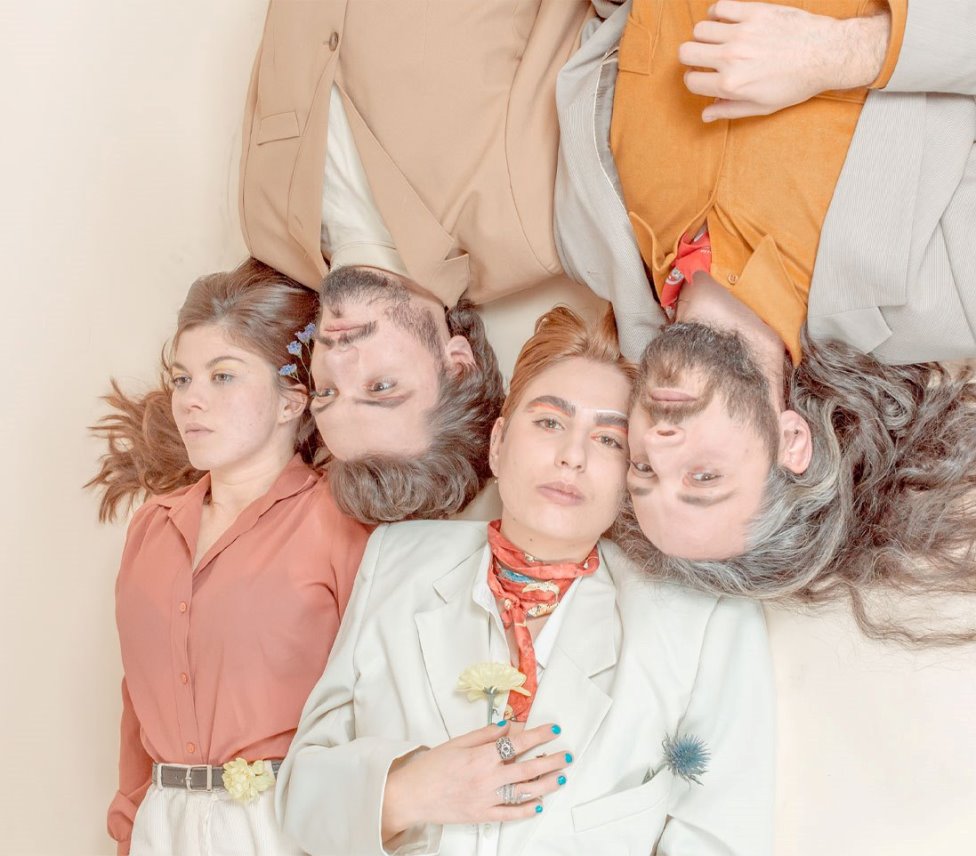

 , front man David Sylvian adopted a more crooning baritone style of singing. Meanwhile Mick Karn’s distinctively fluid fretless bass was pushed right up to the front, intricately complemented in the rhythm section by drummer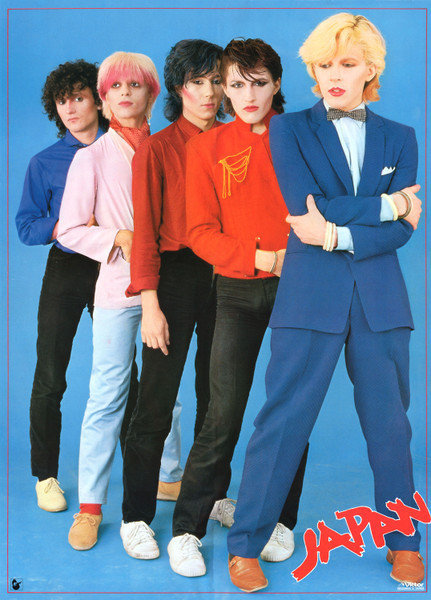






Follow Us!