If Britney Spears and Justin Timberlake had not been part of The Disney Club but actually raised by The Addams Family, would they have ended up making a record like this?
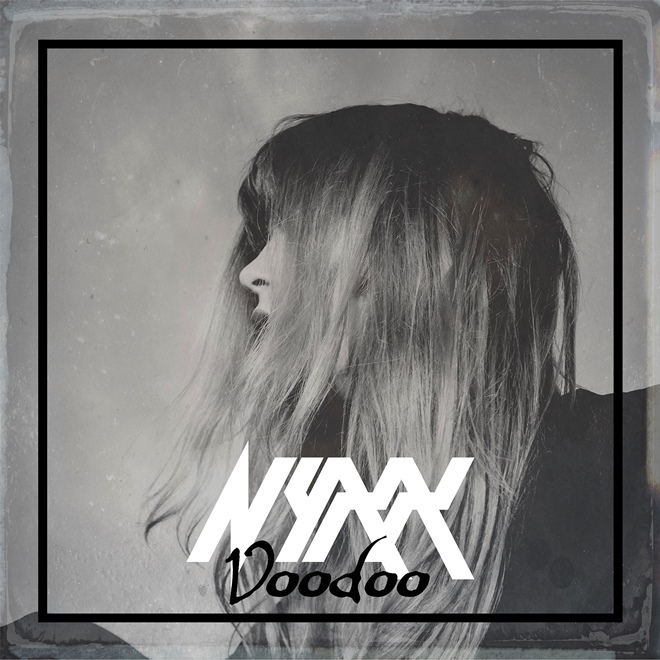
Fresh from lending her voice to one of the songs of 2017 in AESTHETIC PERFECTION’s ‘Rhythm + Control’, NYXX begins her year with some ‘Voodoo’. Laced in lusty gothic tension with robotic voices and an almost evangelical middle eight from Daniel Graves, ‘Voodoo’ is like its predecessor ‘Diabolical’, co-written by the AESTHETIC PERFECTION main man.
The promo video, self-directed by NYXX, sees the striking tattooed starlet out in the dust and briars of the LA countryside, pondering how best to dispose of her latest victim because “that girl is psycho”!
The speedier Danny Armand Remix of ‘Voodoo’ with its stutters and drops, comes over like Britney gone dubstep so won’t be to everyone’s tastes.
But with its enticing pop sensibilities and a sinister animist backdrop of swirling electronics built around the rhythmic snap of imperial phase LADY GAGA, the single version of ‘Voodoo’ is the first truly happening tune of 2018.
‘Voodoo’ is released as a download bundle by Close To Human Music through the usual digital outlets
Philadelphia and subsequently New York City are home to BOOK OF LOVE.
The band, which created a stir with American synth music crowds, came into being in 1983 when Susan Ottaviano joined forces with Ted Ottaviano (no relation) in Philly, later recruiting Jade Lee and Lauren Roselli Johnson.
The name was adopted from a song by THE MONOTONES and soon the entire crew worked out of New York. Citing influences from anyone from Bowie, through COCTEAU TWINS, THE RAMONES, OMD to DEPECHE MODE, the quarter started writing their own material, and equipped with few demos, notably ‘Boy’, hoped for a label to take an interest.
And a label did… not just anyone but Sire Records, whose president at the time Seymour Stein loved the tubular bells and happy go lucky melody of the track. ‘Boy’ went on to become a notable dance hit, positioning itself at number 7 on the Billboard Dance Chart. Furthermore, it gave the band such success and exposure, that the group happily left their day jobs to dedicate themselves to the craft of music exclusively. And that’s how their love affair with DEPECHE MODE took off. Having met Basildon’s finest, BOOK OF LOVE were invited to support them, not only on ‘Some Great Reward’ Tour, but to return for the ‘Black Celebration’ live shows as well.
BOOK OF LOVE’s second single ‘I Touch Roses’ was an instant head turner, with the additional kudos of being remixed in its single version by none other than Daniel Miller of Mute. The innovative feel to the song opened more doors for the group and enabled them to get a go ahead from Sire to finish the album. Delicately placed bells, chimes and quirky synth worked wonders for the moody vocals of Ottaviano.
By then the eponymous ‘Book Of Love’ was also recorded, bearing more alternative influences alongside the synths. With a nursery rhyme feel, and musicality recalling JOY DIVISION, it grabbed instantly, providing a fresh substitute to what was out there at the time, and yes, the bells were there too! The album came, heralded with ‘You Make Me Feel So Good’, a typical dance oriented synth tune with a twist thanks to the vocals encapsulating a merger of Siouxsie, Kate Bush and all the BANANARAMA girls.
Self-confessed admirers of art, BOOK OF LOVE named the second single from the opus after an Italian artist Amedeo Modigliani. ‘Modigliani’ features wonderfully arpeggiated synth, delicate choirs and a plethora of noisy synth thrown in for good measure with a very PET SHOP BOYS-esque ending. A version was used in an episode of ‘Miami Vice’ and the 1987 film ‘Planes, Trains and Automobiles’.
Touring with the mighty DEPECHE MODE and didn’t leave much room for any studio work, therefore the continuum ‘Lullaby’ was recorded after the ‘Black Celebration’ Tour was completed. Mark Ellis aka Flood took the reins of production, fresh from working with ERASURE and U2. The title track introduced somewhat folky elements to its composition and featured a gentler approach to the whole enterprise. The influences from ERASURE and DEPECHE MODE are clearly palpable, without stripping off the absolute uniqueness of what BOOK OF LOVE were about.
‘Pretty Boys & Pretty Girls’ which was the first single from ‘Lullaby’ openly tacked the hot topic of AIDS. The plea to practise safe sex was a novelty in synth music, and it was warmly received, given the candied feel of the track and its easy listening qualities. As the tubular bells were essential in BOOK OF LOVE’s proposition, a snatch of Mike Oldfield’s classic composition also found itself on the production. ‘Witchcraft’ presented a notion of sampling, with the original series ‘Bewitched’ in its heart. Consisting the peculiar rapping from all the three girl members, combined with simple melody and candid vocals, it was the only single to fail to chart.
‘Candy Carol’ was the third album, released in 1991, and with the changing musical landscape and introduction of new genres, there was a need for Ottaviano and co to provide a quirky alternative. Inspired by carols and the need for a decent melody, tracks like ‘Alice Everyday’ and ‘Counting The Rosaries’ performed by Lauren Roselli or ‘Sunny Day’ with harps, bells and simple guitars added up to an uncomplicated proposition against rap, hip hop and the raise of Seattle’s grunge.
Ted Ottaviano produced the fourth BOOK OF LOVE’s album ‘Lovebubble’ himself, with the band members doubting their place in the current musical climate, and the record proved to be the quartet’s last. ‘Boy Pop’ was a big dance club hit and an ode to gay love, while ‘Sunday A.M.’ represented a beautifully sculptured melody and gentile additions. ‘Hunny Hunny’ brought the tempo up to speed with a punctuated arpeggiated synth beat a la ERASURE, American style. ‘Chatterbox (Pt 2)’ was a part of the double single with Jade Lee on vocals.
BOOK OF LOVE have previously released couple of ‘Best Of’ style compilations and now, Susan and Ted Ottaviano are back by popular demand, releasing and touring ‘The Sire Years: 1985-1993’, with all the aforementioned tracks and more, to relive and enjoy the quirkiness, simplicity and joy of their heyday.
If you weren’t a fan back then, or it slipped your radar, jump on the bandwagon now, because BOOK OF LOVE are just what the doctor ordered.
BOOK OF LOVE play Miami The Kitchen Club (13th January), Orlando The Social (14th January), Seattle The Crocodile (9th February), Dallas Granada Theater (16th February), New Orleans One Eyed Jacks (24th March), Atlanta Aisle 5 (7th April), Denver Herman’s Hideaway (21st April)
If you describe your influences as the “softer” side of synthpop and cite Nik Kershaw, Howard Jones, YAZOO, HEAVEN 17, together with ABBA and ELECTRIC LIGHT ORCHESTRA as your inspirations and have been making popular synth music since 1983, the good chance is that your name is Val Solo.
Valdi Solemo started up in Sweden in a Malmö band POP-OUT, before deciding to relocate to Bulgaria to work with some of the cream of local musicians, producing and writing there.
The music hungry sound shifter produced DR. FONKENSTEIN, before coming back home after ten years to join S.P.O.C.K. Now, Val Solo presents his “alone” project, with the exception of remixes from such recognised figures as Johan Baeckström of DAILY PLANET and NASA’s Patrik Henzel in charge of mastering.
‘Songs from Another Time… And Space’ can be best described as a younger brother to the UK’s own KID KASIO, where the prevailing love affair with the synth during its most prolific era is the theme. The album cover features the music magician surrounded by good old vintage cars depicted in black and white, where Val looks into the future, preserving the feel of the times when life was simpler.
If you’re after a sophisticated, masterfully poignant electronica, you won’t find it here. If however, you’re looking for a cheery, uncomplicated and easy listening pieces to take you back in time, ‘Songs From Another Time… And Space’ are for you.
Is it the super vintage ‘Why Would You Tell Me’, the era love affair of ‘Dream Girl (Purple Eyes)’, or the ‘Star Wars’ inspired ‘Party Like A Stormtrooper’ with its synths a la AND ONE, there’s something for everyone here. The latter even bears the musical blueprint of Essex boys MODOVAR.
‘I’m In Space (Cabdriver Dreams)’ is a perfect disco track with its mantric refrain and fun execution in such a way, there’s nothing left to do but let your hair down and party. The opening ‘Why Don’t You Talk To Me’ with its additional three remixes, notably one by Johan Baeckström, is the most accomplished number on the opus, reminiscent of YAZOO and early DEPECHE MODE. Who says synthpop has to be serious… VAL SOLO proves that having fun isn’t a bad thing, especially in the world of today, where we are all bombarded with negativity, politics and dystopian ideas.
Solo’s “solo” is unostentatious, modest and not at all fussy. It’s music for those willing to be transported to much simpler times, with much purer ideas and uncomplicated rhythms.
‘I Believe’ it’s vital to shed the shackles of the ordinary existence and let yourselves go… “let it happen, life is just what you want it to be”.
Paul Statham’s musical contributions date back to post-punk, and having worked and composed for many successful artists, his accolades are many.
Signed to Mute, his project PEACH with a fellow producer Pascal Gabriel, brought ‘Audiopeach’ and the song ‘On My Own’ featured in the film ‘Sliding Doors’, became a US top 20 hit. Working with SIMPLE MINDS and THE SATURDAYS alongside others, his main commercial success came on Dido’s and Kyle Minogue’s albums as a co-writer and producer.
Having his fingers in many pies includes co-founding the band B-MOVIE, acting as a visiting professor in Leeds College Of Music and running songwriting workshops in London. Statham also developed his own project THE DARK FLOWERS, which featured collaborations with Peter Murphy, with whom the producer has a long lasting working relationship, SIMPLE MINDS’ Jim Kerr, Dot Allison from ONE DOVE and HELICOPTER GIRL. If that wasn’t enough, the multi-talented artist busies himself with film, art installations and exhibitions.
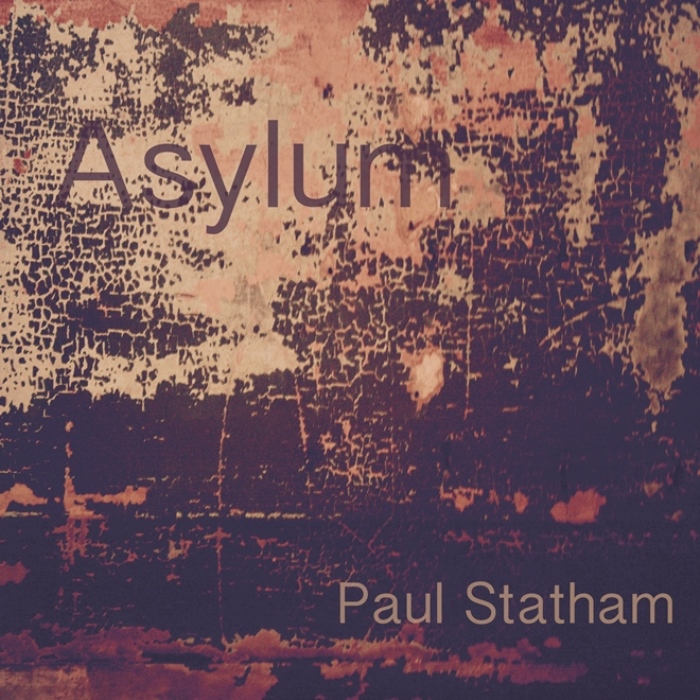
Recently the many faces of Paul Statham were realised in a start-up of his own label Loki Records and the release of an eight track album ‘Asylum’. Having been signed to Warner Chappell Publishing for over twenty years, Statham set up Loki to issue his experimental material, a phase which began with the ‘Ephemeral’ and ‘Installation Music 1’ releases.
‘Asylum’ features music from an audio visual installation created with painter Jonathan McCree, which was held in Asylum Chapel in South London’s Peckham. The opening eponymous track’s video utilises images from an Italian exhibition as well as dancers from Turkish State Contemporary Dance Company. The song itself is minimalistic and sparse, yet evolving the feelings of distress, fear, anxiety, laced with blissful oblivion and dread.
Soundtrack worthy, ‘Asylum’ is creepily delicious, and the senses are becoming to wake with the following ‘Collision’, a messier, more confused enterprise, still bearing the elements of dystopia and madness. ‘Who Won’t Wait’ continues the ambient atmosphere with the feeling of no hope, and ‘Tq347773’ brings a delicate piano, treated with a dose of electronic manipulation.
‘Rhea Moon’ introduces a steady beat and a promise of brighter days within the disjointed musicality and leads onto much heavier sounding ‘Estuary Point’. Here, the inevitable dread returns with the uncomfortable images of being shut out from the world, enclosed in a small space and being fed disturbing images for no other reason but to be broken. Was Statham going for mind control references here; Montauk experiment perhaps?
No relief comes in the form of ‘Malleki’, which utilises treated found sounds; wooden, primal, ritualistic. The strings and piano have no chance against the gritty synth. The closing ‘Ascend’ promises a glimmer of hope from the onset. Being lifted in a beam of light; lifted to the higher spiritual plains or being taken maybe.
This is the beauty of ambivalent music – anyone can imagine what they like and address the feelings a particular piece may evoke. ‘Ascend’ brings that aura of weightlessness, the divine connotations and the calmness of being, away from the “asylum”.
‘Asylum’ will appeal to the discerning customer, to the lovers of unusual synth play, GAZELLE TWIN or maybe even THE KNIFE. It’s wholesomely cinematic, marvellously ethereal and perilously addictive, if you aren’t afraid of darker auras and more intellectual sound manipulations.
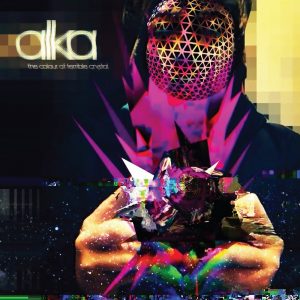
Released in the Autumn on Vince Clarke’s Very Records, ‘The Colour of Terrible Crystal’ is the third album release by ALKA.
Named after a quote from anarchist philosopher Peter Lamborn Wilson’s vast study of angels, the long player is the work of Philadelphia-based musician Bryan Michael.
While ‘The Colour of Terrible Crystal’ is musically eclectic, it differs from his other ALKA work in that a pop element is omnipresent, a quality that can perhaps be attributed to the presence of Vince Clarke who assists on co-production and programming.
This is particularly evident on the beautifully vocoder rich ‘Melancholy Lasts’ which comes over like Giorgio Moroder doing ‘Moments In Love’ as a love theme for a ‘Midnight Express’ remake. But to say this is album is pop as in ERASURE would be misleading; ‘Betablockers’ takes in some of ORBITAL’s rhythmic experimentation before ‘Over Hills And Vales’ exhibits avant minimalism in the vein of Stockhausen.
The artful ‘Collusion’ recalls Brian Eno around his ‘Another Green World’ period before the beat loops kick in, accompanied by a pleasing female vocal. Cut from the opposite end of the electronic spectrum, the stuttering backbone that accompanies the blips and blops of ‘Questlore’ is unsettling yet the track is strangely listenable, especially when it enters a melodic synth phase that is wholly unexpected.
Talking of unexpected, ‘Truncate’ goes full-on electro-funk and could be mistaken for LES RYTHMES DIGITALES. Then there’s the beautiful cinematic beauty of ‘Piece’ and the slightly more dramatic overtures of ‘Collusion’.
‘Wrong Side Up’ adds some percussive noise to the palette before the closing oddball number ‘We Are Free Forms’ does what it says on the tin with warbles of hypnotic synthbass incongruously combined with an angelic soprano.
As far as modern instrumental based albums go, ‘The Colour Of Terrible Crystal’ is much more accomplished and inventive than say ‘MG’ and successfully avoids the clichés found within predominantly wordless sub-genres like EDM and Synthwave.
We use cookies to ensure that we give you the best experience on our website. If you continue to use this site we will assume that you are happy with it.


 ‘Voodoo’


 is released as a CD by Note For Note Music on 19th January 2018
 can be best described as a younger brother to the UK’s own
 is musically eclectic, it differs from his other ALKA work in that a pop element is omnipresent, a quality that can perhaps be attributed to the presence of
Follow Us!