Tag: Paul Humphreys (Page 2 of 6)

PAUL HUMPHREYS: The OMD 40th Anniversary Interview

Paul Humphreys and Andy McCluskey were two lads from The Wirral who creatively realised their passion for European electronic music following the purchase of a Korg M500 Micro-Preset synthesizer.

Having formed a more conventional outfit called THE ID, they grew frustrated with the band format and felt they could better pursue their more experimental leanings inspired by their love of KRAFTWERK, NEU! and LA DÜSSELDORF as a duo.

Backed by a TEAC tape recorder named Winston owned by Paul Collister who became their first producer and manager, Humphreys and McCluskey played their first gig as ORCHESTRAL MANOEUVRES IN THE DARK at Liverpool’s Eric’s in Autumn 1978. Roger Eagle who ran the club liked what he heard, leading to more gigs and visits to other cities.

Eventually the single ‘Electricity’ b/w ‘Almost’ was released in June 1979 on Manchester’s Factory Records, housed in a black-on-black thermographed sleeve designed by Peter Saville illustrating the two songs as avant garde music notation. Gary Numan heard the single at his label Beggars Banquet and the rest as they say is history…

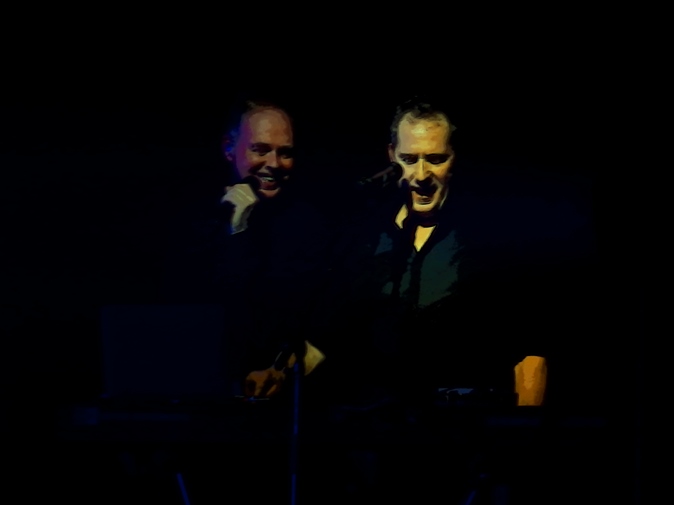
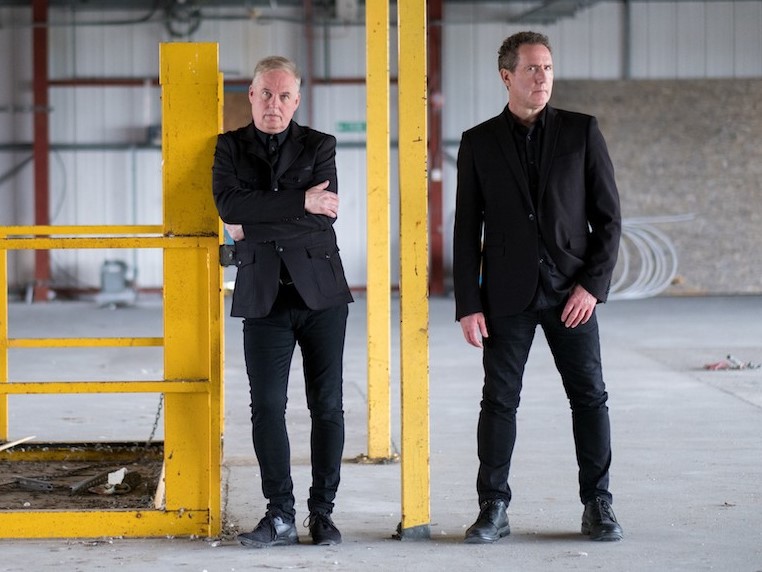
With OMD currently on a huge world tour to celebrate their 40th Anniversary, Paul Humphreys took time out to speak from California about their past, present and future…

Who’d have thought when you were recording ‘Electricity’ in Paul Collister’s garage, you’d still be doing it after 40 years!?

I still find it utterly amazing and rather fantastic that after 40 years, OMD is still alive and well, selling out big tours and making what even our harshest critics consider to be relevant new records. We’ve said this many times but we really only planned to do one concert at Eric’s club in Liverpool in 1978, as kind of a dare to each other.

So it was the series of chance meetings of important people that followed that led to an incredible series of doors opening for us that led the way to our success, probably the most important of which was Tony Wilson at Factory Records. We considered ourselves an art project, Tony saw us as pop music. Time then proved that we could actually end up being both. I remember a confused executive at Virgin Records once saying, “What exactly are you trying to be, Stockhausen or ABBA?” We said, “Can’t we be both?”

When was the moment you thought OMD might have legs, was it the Gary Numan tour, signing to Dindisc or was it much further in?

It took us a long while before we realised that OMD could actually have a future. We tried not to believe some of our friends on the Wirral who thought we were a bit crap and thought we made weird and mostly unnaccessible music, and in the back of our minds we always thought “hmmm… perhaps they are right…” to the point where after we signed a 7 album record deal, we still budgeted for failure by spending nearly all of our signing on advance money, building a modern studio in the centre of Liverpool. The deal we signed with them, gave them the right to terminate at any time, yet we couldn’t, so our rational was to at least have a recording studio as a viable business, if and when Dindisc / Virgin ripped up the contract.

I think it was when we stood on the stage at Top of the Pops for the first time, playing ‘Messages’, that we had a little inkling that maybe, just maybe, we are doing something good… but yes you mentioned Gary Numan. We love Gary and he did give us a massive opportunity to play on big stages, frighteningly big stages for 2 kids who weren’t even 20 years old!

At that time we couldn’t have dreamed that only a few years later, we would be playing the very same stages but this time as the headline act selling them out. I saw Gary only recently when he played a fantastic concert at the Royal Albert Hall, and after we had a little reminisce about what a fantastic tour that was, don’t forget that for Gary, that was his first major tour too, which went on to define him as a fantastic live artist.

It’s not like OMD has stood still. After a tentative recorded return, ‘English Electric’ in 2013 was perhaps stylistically the album that many had been waiting for since 1984, how do you look back on it all now?

It was a scary thing making a new OMD album after so much time had passed. We hit a point where we had had several years of touring since we all got back together. The touring was very successful, and it was wonderful to be touring with Andy, Martin and Mal again (and now of course with Stuart) and we really enjoyed taking picks from our career catalogue, and playing the whole of ‘Architecture & Morality’ live was so much fun.

But, after several years of this, we thought, is this it? Do we really want to just be considered a retro band just trading on our former glories? Don’t get me wrong, for some bands that’s absolutely fine and in no way am I criticising them for doing it because songs are like little time capsules and when you play them people are transported back to the time they were released and remember the people they were at that time and they people they were with, and associated feelings, events and emotions of the time. That is essentially the power of music, and we recognise this, and we really really love playing and picking songs from our big catalogue.

So why not just give new songs a try, after all moving forward and looking to the future was the band’s original remit? So, without announcement we went back into the studio to just see if we still had something relevant to say, in the voice of OMD. ‘History Of Modern’ was the album that we look back on as getting the OMD engine running again, and I think it has some really great tracks on it. It certainly was very well received by fans and critics alike.

For me, despite the fact that I think it’s a great first offering after many years, it doesn’t quite have the sonic and stylistic cohesion that ‘English Electric’ or ‘‘The Punishment of Luxury’ has, I think largely to do with the fact that the songs were selected from the ideas we’d both had collected over several years independently and we worked them up together. We did try being very modern sending ideas to each other via the internet and working independently as I live in London and Andy lives on the Wirral.

But you had a bit of a re-think?

When we realised that it really didn’t work to our satisfaction, we changed the way we worked for the following 2 albums, kind of going back to how we used to write and create in the very beginning, being in the same room at the same time throwing ideas into it and seeing what happened…

There is no replacement for that, it sounds bloody obvious really as its most creative way to interact, so now we mainly write up in Andy’s house and finish, overdub and mix in my studio in London.

‘The Punishment Of Luxury’ album maintained the standard, audiences didn’t think you could get any more electronic but you did!

Yes, ‘The Punishment Of Luxury’ was a definite return to our original roots. In deciding to play some of ‘Dazzle Ships’ at the Museum of Liverpool and the whole of ‘Dazzle Ships’ at the Royal Albert Hall, we found the preparation for them utterly fascinating.

We needed access to, and to be able to deconstruct our original recordings to retrieve all the mad radio samples and FX that were so randomly generated at the time as they couldn’t possibly be recreated, and, in listening to these old recordings in their multi-track form, we realised just how simple and how very electronic they were. It was a real ‘eye opener’ to be honest, and therefor made the remit for ‘POL’, to try to go back to a “less is more” philosophy, the discipline to be as simple and as electronic as we could make it yet also trying to sound ‘modern’…

You made good use of the Omnisphere VST on ‘Isotype’, what are your preferred creative tools these days?

We made almost the entire last 2 albums completely in the box so to speak, inside the computer with Protools using a lot of modelled analogue synths from the early days such as the Jupiter 8, Prophet 5, Virus, ARP etc, but also using new synths that have never previously existed in the physical world that provided colours and sounds that we found new and inspirational, namely the Omnisphere (great for melody sounds such as the one in ‘Isotype’) and also Waves have a great synth / sequencer called Element which we used extensively.

The problem these days is that there are so many sound possibilities that unless you’re really careful, you can get so completely lost in your choices and exhaust yourself exploring all those possibilities, you can forget the initial goal which is to write a good song! We call this ‘the tyranny of choice’. These days we find it important to reduce the choices by deciding on a sound palate, in the same way a painter decides his colour palate for a particular painting.

For ‘POL’ for instance, we decided that we should only use small electronic sounding drums and percussion, and only drew from that palate… between us Andy and I literally have a library of thousands of kick drums and thousands of snare drums, unless you reduce that into small categories, you’re completely lost.

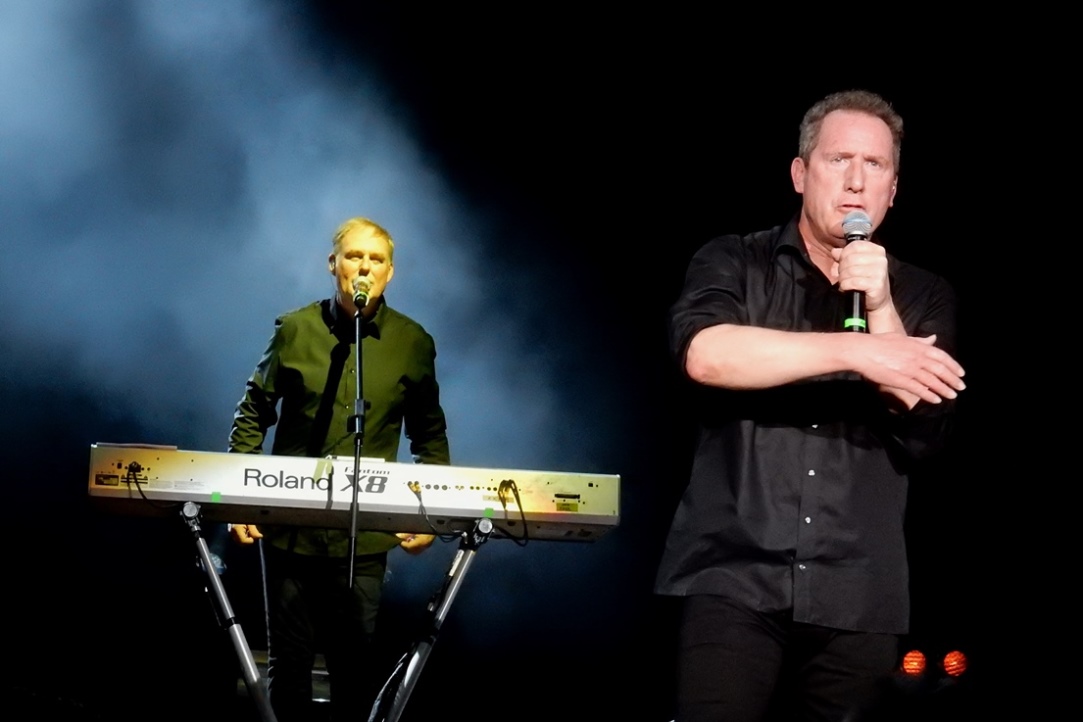
The live set-up has changed from Roland Fantoms X8s to Native Instruments Komplete Kontrol S88s, how have those been to use on tour?

Yeah, when we first got back together in 2006, Roland had a great synth / sampler out called a Fantom X8, so I sampled all of our sounds into that machine for myself and Martin to play, it took me months and months, I had to sample Mellotrons, Fairlights, organs, and sounds from all of our analogue synths we used to use.

Some of those early synths we had to find a re-buy from Ebay as we’d either lost them or they were broken beyond repair. There was a night when Andy and I were both bidding against each other on Ebay for the same synth, a Korg Micro Preset. Idiots! We could have got it for so much cheaper if we’d spoken on the phone first… DOH!

Anyway, the Fantoms got old, they started to develop problems, and Roland stopped making new ones. One day Roland called to say they had a new version of Fantom called a G8 about to come out and asked if we wanted to try it out, I said great, can you talk me through how to export all my sounds into the new machine from the old? To which they replied, oh you can’t do that, you’ll have to resample everything… yeah sure, another 3 months’ work… NOOO!

Not an option, so we kept buying Fantom X8s on Ebay to replace broken ones until THEY started to fail and finally decided to switch to a system that has built-in redundancy, the world of laptops and Native Instruments Kontakt running in MainStage. It still meant that we had to spend months importing all the sounds them into the new system, but for the last time!!! I have to confess something, we employed a tech geek to do it for us, I couldn’t face doing it again myself!! *laughs*
Have you any thoughts on these hardware synth reissues like the Korg ARP Odyssey and Korg MS20 Mini, the new Prophets or those Behringer clones? Are they something that would interest you?

I think it’s great that they are made available again, but they are not all exactly the same as the originals, most of the core engines and oscillators are different and are digitally controlled. I’m actually more interested in new hardware synths that I’ve never used. I’m gonna buy an Arturia MatrixBrute when the tour is over, it has a fascinating and versatile modulation matrix with a brilliant sequencer. I have a friend who owns one and is total love with it.

I also want to buy a Moog, the Moog One Poly looks amazing but it’s like £6k I think… ouch! Amazingly, we’ve never owned a Moog. Not sure why really, we were more drawn to Roland, Korg and Sequential Circuits synths as they seemed more suited to our needs.

While there were classic styled OMD songs on ‘The Punishment Of Luxury’ like the title track, ‘One More Time’ and ‘What Have We Done?’, there were more harder rigid numbers like ‘Robot Man’ and ‘Art Eats Art’?

As with all our albums, we like to remove ourselves from our comfort zone and explore new ways of writing songs, experimentation is our remit, and stylistic repetition can become boring, it’s very easy to fall into “Verse, Bridge, Chorus, repeat, then Middle 8, then Chorus to fade” arrangements of songs… sometimes that works fine, but I think we fell into that trap a little too much in the mid-80s. ‘Art Eats Art’, is basically a list of our favourite artists, designers etc. played over a tough electro track that’s bonkers and follows no standard arrangement format, as many of the songs on ‘‘The Punishment of Luxury’ and ‘English Electric’ do.

The 40th Anniversary ‘Souvenir’ tour is coming up, have you got a large pool of songs ready to perform depending on which territory OMD visits?

Yeah, there will be some surprises on the tour, it’s hard with so much to choose from, but we’re also limited by the amount of available time for all of us to programme and rehearse things that we’ve hardly ever or even never played before. There will be a few lovely surprises though! Can’t say anything else ?

And yes we do play a different show in other territories and that makes things a little more complicated for us. America didn’t properly accept OMD until ‘Junk Culture’ times and songs like ‘If You Leave’, ‘Dreaming’, ‘So in Love’, ‘Secret’ are really huge in the USA and there would be a riot if we didn’t play any of these, not so in Europe though.

The 2017 tour saw you bring in a pre-show online poll for fans to decide one song to perform out of a shortlisted three? How practical was that to implement as a band and will the system return?

We have no plans to do that on the next tour, it was kinda fun though and kept us on our toes every night, the crew didn’t like it much though as all the computers for stage and screen images, had to all be reordered at the very last minute!!

You personally got involved in the Abbey Road remasters of the first four OMD albums released in 2018, how did you find that experience? Did it prompt any interesting memories for you?

It was an amazing experience to work in Abbey Road doing the mastering, and it did bring back a lot of memories. It was a bit stressful though, as there have been so many different versions / mixes and edits of all the songs, choosing the right ones wasn’t an easy exercise!

What was more interesting to me was for the ‘Souvenir’ box set extras, I found 22 unreleased songs / ideas which I mixed and compiled into one album. It started by me going to the EMI archive near Heathrow, it’s a temperature controlled vault, with a giant foot thick steel door with an enormous wheel that you spin to open it, like you see in movies. All THE BEATLES tapes are in there, Bowie, Stones etc. It’s absolutely massive!

Everything OMD ever recorded is in there and I pulled out all the tapes I could find that I didn’t recognise the title for. It was difficult though as many times, we used working titles for songs that we’ve used that were changed at the last minute. I spent several days there taking tapes out and sending pictures of tape boxes to Andy for ideas and to jog each other’s memories. I ended up taking out tapes from around 1980 to 1990 period.

The problem I also had is that tapes from that era degenerate and actually you can’t actually play them now. The glue they used to put the oxide on the tapes starts to lose its stick so you have to bake the tapes in a special kiln oven to re-glue the oxide back on to the plastic tape, sounds completely mad I know, but it works!

So, I found 22 tracks, some of which are full songs and some are just experiments that were never developed, but I had great fun mixing them. I mixed them only using FX and E’s that we would have used at the period, spring reverbs, crappy delays and Eventide Harmonisers. I had so much fun doing them and there are a couple of absolute gems in there! The big take away for me in this whole exercise was to see how we used to work, pre-computers.

We basically used to lay down 5 minutes of one idea, then when we wanted a change of chord, we’d drop in the new section on different tracks, so on the desk we’d have to hand mute the first idea so they wouldn’t play together.

But of course I can’t remember where to mute things now as I barely even remember the songs themselves, never mind what our vision was at the time, so I was left with a giant puzzle working out what tracks have to be on or off at certain points of the song… it was great fun, I hope you enjoy it…

In 2015, OMD did series of gigs featuring ‘Dazzle Ships’ and ‘Architecture & Moraility’. As 2020 is the actual 40th Anniversary of the ‘Orchestral Manoeuvres In The Dark’ and ‘Organisation’ albums, are there any plans to do a similar type of special showcase?

I’m not so sure if we’ll play those albums in their entirely again, but we do have some future ‘specials’ planned and one is actually booked… That’s all I can say at this stage…

Would you consider trying to write a new song around the limited functions of the Korg Micro-Preset as a kind of “four decades on” experiment?

That would be an interesting experiment. Although the Micro-Preset was a totally limited synth and actually sounded pretty shit until you put the original signal through a long chain of FX processors, then it became an interesting synth. I think we may have already exhausted every possible sound that synth can ever make though!


ELECTRICITYCLUB.CO.UK gives its warmest thanks to Paul Humphreys

The ‘Souvenir’ 5CD + 2DVD deluxe boxed set is released on 4th October 2019 by Universal Music

OMD Souvenir 40th Anniversary 2019 – 2020 European + UK Tour, dates include:

Lisbon Aula Magna (15th October), Porto Casa da Musica (16th October), Madrid Riviera (19th October), Barcelona Apolo (21st October), Belfast Ulster Hall (23rd October), Dublin Olympia (24th October), Nottingham Royal Concert Hall (26th October), York Barbican (27th October), Hull Arena (28th October), Gateshead Sage (30th October), Glasgow Royal Concert Hall (31st October), Manchester Apollo (1st November), Sheffield City Hall (3rd November), Liverpool Empire (4th November), Birmingham Symphony Hall (5th November), Leicester De Montford Hall (7th November), Bath Pavilion (8th November), Oxford New Theatre (9th November), Guildford G Live (11th November), Portsmouth Guildhall (12th November), Watford Colosseum (13th November), Cambridge Corn Exchange (15th November), Ipswich Regent (16th November), Bexhill De La Warr Pavilion (17th November), Bournemouth Pavilion (19th November), London Hammersmith Apollo (20th November), Rostock Stadthalle (25th November), Dresden Kulturpalast (26th November), Leipzig Haus Auensee (28th November), Berlin Tempodrom (29th November), Hamburg Grosse Freiheit 36 (30th November), Berlin Tempodrom (2nd December), Stuttgart Leiderhalle (3rd December), Düsseldorf Mitsubishi Electric-Halle (5th December), Frankfurt Jahrhunderthalle (6th December), Krakow Studio (3rd February), Warsaw Progresja (4th February), Oslo Rockefeller Musichall (7th February), Stockholm Berns (9th February), Malmo KB (10th February), Copenhagen Vega (12th February), Brussels Ancienne Belgique (14th February), Utrecht Tivoli (15th February), Paris La Cigale (16th February)

http://www.omd.uk.com/

https://www.facebook.com/omdofficial/

https://twitter.com/OfficialOMD

https://www.instagram.com/omdhq/


Text and Interview by Chi Ming Lai
14th August 2019
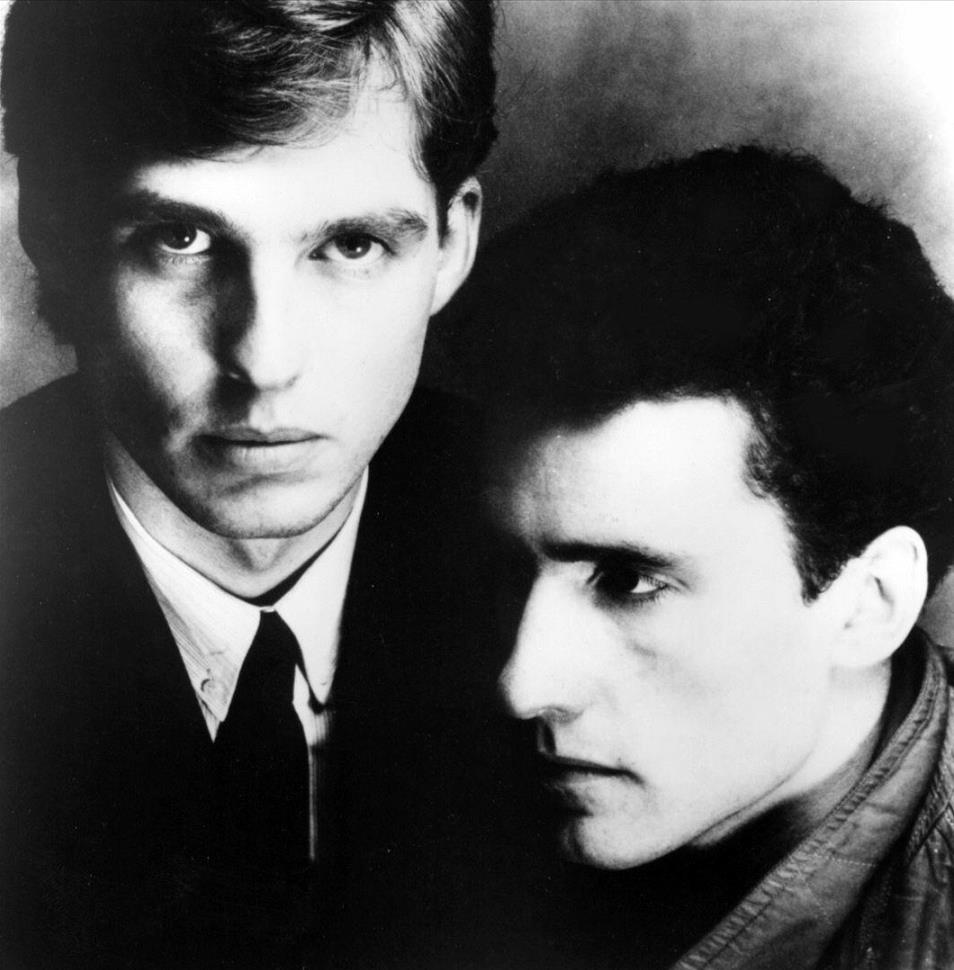
2nd Thought: The Legacy of OMD

Photo by Eric Watson

It all began with a KRAFTWERK-influenced ditty warning about environmental catastrophe, one that has become poignant again in the 21st Century…

“I became friends with Wolfgang Flür and Karl Bartos in the 90s, and was invited to Wolfgang’s flat for dinner” said Andy McCluskey at the Electri_City_Conference in 2015, “on the wall was a gold record for ‘Radio-Activity’ which was a hit single in France. I was telling them that ‘Radio-Activity’ was the song that most influenced OMD and told them ‘Electricity’ was just an English punk version of ‘Radio-Activity’. They replied ‘Yes, we know!’… it was that obvious!”

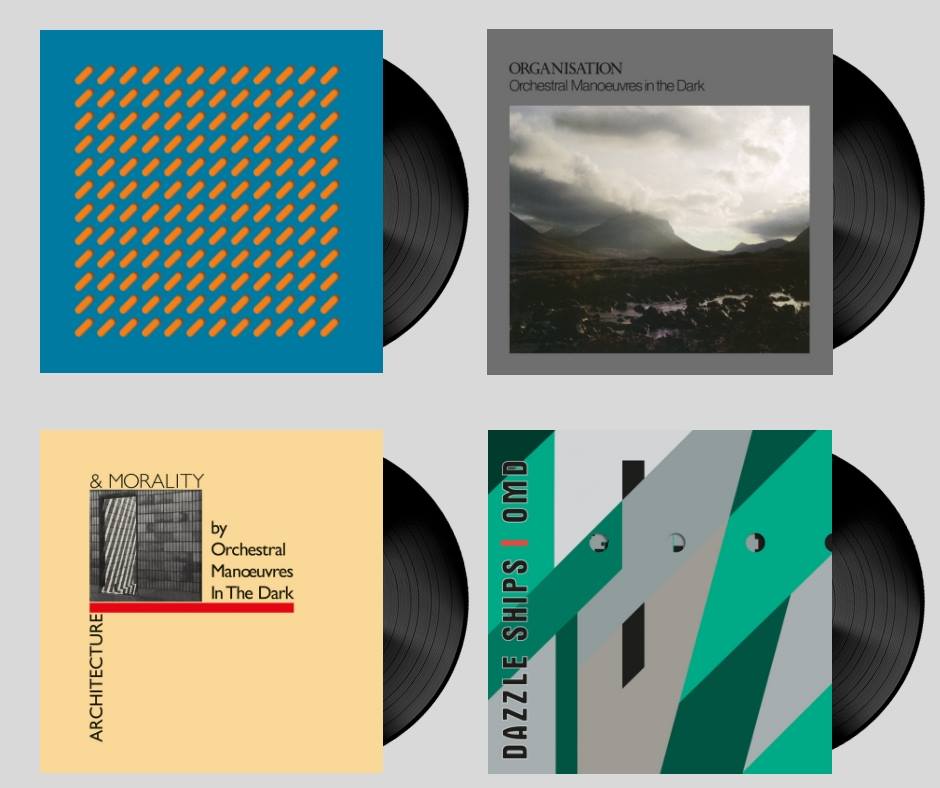
In an accolade already accorded to JAPAN, SIMPLE MINDS, ABBA and THE POLICE, OMD’s first four landmark long players ‘Orchestral Manoeuvres In The Dark’, ‘Organisation’, ‘Architecture & Morality’ and ‘Dazzle Ships’ are being reissued as Half Speed Abbey Road vinyl remasters. Packaged in reproductions of their original Peter Saville designed sleeves complete with die-cuts where appropriate, these releases from Universal Music reaffirm OMD’s often forgotten role as premier electronic pop pioneers.

Originally released in February 1980 on the Factory Records inspired Virgin subsidiary Dindisc Records, ‘Orchestral Manoeuvres In The Dark’ was a promising debut album from Andy McCluskey and Paul Humphreys, two lads from The Wirral who had finally been able realise their passion for electronic music following the purchase of a Korg M500 Micro-Preset synthesizer paid for in instalments via a mail order catalogue.

Featuring their third released version of ‘Electricity’, the album also included their chanty commentary on the mechanics of war entitled ‘Bunker Soldiers’. Away from these energetic post-punk synth numbers, on the other side of the coin were ‘Almost’ and ‘The Messerschmitt Twins’, two emotive synth ballads that were equal to KRAFTWERK’s ‘Neon Lights’. However, their naivety was exposed by the inclusion of the quirky instrumental ‘Dancing’ which OMD even dared to play live during their BBC TV debut on ‘Old Grey Whistle Test’!

Even early on in their career, OMD’s concerns about the music industry machine were looming in ‘Julia’s Song’ and ‘Pretending To See The Future’; the latter was outstripped a few months later by a John Peel session version which formed the basis of the full live band rendition when McCluskey and Humphreys retired Winston, their TEAC A3340S tape recorder which had accompanied them on their breakthrough tour opening for Gary Numan in Autumn 1979.

OMD’s debut now comes over like a time capsule; ‘Red Frame / White Light’, a lightweight synthpop tune celebrating the 632 3003 phone box that acted as the band’s office captured an era before mobiles and the internet, while in honour of good old fashioned love letter writing, ‘Messages’ was at this point just a song with potential as a single.

Indeed, it was only when ‘Messages’ was re-recorded, produced by Mike Howlett with Malcolm Holmes adding drums, that led to a No13 hit in June 1980 and ultimately the ‘Organisation’ album which came out in October 1980. More gothic in nature, the album began misleadingly with the melodic Motorik lattice that was ‘Enola Gay’.

With its iconic Roland CR78 Compurhythm pattern and wordplay referring to the horrific bombing of Hiroshima by the Boeing B29 Superfortress flown by Colonel Paul Tibbets named after his mother, ‘Enola Gay’ was a clever observational statement about the first ever operational use of nuclear weapons. Massively popular in France and Italy, it also reached No8 in the UK singles chart.

But alongside ‘Enola Gay’ on this much more mature long player, there was also the hypnotic beauty of the often under rated ‘2nd Thought’ and ‘Statues’, the brooding Ian Curtis tribute which was built around an Elgam Symphony organ’s auto-accompaniment. With the purchase of a Sequential Circuits Prophet 5, Humphreys began exploring. Often using brassy tones set slightly out of tune for some haunting overtones, it made its presence felt on tracks like ‘The Misunderstanding’ and ‘Stanlow’.

As with the debut, there were a few missteps like the JOY DIVISION aping cover of ‘The More I See You’ which was different if nothing else, while the SPARKS inspired ‘Motion & Heart’ would be improved as a reworked ‘Amazon Version’ for an abandoned follow-up 45 to ‘Enola Gay’.

With two albums released in nine months, their first Top 10 hit and the biggest record sales of 1980 in the Virgin Records group, a triumphant concert at Hammersmith Odeon that December which concluded with an unexpected massed stage invasion, ended a brilliant year for OMD. But McCluskey and Humphreys could not have foreseen that 1981 would see them get even bigger.

Although Mike Howlett worked on the ethereal tape choir centred ‘Souvenir’, which was co-written by live keyboardist Martin Cooper and became OMD’s first Top 3 in September 1981, scheduling issues meant Humphreys and McCluskey self-produced what would become ‘Architecture & Morality’ with engineer Richard Manwaring, released in November 1981.

Featuring two spirited songs about ‘Joan Of Arc’, these were to become another pair of UK Top 5 hits with the ‘Maid of Orleans’ variant also becoming 1982’s biggest selling single in West Germany when Der Bundesrepublik was the biggest Western music market after the USA and Japan.

The big booming ambience of the ‘Architecture & Morality’ album next to big blocks of Mellotron choir gave OMD their masterpiece, tinged more with the spectre of LA DÜSSELDORF rather than KRAFTWERK. “People always talk to us about KRAFTWERK, and obviously, they were hugely important” said McCluskey, “But there was another element from Düsseldorf that influenced us, and that was the organic side which was firstly NEU! and then LA DÜSSELDORF and Michael Rother’s solo records.”

The Eno-esque percussive six string thrash of ‘The New Stone Age’, the bouncy but moody ‘Georgia’ and the guitar assisted choral beauty of ‘The Beginning & The End’ demonstrated OMD’s musical ambition. Meanwhile, the ringing theme of PINK FLOYD’s ‘Time’ was borrowed for the instrumental title track and the epic overtures of the almost wordless ‘Sealand’ also confirmed Humphreys’ affinity with progressive rock.

Malcolm Holmes was in his element on ‘Architecture & Morality’, thumping stark percussive colours while syncopating off various rhythm machines. “The majority of the drum programming would always be done by Andy or Paul” he said, “My part would be to lay down on that… My favourite period of OMD musically was ‘Architecture & Morality’ because of my involvement and how creative I was being at the time, using the kit differently.”

”I think ‘Architecture & Morality’ was a complete album, it was just so whole” said Paul Humphreys in 2010, “The sound of it was unique, every song… it wasn’t a ‘bitty’ album. A few of our albums are ‘bitty’ but that was where we finally found a sound that was OMD. I think the first two albums were leading to ‘Architecture & Morality’. We were refining our sound and then we found it.”

Meanwhile in ‘She’s Leaving’, there was a big fourth hit single in-waiting from the album characterised by its sweet melodies, forlorn vocals and crunchy electronic percussion; “We got hold of some Pearl syndrums and we were all messing around in the control room with little white noises and stuff like that” Holmes remembered. But thanks to McCluskey’s belligerence in vetoing its UK single release, that hit never happened, something he would later regret as Top 5 hit singles were to become less automatic a year later as OMD hit something of an existential crisis. One thing successful bands should never do is stray off their vision.

But OMD listened to criticisms that their cryptic songs about inanimate objects and deceased historical figures had no relevance in fighting political injustices; of course this view was coming from journalists on a mission, who were rather hypocritically living off expense accounts and sipping cocktails in fancy hotels!

With their label Dindisc also folding, OMD were absorbed into the main Virgin Records group. A little bit lost, McCluskey and Humphreys returned to the experimental bedroom ethos of their pre-fame VCL XI days and “got angry” with Emulators and a Sony short wave radio; the disillusionment led to the ambitious if flawed ‘Dazzle Ships’ released in March 1983.

A fractured statement on the state of the world with a conceptual approach not dissimilar to KRAFTWERK’s ‘Radio-Activity’, it was characterised by short abstract pieces which over time have mostly proved to have worked. Ironically, one that didn’t work was ‘Time Zones’, a snapshot of the world through telecommunications which outstayed its welcome by at least half a minute.

Although ‘ABC Auto-Industry’ was an amusing novelty piece that needed some accompanying performance art for it to really make sense, the sample heavy ‘Dazzle Ships (Parts II, III & VII)’ captured the tension of an underwater battle while ‘Radio Prague’ symbolised the spectre of The Cold War, a theme that would be explored within a Germanic pop context, crossing NEU! with KRAFTWERK on the magnificent ‘Radio Waves’.

Utilising a similar manic pace, ‘Genetic Engineering’ possessed a fistful of energy and a typewriter in a combination that was first heard on ENO’s ‘China My China’, while ‘Telegraph’ was a far more vicious if metaphoric attack on TV evangelism and religious cults than ‘Blasphemous Rumours’ by DEPECHE MODE ever was…

Salvaged from earlier B-sides, ‘The Romance Of The Telescope’ and ‘Of All The Things We Made’ highlighted the shortfall in material but their inclusion was justified by their serene quality, but they were significantly not the best tracks on ‘Dazzle Ships’. Echoing the bassline movements of JOY DIVISION’s ‘Atmosphere’ and laced with mournful Emulator strings, the solemn but beautiful ‘Silent Running’ offered a perfect metaphor for misguided neutrality.

Most harrowing though was the news report about “a young girl from Nicaragua whose hands had been cut off at the wrists by the former Somoza guards…” that began the waltz-driven ‘International’ with McCluskey’s anger about economic corruption, political hypocrisy and torture in captivity still sadly relevant today.

Although savaged by critics on its initial release and ultimately resetting the course of OMD, this nautical adventure has now been reassessed by many as a lost work of genius. It’s not quite that, but it is certainly a much better album than it was originally perceived to be. Their Dindisc Records boss Carol Wilson said that McCluskey and Humphreys “didn’t know whether they wanted to be JOY DIVISION or ABBA!”, summing up their awkward but ultimately rewarding musical ethos.

However, after the commercial failure of ‘Dazzle Ships’, OMD headed to the Caribbean and then Hollywood which brought them American singular success with ‘If You Leave’ before imploding after a US tour opening for DEPECHE MODE in 1988.

And while McCluskey maintained sporadic success with the OMD brand following 1991 hits with ‘Sailing On The Seven Seas’ and ‘Pandora’s Box’ from the ‘Sugar Tax’ album, it would take a reunion with Humphreys and 2013’s ‘English Electric’ to deliver a body of work that was equal to this wonderful quartet of albums.

With regards OMD’s continuing appeal today, Mal Holmes said “The reason why we’re here is because the first three albums were f***ing great”, although he could be forgiven for not being a total fan of ‘Dazzle Ships’ having only played on three of its tracks! Despite artists as varied as Vince Clarke, Steve Hillage, Moby, Darren Hayes and James Murphy all publically expressing their admiration for OMD over the years and synth riffs from these four classic albums being appropriated by acts as diverse as INXS, LEFTFIELD, LADYTRON and MARINA & THE DIAMONDS, some commentators have complained they could not be taken as seriously as say DEPECHE MODE, because they were not dark enough.

The death of over 100,000 people by nuclear attack and the brutal execution of a teenage girl can hardly be considered lightweight; now there are not many artists that can claim to have had worldwide hit singles about those very topics!

OMD’s ultimate legacy was to successfully combine warm catchy synth melodies and infectious technologically framed rhythms with harsh subject matter in a manner that worked on many levels. Beyond any standard pop convention, this was something that was and still is quite unique.


‘Orchestral Manoeuvres In The Dark’, ‘Organisation’, ‘Architecture & Morality’ and ‘Dazzle Ships’ are released as Half Speed Abbey Road vinyl remasters by Universal Music on 2nd November 2018

http://www.omd.uk.com/

https://www.facebook.com/omdofficial/

https://twitter.com/OfficialOMD

https://www.instagram.com/omdhq/


Text by Chi Ming Lai
17th September 2018

OMD What Have We Done


In a strong year for albums, OMD have released one of the best of 2017 in ‘The Punishment Of Luxury’ and the campaign continues with a new single and video for one of its highlights ‘What Have We Done’.

With a Synthanorma sequence that retains the essence of their KRAFTWERK inspired roots, ‘What Have We Done’ features Paul Humphreys on lead vocals. The life, love and loss lyrics for this waltzing lament came to him after having to put his dog Patsy to sleep.

However, this slice of passionate Modernen Industrielle Volksmusik could also act as symbolism for the end of any relationship, whether political or personal, and coupled to a beautifully sparkling melody recalling Ryuichi Sakamoto’s ‘Merry Christmas Mr Lawrence’, the song has deservedly become a live favourite on OMD’s current tour in support of ‘‘The Punishment Of Luxury’.

The observational video itself has a circle of life narrative that also recalls the ‘Powers Of Ten’ films directed by Charles and Ray Eames, where scenes are expanded out from the Earth.

Heading into their 40th anniversary as a performing unit when they played at Liverpool’s Eric’s in the Autumn of 1978 accompanied by Winston the tape recorder, the breadth of musicality, technological curiosity and lyrical wordplay of OMD is as strong as ever.

It’s a big lesson to those contemporaries of theirs, whose recent albums have not been particularly good, as to what spirit actually is…


‘What Have We Done’ is taken from ‘The Punishment Of Luxury’ released by 100% Records, ”The Punishment of Luxury: B Sides & Bonus Material’ featuring previously vinyl only tracks such as ‘Ha Ha Ha’ and ‘Lampe Licht’ plus extended mixes will be released as a CD on 15th December 2017
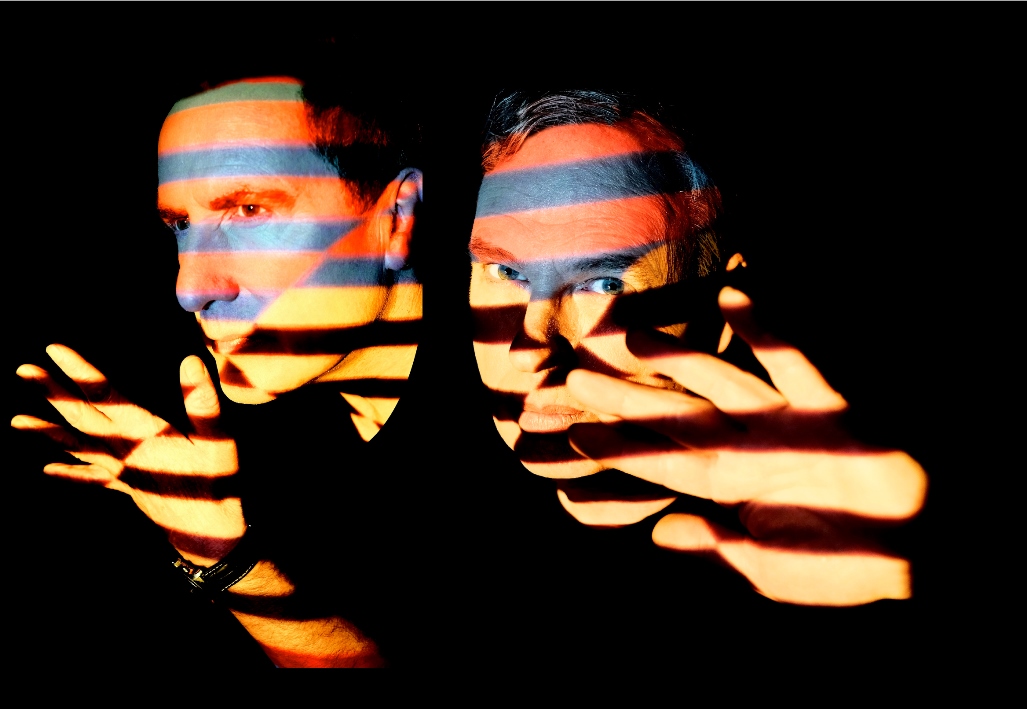
OMD’s ‘The Punishment Of Luxury’ 2017 UK tour with opening act TINY MAGNETIC PETS includes:

Bexhill Del La Warr Pavilion (15th November), Manchester Academy (17th November), York Barbican (18th November), Glasgow Royal Concert Hall (19th November), Birmingham Symphony Hall (21st November), Gateshead Sage (22nd November)

2017 European dates with opening act HOLYGRAM include:

Erfut Traum Hits Festival (25th November), Hamburg Grosse Freiheit (26th November), Berlin Huxleys (28th November), Leipzig Haus Auenesse (29th November), Munich Tonhalle (30th November), Offenbach Stadthalle (2nd December), Düsseldorf Mitsubishi Electric Hall (3rd December), Tilburg 013 (5th December), Antwerp De Roma (6th December), Lausanne Les Docks (8th December)

2018 two man shows featuring Andy McCluskey and Paul Humphreys only include:

Stockholm Vasateatern (5th February), Gothenburg Pustervik (6th February), Oslo Rockefeller (7th February), Copenhagen DR Studie 2 (9th February), Warsaw Progresja (11th February), Paris Bataclan (12th February), Barcelona Razzmatazz (14th February), Madrid La Riviera (15th February),
Lisbon Aula Magna (16th February), Isle of Man Douglas Villa Marina Hall (20th February)

http://www.omd.uk.com/

https://www.facebook.com/omdofficial/

https://twitter.com/OfficialOMD


Text and Photo by Chi Ming Lai
7th November 2017, updated 15th November 2017

OMD The Punishment Of Luxury

With ‘English Electric’ in 2013, OMD produced their finest album in thirty years with founder members Andy McCluskey and Paul Humphreys successfully playing to their strengths.

Utilising McCluskey’s conceptual overview and cryptic lyricism covered in metaphor, coupled to Humphreys’ musical direction and melodic magic, the end result was a work of art to savour with songs like ‘Metroland’ and ‘Kissing The Machine’ fully exploiting their Synth-Werk seeds. Meanwhile, ‘Dresden’ and ‘Stay With Me’ were fine examples of their respective individual palettes adapted for the greater good of the band.

And this was without the magnificence of ‘Our System’, the pastel synthpop of ‘Night Café’ and the passionate glory of ‘Helen Of Troy’. ‘The Punishment Of Luxury’ is OMD’s thirteenth long player and could be considered a natural progression from ‘English Electric’. The album takes its name from an 1891 painting by Giovanni Segantini.

The long player begins with the title track and a mighty electro rhythm section enhanced by a bright infectious melody, robot harmonies and incessant chants. Reflecting on the dilemma of first world problems and its incumbent joyless hedonism, it’s a fabulous opener that captures elements of KRAFTWERK, THE ART OF NOISE and THE PRODIGY.

Using more treated vocals and Vox Humana voice generators, ‘Isotype’ is a blip fest that embraces glitch and techno, with wild siren sounds fluctuating to provide a human counterpoint to their synthesised derivation. A commentary on how society has been going backwards in its communication via emojis, the inspiration comes from the international picture language conceived in 1924.

So far so good with the concepts and the tunes, but two tracks which spring a major surprise are ‘Robot Man’ and ‘Art Eats Art’. Both are fine examples of modern robotic pop which will delight fans of OMD’s more directly electronic work, but perhaps will dismay those hoping for sax solos and an update of ‘If You Leave’.

‘Robot Man’ starts as a tone poem before a huge machine rhythm emerges to shape an electro-funk rumble like a slowed down ‘Warm Leatherette’ reimagined by PRINCE… but then, there’s also more than a resemblance to ‘Fembot’ by ROBYN!

Much weirder, ‘Art Eats Art’ bubbles to a metronomic dance tempo with a chorus of vocoders over an aggressive octave shift. Recalling the work of former Kling Klang incumbent Karl Bartos, despite all the strange noises, this is frantic technopop offset by pretty melodies and shopping list lyrics. But it’s not like how OMD have sounded before, yet it is still retains the essence of their roots.

Taking a Synthanorma sequence set to a 6/8 rhythm and a melody inspired by ‘Forbidden Colours’, ‘What Have We Done’ sees a confident vocal from Paul Humphreys on some passionate Modernen Industrielle Volksmusik that could be seen as a passing observation on the current political climate.

A slow pulsing sequence and real bass guitar combine to form the interlude that is ‘Precision & Decay’, which “from luxury to landfill”, reflects on the disposable nature of the modern world and concludes “there is no such thing as labour saving machinery”.

‘As We Open, So We Close’ is an oddball experience to start with, as glitchy buzzes attach themselves to a disjointed rhythm of claps and backward kicks before everything grows into something more melodic, with a superlative vocal ring to “take me to your fragile place”.

Compared to the some of the other tracks on ‘The Punishment Of Luxury’, ‘Kiss Kiss Kiss Bang Bang Bang’ is almost conventional, but as this is OMD, there’s a twist! Like KRAFTWERK meeting Johan Strauss, the beautiful melodic vibes are interrupted by McCluskey’s scathing expletive laden attacks on Uncle Sam, Mao Tse Tung, Dr Spock and the current political climate; it’s a beautiful electronic lullaby that is a thematic successor to ‘International’.

The excellent ‘One More Time’ is a classic bittersweet OMD stomper, where “everything you gave me didn’t last”. Using electronic percussion as opposed to drum machines, the enticing verse and uplifting bridge are set to a plethora of gorgeous textures and distorted synth just to weird things out. While McCluskey announces “you can break my heart just one more time”, the star again is Humphreys with his crystalline synth sounds laced with portamento bounce.

The thought-provoking intermission of ‘La Mitrailleuse’ is a “grapeshot” collage with militaristic gunshots forming the rhythm track. The unsettling mantra of “bend your body to the will of the machine!” is inversed by a falsettoed cry from McCluskey. A mid-19th Century volley gun, the fact that a Mitrailleuse was difficult to manage, as well as being highly inaccurate, makes this a fine slice of clever social-political commentary.

On the final straight, ‘Ghost Star’ with its wildlife ambience and dramatic VANGELIS-like intro is a sub-six minute number that could be ‘Stanlow’ for the 24th Century. Lovely emotive synthphonic sweeps provide a pretty electronic cascade that is epically European with no pandering to the Yankee Dollar. Meanwhile, the almost nursery rhyme feel of ‘The View From Here’ is elegiac, with orchestrations and even some guitar sounds.

Mature and reflective with a spirited vocal from McCluskey, this is a classic OMD sad ballad in the vein of ‘All That Glittters’. However, these two closing numbers do not sit as easily with the frenetic statements on the majority of ‘The Punishment of Luxury’. So for that reason, although the album IS strides ahead of ‘History Of Modern’ from 2010, it is maybe not quite as complete as ‘English Electric’ was.

But swathed in detuned synths and attached to a rigid percussive lattice, ‘The Punishment Of Luxury’ is an excellent OMD record with Germany still calling. The solos of Paul Humphreys are certainly something to savour while Andy McCluskey possibly delivers some of his best vocals, as the pair continue to push boundaries with their experimental but tuneful approach.

Compare that to the last three frankly dire DEPECHE MODE albums and OMD now take a two goal lead. Unlike the Basildon mob’s feeble fourteenth album, ‘The Punishment of Luxury’ actually HAS spirit and a sense of adventure, as well as a clever metaphoric narrative reflecting on issues that affect the human condition.

Nearly forty years on, OMD’s breadth of musicality, technological curiosity and lyrical wordplay is still something to be admired and lauded.


‘The Punishment Of Luxury’ is released by White Noise Ltd on 1st September 2017 in CD, CD+DVD, yellow vinyl LP, standard vinyl LP, cassette, digital and super-deluxe book formats from https://omd.pmstores.co/

OMD’s ‘The Punishment Of Luxury’ 2017 tour, Ireland + UK dates with special guests TINY MAGNETIC PETS include:

Dublin Vicar Street (23rd October), Belfast Mandela Hall (24th October), Liverpool Empire (29th October), Bristol Colston Hall (30th October) , Southend Cliffs Pavillion (1st November), Ipswich Regent (2nd November), Cambridge Corn Exchange (3rd November), Leicester De Montfort Hall (5th November), Nottingham Royal Concert Hall (6th November), Sheffield City Hall (7th November), Reading Hexagon (9th November), Southampton Guild Hall (10th November), Guildford G Live (11th November), London Roundhouse (13th November), Bexhill Del La Warr Pavillion (15th November), Manchester Academy (17th November), York Barbican (18th November), Glasgow Royal Concert Hall (19th November), Birmingham Symphony Hall (21st November), Gateshead Sage (22nd November)

European dates with special guests HOLYGRAM include:

Erfut Traum Hits Festival (25th November), Hamburg Grosse Freiheit (26th November), Berlin Huxleys (28th November), Leipzig Haus Auenesse (29th November), Munich Tonhalle (30th November), Offenbach Stadthalle (2nd December), Düsseldorf Mitsubishi Electric Hall (3rd December), Tilburg 013 (5th December), Antwerp De Roma (6th December), Lausanne Les Docks (8th December)

http://www.omd.uk.com/

https://www.facebook.com/omdofficial/

https://twitter.com/OfficialOMD


Text by Chi Ming Lai
30th August 2017, updated 29th August 2018

BACK TO THE PHUTURE: QUESTION MARK at The Union Club


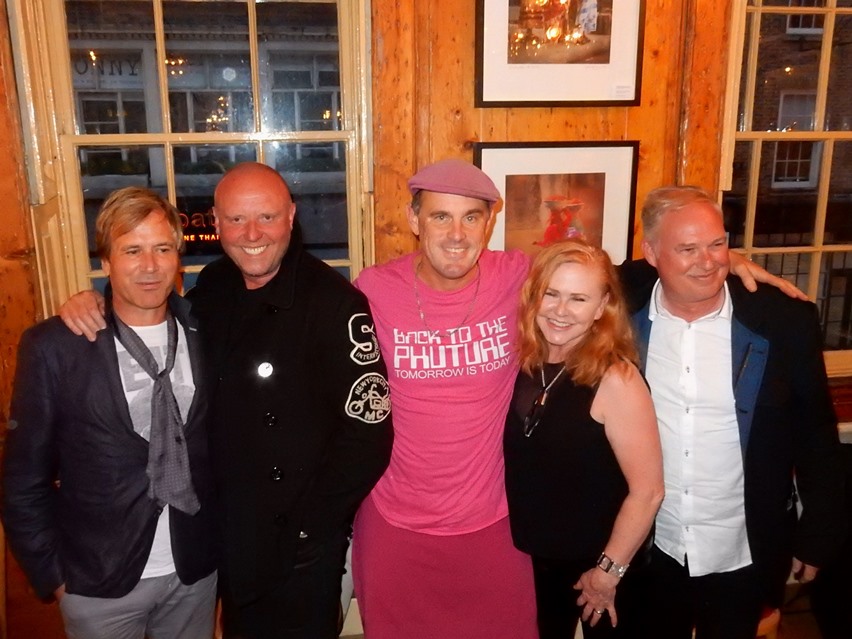
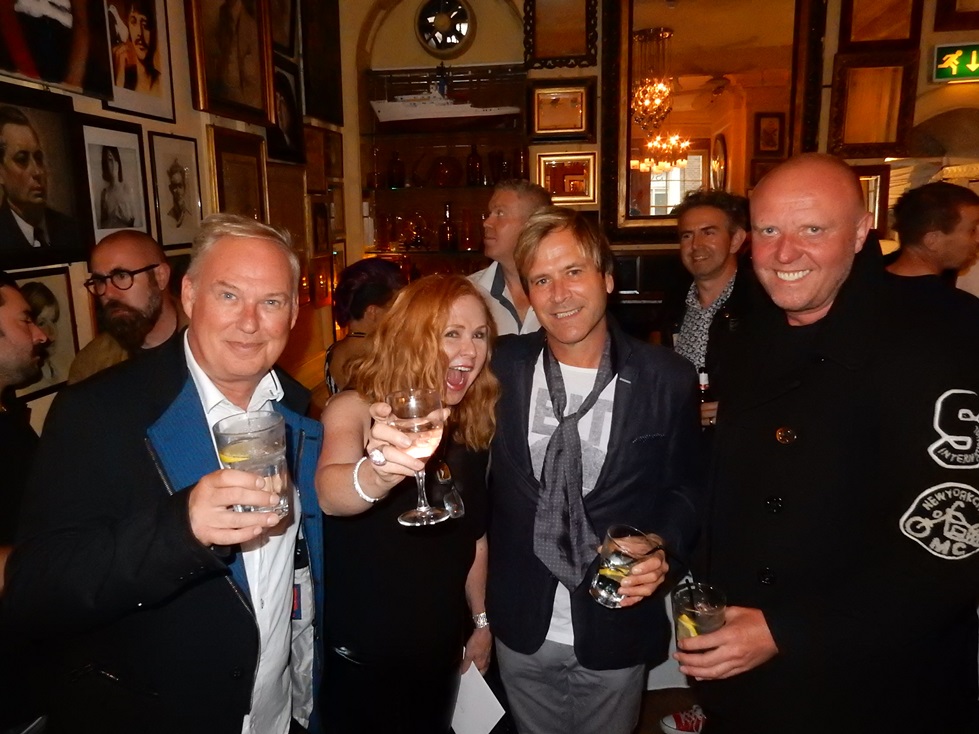
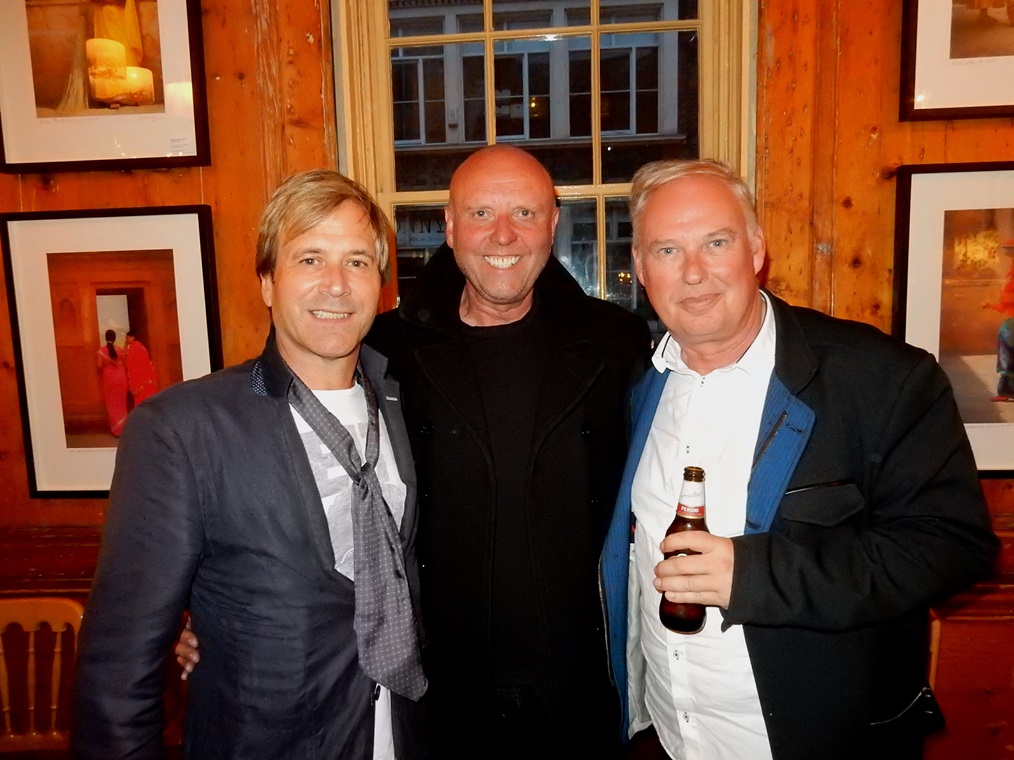
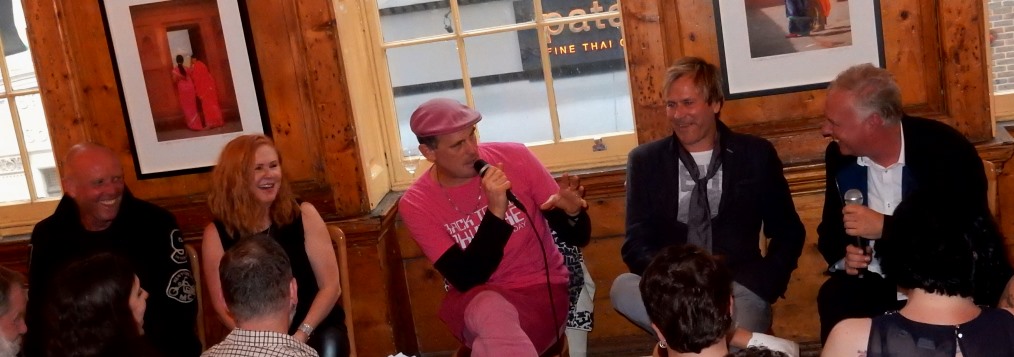
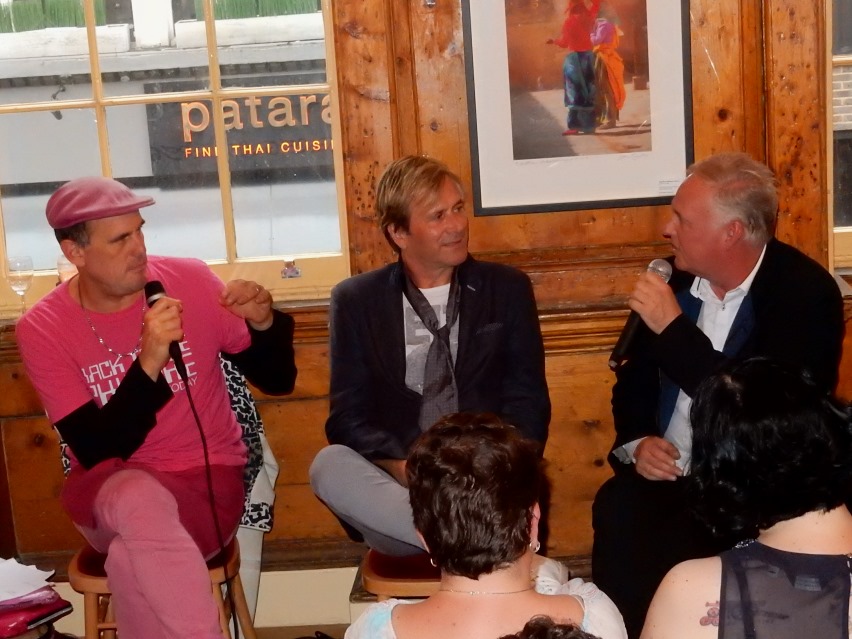
The Union Club in Soho was the location of ‘Question Mark’, a panel discussion hosted by Wall Of Sound and Back To the Phuture’s Mark Jones.

The four guests gathered for the fascinating and extremely good humoured chat about their experiences in the music business were OMD’s Paul Humphreys, HEAVEN 17’s Glenn Gregory, Steve Norman from SPANDAU BALLET and T’PAU vocalist Carol Decker.

A series that has been going for several years, Mark Jones announced this was to be the last free session to which Carol Decker amusingly quipped “Will I have to pay to talk about myself?”

To begin proceedings, Jones asked the quartet about their first record purchases; Carol Decker remembered it was Michael Jackson’s first solo album while for Paul Humphreys, it was ‘Make Me Smile (Come Up & See Me)’ by Steve Harley and Glenn Gregory had ‘Can The Can’ by Suzi Quatro. However, both Humphreys and Gregory agreed that the turning point for them was hearing ‘Autobahn’ by KRAFTWERK in 1975.

When asked about their first instruments, Humphreys confessed that as an “electronics geek”, he built his own sound making device because he initially could not afford to buy a synth. Gregory had an acoustic guitar which he promptly broke while Decker admitted that although she knew her chords and notes, she couldn’t really play the piano very well.

But it was Norman that had the most impressive CV; starting as a drummer before moving to guitar having been influenced listening to Hank Marvin, he then recorded the sax solo on ‘True’ just six months after first taking lessons. All four guests and the host also discussed their adventures in the murky world of synthesizers. When Jones told of how his mother bought him a Yamaha CS01 from the Grattans catalogue, Norman recalled how SPANDAU BALLET used a Yamaha CS10 on ‘To Cut A Long Story Short’ during the Islington quintet’s initial dalliances in synthpop.

Perhaps surprisingly, the more AOR inclined T’PAU did their demos using a synth and its built-in sequencer with Decker telling how she and writing partner Ron Rogers had written their breakthrough hit ‘Heart & Soul’ entirely around a bass synth sequence which ended up in the final mix.

Of course, Humphreys’ and Gregory’s histories with OMD and HEAVEN 17 respectively are well documented. But both found they had to constantly defend their art against those who didn’t consider the use of synthesizers as “real music”.

When questions were opened out to the audience, ELECTRICITYCLUB.CO.UK took the opportunity to remind the pair that the Musicians Union tabled a motion in May 1982 to ban synthesizers from recording and live performance. Having already shared how in the pursuit of a more electronic dominated sound, his first serious band THE ID shrunk from eight members to two in order become OMD, Humphreys gleefully told the story of how the MU kept giving him and Andy McCluskey a hard time over using a tape recorder so mischievously, the Wirral duo “put ‘Keep Music Live’ stickers on the tape reels!”.

Meanwhile when HEAVEN 17 performed on ‘Top Of the Pops’ for the first time in 1981 with ‘Play To Win’, Gregory told of how the heavily unionised show, where MU membership was compulsory, refused to let Martyn Ware and Ian Craig Marsh perform behind synths, insisting that they used a guitar and glockenspiel instead!!

But remembering how T’PAU had used a Fairlight for their orchestral arrangements, Decker expressed that “it did prick my conscience” that she might be putting musicians out of work, with the technology having advanced to such a degree that for the untrained ear, it was difficult to tell the difference. Steve Norman also had a vivid technology nightmare when while using Yamaha WX7 MIDI wind controller connected to a DX7 live, it suddenly changed settings in the middle of a moody solo under the heat of stage lights!

When asked about new music, Gregory admitted he listened to very little. However, recollecting his own experience of how GARY NUMAN looked after OMD when the young duo opened for the electronic pioneer in 1979, Humphreys said OMD tried to help young bands where possible with no buy-on fee for support slots, citing the much-missed pop noir combo MIRRORS as one of the best acts in recent years.

This drew the discussion onto how safe and unadventurous the major record labels had become in recent years with their lack of vision towards artist development, in their quest to protect their dwindling revenue streams.

On the subject of music formats, Humphreys said he still very much believed in the artistic statement of the album and how you could not skip tracks on vinyl, so the less immediate tracks had to be absorbed and accepted in order for the work to grow. Meanwhile, Norman felt the EP was the platform of the future, as a new artist could offer less but more frequently, in order to engage an audience.

While Humphreys still embraced vinyl and CD, he confirmed he was very much against using Spotify, not just due of the poor royalty rates paid to artists but as he also revealed, the major record companies hold shares in the Swedish based concern… so no conflicts of interest there!

Meanwhile Decker loved the convenience of listening to music digitally while expressing a slight, and not unshared, bemusement at the vinyl revival.

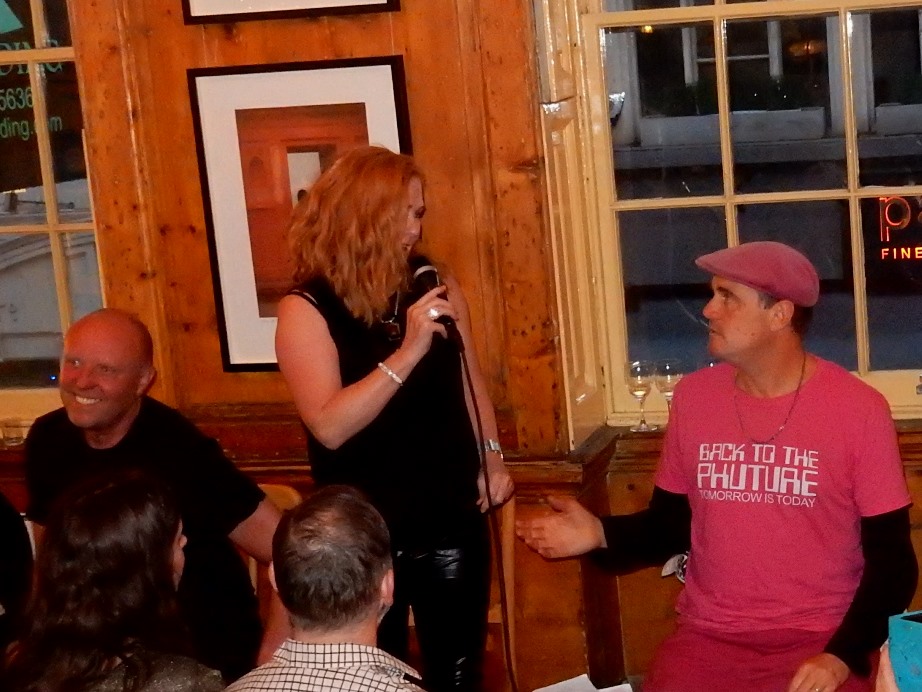
To end the evening, Mark Jones amusingly challenged his guests to sing a song without accompaniment. Carol Decker was first up, belting out ‘Little China Girl In Your Hand’, an improvised mash-up of her own hit tune and the Iggy / Bowie classic.

Not known as a vocalist, Steve Norman gamely launched into a rendition of ‘Gold’ to enthusiastic cheers while initially reluctant, Paul Humphreys sang ‘Enola Gay’ after being goaded by Jones, with some audience assistance. Finishing the impromptu sing-song, Glenn Gregory gave a timely and relevant acapella version of ‘(We Don’t Need) This Fascist Groove Thang’.

It was a fabulously entertaining two hours with Carol Decker perhaps stealing the show from the boys with a salt of the earth persona that was akin to your favourite auntie who enjoys a tipple or two at Christmas, like a cross between Julie Waters and Tracey Ullman.

Providing amusing and engaging group conversation that was also educational, the fact that all four guests continue to have successful careers today is testament to their longevity and cultural impact during a more open and therefore competitive musical era.

People are still interested in this music not because of “nostalgia” as one member of the audience suggested, but because of its quality, inventiveness and authenticity.

Now, that really doesn’t happen that much these days… and that’s why people go Back To The Phuture 😉


ELECTRICITYCLUB.CO.UK gives its sincerest thanks to Mark Jones

http://www.backtothephuture.net/

https://www.facebook.com/Question-Mark-514817845328373/

http://www.omd.uk.com/

https://www.heaven17.com/

http://www.spandauballet.com/

http://www.tpau.co.uk/


Text and Photos by Chi Ming Lai
29th June 2017

« Older posts Newer posts »