Tag: ZTT (Page 1 of 5)

Lost Albums: ANDREW POPPY The Beating Of Wings

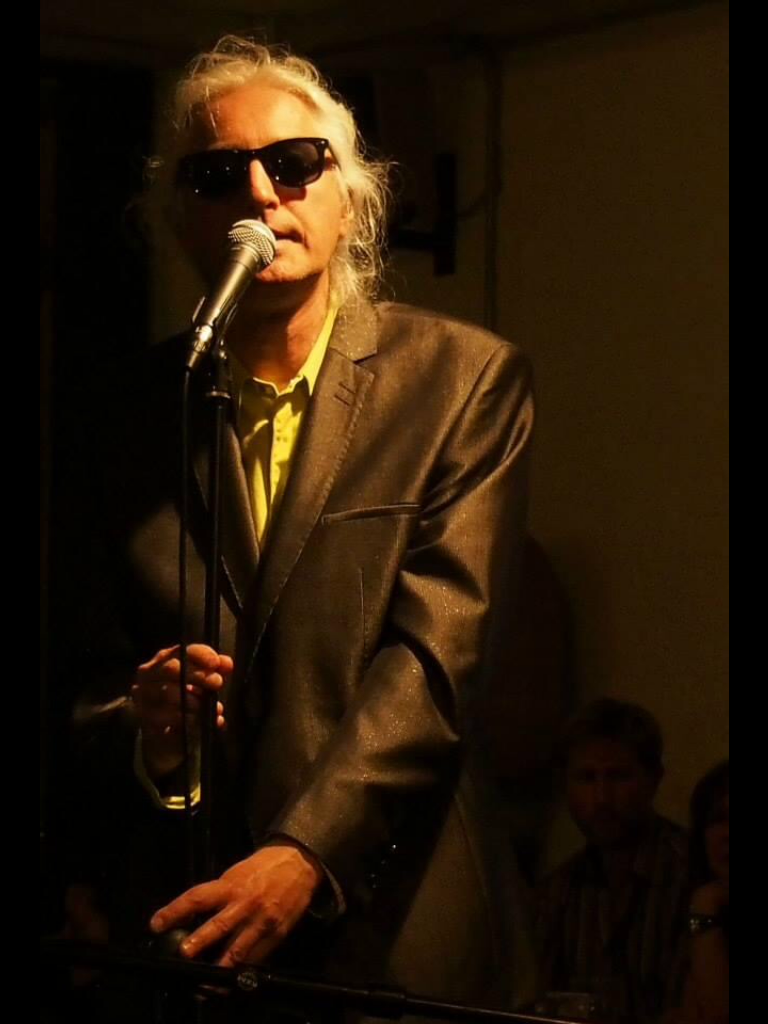
While ZTT Records was busy with their assault on the singles charts with FRANKIE GOES TO HOLLYWOOD, PROPAGANDA and THE ART OF NOISE, the label held a secret weapon in post-minimalist composer Andrew Poppy.

Poppy’s musical trajectories shifted after discovering the radical soundscapes of Bartók, Debussy, Cage, Feldman, Riley, Glass, Reich, and musique concrète. Following studies at Kingsway’s College and Goldsmiths, alongside a formative summer school session under John Cage, Poppy honed his avant-garde instincts within THE LOST JOCKEY ensemble before securing a deal with ZTT.

Unleashed in 1985, his debut solo album ‘The Beating Of Wings’ has hit its 4 decade milestone proving that contemporary classical and electronic pop aesthetics remain surprisingly compatible bedfellows. Where later follow-up ‘Alphabed’ brought early Akai samplers and vocal turns from Annette Peacock into the mix and prior to lending orchestrations to ERASURE and NITZER EBB, ‘The Beating Of Wings’ positioned Andrew Poppy as ZTT’s ultimate high-concept iconoclast.

Paul Morley himself later observed that “ZTT needed Poppy as much as it needed Frankie”, crafting a bridge for fans of Brian Eno, Laurie Anderson and KRAFTWERK. As Steven Wilson noted on the podcast ‘The Album Years’, Poppy was “ahead of his time… fitting right in with the Max Richters and Nils Frahms of today.”

Composed, produced and performed alongside bespoke ensembles, the album’s sonic architecture welds acoustic orchestration to electric piano, bass, electric guitar, drum machines and the Fairlight CMI to build an infectious, hypnotic pulse.  This post-minimalist avant-pop driven by hypnotic rhythms, synth textures, and grand classical arrangements has been freshly remastered by Stephan Mathieu while the CD is now housed in a deluxe two-panel gatefold sleeve featuring a 24-page booklet with brand-new liner notes written by Andrew Poppy.

Who better to talk to ELECTRICITYCLUB.CO.UK about the 40th anniversary edition of ‘The Beating Of Wings’ than the man himself, Andrew Poppy…

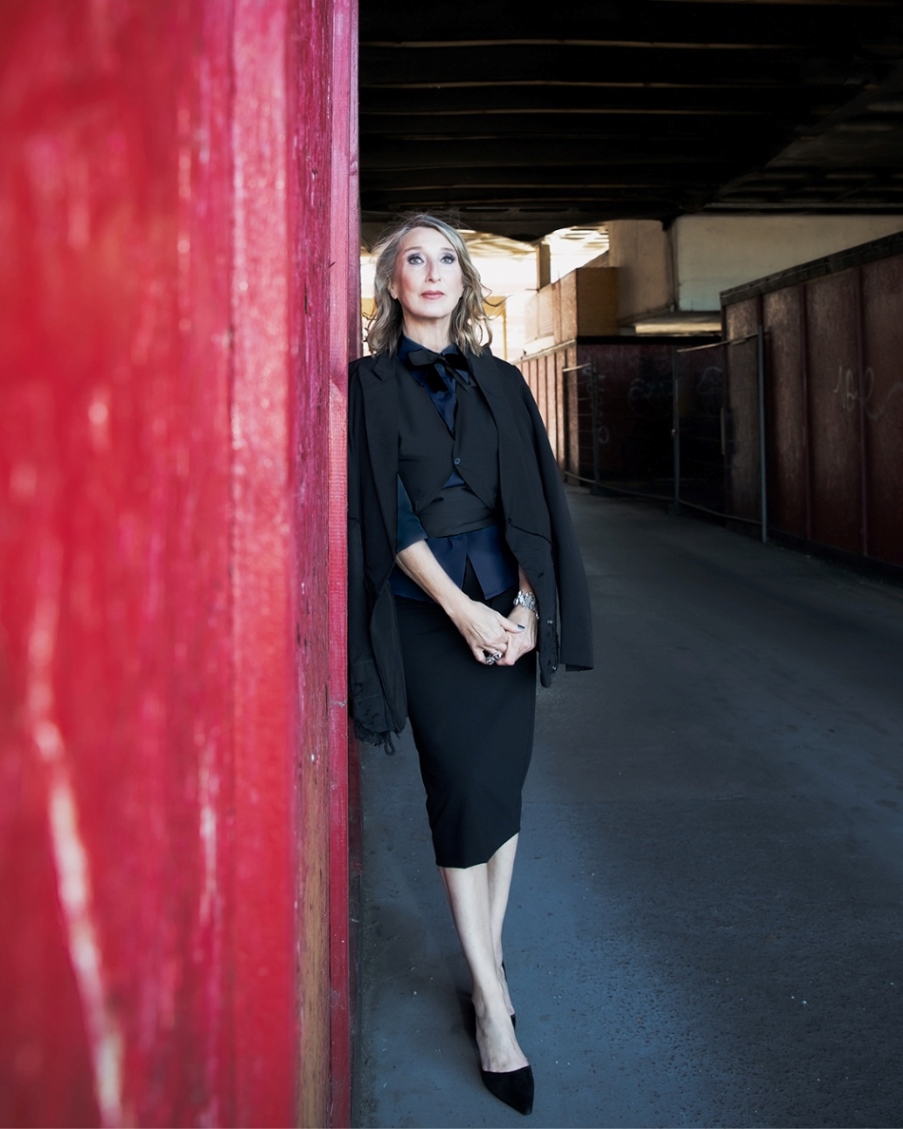
Photo by AJ Barratt

What was your own musical training journey?

I think what I do comes out of both a classical world and pop, rock and dance music.  Jazz is in there somewhere too. My relationship with the conservatoire-based things is quite soft and chaotic but also fundamental. The classical tradition is obsessed with training and schooling. I’m not very good with that, even when I try.  So I’m always both engaging and disengaging. There’s another way of doing things, trial and error, doing something, seeing what happens, listening and copying.

I did have piano lessons on and off from the time I was about 9 or 10; 6 months here, 6 months there. I was interested in the piano and music but didn’t really understand what the lessons were about. You do scales and very simple pieces of classical music like Beethoven’s ‘Für Elise’ piece. I stumbled through that early on. But looking back I couldn’t make sense of it. My early piano teachers never played it for me. I might have understood it intuitively if they had. My musical world was singing simple hymns in church and listening to pop music on the radio.

Perhaps I was too young. I must have learned some basic principles of notation and some dexterity at the keyboard. But it didn’t really connect with me until I started messing around trying to make my own things. A school friend said I could join his band if I bought a bass guitar. So I did. This is 1968-9. That experience sent me back to the piano and I found a piano teacher who had been a big band leader. He smoked a cigar through the lessons and encouraged me to play Bartok. Which is very scrunchy and rhythmic music, which I loved.

At secondary modern, schools education ends at 16. I was cued up to work in a factory. Apprenticed to a soldering iron. So it was a couple of years before I discovered the various FE college programmes where there were opportunities to explore music and literature and theatre. A whole world I didn’t know existed. But these programmes are only one part of it. The people you meet and the things that happen in the margins are often the real drivers of a creative education.

The real break though was a couple of teachers at Kingsway College in London where I did a music course. Dika Rančigaj, a Slovenian pianist was my piano teacher for two years. My first hair-raising experience was in the first week. She told me I was going to turn pages for her at her lunch time concert that day. She was playing a two-piano piece by Debussy: ‘En blanc et Noir’. So I’m sitting very close, watching her hands, trying to follow the score over her shoulder, hoping I’d catch her nod. My head’s almost inside the grand piano with a lid up. Wow.

In the lessons she was very hot on technical stuff but it wasn’t dry. It was physical, a lot about touch, the position of the hand and fingers and weight of the arm. It was no longer about just playing the notes.

Kingsway was also where I met composer / pianist Dave Smith who introduced me to an enormous amount of experimental contemporary music much of it by young living composers like Philip Glass. He was writing his own piano music and performing it, sometimes in art galleries. So it was about absorbing the things that are happening. The first conversation I had with him was about Stockhausen. I said I was fan and he gave me a book. Dave and Dika. I met them in the same week. It changed my life.

The things that you teach yourself are more connected to your physical and social world. So I doodled around on the piano with a direct physical connection to the sound of the instrument. Without knowing or really thinking or understanding what I’m doing. It’s the way I learned to play guitar and bass. I just picked them up and started to explore. Friends tell you how to make chords or how to play a bass line and you listen to records and pick it up.  Much later a few classical guitar lessons were useful. When I played bass in a school band, I always played with a pick. Now I usually play with fingers. Cut out the plastic middle man.

It’s the same in electronic music. I know now that Stockhausen’s music comes out of an intellectual procedure known as serialism. But if you hear ‘Kurzwellen’, his piece which uses 4 radio receivers, it’s a collage, however he arrived at the building of the moves. As a teenager I’m hearing the changes of texture and the shear audacity of it. “Oh yeah, I can do that”. And I did. Kind of. Made a tape piece when I was 15 using a domestic Grundig ¼ inch reel-to-reel machine with a sound-on-sound facility.

Education is also about paths you choose as well as those that are chosen for you. Once I’d left school I was choosing to try and gain access to something. I had a sense that there was more over the horizon than what was being mapped for me. If you can choose then some kind of ambition is speaking in that choice. If you don’t choose, someone else’s ambition is in play. When I was at school I had an idea I might be an artist of some kind. Although I didn’t know what it was. I just scribbled poems. I made a tape piece, tried to write a song, made a little piano piece.

I don’t think creativity is discipline specific. Many artists move through different disciplines. They might be successful at something, but there are other things which all contribute. The painter Paul Klee was a violinist. It’s a cliché to mention the UK art school system in the 50s and 60s and its part in producing successful British pop music. And many of the keyboard players studied classical music. Last word on this. I’m loving the last two Kim Gordon records. She’s a painter and a very interesting writer too.

Photo by Anton Corbijn

Who were your inspirations in the classical and pop world?

So many people and the list gets added to every year. If I think about it in terms of performance it’s a different list from thinking about ‘inspirations’ or ‘composition’. But it blurs.

For the piano the inspiration at the very beginning, in the 60-70s, was the playing of Nicky Hopkins, Leon Russell and Thelonious Monk. The piano music of Beethoven, Bartok and Debussy. Electric piano and keyboards, Ray Manzarek, Stevie Wonder, Joe Zawinul. For the bass guitar it was Jack Bruce of CREAM. For electronics and the studio inspiration it was Stockhausen, Hendrix and THE BEATLES. And I haven’t even touched on the voice or composition. Whatever that is!

In terms of producer / arrangers, the hit list would be George Martin, Brian Wilson, Quincy Jones. The first single I ever bought was ‘River Deep Mountain High’ with that fantastic ecstatic vocal by Tina Turner. But it’s staged by Phil Spector and arranger Jack Nitzsche. Of course, there are less flamboyant producers like Tom Dowd who did classic 60s Aretha Franklin. In the 60s I loved orchestral pop; in the 80s I discovered Mahler’s song cycles and then everything kind of started to cohabitate.

Composition gets confused with record production early on for me. It’s a confusion that’s there in THE BEATLES and Stockhausen. But in terms of the traditional idea of notated composition, of pitches and rhythms, acoustic textures and forms, then Debussy, Cage, Feldman, Riley, Glass and Reich would be important inspirations. All that music is notated and that’s the crux of it somehow.

There were a number of strands going on for me moving into the 80s. I was starting to make, to write, notated piano pieces and ensemble pieces at Goldsmiths in the late 1970s.

I organised a performance of Terry Riley’s ‘In C’. Persuaded ten musicians to come and play. It’s a notated piece but not in the usual way. It’s a one-page piece that often goes on for 50 minutes. Everyone reads from the same page. It’s built from 53 short modules. You repeat them and move though the sequence at your own pace but mindful of the group context. It’s foundational, for me and lots of other people, including Glass and Reich. At some point fellow student Jeremy Peyton Jones and I organized a concert of ensemble pieces in which I played an amplified solo piano version of Philip Glass’s ‘Music in Fifths’. And then we started making concerts just of our own music.

I’ve made a playlist of inspirations or at least things that turned me on from between the age 15 to 26. You can read it on the False Walls label website blog.

Photo by AJ Barratt

What attracted you to signing to ZTT Records as opposed to a classical label?

In 1980, alongside making notated pieces, I set up a home studio with a TEAC 4-track, a mixer I built from a kit, and a space echo delay. Then quickly moved onto an 8 track and Soundcraft mixer. I was making soundtracks for contemporary dance and theatre and just making things because I could; quite abstract collage-type pieces sometimes, as well as some vocal-based pieces. I bought a drum machine when they started to appear, and a Pro-One mono synth. There was an Emu sampling keyboard that I hired to use on a dance theatre piece called ‘Mid-Day Sun’ that played at the ICA theatre in London. That was my first experience of sampling.

I can’t remember where I heard about the Fairlight music computer. When it came out in the early 80s, it wasn’t affordable; it cost more than buying a car. But Blue Weaver (famous musician in the 70s) had one of the first in the UK. I booked him to do some programming for another theatre score. We spent a couple of days together programming what I’d sketched out in notation. It was a fantastic education into both the practicalities and the concepts of sampling and programming.

A little while later I heard ‘Into Battle With The Art of Noise’ in the Virgin Megastore on Oxford Street. I bought the record and it immediately connected. I knew how it was done. Also, the reference to Futurism in the name of the band, or what I thought was a band, was loaded with associations of the machine age. We were moving into a new machine age of the electronic programming computer. So I thought their record label might get what I was doing. It was a very casual thing. But looking back it was the most appropriate. I was sending tapes to lots of labels because I wanted to make records as an artist. Some of them showed interest but didn’t offer me anything. I’m glad they didn’t because ZTT was so right in many ways.

To answer the second part of the question, it depends what you mean by classical label. I did approach Bob Hurwitz at Nonesuch Records. If they’d said yes, it would have taken me in a slightly different direction. They eventually had Laurie Anderson. Three of the pieces on the ‘Wings’ record were fully notated and had performances. ‘Cadenza’ had many performances between 1980 and 1983. So those pieces might have sat well in a Nonesuch or an ECM Records catalogue. It would have worked. But, I’ve got lots of their records and it’s a similar aesthetic. The image of all the music is of a live acoustic performance. It’s careful not to appear artificial. I was interested in a more constructed, produced approach, where the recording process itself is very present and direct. It’s more of a pop aesthetic; it’s an electronic music aesthetic. It’s like Andy Warhol screen print portraits. They could be paintings, but they’re photographs of a recognisable face and they’re paintings at the same time.

Photo by AJ Barratt

Was there a concept or storyline to ‘The Beating Of Wings’?

I think a theme emerges, once you get two people or animals in the same room they start to speak to each other. Or rather the listener imagines what they’re saying. I don’t think it’s necessary to know. That is almost the theme: I don’t think it’s necessary to know.

But to put it another way, the theme that emerges is something about authority and control breaking down and moving towards instability. It’s summed up by the verse from ‘Listening In’, which I never sang, but which was printed on the inner sleeve of the original vinyl.

“Don’t worry, they said, ALL’S WELL. My Doctor says ALL’S WELL in

the world of new music and my lawyer says ALL’S WELL; ALL’S WELL in the world of youth culture and my government says ALL’S WELL; ALL’S WELL in the world of scientific discovery and my father says ALL’S WELL; ALL’S WELL in the world of decision making and my lover says ALL’S WELL; ALL’S WELL in the world of experimental psychology and my preacher says all sorts of crazy things.”

—extract from unrevised AP ‘post first past the—’ 1984

In this stanza, a whole bunch of narrators are identified through their seats of knowledge and authority. My doctor, my lawyer, my government, my father, my lover, my priest. And then what they say suggests that this knowledge is unstable.

All the pieces work with repetition, each in a different way and in a very controlled way. But gradually they move from a cool sense of a formal pattern-making towards something hot, edgy and maybe a bit out of control. It’s never really out of control but each piece has a sense that it could be round the corner. The process of moving out from a starting point is different in each piece. Again, to come back to the Warhol screen print portraits, some are bright, some are direct, some are sparkly and some are chaotic; even if they are the same face over and over, like the Joseph Beuys collection. So with ‘The Beating of Wings’ the listener has to decide if the four pieces are four different faces or are they the same face with different colours and textures.

Photo by Anton Corbijn

‘The Object Is A Hungry Wolf’ was a fairly ambitious opening that combined orchestrations and Fairlight, what was going through your mind and driving you both musically and culturally?

Thanks. Yes, I think it is ambitious in hindsight. When I made it, I just made it. It’s a modular machine. It kind of grew itself.

It holds together lots of different textures and ways of doing things. In some ways it’s very simple. A single musical pattern in 12/8 is all there is. But the way it gets projected into different gestures, different colours and musical spaces it becomes something else. It’s pattern-based rather than melody- and harmony-based. Although these emerge in different ways.

I like the vocal presence that kicks in right at the beginning. The vocal at the beginning of Wolf is articulated as: “Do, do, do da – da, do do do do do, da-da”. For me it’s connected to that pop so-called ‘non-lexical vocables’. THE CRYSTALS’ “Da doo ron ron, Da doo ron ron”, there’s a fizz to the opening. The repeated alternation of the vowels and consonants articulate a rhythmic idea. In ‘Da Doo Ron Ron’, the opening up-beat down-beat sets a tempo. ‘Ron ron ron sets up an off-beat sequence that is buoyant and exciting. The voice as a drum. But the voice sets up a tension with the drum in ‘Da Do Ron Ron’. In ‘Wolf’, this vocal pattern is forever reforming itself.

The recording process was ambitious for all the tracks on the album because they were all different ways of doing it. For ‘Wolf’ I wanted to use the Fairlight as spine and record the acoustic instruments in overdubs. I started by working with Fairlight programmer Steve Rance. It was quite straightforward to plan it out as I’d had the Blue Weaver experience. We sat together with the score, which I described and he programmed it.

Then on the live sessions I worked with sound engineer Stuart Bruce on each instrumental strand separately. The strings were one session, then the woodwind individually. Rory Allam, who plays the prominent bass clarinet part, was an important contribution. Then with the voices Elise Lorrain and Mary Philips, we worked on the feel. Getting an intimacy, groove and energy. It’s not just about getting the notes right. It’s more like film making. It can seem artificial. But you can create a different type of focus and intensity, rather than recording everyone in the room after a short rehearsal. Each sound and performance has a life that is different from moment to moment. It allows for great flexibility of balance in the mix. Sometimes it’s the way to go. I played all the pianos, and the electric organ part.

By contrast, ‘Cadenza’ and ‘32 Frames’ are single takes with everyone in the room. For ‘32 Frames’ we had a short rehearsal a few days before. There was lots that was great about the recording session but some important moments were blurred. That’s why there are overdub credits. A few weeks later we made the overdubs. They are the same parts but making sure important details can be heard and feel right in the context.

The Fairlight extends the drum box. Its programming is more open ended. It’s not limited to two bars of 4/4. What happens in ‘Wolf’ is that the machine’s idea of the pulse drives it through. Even though the music chops and changes direction and it’s even got a slow movement in the middle and two different tempos in the last part. It’s locked into a machine groove. The human performance is always pulling it out of shape and that tension is ecstatic if you get it right.

You’re good friends with Claudia Brücken but how aware were you made that a small section of ‘‘The Object Is A Hungry Wolf’ would be sampled for the intro of the first ACT single ‘Snobbery & Decay’?

I did not know that. Brilliant. Thanks Claudia xx

Photo by AJ Barratt

‘32 Frames For Orchestra’ might be one of your best known pieces and even got the ‘Drummed Up’ treatment for release as a 12 inch single, how was the “pop” marketing approach for you?

 I love the ‘I Feel Love’ disco experience and those James Brown dance grooves. The TALKING HEADS’ rhythm section or Sly and Robbie on Grace Jones’ ‘Nightclubbing’.  And then there’s the dance feel of KRAFTWERK’s ‘Pocket Calculator’ and ‘Autobahn’. The machine and the dance move towards each other.

You could hear ‘Drummed Up’ as a kind of love letter to disco or house. It wasn’t a marketing idea. I really wanted to do it and thought it would bring out some of the dance floor implications of the piece. It should be fun.

‘The Impossible Net’ on the B-side of the ‘32 Frames For Orchestra’ single was an Fairlight-assisted “industrial” version of the A-side, did you see the remix culture that ZTT were very much part of as being a development on the “variations on a theme” aspect of classical music?

Yes, for sure. That’s exactly the idea. ‘32 Frames’ is a set of 8 variations each with 32 bars. ‘Drummed Up’ is a very straightforward version of the piece with a drum machine.

The concert piece and the album piece are ‘32 Frames’. Once you start to move it somewhere other, ideas suggest themselves. It somehow wanted to be a more extended dub-based cut up piece. Which is what happens in ‘The Impossible Net’. It got cut in half. Then the first half slows down. Introduce a dub suggestion of the instrumentation and then build a new middle with the Fairlight, using all the same notes and patterns but electronic sounds. Then, transitioning back to the original tempo for the last part. Because the sample-based machine can increase the tempo without changing the pitch. Of course, now you can do all this in two seconds with the swipe of a screen.

Opening up the middle allowed for adding a kind of piano cadenza type coda for the orchestra to think about. ‘The Impossible Net’ is a whole new piece really.

Your own voice featured in ‘Listening In’ and it was very percussive with a LinnDrum being brought in as well alongside the samples, how did that come together, especially with not using live percussionists?

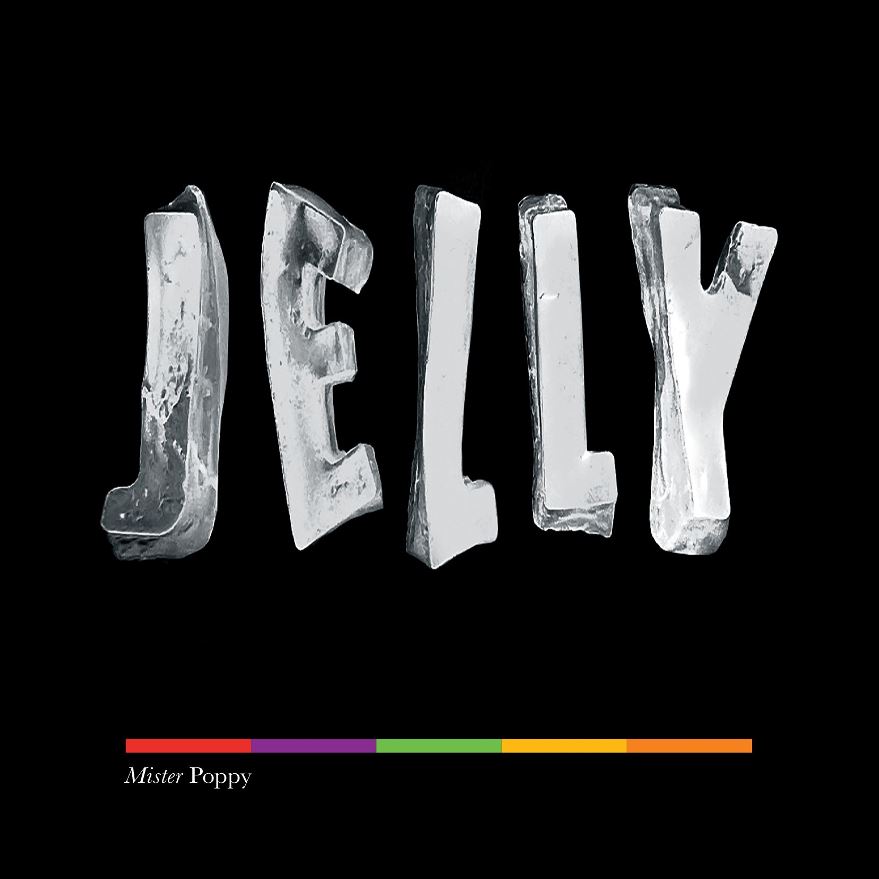
Yes. I’m glad that vocal performance is there because it suggests what comes later. Particularly on the 2nd album for ZTT: ‘Alphabed’. But also what happened in my recent albums like ‘JELLY’. The speaking and singing on ‘JELLY’ picks up that thread. There’s a 3.50 version of ‘Listening In’ called ‘Listening In remodelled’. It was on the B side to the 7 inch vinyl of ‘The Amusement’.

The original demo for ‘Listening In’ was made around April or May 1981. It used an Akai 4-track tape recorder, voice, Wurlitzer electric piano, Pro-One mono synth, guitar, bass guitar, Doctor Rhythm drum machine and Roland space echo delay. It started with a simple drum pattern, sent through the delay. I improvised with the delay feedback to make a dub groove which then was recorded. Then the track was built, first a hand-muted bass guitar rhythm played with pick that sat inside the drum track. Then all the other melodic patterns were added, and the vocal.

For the ZTT recording in 1985, the demo was scored out with the drum machine and tape delay rationalised into a melodic pattern. Then Stuart and I recorded lots of percussion sounds individually to make a library of samples. Each sample was then triggered from an AMS delay which could be used as a simple sampler. Each sound was then recorded separately onto the multi-track using a drum programme to create a melodic shape of sampled drums. It seems an absurdly convoluted way of doing things now. There were also a number of metal samples triggered in the same way.

The only Linn sound is the bass drum I think. The bass part is a DX7 keyboard. Wurlitzer electric piano added the melodic parts, with Bruce Nockles’ live trumpet giving a breath and sustain to the percussive keyboard sound. Jack Hues’ electric guitar overdub replicated the guitar part that had been transcribed from the demo.

Photo by Anton Corbijn

You stripped it down to pianos for ‘Cadenza’ and you left a lot of space and silence? What fascinated you about minimalism?

It was the first of the four pieces to be written, in 1980. The silence is only at the opening with the three arpeggios, which cover the whole keyboard played with the so-called sustain pedal held down. Each arpeggio moves to a loud chord whose decay hangs in the room. The piece comes out of that decaying sound of the piano. Each time it happens the ear follows the dynamic contour from loud chord to nothing. Hopefully. The gesture is inviting the ear to listen in. The main body of the piece is about staying in the moment of that opening gesture. To make it continuous. It’s almost a drone piece.

It’s the directness of so-called minimalism that I like, and the physicality of repetition.

How do you look back on ‘The Beating Of Wings’ four decades on?

In some ways the remastered anniversary edition has been a revelation. I’ve heard it as more complete. Previously, I was more self-conscious about the album’s diversity. But times have changed with the remastering, Stephan Mathieu has somehow made it flow through the whole 48 minutes. I like that. In 1985 it was mastered for vinyl. Back then side A and side B were two different moments. Just turning the disc over is a big event. It’s like an interval in the movies. We don’t do that now. Interesting last year that the Oscar-winning ‘The Brutalist’ builds an interval into the whole film experience, with a still image and its own musical score. It makes the ritual of seeing it in the cinema into something special. CJ  Mitchell at the False Walls label, designer David Caines and I, wanted to do something similar with the design for the anniversary edition. Making is meta with a small ‘m’. So you get a version of the original vinyl centre labels on the CD sleeve. It should be fun.

Is the legend true that Trevor Horn actually wanted you to be more like Isao Tomita?

Ha ha ha! I wouldn’t put it like that. I remember it was our first proper conversation just before I started working on ‘The Object is a Hungry Wolf’. It was already fully scored for voices, ensemble and keyboards. We were sharing thoughts. He talked about the Tomita synth versions of Debussy music. Which I knew. It’s a kind of response to Wendy Carlos’ ‘Switched on Bach’.

Interesting that Trevor developed that idea with Anne Dudley and THE ART OF NOISE years later. But the year before going to ZTT, I’d made a piece using the Fairlight and wanted to use that alongside the acoustic instruments. He was into it.

Was ‘The Beating Of Wings’ ahead of the game in the sphere of modern classical music, what with the short-lived Factory Classical label that came in 1989, the late William Orbit in the clubs with the Ferry Corsten remix of ‘Adagio For Strings’ and all those “classical meets pop” concerts that spring up a lot today?

 It’s not for me to say.

Photo by John Hollingsworth

Would you say ‘The Beating Of Wings’ opened doors for you after its release, do you remember the ZTT period with fondness?

This is probably a “no” and a “yes” answer. Yes, remembering fondly for sure. I felt like I’d achieved a lot, learnt a lot and been part of an intense creative hub. I’ve kept in touch with some of the Sarm ZTT people I worked closely with back then. The recording engineers were all brilliant to work with: Stuart Bruce, Bob Kraushaar and Dave Meegan, who recently mixed ‘JELLY’. Also Paul Morley, Karen Goodman and Claudia Brücken. And I’ve seen Trevor Horn a few times. When I saw him at the SARM closing down party he said “I still play ‘The Amusement’”.

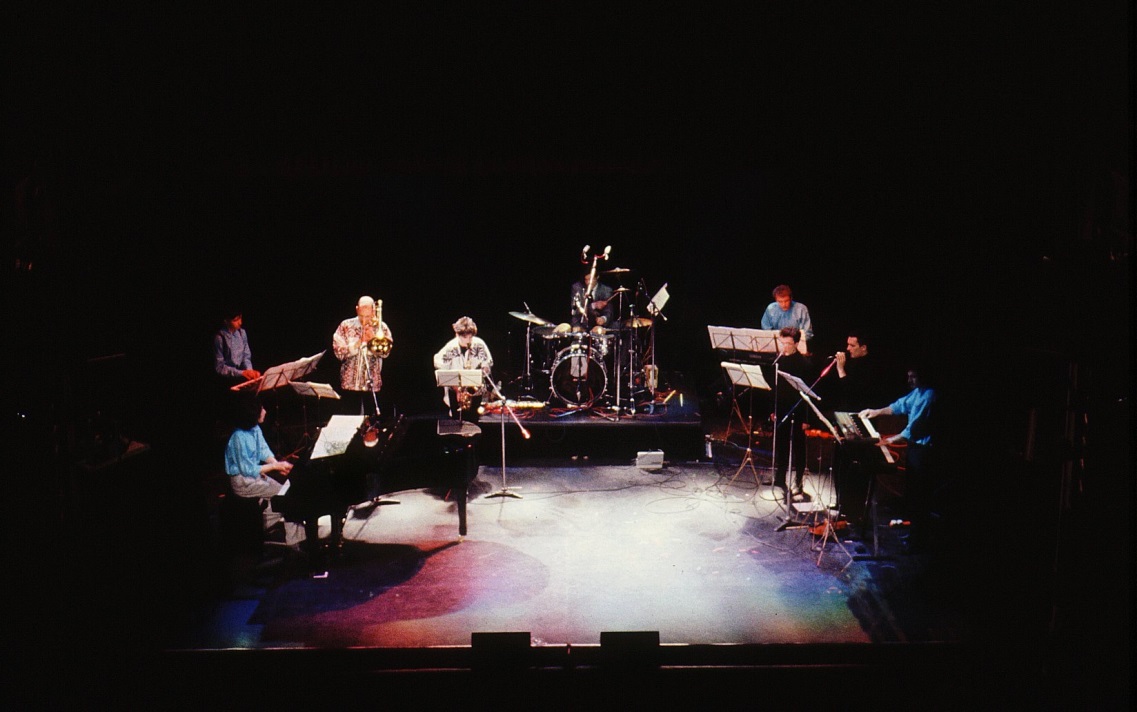
In 1988, I tried to get another deal and would like to have toured the nine-piece band I had for ‘The Value of Entertainment’ concerts. But it wasn’t possible. Over the decades the music seems to have resonated more and more. Younger people get it and as the Internet started to kick in 25 years ago, I became aware that people all over Europe and America love those two early albums.

In the early 90s I continued to write, perform and produce records. The first album I made after ZTT was called ‘Recordings’. And was recorded straight to stereo at Abbey Road. A kind of detox. But, as I already mentioned, I had an 8 track studio set up at home since about ‘82 and after ‘Wings’ was finished, Steve Lipson suggested I buy an Akai sampler and a computer as the Fairlight was so expensive to hire. So I got into that and ran it alongside my 8 track until well into the present century. Then the computer finally took over completely with Protools. Still have the Atari 8 track ½ inch machine but it hasn’t been on for 25 years.

Photo by Jack Symes

What is next for you?

‘The Beating of Wings’ anniversary album has already had some very positive reviews. It’s primarily an instrumental album and what I’ve been doing recently is vocal music. There is quite a bit of instrumental music that’s not been released, so maybe there’s another ‘Ark Hive’ disc. There’s also a collection of 30 or so piano pieces from the last 40 years called ‘Fruits & Shavings’. I’m going to publish those scores. So anyone who’s interested can play them.

The last couple of decades has focused on vocal music that I could perform myself. I’ve always written vocal music for other people, from songs to choral pieces. It was a leap in the dark to start doing some work on my voice so that I could record and perform things. Going back to ‘Listening In’ on ‘Wings’, the ambition was there. It put down a marker. The ‘Alphabed’ album which followed ‘Wings’ is full of voices but not my own.

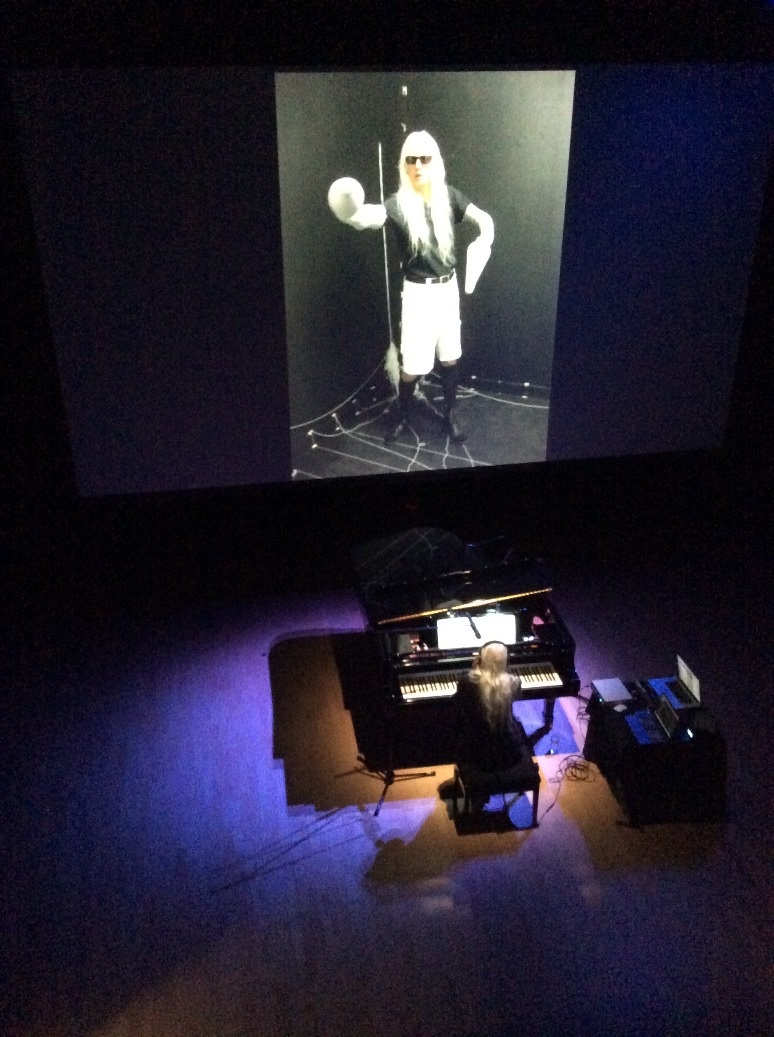
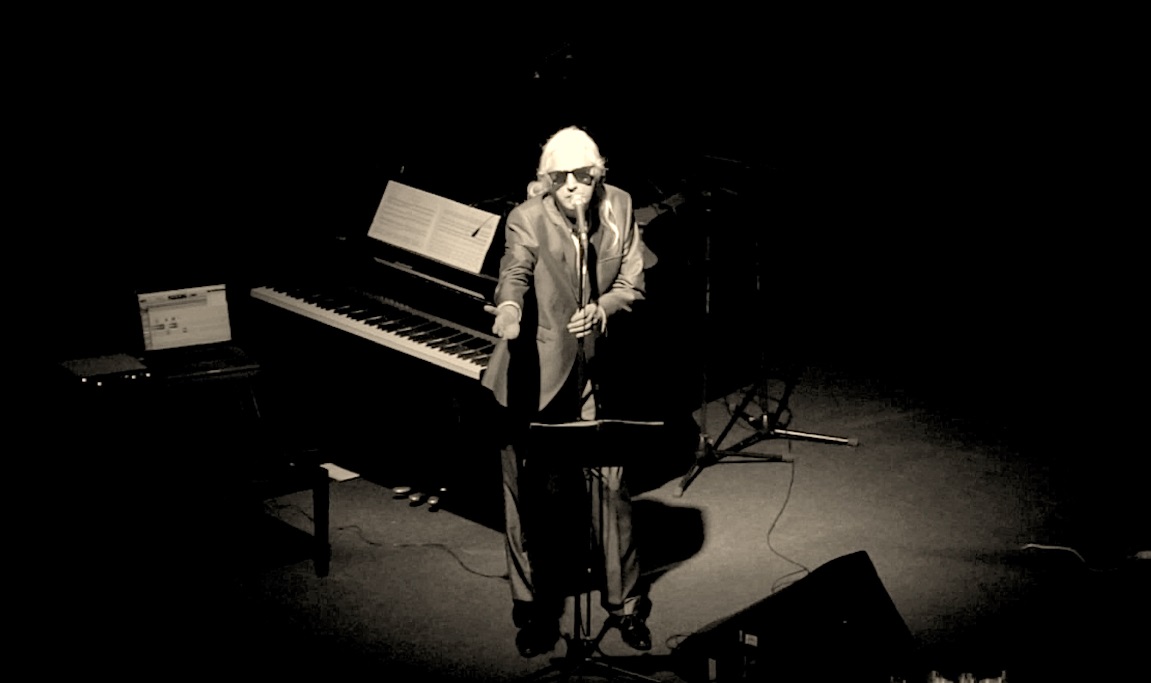
The new project has pianos, synths, bass guitar, and continues to work with an alternation of speaking and singing that happens on ‘Hoarse Songs’, ‘Shiny Floor Shiny Ceiling’ and’ …and the Shuffle of Things’. The last project ‘JELLY’ had such a positive response live and I’m keen to get back to performing with a new project. At the moment it’s called ‘BOUNCE, the melancholy of the.’


ELECRICITYCLUB.CO.UK gives its deepest thanks to Andrew Poppy

Additional thanks to CJ Mitchell at False Walls

The 40th anniversary edition of ‘The Beating Of Wings’ is reissued by False Walls as a CD and download on 2nd October 2026, available from https://andrewpoppy.bandcamp.com/album/the-beating-of-wings-40th-anniversary-edition

http://www.andrewpoppy.co.uk/

https://www.facebook.com/profile.php?id=100063715171165

https://www.instagram.com/mr_poppy/


Text and Interview by Chi Ming Lai
29th September 2026
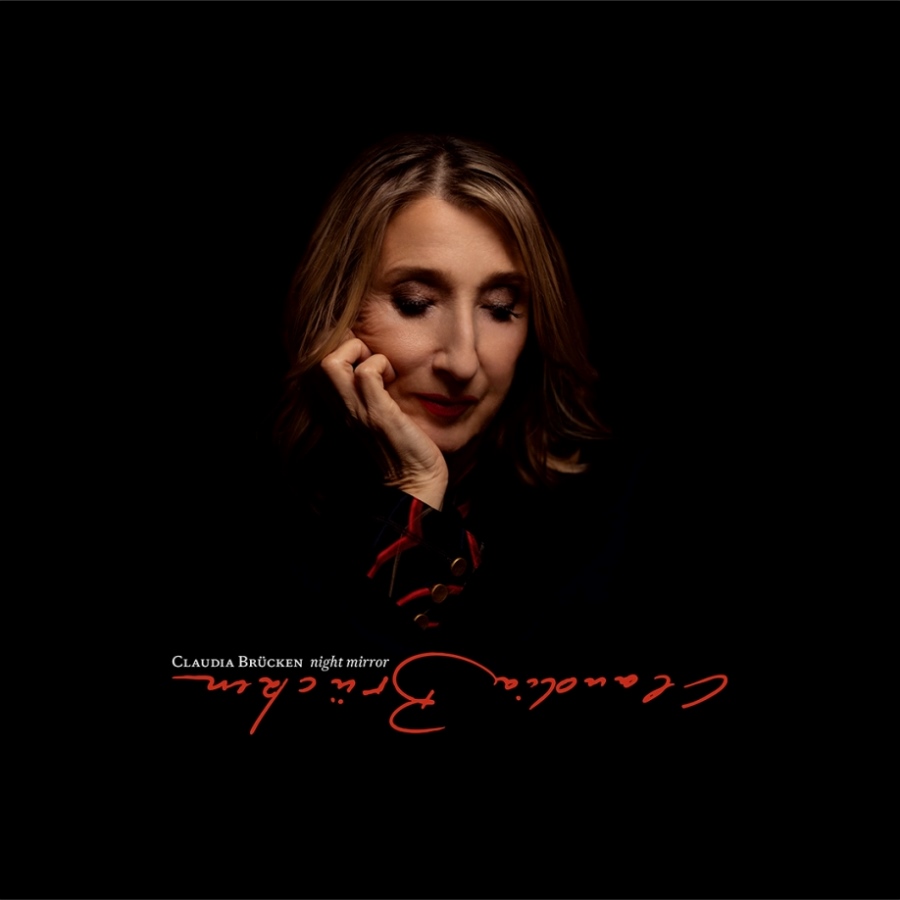
CLAUDIA BRÜCKEN Night Mirror

“The songs seemed to come to me in the middle of the night, and when I listened to them, there I was. Between two worlds, looking for answers in the shadows.”

Following her last album ‘The Heart Is Strange’ with Susanne Freytag and Stephen Lipson as xPROPAGANDA in 2022, Claudia Brücken is back with what is perhaps surprisingly only her fourth solo album ‘Night Mirror’. But the German chanteuse has always been something of a collaborator, working with notable personnel such as Trevor Horn, David Sylvian, Glenn Gregory, Midge Ure, Thomas Leer, Pascal Gabriel, Steve Nye, Andrew Poppy, Paul Humphreys, Martin Gore, Andy Bell, Stephen Hague, Jerome Froese, Wolfgang Flür and Michel Moers.

‘Night Mirror’ is no different and sees her back working with John Williams who produced her third solo album ‘Where Else…’; that record saw Claudia embrace the acoustic guitar. Written and recorded in London between 2023-2025, while ‘Night Mirror’ can be considered as having a traditional songwriting ethos with organic instrumentation, it is simultaneously electronic in unexpected ways so that the end result is neither wholly either. It is therefore the Claudia you know, and one that you don’t yet know.

Photo by Ray Moody

With virtual orchestrations, the opening number ‘My Life Started Today’ delightfully drops hints of Lou Reed’s ‘Satellite of Love’. ‘Rosebud’ offers classic driver friendly pop rich in Mellotron strings, stabs of Hammond and subtle sequencer while the spacious soundscapes and snappy rhythms of ‘All That We Ever Have’ provide a cocktail of electronic and organic textures, with piano motifs sitting alongside sequencers.

The full sequencer treatment comes with ‘Sound & The Fury’ but then out pop crunchy guitars and nods towards THE STOOGES. Spritely acoustic six strings, bass harmonics, sax and pizzicato sit with drum machines on ‘The Only Ones’ for a pretty pop number. A surprise comes with ‘Funny The Things’, an offbeat countrified number that even includes with banjo and flute but then twists courtesy of various synth arpeggios in the second half. Also showing another side to Claudia is ‘Sincerely’ which brings in a flamenco flavour and more flauty tones for a breezy hippy effect that is unique with its machine rhythm beats.

But with her characteristic ice maiden cool, the brilliant ‘Shadow Dancer’ turns the album on its head with an uptempo electronically driven number with minimal rhythm guitar and piano sparring off the synthetic stabs and metronomic rhythms. Here Claudia’s assuring poetry is supreme in this divine slice of avant pop.

The lengthy ‘To Be Loved’ is a sparse piano ballad than sees fretless bass come into play but maybe outstays its welcome. But closing with a variation on ‘Shadow Dancer’, the trancier ’Dancing Shadow’ sparkles with synth pulses and even throws jazz guitar into an incessant claptrap backbone for a spritely dub excursion.

Enjoyably unusual in its hybrid musical approach, ‘Night Mirror’ is another fine Claudia Brücken collection of nocturnal mysteries, reflections, struggles and obsessive observations. Despite not being a full electronic pop album, there are plenty of synthetic embellishments for those Claudia fans from the ZTT and ONETWO school to savour.


‘Night Mirror’ is released on 4th July 2025 by Demon Music Group in a variety of formats including vinyl LP, vinyl LP + 12” EP, CD, CD+EP and Dolby Atmos Blu-Ray, pre-order from https://claudiabrucken.lnk.to/nightmirror

https://www.claudiabrucken.co.uk/

https://www.facebook.com/ClaudiaBruckenMusic

https://www.instagram.com/claudiabrucken/


Text by Chi Ming Lai
2nd July 2025

A Beginner’s Guide To ANDY RICHARDS

Photo by Lizzy Ellis

Producer, keyboardist and composer Andy Richards may not be as widely known as his mentor Trevor Horn, but listeners have certainly heard his work as a significant number his contributions appear on singles that reached No1.

Born in 1952, Richards studied piano, classical organ piano and composition at The Royal College Of Music and The Royal Academy Of Music. After graduating, he taught music at South Cheshire College and began playing in various local bands before in 1977, he joined the folk-rockers THE STRAWBS who were best known for their hit ‘Part Of The Union’.

After THE STRAWBS split up in 1980, Richards became a session musician and in 1983 played keyboards for the heavy metal band DEMON who were signed to Clay Records, a Stoke-based independent record label. It had been established by Mike ‘Clay’ Stone who had been a champion of punk, taking early photographs of Gary Numan which appeared on the first TUBEWAY ARMY releases before later signing DISCHARGE and THE LURKERS to Clay.

It was via Clay Records that Andy Richards was to get his big break. Stone invited Richards to produce the debut of local synthpop trio WHITE DOOR who had morphed out of the prog band GRACE. Mixed at Sarm East Studios, the engineer was Julian Mendelsohn who was also working with Trevor Horn on the YES album ‘90125’.

With recommendations from Mendelsohn, Richards was then contacted by both. Although he auditioned for YES, he chose to work with Trevor Horn in October 1983; his first job was to play keyboards on the FRANKIE GOES TO HOLLYWOOD cover of ‘Ferry ‘Cross the Mersey’ and subsequently the eventual single version of ‘Relax’ which featured Richards’ European sounding Roland Jupiter 8 chords while another key element he provided was the huge orgasmic sound at the song’s climax!

Working as part Trevor Horn’s dream team that included engineer Stephen Lipson and Fairlight programmer JJ Jeczalik, the world became Richards’ oyster with significant roles on the notable ZTT albums ‘Welcome to the Pleasure Dome’, ‘A Secret Wish’ and ‘Slave to the Rhythm’.

A master of the Roland Jupiter 8, Roland MC4 Micro-composer, PPG and Oberheim DMX, Richards became in demand as musician, programmer and producer, thanks to his astute investment in the Fairlight Series III in 1984; this was a particularly useful production tool as the artists he worked with could easily understand its concept easily as all its 16 tracks and their relationship in real time could be seen on screen at once.

Having dipped his toe into the world of cinema in 1986 with ‘Biggles: Adventures in Time’, the bulk of Richards’ more recent work has been in mixing film scores from his own Out of Eden digital complex, including ‘Bridget Jones’ Diary’, ‘Ali G Indahouse’, ‘Johnny English’, ‘Shaun of the Dead’, ‘The Last King of Scotland’, ‘Hannibal Rising’, ‘Slumdog Millionaire’ and ‘Frankenweenie’. He has more recently been working on his first solo project entitled ‘This Time… An Imaginary Soundtrack’

Perhaps something of an unsung hero in music, here are 18 tracks that ELECTRICITYCLUB.CO.UK has selected from the vast career of Andy Richards with a restriction of one track per artist moniker, assembled in chronological order…


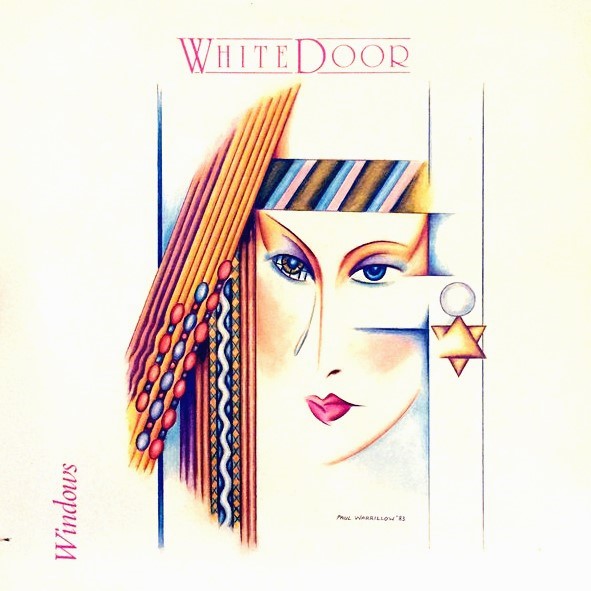
WHITE DOOR Jerusalem (1983)

With shades of ALPHAVILLE who Andy Richards would later work with, the beautiful choir boy synthpop of ‘Jerusalem’ was one of the highlights of the ‘Windows’ album. “We would turn up at Andy’s house with very basic demos and spend long days with him on his mini grand piano working out the arrangements and programming…” said WHITE DOOR singer Mac Austin about the relationship with their producer.

Available on the WHITE DOOR album ‘Windows’ via Cherry Red Records

https://www.facebook.com/whitedoorband


PROPAGANDA Dr Mabuse (1984)

‘Dr Mabuse’ was the impressionistic masterpiece that was the debut single and second ZTT release by PROPAGANDA, at the time a Düsseldorf-based five piece. Produced by Trevor Horn in the days before MIDI, Richards’ work involved spending days in the studio connecting up two Roland Jupiter 8s, two Roland MC4 Micro-composers, three Oberheim DMXs and a Roland TR808 to JJ Jeczalik’s Fairlight Series II.

Available on the PROPAGANDA album ‘A Secret Wish’ via Salvo

https://www.xpropaganda.co.uk/


FRANKIE GOES TO HOLLYWOOD Two Tribes (1984)

As FRANKIE GOES TO HOLLYWOOD’s eagerly awaited follow-up to ‘Relax, ‘Two Tribes’ sent the Cold War paranoia of the times into overdrive. Richards’ blistering bassline sequence was programmed multiple times with differing feels, eventually settling on a hard PPG bass sample doubled with a slightly softer sequence from a Synclavier. The end result acted as a leadline and tribal powerhouse.

Available on the FRANKIE GOES TO HOLLYWOOD album ‘Bang!’ via Salvo

https://www.frankiesay.com/


GEORGE MICHAEL Careless Whisper – Full length version (1984)

Premiered live on the 1983 ‘Club Fantastic’ tour, although George Michael’s debut solo single was characterised by a fluid sax solo by Steve Gregory, when the WHAM! singer opted to produce ‘Careless Whisper’ himself after an abortive session with Jerry Wexler, he invited to Richards to overdub a chilling string synth intro and voice samples using a PPG Waveterm A. It would become the third No1 of 1984 on which Richards performed.

Available on the WHAM! album ‘Make In Big’ via Sony Music

https://www.georgemichael.com/https://www.georgemichael.com/


THE ADVENTURES Send My Heart – Extended remix (1984)

Belfast’s THE ADVENTURES were one of the first bands managed by pop Svengali Simon Fuller,  opening for the likes of TEARS FOR FEARS and FLEETWOOD MAC. On the back of FRANKIE GOES TO HOLLYWOOD’s success came remix and session work for Richards. His extended remix of the sprightly ‘Send My Heart’ included additional keyboard flourishes, a new voice sample solo section and drum breakdowns while keeping the song intact.

Available on THE ADVENTURES album ‘Theodore & Friends’ via Lemon Records

https://www.discogs.com/artist/219292-The-Adventures


STEPHEN ‘TIN TIN’ DUFFY Kiss Me (1985)

‘Kiss Me’ had been originally released by Stephen Duffy’s band TIN TIN in 1982. Reissued in several incarnations, the Fairlight heavy hit version was produced by Nicholas Froome and JJ Jeczalik who brought Richards in along with Danny Schogger to provide musicality to the various sample derived gimmicks used. Duffy would later become the writing partner of Robbie Williams and ‘Kiss Me’ would be covered in 2006.

Available on the STEPHEN DUFFY album ‘The Ups & Downs’ via Cherry Red Records

http://stephenduffy.com/


TRIO Ready For You (1985)

Germany’s TRIO became known worldwide for their novelty song ‘Da Da Da’. Much more aggressive than their big hit and with the invitation “If you want some lovin, come and get it”, the expletive laden sexually charged ‘Ready For You’ was a co-production by Richards and JJ Jeczalik alongside Klaus Voormann, the noted musician who worked on all the TRIO albums as well as with Lou Reed and was the graphic designer of THE BEATLES ‘Revolver’.

Available on the TRIO album ‘Whats The Password’ via Mercury Records

http://www.stephan-remmler.de/


GRACE JONES 5. SLAVE TO THE RHYTHM (1985)

Not the familiar groovy Go-Go hit single version that became Grace Jones’ signature tune, but a more aggressive take with big beats, rumbles and swoops actually designated “5. SLAVE TO THE RHYTHM” on the same titled album, Andy Richards’ distinct chord interventions can be heard in the brassy synth stabs. The song had been originally demoed by FRANKIE GOES TO HOLLYWOOD in an uptempo fashion.

Available on the GRACE JONES album ‘Slave To The Rhythm’ via Island Records

https://www.gracejones.com/


BERLIN You Don’t Know (1986)

Although effectively a solo Terri Nunn track produced by Giorgio Moroder, ‘Take My Breath Away’ was issued as a BERLIN single and became a worldwide hit. While the parent album ‘Count Three & Pray’ was helmed by Bob Ezrin, the sultry art rock follow-up ‘You Don’t Know’ was primarily produced by Richards. But the band were unhappy with their sojourn in London for their new album and scrapped the recordings, bar this.

Available on the BERLIN album ‘Best Of 1977 – 1988’ via Geffen Records

https://www.berlinpage.com/


NIK KERSHAW Radio Musicola (1986)

Credited with “Keyboards, Computers” for the first song of Nik Kershaw’s self-produced third album, the percolating title track saw Richards’ Fairlight Series III programming take a central role emulating LEVEL 42’s Mark King style of bass playing. A cautionary warning about mass-produced run-of-the-mill pop music, ‘Radio Musicola’ also featured a brass section including Peter Thoms of LANDSCAPE and Iva Davies of ICEHOUSE on backing vocals.

Available on the NIK KERSHAW album ‘Essential’ via Universal Music

https://www.nikkershaw.net/


PET SHOP BOYS Heart – Single mix (1988)

Originally recorded with Shep Pettibone and written with Madonna in mind, having programmed the Fairlight on ‘Always On My Mind’, ‘It’s A Sin’ and ‘Rent’, Andy Richards was called on to produce a new version of ‘Heart’ in a classic disco vein for the ’Actually’ album. A re-edit mixed by Julian Mendelsohn featuring classic syndrums and extra wah-wah guitar by JJ Belle gave PET SHOP BOYS another UK No1 single.

Available on the PET SHOP BOYS album ‘Smash – The Singles 1985 – 2020’ via EMI Music

https://www.petshopboys.co.uk/


PREFAB SPROUT Hey Manhattan (1988)

Having achieved their breakthrough with the Thomas Dolby produced ‘Steve McQueen’, the East Anglian electronics boffin was unable to work on the entire of PREFAB SPROUT’s follow-up album ‘From Langley Park to Memphis’ so other producers were sought. Richards did ‘Hey Manhattan’ but band leader Paddy McAloon later remarked “I’m dissatisfied with the way we realised it. It’s pretty but it’s a failure”.

Available on the PREFAB SPROUT album ‘From Langley Park To Memphis’ via Sony Music

https://www.sproutology.co.uk/


HOLLY JOHNSON Americanos (1989)

Co-produced by Andy Richards and Steve Lovell with Dan Hartman, ‘Americanos’ was a catchy Latin tinged number complete with Mariachi horns that saw Holly Johnson achieve a second succesive solo hit peaking at No4. Despite being aspirational in tone, the former FRANKIE GOES TO HOLLYWOOD singer provided an ironic observation of the widespread discrimination against the Hispanic community in the USA.

Available on the HOLLY JOHNSON album ‘Blast’ via Cherry Red Records

https://www.hollyjohnson.com/


FUZZBOX Pink Sunshine (1989)

Outrageously catchy, ‘Pink Sunshine’ was the best single from the alternative rock band once known as WE’VE GOT A FUZZBOX & WE’RE GONNA USE IT!! Reinventing themselves as a sexy pop vocal group for their second album ‘Big Bang!’ produced by Andy Richards, their first hit came with the ‘Thunderbirds’ inspired ‘International Rescue’ while ‘Self’ featuring QUEEN’s Brian May provided a third.

Available on the FUZZBOX album ‘Big Bang!’ via Cherry Red Records

https://www.facebook.com/OfficialFuzzbox


MALCOLM McLAREN & THE BOOTZILLA ORCHESTRA House Of The Blue Danube (1989)

In tribute to New York’s voguing scene, ‘Waltz Darling’ was Malcolm McLaren’s fourth album, fusing Johann Strauss with funk and house. It spawned the hit ‘Something’s Jumpin’ in Your Shirt’ but opening it was the mad if joyous instrumental ‘House of the Blue Danube’. Produced by Andy Richards, it featured the seemingly incongruous combination of Bootsy Collins and Jeff Beck within a pumping “Frankie Say Strauss” backdrop.

Available on the MALCOLM McLAREN & THE BOOTZILLA ORCHESTRA album ‘Waltz Darling’ via Epic Records

https://www.malcolmmclaren.com/


DUSTY SPRINGFIELD Reputation (1990)

Having played keyboards on Liza Minnelli’s ‘Results’ album with PET SHOP BOYS, for a similar project this time with Dusty Springfield, while Messrs Tennant and Lowe produced half the ‘Reputation’ album, Richards was assigned the title song written by Brian Spence. Although overshadowed by the hits ‘Nothing Has Been Proved’ and ‘In Private’, the end result was a production of equal quality that recalled FRANKIE GOES TO HOLLYWOOD.

Available on the DUSTY SPRINGFIELD album ‘Reputation’ via Cherry Red Records

https://www.dustyspringfield.co.uk/


OMD All That Glitters (1991)

By 1988, advances in computer technology and software had made the Fairlight redundant. But Richards was sticking with his warhorse, causing tensions when working with Andy McCluskey on his new solo OMD by recreating what was on the demos formulated on a MIDI-compatible Atari. But the elegiac ‘Sugar Tax’ album closer ‘All That Glitters’ managed to capture the beautiful melancholic OMD magic of old.

Available on the OMD album ‘Sugar Tax’ via Virgin Records

http://www.omd.uk.com/


ALPHAVILLE Wishful Thinking (1997)

Produced by Andy Richards, ALPHAVILLE’s fifth album ‘Salvation’ came as the trio fragmented, leaving Marian Gold and Bernhard Lloyd to helm the ship. Energetic gothic dance music, ‘Wishful Thinking’ had a dramatic presence reminiscent of ‘Forever Young’, aided by a string arrangement by Anne Dudley which provided plenty of pomp and circumstance.

Available on the ALPHAVILLE album ‘Salvation’ via WEA Records

https://www.alphaville.earth/


More information on Andy Richards and ‘This Time… An Imaginary Soundtrack’ can be found at http://www.andyrichards.com/

The June 1988 Music Technology article ‘Programmer’s Protocol’ on Andy Richards was a key reference and can be read via the mu:zines music magazine archive at http://www.muzines.co.uk/articles/programmers-protocol/1104


Text by Chi Ming Lai
28 August 2023

ANDREW POPPY Interview

Andrew Poppy is the post-minimal composer who was part of the first wave of ZTT artists with FRANKIE GOES TO HOLLYWOOD and PROPAGANDA.

He began in music by playing bass in a progressive rock band before Bartok, Debussy, Cage, Feldman, Riley, Glass and Reich and musique concrète pointed to further possibilities. He studied music at Kingsway’s College and Goldsmiths College, London University, graduating in 1979, while attending a summer school with John Cage himself along the way.

Having been a member of minimalist ensemble THE LOST JOCKEY, Poppy signed to ZTT, releasing his first solo record ‘The Beating of Wings’ in 1985. His second album ‘Alphabed’ brought in a Fairlight, the first Akai samplers and vocals from Annette Peacock. Poppy also provided the orchestral arrangements on ERASURE’s ‘Two Ring Circus’ and to NITZER EBB’s ‘I Give To You’ from the ‘Ebbhead’ album.

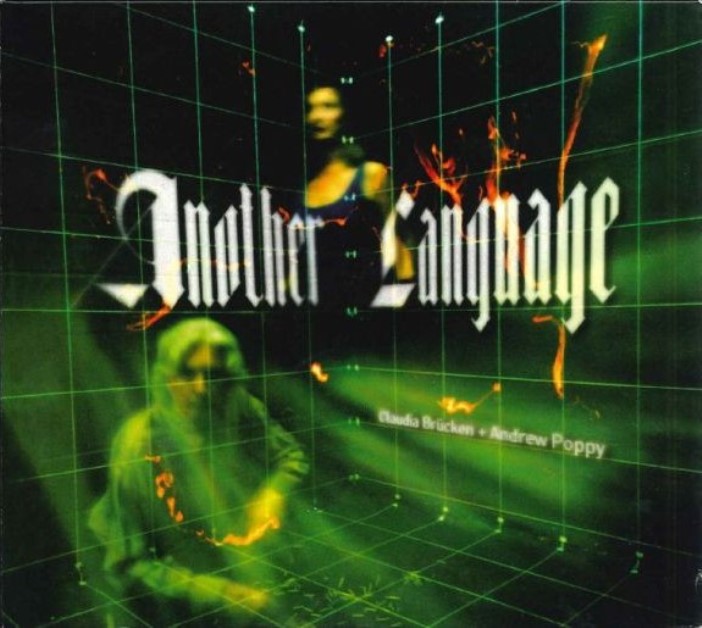
In 2005, Poppy partnered up with Claudia Brücken for ‘Another Language’, a collection of cover versions using minimal instrumentation featuring songs by solo artists such as Kate Bush, Grace Jones, Marianne Faithful, David Bowie, Elvis Costello and Elvis Presley as well bands including RADIOHEAD, ASSOCIATES and THE PIXIES. That same year, a boxed set of all Poppy’s recordings for ZTT including an unreleased album ‘Under The Son’ was issued.

Poppy’s vast portfolio has also seen scores for theatre, opera, film, contemporary dance and art installations, but his latest project sees him adopt the Mister Poppy persona for an avant-garde vocal experiment entitled ‘JELLY’. “Jelly is like time. Jelly fits any mould. It resists the sentimentality of form” he says, “Jelly is a state of putrefaction before dust. Jelly is the most vulnerable of the body’s materials. You have to crack the nut of the protective skull to reach the meat of the jelly brain. Yum, so this is the seat of understanding and awareness. Yum! ‘I see’ is also ‘I hear you’, locating and judging the proximity of that other juicy presence. Yum!”

Andrew Poppy kindly talked with ELECRICITYCLUB.CO.UK about ‘JELLY’ and a lot more…

Your new album ‘JELLY’ is in 5 parts each around 12 minutes long, has the time duration got any specific significance?

Yes, I think there is something mysterious about 12. The 12 months of the year and the day is divided into two twelve-hour halves. It’s kind of arbitrary, so why does the midnight hour have such significance? It’s when we all turn into pumpkins. Cinderella must leave the ball. Everyone gets drunk on New Year’s Eve, we sing ‘Auld Lang Syne’ and kiss strangers. I wanted to have a way of chopping up a continuous hour of music into equal parts. There are lots of possibilities, but 5 x 12 minutes seemed suggestive. It’s a practical thing, an invisible grid that maybe takes on those mysterious powers through repetition.

You have used your voice prominently on this album, is this why you have introduced the Mister Poppy persona?

I just watched the series ‘Godless’. It’s a contemporary western. One of the main characters, who is both good and bad, is called Roy Good. He goes over to the bad side for a while but gradually makes his way back to the light. Then along the way, there comes a point when he understands what’s at stake and by chance his name gets changed to Mr Ward.

His new name protects him somehow. The narrative is more complex than that, but that’s the basic outline. I’m not hiding from something like Roy Good, but the composing and performing ‘selves’ are different.

For some reason, a number of my friends call me Mister Poppy. So, it’s a christening of sorts and because this is the first time I’ve made a completely vocal album where it’s all my voice. It’s been coming for while though and is there in the three records that precede ‘JELLY’, particularly ‘Hoarse Songs’ and ‘Shiny Floor Shiny Ceiling’.

There is this minimal bass and heavy sense of foreboding looming on the first two pieces ‘Tattoo / Copy Something That You Love’ and ‘Mister Post-Man / No More Fumbling In The Dark’? What’s happening there?

I think the bass sound absorbs some of the anxiety in the language somehow. Sounds are very absorbent. The gunpowder of a firework can be exciting as it cracks and splinters, but gunshots and explosions in real life are terrifying I’m sure.

At the beginning of ‘JELLY 1: Tattoo’, the speaking voice is trying to stop the tick of the clock. But then it changes. Is the speaker – me perhaps – being tattooed by you and also, are you being tattooed by me? There’s a mutual seduction. It has an erotic edge. The voice could be talking about a tattooing pact or a conversation or some sensuous love-making thing that’s happening over a long period of time between two friends or lovers. The sung part ends with the words “a letter to the one you love”. I’m hoping that it’s hopeful.

‘JELLY 2: Mister Post-Man / No More Fumbling In The Dark’ picks up on that idea of the messages that get sent and what we expect in the mail. The love letters and the disappointments in the messages you receive.

The first part of ‘There Is A Walk We Can Make’ could be like SUICIDE if it had been attached to a drum machine and arranged in a more synth-punk rock fashion… but what was the genesis of this track and how it developed?

All the’ JELLY’ electronic tracks were made a few years before the texts. I started by making five electronic pulses at different tempos / BPM. The pulse was divided into two, like the day, with an on-beat and off-beat. Like the bass drum hi-hat in dance music or the hocket technique in Louis Andriessen’s Hocketus.

Your SUICIDE idea is great. I should do it. I really like it when an artist does two versions of a song which aren’t remixes. THE BEATLES’ two versions of ‘Revolution’ are fascinating. And there are two versions of UNDERWORLD’s ‘Ring Road’. My connection with punk drum-machine music would be UNDERWORLD, particularly ‘Second Toughest In The Infants’ and LCD SOUNDSYSTEM. But they are not as minimal as SUICIDE and perhaps the vocals aren’t as sweet.

I go through periods of scribbling poems and phrases and prose-poem type things. They just come somehow. ‘There Is A Walk We Can Make’ was written in the middle of the night. I started remembering the first trip I made with Julia (Bardsley), my partner, and it spiralled off into exploring what it means to be in a different country. The different food and ways of doing things, attitudes to sensuality, love and violence.

I’ve just released a radio edit of ‘There is a Walk We Can Make’ with a video by Julia. It’s on YouTube and Bandcamp.

The synth solo on ‘A General Choosing / Feather in The Flames’ sounds like it might be about to break into Jean-Michel Jarre’s ‘Oxygene 5’? Is that a coincidence?

It’s a good connection but it wasn’t intended. I think Jean-Michel Jarre must have been influenced by Terry Riley’s 60s album ‘A Rainbow In Curved Air’. That’s what I hear in those keyboard lines and patterns. That album and Riley’s approach to repetition, improvisation and pattern making were an inspiration for me as well when I heard it in the very early 70s. I’ve performed Riley, Glass and Reich and in doing that I learnt a different way of composing. A different way from writing songs or sonatas.

The part you mention is a transition between the ‘A General Choosing’ spoken text and the sung ‘Feather In The Flames’ lyric. It’s played on a classic 60s instrument, the Wurlitzer 200 electric piano, that I bought in the 70s. It’s processed with an overdrive pedal, live, so it sounds much more electronic, especially in a reverb.

‘On The Back Of The Seat in Front of Me’ is a poem set to a piano mantra with a classically oriented interlude, what was the idea behind it?

The idea of the poem was a response to all the photographs on the inner sleeve of my first album, ‘The Beating of Wings’. I wrote the text for a staged-version of ‘The Beating of Wings’ that was presented at the Capstone Theatre, Liverpool in 2017.

Back in 1985, I carefully chose the photographs for the album because I wanted to suggest the connections and the spaces between writing something, the performing of it, the recording of it and the audience’s role in all that. So, the text starts off talking about what a vinyl record is as a physical thing. As the title suggests, with certain caveats, ‘The Beating of Wings’ album was some kind of “take-off” moment for me.

What I like about the piano on this track is that it connects with the piano on ‘Goodbye Mr G’ on my second album ‘Alphabed’. The piano floats in and out. It’s not really a solo. It could be a minimalist piano piece or a sample of one.

Is there a particular track from ‘JELLY’ which gives you the most satisfaction?

Dave Meegan made the final mixes. We talked about the details in a lot of depth. Sometimes the doubts I had were things that really needed attention and at other times, they were just a nervous self-consciousness. It’s a life saver working with someone you trust. Without it, some doubts escalate and start to unravel what you’ve made. In some ways it’s a creative thing. Tearing it down and starting again can be good. You get another piece. Other times you realise, much later, that the original version was OK.

But once it’s done and mastered and art-worked, it is what it is. Until… scratch, scratch, scratch, those doubts… Some moments on ‘There is a Walk We Can Make’ began to itch. That is until Philip Marshall, who designed the CD, told me it was his favourite track. So, finally, I could relax.

Actually, the whole project, as a complete thing, gives me the biggest buzz. It’s one piece in 5 parts. The co-ordinating of all the elements has its up and down moments. When I was working on ‘JELLY’, I saw an exhibition of large Rauschenberg paintings called ‘Nightshades & Phantoms’. They are a collage of photographic images screen-printed onto brushed aluminium. The way the images are buried in the material somehow gave me permission. I saw some analogue with what I was doing. I’m pleased with the way ‘JELLY’ sounds and flows, especially after the brilliant mastering by Stephan Mathieu.

Photo by John Hollingsworth

Is making music more straightforward for you these days compared with back in the day? What are your favourite tools?

Maybe it is more straightforward now, in that I have accepted I like to do things in different ways. I’ve been restless from the beginning.

I like to start in a different place with each new project. I use pencil and paper to notate things, sometimes from the get-go. But sometimes, once the piece has been built in the studio, notation gives me a more detached perspective on the pitches and rhythms. So, near the end of making ‘JELLY’, when all the tracks and the vocals were done, I notated the vocals and made myself a score for each piece. The score helps me to move things around and to understand how the musical space is working.

Another tool is the studio. I want to let the technology into the creative game. Back in the day, the studio was a building with an engineer and a tape op / assistant and a technical department who fix things when they break. And in some studios, like Sarm West, a kitchen and a Jamaican chef who cooks the most amazing chicken, rice and plantain! The point is, now, the studio is a piece of software that you can even use on your phone, on the train. That’s definitely more straightforward.

I like being able to get up and go straight into my studio and pick up what I was doing the day before. It’s also a bit like getting up having coffee and going to the piano and playing stuff for a couple of hours. It may be a new piece I’m working on, or it may be doing stuff by other people. The last year or so I’ve been bashing through the Philip Glass piano etudes. They have such amazing energy. Like Jerry Lee Lewis or Barrel House. They’re actually quite bawdy. So, the piano is the original creative tool for me. I doodle around on the keyboard because notation can seem too complicated and takes me away from making a sound.

How do you think you have developed as an artist since your first two ZTT albums ‘The Beating Of Wings’ and ‘Alphabed (A Mystery Dance)’?

The question goes to the heart of it somehow. ‘JELLY’ is a small break-through moment. I’m feeling more comfortable with performance. I don’t have to think about identity. It’s out of my hands anyway.

I don’t have to decide between being a composer or playing the piano or singing or making a record. I can feel they are all legitimate because it’s what I’m doing.

Going back to the question about the name Mister Poppy – it’s a bit like the Portuguese poet Fernando Pessoa, who wrote under lots of different names and personas, each with a different style and values. One is a shepherd, one is a futurist. I think everyone has different voices and versions of themselves in the same skin.

So those two albums set up a kind of oscillation. ‘The Beating of Wings’ is mostly acoustic pieces with completely notated scores for me and other musicians to play, for example, ‘32 Frames For Amplified Orchestra’.

‘Alphabed’ is a studio record. The pieces are mapped out with notation in some kind of sketch or short score, with some notated parts for the singers and instrumentalists. But the orchestration and arrangement is made in the studio, with different keyboards and a sampler, by trying out different sounds and improvising.

In 2005, you released ‘Another Language’ with Claudia Brücken which comprised of minimally structured covers, have you discussed possibly doing a second volume?

It was a great project and developed very organically. We knew each other from working at Sarm West Studios at the same time in the 80s and were both on the bill for ‘The Value of Entertainment’ show in the West End. 15 or so years later we were chatting at a party and ‘Ruby Tuesday’ came on and we started talking about how interesting it would be to do a cover. We didn’t do that one in the end!

For me ‘Another Language’ connects to the arranging things I did in the 80s: PSYCHIC TV, NITZER EBB, BLACK and THE THE. But it probably connects most with the three arrangements I made for ERASURE, because I started with just the vocal line, and rebuilt the song from the inside. Which is what I did with ‘Another Language’. The original tracks by the original artists are perfect somehow. The only thing to do is to try and reinvent the song from another point of view. I’m very pleased when people ask about a second album. It’s a vote of confidence. We see each other socially but are both busy with our own projects at the moment.

You have ‘Ark Hive of A Live’ coming out at the start of 2023, what is the concept behind this collection?

If ‘JELLY’ is picking up a thread of ‘Alphabed’, with its vocal and electronic and multitrack studio processes, then ‘Ark Hive of A Live’ is echoing ‘The Beating of Wings’, with its collection of mostly acoustic instrumental concert pieces. All the pieces on ‘Ark Hive’ are live performances recorded straight to stereo. But it’s not really an album or even a box set. There is a folded sleeve containing the four CDs and a book with 128 pages of writing and images, all contained in an archival slipcase. The book part is quite substantial, with writing by me about the pieces as well as poems, prose-poems and reflections. There are four great pieces of commentary from Paul Morley, Leah Kardos, Rose English and Nik Bärtsch.

One of the touchstones for me, when I was talking with CJ at False Walls and the designer, David Caines, was a book by Moyra Davey called ‘Les Goddesses / Hemlock Forest’. Her work is an intriguing hybrid. She is a photographer and filmmaker who writes. Her book is full of photographs accompanied by writing that seems like a memoir and then a historical biography or documentary, that tips over into a review of something. The fragments swirl around. Reading the book, you bounce between the photographs and the writing.

There are many paths through the memory portal that is an archive. The ‘Ark Hive’ images of performance and performer portraits remember and suggest the diversity of ways music happens. So that, along with the writing and the recordings, some kind of hybrid experience emerges from the words, music and images. In some ways it’s what is happening all the time. Seeing and listening and reading all feed me at the same moment.

The movement between modes is the basic concept of the project and is captured in the two images of the title, the Ark and the Hive. It became a way of thinking about the archive. It’s collection of fragments. A collage.

What are your plans with regards future projects?

More performances and releases. I just did a CD launch event at Iklectik in London where I performed material from ‘JELLY’, ‘Hoarse Songs’, ‘Shiny Floor’, ‘Shiny Ceiling’, ‘Ark Hive’ and ‘The Beating of Wings’. There’s a Tape Worm event being planned by Philip Marshall and Travis Elborough for early in the new year. I’ll be involved in that. Venue TBA. And also a launch event for the ‘Ark Hive’ probably at the end of January.


ELECRICITYCLUB.CO.UK gives its sincerest thanks to Andrew Poppy

‘JELLY’ is released by Field Radio and available as a CD and download available from https://andrewpoppy.bandcamp.com/

http://www.andrewpoppy.co.uk/

https://www.facebook.com/profile.php?id=100063715171165

https://www.instagram.com/mr_poppy/

https://open.spotify.com/artist/0hxJWtLrN9a710B9TBPjsU


Text and Interview by Chi Ming Lai
6th December 2022

xPROPAGANDA Live in London

With “x” marking the spot in 2018, Claudia Brücken and Susanne Freytag launched themselves as xPROPAGANDA to perform ‘A Secret Wish’, the 1985 album released by ZTT which was recorded with their former bandmates Ralf Dörper and Michael Mertens as PROPAGANDA.

Dubbed “ABBA in hell”, the quartet’s album was produced by Stephen Lipson and heralded the advent of sampling and digital synthesis. But during those shows, Brücken and Freytag realised they needed more material.

With Lipson on-board to helm a brand new album, the end result has been an excellent collection of songs entitled ‘The Heart Is Strange’; both a debut and a continuation, the sonically satisfying long player was given its live debut at The Garage, the very venue where xPROPAGANDA became an entity.

The nine piece live ensemble was crammed onto the small stage with Brücken and Freytag joined by Lipson and David Rainger on guitar as well as James Watson and Philip Larsen on keyboards. Drummer Paul Jones and percussionist Luís Jardim were almost hidden on opposite sides of the stage while Nick Mead made appearances as appropriate on Flugelhorn and trumpet.

Beginning with the first seven tracks from ‘The Heart Is Strange’ in order, ‘The Night’ provided a lively cacophony of sequenced digitised bass, crashing beats and sweeping synthetic strings in true ZTT style with a long intro before Brücken broke into song. However feedback, particularly on Freytag’s mic and the buffering glitches on the visuals made it a shaky start.

More metronomic, ‘Chasing Utopia’ saw Freytag offer her distinctive spoken harmony next to Brücken before an alluring German monologue. Lyrically, ‘The Heart Is Strange’ has focussed on the world’s socio-political landscape and with commentary on fake news as well as social media’s unrealistic representation of beauty culture, ’Beauty Is The Truth’ came over quite aggressively with the two Germans sparring in their contrasting vocal styles.

Sounding at times like PET SHOP BOYS ‘Rent’ in its bassline, ‘Only Human’ acted as a moody breather although a synthetic rock edge propelled ‘Don’t (You Mess with Me)’ while with an exotic swirl, ‘No Ordinary Girl’ saw Freytag make reference to ‘A Secret Wish’ with a knowing “Don’t be a fool!”.

One of the best numbers on ‘The Heart Is Strange’, ‘The Wolves Are Returning’ gave a stark warning on rise again of extreme right wing agendas. Despite its bounce and superb twin guitar interventions, the message was poignant coming from two Germans whose grandparents’ generation had made the mistake of opening up the door to the Nazis by “doing nothing” and looking away.

The world needs to listen to people who know and understand that the likes of Boris Johnson, Jacob Rees-Mogg and their band of merry posh boys are actually veiled fascists with no interest in the plight of the British people. Only there to line the pockets of themselves and their mates, they are drunk on power with no motivation to govern, all while hobnobbing with criminal Russian oligarchs. The US saw common sense and toppled Trump, so that fraudulent grifter who pretends to be a Prime Minister needs to be next on the list…

The use of Brothers Grimm imagery in ‘The Wolves Are Returning’ was also highly appropriate, especially in relation to the UK’s Home Secretary Priti Patel, a vile woman so evil that comedian Bill Bailey accurately described her as “Cruella de Vil without the self-confidence issues…”

With their repertoire now satisfactorily expanded, the final third of the show featured highlights from ‘A Secret Wish’, beginning with the unsettling cinematic glory of ‘Dr Mabuse’. The machine rhythm of ‘The Murder Of Love’ maintained the momentum while with an equally percussive rumble, the cover of JOSEF K’s ‘Sorry For Laughing’ headed towards a powerfully enjoyable ‘P: Machinery’ to close the main set.

For the encore, Brücken gave a spirited first verse of ‘Duel’ backed by solo piano before the band joined in on the chorus, accompanied by the rousing crowd for a nostalgic high. With the love clearly being felt in the room, Freytag poetically took the lead on ‘Ribbons of Steel’, the cinematic closer from ‘The Heart Is Strange’ to finish. With a haunting narrative on the post-war division of Germany and The Berlin Wall which physically and ideologically split families, friends and lovers, its Cold War references had resonances with today’s world events.

Presented as a starker 21st Century follow-up to ‘Dream Within A Dream’ from ‘A Secret Wish’, with the declaration that “I’m trapped on the wrong side, or is it the right side”, the sentiment could be applied to those with common Ukrainian / Russian heritage now set against each other in a pointless war or closer to home in history, those Chinese seamen that served in the Merchant Navy during the Second World War who were suddenly rounded up and deported with their British-born families never told of their fate; more recently, there has been the disgusting Windrush scandal.

Those heinous repatriation policies fronted by that smirking race traitor Ugly Patel, in her own belief that her status is smugly safe as a Cooper, only highlighted the total lack of humanity existing in the current Tory government and provided food for thought…

Claudia Brücken and Susanne Freytag said: “We always thought it was a shame that an album as distinctive and acclaimed as ‘A Secret Wish’ seemed destined to be a one-off”. Tonight in London, that situation was formally corrected and presented to many satisfied faces.


With thanks to Stuart Kirkham PR

‘The Heart is Strange’ is out now by ZTT in CD, 2CD, vinyl LP, red vinyl LP, Bluray audio and digital formats

The ‘Secretstrange’ 2022 tour of Germany includes:

Berlin Columbia Theater (2nd November), München Schlachthof (4th November), Frankfurt Nachtleben (5th November), Bochum Zeche (6th November), Hamburg Kent Club (8th November)

https://www.xpropaganda.co.uk/

https://www.facebook.com/xPropagandaOfficial

https://twitter.com/_xPropaganda

https://www.instagram.com/_xpropaganda/


Text by Chi Ming Lai
Photos by Chi Ming Lai and Richard Price
28th May 2022

« Older posts