Category: Interviews (Page 30 of 117)

xPROPAGANDA Interview

Photo by Kai Freytag

As PROPAGANDA, die klassik quartett of Claudia Brücken, Susanne Freytag, Ralf Dörper and Michael Mertens dubbed “ABBA in hell” released their only album together ‘A Secret Wish’ in 1985 on ZTT.

Featuring the hit singles ‘Dr Mabuse’, ‘Duel’ and ‘P: Machinery’, ‘A Secret Wish’ was highly regarded with admirers including Martin Gore, John Taylor, Jim Kerr and Quincy Jones. PROPAGANDA had emerged from Düsseldorf’s post-punk art scene which had often gathered at the Ratinger Hof pub on Ratinger Straße.

Previously, Brücken and Freytag had been in an all-girl group called TOPOLINOS who appeared on the compilation ‘Partysnäks’ in 1982; their track ‘Mustafa’ became a favourite of the late John Peel who played it on his late night BBC Radio1 show.

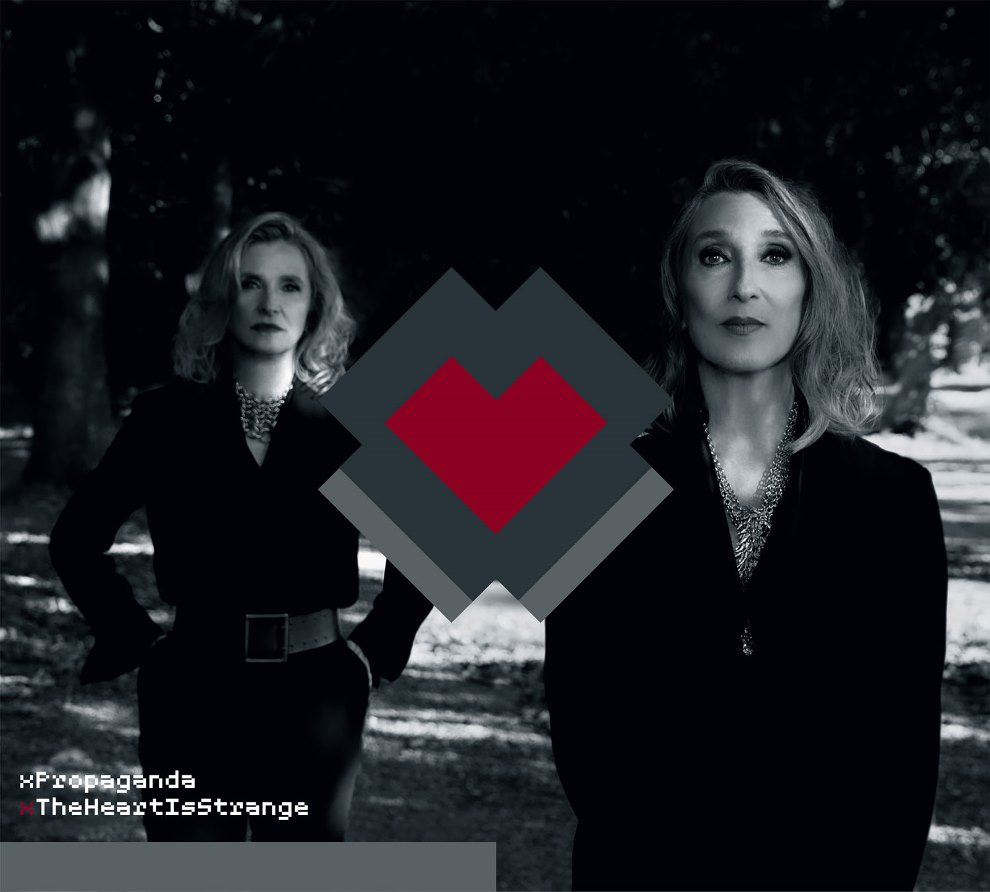
But “x” marks the spot and with it, Claudia Brücken and Susanne Freytag have rebooted the esteemed brand as xPROPAGANDA with ‘A Secret Wish’ producer Stephen Lipson helming for an excellent collection of all-new material entitled ‘The Heart Is Strange’.

As another hope feeds another dream, during a break from live rehearsals for the upcoming London showcase of ‘The Heart Is Strange’, Claudia Brücken and Susanne Freytag kindly talked to ELECTRICITYCLUB.CO.UK about the album’s creative genesis and realisation.

Over the past few years, you have worked together on the ‘This Happened’ shows and the song ‘Sweet Sense (Of) Liberation’ on the ‘Beginn’ album with Jerome Froese, but when did the impetus to do a project together come about?

Susanne: It started in 2018 when we played ‘A Secret Wish’ at The Garage and we thought we needed some new material. We had been thinking about this for a long time and thought it would be nice to have some new songs to expand our repertoire a bit.

Photo by Jimmy King

How do you look back the reception for those shows at The Garage?

Claudia: Amazing, it was just incredible that people from all over the world came, from Japan, America, Mexico and Europe. It was fantastic to see and you could feel it while we were performing. It was great to be working with Stephen Lipson and Luís Jardim in the band and it worked so well. During rehearsals back then, we already thought it would be nice to have new material.

You initially launched yourselves as D:UEL and did gigs under that name but how was it decided to settle on being called xPROPAGANDA?

Claudia: At some point, we thought we would call ourselves after a song we’d done but we questioned it. For that moment, we thought it would do, but we thought we should maybe find a different name…

Susanne: …and find an arrangement with Ralf and Michael to be able to call ourselves xPROPAGANDA. But this took us some time to negotiate; that’s why went under D:UEL.

What are you own favourite recollections of making ‘A Secret Wish’?

Claudia: Mine is being in Sarm West in this amazing atmosphere in Basing Street, surrounded by really creative people. There were three studios, Bob Marley recorded there in the 70s, and it had an incredible vibe. At that point, ZTT were in the same building so it felt really electrifying.

Susanne: It was about being in London, being in the studios, working with Trevor Horn, Stephen Lipson, meeting David Sylvian… KILLING JOKE were in the studio and obviously FRANKIE GOES TO HOLLYWOOD, it was just a very exciting time.

What was it like to meet David Sylvian, did either of you have a crush on him?

Claudia: We were real admirers of him and his work but we weren’t star struck or anything, we took it in our stride…

Susanne: … I loved JAPAN so I think I was a little bit! *laughs*
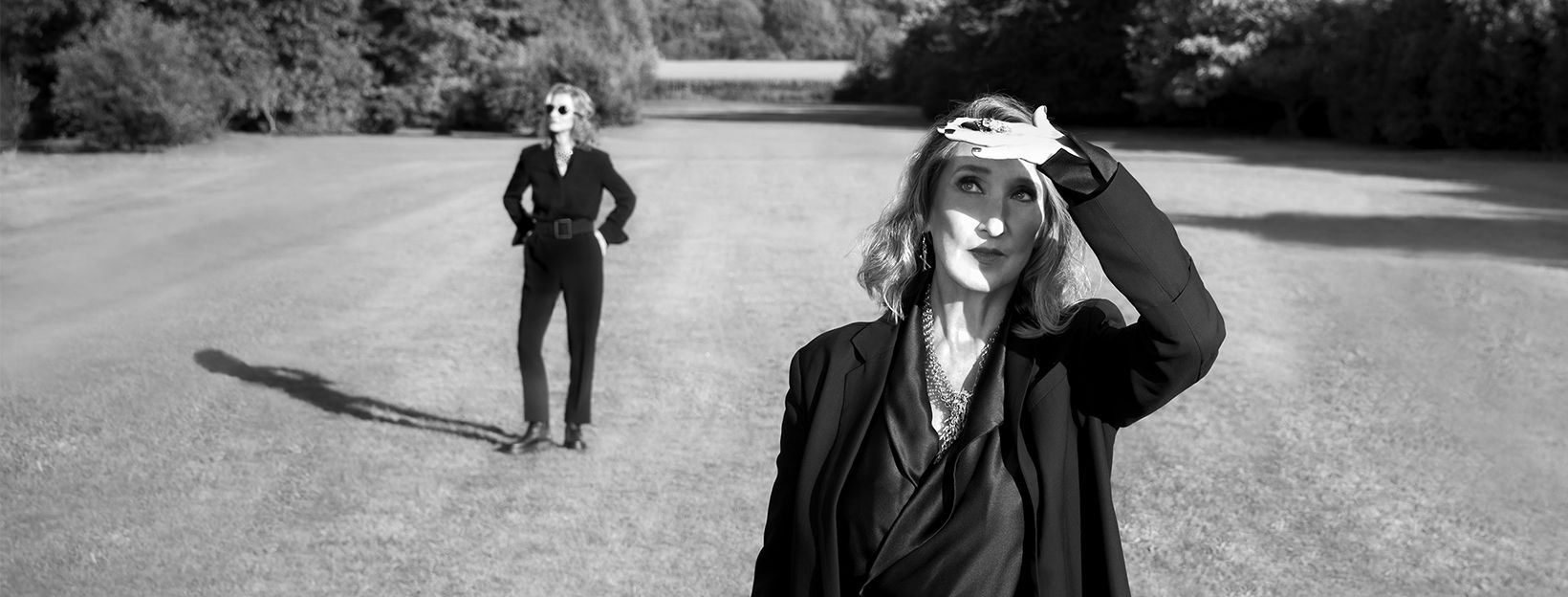
Photo by Jimmy King

Given your history and the fact that he was in the xPROPAGANDA live band, was it a no brainer that Stephen Lipson would be involved in ‘The Heart Is Strange’?

Claudia: It seemed so obvious as he did ‘A Secret Wish’… both Susanne and I had this sentiment that we wished there had been another album after that with our involvement. Throughout the years, Stephen said “Girls, if you ever want to do something, I’m here”

Susanne: He’s a very busy guy working with Hans Zimmer on films so it took a bit of time…

Claudia: …but then at some point, it was the right time. But the dynamic didn’t change too much because for us, the Stephen then and the Stephen now, although we have all changed in some ways, it was all so easy. We had common ground, shared experiences and stories to tell, so we are still the same people.

Another name on ‘The Heart Is Strange’ is John Owen Williams who produced the Claudia solo album ‘Where Else…’

Claudia: John lives locally to me as does Stephen, I worked with him so well on the ‘Where Else…’ album that I thought it would be good to work on melodies and lyrics with him again. He was really open, it was just a natural process, it’s good to have someone to throw ideas to, but not as a band member as such.

Did you consciously decide to incorporate some classic ZTT references into ‘The Heart Is Strange’? I’m thinking of trumpets and proggy guitars alongside the crafted electronic backdrop etc…

Claudia: That’s Stephen’s production style so I guess it would naturally resemble that, because that was the sound. It’s just what comes out of us, it wasn’t like “oh, we need to make sure it sounds like PROPAGANDA”.
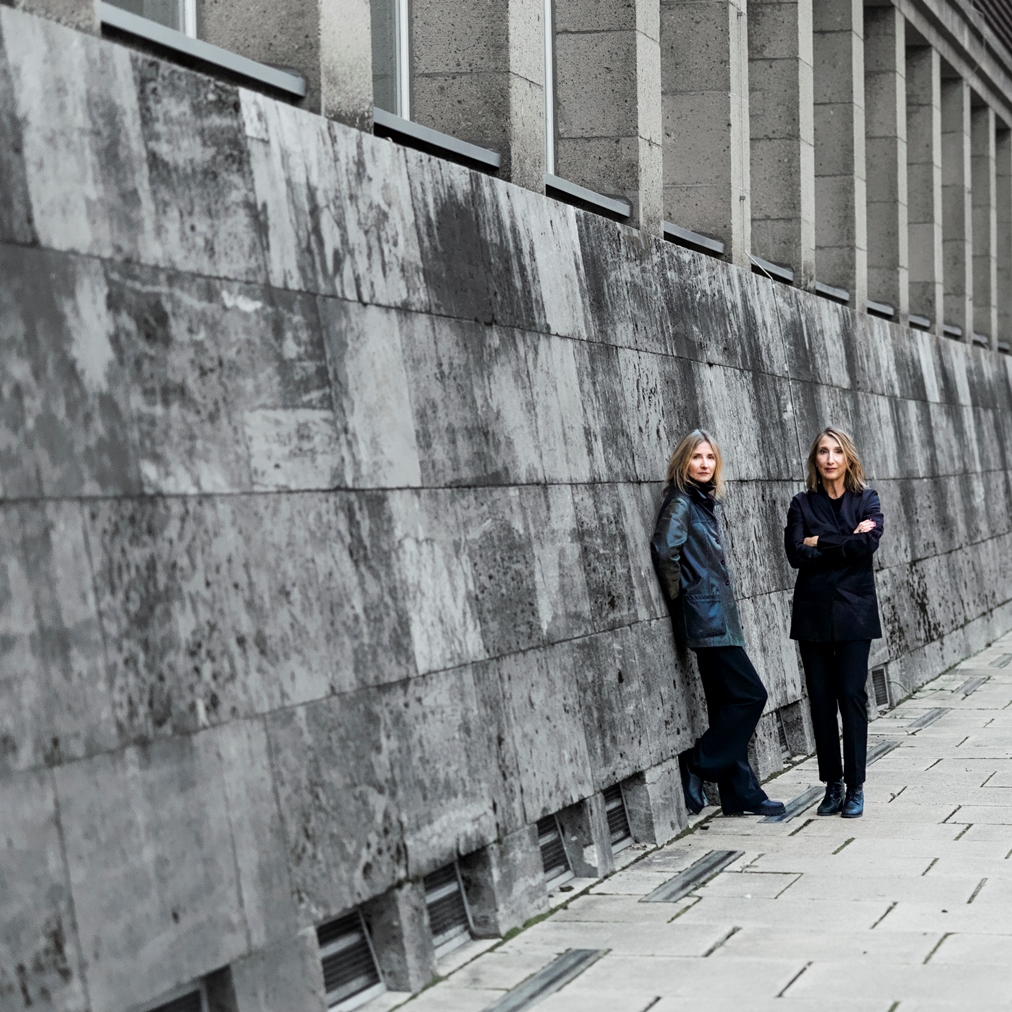
Photo by Kai Freytag

The opener ‘The Night’ does not disappoint with a dancey cacophony of sequenced digitised bass and percolating percussive colours, it does have that classic widescreen Lipson sound… 

Claudia: On this, we collaborated with Pete Murray who is a producer friend of Stephen. We asked Stephen if he had any ideas flying around in his library which he shared with us. So we picked a few as a starting point. I wanted to make a kind of poem or prayer, and then the whole idea came about, it’s a three parter. When Covid came, we would continue to develop things by file sharing but luckily, we had all the vocal parts already recorded. Stephen then worked his magic.

There’s quite a long intro ‘The Night’ before the vocal comes in which adds to the tension, it’s something that is missing from a lot music now, that anticipation…

Claudia: I’m really happy you say that because I like music to breathe and take you on a journey… a lot of songs these days are just designed for radio and they put on lot into that three and a half minute timeframe. I like things when they are stretched.

‘Beauty Is The Truth’ is more aggressive with the two of you sparring?

Claudia: We are just having a dialogue aren’t we? Susanne says something, then I say the opposite to prove her point, it’s very much a play and it’s inspired by John Keats, the romantic poet. It’s challenging romanticism as well. It has lots of different layers, like about fake news and warning people to be alert and be careful.

Susanne: For me, it also deals with social media and all this beauty culture, especially all these teenage girls and the image they want to present which is not real.
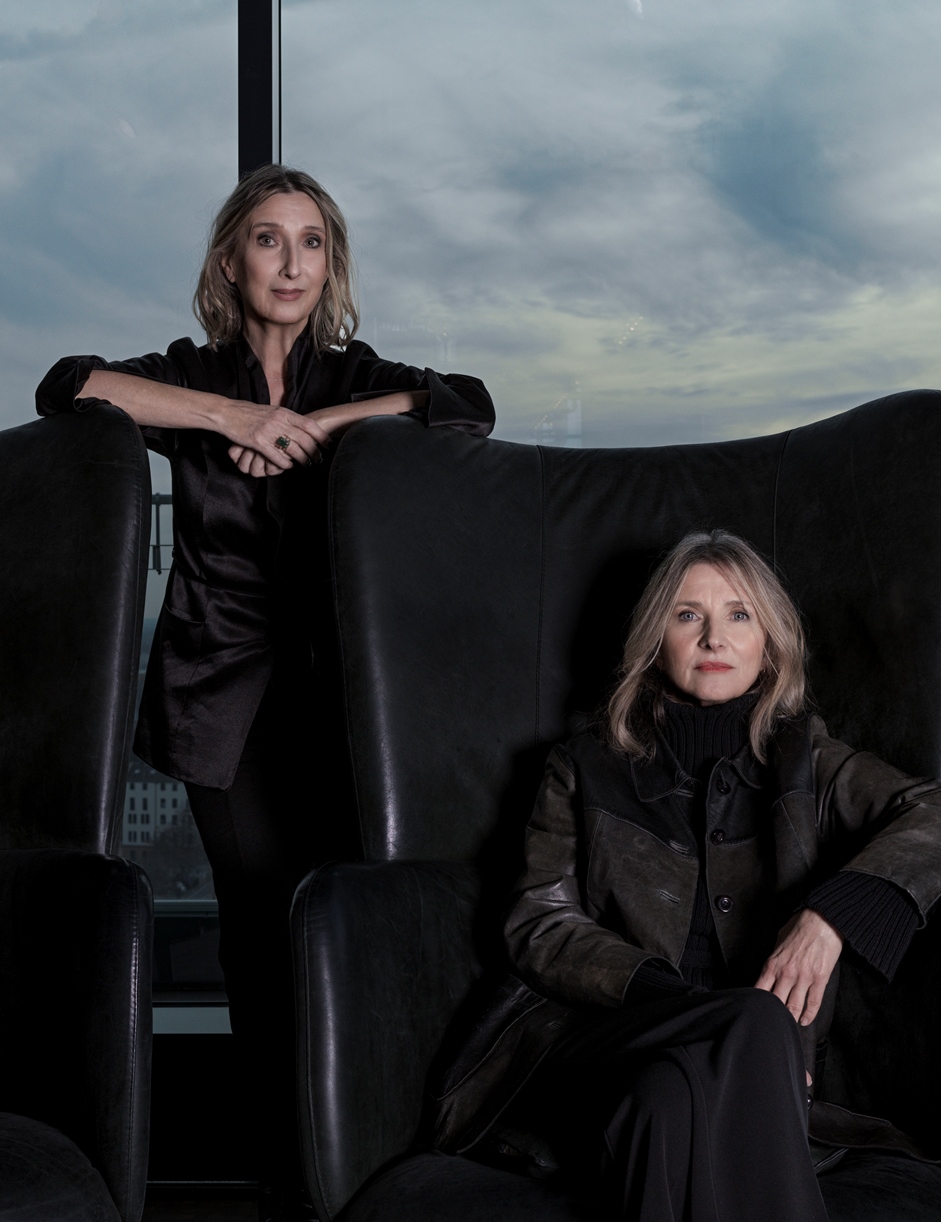
Photo by Kai Freytag

Photo by Kai FreytagHow you feel about social media, both in the context as artists and as mothers?

Claudia: I think it’s terribly addictive in how you are drawn to it, it’s a bit insane really how many hours people spend on it.

Susanne: As mothers, I am glad my two children are grown-up and that I don’t have teenage daughters. I see friends with teenage daughters where they can quickly get into this wanting the miration from others, looking at the clicks and struggling with themselves… it’s sad to see and I know somebody in Sweden where use of computers in schools started earlier than in Germany. But the amount of anorexia in school girls in Sweden is so high and my friend sees the direct link as being the age when they start using computers or are given mobile devices. I thought it was interesting, I never saw this connection with the age that children are introduced to computers…

Claudia: …and there’s this obsession with self-image…

Susanne: …and that’s what starts it, they become 11-12-13 and there’s this peer pressure to appear beautiful on social media.

Social media brings the fans a step closer to the artist than back in the day when they would have been more on a pedestal…

Susanne: For me, it’s really stressful, I’m happy if I don’t have to look at it. But you also need it because this is the modern way of advertising yourself and your product so…

Claudia: …it’s a double edged sword *laughs*

‘Only Human’ offers a mid-album breather?

Claudia: We felt a bit odd and vulnerable at that point of writing, it was thinking “hey, we’re all human”, all this uncertainty that’s going on…

Susanne: …it was Covid related.

Is ‘Don’t (You Mess with Me)’ something of a female empowerment song, given some of the challenges in your creative past?

Claudia: Yes, it is! *laughs*

Susanne: It is also about personal lives, being angry and female empowerment.

Claudia: It’s being fed up, we went to Stephen’s studio and he said “I’ve started this riff” and we were really impressed. So instead of what we came in for, we concentrated on this…

Susanne: ….it happened very quickly…

Claudia: …and we just wrote it on the spot basically! By the end of the session, we had finished the song and recorded it. At the time, it was cathartic for all of us, this burst of energy got captured. This is something that doesn’t happen that often. But I think we were all in this p*ssed off mood and that drove it *laughs*

There’s an exotic mystical swirl in ‘No Ordinary Girl’ with a knowing “Don’t be a fool!”, where did this combination come from?

Susanne: We were joking around with references to ‘A Secret Wish’ *laughs*

Claudia: We were thinking of sinister things that Susanne should say in contrast to the vocal melody so that came up *laughs*

Photo by Jimmy King

The melody is quite Eastern?

Susanne: It is, it’s a little bit strange, the things I am saying are a bit…

Claudia: …disturbed! But I think the melody sounds a bit French and filmic. I also really like the string steps, those figures at the end, I think that was Pete Murray with his beautiful keyboard playing. But it also has something exotic so that was me following the sound. I thought it would be nice to have a torch song on the album.

So are you dictating ideas and sketches to your phone now?

Claudia: All the time, a melody just pops into your head and you can immediately sing it. I’ve got about 1000 voice recordings on my phone, I just capture things.

Is it generally through vocal melodies that you write your musical ideas or do you have a mini-keyboard or software on a device?

Claudia: It’s pretty much in my head… or I will hear some nice chords somewhere and I will use that for referencing.

From the bounce of the track, the vocals from the two of you and a magnificent sax solo from Terry Edwards, ‘The Wolves Are Returning’ with its narrative on the rise of new far right using Brothers Grimm imagery really gels with a big expansive sound, it’s my favourite on the album…

Claudia: That’s so great that you say that, I think it’s so mad that there is such a long saxophone solo, it’s really bold to do that in a song these days! When I heard it, I thought “I love that!”, it’s so unexpected.

I love the confusion the sax causes, its processed so it sounds like a guitar but towards the end of the solo, the intonation is such that you are thinking “that’s not a guitar!” *laughs*

Claudia: That’s what I like about Stephen’s production, he just keeps messing and makes bold choices.

Susanne: It’s such a mad sax solo, it really fits the song.
Susanne’s son Alex also did some programming on The Wolves Are Returning’?

Susanne: Yes, he was working on some basslines and other things. We had talked about getting some different elements in there. One was Terry Edwards and the other was Alex; he lives in Berlin so that weird vibe came in. I was working with him on a few things so we looked at something we could integrate.

Claudia: Stephen is very open to ideas from others, he has this experimental mind which is great to have for creativity.

I’ve always felt the best producers are the ones who have progressive rock sensibilities, like Trevor Horn, Stephen Lipson, Mike Howlett, Zeus B Held and Conny Plank, they dare to apply this stuff to pop music…

Claudia: Yes, I like the mixing of genres so that you’re not this or that, I don’t have a purist mind, neither has Susanne or Stephen. A good song is a good song and you can style it in any way.

The closer ‘Ribbons of Steel’ could be considered the follow-up to ‘Dream Within A Dream’?

Susanne: The ‘Ribbons of Steel’ are a reference to barbed wire, it was inspired by The Berlin Wall. When it was built in the 60s, it just divided the people and the streets. So it’s about two people, one is in the East and one is in the West, who are unable to see each other again.

Claudia: There’s this loss of contact, this feeling of not knowing and having a lot of unanswered questions, it’s a story about the unknown, being plagued by uncertainty.

That feeling resonates with current world events…

Susanne: I was thinking that.

Was there the fascination for Berlin in Düsseldorf back in the day like there was for people in the UK and the US?

Claudia: In the 80s, definitely. The Berlin club scene in particular, it was completely mad… I remember going to clubs there and it was like WOW!

Susanne: Also, in Düsseldorf, places had to close at 1.00am but in Berlin, they were open all night. I remember being in an amazing discotheque and somebody opened the door and there was this really strange light coming in, not realising it was daylight! It was fascinating but it was quite dark, being in the Eastern Bloc…

Claudia: …but that is what made it so special.

Susanne: Of course, Berlin was full of students and people who didn’t want to go in the army so they brought a whole different culture to the place.

How are rehearsals going to present ‘The Heart Is Strange’ live alongside songs from ‘A Secret Wish’, who is in the band?

Susanne: It’s going well, it’s quite a big thing to present the new songs and everything, it’s huge. It’s a lot of work and we have lots of great musicians, it will be exciting!

Claudia: It’s going to be a nine piece band this time, Stephen is joining us in the band, along with Luís Jardim again. There’s also David Rainger who played a lot of guitar on the new album plus James Watson and Philip Larsen on keyboards and the drummer Paul Jones. Rehearsals are going great. We’re doing all the songs from ‘The Heart Is Strange’ and a big chunk of ‘A Secret Wish’.

Will there be any more xPROPAGANDA shows after this May date in London?

Susanne: Yes, there are gigs in Germany in November which have just been announced.


ELECTRICITYCLUB.CO.UK gives its warmest thanks to Claudia Brücken and Susanne Freytag

Special thanks to Stuart Kirkham

‘The Heart is Strange’ is released by ZTT on 20th May 2022 as in CD, 2CD, vinyl LP, red vinyl LP, Bluray audio and digital formats

xPROPAGANDA perform at The Garage in London on 24th May 2022
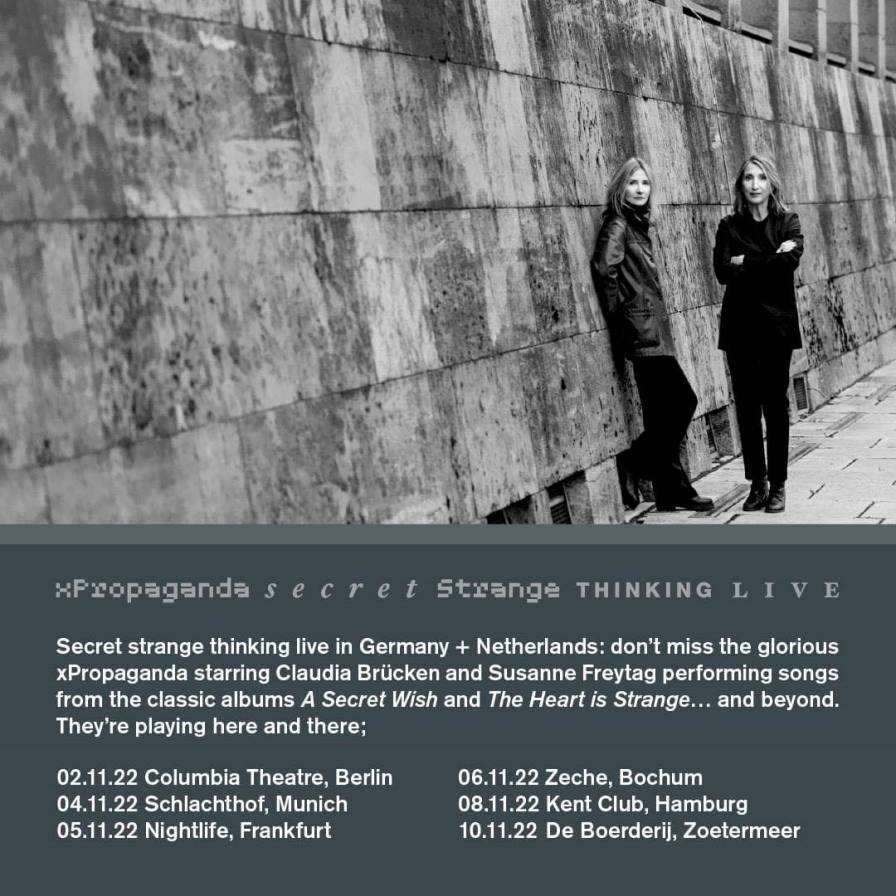
The ‘Secret Strange Thinking’ 2022 tour of Germany and The Netherlands includes:

Berlin Columbia Theater (2nd November), München Schlachthof (4th November), Frankfurt Nachtleben (5th November), Bochum Zeche (6th November), Hamburg Kent Club (8th November), Zoetermeer De Boerderij (10th November)

https://www.xpropaganda.co.uk/

https://www.facebook.com/xPropagandaOfficial

https://twitter.com/_xPropaganda

https://www.instagram.com/_xpropaganda/


Text and Interview by Chi Ming Lai
21st May 2022
A Short Conversation with EUGENE

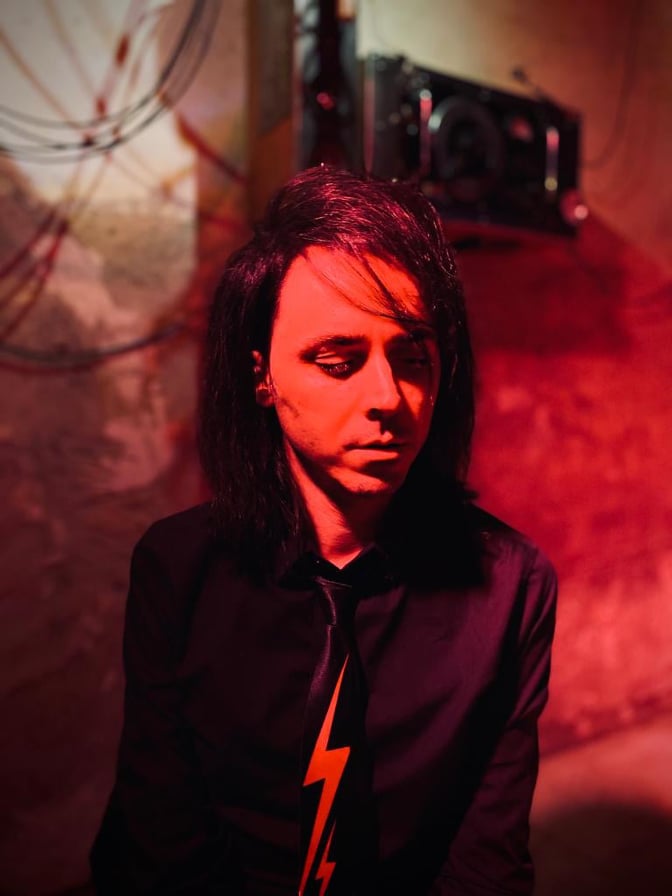
The Milan-based Roman producer EUGENE first came to wider attention in the UK with his single ‘Radiowave’ released by Wall Of Sound in 2019.

An ambassador for the electronic instruments distributor Midiware, he has also been a singing actor for the Italian versions of animated series and movies such as ‘Lego Batman’, ‘Peter Rabbit’, ‘Happy Feet’, ‘Ask The StoryBots 2’, ‘Fireman Sam’ and ‘Thomas & Friends’.

His soundtrack for the surreal short film ‘Lavender Braid’ by American director Magdalena Hill combined synthesizers and voice with prepared piano, violins and the hurdy gurdy, an ancient hand-cranked drone string instrument.

Over the past few years, EUGENE has been keeping himself busy with remixes, live work (pandemic allowing) and releasing a series of singles in the build-up to his debut album ‘Seven Years In Space’. Asking “Can an object float in space for seven years?” in an oblique reference to recent times, the record is a one-way ride through 1890 and 2084.

While there is the throbbing electronic pop of ‘Of Signals & Voices’ and the punchy energy of ‘Gone’, the debut long player sees the Italian musician exploring and expressing from the galactic rock of ‘Dive’ and the arty Italo of ‘Crash’ to the ELO-esque ‘How Would You Define It’ and the electro-funk workout ‘Diagram’.

But there are more cerebral moments too; ‘Undisclos*d’ distorts piano over a slow dark waltz while mixing in Texas Instruments and the vocoder tinged ambience of ‘Ionosphere’. And while David Bowie said we had only ‘Five Years’ and THE CURE felt there were ‘One Hundred Years’, EUGENE synths up ‘A Forest’ by the latter to confirm there are actually only seven!

‘Seven Years In Space’ maintains EUGENE’s assertion that “Pop is not a crime”. He kindly spoke to ELECTRICITYCLUB.CO.UK about his first length album and getting back on the live circuit.

You have been releasing a series of singles to start 2022, is this all leading to a full-length EUGENE album?

Absolutely yes. You know I always preferred to release just single tracks or EPs rather than entire albums, but this time I felt like saying something more. It was basically a communication need. By the way, the album will be out on May 13 and it’s titled ‘Seven Years in Space’.

‘Of Signals & Voices’ has some familiar tones about it, what influenced its sound?

That song came up almost instantly, lyrics included: this is not the first time that it happens to me. Also arrangement was easily completed. It’s all built around a sequenced bass line, with lots of real-time tweaks, but at the end of it I realized I was just simply writing a blues, a sort of ‘Radiowave – part II’, if you pay attention to the lyrics.

I also knew that there was something coming subconsciously from synth heroes Gary Numan, Howard Jones, Thomas Dolby – to mention a few some – and maybe STEELY DAN too, but I tried my best to filter their influence through my own sensitivity.

‘Gone’ evokes a more fully electronic DURAN DURAN?

I think ‘Gone’ is one of the most energetic and elegant tracks I’ve made so far, at least I tried. So many DURAN DURAN tunes got that combination at a very high level. I feel honoured by this comparison, I don’t know if I am up to it, thank you!

What did you think of the most recent DURAN DURAN album ‘Anniversary’ with its two Giorgio Moroder produced songs?

I immediately asked myself: “why didn’t they do this back in the early 80s?”. They did a flawless job. On the other hand, I have to admit that it sounds very celebratory to me, but it’s okay. I guess they’re not here to prove anything else, they’re just having a good time doing what they’ve always done.

There’s some anger coming out on ‘Crash’?

There is anger and a bit of cynicism too. It’s about the end of a human relationship, compared to a furious chase ending in a so-called “perfect crash”, where everything is saved or everything is destroyed: no other options at all! I love the Clint Eastwood voice sample you can hear after the first chorus: “Go ahead, make my day”. I think it adds irony and drama at the same time, it contains the spirit of the whole song.

What is ‘Dive’ about?

It’s about an aesthetic impulse, a relentless search for style that wins over time and fashion, while the world around seems doomed to fall into ruin. The narrator is a kind of futuristic Dorian Gray, crossing a stargate between 1890 and 2084.

Have you bought any new equipment recently that has changed your way of working?

I bought a new Moog synthesizer and a very cool reverb / modulation effect unit called Hypnosis, but actually my method just got even more pragmatic. I’ve discovered the effectiveness through the subtraction of the elements. I also love the unpredictable, I’m learning to exploit mistakes or unexpected situations during the recordings.

You have also been busy with remixes for other artists, like MILANO ‘84’s ‘Lola’, what is your approach to this compared with when you produce your own music?

As for my own music I put no boundaries to creativity and I’m interested first and foremost in being sincere and expressive: remixes work like this too but I see them more connected to urgency, you know, it’s a matter of instinct. That is why I always try to make construction sessions last no longer than a couple of days. I had already been guesting as lead vocalist on MILANO 84’s version of ‘Lola’, originally written and released by Italian cult duo KRISMA in the late 70s.

I found this new version really fascinating, dark and experimental, a bit far away from the usual MILANO 84 new-Italo touch. So when time came to do my remix version, I decided without hesitation to put some Italo disco flavours into it and eventually bring ‘Lola’ back to MILANO 84’s home: during these sessions I spent more time dancing than recording, believe me!

Your take on ‘My Crying Bride’ for KLONAVENUS with its dark and moody synthwave vibes was quite different from your usual sound and very different from the original?

In this case I went way more experimental, heavily pitching voices on downtempo beats and using a low-fi attitude in sound treatment – vaporwave fans might dig this one! The glacial mood of the original track is still there anyway, I just felt like adding some tension and disquiet. I had the idea while listening to the intense Valerie Hely’s isolated vocal track.

You have been backing veteran Italian new wave artist GARBO on his recent tour. For those in the UK who probably won’t know who he is, what is his enduring appeal and what songs would you suggest people should checkout?

GARBO is the first artist in Italy to achieve mainstream success in the early 1980s with a clever combination of rock, pop and subtle electronic textures, which would later be referred to as the Italian New Wave.

As well as being appealing for his minimal and almost androgynous look, his songs seemed to give a voice to a troubled generation in the midst of an identity crisis: it’s amazing how many of his lyrics are still tremendously relevant today.

To introduce you to GARBO’s music I would suggest these four tracks: ‘Vorrei Regnare’, ‘Generazione’, ‘Radioclima’ and ‘Up The Line’.

How was it for you to be out playing live again?

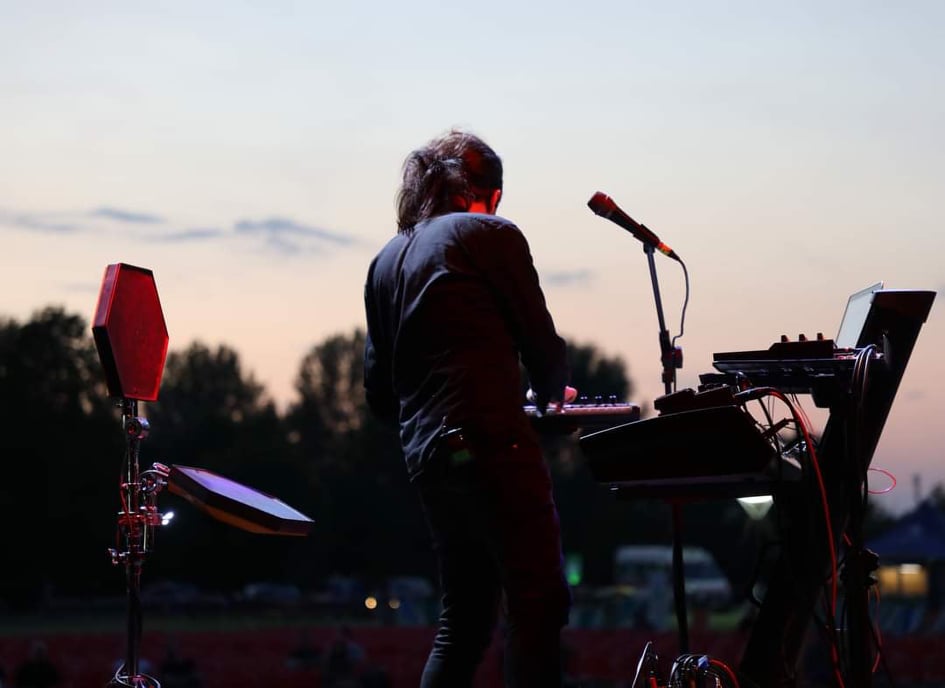
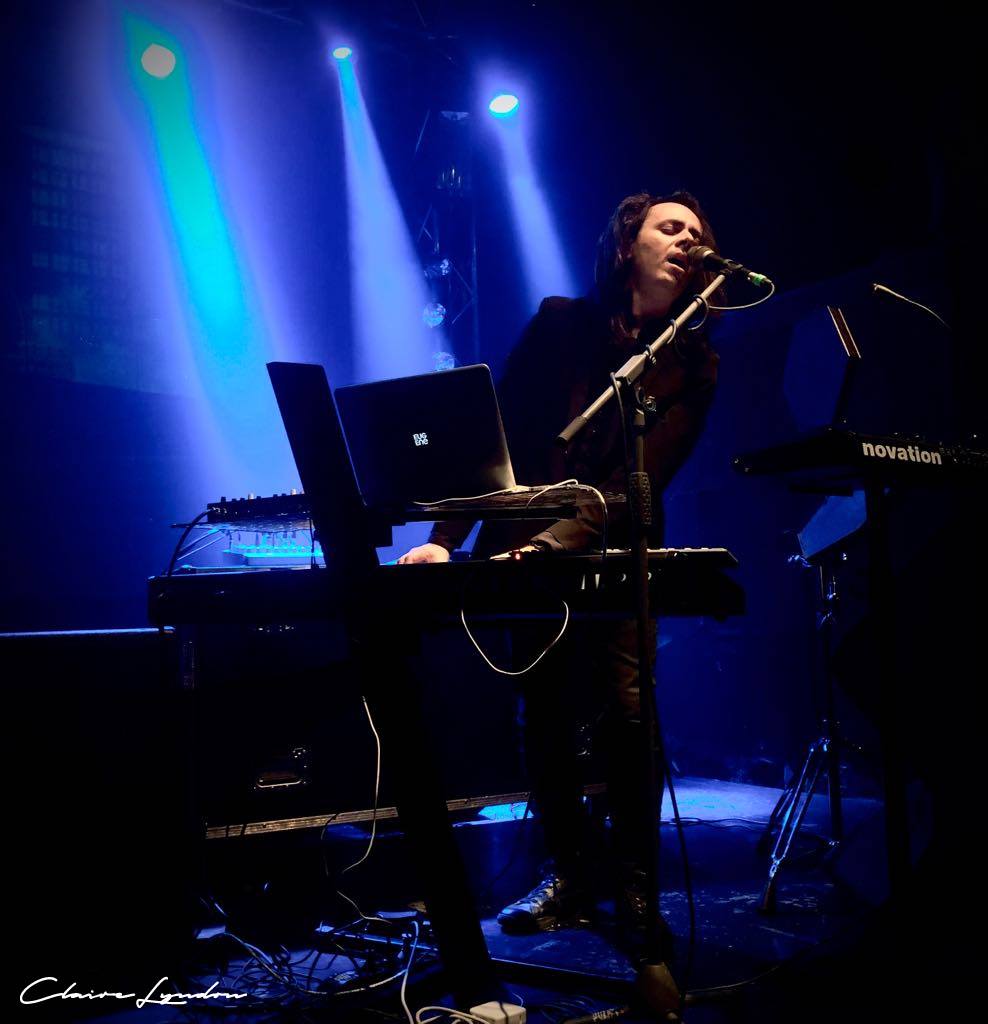
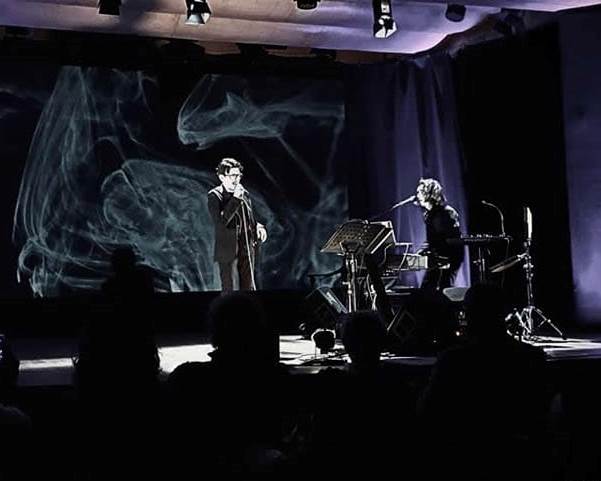
Oh, it was sort of that coming-back-to-life feeling. You know I’m not a bedroom musician, so performing live is the ideal completion of my studio production activity. I missed the excitement of those five minutes before taking the stage, the adrenaline, the exchange of energy with people.

But one show was flooded out, what happened there?

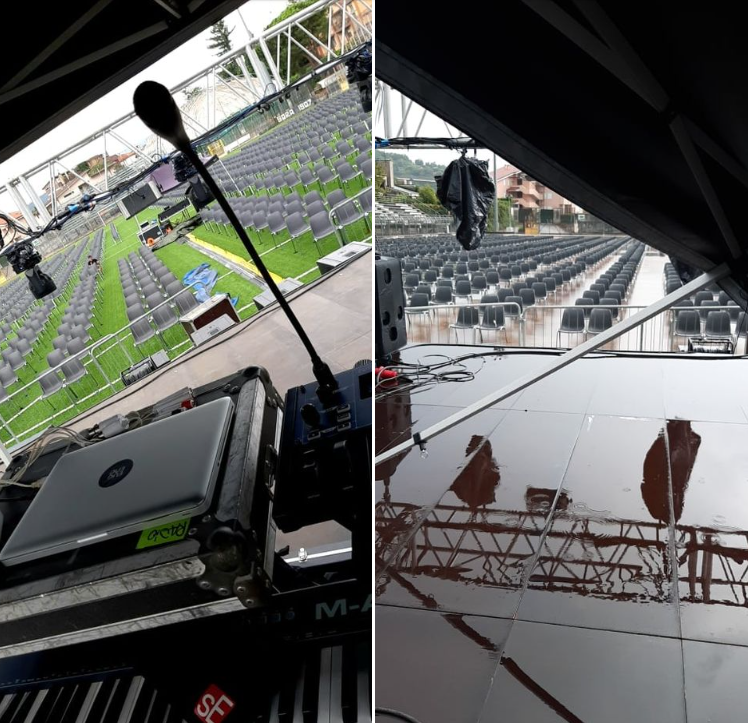
This is an unbelievable story: last August I was in a small town near Rome for a stadium concert as a live session man with a very well-known Italian popstar. It was a splendid summer day… well, until 3 in the afternoon. We were taken by surprise by an extremely violent storm: within an hour and a half the stadium became a huge swimming pool. My bandmates and I took to the covered stage, which was the safest place available, waiting for that bad dream to end. Fortunately, the rescue vehicles managed to “empty” the stadium in a short time and the concert was re-scheduled for the next day.

At that point another problem came up: the bass player was not available for the re-scheduled gig, so the manager asked me if I could play the bass parts on the synthesizers in addition to my usual parts. I’ll tell you, I had a hard time but in the end everything went pretty well.

The ‘Italo Disco Legacy’ documentary celebrated a frequently maligned sub-genre, what did you think of the film?

I enjoyed it a lot, it’s a well-made documentary on this rather underestimated musical genre. It very much reflects the naivety of those times: I suppose there was a great desire to experiment while having fun, albeit with limited means in terms of technology.

What is next for you?

Right these days I’m organizing the promotion calendar with the precious help of my partner-in-crime Claire (Stargazers Inc) – once the physical copies of the album are available, there will be showcases and club gigs, I hope to be back in UK too.

Meanwhile I continue my work as music producer and consultant for other artists, record labels and TV productions, but at the same time Claire and I are always looking for the next exhibition to visit or the next city to travel to.

Boredom doesn’t live here.


ELECTRICITYCLUB.CO.UK gives its grateful thanks to EUGENE

‘Seven Years In Space’ is released on 13th May 2022 in CD, cassette and digital formats, pre-order at https://eugeneofficial.bandcamp.com/ or pre-save at https://bfan.link/seven-years-in-space

http://www.eugeneofficial.com/

https://www.facebook.com/eugenemusic

https://twitter.com/eugene_music

https://www.instagram.com/eugenemusic.official/


Text and Interview by Chi Ming Lai
Photos by Claire Lyndon at Stargazers Inc
10th May 2022

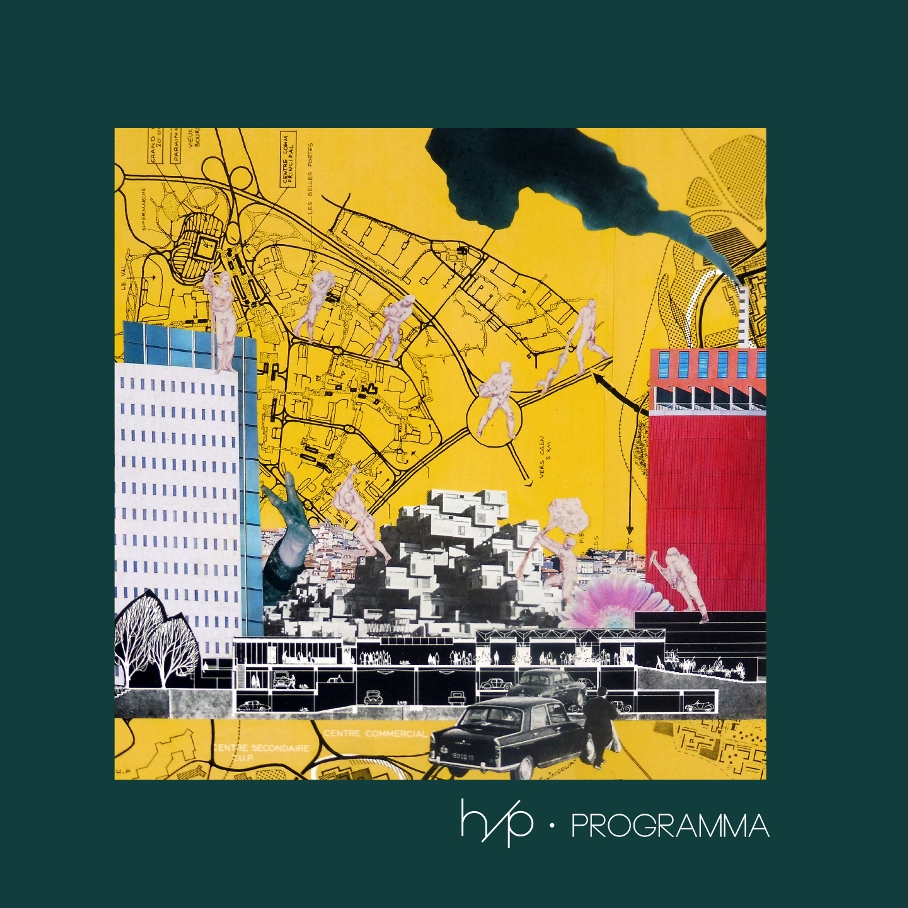
H/P Interview

Formally known as HAPPINESS PROJECT, Limoges-based trio H/P released their debut album ‘Remove Or Disable’ in 2008. Signing to local label BOREDOMproduct, two acclaimed two long players ‘9th Heaven’ and ‘Mutation’ were released in 2012 and 2018 respectively. 

Shortening their moniker, their fourth album ‘Programma’ also saw threesome eschew conventional identities, preferring to be known as F/T (lead vocals + synths), C/P (lead + backing vocals) and C/T (synths, string machine, piano, bass guitar + backing vocals). With their personas now portrayed as enigmatic shadowy figures, the focus is on the music, a glorious pop concoction of minimal synth and vintage drum machines with an elegant retro-futuristic presence and a small dose of melancholy.

With charming girl-boy vocals, stark electronic effects and an array of synthesized melodies, ‘Programma’ brings some appealing warmth and soul into what has often been considered a cold musical form. ELECTRICITYCLUB.CO.UK chatted to all three members of H/P to find out how they achieved it.

H/P had previously made music as HAPPINESS PROJECT but you have minimised in image and approach, what had prompted this change in direction?

C/T: We have a rule inside the band, we do not want to make twice the same album. Before ‘Programma’ we released two albums with BOREDOMproduct: ‘9th Heaven’ and ‘Mutation’. As you can notice our latest album before ‘Programma’ was named ‘Mutation’. So it was logical for us that something happens. We decided first to change the name of the band. So we have only kept the initials of HAPPINESS PROJECT. Then we decided to do the same work with our music and we composed new tracks in a very minimal way. ‘9 Mars’ was one of the first tracks we composed and we did it in a very minimal way. We wanted to make a true mutation but it does not mean that we dislike what we have done before, absolutely not, this is the natural evolution of a project which tries to create new things at each time.

F/T: We haven’t really minimised anything. H/P has always been a way for us to call ourselves, so it has rapidly sounded more natural to us, to use it as our permanent name for the band. As for the music, that was really our intention to make a new album with less instruments, so as to give more amplitude to the songs and maybe more space to the listener’s imagination.

Had there been any synth trailblazers that you felt inspired by in how you conceived ‘Programma’?

C/T: We had in our own background, bands that counts a lot for us, like KRAFTWERK, JOY DIVISION, NEW ORDER… but also French bands like MARTIN DUPONT, TRISOMIE 21, KAS PRODUCT… those bands take certainly a big part in our music. Of course when we were young, we discovered synth music with French artists like Jean-Michel Jarre or the band named SPACE, we were fascinated by those machines which brought brand new sounds in the pop music, it was incredible for us, we had at this period (during the 70s and the 80s) the feeling that music gave us the possibility to enter into science fiction and the future… and this is very fun to notice that today when you mention those periods or those artists you speak about the past. I think even now that electronic music is always the sound of science fiction and imaginary worlds because electronic music always sounds like something abstract and intellectual.

F/T: As far as we are concerned, we have always been inspired by musicians like KRAFTWERK or a French band from the 1970s SPACE, but also without forgetting bands like MARTIN DUPONT, KAS PRODUCT or TRISOMIE 21 (from the 1980s), and other bands like NEW ORDER, THE CURE, JOY DIVISION and IN THE NURSERY, as well.

Which vintage synthesizers did you turn to, did you have to buy, beg or borrow? Was there a dominant synth on the album?

C/T: When we compose our music in our home studio we use very classical synthesizers like Korg, Minimoog and Nord Lead ones… then we send our demos to BOREDOMproduct and for ‘Programma’, our label has used the analogue synthesizers which belong to the band CELLULOIDE. I don’t know exactly which type of synth they used but we did agree with the fact they produced our album with old synthesizers and analogue effects. The result sounds as we wanted our album to sound.


Did you set any restriction rules to help control the fun, like a limited palette of sounds and effects?

C/T: No, we had no restriction the only rule was to have an album which sounds new, minimal and not digital.

F/T: Definitely not! As we said previously, we wanted to create something which would sound more minimal, more up-to-date, which would suit the sensations we wanted to express: sensitivity, oblivion, awareness.

ELECTRICITYCLUB.CO.UK loves the sound of primitive drum machines, but why do you think they still retain a charm for electronic music enthusiasts?

C/T: Because primitive drum machines had a very personal sound, you can play with them to personalise your sound and create a singular rhythm. They always give today a true personality of a track, and they seem to be played in a very organic and natural way, you can feel the warmth of their sound when you mix them. So this is a very interesting material for the sound engineer, this is the reason why old drum machines are always used, because they are very creative machines.

Assuming that you used software and virtual instruments before in HAPPINESS PROJECT, how analogue were you able to go with H/P?

C/T: To be true, we have always used analogue in the past. If you listened to our track ‘Poupée Mécanique’, you’ll be able to hear that we have used a true Mellotron. Another track like ‘No Name’ on ‘9th Heaven’ or ‘The Pumpkin Fairy Tale’ on ‘Mutation’ were principally created with a Minimoog synth. Most of the time, we composed our electronical music without computer, only with synths and we play everything. When the track is composed in a very traditional way, then we open our computer and we put all the different musical parts on Cubase! But we play everything with our small hands 😉 We rarely use software or virtual instruments. So I think that in the future. we will keep analogue synths for H/P.


One thing that you did retain from your previous incarnation was the dual male/female vocal style, is this what ‘I Prefer Two’ is partly referencing?

C/T: Yes of course, but we still have the dual male/female vocal style. We have used it less for ‘Programma’ because of the pandemic period! We have recorded our new album during the lockdown, so it was more difficult for us to be all together at the same time in the studio. Our female voice lives in Paris. So we mostly record male voice for our new tracks because it was easier for us to do so during the pandemic, but it doesn’t mean in the future that it won’t be the contrary for our next album.

C/P: Yes, the duality is always present in our albums. Duality between female/male voices, duality between synthétic and basic instruments, between low and faster pieces, sad or more playful themes…

How would you describe the creative dynamic between the three of you?

C/P: It’s like in a couple (but we are a trio, by the way): you have to live in harmony and deal with the desires of each other. Communicate, exchange and trust in each other. We have to compose… ‘cause H/P is the result of our three personalities.

‘Les Choses’ features French but the vocals on the album are predominantly in English, while writing the lyrics, did you find you were all starting to dream in English as well?

F/T: But we have been dreaming in English for so long! In fact, most of the music we listen to, is in English and when it comes to “Synth-pop” music, English sounds more natural. But we like to insert French lyrics too… we have always been doing so (even in our previous albums). The combination between both languages is great, because they both express different feelings, different colours. English is more straightforward, French is more mysterious, sometimes.

‘The Alarmist’ has a Motorik presence, has German kosmische musik ever been an influence?

F/T: We think so! As kids, we used to listen to KRAFTWERK a lot. We were big fans, as well as TANGERINE DREAM! We still love songs like ‘Trans Europe Express’!

C/T: To go further, I can say that KRAFTWERK changed our life when we were very young ! When we discovered their music in 1978, it has opened a door in us, we were children and we were totally hypnotized by their music and by those sound, it was like a revolution at this period, I truly had the feeling that we entered in a new dimension, a parallel one as if we were entering into the future and into the past at the same time. What is very fascinating in synthesized music, there is always a mix between sounds that come from nowhere and the architecture of tracks which reminds listeners a lot of classical music… so if ‘The Alarmist’ reminds us of our musical background, it means that we have reached our purpose!

The bassline of ‘Black Tea’ is quite boisterous while the verse is almost goth, but the chorus is uplifting?

F/T: Yes, of course! Maybe, all this reflects the many musical influences we’ve had like CLAN OF XYMOX, DEAD CAN DANCE or NEW ORDER… moreover, we are very instinctive musicians and sometimes, everything comes out, at once. The creation of a song can be very spontaneous and can express different emotions, one after the other.

‘9 Mars’ begins each verse with a feminine lead, how do you decide on the vocal arrangements?

C/P: At the beginning, ‘9 Mars’ was an old track that came out on a self-produced album, sung by Christelle. It’s a very personal song and that’s why we proposed it to BOREDOMproduct, with the female lead voice.

‘Ultraviolin’ would be a great pop song in any style, what was its genesis?

F/T: ‘Ultraviolin’ is a tribute to music itself and to all the various bands who’ve had a big influence on us. This song is a way to say thank you! Music is so important to the three of us. This is what ‘Ultraviolin’ is about.

C/T: ‘Ultraviolin’ is based on a very naïve synth gimmick, a very iterative one. When we found this gimmick then we created the other parts of the track: violins, rhythm, etc. We did like traditional music made with traditional musicians, you turn around an initial theme and you build your track with this minimal material. It’s very interesting to create a track with this method, because with very few musical notes, you can build a more complex universe.

Alain Séghir of MARTIN DUPONT joins you on ‘Vicinities’ and the structure is perhaps looser than the other songs on the album?

F/T: Yes, you’re right! That was such an incredible opportunity. We’ve been fans of their music, almost since their beginning. C/T and Alain Séghir started a correspondence on Myspace… then we met at a concert in France… then we continued exchanging messages and then Alain Séghir’s contribution to ‘Vicinities’ naturally came. We didn’t impose anything… we sent him the track as it originally was and he played the bass-guitar as he did and that was perfect.

Do you have any plans to perform any of the ‘Programma’ album live or are you just happy to have created a good record?

C/P: It’s planned! We also like to share our music with our fans. Bringing it to life is a great achievement!

Will H/P continue or will there be a return to “Happiness”?

C/P: Our band is a project, always in the making, always in renewal and evolution, in a constant desire of development. We always ‘Remove Or Disable’ all that we do in order to access the ‘9th Heaven’. This is our ‘Programma’. H/P is a part of HAPPINESS PROJECT, just another facet of us.


ELECTRICITYCLUB.CO.UK gives its sincerest thanks to H/P

Special thanks to Eric D at BOREDOMproduct

‘Programma’ is released by BOREDOMproduct in vinyl LP, CD and digital formats, available from https://boredomproduct.bandcamp.com/album/programma-album

https://www.boredomproduct.fr/hp-programma/

https://www.facebook.com/hp.programma

https://www.instagram.com/hp_band/


Text and Interview by Chi Ming Lai
21st April 2022

Lost Albums: DRAMATIS For Future Reference

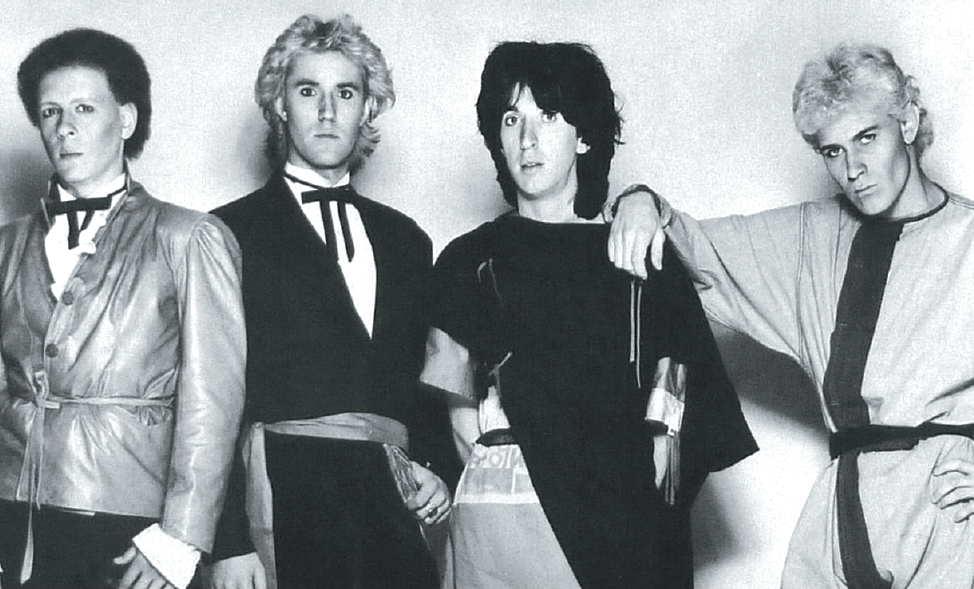
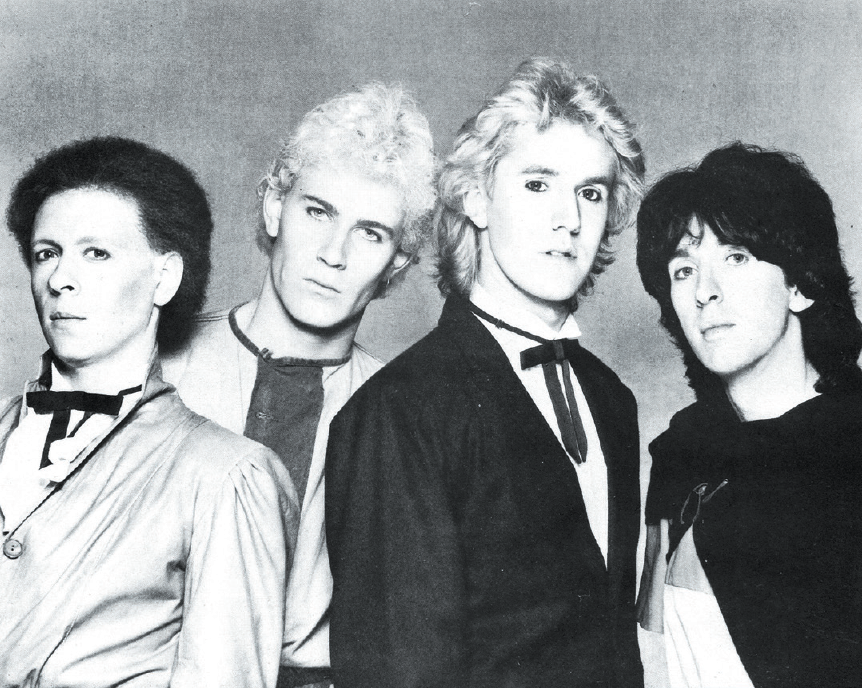
Following the retirement of Gary Numan with his spectacular farewell shows at Wembley Arena in April 1981, four of his erstwhile backing band officially went solo under the moniker of DRAMATIS.

RRussell Bell, Denis Haines, Chris Payne and Ced Sharpley toured the skies with the Machine Music pioneer and had been instrumental (pun totally intended) in the success of Numan’s powerful live presentation. While success for DRAMATIS for not exactly assured, several things were in place for a smooth transition to independence.

First the quartet had signed a deal with Elton John’s Rocket Records. Secondly, they had also secured the services as engineer and co-producer of Simon Heyworth who had worked with on Mike Oldfield’s ‘Tubular Bells’. And finally, they had use of Ridge Farm Studios, one of the best residential recording facilities in the UK at the time.

DRAMATIS were a brainy bunch. Guitarist RRussell Bell had a degree in Physics / Psychology and was versatile enough to handle unusual instruments such as the Moog Liberation keytar, Chapman Stick and Vi-Tar electric violin. Drummer Ced Sharpley previously had cult success with prog rockers DRUID who were signed to EMI and had appeared on ‘Old Grey Whistle Test’; his clean, dynamic drum breaks on ‘The Pleasure Principle’ tracks such as ‘Cars’, ‘Films’ and ‘Metal’ became very influential within the US Hip-Hop community.

Handling mostly keyboard duties, both Chris Payne and Denis Haines were classically schooled; Payne had also co-written VISAGE’s ‘Fade To Grey’ and been noted for his viola playing on Numan standards such as ‘M.E.’ and ‘Complex’. He had even mastered a Medieval reed instrument called a Cornamuse. Meanwhile it was Haines who had played the piano version of ‘Down In The Park’ that made it onto the flip of ‘I Die:You Die’. However, it was exactly this type of musical background which the British music press still had total disdain for in the wake of punk.

“Between Denis Haines and myself, we used a Prophet 10 and Prophet 5, CP70 piano, Minimoog, ARP Axxe, Roland 330 vocoder, and Moog Taurus pedals” Payne said of the instrument armoury, “RRuss also had a Chapman stick which was sometimes heavily effected to sound synth like, and to complete the madness on the song ‘Human Sacrifice’, I played the cornamuse for that ancestral sound!”

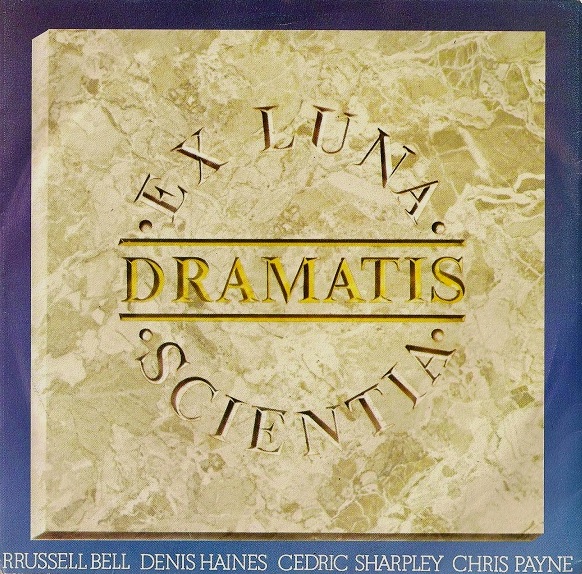
Released after Gary Numan’s Wembley concerts, the grandiose debut single ‘Ex Luna Scientia’ showed DRAMATIS’ potential immediately. Celebrating the adventurous spirit of NASA, it coincided with the launch of the first Space Shuttle and sounded like a cross between ELECTRIC LIGHT ORCHESTRA and VISAGE.

But it was too much for the savage journalists who already had their knives resharpened following usage on their former employer. “We had a lot to prove musically because Gary Numan had been getting so much flak in the press which reflected on us”. Chris Payne remembered, “They said the music was naïve, the band couldn’t play and that was quite hurtful”. 

Unfortunately, comments like “chicken without its head” were being banded about while other writers couldn’t get their brain cells round a catchy vocodered chorus sung in Latin! Undeterred, a follow-up single ‘Oh! 2025’ was put out but this was quite pedestrian synth rock compared to ‘Ex Luna Scientia’. Incidentally, its beautiful B-side ‘The Curtain’ was later recycled by ULTRAVOX’s Billy Currie for a solo track called ‘Requiem’!

With Rocket Records still sniffing for a hit, the next single ‘No-One Lives Forever’ was swiftly issued. This was much better; the anthemic chorus, deep chanting bridge and Bell’s heavy metal guitar solo contradicting the dystopian resignation of Haines’ lead vocal.

Gary Numan said on the Radio 1 review show ‘Roundtable’ that it was “the best thing they’ve done yet”. It even got played by Steve Wright although he was unimpressed; “I know it’s deliberate but those vocals are awful” he quipped. It would be fair to say vocals were DRAMATIS’ Achilles heel and sounded strained at best. But RRussell Bell explained: “When we recorded the first DRAMATIS album, we recorded the backing tracks first, then I’d lock myself in a room and write the lyrics. Then we’d start putting the vocals down, that’s when I discovered that they were all in keys that were a bit high for my voice. Basically, I’m a baritone…”

To attract interest in their forthcoming album, Rocket Records came up with a bold strategy with the release of ‘No-One Lives Forever’… they put a one minute sample each of four songs on the B-side. The idea was ahead of its time as snippet based promotion is now standard practice on many platforms. Alas, the single wasn’t a hit and the album (which had already been advertised in the press) was now delayed.

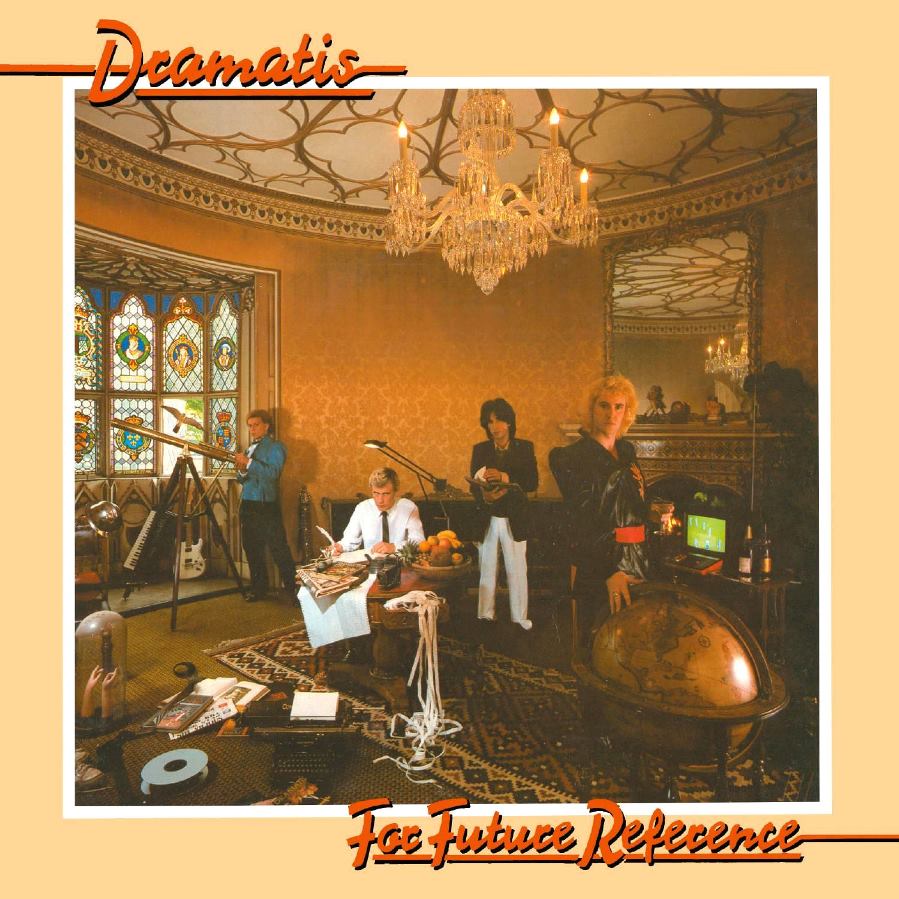
A total remix of the album was made at the behest of the label while a new sleeve depicting the band as futuristic university lecturers was necessitated. “The initial idea was supposed to be a Victorian glass display in the British museum with us as an exhibit” recalled Bell of that photo session, “The concept of glass cases came in but it was like four glass telephone boxes with us standing in them in an empty office. There was nothing British Museum about it. We looked at the pictures and they were crap. So that idea was scrapped!”

“Oh God, it was a mess!” remembered Payne, “I never understood why we spent ages recording it in one of the best studios in England at the time, only to remix it at Marcus studios in London, which was bloody awful. All this messing around when we had perfectly good mixes drove me to despair. It took forever, cost a fortune, we had to re-do the cover of the album. Denis Haines and I thought the album lost something. Having said that, the time spent at Ridge Farm was brilliant. It was a really inspirational environment and had a great pub in the village just up the road. Needless to say where we were most evenings.”

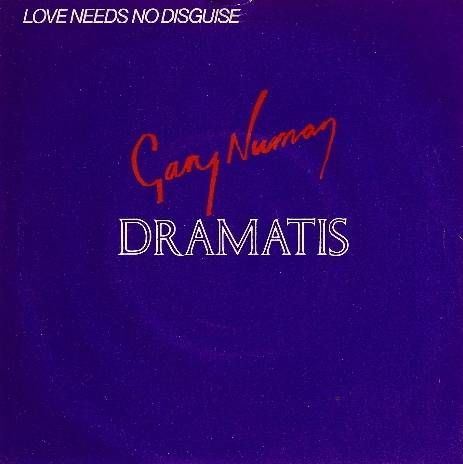
Meanwhile while they were recording the album, Gary Numan paid a visit to his former colleagues at Ridge Farm Studios before he departed on an ambitious round-the-world flight. He particularly enjoyed the backing track of a song that had been written about their days touring together. Entitled ‘Love Needs No Disguise’, Numan asked if he could sing it. The band happily accepted.

With Sharpley’s sparse drum machine intro dressed with his timbale rolls and Haines’ stark piano chords, this was a lot barer than Numan’s own recordings although he himself had been experimenting with minimalism on ‘Dance’. Some pretty guitar and viola was the final touch and the track was released as a joint single on Numan’s label Beggars Banquet. It reached No 33 in the UK chart but not as high as many had hoped.  The parent album ‘For Future Reference’ then slipped out in December 1981 almost unnoticed. It was though Rocket had decided to pull back on it.

Overall, the album had many impressive moments but also had several flaws. Featuring all the singles, one of the highlights was ‘Turn’, voiced by Chris Payne and throwing in everything from a classical intro, progressive interludes and pounding drums to clattering rhythm box, synth solos and angry if slightly ham vocals. “I have never felt comfortable about my own voice” Payne clarified, “It was always put down whilst I was at music college and as a result I really didn’t care that much. ‘Turn’ was composed by me and I only recorded my own voice for either Denis or RRussell who were the principle vocalists on the album. But after I recorded it, everyone thought it fitted the track so we kept it.”

The following ‘Take Me Home’ had the drama of a vintage silent movie with Chaplin-esque piano and strings heart wrenching as Haines cried like a disturbed teenager, repeating the title over and over again. Haines’ Peter Gabriel impression could grate and was not to everyone’s taste but his ‘On Reflection’ was another musical highlight on the second half of the LP, a sad lament about lost friendships. With a more conventional if limited rock oriented vocal, RRussell Bell had his moment with the incessant ‘I Only Find Rewind’ while ‘Human Sacrifice’ possessed aggressive tribal synthetics and an LFO squence from the Moog Liberation but was spoiled by a weak chorus.

DRAMATIS’ only album so far showcased the band’s virtuoso abilities and while the use of four different lead vocalists confused the continuity of the album, instrumentally, there was much to enjoy. Chris Payne certainly agrees: “I think it’s a really good album. My only regret was that we didn’t have just one person who could have sung everything to make it more of a cohesive album. We had Gary as a guest which was fair enough but me singing a track… c’mon? We should have stuck to one singer, that was a big mistake… but musically, it stands up.”

Very much the outsider even when he was in Gary Numan’s band, Haines left DRAMATIS after he declined to tour the album and embarked on a solo career. He released a Numan-esque 12” single in Germany called ‘It Spoke To Me Of You’ and an ambient album entitled ‘The Listening Principle’ which featured versions of ‘The Curtain’ and ‘Take Me Home’ retitled ‘In Loving Memory’.

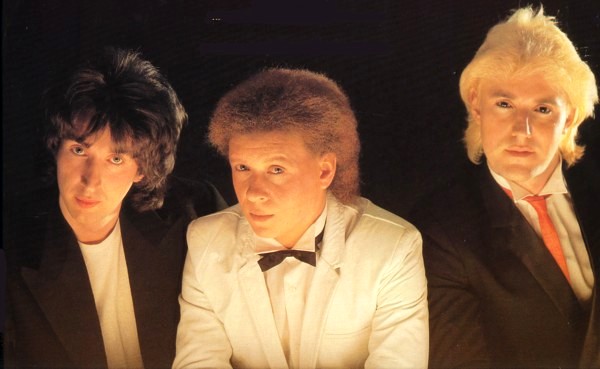
But at the start of 1982, the remaining trio released a great 7 inch pairing featuring the ULTRAVOX-like ‘Face On The Wall’ backed with the neo-classical jig of ‘Pomp & Stompandstamp’. They then topped it with ‘The Omen’ Goes Disco magnificence of ‘The Shame’ a few months later although further chart action didn’t materialise.

RRussell Bell thought it was one of their best songs and in a 2007 interview with NuReference amusingly recalled: “the line ‘train crash killed the heroine’ was about a starlet who died in a train crash. But the music press thought it was about heroin, which shows how bad their spelling is and also how f*cking stupid they are to even think I’d write a song about the most evil, insidious drug in the world. However, the guitar solo was pretty cool.”

Following an appearance on ‘The David Essex Showcase’ (a short lived BBC talent showcase which also featured TALK TALK amongst others!), their final John Punter produced single ‘I Can See Her Now’ reached No 57 in late 1982. But just as they were about to make a breakthrough with a second album on the way, the politics of the music biz had worn the threesome down.

While losing interest in their own band, Gary Numan meanwhile had got the bug back for touring and played clubs in the US during the summer of 1982 with a new backing band which featured Rob Dean, ex-JAPAN and soon-to-be-in-demand fretless bassist Pino Palladino. However, for his forthcoming ‘Warriors’ assault, Numan decided to call up his former band. With the prospect of more secure employment, DRAMATIS were no more.

Fast forward to 2000 and with Gary Numan getting critical reappraisal for his imperial years, ‘For Future Reference’ was rather misleadingly reissued and promoted as a lost TUBEWAY ARMY album under the title ‘The DRAMATIS Project’ by Castle Select. The CD was pressed from a vinyl cutting master while the seamless join between ‘Turn’ and ‘Take Me Home’ was spoiled by the atmospheric intro of the latter being faded out and then restarting again on its chilling ivory motif after a gap!

Meanwhile, the clueless booklet notes also implied that Messrs Bell, Haines, Payne and Sharpley were actually members of TUBEWAY ARMY… most Gary Numan fans knew the band effectively didn’t exist when ‘The Blue Album’ was released in 1978! RRussell Bell was dismayed when asked about this reissue: Oh don’t! The DRAMATIS ‘project’, it was never a project, it was a band!” But he had good news: “I’ve recently got back control of the album and bought back the rights, so we now own it again. And DRAMATIS is back together and releasing the second album”.

So a properly remastered ‘For Future Reference’ finally gets its first official resissue on CD thanks to Cherry Red Records and the three post-album singles make their belated digital debut too with the B-sides ‘Lady DJ’, The Curtain’, ‘Pomp & Stompandstamp’  and ‘One Step Ahead’ also appearing. The BBC In Concert recorded at the Paris Theatre in 1982 featuring the unreleased ‘Sand & Stone’ and all the extended 12 inch versions are additionally included in the plethora of bonuses.

Photo by Chi Ming Lai

Looking back recently on the period, Chris Payne said: “Personally the standout for me is and always will be ‘The Shame’. It started with the chord patterns whilst rehearsing at the old Nomis rehearsal studios in Earls Court and gathered pace from there with RRussell adding his parts with melody and lyrics, plus a brilliant guitar solo in the middle eight. I seem to remember that we recorded that at the old Trident studios in London, and it was a shame (excuse the pun) that we didn’t continue there as I found this to be the perfect studio sound for DRAMATIS.”

DRAMATIS were undoubtedly finding their feet as a solo proposition in 1982 but their tenure was cut short. Sadly, Cedric Sharpley passed away in 2012 but with a new single ‘A Torment of Angels’ and a live return in 2021, DRAMATIS can now finally reference their past for a future.


In memory of Ced Sharpley 1952 – 2012

ELECTRICITYCLUB.CO.UK gives its sincerest thanks to RRussell Bell and Chris Payne

Special thanks also to Stephen Roper at The Numan Arms

‘For Future Reference’ is reissued as a 2CD set by Cherry Red Records on 22nd April 2022, pre-order from https://www.cherryred.co.uk/product/dramatis-dramatis-2cd-digipak/

The Numan Arms YouTube channel featuring an interview with Chris Payne and an archive audio only chat with the late Ced Sharley is located at https://www.youtube.com/channel/UC-rRuX6k___Y4ZkTHwQg–Q/videos


Text and Interviews by Chi Ming Lai
Photos by Brian Aris except where credited
14th April 2022, reworked from an article originally published 19th April 2012

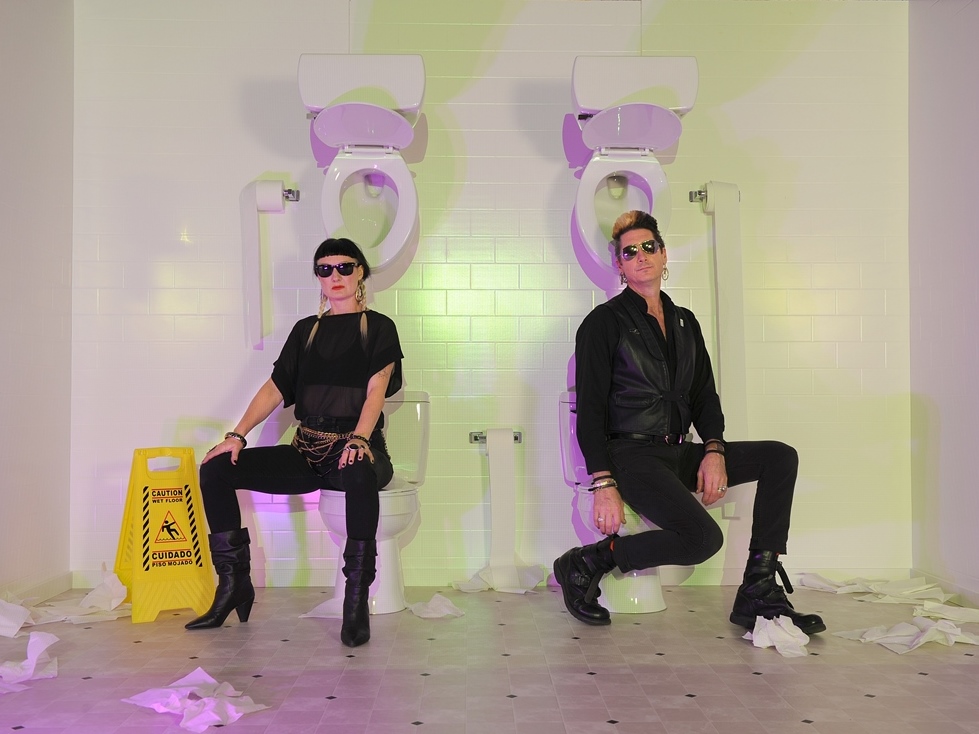
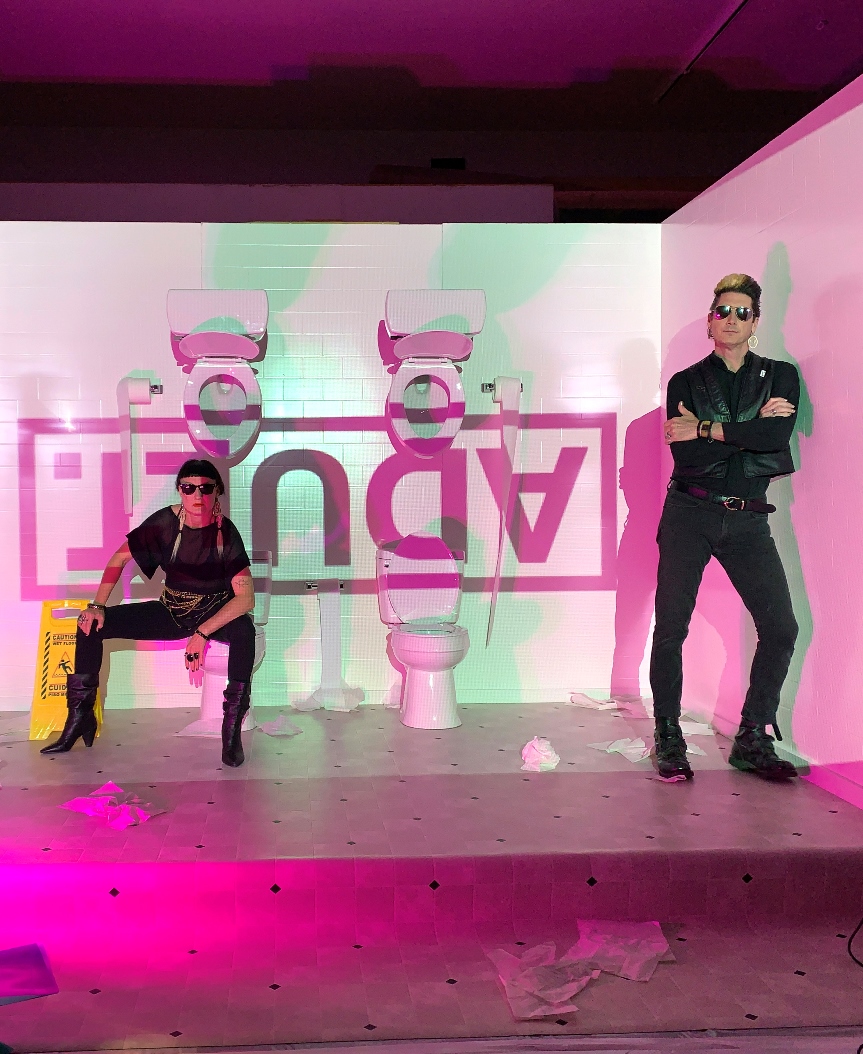
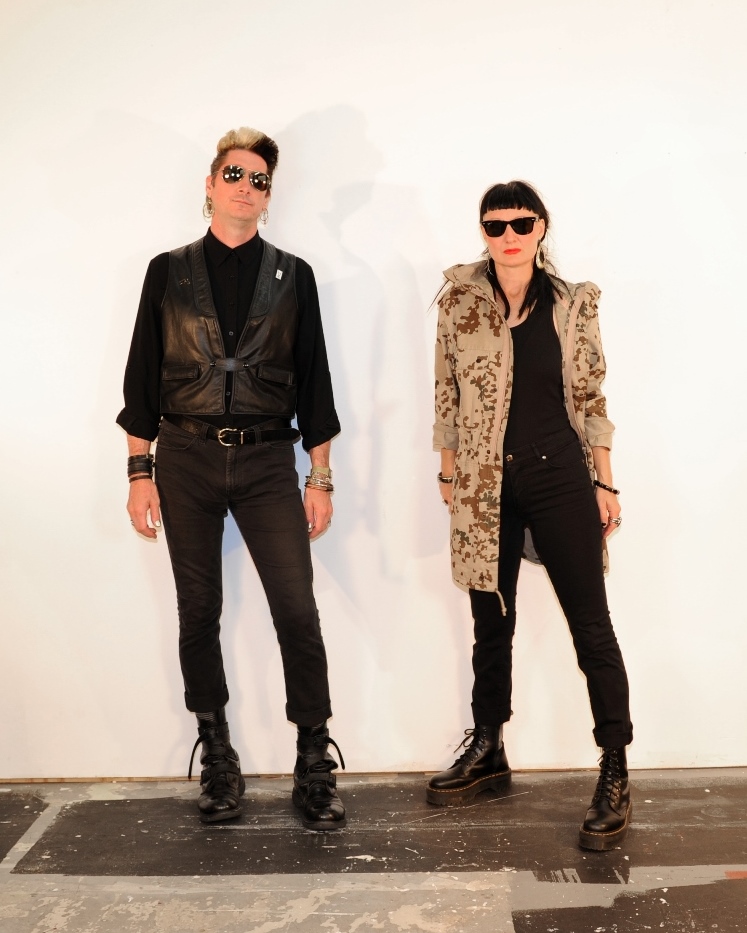
A Short Conversation with ADULT.

With nine acclaimed long players to their name, ADULT. issued their most recent album ‘Becoming Undone’ as a doomy discordant statement capturing “something that’s falling apart”.

In a 23 year career, Adam Lee Miller and Nicola Kuperus first came to wider attention with ‘Hand To Phone’ in 2001. Presenting a stark response to their surroundings, the dystopian demeanour of ADULT. remains as vital as ever as their living art project continues to evolve.

Although 2013’s ‘The Way Things Fall’ possessed an unexpected accessibility and 2017’s ‘Detroit House Guests’ saw the Detroit synth-punk duo open their doors to outside collaborators, this new body of work is more personal, embroiled in pain and bereavement while created in isolation during a state of flux with a healthy acceptance of destruction.

ADULT. kindly took time out from a hectic and intense European live tour to have a quick chat with ELECTRICITYCLUB.CO.UK about ‘Becoming Undone’ and the development of their dark dance aesthetic…

Thematically and conceptually, how does ‘Becoming Undone’ differ from previous ADULT. albums?

In working on a new album, we always try to approach the process differently. For instance, the last album ‘Perception IS/AS/OF Deception’ was written in a black void with minimal equipment at hand for the demos. ‘This Behavior’ was written in a remote cabin in the woods. ‘Why Bother?’ was more soundtrack oriented and based on serial killers and cult leaders.

In our latest album ‘Becoming Undone’, it was literally written out of pure necessity to try to emerge out of the liminal state we were put in through the pandemic. We did not control the concept on this record – the world did. So there is a lot more dissonance and looping motifs in this record, rhythm is stronger than melody as there was no harmony in the world as we wrote it. This album was a mirror to the world land life in general.

‘Becoming Undone’ has been described as capturing “something that’s falling apart”?

Well, we wrote the album during the pandemic when everything was falling apart. Massive amount of people were dying of the virus and Nicola‘s father passed away (not from Covid, but during the pandemic). We had lost all of our tours and all of our income. Then as we were trying once again to get into the writing process, the ex-loser President of the United States decided to try to do his big lie and steal the election, followed by the insurrection on the US Capitol – sooooo everything really was falling apart and we felt to album should mirror that.

As well as synths, ‘Becoming Undone’ sees vocal loop pedals added to the tech armoury, what attracted you to using these?

One of the main things we like about analog equipment (which is 97% of our studio) is the different interfaces they have and the different abilities to move between control and arbitrary experimentation. We both find vocal loop pedals very non-intuitive (as opposed to something from Roland, which we understand easily the way the gear works). So for us, the looper gave us a chance to not be in control, to come up with some layers or parts to songs that we normally would not come up with. It added randomness to the songs.

The music has ramped up percussively and ‘Our Bodies Weren’t Wrong’ comes with a fitting EBM backdrop, had there been any inspiration from having worked previously with Douglas J McCarthy of NITZER EBB?

NITZER EBB has always been a major influence for the both of us. It was one of the few bands when we met years ago that we really had in common. The music on the new album ‘Becoming Undone’ has become more and more percussive because we included electronic pads, not only to the writing process, but to the live set as well. This came out of many different reasons, but one was that we figured after the pandemic, people were going to be ready to rage and as London, Brussels, Berlin and other cities have proven – that is very true!

THROBBING GRISTLE have been cited as an influence on the album with ‘Normative Sludge’ examining the delusional nature of the Instagram / Tik Tok generation, why was this such an inspirational source for you?

THROBBING GRISTLE is one of our favorite bands and it not only comes down to the quality of the songs but also the way they do not fit into any single genre. They came up with a name for their own genre (Industrial) which must have been very liberating until it was stolen from them for idiots like Marilyn Manson. Going back to this idea of things falling apart, THROBBING GRISTLE is so good at having songs that sound like they’re falling apart. As we wanted to discuss the ideas of collapse, they were an obvious inspiration.

Although there is less melody this time round, do you think ‘Undoing / Undone’ and ‘I Am Nothing’ could be considered quite classic ADULT. songs?

The only way to know if something will be classic is to allow time to pass. For us, everything on this new album is too close to us right now to dissect.

Industrial S&M looms on ‘I, Obedient’, is society too submissive now?

Society is an awfully big word. Of course there are parts of society that are too submissive and there are parts of society that are resisting. Always resisting.

‘Teeth Out Pt. II’ is a doomy aural collage of drones like a symbol of decay, how did the track come together?

This is one of those magical tracks where we got the new looper and we had absolutely no idea how to operate it. Adam always reads manuals but Nicola never does and that brings two different approaches to the song writing process. So Nicola just started immediately working with the pedal and suddenly there were three or four really beautiful layers counterpointing each other. When we came back to the demo months later, we were shocked it was almost complete as it was. We even tried adding drum machines to the song but in the end it became our first song ever without any beats!

What are your hopes and fears for the future, you have talked about how “Humans have always been pretty terrible”?

We have no hopes for the future and we have many fears like everyone right now, but at the end of the day we just have to be present – at least try to. Living in the moment seems to be the most important thing right now. We played a pretty insane show in Brussels two weeks ago and there was this 9 year old girl that was the daughter of one of the volunteers at the venue that befriended us during the evening and after the show she came up to Nicola and said “Do you know what I liked about your show? You just went for it!” That’s our current motto for this time and place in time.


ELECTRICITYCLUB.CO.UK gives its warmest thanks to ADULT.

Special thanks to Kate Price at Stereo Sanctity

‘Becoming Undone’ is released by Dais Records, available in various formats from https://adultmusic.bandcamp.com

http://adultperiod.com

https://www.facebook.com/adultperiod/

https://twitter.com/adultperiod

https://www.instagram.com/adultperiod/

https://www.daisrecords.com


Text and Interview by Chi Ming Lai
8th April 2022

« Older posts Newer posts »