Numbers! METROLAND are back and they have started counting…
While Passenger A and Passenger S are a duo, 4 is the classic line-up of KRAFTWERK, the classic line-up of DEPECHE MODE, the classic line-up of ULTRAVOX and the classic line-up of NEW ORDER.
The latest work from METROLAND is ‘4’, a rhythmic precursor to a new album acting as the first in a series of 4 singles and like ‘Enjoy The Silence – The Quad Mix’, the track has been reworked 4 times to tie together as one extended sonic adventure.
Counting down 4-3-2-1 with a darker approach compared to their previous artistic journeys and more in the vein of their B-side ‘(We Need) Machines Without Romance’, METROLAND crunched the numbers with ELECTRICITYCLUB.CO.UK…
What is the power of 4?
You could say the elements of surprise in lots of ways. In fact, the song ‘4’ is cut up in 4 parts that blend as one, taking you over an epic playing time of 20minutes. Each part is actually the same arrangement, but every time from a totally different musical angle. And we took ‘4’ to an entire new dimension by allowing more experimentation in our soundscape. ‘4’ is also mixed as one song on the mixing desk, so it is not like we did recorded 4 different versions and glued them together. The goal was to deliver one entire song. And then there are the 2 remixes or call them “interpretations” by Passenger A & S, each done in their solitude and then brought together (a thing that will return in our next singles). To top it off, you get four edits of each of the parts as a download set.
Both these remixes and the 20 minute full version of ‘4’ are exclusive to a good old fashioned 12 inch vinyl. A vinyl coming up in 2 luscious colours holding a full version of ‘4’, each coming with a unique 30×30 poster (the size of an album sleeve ready to be framed).
So, yes, ‘4’ is absolutely our element of surprise.
The number 4 is the 8th most ‘winningest’ car number in F1 history, yet is considered unlucky in the Far East, but what is the significance of 4 to METROLAND?
Well, we can already say that it has nothing to do with cars, nor is it geography related.
‘4’ is the countdown towards a new album, an entire new concept, and a more profound definition of the next sound of METROLAND. The details of the new album and its concept will remain hidden for some time, as we still want to use some milestones to enhance them. All will be revealed in due time, but slowly the concept should become clear (‘4’ is already a huge chunk of it)
So ‘4’ has four parts, how was the work conceived and constructed?
In view of the new concept at hand, we wanted to emphasise it through and through from the start while not giving anything away yet.
Our crazy minds could not find a better way than having a track called ‘4’, calling the release ‘4’, cutting it up in 4 parts and topping it off with the 4 edits listed up from 4.1 to 4.4, and all this after 4 years from our former album (but that last one is a pure coincidence).
Is ‘4’ the launch of a new number themed METROLAND album?
We simply have to give 2 answers here: yes and no. ‘4’ is definitely the launch towards the new album and there is a countdown, but the concept is not numeric at all. Still, the concept holds a sequence in history. And by now you know everything and nothing 😊, that is what we always strive for, a thorough concept that from A to Z (or 4 to none maybe) is linked together.
Next will be 3 more singles, albeit digital, including some remixes by external bands and ourselves.
With every new album comes an adventure and for Dublin-based CIRCUIT3, his next one is in outer space.
The rocket-propelled vehicle of Peter Fitzpatrick, the Irishman delighted electronic music fans with a series of intimate live streamed shows from his home studio of cover versions and original works during lockdown. The performances were also an opportunity to road test new material and those songs now formally appear on the new CIRCUIT3 opus ‘Technology For The Youth’.
An ambitious work that presents a chronology of the space race and pirate radio in relation to the socio-political environment of today, the album has been launched with a single ‘Future Radio’ co-produced by Sean Barron, best known for his Wolfgang Flür collaboration ‘The Activity Of Sound’ as iEUROPEAN.
Heavily influenced by the classic era of synth before digital as well as its modern analogue variant, as on KRAFTWERK’s ‘Radio-Activity’ and OMD’s ‘Dazzle Ships’, ‘Technology For The Youth’ features conceptual instrumentals alongside more precise pop structures. That progression of movement toward the stars continues on the new single ‘Overview Effect’ featuring the vocals of Italian singer Alessia Turcato. It was inspired by the life imitating art scenario of William Shatner who played James T Kirk on ‘Star Trek’ to became oldest person in space at 90 onboard Blue Origin’s New Shepard sub-orbital space rocket.
With that in mind, ELECTRICITYCLUB.CO.UK challenged CIRCUIT3 to a game of Vintage Synth Trumps while chatting about his latest musical journey into the galactic frontier…
Alright, the first card is a Korg Mono/Poly. Are you an owner of a Mono/Poly?
No. I’m curious about the Mono/Poly because it’s really a paraphonic synth rather than polyphonic, but that trick where you can cycle through each of the VCOs with the arpeggiator on is interesting. Each VCO can be set to a different waveform. My friend Brian O’Malley. better known to you as POLYDROID. has one and likes it. So yes I’m curious but not enough to get one and I’m unsure about the quality of the Behringer clone
Are you a fan of Korg gear anyway?
Yeah, I think they’re interesting but I just haven’t had the same relationship with them like I have with Roland and Sequential. I tried an MS10 in 1979 and it was absolutely bewildering to me. I couldn’t get a sound out of it. It was only the second synth I touched – the first was that Tandy RadioShack synth that Moog made for them. I have an MS20 on loan (from POLYDROID) which has these interesting harmonics coming off the filter and not the raw sound that I was expecting. I associate the MS20 with a more synthpunk filter. Maybe I need lessons.
I have a Poly 61M which is the factory MIDI version of the Poly 61 but have no room for it so that’s in storage until someone offers me a trade for it. It was released about the time of the Roland Junos coming out and I just found it difficult to get wild sounds out of it. I think that the filtering on it is just too polite and it needs a lot of treatment when you’re recording it, it didn’t really have any character and I was hoping for more. No wait… I had a Poly 800… yeah it’s coming back to me now! I had a Poly 800 which was rubbish. Just not good at all. Sounds like a plastic bag with bees in it.
I remember KID KASIO aka Nathan Cooper told me he found a Poly 800 in a skip, which he retrieved and put in his Fiction Studios…
He really should have left it there. I remember that at the time, I had a decision to make between the Poly 800 and the Juno 106.
The Juno 106 had a much larger 61 note key bed but the Poly 800 had a little sequencer in and that mattered at the time because I was thinking value for money. They were polysynths, of course I could only buy one of them. I’m so glad I went with the 106 in the end.
OK, here’s the next card and it is the Korg 700s which of course, your friend Martyn Ware had as his first synth and Daniel Miller…
There was a recent reissue of that, you turn it on and it’s instant Daniel Ware or Martyn Miller whichever way you want to describe it! It’s impossible not to sound like “THE HUMAN NORMAL”! *laughs*
I am tempted by it, but I really have to think carefully because there’s just it’s a space consideration now. And it has those funny buttons on it. I don’t know if I could get used to that. They look weird.
What you mean underneath the keyboard?
Yeah, that’s just to me having played lots of gigs that screams “they’re going to get broken!”. They’d get in the way where they are. Just like the old ARPs where the keys would protrude over the edge of the chassis and you’re thinking, no, something’s going to smack against that. So yeah, I have to try one. I’ve seen lots of really cool demos.
It looks really interesting. And I know Martyn got a copy of the reissue and he loves it. Martyn was using it at the ‘Reproduction / Travelogue’ shows, so look, if it’s still good enough for him, then it’s good enough for the rest of us.
Daniel Miller showed me his Korg 700s recently at the Robert Rental & Thomas Leer exhibition and he told me it still works… OK, the next card is a Roland Jupiter 6. But you have a Jupiter 4?
I do, I can’t afford a Jupiter 8 and I missed a Jupiter 6 two years ago. One came up for sale locally at a really low price and I missed it by 30 seconds. The seller said, “oh, there’s a small fault with it, but I can’t be bothered fixing it”. I’m like “you idiot, you absolute idiot!” and the person who bought it then sold it on for a nice profit.
It’s a good pad machine. I think there’s a lot of confusion about the concept of the Jupiter name on Roland synths and what it actually means. They are only related in the fact that the name Jupiter was used. In Roland’s world, Jupiter meant their then current flagship synth. It’s completely different beast to the Jupiter 4 and 8.
There is a there’s a module version of it, which apparently isn’t exactly like the keyboard version. The filter is different I think. I don’t think I would pay the current asking price for a Jupiter 6 because I don’t think it has enough character not in the same way that the 4 has, or just the majesty of the 8. I’ve got the likes of a Prophet 10, OB6 and a Juno 106 which covers a lot of that Jupiter 6 space in my opinion. I think it’s an interesting synth. I would have paid the asking price though… €1200 was a bit of a bargain.
So your Jupiter 4, how long have you had that now?
Hmm… it feels it feels like Martyn had it longer than I did because of the pandemic.
I think I got about 4 years ago, drove to the West of Ireland to a small little place called Athenry that people will know from a very famous folk song, ‘The Fields Of Athenry’. And quite appropriately, I drove in my electric car to pick up a Jupiter 4. How more Numan can you get?
When we arrived, the seller had cold feet at the last minute. And he was thinking of keeping it. I’m like “No ! Please don’t do this to me. I really want this instrument”. Later I tracked it down online. It had history. It had appeared on the Matrixsynth site.
When it had made its way from Japan to the UK, it said in an eBay listing that had a little bit of work done to it. It’s not entirely clear what had been done to it, because when I had it checked out here by our local synth tech, everything was original, nothing inside had been replaced and no servicing was required except replacing the memory back-up battery.
But it came with the original case, which is cool. It came with the music stand. And it came with the metal legs. Picture yourself around ‘78-‘79 and what Roland were trying to do with these instruments, they were targeting jobbing musicians playing cabaret clubs. So it would be used with say a CR78 which has a similar sort of fake wood finish on it, it would fit just nicely to one the side of the top panel of the Jupiter 4.
You could lock the arpeggiator synced to a CR78 so you’ll get both going together. Of course you could see it being used for the occasional solo, but the selling point is as a programmable polysynth with patch memory, because there’s an awful lot of monosynth type sounds possible with this. I was the first thing Martyn tried when he powered on my Jupiter: no chords!
Anyway what seems to have happened is that a bunch of people realised “oh we can do other things with these”, so that seemed to be that the origin of it being used in more interesting ways just like what happened with the Roland TB303 and TR808. Of course first thing I did when I got at home was open it up. I had to have a look inside. Had to date it. Had to see what was going on. There were hairs inside! This was very clearly a Roland technician’s hair, sitting still on the board! You know, half a century later. It’s brilliant. And I fell in love with it.
I have done a very simple MIDI enablement on it where I haven’t drilled into the chassis, there’s no way I’m drilling holes in this thing and I’ve managed to do it in such a way that the MIDI interface doesn’t interrupt anything and it just arpeggios for hours. It’s just gorgeous.
On your new album ‘Technology For The Youth’, there’s a track called ‘Jupiter City’?
The Jupiter features on a few tracks and is the only synth on ‘Jupiter City’. So Martyn Ware borrowed the Jupiter 4… for those who don’t know even though, I keep bragging about this cause it’s the coolest thing that could possibly have happened.
It was following an interview he did with you where you asked him about using the old synths for the ‘Travelogue’ and ‘Reproduction’ shows that they were planning pre-pandemic.
The question you put to Martyn was, well, aren’t you going to use the all since the original synths? And he answered something like “If we can find them and the challenge being they’re pretty expensive, we might have to hire something”. Martyn doesn’t have the original, even the System 100 he has was a gift from Vince Clarke in the 90s. I emailed him and said ”I’ve just read the interview with Chi, do you want to borrow my Jupiter 4?” And his first response was, well, absolutely. Thank you. Are you sure? And I said, yeah, I want to see these shows happen too. So I brought it over to London and we had lunch.
Then the bloody pandemic hit and it was sitting in his studio for a couple of years until they could reschedule the shows. Not that I minded because he’s been very kind with mentioning my music in interviews. He programmed the preset sounds for the shows and I heard it being used in some of the little instrumental pieces he was doing in his Electronically Yours podcast. The sound of it is instantly recognisable as soon as you hear it, you know when he’s using a System 100, and you know when he’s using a Jupiter 4.
At soundcheck for the Roundhouse gig when I was chatting with him and Glenn, they said one of the voices went out of tune. I reckon it was just the journey from Sheffield to London after the previous gig and you know the Roundhouse being a bit colder. Typical analogue synths right? But once I got it home, it was simply just a calibration that was needed.
Of course, he used it live and he saved a bunch of presets for the shows. Some of them are obvious. You’ll know, like ‘Dreams Of Leaving’. I said to them jokingly in the after show at the Roundhouse “I’m going to use those presets and do a track and call it ‘Jupiter City’”. So the sounds are Martyn’s with a few effects and my playing. All coming from the Jupiter 4.
The new CIRCUIT3 album is quite different from the previous two and it’s very ambitious in a conceptual kind of way. And I was just wondering why you headed that down this road? Were you influenced by similarly conceptual albums like ‘Radio-Activity’ by KRAFTWERK or ‘Dazzle Ships’ by OMD?
No, actually it was Hannah Peel, somebody I just admire so much. I’ve had a couple of chats with her and met her after gigs. I really admire Hannah Peel as an artist, and it was basically one of her albums ‘Mary Casio: Journey To Cassiopeia’ that got me thinking. I thought wow, that’s really interesting. And then you know the story where she referenced her grandmother’s dementia, and so on. All of the references in the album under this overarching concept really struck me.
Around about the time when I was just writing these songs I wasn’t sure what I was going to do. I knew that on my next album, I wanted to stretch myself a little bit and thought to myself “I could try to do what Hannah has done” because I’ve never done anything like that before. All the Apollo anniversaries were happening and I had been fascinated as a kid about space travel. I started using working titles of different satellites and things like that just for a name on a recording session and the next thing I know, I realised oh wow, this is actually beginning to feel space-like and a concept was forming simply because of the subject matter
I was listening to TANGERINE DREAM type stuff which some people would call space rock, a lazy term, but all of that was just really influencing me at the time. I hadn’t thought about the OMD or KRAFTWERK thing, but yeah, I’ll happily sit alongside those.
There is one particular track ‘Valentina Fly’ about Valentina Tereshkova track that sort of evokes OMD?
Lots of people have said that. It’s hard to deny your influences; they come out, don’t they? And so I took that as a huge compliment when during the live stream shows I was doing during the pandemic a couple of people said “that’s real OMD”. Like I said, I didn’t hear it myself at first. I had to step back a bit to listen and now I can see what they’re saying.
It’s because of the string machine thing I suppose. I tried to strip it down, strip all of the arrangements on the album down as much as possible. I thought I was being clever with the song title. I originally called the song ‘Maiden Russia’ as in “maiden… made in” and then I realised, no, you’re going to have to explain that ridiculous wordplay to everybody. So I just retitled it ‘Valentina Fly’. Yes it’s about Valentina Tereshkova, who was the first woman in space. Rather unfortunate about her politics these days, but I’ll have to separate that from what she did.
When I wrote that song, it got me thinking about, well, what are you going to do with this collection of songs and what direction are you going with them? You can’t just write about the first man on the moon. Everybody’s done that. So I thought about these untold or lesser told stories. Everything from, Valentina Tereshkova, who some people will know about, but she’s not a celebrated as Yuri Gagarin and in some respects, what she achieved was much greater.
Even today, for a woman to do something that is taken for granted for a man, the bullsh*t they have to go through to get there is completely and conveniently forgotten, the barriers that are put in their way. And of course, the story of the first black African American in space… Ed Dwight who was supposed to be first but was screwed over by the government and NASA. While reading about this, I thought, “that’s what I’ll write about”.
That joint US Soviet Apollo Soyuz mission in 1975 which was particularly interesting because the astronauts and cosmonauts learnt to speak each other’s language for the mission…
Yeah, you look back and see when that happened and you think, “wow” because there was still that Cold War politic going on. But remember the scientists were working on this for a long time through the 1960s until that mission in 1975. All of the scientists who are working on it, all of the engineers are working on it while the politicians flipped and flopped on whatever arguments they were having. It showed so much promise for us all.
As a child looking at it, I was fascinated by the idea of a Soviet and American joint mission, I thought “Oh cool, they’re finally realising it’s so much better when you when you collaborate together and you’ve got joint ambition rather than it being a competition”. They just stopped which was hugely puzzling and as such a shame. You think about what we could be doing…
The Ed Dwight story covered on ‘Spacewalking’ is interesting because I only actually first heard of him during the 60th anniversary Apollo 11 celebrations. I was quite keen on following the space race when I was younger, but he’s literally been wiped from the history books. It’s was enlightening to see the context of how he was marginalised within NASA. And then other people that saw him as just symbolism and not a genuine candidate. It’s the kind of racist nonsense that we’re still having to deal with, in light of Black Lives Matter and everything else around that…
Yeah, I wrote the song around about the start of the Black Lives Matter movement becoming front and centre in our news. It was in our daily experience and news feed but it didn’t just happen then of course. This situation has been going on for forever and it just was brought to wider attention. During that time, I was reading a little bit more around Ed Dwight and I saw a clip of an interview that he did and it was incredibly moving because you realised the guy got screwed over. It was for such nonsense reasons, and it’s just heart-breaking. And then you think, well, hang on, you know, you’re seeing this and then you ask yourself “what other hidden history do you not know about?”
And that’s where representation matters, because those stories should be uncovered. I started seeing more and more around Black African Americans scientists who became involved in the shuttle missions etc, and the Black African American women who went to space and then the good things they did with their lives after that in the foundations they started and so on. I thought, well, these are much more interesting stories. Not to put down anything that Neil Armstrong or Buzz Aldrin or any of the crews did. It doesn’t take away from what they did when you shine a light on what other people did.
I think it would be helpful for people like me, the middle age white guys, to understand what others had to overcome to do what they did, because it was not a level playing field and still isn’t a level playing field.
OK, I’m going to pull out another card, a Roland SH 101…
Ooh, I have one. I have an SH101 right over there behind me and it’s glorious in grey. I was so pleased when I got it because of a buddy of mine had one back in the 80s and we used it with a Juno 106, it has a little sequencer in it and I couldn’t figure out “why can’t I sequence the Juno 106?”… I was such an idiot because obviously the SH101 had a CV Gate and no MIDI.
Behringer have done a clone of it and Roland have done their own boutique version of it. I’ve tried both, sold both! What they are missing? Well, the Roland comes close, the Behringer is almost, but not quite. What really annoyed me about both of them was the interface. And there is a huge difference in the physical interface. On the SH101, the slider travel distance from top to bottom is much larger. It gives you a much more detailed level of control, especially when you do stuff with the filter and a millimetre can make all the difference and that was the big learning I got when I got my hands on the SH101 and realised “ah, OK I was right size does matter”.
This is why the other two, the Behringer clone and the Roland boutique didn’t satisfy me either because it didn’t quite sound right in case of the Behringer while the Roland boutique just felt too restricted those tiny little sliders. I sequence the 101 with CV and gate, I have a little MIDI interface for it. But to be honest, CV and gate is just so much more easy and straightforward to use. I’ve found it an absolute beast for just doing simple basslines and it’s great for that. And it’s also fun where if you’re running something like an ostinato step sequence going over and over, you can do little things to make it interesting for you like applying external modulation to the filter.
There’s a little modification I did to it where suddenly you just pull out the sub-oscillator or something and you can make the sound interesting without doing anything too radical. And it’s fun also for live work with an echo effect unit. I’ve used it on a couple of live stream shows while patching the sounds in real time and flying, it’s on the by the seat of my pants. Look Ma, no presets!!
OK, here’s another card and it’s a Yamaha CS-80, I don’t suppose you have had one of those?
No, I don’t nor anyone who I know. Someone in Dublin was several, apparently. It’s a mythical synth, isn’t it? It really is and the obvious point of reference is Vangelis. I don’t know enough about it because I’ve never ever touched one, much less seen one in the flesh. Obviously I’ve got some of the software versions. If I found one in a skip and I pulled it out, I would probably put my back out.
I think you would need your family to help you get that one out! *laughs*
Behringer said they’re going to try and do a reissue of it. And then of course, there’s the Deckard’s Dream clone which is a modern day interpretation of it which sounds quite glorious, but it’s pricey enough at $4000-5000. I’d want to be certain I really want it because you can achieve that ‘Blade Runner’ stuff with other synths. You’ll get pretty close.
You’ve launched this album with a single called ‘Future Radio’. So is there a future for radio?
It depends who’s running it, I think…
Let’s rephrase the question. You’re an independent artist who is selling enough to be able to fund another album and buy more synths, which is ultimately an achievement…
Yeah, that would be fair, CIRCUIT3 is self-funding…
So does radio play in a wider sense, matter for an artist like you anymore? Or is there other ways of selling your product now?
Yeah, I think for I think for any artist it my position or even an artist who maybe is having a little bit more success than me, by success, I mean just reaching a bigger audience, you have to use multiple tools. There’s no one answer. So that’s where radio still absolutely has a part to play. And when I talk about radio, I mean actual traditional radio as in FM radio as much as online because the internet is just another means of transmission.
I have found that where I’ve been able to get radio play, it has definitely benefited me because the better shows focus on the music they’re playing and it’s not about the presenter, it’s not about the station, it’s about the music they’re playing and they properly announce tracks to let people know this is who the artist is. They might even read out a link that will enable the listeners to go find out more info. That brings more fans into the relationship.
I found have stuff through traditional radio like BBC 6 Music that was being released by an Italo disco label. It played in the middle of the morning and I was like, “oh you don’t expect to hear this on 6 Music in the middle of the day” and I went straight to Bandcamp and snagged a couple of LPs.
Radio definitely has a part to play. But I think if an artist thinks that by just guaranteeing radio play on an online station that it’s going to somehow help them, I’ve got news for them, IT’S NOT! You really have to do ALL the PR and networking stuff, you have to play live whether that’s live stream or in physical venues or both. You also have to do things like go online, make little videos. You’ve got to create a much broader presence than you probably realise and that’s some of the stuff I’ve learned over the last few years.
So specifically the ‘Future Radio’ song, what’s it about?
The song… it’s a boy’s adventure tale.
Ah, like A-HA?
Yeah, it’s a little bit like that. It’s about me aged 9 or 10 years and my fascination with my space travel, I mean ‘Space 1999’ and science-fiction “this is going to be my future”. Plus, I was obsessed with pirate radio. If you think about the late 70s, all that great stuff that was in broadcast that you would only hear on pirate radio.
The first time I heard say, NEW MUSIK, it was a pirate radio station. The first time I heard any of the Giorgio Moroder material with Donna Summer was on a pirate radio station. You just didn’t hear it on the boring old grown up radio. And so that was key for me and stations kept popping up everywhere in Dublin. I fascinated by all of that.
So all of those memories went into a chat I was having with Brian McCloskey. On every album, Brian and I have co-written a song. Brian does really clever lyrics. So he sent them over and it was irresistible. I thought “oh, this is going to be a BUGGLES song”. And then, of course, I made the mistake of trying to record it like THE BUGGLES. And you can’t! I’m not Geoff Downes.
And you’ve not got a Yamaha CS80! *laughs*
No, no! But it was a starting point. I tell you one thing that did assist with what I was trying to do: create as many Trevor Horn whizzbang moments as possible. He talks about the ear candy that you have to have on a single. So there’s little bits and pieces popping in and out. I sent the track over to Sean Barron who people will know as iEUROPEAN who’s done stuff with Wolfgang Flür and was in EMPIRE STATE HUMAN. He’s a really clever producer and I explained to him what I’m trying to do with the track. So he did a bit of production and added a lot of these random little sounds. One off sounds that were a little bit of ear candy.
‘Future Radio’ is the most upbeat thing on the album and I put it out first because when people hear the album, they’ll see I’ve gone in a bit of a different direction. I didn’t want to lead with a radically different track from everything I’ve ever done. So this track is like a bridge between the last couple of albums and this one. It’s a fun song and I had great fun making the video for it going for a retro Space TV vibe in it.
You mentioned you heard NEW MUSIK on pirate radio, and their leader Tony Mansfield is a bit of an underrated guy, despite producing A-HA, NAKED EYES and obviously NEW MUSIK themselves. Isn’t it quite interesting that his aesthetic has ended up in the mainstream again under the guise of THE WEEKND?
I’ve heard some good stuff by THE WEEKND and I think it’s great. I’m not gonna complain if anybody is bringing that gorgeous sound to the mainstream. I do have to resist the temptation to not to be a grumpy old man and say “look kids you didn’t invent this”. It’s fine. I have reconciled myself with the fact that many people think they’ve discovered something that’s brand new and that’s part of the joy of being young and getting into music. I just hope that they’ll go back and rediscover the origins of all of this.
Imagine, hearing NEW MUSIK for the first time? I’m envious of anybody who gets to do that for the first time. I would love to see what they what they else they find when they discover who Tony Mansfield and all the stuff he’s done without the prejudice of the music press snobbery at the time. Just look at the stuff he did for CAPTAIN SENSIBLE like ‘Glad It’s All Over’, what a track. You listen to and just think, wow. I’m really hoping people rediscover this stuff, that would make me happy.
OK, another card Sir. And it is a Sequential Pro-One…
Oh I have a Pro-one and I’m so happy with it. It is of course the Vince Clarke sound. The Pro-One is hard to make a bad sound on. I defy anybody to get a Pro-One and just make it sound, you know, like a dying toothbrush. Not possible.
It’s great for bass…
It’s also great for atmospheric stuff, so there is one track that’s actually the digital B side to the ‘Future Radio’ single called ‘Kosmos 954’. It’s named after a satellite and that track features the Pro-One. I was doing the Vince Clarke trick when each note plays on the sequence, he will change the filter on various notes by using 2 sequences running in parallel so the second sequence is opening and closing the filter to different degrees changing the sound.
So I did it on a very slow track and I was doing some pretty extreme things with the filter where it was almost feeding back then pushing the Pro-One through a Strymon Big Sky reverb, which of course, then brings out all those gorgeous harmonics. It meant that on the track, I really only needed two synths because you’re getting such a rich soundscape. People overlook the Pro-One for ambient. The envelopes are so snappy and fast for bass. It’s the perfect instrument.
This album is 17 tracks of instrumentals and some pop songs, but also more obscure art pop. What are your hopes and fears for ‘Technology For The Youth’?
The biggest fear is that nobody will listen to it. My biggest hope is that when people have listened to it and it gets them to check out some of these stories, then I think I’ve really achieved something. I really hope though that people look into some of the back stories, whether it’s about the lost cosmonauts, whether it’s about Ed Dwight, whether it’s about Valentina Tereshkova, whether it’s about the Apollo Soyuz joint mission. I’m hoping people go and read about these things and enjoy it.
Go look up some of the names on the titles of the instrumental tracks, whether its animals that went to space or satellites that crashed into Canada or whatever – You will start finding out about all of the hidden history. Yeah, I’d love to sell lots of copies of it, I really hope it breaks even but I mostly hope lots of people hear it.
Talking about the animals that went into space, Laika the space dog was the first animal in space. I first heard about her at school but when you got older, you realise she didn’t come back, they didn’t tell us that at school did they?
No, they didn’t! They didn’t tell us a lot of things about what happened to the animals. In some places I know the French have a statue to one of their dogs. See, this is what happens, you start reading these stories and there’s a little bit of sadness, but now they have their own statue somewhere which is cool.
We were really cruel to these creatures and there’s always an argument to be made with any form of scientific research, do you think an animal is expendable? That’s an argument for another day. But it was a different time and we probably would not take that approach now.
OK, the final card is an EMS VCS3, introduced in 1969, the same year as Apollo 11…
Looking at it, without ever having had the opportunity to try one, you think that’s impenetrable. I’m curious to see if somebody’s going to clone or reissue it, isn’t the story of EMS really interesting as well?
Yeah, there’s several documentaries on EMS and they are absolutely fascinating. My first memory of seeing the VCS3 for the first time was Brian Eno, they showed a clip on a on a BBC2 synth special. I’d imagined him pulling this giant lever, but it wasn’t. It was a tiny little joystick sort of thing, him operating it looked amazing.
With ROXY MUSIC?
Yeah, I didn’t know what on earth he’s doing, it was sounding weird but you look back now, on the Old Grey Whistle Test clip of ‘Ladytron’ and there’s that spacey treatment at the end…
Yeah, it’s a very British synthesizer. It has that bakelite vibe off that doesn’t it?
It’s a Doctor Who type of synthesizer, isn’t it?
It definitely wouldn’t be out of place on the TARDIS. And you know, you can play battleships with it!
Yeah. Actually talking of music technology ending up on spaceships, you know the controls of an Oberheim DX ended up on the Starship Enterprise?
And an Eventide Harmonizer was on ‘Alien’…
‘Close Encounters Of The Third Kind’, it was an ARP 2500 that spoke to the aliens…
And the sound of R2-D2 was an ARP 2600… shall we stop there?
ELECTRICITYCLUB.CO.UK gives its grateful thanks to Peter Fitzpatrick
‘Technology For The Youth’ is released by AnalogueTrash on 15th July 2022 on CD, digital and various coloured vinyl LP formats, pre-order from https://circuit3.bandcamp.com/
Hattie Cooke is a wonderfully fresh and fiercely independent talent with three long players to her name.
With the view that electronic music should not be an artform restricted by background, while she began as a more traditional singer / songwriter, her adoption of GarageBand from an iPad brought new colours and textures to her musical world.
While her second record ‘The Sleepers’ released by Spun Out Of Control was an instrumental soundtrack to an imaginary film, Hattie Cooke’s wider breakthrough came in 2021 came with the intimate gravitas of her third album ‘Bliss Land’ issued on Castles In Space. As a result, Hattie Cooke’s eponymous 2016 cassette debut gets the vinyl remaster treatment by Third Kind Records.
Hattie Cooke kindly chatted to ELECTRICITYCLUB.CO.UK about her career to date, favourite film genres and the current state of the music industry.
Your 2016 self-titled debut album has been reissued by Third Kind having only initially come out on cassette, how does it feel to have it remastered and repackaged after six years, while looking back on who you were then and who you are now?
I was so desperate to release this record on vinyl, I’ve been begging Nick for years. And he has done such a great job on the remastering, I usually can’t tell the difference but I was really blown away with this one. I’d be lying if I said it hasn’t been a bumpy six years.
I’ve been up, I’ve been down, I’ve had personal challenges and professional ones. I’ve found myself, lost myself and found myself again. I wrote most of those songs in my late teens and early twenties, I’m now in my early thirties and I think the reissue is a nice way to end that chapter of my life. I’m ready to move on.
Although it was a debut, it already sounded transitional. So how did you become interested in embellishing your songs with electronics?
I was writing for many years before this first album, so in some ways I was already transitioning out of traditional folk style songwriting and into electronic music when the songs for the debut came together. Falling into electronic music was a couple of happy accidents more than anything, a boyfriend with a Yamaha PSS-170 that got me experimenting when I was nineteen, and then a couple of years later buying an iPad with GarageBand and messing around with the inbuilt sounds.
Writing straight folk music was boring to me by this point, I felt like I’d done all I wanted to do with that genre, and I wanted to mix things up a bit to keep myself entertained. The rest is history.
What was your own songwriting background?
I started out on my parents’ acoustic guitar, writing very emo songs as a thirteen year old back in 2004. As I got older the songs became marginally more sophisticated and I began performing live when I was around 16. I was most interested in writing about emotions and experiences – falling in love, being hurt, losing somebody, a drunken night out. Around the same time I started performing, I began recording with a childhood friend, Luke, and he showed me a bit about music production. That’s when I discovered things like VSTs and realised I had access to an entire orchestra if I wanted it. After that, I just explored with making sounds, composing classical pieces, ambient works. I tried to mimic things I liked or styles I’d heard. It was always just about expressing my feelings through exploration. That’s still what it’s about for me.
You’re known for using GarageBand for your electronics, are you of the view those limitations which are enforced by budget and equipment inspire more inventive directions?
I think there are no excuses for bad music. A half broken iPad, a guitar with three strings, or simply your own voice over an out of tune piano, people have made incredible music this way, like Django Reinhart, Daniel Johnston, endless blues musicians.
Folks who think you need money and equipment to make interesting music are usually the ones who are bad at it. And there’s A LOT of bad music makers (I can’t bring myself to call them musicians) releasing albums right now.
In electronic music, quite a few aspiring musicians and producers forget about “the song”…
A bit like I said before, there’s a steaming heap of (sorry) middle-aged men making album after album of ‘sounds’ who don’t understand music. And when I say they don’t understand music, I don’t mean music theory – I don’t particularly understand music theory – what I mean is that they don’t understand what it takes to write a song. They are an amalgamation of bad imitations of musicians they looked up to in the 80s, ersatz copies without the talent. There’s no song at the heart of their creation, because they have nothing genuine to say.
In my opinion, since that’s what you’re asking for, the best songwriting comes from a place of vulnerability and it’s a well-known fact that most men don’t know how to be openly emotional, to be vulnerable. A scathing inditement of half the population? Yes. True? Well I’ll let you be the judge.
Is there a synthesizer that you covert, old or new that in your fantasies you would like to own, and why?
It’s not a synth but I’d love to get my hands on a Yamaha PSS-170 like the one I wrote ‘Summer Time’ on when I was 19. I loved the auto-bass / chord functions on it. I never knew which chord it would come out with but somehow it always came out with the right one.
Photo by Adrian Hextall
So with ‘Song 14’, but what happened to the other 13?
On GarageBand, if you don’t title a track it saves it automatically as ‘My Song 1’ and so on. I never used to title them, I couldn’t be bothered to come up with one. But eventually somebody wants to put them out and you need to give them a title.
Anyway, I love Elliot Smith and he used to number songs instead of giving them titles, like ‘Waltz 3’ or whatever. Well that particular song was saved as ‘My Song 14’ on GarageBand and so I just thought – f*ck it, if it’s good enough for Elliot it’s good enough for me.
‘Enemy’ has this foreboding doom yet there is a wispy quality about too?
The story behind enemy is actually extremely dark, I’ve never spoken about it before. It’s based around something that happened to me when I was 20. I’m ashamed to say I fell in love with a married man twice my age and we started seeing each other but it was all very clandestine and obviously emotionally it was deeply confusing. It went on for months and months.
Anyway, one night he went out to the pub, got too drunk and was attacked on his way home. It was highly traumatic for him, he was in hospital for a bit, police got involved, he started seeing a therapist. It meant that we couldn’t see each other for a while, and I don’t know exactly how but I sort of got associated in his mind with this bad event that happened to him. I think the guilt of his affair, the reality of what he was doing to his family, it really hit him. And then he just sort of vanished, I guess you’d call the term ‘ghosting’ now. He ghosted me. To my mind, I became a symbol of the trauma, a way for him to put a face on the faceless enemy. This song was my way of asking him to come back to me. Sometimes I see him around, we say hi but it’s still sort of painful.
With its skippy beats and glistening pulses but slower synthbass movement, ‘Making Up Rumours’ has the air of THE POSTAL SERVICE about it?
It wasn’t intentional but I know exactly what you mean. That song was right on the edge of my dance music period and I think that’s why it’s a bit more driving and upbeat. I never realised any of it, it wasn’t very good. But that song survived. It’s about this nightmare girl who used to work in my favourite pub in Brighton and she took a disliking to me for some reason and made my life misery. It got to a point where the staff refused to serve me which was so annoying because it’s where everybody went on a Friday night! So I wrote that song as my own private revenge. Eventually she got herself pregnant and then disappeared. I think she was a little jealous, if I’m totally honest.
‘I Want To Go (Where Everyone Knows My Name)’ is now almost quite prophetic, but what was its original inspiration?
It’s an ode to the pub. I titled it after the theme song from ‘Cheers’. From about the ages of seventeen to twenty-six, I’d go to the pub every day either by myself or with whoever I was dating at the time, and hole up in there until I was sufficiently drunk and chat to locals or strangers or whoever offered to buy me a drink. I love the pub, pubs are a good place when you’re lonely, they’re full of other lonely people who just want a bit of company.
Your recent acclaim has led to some sellers inflating prices your previous releases so are you expecting any flipping on this new vinyl edition of your debut?
Ha! On the contrary I’m expecting this record to be a complete flop. After I came out about my experience working with CiS, I lost a chunk of my fan base, lost the promotion of other artists. I suspect this will impact sales. Sexism is alive and well in the electronic music scene. So I’ll be amazed if we sell more than a couple hundred copies. Still, no regrets! At least I can sleep at night.
It was 2019 when ‘The Sleepers’ came out and this was conceived as an instrumental soundtrack to an imaginary film, how did you decide for this suite of music to remain wordless?
I specifically wrote ‘The Sleepers’ for Spun Out Of Control. I was so immensely impressed and interested by what Gavin was doing with that label, with the music and the artwork, and I just HAD to be a part of it.
For me, I wanted to show that I could be a composer as well as a ‘songwriter.’ I wanted to prove I had more than one string to my bow.
‘Evacuation’ from ‘The Sleepers’ captured a dystopian John Carpenter-inspired tension, so are you a horror film enthusiast? What film genres are you a fan of?
Finally, a question about film! I love film, obsession would be a fair descriptor. I love psychological thrillers and I especially love if they have a sci-fi or dystopian element to them. So it made complete sense to go down that route with ‘The Sleepers’. It would be easier to list which genres I don’t like to be honest! I think sci-fi, psychological thrillers and comedy are probably my top three in no particularly order. I love a good rom-com too. I’m less keen on fantasy, gore and action. I’ll watch anything with Bradley Cooper in it – guilty as charged!
Your third album ‘Bliss Land’ gained a lot of acclaim and songs such as ‘I Get By’ and ‘Youth’ have brought you to a wider audience, where do you see yourself heading for your next record?
I think my next record will just be a total love affair with music. I really want to make lots of different types of song, like a shoe gaze track, a lo-fi track, a dance track, an indie track, a piano instrumental. I think it’ll be my version of ‘The White Album’. I’ve got nothing to lose so I’m not going to hold back.
Will there be any more attempts at dance anthems like ‘Mistaken’?
I don’t really control what comes out, unfortunately, so I can’t really say! But as I side note I will say this – I don’t want to blow my own trumpet but I seem to have this weird ability to predict the future through song. I released ‘The Sleepers’ in October / November 2019, a story about a worldwide pandemic, probably around the exact time that coronavirus was slowly seeping into the world. Whereas, ‘Mistaken’ was about the collapse of modern society and I hate to break it to you but I think that’s what we’re seeing right now in the western world. Record levels of inflation, terrifying energy prices, rail strikes, food shortages, NHS on the brink of collapse, war, mass poverty, etc etc etc. Maybe I should write one about world peace or winning the lottery or something!
You’ve also been quite vocal about the lack of equal and inclusive platforms at festivals and awards for female musicians and producers, what needs to change in your opinion?
The music industry is a microcosm of wider society. You’d think that all the creative, arty types would have more empathy and balance out the inequality but no, it’s exactly the same as any other industry. We need affirmative action by labels, festivals and so on which commit to supporting and representing women by having rosters which are 50% women. We need more women in positions of power like in PRS, Ivor Novello, etc. We need to believe women when they say that they are being discriminated against because of their gender.
From my own personal experience, so many men in the UK electronic scene claim to be all for equality and ‘believing women’ but were then totally silent or actually outright abusive or defensive when I called out one of their own. It tells you everything you need to know. They’re on your side in principle, unless of course it’s going to impinge on them or their careers in any way. Then you can get f*cked. I have called men out again and again on their sexism within this industry. Needless to say, they don’t like it. I don’t intend to stop though.
It was interesting to note that one female producer said the most vicious attacks on her social media came from other women. I’ve certainly found in my experience that some female journalists, managers and promoters in the music industry can be particularly negative towards other women… any thoughts?
It’s sad and it’s also true. As I see it, those women are themselves victims of a sexist society. They don’t seem to understand that we are stronger when we stick together – collective action and community is extremely powerful. Unfortunately, we’ve been taught to see other women as competition. And that competition is constructed by who? Well by men, of course. If we’re busy fighting each other, we won’t turn our attentions to the real issue – a society ran by men, for men, whose infrastructure is institutionally sexist and built to keep men at the top and women at the bottom.
Now the world is steadily opening up again, what’s next for you?
Genuinely? I have no clue, this country seems to be on the verge of total collapse if you ask me. So I can only do what I’ve always done – write and make music and try not to be an arsehole. If life is about to go up in flames, the best I can hope for is to soundtrack it.
ELECTRICITYCLUB.CO.UK gives its sincerest thanks to Hattie Cooke
Indie synth veteran Adam Cresswell is back as Rodney Cromwell with his second full length long player under that nom de théâtre, having recorded and released albums over the last two decades as a member of SALOON and ARTHUR & MARTHA.
Issued on Cresswell’s own boutique label Happy Robots Records, the enjoyably hazy 12 track work is entitled ‘Memory Box’.
In this bizarre post-truth world where hypocrisy is rife and blatant lies are not questioned, where those who complained about fake news on mainstream media then celebrated the 40th Anniversary of DEPECHE MODE’s ‘Speak & Spell’ album on the incorrect date of 5th October 2021 and some who dismissed the music of the 80s are now writing about the music of the 80s, ‘Memory Box’ is timely.
The follow-up to the acclaimed debut ‘Age Of Anxiety’ from 2015, Adam Cresswell chatted at length to ELECTRICITYCLUB.CO.UK about the making of his new opus.
What is the theme of the ‘Memory Box’ album and then specifically, the title song?
Well I guess it’s the ‘Choose Your Own Adventure’ of concept albums; it’s a concept album where the listener finds the concept that works for them.
The title came about half way through making it. I’d always planned to record an album in 2020, I just hadn’t thought I would write it locked in my tiny loft room in a pandemic. For most of my career I’ve been writing about our dystopian future, and then when it felt like it had finally arrived, I really didn’t want to write about it. So rather than looking outward, on what was going on around us, I looked inward; drawing on experiences and relationships from my past in order to look towards the future, digging deep into my own creative memory box.
There are on the album moments where I consciously pillage ideas from other records I’ve released over the last 20 years. ‘Fluctuations’ nods towards ‘Happy Robots’ from the second SALOON album. ‘Waiting Room’ leans towards ‘Kasparov’ from ARTHUR & MARTHA’s ‘Navigation’ and so on. It is full of Easter Eggs that only about three people might understand.
The song ‘Memory Box’ is about not trusting the world around you, or at least your perception of it. It’s the moment in the album when we fall into the psychological rabbit hole and it goes from being a straight synthpop album into something a bit more cerebral and psychedelic.
It’s been 6 years since ‘Age Of Anxiety’, how is it to actually create a traditional full length body of work as an independent artist and to ensure it is of the highest quality?
I’m not going to lie, it was really hard and I had to dig really deep. Even at my most proficient, I’ve rarely written more than four songs a year. I spent over a year making the ‘Rodney’s English Disco’, EP and at least three months on the remix for Alice Hubble alone. Perhaps if I taught myself to use a modern DAW and I bought sample packs and all that stuff, it would be easier, but I’ve chosen to work in this very old-school analogue way.
The big difference between writing ‘Memory Box’ and ‘Age of Anxiety’ was that I knew that people would be listening this time, some of whom will be wanting me to fail. I had none of that pressure with ‘Age Of Anxiety’ because I genuinely thought no-one would care. So I put the hours in, working with people I could trust and whose advice I would act on.
Rich Bennett who produced the album would keep pushing me throughout. Every time he said “it’s good, but you should add some harmonies”, I wanted to cry but it was worth it. And the other key collaborator was Martin J Langthorne, who played most of the guitar parts and who did all the design work on the campaign. He was coming up with these outlandish design ideas, sitting somewhere between Kafka and psychedelia, and they definitely pushed my writing in a more colourful direction.
Fifi Rong talked about being distracted from focussing on an album by the streaming metrics which favour single songs and remixes…
Yeah, playing the streaming game of releasing a rush of singles for the one-in-a-thousand chance of getting in a curated playlist is a massive distraction. I made my priority making a record that would sound great on vinyl. That’s why the songs are shorter than on ‘Age of Anxiety,’ to fit them on a single LP without compromising the sound, while at the same time breaking the mould of making a 10 track LP like all my previous studio albums.
Is radio play still important or is it about getting onto playlists and podcasts now? But with so many platforms, doesn’t it all get a bit saturated but ultimately fragmented now?
I guess radio play is really important, because no hipster Spotify playlisters will stick me in their playlists anyway. Ha! I can get great reviews in blogs or printed magazines, but can I persuade somebody on SubmitHub to drag-and-drop my song into a playlist with 200 other songs – nope. It’s a bit depressing. Being on BBC 6 Music though is always very special, not least because I can listen back on the ‘big telly’ in the living room, which even impresses my wife and kids… a bit.
This album appears to have a more vintage psychedelic presence than your previous work, as indicated by the instrumentals like ‘Cloud Catalogue’, ‘Butterflies In The Filing Cabinet’ and ‘Calculations’ which use Mellotron-derived sounds?
Yeah I mean that was partly to do with the fact when the pandemic started, I went back to listening to some of the bands that I really love – BROADCAST, SILVER APPLES, THE BEATLES and hauntological electronica like PYE CORNER AUDIO and FOCUS GROUP. While writing I also had a few run-ins with characters on the ‘synth scene’ and I just wanted some space from that. But by the end of last year I got over that, mainly through listening to NATION OF LANGUAGE and PEAKES on repeat, who reminded me how much I love synth music.
I didn’t buy a load of new synths to find those more esoteric sounds though; the Mellotron came from digging-deep into the MicroKorg. I also recorded a lot of stuff hot through effects pedals, I have more of a gear-fetish for pedals than synths these days
You’re not really known for buying lots of new toys and tend to stick with your trusted gear, but has there been any tech, either software or hardware that has proved crucial in the making of this album?
People do say when my stuff comes on the radio that they quickly recognise it as a Rodney Cromwell record and I like to think that’s because my arsenal of five synths and assorted toys have been my sound since at least the ARTHUR & MARTHA album.
My favourite new toy is probably my iZettle card reader, which brings me endless joy on the merch stall, but that’s probably not the answer you are after.
Did you binge watch THE BEATLES’ ‘Get Back’ documentary series earlier in the year? Your thoughts?
Of course, I insisted my wife used her Tesco Clubcard points for our Disney subscription. It goes without saying that ‘Get Back’ is brilliant; it sounds great, it looks great and it’s just wonderful seeing the creative process, even if they are playing ‘Maxwell’s Silver Hammer’ at the time. I’m a terrible BEATLES bore, I think on one trip back from Glasgow, Martin and I talked solidly about THE BEATLES for the whole journey. ‘Cloud Catalogue’ on this album is my attempt at re-imagining ‘Flying,’ had The Fabs written it on entry-level synths after listening to a lot of STEREOLAB.
There is quite a bit of vocoder like on the opener ‘Intercom’ and ‘Wristwatch Television’, as the tech pre-dates the Second World War, it does fit in with the whole ‘Memory Box’ vibe…
The lo-fi vocoder-voice has become one of my trademark sounds, along with ARP strings, DR-55 drums and the melodica. I usually use the vocoder when I’ve written a song in a key that I struggle to sing in, like ‘Comrades’ on the last EP which always sounds like the world’s worst ACTORS impression if I don’t use the vocoder.
‘Intercom’ was a pain because I recorded it in 2020, a year later I decided to change two lines of the lyrics. I originally sung “Now I’m a populist, it’s easy”, which was of course meant ironically, but then after reading theUwe Schütte book on KRAFTWERK (which you gave me – thanks for that), I was reminded of the whole ‘Radioactivity’ furore and how people just don’t get irony in pop, so I changed the line to “Now I’m a nihilist” which is a bit closer to my real position anyway. I then had to spend hours trying to replicate the vocoder sound which didn’t work and I had to re-record the whole thing. It wasn’t quite like when MY BLOODY VALENTINE had to re-record all the guitars on ‘Loveless’ because they’d forgotten what tunings they’d used, but it didn’t feel far off.
‘The Department Of Public Tranquility’ sounds like something you might have done in ARTHUR & MARTHA?
I hadn’t really noticed that similarity, but it was an attempt to break the synthpop mould by writing something in 3/4 with a weird key change.
The file corrupted while I was writing it so Rich had to retrieve it and rebuild it, so I’m not entirely sure what is me playing and what is him. Apparently I’m playing bass on that one, but I don’t believe him, it sounds too well played to be me.
While you are pursuing a slightly different direction on this album, there’s still some Motorik beats on ‘Fluctuations’ and ‘The Winter Palace’?
Ha – of course I love it who doesn’t love that beat. In 2020 I played as part of Damo Suzuki’s backing-band with Alice Hubble and I would have happily had us just play that beat for the whole set.
With every album, I dream of writing a Motorik track that’s as good as ‘Isi’, ‘Mother Sky’ or ‘We’re Not Adult Orientated’. Of course that is never going to happen, but it does mean a lot of my songs start off with the apache beat; songs like ‘Autovia’, ‘Barry Was An Arms Dealer’, ‘Squarewave To Heaven’. I find that it absolutely captivating, like a clear natural high. Beats sniffing glue.
After years of imitating Peter Hook musically, you finally do a Bernard Sumner impersonation on ‘Opus Three’?
I don’t know, I think I’ve been channelling Bernard for years in my melodica playing. But yeah I was getting fed up that every time someone asked me to do a collaboration or a remix they’d say “just put some Hooky bass on it”. So that’s why there isn’t much chorused bass on this album. Hooky is still the real-deal and he’s playing all the time, so you don’t need me doing my ‘Stars In Their Eyes’ bit anyway.
Do you have any particular favourite tracks?
‘Waiting Room’ because it’s a proper love song about someone I actually love rather than another song about fictional unrequited lover. I was listening to a lot of ‘McCartney One’ when I penned that one.
Aside from the ‘Memory Box’ album, you have released a limited edition of some unreleased instrumentals ‘Get Me To Prague’ and ‘Radagast The Brown’?
Yeah the idea of releasing some really old stuff as part of this campaign seemed to resonate with what ‘Memory Box’ is all about; looking backwards to look forward.
Also there are a bunch of great electronic artists out there making vintage sounding instrumentals, that sit somewhere between the ambient and hauntology spaces getting lots of acclaim. They are usually using modern DAWs to replicate a vintage sound, and I guess this was my way of saying “hey guys I’ve been making that sort of stuff for the last 20 years!”; I’m not sure anyone got the memo though.
You been quite vocal about the lot of the independent label and how the physical editions of their releases are in a very big queue behind major labels with their coloured vinyl reissues of ‘Rumours’ and the like? How are things looking for Happy Robots Records?
I’ve been as guilty as anyone of buying re-issues and totally inessential live-albums over the last few years so I can’t preach too much. The label though is doing pretty well, I’m steadily building up a great customer base of supportive fans. I can’t say I’m making a great deal of money, but our infrastructure is improving; I’ve got Martin doing the design work, we’ve signed a publishing deal alongside our distribution deal with Cargo, we’re investing in a few ads, it’s coming together. The biggest risk in terms of single-point-of-failure though, is that so-much rests on my shoulders. I am probably going to have to take a sabbatical, at some point to recharge by batteries, do bit of decorating and hopefully find the next brilliant new act to join the family.
What about live gigs and possibly venturing into post-Brexit Europe?
Who knows! We had a show booked in Düsseldorf for February but we had to pull it because of Covid. I’ve also been talking about going to Paris. Let’s see. I love playing live, but at the moment the UK looks like the safer bet, unless a European booking agent wants to get in touch and take a punt. Cough, anyone?…
Your hopes and fears as we aim to “stay negative to be positive” in 2022 to quote Mark Reeder?
Right now I think if we can avoid World War 3 I’ll be quite happy. The world doesn’t feel like it’s in a great place, but saying that it was a great Eurovision result, so who knows, perhaps the tide is turning!
ELECTRICITYCLUB.CO.UK gives its grateful thanks to Adam Cresswell
Rodney Cromwell opens for BLANCMANGE on the ‘Private View’ 2022 tour for the following dates:
Exeter The Pheonix (4th November), Southampton The Brook (5th November), Diss Corn Hall (17th November)
Before that, Rodney Cromwell will be the special guest of Gemma Cullingford at Bristol Crofter’s Rights on 29th October 2022
Although a personal album dealing with the themes of addiction and mental illness, the new I SPEAK MACHINE album ‘War’ is on point with regards its parallels to world events.
Adopting the dishevelled persona of a satanic Libertas, I SPEAK MACHINE is an audio visual project fronted by Tara Busch.
She released her first solo album ‘Pilfershire Lane’ in 2009 having previously been a member of DYNAMO DRESDEN alongside Maf Lewis and Rohan Tarry. Today, Lewis acts as Busch’s visual partner in I SPEAK MACHINE and together, they have worked on numerous horror / sci-fi film projects including ‘The Silence’ and ‘Zombies 1985’, giving their specialisms equal prominence.
Constructed remotely between Los Angeles and Sheffield over a three year period, ‘War’ has been co-produced by Dean Honer of I MONSTER, THE ECCENTRONIC RESEARCH COUNCIL and INTERNATIONAL TEACHERS OF POP fame. A severe but rather appealing and cerebral listening experience, ‘War’ offers cathartic joy despite a discomforting exorcism of demons.
Just before setting off to open for Gary Numan on the European leg of his ‘Intruder’ tour, Tara Busch spoke to ELECTRICITYCLUB.CO.UK about why I SPEAK MACHINE declared ‘War’…
‘War’ is quite different from previous I SPEAK MACHINE albums in that it’s not a soundtrack, it’s much more personal and entirely comprises of songs ie no instrumentals or interludes?
Yes. I wanted the songs and the voice front and center as the main elements. This album’s been brewing for a long time; it does have a lot of film-music DNA in it as well, and I feel like it would be a very different album without my composing experiences and live scores with Maf Lewis and I SPEAK MACHINE over the past 10 years. The deep dive into creating and performing live scores felt different and fresh, and I really craved exactly that. I’m glad we were able to just “follow our noses” and indulge ourselves in that concept, basically do whatever the hell we wanted.
So, in keeping with following our noses, I simply craved writing an album again. ‘War’ is simultaneously very much of the moment, yet a sort of anthology of everything I’ve done, all the versions of myself, including when I first started out in rock bands in the 90s. I actually did write interludes for a few of the songs at first – but it eventually felt like overkill as the album is already so dense. There needed to be some space.
The voice is very much central to this album and it features quite a bit of eerie vocal processing using Korg MS20 and vocoder?
Yes. This album was done 100% remotely, so any real-time analogue vocal manipulation was created, recorded and comped by me (the latter being not nearly as much fun). The topline of melody of ‘Santa Monica’ was created by singing through my MS20 through the external signal processor, which takes a lot of patience to get it just right – you have to really boost the signal first (which I chose to do with a Moogerfooger Ring Modulator). I then ran it into a Moogerfooger 104Z Analog Delay.
The very distinctive gnarly bass sound on ‘Ruined Me’ is also done by me singing through the MS20, oscillators 2 octaves down. The whole rest of the song was built around this bass. Comping the bass recordings together in a cohesive way was another story… quite gruelling picking through 2 hours of me grunting into a synth and improvising, which takes a whole other mindset – certainly the pragmatic “editor’s” mindset.
Using this process for voice is particularly fun as it picks up all the breathing and other noise… when you stop singing, it does this really odd sounding, crumbly drop, as if it’s somehow defeated and in some sort of distress. It brings such a human element to it. As for vocoder – here’s a really subtle bit of vocoder in ‘I See You’ that you can barely register, the Roland SVC350.
How did Dean Honer become involved? Were there any pieces of work of his that you admired?
Dean and I have known each other for quite some time, met probably somewhere around 2007 – I think it was Myspace! I was a big fan of I MONSTER, and dug a bit deeper to find out about his previous projects as well. We also played together in Sheffield at the Sensoria Festival, got to horse around in his studio for a bit when Maf and I were in town… he’s responsible for my Oberheim Two Voice obsession!
THE ALL SEEING I, MOONLANDINGZ, THE ERC and his work with ADD N TO X were big ones for me – but it was really I MONSTER that sucked me in, as well as a few projects he had done with Kevin Pierce. I’ve been involved in a few projects of his – I always knew our styles would be complimentary and I totally trust his judgement and he’s really straightforward, no bullsh*t. Plus the art direction on all his projects is always so f*cking cool, he has great taste. To boot, he’s also a killer mixing and mastering engineer.
Aside from that, I had been self-producing for many years since 2005, and really wanted to bring in a co-producer – but was a bit hesitant at first – production-wise, as a woman, you have to prove you can do EVERYTHING or it’s assumed you’ve done nothing. Very exhausting. I was sick of that sh*t, all the stupid double standards – yet sick of working alone… I really wanted to work with Dean and that superseded all the discrediting I’d possibly have to put up with. The album being what it needed to be, was of course more important.
What was the production relationship like between you both despite being an ocean apart?
I sent the songs to Dean after they were written, the later ones like ‘Beat Down By Heaven’ and ‘Rats Rise’ were produced to a point where I felt the gist / vision of the song was in there – but leaving him space to mangle it and have fun with it as well, plus some very general notes. Once we got some traction on the process, it flowed quite nicely. It did take a few years, as I also had a few film projects pop up so it slowed us down a lot- and of course Covid. It was hard to work (especially in 2020!) with so much anxiety and uncertainly around but we took it easy and got there.
I wanted and, dare I say, needed to be compassionate with myself. And I miraculously still loved the songs as time progressed. Some of the songs, like ‘Santa Monica’, ‘I See You’ and ‘Left For Dead’ existed for quite a few years, and were quite far along production-wise, whereas ‘Rats Rise’, ‘The Metal of My Hell’, ‘Beat Down By Heaven’ and ‘Until I Kill The Beast’ were written in a different timeframe and he had much more of a hand in those – especially ‘Beat Down by Heaven’ and ‘Rats Rise’. He really made those shine. Drums are his superpower, among many other great elements he added. I can hold my own programming drums and machines and experimenting with sounds, but he’s another level totally. Basically in the end, we were communicating mostly by WeTransfer files!
The ‘War’ album has this harsh sound but it is listenable and accessible, did you define distinct roles in how it was going to be made?
Not really; we didn’t need to do that once we got going. After the songs were written, I initially asked Dean to help with drum sounds, and add some sorcery on the programming if possible – but if he really wanted to try other sounds and experiment, have at it! Some songs like ‘War’ and ‘Beat Down By Heaven’ started out with weirdly processed drum machines as their basis (‘War’ being a Casio and Heaven being a Drum Brute Impact – both run through a Moogerfooger ClusterFlux whose feedback provided fundamental notes), which were very important elements, and Dean worked with those.
I was revisiting a fair bit of industrial music like MINISTRY, PRICK and REVOLTING COCKS – as well as properly discovering SUICIDE, CURVE, THE CRAMPS and ADD N TO X. And there’s always the ubiquitous Judy Garland and Doris Day running on a loop in my head as well. I wanted to blend in my film music sensibilities as well as very dense rhythmic elements. There is definitely an indescribable sweet spot with how this album feels. It is an odd bird.
As mentioned before, I gave Dean some limited notes to describe where I was coming from, but it really came down to just doing. There’s only so much you can do to describe what you haven’t made yet, you just have to give it space to become its own thing, I guess. The second one “tries” to sound like something specific, it drains any kind of magic out of it. You know the “essence draining” scene in ‘The Dark Crystal’? That.
Which synths featured most prominently on the album, did you have any favourite particular tools?
The Oberheim Two Voice is probably the most featured. Most of ‘The Metal of My Hell’ was made with the on-board sequencer (though some think it’s guitar, it is not.).
Also ‘Santa Monica’ is mostly Oberheim Two Voice and the vocal MS20 line, which was originally written for piano!
Otherwise it’s quite a big flurry of machines – Polyvoks on ‘Bloodletting’ and ‘War’, 808 and Minimoog Model D on ‘Rats Rise’, Arturia Drum Brute Impact through a ClusterFlux on ‘Beat Down By Heaven’. ‘Dirty Soul’ was created on a very old and banged up Rhythm Ace through a ring mod and delay, and a few top lines with a Roland SH5. Then ‘Until I Kill The Beast’ is all ARP 2600 and the 1613 Sequencer. The onboard spring reverb is so beautiful and ghostly. Dean added a bunch more too, of course. Polyvoks, WASP and OB6, I believe.
The ‘War’ title song that opens the album states its intentions, but had you been subconsciously channelling Gary Numan’s ‘Metal’?
Glad you caught that! It definitely has ‘Metal’ in there as an influence. It came about from me messing with my Casio SK1 (the “Pop Drums” program, I think) and then running that through a Moogerfooger ClusterFlux to make it all bendy and provide actual notes from the feedback.
‘War’ is a fierce body of work with songs titles like ‘The Metal of My Hell’, ‘Left For Dead’, ‘Ruined Me’ and ‘Dirty Soul’? What was your mindset?
Basically, for better or worse, I had to verbalize a bunch of sh*t so that it would stop destroying me. ‘The Metal of My Hell’ and ‘Left for Dead’ is addiction. ‘Ruined Me’ is the snarled confusion and fear from growing up with Catholic parents with a bit of dysmorphia and self-loathing thrown in. ‘Dirty Soul’ is basically shedding the self-loathing with a bit of mockery, bitterness and sarcasm. These may seem like done-to-death themes (addiction, mental illness, religion, shame, body dysmorphia) but they are new to me as far as expressing them. It’s basically external and internal war.
I had been battling an alcohol addiction since I was 25, and one day I just realized it was ultimately going to be the thing that kills me, plus the years of panic attacks, anxiety and depression, and not seeking help (I have luckily found the right meds now!); that plus the horrible state of the world politically and socially, I wanted to try and bring some light into my corner of the world via a bit of catharsis – maybe it could make someone else out there feel less alone, too. The only way I know how to feel better these days is make a noise (sorry, I really meant to keep it light!). In the back of my mind I knew I’d want to perform it live as well.
The sparser moods of ‘I See You’ allow for reflection, is that a real harp being used?
It’s harp samples with the built-in “tape delay” in Logic. Nothing fancy. I was obsessed with Clint Mansell’s ‘Moon’ score (‘The Nursery’) and Johan Johansson’s ‘The Sky’s Gone Dim’ – those certainly inspired me. That gentleness and very deep melancholy. I felt that way very often (melancholy) and it need to be part of the story.
Were ‘Santa Monica’ and ‘Push The Grease’ co-written with Kendra Frost of KITE BASE conceived when you both were on the ‘Troika’ tour in the UK back in 2016? How did the songs develop to the finished tracks they are now?
Kendra co-wrote ‘War’ and ‘Push The Grease’, not ‘Santa Monica’ – she sang backup and contributed vocal arrangements on ‘Santa Monica’. ‘War’ was originally created as part of a short film called ‘Deep Clean’ that KITE BASE and I worked on, and she came up with the “la-la-la-la” part, and I pulled together the weird bendy Casio part and verse / chorus with her la-las in mind… the ‘War’ lyric just happened as a result of how relentlessly awful living under the Trump Administration was. Anyway – never would have thought of any of it without her.
‘Push The Grease’ was when she visited me in LA on a stopover during KITE BASE’s support slot for NINE INCH NAILS in 2018 – and we were horsing around with her Tempest through the ClusterFlux. We had originally set out to cover ‘I’m Looking Through You’ by THE BEATLES, but it turned into something else. We sat and glued that one together over a few days; then began the production process with Dean – I love the drums he added on ‘Push The Grease’.
The cover of ‘Bloodletting (The Vampire Song)’ by CONCRETE BLONDE fits right into the concept of ‘War’, you’re no stranger to reinterpretation having tackled ‘Cars’, ‘Our House’, ‘Let’s Go To Bed’ and ‘My Sex’ in the past, but what drew you towards this song?
This came about from a horror film I did the score for, ‘Jakob’s Wife’. The director Travis Stevens asked if I would be into covering ‘Bloodletting’ for a scene in the film, and it all rolled from there. It’s got stacks of Polyvoks and is another one make with the Arturia Drumbrute Impact through the ClusterFlux pedal. Same process – passed to Dean with some production notes and that was that! We were going for a bit of SLADE-like 70s glam. I actually was going to drop it from the album but Dean convinced me to keep it! There’s two versions out there – one on the ‘Jakob’s Wife’ score that Lakeshore Records released, and there’s the ‘War’ version.
The album closer ‘Until I Kill The Beast’ indicates that the fighting isn’t entirely over yet?
Well, this is going to sound a bit sappy, but here goes – the “beast-killing” that I refer to is really forgiveness and self-acceptance, not really a “fight”, per se. I think other tunes like ‘War’ and ‘The Metal of My Hell’ are more a result of the raw emotional shredding one goes through with addiction and mental illness. I had to get sparse and gentle with this one, which really is difficult for me. All voice, backing vocals and one instrument.
I SPEAK MACHINE is an audio visual project, so how did you decide which songs you would do promo videos for and the imagery that would be portrayed? Are there any interesting or funny stories from filming?
I’ll just say that these videos were really fun to make… incredibly tough physically, but fun. Handing this over to Maf Lewis, who is the wizard behind all of our visual elements:
“The first step is for me to fully understand the songs and any of Tara’s visual ideas. Keeping that in mind, I just listen to the songs in different environment – hiking, driving, in bed etc… and images come to me, or are expanded on. For ‘The Metal Of My Hell’ for instance, I felt it has to be a furious and fast video with lots of cuts, movement and aggression. I had visions of frantically and maniacally running through woods and tunnels. I had access to a Snorricam that was used in a short film I’d shot in the UK in 2011 – it straps to the actor and basically enables you to shoot a constant moving selfie. It’s great for a very dynamic and disorientating shot, and perfect for that idea. As the budgets for these videos are effectively sub $100 but wanting them to look like we’ve spend $20k, we’re always looking to use equipment we already have, locations that are free, and making good use of the things that we find – I like to think I’m the David Lynch of ‘The Wombles’.”
“As we’re generally shooting guerrilla style in Los Angles, we tend to encounter some weird stuff – an 18 wheeler truck racing around the LA river flats in the exact spot that the ‘Terminator 2’ truck and motorcycle chase scene was filmed, a naked man on horseback galloping through the woods (we reckoned it was an actor), and someone hitting golfballs at us from a nearby practice range. But none of that is particularly odd for LA. Ultimately we’re just lucky we didn’t find a body in the woods!”
You’ve been opening for Gary Numan on his US tour and are returning for the European dates, how has it gone so far and will you be making any adjustments for this next leg?
I’d never been on a tour that big and I had no idea how, at 48, I’d hold up – but it turns out it’s nothing short of electrifying and it’s the most fun I’ve ever had – especially since I’m in a place where I can be lucid and grateful. The US tour has been infinitely beneficial for us, just immense. We had so much fun. I mean, it’s been my dream to sing at the Fillmore where Janis Joplin once took the stage.
I’m so grateful to Gary and the whole crew, band and family for how wonderful they are to us. We luckily resonated well with the crowd, and were a really good fit. ‘War’ is a fun yet intense one to perform and I hope it shows. I’ve been dying just to go utterly batsh*t on stage again and these songs pretty much demand that. It’s hard to put into words, but it’s gone exactly as I wanted it to.
It helps infinitely to have Dean’s amazing ears mixing and mastering those backing tracks for live. For the EU, I’m dropping the synth and just running my backing tracks and voice. It took me a long time to get over any kind of inhibitions about doing it this way, but I wanted to be completely free to perform. I’m very inspired by artists like Billy Nomates that just use playback and f*cking destroy. It feels right to me now. It’s a thrilling, slightly scary leap into new territory, but I really want these songs to come across with the vocal and performance at full power, and I don’t want to do that from behind a synth.
Anyway, I couldn’t be more excited about the next tour, and incredibly grateful to be here doing this.
ELECTRICITYCLUB.CO.UK gives its grateful thanks to Tara Busch
We use cookies to ensure that we give you the best experience on our website. If you continue to use this site we will assume that you are happy with it.


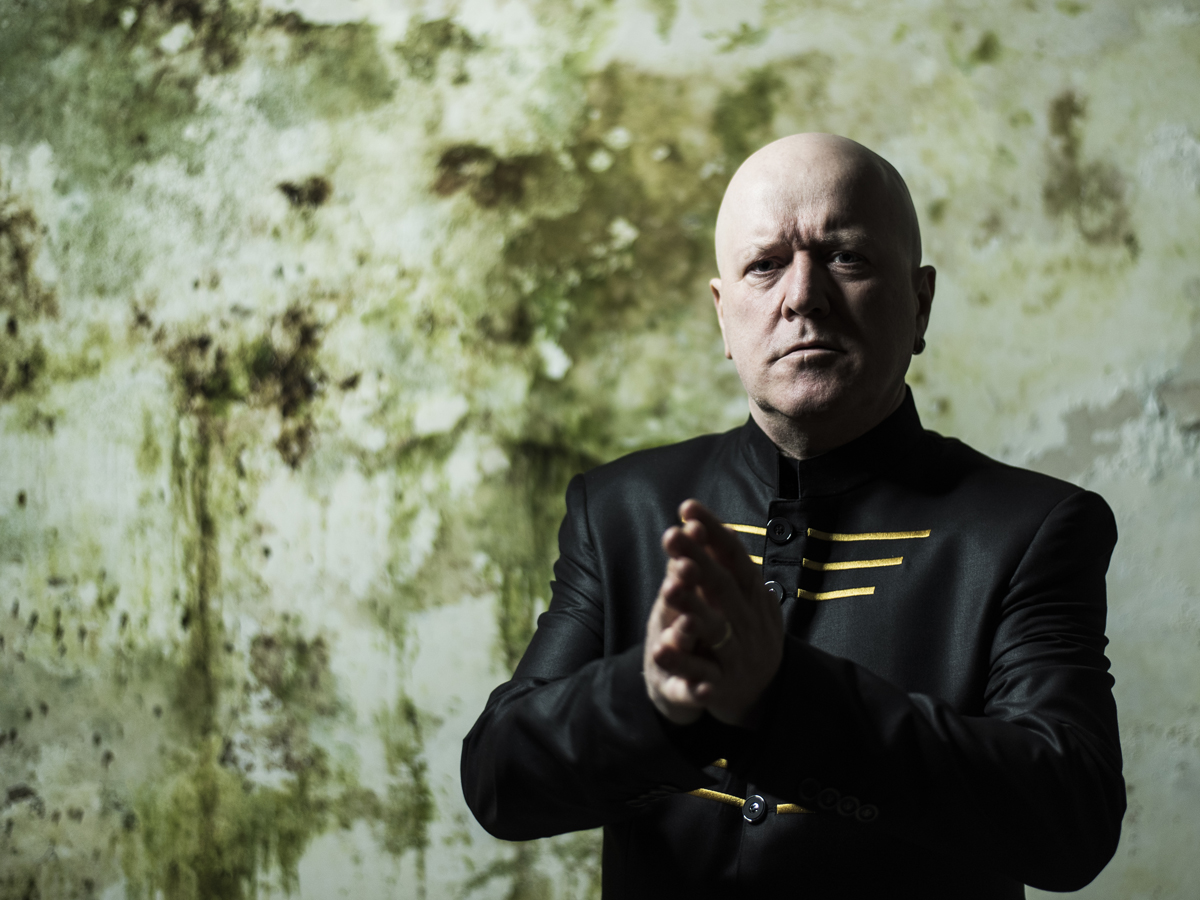
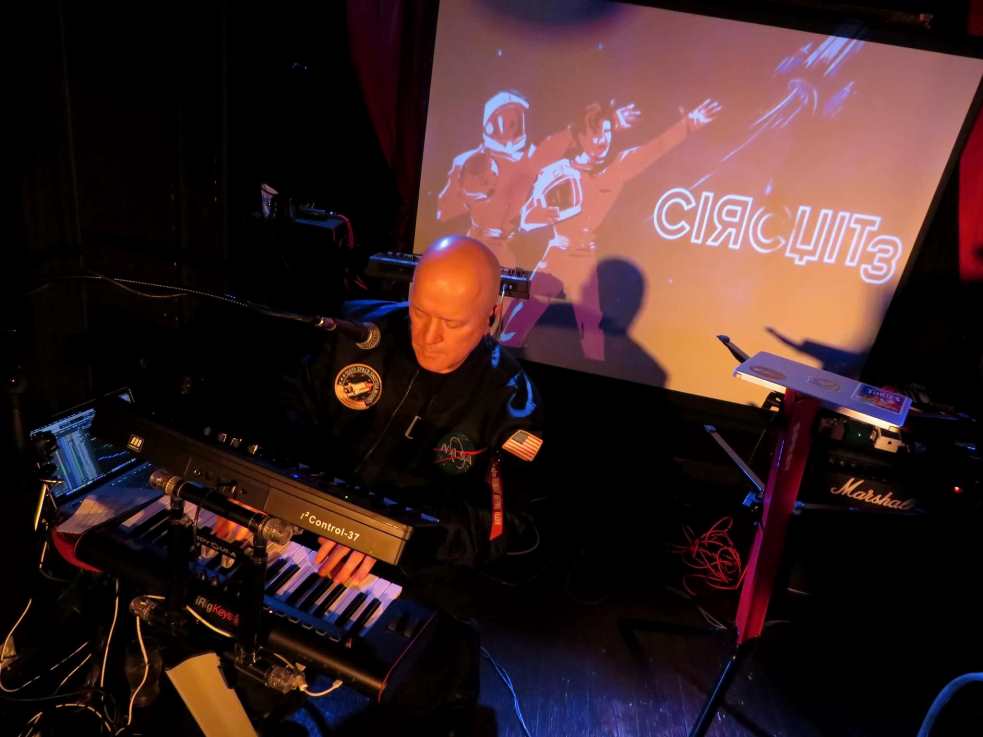
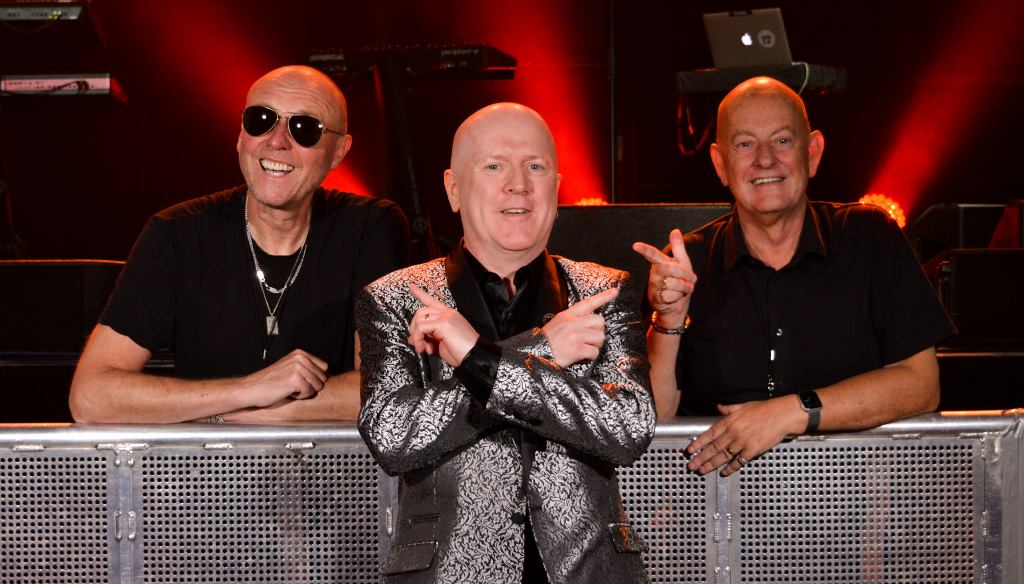
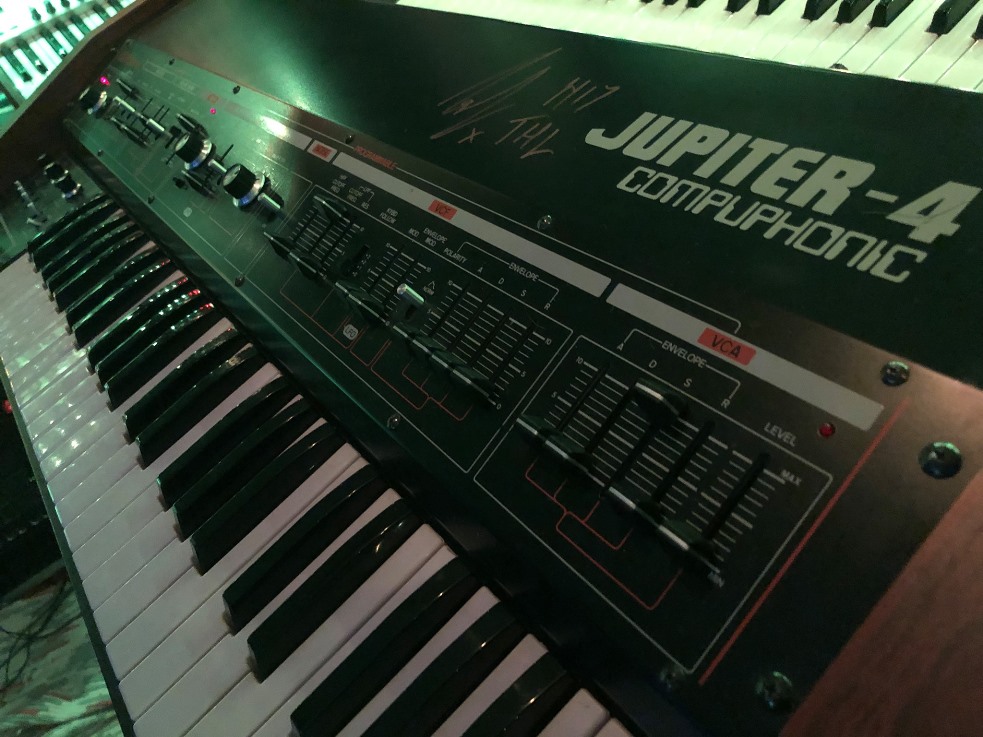
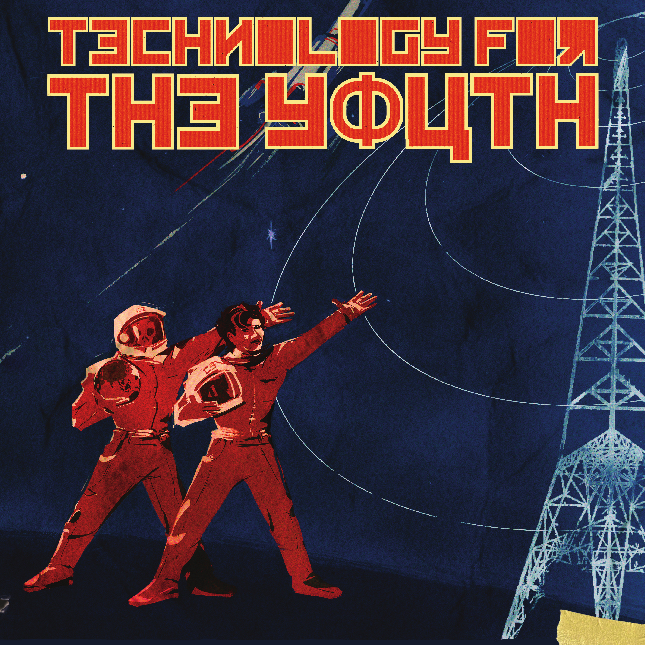
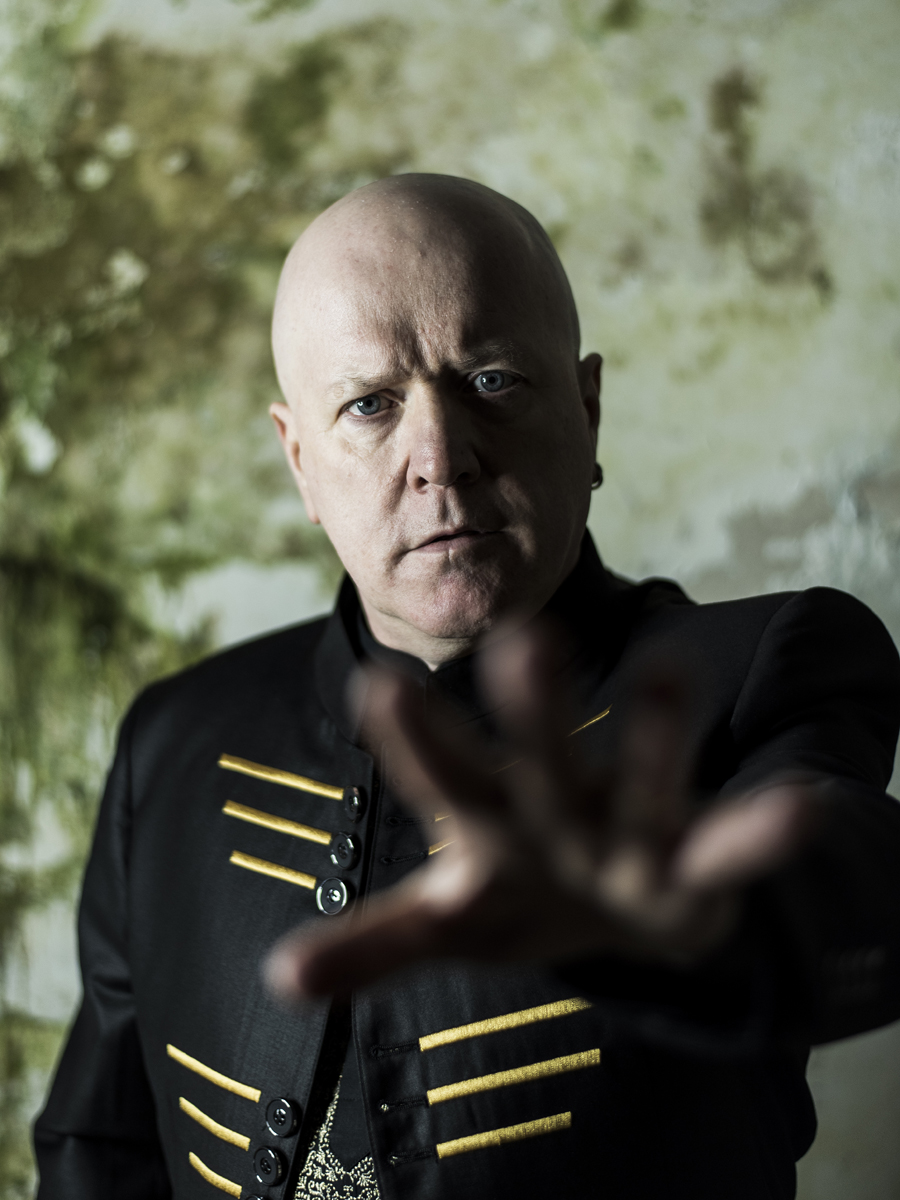
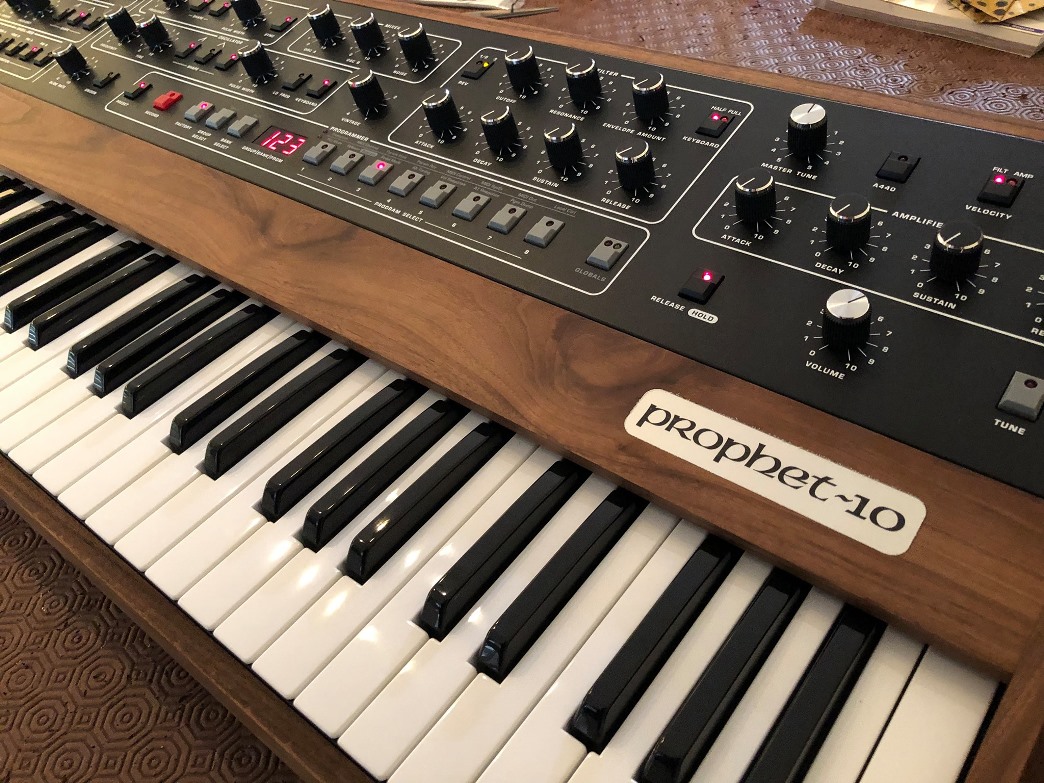
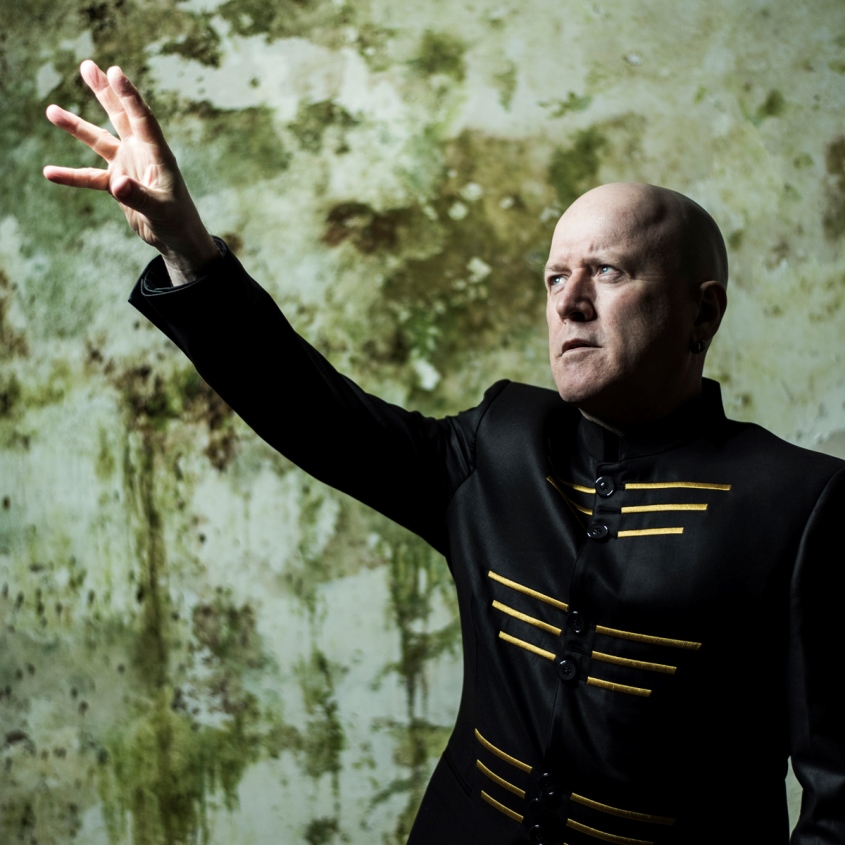
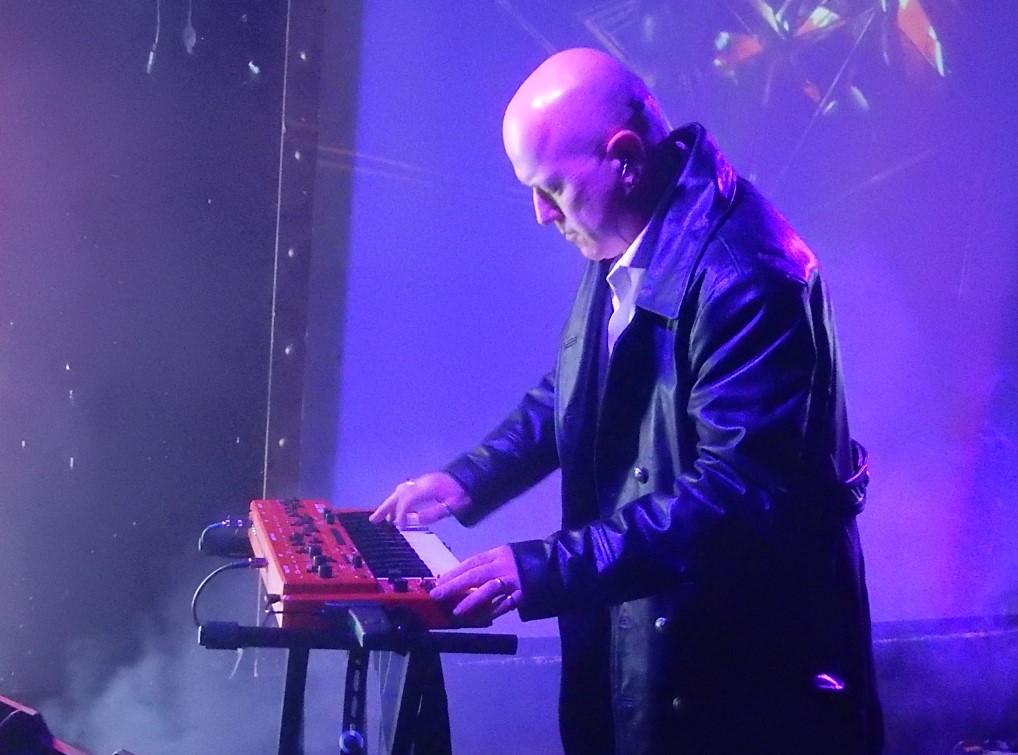
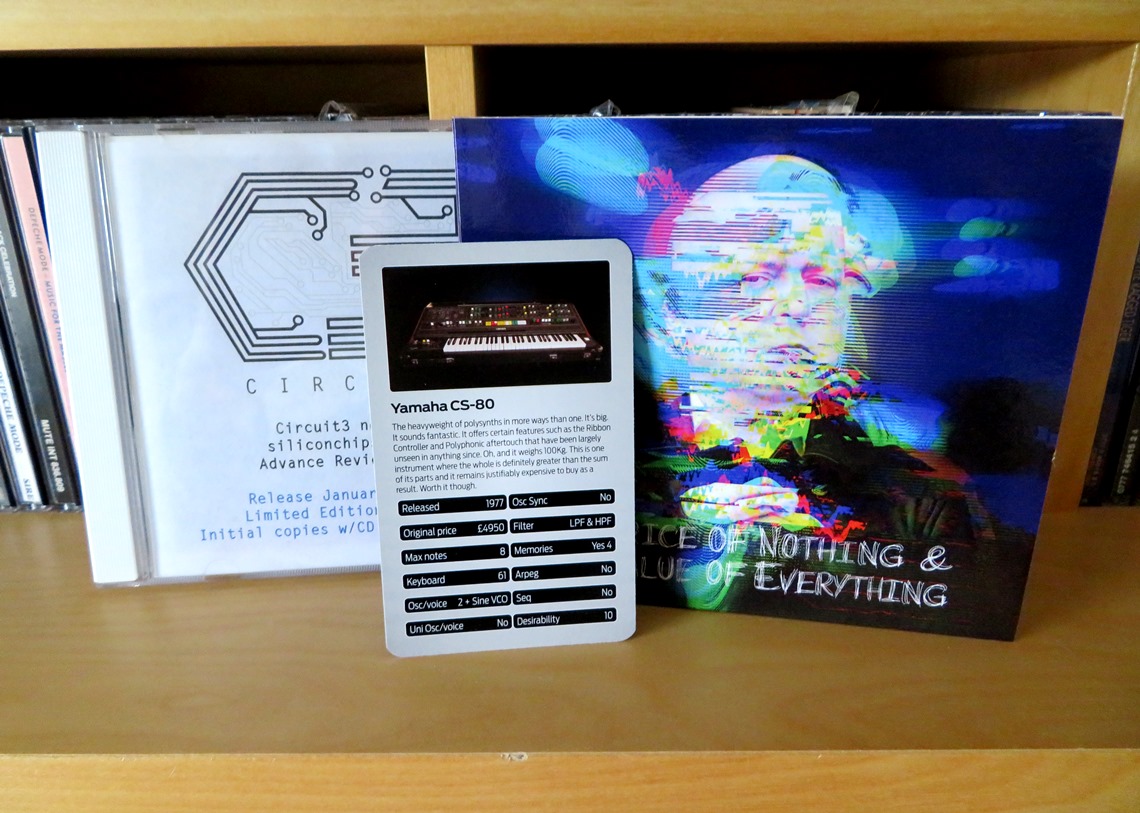
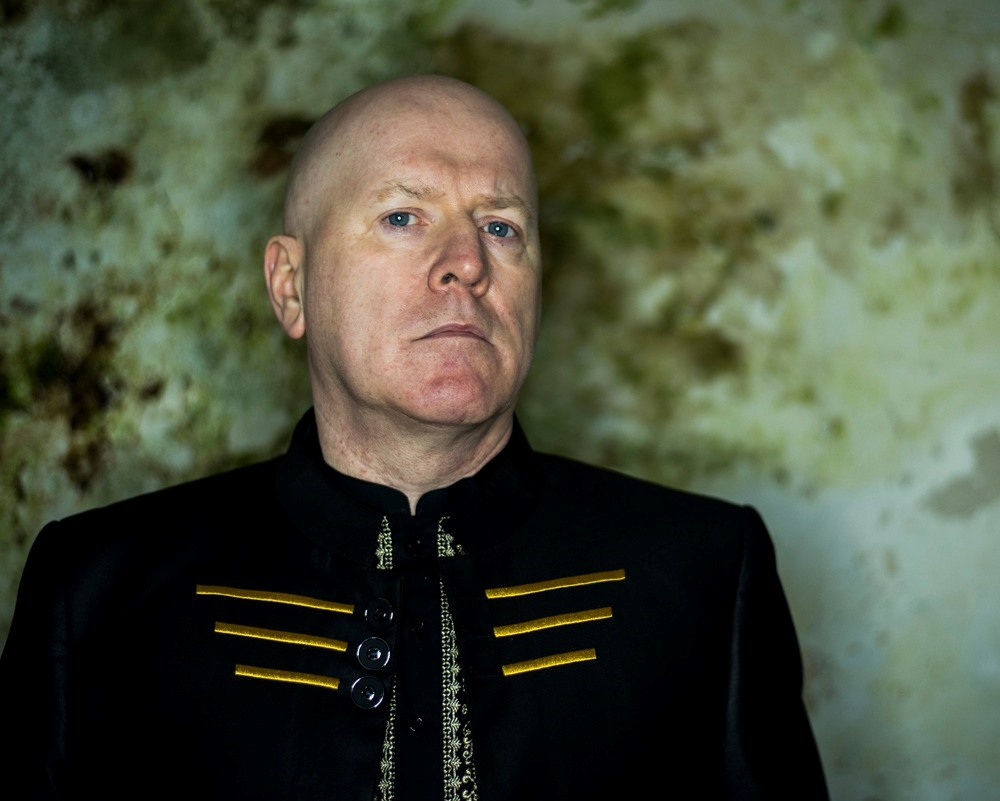

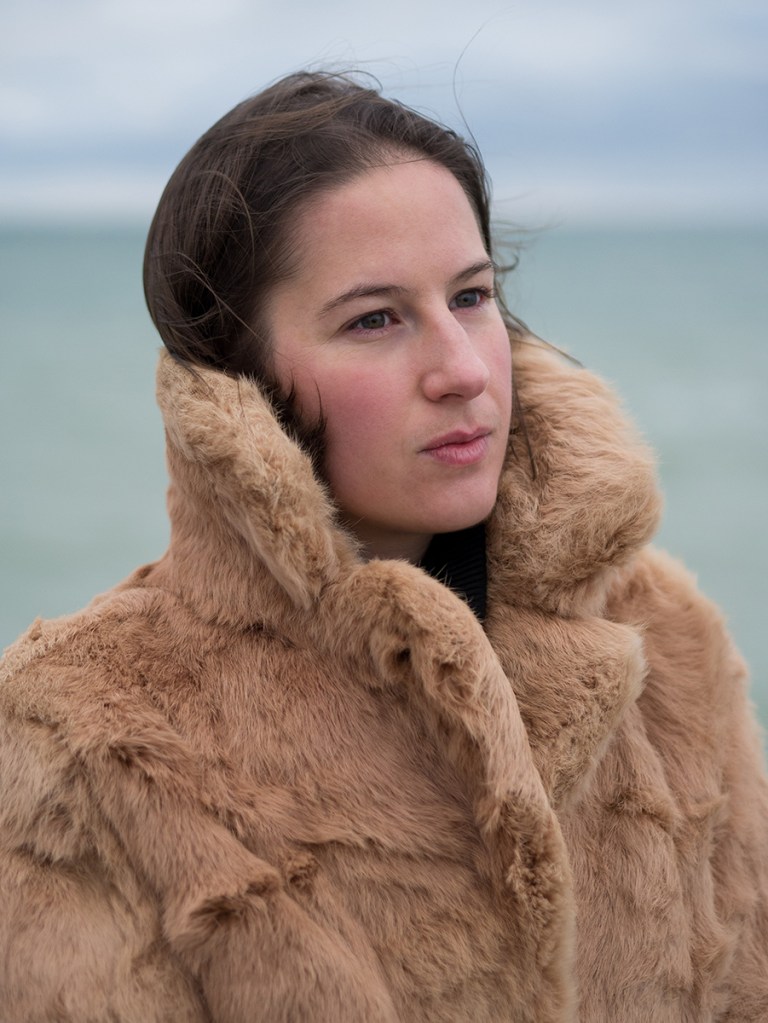



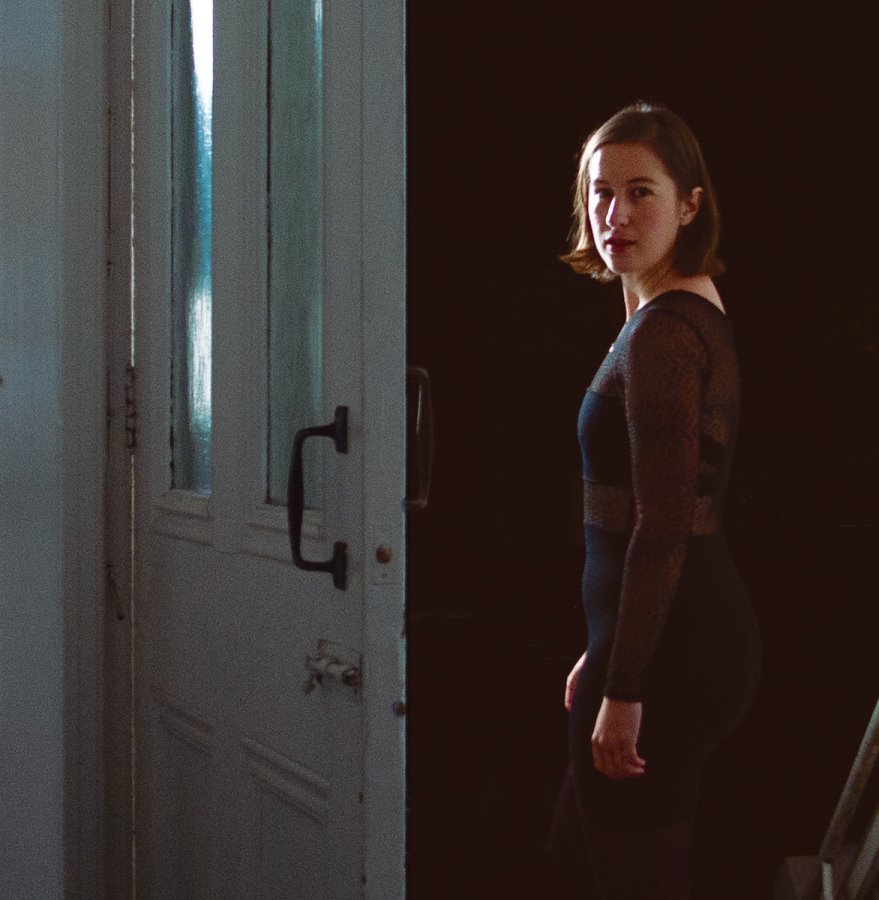
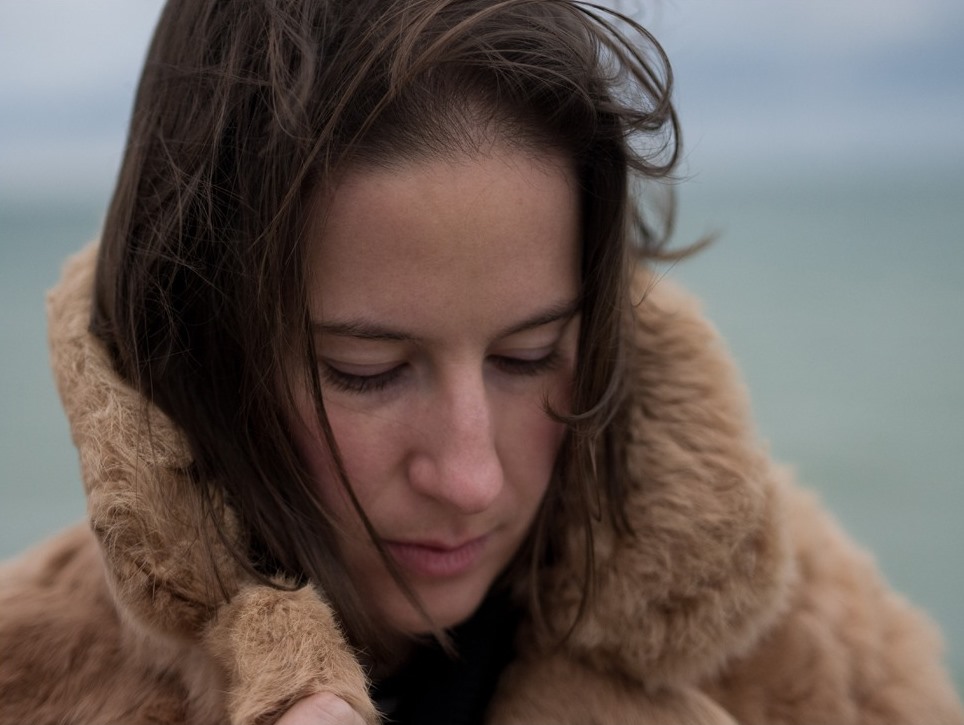

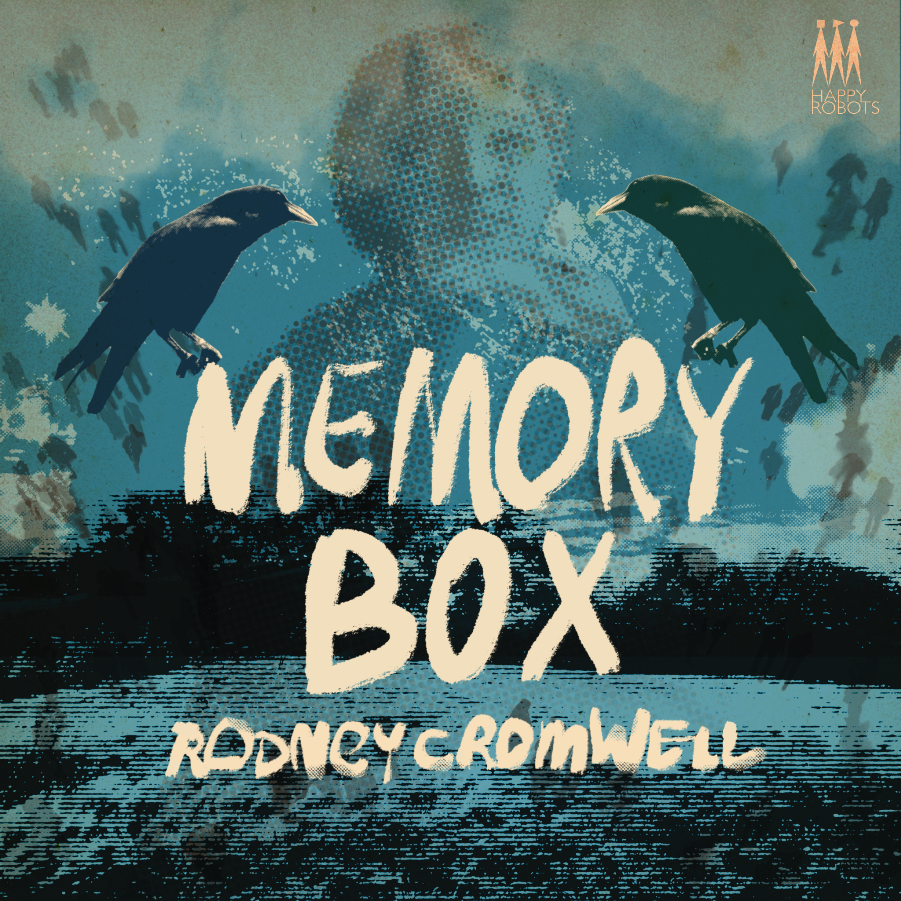
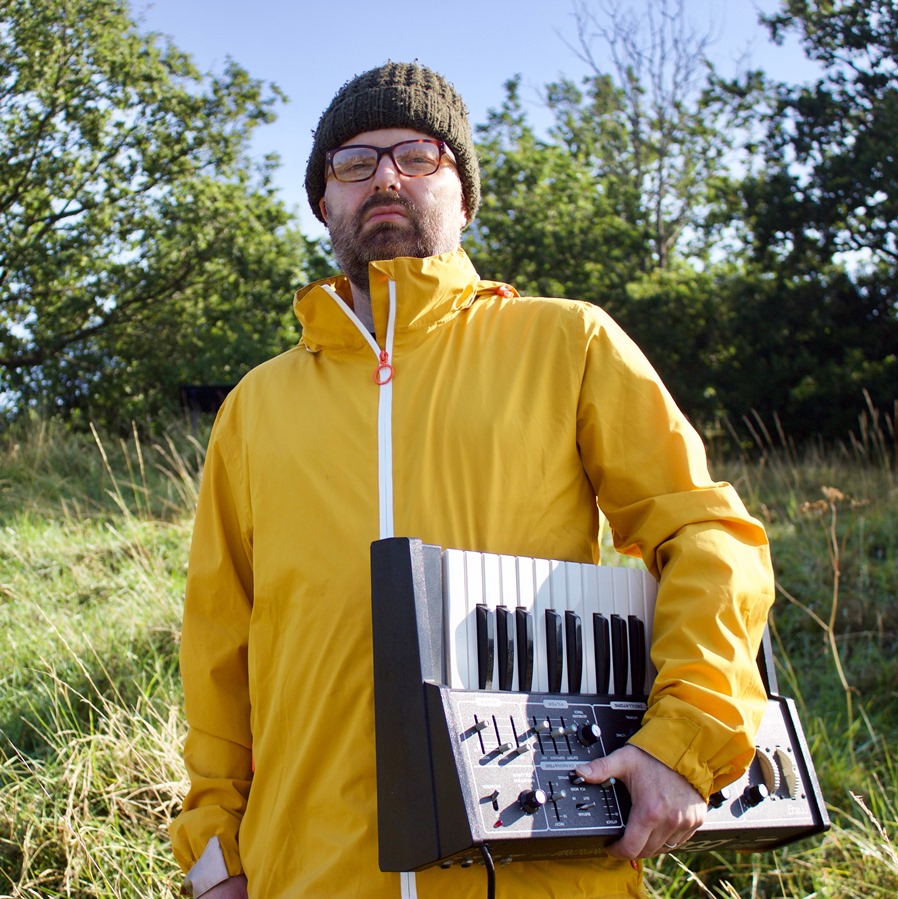
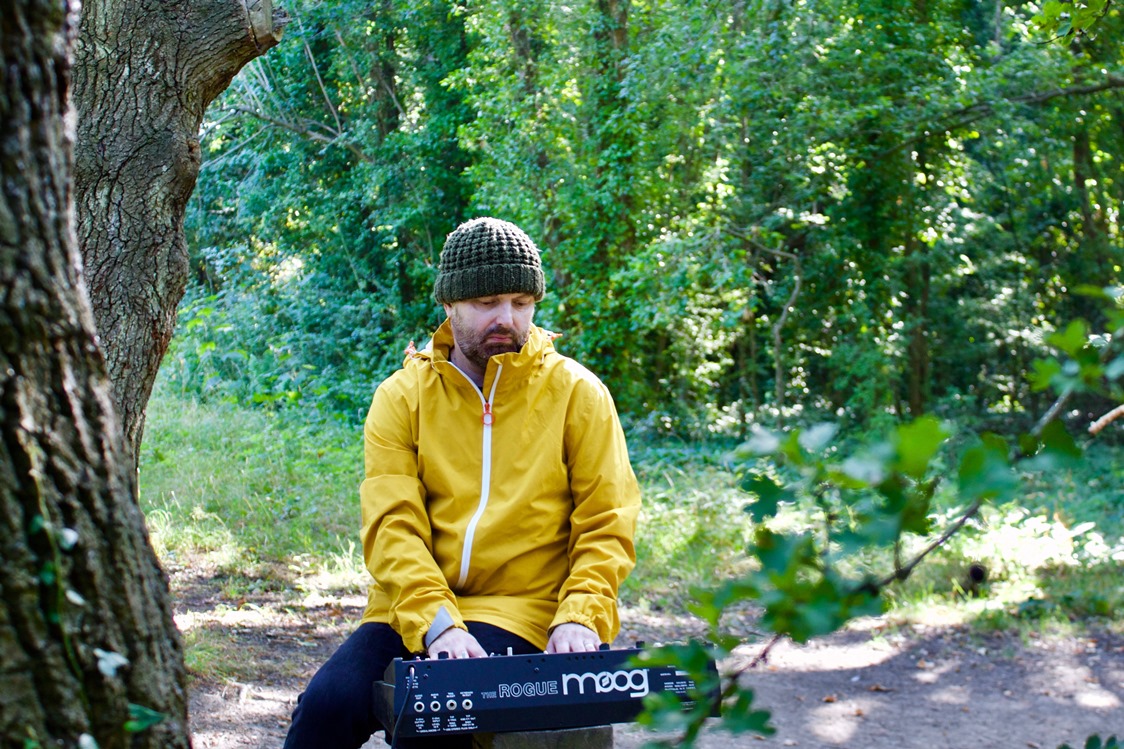

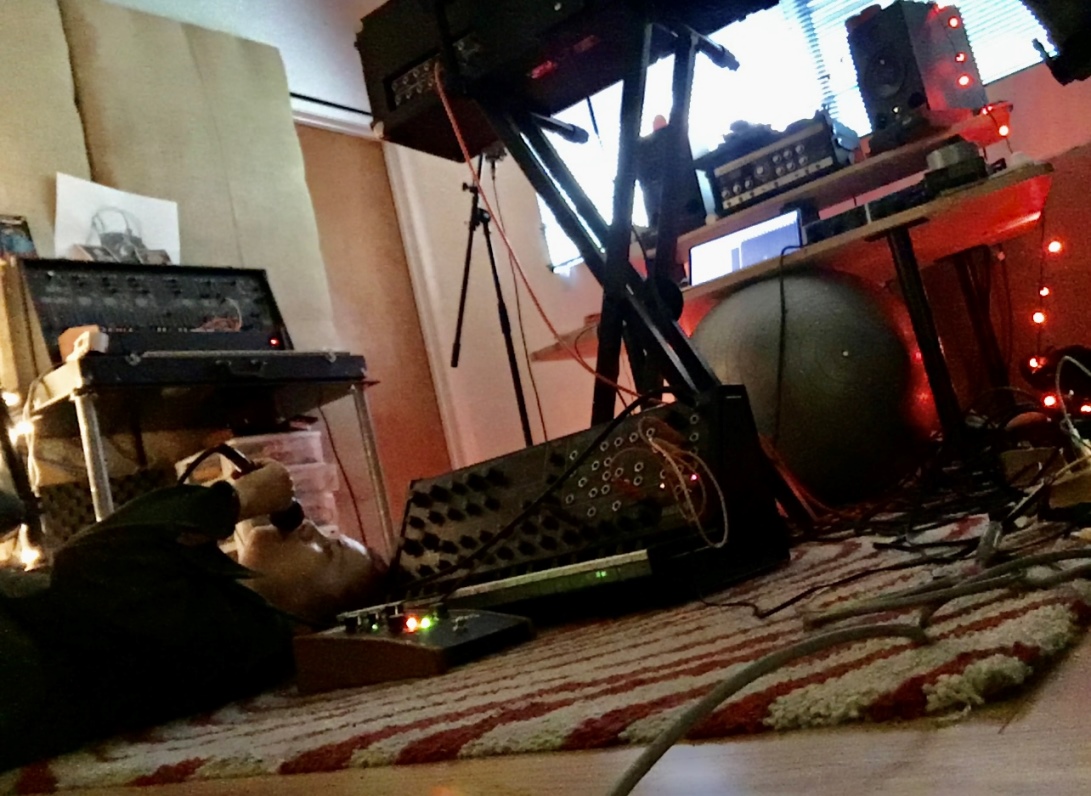


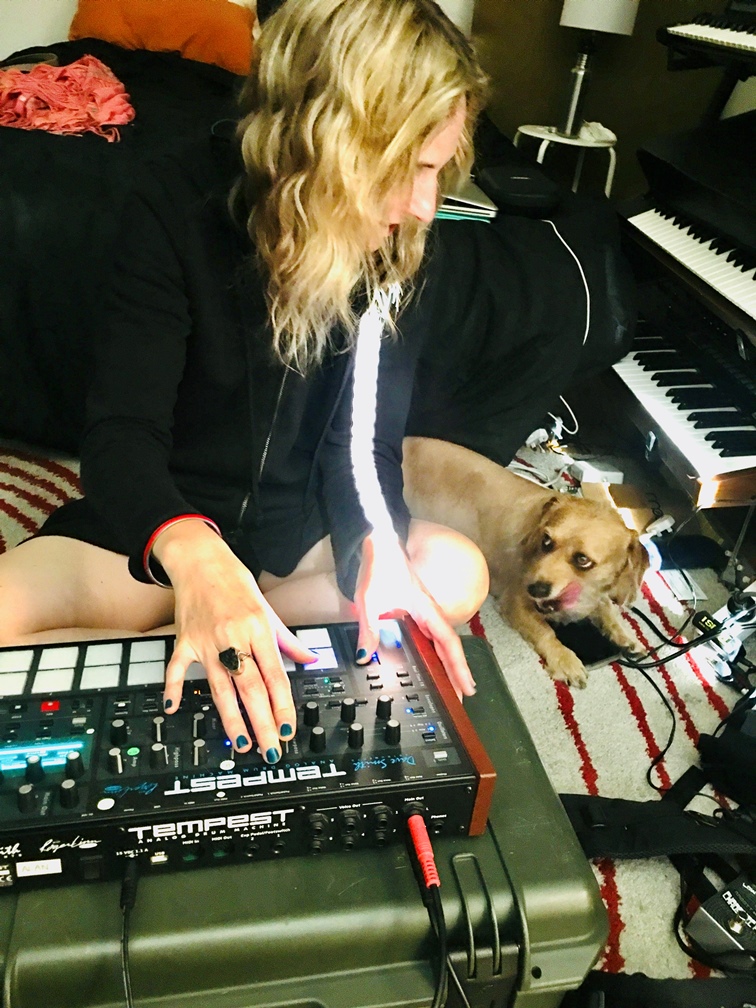
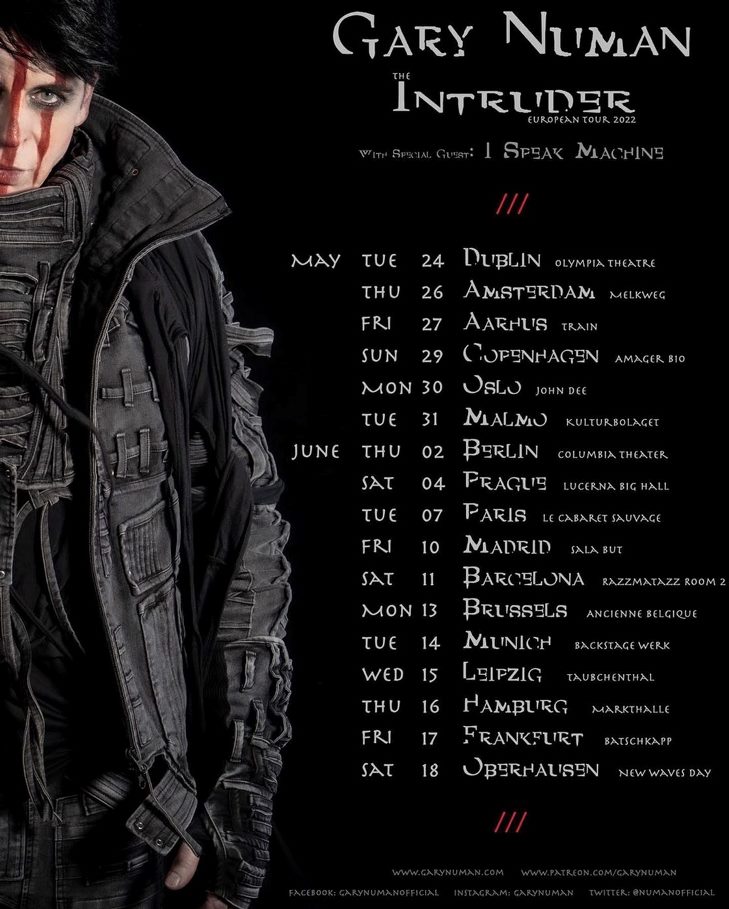
Follow Us!