Tag: Shark Vegas (Page 1 of 2)

Missing In Action: SHARK VEGAS

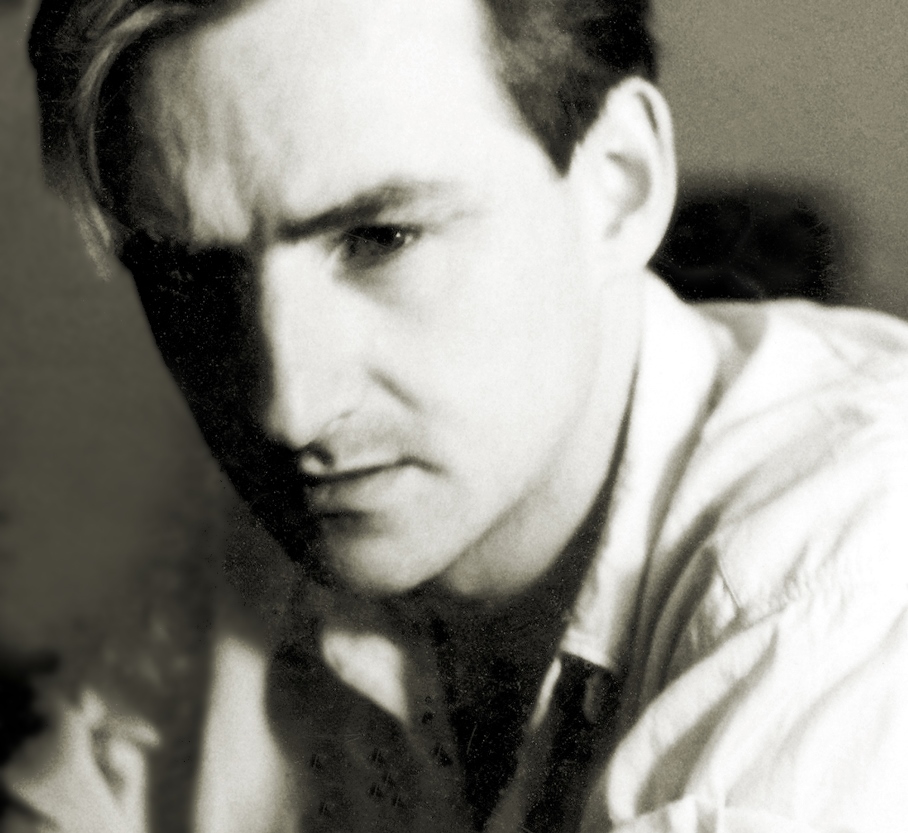
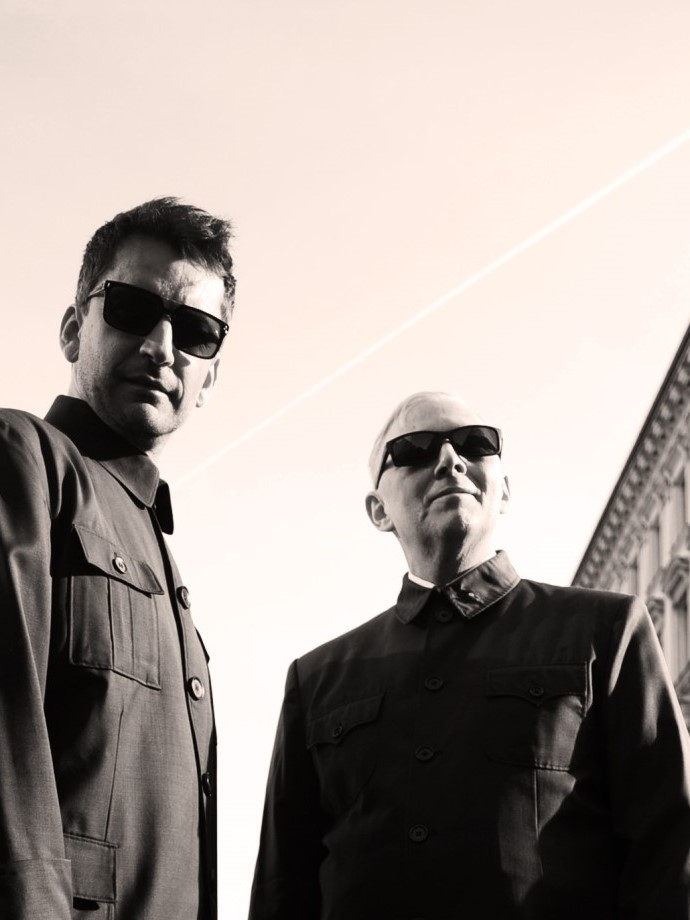
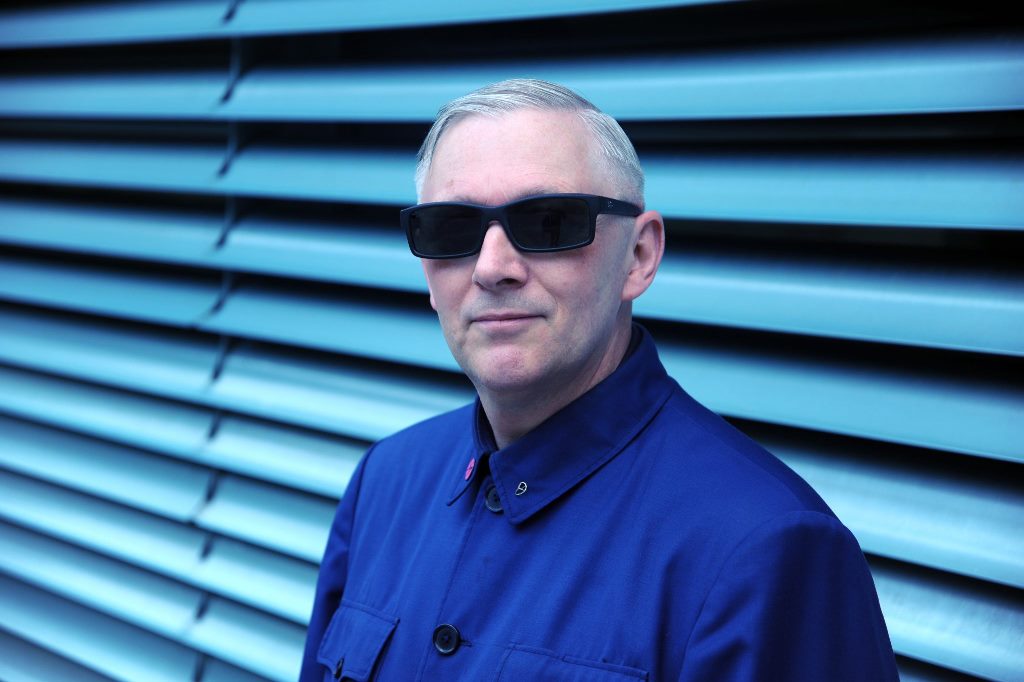
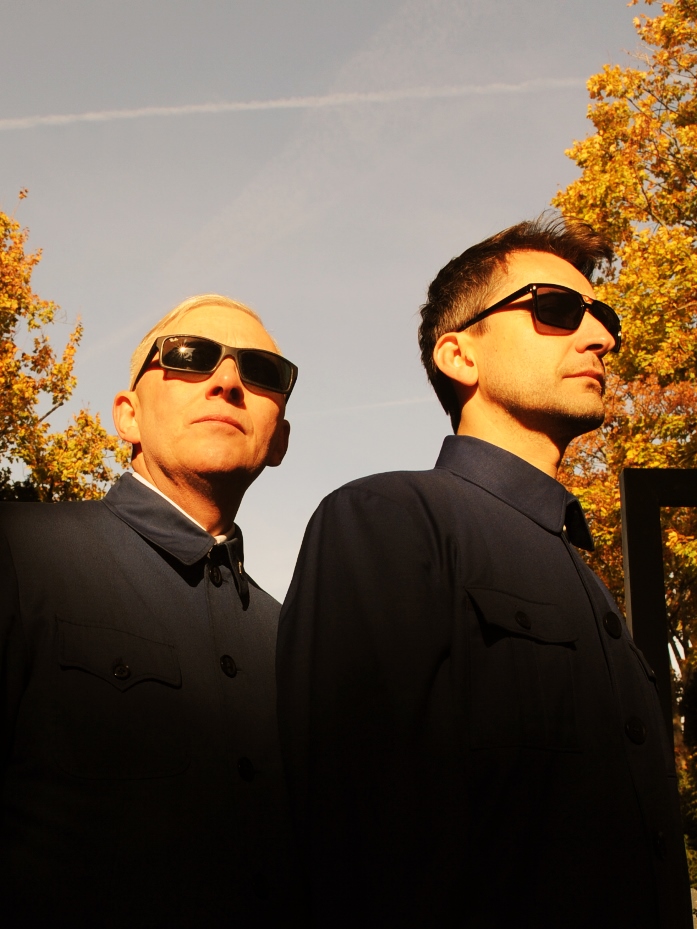
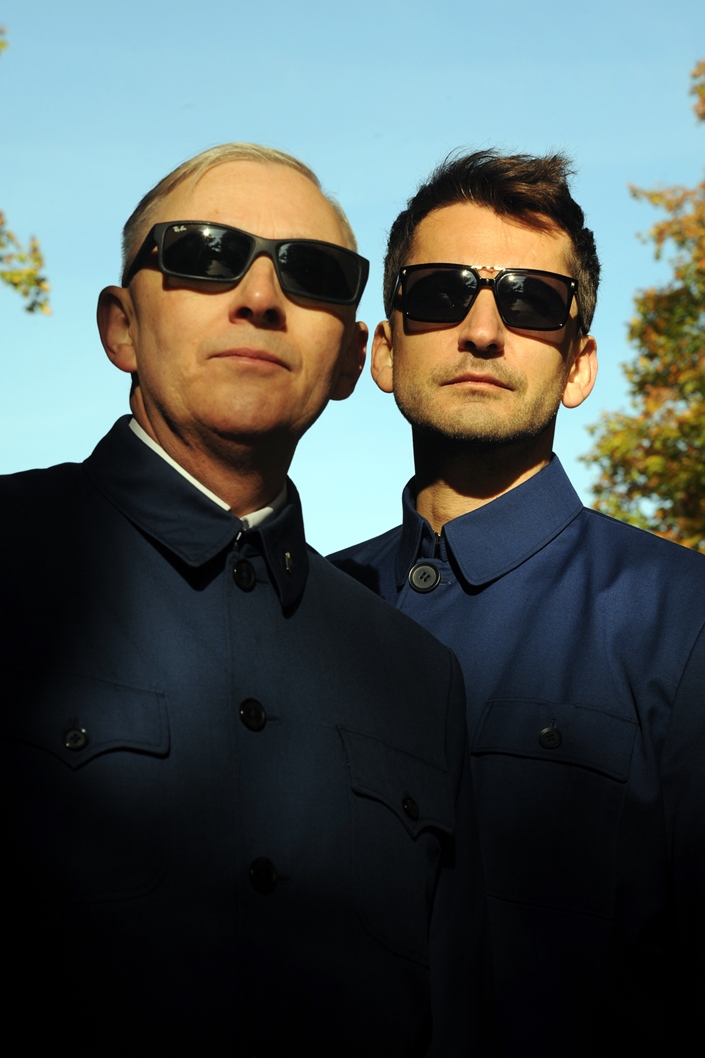
Photo by Jurgen Wellhausen

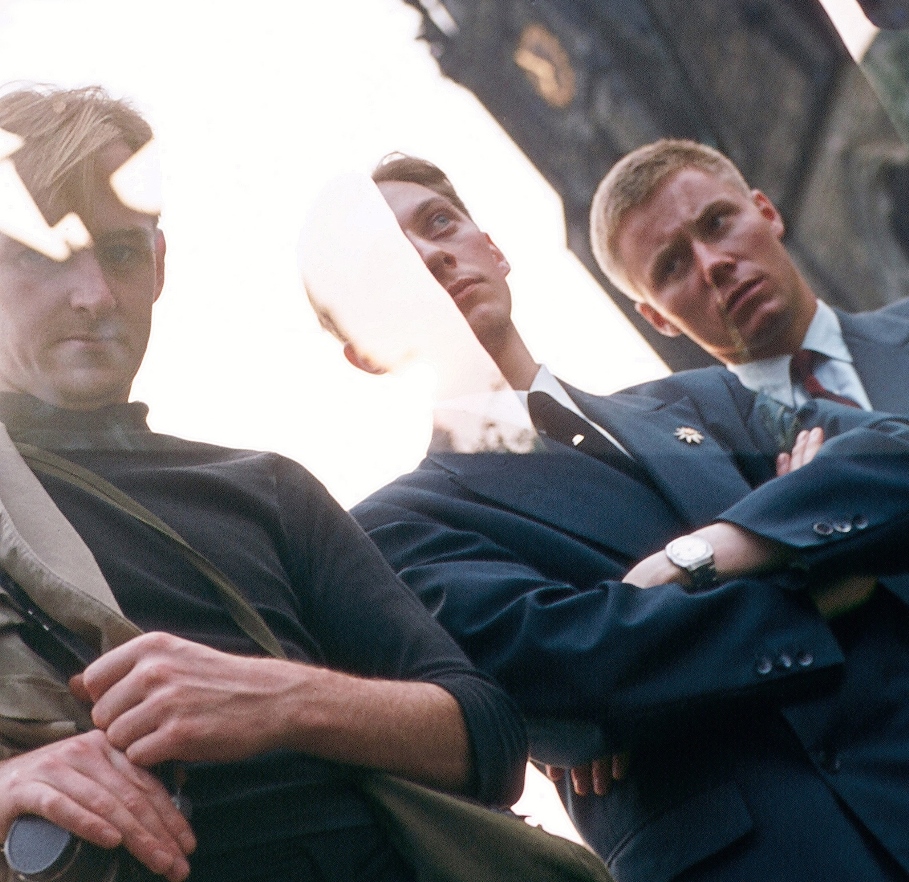
They were DIE UNBEKANNTEN but in 1984, they were no longer “unknown” as they changed their name to SHARK VEGAS ahead of a European tour opening for NEW ORDER.

Founded by Berlin-based Englanders Mark Reeder and Alistair Gray, SHARK VEGAS moved towards a more electronic HI-NRG disco direction after the doom-laden post-punk excursions of DIE UNBEKANNTEN, freshly influenced by Die Mauerstadt’s domestic club scene.

Adding Leo Walter and Helmut Wittler from the German band SOIF DE LA VIE to the line-up, the one and only SHARK VEGAS single ‘You Hurt Me’ was released on DIE TOTEN HOSEN’s label Totenkopf in 1984 before being remixed by Bernard Sumner for release by Factory Records in 1986.

The very immediate ‘Love Habit’ was premiered with a special video in 1985 on Berlin’s Glienicke Brücke which had a checkpoint that divided East and West; the occasion was to launch the new British cable music channel Music Box, but the song itself would remain unavailable until the soundtrack to Reeder’s documentary film ‘B-Movie (Lust & Sound in West Berlin 79-89)’ was issued in 2015.

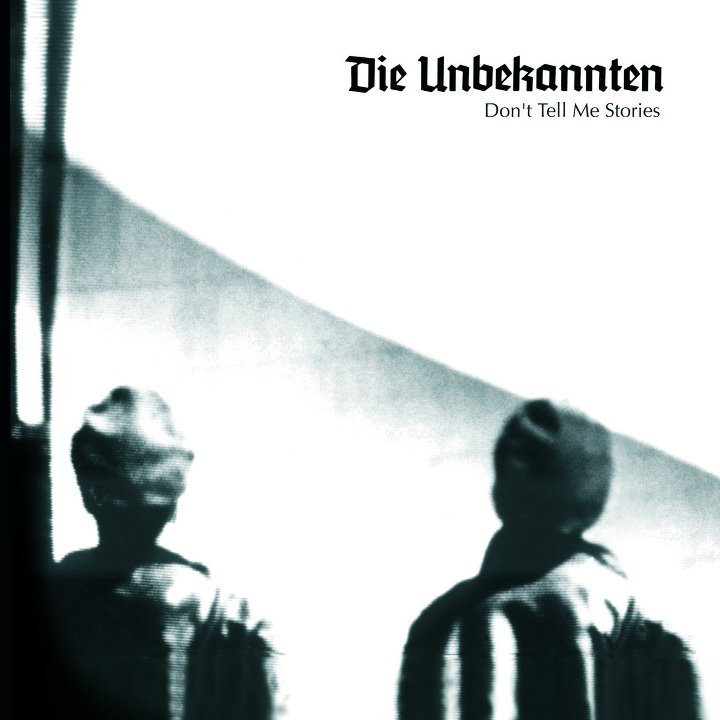
SHARK VEGAS material has been scarce until now… the Japanese label Suezan Studio has issued an albums worth of material on CD as a tie in with their release of DIE UNBEKANNTEN’s ‘Don’t Tell Me Stories’ packaged in a 7” x 7” 130 page full-colour book; the SHARK VEGAS CD ‘You Hurt Me’ contains live tracks and original demos of songs, some of which were most recently re-recorded by Reeder with Lithuanian singer Alanas Chosnau and solo for the soundtrack to Hermann Vaske’s documentary film ‘Can Creativity Save the World?’; both available separately, if ordered together as a bundle, there is a bonus CD-R gathering further mixes of ‘You Hurt Me’ included.

Having previously discussed DIE UNBEKANNTEN in 2023 as part of the ‘Missing In Action’ series, Mark Reeder chatted to ELECTRICITYCLUB.CO.UK about swimming the turbulent waters with SHARK VEGAS in his role as The Mancunian Candidate…

How does it finally feel to get a SHARK VEGAS long form release? there’s 11 songs and a KISS cover, but was there much material in your archives?

It was a lovely surprise and a great honour to be asked by Kaoru of Suezan Studio if I would allow him to release DIE UNBEKANNTEN and SHARK VEGAS in Japan on CD. Initially, he thought it would be just one CD album of our 12” inch singles, coupled with a few live tracks, but I had some demos, and I had already written an extensive booklet about our Cold War escapades of trying to be a band and our activities playing in the Eastern Bloc.

So, I suggested that he make a special edition 100-page booklet, with photos and text to accompany the CD. This has become the limited deluxe edition of ‘Don’t Tell Me Stories’, which had only been previously released by Vinyl-on-Demand in 2007 as an LP, and because I now had more room, I could expand the track-list on the CD to include upgraded versions and demos. That also meant that SHARK VEGAS would also get its own CD release.

Although, apart from the two 12” inch Singles and one compilation track, we didn’t have that much SHARK VEGAS material to be honest, we did have plenty of dodgy demo tapes, and a few live sets on cassettes, and generally their quality varied from bad to worse. A lot of restoration work was required.

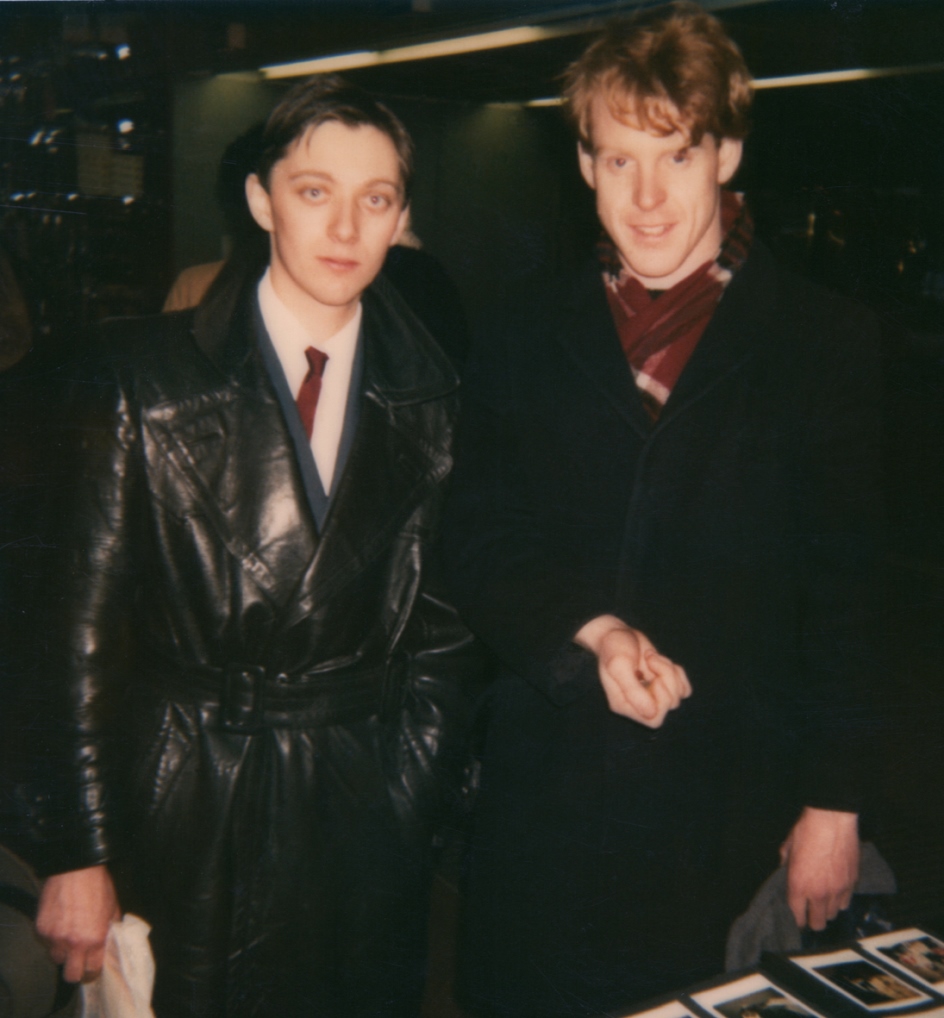
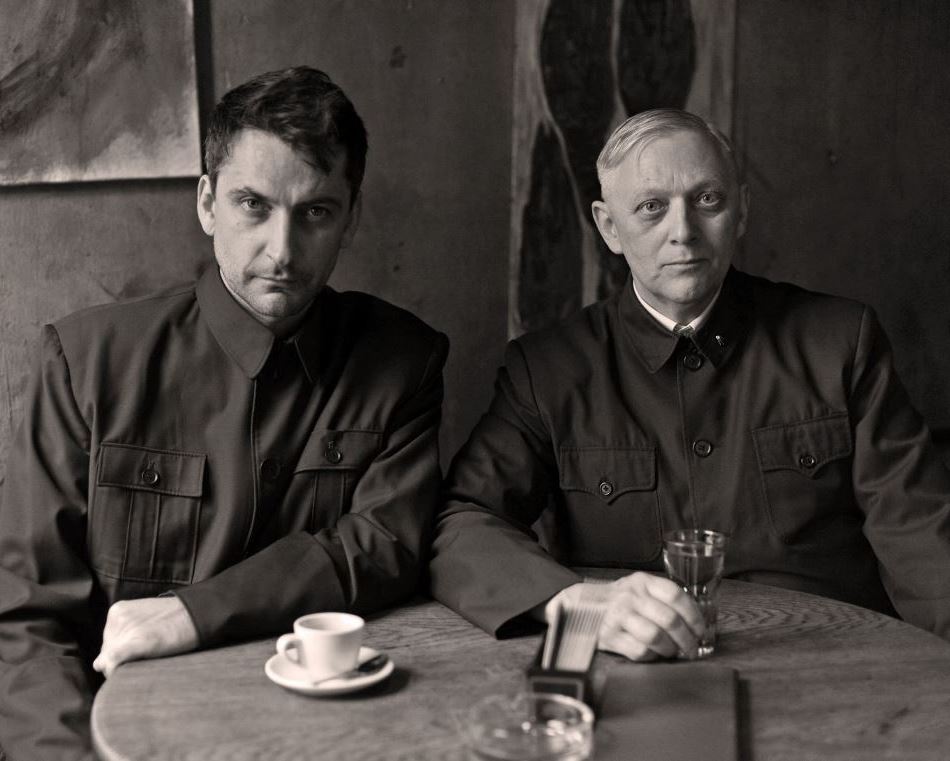
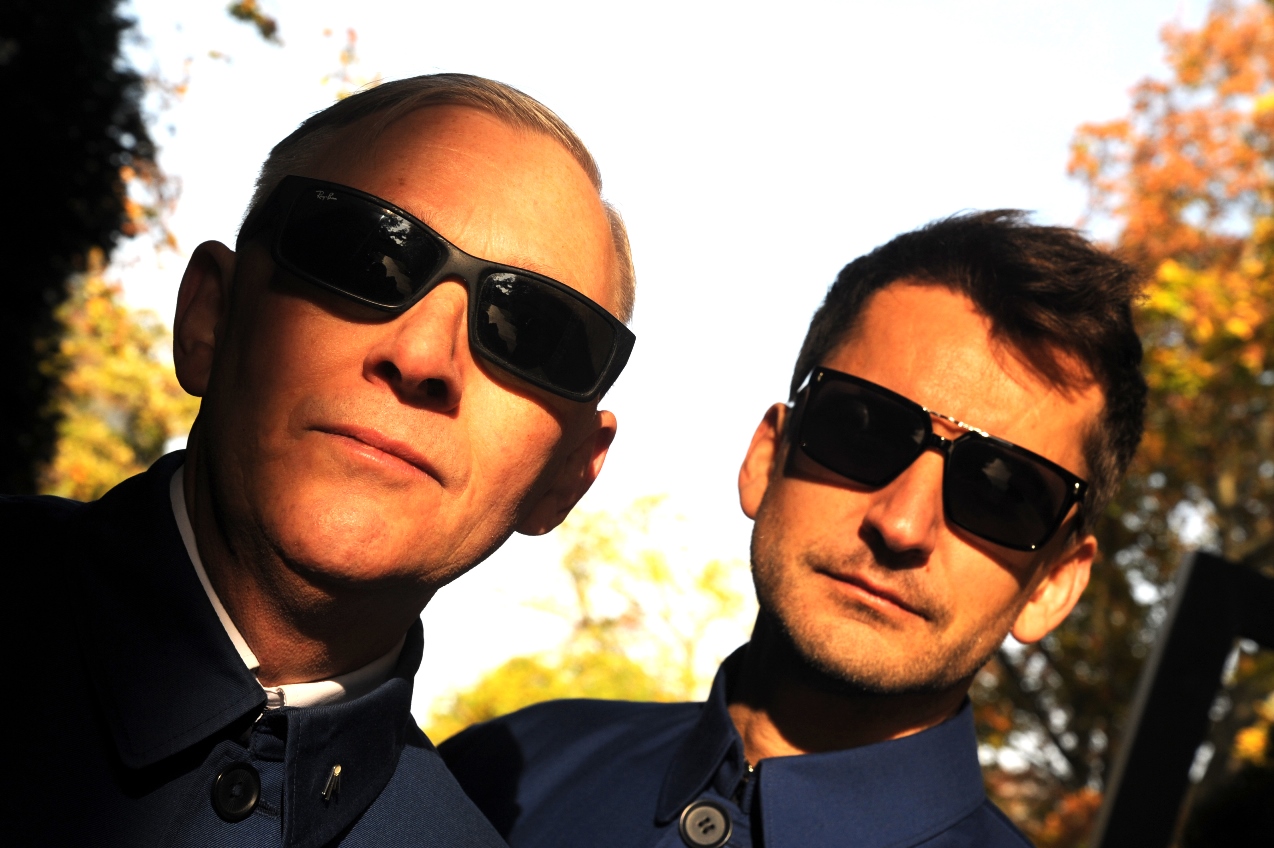
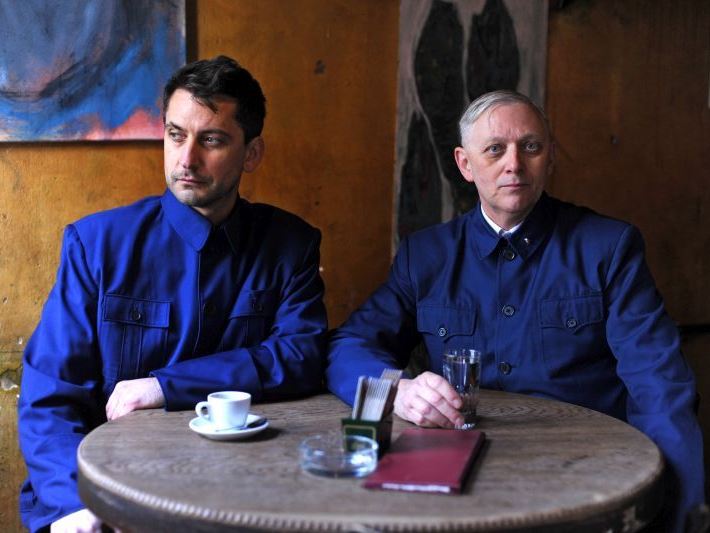
Photo by Irmgard Schmitz

How did the Japanese Suezan label become interested in releasing it?

I had been performing in Osaka as the opening DJ for NEW ORDER, and was scheduled to DJ in Alffo Record Shop… naturally being a vinyl junkie, I also went around to as many record shops as I could find, and I was browsing in the amazing Forever Records in the Shinsaibashi-Namba area of downtown Osaka, when the owner Satoru Higashiseto politely asked me if I was Mark Reeder, and then said, his friend had a label called Suezan Studio (who I actually knew about from his CD releases of other Berlin artists like DIE TÖDLICHER DORIS or DIN-A-TESTBILD). He said his pal was interested in licensing DIE UNBEKANNTEN and SHARK VEGAS for Japan.

The label owner Kaoru was apparently very proud to have original copies of all our EPs. He contacted me, and we discovered we had many mutual friends. He definitely knew his stuff and it just felt like Suezan Studio was the right home for my records.

When do you consider the moment that SHARK VEGAS became an actual entity?

Well, we changed our band name from DIE UNBEKANNTEN to SHARK VEGAS specifically for the NEW ORDER European Tour in 1984, so I guess our inception was March 1984. We also acquired two new members for that tour in Leo Walter and Helmut Wittler, both formerly of SOIF DE LA VIE, who had previously released their Hi-NRG song ‘Goddess of Love’, which had become a club hit, but they got stitched-up by their singer and she took all the credit, which deflated their hit-seeking ego somewhat. Joining SHARK VEGAS was a welcome escape for them.

I thought being a foursome would make for a better live presentation. Leo had performed the percussion on our original studio demo of ‘You Hurt Me’ and it seemed natural to ask him if he wanted to accompany us on tour. Helmut could play bass and keyboards, and he looked good with his shirt off, and he was the only one of us who had a driving license.

The collection contains numerous versions of the only official SHARK VEGAS single ‘You Hurt Me’, why was that chosen to be recorded? It has a story on its own which involves Conny Plank and then Bernard Sumner?

Yes. We had already recorded a studio demo of ‘You Hurt Me’ as DIE UNBEKANNTEN with Leo on percussion, that was a few months before we were asked to go on tour with NEW ORDER. I sent this fresh studio demo to Bernard Sumner, who really liked it and he offered to produce it, and said maybe Factory Records would release it. It all sounded promising. Rob Gretton suggested we could do the mixdown during the few days break we had on the tour, and he booked us into Conny Plank’s legendary studio near Cologne. We were all so excited. All my favourite Krautrock artists had recorded something with Conny Plank and I was secretly hoping he would spread some of his magic over our music.

The session was a painful nightmare, and in the end, Bernard spent most of the time trying to get his mix to sound like our demo. We made about six mixes and none were what we really wanted. It was very frustrating. I always wanted the song to sound more like our original “Unbekannten” first draft, which we recorded in our practice room. It had lashings of Korg Poly6 arpeggiator sequencers and synths, but by the time we got it into Musiclab studio, we had a new synth and 808 drum machine, and the song had become more professional – which is the studio demo mix which was eventually released on the Factory version 12” Single.

In the end, after the disastrous Conny Plank experience, we made the final mixdown in Strawberry Studio in Stockport, Manchester with Bernard and Donald Johnson from A CERTAIN RATIO. All the mix versions were then split between Totenkopf Records and Factory. While compiling tracks for these CDs, I discovered our original practice-room demo version, which I included on DIE UNBEKANNTEN ‘Don’t Tell Me Stories’ CD.

Would ‘Love Habit’ not have been a better choice as a debut single as that was more immediate or did you not think in commercial terms? How close did ‘Love Habit’ come to getting an official release at the time?

Probably, but we hadn’t finished writing ‘Love Habit’ by that point. After the NEW ORDER tour, we recorded a very shoddy demo of ‘Love Habit’ at Musiclab studio, which we used for the Musicbox video performance on the Glienicke Brücke (Bridge of Spies), but by then Leo and Helmut were already planning on leaving the band. The song would only be properly recorded and produced after Michael Schamberg asked us to contribute a song to his forthcoming FACTUS compilation ‘Young Popular & Sexy’.

When you were asked to tour with NEW ORDER, do you think you were ready? The live recordings included on the album indicate that you sounded ok at the time?

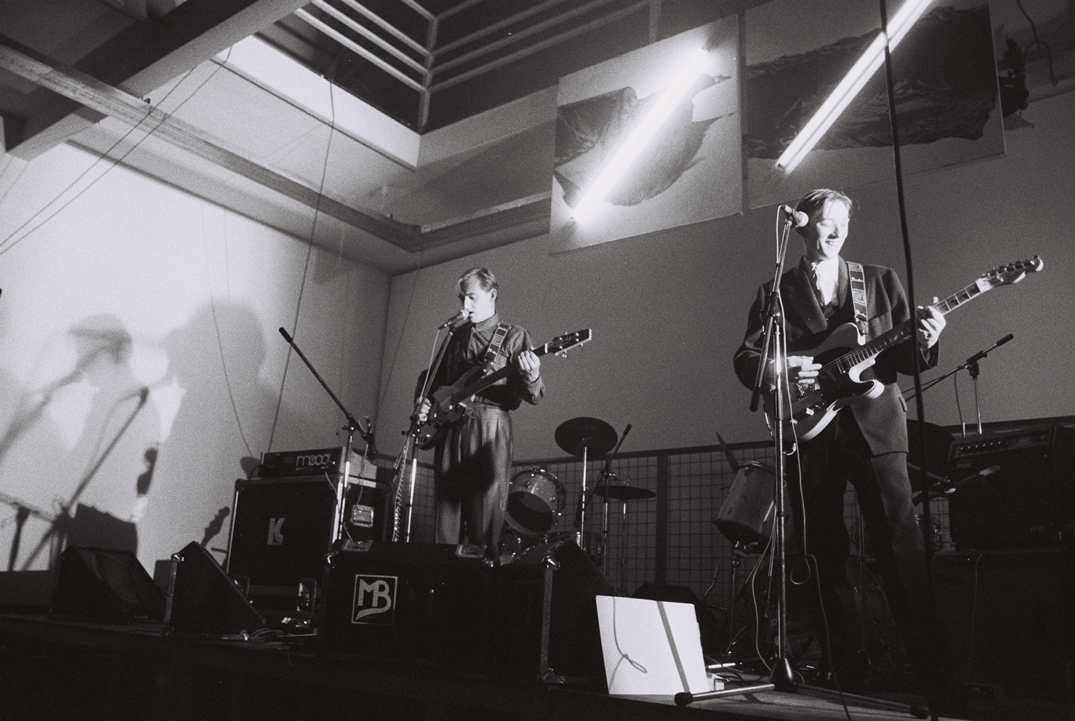
I suppose we were as ready as we were ever going to be, given the amount of time we had to prepare. We acquired our two new members in Leo and Helmut only a few weeks before the tour and we wrote a few new songs with them and practiced every day. I recorded all our drum machine sounds and sequencers onto 4 track tape, as the MC202 sequencer was far too temperamental to take on tour. As we didn’t really have that many new songs, we padded out our set with a couple of reworks of DIE UNBEKANNTEN’s old songs like ‘Perfect Love’ and ‘Don’t Tell Me Stories’. After our first gig on this tour, Karl Bartos told us, he thought we were better than the main act, he might have just been sarcastic, but it encouraged us immensely.

Photo by Wayne Arents

What synths and things were you using in SHARK VEGAS? Was the technology was enabling you to get more sophisticated sounds and ideas down quicker?

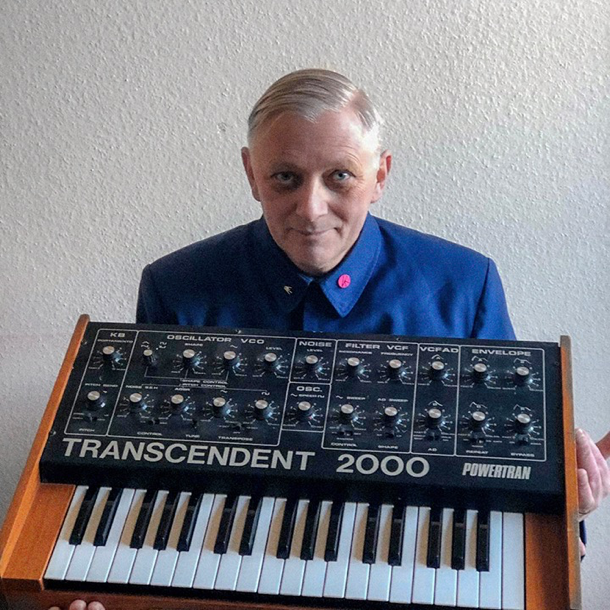
Not really. Preset sound synths were becoming more and more popular and I wasn’t a fan. It was fashionable to have a DX7 or Korg Poly800, but I liked to discover or create my own synth sounds by fiddling about. We had gone from just having the Roland 606, an MS20, a Moog and a Transcendent 2000, to more polyphonic synths like Korg Poly 6, Roland 106, MC202 and SH9 but we also had a Korg Poly800, a Casio and a Roland 808 drum machine and clap trap. Later, we had a proper Korg sequencer and a Roland 707 + 727, but we didn’t use them live, Leo used a Simmons kit with a click track, I played the Poly6, or Roland 106 and Helmut played the Poly800.

The “disco time” of ‘Undercover Lover’ showed a lot of potential, how did that come together and why the “006” reference?

We lived in the ultimate Cold War city. Berlin was the spy capital of the World. The place where the Third World War was supposedly, going to start. Our lives were constantly running against this narrative. Being Brits in Berlin and not in the Army, we were shrouded in suspicion and constantly aware that people considered us agents of some sort, and they didn’t know what the hell to make of us, especially in the East half of the city, where we spent a lot of time.

The East German Stasi thought my agenda was to subvert the youth of East Germany. ‘Undercover Lover’ is about falling victim to the honey-trap. Which we had personally encountered. 006 is a play on words. In German it is pronounced “Oh-Oh-Sex”. It is a hidden warning!

We were also regulars at the Metropol, Europe’s biggest gay disco at the time. We went every Friday and Saturday night. It was a very inspiring place. I had taken Bernard Sumner there in the early 80s and a while later, ‘Blue Monday’ was born. We too were inspired by the emerging Hi-NRG scene and we wanted to upgrade our sound and style, to make it more amusing and not as depressive as DIE UNBEKANNTEN.

Whose idea was it to do ‘I Was Made For Loving You’, what was the process of arranging it?

Well, I must confess that was my idea. I had seen KISS perform in Manchester in 1976, which was the first time they had ever played in the UK, and from that moment I was hooked. My fascination stopped after their ‘Dynasty’ album though, as I thought that was their pinnacle.

I loved ‘I Was Made for Loving You’ and I still think it is their best song. I thought it might be a laugh to make a high-energy-DEAD-OR-ALIVEy version for our live sets, as we had always had a cover version of something in our sets as DIE UNBEKANNTEN. We unleashed our corrupted cover versions of songs like; ‘When You’re Young and In Love’, or ‘Diamonds Are Forever’ and with SHARK VEGAS, we either performed our version of ‘Heaven’s in the Back Seat of My Cadillac’ or… ‘I Was Made for Loving You’; No live version of ‘Heaven’s in the Back Seat…’ has survived.

We first performed ‘I Was Made for Loving You’ at the Weisse Rose in Berlin as an encore, and the audience went completely bonkers, thereafter it became a permanent fixture in our live sets. Sadly, that first Weisse Rose recording was far too poor to restore, maybe one day AI will be able to dissect it enough and I will be able to reconstruct it to sound presentable. We recorded a studio demo of ‘I Was Made…’ just to see if it would work as a cover version. It was nowhere near where I really wanted to take it, as my ability was compromised by my lack of producer knowledge. It was basically our live version, recorded.
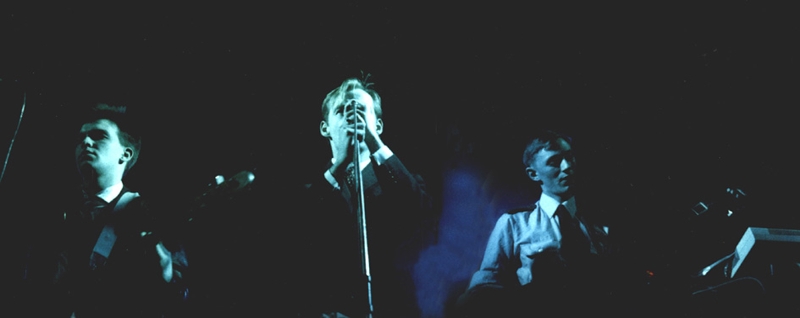
Photo by Irmgard Schmitz

‘Pretenders Of Love’ was the only other SHARK VEGAS track that got officially released back in the day? How did that come to be fully formed and included on that Factory US compilation ‘Young, Popular & Sexy’?

To present the Factory US label in America, Michael Schamberg was putting a compilation together of new or lesser-known Factory artists like; THE HAPPY MONDAYS, DURUTTI COLUMN, ACR or STOCKHOLM MONSTERS, and after the positive reception of ‘You Hurt Me’ in the USA, he wanted something new and unreleased from us for ‘Young, Popular & Sexy’.

We produced two songs in the studio, and he had the choice between ‘Pretenders Of Love’ or ‘Love Habit’, and he chose ‘Pretenders’. I guess he thought American audiences would be able to identify with it easier; ‘Love Habit’ was far too Hi-NRG for his tastes.

Of the previously unreleased tracks included, which ones have stood up in your opinion after 40 years?

Probably ‘Love Habit’, ‘Undercover Lover’ and ‘Ice’, but also other songs that initially never left the practice demo stage like ‘I Can’t Share This Feeling’ and ‘Lovers of the World’ have seemingly stood the test of time, which I recorded recently for the albums ‘Children of Nature’ or ‘Can Creativity Save the World?’.

How was the reconstruction aspect for you and your studio partner Micha Adam, were there any rules you set yourselves or did you let a few modern-day tweaks come in like artificial intelligence?

Micha and I just wanted to try and get it to sound as good as we could from the sources we had to use. We only had the cassette tapes to work from, as all the original 16 track and 2 track master tapes had been destroyed in 1990. Although I had kept the cassettes in fairly favourable conditions, they still had never been played for 40 years, and when the tapes are degraded and riddled with blips, breaks and drop-outs, it is very time consuming trying to find ways to reconstruct the sound. We didn’t use any AI on any of the restoration work though, everything was done by hand.

Was SHARK VEGAS more challenging than DIE UNBEKANNTEN with 4 people involved? When and how did it all come to an end?

It was more of a collaboration effort to write songs like ‘Undercover Lover’ or ‘Heartbeat’ and there were a lot of compromises involved. I don’t mind making compromises if it is to the benefit of the song, but to be honest, I personally wasn’t too happy with the sound direction we were heading, especially after Helmut and Leo wanted a sax solo on ‘Heartbeat’. It was far too Kenny G conventional and coffee-table for my musical tastes.

We were already drifting away from the synth-rock-disco sound that I thought gave us a particular individual sound-style. I didn’t mind being poppy, but Leo and Helmut desperately wanted a hit, and they thought we could create one by making that compromise. They seemed prepared to do anything in the hope of being accepted by the radio stations. I thought it was like clutching at straws. I liked being in our synth-rock-disco niche.

This naturally caused a rift between us and what is usually described as so-called “musical differences” ended up dismembering the band. Helmut and Leo were still members of SOIF DE LA VIE and they wanted to pursue their own musical agenda. So, they left the week after we controversially won the Berlin Senat’s Rock Wettbewerb (rock competition). Alistair stuck it out for a while longer in Berlin, but after the release of ‘Young Popular & Sexy’, he too, eventually decided to return to the UK. After which, I started ALIEN NATION with Leo in 1987 to make Acid House.

If you had a time machine, how might you have approached SHARK VEGAS differently?

If I would be able to take the insight and knowledge as a producer from today with me, I would definitely want SHARK VEGAS to be more sequencer-synth driven, with dramatic disco-drums, and arpeggiators. In fact, just like the sound and style of the music I make today.


ELECTRICITYCLUB.CO.UK gives its warmest thanks to Mark Reeder

‘You Hurt Me’ by SHARK VEGAS is released by Suezan Studio and available in the EU as a super deluxe bundle with ‘Don’t Tell Me Stories’ by DIE UNBEKANNTEN + a bonus CD-R from https://me-shop.net/produkt/die-unbekannten-shark-vegas-package-2cdbuchbonus-cd-r/

The SHARK VEGAS ‘You Hurt Me’ CD is available separately from
https://me-shop.net/produkt/shark-vegas-you-hurt-me-remastered-2025-lim-500/

‘You Hurt Me’ is also available digitally from https://markreedermfs1.bandcamp.com/album/you-hurt-me

DIE UNBEKANNTEN ‘Don’t Tell Me Stories’ CD and 7” x 7” 130 page book package is available separately from https://me-shop.net/produkt/die-unbekannten-dont-tell-me-stories-cdbuch-remastered-2025-lim-500/

Mark Reeder will be DJing with Gudrun Gutat as part of ‘David Bowie in Time: Just a Cabaret’, a special celebratory event at The British Library in London on Saturday 17th January 2026, also appearing will be Blixa Bargeld, Nikko Weidemann, Daniel Brandt and Jehnny Beth – tickets are available from https://events.bl.uk/events/david-bowie-in-time-just-a-cabaret

https://www.facebook.com/markreedermusic/

https://www.instagram.com/markreeder.mfs/

https://mfsberlin.com/

https://www.facebook.com/mfsberlin


Text and Interview by Chi Ming Lai
2nd January 2026
Missing In Action: DIE UNBEKANNTEN

DIE UNBEKANNTEN were the cult post-punk band formed by Berlin-based Englanders Mark Reeder and Alistair Gray for the legendary ‘Konzert zur Einheit der Nation‘ held in the SO36 club in Kreuzberg on 17 June 1981.

This ‘Concert for the Unity of Germany‘ was recorded for prosperity as the live compilation ‘Licht und Schatten‘ on Wild Youth Records which featured ‘Radio War‘ as Reeder and Gray’s contribution under the moniker of THE UNKNOWN (hence the subsequent German name DIE UNBEKANNTEN)

DIE UNBEKANNTEN’s back catalogue is small with their self-titled and ‘Dangerous Moonlight‘ 12“ EPs released on Elisabeth Recker’s influential Monogam label. Reflecting the times and their surroundings, their music was gloomy and themed around war. One notable track ‘The Game‘, which included an introductory poem by Abu Hamil, offered commentary on how journalists lived off suffering refugees in war torn cities like Beirut or Gaza and the psychological effects it had on them.

Using Reeder’s extensive Eastern European dissident contacts including human rights activist and later President of the post-Iron Curtain Czechoslovakia Václav Havel, DIE UNBEKANNTEN also performed at secret illegal gigs inside the communist bloc. With the advent of programmable drum machines and affordable synths, electronic elements began to creep into DIE UNBEKANNTEN’s sound which became more programmed and dance friendly, so much so that a name change was decided on prior to a European tour opening for NEW ORDER; thus SHARK VEGAS was born.

With the release of an expanded edition of ‘Don’t Tell Me Stories’, an album first issued in 2005 collecting both DIE UNBEKANNTEN EPs while also featuring demos, live tracks and specially restored versions created for the documentary film ‘B-Movie (Lust & Sound in West Berlin)‘, Mark Reeder chatted about die Berliner Elektronische und Club Szene and much more…

The name DIE UNBEKANNTEN came about by accident?

Yes, absolutely. When we played our first gig on 17 June 1981 in SO36, we had no intention of carrying the idea of performing any further than that one concert and therefore we had no band name. After seeing a one-off performance together with Monogam’s Elisabeth Recker and Kristoph Hahn (THE SWANS) as LE SANG FROID, I had been asked if I would also like to fill-in on the bill of an upcoming mini-festival, to commemorate the uprising in East-Berlin for the reunification of Germany, on the 17 June 1953. The poster already had a load of fictitious band names on it and being a bit tipsy, I committed myself.

Once home, I realised what I had done and called Al and asked him if he could sing. He came over to my place and I showed him how to play bass and we started to write some songs. After our performance, which we thought was a total shambles, Elisabeth came running up saying she loved it and wanted us to make a record for her label. Thomas Wydler also said he wanted to play drums with us. We were taken completely by surprise.

A favourable review of our concert in the local Zitty Magazine by Andre Schwerdt, praised “the two unknown Englishmen” for their avant-garde performance. In our little circle of friends, we were thereafter referred to amusingly as, DIE UNBEKANNTEN (“The Unknown”) and so I decided, THAT should be our band name.

How was it for you memories-wise to compile this expanded release?

Back in 2005, I was asked by Vinyl-on Demand if they could re-release a Limited-Edition vinyl album, featuring our two Monogam EPs. As bonus tracks, I gave them the Video version of ‘The Game’ and a live-to-mixing-desk recording of ‘Alone’ (which later became the blueprint for ‘Perfect Love’), from a gig that we had performed at in Belgium’s Salle Ex, together with MALARIA! I also gave VoD my original ‘Don’t Tell Me Stories’ album cover design idea too, and they produced a lovely record, that sold out almost immediately.

Then in 2011, I started work on the soundtrack for the ‘B-Movie (Lust & Sound in West Berlin)’ documentary, together with my studio partner Micha Adam, and for that, I decided to restore and rework ‘Casualties’ and ‘Radio War’. Sadly, after a break-in of my old apartment in early 1990, all my master tapes and the two 16 tracks tapes were completely destroyed and so we basically only had the vinyl EPs to go on for the restoration.

I did however, find our backing cassette tape of Thomas Wydler’s drums, our drum machine and effects, that we had originally used for our first illegal and highly secret concert in Czechoslovakia, back in 1982, and that also helped a lot with the restoration. So, I had gone through the trauma of revisiting our music already for these projects.

I had originally planned this release on being part of a photo-book with CD special edition back in 2021, to commemorate our 40th anniversary, and so while compiling and writing ‘The Story of DIE UNBEKANNTEN’, I had already plenty of time to reflect and go through the music. Unfortunately, finding an affordable book printer and then the restrictions brought about by Covid took its toll, and the book part never happened. I did meanwhile, discover there were some live bootleg tapes knocking about, that I didn’t even know existed. After a recent trip to Japan and Detroit, I decided to revisit our restorations and release ‘Don’t Tell Me Stories’ as a digital album instead.

JOY DIVISION and SECTION 25 appear to loom heavy over the sound of DIE UNBEKANNTEN?

It is probably more like a resemblance to most people. Musically, we are nowhere near. I think it has something more to do with the place, time, era and our musical restrictions, rather than actual inspiration. We certainly didn’t ever intend our music to sound anything like JOY DIVISION or SECTION 25. Although people back in the 80s also made these comparisons, I personally can’t hear any. I feel it was probably more about the fact that we were two Englishmen in Berlin and I was Factory Records German Representative.

How was your relationship with Monogam Records who originally released the self-titled debut EP and ‘Dangerous Moonlight’?

Wonderful; Elisabeth Recker, who started the Monogam Label was without doubt THE most important person of the Berlin avant-garde underground music scene back in the late 70s and early 80s, as she provided the platform for bands like MANIA D, P1/E and EINSTÜRZENDE NEUBAUTEN to release their music upon.

She is definitely an unsung hero. Monogam was Berlin’s first indie label. We were and still are great friends. Elisabeth was adventurous and she loved the arty and experimental. I think DIE UNBEKANNTEN EPs were the closest thing to a pop record that Monogam ever released.

The ‘Don’t Tell Me Stories’ title song falls under the spell of ‘Other Voices’ by THE CURE and featured a prototype Roland TR606 Drumatix, how did you get hold of one of those?

We got the Roland 606 prototype from Adrian Wright of THE HUMAN LEAGUE. After their minor success with ‘The Sound Of The Crowd’ and ‘Love Action’, he had been given this new Roland Drum Computer to test, but he didn’t have the time, and so he asked me if I could test it for him and just let him know how it was. I rushed home and immediately wrote a simple drum pattern and a rough bassline. Al came over and we wrote the song.

We booked two days in Harris Johns Musiclab Studio, and by the end of the session we had recorded and mixed ‘Don’t Tell Me Stories’. Alistair finished off the lyrics while I recorded all the music. Danny Briottet from RENEGADE SOUNDWAVE was visiting me in Berlin, and he proposed he play the drum solo, but we had no drums. He found an old cooking pot in my flat and luckily a set of timbales, which were lying about the studio and thus performed the cooking-pot and timbales solo in the middle of the song. Consequently, our ‘Dangerous Moonlight’ EP, became the first record ever to feature a Roland 606.

Drum machine was a characteristic feature of DIE UNBEKANNTEN, how did you find them to use?

For our first gig in SO36, we had no drummer, Thomas Wydler would join us later for the recording of our first EP. We had no intention of doing anymore gigs to be honest, so we just used an MFB drum machine. It was very basic, with a handful of settings (Cha Cha, Disco, Rock, Tango, Bossa Nova).

It was very easy to use, but I still managed to fuck it up for our first gig, by choosing the wrong setting. In reality, all you needed to do was turn the dial to the required style and speed and it played a repetitive pattern. As we only had a few days to write a set, we had cleverly written all our songs on the Disco setting, but in a drunken-stupor-panic, I accidentally turned the selector to Bossa Nova, and we just had to go along with that.

The MFB was an easy drum machine though, there was no programming involved. That came later when we had the 606, which you could programme to play fills and a series of patterns, but it was a total nightmare to programme. If you accidentally tapped in or missed something, you had to start all over again from scratch. Later, we had a Roland 808, then a 707 and a 727.

The “Country & Eastern” bootleg live version of ‘Don’t Tell Me Stories’ is hilarious…

Thank you. Glad you enjoyed it. That country version of ‘Don’t Tell Me Stories’ was performed just as a one-off surprise. We wanted to give our audience a laugh at the end of our gig. As SHARK VEGAS, we usually performed a Hi-NRG DEAD OR ALIVE-sque version of ‘I Was Made For Loving You’.

As DIE UNBEKANNTEN, we also always tried to leave the stage with the audience laughing. For example, the Salle Ex gig I remember we closed the show by performing the East German National Anthem on Kazoos, sadly the tape was stopped after three songs, so a recording of that performance doesn’t exist, as far as I know.

I thought of it as being a bit like The News, where you have serious reports, but close with a funny story about a puppy. Therefore, after our set of harrowing and miserable depridisco, we thought spirits should be lightened with something amusing. Al and I always thought the song itself sounded more like something you would hear in a Texan red-neck bar, and for that particular gig, we decided to perform it like that, with wrong notes and all. I had no idea that it had been recorded until someone gave me a cassette tape years later.

Photo by Marc Portier

‘Poseidon’ had lyrics in German?

It actually has bilingual lyrics. Half English-half German. We thought, as we have a German name, we might as well have at least one song in German. As it transpired, the song became a bit of both. It was quite fun rhyming English and German.

When did the electronic element start creeping in, like on ‘Perfect Love’?

It was actually always there. We had a Syndrum and a Transcendent 2000 which only made abstract noises. Like the sound of the sea on ‘Poseidon’ was made with the Transcendent. We just didn’t use it much as it didn’t make a smooth string sound.

What other synths were you using?

By the time we came to recording ‘Don’t Tell Me Stories’ and ‘Perfect Love’, we had the Transcendent 2000, a Korg MS20, and a Roland SH-9 and a Clap-Trap.

There’s a “dodgy demo” of ‘You Hurt Me’ included as a bonus, what was influencing you musically by this point?

Al and I were regulars at the Metropol disco every Friday and Saturday night. It was Europe’s biggest gay disco and it had an amazing soundsystem. We were listening to a lot of electronic disco music then and we wanted to be more Moroder than morose.

We were sharing a practice room with Dimitri Hegemann’s band LENNINGRAD SANDWICH at the time, and he had a Korg Poly Six which he didn’t use, so he let us use it. That synth could do everything we had ever dreamed of, and we wrote ‘You Hurt Me’ and all our other songs on that. This “dodgy demo” recording was made on my Sony TCS300 and was just our first test. It always was my preferred version, as it featured the synth and arpeggiator in a more prominent role. A few weeks before we went on European tour with NEW ORDER as SHARK VEGAS, we recorded a proper studio demo, which was eventually released on Factory Records as FAC111.

So how DIE UNBEKANNTEN finally morph into SHARK VEGAS?

I decided to change our band name just before going on a European tour with NEW ORDER in 1984, because I thought no-one would be able to say DIE UNBEKANNTEN. We already noticed that many English speakers would pronounce the “Die” part like “die” as in death, as oppose to “Dee”. So, I thought as we now had two new members joining us on this tour (Leo Walter and Helmut Wittler from SOIF DE LA VIE) we should also change our name and it would also give us the opportunity to present our new Hi-NRG disco style too.

Do you ever regret not getting ‘Love Habit’ and a full SHARK VEGAS album released back in the day or were you just too busy with other things by then?

We definitely had aspirations to make a SHARK VEGAS album and we even made some demos, but I was always unhappy with the way the SHARK VEGAS demos turned out, as I felt our sound had started to become too conventional. It was really a conflict of musical interests. Leo and I wanted to be clubbier, Al wanted to be more soulful, and Helmut wanted us to sound more like SPANDAU BALLET!

We tried a few things out, but to me, they always sounded like something was missing and that was the synth element. I wanted to feature more synths, sequencers and more arpeggiator. After we won the Berlin Senat’s Rock Competition, Helmut and Leo left SHARK VEGAS to concentrate on SOIF DE LA VIE, and Al and I with our winnings, we recorded ‘Love Habit’ and ‘Pretenders of Love’, but only ‘Pretenders’ got released on a Factory US compilation. We recorded a few more song ideas in our practice room for a potential album, but we didn’t have a label, nor the funds to properly record them, and by then Alistair had decided to leave Berlin.

How close was a SHARK VEGAS album to being completed, is there enough for a retrospective?

We had a few demos, but most of the recordings sound like the “dodgy demo” of ‘You Hurt Me’ rather than professional studio demo recordings. Of course, we have about six versions of ‘You Hurt Me’ and the original demo and studio recording of ‘Love Habit’, which was featured on the ‘B-Movie’ soundtrack, and also ‘Pretenders of Love’, which was released on the K7 Fac Dance (Factory) compilation and promoted last Christmas on Noel Gallagher’s Xmas playlist.

I also have a few cassettes of live recordings, mostly made during our tour with NEW ORDER. These all might be restorable for a retrospective at some stage in the future.


ELECTRICITYCLUB.CO.UK gives its warmest thanks to Mark Reeder

‘Don’t Tell Me Stories’ released by MFS as an expanded 19 track digital album available via
https://markreedermfs1.bandcamp.com/

https://mfsberlin.com/

https://www.facebook.com/mfsberlin

https://www.facebook.com/markreedermusic/

https://twitter.com/markreedermfs

https://www.instagram.com/markreeder.mfs/

https://open.spotify.com/artist/2vhk3P8Pswy2GOgHR2iHbj


Text and Interview by Chi Ming Lai
27th June 2023

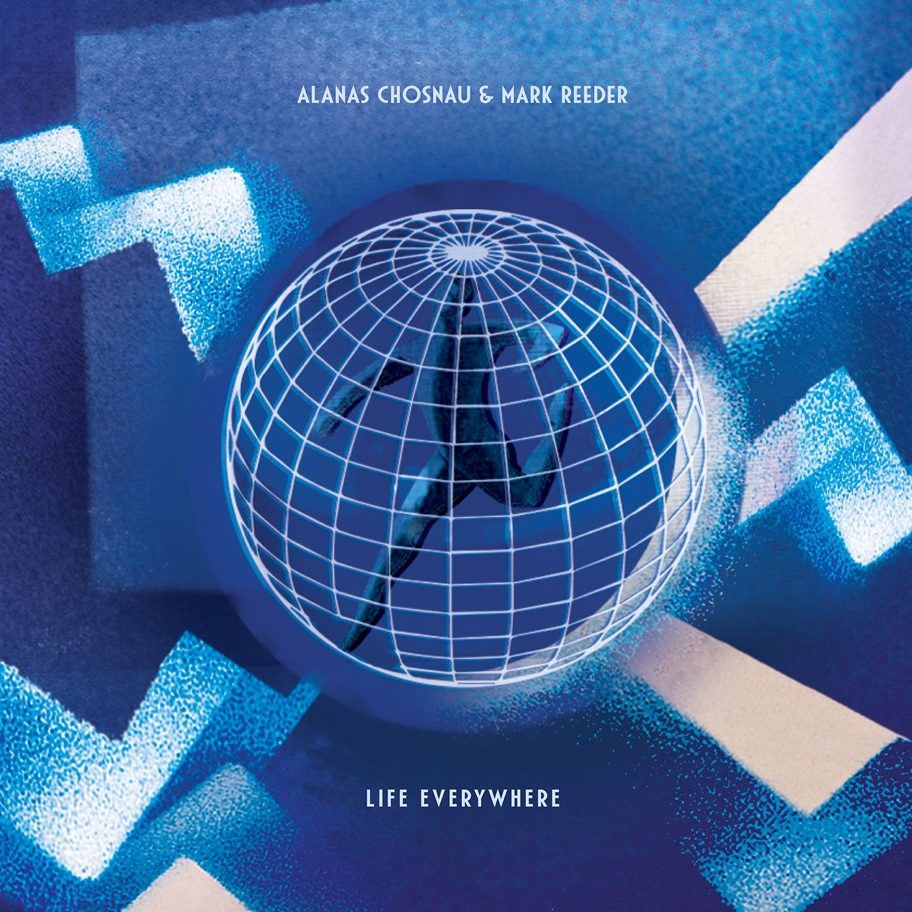
ALANAS CHOSNAU & MARK REEDER Life Everywhere

With the tragic invasion of Ukraine by Russia, Martin on Facebook has now moved on from being an anti-vaccine infectious disease expert, to becoming a military strategist and historian on Eastern European politics.

But the poetry of one who has escaped ethnic genocide, been separated from next of kin as a refugee, seen the fall of The Iron Curtain and now has the looming threat of The Bear next door, has far more substance. For Alanas Chosnau and Mark Reeder on their second album together, this is ‘Life Everywhere’.

Chosnau is of Lithuanian and Iraqi-Kurdish parentage; he grew up in Baghdad, but the downward spiral of the Iraq-Iran war soon saw his parents packing him off to Lithuania, which was then part of the Soviet Union in 1983, to live with his grandparents, while he was separated from his father and sister who were unable to leave Iraq.

Meanwhile, Reeder moved from Manchester to West Berlin at the height of The Cold War, immersing himself in the divided city’s art scene. From organising concerts by punk band DIE TOTEN HOSEN on the other side of the wall while under surveillance by The Stasi to working with East German band DIE VISION, he was keen to unite East and West via a joint passion for music.

Tensions in Eastern Europe have been rife since Russia annexed Crimea from Ukraine in 2014 and just as Hitler did the same to Austria and Czechoslovakia in 1938 before laying claims on Poland in 1939 to justify the unification of East Prussia with the German mainland, history is sadly repeating itself. With lessons seemingly not learnt from the past, people cannot help get angry and political.

“When I started making this album, I was thinking about life under oppressive authoritarian regimes and how they affect us all, especially considering what is going on now, I think it’s even more important.” explained Mark Reeder vividly to ELECTRICITYCLUB.CO.UK, “It was inspired by my love for George Orwell’s prophetic ‘1984’ and how our present world was starting to emulate his book. The dread of being plunged into an authoritarian system was a topic I touched upon on our first album ‘Children Of Nature’ with the “warning” songs ‘Drowning In You’ and ‘Heavy Rainfall’.”

Musically ‘Life Everywhere’ possesses an Eastern European austere and the opening song ‘Why?’ is a moody emotive ballad where Chosnau asks “Why does my heart feel so sad? Why does my heart ache to bad?” while with echoes of John Barry, Reeder adds a balalaika for added regional authenticity alongside his usual synths, bass and guitar.

More percussive and funky with a speedy conga mantra and a dominant digital clap, ‘All You Need Is Love’ enters electronic disco territory but with roots in Reeder’s SHARK VEGAS days and emulating the propulsive air of NEW ORDER, ‘Ice’ moves the claps into a more analogue snap with an appropriately colder layer of string machine. As love turns to anger, it encapsulates a narrative about a domineering individual unhappy that their ex is flirting with another more amiable personality… sound familiar?

Augmented with spacey synths, the strident presence of the ‘Life Everywhere’ title track makes a plea for humankind not to self-destruct, either through war or environmental catastrophe. However, like a militaristic march, ‘I Wonder’ asks the important question “Have you ever tried and you could see your life from the other side?”.

Touched by more balalaika, the tearful ‘Love Can’t Turn To Fear’ was previously issued as ‘Širdis’ meaning “Heart” in Lithuanian and if there is one music artist who can articulate the feelings of current world events in song, it is Alanas Chosnau. It asks who will carry the burden of responsibility and who will be the couriers of peace? But while that is being debated, millions will be hurt… with first-hand experience, this is Chosnau’s plea for love and peace between friends.

In collaboration with Chinese band STOLEN who opened for NEW ORDER on their European tour of 2019, ‘The Void Empire’ is shaped by a foreboding rhythmic swing as builds with an electronic goth presence that exudes DEPECHE MODE before rocking out in the dead of night as the body speaks out on the spectre of authoritarian regimes.

Concluding with ‘Last Night’, proceedings are taken down with solemn Rhodes chords accompanying subtle percolating sequences. Expanding into a swirling cacophony of emotions and despair, Chosnau poignantly reflects how “Last night, we were having a good time, we were having a good life, where did it go, now?”. Hauntingly, he resigns himself to the fact that “We’re waiting and waiting… to say… goodbye”.

It’s as if The Cold War never ended, although the current situation is far worse thanks to the likes of Fifth Columnist Nigel Farage, whiney posh boy Laurence Fox and one-time F1 reporter Beverley Turner all outing themselves as Putin sympathizers.

With the sound of Harry Palmer given a more electro soundtrack and hidden behind the facade of love songs, ‘Life Everywhere’ is a deeper statement on life during wartime. It is an undesirable situation that is brutal reality, thanks to dictatorial leaders propped up by blood money with greed taking precedence over what is morally right. This is an important record for an important time.

Things eventually did not end well for the aggressor in 1939 so in 2022, the world can only hope that good will prevail…


‘Life Everywhere’ is released by MFS on the usual digital platforms including https://markreeder.bandcamp.com/album/life-everywhere

https://alanaschosnau.com/

https://www.facebook.com/alanaschosnau/

https://www.instagram.com/alanaschosnau/

https://www.facebook.com/markreeder.mfs/

https://twitter.com/markreedermfs

https://www.instagram.com/markreeder.mfs/

https://mfsberlin.com/

https://open.spotify.com/album/5PZmUY1MCWM09OjZpE6MoR


Text by Chi Ming Lai
Cover art by Stephanie Hamer
Photos by Martyn Goodacre
25th March 2022, updated 22nd April 2022

Vintage Synth Trumps with MARK REEDER

Photo by Crystal Reeder

His portfolio has included NEW ORDER, DEPECHE MODE, PET SHOP BOYS, JOHN FOXX, BLANK & JONES, WESTBAM, MARSHEAUX, THE KVB, NOBLESSE OBLIGE, KOISHII & HUSH, QUEEN OF HEARTS and many more.

Mark Reeder is the jovial Mancunian who ventured over to Germany in 1978 in search of electronic music records and never returned home, eventually settling in West Berlin.

Immersing himself in the local art and punk scene, he arranged JOY DIVISION’s now legendary gig at Kant-Kino, managed MALARIA! and was Factory Records representative in Der Bundesrepublik.

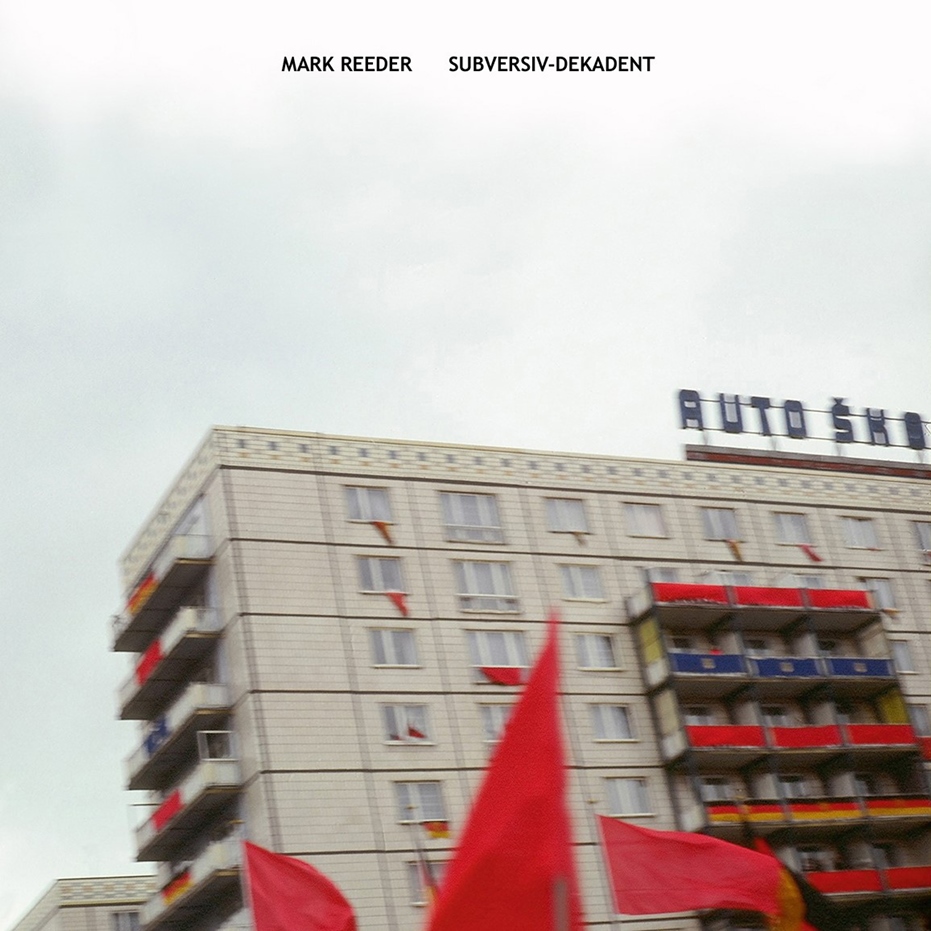
On Mayday 1982, he paid a visit to the DDR and while taking photos of the grand parade in East Berlin, he was arrested by the STASI and taken in for interrogation, under suspicion of working for M16. Unable to draw any conclusions, other than he was trying to corrupt the youth of East Germany with pop music, the East German Secret Police marked his file ‘Subversiv-Dekadent’.

The experience inspired Reeder’s most recent double album named after his STASI classification. Comprising of productions and remixes made by himself and his engineer Micha Adam, it celebrated his cross-border artistic ethos and also included collaborations with the likes of Fifi Rong and Alanas Chosnau, as well as solo work on which he lent his own spoken voice.

The two high profile centrepieces of ‘Subversiv-Dekadent’ focus on Reeder’s reworkings of NEW ORDER’s first new single since 2015 ‘Be A Rebel’ and YELLO’s evergreen ‘Vicious Games’. But room is also given to newer acts such as the Dutch-based American BIRMINGHAM ELECTRIC, Manchester’s MFU, DEER Mx from Mexico and hailing from the Chinese city of Chengdu, STOLEN who opened for NEW ORDER on their 2019 European tour.

Another NEW ORDER support act Zachery Allan Starkey makes appearance via a remix of ‘Coked Up Biker Anthem’ which saw Reeder realise some of his mad axeman fantasies having grown up as a fan of Jimi Hendrix. But accepting ELECTRICITYCLUB.CO.UK’s invitation to play a round of Vintage Synth Trumps, Mark Reeder kindly chatted about his love of classic synthesizers and how they have been used throughout his career.

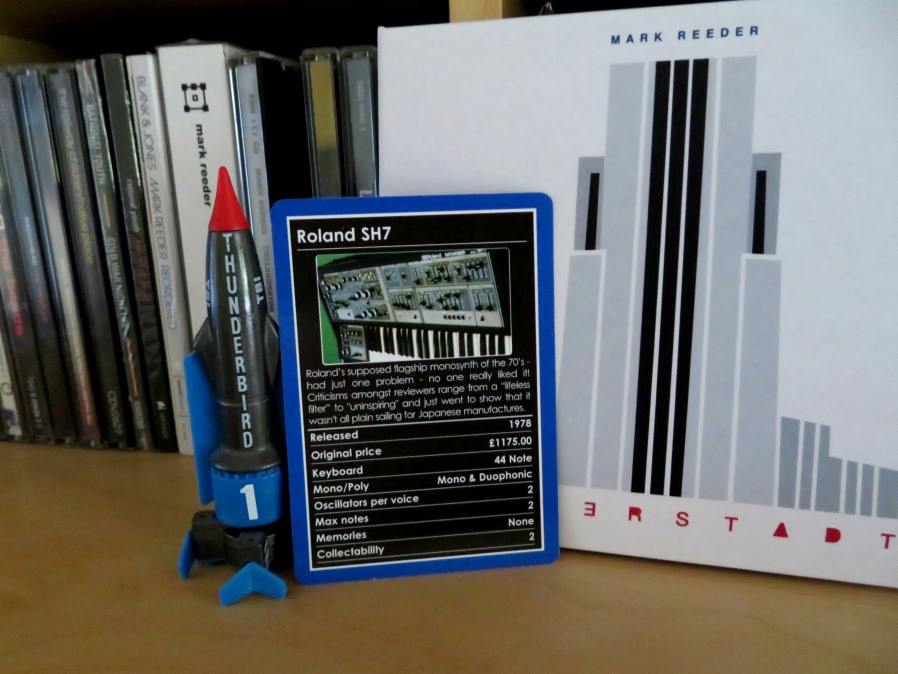
Ok, our first card is the Roland SH7…

I’ve seen one but never had one, I had an SH9 which I used at the end of DIE UNBEKANNTEN and the start of SHARK VEGAS. In fact, the bassline of ‘You Hurt Me’ which we released on Factory in 1984 was made with an SH9. They were very similar kinds of synthesizers but the SH7 had a few extra features. I actually played the bassline of ‘You Hurt Me’ by hand all the way through for six minutes non-stop, it wasn’t a sequencer! If you made a mistake, there was no way of going back and you had to start again! *laughs*

What was the drum machine you were using at the time?

We had an 808 and a 606…

And the next card is an Oberheim 2 Voice…

I never knew anyone who could afford Oberheim stuff until it became more affordable in the late 80s, no-one I knew had the 2 Voice. But the OBXs was really good, you could do some great things with them but the earlier ones weren’t readily available, so you didn’t really see anything you could buy… no-one had any money in Berlin in the 80s! A Prophet 10 would be like 10 years wages! *laughs*

So, when you were conceiving ‘Subversiv-Dekadent’ which was a reference to that time in 80s Berlin, and your cover photo of the May Day parade and your STASI file, did you select a palette of specific vintage synth sounds to work with?

I’ve always worked like this, when I started to get back into actually making music again, as more of a remixer and producer than before, I had this idea that I only wanted to have a small selection of things that I could draw from to maintain a particular sound. I made my own drum kits, three different kinds and I would interchange within each one.

So, I might have three different claps but I’d put two together and manipulate them to create another type of clap sound. So, the sounds are all drawn from the same three basic kits and say with a snare, I might add another instrument into that snare mix, but it’s all the same block if you like.

It’s the same in a way with synthesizers as well, I don’t have loads, and I keep it reasonably contained. If you have too many, you end up spending too time trawling through thousands and thousands of sounds, but if you have a limited amount of possibilities, then you have to be creative within those few things. I’ll take pads off one synthesizer and put the dirt in from an MS20 underneath, and it will change the sound of the pad. And if you put that through a chorus, it will automatically give that a different sound.

I’ve not got loads of synthesizers in the studio, but we’ve got quite a few. We’ve got quite a few plug-ins too, initially I was a bit dubious about them, but meanwhile a few of them are really quite good and very useful…

Do you have a favourite of the plug-ins?

Well, we’ve got Omnisphere which we use regularly, as I find it’s got a few sounds which I’ll always use and they’re easy to manipulate, but they’re always the same basics. I think I always choose the same couple of sounds *laughs*

We’ve got an ARP plug-in and that is quite good and an EMS one because I could never afford a real one. I’ve got a plug-in version of the Roland SH101 but having the original thing is different, it has a totally different feeling to it. It depends what you want to do with it. The plug-in doesn’t come near, but it has its own sounds that are useful. I have a Juno 106 and my studio partner Micha Adam has a plug-in 106 and a boutique version, although it’s similar in certain sounds, neither sound like a real 106. But each has features that the real 106 doesn’t have, like the arpeggiator or the delay, so you kind of mix them all together, that’s how I work.

Photo by Crystal Reeder

What was your approach to reworking ‘Vicious Games’ by YELLO from 1985 for ‘Subversiv-Dekadent’?

The original track was like “I’ve got a sound sampler and I’m gonna show you how to use it” so it’s like all these ideas together and a vocal connecting everything. When YELLO sent me the parts, I realised there were more vocals recorded than used on the track and I thought it was a shame that this track of idea wasn’t actually a song. So, I reworked Rush Winter’s wonderful vocals into a song, to give it a definitive verse-chorus-verse-chorus structure, like a 21st Century version of an 80s song.

I used the Oberheim OBX and Juno to make the pad at the beginning and made it more song structured. I looped the guitar part so that it became a groove. People have come up to me and said they love the Donna Summer ‘I Feel Love’ bit that I added, but it’s in the original track, it’s just that you can’t hear it because it’s mixed down so much within the track. You don’t really get to experience that part, so I thought it would be nice to feature that as the break, so I cannibalised the original.

What did Boris and Dieter think of it?

They love it, Boris said I was very daring for changing their song so much and not make it sound like their original, but it does! You can hear I’ve used as many of the original parts as possible but I’ve rearranged it completely.

So, we go from you remixing ‘Vicious Games’, an old YELLO track to remixing a brand new NEW ORDER song ‘Be A Rebel’…

As with all my remixes, I like people to be able to recognise the song, I don’t want to take some unused backing track and just drop in some vocals, to me that’s not a remix. I take all the parts I require from the original song and rework them so that they will fit my groove. The idea was make the Elektron bassline more pulsating, give a driving feeling to it.

The first mix I made was the Cheeky Devil one, which appears on ‘Subversiv-Dekadent’ that I made more for the elderly semester of NEW ORDER fans that don’t like the techno side. I know people who will get a remixes CD or vinyl and they’ve got techno versions of the track that they love, but they can’t get their heads around it. I thought I’d do one which had a “ploddy” kind of feel that’s not so fast even though it’s exactly the same tempo, one that chugged along and put more emphasis on the vocals.

For the Dirty Devil remix for the NEW ORDER release on Mute, I wanted to make it so that Bernard could listen to it in his car while he was on the motorway, more driving and I must confess I prefer this remix to the one I did for ‘Subversiv-Dekadent’ but that chuggy version had to work within the framework of my album. I just changed the volume of a few things within the mix like the loudness of the hi-hats in the Elektron driving version.

You actually added some guitars into your remixes of ‘Be A Rebel’ which aren’t on the NEW ORDER original?

There was initially no bass guitar on the original version. There was a guitar, but it was all quite jangly… that style kind of slowed my track down, so I played what I needed… in fact my guitar mirrors Bernard’s vocal quite a lot. I thought I’d play a melody on the guitar like a sequence… some people thought it sounded like the ghost of Hooky’s bass, but it’s my Les Paul playing that and some power chords to embellish the end.

So what’s your guitar playing like compared with your keyboard prowess?

That’s equally as cr*p! *laughs*

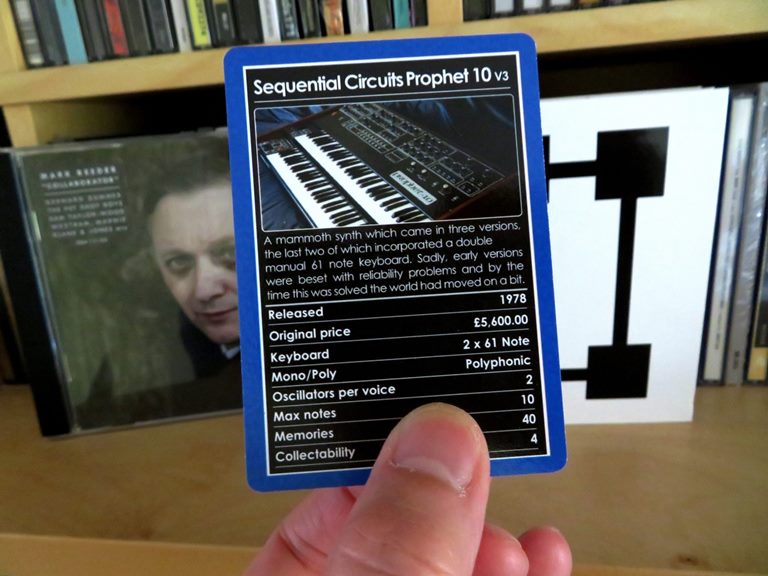
Time for another card and it’s a Prophet 10…

I don’t know anybody who owned a Prophet 10. Susanne Kuhnke from MALARIA! owned a Prophet 5 but I only ever saw a Prophet 10 in a music shop and you weren’t allowed to touch it!

By the time when you supported NEW ORDER as SHARK VEGAS in 1984, they would have swapped their Prophet 5s for Octave Plateau Voyetras?

Yes, they’d just got it. A few years before, Bernard had got an ARP so he gave me his Transcendent 2000…

Did you ever do anything useful with the Transcendent 2000?

It just makes a noise! It doesn’t make any kind of like sounds that your granny is going to like! It goes “KKKKHHRRRKK” or “TSCHHHHHH”, it’s a noise synthesizer, white noise, pink noise! A Wasp you can kind of play but the Transcendent didn’t make any keyboard notes. All the crazy “TSCH-TSCH-TSCH-TSCH” noises you hear on the JOY DIVISION records were made by the Transcendent *laughs*

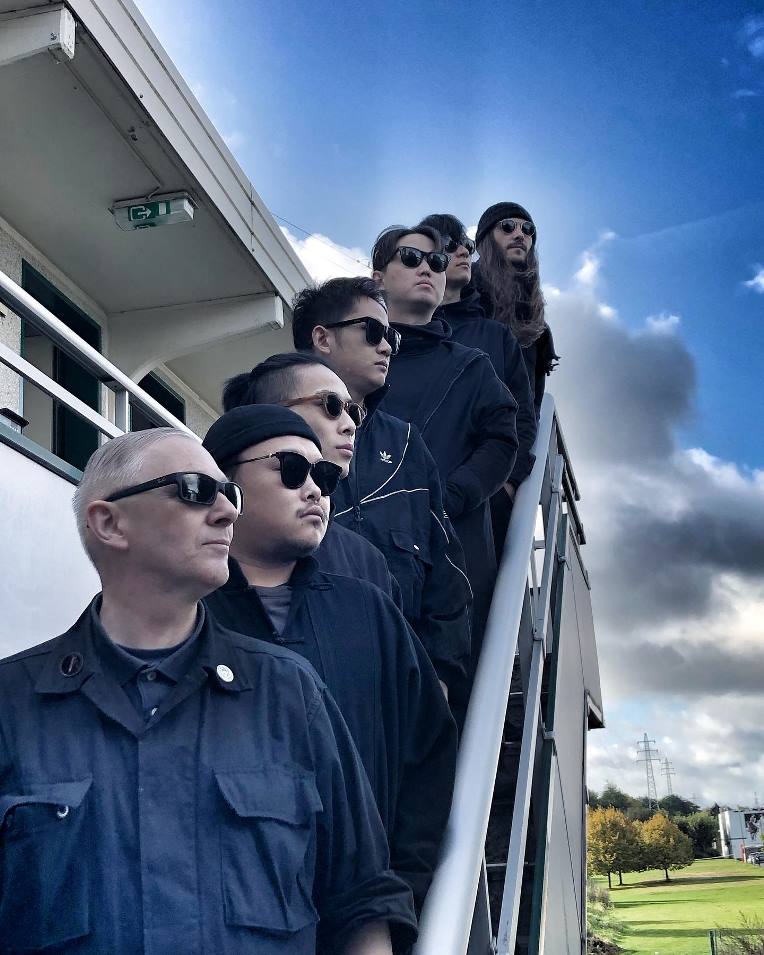
Photo by Kai von Kröcher

On your albums, you like to do new collaborations and on ‘Subversiv-Dekadent’, you worked with Fifi Rong who has a connection with YELLO…

I met Fifi Rong at a YELLO gig in Berlin. She told me she was playing a gig in a small bar the next evening and invited me. She was absolutely mind-blowingly good and she explained what each song was about, it was very endearing. I thought she was so talented, she’s very hands on and so determined.

I thought it would be nice to work with her to give her another platform other than YELLO. You could hear that she has an interesting voice with that high Asian tone. So, I remixed ‘Future Never Comes’, that was such a nice track and as I was doing that, I had another track that I asked her to do a vocal on. I didn’t hear anything from her for about 3 weeks and then she sent me this track that became ‘Figure Of 8’. I decided to start and close ‘Subversiv-Dekadent’ with Fifi because I felt she deserved to have those important positions within the framework of the record. She’s been working on her own new album for 2 years and it’s finally getting there, it is an interesting record, a really nice album, I think she’s done really well and got the right ambience.

And the next card is a Yamaha CS30…

I must confess I always found Yamaha gear to be interesting but very cold. I have a TX module which is like a DX7 and has all the sounds, which I’ve had for decades… it’s a limited thing. I don’t use it much, only for specific things like if I want a hard tone filtered in with something else to give it a colder edge. I never bought an actual DX7 because it was too complicated to programme. It had bits like marimba sounds that sounded good, but everyone had one, as it was the first big affordable synthesizer back in the 80s. Everyone dumped their analogue synths for a DX7 and I’m thinking WHY!?!

The DX7 sounded super modern and dead professional at the time, but I didn’t get my module until very late when nu-beat and acid house started, it made a slappy kind of hard bass sound that fitted.

Photo by Martyn Goodacre

Did you get into Akai samplers at all?

I had an Akai S900, I was talking to Micha Adam about them just the other day and how they were the best thing on the market at the time with the longest sampling time. I had a Roland sampler which had an expanded sampling time of 2 seconds! And then there was the Ensoniq Mirage which had its own 30 second samples but when you tried to sample something yourself, you only had a small amount of time. And then came the Akai S800 and that had 20 seconds!! *laughs*

The Akai S900 cost a fortune and was so complicated, there was a lot of fiddling around, twiddling knobs and pressing things! It had a manual the size of the Holy Bible and they knew no-one was going to read this thing, so it came with a VHS video cassette so that you could watch how to programme the thing! It was a really good tool to use once you got used to it and sounded good compared to the others. But then the Akai S1000 came and that had 90 seconds of sampling time which was amazing! I did a couple of remixes in the 90s with the Akai, one for Nina Hagen of ‘Du Hast Den Farbfilm Vergessen’… she hated it! It never came out! *laughs*

How did you put together your 13 minute epic ‘You Can Touch Me’?

That was an idea that’s really three tracks in one and it kind of went on and I thought I’d better stop it at some point! *laughs*

It was originally born from an idea for an album, that had a great underlying groove and I took a snippet from an Eiven Major track to use as a loop in the techno part of the track. I like taking a track that will morph from one thing and end up as another. ‘With You Can Touch Me’, it became that. It starts off very sexual, dark and mysterious… it’s like when you meet someone for the first time, you go through the actions of foreplay and it gets to the climax, the song is a bit like that, very Wet & Hard! It goes into the lyric where “you can’t touch me” and at the end, it goes into this mad techno thing. I’m not a singer, but for that track, it fitted and it sounds alright. I couldn’t find anyone else who wanted to do it to be honest.

I made it just so I could play it in clubs, mostly the DJ who plays after me is usually a techno DJ so I wanted to give them something at the end of my set that they can mix into. It’s my closing track and it’s so long, I can pack all my stuff away while it’s playing and the DJ after me can either let it play out or mix into it. *laughs*

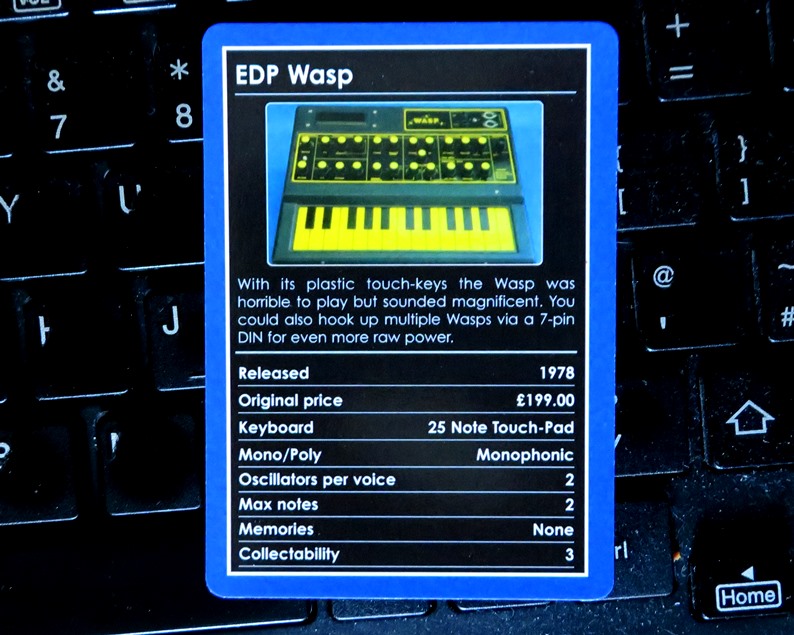
The final card, it’s an EDP Wasp!

I never actually owned one, I borrowed a Wasp, Mijk van Dijk had a Wasp. It’s a bit like the Transcendent, but it has more tone and easier to use. I never recorded anything with it, I just messed around with it, it was quite good. You could mix it with other sounds to add some grit.

You’re working on the debut album of BIRMINGHAM ELECTRIC who are on ‘Subversiv-Dekadent’ with your remix of ‘How Do We End Up Here?’?

We’ve been working on quite a lot of songs together and they’ve become an album. It’s a synthpop album in its own way, Andy Evans has got a very distinctive voice that colours the music and gives it his own edge. It’s not dissimilar to how I work with Alanas Chosnau, but I try to keep Alanas’ song ideas directed towards his kind of sound, if you know what I mean. I’m also working on a second album with him. I keep them separate, but as I use the same kind of sounds, there is always this “me” thread running through the music.

When you’re writing songs with people, you have gaps while they’re figuring out their part, especially when having to do it online, so you can use the time to work with somebody else. So for example, I’m doing something with Andy and when there’s a break, I’ll do something with Alanas in between. I’m quite happy the way the BIRMINGHAM ELECTRIC album has turned out, it’s been quite a nice project.

Photo by Crystal Reeder

What’s happening with STOLEN at the moment?

STOLEN have gone from being “a band to watch” to playing headline gigs in China now. Since the pandemic, their career has had a meteoric rise, as no Western artists are allowed to play in China at the moment, so promoters have been forced to look at their home-grown talent and have realised they actually have some really good and interesting bands there.

With STOLEN having opened for NEW ORDER on their 2019 European tour, it boosted their credibility enormously back home and has added to their attraction, so now they’re performing at festivals to 25,000 people. They’re playing a gig virtually every week and in between, they’re trying to write and record another album. So, they’re sending their parts to me too, that means I’m doing three albums parallel!

I guess whoever’s gets finished first will get released first! But it’s a lot more difficult not having them in the studio, because if they were there in person, you can bounce ideas off immediately. And the time difference with someone in China and being in Europe isn’t easy, usually when they’re in the studio, you’re going to bed! It’s a bit complicated! *laughs*

I want to make everyone happy, but I also like a challenge. When it all fits, it can be very rewarding.


ELECTRICITYCLUB.CO.UK gives its sincerest thanks to Mark Reeder

‘Subversiv-Dekadent’ is released as a download double album, available from https://markreedermfs1.bandcamp.com/album/subversiv-dekadent

Mark Reeder’s Dirty Devil Remix of ‘Be A Rebel’ features on the NEW ORDER double 12” clear vinyl EP and expanded CD collection released by Mute Artists also featuring mixes by Arthur Baker, Stephen Morris, Bernard Sumner, Maceo Plex and Paul Woolford

A one hour long Operating//Generating special on Mark Reeder is broadcast for 4 weekends from Saturday 4th September 2021 at 1800 CET on laut.fm at https://laut.fm/operating-generating

https://mfsberlin.com/

https://www.facebook.com/mfsberlin

https://www.facebook.com/markreedermusic/

https://twitter.com/markreedermfs

https://www.instagram.com/markreeder.mfs/

https://open.spotify.com/artist/1n7yJzVVfUO2MiQskjmzqW

Vintage Synth Trumps is a card game by GForce that features 52 classic synthesizers available from
https://www.juno.co.uk/products/gforce-software-vintage-synth-trumps-2-playing/637937-01/


Text and Interview by Chi Ming Lai
1st September 2021

ALANAS CHOSNAU & MARK REEDER Interview

‘Children of Nature’ is the excellent first album by Mark Reeder and Alanas Chosnau that reflects their personal experiences and hopes for the future.

Alanas Chosnau is one of the biggest singing stars in Lithuania, while Mark Reeder is the Manchester-born producer and remixer who founded the trailblazing techno label MFS and introduced NEW ORDER to electronic dance music along the way.

While ‘Children of Nature’ has something of a melancholic air, it is also optimistic and hopeful. Combining East and West European approaches thanks to Chosnau and Reeder’s respective locations in Vilnius and Berlin, the album does not mask its multi-generational influences and uses them to present good songs with superlative vocals and sympathetic instrumentation.

As two people who personally experienced the divisive spectre of the Cold War head on while living on opposite sides of The Iron Curtain, ‘Children of Nature’ symbolically captures that emotion of desiring love and intimacy in isolation, something that is very relevant in these strange times.

DRAMATIS’ Chris Payne who also co-wrote and played on the VISAGE hit ‘Fade To Grey’ said: “Mark Reeder and singer Alanas Chosnau have recorded a stunning new album called ‘Children of Nature’, a range of well-crafted songs and beautifully produced, with excellent vocals. If you’re a fan of electronic music this is definitely an album to add to your collection.”

With ‘Children of Nature’ attracting many positive plaudits worldwide, Alanas Chosnau and Mark Reeder kindly spoke about the genesis of their creative union and a lot more.

Had the two of you been aware of each other before actually meeting in person at the Lithuanian International Film Festival in 2015?

Alanas: Unfortunately, not. Life is full of surprises. I believe that our meeting was meant to be. Since the first talk at the festival, I immediately felt a creative connection and discovered we shared a love of similar music. Mark is an outstanding personality with so much experience and knowledge in music. I am privileged to work with him and also learn from him.

Mark: Yes, I first met Alanas at the Lithuanian International film festival in Vilnius, where I was presenting the documentary film, ‘B-Movie (Lust & Sound in West-Berlin 1979-89)’. It was a very glamourous event, presented by the President of Lithuania, and the audience were all dressed in formal evening wear, surrounded by glittering camera lights and TV crews. Upon arrival, I was asked if I could also perform a short DJ set during the actual opening ceremony, but due to time restrictions, that ended up being one song – and not really a DJ set. They set up a mixing desk and two CDJ turntables for me, which was dwarfed by the expansive stage and I was thinking, what’s the point of two decks? I can’t really mix anything, as I’m only going to play one song…

After a lengthy presentation of Lithuania’s singer-songwriters, acrobats, magicians and choirs, it was finally my turn to go on stage. The compare introduced me in obviously glowing Lithuanian and I just stood there like a showroom dummy grimacing with fear at my inescapable plight. Then, with a huge smile, he turned and asked me with great expectation, “so Mark, what are you going to do for us tonight?” – I simply raised my forefinger and cheekily said “I’m going to just press, PLAY”.

As the first strains of the song opened, I could see the look upon the fascinated faces of Lithuanian high society. I felt they were all smiling at me more in sympathy than enjoyment. It was very unnerving. As the song progressed, I could see their faces turning from bemusement to shock and horror. They literally all stared at me, open mouthed.

Their uncomfortable expressions were eroding at my confidence as I nervously twiddled with the knobs, and I was thinking, should I really be doing this? Strangely enough, once the song had finished, they applauded furiously, but I wasn’t sure if they were just thankful that my dreadfully pathetic performance was finally over.

Almost as soon as I got off stage, I was introduced to Alanas and he revealed that behind me, a huge projection screen was showing excerpts from ‘B-Movie’. Something I was completely unaware of. Then I realised, that’s why they were all so shocked.

So how did a conversation with some common ground about the Cold War lead to one about actually making music together?

Alanas: I guess we have managed to blend Cold War with Cold Wave philosophy and here it is – ‘Children of Nature’. True, our common political experiences and human understanding of those times has helped us find common solutions much easier. Despite different cultural backgrounds, where we have both matured, living the experience of a time before “the fall of The Berlin Wall” and the fall of Communism is something that bonds us together somehow.

Mark: I met up with Alanas to talk music, and he explained to me a little about his background, that he was originally a Kurd from Iraq, and he came to Vilnius during the Soviet era while he was still a young child. His parents had wisely decided it would be better to send him to Lithuania to keep him safe from Saddam’s possible purges, and eventually his gas bombs.

It was also interesting to hear how he had secretly listened to Western music as a child growing up in the Soviet Union. It seemed apparent that Lithuanians had always had this rebellious streak against their masters in Moscow and listening clandestinely to decadent Western Music was a kind of subversive, secret protest. Yet as he got older, he felt he wanted to make a different kind of music, something that was closer to his own heart.

We discovered our musical tastes overlapped and then the idea just emerged that we should maybe try and do something together. Alanas expressed his desire to finally make an album in English, but explained he’d never done it before, because finding the right kind of person, not only someone who understood the style of music he wanted to make, but also someone who would be able to guide him with his English, had so far proven to be elusive.

But after hearing my NEW ORDER reworking of ‘The Game’, he was convinced I might be the one. He asked me if I thought his English was good enough. I realised that as a kid growing up in the Soviet Union, they didn’t learn English at school. With the fall of communism in the early 90s, people were finally able to listen to all kinds of previously forbidden music from the West, but the lyrics were always a sticking point. That’s why techno became so internationally successful, because it was mainly instrumental.

Although I wasn’t initially aware of what he had achieved musically, I liked Alanas. Besides, he wasn’t asking me to work with him because I was some super famous pop star producer, but because he actually liked the sound of my music (especially my DEPECHE MODE remix). His own Lithuanian music sounded very contemporary and so I wanted to push his boundaries a bit. Give him something he wouldn’t normally do himself. My music is reminiscent. It doesn’t really have a date stamp on it, as it already sounds like it could be from a past era.

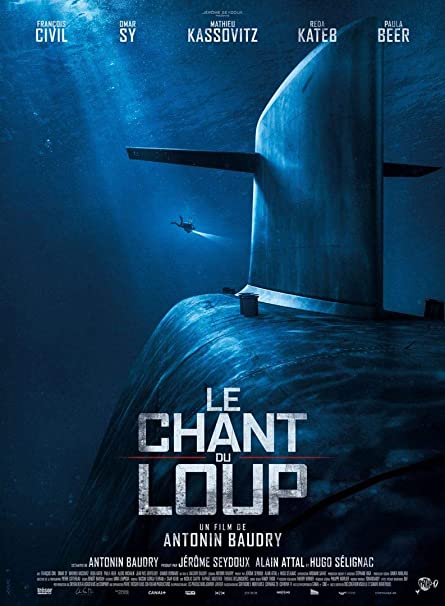
Eventually, we made ‘Losing My Mind’, which was then chosen to be the love song in the contemporary Cold War thriller ‘Le Chant Du Loup’ (The Wolf’s Call) and after that, we decided to make an album together.

Was the musical direction of the album something that was conscious and discussed?

Alanas: I would say that our album was consciously as well as intuitively directed. Mark was leading the process. We have exchanged much of our musical experiences, naturally discussed the lyrics and melodies of each track. We wanted our songs to reflect current people’s behaviour, feelings and needs. The message of our music is actual nowadays and I hope listeners hears it.

Mark: To a degree yes. Alanas liked the kind of sound I make and was open minded enough not to interfere. He also enjoyed the surprises and understood my idea was to make music in the present that reflected on our past, but is in fact timeless. Alanas would send me his basic vocal melody idea and I would take it and turn it into something else. Most songs had no real lyrics at first, so as the music developed, I would make subject suggestions, and write the lyrics accordingly, later as Alanas became more confident with his English, he would suggest themes too and write his own lyric ideas. Obviously, once our album started to take shape, we could see there was a pattern in the themes emerging. It wasn’t just all about love and loneliness, but also has contemporary political influences too.

Were there set roles within the writing and production or did you find that all interchangeable?

Alanas: We were so much into writing and producing new tracks. All our album was written interchangeably, while sharing music and lyric drafts, discussing, selecting and adjusting them. All the music production work was done by Mark and Micha Adam at their studio in Berlin.

Mark: Our roles were set before we started. Micha and I are already an experienced production team, and we each know where our strengths lie. Alanas is an established singer and songwriter. Yet for this project, he wanted a different sound to the contemporary one he usually pursues in Lithuania. I think he wanted to surprise his fans a bit there too. Mostly, we would create a template for Alanas to sing his idea to, then we would craft the song around it and write the lyrics, then we would fine tune it.

Did you put together the bones of the songs together while in the same room or was there quite a bit of remote working due to your geographical locations?

Alanas: The whole album work was basically done remotely, with me being in Vilnius and Mark in Berlin. We did have regular meetings in Berlin of course, but the most part of the studio work was remote.

Mark: No, we worked from separate cities. Quite an interesting process in itself and very modern thanks to the internet, such a process would have been impossible in the past. I had fortunately had enough experience working in this way before with other artists too, so it wasn’t so difficult for us. The only difference being in recording the vocals, when it comes to singing the lyrics and getting the intonation and pacing right, which is especially difficult for someone who is not a native English speaker, when they are next to you it is easy to say sing it like this or like that, but when they are in another city it’s not so easy.

Why the title ‘Children of Nature’? How did the song itself come together?

Alanas: The song ‘Children of Nature’ was one of the first tracks created for this album. At the beginning of our work, I sent the music draft to Mark with sketched lyrics including ‘Children of Nature’ and he liked the initial idea. Surely enough, Mark and Micha transformed it to perfection. When album was nearly finished, we realised that ‘Children of Nature’ is exactly the statement that represents our message to the people – we are responsible for the future of ours and future generations, thus must be warriors of our souls to protect it.

Mark: We felt that we wanted to make a statement to the generations of the future, show them what we thought about and that we cared. As a species, we have to a greater extent ruined much of our planet in a very short time. Nature has vented its anger upon us. Yet, in just a few weeks of lockdown, we saw all kinds of environmental miracles occur.

The planet doesn’t need us. It can wipe us out in an instant if it so desires. However, it proved, we could do a lot to help its recovery, if we really wanted to. It was a glimpse into an alternative future if we want it. Just imagine if we invested our technology and creative energy into helping our planet to recover, rather than build more weapons of mass destruction. In reality, we are all children of nature, but in little over a few hundred years we seem to have forgotten that, and as the world is governed by greed and selfishness, the egotistical desire for power and territory, puts us all in danger.

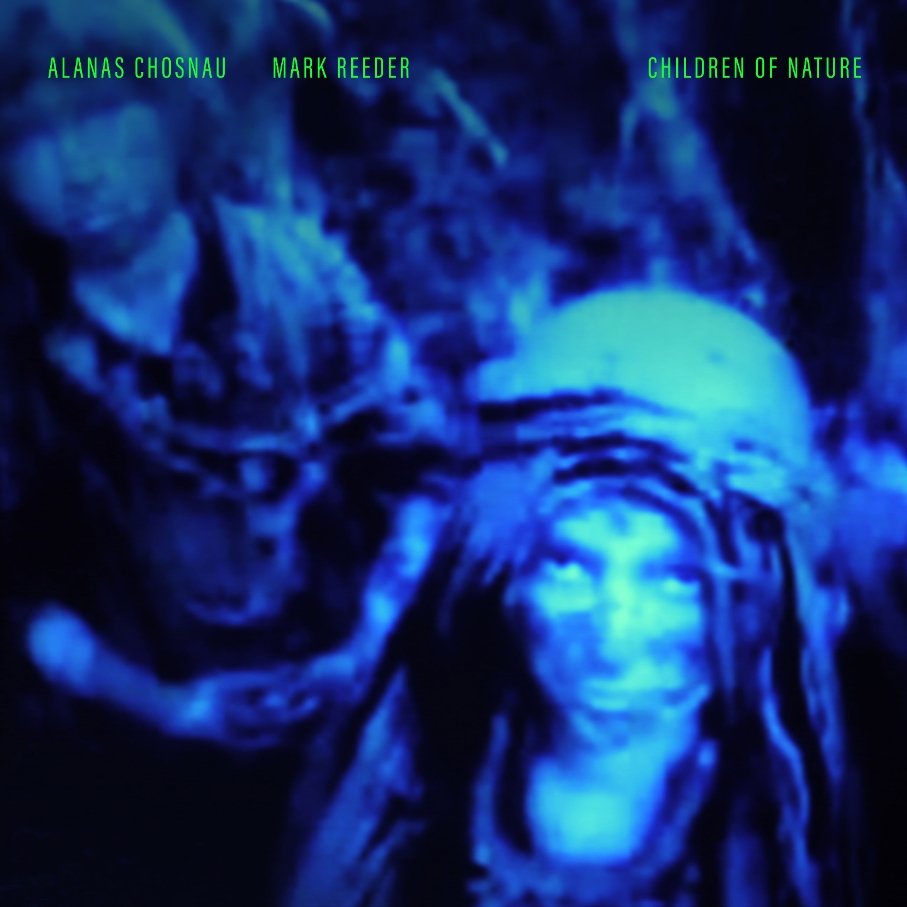
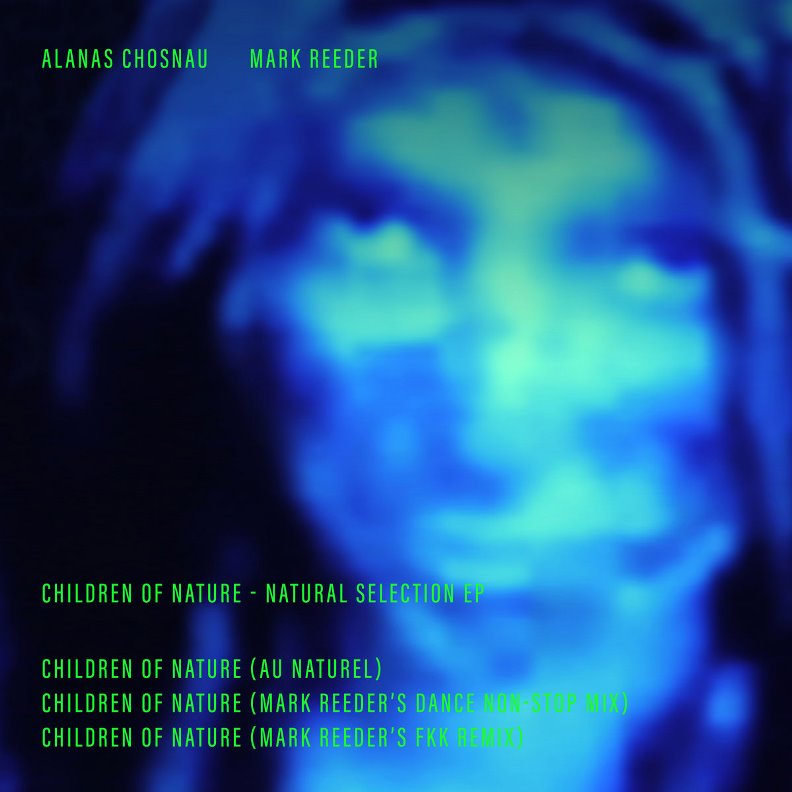
When The Berlin Wall fell, I had hoped that we were above all that in the coming 21st century. Sadly after 30 years, it seems not. We are back to where we were, at the start of the previous century. The cover design depicts a blurred image of post-nuclear children looking accusingly at the viewer. It’s a kind of forewarning. Do we want the future generations to grow up in that kind of post-nuclear world?

The cinematic ‘Losing My Mind’ was the first song released from the sessions and appropriately was in the French Cold War movie ‘Le Chant Du Loup’? Are you fans of spy dramas?

Alanas: Of course, since being a teenager I loved war and spy movies, because their characters take risks and go the end until they reach their goal, or die for it. These characters are mysterious and entertaining, capable to transcend me to new realities.

Mark: I grew up on James Bond and Harry Palmer. John Barry was a constant companion from being child. When Antonine Baudry approached me with a request to write a song for a love scene in his film, we had just started work on ‘Losing My Mind’. I decided as it was a contemporary Cold War thriller, I would pay homage to the music of Cold War thrillers of the past. Antonine heard the first draft and loved it immediately. That’s the version that appears on the soundtrack album.

If the British had James Bond and Harry Palmer, was there an Eastern Bloc equivalent?

Alanas: I guess that the best-known Soviet and even post-Soviet James Bond equivalent is a spy Stierlitz from the famous television series ‘The Seventeen Moments of Spring’ filmed in 1973. This movie has made the greatest impression on me while being a young kid.

One of the album’s highlights is the magnificent ‘Heavy Rainfall’, is that about the environment or something else?

Alanas: Funny enough, this track has nothing much in common with climate, environment or any form of natural weather conditions. Actually, ‘Heavy Rainfall’ transmits the message of the unfortunate rise of totalitarian regimes and strengthened social and even digital control over people.

Mark: ‘Heavy Rainfall’ is a song about how our thoughts are manipulated, about how our attention is diverted by trivia. It’s a warning, to be aware, but also the message is positive, that no matter how much heavy rainfall we get, we just have to wait and ride out the storm.

‘A Loving Touch’ appears to reference ‘Give Me Tonight’, was that intentional?

Alanas: Hmm, I am not sure I know that song ‘Give Me Tonight’. So most probably that means it was not intentional.

Mark: You are the only person who has made that comparison. Well, no it certainly wasn’t intentional. We are all subconsciously influenced by music we have heard though, sometimes you write something and think “have I heard that before?”

Thanks to SHAZAM, you can immediately see if it references anything. It might have partially a similar structure perhaps, which may give that impression, but we never thought of that. I just wanted to make a positive sounding song for the closing part of our album, something which captured a feeling for the roaring 2020s.

Strange thing is, now that we have all been through lengthy stretches of social distancing, where we were not allowed to kiss or hug our friends and loved ones, the message in this song takes on an entirely different meaning.

A track from the SHARK VEGAS archives ‘I Can’t Share This Feeling’ has been dusted off, what was the thinking behind this?

Alanas: To be honest, once Mark shared this track with me, I did not know at all that it is an old track from the SHARK VEGAS shelf. After we had recorded the vocals and the track was fully produced, Mark introduced me to the legend of SHARK VEGAS. We had a great conversation then, I remember. Mark really knows how to pleasantly surprise people.

Mark: I was going through some old SHARK VEGAS demo cassette tapes and I came across a song that I had recorded one night with Alistair Gray in our practice room in Tempelhof airport in the 80s. It never got beyond the rough demo tape stage and I was thinking maybe Alanas might be able to sing this.

So, I reworked it and sent him the backing track and vocal guide. I didn’t tell Alanas it was actually a song from the 80s, as I wanted to surprise him. And as it’s a mixed vocal of me and him, I decided it would only be fair to credit it to SHARK VEGAS.

‘All Alone’ is very on point with the current worldwide lockdown situation, but what had been its original sentiment?

Alanas: ‘All Alone’ is about loneliness, a lonely man in this World. The unexpected coronavirus lockdown has only strengthened this inner feeling of ours. Hasn’t it? When health crisis happened, we had no doubt of which vector of lonely humanity to choose – lockdown dictated it all and we dedicated this song to all the people isolated at home and in hospitals. It appears that we made quite a prophetic song and we indirectly could foresee the upcoming corona crisis.

Mark: Due to the lockdown, this song unintentionally became the first album outtake. We discussed the idea of making a video during lockdown but due to the restrictions it seemed almost impossible to venture outside without consequences, so Alanas made one at home. It’s structured like a 60s song, wrapped in a synthpop style with a contemporary theme.

Initially, I wanted it to be about the dilemma and frustration of loneliness. This is a subject that has actually been a reoccurring theme throughout my entire career, because no matter what, we are born alone and die alone and for the part in between we can sometimes find ourselves left alone, and we are all victims of that at some stage in our lives. It’s a solitary cry for solidarity.

‘Drowning in You’ has something of a ‘Heroes’ feel about it, had Berlin been a key symbolic influence on the album?

Alanas: Comparison to David Bowie is a great compliment. One of my very first childhood journeys was from Baghdad to West-Berlin in 1980 with my beloved mother. Since then, I carry those captured memories of Berlin’s streets, people and unique feeling in the air. Each stay in Berlin inspires me a lot and now working with Mark and Micha at their Berlin studio kind of blends it all together. No doubt, Berlin has influenced our music and I guess Mark can say much more to that point. Berlin is a city like no other.

Mark: ‘Drowning in You’ is a song about love at the dawn of a totalitarian regime, as it creeps upon you without realising the danger. The future looks optimistic even, but then things start to change. Berlin has seen that happen, but it could happen anywhere, anytime. It’s a song of reflection, on a time gone by, when the World seemed a happier place. Everything seems normal at first, but then things slowly start to disintegrate until the day comes when you suddenly find yourself being hauled off to a labour camp…

‘Fade On’ reflects a love for DEPECHE MODE, another act with Berlin very much in their DNA, have you seen the ‘Spirits In The Forest’ film?

Alanas: I first heard DEPECHE MODE as a twelve-year-old when I was already living in Soviet Lithuania, where international music from the West was super hard to get. I found the cassette tape with a name “DEPECHE MODE” at my older cousin’s house and I played ‘People Are People’. That was it. I was totally blown away of how the music sounded. I really cannot deny that discovering DEPECHE MODE in those pale Soviet times strengthened my dream to become an artist, and create my own music and form a band. Yes, I did see the ‘Spirits In The Forest’, loved the cinematography and style of storytelling itself.

Which songs have been your own personal favourites from ‘Children of Nature’?

Alanas: The whole album is an emotional journey through the complex human nature. It speaks to the listener of love, joy, loneliness, happiness, fulfilment, fear, pain… it even predicts the future if you like. The album’s structure is very consistent thanks to Mark’s insights and rich musical experience.

I hope our listeners can feel it. One of my favourite songs is ‘How Do You feel’, because it’s very inspiring and motivating. Also ‘Drowning In You’, ‘Fade On’, ‘Love Of My Life’, ‘Children of Nature’, ‘Heavy Rainfall’, ‘It’s Who You Are’, ‘I Can’t Share This Feeling’…errr

Mark: I can’t really answer that question. I just made an album that I thought Alanas, Micha and I would like to buy. I didn’t want to reinvent the wheel. I just wanted it to be a collection of familiar styles and sounds, that trigger a feeling of reminiscence, but then again, each song is different. It’s an electronic album, but sometimes it also has dance and rock elements to it, like a mixture of all the sounds that have influenced my own musical career.

Your partnership has been well received by music fans, is this a one-off or is working together again something you would like to do?

Alanas: We are very grateful to our fans who like our album and listen to it. I had long discussions with Mark before recording the first track. It took us a while to come up with this decision and I appreciate his trust and belief in me a lot.

Our partnership grew to a highly creative and mutually respectful relationship and I would definitely like to continue working together.

Mark: Micha and I have really enjoyed working with Alanas, we became a great team and we don’t see it ending with this album, on the contrary, we all hope our work will continue, and so it will. Not only have we managed how to make an album while being miles apart, but I think we have found the right song writing formula too in which we can work, which will hopefully make things easier for our next album.

What is next for each of you?

Alanas: Currently we are intensively promoting the digital album, producing new music videos and plan live shows once the corona crisis regulation allows it. Our record label MFS will soon release vinyl and CD formats of the album as it was already planned before the lockdown. As for the future, we do have creative brainstorms, but now all our efforts are focused on making ‘Children of Nature’ a success.

Mark: As always, my music life never stops evolving and apart from promoting ‘Children of Nature’, I have also been quite productive since I came out of lockdown.

First off, I made two remixes of the title track ‘Children of Nature’ for the ‘Natural Selection’ EP, which are much more clubbier in their approach. I also remixed ‘Light of the World’ by BIRMINGHAM ELECTRIC, a project based in Amsterdam. I also remixed ‘Dead Soul’s by a band from Mexico called DEER who currently live in Hong Kong and I have just finished a remix for the CEMETERY SEX FAIRIES.


ELECTRICITYCLUB.CO.UK gives its warmest thanks to Alanas Chosnau and Mark Reeder

The ‘Children of Nature’ album and the ‘Natural Selection’ EP are released by MFS via the usual digital platforms including https://markreeder.bandcamp.com/releases

https://alanaschosnau.com/

https://www.facebook.com/alanaschosnau/

https://www.instagram.com/alanaschosnau/

https://www.facebook.com/markreeder.mfs/

https://twitter.com/markreedermfs

https://www.instagram.com/markreeder.mfs/

https://mfsberlin.com/

https://open.spotify.com/album/6QinQBH8STYT86s59YRO8t


Text and Interview by Chi Ming Lai
Photos by Martyn Goodacre
11th July 2020

« Older posts