“I don’t like country & western, I don’t like rock music… I don’t like rockabilly! I don’t like much really do I? But what I do like, I love passionately!!”: CHRIS LOWE
When RÖYKSOPP released their most recent long playing opus ‘The Inevitable End’ in 2014, it was said to be their final album. Featuring the voices of Susanne Sundfør, Robyn, Jamie Irrepressible and Ryan James, it made a fine farewell.
But after various singles, archive releases and soundtrack commissions, Svein Berge and Torbjørn Brundtland have returned with some ‘Profound Mysteries’; the duo said: “As human beings, what we don’t know vastly overshadows what we do know. As teenagers, we would discuss our own fascination and preoccupation with the infinite and the impossible – the most profound mysteries of life.”
As a result, ‘Profound Mysteries is an ambitious mix of music and conceptual art with all the tracks accompanied by bespoke visuals, each directed by a contemporary creative talent. With solemn piano and stark strings, the ambient ‘(Nothing But) Ashes…’ begins the album with a noirish incidental theme. More immediate though is the following instrumental ‘The Ladder’ which swirls sedately while minimal guitar provides some melody before the arrangement builds into something more synthy and squelchy.
But ‘Profound Mysteries’ starts proper with the delicious ‘Impossible’ featuring Alison Goldfrapp, a mighty avant disco excursion that is both seductive and functional. As the uplifting high soprano middle eight leads into a drifting intergalactic twist, it can be rightly considered one of the songs of 2022.
Another lady boasting a high soprano, Beki Mari leads ‘This Time, This Place…’ from its militaristic beginnings to a propulsive if spikey club tune stretching to nearly eight minutes. Utilising the more contralto talents of Pixx, ‘How The Flowers Grow’ is much moodier and cerebral.
‘If You Want Me’ sees the return of Susanne Sundfør who very much became an intentional star on the back of her RÖYKSOPP collaborations which began with a cover of the DEPECHE MODE B-side ‘Ice Machine’. It is a glorious cinematic ballad centred around the magnificently emotive vocals of the Norwegian songstress and wouldn’t sound out of place in any Scandinavian love story. With another soprano salvo, it acts as a reminder as to why the rest of Europe fell in love with her when she released the ‘Ten Love Songs’ album in 2015.
Continuing that higher range vocal aesthetic, ‘There, Beyond The Trees’ makes use of a soprano vocal sample as well as RÖYKSOPP’s own voices with a stuttering percussive backbone to throw off the scent. Still stuttering but in a more punchy uptempo fashion, one-time Norwegian ‘Pop Idol’ contestant Astrid S brings an airy Scandipop flavour to ‘Breathe’. Meanwhile ‘The Mourning Sun’ with Susanne Sundfør can only be described as a haunting electronic requiem before a computer vox humana gives instructions to ‘Press «R»’ to continue.
With its focus on wondrous female vocals and particularly angelic ones, ‘Profound Mysteries’ evokes something of a profound elegiac quality.
Although quite different, it is a worthy successor to ‘The Inevitable End’ that will be savoured.
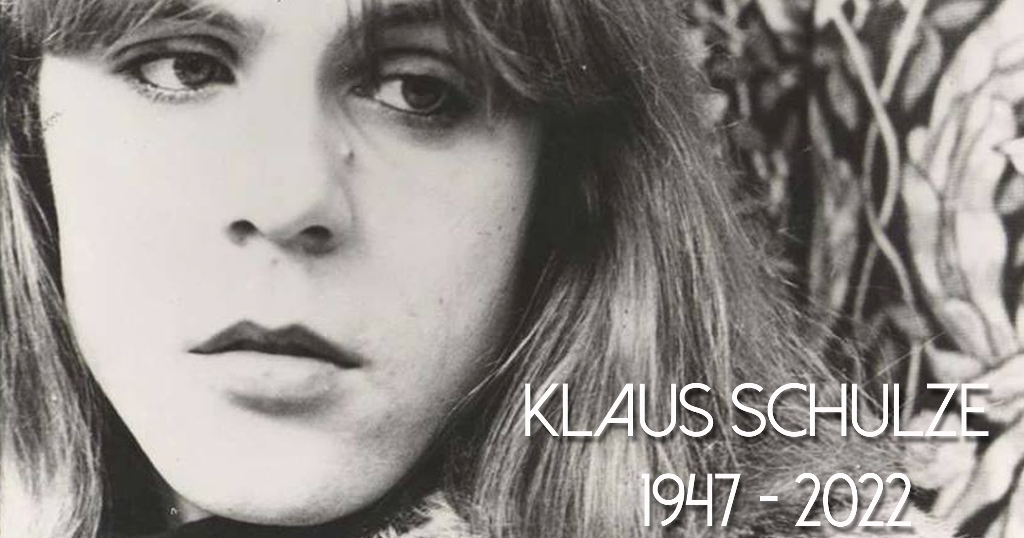
The German electronic music legend Klaus Schulze has sadly passed away at the age of 74 after a long illness.
Despite this, his passing was unexpected as Schulze was set to release a new album ‘Deus Arrakis’ this summer on SPV. He had collaborated with Hans Zimmer on ‘Grains of Sand’ aka ‘Herbert’ for the end credits of the new ‘Dune’ 2021 film adaptation directed by Denis Villeneuve.
Trained as a classical guitarist, Schulze took up the drums and was a member of TANGERINE DEAM and ASH RA TEMPEL, remaining with them for only their debut albums.
Disillusioned with both drums and guitars, he embarked on a solo career using keyboards and electronics, simply because it would take him on a creative journey into the unknown. Coinciding with the advent of synthesizers and sequencers to free him from the constraints of a conventional band where the discussions that went on were often longer than any music being played, his own improvised compositions lasting for almost half an hour at a time were the antithesis of modern pop songs and more akin to his musical hero Richard Wagner.
Schulze saw synthesizers as an opportunity to develop original tone colours and saw little point in using them to imitate real instruments like trumpets as Keith Emerson had done, reasoning that if he wanted to have the sound of an orchestra, he would then use one. He even occasionally donned a full face helmet for live appearances in the days when DAFT PUNK were still in short trousers!
Whenever cultural commentators talk about vintage synthesizers stacked up like telephone exchanges in the formative years of electronic music, Klaus Schulze is likely to be one of the key figures they are referring to. Unlike his contemporaries, Schulze had a playful approach with a physical element that encompassed a minimalist groove, a legacy of his earlier explorations as a drummer. During his concerts where he usually performed new material, he would sit crossed legged in front of his complex with his back to the audience while the cosmic trance-like soundscapes poured out.
His 1972 debut solo album ‘Irrlicht’ had been organ driven but its follow-up ‘Cyborg’ brought an EMS VCS3 into the armoury. Acquiring an ARP Odyssey, ARP 2600 and assorted Crumar keyboards, the wider breakthrough came with 1975’s ‘Timewind’ which was released internationally via Virgin Records and its associated imprint Caroline.
Winning the prestigious Grand Prix Du Disque International in France, the success of ‘Timewind’ allowed Schulze to up-the-ante with the purchase of a Moog IIIP modular system and the opportunity to record 1976’s ‘Moondawn’ in a multi-track studio having used just two-track equipment previously; the album was also notable for featuring Harald Grosskopf on drums with the union sparking the WALLENSTEIN sticksman’s own interest in synthesizers to record his acclaimed 1980 solo debut ‘Synthesist’.
Schulze was by now well into what many consider his imperial phase and adding PPG modules to his set-up, released his wintery 1977 masterpiece ‘Mirage’ on Island Records, supported by two lavish concerts at the London Planetarium and planting the seed for New Age in the process.
Harald Grosskopf rejoined Schulze for the ambitious 1978 double opus ‘X’ which also incorporated strings in a record comprising of “Six Musical Biographies” in honour of figures such as philosopher Friedrich Nietzsche, King Ludwig II of Bavaria, composer Friedemann Bach and ‘Dune’ author Frank Herbert. Interest in the latter was developed further on an actual album called ‘Dune’ featuring Arthur Brown on vocals in 1979.
The next two albums ‘Dig It’ and ‘Trancefer’ saw Schulze embrace new digital technology and the Crumar GDS system while 1991’s ‘Beyond Recall’ brought in sampling. A reunion with Manuel Göttsching of ASH RA TEMPEL came on the appropriately titled ‘Return Of The Tempel’ on 1995’s ‘In Blue’. Then released in 1996 on the Eye Of The Storm label founded by the production team behind SNAP!, ‘Are You Sequenced?’ saw Schulze venture into dance music in his own inimitable way with perceptively shorter pieces – “My style of music is always the same” Schulze once said, “but the expression is different with each piece…”
With almost as many live documents as studio recordings, soundtracks, classical, opera and his alias Richard Wahnfried, Schulze’s portfolio contained over 130 albums in many guises including collaborations such as ’The Dark Side Of The Moog’ series with the late Peter Namlook and the supergroup GO with Steve Winwood, Michael Shrieve and Stomu Yamashta, as well as productions for ALPHAVILLE and DEAD CAN DANCE’s Lisa Gerrard.
Schulze even made a cameo appearance in the 2001 German TV murder mystery ‘Klassentreffen – Mordfall Unter Freunden’ as a member of a fictional band THE WANDERING STARS performing at the school reunion, alongside KRAFTWERK’s Florian Schneider on double bass and ALPHAVILLE singer Marian Gold for a cover of ‘Those Were The Days’!
Literally never one to sit still, ‘Deus Arrakis’ was his next musical salute to Frank Herbert, remaining true to his characteristic style and dreamy sheen while remaining open to sonic experimentation. The crystal lake is somewhat emptier tonight but somewhere up there right now, Klaus Schulze is probably having one almighty synth jamming session with Florian Schneider, Edgar Froese and Peter Namlook…
Text by Chi Ming Lai
Photo by Guido Harari
27th April 2022
It was to Laurie Johnson’s iconic TV theme tune that Gary Daly and Eddie Lundon walked onto the stage to celebrate the 40th Anniversary of CHINA CRISIS as a recording act with the ‘Classic Crisis – Greatest Hits’ show.
The location was The Stables in Wavendon, a village just on the edge of Milton Keynes; the venue had been originally established by jazz legends Sir John Dankworth and Dame Cleo Laine in 1970, within the former stables block of their home, hence the name.
The entertainment began with a few anecdotes from Daly; an engaging raconteur who could probably get a spot on BBC comedy showcase ‘Live At The Apollo’, he apologised for the lack of visuals which has been seen at other shows, as the laptop containing them had been stolen from his car along with some stage clothes. But the story didn’t end there as Daly had thoughtfully placed a tracker on the computer and told of how the band gave chase and ended up at a local supermarket. They spotted the thief dumping the stage clothes into a charity recycling bin before legging it with the laptop!
It was an evening filled with laughter and music as Daly continued about how he and Lundon had met at St Kevin’s Catholic Boy School in Kirkby near Liverpool and began making music together, partly because they just about hated everyone else who attended! Similarly to OMD, the duo purchased their first synthesizer from a Kays mail order catalogue belonging to Lundon’s mother; it was familiar to Daly as he recalled, for the ladies’ underwear section, which ELECTRICITYCLUB.CO.UK would like to add, was always easy to find as it was after the ladies shoes section! Settling on a monophonic Yamaha CS10, Lundon used it to play just three notes on their debut single ‘African & White’.
It was at this point that the musical part of the show began with regular sidemen Jack Hymers on synth and saxophonist Eric Animan joined by a drummer, backing vocalist, bassist and another two guitarists (including Stuart Nisbet who played with CHINA CRISIS in 1986-87) to become Merseyside’s answer to BLAZIN’ SQUAD!
In true ‘This Is Your Life’ style, the setlist was primarily chronological as CHINA CRISIS ran through the highlights of their career and told the stories that behind them. Daly took joy in reminiscing about how they were signed by Virgin Records and became a “threat” to label mates and rival Merseyside duo OMD; “When Paul Humphreys and Andy McCluskey saw our photos, they must have thought ‘the game’s over’” Daly delightfully quipped.
But while OMD were affectionately the butt of the humour throughout the evening with the CC33 front man stating “we wrote about our girlfriends, but Andy McCluskey wrote about atomic bombs and genetics, typical pretentious sixth former…”, CHINA CRISIS were capable of haunting anti-war commentary too, as their first hit ‘Christian’ taken off the ‘Difficult Shapes & Passive Rhythms’ album proved. Meanwhile ‘Here Comes A Raincloud’ was an emotive observation on the plight of the working classes in Merseyside as it was ripped apart under the leadership of Margaret Thatcher.
Given a slight Mexican flavour, CHINA CRISIS’ biggest UK hit ‘Wishful Thinking’ was followed by its sister song ‘It’s Never Too Late’, a rare number even in the wider Crisis Canon and deservedly given a platform on this 40th Anniversary tour. Written by Daly in response to the Lundon-penned ‘Wishful Thinking’, it was originally recorded as part of the ‘Working With Fire & Steel’ album sessions produced by Mike Howlett.
However ‘It’s Never Too Late’ was dropped from the tracklisting for having a similar Emulator I string aesthetic and arrangement despite being of equal quality; it ended up being a bonus song on the limited edition second 12” of ‘Black Man Ray’ so was hardly heard even by CHINA CRISIS fans until it showed up on the 2017 deluxe reissue of third album ‘Flaunt The Imperfection’. “We should have released it after ‘Wishful Thinking’, we would have had another international hit and wouldn’t be here!” bantered Daly, “Like how many times have OMD played The Stables??? Like NEVER!”
‘Black Man Ray’ closed the first half of the show, with Daly recalling the excitement of working with the late Walter Becker of STEELY DAN who was bowled over by the song’s catchy simplicity. But he warned the audience that the second half would feature less hits but still lots of good songs; this was delivered with ‘It’s Everything’ from ‘What Price Paradise’ and the 1986 album’s lead single ‘Arizona Sky’, a song which today sounds like the massive hit it never actually was.
After ‘Sweet Charity In Adoration’ off 1989’s ‘Diary Of A Hollow Horse’ which had been recorded in Hawaii with Walter Becker and passing over the 1994 long player ‘Warped By Success’, CHINA CRISIS quickly moved onto songs from their crowdfunded comeback record ‘Autumn In The Neighbourhood’ issued in 2015.
Following the smooth ‘Fool’, a tune developing on the soulful moods of ‘You Did Cut Me’ featuring Lundon on lead vocals, the show concluded with what Daly termed “a Saturday Night Disco”. After the mature audience stood and danced to the bouncy pop grooves of ‘King In A Catholic Style’ and ‘Tragedy & Mystery’, the final wind down came with ‘My Sweet Delight’ from ‘Autumn In The Neighbourhood’ as a poignant dedication to loved ones who have passed on…
While CHINA CRISIS didn’t achieve quite as many hits as their Virgin label mates OMD, THE HUMAN LEAGUE and SIMPLE MINDS did, they still had enough of them to enable them to work with their musical heroes, see the world and are today still popular enough to tour regularly with North America as well as their first shows in Australia and New Zealand now on the 2022 itinerary.
With a 50th Anniversary tour unlikely as Daly joked to everyone present that “half of you won’t be here!”, this was an enjoyable and entertaining celebration of possible pop songs, savouring not just the music but the enlightening and comical stories that helped to inspire them as well.
CHINA CRISIS tour North America in June / July 2022 and Australia / New Zealand in December 2022 while they will be opening for Kim Wilde on her ‘Greatest Hits’ UK tour in September 2022
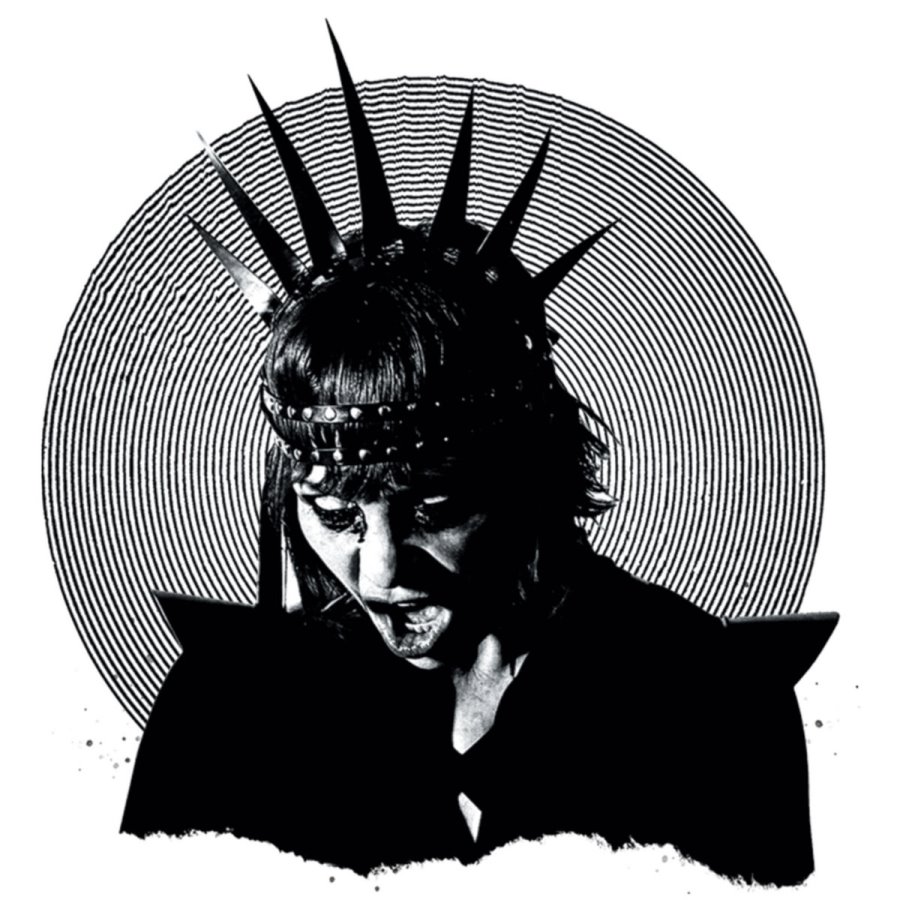
Adopting the dishevelled persona of a satanic Libertas, the new I SPEAK MACHINE long player ‘War’ captures the zeitgeist. Despite this, it is actually a more personal album dealing with the themes of addiction and mental illness.
I SPEAK MACHINE is the audio visual project of Tara Busch and Maf Lewis; their album ‘Zombies 1985’ produced by John Foxx collaborator Benge was a soundtrack to a short horror sci-fi film about a Zombie Apocalypse. One of the best albums of 2017, it was notable for Busch’s own restylings of singers as diverse as Doris Day, Alison Goldfrapp and Grace Jones.
Constructed remotely between Los Angeles and Sheffield over a three year period, ‘War’ has been co-produced by Dean Honer of I MONSTER, THE ECCENTRONIC RESEARCH COUNCIL and INTERNATIONAL TEACHERS OF POP fame. He has done a particularly good job with the jagged sound design. Meanwhile Busch has processed her voice as a central instrument, bending it through effects, vocoders and a Korg MS-20 as Will Gregory did with Alison Goldfrapp on the ‘Felt Mountain’ album.
Short and sweet with reminiscences of Gary Numan’s ‘Metal’, the screeching title song opener sets the scene and declares the album’s intentions with a rumbling backdrop. Embroiled in menace and some eerie flute, ‘Left For Dead’ cuts and bleeds and frightens while the progressive avant-funk of ‘Beat Down By Heaven’ is aided by sharper objects such as guitar, sub-bass and distorted claptraps.
Featuring backing vocals from Kendra Frost of KITE BASE and shaped by a dysfunctional analogue sequence, the wonderful Sci-Fi goth of ‘Santa Monica’ acts as an ironic love letter to Los Angeles, making use of Busch’s impressive vocal range from high soprano to deep contralto.
With a salvo of industrial Schaffel to shape a cover of American alt rockers CONCRETE BLONDE’s ‘Bloodletting (The Vampire Song)’, this is how GOLDFRAPP might sound if contributing to a Wes Craven movie. Sparser than the other tracks, ‘Dirty Soul’ weirdly echoes David Essex’s ‘Rock On’ while crossing paths with Patti Page on Venus. Then with a sense of foreboding in line with Gary Numan’s more recent work, ‘Ruined Me’ sees Busch point the finger at her dependency and how it has contaminated her aura.
Acting as a beautiful harp interlude, the soothing ‘I See You’ is counterpointed by a foreboding presence. But ramping up the pressure, as its title suggests, ‘The Metal of My Hell’ is a fierce aural assault of frantic heavy metal with synths and an aggressive rage as Busch decides to “burn the witch” and “burn the bitch” because “you had it coming for a long time!”.
A co-write with Kendra Frost, the ghostly ‘Push The Grease’ presents a stuttering percussive tension and another processed otherworldly vocal. Feisty and frantic, ‘Rats Rise’ is the final battle as the dirty rodents leave the sinking ship but with shades of ‘Clowns’ by GOLDFRAPP, the angelic ‘Until I Kill The Beast’ offers peace and tranquillity although the discordant metallic embellishments confirm that work is still to be done as “the devil sits with me until I kill the beast”.
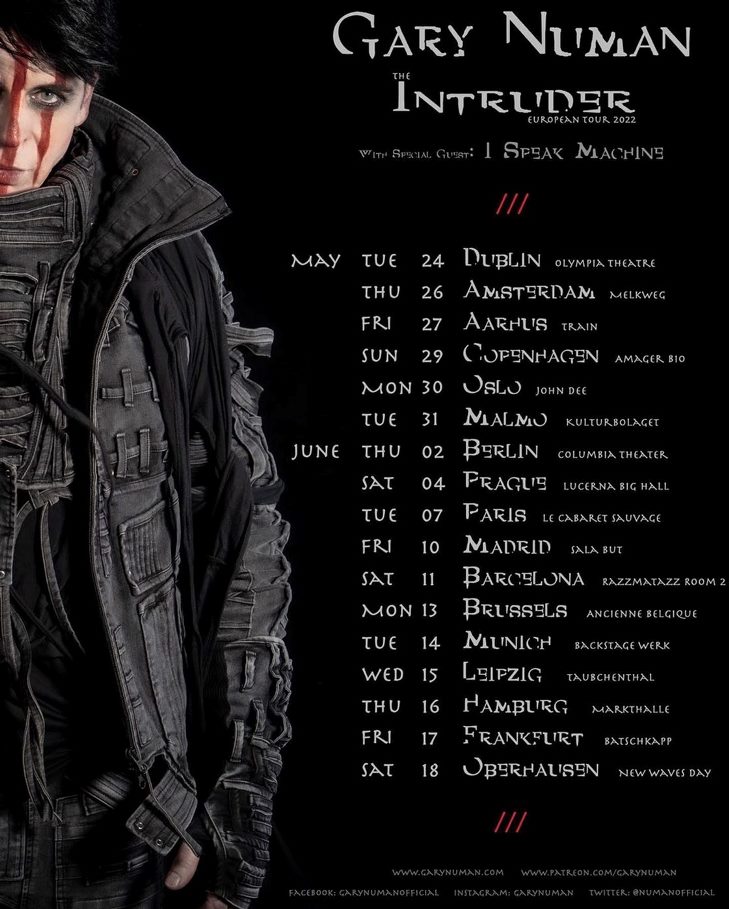
There is cathartic joy in the discomforting exorcism that is the ‘War’ album; I SPEAK MACHINE’s bizarre mix of timbres and styles provide a severe but rather appealing and cerebral listening experience. If you are going to see Gary Numan on his European tour in May and June, arrive early because guess who is opening?
Formally known as HAPPINESS PROJECT, Limoges-based trio H/P released their debut album ‘Remove Or Disable’ in 2008. Signing to local label BOREDOMproduct, two acclaimed two long players ‘9th Heaven’ and ‘Mutation’ were released in 2012 and 2018 respectively.
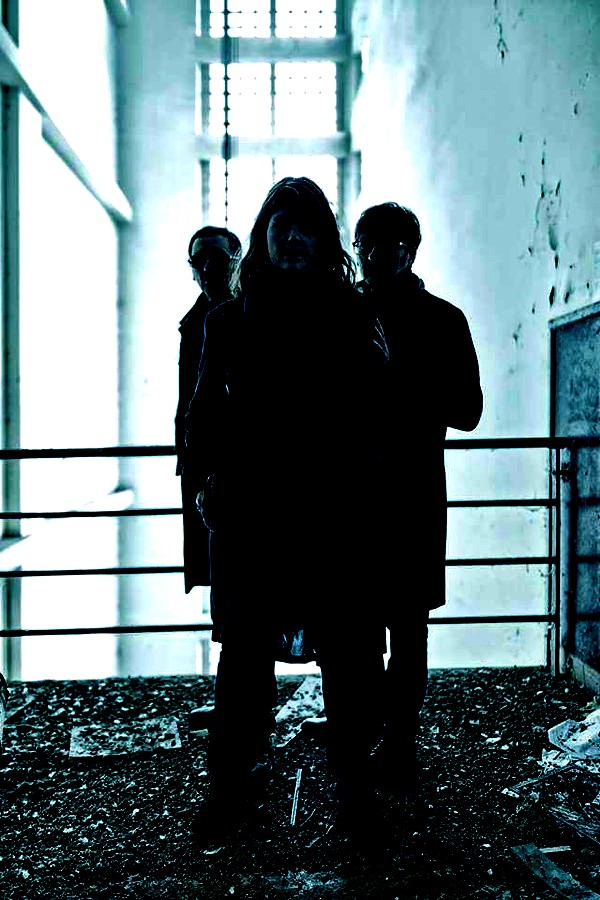
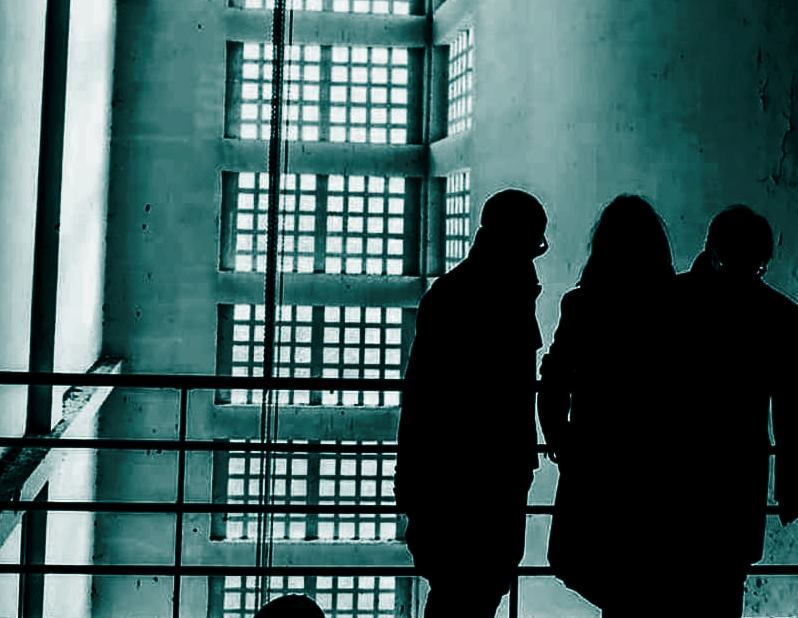
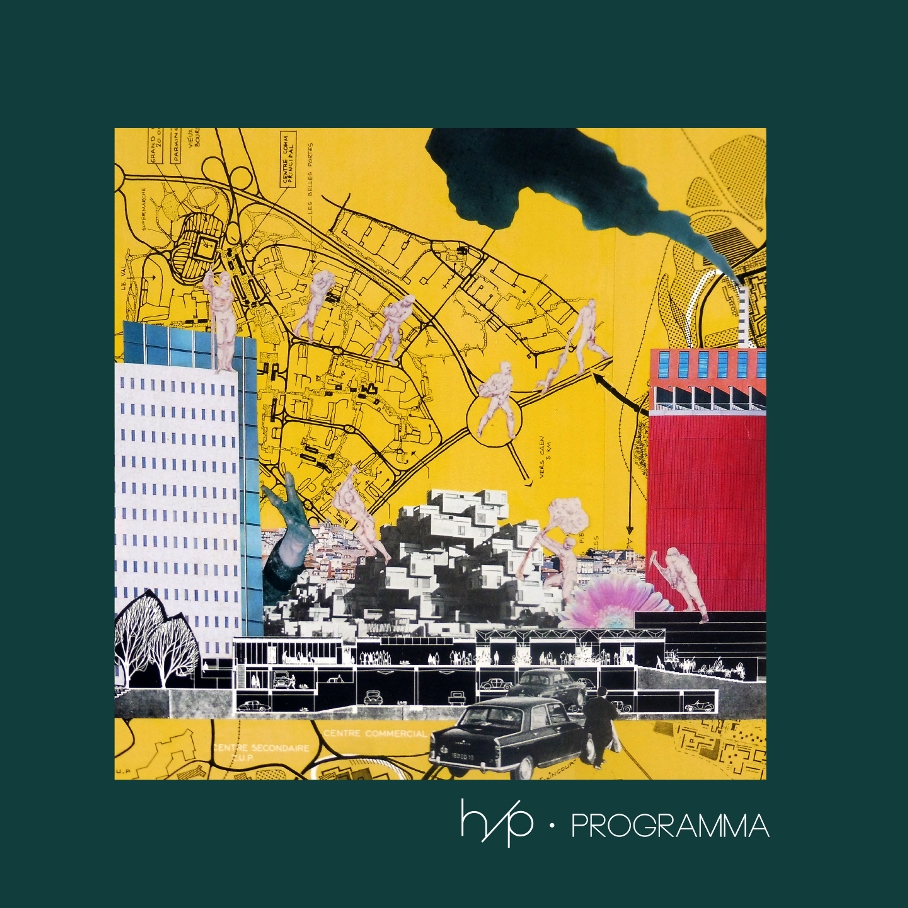
Shortening their moniker, their fourth album ‘Programma’ also saw threesome eschew conventional identities, preferring to be known as F/T (lead vocals + synths), C/P (lead + backing vocals) and C/T (synths, string machine, piano, bass guitar + backing vocals). With their personas now portrayed as enigmatic shadowy figures, the focus is on the music, a glorious pop concoction of minimal synth and vintage drum machines with an elegant retro-futuristic presence and a small dose of melancholy.
With charming girl-boy vocals, stark electronic effects and an array of synthesized melodies, ‘Programma’ brings some appealing warmth and soul into what has often been considered a cold musical form. ELECTRICITYCLUB.CO.UK chatted to all three members of H/P to find out how they achieved it.
H/P had previously made music as HAPPINESS PROJECT but you have minimised in image and approach, what had prompted this change in direction?
C/T: We have a rule inside the band, we do not want to make twice the same album. Before ‘Programma’ we released two albums with BOREDOMproduct: ‘9th Heaven’ and ‘Mutation’. As you can notice our latest album before ‘Programma’ was named ‘Mutation’. So it was logical for us that something happens. We decided first to change the name of the band. So we have only kept the initials of HAPPINESS PROJECT. Then we decided to do the same work with our music and we composed new tracks in a very minimal way. ‘9 Mars’ was one of the first tracks we composed and we did it in a very minimal way. We wanted to make a true mutation but it does not mean that we dislike what we have done before, absolutely not, this is the natural evolution of a project which tries to create new things at each time.
F/T: We haven’t really minimised anything. H/P has always been a way for us to call ourselves, so it has rapidly sounded more natural to us, to use it as our permanent name for the band. As for the music, that was really our intention to make a new album with less instruments, so as to give more amplitude to the songs and maybe more space to the listener’s imagination.
Had there been any synth trailblazers that you felt inspired by in how you conceived ‘Programma’?
C/T: We had in our own background, bands that counts a lot for us, like KRAFTWERK, JOY DIVISION, NEW ORDER… but also French bands like MARTIN DUPONT, TRISOMIE 21, KAS PRODUCT… those bands take certainly a big part in our music. Of course when we were young, we discovered synth music with French artists like Jean-Michel Jarre or the band named SPACE, we were fascinated by those machines which brought brand new sounds in the pop music, it was incredible for us, we had at this period (during the 70s and the 80s) the feeling that music gave us the possibility to enter into science fiction and the future… and this is very fun to notice that today when you mention those periods or those artists you speak about the past. I think even now that electronic music is always the sound of science fiction and imaginary worlds because electronic music always sounds like something abstract and intellectual.
F/T: As far as we are concerned, we have always been inspired by musicians like KRAFTWERK or a French band from the 1970s SPACE, but also without forgetting bands like MARTIN DUPONT, KAS PRODUCT or TRISOMIE 21 (from the 1980s), and other bands like NEW ORDER, THE CURE, JOY DIVISION and IN THE NURSERY, as well.
Which vintage synthesizers did you turn to, did you have to buy, beg or borrow? Was there a dominant synth on the album?
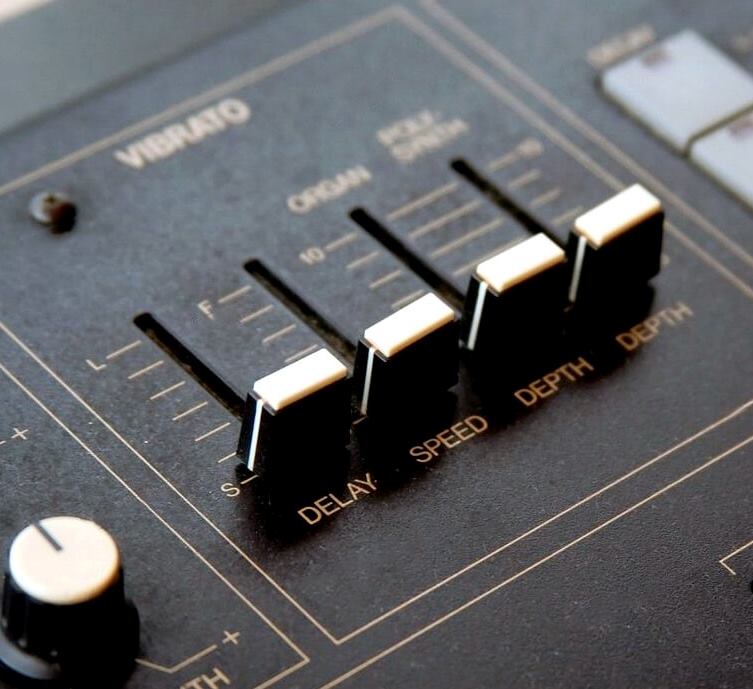
C/T: When we compose our music in our home studio we use very classical synthesizers like Korg, Minimoog and Nord Lead ones… then we send our demos to BOREDOMproduct and for ‘Programma’, our label has used the analogue synthesizers which belong to the band CELLULOIDE. I don’t know exactly which type of synth they used but we did agree with the fact they produced our album with old synthesizers and analogue effects. The result sounds as we wanted our album to sound.
Did you set any restriction rules to help control the fun, like a limited palette of sounds and effects?
C/T: No, we had no restriction the only rule was to have an album which sounds new, minimal and not digital.
F/T: Definitely not! As we said previously, we wanted to create something which would sound more minimal, more up-to-date, which would suit the sensations we wanted to express: sensitivity, oblivion, awareness.
ELECTRICITYCLUB.CO.UK loves the sound of primitive drum machines, but why do you think they still retain a charm for electronic music enthusiasts?
C/T: Because primitive drum machines had a very personal sound, you can play with them to personalise your sound and create a singular rhythm. They always give today a true personality of a track, and they seem to be played in a very organic and natural way, you can feel the warmth of their sound when you mix them. So this is a very interesting material for the sound engineer, this is the reason why old drum machines are always used, because they are very creative machines.
Assuming that you used software and virtual instruments before in HAPPINESS PROJECT, how analogue were you able to go with H/P?
C/T: To be true, we have always used analogue in the past. If you listened to our track ‘Poupée Mécanique’, you’ll be able to hear that we have used a true Mellotron. Another track like ‘No Name’ on ‘9th Heaven’ or ‘The Pumpkin Fairy Tale’ on ‘Mutation’ were principally created with a Minimoog synth. Most of the time, we composed our electronical music without computer, only with synths and we play everything. When the track is composed in a very traditional way, then we open our computer and we put all the different musical parts on Cubase! But we play everything with our small hands 😉 We rarely use software or virtual instruments. So I think that in the future. we will keep analogue synths for H/P.
One thing that you did retain from your previous incarnation was the dual male/female vocal style, is this what ‘I Prefer Two’ is partly referencing?
C/T: Yes of course, but we still have the dual male/female vocal style. We have used it less for ‘Programma’ because of the pandemic period! We have recorded our new album during the lockdown, so it was more difficult for us to be all together at the same time in the studio. Our female voice lives in Paris. So we mostly record male voice for our new tracks because it was easier for us to do so during the pandemic, but it doesn’t mean in the future that it won’t be the contrary for our next album.
C/P: Yes, the duality is always present in our albums. Duality between female/male voices, duality between synthétic and basic instruments, between low and faster pieces, sad or more playful themes…
How would you describe the creative dynamic between the three of you?
C/P: It’s like in a couple (but we are a trio, by the way): you have to live in harmony and deal with the desires of each other. Communicate, exchange and trust in each other. We have to compose… ‘cause H/P is the result of our three personalities.
‘Les Choses’ features French but the vocals on the album are predominantly in English, while writing the lyrics, did you find you were all starting to dream in English as well?
F/T: But we have been dreaming in English for so long! In fact, most of the music we listen to, is in English and when it comes to “Synth-pop” music, English sounds more natural. But we like to insert French lyrics too… we have always been doing so (even in our previous albums). The combination between both languages is great, because they both express different feelings, different colours. English is more straightforward, French is more mysterious, sometimes.
‘The Alarmist’ has a Motorik presence, has German kosmische musik ever been an influence?
F/T: We think so! As kids, we used to listen to KRAFTWERK a lot. We were big fans, as well as TANGERINE DREAM! We still love songs like ‘Trans Europe Express’!
C/T: To go further, I can say that KRAFTWERK changed our life when we were very young ! When we discovered their music in 1978, it has opened a door in us, we were children and we were totally hypnotized by their music and by those sound, it was like a revolution at this period, I truly had the feeling that we entered in a new dimension, a parallel one as if we were entering into the future and into the past at the same time. What is very fascinating in synthesized music, there is always a mix between sounds that come from nowhere and the architecture of tracks which reminds listeners a lot of classical music… so if ‘The Alarmist’ reminds us of our musical background, it means that we have reached our purpose!
The bassline of ‘Black Tea’ is quite boisterous while the verse is almost goth, but the chorus is uplifting?
F/T: Yes, of course! Maybe, all this reflects the many musical influences we’ve had like CLAN OF XYMOX, DEAD CAN DANCE or NEW ORDER… moreover, we are very instinctive musicians and sometimes, everything comes out, at once. The creation of a song can be very spontaneous and can express different emotions, one after the other.
‘9 Mars’ begins each verse with a feminine lead, how do you decide on the vocal arrangements?
C/P: At the beginning, ‘9 Mars’ was an old track that came out on a self-produced album, sung by Christelle. It’s a very personal song and that’s why we proposed it to BOREDOMproduct, with the female lead voice.
‘Ultraviolin’ would be a great pop song in any style, what was its genesis?
F/T: ‘Ultraviolin’ is a tribute to music itself and to all the various bands who’ve had a big influence on us. This song is a way to say thank you! Music is so important to the three of us. This is what ‘Ultraviolin’ is about.
C/T: ‘Ultraviolin’ is based on a very naïve synth gimmick, a very iterative one. When we found this gimmick then we created the other parts of the track: violins, rhythm, etc. We did like traditional music made with traditional musicians, you turn around an initial theme and you build your track with this minimal material. It’s very interesting to create a track with this method, because with very few musical notes, you can build a more complex universe.
Alain Séghir of MARTIN DUPONT joins you on ‘Vicinities’ and the structure is perhaps looser than the other songs on the album?
F/T: Yes, you’re right! That was such an incredible opportunity. We’ve been fans of their music, almost since their beginning. C/T and Alain Séghir started a correspondence on Myspace… then we met at a concert in France… then we continued exchanging messages and then Alain Séghir’s contribution to ‘Vicinities’ naturally came. We didn’t impose anything… we sent him the track as it originally was and he played the bass-guitar as he did and that was perfect.
Do you have any plans to perform any of the ‘Programma’ album live or are you just happy to have created a good record?
C/P: It’s planned! We also like to share our music with our fans. Bringing it to life is a great achievement!
Will H/P continue or will there be a return to “Happiness”?
C/P: Our band is a project, always in the making, always in renewal and evolution, in a constant desire of development. We always ‘Remove Or Disable’ all that we do in order to access the ‘9th Heaven’. This is our ‘Programma’. H/P is a part of HAPPINESS PROJECT, just another facet of us.
ELECTRICITYCLUB.CO.UK gives its sincerest thanks to H/P
We use cookies to ensure that we give you the best experience on our website. If you continue to use this site we will assume that you are happy with it.





 produced by
Follow Us!