Category: Interviews (Page 50 of 117)

OUTLAND Interview

Founded by Brett Simpson and Stuart McLaren, Outland have perhaps become one of the best known synthwave and retrowave brands in the United Kingdom.

The success of ‘Drive’ and ‘Stranger Things’ with their notable synth dominated soundtracks attracted a new audience to electronic music. With it came a desire for live events incorporating filmic aesthetics that embraced a nostalgic futurism for an escapist world that was more like David Hasselhoff’s ‘Knight Rider’ rather than David Cronenberg’s ‘Crash’.

Having organised big events in London, Glasgow and Toronto, as well as double and triple billings alongside summer sunset boat cruises on the River Thames, Outland recently launched a record label.

Outland’s next adventures include two shows headlined by OLLIE WRIDE in Glasgow and London, with a multi-act presentation led by DANA JEAN PHOENIX called ‘Retrowave D’Luxe’ following in the capital a few months after.

Stuart McLaren kindly took time out from his busy schedule to talk about Outland’s aspirations and progression within the realms of modern synth music.

Outland has just announced ‘Retrowave D’Luxe’ taking place on Saturday 6th June, this is your biggest live event for a while?

It’s quite a big line-up in that we have six artists performing and the last time we did anything like this in London, was back in 2017 for the first Outland city-series event. However, ‘Retrowave D’Luxe’ is more of a boutique-style synthwave event since it’s held at Gigi’s Hoxton Underbelly, which is only 220 capacity.

‘Retrowave D’Luxe’ is not on a boat, starts early and doesn’t go on too late… that sounds perfect for ELECTRICITYCLUB.CO.UK! What can people expect? 😉

Aaah yes, we’re well aware of ELECTRICITYCLUB.CO.UK’s aversion to water-going craft and the fast moving water of the Thames! This event will showcase the lighter poppier side of synthwave, so expect vocal performances and a distinct inclination towards the retrowave aspects of the genre. We’ll be focusing on the positive and feel-good side of live synthwave while keeping the tempo and energy up.

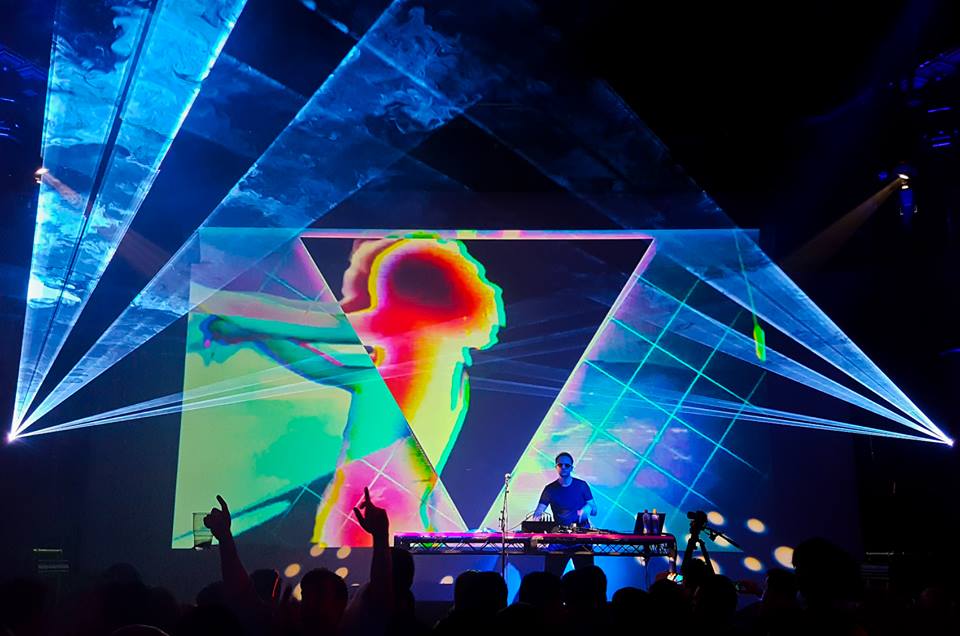
No matter how big or small though, each Outland event showcases the talents of our VJ Will C, who creates bespoke visual elements which are projected on stage for each of the artist performances. We never try to stray from providing a seamless immersive experience of live synthwave for any of the shows we produce. We approach every show as a first; a showcase for folks who are attending an Outland gig for the first time or who have only recently discovered synthwave.

What inspired you to put on synthwave themed events in the first place?

There weren’t any taking place! Modern synthwave music remained largely an internet phenomenon consumed through online streaming platforms, at least first through Myspace circa 2007 when THE VALERIE COLLECTIVE out of Nantes France kicked off what would later become known as ‘synthwave’, along with the UK’s very own 80S STALLONE and US acts like LAZERHAWK and MIAMI NIGHTS 1984.

I guess synthwave still remains a largely bedroom / home studio-produced music genre – there’s nothing wrong with that of course, some of the best 80s synthpop was written and produced in dank bedsits across the country in Thatcherite England.

By the time the mainstream caught whiff with the release of the movie ‘Drive’ with its luscious synth soundtrack and also M83’s ‘Hurry Up, We’re Dreaming’ in 2011, there was still no sign of live synthwave performance, at least not in London. When British synthwave act GUNSHIP (ex-FIGHTSTAR members Dan Haigh and Alex Westaway) released their self-titled debut in 2015, there was yet to be some form of live synthwave event here in the old smoke. At the time, I was performing in a Prefab Sprout tribute act and promoting and managing touring South African artists and comedians in the UK.

My old friend and synthwave cohort Brett Simpson suggested we form a brand and host live synthwave events in London. It was really for the love of the music and to satisfy our own selfish needs of wanting to see our favourite synthwave artists live! And so Outland was born – we presented the first Outland production at London’s Clapham Grand in 2017. I’m not sure what we were thinking going into a 1200-capacity venue, but it certainly caused a stir having piqued the interest of Gary Langan of THE ART OF NOISE and the other 650 people in attendance – a massive ball-twisting gamble which paid off somehow!

Were there any particular artists that you enjoyed who made you think something like a scene was emerging?

Absolutely. Artists like GUNSHIP, TIMECOP1983, TREVOR SOMETHING and FM-84 began blowing up on social media and also through video releases on New Retro Wave (Synthwave YouTube channel now with almost 1 million subscribers). We knew there was an online market but there’s one thing contemplating that and knowing one can put bums on seats in a venue – it’s so risky but then that’s par for the course with live music promotion, I guess. It took some convincing for the venue managers and programmers and of course lots of marketing spend, but luckily that first show panned out – London’s live synthwave scene was born!

We were lucky to have gained the trust and participation from some of the biggest names in the scene at the time in TIMECOP1983, NINA, 80S STALLONE and SUNGLASSES KID. We would have had London’s NEW ARCADES on that line-up too had they been available and not cavorting on the ski slopes of Chamonix!

Outland had put on more, shall we say manageable sized presentations over the last 18 months like NINA + KNIGHT$ or DANA JEAN PHOENIX, KALAX + LEBROCK, FM ATTACK + FUTURECOP! and OLLIE WRIDE + WOLF CLUB, having tried the all-day and late-night event formats initially?

Well actually, we’d have preferred to continue hosting the big shows in London year on year but a couple other synthwave promoters picked up on things in 2017, so we felt things were becoming a bit crowded in what we felt was still a very niche market.

So we took our big city-series productions on the road to Glasgow in 2018 and then Toronto last year, with the view of proliferating and propagating the ‘word’ beyond London. But being London-based, we also wanted to ensure we were looking after touring artists who might be including the capital with their European tour plans. That’s how the first DANA JEAN PHOENIX show came along with NIGHTCRAWLER in March 2018 at Electrowerkz.

I have a long-standing relationship with The Halfmoon in Putney and was offered an Independent Venue Week slot in February last year, and what a better showcase for synth in South West London than to host NINA and KNIGHT$, which turned out to be quite a party south of the river. We generally also found attendance levels dropping so by necessity we had to drop capacity and work with venues which only offered ‘gig slots’ with curfews at 10pm-11pm.

It was all a bit hit and miss really, until we were able to find a formula that now sort of works, which is selling out smaller venues with artists that the ‘scene’ hasn’t seen yet. This is why the FM ATTACK show was such a phenomenal success as well Ollie’s sold out solo show at Camden Assembly.
Had these gigs been to test the water and build an audience?

Yes in the sense that we were trying to gauge what artists work and what artists don’t, as well as what capacity it took to sell out the venues we put those artists in. One can rely a little bit on Spotify listening stats and social media vanity stats, but those don’t necessarily paint the whole picture.

Take L’AVENUE for example. Here’s a new kid on the synthwave block with very little Facebook reach, yet his inclusion in the ‘Retrowave D’Luxe’ line-up has had an enormously positive response so far. Ultimately though, we’d like to think we’re building an audience from the artists’ fanbases as well as those who simply want to attend an Outland show for the experience.

The FM ATTACK gig which Outland put on at Electrowerkz was interesting as that appeared to attract a much younger club crowd than would normally be seen at synth-based events?

I’m thrilled you mention that. A large chunk of the average demographic of attendance to synthwave shows is in the region 35-45 years old and mostly male. I think popular synthwave blogger Vehlinggo calls this the Dadwave effect haha. We’ve been trying to break the scene to the ultimate viral market – students – but I guess grime and reggaeton is the new grunge now! We’ll get there though. I suppose both FM ATTACK and FUTURECOP! draw a younger fan base due to the nature of their style of music, which lends itself more to crossover contemporary club beats and melodies. Whilst FM ATTACK has one foot firmly in 80s keys and synthwave, the other is always stepping forward with modern arrangements and future sounds.

So what’s it been like dealing with the various venues in the UK?

We’ve found that once we’ve dealt with the venue programmers and booking teams and produced the shows, we’re always invited back due to the both the numbers we pull and the bar sales on alcohol. We’ve always had compliments back from venue managers on what a fantastic trouble-free crowd the synthwave lot are. I guess it’s also important to pay careful attention to venue hire agreements and terms so that there are no surprises down the line.

However, all this doesn’t necessarily make things easier in securing the right venues for Outland productions. In London especially, we’ve understood that much of the synth crowd hold high pressure jobs and tend to prefer weekend shows. This is problematic since most decent venues in the capital are booked out months in advance – in most cases 6-8 months. The other issue we face, which seems to be a new thing across the board, is that venues seem only prepared to offer live ‘gig slots’ with 5pm load-ins and 10pm curfews, so as to make way for their own ‘club nights’ thereafter.
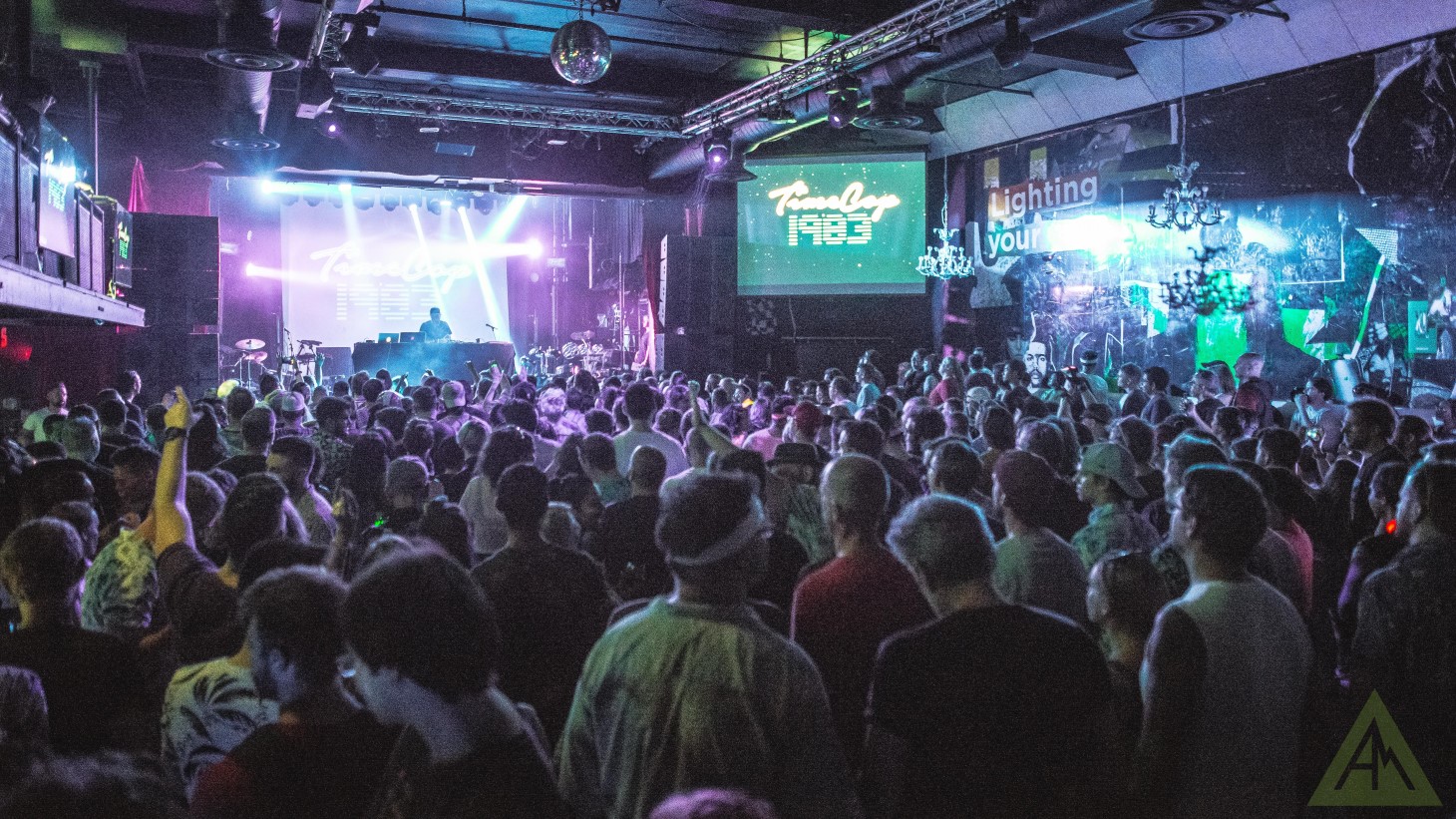
Photo by Connor Watt

Live synthwave of course can be presented both as a live band performance but also as one-man DJ + MIDI keyboard and pattern sequencer performances, so the whole production lends itself to an all-nighter type experience. We’d prefer also to run our events to the early hours, like our promoter friends Miami Cyber Nights (Frankfurt) and Retro Synth Fury (Paris) across the channel do.

Whilst venue hire fees are reasonable in London, there are one or two venues we’d love to work with but the rates are just way over the top for the capacity on offer, which is a pity. Mind you, we were exploring running the next city series show in New York City this year and when I found out that a 1000 cap room on average there costs over $15k a day, my eyes shot out their sockets – it’s still unbelievable to me.

Outland ran its most ambitious event yet in Toronto, how did you find working in that city compared with London?

It was hot! Devil’s-ass hot! Seriously though Toronto in the high 30s is almost unbearable, mad as a box of frogs that was – I don’t recommend it. We were however very lucky to secure the 660 cap Mod Club in the Little Italy area of Toronto. Management and tech over there were great to work with and very accommodating with load-in and late curfew times – we went on until 1am I recall.

The whole lead up to that event and the phenomenal support we had there from both the fans and the artists was eye-watering. Nothing beats promoter satisfaction flying artists from all over Europe and America to Canada and then selling out the room. I’m not sure we can trounce that one but we’ll see what happens later this year…

Canada does appear to be something of a creative hub for synth music at the moment; did that make it more straightforward to put together a dreamboat line-up in Toronto?

Well, we aspire to taking these big city-series events across the world to new places – in cities where there’s a healthy music-loving market, especially if there’s even a hint of synthwave and retrogaming fandom. Toronto was an easy choice for us because some of the most cutting-edge synth artists are locals: DANA JEAN PHOENIX, MICHAEL OAKLEY, PARALLELS and MECHA MAIKO. Not only that but Canada forms a big part of the whole history behind synthwave.

THE VALERIE COLLECTIVE’s David Grellier aka COLLEGE teaming up with Canadians ELECTRIC YOUTH to write arguably the most well-known synthwave tune ‘A Real Hero’, which appeared on the movie ‘Drive’ featuring Canadian actor Ryan Gosling. Then there’s the whole LE MATOS and MIAMI NIGHTS 1984 affiliation to Canada and, lest we forget, the incredibly hilarious antics of popular synthwave video blogger and Torontonian Andy Last from Beyond Synth.

We generally prefer to take Outland to cities where synthwave hasn’t necessarily been showcased live yet, hence the reason not taking the brand across the channel to Stockholm, Berlin, Frankfurt, Paris or Amsterdam, where popular synth promoters Night Arcade operate.

There was the cancellation of an event in Manchester that was due to be headlined by TIMECOP1983, is synthwave set to be a London-centred phenomenon, in the UK at least?

Yeah that was a bit unfortunate. It’s disappointing seeing synthwave shows cancelled outright because then people start talking about the genre for all the wrong reasons. I’m just not sure if enough promotion went into that event. A popular Kiwi musician once told me: “Stu son, if you want to fill a venue then make bloody sure you spend at least 10% of your perceived gross on promotion! That’s Marketing 101 fella.”

Manchester actually has a healthy little synthwave scene on the boil there with local promoters like MCR Nights / Max Speed and Steel City Synthwave holding the torch. THE MIDNIGHT performed there last year in Albert Hall and it was near full. While London continues to top worldwide Spotify listenership stats for synthwave in general, we’re very positive that the penchant for the genre is growing across the country. Our Glasgow event in 2018 was well attended and LEBROCK are selling out small venues from Bristol to Peterborough, so there’s definitely something happening.

As an enthusiast of synth-based music for over 40 years, it’s had its ups and downs while ELECTRICITYCLUB.CO.UK has seen many promoters come and go, some good and some very poor. Is it important to manage expectations as far as the perceived popularity of the form and therefore, adapt events to that?

Great point and absolutely. When we saw attendance numbers dropping a tad in 2018, we had to think out of the box and that’s how the Outland Sunset Cruises came about. There’s a helluva lot more financial risk hiring a Thames River vessel for 200, but ultimately people flocked to it and were willing to part with their dollar as it was a new experience – we do it year on year now.

I think it’s important for managers, promoters and artists alike to look at ways to add value to stage performances, whether that’s spending extra on LX / FX or adding a visual element. Gone are the days where U2 and dare we say DEPECHE MODE, are the only acts that can afford to sprinkle on a little technical gold dust and wow factor. Simple and affordable solutions now exist that leaves no excuse to being creative with presentation in small venues. It is what will drive popularity of the live performance across the music spectrum, especially in this modern era where people can laze out live streaming live concerts on massive HD home theatre systems from the comfort of their home sofas.

Is there much mileage in long all-day events or ones running through the night with more than ten acts?

London is crying out for this sort of thing. Combine that with a screening of a retrosynth film like ‘Kung Fury’ and some relevant cosplay dress up, together with live performances in separate rooms of chillwave / lo-fi acts, retro synthwave and darksynth and we’ve got a synth festival winner. A venue like Electrowerkz lends itself perfectly to this, but the issue is finding a weekend that isn’t booked up a year in advance by the goths or Torture Garden! *laughs*
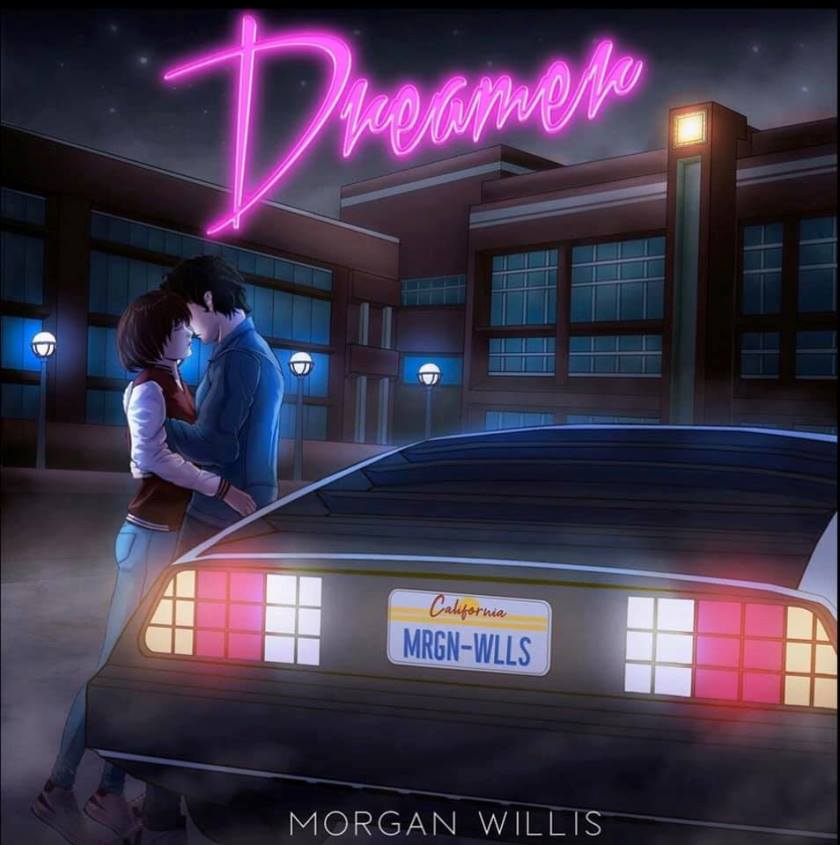
Outland has now gone down the record label route, how is that progressing? Please tell us about your signings?

It’s going really well, but it’s lots of work. We’re trying to take it slow so we’re actually turning down quite a fair amount of submissions. Apart from MORGAN WILLIS, we’ll be looking at a releasing a few other artists this year, but ultimately, we need to be realistic and continue to offer the best we can in focused artist development and promotion. We’re not a glorified physical merch distributor acting as a label – there’s release plan and content strategy, upstream and distribution, registering rights, release promotion and PR. Then the label management aspect as well as artist development and A&R.

We’re moving into the publishing side as well because there appears to be so much value in synchronisation opportunities for synthwave. The ‘Stranger Things’ OST is only the tip of the iceberg. It seems the whole music industry is being turned on its head and if a music company is not diversifying, then there’s risk it can get left behind or go bust.

Record labels are becoming streaming services; talent management companies are becoming record labels; distributors are having a go at becoming managers and publishing agents. Ticket agents have become venue owners. And artists are stuck in the middle. However, we were already promoting artists and their releases, as well as showcasing their talents live through the events. All we were missing was the content to get behind, so going the label route was a natural progression for us. I guess we’re trying to ensure we’re covering all the bases we know we can manage well, to ensure the genre gets the recognition it deserves without taking too much of an unmanageable bite at the same time. It’s a fine balancing act but it’s a thrilling ride.

It would seem there is a lot more what is being termed “vocal synthwave” and this variant is enjoyable this is more like classic synthpop, so how do you see synthwave developing? The purists do seem to prefer things to be solely instrumental…

I think there’s a common misconception, even from the so-called synthwave purists, that the music became popular through its instrumental roots. This couldn’t be further from the truth – much of the gateway songs to the genre originate from the ‘Drive’ soundtrack, so, ‘A Real Hero’ by COLLEGE & ELECTRIC YOUTH, DESIRE’S ‘Under Your Spell’, KAVINSKY’s ‘Nightcall’ and so forth. GUNSHIP’s seminal debut was almost entirely vocal synthwave at its purest.

I can understand why there’s a preference for the instrumental though – WAVESHAPER’s ‘Sarah’s Theme’ is a glorious piece of music. The MIAMI NIGHTS 1984 back catalogue is instrumental synthwave at its purest. While there seems to be traces of insanely possessive custodianship of the definition and preferred path synthwave should take, I think it’s ultimately vocal synthwave which will present the sub-genre to the mainstream properly and place it firmly on the map.

It’s already happening – THE MIDNIGHT are filling +1500 cap rooms across the UK, Europe and US. From experience of the UK market, those numbers tell me many of their fans don’t even realise they’re listening to synthwave, which I think is a good thing – it means the music is traversing boundaries of genre. If there were 1500 ‘synthwave’ fans in Manchester, the Night Arcades TIMECOP1983 event there would not have been cancelled.

Yes, it’s like CHVRCHES fans aren’t exclusively ‘synthpop’ enthusiasts, Kerrang called them an “alt-pop trio” when they were featured so as not to upset their regular readership…

There’s a fine line distinguishing vocal synthwave apart from 80s and modern synthpop, and certainly some artists can be palmed off as both eg MICHAEL OAKLEY, NINA, OLLIE WRIDE, DANA JEAN PHOENIX, PARALLELS, NEW ARCADES and of course THE MIDNIGHT. But at the same time we’ve found that there are loads of modern synthpop acts that are trying to pass themselves off as synthwave, just to climb on the bandwagon of the recent popularity of the genre.

Of course like back in the day, there are those who want nothing to do with being ‘synth’ at all despite using synths! It happens the other way round too though, as there are OMD fans who are in denial about the band using sequencers…

Yes, we have what I would define as the synthwave deniers – the popular gateway acts that are well and truly synthwave in many aspects, but distance themselves entirely from the genre label – I think it’s unhelpful.

As a synthwave promoter, we’re obviously keen to push the value of propagating the term and related hashtags and to ensure it obtains the genre recognition it deserves within distribution aggregators and digital advertising platforms. Furthermore, referencing synthwave for what it is, sets it apart from the tens of thousands of standard synthpop and electro acts that exist today.

It’s interesting how the ‘synthwave’ term does allow more variation in some ways, with the metal sensibilities of LEBROCK and the AOR aspects of THE MIDNIGHT?

Yes for sure. Well, we like to define the term synthwave as “electronic music and art aesthetic influenced by 80s synthesized music, soundtracks and video games which inspire the listener to imagine a future that never quite happened”.

LEBROCK ticks that box as they define themselves as “80s melodic rock riffs with shimmering synthwave melodies…”. Perhaps the term ‘Retrorock’ should be added to the myriad of synthwave sub genres to make matters even more confusing!

Seriously though, the rock element within the synthwave genre isn’t new – axe wielding wizards DANCE WITH THE DEAD are famously synthwave and when we start drawing in darksynth acts like CARPENTER BRUT and PERTURBATOR with their almost metal sensibilities, they’re still synthwave acts at heart to their fans, and indeed even gateway artists to the whole genre.

However, while those acts are able to fill The Roundhouse, I feel THE MIDNIGHT, FM-84 and OLLIE WRIDE, who are represented professionally by the best agents in the business, are less underground and therefore in a better position to put the genre on the map via daytime play on mainstream radio stations.
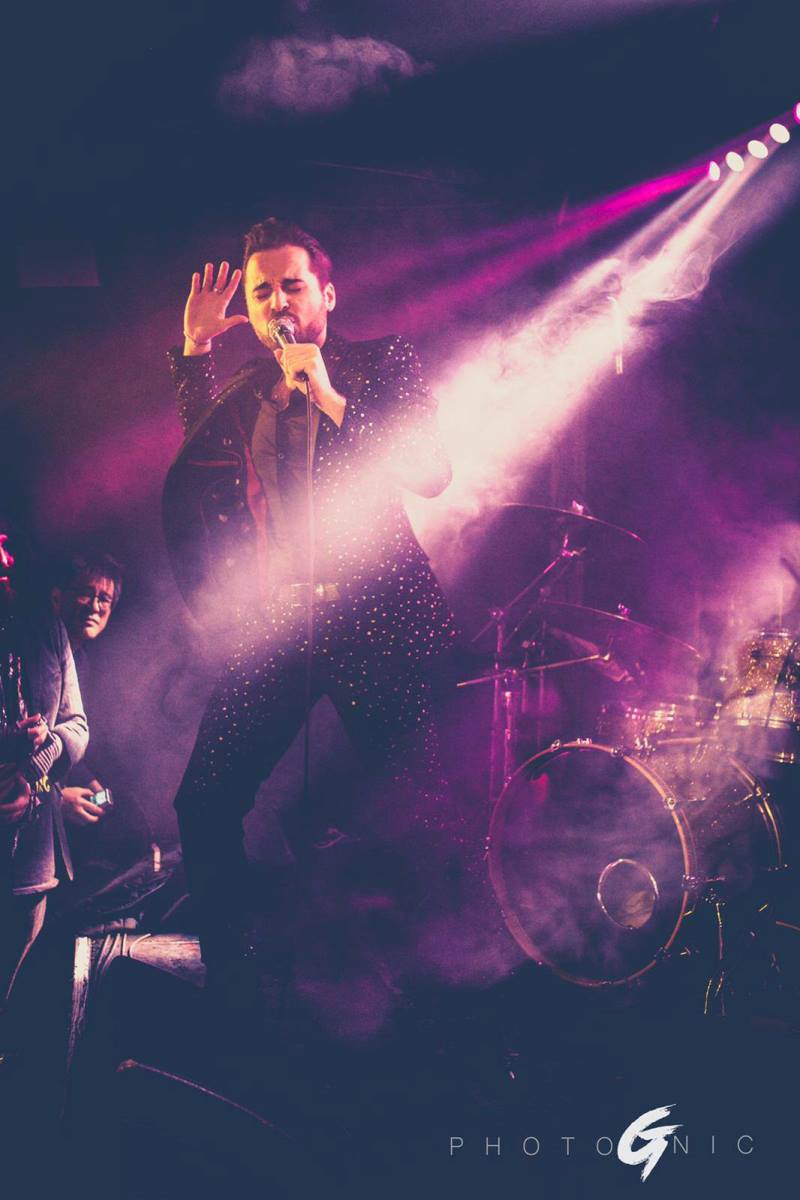
Photo by Gina-Leigh Smith

OLLIE WRIDE does look set to become synthwave’s first crossover star don’t you think?

Yes, he is a true musical legend in the making and quite frankly, one of the best singer songwriters I’ve ever come across personally. Even Thomas Dolby rates him highly. I think he has already solidified his image as the Prince of Synth within the synthwave community, but I also think he has that star quality and work ethic to stand up next to (and even show up?) Brandon Flowers at Coachella for example. His work as a frontman on stage is second to none and there’s no wonder we’ve seen comparisons to performances from artists like Freddie Mercury, Michael Hutchence, Billy Idol and even Tina Turner. His shows in London and Glasgow in April are going to be next level.

Taylor Swift has been borrowing from CHVRCHES, do you think she will go synthwave next?

It appears a few mainstream artists are borrowing, intentionally or unintentionally from the synthwave aesthetic, both in music and art. Though CHVRCHES don’t define themselves as synthwave and neither does Taylor Swift, her latest album definitely exudes touches of synthwave. ‘The Archer’ could be mistaken for a NINA song, but then 2015’s ‘Style’ is baked in a synthwave / outrun soundscape, so she has been at it for some time now.

Is it intentional or is it just that vintage synthesizers like the Roland Juno60 are coming back into fashion? Does a track with an 80s synth bass arpeggio make it synthwave? Our backline provider was saying that in the last few years he has seen a tremendous increase in hire of early 80s analogue synths. Artists like JAI WOLF and THE WEEKND are all experimenting with synthwave soundscapes but it remains to be seen whether that’s intentional or not.

It’s a well-known fact that many mainstream artists worth their salt keep their nose firmly on the underground and emerging fads to incorporate into their own. Take MUSE for example – their album ‘Simulation Theory’ is steeped in synth and retrowave visual aesthetic and there’s no bones about it that they enjoy the genre – KALAX’s song ‘Levitate’ was used as an outro on their 36-date ‘Simulation Theory’ World Tour! THE BLACK EYED PEAS went full tilt synthwave / outrun visual aesthetic recently, but don’t even get me started on that! *laughs*

What were your thoughts on ‘The Rise Of The Synths’ film?

I thought it was an absolute wonder work and a fantastic representation of the roots of modern synthwave. The documentary might have included a few more active and current players and artists within the scene, but when we consider that the project was over five years in the making, it’s still a well-rounded presentation. It started out as a crowd funding effort and as we know, sometimes those things don’t pan out well for anyone. But kudos to the team for sticking it out and delivering on their promises. I think it’s a well-produced and perfect introduction to synthwave and I would love to see it placed on Amazon Prime or Netflix someday soon.

Talking of films, are you looking forward to ‘Kung Fury 2’?

Absolutely. We tend to include retro films in our annual city-series events – ‘Turbo Kid’ was screened in Toronto and ‘Kung Fury’ featured at Outland Glasgow 2018. If ‘Kung Fury 2’ is anything like the original short film, then we’re in for some more of the same absurdity and martial arts hilarity from the upcoming release. Throw in Arnold Schwarzenegger and Michael Fassbender this time around – what could go wrong!

Are there any other plans in the pipeline that you can talk about?

Well we have another one of ELECTRICITYCLUB.CO.UK’s favourite boat parties is happening in London on 1st August and we’re also working on the next city series event, with our eye on the US around September / October. We’re also booking agent for FM ATTACK and MORGAN WILLIS, so they’ll be performing quite a bit this year. I work closely with OLLIE WRIDE’s agents in a management capacity and there are some exciting things planned there.

As for the label, we have a few more releases and continued work around our current roster artists, as well as an exciting release of a new mobile retro-inspired driving game called ‘Retro Drive’, available on iOS this Summer. We’ve partnered with the developers and will be licensing some exclusive synthwave and outrun belters for the game, which will later be released as a compilation album.

In closing, I would just like to say a big thank you for the support that ELECTRICITYCLUB.CO.UK have shown for us at Outland and for giving synthwave a new voice – we look forward to seeing your readers at our shows x


ELECTRICITYCLUB.CO.UK gives its warmest thanks to Stuart McLaren at Outland

Further information on upcoming Outland events can be found at https://www.weloveoutland.com/

https://www.facebook.com/outlandsynth/

https://twitter.com/OutlandSynth

https://www.instagram.com/outlandsynth/


Text and Interview by Chi Ming Lai
3rd February 2020, updated 15th February 2021

KID MOXIE: The Unpleasant Interview

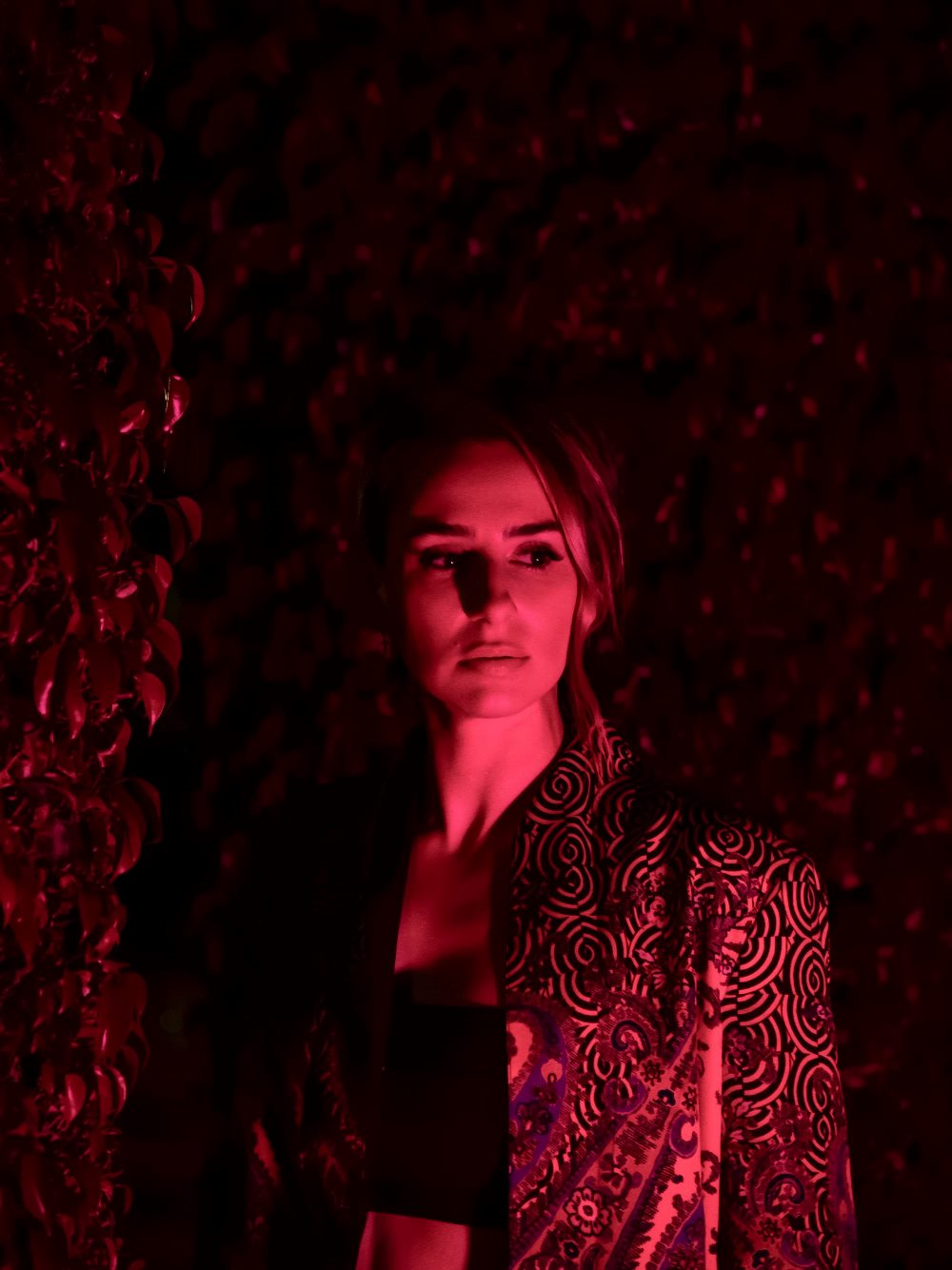
Photo by Sofia Gaafar

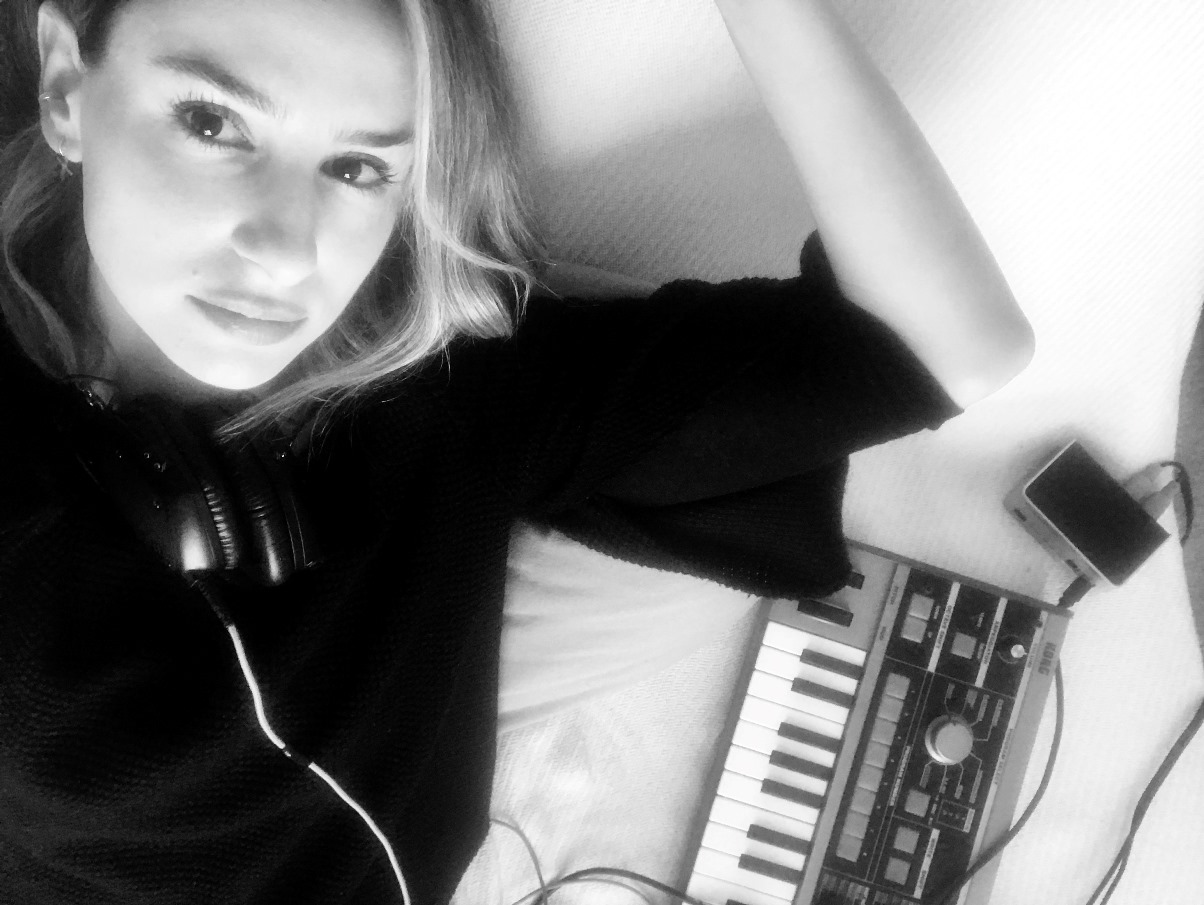
While KID MOXIE might be best known for her exquisite breathy synthpop like ‘Lacuna’ and ‘Dirty Air’, her latest musical venture takes her into previously unknown territory.

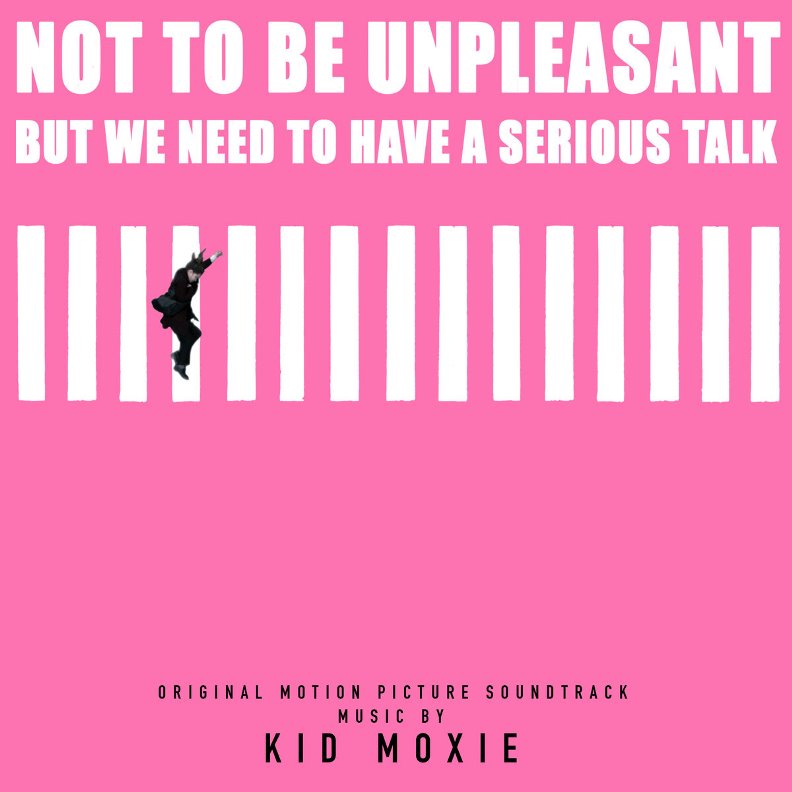
The vehicle of Greek-born singer / songwriter / musician / actress Elena Charbila, KID MOXIE has composed the soundtrack to a new film ‘Not To Be Unpleasant, But We Need To Have A Serious Talk’ directed by Giorgos Georgopoulos.

The plot centres around a womanizer who finds out he is a carrier of a sexually transmitted virus, lethal only to women. But he is also the only hope for a curing vaccine if he can find which one of his ex-girlfriends had the first viral strain!

Released on Lakeshore Records whose digital catalogue includes the prestigious soundtracks for ‘Stranger Things’, ‘The Rise Of The Synths’ and ‘Drive’, while there are numerous ambient and instrumental pieces, ‘Unpleasant’ also includes two notable cover versions.

One of them is ‘Big In Japan’ which was originally recorded by ALPHAVILLE; the new KID MOXIE arrangement sees ‘Stranger Things’ meet ‘The Ipcress File’ within its icy aural aesthetic. Meanwhile, there is also a moody reworking of ‘The Night’, a 1983 Stephen J Lipson produced US hit for THE ANIMALS. Elena Charbila chatted from Los Angeles about her ‘Unpleasant’ experience…
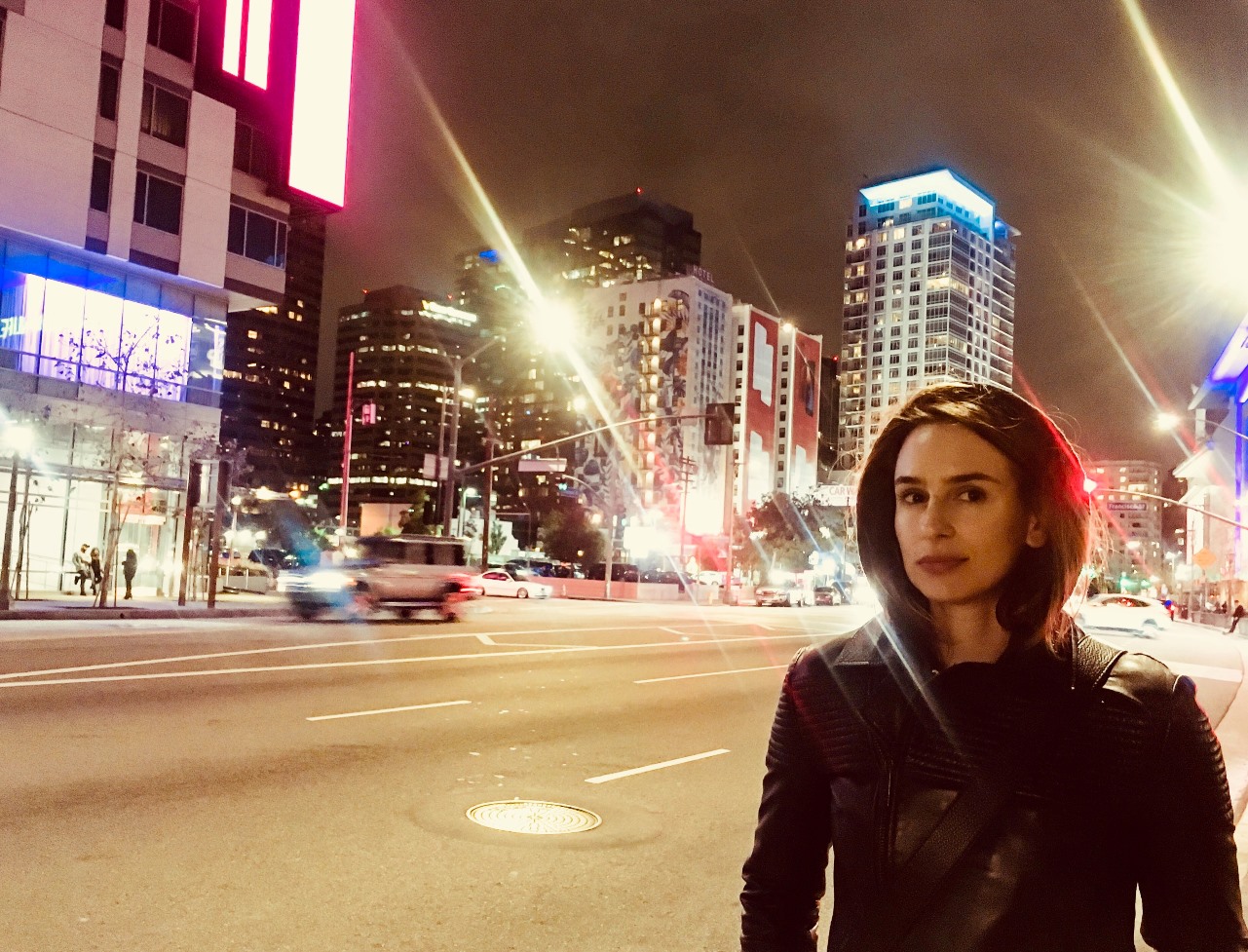
Is ‘Unpleasant’ your first soundtrack venture?

This is the first time a full soundtrack I’ve composed has been released, as opposed to giving tracks to certain shows, films or commercials which I’ve done in the past.

How did it come about?

I was approached by the director who I met in LA and who is also Greek, he had known my stuff and has the same synth sensibilities as me, we gelled on the kind of sonic landscape that we both liked.

When he was ready to shoot the film, he asked me to compose the soundtrack and I also acted in the film as well. It’s a small part but it was a pretty fun thing.

What’s the character that you play and what’s the premise of ‘Not To Be Unpleasant, But We Need To Have A Serious Talk’?

The basic story is that we’re in Greece in the future, it’s a Sci-Fi / dark comedy / drama where there’s a disease which is sexually transmitted that kills women but men carry it! The lead character has to go back into his past to figure out who gave it to him so that he can tell them all that they’re dying… it’s pretty grim but there is definitely some humour injected into it, done in a tasteful way I think. Spoiler alert! I’m the first girl who is going to die in the story.

What was the big difference for you working on ‘Unpleasant’ compared with doing pop songs?

The magical thing that happens with not doing actual songs was the freedom that is offered by non-verbal compositions. It was very liberating not to write lyrics because I didn’t have to write about me and my experiences, but it became about creating a world that these other characters could live in. This meant I wasn’t going to “talk” basically, so it was liberating not to be confined to the structure of a pop song, verse/chorus, having to say something and then match it or rhyme it. It was very rewarding in a different way.

So were you doing what Vangelis does, composing to moving pictures, or writing to a brief?

I’ve done some more soundtrack work since and every film is different. But for this particular one, the director wanted a lot of stuff in advance, even before they shot because he wanted to rehearse with the actors using that music. So the actors and all the elements grew together, so during rehearsals, there was stuff to listen to and play on set. A lot of stuff was also made after the cut, so I was very much involved in the whole process.

‘Bonsai’ perhaps doesn’t stray too much away from the music people know you for as it has your vocal on and your airy sound?

Yes, that’s safe to say but it was such a freeform process. ‘Bonsai’ was the last track I wrote for the whole soundtrack after I had seen the rough cut of the film. There’s a Japanese character and there’s a lot of Japanese dialogue. And there’s this bonsai that keeps growing throughout the film, it’s almost like a character in itself. So that was based on the energy which that bonsai was emanating to me.

But the solemn filmic ambience of ‘The Distance Grows Again’ and ‘Interlude’ will surprise?

Yes, those tracks are definitely a departure, if the people listened to these next to my pop songs, they will not believe it’s the same person. I wanted to be something totally different because this project felt totally different. The images and the feelings I was drawing from were different from other stuff that I free-willingly started writing from scratch. This time, I had a “guide” who was somebody else, a film saying “come to us, come this way” and I followed it.

What equipment set-up this you find was the best way of working for you?

I would say half of it is hardware, but I do use a lot of software, I travel a lot so I complete a lot of things that way. It’s like a 50/50 process between hardware and software. I ended up using quite a bit of Arturia Oberheim Sem V, Moog Grandmother, the Moog Minitaur and Moog Mother.

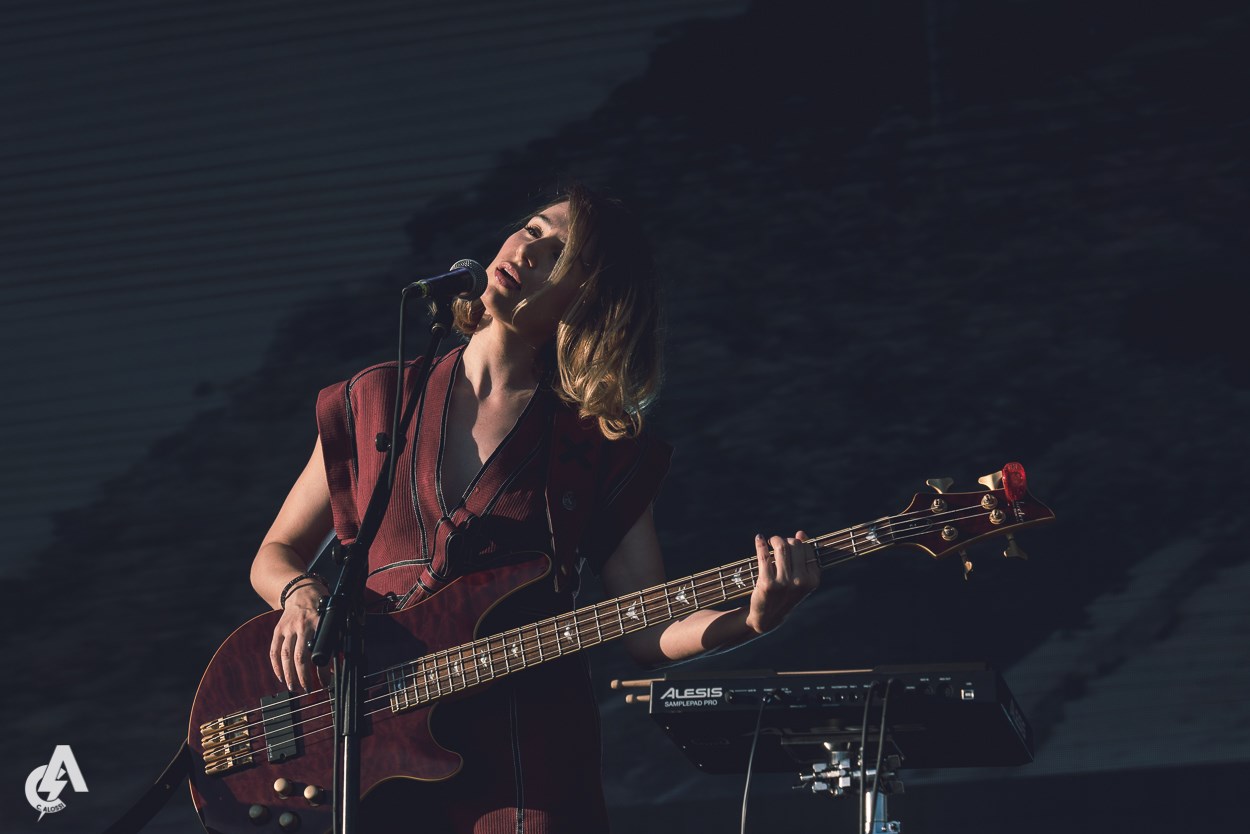
There are some live guitars here and there like on ‘Bonsai’, I wrote the parts but had a friend play it cause I am sh*t at the guitar! I play bass which feels good for me because it’s not so intricate, I’ve always had a little fear of the guitar and that’s not because I’m a synth person, there was never a calling for me to explore it. Whereas the bass felt much more right, it’s like the spine of a song, it holds the beat and the melody together, and that felt very intriguing.

But there’s no bass on your ‘Unpleasant’ soundtrack?

It was natural not to involve anything rhythmic elements in the soundtrack (apart from on ‘Closer Than Ever’) other than the two cover versions. I feel there has to be a good reason to include a rhythmic element, there has to be a really good reason to include drums or bass in movies.

‘Closer Than Ever’ captures an underlying tension, had any particular composers influenced you?

I was channelling more of the dark wave elements on this one, newer bands like SHE PAST AWAY from Turkey who I like, a little bit of JOY DIVISION and SISTERS OF MERCY, that mix of synths and guitars.

Overall, Vangelis is an influence over anything that I do, John Carpenter too and Clint Mansell who happens to also be a good friend. There’s also the German composer Nils Frahm and Cliff Martinez, all of these people, I’m recycling things from all of them.

Was the release of the ‘Unpleasant’ soundtrack on Lakeshore Records always a given?

No, it wasn’t… it was finished when they heard it through Clint Mansell who loved it. He made the connection, Lakeshore loved it and they said “bring it on”.

There are two takes on ‘Love Poem’, one variation being mostly based around solo piano…

At some point I wondered what it would sound like if I replaced the piano sound with a synth. In my head, it made it have a nostalgic, romantic quality that suited a scene in the film that was very melancholy.

The soundtrack is notable for having two songs on it, one being a cover of ALPHAVILLE’s ‘Big In Japan’, so what was your approach?

The director loved ‘Big In Japan’ so it went into the end credits. Because there was a strong Japanese element in the film, it made sense to use that. It didn’t feel right to necessarily use drums because I did want to take a departure from the ALPHAVILLE original. There was already a strong rhythm element with the synth bass and it takes it to a different place by having a woman sing it.

‘Big In Japan’ comes with a very striking video, what was the narrative behind that?

There’s no full story but I don’t think everything needs a full story, it just needs a feeling and an atmosphere to be enveloped in. I guess the video is a bit of a commentary on children being forced to grow up too fast, especially in Hollywood. I’ve always perceived the song as being about fame (although I am aware that it’s not what the original was about).

The other song is also a cover of ‘The Night’ by THE ANIMALS which you perform with Phil Diamond?

It plays during the movie and was one of the director’s requests to cover this particular track. I thought it would be nice to have it as a duet so I asked a friend of mine to sing it with me. It really departs from the original which was much more of an early 80s pop rock hit, so I made it much more ethereal to match the tone of the film.

‘Slow Escape’ is a glorious mix of piano and synth pulses…

I was listening to a lot modern classical music so just blending the synthetic arpeggio sounds with natural sounds like the piano creates a very multi-layered experience in my mind. By definition, a synth can be a cold sound which is not human, but then there’s piano which is more warm and human, so by blending them, you get an interesting “sonic sandwich”!

Photo by Ghost Of Oz

How have you found working on ‘Unpleasant’ as an experience and for your musical development?

Contrary to its title, it’s been a very pleasant experience for me because it’s opened up a whole new chapter in my music career! I wasn’t sure I had it or could do it, I wasn’t sure I could take on a whole soundtrack by myself. Now I want more. So I’m working on more soundtracks and I hope to keep doing it.

What’s next for you, will you go back to songs?

I have an EP out in Spring 2020 and I’ve also been working on music for a video game amongst other things.


ELECTRICITYCLUB.CO.UK gives its warmest thanks to KID MOXIE

‘Big In Japan’ is released by Lakeshore Records as a digital single, available now via the usual platforms

The ‘Not To Be Unpleasant, But We Need To Have A Serious Talk’ digital soundtrack album is released on 24th January 2020 and can be pre-ordered now direct from https://kidmoxiesoundtrack.bandcamp.com/album/not-to-be-unpleasant-but-we-need-to-have-a-serious-talk-original-motion-picture-soundtrack

http://www.facebook.com/kidmoxie

https://twitter.com/KIDMOXIEMUSIC

https://www.instagram.com/kid.moxie/

http://www.lakeshorerecords.com/


Text and Interview by Chi Ming Lai
18th January 2020

DRAMATIS Interview

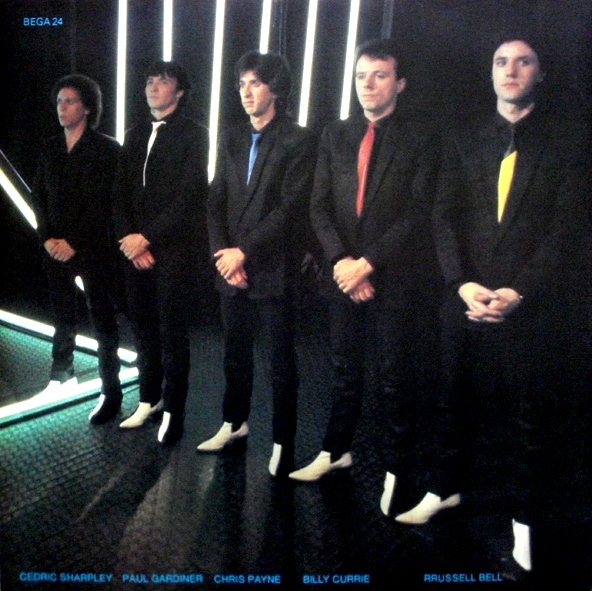
DRAMATIS were a band of Gary Numan sidemen who toured the skies, but came into being as their own entity after their boss prematurely formalised his retirement from live performance at Wembley Arena in April 1981.

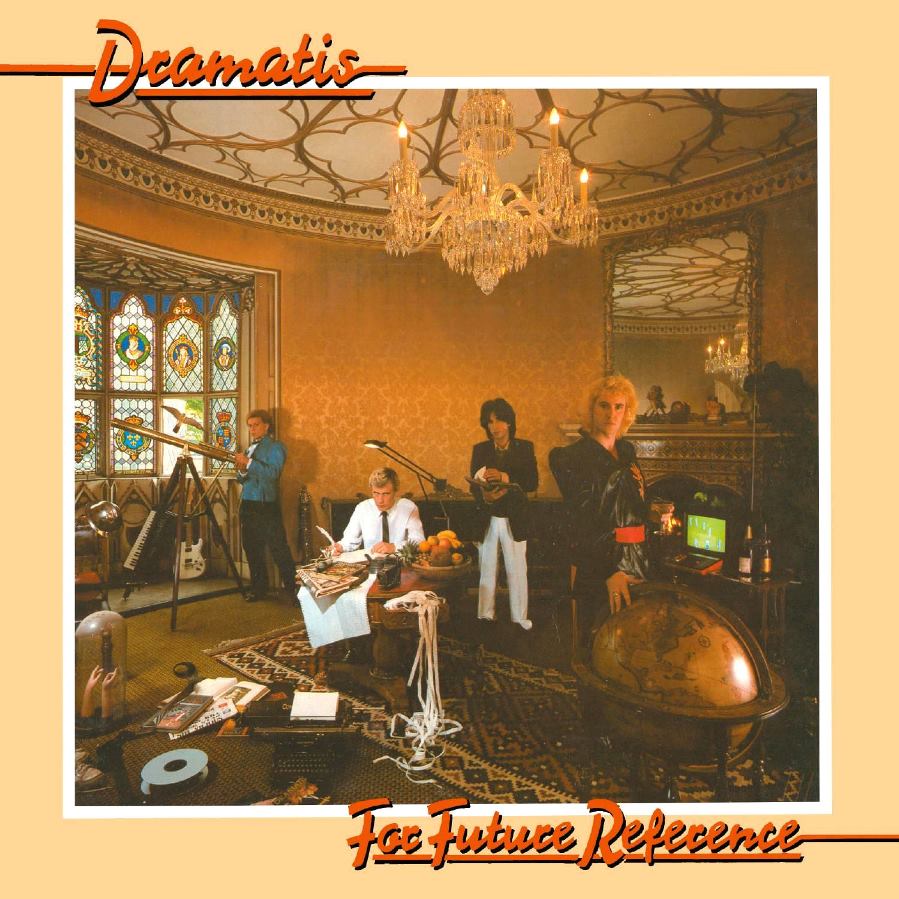
Their debut album ‘For Future Reference’ released later that year did not sell well despite the Numan voiced Top40 hit single ‘Love Needs No Disguise’, but it became something of a cult favourite.

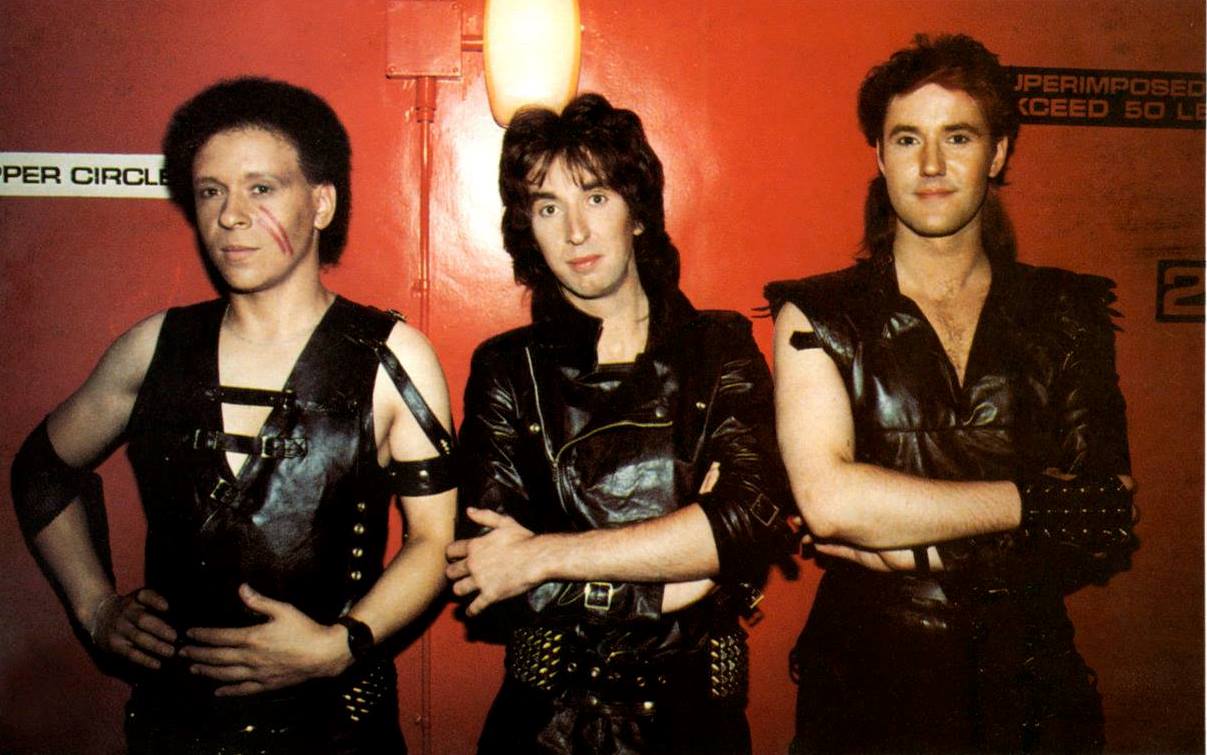
After Denis Haines departed over disagreements about touring, the remaining trio of RRussell Bell, Chris Payne and Ced Sharpley played a series of live dates and issued a trio of singles ‘Face On The Wall’, ‘The Shame’ and ‘I Can See Her Now’ which were exhibiting a musical progression and a potential breakthrough. However, a combination of frustrations with their label Rocket Records and their former boss’ desire to return to touring led to DRAMATIS being put in hiatus, as Bell, Payne and Sharpley returned to the Numan fold.

In 2012, there had been plans to DRAMATIS to reunite but the untimely passing of Sharpley led to a period of uncertainty as Bell and Payne grieved for their bandmate.

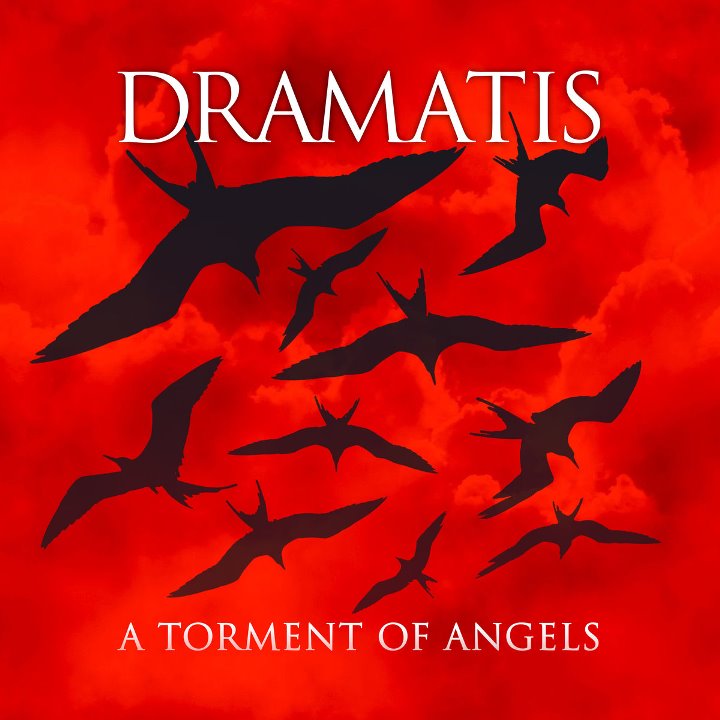
2019 saw RRussell Bell and Chris Payne make their belated solo debuts but for the start of the new decade, there was the unexpected announcement of a new DRAMATIS single entitled ‘A Torment of Angels’. Written by Bell and with a prog synth template likely to satisfy fans of ULTRAVOX, Payne said: “RRuss is a very clever composer. He has always managed to create incredible memorable tunes but not in a standard way. His construction of chords and melody are very ‘angular’ and never follow convention. This is what makes him so unique as a writer.”

With work now progressing on a second DRAMATIS album, RRussell Bell kindly chatted about why it has taken so long to follow-up ‘For Future Reference’ and the possibility of live dates…

After the various false starts, it was a pleasant surprise to hear there was a new DRAMATIS single to start the decade?

Yes, we finally got it together. To be honest, losing Ced was a massive blow that seriously knocked us back. Even now, whenever I program a drum track, I always try to imagine what Ced might have played and attempt that. Also, with Chris living in France, it was difficult for us to get together regularly and our studio software isn’t entirely compatible so working purely online is difficult.

You recently released your debut solo EP ‘Like-A-Human’, so what inspired you to head down the DRAMATIS route?

I totally updated my studio a little while ago and that was the impetus to start recording a backlog of songs I’d written, as well as writing new stuff. I really enjoyed recording the ‘Like-A-Human’ EP and it was a big learning curve getting the whole thing ready for release, doing the artwork for the CD, organising worldwide distribution, filling in tax forms for the US and packing and posting merchandise from home.

We used to have record companies to do all that crap but it’s more than worth the effort to be independent. Getting the EP out gave me enough confidence to then look at finishing the second DRAMATIS album with Chris. We were both ready for it.

What were DRAMATIS’ original influences and what have you been listening to recently to help point out a direction?

Everyone seems to be obsessed with influences and genres these days. My influences comprise the sum total of everything I’ve ever heard and learnt throughout my life but I don’t listen to music, not at home and not in the car because I really don’t want to be influenced by what other people are doing. If you try to follow a trend you’re always going to be behind it.

For me it’s important to write and record music that I like, regardless of whether other people like it. I think you have to be true to yourself and when you’re an independent artist you don’t have a record label saying, “Quick! Jump on this bandwagon” so you can follow your own path. That kind of freedom is wonderful.

Of course, it also gives you plenty of opportunities to fall flat on your face. I like that. However, going back to the original question, Gary has obviously been a big influence on me because he was a major part of my musical life for a decade, so I’ll happily and gratefully put my hands up to that one.

How would you describe the new DRAMATIS material?

Personally, I’m aiming for the musical equivalent of a barely controlled explosion, with epic synths, wailing guitars, orchestral strings and horns, multiple tribal drum tracks and soaring melodies. That’s what I’m aiming for. It’s not for me to decide if I’m anywhere near achieving that. It might sound like a wet fart to some people but you can’t please everyone.

How has writing and recording for this new music differed from when you last wrote as DRAMATIS?

I’m not aware of having changed the way I write songs. Recording is easier now in my own studio with modern equipment.

In fact, recording is so easy now that anyone, even someone tone deaf with no sense of rhythm can put together something that sounds a bit like a proper song, because the software gives you the rhythm and tunes and all the bum note.

But that doesn’t mean anyone can write a good song! I constantly have to fight the urge to rely too heavily on software, it can sap your creativity and make you sound anodyne and derivative.

‘A Torment Of Angels’ and your solo track ‘Like A Human’ saw you changing your vocal style and singing in a much lower key?

Yes, the funny thing is, when we recorded the first DRAMATIS album, we recorded the backing tracks first, then I’d lock myself in a room and write the lyrics. Then we’d start putting the vocals down, that’s when I discovered that they were all in keys that were a bit high for my voice. Basically, I’m a baritone. The verses of ‘I only Find Rewind’ are at a comfortable level for me and that’s around the pitch I write songs at now.

There was a song called ‘Retro Alien Thing’ that previewed in 2014. What was that about and will it be part of the new album?

That was an early song that Chris came up with, I wrote a totally different set of lyrics with a different melody, so now we have two songs with the same backing track. One of them might be on the album. Basically, we’re going to record as many songs as possible and then pick the best ones for the album.

Is ‘Sand & Stone’ which was played live during your tour in 1982 going to part of this new album?

A properly recorded studio version of ‘Sand & Stone’ is a contender for the album. I’ll let you know if it makes the cut as soon as we’ve decided.

Lyrically many of DRAMATIS’ songs reflected the dystopia of the times, and that all seems to have come full circle?

Yeah, it’s basically the same old sh*t happening to different people, which pretty much sums up the history of the human race. We never seem to learn anything from history.

So we’re just doomed to make the same mistakes over and over again. At least it gives us songwriters something to whinge about.

Are there any songs from the DRAMATIS reboot that you can tell us apart and how they’re coming together?

Today I’m working on a track called ‘Time Flies’. It has a floaty ethereal chorus, a slightly edgy verse and a weird bit in the middle that might well get the boot and be replaced by something with less oddness.

You and Chris have been appearing with and as support for your former boss at various points over the last ten years, what has that been like?

Playing with Gary is always fun. He’s so easy to work with and also, I finally got to play at the Albert Hall, even if it was just one song. Brilliant.

There was talk of a remastered ‘For Future Reference’ with its associated Rocket-era tracks coming out, what’s the state of play there?

Yes, that’s part of the plan but we still need to track down the original tapes. We also need them to assemble some backing tracks for live gigs as there’s only two of us now, so we obviously can’t play everything live. If we can’t find them, we’ll have to re-record them, which will be a major pain in the arse. If anyone knows where they are please get in touch with me via Chi, it would be massively appreciated.

What are your favourite DRAMATIS songs from that first phase? Are there any particular memories, either personal or during recording attached to them that you can recall?

I think my favourites from that era are ‘I Only Find Rewind’, ‘The Shame’ and ‘Love Needs No Disguise’. I also have a soft spot for ‘I Can See Her Now’.

You played a Chapman Stick on ‘For Future Reference’, did you ever get the hang of it because it looks a bugger to play?

Yes, it was good for bass parts because it went down to bottom C and the left hand fingering was pretty easy for a guitarist but the upper register tapping with the left hand was tricky and also sounded like a weedy clavinet. It needed quite a few effects to make it sound half decent. I wasn’t using it very much, so I chopped it in for a drum machine and a microphone.

Do you still have your Moog Liberation?

Yes, I still have the Moog Liberation. It’s in the attic in London. God, that was a heavy bit of kit to lug around the stage. I haven’t used it for years because I lost the 16 core lead that attaches it to the rack unit.

Is DRAMATIS playing live a possibility in the future?

Yes, DRAMATIS playing live is a very distinct possibility in the not too distant future.


ELECTRICITYCLUB.CO.UK gives its warmest thanks to RRussell Bell

‘A Torment of Angels’ is available as a download single from https://dramatis.bandcamp.com/

https://twitter.com/RRussellBell


Text and Interview by Chi Ming Lai
14th January 2020

NINA Automatic Call


While it appears to have been a comparatively quiet 2019 for NINA, she has been busy touring the US and Canada with PARALLELS as well as recording.

At the start of the year, there was a brand new song called ‘The Calm Before The Storm’ which was coincidentally released during one of the coldest wettest spells in England. Then in the Autumn, she teamed up with FUTURECOP! for a collaboration entitled ‘Against The Tide’. But with the year almost up, the London-based Berliner has unleashed the vibrantly appealing magenta splash of ‘Automatic Call’.

Developing further her bridge between synthpop and synthwave, NINA said of her new creation: “’Automatic Call’ is about the challenges we encounter when going through a break up and how hard it is to let go and finally move on”. Uplifting but melancholic, the song is the result of another collaboration with Oscillian who produced seven songs on NINA’s 2018 debut long player ‘Sleepwalking’. The producer was also responsible for the song’s ‘Grand Theft Auto’ inspired cityscape video.

“Oscillian filmed, directed and edited the video as well as producing the music” NINA said, “We were inspired by synthwave aesthetics, late night driving, highways, LED lights, and we used a vintage Dodge Challenger car in the video. As soon as we started to film, torrential rain started and didn’t stop all night. Luckily we did have cover and in the end, it all played in our favour, as the light reflecting on the puddles on the ground tied in really well with the overall feel of the video”. But getting intimate with her romantic leading man provoked some unintended amusement as “there was a scene where I had to get really close to Tommy, the other actor in the video, and we just kept giggling. It was very hard to keep a straight face.”

While it appears to have been filmed is Los Angeles, the location of the video was actually a bit closer to home. “We filmed ‘Automatic Call’ in Sweden over 2 days. We discovered Tommy, the actor in a club in Malmö when we played a show there and he looked like he just came out of an 80s movie” NINA remembered, “so we approached him there and then and asked him if he wanted to be part of my music video. He loved the idea right away, even though he didn’t have any previous acting experience, so he flew from his home in Finland just to do the shoot.”

‘Automatic Call’ comes from NINA’s upcoming second album ‘Synthian’ due sometime in 2020.


ELECTRICITYCLUB.CO.UK gives its warmest thanks to NINA

‘Automatic Call’ is released as a digital single with a bundle of remixes, available now from https://ninasounduk.bandcamp.com/

NINA’s 2020 Calendar is available from http://www.ninasounduk.com/store/calendar

https://www.iloveninamusic.com/

https://www.facebook.com/iloveninamusic

https://twitter.com/iloveninamusic

https://www.instagram.com/ninasounduk/


Text and Interview by Chi Ming Lai
19th December 2019

SIAN EVANS – KOSHEEN Interview


Sian Evans is best known as the front person / songwriter for electronic dance collective KOSHEEN.

Where many early 2000-era dance acts were lucky if they hit on a one-track formula or sound, KOSHEEN were comfortably able to straddle several genres and have multiple hits from their debut album ‘Resist’, most notably ‘Hide U’ and ‘Catch’ which was subsequently covered by German Trance duo BLANK & JONES.

Despite KOSHEEN going their separate ways in 2016, she has perpetuated a hugely successful career as a writer / solo artist scoring two UK No1 singles with DJ FRESH; one as an artist, the other as a co-writer.

Sian kindly spoke about her route into the music industry, the formation of KOSHEEN and collaborative work.


How important was your family’s musical influence on you, especially that of your mother and grandfather?

I was a member of a very big musical Welsh family. My grandfather’s house was the centre of our world and we would all be there, birthdays, Christmas and any other excuse for a gathering. It would inevitably turn into a musical occasion. Most of my cousins and relatives could play the piano or the violin.

I was very difficult to teach, so I was taught to sing by my grandfather who was a conductor for the male voice choir, a musical arranger for choral music in the community. It all sounds very grand but actually the working class of Wales was and historically has been very musical culture for which I am extremely grateful.

Music was normalized in my childhood and put within my grasp, which is something that I try to do with my workshops and with my youth-work and my outreach work with young people and make music accessible to them.

In 1991, you gave birth to your son Yves at the peak of Rave culture. You ended up raising him in a teepee whilst formulating songs which would eventually form the first KOSHEEN album. What kind of an experience was this and what drove you to write the songs that you eventually came up with?

When my son was born, I found myself with one foot in the party scene and rave culture that was exploding across the country on so many levels, and the other foot in young parenting, trying to balance those two worlds, was impossible!

I moved to a community where there were older parents who supported me and helped me parent. It was nestled on the side of a mountain in a beautiful place. The children ran wild and free having the best early childhood I could offer my son as I had no money. The forest was our playground and classroom. We all took responsibility for the kids that lived with us. And we even built a traveller school there with the help of the traveller’s school charity. They were happy, mucky, kids. And happy kids make for happy parents!

This support and freedom allowed me to be creative and to have enough time to sit down and write the songs that had been floating around in my head for many years. To be in a nature, you know, surrounded by nature was just perfect, it was inspirational.


You eventually hooked up with Darren Beale and Mark Davies to form KOSHEEN, how was the transition from writing songs solo to being in more of a band dynamic?

Before I had my son, and when I was growing up in Cardiff, I was in and out of bands, backing singing and eventually coming forward and singing front main vocal. I worked in a cabaret band as well, I was broke, this was the best way that I could make some money to be able to support myself and Yves.

I could see electronic music was really happening in Bristol (where my son’s father lived) so we decamped and moved into the City. I knew that my songs would translate to this genre so it was just a matter of finding the right producers who would share my vision.

I met Markee (Mark Davies) and went to try out in the studio. He loved what I brought to the table, introduced me to Darren and we began making an album.

KOSHEEN was self-managed, what were the pros and cons of that arrangement?

I was very trusting and I believed that the guys knew what was best for us. Darren and Mark had run their own labels in the past and I believed they / we could run KOSHEEN. However, management do a very specific role. They are the buffer zone between you and the label, the buffer zone between you and the agency. And we didn’t have that buffer so the majority of our time on the road was gruelling and really hard work physically because there was nobody organising a humane way for us to travel.

So in hindsight, I would say that management would have been beneficial to us especially as the band took off at the rate that we did. One minute we’re writing songs on the backs of bus tickets, and next we’re on a private jet, so it was very fast and very difficult to manage, personally and professionally.

How was the period when ‘Hide U’ took off and how much did your life change at this point?

‘Hide U’ was an absolute surprise to everybody, it was so simple and so beautiful. But I think that people really wanted to hear a voice in drum-n-bass, a full song maybe, and this is what ‘Hide U’ did. We went from poor as church mice to being able to buy my own house. That’s massive for somebody with a history of homelessness and an alternative lifestyle. For a single mum, in the inner city to suddenly be able to say to my son: “Yves, we can buy a house!” It was an incredible feeling.

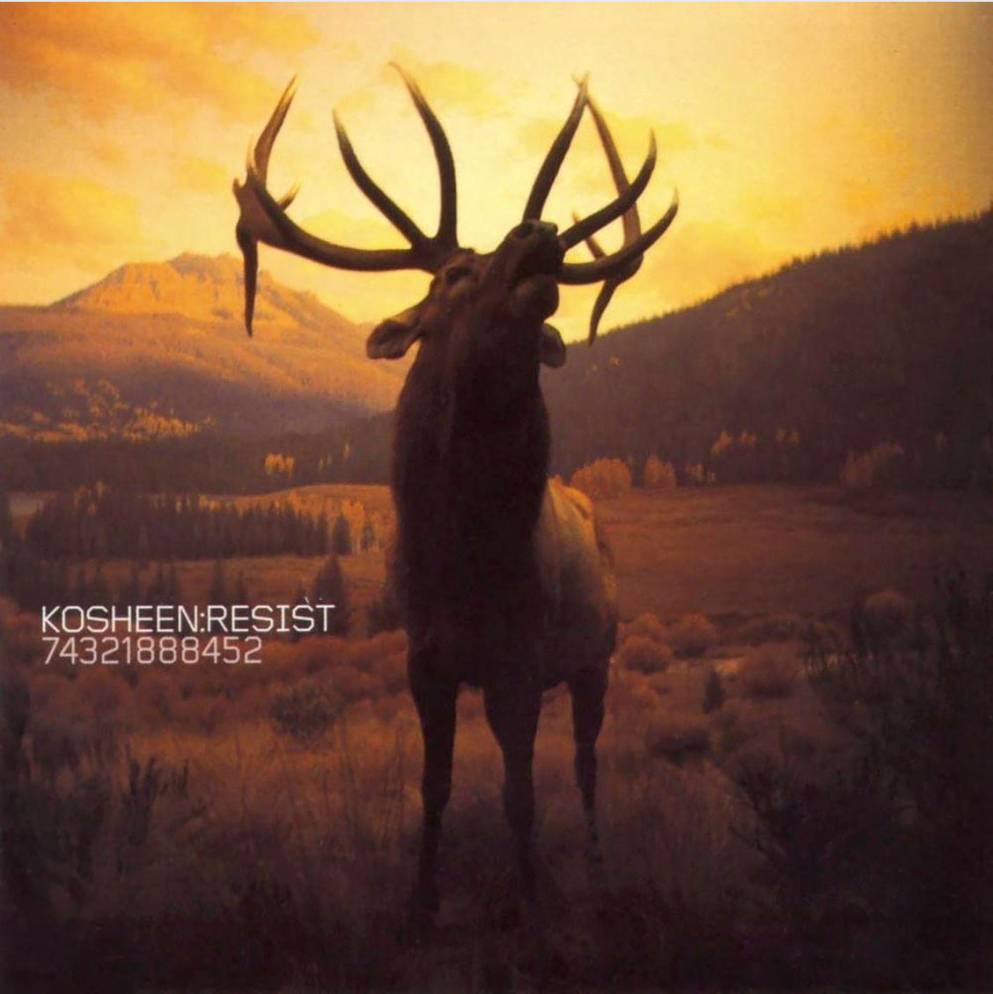
The album cover design and sleeves for the singles circa ‘Resist’ still look stunning, how much involvement did you have with the artwork surrounding the band and what do you think of them now?

I’m extremely proud of the artwork for ‘Resist’. We wanted something iconic, something strong. We didn’t necessarily want our faces on the covers, we wanted to represent as a sound rather than as individual people. And I think that artwork for ‘Resist’ did that amazingly well and still stands the test of time. We were with BMG at the time and they helped us with designers who listened to us, so we were very lucky that we were represented that way. And yeah, to this day, I love that cover.

At the heart of ‘Catch’ is a drum pattern which sounds suspiciously like it’s fleeced from ‘Numbers’ by KRAFTWERK; as the German electronic masters are notoriously ‘legal’ when it comes to such things, what was the gestation of this track?

I’m not aware of that being the same, but then you can’t really play anything you haven’t heard, so we’re all as you say fleecing beats and pieces from all the music that we’ve been influenced by! And I know that Mark is a KRAFTWERK fan so the chances are there are some bits and bobs that will be reminiscing of that genre of music, I mean KRAFTWERK were a movement really rather than a genre, and they just blazed a trail that all electronic music is kind of influenced by.

For its time, ‘Resist’ was a very eclectic album, were you concerned that dance-heads who’d only been previously exposed to club oriented tracks such as ‘Hide U’ might not “get it”?

I never doubted ‘Resist’ in any way. Darren and Mark, Mark not so much. Darren was much more of a tech head than any of us. I mean, he was like “Wow, this is weird!” and a few DJ friends of ours were like “Who the f*ck is gonna play this?”

But personally I knew that it was right, and I knew my songs were taking on a different shape, but the songs were brilliant and it was standing out, they were in a good place. And I knew that they would attract attention and they certainly did.

The promo video to ‘Hungry’ is interesting, did you personally do any filming in the Natural History Museum or were you added in via CGI?

I don’t think there was much CGI going on. When we did that video we spent two nights in the Natural History Museum. It is me jumping through that glass, it is me being chased by wolves, although, there weren’t as many of them in the museum as there are on the video. Yeah, I loved it, I really enjoyed it, I wanted to be an actress when I was growing up. I wanted to be on the stage. I got to flex that part of my character, my personality and yeah, I loved it!

In 2001 you played to 20,000 people in Serbia, this must have been quite an experience? How did this come about and what were your recollections of this show in an area that had only recently seen such huge turmoil?

Playing ‘Exit’ in Serbia was such a massive highlight for me and for us, I mean we were unaware of selling any records in Serbia, but when we played ‘Exit’ there were 20 thousand people there and they knew the songs, so it was just incredible. There is something incredible about the young people there, they’d been through so much in their short lifetimes and seen so much suffering. Yet they were taking their lives by the horns and by their hands, it was a euphoric experience. They’ve invited us back to play next year which will be the 20th Anniversary of the festival.


The follow-up ‘Kokopelli’ was a far less electronic album, how much pressure was there at the time to deliver a ‘Resist – Part 2’ and what made you release such a different sounding set of songs?

After the success of ‘Resist’, KOSHEEN went from bedroom recording to touring around the world. I had more songs in the bank, which with the platform of ‘Resist’ seemed ready to record and release.

We’d created an environment, we‘d created a sound and a space where we could get away with anything. And so we did, I became more confident as a writer and we started to really become ourselves in ‘Kokopelli’.

ELECTRICITYCLUB.CO.UK has often felt a bit cheated when going to see an electronic band ‘live’ when it’s sometimes a person sheepishly prodding MIDI controllers behind a laptop. With KOSHEEN and your current set-up (which features several live musicians), what’s your viewpoint on the best ways of performing electronic music to an audience?

You do the best you can, with whatever is at your fingertips. We’ve got great material, it’s melodic, it lends itself to live musicians. I have amazing musicians. We’ve got great producers to update the tracks, to make them fit and make them more exciting for audiences today.

I’m a performer, I was born a performer, I think. I’m in my element when I’m on stage in front of people, not because it’s a “Look at me!” scenario, but because I love that sense of excitement and community. It really feels like the songs come to life when there is an audience and the band with me.

And if I’m gonna go to a gig I want to see a performance, I want to feel the energy, the passion of the musicians and the writers and try to get a window into where they found their inspiration and relate to my own interpretation. And then I feel as if I’ve got my money’s worth.

The two collaborations with DJ Fresh, ‘Louder’ and your co-write with him for Rita Ora ’Hot Right Now’ brilliantly helped propel you back into the public eye with both tracks becoming UK No1 singles. This must have been an incredibly exciting and invigorating musical period for you, how did it feel to have a massive second bite of the musical cherry?

I’ve always loved to collaborate. To me collaboration is a living art and it excites me to take something that I have and put it with somebody else’s property and to mix that together and create something brand new that neither of us could’ve done single-handedly, is an exceptional feeling. So writing these songs with Dan Stein (DJ FRESH) was in itself a fabulous experience.

The success of it was amazing! It was during a hiatus that KOSHEEN were having due to personal issues between us in the band. The guys weren’t very supportive of me collaborating with other artists, but it was brilliant for me and for my confidence. And yes, it put me into position where other people were asking me to collaborate and it was the continuum of my creative process.

After returning to a more electronic aesthetic with ‘Independence’ and ‘Solitude’, KOSHEEN eventually parted ways in 2016… looking back, what was the musical highlight of being part of KOSHEEN?

The highlight of being a part of KOSHEEN has been watching KOSHEEN go from someone’s bedroom to enormous stages and reaching so many people and having such a great time with it. There have been some very, very difficult times. The relationship between Darren and Mark and myself broke down irreparably due to pressures and family situations and the lack of management.

I mean, I would have never created such an incredible sound and such an amazing life, if it weren’t for the three of us being together, and that collaboration will always be incredibly precious to me. But there is more for me to do and there is more, for me to achieve. I feel as if it is a responsibility to continue, to take these great tracks out on the road again, to perform them and share the love.

You are touring at the moment with original KOSHEEN drummer Mitchell Glover, what can audiences expect from these shows?

Mitchell Glover and I have been friends since long before KOSHEEN. I met him in a squat party in Bristol when at first moved back and I was planning to make a band. I saw him drumming in this basement party. I just was transfixed by his machine-like timing and incredible passion for his instrument. He’s been my drummer ever since. It was very difficult for him, I know, with breakdown of the band but he’s very happy to be back playing. His signatures are all over KOSHEEN and he is KOSHEEN as far as I’m concerned. And it’s wonderful to be on stage with him again.


You also do youth work and some coaching, what do you personally get out of this and what are your reasons for doing this alongside your musical work?

I was lucky to grow up surrounded by music, music was always around me. It has been my saving grace. Not just because it has afforded me a good lifestyle, but also it has helped me with my mental health.

My singing has always helped me express my feelings, my pain, my confusion, my happiness, my love. Everything has always been explained through my singing. And I believe that if you make that accessible to young people that maybe haven’t had an outlet for emotions and expression, that it can be helpful.

I don’t go into a youth group expecting to make them famous or deliver them an ‘X-Factor’ kind of scenario, it’s more about showing that music is for everyone. You don’t have to be able to read and write, you don’t have to be able to sing, to be able to use your voice, you don’t have to be able to read music, to be a musician. I want to dispel these myths and make music more accessible to people who it would benefit most.


Are there plans for a Sian Evans solo album in the works or do you think you’ll continue down the collaboration route?

I’ve collaborated over the last four years, with many, many amazing producers, male and female. And I’m correlating those tracks and bringing them together into a solo album, I’m hoping very soon.

But for the time being I want to focus on the live show, I want to get up and running for the 20th Anniversary of ‘Resist’ which is in 2021. I’m working on a classic adaptation of the whole ‘Resist’ album, which I’d like to start touring at the end of next year.

Things don’t happen as quickly as they did in the beginning, but things are happening. And I’m very proud to still be here, still be selling-out shows around the country and around Europe. So keep an eye out for us and we’ll keep you posted on any developments with the releases!


ELECTRICITYCLUB.CO.UK gives its warmest thanks to Sian Evans

Special thanks to Maria Kon and James Knights

The albums ‘Resist’ and ‘Kokopelli’ are still available on CD via Sony Music

2020 live dates include:

Brighton Chalk (22nd February), Lucerna Music Bar (23rd February), Prague Lucerna Music Bar (25th February), Brno Zoner Bobyhall (26th February), Ostrava Bonver Aréna (27th February), Pardubice Ideon Pardubice (28th February), Southampton The 1865 (6th March), Budapest Barba Negra Track (2nd May), Nottingham Rescue Rooms (10th May), Zwolle Hedon Zwolle (14th May), Leeuwarden Neushoorn (15th May), Tilburg Poppodium 013 (16th May), Amsterdam Q-Factory (17th May), Cardiff The Globe (21st May), Birmingham The Mill (22nd May), Manchester Gorilla (24th May), London Garage (30th May)

http://sian-evans.com/

https://www.facebook.com/SianKosheen

https://twitter.com/Sian_Kosheen

https://www.instagram.com/siankosheen/


Text and Interview by Paul Boddy
8th December 2019, updated 26th January 2020

« Older posts Newer posts »