Category: Interviews (Page 49 of 117)

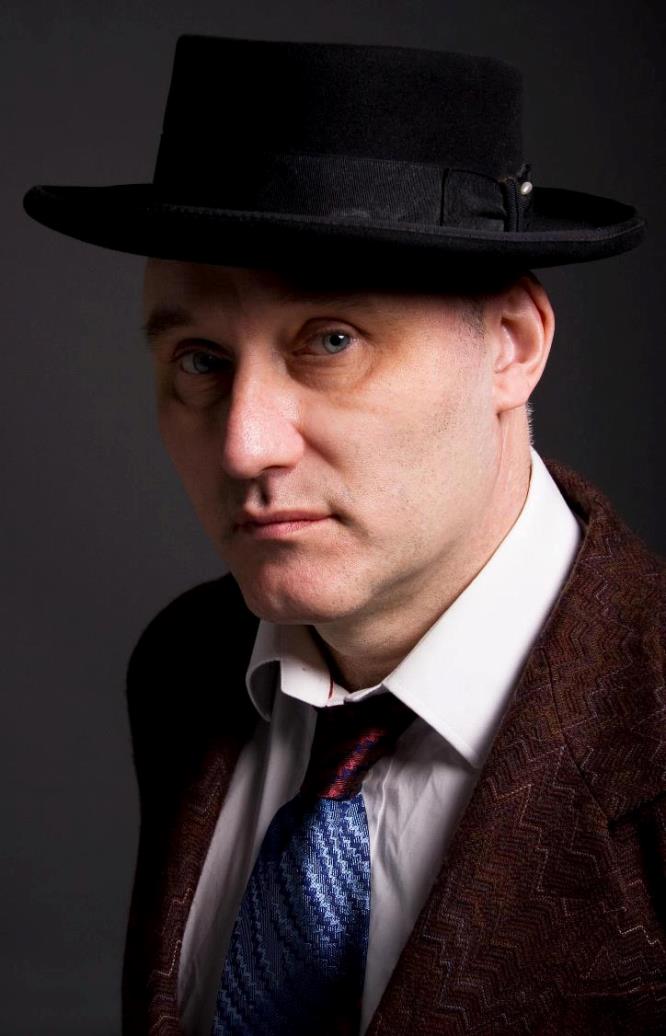
JAH WOBBLE Interview

Jah Wobble was just 18 years old when he co-founded PUBLIC IMAGE LIMITED with John Lydon, Keith Levene and Jim Walker. Real name John Wardle, he was given his nickname and first bass guitar by a drunken Sid Vicious. After two albums ‘First Issue’ and ‘Metal Box’, he left the band in 1980.

Despite this, his creative mind and distinctive hypnotic bass style was now freed to work with a diverse range of artists and producers over the next four decades.

These included François Kevorkian, The Edge, Brian Eno, Winston Tong, Alan Rankine, Brett Wickens, Bill Sharpe, Baaba Maal, Chaka Demus, Dolores O’Riordan, Sinead O’Connor, Andrew Weatherall and Bill Laswell, as well as groups like ONE DOVE and THE ORB.

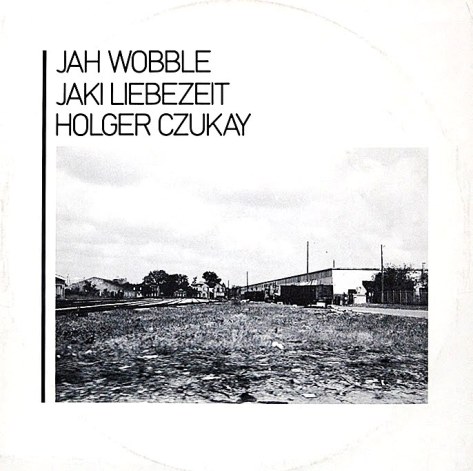
Forming THE HUMAN CONDITION who released two live cassettes before disbanding, he headed to Cologne to collaborate with CAN members Holger Czukay and Jaki Liebezeit, the material eventually coming out as the ‘Full Circle’ album in late 1982 which included the minor European hit ‘How Much Are They?’. ‘The ‘Snake Charmer’ EP also featuring the trio followed in 1983.

Using his German experience, he showcased his eclectic tastes on the single ‘Invaders Of The Heart’, with Wardle reworking his bassline for PUBLIC IMAGE LIMITED’s ‘Death Disco’ into a mutant post-punk dub excursion also featuring electronics and ethnic tape samples.

His album ‘Rising Above Bedlam’ was nominated for the 1992 Mercury Music Prize and although he didn’t win, he had played on one track from the eventual winner ‘Screamadelica’ by PRIMAL SCREAM. Outside of music, he obtained a BA in Music and Philosophy, while also acting as a book reviewer for the Independent on Sunday and The Times.

A strong advocate of World Music, he has a brand new album entitled ‘Ocean Blue Waves’ out this Spring with THE INVADERS OF THE HEART. Big John chatted about his ethos and his career as one of the UK’s most influential and distinctive bass players.

Your new album ‘Ocean Blue Waves’ has a very cosmic vibe about it, what inspired its concept?

There wasn’t really a concept… sometimes with some records, there’s a bit of a backstory but in this case, it was “let’s go in the studio” and play naturally. The only number that had been pre-written was ‘Take My Hand’ which is a bit of a rock anthem.
Do you compose by manner of band jamming?

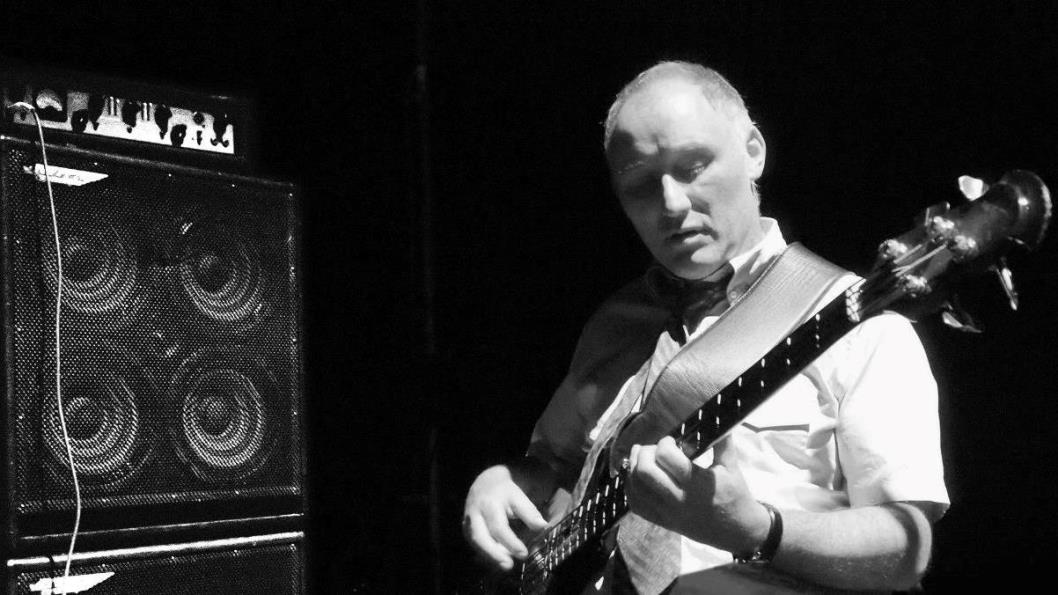
It’s our natural style, I would give them say a descending change and suggest a few things, but it would be the band doing their thing. My drummer Marc Layton-Bennet came a decade ago via my old percussionist Neville Murray who’s retired now, he was the guy who would always suggest musicians for me.

I met George King, my keyboard player through an engineer I worked with and my guitarist Martin Chung was a good mate of Marc’s, although I actually saw him on a video for a singer who he was playing with about six years ago. I tend to stick with the same musicians, like Neville was on the firm with me for like 30 years!

On ‘Ocean Blue Waves’, there’s a mix of instrumentals and songs like ‘Take My Hand’, ‘A fly Away’ and ‘Minds Float Free’, how do you decide when a track needs vocals?

You think “what does this track need?” and sometimes it sounds like a backing track and you can hear a saxophone on it or a topline of a vocal. I remember I had these dubby psychedelic tracks that weren’t really songs or an instrumentals, I was like “what is it?” but I then got thinking about William Blake, so it became this spoken word album.

Do lyrics come naturally to you?

Yeah, I’ve written a lot over the years, maybe a quarter of the live set has me singing and now I have to be careful and look after my voice properly which at 61 is a new one on me! I rented a room at an art studio in Manchester just to write some poetry ‘Odds & Sods Of Epilogues’ and an autobiography ‘Memoirs Of A Geezer’.
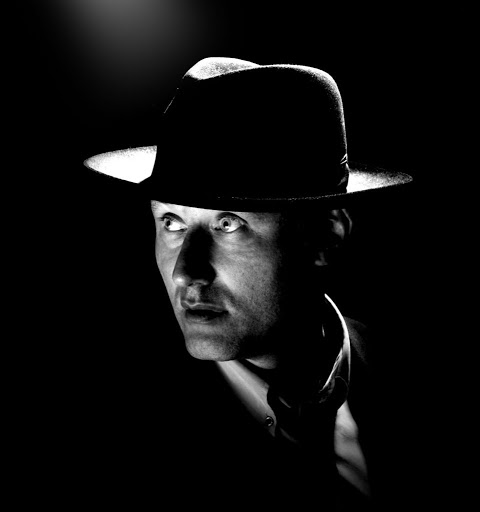
One highlight is the title ‘Ocean Blue Waves’ track which has a most amazing synth solo…

I came up with this b-line in Tokyo and it was driving me mad, we played it at a gig there and it was quite modal, not really much like the track as you hear it now.

I really wanted to use that b-line for something and the boys come up with something very different. It’s better live now and it’s very dreamy, we generally start the set with it.

But it’s so nice, you don’t really want to go into the first change or end the number, because it’s so nice and hypnotic!

We’re always pushed for time at the end of the night as we do quite a long set, so you have to do the change, you want that synth solo to go on and on and on! It’s got a lovely sound, it’s a bit softer and less minor key.

It all seems a far cry from PUBLIC IMAGE LIMITED, how do you look back on that time?

I loved it because I was just starting out, that youthful enthusiasm of an amateur, I’d like to think it’s something I’ve still got. I always like to quote a Suzuki line: “In the beginner’s mind, there’s many possibilities, in the experts there’s few…”, so I try to keep a naïve approach and play without thinking.

There’s certain basslines like PiL’s ‘Poptones’ that are so perfect and circular somehow… actually I went back to playing Fender Precision bass after using Magnum for years after we played in America and did an album with Bill Laswell. Fender Precision makes me play a little bit more chromatically, these chromatic runs somehow sound cleaner. It works well with the old stuff even though it’s evolving and the new stuff as well.

What influenced your playing style?

Dub reggae as a big thing, I loved soul, funk and disco. I liked the idea of patterns so very early on. I got my own modal sound going, because I would make patterns based around the dots of the fret. I couldn’t count, I took a little while to learn the notes so I went by the dots on the fretboard…. I made shapes and patterns so that naturally led to a certain kind of block unit. A lot of the stuff I do is A minor, B minor, they’re quite modal and fixed. When I play with a Fender, you get a flowing quality, it’s quite musical in its own way I think.
Did you eventually venture down the path of learning more formal musical theory?

No, not at all and it was probably just as well. I didn’t get conditioned and you become educated because I worked with some really great musicians over the years like Jaki Liebezeit and Holger Czukay, and I hung on their every word.

I thought very hard about music and how the bass should work and sound like in conjunction with the drums or keyboards. I think I ended up thinking in quite an abstract way. I didn’t have any knowledge of Bach or tonality so you had your own kind of approach.

The sonic thing was a big part of it because my generation were in the studio playing electric instruments, so the actual sound was as important as the phrasing or the playing.

After PUBLIC IMAGE LIMITED, you were suddenly off to Germany to record the ‘How Much Are They?’ EP with Holger Czukay and Jaki Liebezeit, how did that come about?

This was through a mate of mine, Angus MacKinnon who interviewed me in regard to ‘Metal Box’. We became friends and he knew I wasn’t happy in PiL, so he suggested I play with CAN. Holger happened to be in London with his manager Hildegard and we got introduced. I got on with him and we went to a studio to have a little try out. I wrote the basic parts for ‘How Much Are They?’, the b-line, the drum beat, the simple string parts and the triad chords over the bass so I was developing this style that was quite catchy.

What happened next?

Holger took it back to Cologne to edit it quite radically and it was mixed by Mark Lusardi, a very good engineer. It became the first track of an EP we did called ‘How Much Are They?’; it went so well that they flew me over to Germany and we recorded stuff like ‘Trench Warfare’ and other stuff. That’s when I met Jaki for the first time, he’s probably the most special person I’ve ever met… as a musician he’s a master player.

Had you been a CAN fan?

Yeah, a bit! I liked the groove stuff, I wasn’t mad on everything but it was stuff the stuff where Jaki got his thing going on those earlier albums that I liked.

How did you find playing along to drum machines?

I like drum machines, they’re in time and it meant you could play over and over and over. I’d been in squats and when PiL started, it was terrible the way the money was sorted out, but I was able to get a Wasp synthesizer, a little analogue Roland rhythm box, a Godwin String Concert keyboard, a WEM Copicat and then later a TASCAM multi-track cassette portastudio. So I was very idiosyncratic and quite obsessive. so I would sit there for hours with a drum machine going. It was fantastic because that really helps your timing, you become machine-like yourself really.

Holger Czukay was quite unique in that he was a bass player who was not really interested in playing bass anymore, but was becoming more of a sound painter, is that how you saw it?

Yes, I did. He was a producer… there had been clashes in CAN over the direction of the band but Holger was the guy who would be the architect and would get busy with the razor blade, editing after they’d recorded. So that’s how it was, he really liked my playing and thought it was fantastic, saying “I couldn’t do what you do!” and I was like “REALLY?”

Jaki really liked it too and I was really surprised but delighted. Holger said “It’s like Miles Davis, you play one note and everyone knows it’s you”. It strange, I still don’t know why or how or what, but I do have my own sound, I know I have my own sound. Jaki had his own unique sound too…
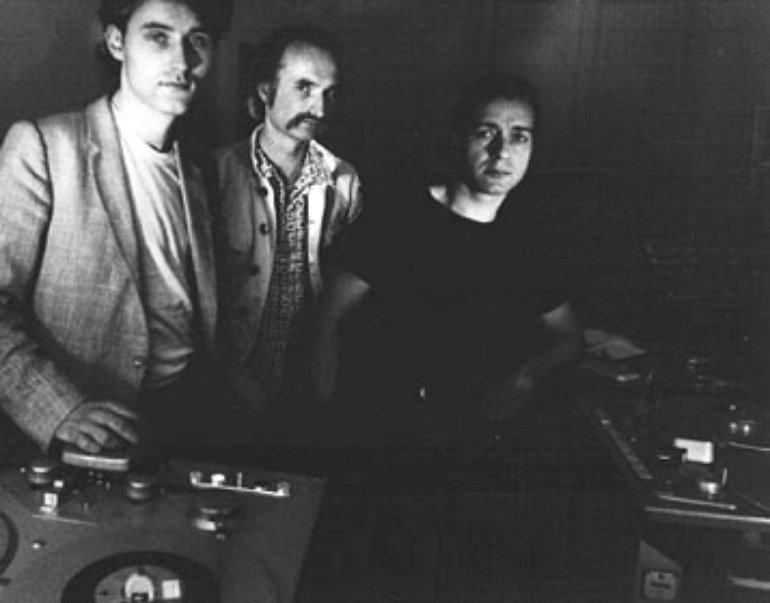
Jaki was quite fascinating in that he could play fast, but it would be quite ambient…

He was so simpatico over the space he was playing in, and he could play fast but there was a totality to the sound. Some of that was down to the fact that they only used a pair of overhead mics, it sounded so good in the studio. They didn’t have a dividing wall between the control room and the recording room at Inner Space Studio in Cologne.

It was one space, an old cinema so everything sounded great there. I learnt a lot and developed that over the years, not trying too hard with mics so that you get a total sound with a certain spacious quality within the music, even when it’s uptempo.

The ‘How Much Are They?’ EP was dedicated to Ian Curtis?

That’s right, his death was a shocker, he was a special person and it seemed like a nice thing to do, it was such a shame for him to die so young…
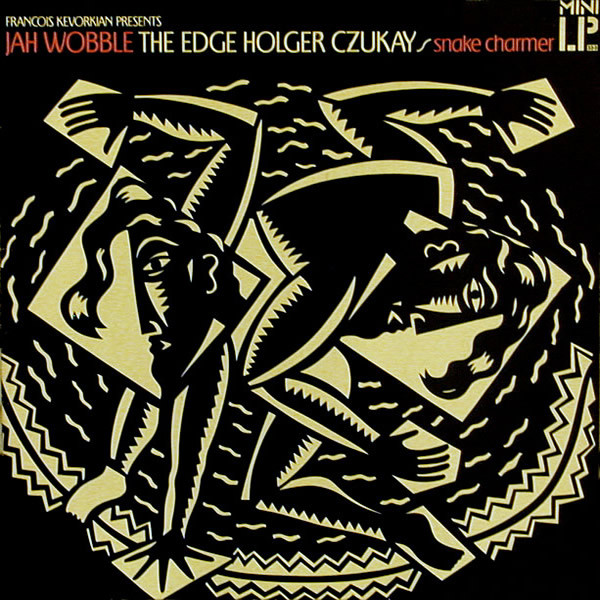
On the ‘Snake Charmer’ EP, you worked with the-then emerging François Kervorkian who brought a Linn Drum Computer to the studio, that must have been a revelation?

Yeah, but I wasn’t mad on the Linn Drum sound with its big toms and rock kick thing. I always preferred those Roland drum machines, but the Linn was still really good, it was a revelation.

François was good to work with because he was from a dance background so he was really into making records dancey and tuned into the dancefloor.

François brought it in and there’s the famous story where Jaki became very cross with the Linn Drum and accused it of being slightly out of time! We thought that was impossible as it was a machine, but Jaki insisted it was out of time. So when we timed it back, it was! It was so incredible, like 4 BPM out, losing 3 BPM over the course of a minute but he was correct! He got really angry and played this cross-rhythm, then suddenly, there was this puff of smoke come out the back and the Linn fused! We couldn’t get it working again! So Jaki had out-synched this Linn Drum, that was the power of his mind!

‘Snake Charmer’ also featured The Edge from U2, how was it to work with him?

It was very easy, he was a very nice guy… when he arrived in the studio, I was having this massive row with François, I saw him and quickly said “Hallo, I know who you are, I can’t wait to talk to you but I’ve got to finish this f*cking argument! Nice to meet you!” *laughs*

The Edge was a nice bloke, François knew him because he’d remixed a couple of U2 tracks. He made a lovely sound on ‘Hold On To Your Dreams’, just beautiful.
You took a break from music but came back?

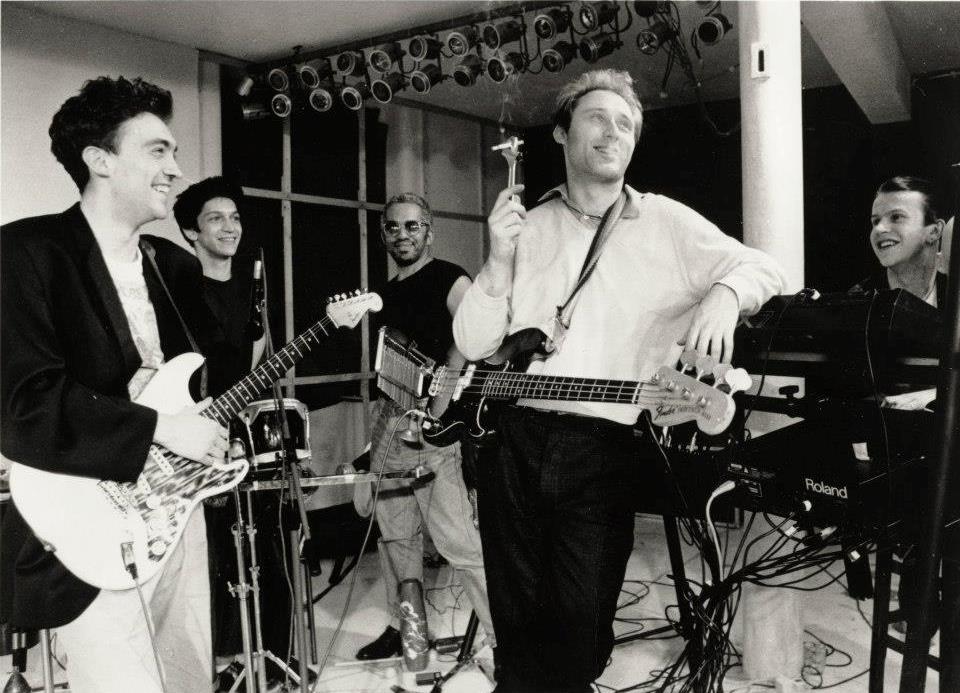
Sometimes I got lazy but I stopped drinking in 1986 and I was halfway through an album called ‘Psalms’, so the final half was done very newly sober. Then I started working as a courier and applied to work for the Post Office and London Underground. By 1987, I started working for the Underground, I chose them over the Post Office. I still miss for the Underground, I loved it.

I was listening to a lot of music, then Neville Murray knocked on my door and asked when we were going back on the road? So we put THE INVADERS OF THE HEART Mk2 together and we started again. We were working with a guy called David Harrow and I started being active in music again. If there was a break, it was only for about two months!

You worked with the late Andrew Weatherall on several occasions including on ‘There Goes The Cure’ from ‘Morning Dove White’ by ONE DOVE, what was it like to work with him?

I was living in South London and that rave scene was going when I walked to Embankment. I would see all these clubbers in Villiers Street, queuing to get into this after-hours club and thought “this is interesting”, this would have been around the beginnings of acid jazz. I started getting some work in that scene with those kind of DJs, Andy gave me a kick start coming back into the business.
You were working with Brian Eno for 1995’s ‘Spinner’, can you remember what the creative dynamic was like between you?

Brian Eno was a bit half and half… for one track, he said something like “Oh, I want you to treat it like a moreish maiden” and I was like “Stop being funny, stop playing games! DO YOU LIKE IT?” *laughs*

I do like Brian, you might get the impression I don’t, but I do! It was a good thing for me to do and he’s a kind man.

I’m touring with his brother Roger as part of THE ORB live band. He’s into all those minimalist Harold Budd and Debussy piano pieces and I think he’s been an influence on Brian. It all came about via Derek Jarman, he approached me and because he’d done ‘Jubilee’, he knew Brian.

I’d done these little piano pieces like Shostakovich, clusters of notes which we turned into tracks. There wasn’t a lot of money so we couldn’t use lots of players or have a big studio, we did it in my little home studio in Bethnal Green using our imagination. Some records don’t last as well as others but I think ‘Spinner’ has lasted really well, it’s really got something special about it and stood the test of time.

If you listen to ‘Spinner’ now, it’s like the precursor to some of the dance music productions over the next two years with the effects on the drums and stuff, because up until then, having effects on drums was seen as quite bad taste, it didn’t work.

You’d put phasing on guitar but you’d have to be careful about drums. But somehow, it kind of worked with that phasing.

I used to do a lot of walking along the Lea Valley in London, and you’d be walking past old soap factories up the River Lea and see semi-rural marshlands, so it would get very trippy.

So that would influence the music, doing things in 7/4 time with a real haunting vibe. It was like walking music because each time we’d finish a track, we’d use it to walk to. There was something about the whole do-it-yourself concept, the way it was recorded on computer and how we used our expertise to record loops of Jaki and stuff.

What would you say have been your career highlights?

There’s magical moments in my life and not just with music. One of my highlights was walking across the grounds of Birkbeck College, London University on the first day of term when I went there, that was wow! And there was driving the tube train, westbound from Stratford to Mile End for the first time on this really fast section of line… I was just thinking “I AM DRIVING A F*CKING TUBE TRAIN, HOW D’YA LIKE THAT!” *laughs*

It’s that sense that you have sometimes of observing yourself, it’s quite detached… like a big mind thing looking at you, you get that in life and you get it on stage often. It’s like when people talk about an out-of-body experience, but you’re in control, you’re the observed and the observer at the same time.

I’ve had so many moments like that, like the first gig in sobriety with Neville in Switzerland, I woke up in a pension hotel overlooking the square with the smell of croissants and coffee wafting up in the morning in spring… I was like “I’m sober and I’m back on the road”, it was magical!


ELECTRICITYCLUB.CO.UK gives its warmest thanks to Jah Wobble

Special thanks to Sulley Archer at Hush PR
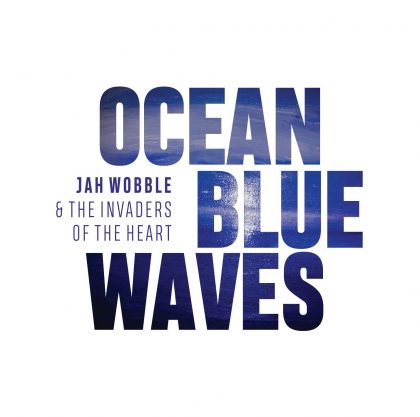
‘Ocean Blue Waves’ is released on 27th March 2020, available as a CD or download now direct from https://jahwobble.bandcamp.com/

https://jahwobble.com/

https://twitter.com/realjahwobble

https://www.facebook.com/Jah.Wobble.Music/

https://www.instagram.com/real_jah_wobble/

https://open.spotify.com/artist/5jhqwsWfRaETrWPWI0Rc7u


Text and Interview by Chi Ming Lai
3rd March 2020

KRAFTWERK Future Music From Germany


Uwe Schütte is a noted KRAFTWERK scholar who curated the first ever conference on the iconic German pioneers in 2015.

A Reader in German at Aston University in Birmingham where he teaches and researches contemporary Austrian and German literature, the writer W.G. Sebald and German popular music, in 2017 he compiled ‘German Pop Music: A Companion’, a 270 page book discussing the post-war musical landscape of the country and its influence internationally.

Published as part of the Penguin on Design series, his new book ‘KRAFTWERK Future Music from Germany’ offers a German perspective of die Kling Klang Quartett in English.
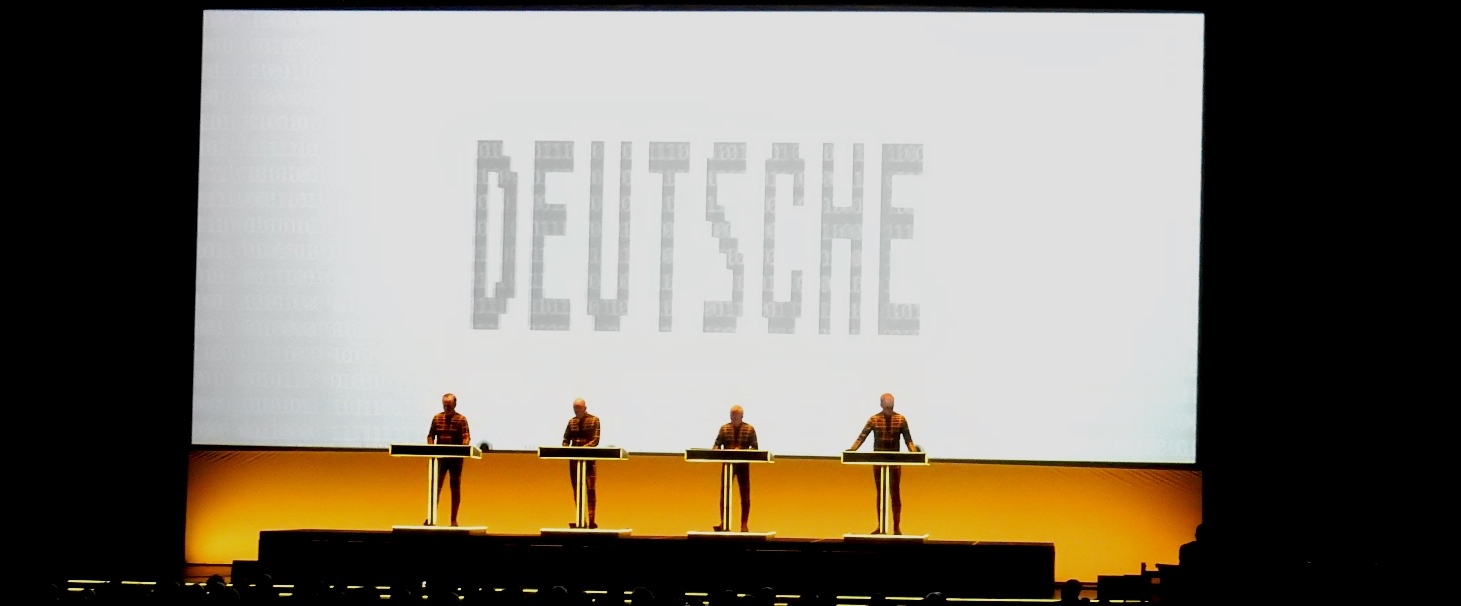
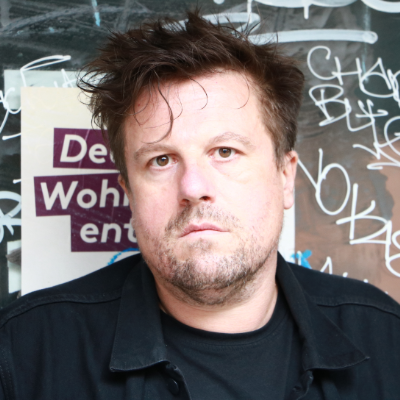
This is the story of Die Mensch-Maschinen as a cultural phenomenon told crucially from a local point of view. Of particular significance in Schütte’s premise is the context of how after the Second World War, Germany was divided in two with the atrocities it committed very much in the minds of its population. Frankfurt and Nuremberg were occupied by the US Army while in Der Rheinland, Düsseldorf itself had the presence of the British Army; it was within this context that KRAFTWERK emerged.

Schütte discusses how since the Second World War, young Germans are educated about the Nazi atrocities and The Holocaust with the emphasis on peace and prevention of further conflict. Compare that to the British attitude to recent history where heroism and bravado are celebrated with war monuments, where Oswald Mosley, the leader of the British Union of Fascists is considered a flawed man of the people (see the ‘Not The Nine O’Clock News’ song sketch from 1980), Edward VIII is seen as the king who gave up his throne for love rather than as the spying Nazi sympathiser he actually was and British Empire inventions such as the concentration camp are conveniently glossed over.

With a desire for a new Germanic cultural identity ignoring Trans-Atlantic rock traditions, KRAFTWERK fused sound and technology, graphic design and performance, modernist Bauhaus aesthetics and Rhineland industrialisation to conceive a Gesamtkunstwerk or “synthesis of the arts” that was to change the course of modern music.

Düsseldorf is just half an hour to Belgium and The Netherlands, and an hour to Paris so an accessible spirit of cultural adventure was to manifest itself in the creative minds of Ralf Hütter and Florian Schneider, thanks to their location and education. ‘Autobahn’ and ‘Trans Europe Express’ were deep inside their psyche, while ‘Europe Endless’ was forward thinking despite its nostalgic romanticism and dreamt of a continent without borders that supported a vision of peace and unity.

KRAFTWERK’s role as cross-cultural ambassadors was not just restricted to Europe, as urban America in particular embraced their vision and adapted it to their own forms as they became the bridge between electronic pop and dance music, having already straddled a line between improvisation and pop.

But while KRAFTWERK had been assertive in confronting and reclaiming aspects of Germany’s past, they could be vague when looking at their country’s more immediate future. One interesting aspect is Schütte’s account of how KRAFTWERK upset the powerful anti-nuclear lobby in Germany with their ambiguous lyricism on the song ‘Radio-Activity’ when originally released in 1975. The band did not help their situation by having promotional images photographed in atomic power installations.

But in 1991, KRAFTWERK reworked the track for ‘The Mix’ to contain an explicit anti-nuclear message to “STOP RADIOACTIVITY” while also highlighting the tragedies and disasters in Chernobyl, Harrisburg, Sellafield and Hiroshima; it was then updated in 2012 to mention Fukushima as part of the ‘No Nukes’ event in Japan put together by Ryuichi Sakamoto.

The artistic tensions that have led to Ralf Hütter remaining as the sole member from the classic RFWK line-up and KRAFTWERK effectively stalling as a creative force musically are given a positive slant by Schütte, despite only one album of new material appearing since 1986’s ‘Electric Café’ / ‘Techno Pop’ adventure.

A music paper once wrote about KRAFTWERK’s music “it’s good but is it rock and roll?” – well, of course it isn’t, THAT’S THE POINT! While KRAFTWERK have been less than productive on the new material front, they have continued their pursuit of modernism in the spirit of the Bauhaus movement, unifying art and technology, pushing forward innovations in 3D visuals and surround sound.

KRAFTWERK have certainly not done anything like going backwards to allow the turgid interference of drums and guitars to dominate their live sound in the way DEPECHE MODE have in their desperate attempts at validation from the predictable narrow-minded standpoint of the rock community. When Ralf Hütter was once asked by a British journalist whether KRAFTWERK songs could be played on an acoustic guitar, he gave the question the disdain it deserved and wryly replied “I play keyboards!”?

KRAFTWERK are the ultimate anti-rock icons. To that end, if they were to be inducted into The Rock & Roll Hall Of Fame, it would destroy everything their cultural legacy as pioneers of electronic music has established and make them just another boring rock band.

Uwe Schütte talked about what makes ‘KRAFTWERK Future Music from Germany’ unique, as well as how he believes the band’s legacy and future will play out.

There are already books on the history of KRAFTWERK, by Pascal Bussy, Tim Barr and David Buckley, among others, why does the world need another?

Yes, the three KRAFTWERK B-boys, as I call them in my book… Well, the books might share the same topic, but are all very different. Barr’s book is outdated, Bussy’s too. Buckley’s book does not use the many available sources in German, for example. And he focuses less on the performance history aspect. It is a very good book, but written by a British person for a British reading audience. My book translates the German cultural phenomena that is KRAFTWERK for an Anglophone readership.

Your book has a focus on design and image?

That is another distinguishing feature of ‘Future Music from Germany’. I treat KRAFTWERK as a Gesamtkunstwerk, a total work of art that exceeds music and performance and also incorporates the visual dimension: from the cover designs to today’s complete audio-visual package at the 3D concerts.

As borne out by the back photo on the original German Philips release of ‘Autobahn’, KRAFTWERK had long hair but had it cut short for the concert tour. How and why did this come about?

Ralf Hütter wanted to give KRAFTWERK a more sober, cleaner image, to distance the band from received notions of how a rock band should look and sound.

ELECTRICITYCLUB.CO.UK rather likes the vintage suit look of ‘Trans Europe Express’. Which image was your favourite?

I love it, too, and discuss how I first saw the poster of the band members sitting at an outdoor café in their conservative attire in the book. I found it truly odd.

How important was Emil Schult’s graphical and musical contributions to the band?

Very, very important. And much underrated. I try to put the record straight.

You make an interesting observation as to how the original German lyrics to the ‘Computerwelt’ title track are more complex and sinister in their now timely observation of how data is being used and manipulated, compared with the simplified almost nursery rhyme take in English?

Yes, it is important to me to alert English-language readers to the differences between the two languages. I listened to KRAFTWERK singing in German for almost 40 years. They were essentially the only band using my native language – as a German, I equated pop music with English lyrics.

The reissues that made up ‘Der Katalog’ boxed set were quite revisionist on many levels. Was this necessary or an enhancement of the legend in your eyes?

Very necessary, albeit not perfectly done. I discuss KRAFTWERK as an ongoing, evolving art project, and the design changes were an important update of the Gesamtkunstwerk.

There were all the stories of Wolfgang Flür being written out of ‘Der Katalog’, but of course the irony is that Wolfgang’s face was cropped onto the face of Emil Schult for the back photo on the original German Philips release of ‘Autobahn’…

Yes, nothing new there. Karl Bartos was essentially eliminated from the oeuvre, too. But, although this is a dubious move on a moral level, it is a great improvement on an artistic level: the KRAFTWERK concept is all about eliminating personal, individual factors and foregrounding man-machine qualities.

If you read between the lines though, it would appear that Wolfgang Flür hasn’t actually contributed to a KRAFTWERK recording since 1978?

True, but he was important, as was Emil Schult, in various aspects that contributed to the success of the band project. My book, however, is little concerned with gossip or the human frailties or personalities issues at stake. The other books take care if that. As an academic, my interest lies in the conceptual ideas that dominate KRAFTWERK: the notion of the man-machine, the idea of the robot as its avatar, the Gesamtkunstwerk concept and such like.

What was your take on how Karl Bartos and Wolfgang Flür approached their autobiographies?

Well, I took next to no info from Flür’s book and quoted Bartos’ a few times concerning technical and musical info, on which he is very good indeed. I definitely preferred Bartos’ book.

As far as maintaining their own parts of the KRAFTWERK legacy, Karl Bartos at least performs his KRAFTWERK co-writes alongside his new compositions live, but Wolfgang Flür peddles that rather tedious ‘Musik Soldat’ DJ set accompanied by a Powerpoint presentation. Do you agree?

To be honest, I haven’t seen either show so far. I prefer to go to KRAFTWERK concerts, to be honest. I liked the ‘Off The Record’ album, though.

Karl Bartos was KRAFTWERK’s Alan Wilder, discuss…

True. Next question.

Do you think KRAFTWERK’s refusal to collaborate with other musicians (eg Michael Jackson) has been a hindrance or help to the band?

Provided the rumour re Michael Jackson is true at all… Bowie certainly looked for cooperation, and I am pretty curious about how the music they would have made would have sounded… but ultimately it was of course the right decision to turn down all offers and stay strictly true to the concept.

How much longer do you think KRAFTWERK can continue with their 3D / graphics based show? The template for this has been in place for over 15 years now…

Hopefully still for many, many years. As soon as Hütter won’t be able to perform for health reasons, the game will be over anyway. What I am truly curious about is which, if any, precautions he has taken to ensure the KRAFTWERK project continues beyond that point. Maybe a permanent exhibition of the “musical paintings” at a museum?

What still drives Ralf? Surely he could rest on his laurels and appreciate the band’s legacy?

Florian Schneider’s departure in 2008 was the best thing that could have happened to KRAFTWERK. It gave Ralf Hütter the opportunity to start touring extensively and to take their amazing show to as many people as possible. The man-machine concept only comes alive if KRAFTWERK perform their shows on stage. Admittedly, I begin to tire of it a little, having now seen it some 15 times or more, but everyone who sees it for the first time is blown away, and rightly so!

We now live in a technological era of the virtual pop star eg HATSUNE MIKU + GORILLAZ… can you see a time when Ralf and co “retire” and send robots out on tour instead of them?

No, not really. Though I would go and see it, for “professional reasons”, as it were, it would not really interest me.

KRAFTWERK were left behind musically and technologically a long time ago. Is there anything you can see the band doing to help reclaim their crown in this era or has that time come and gone now?

This question excludes the crucial and decisive visual aspect. KRAFTWERK are still at the forefront of music: There is hardly a better electronic music concert experience around than their 3D audio-visual package with the full wave-field synthesis sound system. I went to see MODEL 500 recently in Berlin. They are proof that Detroit techno is well past its prime. And a cheap KRAFTWERK performance imitation.

If KRAFTWERK did release an album, what concepts could they possibly use in it? There was a rumour a few years ago about a bio-fuels theme…

Ah, interesting, I hadn’t heard that rumour. I speculate about themes such as AI, genetic manipulation and other post-humanist ideas that would fit with the robot and man-machine concept. But all of this is idle speculation. What I hope for, though, is another EP in the vein of ‘Expo 2000’… Or some officially approved remixes, like the ones by HOT CHIP.

You have this theory in the book that there will never be a new KRAFTWERK album because of the magic number 8?

And it is very convincing, don’t you agree? And what is even more convincing is the fact that Hütter, even if aided by Fritz Hilpert, would not be able to pull off the feat of making an album full of exciting new tracks that would exceed, or even match the existing ones.

Why do you think Ralf appears to distance himself from the first three KRAFTWERK albums so much, to the point where he sees ‘Autobahn’ as a “year zero” for the band?

Yes, of course, it is part of the myth, though Florian Schneider was no different.

What are your opinions on RAMMSTEIN’s version of ‘The Model’?

Don’t get me started. I hate it, and I hate RAMMSTEIN, not because of their sh*tty music, which I am not bothered about, but because their records and videos promote nationalist political thinking in Germany. The band purposely encourages right-wing agendas.

I am not fussed about people abroad liking the music, or even thinking that the Teutonic clichés these millionaire musicians peddle have anything to do with Germany or German culture.

KRAFTWERK have once again been overlooked at not inducted into The Rock & Roll Hall Of Fame. Do you have an opinion on this?

Yes, I do: It is a disgrace.


ELECTRICITYCLUB.CO.UK gives its warmest thanks to Uwe Schütte

Special thanks to Matt Hutchinson at Penguin Music

‘KRAFTWERK Future Music from Germany’ by Uwe Schütte is published by Penguin Press, available from all good book retailers

http://www.kraftwerk.com/

http://www.aston.ac.uk/lss/staff-directory/schutteu/

https://www.penguin.co.uk/


Text and Interview by Chi Ming Lai
Additional Questions by Paul Boddy
27th February 2020

CHINA CRISIS Interview

While CHINA CRISIS scored four Top 20 hits during their Virgin Records imperial phase, the instrumentally strong Kirkby duo possessed a subtle atmospheric side.

On their B-sides, and usually the ones from singles that weren’t hits, there were some exquisite instrumentals like ‘Dockland’, ‘Watching Over Burning Fields’, ’96.8’ and ‘Little Italy’. These demonstrated Gary Daly and Eddie Lundon’s love of Brian Eno and his esoteric ambient work in particular, both solo and in collaboration with the likes of David Bowie and Harold Budd.

Meanwhile the more guitar-based ‘Performing Seals’ and ‘Forever I & I’ pointed towards Vini Reilly, best known as the man behind Factory Records act THE DURUTTI COLUMN. But as CHINA CRISIS developed and adopted more conventional colours, expanding to include Kevin Wilkinson (drums), Gazza Johnson (bass) and Brian McNeil (keyboards) in the line-up from ‘Flaunt The Imperfection’ onwards, their artier approach with regards instrumentals took a back seat.

The 2017 reissues of their first two albums ‘Difficult Shapes & Passive Rhythms, Some People Think It’s Fun To Entertain’ and ‘Working With Fire & Steel Steel – Possible Pop Songs Volume 2’ included previously unreleased instrumentals material like ‘Lowlands’, ‘Paula & Patricia’ and the self-explanatory ‘Jon & Van’, indicating that there was possibly even more stashed away in the vaults.
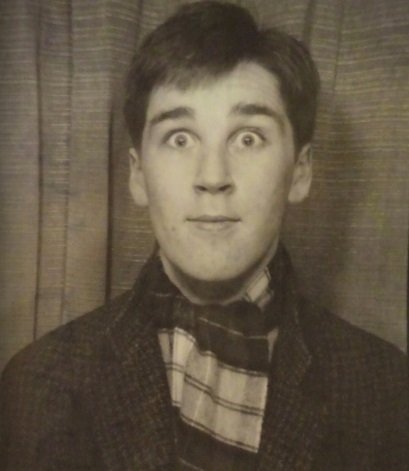
Most of these notable instrumentals were the work of Gary Daly, the CHINA CRISIS synth man and lead vocalist. And now, he has released a solo collection of 23 such tracks entitled ‘Luna Landings’ in a nod to Eno’s own ‘Apollo: Atmospheres & Soundtracks’. Comprising of archive recordings made between 1981 to 1987, it is a beautiful work that is a worthy addition to the tradition. These tracks had all been composed with CHINA CRISIS in mind, so are very much part of the band’s history, albeit only revealed decades later.

So in a new interview with Gary Daly, it made sense to discuss the creative dynamic within CHINA CRISIS, as well as their earlier synthfluences like JAPAN, YELLOW MAGIC ORCHESTRA, OMD and THE HUMAN LEAGUE…

You started off as being more of a bass player in CHINA CRISIS, so how did the drift into keyboards begin?

Believe it or not, Eddie’s mum, Katie, had a catalogue at the time circa 1980 / 81 which could be found in most working class homes. So basically you could order and pay on a weekly basis, all manner of goods, everything from clothing to children’s toys, gardening to electrical goods and wow! There it was… a Yamaha CS10 monophonic keyboard and Katie very kindly ordered it for us.

So yeah, Eddie and myself would have delighted soooo much in being able to experiment with a synth… it did help that the CS10 was monophonic, one key / note at a time… hahaaa! We had been listening to so much Eno / Bowie / early HUMAN LEAGUE that we knew and understood you could actually make and play bass notes / sounds on a synth. So it was never a matter of “being a bass player” and drifting into keys, Eddie and myself would have been fearless in exploring any and all instruments / machines. We’d read enough Eno song credits to realise experimentation was “the key”.


Can you remember the first electronic instrumental you liked or that made an impression?

TANGERINE DREAM and their 1975 album ‘Rubycon’, it was ‘Rubycon Part One’. A friend had this album back in the day, 1975 / 76. Everybody would loan each other’s albums, I very clearly remember Eddie lending me his copy of Bowie’s ‘Low’ album… nobody owned more than a few albums, never more then 15 / 20.

So sharing each other’s records was essential really. None of us had headphones and would improvise… most record players were sporting separate speakers so it was easy to set up a stereo headspace, on the floor, a speaker either side of your noggin. And boom! The stereo picture was complete!

Was there a particular moment when got you into more “ambient musics”?

Yes, that would be side two of Bowie’s ‘Low’ album, the mostly Instrumental side. That in turn led to me buying Eno’s ‘Before & After Science’ album, which led to me hearing Eno’s ‘Discreet Music’ album and that was a complete and utter revelation! I never knew music could be so “slow moving” and yet so completely engaging… the fact it had a diagram of how to set up a “tape loop” recording session was brilliant, it was exactly the kind of recording info I was wanting to see, read and learn from…
When you and Eddie decided to start making music together, did you start by creating instrumentals or were you songwriting from the off?

Always instrumentals, we only began writing words and singing over these little tunes because nobody else was going to do it for us… like we didn’t have a singer and we certainly didn’t consider ourselves as “singers”, but as much as we loved all our instrumental endeavours, it did feel the most natural thing in the world to start singing along… and when you are in your late teens, getting creative , there’s soooo much to sing about!

On ‘Difficult Shapes & Passive Rhythms’, you got quite into bass synth sequencing like on ‘Some People I Know To Lead Fantastic Lives’, what were you using to achieve this effect?

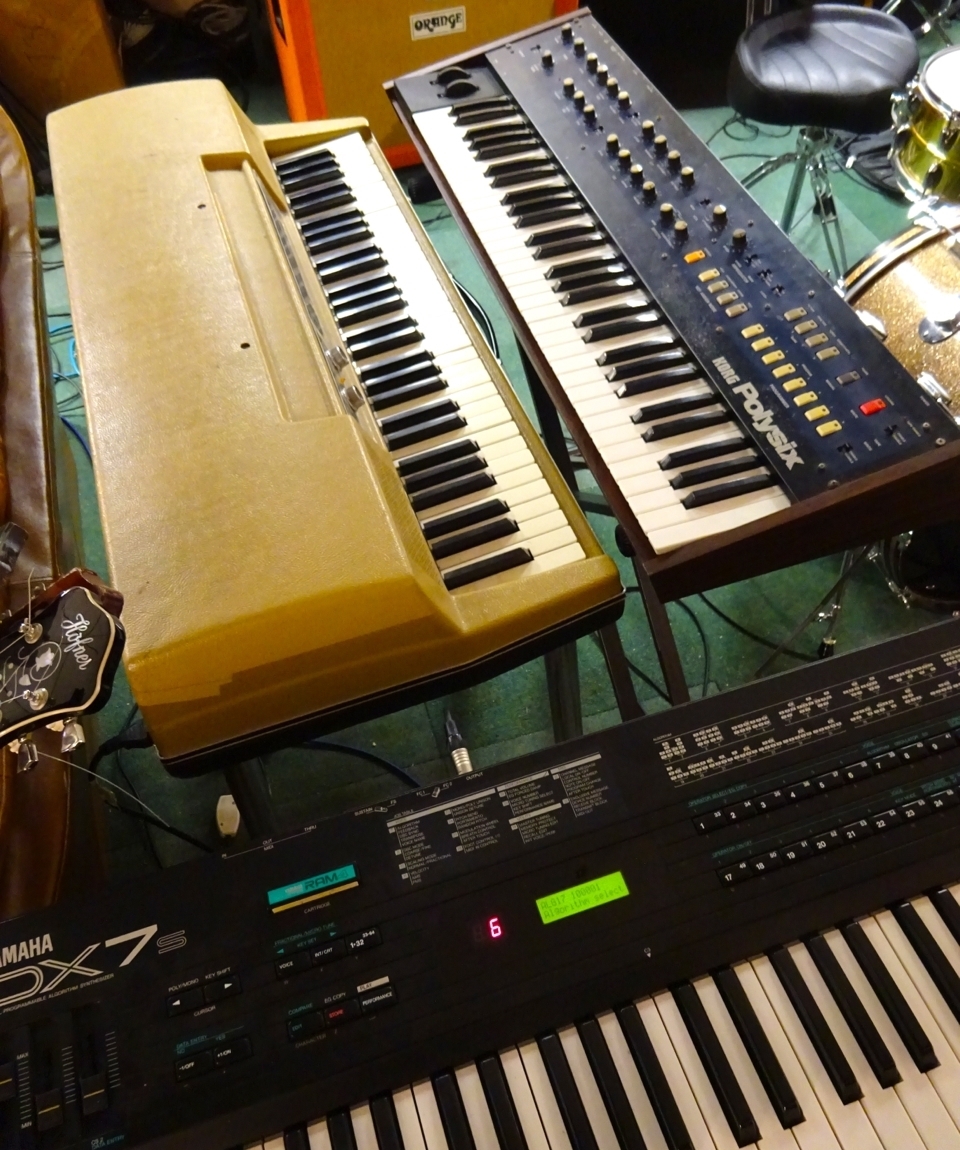
We mostly triggered from the Roland TR808 drum machine. We didn’t actually have a Sequencer, so we would trigger the arpeggiator on the Korg Poly 6. For bass synth sounds on ‘Difficult Shapes…’, we mostly used the Roland SH09 or the Yamaha CS10.

In hindsight, the first two singles ‘African & White’ and ‘Scream Down At Me’ are not really indicative of what CHINA CRISIS were to end up sounding like. Can you remember what your mindset may have been at the time as both tracks are very rhythmic?

TALKING HEADS… Eno’s work on their ‘Fear Of Music’ and then ‘Remain In Light’. Also people like A CERTAIN RATIO with their single ‘Shack Up’, ABC with ‘Tears Are Not Enough’ and JAPAN with ‘Quiet Life’, especially JAPAN’s ‘Quiet Life’… hearing the two songs now, ‘Scream Down At Me’ and ‘Quiet Life’, you could easily make a great “Mash Up” with those two…

While you were getting into producing possible pop songs, these gentle instrumentals like ‘Jean Walks In Fresh Fields’ and ‘Watching Over Burning Fields’ started appearing, what had been the thinking behind these?

I had always been a fan of instrumental music, everyone from Mike Oldfield to ELP. Once I’d heard Bowie’s ‘Low’ and then Eno’s albums ‘Before & After Science’, ‘Another Green World’ and then his ‘Music For Films’. That was it! I just fell in love with making “soundscapes”, I think it helped shape and define our sound, our musical horizons became a whole lot broader and we could apply atmosphere and effects to all our musical endeavours…

Your first hit ‘Christian’ is effectively a type of ambient pop and combined your two interests, what was the song inspired by?

Eddie has reminded me, ‘Christian’ was originally called ‘WW1’; I’d seen images from the First World War, the devastation of trench warfare. I would have written some words relating to what I’d seen and once we had the music written and recorded, I would have spent some time listening repeatedly, over and over and sung along any and all of the words I’d been busy writing…

The actual ‘Christian’ of the title was the name of a little boy, who was friends with a nephew of mine… I’d never heard of anyone having that name. And when recording the track in Strawberry South, Dorking with Pete Walsh producing, we had nothing happening in the middle eight. Pete asked if we had any ideas and I would have just sang “Christian” at the point where the music changes and it worked beautifully.

Was it the Korg Poly6 that gave you the keys to exploring ambient textures more effectively?

I completely love the Korg Poly 6 and in fact, got to work with one again on my ‘Gone From Here’ album. It’s such a lovely , warm , easy to use keyboard… ADSR… ATTACK, DECAY, SUSTAIN, RELEASE … cut off frequency, portamento. It’s everything you could want for making great synth sounds and always with an echo / effects unit… always!

Was there ever an example of one of these ambient experiments morphing into a CHINA CRISIS song?

All the time, Eddie and myself worked separately and together. This always led to us being impressed and inspired by what the other was doing. If Eddie was busy playing guitar, then that meant I could get involved with his sound, messing with our effect units, especially our Roland Chorus Echo unit and sorting the actual recording, using the TEAC 144 and later the TASCAM 244.

Eddie would do likewise when I was busy on the synths, this helped with our recording experiences once in the studio. It was like we was in training for when there would be a lot of people involved in our records being made, like we was learning to “produce”.

‘Dockland’ is one of the tracks that many fans cite as being one of the best CHINA CRISIS instrumentals, it has this fabulous widescreen feel…

It’s completely Eno, deffo his ‘Music For Films’. It’s almost like you could include it on that album and I doubt very much anyone would bat an eye lid! *laughs*


Even when CHINA CRISIS had changed direction into a more band oriented sound on ‘Flaunt The Imperfection’, there were still tracks like ’96.8’ being released as B-sides, but around the time of ‘What Price Paradise?’, you’d stopped playing keyboards in the studio to concentrate on singing and the instrumentals appeared to take a back seat?

Yeah, I am deeply sad about my absence on the keys. I was still very much writing on the keyboards and would have added my parts. But the band had been evolving, as all artists do if they are lucky enough to be given the time to. CHINA CRISIS had changed, Eddie and myself involving Brian, Gaz and Kevin in the writing which was, in it’s own way, a great thing. But it did mean I suddenly got more involved in melodies and lyrics for song ideas that were no longer just Gary and Eddie musical ideas. Some great songs, absolutely, but the “instrumentals” took a back seat, unfortunately.

So what was the spark that had you going back to this archive of instrumental work for ‘Luna Landings’?

Oh, it was always my intention to compile and release these tracks, ever since way back in the day. I would have always thought they would make a great record… maybe not for everyone, but yeah, I love these tracks as much as anything I’ve done and I would have made them thinking people would get to hear them.

There are two pieces named after your trusty Jupiter 8, could these have turned into songs?

Yes, that’s deffo how it worked, some ideas developed into songs and some didn’t, some I would show and finish with Eddie and others I didn’t. I learnt very early on to do multiple versions of the same idea, this again was Eno inspired. His ‘Music For Films’ featured a track called ‘Sparrowfall 1 / 2 / 3’ which was three mixes of the same track, this I felt was a great way of developing a musical idea… keep changing… finding new approaches. It worked great and is still something I do to this day…

Are ‘Evángelos’ and ‘Yellow Magic’ tributes respectively to VANGELIS and YELLOW MAGIC ORCHESTRA?

Yes they are… YMO, when we first heard and saw these guys, they was off-the-scale cool and VANGELIS, his work on the ‘Blade Runner’ soundtrack is just so utterly beautiful, especially the version with some of the original dialogue… immense!

Was the ‘Luna Landings’ track ‘80’s Electro 2’ indicative of CHINA CRISIS’ uncertainty about whether to join in the Virgin finishing school of synth that was very much doing the business at the time with THE HUMAN LEAGUE, JAPAN, OMD and SMPLE MINDS?

Hahaaa oh, I don’t believe Eddie and myself ever thought we belonged to any “school” of music. We obviously were very very inspired by everyone’s work, especially early HUMAN LEAGUE / OMD… but always, we was very very singular minded and not really part of any “scene”, we just didn’t have the time or inclination… or dare I say it , the “right” look! *laughs*

There’s one called ‘Pipes Of Man Ray Times’, had this been originally part of a song suite like OMD had with ‘Joan Of Arc’?

This track was written and recorded the same week I did the ‘Black Man Ray’ demo, hence the title. This is a good example of ideas I would and wouldn’t have played to Eddie, ‘Black Man Ray’ / yes… ‘Pipes of the Man Ray Times ‘ / no… and for no other reason than I would have thought ‘Black Man Ray’, I was more pleased with the recording and could envision it becoming a CHINA CRISIS “song” which it wouldn’t have been at the time of recording the demo; ‘Black Man Ray’ would have been just another instrumental track…

CHINA CRISIS could come up with some witty if long titles like ‘King In A Catholic Style’ or ‘A Golden Handshake For Every Daughter’, did these often come after a track was composed or were they actually the inspiration?

Never the “inspiration”, the music and lyrics always came separately. All our early China songs came from little instrumentals, over which we would then sing lyric ideas, words we had collected, written in a pad, anything and everything…

There are some guitar based instrumentals which sound like cousins of ‘Forever I & I’ and recall THE DURUTTI COLUMN, how would you judge your own six string prowess?

Mostly awful… hahaaa! It’s a bit better now… but yeah, recording Eddie’s guitars gave me a bit of insight into how Vini Reilly was getting his sound. So when I had the chance to play and record some of my own guitar ideas, I was deffo inspired by Eddie’s guitar playing and Vini’s, especially his album ‘The Return of The Durutti Column’ which I played non-stop and still do.

‘Magnifique Lune’ does sound like it could have come off Brian Eno’s ‘Apollo: Atmospheres & Soundtracks’?

It’s very much another Eno inspired track… a simple refrain, repeated, added to and then returning to the original refrain. I think this was something I would have first noticed on Eno’s ‘Discreet Music’ album, a simple pattern on repeat and the challenge is to add something without taking away from the simplicity. It was all done on the wonderful Roland Jupiter 8…

‘Shopping For Excuses’ appears to be the beginning of a more Trans-Atlantic approach that is more indicative of where you headed on ‘Flaunt The Imperfection’, had this development evolved naturally?

The funny thing is, I was deffo in a ‘Betty Blue’ soundtrack frame of mind, when writing and recording this, I can’t listen to it without thinking of that film’s soundtrack which I actually loved and played so much, I thought I must have written it… hahaaa! It most certainly has a different feel about it, which I think mainly comes from the fact it’s one of the later recorded tracks, circa ’87.

You pay tribute to the late CHINA CRISIS drummer Kevin Wilkinson on ‘Swimming With Kevin’, what was he like to work with and have as a friend?

Well, he certainly was a great friend and anyone who found themselves lucky enough to be in his company, working or otherwise, I’m sure he would say the same… I always found Kevin to be so easy to work with, I never once thought I couldn’t show him any of my ideas. I always felt he was so much more than a drummer and this is not something I’ve overthought, it’s just something you feel… I suppose “chemistry” is the word and that’s the magical part. I always knew he could only improve whatever it was I was trying to do with a track.

The title comes from a day off we had on the CHINA CRISIS ‘Tragedy & Mystery’ tour in 1983; we had a hotel with a pool and decided to go swimming. I would have written and recorded this as part of the China’s ‘Fire & Steel’ sessions, around about the time of writing and recording ‘The Gates Of Door To Door’…

The fact that this material is recorded on Portastudios gives ‘Luna Landings’ a really earthy airy quality don’t you think, despite the vintage of the recordings?

The quality of the recordings is testament to the people what made those little tape recorders and the people behind “chrome cassettes”… I did make it my business to always record to the very highest standards. I did it all the best I could. It was completely thrilling, mostly all of the time I spent recording ideas. It was a really amazing time, learning and discovering and having fun…

There are a lot of tracks on ‘Luna Landings’, but do you have a favourite?

I do absolutely love some of them… ‘Luna Bop’ is so happy sounding and delightfully light and positive while ’80’s Electro 2’ never fails to make me smile.

‘Dummkopf’ is me thinking I’m Mick McNeill from SIMPLE MINDS circa ‘New Gold Dream’. The China’s supported SIMPLE MINDS on their ‘New Gold Dream’ tour and I was blown away by the band and the sound they made which I thought came a lot from Mick’s keys. The fact he was using the JP8 just inspired me loads, I would have come home off the tour and started to record and try and find out how Mick was creating such “atmospheric” sounds. I think anyone seeing them around this time and then hearing my ‘Dummkopf’ will know exactly what I was trying to do…

Do you think you will do another ambient instrumental album in the future?

Yes, but I’m very much of a mind to do a “piano pieces” album, I mostly compose on the piano now and have been for quite a number of years. Two of my fave ambient albums are Eno’s ‘Music for Airports’ and his collaboration with Harold Budd on the album ‘The Plateaux Of Mirror’


ELECTRICITYCLUB.CO.UK gives its grateful thanks to Gary Daly

His solo instrumental album ‘Luna Landings’ is released as a CD, available now from https://www.musicglue.com/gary-daly/products/luna-landings-cd

CHINA CRISIS 2020 UK + Ireland live dates include:

Leeds Brudenell Social Club (6th March), Dublin Opium (12th March), Listowel Mike the Pies (13th March), Castlebar Royal Theatre (14th March), Worthing The Factory Live (20th March)

https://www.facebook.com/chinacrisisofficial/

https://www.facebook.com/gary.daly.5

https://www.instagram.com/garydalymusic/


Text and Interview by Chi Ming Lai
22nd February 2020

BLANCMANGE: The Mindset Interview


As prolific as ever, Neil Arthur has a new BLANCMANGE album set for release in May 2020.

Entitled ‘Blancmange’, it will be the eighth full length long player of new material since 2011’s return with ‘Blanc Burn’. Despite their success, Neil Arthur and Stephen Luscombe only released three albums during their original heyday which began in 1982 with the hit single ‘Living On The Ceiling’. While BLANCMANGE are also known for their cover of ABBA’s ‘The Day Before You Came’, Neil Arthur has also notably reinterpreted CAN and CHIC.

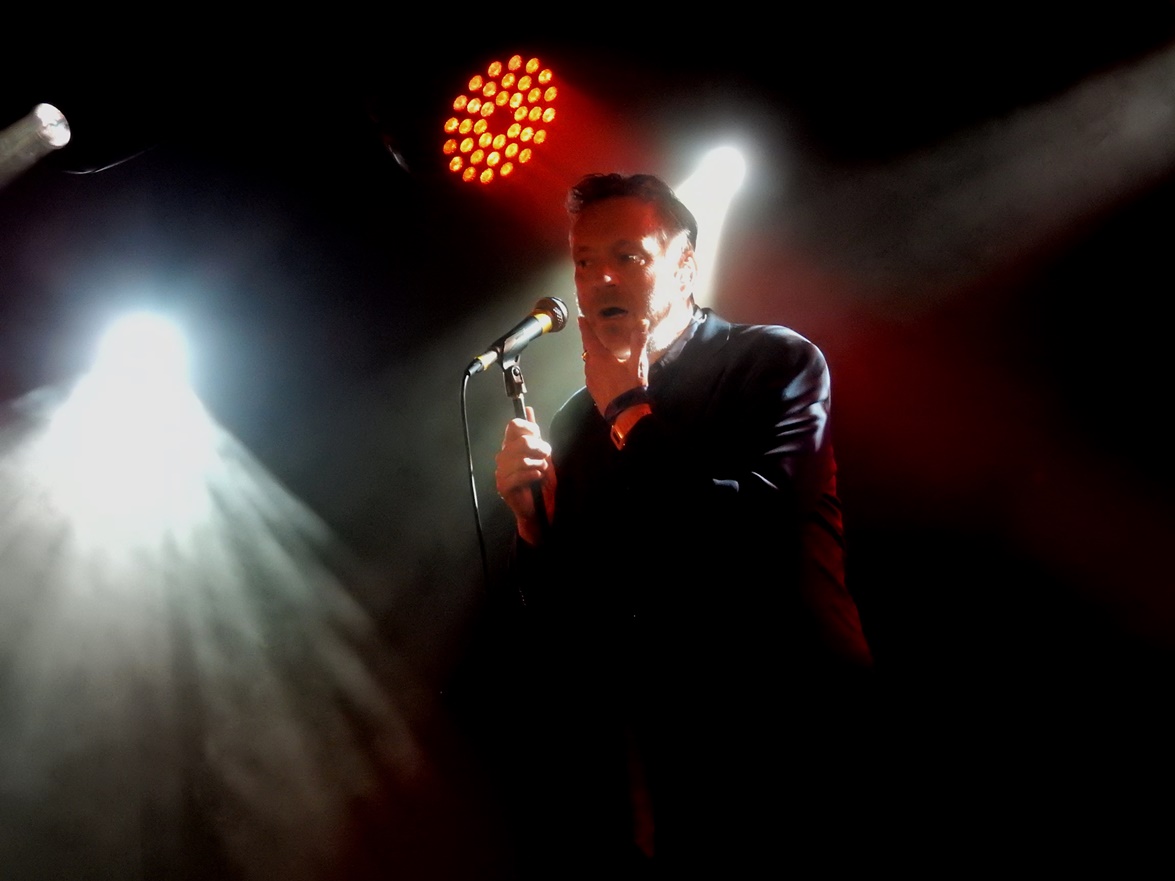
When Stephen Luscombe was unable to continue with BLANCMANGE due to illness after ‘Blanc Burn’, Neil Arthur continued alone, working on other projects such as NEAR FUTURE, FADER and KINCAID while driving his main vehicle in parallel.

In his tenth interview with ELECTRICITYCLUB.CO.UK, coinciding with the tenth anniversary of the site, Neil Arthur chatted about his mindset, his music and his motivations…

Does ‘Mindset’ have a concept?

It’s not a concept album. Lyrically with the title song, there’s a part that says “so much for giving, so much for taking…” – it has two meanings, there’s looking for truth, so I’m saying “so much for giving” but that could also be “so much forgiving…”, I felt that set the tone.

I’m on a bit of a journey where I’m looking for truth, where you think about the mass of information and misinformation that’s around, and somehow we’ve all got to make some sense of it. Even if we don’t choose, we’re filtering things all the time, this “what’s going on here?”.

This isn’t just in a virtual reality world, it can be applied to the way people end up being acting themselves or socialising. It’s not all bad, but I’m observing stuff and looking for other worlds at the same time we’re living in this one, several things at once and questioning how people react with others, how they’re feeling about themselves and how that impacts on other people.

Has politics affected you?

Right back to ‘Happy Familes’! Listen to the link between ‘Wasted’ and ‘Living On The Ceiling’! *laughs*

Back then, we were writing pop songs but I haven’t changed my tact on that in a way, but I’m not really writing singles now for a record label. But of course the politics and recent events have affected me sonically as well as lyrically.

I’m an artist and I observe what’s going on around me, for better or for worse, I reflect that. But I don’t have a soapbox to stand on or find it particularly easy, but this is the way I get my thoughts out. There’s ambiguity in there as well so you can take things in many different ways. There’s a lot of choruses on the album, I deliberately wanted them on quite a lot of the songs, there’s more structure, it’s not all of them but that was my general approach with the music and I wanted some of the sounds to convey what I was saying lyrically.

So for example, there’s a song called ‘When’ and the chorus goes “When is anything about what it’s about?”, so I’m asking the question… you know when somebody says something to you? You could take them at face value and you can trust that and it’s great… but sometimes, when somebody screams and shouts, you’re thinking “what’s going on here?” and of course, you don’t know half the story. What you’re getting is what you’re receiving at the moment…

All the way through the song, there’s the sound of a panic alarm, it’s musically there to represent a state of panic. So they’re not only trying to deal with their own emotions, but whoever else is offloading their baggage onto them.

The first single is the ‘Mindset’ title song and it’s very band sounding with that staccato Velvets / Bowie piano and guitar, but then those psychedelic vibes clash with that arpeggio during the close?

I write a lot of songs on guitar but it doesn’t always end up on the album. While we were doing this, Benge and I had a chat and he felt the very simple guitar part really needed to stay, as he thought it was fundamental to what had been written. With the instrumentation, I wanted a repetitive piano thing which was slightly and deliberately out of time now and then, and also an odd note like a 7th. The one reference that was definitely discussed was NEU! and that period when Michael Rother first went solo. It sent us on a creative journey and I ended up going away to listen CAN again. It was good fun to put together, but most of the time, we took stuff out rather than adding.

‘Clean Your House’ though is very synthy with that bubbling bassline and those gated pulses…

It has a really simple synth line and gets busy on the outro but we tried to keep it reasonably empty so that there was a dynamic emphasis on the chorus when that arrived.

Lyrically, you could say it’s reflecting on events of recent times or you could it slight more personalised like a relationship.

‘This Is Bliss’ appears to be a musical relative to ‘Clean Your House’, but adds a trancier element perhaps not heard a lot on previous BLANCMANGE songs?

Maybe I should have added a question mark, y’know ‘This Is Bliss?’, is this it? Or again, this IS bliss. I spend a lot of time playing with words and moving them round with the music, if it doesn’t need anything else, it’s best to leave it like that. With the music, it’s very stripped down.

In terms of the content, I wanted to have a good groove to it and I thought if we can make it work with the least amount of elements, it might have a chance. I didn’t want to add little bits to it, you can but it would be very difficult to keep simple. So when the chorus comes in and repeats itself and does the breakdown, the lyrics become a musical noise, so it takes you into that trance thing. Its original title was ‘The Lost Wallet Experiment’ and now it’s called something in the chorus which is ‘This Is Bliss’! *laughs*

You are working with Benge again, did you find any gear that had been new to you that fascinated you?

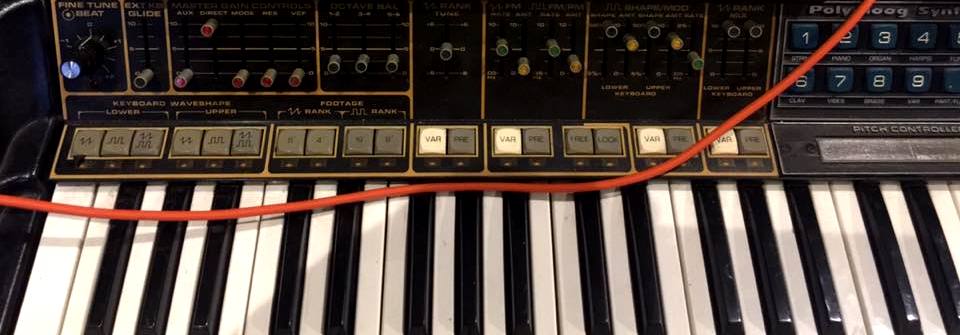
We had a Polymoog on it, one of things we had to do was keeping it in tune, there were a few issues with it but Benge got it absolutely spot on. The Buchla was doing some rhythm parts, there’s a Jupiter 4 and a Jupiter 6 on the album, some nice unique stuff.

Benge’s band OBLONG are opening on the first leg of the tour, ‘The Sea At Night’ is a rather good album…

Yeah, I like both their albums, that and ‘Indicator’ the one from ten years before that. Great sounds on them, there’s going to be more people with the opening act than will be with the main act! *laughs*

Is there a reason why you tend to tour in small chunks around weekends rather than whole weeks at a time?

Yeah, I want to go home! *laughs*

I’m looking forward to taking ‘Mindset’ on tour, but as you know, I don’t like the miles. A lot also depends on the venues and their availability. There’s all sorts of reasons but if you can do a Thursday-Friday-Saturday, it’s a lot better than doing a Monday-Tuesday-Wednesday in terms of footfall, that comes into it. From my point of view, I’ve done long tours and I’d much rather do it like this without a doubt.

The likely demographic for BLANCMANGE tends to not want to go out on a ‘school night’ but can handle Thursdays-Fridays-Saturdays… *laughs*

Yes, that comes into it. It’s difficult because there are some areas where it wouldn’t make so much difference, but in general, it’s better to do a Thursday-Friday-Saturday, Saying that, we do get some younger inquisitive people coming along who are getting into BLANCMANGE because of younger DJs who are playing the music. It’s funny because we notice that little pockets of them are all dancing while other people are going “What are people dancing for? We want a seat!” But they’re all very welcome *laughs*

There’s an Roman Flügel remix of ‘Living On The Ceiling’ that’s just come out and an upcoming remix of ‘Blind Vision’ by Honey Dijon as part of ‘London Remixed’, are you happy with how they’ve turned out?

Yes, I particular like the Dub mix that Roman’s done. I was very flattered because I really like his work. And to get Honey Dijon to do ‘Blind Vision’, I’ve heard the test pressings and what she’s done is phenomenal. The thing is, for some people, the mix of ‘Living On The Ceiling’ that was done all those years ago is always going to be THE MIX.

Nobody is trying to make it better, it’s just another interpretation. And if you can introduce another audience to your music by doing that, then so be it. Nobody is saying “this is how it should sound”, it’s just an interpretation, it’s only a bit of music and you shouldn’t get too carried away with it. I’m flattered they wanted to do it but of course, I‘m being paid for it *laughs*

I’m all for different stuff, you know me, I’m not that nostalgic, for me, nostalgia is history without the guilt. I’d much rather deal with the history, deal with the guilt… yeah, all these things happened, it’s not sometimes quite how you’d like to remember it, it was slightly different y’know. I’m also very much interested in the future.

Looking back on your return in 2011, how do you look back on the body of work running from ‘Blanc Burn’ to ‘Wanderlust’? Any personal favourites?

I don’t have a favourite as such. I feel lucky I get to do what I do and I look forward to doing more. I really enjoying working with Benge on BLANCMANGE and FADER, I would love the opportunity to take the FADER project out live. In terms of a musical moment I am most proud of, that was when I stood on stage with my son for the first time in Liverpool Arts Club, when Joe under the name KINCAID, opening for CREEP SHOW on tour. That was a really significant moment for me.


Has it been better than you thought it would be?

There’s been a few surprises, I’m quite a nervous person, sometimes I feel more comfortable on stage than I do off it. I was very nervous about coming back with BLANCMANGE. I didn’t know what to expect or whether it would be just one album. The opportunity came along but Stephen had to stop doing what he did for health reasons and it gave me a kick up the arse to get on with it, which thankfully I did.

It was very different because I had been signed to a major record label, this is no disrespect to London Records because this is how all labels operated back in the day, I have a lot more control now over everything that we do, albeit on a much smaller scale.

I am under no illusions that I will have huge success, I am very happy doing what I’m doing. And if people are interesting in buying, or listening or coming to a show, that’s fantastic. I’m doing it because it’s my job, I need to work and earn money, and this is a great way to try and do that. It’s tough without a doubt, you’ve got to do a lot of legwork and but I don’t mind that.

As long as I can, I’m going to keep doing it, it’s not easy but I think I enjoy it a bit more now than I did in the 80s. And I think I’m more appreciative… I was then, but even more so now.


ELECTRICITYCLUB.CO.UK gives its warmest thanks to Neil Arthur

Special thanks to Rosalia Ferrara at Hush PR

‘Mindset’ is released by Blanc Check on 22nd May 2020 in CD, vinyl LP and digital formats

BLANCMANGE Rescheduled 2021 ‘Mindset’ tour includes:

Tunbridge Wells Forum (11th September), Colchester Arts Centre (16th September), Norwich Arts Centre (17th September), Birmingham Institute 2 (18th September), Gloucester Guild Hall (23rd September), Exeter Phoenix (24th September), Nottingham Rescue Rooms (25th September), Blackburn King George’s Hall (29th September), Newcastle Riverside (30th September), Edinburgh Liquid Room (1st October), Glasgow Oran Mor (2nd October), Southampton The Brook (13th October), Bristol Fleece (14th October), Northampton Roadmender (22nd October), Manchester Club Academy (27th October), Leeds The Wardrobe (28th October), Liverpool Grand Central Hall (29th October), Brighton Concorde 2 (17th November), Harpenden Public Halls (18th November), Cardiff Portland House (25th November), London Under The Bridge (26th November), Shrewsbury Buttermarket (27th November),

http://www.blancmange.co.uk/

https://www.facebook.com/BlancmangeMusic

https://twitter.com/_blancmange_

https://www.instagram.com/neilarthur/


Text and Interview by Chi Ming Lai
19th February 2020, updated 21st May 2021

ZAINE GRIFF Interview

Born in Auckland to Danish parents, Zaine Griff possesses a musical CV that is impressive, reading like a Who’s Who of popular music.

First a bassist and vocalist with Kiwi rock band THE HUMAN INSTINCT, he left in 1975 and moved to London where he had stints in BABY FACE and SCREEMER before going on to study mime under Lindsay Kemp alongside Kate Bush. As a result, he joined Kemp’s production of a play written by Jean Genet called ‘Flowers’.

In 1979, Zaine Griff launched his solo career with future film music composer Hans Zimmer and ULTRAVOX drummer Warren Cann among the members of his backing band for an appearance at the Reading Festival.

With his Aladdin Sane-inspired persona, he was soon signed by Automatic Records, a subsidiary of Warner Bros who brought in Tony Visconti to produce his debut solo album ‘Ashes & Diamonds’. It spawned the 1980 single ‘Tonight’ but it peaked at No54 in the UK Singles Chart, partly due to an already recorded appearance on ‘Top Of The Pops’ not being shown due to a Musicians Union strike.
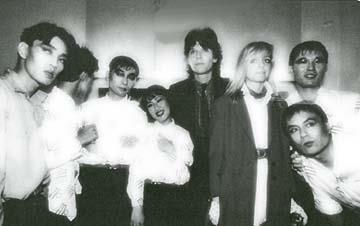
It was during these recording sessions for ‘Ashes & Diamonds’ that David Bowie walked in to visit Visconti and was slightly taken aback by the resemblance between himself and Griff. Despite this, Bowie invited Griff be part of the band to record three new versions of his songs for an upcoming appearance on the 1979 Kenny Everett New Year Show.

One of them was ‘Space Oddity’ which later surfaced as the flipside to ‘Alabama Song’ while another was ‘Panic In Detroit’ that later appeared as a bonus track on the Ryko CD reissue of the ’Scary Monsters’ album; the re-recording of ‘Rebel Rebel’ has yet to see the light of day.

The second Zaine Griff album ‘Figvres’ was released in 1982 and saw Hans Zimmer stepping up to the producer role. It ultimately laid the groundwork for the German musician’s eventual career in Hollywood. Also featuring on the album were Kate Bush and Yukihiro Takahashi from YELLOW MAGIC ORCHESTRA. Around this time, Griff held an art exhibition of his drawings in London’s Ebury Galley, to which his friend and contemporary artist Mark Wardel also contributed.

Meanwhile in 1983, Griff collaborated on six songs for Hans Zimmer and Warren Cann’s ambitious HELDEN album ‘Spies’ which despite the independently released duet with Linda Allan titled ‘Holding On’ being issued as a single in advance, remains officially unreleased. After recording with Midge Ure and Gary Numan, Griff returned to New Zealand in 1984.

In 2011, Zaine Griff made a comeback with his third album ‘Child Who Wants The Moon’ and returned to the live stage. While he has continued releasing albums and touring regularly, his music was being discovered by a cool young audience, thanks to American rockers MGMT covering ‘Ashes & Diamonds’ during their concerts in 2018. Zaine Griff kindly spoke to ELECTRICITYCLUB.CO.UK from his home in New Zealand about his music career.

Your debut solo album ‘Ashes & Diamonds’ was produced by Tony Visconti, how did that come about?

Tony Visconti was brought in to produce my debut album ‘Ashes and Diamonds’ by my record company MD Nick Mobbs at Automatic Records which was part of Warner Bros. When Tony heard my demos, he wanted to work with me.

It was during the recording of the ‘Ashes & Diamonds’ album that you were introduced to David Bowie and he had a proposal?

I was introduced to David Bowie by Tony at Good Earth studios. David had just returned from recording the Berlin trilogy and was wanting Tony to produce some tracks for a TV show. He had heard what I was doing and asked me if we could back him.

How did you run into Hans Zimmer and his batcave of synths?

Colin Thurston introduced me to Hans Zimmer when Colin brought Hans into Utopia studios to play keyboards on some demos I was recording there. Everything from that session onwards, Hans played on. As Hans said to me only last year: “I was your keyboard player”. In fact, he was much more than that. All the live work, studio work, Hans was with me, as I was with him during his HELDEN project.

You were frequenting The Blitz Club, what appealed to you about its atmosphere and how did you find the characters you met there?

I met Steve Strange at Legends night club. My manager Campbell Palmer owned Legends. I met so many amazing artists at Legends, we would dance and hangout till day break, often we would go to The Blitz Club or The Embassy. Everyone seemed to know each other and were supportive of each other. This is how I met Rusty Egan and Midge Ure, Boy George, Marilyn and so on.

Did it take much to persuade Rusty Egan to appear in your ‘Ashes & Diamonds’ video for the single?

I wanted at the time for Rusty to drum for me and Gary Tibbs to play bass. Well, they performed in the video of ‘Ashes & Diamonds’ and then they both were doing other projects. I tried!!

How do you feel about the American indie rock band MGMT covering ‘Ashes & Diamonds’ on their 2018 live tour?

Fantastic! I would love to meet them one day. It’s so cool when a younger generation plays your music in respect of the song and the composition. I was thrilled to say the least, I have followed them ever since.

Hans Zimmer had moved up to the producer role on ‘Figvres’ and it was to prove inspiring for his later soundtrack career?

I had to convince Nick Mobbs of Automatic Records to allow Hans Zimmer to produce my second album ‘Figvres’. So much so that Nick allowed Hans to co-produce and Nick would allow us to complete the album based on the first two weeks of recording. He loved what he heard and gave us his blessing to finish.

Up until then, Hans had only produced a single for THE DAMNED. ‘Figvres’ was his first album production. And indeed he is entitled to a full production credit for everything he put into ‘Figvres’ and of course Steve Rance, Hans’ engineer… what a team!

You had a good friendship with Warren Cann from ULTRAVOX who played on the ‘Figvres’ album too?

I heard ULTRAVOX on the John Peel show. I went out and brought ‘Systems Of Romance’ only because of the drummer. I had to meet this guy and work with him. I wanted Warren so much, I called Island Records, got his number, went to his flat and convinced him to play at the Reading Festival with me, and that’s how Hans and Warren met in rehearsal for Reading Festival.

The song ‘Flowers’ was dedicated to the late Lindsay Kemp and had Kate Bush singing backing vocals, what was it like working with her?

Working with Kate Bush was beautiful. She and I had studied under Lindsay Kemp, so it was easy for her to understand the ‘Flowers’ song and the emotion of the composition. ‘Flowers’ the show was a massive inspiration. Nothing comes near ‘Flowers’. So powerful, so dramatic and a huge inspiration to us both.

Hans Zimmer and Warren Cann formed HELDEN and you sang on the single ‘Holding On’, but the album on which you sang another five songs has never had an official release, do you consider it to be a lost classic?

I spent a whole year, most days and nights with Hans and Warren on the HELDEN project mainly at Snake Ranch Studios. I did a radio promotional tour with Hans. By then he was swept off his feet by film directors. Alas Hollywood.

What was the idea behind you recording a cover of ULTRAVOX’s ‘Passionate Reply’ with Midge Ure?

Chris O’Donnell suggested I do some recording with Midge. He played me ‘Passionate Reply’ on an acoustic, I had not heard it before and I just loved it. We recorded in his Chiswick studio. We recorded enough material for an album and the masters were stored at Rock City Studios with Gary Numan’s mum. I loved working with Midge. I had known Midge from when he was in SLIK. The band I was playing with at the time were the support to SLIK. I knew then just how good he was.

Looking back, we were so naive to it all. ULTRAVOX was managed by Chris O’Donnell and Chris Morrison, they were my production management company and production company to VISAGE. See how close knit we all were? And of course they managed THIN LIZZY.

There was that TV appearance performing ‘Passionate Reply’ on ‘The Freddie Starr Show’? What can you remember about that?

I was told I was to go to Manchester and do this show. All I wanted to do was not do it. Hated the whole tacky production. Still I stood up there alone and did it.

You recorded ‘This Strange Obsession’ with Yukihiro Takahashi and Ronny, that’s quite an international combination?

I had worked with Ronny on one of my songs ‘It’s A Sin’ with Hans producing her and Yukihiro approached me to write for him. I asked Ronny to join us. That was amazing working with Yukihiro. The translation barrier was understood with music.

Although you never recorded together, there’s a photo of you with Steve Strange and Mick Karn, what was the occasion?

That photo of Mick, Steve and I was at my art exhibition at the Ebury Gallery Victoria.

Gary Numan invited you to duet with him on ‘The Secret’ from ‘Berserker’, it has a good chemistry, how did you find working in the studio with him?

Gary Numan called me asked me to work on ‘Berserker’ just out of the blue. He was great to work with, I remember him doing takes faster than what I was used to; if he liked that take, that was it. Midge was like that as well. They knew what they wanted.

You returned with your third album ‘Child Who Wants The Moon’ in 2011, what was behind what appeared to be a lengthy hiatus?

It was a lengthy hiatus because I was burnt out, exhausted, not well, I had to go. I was not in a great space. I decided to try and get well again and stop wanting the moon… you know wanting the impossible.

You’ve released the albums ‘The Visitor’ and ‘Mood Swings’ since then and have returned to performing live again. Was that aspect something you’d missed over the years?

My problem is I cannot stop composing. I recorded ‘The Visitor’ and ‘Mood Swings’ purely for composition fulfilment. In the liner notes of ‘Mood Swings’, you can see the album is dedicated to Steve Strange.


ELECTRICITYCLUB.CO.UK gives its warmest thanks to Zaine Griff

‘Ashes & Diamonds’ and ‘Figvres’ are still available via Mig Music on the usual digital platforms

https://www.zainegriff.com/

https://www.facebook.com/Zainegriff.officialnews/

https://twitter.com/ZaineGriffOffic

https://www.instagram.com/zainegriff/


Text and Interview by Chi Ming Lai
13th February 2020, updated 11th October 2022

« Older posts Newer posts »