“I don’t like country & western, I don’t like rock music… I don’t like rockabilly! I don’t like much really do I? But what I do like, I love passionately!!”: CHRIS LOWE
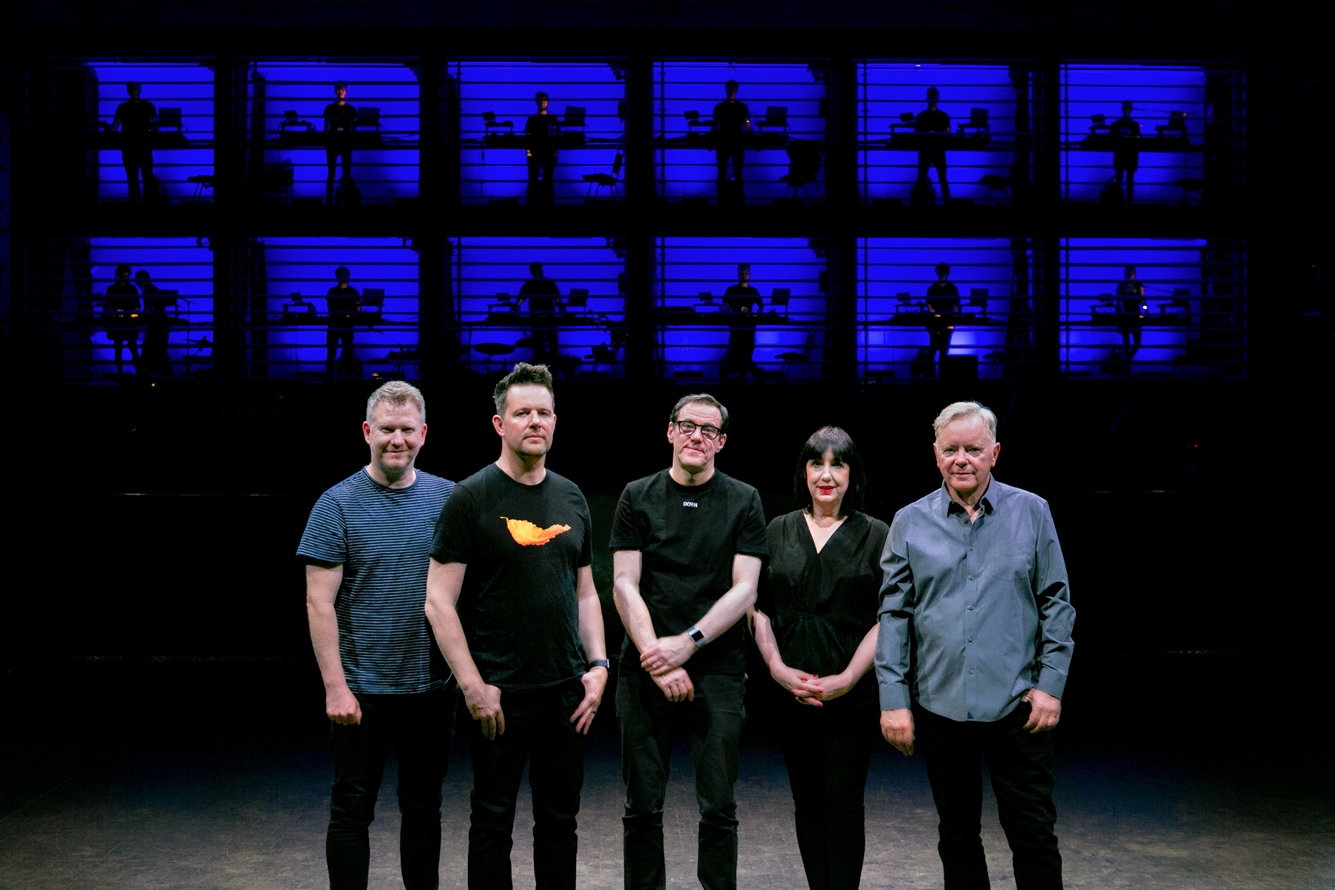
A new film by Mike Christie for Sky Arts, ‘Decades’ is a part concert and part documentary presentation of iconic Manchester band NEW ORDER.
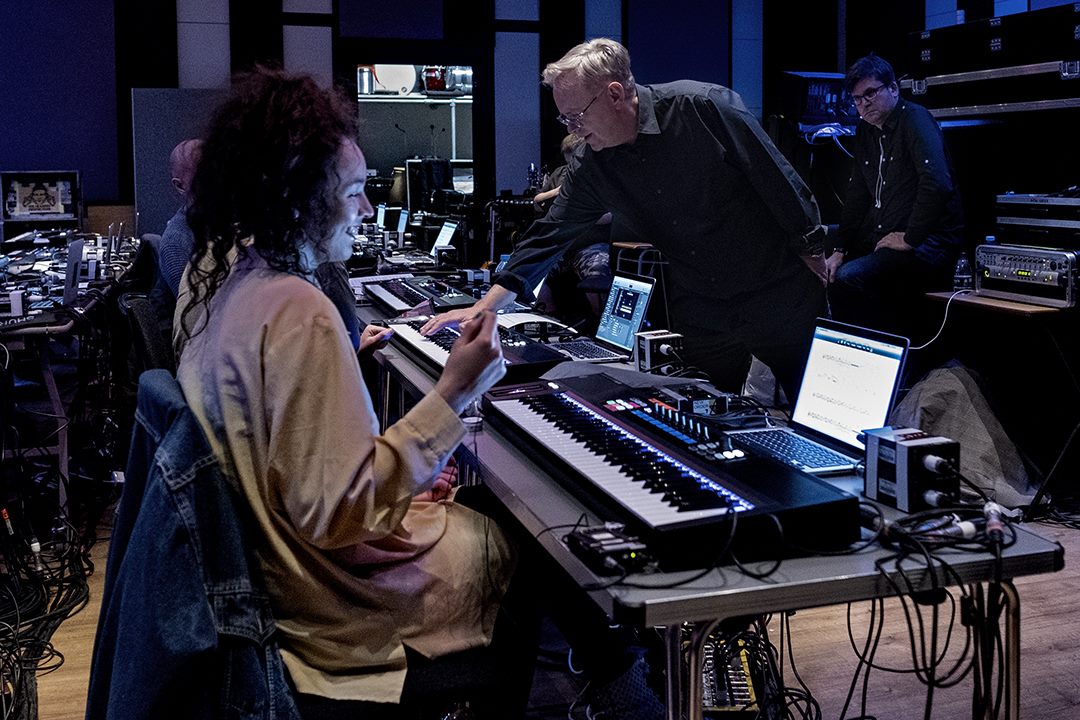
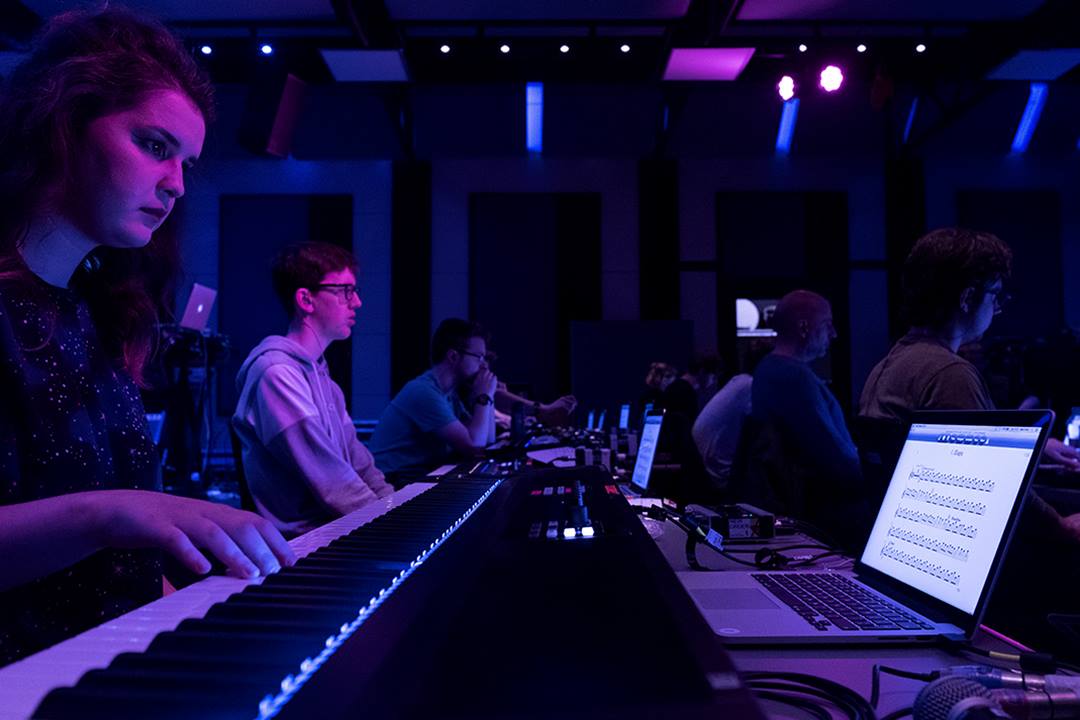
It follows them as they re-stage their acclaimed ‘So It Goes..’ collaboration with conceptual artist Liam Gillick and a 12-piece synthesizer orchestra recruited from students attending Manchester’s renowned Royal Northern College of Music.
Coinciding with the 40th anniversary of JOY DIVISION’s TV debut performing ‘Shadowplay’ on Granada TV, introduced by their soon-to-be Factory Records boss Tony Wilson, the film celebrates the past, present and future of NEW ORDER.
Featuring interviews with Bernard Sumner, Stephen Morris and Gillian Gilbert along with new recruits Phil Cunningham and Tom Chapman, ‘Decades’ also includes contributions from graphic designer Peter Saville as well as cultural commentators Jon Savage and Dave Haslam.
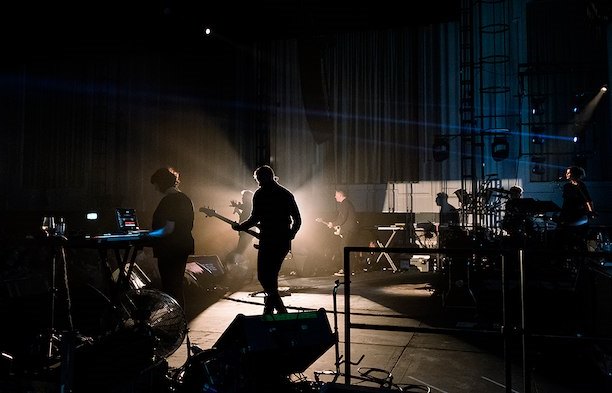
First performed at the Manchester International Festival 2017, the audio / visual spectacular had its own technical and logistical challenges, with up to 19 musicians on stage including conductor Joe Duddell.
Taking the installation to OGR Torino and Wiener Festwochen earlier this year, the whole concept had to be almost totally reconstructed thanks to the height restrictions and dimensions of the two hosting art spaces in Italy and Austria respectively.
For the musical aspect of the show, the MIDI information controlling the NEW ORDER’s regular live set had to be transcribed into twelve individual music scores for each of the students to play by hand.
But controlled from a huge computer were the light show, the angles of the white Venetian blinds in each of the cubicles that the synth orchestra were each positioned in and all the sounds for the various synthesizers.
Still very much a concert, Liam Gillick was adamant that this wouldn’t be “a weird art event with music”. Stephen Morris got fully involved in the technological aspects because he was, in his own words, “the only one boring enough to read the manual”, a trait which Bernard Sumner reflected on as being “unusual for a drummer” and something which long suffering wife Gillian Gilbert laughed about and said made him “impossible to live with…”
But Morris spoke in awe of how with the original NEW ORDER productions, the band would programme each note laboriously into the sequencers before speeding up the results, while each member of the synth orchestra would use their virtuoso ability to deconstruct and tightly recreate the fast programmed elements of tracks like ‘Plastic’, ‘Sub-Culture’, ‘Vanishing Point’, ‘Shellshock’ and ‘Bizarre Love Triangle’.
But as Cunningham remarked, “you’ve got to have a feel” and this was a quality which the synth orchestra undoubtedly provided. The best song from NEW ORDER’s most recent ‘Music Complete’ album, ‘Plastic’ was presented full length as were all the other songs in the film, a relief from the usual quick cut butchering and fast editing that has occurred in 21st Century music event broadcasts aimed at youngsters with attention deficits.
The spectacular sea of flashing straight line visuals came over well on the small screen and reflected the song’s complex but energetic combination of Giorgio Moroder and house, aided by Sumner’s disco dad dancing and the silhouetted movements of the synth orchestra looking like a futuristic ‘Jailhouse Rock’.
The rarely performed baroque sex anthem ‘Sub-Culture’ combined the best sonic elements of the original ‘Low-life’ version and the polarising John Robie remix along with many new parts.
But this provided amusement with a major continuity error thanks to two very different looking female backing singers being used over the two dates during which the concerts in Vienna were filmed for this documentary.
Not doing ‘Blue Monday’ and ‘Truth Faith’ at the ‘So It Goes..’ shows encouraged NEW ORDER to be inventive with the setlist to primarily include other more synth friendly material. But one of the most interesting choices was the post-punk rage of ‘Disorder’, the opener from ‘Unknown Pleasures’. While not presented as a concert number in the film, the rehearsal footage was a reminder of its blistering impact while leading to a section on the forever looming legacy of JOY DIVISION vocalist Ian Curtis.
After the passing of Curtis, Bernard Sumner took over lead vocals from the ‘Movement’ album onwards and in the film, Phil Cunningham recalled how uncomfortable Sumner looked when listening to it as the band members convened to listen back to the NEW ORDER catalogue to choose songs for the ‘So it Goes..’ shows.
A short section focussed on Tom Chapman replacing Peter Hook as bassist. While Peter Saville reflected that the chemistry which NEW ORDER had in their classic line-up was what made them great, he also accepted that “chemistry is combustible”; and while Sumner praised Chapman’s contributions on ‘Music Complete’, he complimented Hook obliquely by saying “not that the other bass in our history wasn’t great, it was great!”
Sumner amusingly waved and greeted the synth orchestra before a fabulously dreamy update of ‘Bizarre Love Triangle’ which was visually enhanced by close-ups of the exuberant actions from the synth orchestra members, although just as the track segued into ‘Vanishing Point’, the performance disappointingly faded off into the next documentary chapter.
The neo-classicism of ‘Your Silent Face’ was just perfect foil for interpretation by the synth orchestra and as an emotional finale of the glorious ‘Decades’ itself from ‘Closer’ captured the tense sonic cathedral of JOY DIVISION while adding some strangely uplifting qualities, both songs made for the ultimate display of multi-layered melancholic grandeur.
Beautifully produced, while the film itself was not too in-depth about the band’s history, it was an enjoyable snapshot of a reconfigured band in transition who were aware of their status as treasured veteran artists. Peter Saville concluded that Liam Gillick’s concept, as “his dialogue with his idea of NEW ORDER”, was an artistic success and “put the group back into an uncomfortable space”, just as in their formative years.
As much a document about the regeneration of Manchester as a cultural force as well as the continuing relevance of NEW ORDER, what was particularly touching about ‘Decades’ was the band’s respect of their tremendous back catalogue and general happiness that their naïve pursuit of fun led them to success.
Now, if only DEPECHE MODE would be a bit more grateful for their lot and accord more respect to the very songs that got them to where they are today…
Arranged, co-produced and mixed with Benge at the latter’s Memetune Studios in Cornwall, the new BLANCMANGE album ‘Wanderlust’ is focussed on “the pretence of a normal world being erased.”
BLANCMANGE’s first phase produced just three albums ‘Happy Families’, ‘Mange Tout’ and ‘Believe You Me’ before art college friends Neil Arthur and Stephen Luscombe parted ways amicably in 1987.
But since his 21st Century return in 2011 with ‘Blanc Burn’, frontman Neil Arthur has become possibly the most prolific man in electronic music. ‘Wanderlust’ is the sixth long player of this second phase and all this without including Neil Arthur’s side projects FADER and NEAR FUTURE or the ‘Happy Families Too’ rework.
Beginning with ‘Distant Storm’, this is an unusual but brilliant BLANCMANGE tune with its incessant dance beat, reverberant Moog bassline and dreamy processed vocoder aesthetic; with a rousing, almost spiritual quality, there are even elements of JAMES’ ‘Come Home’ creeping in for good measure. Following on, ‘In Your Room’ is a great slice of vintage cold wave synth, with a vocoder aesthetic and an assortment of manipulated sounds.
The heavily percussive ‘I Smashed Your Phone’ uses noise and electronics to deal with the sensitive issue of domestic abuse, while the amusing ‘Gravel Drive Syndrome’ provides commentary on social climbing and keeping up with the Jones’ aided by an Eno-esque VCS3 joystick solo.
‘Talking To Machines’ deals with Arthur’s continuing love / hate relationship with smart phones and what is now becoming anti-social media, but also as he put it: “this Kafka-esque nightmare just to get to the person you want to talk to.”
Like a sombre Northern English KRAFTWERK, the marvellous metronomic ‘Not A Priority’ also adds the resonance of JEAN-MICHEL JARRE with some chilling string machine; “Be yourself, you can’t be anybody else” Arthur exclaims as Hannah Peel harmonises and counterpoints this marvellous concoction with her soprano stylings.
Inspired by the smarmy Victorian–minded politician and ‘Walter The Softy’ impersonator Jacob Rees-Mogg, the swirly robopop of ‘TV Debate’ captures Arthur’s anger at the state of the nation in a musical cross between PLASTIC ONO BAND and THE FLYING LIZARDS; “I’m creating imagery and now I’ve got politicians doing a conga, it’s a mess!” he reflected to ELECTRICITYCLUB.CO.UK about the song, “We’re a nation who watch cookery programmes but can barely cook!”
Featuring David Rhodes on guitar, the heavier tones of ‘Leaves’, with its looming reverberant textures and discordant reverses, continues the gloomier mood before the Linn and guitar driven resignation of ‘White Circle, Black Space’. And with the aid of some haunting Vox Machina computer voices, the closing bittersweet title track explores the longing to be somewhere else while swathed in Roland vocoder towards the song’s conclusion.
“I’m catching up in what I think is unfinished business” Neil Arthur remarked on his artistic drive, “I’m just in a position where I’m experimenting all the time. I do what I want and it’s a bonus that some people like it.”
Possibly his best body of work as BLANCMANGE in its 21st Century incarnation, Neil Arthur has undoubtedly found comfort from working with Benge on what is effectively their third album together. That comfort has also provided an appealing palette of electronic sounds that acts as a fine platform for his not-so-merry lyrical witticism.
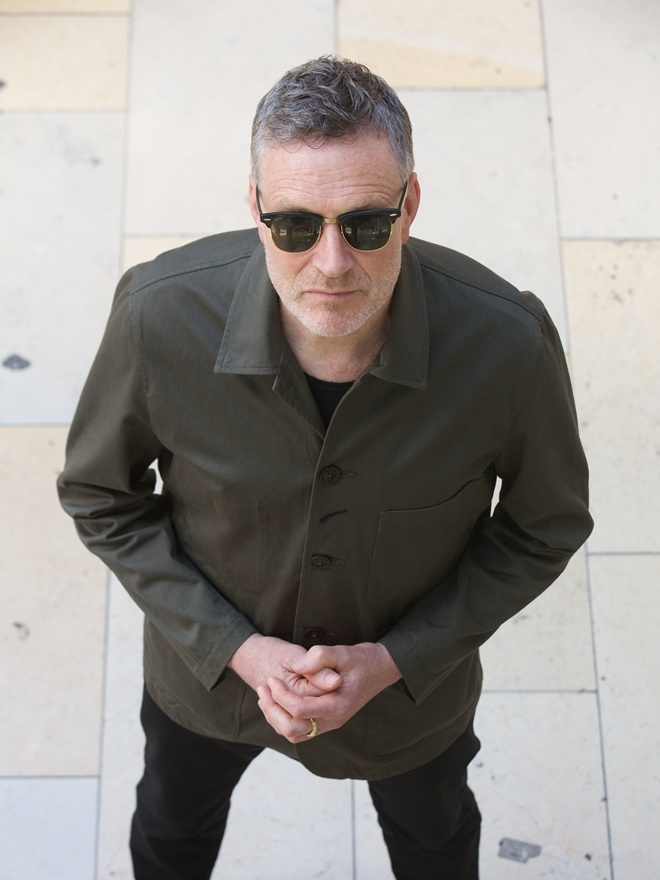
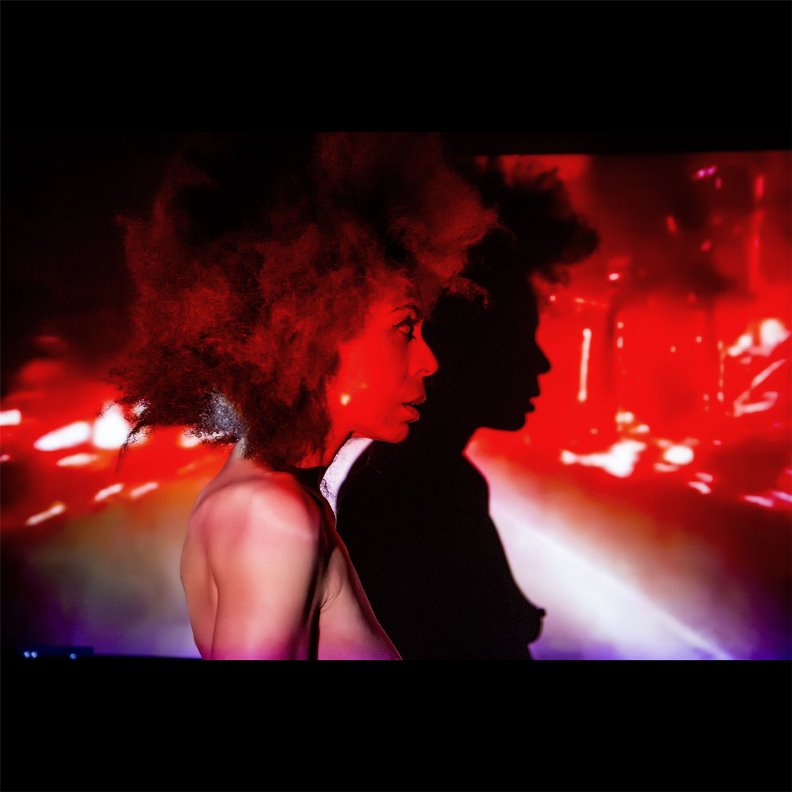
When Valerie Renay of NOBLESSE OBLIGE decides to release a solo project, she creates “music for fast moving clouds”.
Conceived in a moment of deep transition, ‘Your Own Shadow’ is an amalgamation of organically developed raw sounds, haunting vocals and tribal inserts, enveloped in delicious synth and simplistic melodies.
Whilst walking the path alone can be challenging, Renay rises to the occasion with innate power and the need to discover her real self: “The desire to explore my own limits and share intimate sensations motivated me to write these songs. I started this solo project to exorcise private demons. Writing songs alone is such a beautiful but lonely path, you are faced with yourself, your own fear, your own doubts but also the incredible feeling that everything is possible and options are endless. The choice is yours, you’re the pilot flying that plane. I needed to get those songs out of my system because they inhabited me like unresolved, fragile tales that I wanted to share, to understand better who I am.”
The exhilarating ‘Speed Of Blue’ was penned by Ian Pickering of SNEAKER PIMPS and Renay delivers it with a poise and passion, which bubbles underneath, waiting to be expelled. Her vocal, styled on that of Ian Curtis brings gloom and hope at the same time, while ‘Sailor’ soothes with its bluesy textures à la John Fryer on his BLACK NEEDLE NOISE project.
‘Hollow’ releases deep sadness, in keeping with ‘Darkest Lake’, where deeply hidden vulnerabilities come to the surface. This closing song is beautifully ethereal and delicate, floating lightly with the unlimited weightlessness of filmic qualities.
In contrast, ‘Kick Again’ and ‘Rough & Ready’ border on rebellious harshness, which suits Renay’s love affair with extremities. ‘Melancholia’ is poetically bare and delivered with minimalistic messages in French, where the choice of tongue adds to the romantic feel of the finished product.
A very different proposition from her work with NOBLESSE OBLIGE, Renay’s first solo product is amazingly fluid and harmonious.
“‘Your Own Shadow’, the title of the album refers to the feeling you have when you don’t recognise yourself anymore because you are made to feel small, insignificant, empty and lost” she said, “You know this is not the real you… Somewhere the real you still has fire and power but your very existence feels so meaningless. You forget how to be standing on your own two feet.”
With this opus, Valerie Renay definitely stands on her own two feet with a triumphant message of sensually charged, cinematic deliveries superbly put together and executed. Way to go!
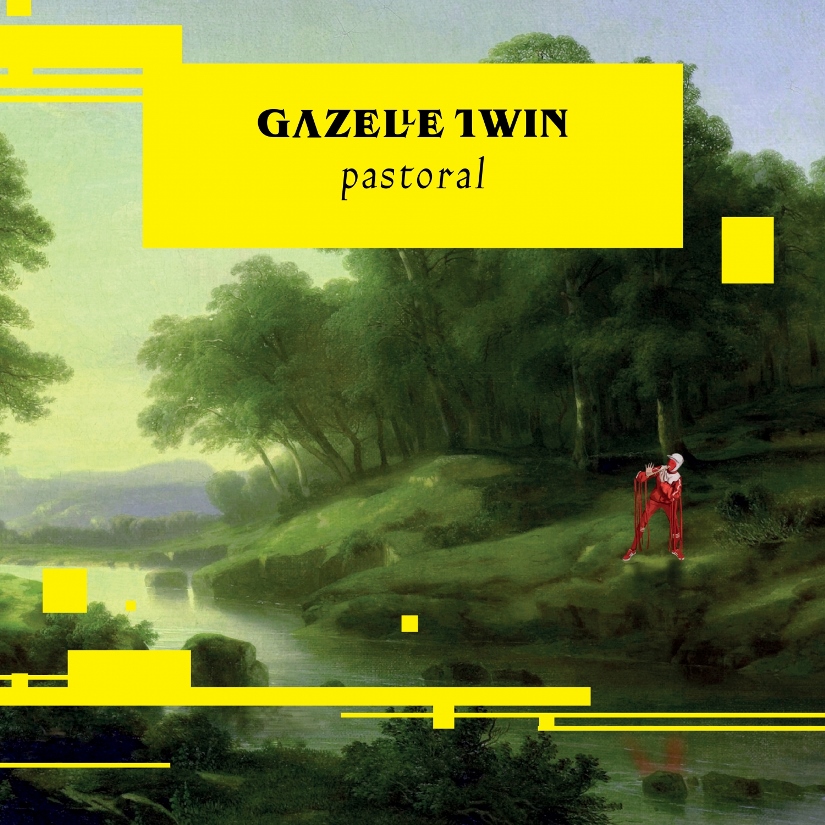
As innocent and idyllic as the new album title from GAZELLE TWIN sounds, those who are well familiar with Elizabeth Bernholz’s previous output, won’t be fooled.
The queen of all things weird and wonderful is back after the highly acclaimed ‘Unflesh’. ‘Pastoral’ should be glorifying her new found life in the depths of Old England, a move amidst other life changing events; instead, it “exhumes England’s rotten past, and shines a torch over its ever-darkening present”.
No matter what century we live in, the evil, greed and consumption have gone full circle, no matter “What species is this? What century? What atmosphere? What government?”, as questioned with choral voices in the opening ‘Folly’, with the intro like DEPECHE MODE’s ‘The Great Outdoors’ played backwards.
If things were indeed ‘Better In My Day’, which is proposed in a house / rave notion with the additional twists from frenzied electronics, then “the world with jobs, no foreigners, no locked doors and kids full of respect” was “much better in my day”.
The tribal sounds of what promised to be lovely and cuddly in ‘Little Lambs’ is nothing of the kind. Almost ritualistic, the mantric rhythm sounds scary, and the “little lambs” are us: the little island dwellers, fed lies and distractions to keep us away from the bigger picture. “Save yourselves” the synthesised voice warns, before ‘Old Thorn’ ushers the “multi-gender voices, in vernaculars old and new” as if.
‘Dieu Et Mon Droit’, sung with a KATE BUSH poise, crown the otherwise sad state of affairs described here. Bernholz’s vocal goes male on ‘Throne’ in monophonic rhythm, spitting out words with disgust: “Scratching, Picking, The wound, Bleeds, Pus, Flows, Sticks, Stinks”. ‘Mongrel’ describes a new breed of humans and the new behaviours which are ridden with self-assurance, opinionated yet easily offended over nothing, but it suits them. The opening questions from ‘Folly’ return, “What species is this? What century?”
The glorious Old England won’t come back as in ‘Glory’, delivered in the style of ZOLA JESUS goes mediaeval. The Wiccan imaginary beaten out of the drum ritual sees new found sounds and experiences Eastern influences in the plethora of styles, each as distant from each other, as they are close.
The meeting in the good Old English ‘Tea Rooms’ won’t bring the illusion of “pastoral picture”; the reality is far uglier than the idyllically drawn “hedgerows and steeples” or “cattle, tearooms”, because there’s also the “roadkill” and the village square sees executions as well as happy country summer fetes. ‘Jerusalem’ mocks the “ideal citizen”, with the sneer from the riddler, while ‘Dance Of Peddlers’ utilises early instrumentation in the form of recorders intertwined with courtly jester music, spitting out the truth at once: “It’s the Middle Ages, But with lesser wages”.
The first single from ‘Pastoral’, ‘Hobby Horse’ is as deranged and as mysterious as any work of GAZELLE TWIN, but this time she spells it out: “Pack on the loose but I can’t let them in here, My fears are growing, My wounds are showing, My time is up I want to get the f*ck out of here NOW”. She mocks ‘Ye Olde’ and ‘The Everyman’ of the English cliché, brandishing a sneer and a hobby horse.
Certainly not the ‘Sunny Stories’ expected by the title, it’s “All your history’s happened now”, mystically performed with a compelling, eerie vocal, whistling in the country winds and reverberating in the darker skies, with no stars present. Darkness, just darkness out there…
Maybe a better life lies ‘Over The Hills’, a happy country song delivered while riding and we are back to the “good old days”, where “King George commands and we obey”, and there are still “Flanders, Portugal and Spain”, even if they’re getting further and further.
Elizabeth Bernholz hasn’t disappointed in the “deranged, absurd reflection of deranged and absurd times”. Her village square isn’t a source of empty joys, her country cottage isn’t the perfect, magical place and her Old English neighbours aren’t the friendly country folk, ready to help in need.
No, there is horror in every idyll, and danger lurking beyond the ‘quaint’ and she’s not fooled. She will sit there in her red 21st century jester outfit on and make you laugh! I’m sorry, did I say laugh!? No, she’ll make you reflect and cry over the state of affairs, but only if you choose to see it.
Gent Vooruit (20th September), Station Narva Festival (22nd September), Warsaw New Theatre (3rd October – ‘Kingdom Come’ performance), Manchester Soup Kitchen (5th October), Brighton Attenborough Centre for the Creative Arts (11th October), London Somerset House Lancaster Rooms (16th November)
It all began with a KRAFTWERK-influenced ditty warning about environmental catastrophe, one that has become poignant again in the 21st Century…
“I became friends with Wolfgang Flür and Karl Bartos in the 90s, and was invited to Wolfgang’s flat for dinner” said Andy McCluskey at the Electri_City_Conference in 2015, “on the wall was a gold record for ‘Radio-Activity’ which was a hit single in France. I was telling them that ‘Radio-Activity’ was the song that most influenced OMD and told them ‘Electricity’ was just an English punk version of ‘Radio-Activity’. They replied ‘Yes, we know!’… it was that obvious!”
In an accolade already accorded to JAPAN, SIMPLE MINDS, ABBA and THE POLICE, OMD’s first four landmark long players ‘Orchestral Manoeuvres In The Dark’, ‘Organisation’, ‘Architecture & Morality’ and ‘Dazzle Ships’ are being reissued as Half Speed Abbey Road vinyl remasters. Packaged in reproductions of their original Peter Saville designed sleeves complete with die-cuts where appropriate, these releases from Universal Music reaffirm OMD’s often forgotten role as premier electronic pop pioneers.
Originally released in February 1980 on the Factory Records inspired Virgin subsidiary Dindisc Records, ‘Orchestral Manoeuvres In The Dark’ was a promising debut album from Andy McCluskey and Paul Humphreys, two lads from The Wirral who had finally been able realise their passion for electronic music following the purchase of a Korg M500 Micro-Preset synthesizer paid for in instalments via a mail order catalogue.
Featuring their third released version of ‘Electricity’, the album also included their chanty commentary on the mechanics of war entitled ‘Bunker Soldiers’. Away from these energetic post-punk synth numbers, on the other side of the coin were ‘Almost’ and ‘The Messerschmitt Twins’, two emotive synth ballads that were equal to KRAFTWERK’s ‘Neon Lights’. However, their naivety was exposed by the inclusion of the quirky instrumental ‘Dancing’ which OMD even dared to play live during their BBC TV debut on ‘Old Grey Whistle Test’!
Even early on in their career, OMD’s concerns about the music industry machine were looming in ‘Julia’s Song’ and ‘Pretending To See The Future’; the latter was outstripped a few months later by a John Peel session version which formed the basis of the full live band rendition when McCluskey and Humphreys retired Winston, their TEAC A3340S tape recorder which had accompanied them on their breakthrough tour opening for Gary Numan in Autumn 1979.
OMD’s debut now comes over like a time capsule; ‘Red Frame / White Light’, a lightweight synthpop tune celebrating the 632 3003 phone box that acted as the band’s office captured an era before mobiles and the internet, while in honour of good old fashioned love letter writing, ‘Messages’ was at this point just a song with potential as a single.
Indeed, it was only when ‘Messages’ was re-recorded, produced by Mike Howlett with Malcolm Holmes adding drums, that led to a No13 hit in June 1980 and ultimately the ‘Organisation’ album which came out in October 1980. More gothic in nature, the album began misleadingly with the melodic Motorik lattice that was ‘Enola Gay’.
With its iconic Roland CR78 Compurhythm pattern and wordplay referring to the horrific bombing of Hiroshima by the Boeing B29 Superfortress flown by Colonel Paul Tibbets named after his mother, ‘Enola Gay’ was a clever observational statement about the first ever operational use of nuclear weapons. Massively popular in France and Italy, it also reached No8 in the UK singles chart.
But alongside ‘Enola Gay’ on this much more mature long player, there was also the hypnotic beauty of the often under rated ‘2nd Thought’ and ‘Statues’, the brooding Ian Curtis tribute which was built around an Elgam Symphony organ’s auto-accompaniment. With the purchase of a Sequential Circuits Prophet 5, Humphreys began exploring. Often using brassy tones set slightly out of tune for some haunting overtones, it made its presence felt on tracks like ‘The Misunderstanding’ and ‘Stanlow’.
As with the debut, there were a few missteps like the JOY DIVISION aping cover of ‘The More I See You’ which was different if nothing else, while the SPARKS inspired ‘Motion & Heart’ would be improved as a reworked ‘Amazon Version’ for an abandoned follow-up 45 to ‘Enola Gay’.
With two albums released in nine months, their first Top 10 hit and the biggest record sales of 1980 in the Virgin Records group, a triumphant concert at Hammersmith Odeon that December which concluded with an unexpected massed stage invasion, ended a brilliant year for OMD. But McCluskey and Humphreys could not have foreseen that 1981 would see them get even bigger.
Although Mike Howlett worked on the ethereal tape choir centred ‘Souvenir’, which was co-written by live keyboardist Martin Cooper and became OMD’s first Top 3 in September 1981, scheduling issues meant Humphreys and McCluskey self-produced what would become ‘Architecture & Morality’ with engineer Richard Manwaring, released in November 1981.
Featuring two spirited songs about ‘Joan Of Arc’, these were to become another pair of UK Top 5 hits with the ‘Maid of Orleans’ variant also becoming 1982’s biggest selling single in West Germany when Der Bundesrepublik was the biggest Western music market after the USA and Japan.
The big booming ambience of the ‘Architecture & Morality’ album next to big blocks of Mellotron choir gave OMD their masterpiece, tinged more with the spectre of LA DÜSSELDORF rather than KRAFTWERK. “People always talk to us about KRAFTWERK, and obviously, they were hugely important” said McCluskey, “But there was another element from Düsseldorf that influenced us, and that was the organic side which was firstly NEU! and then LA DÜSSELDORF and Michael Rother’s solo records.”
The Eno-esque percussive six string thrash of ‘The New Stone Age’, the bouncy but moody ‘Georgia’ and the guitar assisted choral beauty of ‘The Beginning & The End’ demonstrated OMD’s musical ambition. Meanwhile, the ringing theme of PINK FLOYD’s ‘Time’ was borrowed for the instrumental title track and the epic overtures of the almost wordless ‘Sealand’ also confirmed Humphreys’ affinity with progressive rock.
Malcolm Holmes was in his element on ‘Architecture & Morality’, thumping stark percussive colours while syncopating off various rhythm machines. “The majority of the drum programming would always be done by Andy or Paul” he said, “My part would be to lay down on that… My favourite period of OMD musically was ‘Architecture & Morality’ because of my involvement and how creative I was being at the time, using the kit differently.”
”I think ‘Architecture & Morality’ was a complete album, it was just so whole” said Paul Humphreys in 2010, “The sound of it was unique, every song… it wasn’t a ‘bitty’ album. A few of our albums are ‘bitty’ but that was where we finally found a sound that was OMD. I think the first two albums were leading to ‘Architecture & Morality’. We were refining our sound and then we found it.”
Meanwhile in ‘She’s Leaving’, there was a big fourth hit single in-waiting from the album characterised by its sweet melodies, forlorn vocals and crunchy electronic percussion; “We got hold of some Pearl syndrums and we were all messing around in the control room with little white noises and stuff like that” Holmes remembered. But thanks to McCluskey’s belligerence in vetoing its UK single release, that hit never happened, something he would later regret as Top 5 hit singles were to become less automatic a year later as OMD hit something of an existential crisis. One thing successful bands should never do is stray off their vision.
But OMD listened to criticisms that their cryptic songs about inanimate objects and deceased historical figures had no relevance in fighting political injustices; of course this view was coming from journalists on a mission, who were rather hypocritically living off expense accounts and sipping cocktails in fancy hotels!
With their label Dindisc also folding, OMD were absorbed into the main Virgin Records group. A little bit lost, McCluskey and Humphreys returned to the experimental bedroom ethos of their pre-fame VCL XI days and “got angry” with Emulators and a Sony short wave radio; the disillusionment led to the ambitious if flawed ‘Dazzle Ships’ released in March 1983.
A fractured statement on the state of the world with a conceptual approach not dissimilar to KRAFTWERK’s ‘Radio-Activity’, it was characterised by short abstract pieces which over time have mostly proved to have worked. Ironically, one that didn’t work was ‘Time Zones’, a snapshot of the world through telecommunications which outstayed its welcome by at least half a minute.
Although ‘ABC Auto-Industry’ was an amusing novelty piece that needed some accompanying performance art for it to really make sense, the sample heavy ‘Dazzle Ships (Parts II, III & VII)’ captured the tension of an underwater battle while ‘Radio Prague’ symbolised the spectre of The Cold War, a theme that would be explored within a Germanic pop context, crossing NEU! with KRAFTWERK on the magnificent ‘Radio Waves’.
Utilising a similar manic pace, ‘Genetic Engineering’ possessed a fistful of energy and a typewriter in a combination that was first heard on ENO’s ‘China My China’, while ‘Telegraph’ was a far more vicious if metaphoric attack on TV evangelism and religious cults than ‘Blasphemous Rumours’ by DEPECHE MODE ever was…
Salvaged from earlier B-sides, ‘The Romance Of The Telescope’ and ‘Of All The Things We Made’ highlighted the shortfall in material but their inclusion was justified by their serene quality, but they were significantly not the best tracks on ‘Dazzle Ships’. Echoing the bassline movements of JOY DIVISION’s ‘Atmosphere’ and laced with mournful Emulator strings, the solemn but beautiful ‘Silent Running’ offered a perfect metaphor for misguided neutrality.
Most harrowing though was the news report about “a young girl from Nicaragua whose hands had been cut off at the wrists by the former Somoza guards…” that began the waltz-driven ‘International’ with McCluskey’s anger about economic corruption, political hypocrisy and torture in captivity still sadly relevant today.
Although savaged by critics on its initial release and ultimately resetting the course of OMD, this nautical adventure has now been reassessed by many as a lost work of genius. It’s not quite that, but it is certainly a much better album than it was originally perceived to be. Their Dindisc Records boss Carol Wilson said that McCluskey and Humphreys “didn’t know whether they wanted to be JOY DIVISION or ABBA!”, summing up their awkward but ultimately rewarding musical ethos.
However, after the commercial failure of ‘Dazzle Ships’, OMD headed to the Caribbean and then Hollywood which brought them American singular success with ‘If You Leave’ before imploding after a US tour opening for DEPECHE MODE in 1988.
And while McCluskey maintained sporadic success with the OMD brand following 1991 hits with ‘Sailing On The Seven Seas’ and ‘Pandora’s Box’ from the ‘Sugar Tax’ album, it would take a reunion with Humphreys and 2013’s ‘English Electric’ to deliver a body of work that was equal to this wonderful quartet of albums.
With regards OMD’s continuing appeal today, Mal Holmes said “The reason why we’re here is because the first three albums were f***ing great”, although he could be forgiven for not being a total fan of ‘Dazzle Ships’ having only played on three of its tracks! Despite artists as varied as Vince Clarke, Steve Hillage, Moby, Darren Hayes and James Murphy all publically expressing their admiration for OMD over the years and synth riffs from these four classic albums being appropriated by acts as diverse as INXS, LEFTFIELD, LADYTRON and MARINA & THE DIAMONDS, some commentators have complained they could not be taken as seriously as say DEPECHE MODE, because they were not dark enough.
The death of over 100,000 people by nuclear attack and the brutal execution of a teenage girl can hardly be considered lightweight; now there are not many artists that can claim to have had worldwide hit singles about those very topics!
OMD’s ultimate legacy was to successfully combine warm catchy synth melodies and infectious technologically framed rhythms with harsh subject matter in a manner that worked on many levels. Beyond any standard pop convention, this was something that was and still is quite unique.
We use cookies to ensure that we give you the best experience on our website. If you continue to use this site we will assume that you are happy with it.








 is the sixth long player of this second phase and all this without including Neil Arthur’s side projects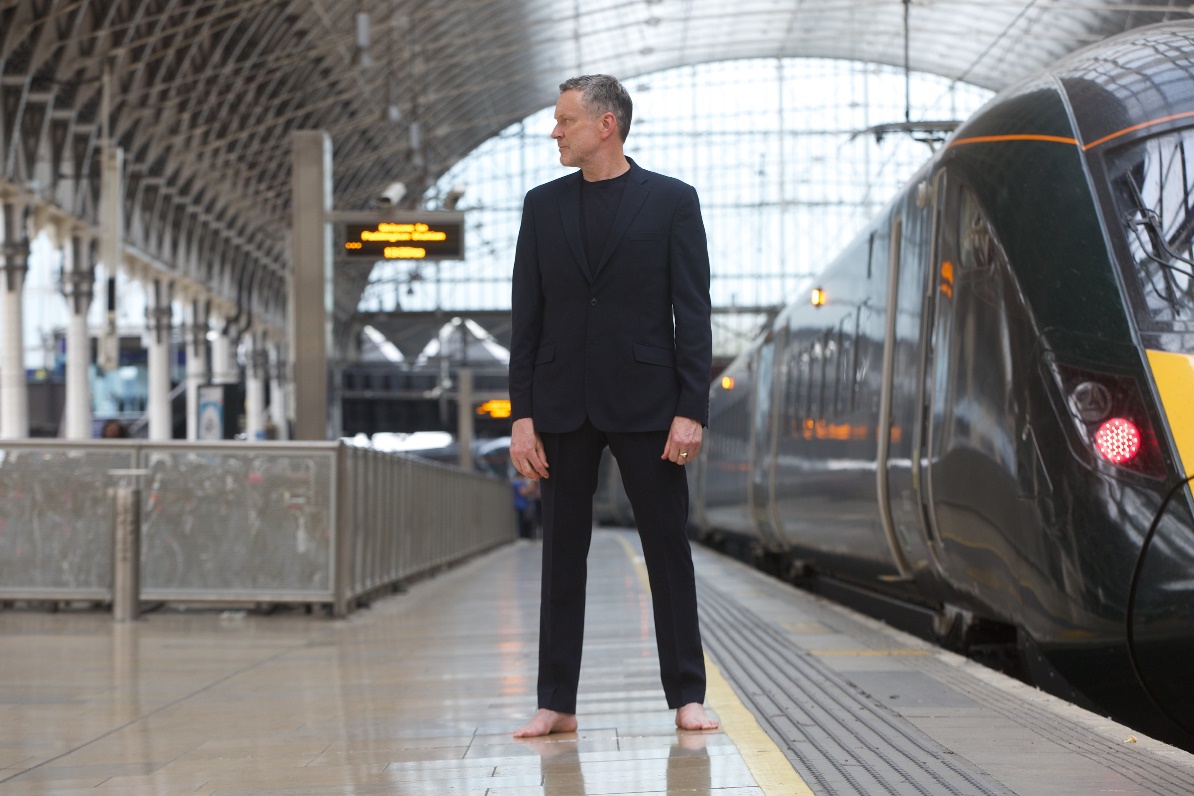
 is an amalgamation of organically developed raw sounds, haunting vocals and tribal inserts, enveloped in delicious synth and simplistic melodies.
 in 2013 featured a stark funereal cover of
 .
.  should be glorifying her new found life in the depths of Old England, a move amidst other life changing events; instead, it “exhumes England’s rotten past, and shines a torch over its ever-darkening present”.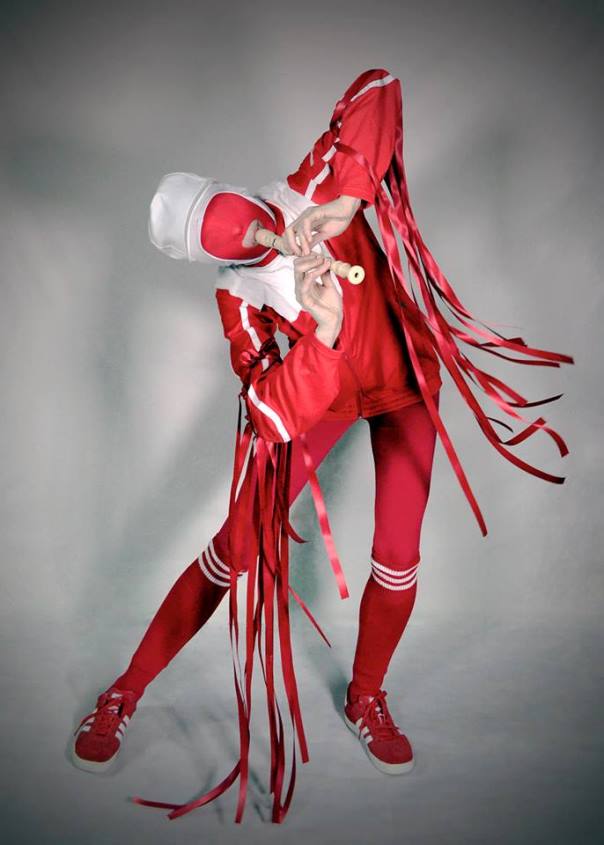

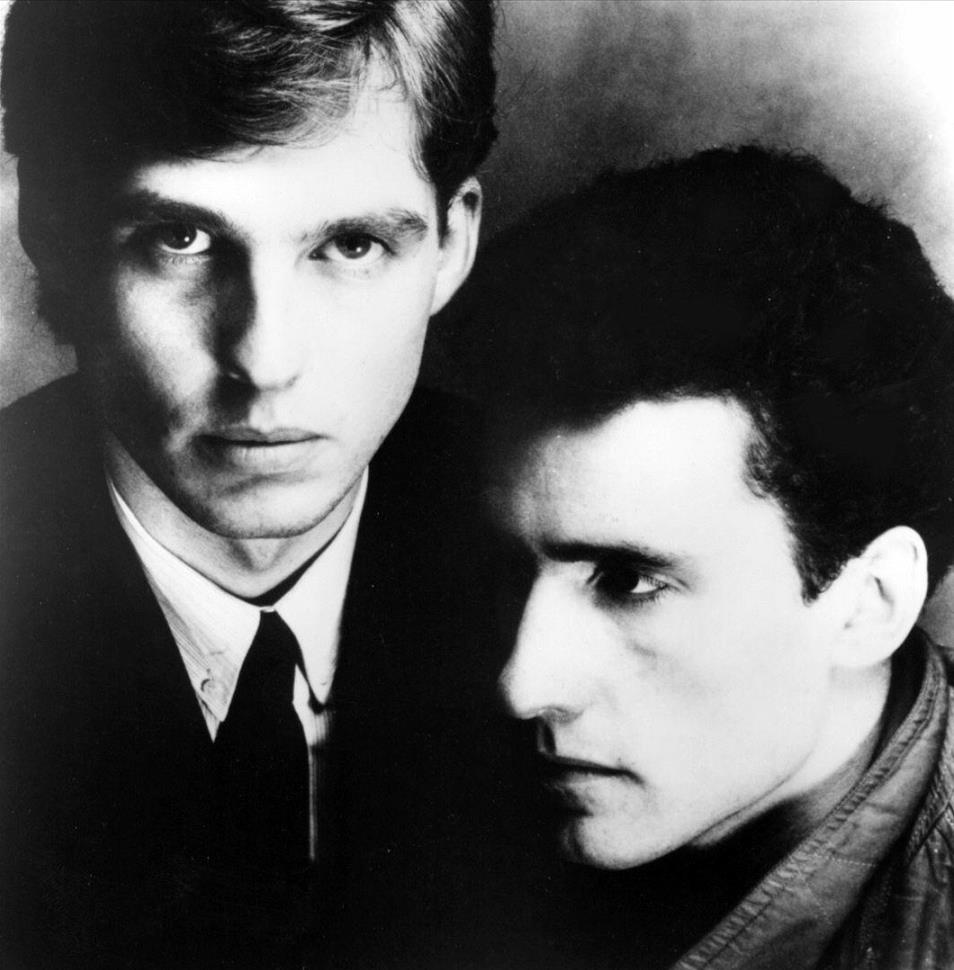
 was a promising debut album from Andy McCluskey and Paul Humphreys, two lads from The Wirral who had finally been able realise their passion for electronic music following the purchase of a Korg M500 Micro-Preset synthesizer paid for in instalments via a mail order catalogue.
 album which came out in October 1980. More gothic in nature, the album began misleadingly with the melodic Motorik lattice that was ‘Enola Gay’.
 with engineer Richard Manwaring, released in November 1981.
 released in March 1983.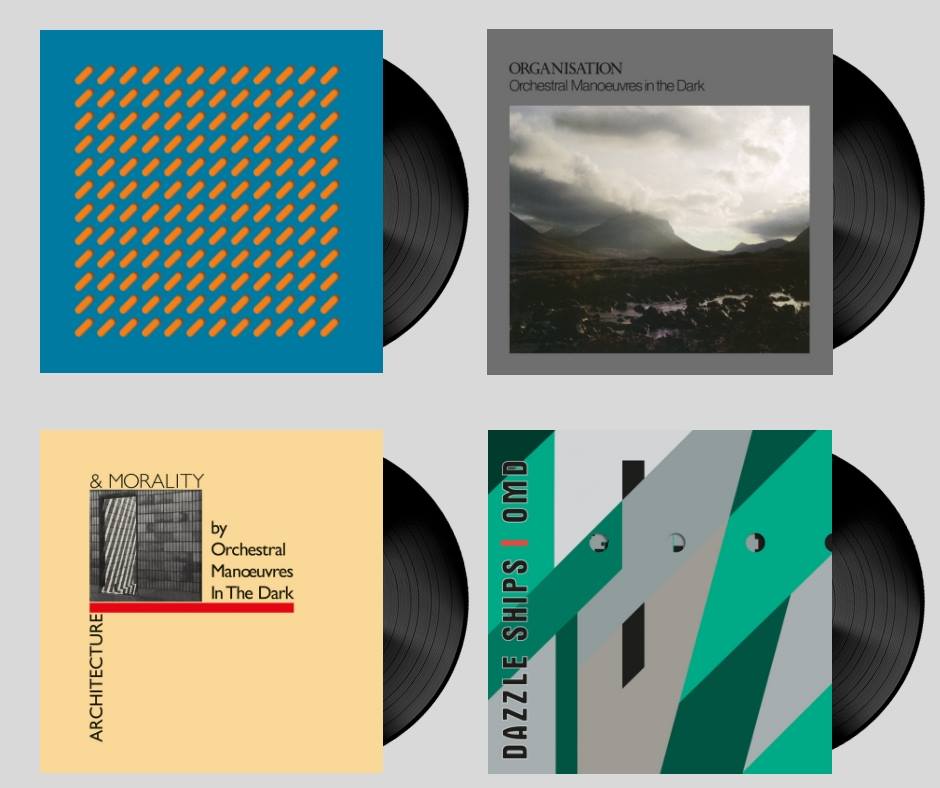
Follow Us!