“I don’t like country & western, I don’t like rock music… I don’t like rockabilly! I don’t like much really do I? But what I do like, I love passionately!!”: CHRIS LOWE
With a few long players under her belt and with her music featured on various television series, here comes ‘PixelDust’, the latest album from Dana Jean Phoenix.
Self-described as a “Retro Synthwave Singer”, the Toronto based songstress knows how to turn heads with catchy vintage tunes, which are Atari games worthy. Having recently featured on the debut album of MECHA MAIKO with the fabulously dancey ‘Cold’, Dana Jean Phoenix isn’t a stranger to synthylicious ditties. Not concerned with ‘Losing The Connection’, Phoenix introduces her new album with a colourful bang of vintage guitar, good old synth and candied poppy melody. Back to the days of big hair, leg warmers, fashion jewellery and blue eye make-up it is!
The more demure, sweet love ballad ‘Far And Away’ is a nostalgic nod to the sun-setting pop songs of TIFFANY and ‘Red Line’ could have been blasted away in a shopping mall, while you and the girls pulled faces squeezed into the swivelling photo booth chair. Remember those uncomplicated teenage times, when you thought you could take on the entire world!? Dana Jean can!
Maybe you can go back to the neon lights ‘Only For One Night’, with stripped down synth lines, or have you ‘Lost Touch’ with the classic sound of Paula Abdul?
‘I’ll Rescue You’ is a girly ‘Boys Of Summer’ and ‘Funky Fly Free’ reminisces FIVE STAR’s achievements. After all, everything will ‘Be Alright’. A fabulous little track, perfect for carefree girly gatherings, pillow fights and pink Walkman headphones, what’s not to love? ‘Iron Fist’ speeds up the matters and could have easily been used as a secondary ‘Rocky’ track, while the title number calms the senses with a sweet, slightly melancholic feel, which has the qualities of a perfect chick flick soundtrack.
The closing ‘Written’ is the longest song on ‘Pixeldust’ and you wish it could go on for longer still. It’s a classic feel good number, embroiled in uncomplicated vintage romance.
Gentle, melodic and beautifully performed, you imagine Phoenix running in slow motion into the sunset after her lost love, or blushing while dreaming of her newly found amour. Whatever the story, you are transported back into that world we always come back to with sentimentality, the world when things were simpler and exciting.
And that’s the whole point to Dana Jean Phoenix’s music; to bring back that elusive feel of our youth, to relive first loves and first disappointments, “back when possibilities seemed endless because your world was colourfully enigmatic and very few doorways were shut to you. A time when you were in love, or just about to be.”
Feel good music doesn’t have to be too serious and too complicated, and ‘PixelDust’ is just that. For a summery, relaxed feel, go no further and immerse yourself in the simplicity of this record. You won’t be disappointed.
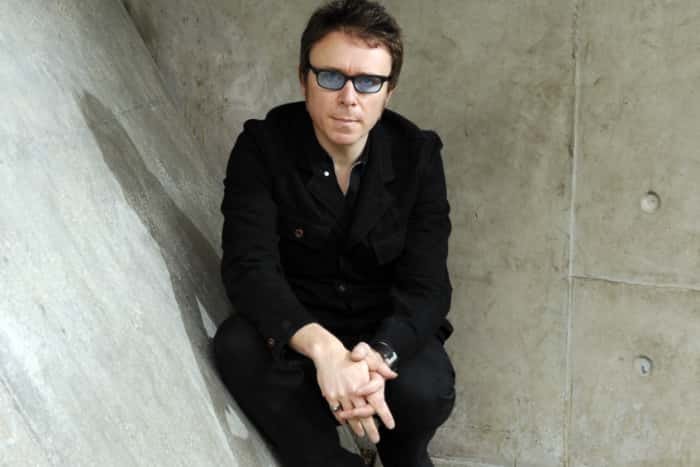
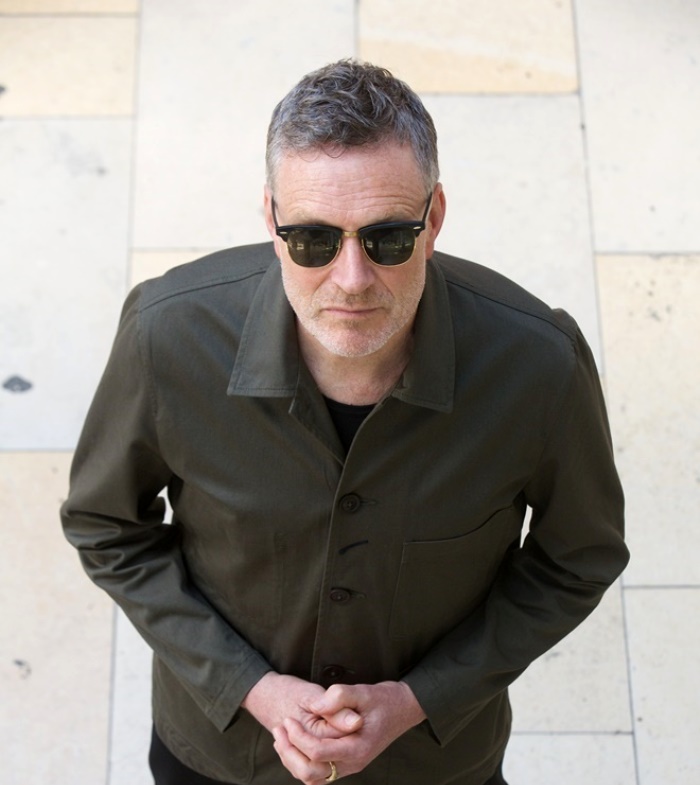
Scottish singer and songwriter Paul Haig was a member of JOSEF K who released their only album ‘The Only Fun In Town’ on the iconic Glasgow label Postcard Records in 1981.
After he went solo, he released some of the best electronic pop singles of the period like ‘Heaven Sent’, ‘Never Give Up (Party Party)’ and ‘The Only Truth’ on the prestigious Belgian label Les Disques du Crépuscule. His JOSEF K co-write ‘Sorry For Laughing’ was covered by PROPAGANDA while he has also worked with notable figures such as Billy Mackenzie, Alan Rankine, Bernard Sumner, Bernie Worrell, Kurtis Mantronik and Alex Sadkin.
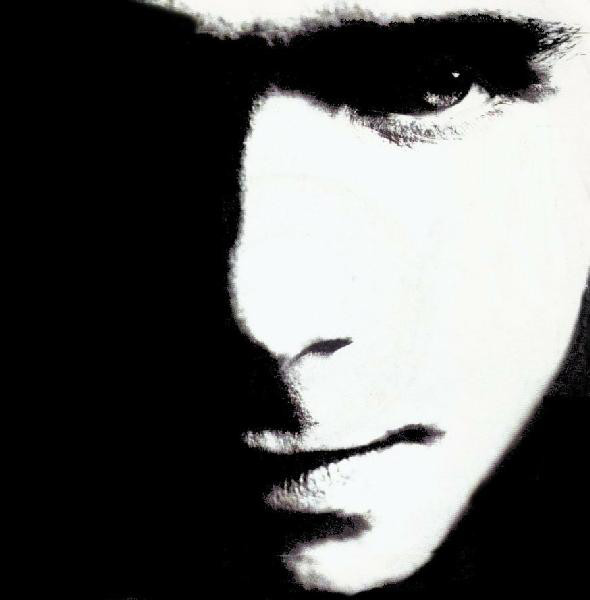
Meanwhile ‘Reach The Top’, his belatedly released 1989 song contribution to ASSOCIATES which finally saw the light of day in 2003, remains one of those great lost songs of that era. Since then, Haig has presented his ‘Cinematique’ instrumental trilogy and continued to release solo long players with 2013’s ‘Kube’ being the most recent offerings.
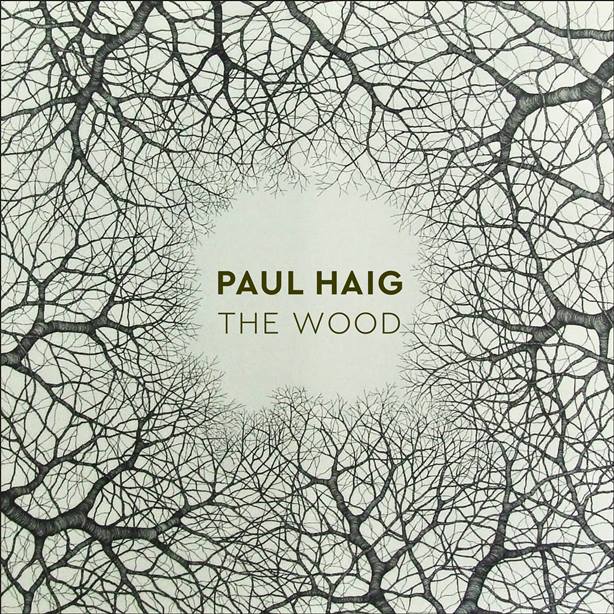
This Autumn sees Haig return to Les Disques du Crepuscule to present ‘The Wood’, his most ambitious studio album yet. An experimental exploration in glitch, house, jazz and more, ‘The Wood’ was written and recorded over a three year period with the spectre of twisted sonic technicians such as FOUR TET, FLOATING POINTS and LOVE OVER ENTROPY looming
Paul Haig spoke about his musical adventure in ‘The Wood’…
It’s been 5 years since your last album ‘Kube’, how do you look back on it?
I see it as the start of a new direction and launchpad for what I’m doing now. Like the new album, it took me a stupidly crazy amount of time to finish mainly due to the fact every time I returned to a track I added something new which took it in a different direction. I build huge sound and sample libraries over long periods which can give you too many choices sometimes. I think ‘Kube’ led me to this album.
‘The Wood’ is perhaps more experimental in nature, even compared with the ‘Cinematique’ series?
Possibly. I’ve certainly got much more into ‘found sound’ and atmospherics in recent years. The merging of genres is more extreme perhaps as I really don’t give a chuff what’s meant or not meant to work. If it sounds right, then it is. I guess when I have so many options now sound wise, then it’s like Christmas!
Those who may know you for JOSEF K and solo singles like ‘Something Good’ and ‘The Only Truth’ will find ‘The Wood’ something of a surprise?
I think so, it’s a long way removed from all that. I’ve been on this route for a long time so I sometimes forget about the previous stuff and that a lot of people are unfamiliar with what I do now.
It’s a worry in a way but you have to do your own thing and if people like it then it’s a huge bonus. I’m still listening to it and finding out more each time which is rare when it’s your own thing but for now it still surprises me.
How would you describe the concept of ‘The Wood’?
I know what it means to me and it somehow all hangs together and makes sense but I wouldn’t assume that would be the case for everyone who listens to it. I struggle a bit with ‘concepts’ sometimes as I don’t want to influence the listener too much but I guess you have to offer some kind of explanation otherwise..?
I think of nature, wilderness and the power of the elements. I’m aware of certain horror / supernatural and spiritual goings on throughout. Films like ‘The Wicker Man’, ‘The Witch’, ‘Night of The Demon’ come to mind, the novel ‘Pan’ by Norwegian writer Knut Hamsun. The darkness is apparent throughout the wood but there is also light flickering in the distance. If it’s possible to merge electronic music with sound elements from nature and wilderness, make it edgy and still enjoy listening to it, then that’s what I was trying to do. Heavy.
You’ve cited a number of artists who apply the glitch aesthetic to their work as being influential?
I’ve listened to producer / DJ artists for a long time now, FLYING LOTUS, GOLD PANDA etc. I like the way Kieran Hebden (FOUR TET) uses his sounds and especially the percussive elements, he has a unique production style.
In a way it’s all the same thing as it’s ever been, i.e. sampling, loops, chopping up and editing stuff, creating beats and atmospheres. It’s the technology that moves ahead and enables us to do so much more.
I was using ‘noiZes’ and mashed-up tapes, footsteps, feedback and broken radios even before I went solo a lifetime ago. Glitch has always been appealing. However there are some very talented people doing amazing things with electronic music, ONEOHTRIX POINT NEVER etc…
How did you go about the vocal sample production techniques that you used on ‘The Wood’? Did you create your own or was there a lot of library exploration?
There was a lot of that! I do try and blend in elements of my own voice and also record some spoken word stuff that I treat to sound something like old science broadcasts. I’m not too keen on the sound of my voice in the music I’m making now. It can be tricky to fit in so I tend to use vox samples and treat them with effects and pitch shifting.
‘Chasing The Tail’ sounds like it has a gospel choir and a string quartet trapped amongst all that sub-bass, while ‘I Heard Music’ is maybe the most conventional ‘song’ on the album but behind the deep house vibe, there’s the twist of strings?
Yet more sampling, layering, detuning and harmonizing for the vocals. I used the same kind of strings on those opening two tracks of the album. I was thinking of Glam Rock records like SLADE’s ‘Cos I Luv You’ and a T-REX ‘Ride a White Swan’ Soul / Disco strings hybrid which swirls about in the background.
‘The Wood’ title track plays around with your continued interest in jazz?
Yes, I don’t mind a bit of jazz in the right places. I really edited those parts to death and added tiny fragments of my own guitar parts to create a fatter sound. There were times when I had doubts as there were so many ideas going on at once, it took me a very long time to put things in the right places. The overall sound & atmosphere of the track at last gives me a sense of achievement but it was extremely mental, emotionally exhausting and it’s still a tiny bit scary to me.
What’s your own personal favourite track from ‘The Wood’?
I really don’t know. For me the album is still growing, it’s like I just left it and then it sprouted more branches (get it?) It sounds different each time now but in a way I seem drawn to the title track slightly more than others… sometimes.
The limited edition version of the album comes in a fabulously designed wood cased packaging, what was this inspired by?
It was really James Nice’s idea to do a limited edition and I think he had a source for the great packaging. Of course it helps that it’s wood.
You continue to surprise musically, have you decided what direction you are heading in for your next project yet?
I have a lot of extra tracks that I recorded over ‘The Wood’ period, in fact it could have easily been a double album but I felt I had to stop before going mad. I think maybe I might do another album in the ‘Kube’ / ’Wood’ mould, but I’ll have to find a few quirks to make it slightly different. Perhaps a new instrument or a bit more guitar and voice… who knows but it’ll be fun and difficult at the same time
ELECTRICITYCLUB.CO.UK gives its sincerest thanks to Paul Haig
Special thanks to James Nice at Les Disques du Crépuscule
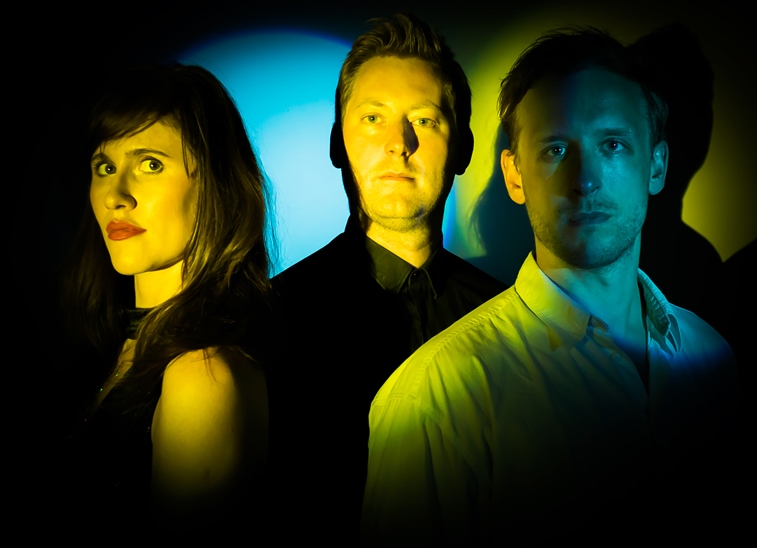
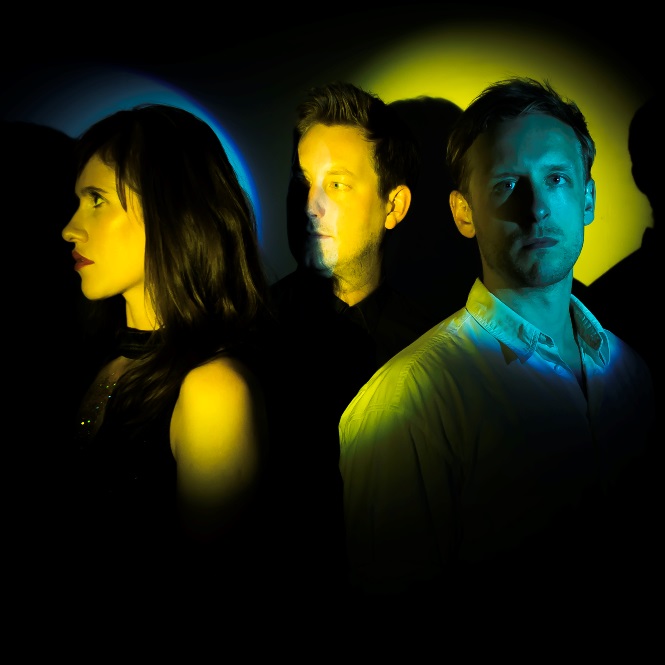
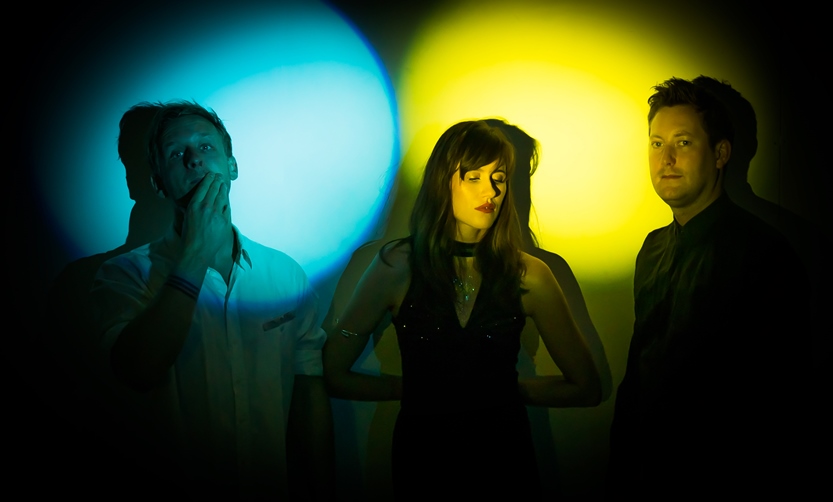
With their brand new album ‘Kinetik’, pop trio EKKOES are continuing their upward momentum following a prestigious slot opening for THE HUMAN LEAGUE on 2016’s ‘A Very British Synthesizer Group’ tour.
Comprising of Jon Beck, Dave Fawbert and Rosalee O’Connell, EKKOES released their well-received debut album ‘Elekktricity’ in Summer 2016. Three of its tracks were co-written and co-produced with MARSHEAUX’s production team FOTONOVELA, while respected Berlin based remixer Mark Reeder has been a notable champion of their music.
The new album’s launch single ‘You Got The Light’ is a catchy slice of shiny electronic pop which could be their most accomplished yet, while the rugged drive of the bittersweet ‘Love Won’t Save You Now’ maintains EKKOES’ aim for “maximalism”. That ambition continues in abundance with the seven and a half minute title track. A North West vibe emerges with ‘When You Wake’ on which O’Connell sings the verse lead, the guitar and synth backing echoing THE RAILWAY CHILDREN in their latter day Virgin guise.
The vibrant Italo house flavoured ‘Victim Of Love’ is not a cover of the ERASURE song but is equally danceable, while the spirit of PET SHOP BOYS can be heard loud and proud on ‘Without You I’m Nothing’, complete with muted synthetic trumpet solo.
Dave Fawbert from EKKOES kindly took time out from rehearsals for their album launch gig in London for ‘Kinetik’ to answer a few questions about their career to date…
What influences shaped the EKKOES sound?
It’s the clichéd answer but really it’s a combination of everything that we’ve ever listened to. You can write something and then realise later that it’s based on a snatch of lyric or melody from some long-forgotten hip hop track you listened to back in 1997 or something.
But I guess the artists we love the most come through the strongest: the pure pop songwriting of the likes of PET SHOP BOYS, ERASURE and Max Martin, the sonics of NEW ORDER and newer stuff like CHVRCHES, the precise guitar playing style of Johnny Marr, the atmospherics and beauty of SIGUR RÓS, a touch of MASSIVE ATTACK, the beats of LEFTFIELD, the euphoria of great trance – it’s all in there somewhere.
How did the dual male / female vocal template emerge?
Myself and Jon have always made music together and EKKOES was formed out of the ashes of a previous band – we just decided to do something new where it was just the two of us and we didn’t have to rely on, or wait for anyone else to do what we wanted (that went as far as me making the decision to learn how to produce as well, so we could literally do everything ourselves), so we didn’t initially plan on having any vocals other than Jon’s.
But we briefly worked with the legendary manager Jazz Summers – just before he had to step back from music due to illness – who suggested we try adding a female vocal into the mix. Rose was the first person to apply via a good old-fashioned rehearsal room advert, we tried her out on a couple of tracks (I think the first one was ‘Last Breath’, which ended up being our first album opener), and we liked what we heard – it just added that extra lift and dynamic to the songs. Now it’s hard to imagine our sound or songs without her.
In terms of writing and production, what is the creative dynamic between the three of you?
I’m a bit of a lone wolf when it comes to getting songs off the ground – I’ve tried co-writing and I find it quite difficult to have the confidence to experiment and work through a load of absolute rubbish, often for hours, before getting something great.
So usually I get a song 70% done on my own first and then take it to Jon, who’ll suggest improvements and changes, and then we usually work on the lyrics together before finishing off the rest of it.
We’ve written together for a long time and we can be very honest with each other – virtually every suggestion he makes ends up being the right one. Rose usually comes in at the end and works on the harmonies and extra backing vocals to take it to the next level – she’s a true pro and has a great ear for exactly what will work and benefit the song.
How did you come to the attention of Mark Reeder who then subsequently gave you your first official release with his remix of ‘Ice Cold’ on his ‘Five Point One’ album?
‘Ice Cold’ was the first track we ever stuck up on our Soundcloud and it was picked up by a blog called Electronic Rumors, who were big early fans of ours and passed it on to Mark Reeder cos they thought he’d be a fan. Lo and behold he was, and ever since has been a valued and enthusiastic supporter of ours. When he asked if he could remix the track for his ‘Five Point One’ album, then of course we were hugely flattered and said yes… it’s worth noting that this remix is credited to our old spelling of ECHOES – we should get that changed on streaming services actually!
You did a couple of new tracks ‘Electricity’ and ‘Heartbeat’ recorded with Mark Reeder that were released in 2017, how was it to be working with him again?
Those songs actually came about while we were putting our first album, ‘Elekktricity’, together – we looked at Mark being the producer of the record and gave him those two songs to work on. We loved what he did with them, but ultimately decided that we wanted the first album to be self-produced – I think we’d spent so long working towards it that we just wanted it to be our ‘statement’ of exactly who we were.
In the end, it was quite lucky really, as neither ‘Electricity’ nor ‘Heartbeat’ ended up on the album, as they didn’t quite fit with the other songs, so when Mark asked if he could use them for his ‘Mauerstadt’ album, it meant that they were nice new songs to bridge the gap between ‘Elekktricity’ and ‘Kinetik’. Our original version of ‘Electricity’ (which was mixed by the guys from SEEB, before they got mega famous with their brilliant Mike Posner remix) will be on ‘Kinetik’.
You also entered into a collaborative partnership with George Geranios and Nick Bitzenis aka FOTONOVELA who produce MARSHEAUX, how did that happen?
We originally got to hear of George Geranios because he wanted to release our first album in Greece on his Undo Records label whenever it was ready. Then Wall of Sound came knocking and, with George being a huge fan of Mark Jones, he then said he’d be happy to just licence it in Greece from WoS.
That never ended up happening which was a shame (more on that in a minute) but while we were waiting for things to be sorted, he asked us if we wanted to work on a track together for his new FOTONOVELA album, ‘A Ton Of Love’. He sent us some backing tracks as a starting point and we wrote ‘Fight The Feeling’ by chopping one up, rearranging it, writing the melody and lyrics and adding extra stuff to it. We were so happy with it we asked George if we could keep it to be the lead single for our own album and he said yes – but we said we’d do another one for their album.
Well the same thing happened again – twice! We wrote ‘Heaven’ and ‘Last Breath’ and asked if we could keep those too; luckily, George, being a lovely guy, said yes! Finally we wrote ‘Arrows’ and George and Nick got that one for ‘A Ton Of Love’. We also asked them to do some extra production work on ‘You Just Walked Away’ – a song that we re-recorded about five times before arriving at a final version, and their finishing touches were exactly what was needed.
EKKOES had a few label upheavals which led to a delay in the release of ‘Elekktricity’, how do you look back on what happened?
I won’t lie – it was enormously frustrating for us. We were signed to Wall of Sound and we had the album ready to go for around 18 months before it eventually came out – we waited and waited for label issues to be sorted out and eventually we realised that we’d be better off just going on our own.
We will always be grateful to Mark Jones though – we wouldn’t exist were it not for him… not long after forming, we bumped into him on Oxford Street just before we did what we thought would just be a one-off gig before we went off to do other things, and he asked us to send him our songs, so we thought there might be something in what we were doing after all. But yeah, it’s a shame we couldn’t have released that album earlier than we did – but we got there in the end.
What would you advise new acts to do with regards whether to go with a label or not?
That really is a difficult question to answer. It’s never been easier to release stuff yourself (and to record and produce it yourself) but the big problem is how to get anyone to take any notice? Ultimately the big labels still control most of the access to radio and big streaming playlists – and they have the cash that sometimes you need to get off the ground. If a good label approaches you with a sensible deal and an A&R that gets what you’re trying to do and will support you through ups and downs, then signing a deal can still be a very positive thing.
On the other hand, there are countless acts that have signed deals and then something changes at the label and they never end up releasing anything, get dropped, and finish, having never achieved anything. Either way, the bigger you can make yourself and the more work you do before going with a label, the better deal you’ll be able to command, and the more artistic control you’ll have. And, of course, if you can get popular without a label, then you’ll make a hell of a lot more money as you own everything.
Some good friends of ours, a band called THE DAYDREAM CLUB, have racked up millions of Spotify plays releasing totally independently, so it can be done – but it’s not easy, and you need patience, commitment and no small slice of luck. We’ve been lucky to release independently (KIDS Records is my own label, which I released stuff by lots of great artists on since 2005) but have the odd touch of help by people with industry connections to kickstart things – like Mark Jones, Mark Reeder and our manager Simon Watson.
You opened for THE HUMAN LEAGUE at the end of 2016, what was the experience like for you to actually go on an extensive UK and European tour?
It was nothing short of incredible from start to finish. It was everything we’ve ever wanted to do. Over the course of our band – and ones before this one – we’ve often been promised stuff that has never materialised, so we learned not to get our hopes up, lest they be dashed at the eleventh hour. Right up until the tour started we were convinced it was all going to fall through; that we’d be replaced, or one of us would break our arm or something.
So the first show, in a snowy Stockholm, was amazing for us – just to get through the gig, our first to crowd of that size in a very long time, and our first outside the UK. Of course, once we’d made it through without disaster, the next task was to actually get the set to be as good as it could be – there’s nothing like a run of gigs to enable you to sharpen every aspect of a set, from the music itself to the stagecraft. I remember by about the fourth or fifth show suddenly realising that I’d played the whole set without even thinking about what I was actually playing with my fingers, or worrying about it – I’d just been enjoying it and putting everything into the performance, and that’s an amazing feeling, to be in total control of what you’re doing.
The show in Berlin was particularly memorable – to play in such an iconic city of electronic music supporting pioneers of the game – I remember playing the first chord and then thinking, “well, if I drop dead now, I can still say I played a gig in Berlin”. And then the UK shows were a total joy – we had the set nailed, we were confident, and playing arenas for the first time – in Brighton, Birmingham and Sheffield – was a great experience. Of course, it helped that THE HUMAN LEAGUE crowd were so friendly and enthusiastic and keen to give a new band a chance – we had virtually full houses for every show.
Over the past few years, you’ve also opened for ERASURE, BLANCMANGE, BEF and xPROPAGANDA… have there been any concerns that EKKOES might get pigeonholed?
Yes, it’s definitely been something we’ve talked about, but fundamentally, we love and respect all of these bands and anyone should feel lucky to have the opportunity to play in front of those crowds. We’d love to also support newer big bands like CHVRCHES, ST LUCIA or anyone really, but so far we haven’t been asked and we’re not exactly going to turn down chances to play with these legends.
We personally don’t feel that we’re a total 80s retro act – while, of course, we are heavily influenced by it, I think we have plenty of other more modern influences that come through in our songs as well – but if fans of 80s acts like us, then we’re certainly not going to complain – it’s an honour that anyone takes the time to listen to our music or see us live.
You like your cover versions, with ‘Self Control’ on ‘Elektricity’ and ‘Wallflower’ on your new album ‘Kinetik’, they’re from quite opposite ends of the spectrum? Any other ones you’d like to try?
Making a cover version is an incredibly enjoyable experience. It sounds obvious, but simply because all of the pressure is off in terms of songwriting – you know it’s a great song, otherwise you wouldn’t be covering it – so you can concentrate purely on the sonics and the arrangement and really experiment in that department. It’s just really, really fun.
Of course, the world is full of covers these days so you have to try and find something interesting and unusual to stand out; ‘Self Control’, while obviously an iconic song, is still something of a cult hit (I’d never heard of it until my hairdresser recommended I check out the version by RAF – we literally recorded our version of it the day after), while ‘Wallflower’ isn’t even on Spotify – a travesty, given that we think it’s a total lost classic.
We have a constant and ever-expanding list of songs we want to cover – forgotten classics, overlooked album tracks, modern hits from a completely different genre – we’ve mulled over the idea of a covers EP at some point, but it would need to be seriously good for it to be worthy of releasing.
Your new album ‘Kinetik’ appears to be a step forward, with ‘You Got the Light’ possibly being your best single yet, have you made any changes in approach with regards recording?
Yes, we got stuck straight into it pretty much straight after finishing THE HUMAN LEAGUE tour. My initial instinct had been to do that whole introspective, darker thing on the second album, but I soon realised that actually we should do the exact opposite. I was constantly moaning about how boring so much modern pop music was – minimal, introspective, zero dynamic, virtually no big melodies or choruses – and suddenly thought, well why would we want to add to that? Why not go in the total opposite direction?
Go huge. Go technicolour. Make everything big and euphoric. Go ‘maximal’ instead of minimal. And the first two tracks that came out of it were ‘You Got The Light’ and ‘Wallflower’, and they set the template for the rest of the album. Sonically I wanted massive drums, big sweeping synths, huge vocals – I invested in a few new nice plugins and a new vocal mic to achieve all this. We also got Stu, our live percussionist, to record parts for virtually every track – he wasn’t on the first album and I think it makes a massive difference that he’s on ‘Kinetik’.
Some observers have found some of your music a bit on the polite side, what would you say to that?
It’s funny, listening back to ‘Elekktricity’ after finishing the tour with THE HUMAN LEAGUE, I kinda understood that. Playing the songs live we’d ended up beefing them up with extra guitar parts, Stu’s live percussion on top and the confidence of gigging them night after night – and they sounded massive. So listening back to the album, it did sound a little polite in comparison. I guess this is inevitable though really, and I’m still really proud of the album – ultimately, the songs, I think, are strong and will stand the test of time.
The new single is called ‘Love Won’t Save You Now’, what’s that one about and how did that come together in the studio?
It’s actually a song that’s been knocking around with us for a while. We’ve always loved it, and wanted to save it for the second album where it could really get its moment of glory. I’ve always liked songs that have the confidence to take their time building, knowing that the final payoff will be worth the wait, which is why we decided to have the song in two parts – to really build that tension and let that glorious synth pad roll around for the first minute and a half before any drums come in. When the first ‘big’ chorus kicks with, with guitars blasting away, that bubbling arpeggiated synth and Jon and Rose going for it, it really is a moment.
Lyrically – it’s a strange one, the chorus words just came to me without thinking as I was writing the melody, and then when me and Jon sat down to finish the rest of we realised it kinda sounded like a murderer – who regretted what they’d done, but a murderer nonetheless – on the run, so we just went with that theme. What would be going through your head if you knew the net was closing in on you and no one was going to believe you?
Which is your personal favourite song on ‘Kinetik’?
I think ‘Wallflower’ is probably my favourite – just because I have such an emotional attachment to that song; I loved it as a kid and have pretty much been waiting my whole life to cover it – and we even have the blessing of Gerry and Danny from MEGA CITY FOUR, who like our version, which means a lot.
But I’m also very proud of the last track on the album, ‘Nothing Here Lasts Forever’, which is totally restrained – there’s no drums, it’s just guitar, piano, some very subtle synths and Jon’s vocals – and it has a certain magic to it – it’s both desperately sad, but also quite touching I think. Stu says it reminds him of Johnny Cash’s version of ‘Hurt’ and I can’t think of much higher praise than that.
What are your hopes and fears for ‘Kinetik’ and the future of EKKOES?
I remember Jazz Summers telling us that if one person enjoys your song, then you’ve made a positive contribution to the world. You’ve created art from nothing, and you’ve improved one person’s life, no matter how small an improvement that might be. It’s always stuck with me, particularly as someone who previously worked in the music industry and saw how easy it was to get sucked into toxic talk of units, sales and profitability.
Our only hope is that more people like ‘Kinetik’ than dislike it, and that as many people like it as possible – be that a hundred, a thousand or a million. As for EKKOES, we want to keep making music as long as we’re able to, and as long as people are interested. It’s a simple answer, but it’s true.
ELECTRICITYCLUB.CO.UK gives its grateful thanks to Dave Fawbert
‘Kinetik’ is released by KIDS Records on 7th September 2018 in CD and digital formats
EKKOES play live at The Lexington in London on Monday 10th September 2018 with special guest RODNEY CROMWELL
BLANCMANGE’s Neil Arthur is probably the most prolific man in electronic music at the moment.
Hot on the heels of 2017’s ‘Unfurnished Rooms’ comes ‘Wanderlust’, an album which sees a more expansive sonic palette after the minimalistic approach of its predecessor.
Co-produced again by Benge, the synth collector extraordinaire best known for his work in JOHN FOXX & THE MATHS, WRANGLER and CREEP SHOW, it sees the continuation of a productive relationship which has also led to artists such as John Grant and Hannah Peel contributing their talents to the BLANCMANGE cannon.
Although best known for hit singles like ‘Living On The Ceiling’, ‘Blind Vision’ and ‘Don’t Tell Me’, since the return of BLANCMANGE in 2011, there have been no less than six full length albums released, twice as many as there were during the first phase… and all this without including Neil Arthur’s side projects FADER and NEAR FUTURE.
In a break from making preparations to head out on another concert tour this Autumn, Neil Arthur kindly chatted about the making of BLANCMANGE’s latest opus.
‘Wanderlust’ comes over as possibly one of your best bodies of work during your 21st Century comeback? What are your thoughts?
I’m just digesting what you just said!! *laughs*
It’s difficult from my point of view to answer that question because obviously, I’m very close to it and it’s not long since I’ve finished it. I’m about to dissemble and deconstruct the whole thing to understand it in a different way to take it out on tour. As far as writing and producing it, you’re always learning. I don’t want to repeat anything really.
You’re always looking to surprise yourself and if it continues like that, I’m happy. I don’t really have a formula, I’m just following my nose. I know it’s a bit dark and I’m not writing; even in the old stuff like ‘Blind Vision’, ok it was a pop song because it had dance grooves in it, but it’s not exactly a happy song. Neither is ‘God’s Kitchen’ or ‘Feel Me’ or ‘I’ve Seen The Word’.
The sound is sort of fuller, a bit more expansive maybe?
I don’t like putting too much in, like with ‘Unfurnished Room’s which was pretty minimal at times, there was a deliberate thing to really strip back. But with ‘Wanderlust’, I didn’t concern myself so much with that, although me and Benge didn’t put anything on it that wasn’t needed. If each individual part can’t stand up, you don’t put something over the top to cover it up!
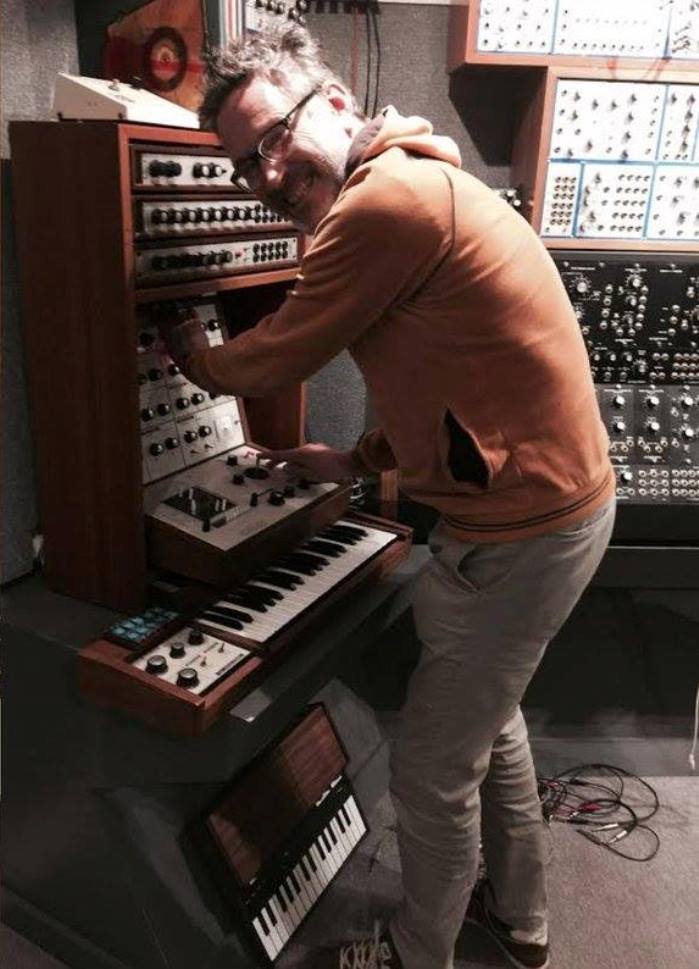
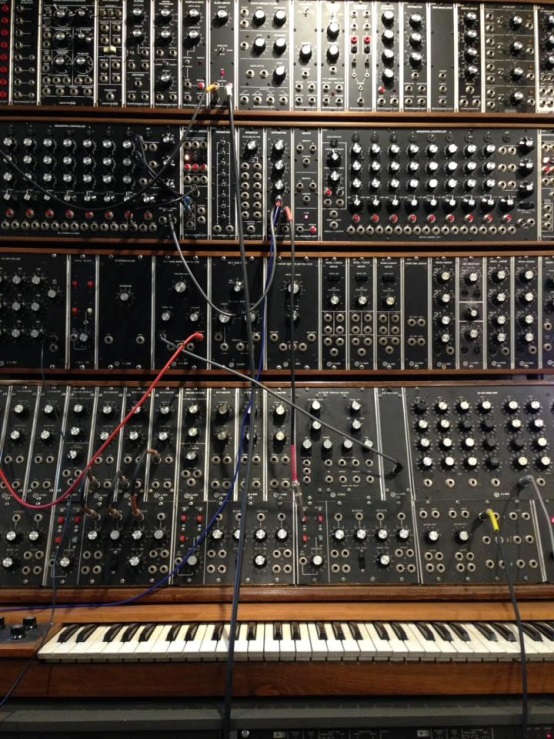
What I did was write the songs and send them down to Benge… we started replacing some sounds but my guitar stayed. Although David Rhodes is playing on one track, he didn’t do the others because Benge felt the guitar was working and served the purpose. With each of the synths, quite often we would replace but not add, we were just looking for better sounds. Benge is an analogue synth master, he has access to all this equipment but we don’t use everything.
Were there any particular synths you’d not used before that you got to play with?
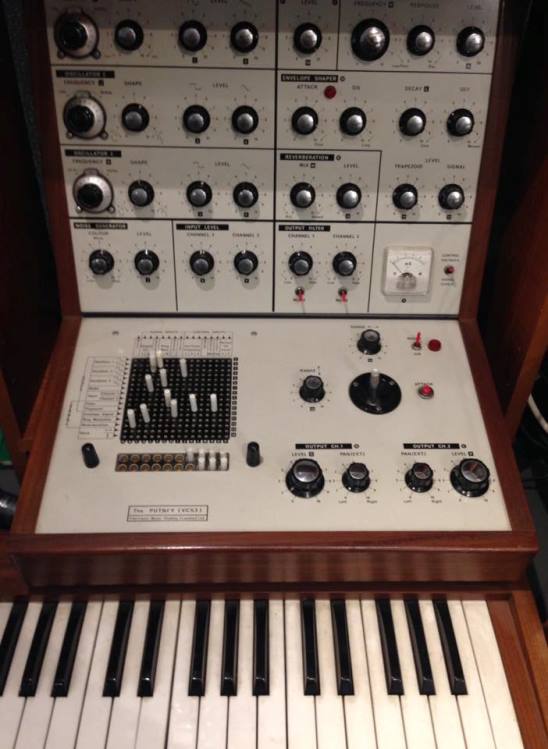
We used a Canadian synth called a Modcan and I’d never even seen one before, plus we used a Putney and I played it with the joystick on ‘Gravel Drive Syndrome’. There’s also a Buchla 100 which I remember we used on the ‘Wanderlust’ track itself. There are probably more verses and choruses on this album, it just came out that way although lyrically, I’m just carrying on my not-so-merry way. I’m trying to be as honest as I can, I feel so lucky to be able to do what I want to do, for better or for worse, exactly how I want it. Putting it together is so exciting. Some of the synths we use never sound the same twice! *laughs*
Has some of the sonic progress come because you are now comfortable working with Benge as this is your third album together? Is he now someone you can trust to bounce off and realise your ideas in the way you did with Stephen Luscombe?
It’s a very different situation, I don’t think there’s any comparison actually. Studios were very expensive back then and we only got in there when got a big record deal. Today, technology and the digital process allows you to do a lot of stuff as prep to take into another environment like the fantastic space Benge has, and that frees you up because you’re not clock watching. But we don’t just spend endless weeks there, Benge has lots of projects on, so we do have to think quite carefully about how to get all this done.
You make decisions quickly and stick with it, which is not a bad thing. You have to let stuff go, you could fiddle around forever and maybe make it better, but how much better? When I work on FADER with Benge, it’s completely different approach because whereas with BLANCMANGE, I write the embryonic songs and I take them to Benge so we develop them further. In FADER, Benge will send me the embryonic musical idea and I’m reacting to what he’s given me.
Aspects of that are how me and Stephen would work. But we’d rarely sit and write a song absolutely together ever. It could be Stephen would come up with an idea and I’d react to it, or I’d come up with an idea and he’d react to it. Sometimes, one of us would write most of it on our own and then offer it into the pot.
‘Distant Storm’ is unusual with its dance beats and arpeggios, it has an almost spiritual quality about it?
Sometimes you’re writing, you think “oh, I should do something with more dancey grooves” and quite a few songs start off like that; ‘Last Night (I Dreamt I Had A Job)’ from ‘Commuter 23’ started as a loop and developed from there but it doesn’t tend to extend through the album.
But this time, I wanted to do more dance grooves, ‘Insomniac Tonight’ which is not on the album was one and ‘Distant Storm’ was another; I wanted to sing it as though it was really detached with my voice being synthesized. So the song went down this route, we had a sequence going and Benge added another one to it and dropped it down so it went to nothing. KINCAID has done a remix which is sounding terrific.
‘In Your Room’ is a nice bit of robopop? Was it influenced by anyone in particular musically?
That started life a number of years ago and I kept it on the backburner, it felt right for this album. The intention was to leave it pretty minimal… lyrically it was about being content with something quite simple, to keep away from being out there, of being in your comfort zone. The idea came from when I used to visit my partner when she was a student, that to be together was enough.
With those two, you play with vocal treatments a lot, something which is quite prominent on the album overall including the closing title track?
On ‘Wanderlust’, we used a Roland vocoder to treat some of the vocal parts in the latter part of the song and we felt it worked better at that point. You sometimes have to back off a bit and give a bit more space by changing the sound of the vocal, to create a more interesting type of vista sonically.
‘Not A Priority’ is like gloomy KRAFTWERK, I first thought those female backing vocals were you pitch shifting yourself and then I found out it was Hannah Peel!!
Ha ha! Hannah’s going to be well pleased when I tell her that! *laughs*
The idea of this was to keep it really simple and I wanted the music to carry the voice and storyline, so it’s borderline minimal wave. I wanted the vocal to be a straight delivery and it was Benge who suggested Hannah to sing higher register backing vocals. When she sent it back, she’d added vocal treatments other than on the chorus, so we used some of those which was fantastic.
I’m happy for people to have their own interpretation and if I start saying “this is what the song is about”, it’s a bit like telling you the last page of a book before you’d read the first, I like people to make their own minds up.
It drives me nuts when I see people living their lives in certain ways on social media, you’re thinking “hold on a minute, what about the rest of the people? Ease up a minute!”
There’s this feeling of a lack of empathy in the world and sometimes, you get the impression that people don’t see each other as equals in so-called friendship situations. I think a lot of this is down to the things that can be said without feeling the ramifications of what’s been said, for example via social media or text message or email. They’re very impersonal but to the reader, they can carry a massive weight. It’s very easily misconstrued.
Beyond that, in friendships, there are feelings where it’s not reciprocal, there’s not a balance. We all deserve to be respected, it’s an extension of that but you get the impression some people value themselves higher than certain friends. It’s very easy to distance themselves from the reality of what’s going on.
People will say things in a text message what they wouldn’t be able to say looking you in the eye. How did you think I was going to feel? It’s going to be much better just to have a talk about this.
‘Talking To Machines’, continues your love / hate relationship with smart phones and what is now becoming anti-social media?
There’s the ambiguity there. Everybody’s had this experience to try and deal with anything from banks, government departments or whatever it might be, you’ve got to go through this Kafka-esque nightmare just to get to the person you want to talk to. So there’s that which is on a sort of superficial level. But there’s other side of it when you could be having a conversation with somebody and you might as well be talking to a f***ing machine and they’re in the same room as you, it’s like talking to a brick wall! *laughs*
I like the idea of how we do talk to a lot of machines these days, but we interact with them. I mean, I’ve made a lot of music with them and I love it, I talk to them and they talk back to me. My reference for the music was actually PLASTIC ONO BAND and a bit of THE FLYING LIZARDS! There’s a good and a bad thing…
‘TV Debate’ covers politics and nobodies becoming celebs? There’s rather a lot of it at the moment!
I gave myself a bet that I could get Jacob Rees-Mogg, the b*stard, into a lyric! Smarmy b*stard! *LAUGHS LOUDLY*
I was listening to the radio one morning rather quietly and the bits I picked up, these words came out and I thought “I’m going to have them!”. I had been listening to some Northern Soul so when it got to the chorus, I thought I’d put that sort of rhythm on it and it went from there, this kind of poem that found itself in a song. It’s just disjointed fragments of observations.
I like what you’ve said, but the intention is to provoke some thoughts. I’m creating imagery and now I’ve got politicians doing a conga, it’s a mess! We’re a nation who watch cookery programmes but can barely cook!
You are extremely prolific and have now done twice as many BLANCMANGE albums as you did in your first phase, and this does not include NEAR FUTURE and FADER. How do you do it?
I am driven to write, it’s my art and I want to be creative. It’s one of the places I’m happiest and most comfortable. I’m bloody lucky to get to do it because I have a fantastic manager who helps create situations where I’m able to collaborate with new people, like Jez Bernholz and Benge.
I have no intentions of stopping and will do it as long as I am able to in the future. Within reason because I have my own label, we release when we want to. I’m not thinking about having to write singles and I’m not a young man anymore, I don’t do a lot of interviews or many photo sessions, all these things. But I’m happiest writing. although I love performing live… I don’t particularly enjoy touring, but enjoy the bit on stage.
Although I did a lot of stuff in the intervening years after BLANCMANGE first stopped, I’m catching up in what I think is unfinished business, I’m just in a position where I’m experimenting all the time. I do what I want and it’s a bonus that some people like it. I absolutely love collaborating, I’d advise anybody to do it.
With two albums released in two years, that must throw up some interesting conundrums with the setlist for the upcoming tour? How much flexibility can you give it in terms of pre-programming and learning new songs?
A good question! I don’t have a direct answer, obviously I’m promoting ‘Wanderlust’ so there will be a number of songs off there, and I haven’t decided which ones yet. We’re going to do a couple from the last album, but I’m thinking of a couple of surprises from several decades ago and giving them an airing. There will be the usual suspects because I know that the dedicated audience who come to see us, although they embrace the new material, they really enjoy hearing some of the old stuff.
It will be a balance, I’ve got quite a catalogue now as well as the stuff Stephen and I did all those years ago, so there’s a lot of songs to choose from. We normally do about 22 songs in rehearsal and a couple don’t make it but they’re there in case we decide to change it while were on tour. But once we’re there, we tend to jiggle it round and then it’s bedded in and that’s how it’s going to be.
ELECTRICITYCLUB.CO.UK gives it sincerest thanks to Neil Arthur
Additional thanks to Steve Malins at Random Music Management
‘Wanderlust’ is released by Blanc Check on 19th October 2018 in CD, vinyl LP and digital formats, pre-order from http://blancmange.tmstor.es/
BLANCMANGE 2018 ‘Wanderlust’ tour includes:
Norwich Arts Centre (1st November), Nottingham Rescue Rooms (2nd November), Cardiff Acapela (3rd November), Bristol The Fleece (4th November), Darwen Library Theatre (7th November), 8 Edinburgh Voodoo Rooms (8th November), Glasgow Oran More (9th November), Newcastle The Cluny (10th November), Brighton The Old Market (15th November), Southampton Brook (16th November), Dover Booking Hall (17th November), Wolverhampton Robin 2 (22nd November), Gloucester Guild Hall (23rd November), Northampton Roadmender (24th November), Leeds The Wardrobe (29th November), Derby Flowerpot (30th November)
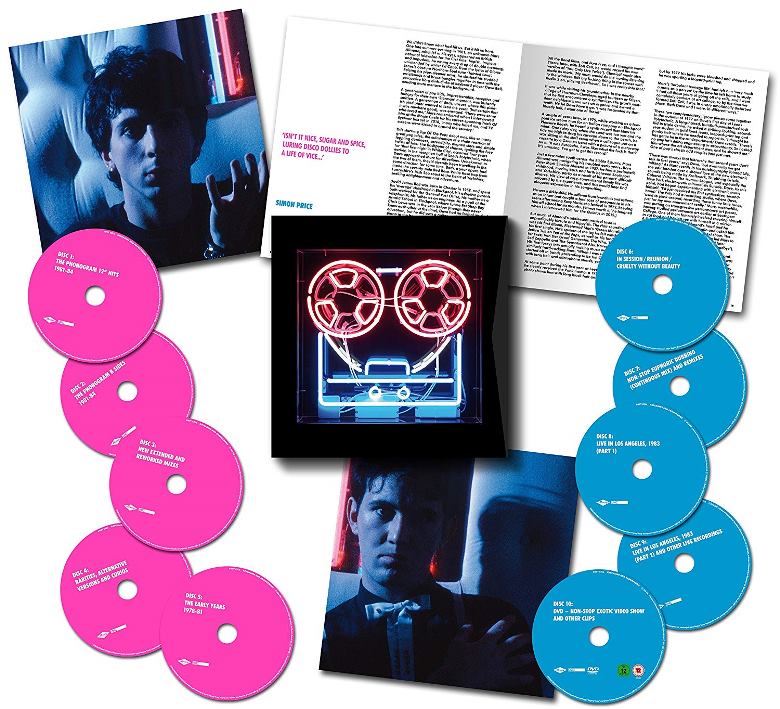
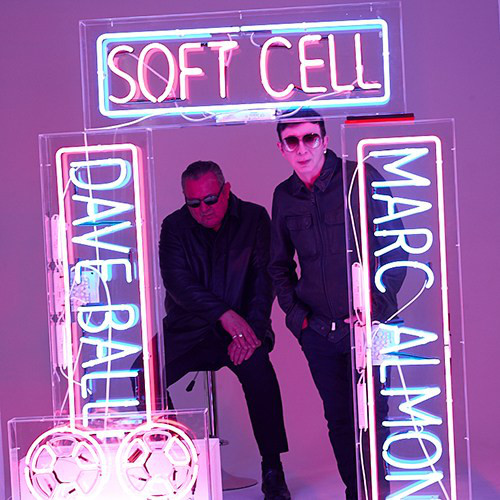
Celebrating their career with a lavish 10 disc boxed set, ‘Keychains & Snowstorms: The SOFT CELL Story’ features material from both periods of the duo including their imperial phase when they had a continuous run of hit singles between 1981-1984 and the 2001-2003 reunion.
Marc Almond and Dave Ball met at Leeds Polytechnic and at the time of their wider breakthrough on the ‘Some Bizarre Album’ and their subsequent debut long player ‘Non-Stop Erotic Cabaret’ in 1981, SOFT CELL were perhaps rated higher than DEPECHE MODE.
Their cover of ‘Tainted Love’ was one of the biggest UK singles of 1981, selling over one million copies and was on the US Billboard Hot 100 for a then-record of 43 weeks. But despite all the success, the pair ultimately imploded but their template was taken to the worldwide audience it deserved via PET SHOP BOYS.
While Almond continues a fruitful solo career and Ball found success with THE GRID, they are both best remembered for SOFT CELL. On their singular history alone, SOFT CELL are up there with THE HUMAN LEAGUE and DURAN DURAN, and like their contemporaries, they exploited the then-new format of the 12 inch single.
All the singles from ‘Tainted Love’ to ‘Down In The Subway’ via ‘Say Hello, Wave Goodbye’ and ‘Where The Heart Is’ are included in their extended versions, but the longer variations of ‘Bedsitter’ and ‘Torch’ are masterpieces in their own right, seamless productions where you literally cannot hear the join, mainly because they were recorded as developing stories outside of the expected three minute radio edit.
And then there were the B-sides which SOFT CELL also excelled at, again all presented in their extended versions. From the reflective solitude of living away from home in ‘Facility Girls’ to the hilarious tail of teenage rebellion in ‘It’s A Mug’s Game’ where Almond confessed that he actually hated ‘Deep Purple In Rock’ along with ‘Led Zeppelin II’ and couldn’t “wait until I’m 21 and I can tell them all to sod off!”, the music connected with young outsiders.
And Almond wasn’t afraid to express how anxiety was playing with his mind, as reflected in the superb chemical fuelled ‘Insecure Me’ which featured a rap from the appropriately named Cindy Ecstasy.
‘Keychains & Snowstorms – The SOFT CELL Story’ features a disc of new extended and reworked mixes supervised by Ball which he said was “just tightening a few things up as a lot of the original stuff was all played manually”. These naturally achieve mixed results; on the Lateral Mix of ‘Say Hello, Wave Goodbye’ for example, some of Dave Tofani’s clarinet sections from the original 12 inch have been dropped in and although it is an improvement on the bland 1991 re-recording, nothing can touch the emotive tearful resonance of the definitive 1981 version.
Another case in point is the new ERASURE remix of ‘Bedsitter’ which offers a chunky bass and fat beat, but the melody is replaced by a heavy guitar swirl; despite including the 12 inch rap, it’s a little disappointing. However, the ‘Hallowe’en Mix’ of Martin is leaner and works well while the ‘Wasted On The Young Mix’ of ‘Youth’ stretches out the drama and will please Cellmates who have always longed for an extended mix.
Indeed, from the rarities and curios collection, the previously unreleased extended version of ‘Forever The Same’ (which was intended as a single before the intervention of the duo themselves) will be welcomed. Pleasingly, ‘The Girl With The Patent Leather Face’ which secured SOFT CELL their earlier acclaim still freaks and creeps as the undoubted standout from the ‘Some Bizzare Album’ along with DEPECHE MODE’s ‘Photographic’.
The Daniel Miller produced ‘A Man Can Get Lost’ remains a great lost single, overshadowed by the proto-house of ‘Memorabilia’ which appears in both its original Daniel Miller mix and the remixed ‘Non-Stop Ecstatic Dancing’ version with Cindy Ecstasy and the horns of John Gatchell. The anti-consumerist electronic art piece ‘Persuasion’ from the same recording session at Stage One is still (if not more) relevant today, while the sub-two minute Daniel Miller take of ‘Metro MRX’ for ‘Flexipop’ borrows the same synthetic rhythm track as DEPECHE MODE’s ‘New Life’ to accompany Almond’s snarls of “he’s a mutant!”
Of course, the original ‘Metro MRX’ came from SOFT CELL’s debut ‘Mutant Moments’ EP released in October 1980 and it’s featured here in full. From it, the wonderful ‘L.O.V.E Feelings’ is a touching gem, a sign of things to come with basic but beautiful synth sounds and an air of John Barry’s ‘Midnight Cowboy’ while ‘Potential’ is something of a metronomic buzzfest.
A number of interesting demos find their way onto the box; ‘Tainted Love’ is more rigid but has appeal and potential, coming over a bit like FAD GADGET while ‘Bedsitter’ is still lively, the klanky Korg Rhythm KR55 adding some home recording charm. There’s also the bonus of the previously unreleased ‘Red Tape, Sticky Tape’ and Cellmate favourite ‘Martin’ in its 1980 demo incarnation.
Previously from ‘The Bedsit Tapes’ and not in a dissimilar tone to ‘The Girl With The Patent Leather Face’, the synth bass heavy cover of BLACK SABBATH’s ‘Paranoid’ presents out of tune electronics and Almond screaming like he’s trapped in the gutter, while the solid triple bassline of Ball’s Korg SB100 Synthe-Bass emerges in ‘Science Fiction Stories’. The raw ‘Bleak Is My Favourite Cliché’ does what it says on the tin, embroiled in winter of discontent dystopia but with hidden melody and an edgy gothique. The 6/8 rhythmic template of ‘Mix’ sees a development into pop like THE HUMAN LEAGUE’s ‘Empire State Human’ although Almond is suitably wayward.
As usual with these boxed sets, a number of live recordings are included and from the Leeds Polytechnic Fine Art Christmas party in December 1979, ‘Walking Make Up Counter’ captures the electro-punk aspect that showed they had more in common with SUICIDE, rather than the clean KRAFTWERK inspired lines of OMD.
And speaking of Messrs Vega and Rev, fast forward to a Los Angeles show in 1983 and there’s a frenzied cover of ‘Ghost Rider’ with Gary Barnacle on sax which provides an interesting curio. Probably the best known SUICIDE song, Almond smirks that “I love a bit of Nihilism”; what’s also noticeable is that his live vocals lave improved considerably from earlier live tapes without losing his energetics and passion.
In terms of capturing the rawer aspects of first phase SOFT CELL, the 1981 BBC Radio 1 session for Richard Skinner does that best. While unpolished, ‘Entertain Me’ was good fun complete with fluffed cues while the brilliant ‘Seedy Films’ was much faster than the final album version and possibly better for it.
When SOFT CELL unexpectedly got back together for the start of the 21st Century, it was like unfinished business and two brand new songs for 2002’s ‘Very Best of’ collection along with the ‘Cruelty Without Beauty’ album were duly delivered. The romp of ‘Divided Soul’ still comes over like a dirty version of ‘Sailing On The Seven Seas’ by OMD and a reinterpretation of ‘The Night’ generates thoughts of how things might have panned out had that Northern Soul staple made famous by FRANKIE VALLI & THE FOUR SEASONS been chosen to be recorded as a single in 1981 instead of ‘Tainted Love’. But the brilliant brass assisted swipe at the X-Factor generation of ‘Desperate’ was perhaps the reunion’s best fruit of labours, although the enjoyable comeback single ‘Monoculture’ aimed at the same target while ‘Last Chance’ provided a fitting epilogue to ‘Say Hello Wave Goodbye’.
The new special ‘Non-Stop Euphoric Dubbing’ continuous mix begins with a variation on the haunting ‘Barriers’ which works well as a lead into ‘Numbers’. Working like an imaginary horror film soundtrack as opposed to a dance megamix, it is heavy and cinematic in sound. ‘Youth’ and ‘Where The Heart Is’ are particularly effective with the dub elements of Almond’s voice echoing in and out, seguing into the Richard X Dub of ‘Seedy Films’ which maintains its sleazy edge without sounding too contemporary.
The inclusion of ‘L’Esqualita’ provides some fabulous gothic menace while ‘Loving You, Hating Me’ and ‘Baby Doll’ prolong the claustrophobic tension. A rework of ‘Facility Girls’ offers respite into ‘Little Rough Rhinestone’ before concluding with Dave Ball’s Lateral Dub treatment of ‘Say Hello, Wave Goodbye’.
As well as 9 discs of music, ‘Keychains & Snowstorms – The SOFT CELL Story’ includes a DVD collecting together TV appearances, promo videos, archive 1981 concert footage and the notorious ‘Non-Stop Exotic Video Show’ which ironically saw the unmissed ‘News Of The World’ tabloid accuse SOFT CELL of attempting to corrupt their teenage audience.
Everyone from FRANKIE GOES TO HOLLYWOOD, BRONSKI BEAT, ERASURE and PET SHOP BOYS to NINE INCH NAILS, PSYCHE, FISCHERSPOONER, TIGA and HERCULES & LOVE AFFAIR have much to thank Marc Almond and Dave Ball for.
It’s amazing to think how much of an impact SOFT CELL had in popular culture. Rather fittingly, Dave Ball said to ELECTRICITYCLUB.CO.UK of ‘Keychains & Snowstorms: The SOFT CELL Story’: “It’s got a lot of stuff, there’s a great book that comes with it which has got quotes from people like Neil Tennant and Trent Reznor, so it’s interesting … if anybody is a serious fan, I think it’s a must!“
We use cookies to ensure that we give you the best experience on our website. If you continue to use this site we will assume that you are happy with it.





 , his belatedly released 1989 song contribution to
  , his most ambitious studio album yet. An experimental exploration in glitch, house, jazz and more, ‘The Wood’ was written and recorded over a three year period with the spectre of twisted sonic technicians such as FOUR TET, FLOATING POINTS and LOVE OVER ENTROPY looming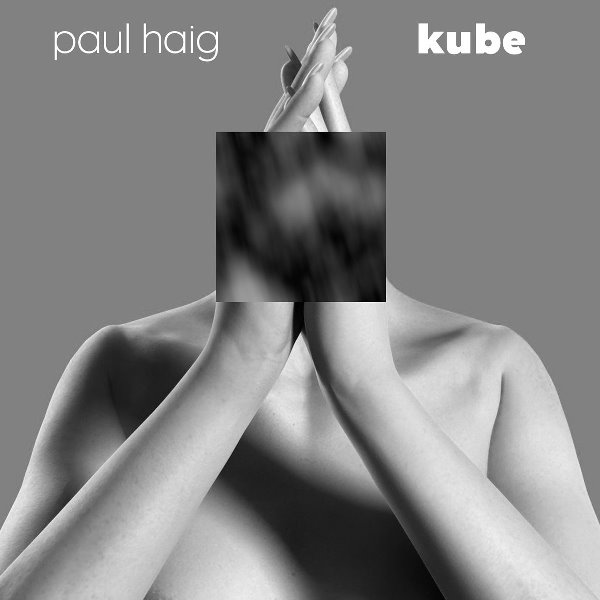
 led me to this album.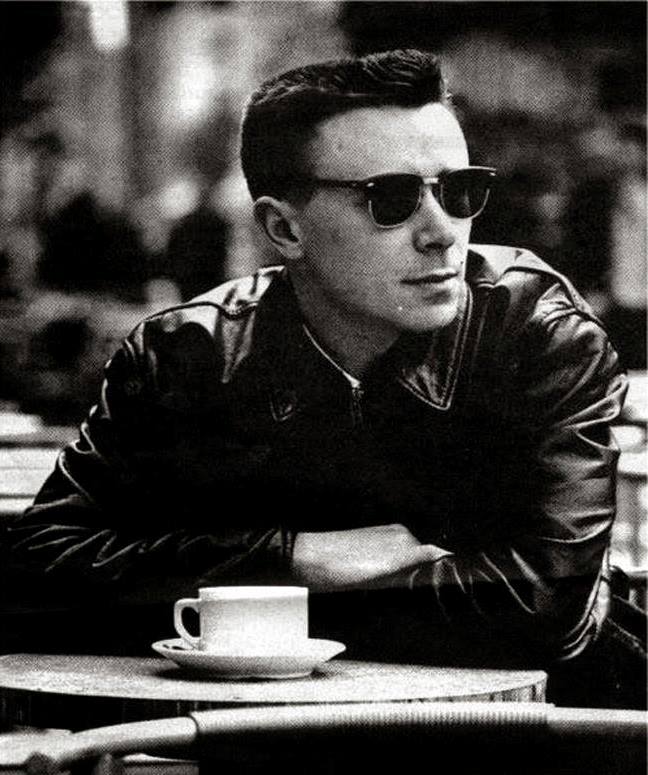
 in Summer 2016. Three of its tracks were co-written and co-produced with MARSHEAUX’s production team FOTONOVELA, while respected Berlin based remixer Mark Reeder has been a notable champion of their music.
 to answer a few questions about their career to date…
 album, then of course we were hugely flattered and said yes… it’s worth noting that this remix is credited to our old spelling of ECHOES – we should get that changed on streaming services actually!
 album, it meant that they were nice new songs to bridge the gap between ‘Elekktricity’ and ‘Kinetik’. Our original version of ‘Electricity’ (which was mixed by the guys from SEEB, before they got mega famous with their brilliant Mike Posner remix) will be on ‘Kinetik’.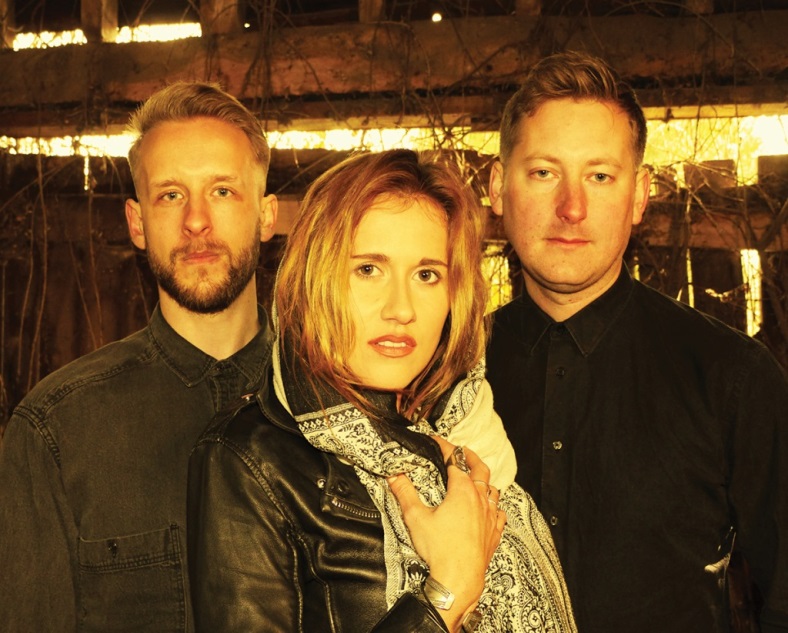



 features a disc of new extended and reworked mixes supervised by Ball which he said was “just tightening a few things up as a lot of the original stuff was all played manually”. These naturally achieve mixed results; on the Lateral Mix of ‘Say Hello, Wave Goodbye’ for example, some of Dave Tofani’s clarinet sections from the original 12 inch have been dropped in and although it is an improvement on the bland 1991 re-recording, nothing can touch the emotive tearful resonance of the definitive 1981 version.

 featuring two new songs
  and
and  not included in the boxed set is released on 28th September 2018
Follow Us!