
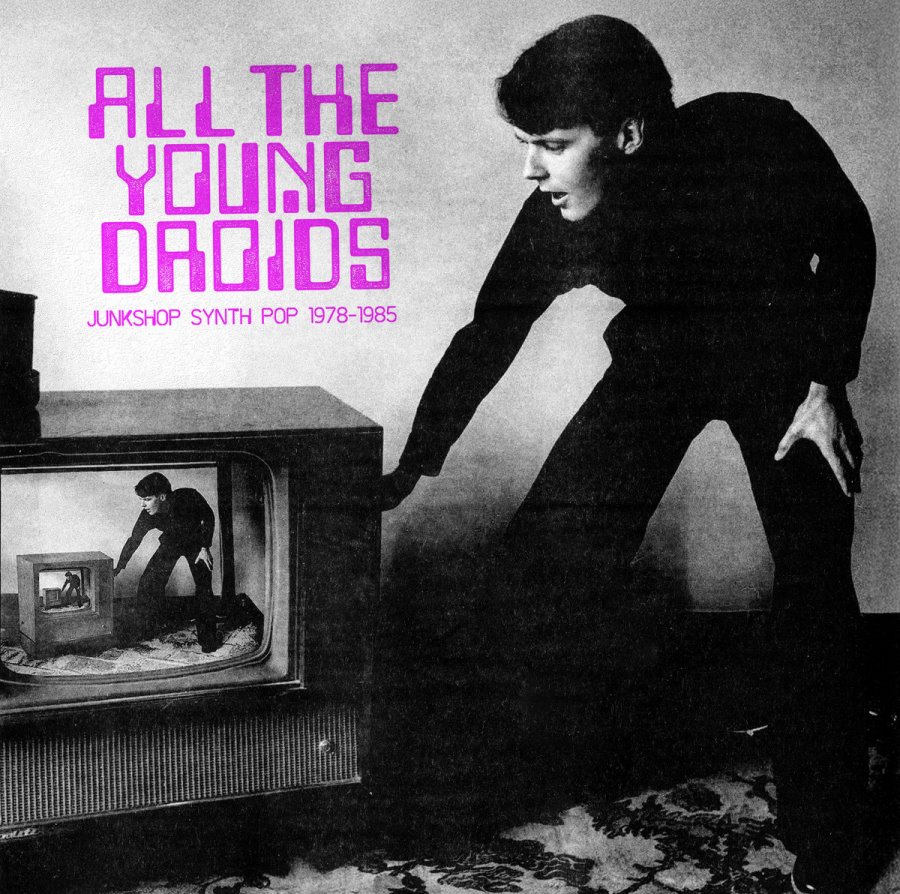
‘All The Young Droids: Junkshop Synth Pop 1978-1985’ is a new compilation that gathers obscure electronic pop from an era when both major and independent record labels were looking for the next Gary Numan.
With the man born Gary Webb taking this new waveform to the top of the UK singles chart in 1979 not just once but twice, the adoption of affordable synths became an entry point to those seeking fame and fortune. While OMD, DEPECHE MODE and THE HUMAN LEAGUE became chart fixtures, many others would not.
Compiled by Philip King whose day job is as a picture researcher at Uncut magazine, according to NME journalist Nick Kent back in the day, this was a period of “blokes with dodgy haircuts hunched over keyboard-operated machines stuffed with wires and do-it-yourself tone oscillators making sounds like a brood of geese passing gas in a wind tunnel”. But with the eventual backlash against synths and the rise of digital technology that could emulate real instrumentation, the inevitable end came “not with a blood-curdling bang but with a cheap, synthesized, emasculating whimper.”
As the recent well-received reissue of Life Is A Grand’ by Henry Badowski and the release of 1981 demo recordings of B-MOVIE as the ‘Hidden Treasures’ album have proved, there is present day enthusiasm from synth music fans for little known or previously unreleased tracks from the past. This more than highlights the state of modern synth which continues to deceive, with the quality of VSTs and their array of classic sounds masking a wider deficiency in basic songwriting.

Opening proceedings on ‘All The Young Droids’ are Belgian duo DESIGN with ‘Premonition’ from 1983. Mixed by Dan Lacksman of TELEX using a Yamaha CS-15, Roland Juno-6, Roland TR-808 and no sequencers, there is an appealing Walloon detachment with Gallic girly refrains while the sound quality cannot be faulted.
From the Socialist Republic of South Yorkshire, VISION had Paul Statham from B-MOVIE temporarily join in 1982 at the invitation of vocalist Russell Bonnell in time to appear on ‘Lucifer’s Friend’; while its morose vocal delivery was very much de rigueur of the times, it is rich in bright keyboard melodics. A bouncy machine pop number from 1981, Selwin Image’s ‘The Unknown’ is not short of catchy hooks either but limited to self-release at the time on cassette, it was destined never to be widely heard.
A collaboration between Peta Lily and Michael Process, ‘I Am A Time Bomb’ is a delightfully odd feminist synth pop tune that does sound like one of Pamela Stephenson’s pop skits on ‘Not The Nine O’Clock News’, so it’s shame there is no wide eyed big haired visual accompaniment to this. Meanwhile, if Spizz did ‘Where’s Captain Kirk?’ as a synth track, then Kiwi Alasdair Riddell’s ‘Do You Read Me?’ is what it might have sounded like; its rousing Moog Sonic Six solo is rather magnificent.
Released in 1978, ‘The Ultimate Warlord’ was a favourite on the dancefloor of at The Blitz and it shines with a spiritual quality despite the spacey vocal detachment. This was the time when Daniel Miller launched THE NORMAL and produced by him, ‘Science Fiction’ by Alan Burnham is one of the better known recordings thanks to its recurring inclusion on a number of cult synth compilations; as no-one has ever tracked Mr Burnham, was he actually the Mute Records supremo all along?
Written and produced by Andreas Dorau while he was still at school and featuring various class mates on vocals, the original German language ‘Fred Vom Jupiter’ is a cult jewel of the era that got a UK release on Mute Records in 1982; it however loses in something in its English translation but remains delightful just the same.
With rousing crossover potential, John Howard’s ‘I Tune Into You’ was a 1980 major label release on CBS produced by Nicky Graham who later was the studio brains behind BROS. Meanwhile in another Goss twins connection, management interest came from Tom Watkins who also steered PET SHOP BOYS during their imperial phase but the partnership was not to be.
The eccentric Richard Bone was another cult figure of the era and written to test his then-new TEAC 4-track Portastudio, ‘Alien Girl’ from 1982 was one of several excellent singles made by the Anglophile New Yorker and bizarrely, a No1 in the Hong Kong dance music charts.
One person who was to have mainstream UK hit with ‘Hey Matthew’ in 1987 was Karel Fialka who had appeared on Virgin’s 1980 ‘Machines’ compilation with ‘The Eyes Have It’. From the year before, the self-released ‘Armband (The Mystery Song)’ remains a good example of garage synth based around a MicroMoog. Someone who had already tasted fame was THE GLITTER BAND bassist John Springate who in 1985 issued a slice of mad dystopian prog synth in ‘My Life’; comprising of three very different sections crammed into 4 and a half minutes, in places it sounds like DRAMATIS who were the original Numan band!
Playing to the robotic clichés of Futurism often associated with synth, THE MICROBES’ excellent ‘Computer’ is all staccato semi-spoken vocals to emulate John Foxx while THE GOO-Q’s messy ‘I’m A Computer’ utilises a vocoder that has been mixed far too loud! From 1982, ‘Famous Names’ by INCANDESCENT LUMINAIRE actually could have been autobiographical as DEPECHE MODE attended one of their gigs in their hometown of Stoke but while a good effort, it lacks the proficiency and clarity of the Basildon boys.
Using the Roland TB-303 Bass Line and TR-06 Drumatix combination, 1984’s ‘No Motion’ by DISCO VOLANTE is rhythmically tight but as with much of today’s electronic pop, it lacked a solid tune. However, it is a fascinating technical time piece before the 303 was used and abused in acid house. Dee Jay Bert and Eagle’s ‘I Am Your Master’ though is something of a novelty and what a Dutch Vincent Price impersonator doing a drone soundtrack for a Dracula movie would sound like.
And proving that those who work in the music press are just frustrated musicians, DREAM UNIT is revealed to be Graham ‘Mick’ Meikleham, now Production Editor at Uncut Magazine; while ‘Drop In The Ocean’ has some absorbing synth lines, he probably made the right career choice.

Other tracks such as Ian North’s ‘We’re Not Lonely’, the lo-fi synth instrumental ‘It’s Not What You Are But How’ by SOLE SISTER or the eponymous arty tone poem ‘Gerry & The Holograms’ are less immediate, but no less appealing if one prefers less melody. But the point of this collection is that the majority of these acts were writing and producing pop songs with wider ambitions, even if was to just become big fishes in their own esoteric ponds.
If you liked Cherry Red’s ‘Electrical Language – Independent British Synth Pop 78-84’ boxed set, Bob Stanley & Pete Wiggs’ ‘The Tears Of Technology’ or ASPRA’s ‘Play For Tomorrow Vol.1’ but wished there were fewer established acts, then ‘All The Young Droids: Junkshop Synth Pop 1978 -1985’ is for you. Painting a picture of beautiful failure, someone’s junk can easily be another’s treasure and there are plenty included here.
‘All The Young Droids: Junkshop Synth Pop 1978 -1985’ is released 11th July 2025 on as a transparent pink or black double vinyl LP and double CD by Night School / School Daze Records, available from https://night-school.bandcamp.com/album/all-the-young-droids-junkshop-synth-pop-1978-1985
https://nightschoolrecords.com
Text by Chi Ming Lai
7th July 2025
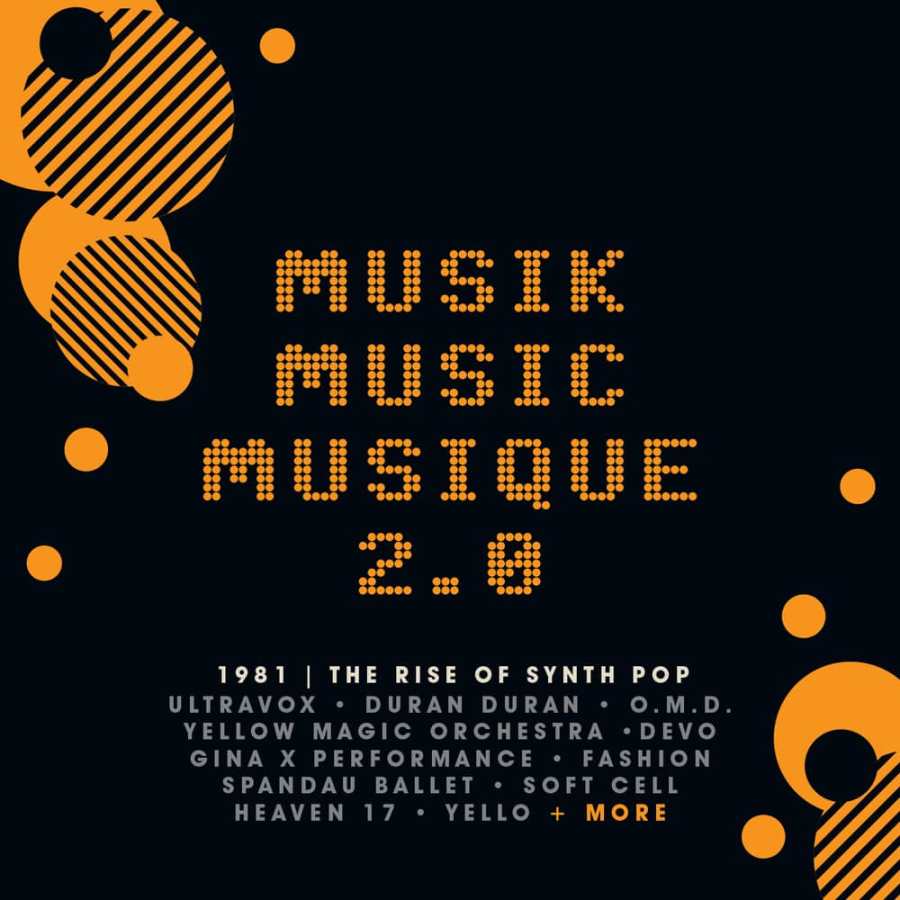
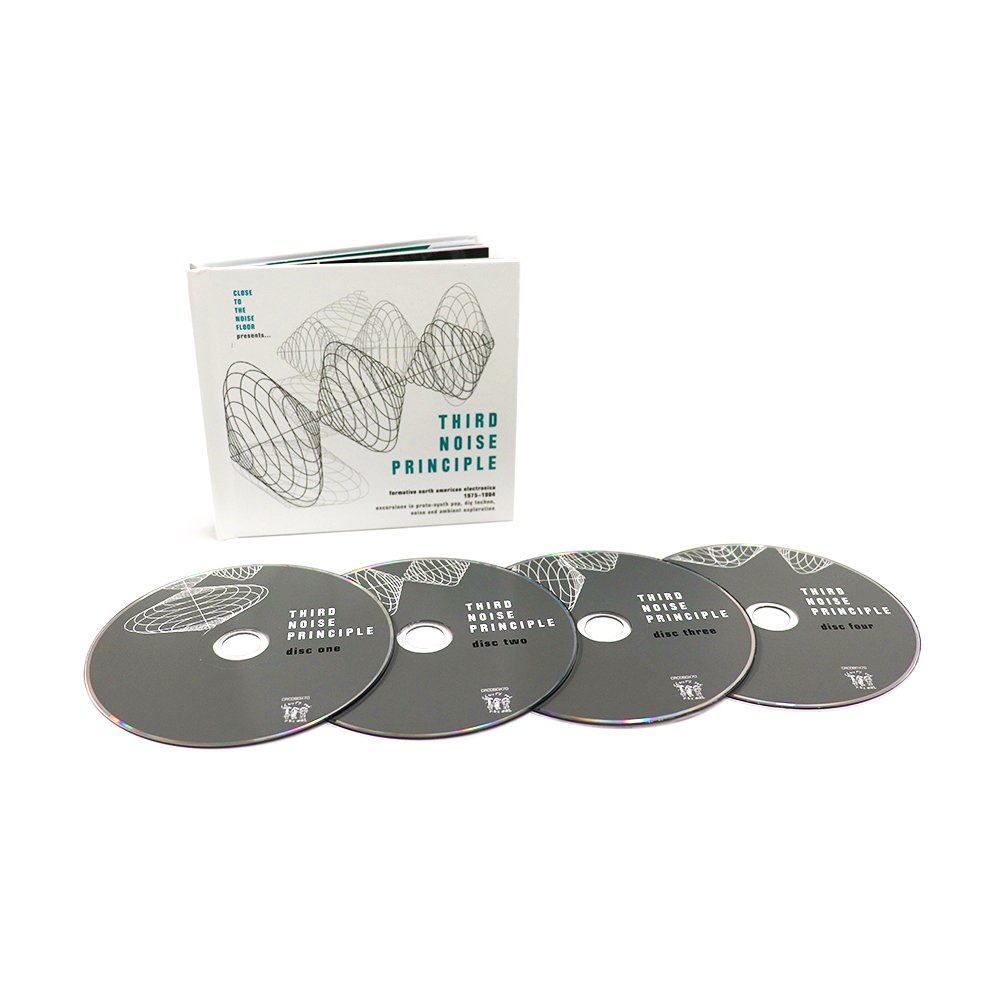
 is released by Cherry Red Records on 25th January 2019, pre-order from
Follow Us!