From Chart Toppers To Cult Classics When Music Ruled The Airwaves
In 1983, Stephen Morris from NEW ORDER said to Smash Hits: “If you believe in the charts, then you might as well believe in fairies” but occasionally, those fairies could sprinkle some magic dust.
‘Every UK Hit Single: 1980’ aims to tell “The story of 1980 – every hit, every memory, one unforgettable year in pop: 370 singles, 225 artists, 25 chart toppers!”. Putting things into wider perspective, those numbers are still small considering the amount of record releases in any given year during a time when there was no streaming, no downloading, no social media and even no CD!
Author Richard West has a lifelong fascination with popular music and realised his dream of chart entries as a member of progressive metal bands THRESHOLD and OBLIVION PROTOCOL with recognition across Europe and the UK’s specialist listings. He even published a memoir ‘Maybe A Writer: My Life in Threshold’ that traced his journey from his teenage years living by numbers following the charts to becoming a recording artist.
‘Every UK Hit Single: 1980’ is the first volume in a series documenting every Top 40 entry with the intention of covering 1981 and beyond. The format is chronological with two paragraphs on each single, one factual and one of trivia. What it does lack however is opinion, so this is more of a reference book.
Despite the popularity of Gary Numan in 1979, synth-based pop music was still fledgling as far as being a regular chart proposition was concerned. However, Japanese Technopop trio YELLOW MAGIC ORCHESTRA would score a surprise No17 hit with their 1978 electronic cover of American composer Martin Denny’s 1959 exotica instrumental ‘Firecracker’, mistitled as ‘Computer Game (Theme From The Invader)’.
Although the original could be seen as an early form of cultural appropriation using every pentatonic cliché in the book, Haroumi Hosono, Yukihiro Takahashi and Ryuichi Sakamoto took it back and gave the tune authenticity. Their treatment acted as a symbol of the Far East’s advancement in affordable technology which was crucial to the rise of the synth.
While 1980 would establish its own electronic legacy, the man born Gary Webb was already being seen as heading down the dumper with both ‘We Are Glass’ and ‘I Die: You Die’ failing to secure the top spot after ‘Are Friends Electric?’ and ‘Cars’ both hit No1 the year before.
Considered his nearest rival artistically at the time, Numan’s biggest influence John Foxx was fresh out of ULTRAVOX but the fact that his even more dystopian electro pieces like ‘Underpass’, ‘No-One Driving’ and ‘Burning Car’ were even entering the Top 40 was nothing short of amazing and indicative of the adventurous eclectic nature of 1980.
Meanwhile the newly regrouped ULTRAVOX now fronted by Midge Ure got the Top 40 entry that was not even close during their Foxx-era with ‘Sleepwalk’ but while it was a breakthrough, it wouldn’t be until the title track of the parent album ‘Vienna’ was a single in 1981 that they would become chart fixtures.
Despite the critical acclaim for the likes of THE HUMAN LEAGUE, JAPAN and SIMPLE MINDS, it was a young duo from Merseyside who would steal their thunder as far as the Top 40 was concerned; ORCHESTRAL MANOEUVRES IN THE DARK were notable for being one of the rising wave of warmer synthesizer acts but while extremely melodic and rhythmic, their lyrics on ‘Messages’ and more significantly ‘Enola Gay’ had darker overtones. Andy McCluskey and Paul Humphreys would end 1980 as the biggest selling artist in the Virgin Records group despite being signed to one of its subsidiaries Dindisc.
One often forgotten synth-driven band who actually managed three Top 40 single entries in 1980 was NEW MUSIK; led by Tony Mansfield, like a certain Trevor Horn with BUGGLES, he figured he would have more influence in the studio rather than being on ‘Top Of The Pops’. He would go on to produce a No 1 for Captain Sensible while also working with the likes of AZTEC CAMERA, NAKED EYES and A-HA. Meanwhile at the start of 1980, Vangelis debuted in the UK Top 40 with YES frontman Jon Anderson and the gorgeous ‘I Hear You Now’.
Sadly, Ian Curtis was never to have a Top 40 hit in his lifetime as ‘Love Will Tear Us Apart’ would posthumously get a No13 hit for JOY DIVISION. But surviving members Bernard Sumner, Peter Hook and Stephen Morris with new member Gillian Gilbert would have that chart fairy dust sprinkled on them several times as NEW ORDER.
Although the New Romantics were being talked about as the rising youth movement, it would be the man who sold the world and seeded the whole party in the first place that would use it for an artistic renaissance; David Bowie was taken to The Blitz by club regular and RCA label assistant Jacqueline Bucknell to cast members of the clientele including its “face” Steve Strange for the video of his new single ‘Ashes To Ashes’.
While the song reached No1 and Bowie himself would move on, others from The Blitz knew their time had come. SPANDAU BALLET would release ‘To Cut A Long Story Short’ towards the end of year to herald a fresh aspirational mindset in pop while issued a few weeks later, ‘Fade To Grey’ by the Steve Strange-fronted VISAGE wouldn’t hit big until the start of 1981 but would become the biggest selling single in West Germany of that year.
1980 though was not really about the emergence of warmer and dancier synthesizer sounds. The year was dominated by ska with the likes of THE SPECIALS, THE BEAT and MADNESS scoring at least 4 Top 40 hits each but perhaps unbelievably and reflective of every generation needing its dose of imagined nostalgia, rockabilly band MATCHBOX scored 5 Top 40 hits!
1980 is often best remembered for 3 No1s for BLONDIE, 2 No1s for THE JAM and 2 No1s for ABBA, with consistent charts runs for the likes of THE POLICE, QUEEN and ROXY MUSIC while disco provided chart toppers for Fern Kinney and Kelly Marie. Without even mentioning Peter Gabriel, Kate Bush, mods, rockers or the new wave of British heavy metal, this was a year of musical diversity and ‘Every UK Hit Single: 1980’ documents that.
While there had previous been synthesizer hits like ‘Son Of My Father’, ‘Popcorn’ and ‘Autobahn’, they were considered novelty records at the time and it would be fair to say that the true Year Zero in electronic pop music was 1977.
THE SEX PISTOLS and ‘God Save The Queen’ may have been on everyone’s hushed lips in the Queen’s Silver Jubilee year but the most influential song to emerge from that period and that STILL sounds like the future is ‘I Feel Love’ by Donna Summer.
The producer of ‘I Feel Love’ was a German domiciled Italian named Giorgio Moroder. A solo artist in his own right within his adopted homeland, he had already been playing with synthesizer riffs on his first hit song ‘Son Of My Father’; a facsimile cover by Chicory Tip reached No1 in the UK at the start of 1972.
In the case of ‘I Feel Love’, Moroder later harnessed the hypnotic quality of an 8-step analogue sequencer plus a triplet delay to create the pulsing Moog lines to close the Donna Summer concept album ‘I Remember Yesterday’. The preceding tracks had themes of the 40s, 50s, 60s and 70s. ‘I Feel Love’ was designed to represent the sound of the future.
Despite already clocking in at nearly six minutes, it felt like it could go on forever. Again, Moroder had the foresight to extend the track to nearly twenty minutes on a 12 inch version for discos; the extended version was born. Alas, ‘I Feel Love’ was the only electronic track on ‘I Remember Yesterday’ but Moroder would fully exploit the potential of this new technology on the next Donna Summer albums as well as his solo records.
The first British artist to present electronic pop in its modern form at the start of 1977 was David Bowie with ‘Sound & Vision’ featuring an ARP Solina lead line and noise-gated futuristic sounding drums. With this, ‘Oxygène’, ‘Magic Fly’ and ‘I Feel Love’ all hitting the Top 3 in the UK singles chart within months of each other, this was the beginning of synths designing the future.
So here are 20 albums which ELECTRICITYCLUB.CO.UK sees as contributing to the electronic legacy of 1977. While a number of these albums were not purely electronic, their inclusion of electronic based songs or suites proved to be highly influential in their experimental possibilities. They are listed in alphabetical order with a restriction of one album per artist moniker…
ASHRA New Age Of Earth
Guitarist Manuel Göttsching had been a member of ASH RA TEMPEL but looking to explore more progressive voxless territory on ‘New Age Of Earth’, he armed himself with an Eko Rhythm Computer, ARP Odyssey and his signature Farfisa Synthorchestra. An exponent of a more transient soloing style, he used the guitar for texture as much as for melody in this beautiful treasure trove of an album, as on the wonderful 20 minute ‘Nightdust’.
Having been the synth player of GONG on their albums ‘Flying Teapot’, ‘Angel’s Egg’ and ‘You’, Francophile Tim Blake’s first solo long player was ‘Crystal Machine’. A combination of studio and live material, with a EMS Synthi A, Minimoog and Elka Rhapsody at his disposal, it was full of eccentric sci-fi soundscapes and cosmic otherworldliness in the GONG, PINK FLOYD and HAWKWIND vein; Blake would actually join the latter in 1979.
“There’s New Wave, there’s Old Wave, and there’s David Bowie” said the advert for ‘Low’, recorded in Switzerland but mixed at Hansa Studios where the soldiers in the East Berlin watch towers could look into the windows of the building. It featured a whole side of instrumentals, the best two being ‘Warszawa’ and ‘Art Decade’ in collaboration with Brian Eno. Despite the artful experimentation, there was a hit single in ‘Sound & Vision’.
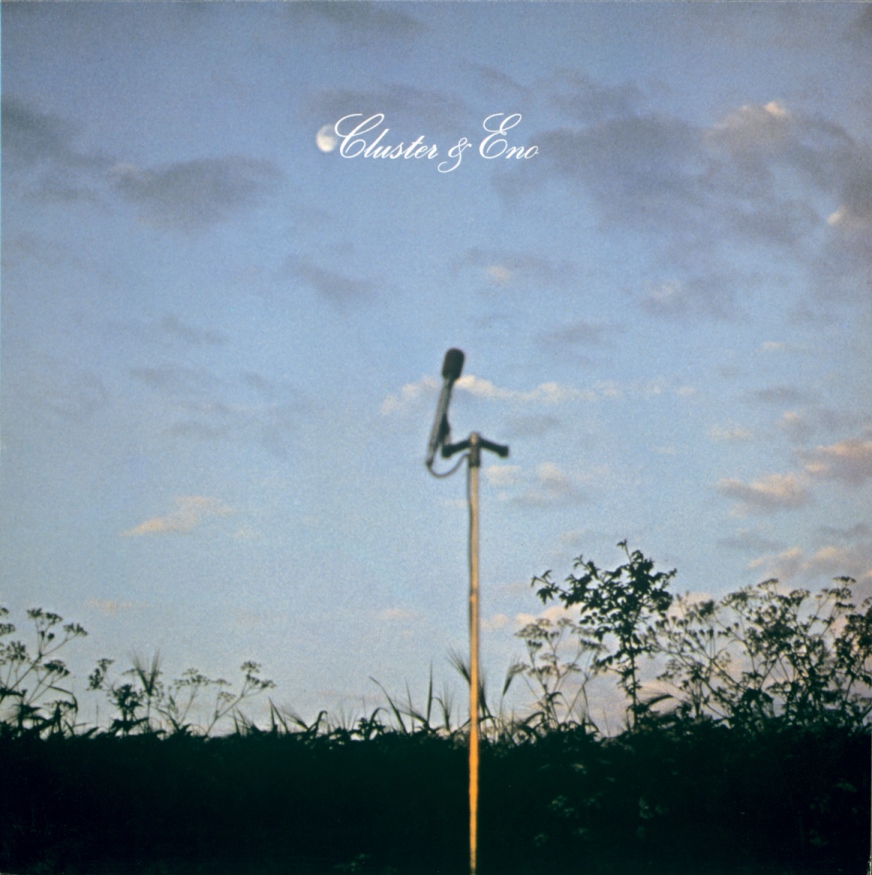
Having first worked together in 1976, Brian Eno met up with Hans-Joachim Roedelius and Dieter Moebius of CLUSTER on two fruitful recordings, the first of which was a glorious ambient instrumental affair. The front cover photo of a microphone up near the clouds summed up the approach with the album full of angelic atmospheres and gentle melodies. The closer ‘Für Luise’ was a tense cold war drama with stark piano and minimal synth.
A year before TELEX formed, Dan Lacksman released his sixth album under the ELECTRONIC SYSTEM moniker. With the sequencer driven Moog sounds of Giorgio Moroder being the main influence, ‘Flight to Tokyo’, ‘Cosmic Trip’ and ‘Flight To Venus’ was a fine segue of instrumental variations on the throbbing electronic disco theme, the latter of which was sampled in 2002 by THE CHEMICAL BROTHERS for ‘Star Guitar’.
‘Disco Machine’ is still available via The Wack Attack Barrack
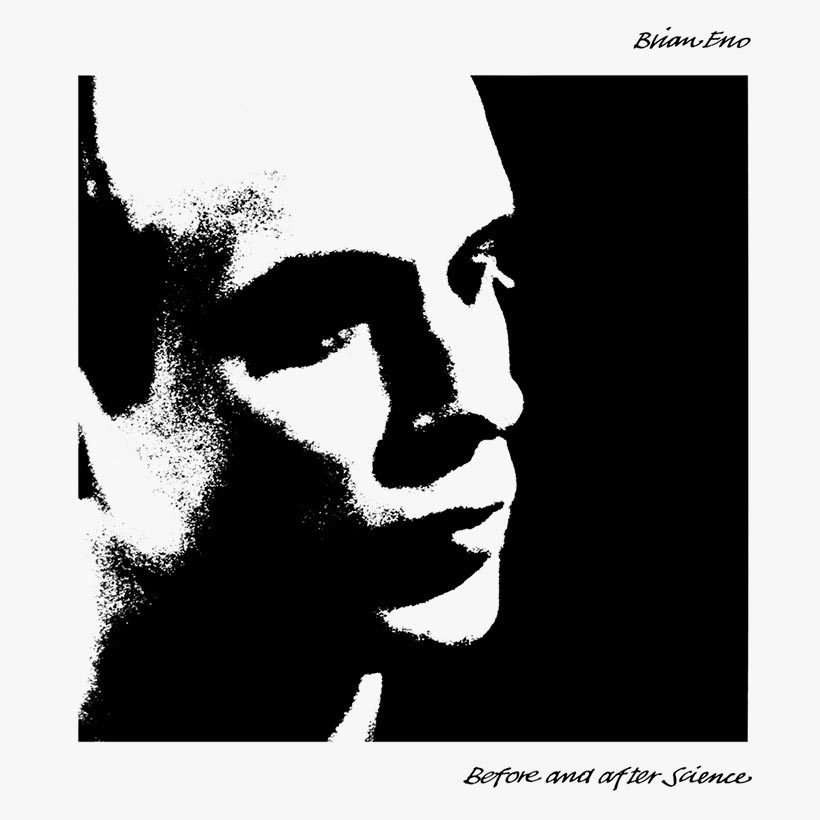
As with David Bowie’s ‘Low’ and ‘Heroes’ which Eno had also worked on, ‘Before & After Science’ presented its material as pop and experimental sides. The first side included the quirky ‘Blackwater’ with its fabulous stabs of synth and the metallic romp of ‘Kings Lead Hat’. But the best tracks were on side two were the synth ballads ‘By This River’ assisted by CLUSTER and the sumptuous nautical folk of ‘Spider & I’.
The French were on a roll with their vision for an electronic future with SPACE, DROIDS and Jean-Michel Jarre, but Bernard Favre actually composed and recorded the science fiction-themed ‘Cosmos 2043’ in 1975. While not as immediate as his fellow countrymen, this record was another sampled by THE CHEMICAL BROTHERS with ‘Earth Message’ forming the basis of 1999’s ‘Got Glint?’ for which Favre got a co-writing credit.
‘Cosmos 2043’ is still available via Anthology Records
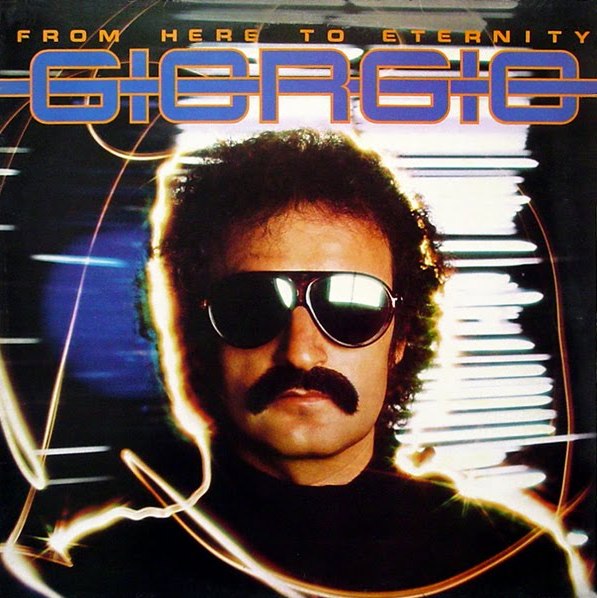
On a roll from his pioneering work with Donna Summer, the sixth Giorgio Moroder solo album for centred around throbbing electronic disco. Featuring vocodered and conventional voices, the title track was effectively stretched out over one side of the album. Often mistaken for being KRAFTWERK, it actually prompted the Kling Klang quartet to move towards a more computerised sound for their 1978 album ‘The Man Machine’.
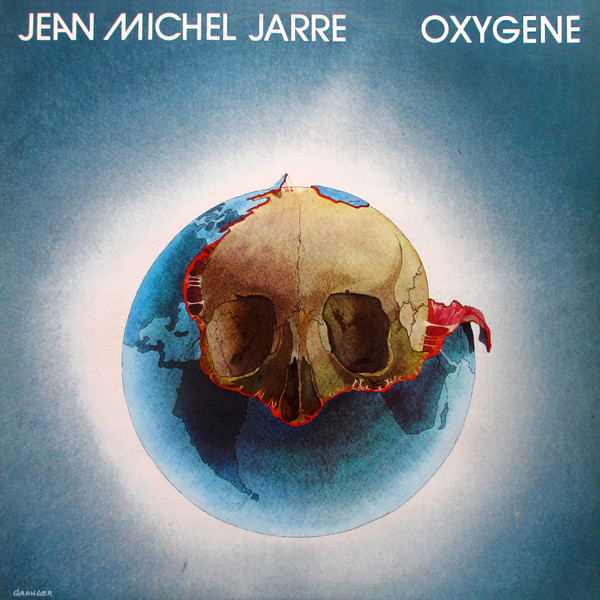
Although released in France at the end of 1976, ‘Oxygène’ was not available worldwide until 1977 with ‘Oxygène IV’ becoming a huge hit single. The parent album was a glorious six part work and ‘Oxygène IV’ something of a centrepiece as a perfectly progressive spacey romp with pulsing sequences, Eminent strings, Mellotron choir and AKS waves while ‘Oxygene V’ chanelled Terry Riley’s ‘A Rainbow In Curved Air’.
‘Trans Europe Express’ was the first KRAFTWERK album released in standalone English and German versions. Perhaps the most lyrical of all their imperial phase long players, ‘Europe Endless’ was despite its nostalgic romanticism, aspiring to a continent without borders while the punchy ‘Showroom Dummies’ responded to criticism their static live performance. Then there was the mighty title track and its ‘Metal On Metal’ interlude…
Relocating to build his own Random Studio in Forst, ‘Flammenden Herzen’ was Michael Rother’s first solo album after leaving NEU! Co-produced by Conny Plank with Jaki Liebezeit from CAN providing the percolating percussion, although Rother had utilised synthesizers to great effect before, they took a greater role in his solo work. ‘Karussell’ had a distinctly European flavour with its strong symphonic melodies.
After success of ‘Timewind’ and then ‘Moondawn’ featuring Harald Grosskopf on drums, Klaus Schulze was by now well into what many consider his imperial phase and adding PPG modules to his synth set-up, operated alone on ‘Mirage’. Subtitled “an electronic winter landscape”, the wintery 29 minute ‘Crystal Lake’ planted the seed for New Age while promotion was supported by two lavish concerts at the London Planetarium.
SPACE was the brainchild of Didier Marouani who went under the pseudonym of Ecama and formed the collective with Roland Romanelli and Jannick Top. The space disco of the iconic ‘Magic Fly’ with its catchy melody and lush accessible futurism rode the wave of a new European electronic disco sound. But the album wasn’t just about the title hit as ‘Fasten Seatbelt, ‘Tango In Space’ and ‘Flying Nightmare’ proved.
An album of unsettling futuristic rockabilly, SUICIDE rocked the boat by Martin Rev using a Seeburg Rhythm Prince and Farfisa keyboard instead of drums and guitars while Alan Vega warbled and snarled like the ghost of a demented Elvis Presley. Highlights included ‘Ghost Rider’ and ‘Cheree’ which later soundtracked a Marc Jacobs perfume advert. The duo were to be a big influence on SOFT CELL and SIGUE SIGUE SPUTNIK.
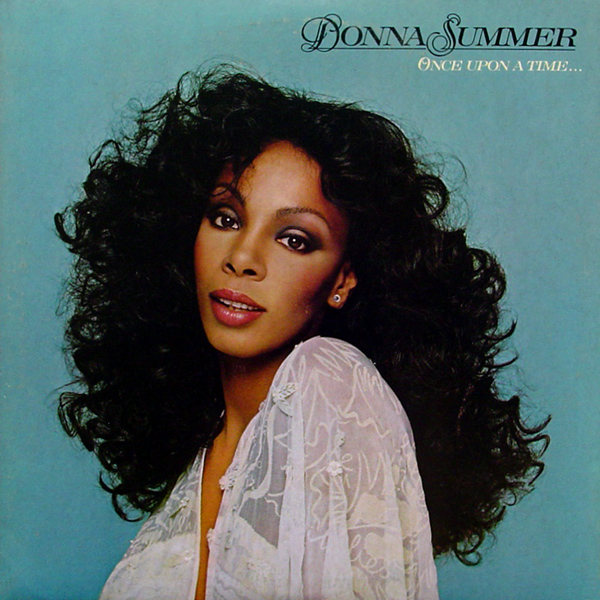
‘Once Upon A Time’ was an ambitious double album consisting of four distinct approaches. An all-electronic three song segued suite entitled ‘Act2’ was headed by ‘Working The Midnight Shift’ which took ‘I Feel Love’ to the next level with Summer’s wispy falsetto now in a grander setting. ‘Now I Need You’ captured a gothic eeriness while ‘Queen For A Day’ was a forerunner of ‘Our Love’ that halfway mutated back into disco pop.
‘Once Upon A Time’ is still available via Casablanca / Universal Records
The final studio album by the classic TANGERINE DREAM line-up of Edgar Froese, Chris Franke and Peter Baumann, after the long compositions of previous releases, ‘Sorcerer’ was characterised by shorter pieces in the band’s first commission for a Hollywood movie. Although this meant tracks like ‘The Mountain Road’ faded before they really got going, ‘Betrayal’ showed what could be done within time restrictions.
‘Sorcerer’ is still available via Esoteric Recordings
Released first in Europe as ‘Space Fantasy’ but retitled ‘Kosmos’ for international consumption in 1978, Isao Tomita acquired a Polymoog to supplement his Moog modular system. The ‘Star Wars: Main Title’ was reimagined with his signature synthetic whistle while a Strauss / Wagner medley provided a ‘Space Fantasy’. But the classic Rodrigo guitar concerto ‘Aranjuez’ was cosmically synthesized in a manner that only Tomita could.
‘Space Fantasy’ is still available as ‘Kosmos’ via RCA
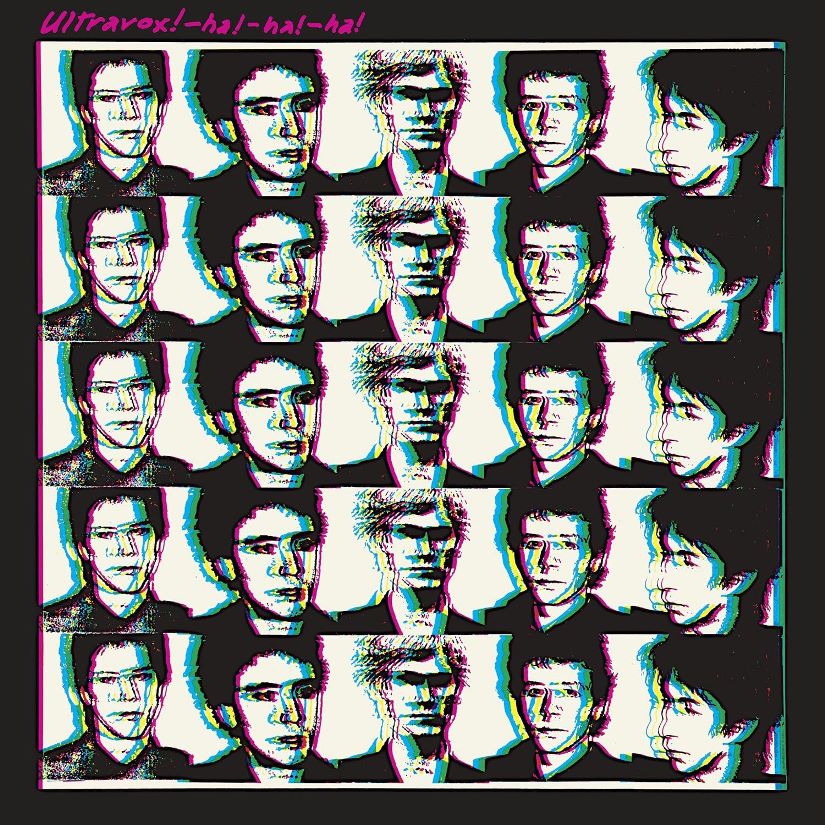
While primarily a fierce art rock album, ‘Ha! Ha! Ha!’ was however notable for the inclusion of two opposingly poled synth-dominated songs that pointed to the future direction of ULTRAVOX! The star of ‘The Man Who Dies Everyday’ was Billy Currie’s screaming ARP Odyssey while Warren Cann’s modified Roland TR77 rhythm machine acted as the backbone to the elegiac ‘Hiroshima Mon Amour’ which also featured an Elka Rhapsody.
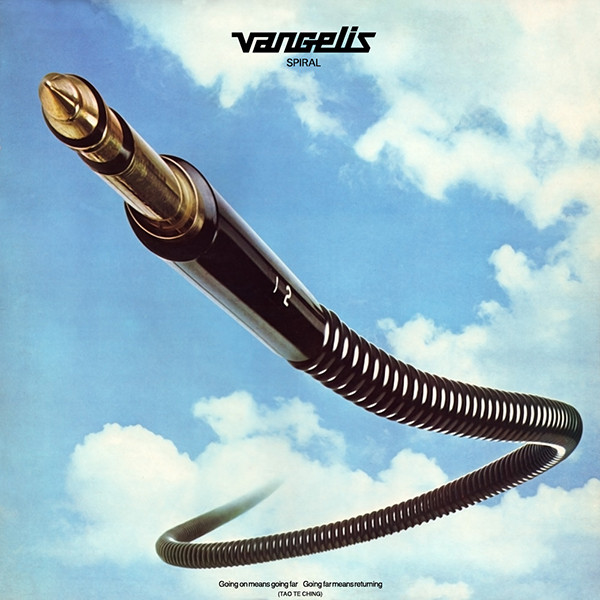
The ‘Spiral’ album was best known for the beautifully emotive ‘To The Unknown Man’ where Vangelis first fully exploited the possibilities of the Yamaha CS80. He proved he could also do lively electronic pop with ‘Dervish D’ where over a spinning Roland System 100 sequencer, a slice of robotic funk grooved with a brilliantly played jazz-inflected CS80 solo using all the manual control features it had at his disposal.
‘Spiral’ is still available via Esoteric Recordings
The work of Pierre Salkazanov, the Frenchman had the ARP 2600 and its sequencer, along with the EMS VCS 3 and RMI Harmonic Synthesizer. Comprising of three short pieces and two much longer progressively spacey tracks ‘Plénitude’ and ‘An Zéro’, ‘Moebius 256 301’ had much more of a Berlin School template and echoes of TANGERINE DREAM in particular when compared with his French contemporaries.
While 1979 saw a post-punk revolution with new wave and ska emerge as energetic expressions of youth with the likes of JOY DIVISION, XTC, THE SPECIALS and MADNESS, maturer acts with power pop sensibilities such as BLONDIE and THE POLICE dominated the UK charts.
But the synthesizer had become a new tool of creativity for those who weren’t interested in learning chords on a guitar and preferred to use one finger, thanks to its new found affordability with refined technology from Japan. While electronics had been present in disco, progressive rock and esoteric avant garde forms, following seminal records in 1978 such as ‘Warm Leatherette’ b/w ‘TVOD’ by THE NORMAL and ‘Being Boiled’ by THE HUMAN LEAGUE, a new DIY artpop form was developing that would eventually take on KRAFTWERK at their own game.
Among those fledgling electronic acts who released their debut singles in 1979 on independent labels were OMD with ‘Electricity’ on Factory Records and FAD GADGET with ‘Back To Nature’ on Mute Records. Meanwhile on another independent Rough Trade, CABARET VOLTAIRE achieved a wider breakthrough with ‘Nag Nag Nag’, the standalone single accompanying their first album ‘Mix-Up’.
Having experimented with synths on ‘Low’ released in 1977, David Bowie had gone to see THE HUMAN LEAGUE at The Nashville in late 1978 and hailed them as “the future of rock ‘n’ roll”. Alas it was TUBEWAY ARMY fronted by Gary Numan who beat THE HUMAN LEAGUE to the top of the UK singles charts in Summer 1979 with Are Friends Electric?’. However, just a few weeks earlier, SPARKS had taken the Giorgio Moroder produced ‘No1 Song In Heaven’ into the UK Top20. But however history is perceived, a revolution had begun that would lead to the dawn of “synthpop” in 1980.
Here are 20 albums which ELECTRICITYCLUB.CO.UK sees as contributing to the electronic legacy of 1979. They are listed in alphabetical order with a restriction of one album per artist moniker, meaning Gary Numan and Edgar Froese appear twice…
ASHRA Correlations
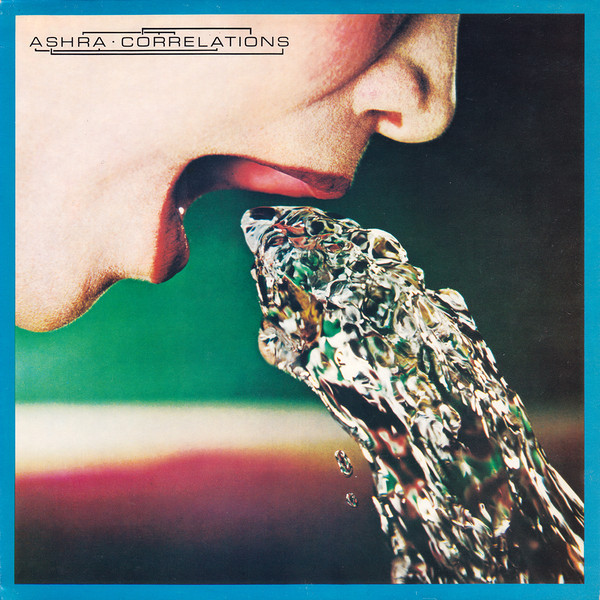
As ASHRA, Manuel Göttsching released what many consider to be his first ambient masterpiece ‘New Age Of Earth’. On 1978’s ‘Blackouts’, he expanded the line-up to include drumming synthesist Harald Grosskopf and guitarist Lutz Ulbrich which continued on ‘Correlations’. Despite being more rock-oriented, it featured sequenced electronics with ‘Club Cannibal’ almost entering Jean-Michel Jarre territory.
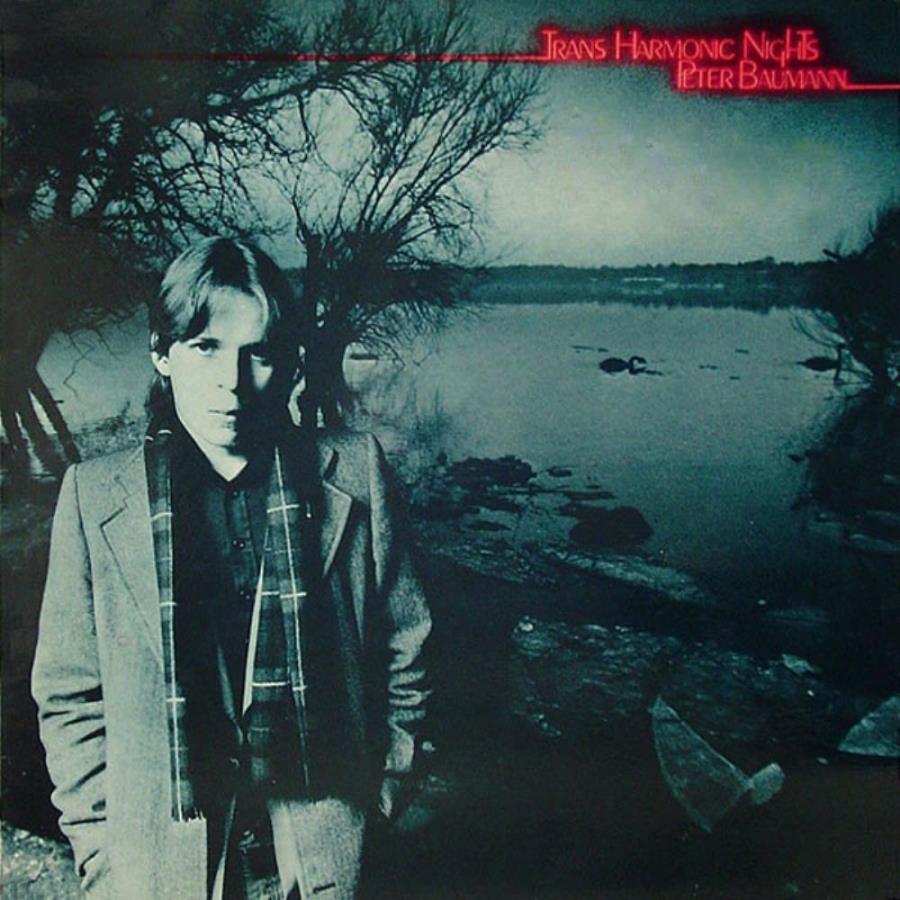
Although he had released ‘Romance ‘76’ while still a member of TANGERINE DREAM, Peter Baumann’s first solo album after departing the band was something of an interim record before venturing into electronic pop with ‘Repeat Repeat’. Mostly shorter instrumental compositions using mysterious melodies and occasional vocoder textures, ‘Trans Harmonic Nights’ remains something of an underrated electronic gem.
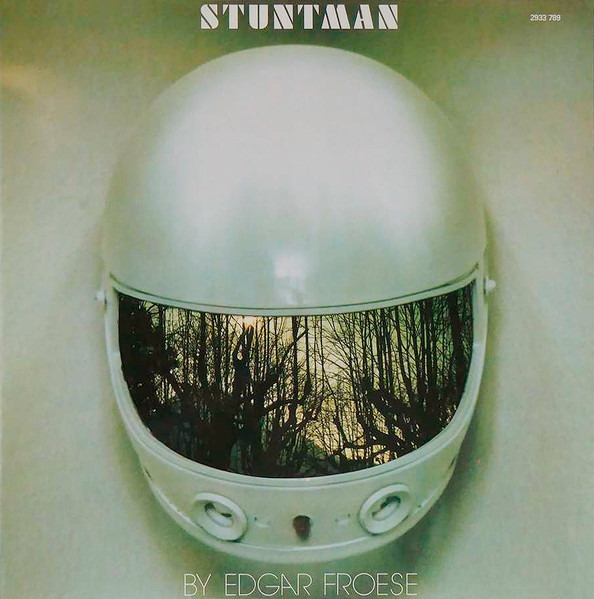
With TANGERINE DREAM taking a misstep with ‘Cyclone’ and perhaps prompted by the success of Jean-Michel Jarre’s electronic symphonies, on his fifth solo album ‘Stuntman’, Edgar Froese was at his most accessible with strong synth melodies, particularly on the title track. Elsewhere, new ages resonances were starting to develop while on ‘Drunk Mozart In The Desert’, there were atmospherics coupled with a rhythmic bounce.
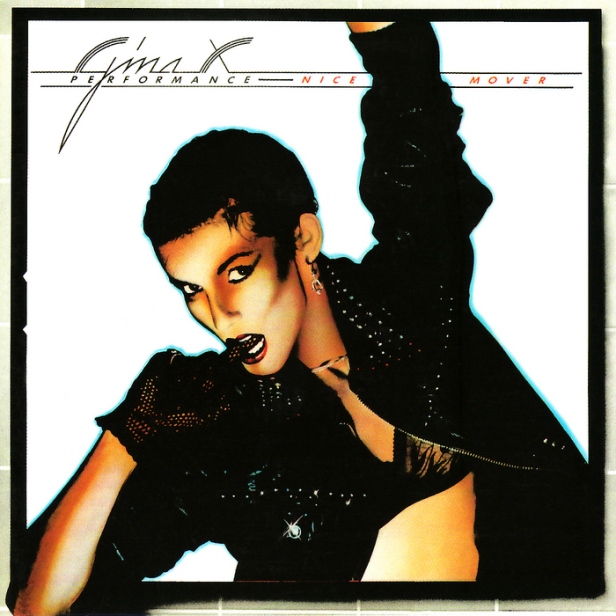
Produced and co-written by Zeus B Held, the debut album by androgynous art history student Gina Kikoine featured an array of ARP and Moog synths to signal the birth of a new European Underground. Cult club favourite ‘No GDM’ was written in honour of the “great dark man” Quentin Crisp while other highlights included the detached vocoder assisted robotic soul of the title song and the feisty gender statement ‘Be A Boy’.
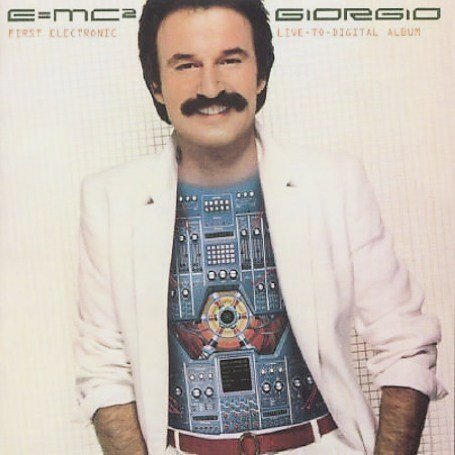
With Giorgio Moroder acquiring Roland’s new System 700 and an MC8 Micro-composer to control it, ‘E=MC2’ was touted as the first “electronic live-to-digital” album. This allowed for an uptempo funkiness previously unheard on sequencer based music to come into play. With the electronically treated vocals and euphoric energy of the marvellous ‘What A Night’, the sound of DAFT PUNK was inadvertently being invented!
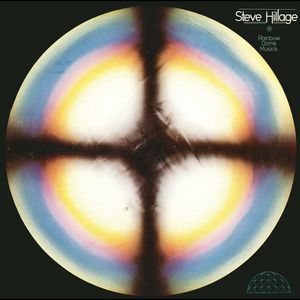
As a member of GONG and solo artist, Steve Hillage had a love of German experimental music and ventured into ambient with long standing partner Miquette Giraudy. Recorded for the Rainbow Dome at the ‘Festival For Mind-Body-Spirit’ at London’s Olympia, these two lengthy Moog and ARP assisted tracks each had a beautifully spacey vibe to induce total relaxation with a colourful sound spectrum.
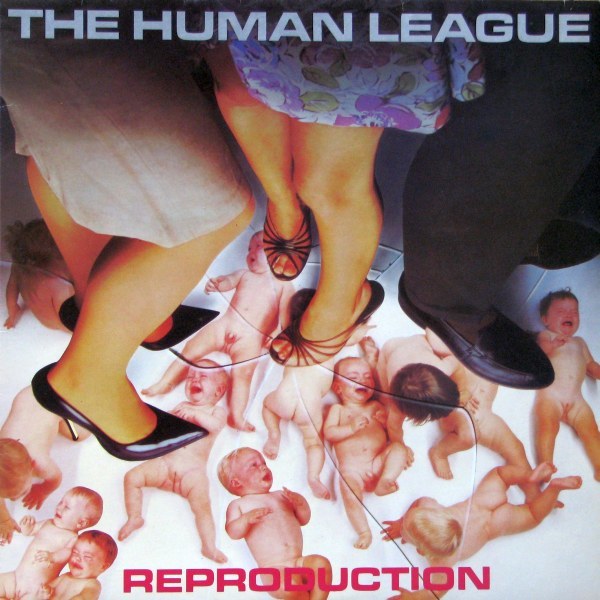
With a manifesto of “synthesizers and vocals only”, the debut album by THE HUMAN LEAGUE included ‘Empire State Human’, ‘Circus Of Death’, ‘Almost Medieval’, ‘Blind Youth’ and a stark cover of ‘You’ve Lost That Loving Feeling’. Produced by Colin Thurston, while ‘Reproduction’ was not a commercial success, Philip Oakey, Ian Craig Marsh and Martyn Ware gained valuable experience that would progress their careers.
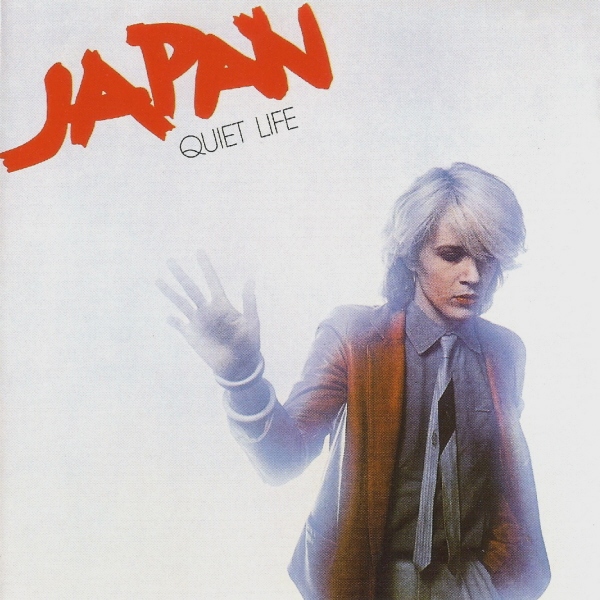
Although considered a 1980 album, the third JAPAN long player was actually released late 1979 in Japan, Canada, Holland and Germany. Featuring the sequencer-driven title song as well as the rockier ‘Halloween’ and a cover of THE VELVET UNDERGROUND’s ‘All Tomorrow’s Parties’, despite Roxy rip-off accusations, it was a major artistic step forward as a quality timeless work embracing synths, muzak and orchestrations.
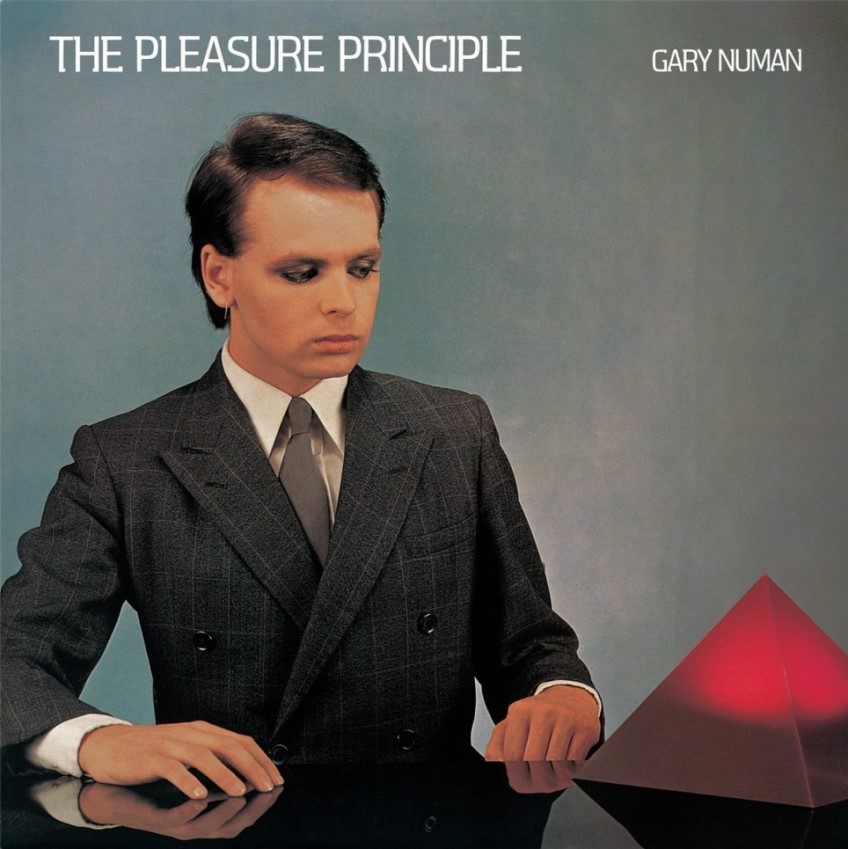
Devoid of guitar but using a flesh-and-blood rhythm section, Gary Numan realised his dream of producing a new form, machine rock. Synths were fed through guitar effects pedals to add a more sinister metallic tone and while there was sombre isolation communicated on all the songs, there was a catchy melodic sensibility to songs such as ‘Cars’, ‘Metal’, ‘Films’, ‘Engineers’ and ‘M.E.’ which turned Numan into the first synthesizer pop star.
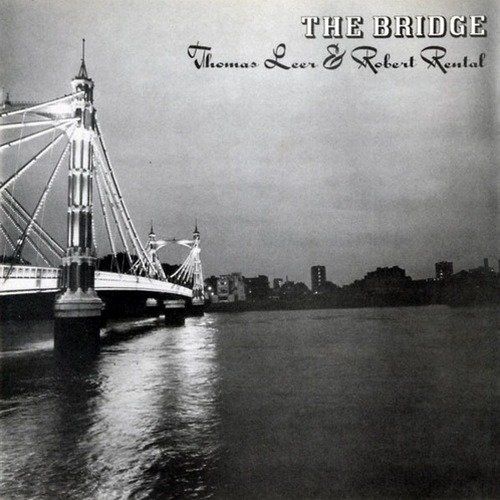
Originally released on THROBBING GRISTLE’s Industrial Records, ‘The Bridge’ album saw Scottish duo Thomas Leer and Robert Rental trading vocal and instrumental duties using early affordable synths such as the EDP Wasp. Comprising of a side of five songs and a side with four ambient instrumentals, ‘Day Breaks, Night Heals’ and ‘Monochrome Days’ both showcased an avant pop sensibility. Robert Rental sadly passed away in 2000.
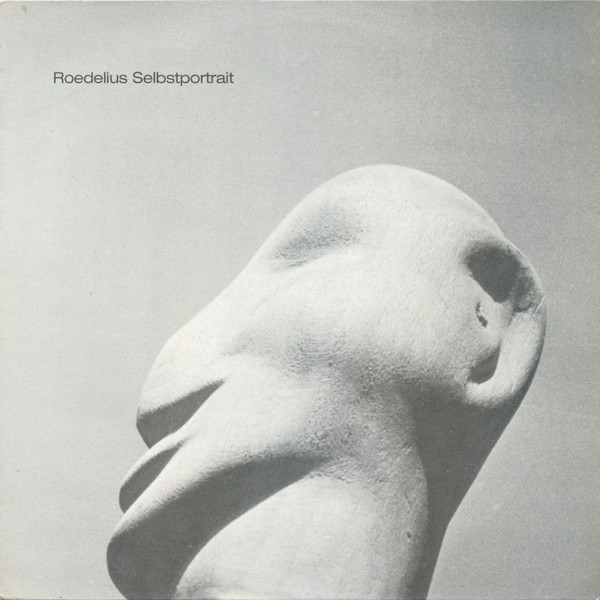
Best known as a member of CLUSTER with the late Dieter Moebius and working with Brian Eno on two albums, ‘Selbstportrait’ was Hans-Joachim Roedelius’ third solo long player. This was a “self-portrait” reflecting the gentle introspective ambience of the record. Something of a sister record to the 1977’s marvellous ‘Sowiesoso’, it was more accessible than CLUSTER’s own structurally minimal ‘Grosses Wasser’ also issued in 1979.
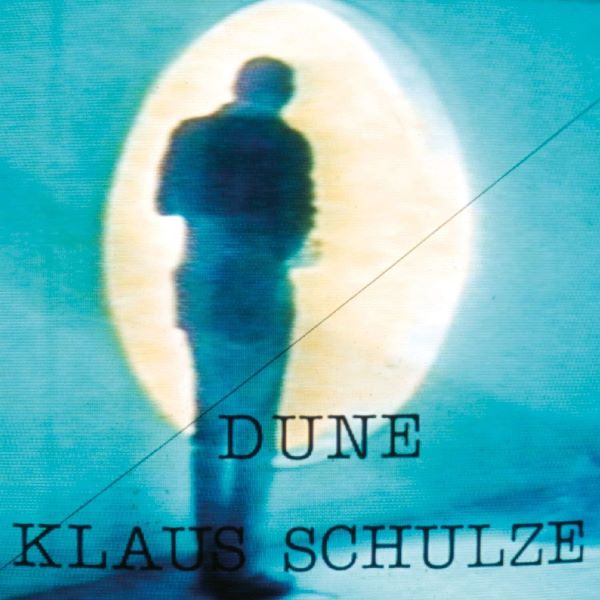
After the ambitious double opus ‘X’ which also incorporated strings in a record comprising of “Six Musical Biographies” in honour of figures including philosopher Friedrich Nietzsche and ‘Dune’ author Frank Herbert, Klaus Schulze conceived an actual album called ‘Dune’. Something of a diversion, ‘Shadows of Ignorance’ featured the eccentric poetry of Arthur Brown while the experimental ambient title track made use of cello.
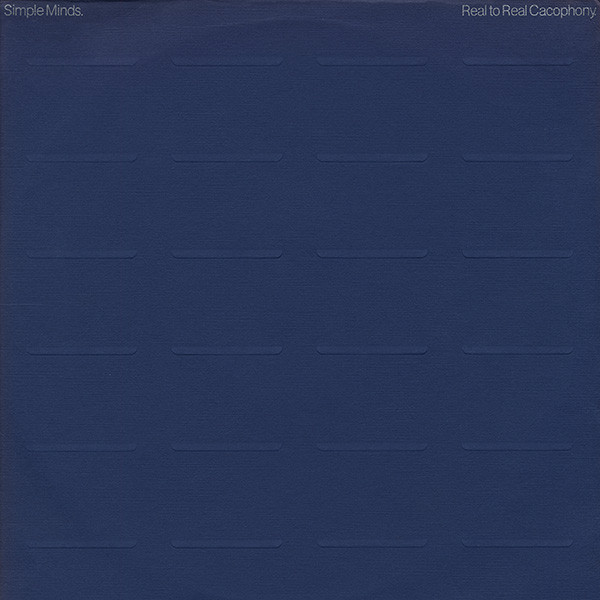
Stronger than their debut LP ‘Life In A Day’, SIMPLE MINDS started experimenting with more electronics and a very European austere on its swift follow-up ‘Real To Real Cacophony’ with the title song presenting their take on KRAFTWERK’s ‘Radio-Activity’. Underground and pulsating through on ‘Changeling’, that breakthrough single and ‘Premonition’ really were a sign of things to come in their dark avant disco templates.
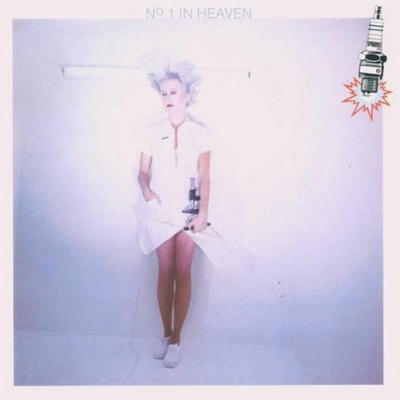
Following the inspirational success of ‘I Feel Love’, SPARKS were put in contact with its producer Giorgio Moroder who had aspirations to work with a band. The resultant album saw Russell Mael’s flamboyant falsetto fitting well with the pulsing electronic disco template. ‘The No1 Song In Heaven’ hit the UK Top 20 a few months before ‘Are Friends Electric?’ while the follow-up ‘Beat The Clock’ got into the Top 10.
‘No1 In Heaven’ is still available via Lil Beethoven Records
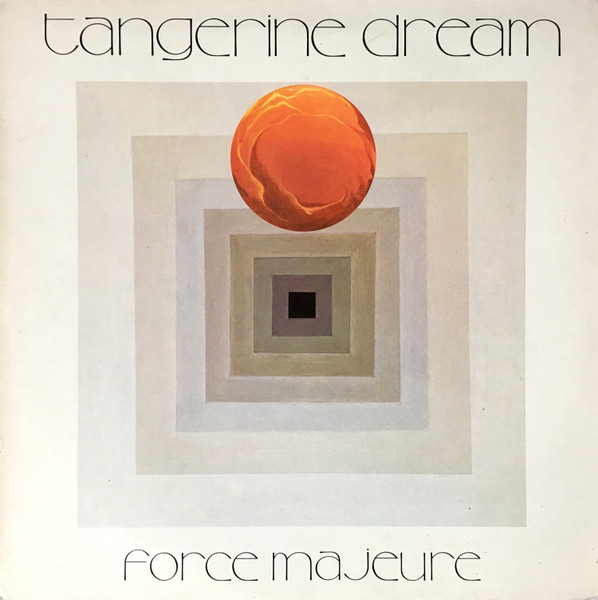
Still feeling the void left by the departure of Pete Baumann, following the vocal experiment of ‘Cyclone’, Edgar Froese and Christopher Franke opted to retain drummer in Klaus Krüger. While there was also increased guitar and piano usage, the title song and ‘Thru Metamorphic Rocks’ utilised pulsing sequencer passages to signal the future Hollywood direction that TANGERINE DREAM would head in.
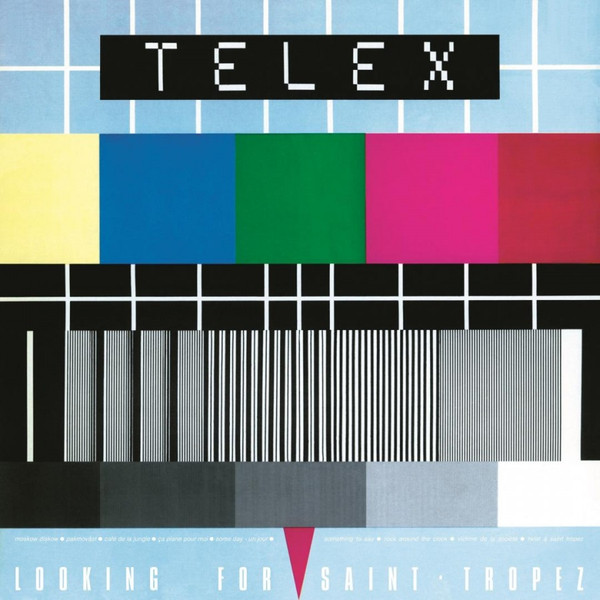
The ethos of Belgian trio TELEX was “making something really European, different from rock, without guitar”. ‘Looking For Saint Tropez’ contained ‘Moscow Diskow’ which took the Trans-Siberian Express to Moscow by adding a funkier groove. Also included were funereal robotic covers of ‘Rock Around The Clock’ which was a UK Top40 hit and Plastic Bertrand’s ‘Ça Plane Pour Moi’ as well as their deadpan debut single ‘Twist A Saint Tropez’.
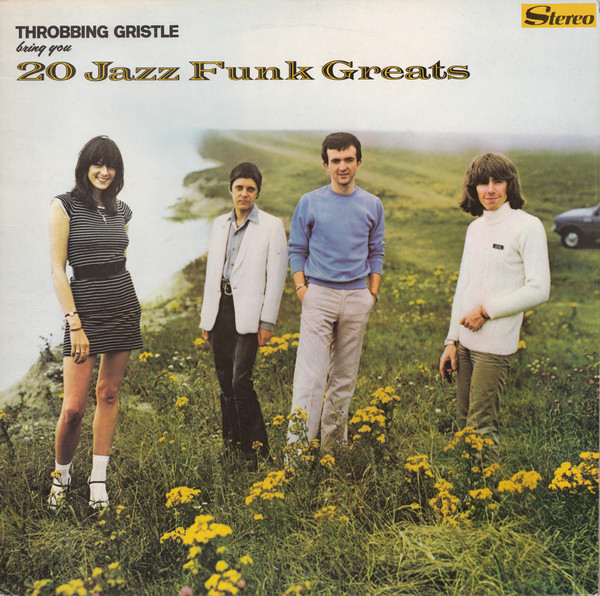
The title and the group photo on Beachy Head were tongue-in-cheek statements but THROBBING GRISTLE were still deathly uncompromising as shown by ‘Persuasion’. However, there were glints of light with the glorious cascading instrumental ‘Walkabout’ and mutant disco lento of ‘Hot On The Heels Of Love’ as Cosey Fanni Tutti’s whispered vocals competed with synthetic whip-crack and drill noises!
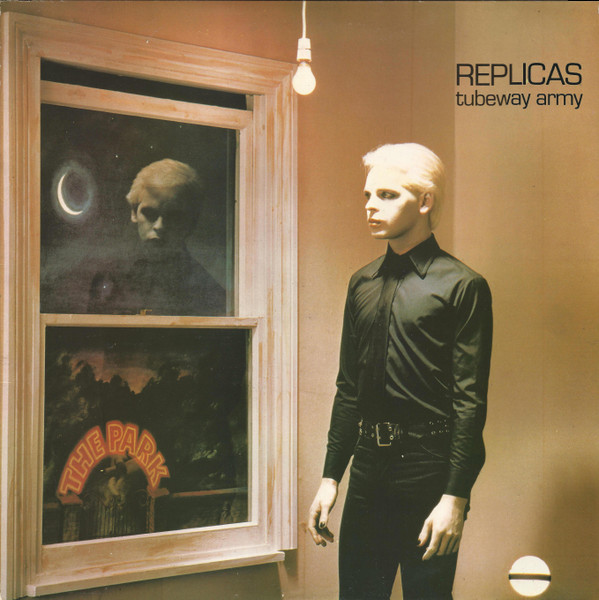
Whereas the TUBEWAY ARMY debut featured punk tunes with added synth, ‘Replicas’ would see the Philip K Dick inspired dystopian vision of Gary Numan paired with appropriate electronic sounds as the main melodic component on the now classic UK No1 ‘Are Friends Electric?’. But the earlier singles ‘Down In The Park’ and the lengthy instrumental ‘I Nearly Married A Human’ pointed to a future guitar-free follow-up.
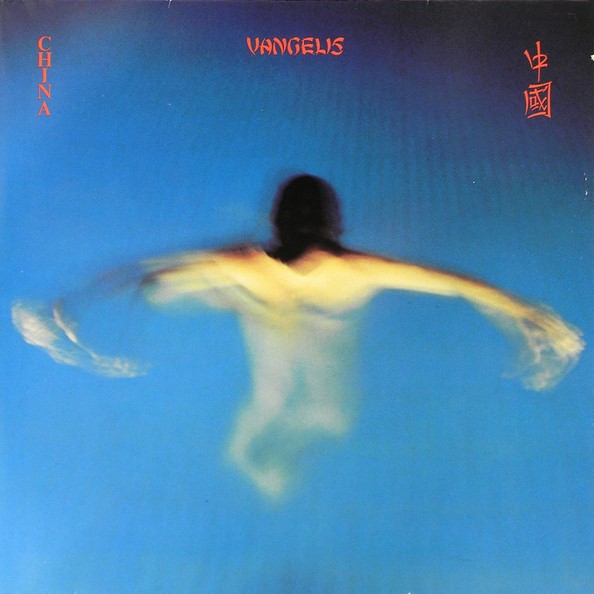
Although VANGELIS had never been to China at the time the album was recorded, he had developed a passionate fascination for its people, culture and vast landscape, noting a connection between ethnic Greek and Chinese music. Using traditional elements alongside his synthesizers, the centrepieces were the majestic ‘Chung Kuo’ and the meditative pentatonic piece ‘The Tao Of Love’. ‘China’ remains an underrated record in his canon.
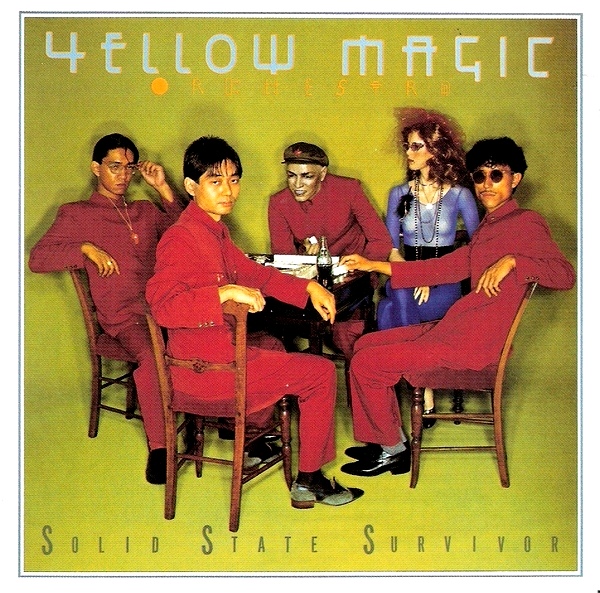
The second and best YELLOW MAGIC ORCHESTRA album featured an embarrassment of riches. It included the glorious Technopop of ‘Rydeen’, the mighty citypop of ‘Technopolis’, the moodier ‘Castalia’ and the Cossack romp of ‘Absolute Ego Dance’. But it was the iconic ‘Behind The Mask’ originally composed for Seiko which was later covered by Greg Phillinganes, Eric Clapton and Michael Jackson.
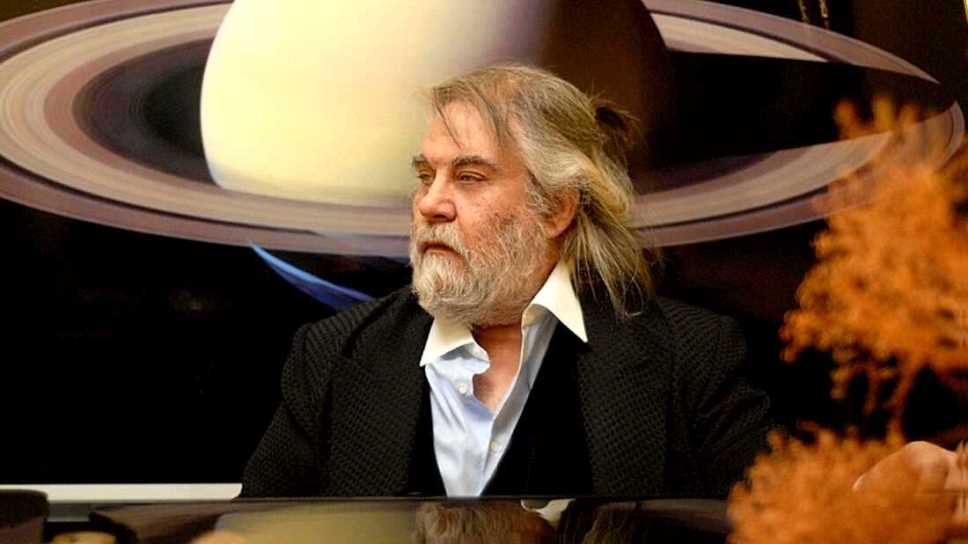
The esteemed Greek composer Evangelos Odysseas Papathanassiou, best known to the world by his stage name of Vangelis has sadly passed away aged 79.
A self-taught musician, although Vangelis found fame as the keyboard player of prog rockers APHRODITE’S CHILD who were fronted by Demis Roussos, he first became known in Greece for writing a song called ‘Summer Dream’ which featured in the 1968 film ‘Operation Apollo’. While a member of APHRODITE’S CHILD, he composed a number of soundtracks including ‘L’Apocalypse des Animaux’ which accompanied a 1970 French documentary series directed by Frédéric Rossif.
After APHRODITE’S CHILD disbanded, Vangelis was invited by Jon Anderson to join YES to replace Rick Wakeman. Although he opted for what was to become a remarkable solo career, it was the beginning of a friendship that would lead to occasional collaborations and later, three unlikely hit singles in ‘I Hear You Now’, ‘I’ll Find My Way Home’ and ‘State Of Independence’.
Releasing his first album ‘Earth’ as Vangelis in 1973, his style involved him playing virtually everything including guitar, various ethnic instruments, drums and percussion. Relocating to London, he established his iconic Nemo Studios complex near Marble Arch. There he recorded 1975’s ‘Heaven & Hell’ to start what was to be a series of imperial albums. 1976 saw Vangelis’ first space themed long player ‘Albedo 0.39’, the key track of which was the cosmic ‘Pulstar’ whose stabby synth lines were later sampled by Gary Numan for the song ‘Strange Charm’ in 1986.
Vangelis’ wider breakthrough came with the 1977 album ‘Spiral’ and it was here that he debuted the Yamaha CS80. An incredibly complex synthesizer, the CS80 boasted a ribbon controller which allowed for the application of pitch-bends and glissandos polyphonically, while also boasting velocity-sensitive and after-touch qualities. He put these to effective use on ‘To The Unknown Man’, a three part piece over nine minutes which was to become one of his most captivating recordings. But while much of Vangelis’ work possessed a sedate symphonic quality, he proved he could funk it with the best of them on ‘Dervish D’, which utilised a spinning Roland System 100 sequencer core with a brilliantly played jazz-inflected solo.
In 1979, Vangelis was to present his best work yet in ‘China’; although he had not visited the country at the time of record, he became fascinated by its people and culture while observing a connection between ethnic Greek and Chinese music. Using traditional instruments and compositional styles alongside ring modulated synthesizers, ‘The Tao Of Love’ was to be the album’s centrepiece.
Vangelis was continuing to make his name in soundtracks and ‘Opéra Sauvage’ featuring the mighty ‘Hymn’ was to become his most successful album in the US to date. However, it was in 1981 with ‘Chariots of Fire’, the David Puttnam produced movie which told the story of two British athletes at the 1924 Paris Olympics that set him towards a lucrative career in cinema. Composed after watching three run throughs, the film’s opening ‘Titles’ with its iconic six note melodic phrase became an international hit single. The soundtrack won an Oscar for Best Original Music Score.
His next soundtrack for 1982’s ‘Blade Runner’ was to be his most celebrated work but also most troubled. Capturing the futuristic dystopian unsettlement of the story based on Philip K Dick’s ‘Do Androids Dream of Electric Sheep?’, although nominated for a BAFTA and Golden Globe as Best Original Score, Vangelis felt unable to issue a soundtrack album at the time of the film’s release due to creative differences with director Ridley Scott.
The magnificent ‘End Titles’ would not appear until 1989’s ‘Themes’ compilation, while the 1994 ‘Blade Runner’ album omitted much of the original music that appeared with previously unheard tracks such as ‘Rachel’s Song’ featuring the voice of Mary Hopkin now included; the evocative piece was later sampled by THE FUTURE SOUND OF LONDON for their single ‘My Kingdom’.
Rarely giving interviews, Vangelis’ preference for low profile made him an ideal film composer with ‘Missing’, ‘Antarctica’, ‘Bounty’, ‘Bitter Moon’, ‘The Plague’, ‘1492: Conquest of Paradise’, ‘Alexander’ and ‘Twilight of Shadows’ among his other movie credits.
Vangelis adopted a more classical approach on ‘El Greco’, ‘Mythodea – Music for the NASA Mission: 2001 Mars Odyssey’ and ‘The 2002 FIFA World Cup Official Anthem’ but following an inspirational video call with Dutch astronaut André Kuipers from the International Space Station, 2016’s ‘Rosetta’ saw a return to the electronic music to celebrate the European Space Agency probe launched in 2004 to perform a detailed study of comet 67P while flying past Mars and several asteroids along the way.
‘Nocturne: The Piano Album’ from 2019 was another recording inspired by Vangelis’ passion for space, while his final album ‘Juno to Jupiter’ in 2021 continued the theme with a work inspired by NASA’s mission with the Juno space probe to explore Jupiter, featuring opera star Angela Gheorghiu as the “voice” of Juno.
Vangelis leaves behind a vast legacy with some of the best electronic instrumental music ever recorded.
“There is only one hope for humanity… the synthesizer!”
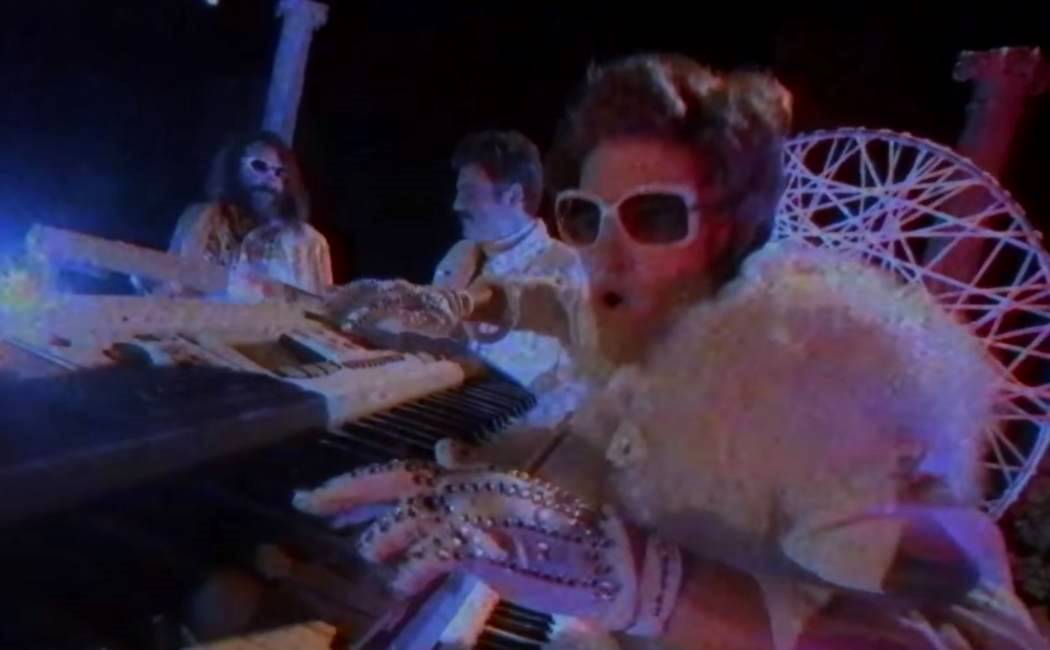
Adult Swim is the night time wing of the Cartoon Network and frequently airs adult animation, mockumentaries and sketch comedy. Although ‘Live At The Necropolis: Lords Of Synth’ first aired in 2016, this little gem of a video is the gift that keeps giving for any fan of electronic music, especially the originators: Vangelis, Wendy Carlos and Giorgio Moroder.
For those that haven’t had the pleasure of seeing it, the skit adopts a wonderfully droll US sports commentary-style approach to a ‘synth-off’ (or as they word it, a “battle of fingoric dexterity”) between Xangelix, Carla Wendos and Morgio Zoroger. Each of the synth heroes are lovingly characterised with Zoroger being portrayed as a hard-drinking Italian (who harbours a long-running grudge against Xangelix and an ex-relationship with Wendos), Xangelis (a reclusive musician who is rarely seen in public) and Carlos Wendos (previously known as Carlton Wendos).
Also worthy of mention are the two US sports-style commentators, both named in homage to German electronic pioneers TANGERINE DREAM (Edgar Tangram and Zedd Centuari) who oversee the musical scoring of the return of Halley’s Comet to earth. The winner being subsequently crowned ‘Lord Of Synth’.
The parody was inspired by Greek-American musician Yanni’s extravagant 1993 ‘Live At The Acropolis’ concert which was seen in 65 countries and Public Broadcasting Service who originally promoted it. What adds to the overall enjoyment factor of ‘Live at the Necropolis’ is the attention to detail throughout, there are so many fantastic touches that it’s impossible to highlight all of them.
For a start, the synth equipment on stage is all appropriate to the individual ‘synth lords’ with Wendos having a Moog modular system, Moroger with a Jupiter 8 (fed through guitar pedals a la Johannes Schmoelling of TANGERINE DREAM) and a variety of other classic synths (including an Emulator I and a Prophet 5).
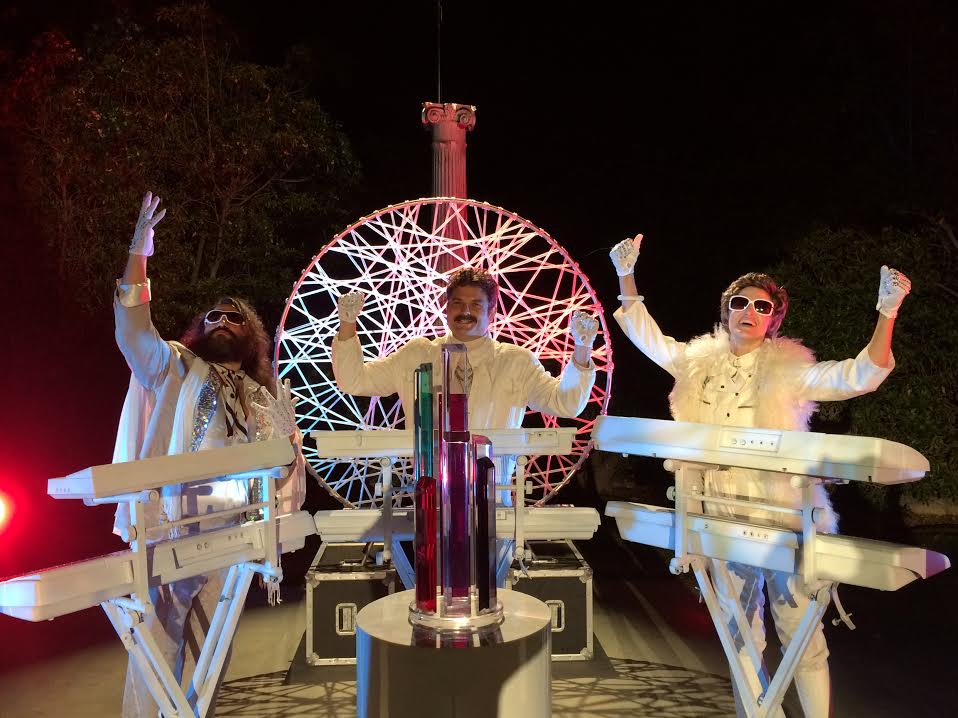
When it come apparent that Halley’s Comet is going to destroy earth and none of the Synth Lords (individually) will be able to halt its deadly trajectory, our trio combines forces and after sending a synth Morse Code to each other, metamorphosize into a streamlined all-white wearing synth ‘power trio’ with new keyboards to match.
With their collaborative performance, the “sheer coolness of the jam” cuts the heat from Halley’s Comet, a star constellation of Pegasus is summoned and a final triumphant chord sends a beam of light to the heavens and freezes the comet before it obliterates the Earth. Once it becomes apparent that humanity has been saved, former US President Gerald Ford returns (he had previously evacuated in a space pod) to bestow gold medals on our three Synth Lords.
ELECTRICITYCLUB.CO.UK can’t recommend ‘Live At The Necropolis: Lords Of Synth’ highly enough, it is a joy from start to finish and repeated viewings reveal many fantastic comedic touches that may get missed first time around.
We use cookies to ensure that we give you the best experience on our website. If you continue to use this site we will assume that you are happy with it.










Follow Us!