Tag: OMD (Page 1 of 23)

Vintage Synth Trumps with OMD

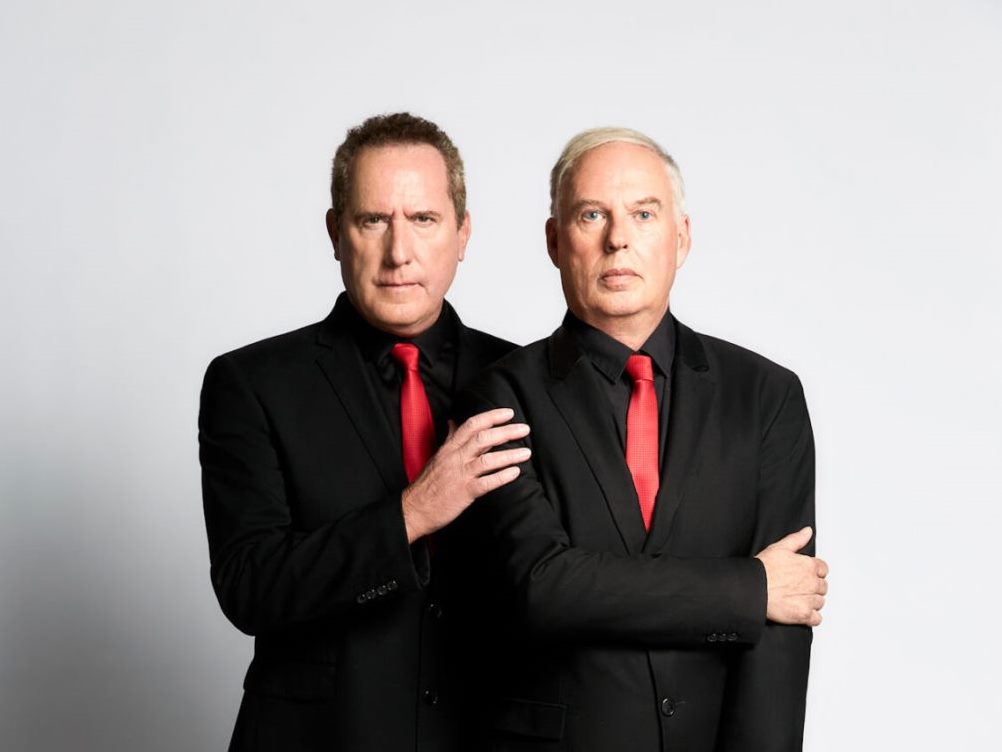
Photo by Ed Miles

Releasing their first single ‘Electricity’ on Factory Records in 1979, OMD are one of the leading lights of the innovative Synth Britannia era with their exquisite hooks and fascinating unconventional lyrical gists that included phone boxes, planes, oil refineries and historical figures.

Often using beautiful melodies to tell of terrible things, even when love was in the air, there could be a twist; in a 1992 co-write with Karl Bartos, ‘Kissing The Machine’ imagined a romantic liaison with a sexy AI robot, a Sci-Fi situation which today is close to becoming fact!

Inspired by their love of KRAFTWERK, NEU! and LA DÜSSELDORF, the Wirral duo of Andy McCluskey and Paul Humphreys realised their passion for European electronic music after the purchase of a Korg M500 Micro-Preset synthesizer. With numerous hit singles and albums across the world, OMD released their most recent album ‘Bauhaus Staircase’ in 2023.

2026 sees OMD’s ‘Summer Of Hits’ tour visit a number of outdoor locations in the UK and Europe. But a special indoor date takes place on Sunday 28th June at Brighton Centre, arranged by JOY Concerts as part of its NHS My Music series. Bringing a number of major live shows to venues across Sussex while raising funds to support local NHS services, 100% of profits from ticket sales and merchandise will support NHS projects across the seven hospitals of University Hospitals Sussex NHS Foundation Trust directly benefiting patient care, staff wellbeing and hospital environments across the local community.

The constant throughout the 48 year career of OMD has been Andy McCluskey; he kindly sat down on a call with ELECTRICITYCLUB.CO.UK for a round of Vintage Synth Trumps and have an enlightening conversation about instrument technology, artificial intelligence, new music, obscure B-sides and much more…
The first Vintage Synth Trumps card is a MemoryMoog…

I actually do own a Minimoog that somebody painted white before I bought it, so it looks like some sort of kit Moog! I quite like the sound of the Moogs but you do have to leave them on for a quite a while to let the oscillators settle down and stop drifting, although maybe that’s part of the charm that they create their own harmonics, drifting out of tune with the oscillators *laughs*

That MemoryMoog… is that a digital one?

Yes, part digital… FIAT LUX had one and the producer Zeus B Held who produced FASHION, DEAD OR ALIVE and John Foxx, it’s his favourite synth… the MemoryMoog was Moog’s last polyphonic synth before they went bankrupt! *laughs*

OMD were not really a Moog band, we were definitely a Korg and Roland band, almost exclusively Korg and Roland, largely because they were cheaper than bloody Moogs!
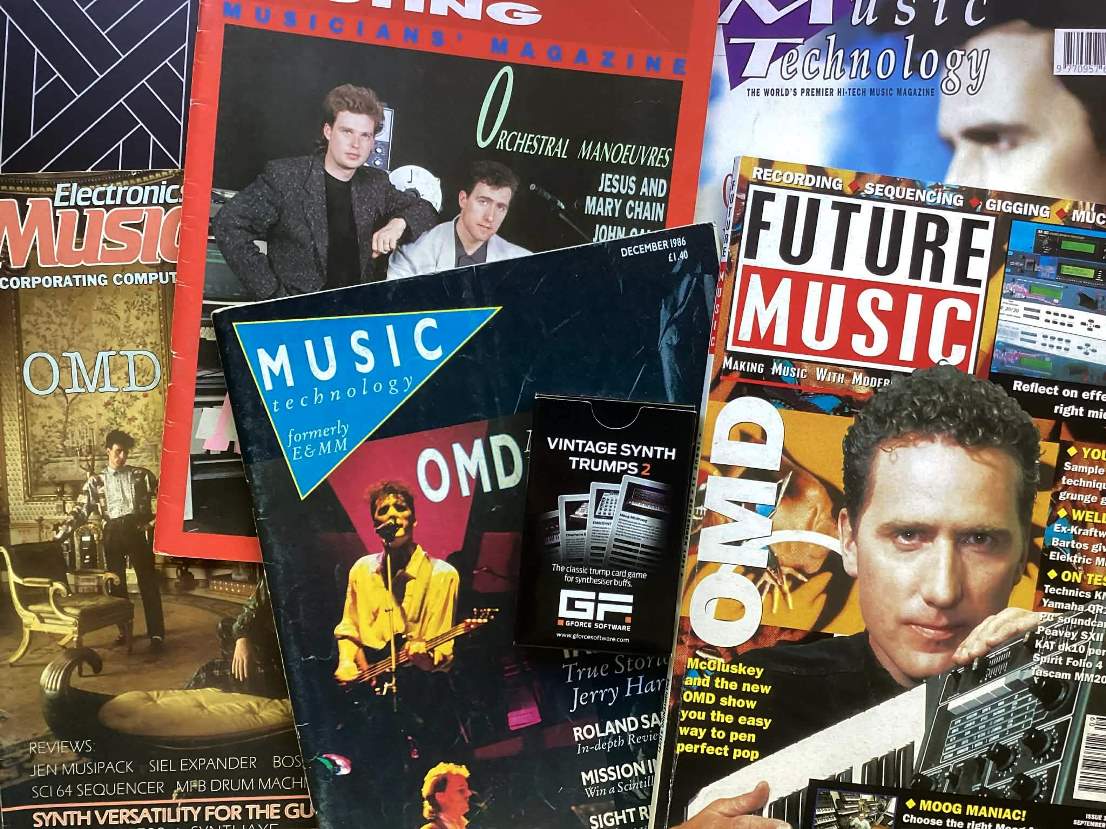
You seem to have had two periods of acquiring hardware synths, first to equip The Motor Museum and then for the OMD reunion? Have you always been purposeful when buying synths as opposed to collecting them for the sake of it?

Yeah, I’m not really a collector for the sake of collecting, they take up so much bloody space! Funnily enough, when you talk to younger bands now who are “purists”, people like Martin Swan from VILE ELECTRODES and the MIDI-hell on stage, they are like “why haven’t you got your old synths… oh dear, what happened to them?” – they never stayed in tune, I don’t like to MIDI, you had to write down notes of every sound you’d created, otherwise you wouldn’t remember how get the sound back! And quite frankly, they took up too much space and they were too heavy to carry around!

I’m sitting in my programming room here, it’s all “in the box” in my G5 and I’m happy about that. Actually, I don’t have that many bass guitars either! But I’ve just had my original Fender Jazz bass put back in its original colours! That is my 1974 bass that I played on ‘Enola Gay’, ‘Souvenir’ and ‘Joan Of Arc’; when we had the exhibition in BIM in Liverpool, this was black but when I bought it, it was sunburst blue and red.

So as this IS the one that I played, I thought for the sake of putting it on display, I would get in back in the same colour. The company that made the scratch plate for me, I asked them for an orange one and they said “why?”… so I sent them a picture of me with it in the ‘Enola Gay’ video and they went “Oh my god! Tell you what, we’ll repaint the one that’s now black” and they even did the scratches to make it look exactly the same as when it was in the ‘Enola Gay’ video!

Are you using the Fender Jazz bass again?

Last summer, we got asked to play the 600th edition of ‘Taratata’, the French equivalent of ‘Old Grey Whistle Test’ and because my other basses were in America for a tour, I took the Fender Jazz bass to a guitar tech called Ross Scott who got the pick-ups rebound and completely replaced the electrics because it sounded terrible! The original pick-ups had been replaced in the 90s with noiseless pick-ups, but they were so dull because there was no top end! He got his mate to rewind the pick-ups and I played that live at ‘Taratata’ on ‘Souvenir’ and ‘Enola Gay’, it sounded fantastic.

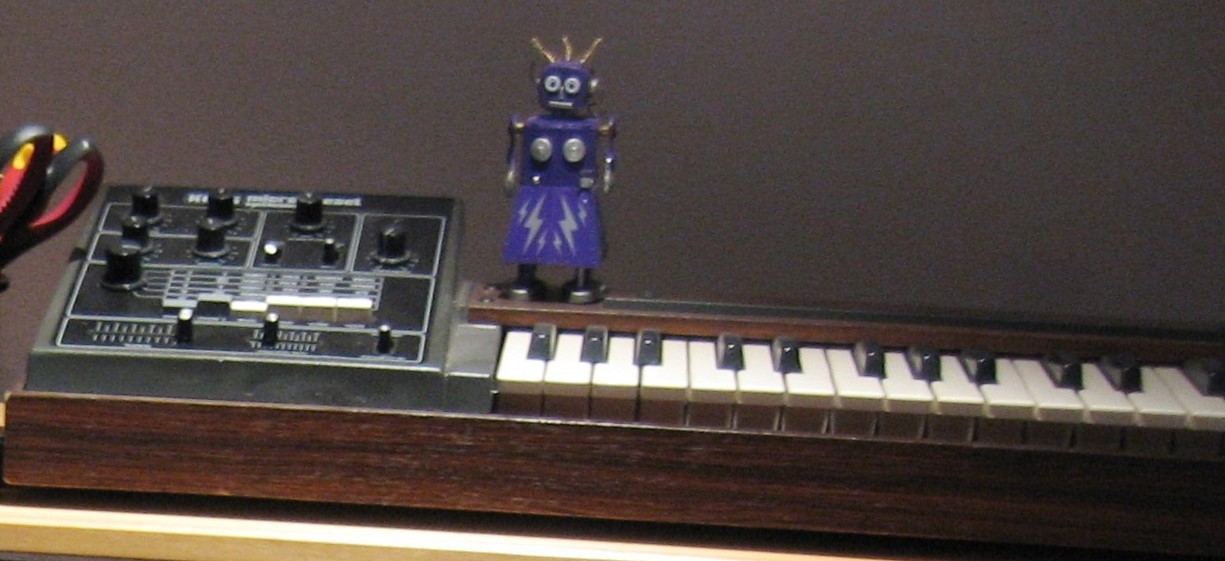
Here’s another in the room, THIS is THE Korg Micro-Preset, that IS the one that we got from my mum’s catalogue that we painted black! It wasn’t working when we reformed… so you know the story of myself and Paul bidding against each other on eBay!? *laughs*

I got that one and after we sampled it, I got someone to cannibalise the good bits to fix the original one up which had broken keys and some of the electrics weren’t working. So it’s 99% the original, the one which we did ‘Messages’!
How did you come to support JOY Concerts’ NHS My Music which will benefit hospitals and community care initiatives in Sussex?

Quite simply, they asked us. We thought it was a very good cause and would like to support it. It fitted perfectly into the fact that we are touring this summer doing festivals, so we thought we’d come down to Brighton and have a party there to celebrate all of the amazing things that this is supporting.

This date is part of OMD’s ‘Summer Of Hits’, how are you choosing the setlist?

Basically, we going to play every hit single barring ‘Genetic Engineering’ because it’s a bast*rd to play on stage! *laughs*

‘Walking On The Milky Way’ will be back in the set. Obviously when we’re doing our full gigs where we are the headline act, it WILL be other things as well so we’ll probably still do ‘Veruschka’. It’s not going to be only hits because I think we’ve only had 16 or 17 hits, although that’s not bad for most bands! *laughs*

Has the OMD audience increased and changed since all the various adverts and syncs recently?

I don’t know if it’s just the adverts and the syncs but certainly the age demographic has expanded. When we first reformed, it was predominantly the fans from the first time around who’d come back to see us again. I don’t exactly know why, but now it seems that it’s a broader demographic. It could be because there’s newer bands out there that reference OMD as being influential, it could just be because in this post-modern era, there’s nothing “new” so there’s nothing “old”, nothing in-fashion, nothing out-of-date! *laughs*

So if you’re considered to be “iconic” within your genre which it seems we are, then people will come and find out about you and I’d like to think that we’re good live. So once people have seen us, they come and see us again. It’s just kept growing ever since we reformed in 2006.

Next card and it’s a Roland Juno 106… I know you had a Roland Jupiter 8 and some of the smaller Rolands?

The 106, we never had one of those but I use the 106 in my Roland Cloud Group quite a lot when I’m writing songs these days because I do like to go for the analogue synth sounds, although these are digital-analogue. I defy people to tell the difference… the purists say you can but you can’t!! We had the Jupiter 8 and they were unbelievably heavy those things! We got a bit lazy and we used a lot of that on the ‘Junk Culture’ album, ‘White Trash’ is ALL Jupiter 8! I still use Jupiter 8 from the plug-ins as well.
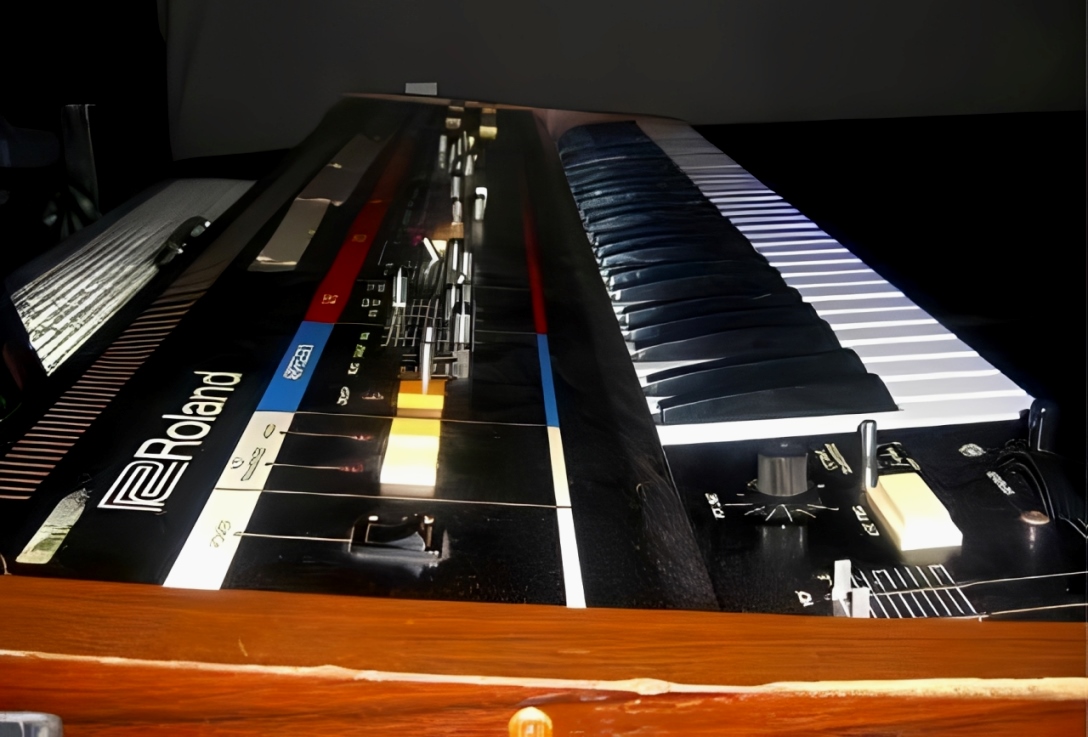
It’s quite fascinating with the Juno 106 and that series of synths, it’s the one that’s still knocking about as the vintage synth on stage, do you remember MIRRORS had a Juno 60?

I was so sad that MIRRORS split up, I thought they were so good. But listen, the Roland Juno, the reason why it’s still used is because it’s not as heavy as a Jupiter 8 and it’s cheaper! DO YOU KNOW HOW MUCH JUPITER 8s GO FOR ON eBAY?!!?? *laughs*

WALT DISCO have got their third album coming out this year, I’ve got everything crossed for them because I think they’re a brilliant band and it’s so sad to see great new bands not make it!

Would you like a recommendation? Have your heard A THOUSAND MAD THINGS?

A THOUSAND MAD THINGS, no but I’ve written it down Chi so I’ll check them out!
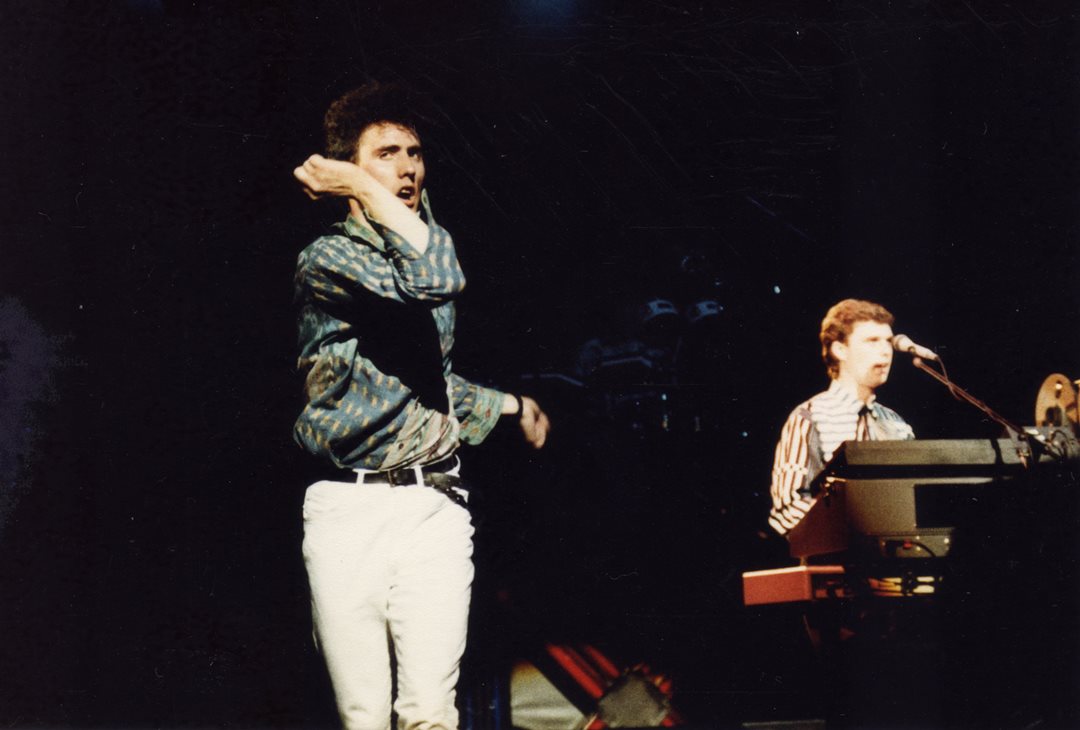
So in hindsight and yes, it was a long time ago but was it a mistake for OMD to get a Fairlight?

No! Absolutely not! There was no problem with the Fairlight, it allowed us to write songs… there’s nothing inherently wrong with any type of instrument, NOT EVEN A LEAD GUITAR! It’s what you play on it! It wasn’t the Fairlight but the situation we were in that made for some issues with particularly ‘The Pacific Age’ album but also to a lesser degree ‘Crush’.

Can I just say by the way, we has issues with ‘Crush’ and with ‘The Pacific Age’, largely because we have painful memories of their inception; we never had enough time to finish them, we were always right up against it! So the first 10 things we wrote were the album and particularly with ‘The Pacific Age’, there’s at least 2 tracks which SHOULDN’T have been on there in hindsight!

The other thing that was a negative influence on our recollection of those albums was the European fans’ negative response to them going “oh, you’re making this because you want to break America, you’ve got much more polished (and that was partly down to Stephen Hague producing) and writing about American subjects”; but I wasn’t writing about American subjects because I wanted to break America, I was just fascinated and it was new to me, it was just a new thing to sing about.

So these two albums, that fact that we made them under the cosh and the original European fans weren’t that knocked out by them, made me feel negatively. I don’t listen to the old albums, but I was really pleasantly surprised when I went back to listen to ‘Crush’… I went “that’s a really good album”, yeah it’s not ‘Dazzle Ships’ but there’s some great songs on there!
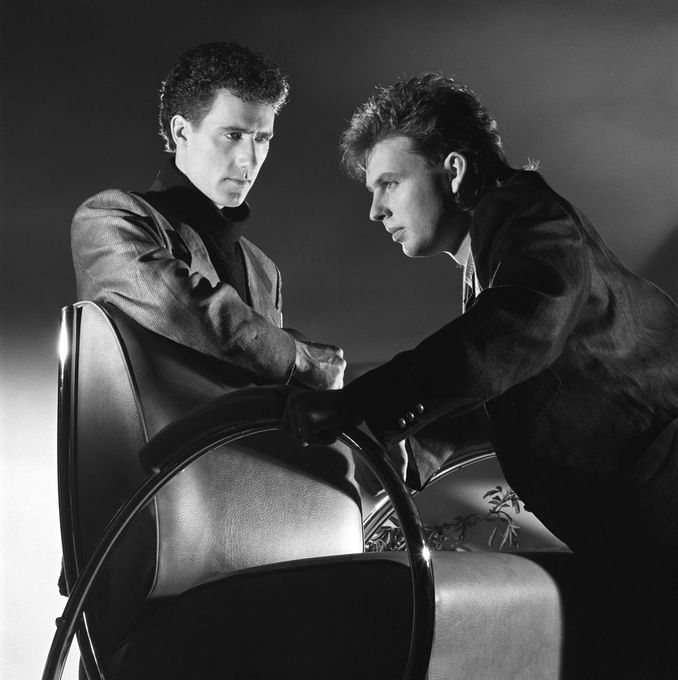
Photo by Brian Griffin

‘Crush’ got the expanded reissue treatment last year, what’s happening with ‘The Pacific Age’?

With ‘The Pacific Age’, we are actually going to re-release it for its 40th birthday BUT we are changing it! 7 of the songs have been remixed by Tom Lord-Alge because the original mixes were absolutely bombastic, the kick drum and snare drum were SO bloody loud! You couldn’t hear anything else. So Tom has remixed 7 tracks, ‘If You Leave’ is going on the album because it WOULD have been on ‘The Pacific Age’ if it wasn’t for the fact that Paramount Pictures still owned it at the time and we couldn’t get the licence.

AND we’re taking off 2 tracks!! This is going to cause a real issue with people who will go “YOU CAN’T RE-RELEASE IT AND TAKE OFF 2 TRACKS!” but yeah, they shouldn’t have been on there in the first place! You know what, if you like the original, you’ve still got it! OK, you don’t have to buy this one! It always gets me so annoyed, people start spitting their dummy out but you’ve got the original! *laughs*

So ‘Stay (The Black Rose and the Universal Wheel)’ is coming off, it’s NOT a good song and ‘Shame’ is coming off as well! ‘If You Leave’ and ‘This Town’ are going on the album, they should have been on ‘The Pacific Age’ first time around and 7 of the tracks have been remixed. So it’s going to be interesting, I think it will p*ss a lot of people off but we’re putting out the album that we WANTED to put 40 years ago! *laughs*

Another card, and it’s a Yamaha CS60…

NO! YOU’RE PICKING OUT ALL THE ONES I NEVER OWNED! *laughs*

They were like battleships these big Yamahas…

The Korg MS20 was confusing enough for me! They had that template on it and then you ran out of templates and you couldn’t buy any more! And forget the jack plugs, I never understood how the f*cking jack plugs worked! Considering we were a synth band, I’m absolutely a luddite when it comes to synths!

So which was your favourite synth, the one perfect one for your ability?

What’s the black Roland, the one that had 2 oscillators?

That sounds like the SH-2…

I hated it when Roland started making the SH synths in that horrible grey plastic, but the black ones in the metal cases were great. I’m not a synth geek, I can’t even remember exactly which one it is but it’s probably the SH-2 because we had an SH-09 and an SH-2.

I’m still a huge fan of the Mellotron but I have a digital copy, not the original one where we had to mess around with the tapes.

The Korg Micro-Preset, it’s f*cking horrible! That’s why we rammed it down the Eventide Harmoniser and triple-tracked it to try to make it sound acceptable! It’s got all these presets on it like ‘String’, ‘Wood’, ‘Voice’, ‘Bass’, ‘Synthe 1’, ‘Synthe 2’… doesn’t matter which preset you hit, it just went “EEERK”! *laughs*
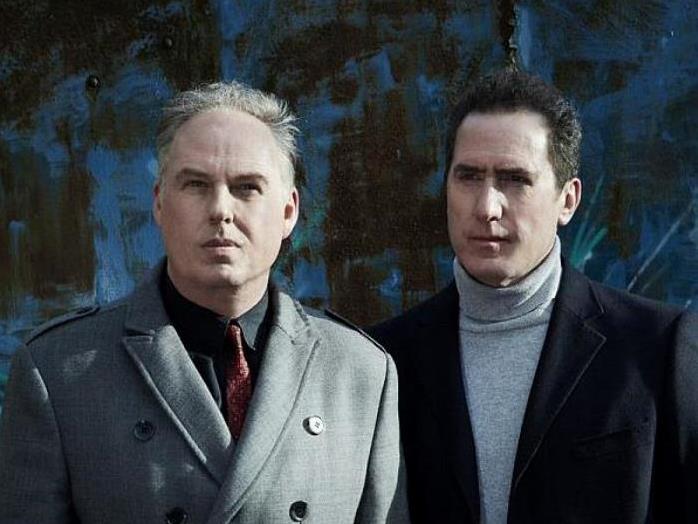
Photo by Tom Oxley

Out of the four albums since the 2007 I think ‘English Electric’ comes closest to the imperial legacy of the first four albums… now you’ve had some distance, how do you look part on the 21st Century quartet?

I think that ‘History Of Modern’ was a good restarting of the engine, there’s some good songs on there; but it was a bit hit and miss, it’s a collection of songs that were lying around for a while. I think ‘History Of Modern Part 1’ is great which is why we still play it live. Although I think the live version is better than the album version! *laughs*

From ‘English Electric’ through ‘The Punishment Of Luxury’ to ‘Bauhaus Staircase’, I’m hugely proud of all three, we put a lot of time and energy into those and I think it shows. The songwriting, the ideas, the sounds, I’m exceptionally proud and I would say those three are up there with the first four! That’s my personal opinion.

My favourite on ‘Bauhaus Staircase’ is ‘Don’t Go’ which came out as an interim single first, but the way it sounded and was structured with all that KRAFTWERK Synthanorma sequencer stuff, did it date back to ‘English Electric’?

Not quite that far back but it was written as a potential B-side for ‘The Punishment Of Luxury’. I really liked the sequencer, all we had was that and we didn’t have a lyric but when it changed chord, I had the “A-ha” part. I kept playing it, trying to think of a lyric and in the end, I said to Paul “Let’s not use this, there’s something about this is so good, let’s not do a half-baked version as a B-side, let’s just keep that”

So we hung onto it for a couple of years and in the interim time, I managed to get the verse vocal and then when Paul wrote the melody for the middle eight. I don’t know how we do this but when you reprise the melody, it fits! It dovetails across the lead vocal so you can play the melody and the vocal at the same time and they’re not really clashing with each other! If ‘Don’t Go’ had been released in the 80s, it would have been a massive hit! It’s a great song, I’m so proud of it *laughs*

Written in 1992, first released in 1993 with ELEKTRIC MUSIC and then reworked for ‘English Electric’, ‘Kissing The Machine’ has turned out to be quite prophetic, so have you experimented with AI yet?

Both Paul and I fully intend to buy some really high end AI software and programming. We have to check the small print because the last thing we want is for them to actually own what we create. We’re going to play around, we’re going to try. The thing about AI, there’s nothing inherently wrong with it, it’s what you do with it. Now if you use it to pastiche other people or make fake new videos that looks like somebody famous doing something they shouldn’t or never did, that’s morally WRONG! But if you actually programme it and this is the thing, it’s not actually going to do anything that you don’t programme it to do… and if it does, it will be absolutely sh*t because it will be filling in so many gaps that it will just be pants!

However, I have not yet heard any music written on AI that sounds to me like a pastiche of music because it can only work from algorithms and programming, so it can only generate what you’re telling it to do a pastiche of. There’s no capability (yet) for any kind of genius synapse like would happen in your brain, where for no reason that you know the reason of, you’re just going to go “I want to try that” or “why don’t I sing this?” or “why don’t I play that note?”; 99 times out of 100, it’s shit because it’s just a brain fart but just occasionally, you go “WOW! THAT SOUNDS GREAT!”

Even if you could programme AI to do that and “throw in a note that shouldn’t work” or “throw in words”, it still wouldn’t know if it was a stroke of genius or just a piece of sh*t! So I’m not worried about AI music taking over the world at the moment because I haven’t heard anything that’s really that good, but I want to find out!
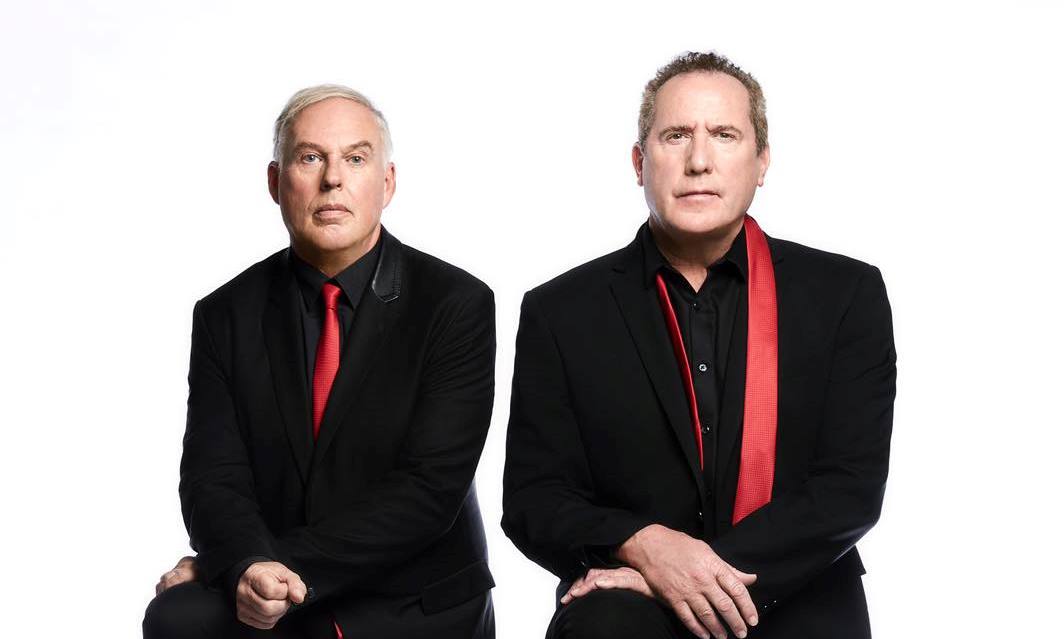
Photo by Ed Miles

Is there any new music coming up?

We do have a project that will hopefully come out next year in the “quiet” year that has a working title at the moment of ‘Requiem’. I’ve got all these pieces that are very linear and once Paul finally stops changing nappies and gets down to working again on these tracks, I need him to cut them up, look at this chord change and that middle eight to make the sort of thing he does on loads of things that I write. There’s no lyrics, it’s a series of very ambient funereal musical vignettes.

Is this the “piano” thing you mentioned at the 2024 talk event in Düsseldorf?

Yeah! But it’s not all piano, there’s now 5 pieces… the reason this has all come in my mind is that Andy Whitehurst who made all of the ‘Bauhaus Staircase’ videos has finally decided to try out AI and he made a couple of video demos to my music demos… I was just blown away, it re-inspired me! Now I am sitting in this room, doing more work. I don’t know what it’s going to be, I don’t know if it’s going to be a Bluray, a DVD, a video to download but it’s going to look and sound gorgeous.

I hope it can be released as OMD once Paul starts doing some work on it, he’s done work on one but he hasn’t played it to me yet. We are going to have to pitch it properly to people and say “listen, this is not what you’re going to expect from us, it sounds a bit like ‘4 Neu’, things like that”. I’d rather do that and be honest about it rather than say “It’s a lot easier not to write lyrics and not write a catchy melody!”; the people who like our more ambient B-sides back in the 80s will enjoy it.

It will be beautiful ambient music but the visuals will take it to another level. We did say ‘Bauhaus Staircase’ would probably be the last full studio album because Paul hasn’t got the time with 2 young children and why wouldn’t he want to sit in his swimming pool drinking wine in the South of France instead of writing music… smell the roses that you’ve planted over the last 50 years!
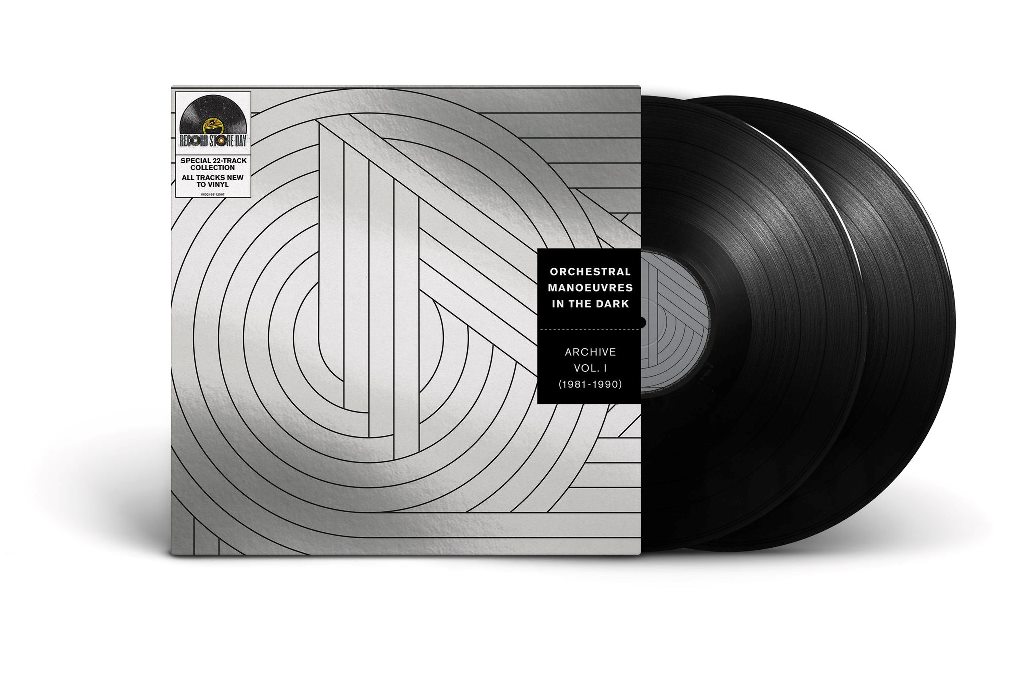
The ‘Souvenir’ boxed set had the ‘Unreleased Archive Volume1’ which recently came out separately on vinyl for Record Store Day 2026, will there be a “Volume 2”?

Unbelievably when ‘The Pacific Age’ reissue comes out, there’s going to be unreleased tracks that have been found! I thought we’d gone back through the archives and that there was nothing left! BUT THERE IS! So while there won’t be a standalone volume, there will be a separate CD and a separate vinyl album with ‘The Pacific Age’ of interesting unreleased things. 2 of them, I didn’t even remember and some of the others, I was like “Oh my lord!”…

I remember when I listened to ‘Unreleased Archive Vol1’ for the first time and really loving the ‘Liberator’ song and its “computer rock and roll” thing, why did you keep that under wraps for so long?

Oh, the chorus wasn’t good enough, I loved everything else and the line “Fell in love with a Liberator”, the verse was great and the backing track was great but the chorus wasn’t good enough!

The final card and it’s the ARP Axxe, I don’t recall you having any ARP stuff, or did you?

I love the ARP 2600 and I use it all the time, it is the sequencer in ‘Anthropocene’ and it’s also in other things… I’ve never had a real one but I love working with the one in my computer, I understand it. I start with a preset and then I start fiddling until I change the notes or whatever. Again, don’t ask me to plug jack leads in, I wouldn’t know what I was doing! *laughs*

PET SHOP BOYS did their ‘Obscure’ residency in April, would OMD ever consider such a run of gigs with no hits at all, it’s the complete opposite of ‘Summer Of Hits’?

How many songs did they do?

23 with 35 songs rehearsed…

So they mixed it up?

Yes, over the five nights…

…if I thought we could do five nights and charge the money THEY charge, then YES! *laughs*

There’s a dilemma with doing one-off shows… for example, we did the Royal Albert Hall the first time when we did all of ‘Dazzle Ships’ + ‘Architecture & Morality’, we lost money on that because so much work went into rehearsals. Normally when we tour, we’ve got a memory bank of songs that are in there, so we just play them once and we remember that. But when you have to go back and dig deep into your catalogue, you’ve got to do a lot of rehearsing. I like the idea is the short answer but it would have to make sense financially because otherwise, there’s so much time rehearsing which means crew, rehearsal venue hire etc, it’s not worth it, that’s the sad thing. What did PET SHOP BOYS charge?

£100 per ticket in the Electric Ballroom, 1000 capacity…

OK, yeah! That’s still a lot of money! *laughs*

Fair play to them… I mean, 5000 people came from all over the world to come see us play ‘Dazzle Ships’ at the Royal Albert Hall… we’ll think about it! 😉

The thing that’s on the horizon is we’re hoping to play with the Liverpool Philharmonic next year and we are looking towards 2028 for a MASSIVE tour because it’s our 50th Anniversary would you believe?!? Although that might start at the end of 2027 just to get it all in! It’s going to be a huge undertaking!!


ELECTRICITYCLUB.CO.UK gives its grateful thanks to Andy McCluskey

Special thanks to Alix Wenmouth at Wasted Youth PR

OMD play Brighton Centre on Sunday 28th June 2026 for NHS My Music – tickets available from https://omd-brighton.com/

For other live dates on OMD’s ‘Summer Of Hits’ tour, visit http://www.omd.uk.com/

https://www.facebook.com/omdofficial/

https://www.instagram.com/omdhq/

Vintage Synth Trumps is a card game by GForce that features 52 classic synthesizers, available from https://www.juno.co.uk/products/gforce-software-vintage-synth-trumps-2-playing/637937-01/


Text and Interview by Chi Ming Lai
1st May 2026

EVERY UK HIT SINGLE: 1980

From Chart Toppers To Cult Classics When Music Ruled The Airwaves

In 1983, Stephen Morris from NEW ORDER said to Smash Hits: “If you believe in the charts, then you might as well believe in fairies” but occasionally, those fairies could sprinkle some magic dust.

‘Every UK Hit Single: 1980’ aims to tell “The story of 1980 – every hit, every memory, one unforgettable year in pop: 370 singles, 225 artists, 25 chart toppers!”. Putting things into wider perspective, those numbers are still small considering the amount of record releases in any given year during a time when there was no streaming, no downloading, no social media and even no CD!

Author Richard West has a lifelong fascination with popular music and realised his dream of chart entries as a member of progressive metal bands THRESHOLD and OBLIVION PROTOCOL with recognition across Europe and the UK’s specialist listings. He even published a memoir ‘Maybe A Writer: My Life in Threshold’ that traced his journey from his teenage years living by numbers following the charts to becoming a recording artist.

‘Every UK Hit Single: 1980’ is the first volume in a series documenting every Top 40 entry with the intention of covering 1981 and beyond. The format is chronological with two paragraphs on each single, one factual and one of trivia. What it does lack however is opinion, so this is more of a reference book.

Despite the popularity of Gary Numan in 1979, synth-based pop music was still fledgling as far as being a regular chart proposition was concerned. However, Japanese Technopop trio YELLOW MAGIC ORCHESTRA would score a surprise No17 hit with their 1978 electronic cover of American composer Martin Denny’s 1959 exotica instrumental ‘Firecracker’, mistitled as ‘Computer Game (Theme From The Invader)’.

Although the original could be seen as an early form of cultural appropriation using every pentatonic cliché in the book, Haroumi Hosono, Yukihiro Takahashi and Ryuichi Sakamoto took it back and gave the tune authenticity. Their treatment acted as a symbol of the Far East’s advancement in affordable technology which was crucial to the rise of the synth.

While 1980 would establish its own electronic legacy, the man born Gary Webb was already being seen as heading down the dumper with both ‘We Are Glass’ and ‘I Die: You Die’ failing to secure the top spot after ‘Are Friends Electric?’ and ‘Cars’ both hit No1 the year before.

Considered his nearest rival artistically at the time, Numan’s biggest influence John Foxx was fresh out of ULTRAVOX but the fact that his even more dystopian electro pieces like ‘Underpass’, ‘No-One Driving’ and ‘Burning Car’ were even entering the Top 40 was nothing short of amazing and indicative of the adventurous eclectic nature of 1980.

Meanwhile the newly regrouped ULTRAVOX now fronted by Midge Ure got the Top 40 entry that was not even close during their Foxx-era with ‘Sleepwalk’ but while it was a breakthrough, it wouldn’t be until the title track of the parent album ‘Vienna’ was a single in 1981 that they would become chart fixtures.

Despite the critical acclaim for the likes of THE HUMAN LEAGUE, JAPAN and SIMPLE MINDS, it was a young duo from Merseyside who would steal their thunder as far as the Top 40 was concerned; ORCHESTRAL MANOEUVRES IN THE DARK were notable for being one of the rising wave of warmer synthesizer acts but while extremely melodic and rhythmic, their lyrics on ‘Messages’ and more significantly ‘Enola Gay’ had darker overtones. Andy McCluskey and Paul Humphreys would end 1980 as the biggest selling artist in the Virgin Records group despite being signed to one of its subsidiaries Dindisc.

One often forgotten synth-driven band who actually managed three Top 40 single entries in 1980 was NEW MUSIK; led by Tony Mansfield, like a certain Trevor Horn with BUGGLES, he figured he would have more influence in the studio rather than being on ‘Top Of The Pops’. He would go on to produce a No 1 for Captain Sensible while also working with the likes of AZTEC CAMERA, NAKED EYES and A-HA. Meanwhile at the start of 1980, Vangelis debuted in the UK Top 40 with YES frontman Jon Anderson and the gorgeous ‘I Hear You Now’.

Sadly, Ian Curtis was never to have a Top 40 hit in his lifetime as ‘Love Will Tear Us Apart’ would posthumously get a No13 hit for JOY DIVISION. But surviving members Bernard Sumner, Peter Hook and Stephen Morris with new member Gillian Gilbert would have that chart fairy dust sprinkled on them several times as NEW ORDER.

Although the New Romantics were being talked about as the rising youth movement, it would be the man who sold the world and seeded the whole party in the first place that would use it for an artistic renaissance; David Bowie was taken to The Blitz by club regular and RCA label assistant Jacqueline Bucknell to cast members of the clientele including its “face” Steve Strange for the video of his new single ‘Ashes To Ashes’.

While the song reached No1 and Bowie himself would move on, others from The Blitz knew their time had come. SPANDAU BALLET would release ‘To Cut A Long Story Short’ towards the end of year to herald a fresh aspirational mindset in pop while issued a few weeks later, ‘Fade To Grey’ by the Steve Strange-fronted VISAGE wouldn’t hit big until the start of 1981 but would become the biggest selling single in West Germany of that year.

1980 though was not really about the emergence of warmer and dancier synthesizer sounds. The year was dominated by ska with the likes of THE SPECIALS, THE BEAT and MADNESS scoring at least 4 Top 40 hits each but perhaps unbelievably and reflective of every generation needing its dose of imagined nostalgia, rockabilly band MATCHBOX scored 5 Top 40 hits!

1980 is often best remembered for 3 No1s for BLONDIE, 2 No1s for THE JAM and 2 No1s for ABBA, with consistent charts runs for the likes of THE POLICE, QUEEN and ROXY MUSIC while disco provided chart toppers for Fern Kinney and Kelly Marie. Without even mentioning Peter Gabriel, Kate Bush, mods, rockers or the new wave of British heavy metal, this was a year of musical diversity and ‘Every UK Hit Single: 1980’ documents that.


‘Every UK Hit Single: 1980’ is published by Eightspace in paperback

https://everyukhitsingle.com

https://www.facebook.com/everyukhitsingle


Text by Chi Ming Lai
7th March 2026

KARL BARTOS Interview

Photo by Katja Ruge

Karl Bartos needs no introduction to electronic music aficionados as a member of the classic KRAFTWERK line-up; he co-wrote acknowledged electronic classics such as ‘The Model’, ‘The Robots’, ‘Neon Lights’, ‘Computer World’, ‘Numbers’, ‘Computer Love’, ‘Tour De France’ and ‘The Telephone Call’.

Born in 1952, Karl Bartos studied at the Robert Schumann Conservatory in Düsseldorf before joining KRAFTWERK for their US tour in 1975 after the success of ‘Autobahn’; working alongside Ralf Hütter, Florian Schneider and Wolfgang Flür, he featured on the pioneering albums ‘Radio-Activity’, ‘Trans-Europe Express’, ‘The Man Machine’, ‘Computer World’ and ‘Electric Café’.

As well as playing the iconic elektronisches schlagzeug pads first widely seen in the UK on the BBC show ‘Tomorrow’s World’, Bartos also used other customised electronic instruments such as the Vibrolux electronic vibraphone and the Triggersumme percussion sequencer.

Leaving KRAFTWERK after years of work on ‘The Mix’ for which he was not credited, he formed ELEKTRIC MUSIC, releasing the album ‘Esperanto’ in 1993 which featured the original version of the brilliant ‘Kissing The Machine’ with Andy McCluskey on lead vocals that was later included in reworked form on the 2013 OMD album ‘English Electric’.

Collaborations with Bernard Sumner and Johnny Marr for the ELECTRONIC album ‘Raise The Pressure’ and a psychedelic rock-infused number ‘The Moon & The Sun’ with OMD for their more conventional ‘Universal’ long player followed in 1996; the various influences from these British sojourns led to the 1998 six string driven ‘Electric Music’ album which Bartos would describe as “guitar pop out of the computer”.

Photo by Gaby Gerster

But Bartos would return to electronics for his debut solo album proper ‘Communication’ in 2003. He acted as a guest professor in Auditory Media Design at the Berlin University of the Arts between 2004 to 2009 before formulating his second solo album ‘Off The Record’ which came out in 2013. His most recent music project has been a present day soundtrack to ‘The Cabinet of Dr Caligari’, the 1920 German Expressionist silent horror film directed by Robert Wiene.

His autobiography ‘The Sound Of The Machine – My Life in KRAFTWERK & Beyond’ was published in English in 2022 by Omnibus Press and among the interesting factoids contained within was that the inspiration for the ‘Numbers’ beat was a Cliff Richard recording called ‘Do You Want To Dance?’; almost everything about the creative process at Kling Klang from an eyewitness point of view was contained in this book.

With a remastered version of ‘The Sound Of The Machine’ recently published with a new foreword by music academic Dr Leah Kardos, Karl Bartos kindly entertained a career spanning chat with ELECTRICITYCLUB.CO.UK

You have published a remastered edition of your book ‘The Sound Of The Machine’, are there any specific differences with this new version. How was it to write, from the original German transcript through to translation into English?

After the book’s publication in Germany, I began revising the text with the English translation in mind. Many sections had been cut and I’ve now reinserted them elsewhere. Meanwhile, I had also analysed my time with KRAFTWERK and, for example, added the paragraph ‘Progress as a Shining Promise’ to Chapter 16. Digitisation was one of the decisive reasons for the end of our creative community.

When we then worked on the translation with the fantastic Katy Derbyshire, several other things came to light that I had noticed in the other language. And my magnificent editor, David Buckley, brought another expertise. It wasn’t really work for me, but rather very educational and a great pleasure. Yes, I’m happy with Omnibus Press’ remastered edition. And, of course, I love the profound foreword. Dankeschön, Leah Kardos.

You are still performing your contemporary soundtrack to ‘The Cabinet of Dr Caligari’ live, what fascinated you about this film and how did you find composing to moving images and a storyline?

The industry of killing machines was invented then. For the first time, a war was fought with modern weapons: machine guns, tanks, airplanes, flamethrowers, chemical weapons, and much more – everything that scientists had developed. The film reflected the horrors of World War I. It was a sensation at its premiere in Berlin in 1920. It was considered a new art form. Reproducible – made for the masses. The new medium of film combined the expressionist worldview with psychoanalysis and the mystical ghost world of Romanticism.

Composing functional music was an enriching experience. But I didn’t just compose music, but also integrated all the sounds of the narrative world into the music. That’s why my partner, sound director Mathias Black, and I called it narrative film music.

Your debut solo album ‘Communication’ was reissued in 2025 by Bureau B, but it sort of got lost when it was first released in 2003. How was the reception to it 22 years later on its now prescient themes?

Yes, I’ve been living with this album for a while now. I can’t say much about the reactions to the reissue yet. A friend from England wrote to me that it’s difficult to determine the order of my music releases anyway. The events of September 11th deeply shook me at the time, and I wanted to focus on the power of images.

How do you look back on the making of 2013’s ‘Off The Record’ and how it brought some of your past into the present? Are there any more “secret acoustic diary” entries that can be developed?

During my professorship at the Berlin University of the Arts, the idea for an autobiography gradually matured. My pocket diaries, scores, and audio diary were all kept close together. Yes, I often write things down. Perhaps because I want to know how I think.

‘Ohm Sweet Ohm’ remains an underrated classic, it is very emotional and human in its realisation with your “knitting needle schlagzeug” being among the key components, how did your pop mind and classical training take to this new technology and sound when in the studio for the ‘Radio-Activity’ album?

The 1970s were a decade of avant-garde music. And Düsseldorf was an artistic centre for all directions of the avant-garde. As a student, one was very involved in experimentation. Compositions for percussion generated quite a lot of buzz. Steve Reich played at the Kunsthalle in Düsseldorf in the early 1970s. That was an enlightening experience. I also studied Stockhausen’s ‘Zyklus for a Percussionist’ and, with the percussion ensemble, Carlos Chávez’s ‘Toccata for Percussion Instruments’. It was also around that period that I first heard pieces from John Cage’s ‘Imaginary Landscape series’. It was an amazing time, living and learning amidst the sounds of music.

But bear in mind: even in the 60s, THE BEATLES had one foot in the avant-garde of sound art. The recording sessions for ‘Radio-Activity’ were cool and the atmosphere was great. I remember thinking to myself that it was a good mix of pop and avant-garde. That was then.

In today’s capitalist, computerised world, however, many are more concerned with content management than with music. We once imagined this digital world and translated it into music. But yesterday’s future is now the past. Many people love this retro-futurism. That’s fine with me. Nostalgia is very potent. However, nostalgia should not degenerate into retro-perplexity. Because art, by its very nature, enters into a dialogue with the world. And as Canadian Prime Minister Mark Carney recently said in a different context in Davos: ‘Nostalgia is not a strategy.’

Before MIDI, you had the customised Vibrolux electronic vibraphone which you used on ‘The Hall Of Mirrors’, how did you find using to it compared to an acoustic one?

It was rather basic, but it could control a synthesizer, and that was the point.

You came up with the bassline of ‘Metropolis’ while the percussion was sequenced for the first time, how do you see your role as a musician changing at the time?

When I was young I‘d played in pop bands and in classical music, for example in modern ensembles and opera. From the beginning, I felt that composing came naturally to me. Since I never saw myself as a drummer in the traditional sense of pop music, I had no reservations about automating the rhythm. I somehow liked the anonymity of a formula. Similar to the bar lines in musical notation, which represent the pulse, it is the framework that holds the music together. After all, we wanted the quantification to aestheticise the logic of the machine. Essentially, I’m an artist who just happens to be a musician.

One of your new tools in the reconfigured Kling Klang for 1981 was the Triggersumme, what was that like to use and what possibilities did it open up?

It involved the automation of a beatbox with the ability to make variations ‘on the fly’. In fact, the synchronization of the analog sequencer and the Triggersumme for controlling percussive sounds was an ingenious unit. The engineer Hajo Wiechers has done an excellent job. Unfortunately, we weren’t aware of how beneficial this technique was for merging our creativity.

Isn’t it strange that after our 1981 world tour, we didn’t perform live again with our classic line-up until 1990. Progress was a shining promise, and our belief in technology clouded our vision. The digital hysteria of those years diverted our attention from people to machines, and the machines, in turn, blocked our view of what we should have been doing. Because up to that point, all our music had been created through the interplay of our creativity. And the creation was supported by a few music boxes.

Our group of artists then became a digital business model. It is really remarkable how many things we’ve experienced as a result of technological progress are now being repeated in information society worldwide. I view the invasion of artificial intelligence with great concern. I’m not afraid of technology, but of people and their intentions.

The ‘Computer World’ tour saw you playing more keyboards but do you have a favourite synthesizer of all time?

I still own two Minimoogs. Yes, this machine was truly brilliantly designed by Mr Bob Moog. I also have a digital plug-in. Most of the time, we end up with distortions in the digital hall of mirrors. But I think the Moog plug-in turned out well too.

What is your favourite drum machine or rhythm unit?

I’m afraid I can’t help you here. I believe the analog sequencer and Triggersumme of Hajo Wiechers had the ability to awaken creativity and be receptive to inspiration.

Digital synthesis and sampling entered the fray on ‘Tour De France’, how did you view these sonic developments?

Every work of art has two faces: one looks to the present, the other to eternity. I believe that we were too focused on the present during this phase. From a top-down perspective: Technology isn’t all that important for the creation of music. We know that with a few colourful building blocks, children can let their creativity run wild. But we can’t imagine life without technology either. The most important inventions for music were notation, the metronome tempered tuning and the circle of fifths, the fortepiano, and sound recording.

But there’s one more! The idea of automating music on a timeline has been around for a very long time. In the past, people used a cylinder to pluck a comb made of metal tongues of different lengths, thus producing sounds. Essentially, this very clever principle has been transferred to the computer. Anyway, what’s important is the emotion that the music contains and can communicate.

How did you come to sing the lead vocal on ‘The Telephone Call’, had you presented it as a complete song?

Yes, I came up with the lyrics and the melody, I seem to remember. That was a long time ago and isn’t so important to me anymore. I’d have to look that up in my autobiography…

Your music has been very influential and in 1992, you were asked to remix ‘Planet Rock’ which appropriated the ‘Numbers’ beat and brought things full circle… what was your reaction when you first heard it in 1982?

I forgot. I’d have to look that up in my autobiography too… meanwhile, the rhythm has been used over and over.

When you started ELEKTRIC MUSIK, you opted not to front it as such and left the lead vocals primarily to Lothar Manteuffel and guest Andy McCluskey, had your first lead vocal with ‘The Telephone Call’ not provided the confidence you needed?

That’s a good question. My main goal was to have a roof over my head. Others could be here too. That’s why I used the name of my music publishing company Electric Music for the band. By mistake it turned out as ELEKTRIC MUSIC. At the time, I wasn’t sure whether I should use my own name for the product. I have been working under my own name for a long time now, like in classical music.

When Andy showed up I gave him a little melody and a few chords, which were called ‘Loreley’ back then, and he turned it into a song ‘Kissing The Machine’. I certainly hadn’t expected lyrics about artificial intelligence in 1993. That was a blast, of course.

And I had written ‘TV’ in 1987, shortly after ‘Electric Café’ / ’Techno Pop’. At that time I was following the work of Marshall McLuhan and Neil Postman because I felt that with ‘Radio-Activity’ we had missed the point regarding the topic of media. And when I finally got the record deal for ELEKTRIC MUSIC, I was forced to write the album in no time at all. Some days I’ve been working 16 hours. The guys where mixing one track at the studio and I was at our place, the Klangwerkstatt, composing / arranging the next song. So Lothar Manteuffel of RHEINGOLD was getting the job to sing ‘TV’. Because I worked overtime to compose and produce the album.

Was the cover of ‘Baby Come Back’ for the NME ‘Ruby Trax’ collection some fun and light relief from your past?

Yes, that’s true. Andy McCluskey suggested the title for our contribution during a dinner at Wolfgang’s place. Emil was there too and Lothar. We had a wonderful time; it was one of those nights.

How true is the legend that you inspired Andy McCluskey to conceive ATOMIC KITTEN?

Oh yeah, I don’t even remember where it was… Düsseldorf, Liverpool, Dublin, Los Angeles? We were just throwing some ideas for the next OMD album into the computer. Andy was in his element, and we tried out a few things that didn’t necessarily sound like OMD. At some point during the session, I asked him if he’d ever written music for other artists. I was thinking of the golden age of songwriting in Tin Pan Alley, or its modern-day counterpart, the Brill Building. I later learned that he’d looked into it. Andy is incredibly talented, but of course, everyone knows that.

You did productions for INFORMATION SOCIETY, THE MOBILE HOMES, VIENNA and FLATZ while among your collaborations were OMD and ELECTRONIC… do you ever wish you did more as a producer? Is there anyone you would have liked to have worked with?

That was a long time ago. The collaborations with Bernard and Johnny, or Andy, were outstanding and completely different.

Today I no longer feel the urge to produce music for other artists. I produce for myself when I compose. For me, nowadays much of the production process revolves around the measurable side of the world. It has a lot to do with technical applications and physics. My mindset is far too abstract for that. I achieve the best results when I play with the elements of music like a child, without any intention or goal. Just for the sake of playing. Sometimes I manage to get into that state…

Photo by Chi Ming Lai

An interesting by-product of working with Johnny Marr and Bernard Sumner in ELECTRONIC was you returned to Germany “with a Rickenbacker strapped to your back” which took you into an unexpected direction?

The computer is an extremely powerful production tool. Unfortunately, the device itself, and the digital copy of the world, is very time-consuming. The Silicon Valley people have understood how they can shift a significant part of the work onto the customers. That happens everywhere. There’s a lot of fairy dust being sprinkled around. The business model of digital companies isn’t exactly in love with traditions. However, I’m an artist who feels at home in traditional European culture. We’ll see what the new world order will bring about in terms of art.

That’s why I’m glad I have a few old acoustic instruments in the house. No dirty tech, outdated operating systems, updates, algorithms, feedback loops, AI hallucinations and no looney tech billionaires with their feudal-sounding visions for human kind, the planet and even space.

While working on ‘Caligari’, I composed some of the music for my upcoming electronic album acoustically. As always, it’s primarily about listening, feeling, playing, and thinking. I didn’t record anything for a long time, but made handwritten notes, just like during my musical studies or at Kling Klang Studio. The golden trail, so to speak. That way my subconscious is constantly adding to what’s already there. Or it’s about reducing what’s already been achieved. When I then transfer the music to the computer’s timeline, the musical elements have already developed a life of their own. Music, after all, originates from life.

But of course, I sometimes start with a blank timeline. Ha, the void! I should really write a short piece about creativity sometime. It’s like this: inspiration doesn’t arise when you hope for it, but only during the work itself.

Which are your 5 favourite pieces of your own work?

I’m afraid I can’t answer that question. I don’t know. For me, life in music is like breathing.

Photo by Philipp Rathmer

What is next for you?

I hope that one day I will release my next electronic album. A long-cherished wish of mine, the re-recording of ‘Esperanto’ (1993) is also planned. There are so many unheard melodies and musical elements from the early 1990s and before that I would love to come to life.

Will you ever perform your KRAFTWERK co-writes and solo “pop” material live again, as it’s been a while since you’ve done that?

I don’t know yet. Igor Stravinsky once said, in essence, that music is a speculation with sound and time. The live music business is also about speculation – nothing is certain until the tickets are sold.

But my music is constantly being performed live. My former musician friend is touring the world with his show. He seems to be omnipresent. You know, I don’t regret anything. But I also don’t forget anything. And I’m really grateful and happy that people don’t stop listening to our songs. That means a lot to me. I believe our music will outlive us. And that’s not too bad, is it?


ELECTRICITYCLUB.CO.UK gives its grateful thanks to Karl Bartos

Special thanks to Sean Newsham at Bureau B and Bettina Michael

The Karl Bartos solo albums ‘Communication’, ‘Off The Record’ and ‘The Cabinet Of Dr Caligari’ are all available via Bureau B at https://www.bureau-b.com/artists/karl-bartos

‘The Sound Of The Machine’ is published as a remastered paperback edition by Ominbus Press

http://www.karlbartos.com/

https://www.facebook.com/OriginalBartos

https://www.instagram.com/karlbartosofficial/

https://www.youtube.com/@karlbartos/videos

https://open.spotify.com/artist/5tJ5CFnO4JQmLXaarEyHKt


Text and Interview by Chi Ming Lai
25th February 2026

THE ELECTRONIC LEGACY OF 1986

What of 1986? This was at times, unlike previous years, a difficult one to enjoy musically.

TEARS FOR FEARS and SIMPLE MINDS had shown in 1985 that the most bankable way to break America was to present a new wave sound that had some synthesizers but not too many while big compressed drums and rawk guitars would be the relatable component for FM radio shows to draw in listeners for their commercials in between.

Following the ubiquity of Phil Collins throughout most of 1985, the domination of the GENESIS axis continued with seemingly endless stream of singles from the ‘Invisible Touch’ album while former leader Peter Gabriel achieved international mainstream success with the Staxx-flavoured art funk of ‘Sledgehammer’ on major rotation at MTV.

Elsewhere, WHAM! ended on a high as George Michael and Andrew Ridgeley played their final concert at Wembley Stadium but also playing what turned out to be their last concert with Freddie Mercury at Knebworth Park were QUEEN. Having gone down the dumper in 1984 with their third album ‘Waking Up With The House On Fire’ having been assessed as a “disaster of mediocrity” by Smash Hits’ Tom Hibbert, the long playing attempt to rescue CULTURE CLUB out of the dumper ‘From Luxury To Heartache’ did nothing to change fortunes with Boy George’s then undisclosed heroin addiction affecting its prolonged production.

Hollywood was where is it at in 1986; Giorgio Moroder and his mechanic Tom Whitlock would win an Oscar and Golden Globe for ‘Best Original Song’ with ‘Take My Breath Away’ which provided the love theme for ‘Top Gun’, the highest-grossing film of the year worldwide; although it was credited to BERLIN, it featured none of its members apart from vocalist Terri Nunn and would cause tensions that would split up the band.

THE PSYCHEDELIC FURS re-recorded ‘Pretty In Pink’ for the John Hughes movie of the same name while having already featured discreetly during a mall scene with ‘Tesla Girls’ during another Hughes film ‘Weird Science’ the year before, OMD achieved their biggest hit in America with the specifically written standalone song  ‘If You Leave’ which soundtracked the closing prom scene to touch the hearts of many teenagers stateside. However, the act who contributed the most music to the film was NEW ORDER with ‘Shellshock’, ‘Elegia’ and ‘Thieves Like Us’!

In the rush to make things more palatable for the American market, there were lukewarm offerings by THE HUMAN LEAGUE, HEAVEN 17, DURAN DURAN and EURYTHMICS who only a few years before had released some excellent albums. “We were all a bit lost by then” said Phil Oakey later in 2009 on the BBC documentary ‘Synth Britannia’, “we didn’t have anything to prove!”. But the worst one was ‘U-Vox’ by ULTRAVOX; as the lame titled suggested, this was a band with something missing and the record was to 1986 what OMD’s ‘Crush’ was to 1985 as it battled to incorporate orchestras, brass sections, acoustic guitars and the traditional Irish combo THE CHIEFTAINS into its sound.

After the programmed perfection of their Trevor Horn-produced chart toppers ‘Relax’ and ‘Two Tribes’, new producer Stephen J Lipson may well have been misguided in allowing FRANKIE GOES TO HOLLYWOOD to play their own instruments on the second album ‘Liverpool’ as tensions within the band were about to cause implosion. Certainly the programmed Trevor Horn single remix of ‘Warriors Of The Wasteland)’ was far superior to the lame “as live” album version which unsurprisingly sounded like it was performed by a slightly polished-up pub rock combo!

Making a successful transition to organic instrumentation were TALK TALK with ‘The Colour Of Spring’, probably one of the best albums of 1986 regardless of genre. In E&MM, Mark Hollis said “I absolutely hate synthesizers” despite the band having had their breakthrough using them; while the sleeve credits did much to appease more rockcentric audiences with the vague acknowledgement of “instrumental” for Ian Curnow’s synth solos, the enjoyable long player did feature an electronic wind instrument called a Variophon and the state-of-the-art Kurweil on ‘Happiness Is Easy’!

Also heading into more organic territory with an ambitious double album divided into song-based and ambient instrumental records was David Sylvian; bringing in a number of guest guitarists like Robert Fripp, Phil Palmer and Bill Nelson, ‘Gone To Earth’ required more effort from listeners as the former leader of JAPAN distanced himself further from his old band although former bandmates Steve Jansen and Richard Barbieri made contributions on a number of tracks.

As DAF went disco, Electronic Body Music influenced by the German duo’s imperial years on Virgin Records was emerging as a harder and darker alternative to the sanitised American-friendly sound that was now prevalent, with FRONT 242 and NITZER EBB issuing important singles that would trigger a new cult movement.

Overall, 1986 was a massive disappointment and confirmation of a wider downward spiral towards electronic creativity in pop music. House and dance would point towards the future but these sub-genres often lacked songs. Meanwhile, the emergence of Stock, Aitken & Waterman as a pop production factory would change the face of Top Of The Pops, Smash Hits and even the Independent Charts after years of delightful oddness but that is another story for others to tell…

ELECTRICITYCLUB.CO.UK has somehow managed to assemble a list of 20 albums to represent The Electronic Legacy of 1986, although it must be highlighted that a fair number of those included would not have made the cut in previous years which had their embarrassment of riches. Not a “best of” list by any means, as usual, these are presented in alphabetical order by artist…


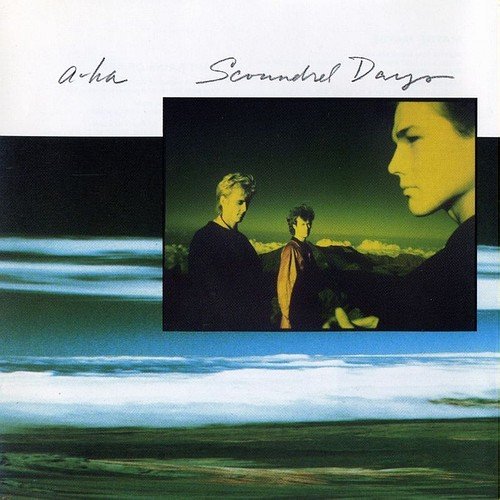
A-HA Scoundrel Days

While Morten Harket, Magne Furuholmen and Pål Waaktaar were being perceived as a teenybop band thanks to the success of ‘Take On Me’, there was always an inherent Nordic gloom lurking within A-HA. Mostly produced by Alan Tarney, the blistering title song was swathed in a chilling melancholy. Then there were the hit singles but while ‘Cry Wolf’ was bouncy pop, there were snarls of frustration present in ‘I’ve Been Losing You’ and ‘Manhattan Skyline’.

‘Scoundrel Days’ is still available via Warner Music

https://a-ha.com/


ALPHAVILLE Afternoons In Utopia

ALPHAVILLE were under pressure on their second album ‘Afternoons in Utopia’, especially with the departure of founder member Frank Mertens. Ricky Echolette joined Marian Gold and Bernhard Lloyd but after the gritty commentary on heroin addiction of ‘Big In Japan’ in 1984, songs like ‘Jerusalem’ and ‘Dance With Me’ possessed an anthemic optimism while on ‘Red Rose’, Gold moved from his Robert Smith impersonation into Bryan Ferry territory.

‘Afternoons In Utopia’ is still available via Warner Music

https://www.alphaville.earth/


THE ART OF NOISE In Visible Silence

Having flown the ZTT nest, Anne Dudley, JJ Jeczalik and Gary Langan took their Fairlighted musique concrète to China Records and came up with ‘In Visible Silence’. With more variety and more polish, ‘Legs’ was classic AoN while a rework of ‘Peter Gunn’ with Duane Eddy and ‘Paranoimia’ would provide the hits, although the latter’s album version would be without Max Headroom. Although Langan would depart, a high profile collaboration with Tom Jones beckoned…

‘In Visible Silence’ is still available via Warner Music

https://www.theartofnoiseonline.com/


THE BOOK OF LOVE The Book Of Love

A quartet comprising of Susan Ottaviano, the unrelated Ted Ottaviano, Jade Lee and Lauren Roselli, BOOK OF LOVE signed to Sire Records and opened for DEPECHE MODE on two US successive tours. Their self-titled debut LP contained lively synthpop tunes such as ‘You Make Me Feel So Good’, ‘Boy’ and ‘I Touch Roses’ but it was a song named after the Italian artist ‘Modigliani’ that had most impact, appearing in an episode of ‘Miami Vice’ and the film ‘Planes, Trains and Automobiles’.

‘The Book Of Love’ is still available via Sire Records

https://www.bookoflovemusic.com/


CHINA CRISIS What Price Paradise

With CHINA CRISIS now more of a band than the original duo concept fronted by Gary Daly and Eddie Lundon, ‘What Price Paradise’ had less of a Trans-Atlantic flavour compared to its predecessor ‘Flaunt The Imperfection’. Still featuring great songs such as ‘It’s Everything’, ‘Best Kept Secret’, ‘The Understudy’ and ‘Hampton Beach’, it is still one of life’s great mysteries that the magnificent ‘Arizona’ never got beyond No47 in the UK charts!

‘What Price Paradise’ is still available via Virgin Records

https://www.facebook.com/chinacrisisofficial


THE COMMUNARDS Communards

Although THE COMMUNARDS, Jimmy Somerville’s venture with future TV vicar Richard Coles was intended to have more traditional musical values, the electronic sound of his previous band BRONSKI BEAT could not be left totally behind. With Mike Thorne still at the production helm, ‘Disenchanted’ crossed ‘Why?’ with ‘Smalltown Boy’ while the spirited Hi-NRG cover of ‘Don’t Leave Me This Way’ with Sarah-Jane Morris would be the UK’s biggest selling single of 1986.

‘Communards’ is still available via London Records

https://www.jimmysomerville.co.uk/


DAF 1st Step To Heaven

When Robert Görl and Gabi Delgado reunited in 1985 to record ‘1st Step To Heaven’, they opted not only to stop wearing back but to sing in English. Less aggressive than previous DAF works with a more electronic disco sound, ‘Voulez-Vous Coucher Avec Moi’ quoted from LADY MARMALADE despite being an original while ‘Pure Joy’ was inspired by Prince’s ‘1999’. But best of all was the joyous ‘Brothers’ which celebrated Görl and Delgado’s friendship.

‘1st Step To Heaven’ is currently unavailable

http://www.robert-goerl.de


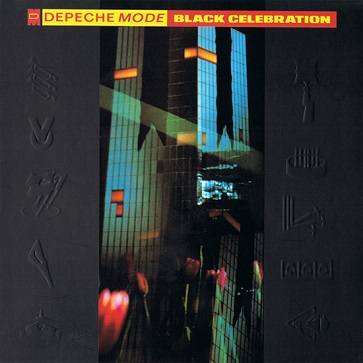
DEPECHE MODE Black Celebration

Producer Daniel Miller wanted a dystopian intensity to the fifth DEPECHE MODE album ‘Black Celebration’ and with Gareth Jones acting as Tonmeister, Martin Gore’s increasingly bleaker songs found the perfect sonic backdrop. The 7 track segue from the opening title song to ‘Stripped’ that included ‘Fly On The Windscreen’ and ‘It Doesn’t Matter Two’ remains DEPECHE MODE’s most outstanding sequence of music.

‘Black Celebration’ is still available via Sony Music

https://www.depechemode.com/


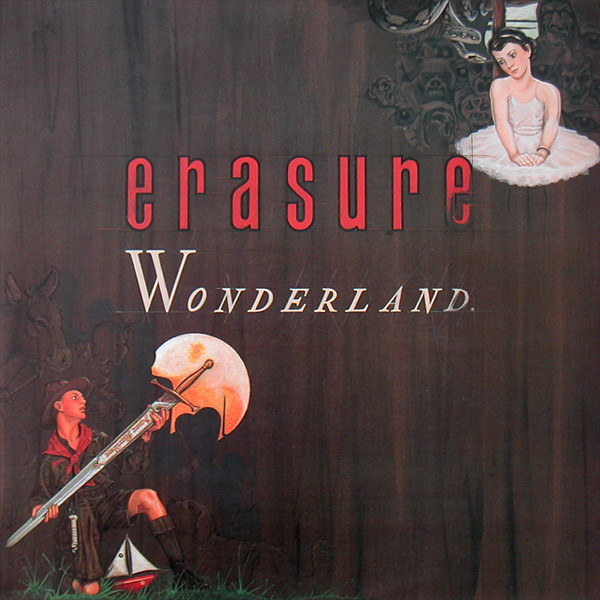
ERASURE Wonderland

Andy Bell and Vince Clarke’s debut album ‘Wonderland’ was not an instant hit. The lead single ‘Who Needs Love (Like That)?’ was mistaken by some to be an unreleased YAZOO recording. Among the album’s highlights were the joyous ‘Reunion’ and the funky ‘Push Me… Shove Me’ . The record’s HI-NRG centrepiece ‘Oh L’Amour’ flopped as a single but undeterred, ERASURE toured the college circuit to build up a new fanbase from scratch.

‘Wonderland’ is still available via Mute Records

https://www.erasureinfo.com/


I START COUNTING My Translucent Hands

As I START COUNTING, Simon Leonard and Dave Baker finally released their longform debut following two impressive Daniel Miller-produced singles ‘Letters To A Friend’ and ‘Still Smiling’. Both included on the CD edition of ‘My Translucent Hands’, quirky tracks such as ‘Catch That Look’ and maintained the standard if with less immediacy. The duo would open for Mute label mates ERASURE on their 1987 European tour.

‘My Translucent Hands’ is still available via Mute Records

I Start Counting / Fortran 5 / Komputer


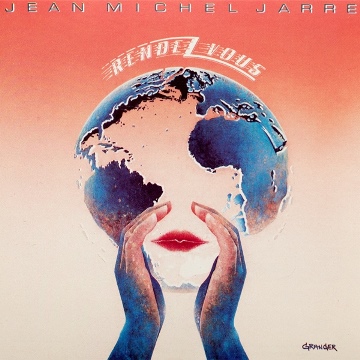
JEAN-MICHEL JARRE Rendez-Vous

‘Rendez-Vous’ had something of a loose space theme but the space shuttle Challenger tragedy tinged the release with sadness as the ‘Last Rendez-Vous (Ron’s Piece)’ was to have featured astronaut Ron McNair playing sax. Meanwhile, the symphonic ‘Second Rendez-Vous’ inspired by Wendy Carlos would become favourite of Pope John Paul II and the rousing ‘Fourth Rendez-Vous’ captured the vein of the classic Jean-Michel Jarre single.

‘Rendez-Vous’ is still available via Sony Music

https://www.jeanmicheljarre.com/


HOWARD JONES One To One

After two hit albums with Rupert Hine, Howard Jones had Arif Mardin on production duties for ‘One To One’ having been impressed by his work with SCRITTI POLITTI. While still very synth-driven, an array of session musicians on drums, guitars, bass and brass featured for a more sophisticated sound. But ‘Little Bit Of Snow’ found him in reflective mood on the ivories as the singles ‘All I Want’ and ‘You Know I Love You… Don’t You?’ failed to crack the UK Top30.

‘One To One’ is still available via Cherry Red Records

http://www.howardjones.com/


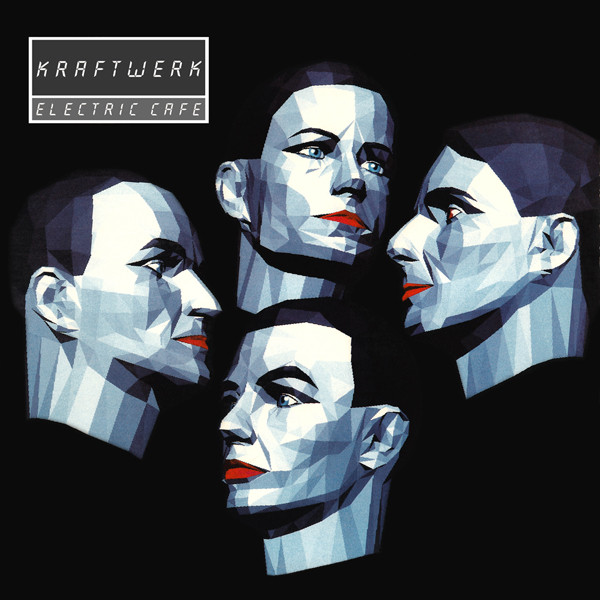
KRAFTWERK Electric Café

Coming after the 5 year wait since 1981’s ‘Computer World’ as the world KRAFTWERK anticipated came true, ‘Electric Café’ was something of a disappointment. Distracted by cycling and technology, there were still delights to be found. ‘The Telephone Call’ featuring Karl Bartos on lead vocals was a highlight along with the voice sample-laden ‘Musique Non Stop’ while the ironic ‘Sex Object’ was fun despite the barrage of DX7 presets like a YouTube tutorial…

‘Electric Café’ is now available as ‘Techno Pop’ via Parlophone Records

https://kraftwerk.com/


NEW ORDER Brotherhood

NEW ORDER were simultaneously about indie guitar rock and electronic disco, although rarely mixing. On their fourth album ‘Brotherhood’, the band’s schizophrenic musical personalities were separated across two sides. The electronic part was headed by ‘Bizarre Love Triangle’, but there was also the solemn ‘All Day Long’, the sinister ‘Angel Dust’ and the Lou Reed pastiche ‘Every Little Counts’ with its laughter and unforgettable scratching stylus ending!

‘Brotherhood’ is still available via Rhino

https://www.neworder.com/


GARY NUMAN Strange Charm

Things really had got “strange” for Gary Numan as his Numanoids marched on BBC Broadcasting House to protest that ‘This Is Love’ and ‘I Can’t Stop’ had charted yet were not getting radio airplay; however, they were the worst songs on ‘Strange Charm’. Something of an underrated record, the dreamy ‘My Breathing’ and the Vangelis-inspired title song were impressive while there was also a new great Bill Sharpe collaboration ‘New Thing From London Town’.

‘Strange Charm’ is still available via BMG

https://garynuman.com/


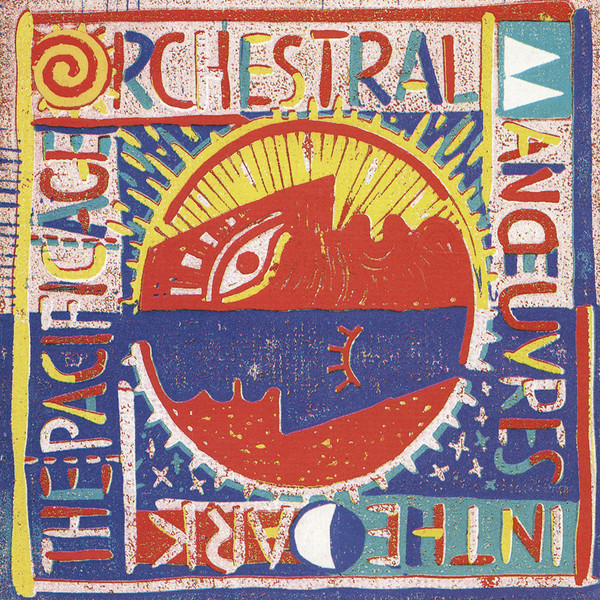
OMD The Pacific Age

A much better record than the rotten ‘Crush’, with a heavier synth, choral and live drum edge, one highlight was ‘The Dead Girls’ which revisited the sonics of ‘Architectural & Morality’ but with digital technology. Although the hit came from the Paul Humphreys sung ‘(Forever) Live & Die’, the Andy McCluskey fronted ‘Stay’ and ‘We Love You’ provided the electronic rock disco drive while ‘Flame Of Hope’ clearly fell under the spell of THE ART OF NOISE.

‘The Pacific Age’ is still available via Virgin Records

https://omd.uk.com/


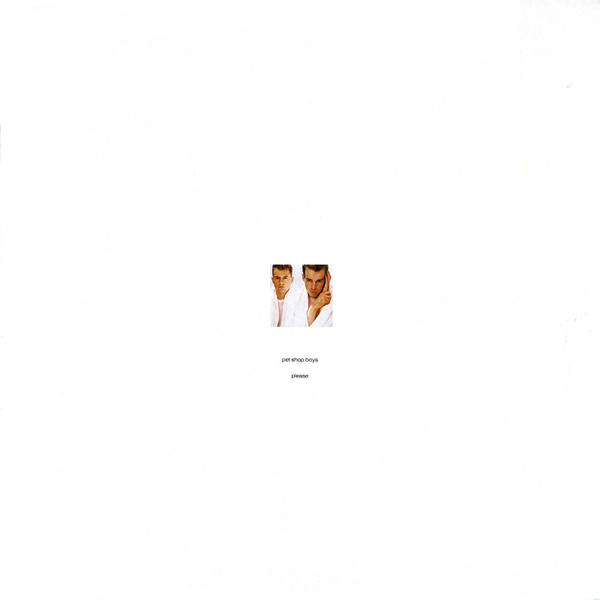
PET SHOP BOYS Please

While PET SHOP BOYS debut album wasn’t perfect with ‘Suburbia’ and ‘Violence’ improving in re-recordings, ‘Please’ featured not only ‘West End Girls’ and ‘Love Comes quickly’ but had an array of brilliant track including ‘Two Divided By Zero’ and ‘Tonight Is Forever’. While an ironic observation on the rise of yuppies, the misunderstood ‘Opportunites (Let’s Make Lots Of Money)’ proved to be quite prophetic for Neil Tennant and Chris Lowe, but who was the brains?

‘Please’ is still available via Parlophone Records

https://www.petshopboys.co.uk/


SIGUE SIGUE SPUTNIK Flaunt It

SUICIDE reconfigured for the 21st Century with Giorgio Moroder at the studio helm, behind the hype of cyberpunk combo SIGUE SIGUE SPUTNIK were some decent tracks even if they all sounded the same! The throbbing drive of ‘Love Missile F1-11’, ‘21st Century Boy’ and ‘Sex-Bomb-Boogie’ provided the fun but the flow was spoiled by novelty effects and samples while there were paid adverts between tracks as an honest statement on commercialism.

‘Flaunt It’ is still available via BMG

https://mail.sputnikworld.com/Sigue_Sigue_Sputnik.html


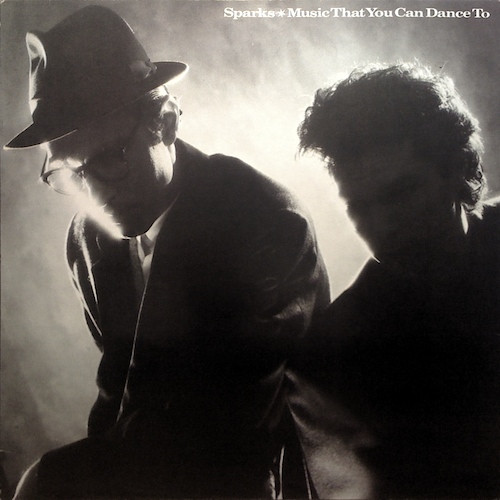
SPARKS Music That You Can Dance To

Inspired by a London Records A&R muttering “why can’t you make music that you can dance to?” after the avant pop of ‘Change’, SPARKS took inspiration for their lively if underrated 14th album, recorded in Brussels with old pal Dan Lacksman of TELEX engineering. The title song echoed ERASURE’s ‘Oh L’Amour’ while Ron Mael played with bursts of Fairlight and Roland Jupiter 8 on the falsetto soul of ‘Fingertips’ and Russell got to impersonate Gene Pitney on ‘Rosebud’.

‘Music That You Can Dance To’ is still available via Repertoire Records

https://allsparks.com/


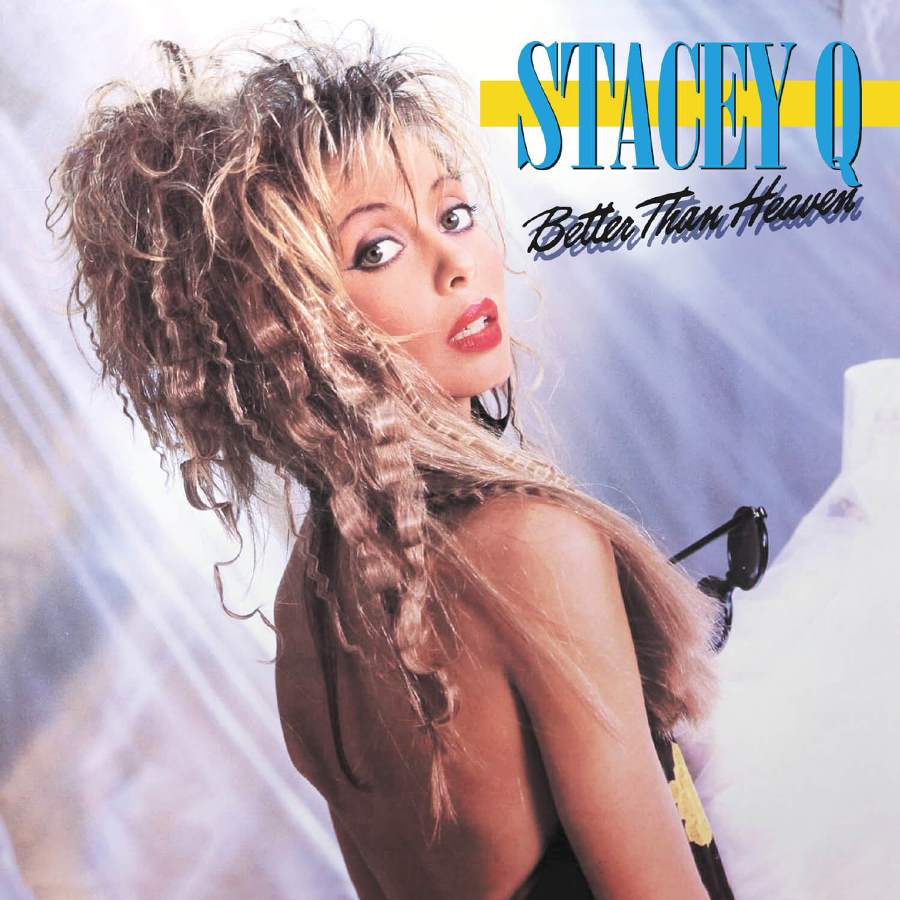
STACEY Q Better Than Heaven

The front woman of synthpop act SSQ who had a US dance hit with ‘Synthicide’ in 1983, Stacey Q may have begun as a ‘Shy Girl’ but with its fair number of tunes as good as ‘Two Of Hearts’ like sister song ‘Insecurity’ and the more Jam & Lewis influenced ‘Music Out Of Bounds’, her debut album ‘Better Than Heaven’ is a reminder how fun and carefree pop music once was and should still be. The album remains a collection of wonderfully innocent escapism.

‘Better Than Heaven’ is still available via Cherry Red Records

https://www.facebook.com/people/Stacey-Q/100040905591794


Text by Chi Ming Lai
13th January 2026

MUSIK MUSIC MUSIQUE 1979 | The Roots of Synth Pop

1979 was a significant year where the sound of synth truly hit the mainstream.

TUBEWAY ARMY reached No1 with ‘Are Friends Electric?’ while the Giorgio Moroder produced ‘No1 Song In Heaven’ by SPARKS had actually got to No14 a few months earlier. Synths were no longer the novelty gimmick as perceived when ‘Popcorn’ and ‘Autobahn’ became hits. As synths became more affordable, they became a worthy mode of expression, especially for the younger generation seeking something new.

From Cherry Red comes an unexpected addition to their ‘Musik Music Musique’ series; subtitled ‘1979: The Roots of Synth Pop, this 3CD 60 track collection is a prequel tracing how outsider aesthetics, prog rock, post-punk and a willingness to experimental clashed with pop sensibilities to produce a sonic sandwich of accessible electronic music.

The two gamechanging UK No1s ‘Are Friends Electric?’ and ‘Cars’ are both included and even today, how Gary Numan changed the musical landscape cannot be understated although notably absent are SPARKS. It is not insignificant that both continue to fill theatres today.

The sound of synth being the next big thing would be confirmed by THE BUGGLES also hitting the UK top spot not long after ‘Cars’ while ‘Living By Numbers’ by NEW MUSIK issued as 1979 was concluding would just miss out on the Top10 in the New Year; but both their respective leaders Trevor Horn and Tony Mansfield were astute enough to recognise their longevity as unlikely popstars would be short and they would make their fortune as record producers. Incidentally, the first released version of ‘Video Killed The Radio Star’ by Bruce Woolley featuring Thomas Dolby on keyboards in a welcome inclusion and while it is good, THE BUGGLES’ sharper futuristic vision gives it the edge.

Another future producer figuring in this 1979 set is Zeus B Held with his self-referencing ‘Held It’ timestamping the transitional use of synths and vocoders in prog rock to new wave pop, something which his production for Gina X on ‘Nice Mover’ would more than wonderfully compute in its Marlene-inspired disco lento.

THE HUMAN LEAGUE are represented by the mighty ‘Blind Youth’, the best track from their debut album ‘Reproduction’ which attacked the raincoat wearing gloom merchants of England’s North West. But the pointer to the futures of original members Philip Oakey, Martyn Ware and Ian Craig Marsh comes with ‘I Don’t Depend On You’, their one-off as THE MEN which came out a few months before ‘Reproduction’; a fairly commercial slice of disco pop, it featured real guitar, bass, drums and female backing singers in a prescient experiment that after the split of the band shaped the next incarnation of Ver League and HEAVEN 17.

While acknowledged cult classics such OMD’s ‘Almost’, ‘Rock Around The Clock’ by TELEX, SILICON TEENS’ cover of ‘Memphis Tennessee’, FAD GADGET’s ‘Back To Nature’ and ‘Attack Decay’ from Thomas Leer & Robert Rental are present and correct, the joy from these boxed sets comes with the inclusion of rare tracks.

Two of the most interesting come via the ULTRAVOX axis although neither could be considered the best works from those concerned. From VISAGE comes the less familiar vocal version of ‘Frequency 7’ which was the B-side of their first single ‘Tar’ and would be turned into a far superior instrumental dance mix. John Foxx presents a curio documenting him still finding his solo feet on ‘Young Love’, a bizarre track which was actually pressed as an acetate in 1979. It was even assigned a Virgin catalogue number but was later abandoned as a possible single, superseded first by ‘A New Kind Of Man’ which itself was ultimately dropped as a singular release in favour of ‘Underpass’.

Two enjoyable tracks which perhaps would now be accused of racial insensitivity are by QUANTUM JUMP and BLACK ROD; the former’s ‘Lone Ranger’ with its unforgettable Maori vocal intro was championed by Kenny Everett who used it on his TV show while the frantic electropop of ‘Going To The Country’ by the latter with its faux Jamaican accents is revealed to be the novelty cod reggae duo TYPICALLY TROPICAL who had a No1 in 1975 with ‘Barbados’!!! Less successful in the mock accent stakes is ‘Herr Wunderbar’ by St Albans-based Tanya Hyde which plays on the electro Weimar Cabaret theme but unfortunately, she is no Amanda Lear and the song is no ‘Follow Me’… it was to be her only solo single…

There is a nice surprise in the vocoder-laden DOLLAR B-side ‘Star Control’ while from the first “live to digital” album ‘E=MC²’ by Giorgio Moroder is the robotic disco delight of the closing title track with its vocodered credits that include “tea and coffee by Lori”. The adoption of devices such an rhythm units was something of an anti-rock ‘n’ roll statement and nothing can sum up this sentiment more than ‘Making Love With My Wife’, a quirky ode to the joys of marital sex by Henry Badowski that later appeared on Virgin Records electronic music collection ‘Machines’. Another artist appearing on that same 1980 compilation was Karel Fialka and he is represented by ‘Armband’, a track co-produced by Wally Brill who did the same duties for, yes, you’ve guessed it, Henry Badowski!

There are lesser known offerings by M, YELLO and the first line-up of FASHIØN but from the US comes an interesting quartet of tracks that shows the other side of the Atlantic was not all about the horrendous AOR of BOSTON and JOURNEY; THE CARS always had synths as a rogue element of their initial new wave sound and that is encapsulated by ‘Night Spots’, but produced by their leader Ric Ocasek, SUICIDE’s ‘Dream Baby Dream’ is still glorious.

‘Strange Pursuit’ is a good example of DEVO’s move towards more electronic instrumentation, but heavily influenced by Akron’s finest and not to be confused with the late member of German duo CLUSTER, ‘Mirror Of Infinity’ by American art rock band MOEBIUS is something of an icy jewel and deserves this recusing from obscurity.

Sweden would become a major adopter of synths in pop and the start of that nation’s journey is represented by ‘Oh Susie’, the debut single by SECRET SERVICE; setting the template for Europop, it was a Top10 in West Germany, Norway and Denmark as well as reaching No1 in their own country. Lead singer Ola Håkansson would later go on to duet with Agnetha Fältskog of ABBA on her own synth-laden solo songs ‘The Way You Are’ and ‘Fly Like The Eagle’.

Before ‘Miami Vice’, Jan Hammer had his self-referencing rock combo and he provides the spacey curio ‘Forever Tonight’ voiced by Glen Burtnick while having already left prog rockers GONG in 1975, Steve Hillage was incorporating more electronics alongside his guitar as exemplified by ‘Don’t Dither Do It’. Reinforcing the connection between prog and synth, another former GONG member Tim Blake teams up with Jean Phillipe Rykiel for the mystic and frankly bizarre ‘New Jerusalem’!

Tucked away towards the end of the set but undoubtedly the most epic even in single edit form, ‘Rheinita’ by NEU! offshoot LA DÜSSELDORF went Top3 in West Germany and is basically the OMD blueprint for ‘Architecture & Morality’ album; as Andy McCluskey himself said “People always talk to us about KRAFTWERK, and obviously, they were hugely important. But there was another element from Düsseldorf that influenced us, and that was the organic side which was firstly NEU! and then LA DÜSSELDORF…”

As with the previous ‘Musik Music Musique’ sets, there are a few clangers so it would be remiss not to mention these; the main audio one in this 1979 collection is the inclusion of the 1982 single remix of JAPAN’s ‘Life In Tokyo’ with the more prominent fretless bass overdubs by Mick Karn. On the Japanese “theme”, lessons still have not been learnt from previous booklets with regards photos and LANDSCAPE are pictured in their hit futurist jumpsuit guise as opposed to the jazz rock band seen in transition on ‘Tomorrow’s World’ at the time performing ‘Japan’, the track included in this set. Incidentally, the band who influenced this track YELLOW MAGIC ORCHESTRA deserved inclusion, especially as the iconic trio were featured in a previous set and released their best album ‘Solid State Survivor’ in 1979 as well.

Meanwhile, a blond ‘Replicas’ era Gary Numan when he would have been suited and dark haired by the time of ‘Cars’ is in the booklet while the 1978 punk quartet incarnation of TUBEWAY ARMY represents the ‘Are Friends Electric?’ period which is totally wrong! And the quintet line-up of VISAGE from 1982 is pictured rather than the original 1979 septet who appeared in the now iconic Blitz Club photo taken by Sheila Rock.

Elsewhere, QUANTUM JUMP are mysteriously represented by a trio including bassist John G Perry but which does not include key members Rupert Hine and Trevor Morais who would both later go on to work with Howard Jones! At least there, one member was featured because whoever the quintet are in the photo of DALEK I, none are Alan Gill or Dave Hughes! Unlike in 1979, there is the internet now available as an initial info source and numerous real life experts around to fact check with, so this really doesn’t not take much effort to get right! If in doubt, then don’t use the photo!?!

In 1979, “Synth Pop” was yet to be a thing and with over 60 tracks, there is a mish-mash of styles with the common factor of the synth making itself heard to explore how the form was developing. For that eclectic reason alone, ‘Musik Music Musique: 1979 – The Roots of Synth Pop’ is probably the most fascinating of the four volumes to date.


‘Musik Music Musique: 1979 – The Roots of Synth Pop’ is released as a 3CD boxed set on 16th January 2026 by Cherry Red Records

https://www.cherryred.co.uk/various-artists-musik-music-musique-1979-the-roots-of-synth-pop-3cd


Text by Chi Ming Lai
7th January 2026

« Older posts