First there was ELECTRONIC with the nucleus of Bernard Sumner and Johnny Marr plus occasional guests Neil Tennant, Chris Lowe and Karl Bartos, but there is a new supergroup in town and they are called DOUBLESPEAK.
Their self-titled album began in 2017 as a collaboration with BLANCMANGE’s Neil Arthur and Vince Clarke of ERASURE; the pair had known each other for many years since the latter’s DEPECHE MODE days and it was while holidaying together in Tenerife that they each came up with the idea of covering ABBA while listening to a cassette of their compilation ‘The Singles: The First Ten Years’. There was also an aborted joint YAZOO and BLANCMANGE recording of ‘It Takes Two’, a song made famous by Marvin Gaye and Kim Weston, as well as a version of ‘Who Needs Love Like That’ intended for THE ASSEMBLY on which Arthur provided vocals.
So Arthur and Clarke joined forces to put a unique spin on songs from the past with the oldest coming from 1967. The third man brought in to get DOUBLESPEAK over the line is synth-auteur Ben ‘Benge’ Edwards who had worked with Arthur on BLANCMANGE and FADER albums as well as collaborating with John Foxx, John Grant and Stephen Mallinder of CABARET VOLTAIRE.
With songs from post-punk, country, easy listening, mainstream pop and DIY synth, DOUBLESPEAK reimagine the familiar and reinvigorate the little-known or forgotten for an electronic pop audience. It was Arthur who chose and dissected the majority of the songs but with those that were previously unknown to Clarke or Benge, the pair treated them as thought they were new compositions and avoided referring back to the originals.
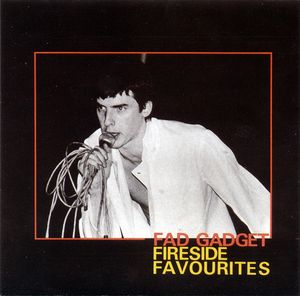
Opener ‘Back To Nature’ is a fine tribute to Fad Gadget but with a tougher menace although the original was electronic, this is perhaps the least essential of the set. ‘Day Breaks, Night Heals’ by Thomas Leer and Robert Rental which was another cult favourite from that same trailblazing British DIY synth era of 1979 fairs better attached to a more futuristic dance beat. These are 2 songs which may not necessarily be known among BLANCMANGE and ERASURE fans, so if their inclusion on this DOUBLESPEAK album provokes curiosity and further investigation, that is a positive.
However ‘Rock On’ gets a fabulous new vision, the David Essex international smash has its original dub-ish bass recast as a bent icy squelch while Neil Arthur takes the vocal down to something more deadbeat sinister. From 1980, the rhythmic backdrop of THE SOUND’s ‘I Can’t Escape Myself’ goes metal on metal as the scratchy guitar-driven original now cuts synthetically while the angsty spirit gets a baritone twist… this is what doing electronic covers is all about!
ABBA’s stark take about political dissidents awaiting arrest ‘The Visitors’ was suggested by Clarke. In 1981 just across the Baltic sea from Sweden were Estonia, Latvia and Lithuania which were then part of the Soviet Union and Eastern Bloc dissidents would plan their escape to the then-neutral country; DOUBLESPEAK do the song justice to the original by retaining the Cold War tension of its dark lyric whilst eschewing the original synth melody.
Having been demoed by BLANCMANGE and released as a bonus track for the 2018 boxed set ‘The Blanc Tapes’, Neil Arthur gets a proper go at ‘Gentle On My Mind’; a country song written by John Hartford and recorded by Dean Martin, Glen Campbell, Val Doonican and ‘Switched On Nashville’ exponent Gil Trythall, our hero gets into his crooner sweater and rocking chair. With Clarke providing a very simple and slower synth riff as its centre, as the cross melodies sweep in, the end result is otherworldly.
Fronted by Alison Statton, Welsh independent trio YOUNG MARBLE GIANTS were music press darlings back in the day with their only album ‘Colossal Youth’ released on Rough Trade; the originally plaintive ‘Brand New Life’ gets a gentle minimal rearrangement. Already quite electronic, THE MAGNETIC FIELDS ‘Smoke & Mirrors’ from 1995 actually sounded like BLANCMANGE in its original form but DOUBLESPEAK give it a bounce, a bleep and a buzz for something quite delightful in that classic Vince Clarke vein for the best track on the album.
A MOR standard that has also been covered by Midge Ure, THE CARPENTERS’ ‘Goodbye To Love’ is an interesting choice with the lush backdrop forsaken for an avant pop tapestry. Credit where credit is due for uncovering it to the extent that it becomes almost unrecognisable with Arthur’s electronically treated voice adding another twist.
From more comparatively recently, it’s not difficult to imagine experimental singer-songwriters Ed Dowie’s ‘Richard!’ being released on Factory Records back in the day. So with the early comparison often made with Neil Arthur’s vocals to Ian Curtis, this is apt and comes through the dark with a purposely off-key vocal that is saved by the bells and the crisp synth lines.
A fitting thematic closer, ‘End Credits’ by LAPTOP from 2001 is given a slightly pacier tempo; written by New York-based indie electronic composer Jesse Hartman, the lyrics refer to being dumped via an answerphone message so make perfect foil for Neil Arthur’s cynical delivery. Swathed in icy string machine, it suits him so much that it could easily be mistaken for a post-2011 BLANCMANGE song.
‘Doublespeak’ is a strangely connected record despite being largely made remotely over a long period of time by three people who were never in the same room with Clarke and Benge having never met in person. Most of the choices of song are interesting if nothing else and the end result is an enjoyable listen for anyone who likes synths and covers.
‘Doublespeak’ is released by London Records, available as a vinyl LP, CD and download
1979 was a significant year where the sound of synth truly hit the mainstream.
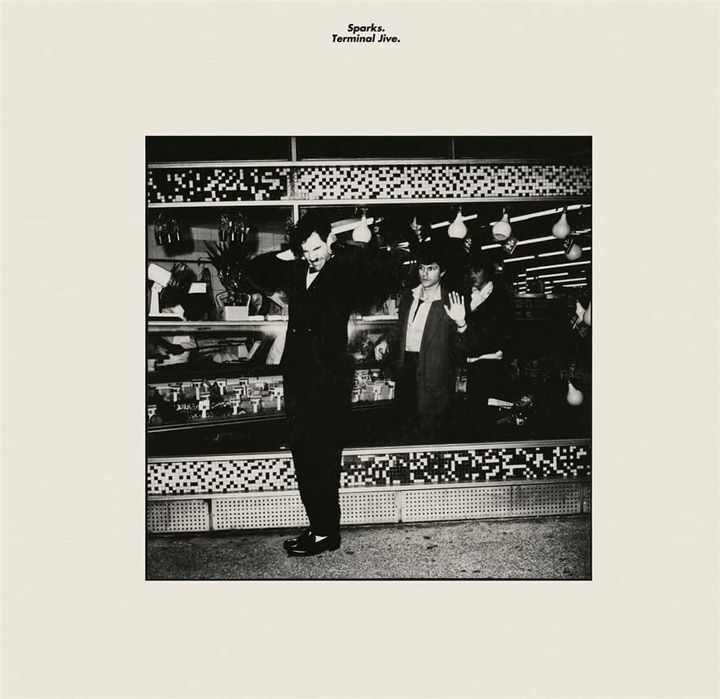
TUBEWAY ARMY reached No1 with ‘Are Friends Electric?’ while the Giorgio Moroder produced ‘No1 Song In Heaven’ by SPARKS had actually got to No14 a few months earlier. Synths were no longer the novelty gimmick as perceived when ‘Popcorn’ and ‘Autobahn’ became hits. As synths became more affordable, they became a worthy mode of expression, especially for the younger generation seeking something new.
From Cherry Red comes an unexpected addition to their ‘Musik Music Musique’ series; subtitled ‘1979: The Roots of Synth Pop, this 3CD 60 track collection is a prequel tracing how outsider aesthetics, prog rock, post-punk and a willingness to experimental clashed with pop sensibilities to produce a sonic sandwich of accessible electronic music.
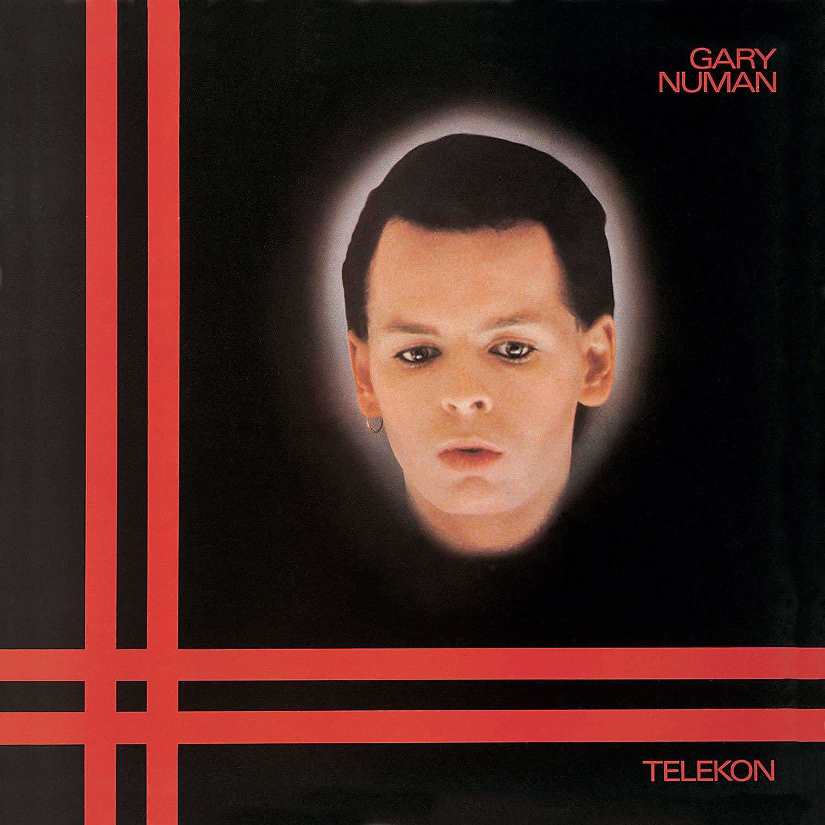
The two gamechanging UK No1s ‘Are Friends Electric?’ and ‘Cars’ are both included and even today, how Gary Numan changed the musical landscape cannot be understated although notably absent are SPARKS. It is not insignificant that both continue to fill theatres today.
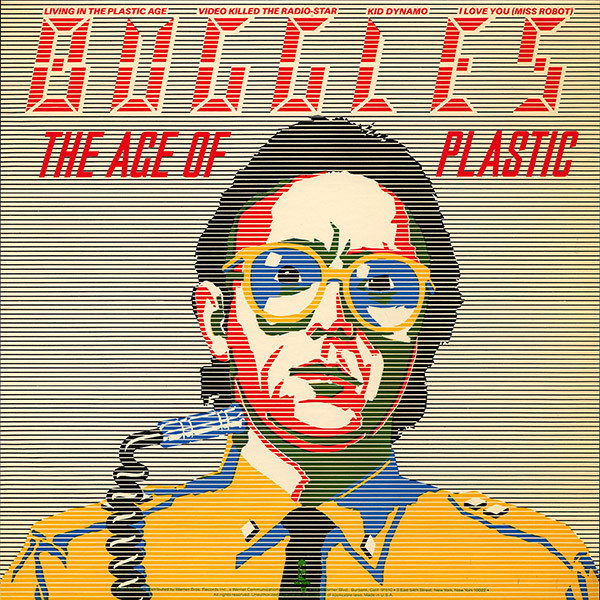
The sound of synth being the next big thing would be confirmed by THE BUGGLES also hitting the UK top spot not long after ‘Cars’ while ‘Living By Numbers’ by NEW MUSIK issued as 1979 was concluding would just miss out on the Top10 in the New Year; but both their respective leaders Trevor Horn and Tony Mansfield were astute enough to recognise their longevity as unlikely popstars would be short and they would make their fortune as record producers. Incidentally, the first released version of ‘Video Killed The Radio Star’ by Bruce Woolley featuring Thomas Dolby on keyboards in a welcome inclusion and while it is good, THE BUGGLES’ sharper futuristic vision gives it the edge.
Another future producer figuring in this 1979 set is Zeus B Held with his self-referencing ‘Held It’ timestamping the transitional use of synths and vocoders in prog rock to new wave pop, something which his production for Gina X on ‘Nice Mover’ would more than wonderfully compute in its Marlene-inspired disco lento.
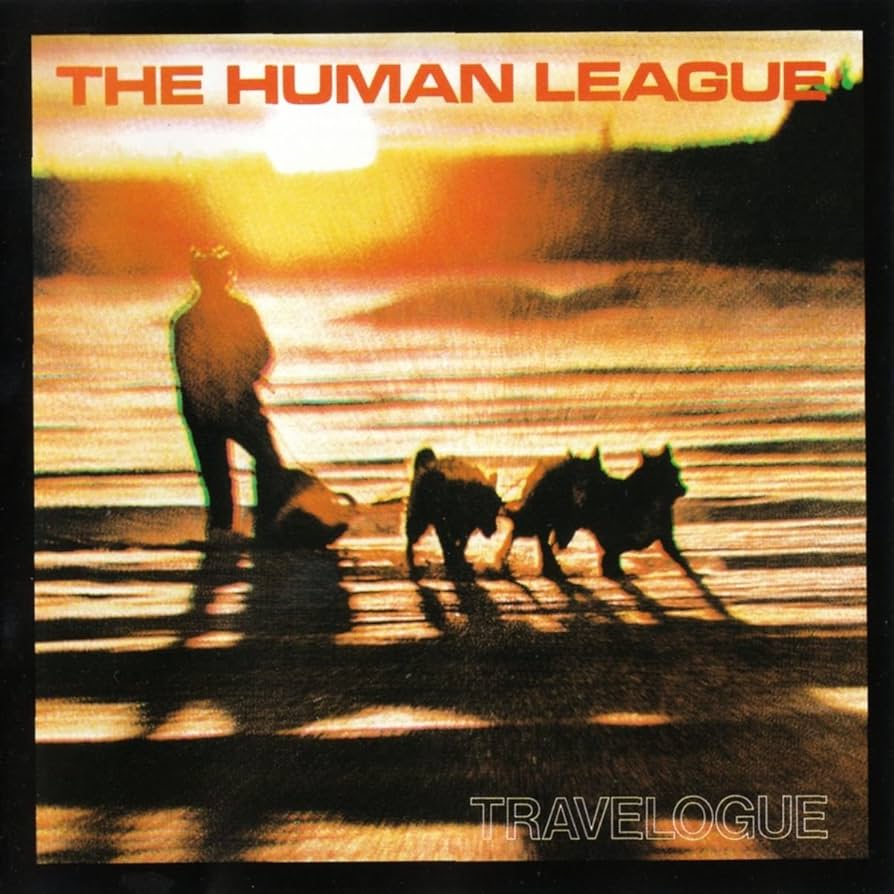
THE HUMAN LEAGUE are represented by the mighty ‘Blind Youth’, the best track from their debut album ‘Reproduction’ which attacked the raincoat wearing gloom merchants of England’s North West. But the pointer to the futures of original members Philip Oakey, Martyn Ware and Ian Craig Marsh comes with ‘I Don’t Depend On You’, their one-off as THE MEN which came out a few months before ‘Reproduction’; a fairly commercial slice of disco pop, it featured real guitar, bass, drums and female backing singers in a prescient experiment that after the split of the band shaped the next incarnation of Ver League and HEAVEN 17.
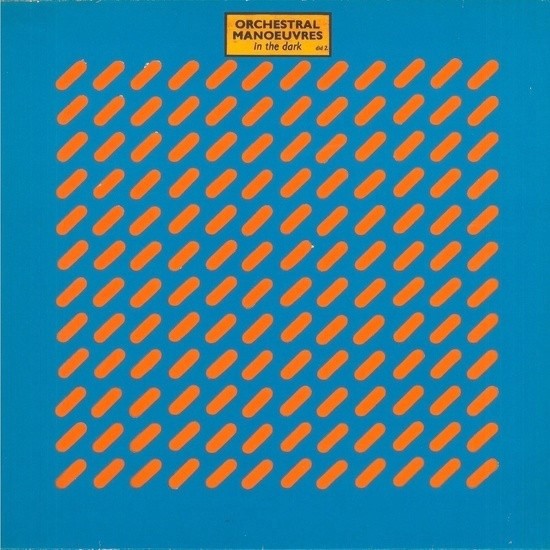
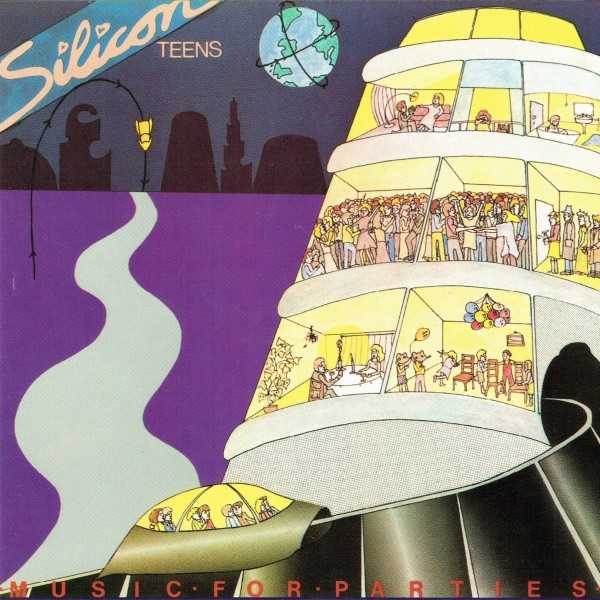
While acknowledged cult classics such OMD’s ‘Almost’, ‘Rock Around The Clock’ by TELEX, SILICON TEENS’ cover of ‘Memphis Tennessee’, FAD GADGET’s ‘Back To Nature’ and ‘Attack Decay’ from Thomas Leer & Robert Rental are present and correct, the joy from these boxed sets comes with the inclusion of rare tracks.
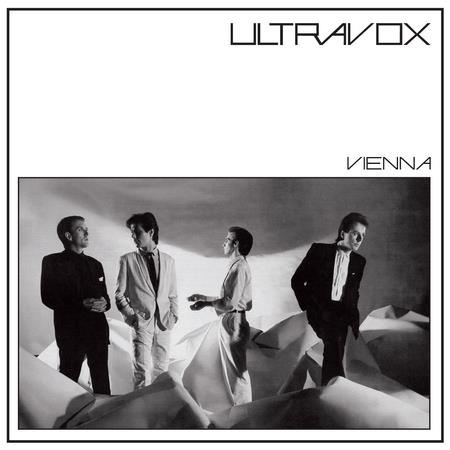
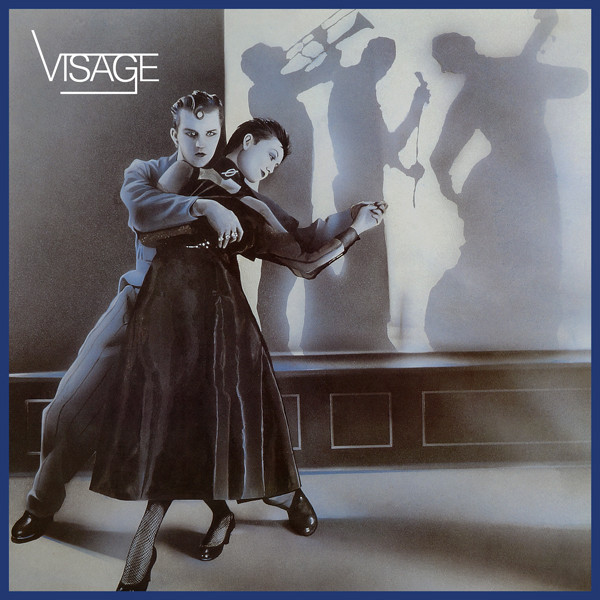
Two of the most interesting come via the ULTRAVOX axis although neither could be considered the best works from those concerned. From VISAGE comes the less familiar vocal version of ‘Frequency 7’ which was the B-side of their first single ‘Tar’ and would be turned into a far superior instrumental dance mix. John Foxx presents a curio documenting him still finding his solo feet on ‘Young Love’, a bizarre track which was actually pressed as an acetate in 1979. It was even assigned a Virgin catalogue number but was later abandoned as a possible single, superseded first by ‘A New Kind Of Man’ which itself was ultimately dropped as a singular release in favour of ‘Underpass’.
Two enjoyable tracks which perhaps would now be accused of racial insensitivity are by QUANTUM JUMP and BLACK ROD; the former’s ‘Lone Ranger’ with its unforgettable Maori vocal intro was championed by Kenny Everett who used it on his TV show while the frantic electropop of ‘Going To The Country’ by the latter with its faux Jamaican accents is revealed to be the novelty cod reggae duo TYPICALLY TROPICAL who had a No1 in 1975 with ‘Barbados’!!! Less successful in the mock accent stakes is ‘Herr Wunderbar’ by St Albans-based Tanya Hyde which plays on the electro Weimar Cabaret theme but unfortunately, she is no Amanda Lear and the song is no ‘Follow Me’… it was to be her only solo single…
There is a nice surprise in the vocoder-laden DOLLAR B-side ‘Star Control’ while from the first “live to digital” album ‘E=MC²’ by Giorgio Moroder is the robotic disco delight of the closing title track with its vocodered credits that include “tea and coffee by Lori”. The adoption of devices such an rhythm units was something of an anti-rock ‘n’ roll statement and nothing can sum up this sentiment more than ‘Making Love With My Wife’, a quirky ode to the joys of marital sex by Henry Badowski that later appeared on Virgin Records electronic music collection ‘Machines’. Another artist appearing on that same 1980 compilation was Karel Fialka and he is represented by ‘Armband’, a track co-produced by Wally Brill who did the same duties for, yes, you’ve guessed it, Henry Badowski!
There are lesser known offerings by M, YELLO and the first line-up of FASHIØN but from the US comes an interesting quartet of tracks that shows the other side of the Atlantic was not all about the horrendous AOR of BOSTON and JOURNEY; THE CARS always had synths as a rogue element of their initial new wave sound and that is encapsulated by ‘Night Spots’, but produced by their leader Ric Ocasek, SUICIDE’s ‘Dream Baby Dream’ is still glorious.
‘Strange Pursuit’ is a good example of DEVO’s move towards more electronic instrumentation, but heavily influenced by Akron’s finest and not to be confused with the late member of German duo CLUSTER, ‘Mirror Of Infinity’ by American art rock band MOEBIUS is something of an icy jewel and deserves this recusing from obscurity.
Sweden would become a major adopter of synths in pop and the start of that nation’s journey is represented by ‘Oh Susie’, the debut single by SECRET SERVICE; setting the template for Europop, it was a Top10 in West Germany, Norway and Denmark as well as reaching No1 in their own country. Lead singer Ola Håkansson would later go on to duet with Agnetha Fältskog of ABBA on her own synth-laden solo songs ‘The Way You Are’ and ‘Fly Like The Eagle’.
Before ‘Miami Vice’, Jan Hammer had his self-referencing rock combo and he provides the spacey curio ‘Forever Tonight’ voiced by Glen Burtnick while having already left prog rockers GONG in 1975, Steve Hillage was incorporating more electronics alongside his guitar as exemplified by ‘Don’t Dither Do It’. Reinforcing the connection between prog and synth, another former GONG member Tim Blake teams up with Jean Phillipe Rykiel for the mystic and frankly bizarre ‘New Jerusalem’!
Tucked away towards the end of the set but undoubtedly the most epic even in single edit form, ‘Rheinita’ by NEU! offshoot LA DÜSSELDORF went Top3 in West Germany and is basically the OMD blueprint for ‘Architecture & Morality’ album; as Andy McCluskey himself said “People always talk to us about KRAFTWERK, and obviously, they were hugely important. But there was another element from Düsseldorf that influenced us, and that was the organic side which was firstly NEU! and then LA DÜSSELDORF…”
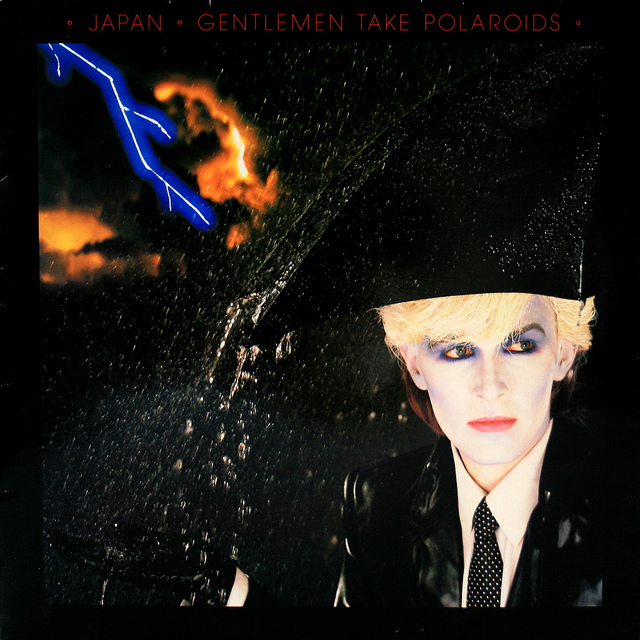
As with the previous ‘Musik Music Musique’ sets, there are a few clangers so it would be remiss not to mention these; the main audio one in this 1979 collection is the inclusion of the 1982 single remix of JAPAN’s ‘Life In Tokyo’ with the more prominent fretless bass overdubs by Mick Karn. On the Japanese “theme”, lessons still have not been learnt from previous booklets with regards photos and LANDSCAPE are pictured in their hit futurist jumpsuit guise as opposed to the jazz rock band seen in transition on ‘Tomorrow’s World’ at the time performing ‘Japan’, the track included in this set. Incidentally, the band who influenced this track YELLOW MAGIC ORCHESTRA deserved inclusion, especially as the iconic trio were featured in a previous set and released their best album ‘Solid State Survivor’ in 1979 as well.
Meanwhile, a blond ‘Replicas’ era Gary Numan when he would have been suited and dark haired by the time of ‘Cars’ is in the booklet while the 1978 punk quartet incarnation of TUBEWAY ARMY represents the ‘Are Friends Electric?’ period which is totally wrong! And the quintet line-up of VISAGE from 1982 is pictured rather than the original 1979 septet who appeared in the now iconic Blitz Club photo taken by Sheila Rock.
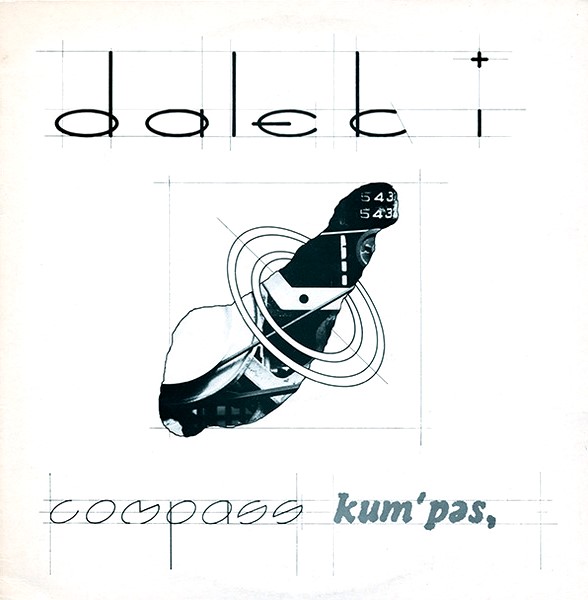
Elsewhere, QUANTUM JUMP are mysteriously represented by a trio including bassist John G Perry but which does not include key members Rupert Hine and Trevor Morais who would both later go on to work with Howard Jones! At least there, one member was featured because whoever the quintet are in the photo of DALEK I, none are Alan Gill or Dave Hughes! Unlike in 1979, there is the internet now available as an initial info source and numerous real life experts around to fact check with, so this really doesn’t not take much effort to get right! If in doubt, then don’t use the photo!?!
In 1979, “Synth Pop” was yet to be a thing and with over 60 tracks, there is a mish-mash of styles with the common factor of the synth making itself heard to explore how the form was developing. For that eclectic reason alone, ‘Musik Music Musique: 1979 – The Roots of Synth Pop’ is probably the most fascinating of the four volumes to date.
With an aim to “destroy authenticity in pop” and “embrace the superficial”, when FISCHERSPOONER were launched at a lavish art space event in London, Casey Spooner turned to his musical partner Warren Fischer and said “Warren, press play…”
Some would call it performance art while others thought the mimed escapade was an affront to real music and reacted angrily… despite much press hype, the single ‘Emerge’ stalled at No25 in 2002 and Ministry Of Sound who had signed FISCHERSPOONER internationally were left with egg on their faces. Q magazine would later place the parent album ‘#1’ in their 2006 list of “The 50 Worst Albums Ever!”
What came to be called electroclash was not considered cool by a wider public that was still drunk after the hangover that was Britpop! Like New Romantic before it, electroclash seen as self-indulgence by elitist poseurs but despite being ridiculed, longevity is nothing to be scared of. Today, the music of 1977-1983 has proved its worth as KRAFTWERK, THE HUMAN LEAGUE, NEW ORDER, DURAN DURAN and their like continue to fill arenas and festival fields around the world.
So now is the time for a re-evaluation of ‘When The 2000s Clashed’ and presented ”Machine Music For A New Millennium”; comprising of 5 themed CDs, the set has been compiled by Jonny Slut, founder of London club nite Nag Nag Nag and Mark Wood of READERS WIFES who DJed at the SOFT CELL reunion shows with superb sets that focussed on the songs, doing away with the self-important mixing and beat matching that afflicts many egocentric deckmeisters…
Just as New Romantic had a range of names which didn’t stick like Blitz Kids, peacock punks, futurists and the dreaded Cult With No Name, designations like synthcore, tech-pop and Romo were banded about before electroclash stuck. It became the all-encompassing term for this glittery yet gritty variant of electronic dance pop where klanky drum machines did battle with analog arpeggios, throbbing basslines on the oompah radar and often, snarly or spoken rather than sung vocals!
CD1 comprises of “Fundamentals” and here, superb trailblazing tracks such as ADD N TO (X)’s ‘Plug Me In’, JEANS TEAM’s ‘Keine Melodien…1, 2, 3, 4’, ZOMBIE NATION’s ‘Kernkraft 400’, ‘Hand To Phone’ by ADULT. and ‘Rippin’ Kittin’ featuring Miss Kittin take their place alongside PET SHOP BOYS’ Orange Alert Mix of ATOMIZER’s ‘Hooked On Radiation’ and LEGOWELT’s sinister ‘Disco Rout’. But it’s Peaches who steals the show with the feisty buzzy lo-fi romp of ‘F*ck The Pain Away’!
FISCHERSPOONER lead CD2’s “Essentials” summary with ‘Emerge’ and offering fine support are THE KNIFE with ‘We Share Our Mother’s Health’ and Richard Norris’ THE DROYDS with the reworded DURAN DURAN cover ‘Girls On Pills’. Although ‘Seventeen’ from LADYTRON is the undoubted classic of this set, other highlights include ‘What Was Her Name?’ from Dave Clarke featuring CHICKS ON SPEED and ‘Take A Walk’ by Andreas Bolz while DETROIT GRAND PUBAS offer the enjoyably bizarre ‘Sandwiches’!
CD3’s “Developments” documents the crossover of what many perceived as the electroclash sound into the mainstream charts with HOT CHIP, GOLDFRAPP, MGMT, LCD SOUNDSYSTEM and YEAH YEAH YEAHS as well as Annie and Róisín Murphy all present if not necessarily correct with THE CHEMICAL BROTHERS remix of ‘Slow’ chosen rather than ‘Come Into My World’, Kylie Minogue’s collaboration with FISCHERSPOONER.
Meanwhile it’s the Princess Superstar voiced take on ‘Exceeder’ as ‘Perfect’ rather than Mason’s superior original instrumental that is included. That aside, Khia’s ‘My Neck My Back’ can now be seen as a forerunner of Marie Davidson.
The “Evolutions” themed CD4 opens with the still outstanding ‘We Are Your Friends’ from JUSTICE VS SIMIAN but while also including DIGITALISM, SOULWAX, CSS and NEW YOUNG PONY CLUB, this particular part of the collection proves to be the most hit and miss of the entire box, but it’s all just a matter of taste…
CD5 looks back at the “Origins” of electroclash with the usual suspects like KRAFTWERK, SPARKS, THE NORMAL, CABARET VOLTAIRE, THE HUMAN LEAGUE, GINA X PERFORMANCE, NEW ORDER, HEAVEN 17, FAD GADGET, VISAGE and SOFT CELL all included. But while is it wonderful that a track other than ‘Homosapien’ in the brilliant ‘Telephone Operator’ is included from the Pete Shelley back catalogue alongside the Germanic quirkiness of ‘Fred Vom Jupiter’ by DIE DORAUS UND DIE MARINAS and ‘Zauberstab’ by ZaZa, this could almost be any other alternative collection of influential electro works.
Instead, this fifth disc could have gathered tracks from the period by THE HACKER, THE FAINT, FC KAHUNA, GREEN VELVET, NORTHERN LITE, SYNTAX or TECHNOVA next to DJ Hell, Felix Da Housecat, Anthony Rother, Tiga or Ferry Corsten, with the latter’s ‘Whatever!’ nonchalantly voiced by Esmee Bor Stotijn from 2006 being a slice of prime cut electroclash.
The way it was in the past 25 years ago, this boxed set shows that the back-to-basics approach of many of these tracks provided an excitement that led to an albeit short-lived reinvigoration of electronic pop by acts whose names began with an “L” like Little Boots, La Roux, Lady Gaga and Ladyhawke.
Gathering a diverse selection of artists, producers and remixers ranging from the biggest starlets and synthpop duos to cult bands and underground DJs, ‘When The 2000s Clashed: Machine Music For A New Millennium’ highlights that the passing of time has finally been kind to electroclash and in selecting from the best of its type, what is left is great electronic pop music. So when synthwave is reassessed in 10 years time and gets the boxed set treatment, will it too have evergreens that have stood the test of time? It will but it probably won’t have as many as ‘When The 2000s Clashed: Machine Music For A New Millennium’.
Unlike “New Romantic”, “New Pop” was a term that never truly stuck… it was coined by Paul Morley, then a polarising writer for NME. It was used to describe forward thinking music that, while rooted in post-punk, was accessible and looked to overthrow rockist conventions by unashamedly blending a variety of styles.
The acts who found themselves considered as part of this movement included THE CURE, SIMPLE MINDS, OMD, JAPAN, CHINA CRISIS, THE HUMAN LEAGUE, SOFT CELL, HEAVEN 17, EURYTHMICS, TEARS FOR FEARS, A FLOCK OF SEAGULLS, FUN BOY THREE, SCRITTI POLITTI, THE STYLE COUNCIL, ALTERED IMAGES, DEXY’S MIDNIGHT RUNNERS, MONSOON, THE TEARDROP EXPLODES, ABC, HAIRCUT 100, THE PALE FOUNTAINS, EYELESS IN GAZA, BLUE RONDO A LA TURK, RIP RIG & PANIC, JOBOXERS, THE HIGSONS and even THE STRANGLERS.
This was a broad church that many would not have granted a common association but that was the point. Even in what appeared to be traditional band formats, new technology meant synths emulated brass sections or funk basslines while drum machines took the place of conventional sticksmen and it could all be recorded in a DIY fashion with portastudios and the like.
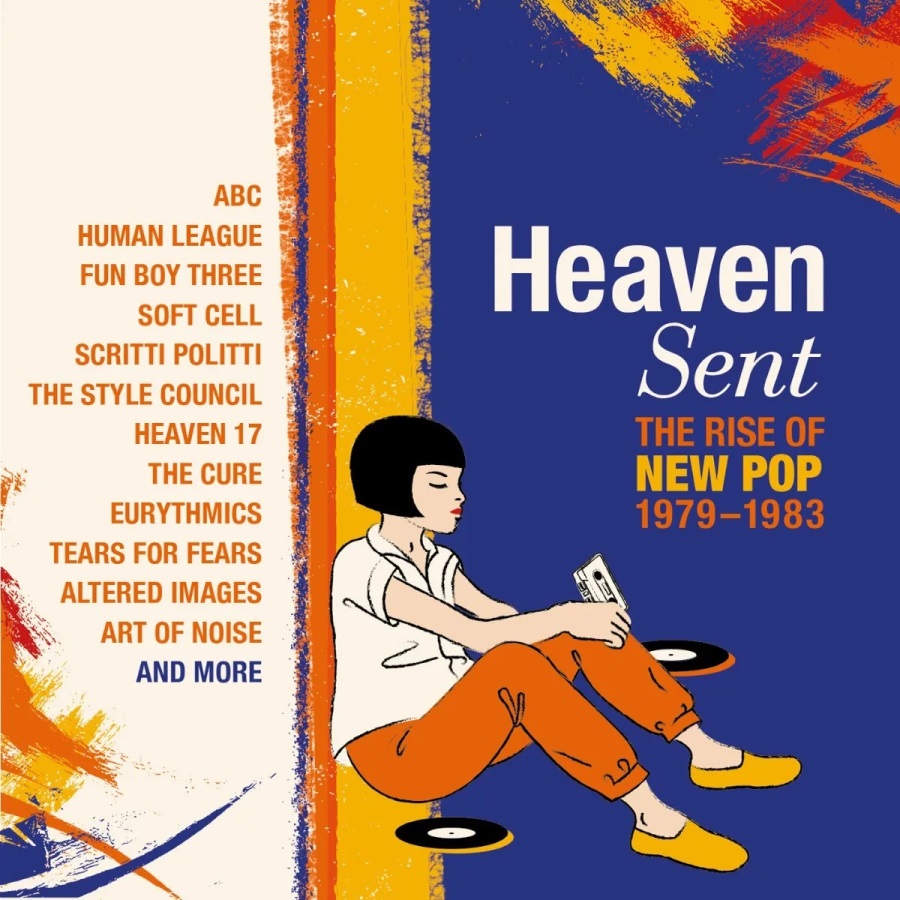
New Pop was about the aspirations of those disenchanted with the Winter of Discontent and then the Conservative government under Margaret Thatcher to pick up musical instruments without any formal training. The intention was to be heard, whether in the clubs, on the radio or in the charts. The ever dependable Cherry Red present ‘Heaven Sent – The Rise Of New Pop 1979-1983’, a 4CD collection compiled by the team who curated the ‘Musik Music Musique’ sets.
Of the artists that ELECTRICITYCLUB.CO.UK would appreciate, there are fine choices that are off the beaten track away from obvious hits; THE HUMAN LEAGUE are represented by the excellent ‘Boys & Girls’ which was the first single after the departure of Martyn Ware and Ian Craig Marsh while the latter pair’s HEAVEN 17 contribute the locomotive snap of ‘I’m Your Money’. OMD have ‘Red Frame / White Light’, the lightweight ditty about the 632 3003 phonebox which served as their office in their formative years.
But synthpop was taken to the next level with the gritty social commentary of ‘Bedsitter’ proving that SOFT CELL were more than a one hit wonders and could chart with self-written material. A sign of how angst ridden youngsters were expressing their existential and political concerns to music came with fine debut offerings respectively from TEARS FOR FEARS and CHINA CRISIS but while ‘Suffer The Children’ and ‘African & White’ were not Top40 hits, they were hints of their mainstream success to come.
A year before they subverted the singles chart with ‘Party Fears Two’, ASSOCIATES were peddling the more challenging ‘Q Quarters’ while on THE CURE lightened up with ‘Let’s Go To Bed’ in the first of their fantasy singles trilogy that would later include ‘The Walk’ and ‘The Love Cats’. And prior to DEAD OR ALIVE becoming a HI-NRG disco act, they were a brooding goth band with ‘The Stranger’ in its original Black Eyes Records incarnation as wonderful evidence of that.
Maturer acts who made an impression during this period like M, THE BUGGLES and NEW MUSIK are all present and correct with their biggest hits while one song that deserved to be a hit was the bizarre but brilliant techno-swing of ‘An Englishman In New York’ from 10CC refugees Kevin Godley and Lol Creme.
Capturing two acts in transition, fresh after departing THE TOURISTS, EURYTHMICS get served by their first German influenced single ‘Never Gonna Cry Again’ while the 7 inch single edit of ‘The Art Of Parties’ by JAPAN and its brass-fuelled exploration of more rhythmic territory makes a rare digital appearance.
The epitome of New Pop has often been seen to be ABC with ‘Poison Arrow’ and with the band plus assorted session musicians tracing the pre-programmed guide track helmed by Trevor Horn with live instrumentation, modern production was born where funk, soul and orchestrations could sit alongside the mechanised synthpop that had achieved a wider breakthrough in 1981.
With New Pop, funk was often a constituent and FAD GADGET’s ‘Make Room’ brought that in spades alongside the synth, while COLOURBOX had a cross of electronics, funk and reggae in ‘Shotgun’, although both were perhaps too idiosyncratic to crossover to wider audiences.
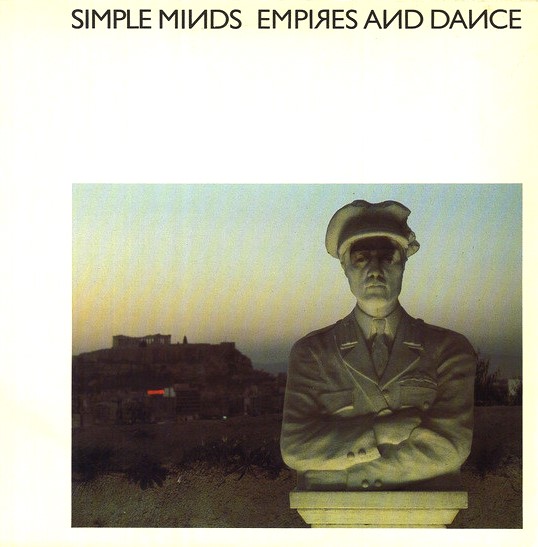
There’s also the inclusion of the first Thomas Dolby single ‘Urges’ co-produced by XTC’s Andy Partridge and the boxed set’s title song ‘Heaven Sent’, Paul Haig’s excellent take on SIMPLE MINDS ‘I Travel’ polished for the New York dancefloor by producer Alex Sadkin; to have the former JOSEF K frontman and his song originally written for the band in this position is fitting as Paul Morley had designated Paul Haig“the enigmatic fourth man” in a quartet of New Pop saviours which also included Billy Mackenzie, Jim Kerr and Martin Fry.
The delight in these boxed sets is to rediscover music that has been largely forgotten over time and one is ‘Dance Sucker’, an electro-funk stomper by SET THE TONE; a combo featuring one-time SIMPLE MINDS drummer Kenny Hyslop, it was he who taped the track ‘Too Through’ by BAD GIRLS off Kiss FM in New York that inspired the band to write ‘Promised You A Miracle’; SIMPLE MINDS themselves feature with the underrated ‘Sweat In Bullet’ from 1981.
One nice surprise is THE UNDERTONES’ synth flavoured ‘Beautiful Friend’ where they appear to have actually got THE HUMAN LEAGUE in to advise them while Pauline Murray with THE INVISIBLE GIRLS are delightfully rousing with the Martin Hannett produced ‘Dream Sequence 1’. Another fine inclusion is Edinburgh’s TV21 and their Mike Howlett produced single ‘All Join Hands’ with its combination of sequencers and strings.
By 1983, THE STRANGLERS had shed their more aggressive tendencies with the pretty ‘European Female’ but harking back to those days, Hazel O’Connor’s cover of their ‘Hanging Around’ begins as an enigmatic Casiobeat cover with the ‘Breaking Glass’ star trying to be Grace Jones before morphing into a more routine reinterpretation with synth and sax. And speaking of Grace Jones, her reggae cover of JOY DIVISION’s ‘She’s Lost Control’ has to be heard to be believed.
One hit wonders from THE FLYING LIZARDS, DEPARTMENT S and THE PASSIONS add to the fun but some of the inclusions have not aged well. ‘The House That Jack Built’ by Paul Weller protégée Tracie Young is frankly dreadful while the embarrassing ‘John Wayne Is Big Leggy’ by HAYSI FANTAYZEE only gets a free pass because Kate Garner and Jeremy Healy comically subverted Top Of The Pops by performing this song about anal sex with unambiguous actions to boot!
Not everything on ‘Heaven Sent – The Rise Of New Pop 1979-1983’ will satisfy the majority of listeners but what cannot be denied about most of the inclusions is that they are largely inventive and exciting. It is a period to savour because what then comes after is the bland sophisti-pop and cod soul meanderings of SADE, SIMPLY RED, GO WEST, SWING OUT SISTER, HUE & CRY, CURIOSITY KILLED THE CAT, WET WET WET and LIVING IN A BOX with their far more musically conservative (with a small ‘c’) disposition.
Gareth Jones was born in Lancashire and while he played a number of instruments as a youngster, his interest soon turned to music technology with the purchase of a tape recorder.
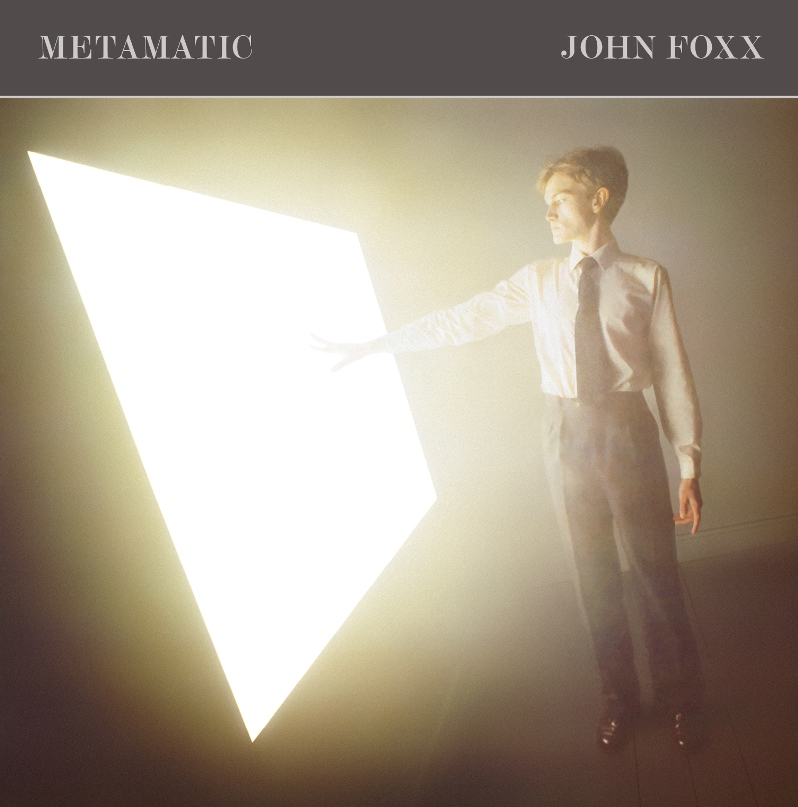
He gained his formal training at the BBC and began working as an engineer in various recording spaces including Pathway, a small 8 track studio in North London which was frequently used by Stiff Records and where THE DAMNED recorded ‘New Rose’ in 1976. It was there that he worked on MADNESS’ debut single ‘The Prince’ in 1979. But it was his work with former ULTRAVOX front man John Foxx and his 1980 long playing debut ‘Metamatic’ that was to be his breakthrough.
This led to work producing esoteric acts such as TUXEDOMOON and TAUCHEN-PROKOPETZ; it was while working with the latter on the 1983 ‘DÖF’ record in Vienna that it was suggested that Jones mix the album at Hansa Tonstudio in West Berlin. At the time, it was the most high-tech complex he had ever worked in and prompted to his relocation to die Mauerstadt.
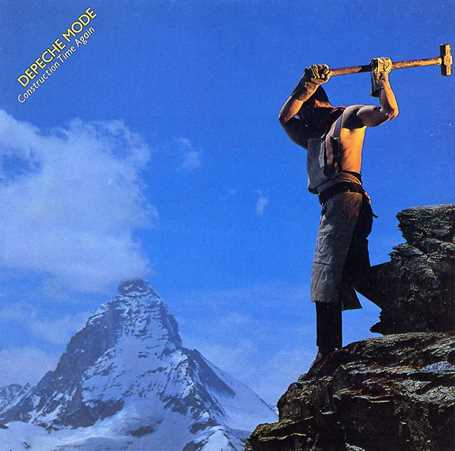
Many British bands began recording and mixing in Berlin as the exchange rate made things highly cost effective. It was while Jones was engineering the recording of the third DEPECHE MODE album ‘Construction Time Again’ at John Foxx’s own studio The Garden in Shoreditch that he proposed mixing the record in Berlin. He had been initially reluctant to work with DEPECHE MODE who he considered lightweight but was eventually persuaded by Foxx to become their Tonmeister.
Gareth Jones was a pioneer in the use of state of art digital equipment including the NED Synclavier and AMS digital delays; among his techniques was using the big ballroom at Hansa to capture atmospheres created by sounds being played through large amplifiers which were then recorded with microphones, creating a huge cavernous sound.
Although chiefly known for his work with synths and sampling, Jones also worked with more guitar driven bands such as WIRE, THE HOUSE OF LOVE, INSPIRAL CARPETS and MOGWAI as well as dark lord Nick Cave. After the fall of The Iron Curtain, Jones later returned to London where he remains today at his current base theArtLab within The Strongroom complex in London.
Having fought cancer in 2008, he continues to produce, mix and compose with a third SUNROOF album with Daniel Miller currently in progress. Meanwhile Jones had also provided his expertise and guidance to emerging studio personnel via the Red Bull Academy.
With a restriction of one track per album project and in chronological order, here are 20 tracks which form ELECTRICITYCLUB.CO.UK’s Beginner’s Guide to the innovative career of Gareth Jones.
JOHN FOXX Plaza (1980)
Having departed ULTRAVOX, when John Foxx recorded his debut solo record, Gareth Jones was the engineer at Pathway, a studio known for its reggae sessions. While the aim was a starker vision of electronic music, both Foxx and Jones absorbed dub influences where things would be stripped back but one sound given all the power. As well as the surprise hit single ‘Underpass’, this aesthetic suited the dystopian ‘Metamatic’ opener ‘Plaza’.
Available on the JOHN FOXX album ‘Metamatic’ via Metamatic Records
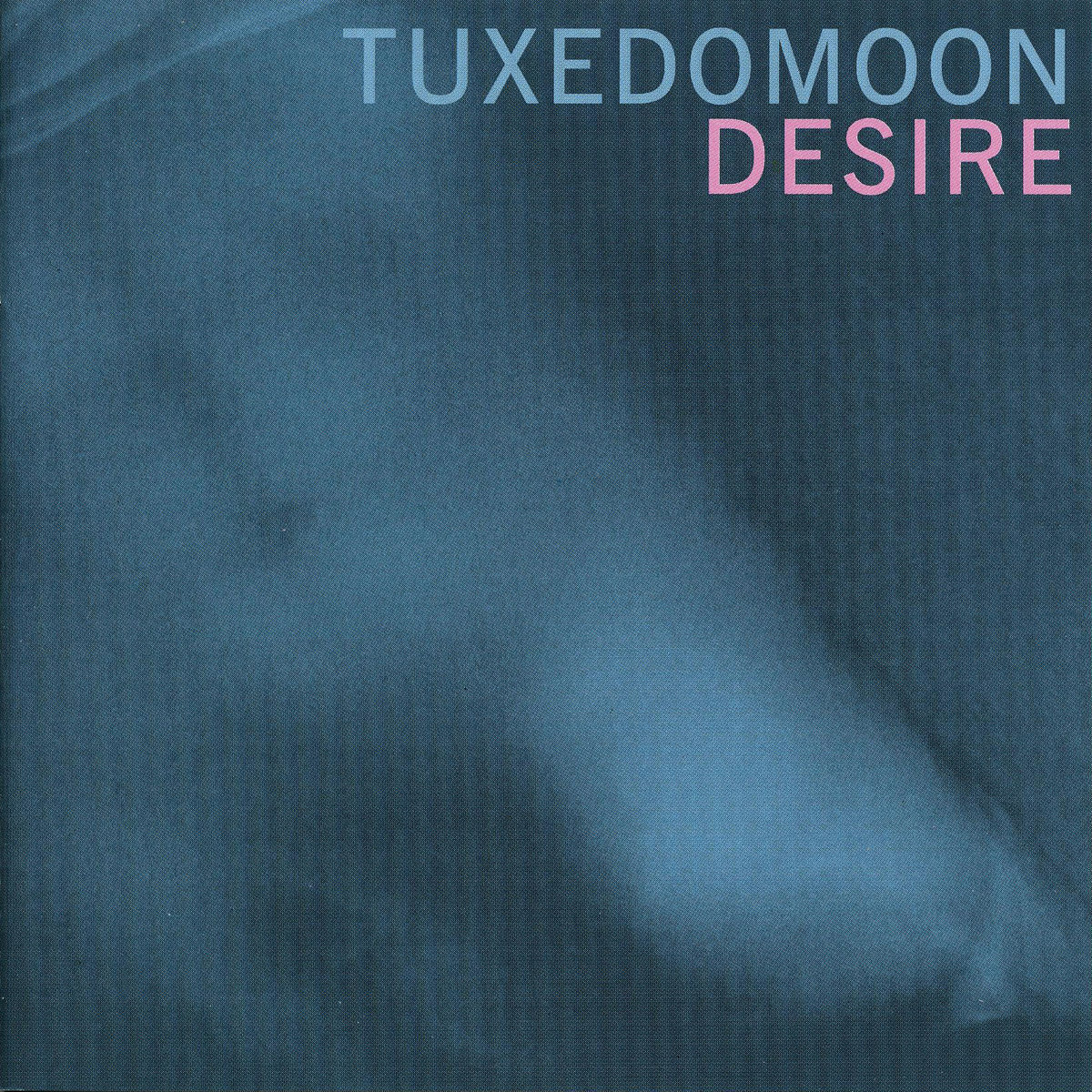
Impressed with the sound of ‘Metamatic’, TUXEDOMOON had originally sought John Foxx to produce their next album ‘Desire’ but unavailable, he put the American art rockers in touch with Gareth Jones. “Gareth was brilliant, fabulous” said the band’s Blaine L Reininger, “He was able to teach us; kind of organise us”. On one of the highlights was ‘Incubus’ which used the same Roland CR-78 Compurhythm used as on ‘Metamatic’.
Available on the TUXEDOMOON album ‘Desire’ via Crammed Discs
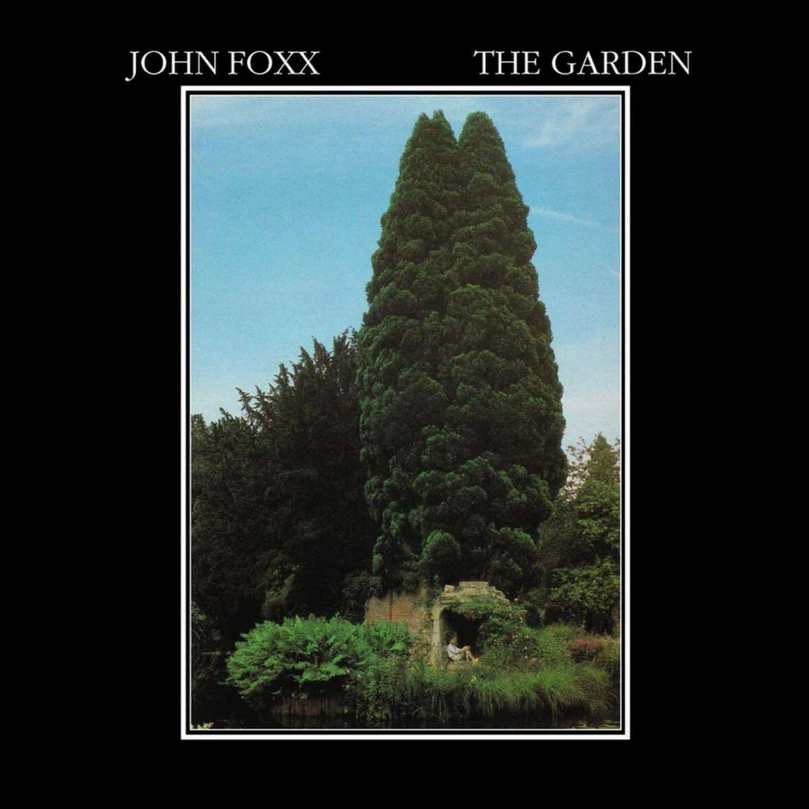
With a second album and studio both named ‘The Garden’, Gareth Jones was again working with John Foxx to realise both. After the colder overtures of ‘Metamatic’, Foxx had thawed out considerably after a holiday in Italy and as a result, traditional instrumentation returned. ‘Dancing Like A Gun’ contradicted its “Oppenheimer waltzing” line but blended synth with art rock to recall ‘Quiet Men’ from his ULTRAVOX days.
Available on the JOHN FOXX album ‘The Garden’ via Metamatic Records
Working alongside Daniel Miller who continued as producer, Gareth Jones had DEPECHE MODE sampling found sounds around the-then derelict surroundings of Shroreditch to create a new sonic template in pop. Songs like ‘Everything Counts’, ‘Pipeline’ and ‘More Than A Party had socio-political themes while the Alan Wilder composed ditty ‘Two Minute Warning’ reflected the heightened Cold War angst of the time.
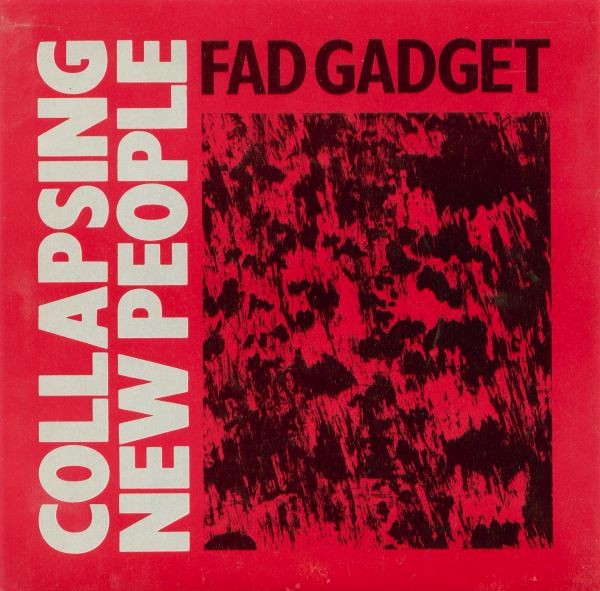
Frank Tovey had been intrigued by the sound of German industrial band EINSTÜRZENDE NEUBAUTEN whose name translated into English as “collapsing new buildings” and their use of industrial equipment and found objects. So while recording at Hansa, he got Gareth Jones to record a large printing press nearby as the basis for a loop rhythm that became ‘Collapsing New People’, one of the best FAD GADGET singles.
Available on the FAD GADGET album ‘Gag’ via Mute Records
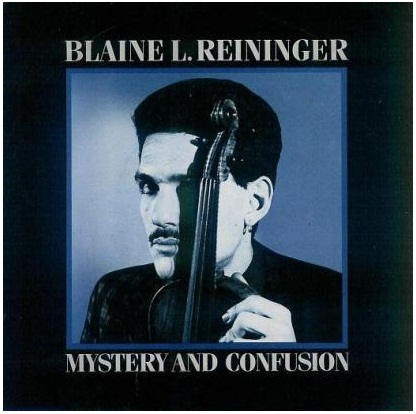
For his first second solo album, Blaine L Reininger was reunited with Gareth Jones at the production helm. Using Roland’s portable pre-MIDI holy trinity of the TB-303 Bassline, the SH-101 monosynth and the TR-808 Rhythm Composer synced via a customised cable, its highlight was the cinematic synthpop of ‘Mystery & Confusion’ which saw the TUXEDOMOON leader exude a distinct Eurocentric spirit.
Available on the BLAINE L REININGER album ‘Night Air’ via Les Disques du Crépuscule
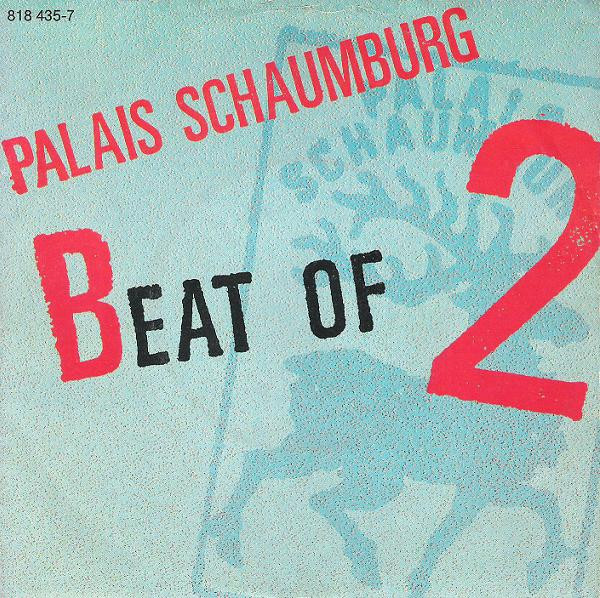
An influential Neue Deutsche Welle band from Hamburg, PALAIS SCHAUMBURG were on the bill with DEPECHE MODE at the 1981 Mute Night at the London Lyceum. Their members included Thomas Fehlmann who went on to join THE ORB as well as produce ERASURE and experimental producer Holger Hiller. The percussive ‘Beat Of 2’ turned out to be their final single and was produced by Gareth Jones alongside Inga Humpe.
Available on the PALAIS SCHAUMBURG album ‘Parlez-Vous Schaumburg?’ via Mercury Records
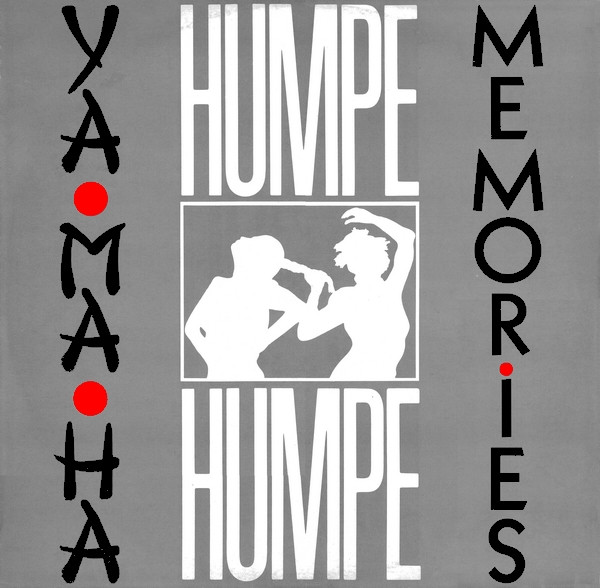
A slice of quirky Neue Deutsche Welle from sisters Annette and Inga Humpe, ‘Yama-ha’ was produced by Roma Baran who had worked on Laurie Anderson’s ‘O Superman’. The “shopping list” synth and sample number listing a number of Japanese tech and vehicle manufacturers was remixed by Gareth Jones. Incidentally the B-side ‘Memories’ was produced by Conny Plank. In the UK, the duo was known as SWIMMING WITH SHARKS.
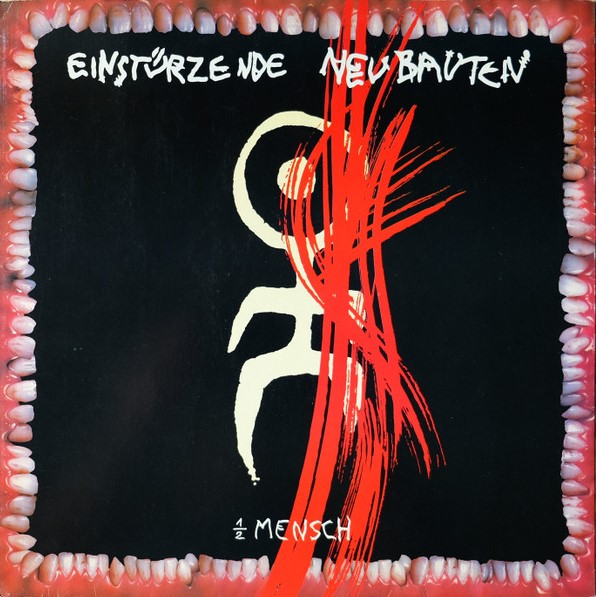
With their early albums characterised by harsh shouting and screaming, when Gareth Jones was brought in to work with EINSTURZEN NEUBAUTEN, it was to provide a sense of order to the West Berlin group’s experimental metal-bashing. Using sampling technology to provide an avant-dance palette to accompany Blixa Bargeld’s fierce chant of “FÜTTER MEIN EGO”, the sinister rhythm was inspired by the sound of chopping up speed!
Available on the EINSTURZEN NEUBAUTEN album ‘Halber Mensch’ via Potomak
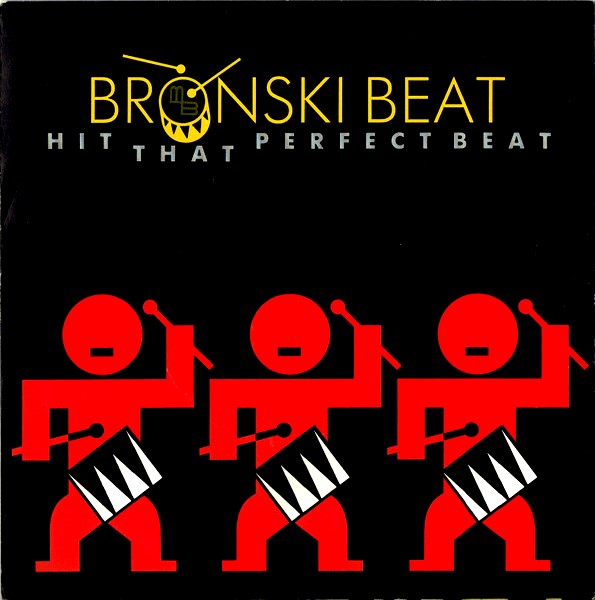
Featuring new BRONSKI BEAT singer John Jøn Foster following the departure of Jimmy Somerville, ‘Hit That Perfect Beat’ was a frantically paced HI-NRG track helmed by Adam Williams of THE SELECTER who had been co-producer on EURYTHMICS’ singles ‘The Walk’ and ‘Love Is A Stranger’. Impressed by his work for DEPECHE MODE, Gareth Jones did the final mix which replicated the pumping presence of ‘Master & Servant’.
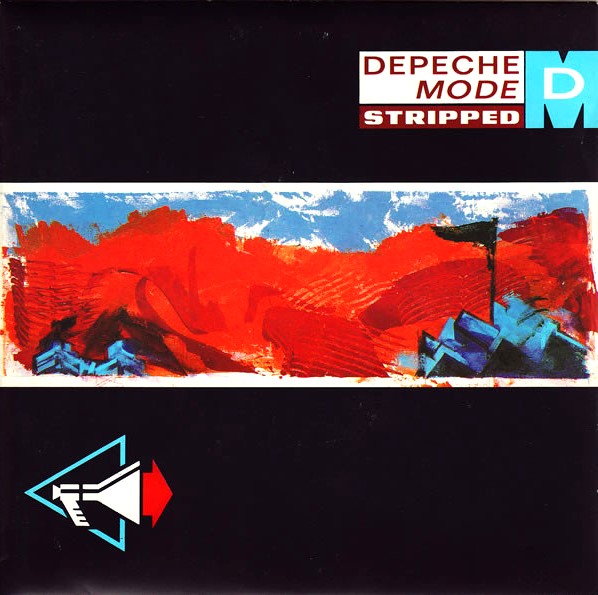
Rising from Tonmeister to co-producer during ‘Some Great Reward’, Jones continued in the role for ‘Black Celebration’. By now, Martin Gore’s songs had got bleaker and bleaker. Inspired by German film director Werner Herzog, Daniel Miller wanted a dystopian intensity and the album to be lived, a feeling which ramped up when the band finished the album in Berlin. ‘Stripped’ was the “remarkable” single that heralded this darker direction.
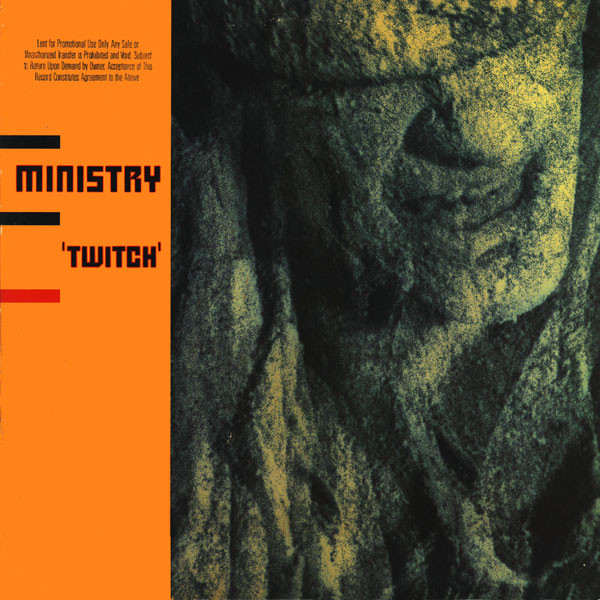
Having debuted with the synth-oriented ‘With Sympathy’ album in 1983, by 1986 MINISTRY had become more abrasive with industrial elements creeping into their sound. Engineered by Gareth Jones but produced by Adrian Sherwood of On-U Sound, the beat driven ‘Just Like You’ featured a Fairlight CMI which mainman Al Jourgensen had been able to acquire as a part of the deal with Sire Records.
Available on the MINISTRY album ‘Twitch’ via Rhino Records
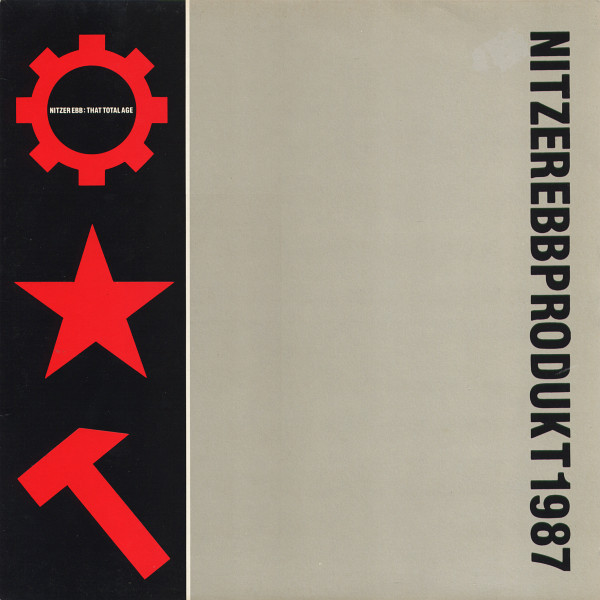
Founded by Bon, Douglas McCarthy and David Gooday, with their musical premise of “muscle and hate”, NITZER EBB took the seed of DAF to develop a danceable industrial finesse. While Phil Harding of PWL fame produced and mixed most of their debut long player released by Mute, Gareth Jones and Daniel Miller teamed up to remix their energetic single ‘Let Your Body Learn’ which had bee originally independently issued in 1986.
Available on the NITZER EBB album ‘That Total Age’ via Mute Records
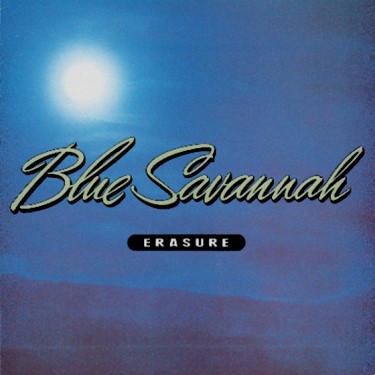
After his DEPECHE MODE Berlin trilogy, Gareth Jones remained in the Mute family and began a long-standing working relationship with ERASURE. The concept of ‘Blue Savannah’ was Roy Orbison doing electronic pop. As co-producer with Mark Saunders, he provided an uncluttered backdrop to showcase the soaring optimism of what was to become one of the most universally loved songs by Andy Bell and Vince Clarke.
Available on the ERASURE album ‘Wild!’ via Mute Records
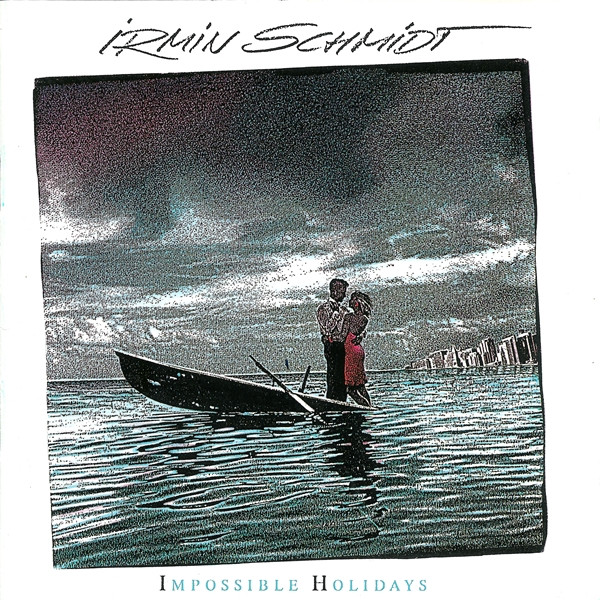
When Mute Records licensed the CAN back catalogue in 1990 via their manager Hildegard Schmidt’s Spoon imprint, there came the opportunity to work on new solo recordings with their keyboard virtuoso Irmin Schmidt. With Gareth Jones as co-producer, while there were vocals and contributions from bandmates Jaki Liebezeit and Michael Karoli, the closing instrumental ‘Gormenghast Drift’ was an atmospheric delight.
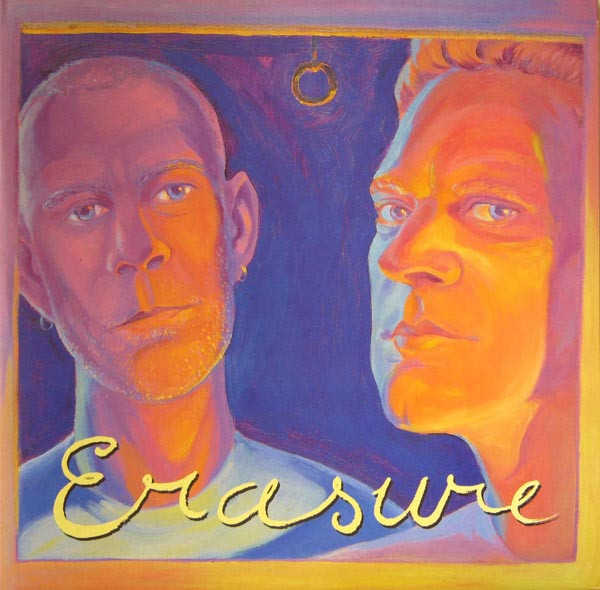
An attempt at prog synth which Andy Bell referred to as ‘Bright Side Of The Sun’, the seventh ERASURE album saw Gareth Jones and Thomas Fehlmann work together as producers on the ambitious if flawed self-titled opus. While there was the brilliant under rated single ‘Fingers and Thumbs (Cold Summer’s Day)’, there were also beautiful emotive neo-classical moments such as ‘Grace’ among the highlights.
Available on the ERASURE album ‘Erasure’ via Mute Records
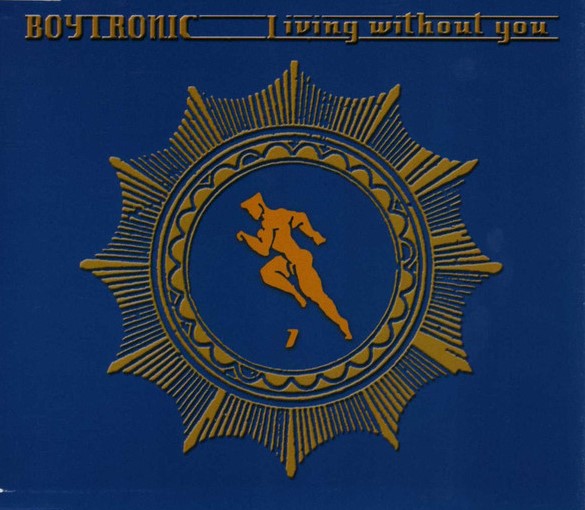
The 21st Century incarnation of BOYTRONIC saw the return of original frontman Holger Wobker. The anthemic ‘Living Without You’, which was one of two songs produced by Gareth Jones for the parent album ‘Autotunes’, utilised an impressive array of instrumentation including electronics, filmic orchestrations and rock guitars as well as Wobker’s impassioned vocals.
Available on the BOYTRONIC album ‘Autotunes’ via Strange Ways Records
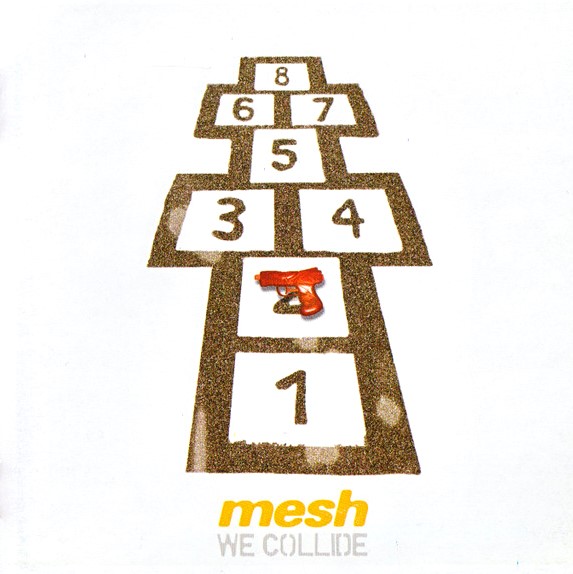
When it suggested that MESH work with Gareth Jones, the band were initially reluctant because of the inevitable DEPECHE MODE comparisons. But Rich Silverthorn remembered “He was a really nice guy. We spent about 10 days locked in eating Chinese food, laughing and mixing ‘We Collide’”. Of the six tracks Jones mixed, ‘No Place Like Home’ proved to be one of the most poignant songs of MESH’s career.
Available on the MESH album ‘We Collide’ via Dependent Records
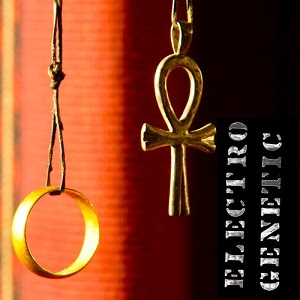
On the milestone of his 65th birthday, Gareth Jones’ released ‘ELECTROGENETIC‘, his first album under his own name. Most of the tracks began as improvisations around a modular patch, then crafted in a blend of humanity and electronics. While in Detroit, he developed the subtle rhythmic pulse and absorbing keyboard overtures of ‘Safe Travels’, one of several poignant tracks commemorating his recently passed mother and mother-in-law.
Available on the GARETH JONES album ‘ELECTROGENETIC‘ via Calm + Collect
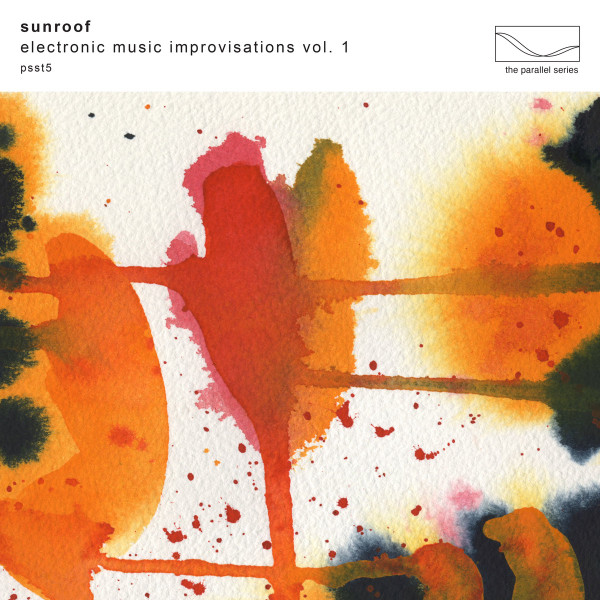
A studio collaboration between Gareth Jones and Daniel Miller, while this project mostly produced covers such as ‘Hero’ for ‘A Homage to NEU!’ in 1998 and assorted remixes, SUNROOF started playing live shows and finally released a debut long player ‘Electronic Music Improvisations Vol1’. It featured a collection of improvised modular experiments recorded in 2019, of which the energetic ‘1.8 – 2.3.19’ was the most immediate.
We use cookies to ensure that we give you the best experience on our website. If you continue to use this site we will assume that you are happy with it.
Follow Us!