It seems strange to think that despite releasing their debut single at the end of 1982, there were there were no FIAT LUX albums before 2019.
That single ‘Feels Like Winter Again’ was produced by Bill Nelson and led to a deal with Polydor and his brother Ian joining the founding FIAT LUX nucleus of lead singer Steve Wright and multi-instrumentalist David P Crickmore. There was a six song ‘Hired History’ EP in 1984, but the lack of a hit single saw their intended debut album ‘Ark Of Embers’ short-sightedly shelved by Polydor in 1985.
Ian Nelson sadly passed away in 2006 but Wright and Crickmore returned as FIAT LUX in 2017. Since then, not only were ‘Hired History’ and the previously unreleased ‘Ark Of Embers’ given the Cherry Red treatment and made available in 2019 but there have been two FIAT LUX albums ‘Saved Symmetry’ and ‘Twisted Culture’; both comprised of completely new 21st Century material with Will Howard taking over from the late Ian Nelson as the third FIAT LUX member on sax and woodwinds.
FIAT LUX have returned with ‘Desire & Belief’, their first long player since 2021 and its artwork ably captures the chilly windswept Northern English atmospheres of this album. It begins with the dusky ambience of ‘Summer Solstice’ but as “my world is changing”, ‘Spirit Of The Age’ is spritely yet filled with anxiety. ‘Am I Dreaming’ asks Wright as FIAT LUX enter into a droning darker place that is shaped by a haunting drum manta.
‘Clear Sky’ romps with a jagged synth attack before sax and a guitar solo enter “a space that comforts you”, but there’s a slight air of PINK FLOYD’s ‘Comfortably Numb’ in the structure of ‘I Never Explode’ before journeying into the deep shady moods of ‘Shallow Hollow Souls’. The ‘Desire & Belief’ title song adds percussive tension but after all that, ‘Turn Me Around’ bursts in with some bouncy synth-brassy synthpop.
With a pulsing electronic backbone, ‘Winter Solstice’ must be the first pop song about Seasonal Affective Disorder and is highly relatable, especially with Wright’s emotive Scott Walker tones. To close, ‘All The Stars Have Died’ is a spoken word art piece that mildy gets funky with screeching sax and jazzy breaks.
With its moody disposition and cinematic atmospheres offset by the occasional slice of accessible synthpop, ‘Desire & Belief’ will satisfy those who have enjoyed the work of FIAT LUX since their 21st Century return.
‘Desire & Belief’ is released on 6th February 2026 as a red vinyl LP and CD by Nine X Nine Records
Musician and producer Bill Nelson has released over 100 solo albums and EPs while also working with numerous other artists including SKIDS, A FLOCK OF SEAGULLS, FIAT LUX and YELLOW MAGIC ORCHESTRA.
Born in Wakefield and given his first guitar, a Gibson ES345 by his father who played sax led his own dance band, Bill Nelson released his debut album ‘Northern Dream’ in 1971 but first found fame as the leader of the acclaimed progressive rock band BE BOP DELUXE who released 5 albums between 1974 to 1978.
He was a leading exponent of the E-Bow, a handheld battery-powered device that created infinite sustain on a guitar by generating a magnetic field to vibrate a single string. Having been given an early model by its inventor Greg Heet while he was in BE BOP DELUXE, Nelson found he could create unique sounding textures that would often be mistaken for synthesizers. Other E-Bow users included Stuart Adamson, Rob Dean, Andy Taylor, The Edge and Pat Metheny.
This coincided with Nelson’s flaming desire to experiment more with electronics on the final BE BOP DELUXE album ‘Drastic Plastic’. Tiring of the limitation of guitar sounds and wanting to work without a band, he got into synths and drum machines. Like other guitarists of the new wave era, Nelson tried guitar synthesizers and in his case, it was the Hagstrom Patch 2000. One of the issues arising from guitar synths was that if a string was unintentionally hit, an unwanted note would be triggered. These quirks ultimately made the E-Bow more practical although it was still tricky to master.
Having been inspired by David Bowie’s Berlin era records ‘Low’ and ‘Heroes’ to pursue a more electronic direction after dissolving BE BOP DELUXE, Nelson formed RED NOISE which featured his brother Ian on sax. But after their debut record, a Bowie-influenced new wave art rock album titled ‘Sound On Sound’, RED NOISE were dropped by Harvest Records despite signing them on the strength of Nelson’s involvement in BE BOP DELUXE.
Photo by Sheila Rock
Nelson reworked what would have been the second RED NOISE album and released as his first solo album ‘Quit Dreaming and Get On The Beam’ via Mercury Records who had signed him after he released a single ‘Do You Dream In Colour?’ on his newly set-up independent label Cocteau in 1980. Setting up a home studio, among the synths in Nelson’s arsenal were a Minimoog, Yamaha CS70M and ARP Omni.
As well as being an outlet for his more experimental work, Cocteau also showcased new artists to major labels with A FLOCK OF SEAGULLS and FIAT LUX signing to Jive and Polydor respectively after their debut singles were produced and released by Nelson. He would go on to produce other artists such as Nash The Slash and Gary Numan although he never saw it as a potential career in the way that Trevor Horn and Tony Mansfield did.
There came a fruitful relationship with Yukihiro Takahashi of YELLOW MAGIC ORCHESTRA with tha pair playing on each other’s records and perfroming live together but after leaving Mercury, Nelson signed to the CBS imprint Portrait. But the relationship was tense and ended after just one album ‘Getting the Holy Ghost Across’ in 1986. During this time, he launched the more sample-based New Age side project ORCHESTRA ARCANA but by now Nelson had marriage, tax and management problems to deal with as well as the collapse of Enigma Records who he signed to in 1988. Nelson convalesced by producing ‘The Familiar’, a gentle meditative album by Roger Eno and Kate St John released in 1992 using primarily traditional instrumentation.
Since then, Bill Nelson has remained fiercely independent and outside of the mainstream music business, having built up a strong and loyal worldwide fan base who embrace his song-based work, ambient compositions and soundtracks for art installations, exhibitions and theatrical presentations.
“The ‘ambient’ things, the ‘rock’ things, the ‘pop’ things don’t exist as separate, discreet entities in my creative heart, they’re just facets of one, personal, unchanging musical expression” he said on his website, “I personally regard all these categorisations as outward manifestations of a single interior vision, rather than some kind of split-personality or any desire to appear ‘multi-talented’.”
Still very prolific, in 2023 alone, he released 5 albums via his own Sonoluxe label while Nelson issued his most recent long player ‘Studio Cadet’ in 2024. He has far too many works now to cover in one article, so here acting as a Beginner’s Guide to Bill Nelson and his more electronic-based material is a summary of 20 tracks tracing his work up to the start of the millennium…
BE BOP DELUXE Electrical Language (1978)
Uncomfortable with the cult “guitar hero” status he had acquired, Nelson had become disillusioned and wanted to experiment with his Minimoog. The exotic ‘Electrical Language’ documented the moment when he went electro. Co-produced by John Leckie who would go on to work with MAGAZINE, SIMPLE MINDS and THE HUMAN LEAGUE, the track displayed an affinity with New Wave. Nelson unexpectedly split up the band whilst on the cusp of mainstream success.
Available on the BE-BOP DELUXE album ‘Drastic Plastic’ via Esoteric Recordings
Nelson formed a new band RED NOISE with a flexible line-up which included his brother Ian on sax which he regarded as an escape from BE-BOP DELUXE. With no need to compromise with band mates in his new fiery experimental vision, the first single ‘Furniture Music’ saw Nelson vocally adopt the staccato stylings of SPARKS while embodying a dystopian Orwellian atmosphere commensurate with the Cold War tensions of the times.
Available on the BILL NELSON’S RED NOISE album ‘Sound-on-Sound’ via Esoteric Recordings
After the unintelligible ‘Into The Valley’ and the Mick Glossop-helmed ‘Working For The Yankee Dollar’, when Bill Nelson produced the second SKIDS album ‘Days in Europa’, he brought in drum machines and keyboards. Utilising the CR78 Compurhythm later heard on OMD’s ‘Enola Gay’, ’Charade’ had a riffing mechanical energy offset by electronic pulses that set the Scottish punk band apart from the likes of STIFF LITTLE FINGERS and ANGELIC UPSTARTS.
Available on the SKIDS album ‘Days In Europa’ via Virgin Records
Finally opting to go solo and independent with his own Cocteau label after being dropped by the EMI-affiliated EMI, the quirky ‘Do You Dream In Colour?’ had similar lyrical gists to THE NORMAL’s ‘TVOD’ but was misinterpreted as being about heroin addiction. Punctuated with bursts of sax from brother Ian, the single reached a respectable No52 on the UK singles chart and was the catalyst to a new deal with Mercury Records.
The only release by LAST MAN IN EUROPE, the duo comprised Jeff Wilson and Trevor Abbott. The second single issued on Cocteau, ‘A Certain Bridge’ was a slice of doomy goth in the vein of JOY DIVISION and THE CURE produced by Nelson. With repetitious drum machine and freaky synth soloing at the end, vocally there was the tense post-punk snarl of the times to go alongside the jagged guitar figures.
Featuring a nucleus of Steve Walker and Dave Purcell, their Cocteau single ‘Airfields’ was not only produced by Nelson but also featured him playing superb bass figures in a manner reminiscent of Barry Adamson from MAGAZINE. With sparks of icy string machine and death disco rhythms, this mysterious offering was like LAST MAN IN EUROPE, on the doomy side and came over like a dystopian DURAN DURAN.
Subtitled “And Rides The Bullet Train”, REVOX CADETS was Nelson pretending to be a band while also writing under the pseudonym of VU Disney in order to release material on Cocteau outside of his deal with Mercury Records. Falling under the spell of Japan and adopting appealing pentatonic synth tones over a treated drum machine backbone, the locomotive track was double A sided with TO HEAVEN A JET’s ‘Airfield’.
Available on the BILL NELSON album ‘Transcorder (The Acquitted By Mirrors Recordings)’ via Sonoluxe
A FLOCK OF SEAGULLS had got their original break when Bill Nelson produced and released their debut single ‘(It’s Not Me) Talking’ for his Cocteau label in 1981, attracting the attention of the Arista-affiliated Jive Records. The short and punchy ‘Telecommunication’ was their major-label debut and also produced by Nelson. Percussive metallic synths and Sci-Fi lyrics combined with power chords to provide a hit on the US Hot Dance Club Play chart.
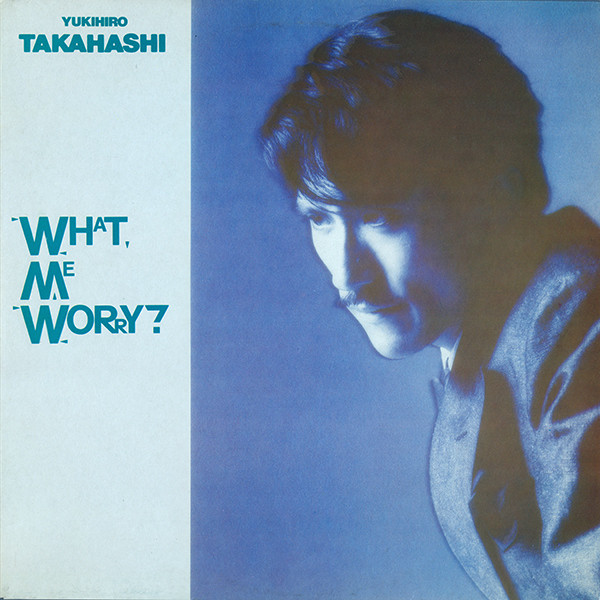
With its various Far Eastern inflections, the ‘Quit Dreaming & Get On The Beam’ album had come to the attention of Yukihiro Takahashi and with it came the invitation to play on the YELLOW MAGIC ORCHESTRA drummer’s next solo album ‘What, Me Worry?’. One track that Nelson contributed E-Bow to was ‘This Strange Obsession’, a frantic duet between Zaine Griff (who had also written the song) and chanteuse Ronny.
Available on the YUKIHIRO TAKAHASHI album ‘What, Me Worry?’ via Yen Records / Great Tracks
Curious about employing trance rhythm ideas, Nelson went to town on the electronics with a greater emphasis on synthesizers for his second solo album ‘The Love That Whirls’; with prominent machine rhythms, screaming synth-sounding E-bow guitar, as “Love turns to lust, ice into fire”, ‘Flaming Desire’ swirled with a mannered passion that provided an ecstatic sexual tension not heard before in Nelson’s previous work.
Masami Tsuchiya was best known as the leader of IPPU DO and being in the final live line-up of JAPAN. Not only did Mick Karn and Steve Jansen feature on the title track of his debut solo record but also Bill Nelson with his “Flying E-Bow” guitar. Using koto and synths to provide the traditionally-flavoured backbone, Nelson’s E-Bow and Tsuchiya’s own six string combined for something sounding like a JAPAN instrumental.
Available on the MASAMI TSUCHIYA album ‘Rice Music’ via Epic Records
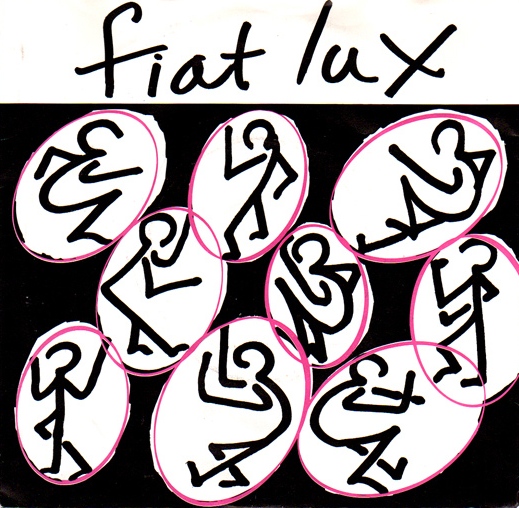
Originally a duo comprising Steve Wright and David P Crickmore, the former joined the Yorkshire Actors theatre company where he met Nelson who produced their debut single ‘Feels Like Winter Again’. The cutting mix of synth and treated guitar over an electronic pulse and machine beats juxtaposed with bass guitar complimented Wright’s sombre tale of broken love affairs. Nelson’s brother Ian would later join FIAT LUX.
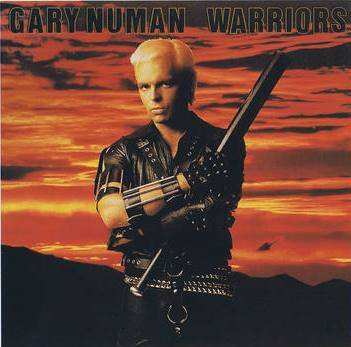
Gary Numan was making a full live comeback after retiring in 1981, but he was put under pressure from his label Beggars Banquet employ a producer for his next album. Bill Nelson took on the role but the two quickly fell out in the studio. One track that the pair completed was ‘My Car Slides 1’, a beautiful ballad featuring Nelson’s distinctive E-bowed guitar. Alas, it was not included in Numan’s revision of the eventual ‘Warriors’ album.
Available on the GARY NUMAN album ‘Warriors’ via Beggars Banquet
Having played on Yukihiro Takahashi’s ‘What, Me Worry?’, Nelson was invited to join the sessions for the next YELLOW MAGIC ORCHESTRA album ‘Naughty Boys’. The end result was a very sophisticated pop record with ‘Kimi Ni Mune Kyun’ becoming their biggest hit. Short on the trio’s usual quirkiness, Nelson himself felt they could have taken more risks in the final mix but the track ‘Focus’ had much more of a growl.
Available on the YELLOW MAGIC ORCHESTRA album ‘Naughty Boys’ via Beggars Banquet
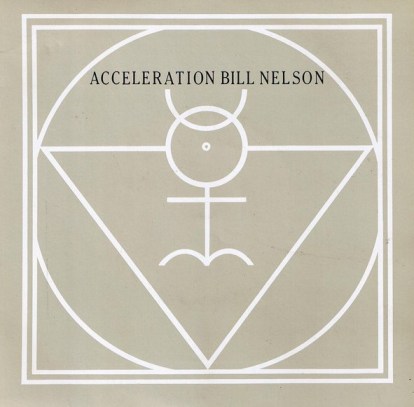
A development of the electronica structured tracks that came from ‘The Love That Whirls’, ‘Acceleration’ came after Nelson’s work with Yukihiro Takahashi who provided several drum tracks for him to compose around. Featuring live percussion and synced rhythmic devices, it was possibly the most overt pop song in the Bill Nelson catalogue, the single version got an extra American disco edge via a remix from producer John Luongo.
Available on the BILL NELSON album ‘Chimera’ via Mercury Records
YUKIHIRO TAKAHASHI featuring BILL NELSON Bounds Of Reason, Bounds Of Love (1984)
As with his previous solo albums, Yukihiro Takahashi happy to let guest take a lead vocal and on his sixth album ‘Wild & Moody’, Bill Nelson played guitar, wrote lyrics and sang on one of its highlights ‘Bounds Of Reason, Bonds Of Love’. Co-produced by Iva Davies of ICEHOUSE with Ryuichi Sakamoto on Fairlight, this was a slab of electro-funk was authentically enhanced by the inappropriately named Rodney Drummer on bass guitar.
Available on the YUKIHIRO TAKAHASHI album ‘Wild & Moody’ via Yen Records / Great Tracks
‘Acquitted By Mirrors’ was the Bill Nelson Fan Club magazine published between 1982 to 1990; 12” EPs were given exclusively to members with alternating issues. The ‘Cote D’Azur’ EP was the seventh and came with Issue 13 and on it was a delightful YELLOW MAGIC ORCHESTRA influenced instrumental called ‘A Dream Fulfilled’. Its drum track clearly had the hallmarks of Yukihiro Takahashi so was it a ‘Chimera’ outtake?
Available on the BILL NELSON album ‘Transcorder’ via Sonoluxe
For David Sylvian’s ambitious second double album, Bill Nelson collaborated with the former JAPAN front man on 6 tracks including 3 instrumentals. One of the songs was the countrified ‘Silver Moon’ which saw his distinctive E-Bow alongside the Frippertronics of Robert Fripp and pedal steel exponent BJ Cole. Usually upbeat, this was Sylvian at his most romantic since ‘Gentlemen Take Polaroids’ despite the uncertainty expressed.
Available on the DAVID SYLVIAN album ‘Gone To Earth’ via Virgin Records
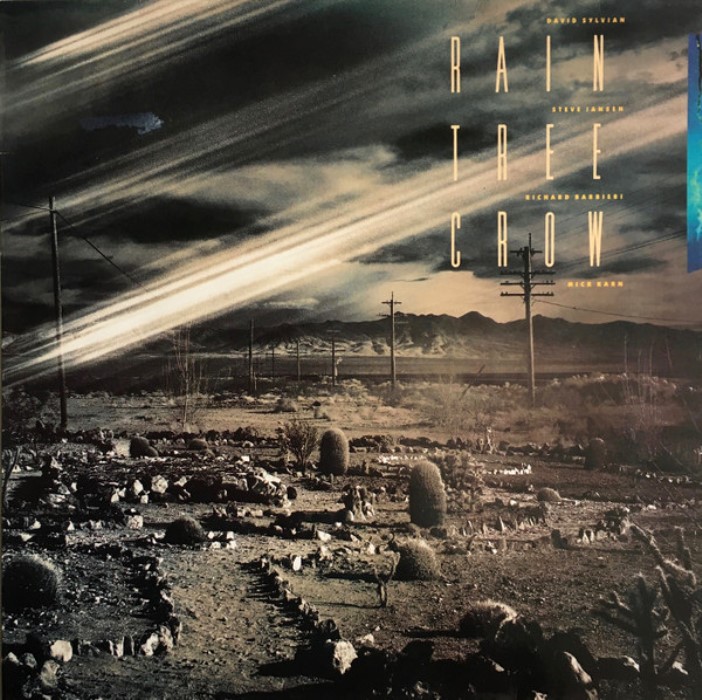
RAIN TREE CROW was the JAPAN reunion in all but name. Bill Nelson’s guest involvement in JAPAN had been mooted as far back as ‘Tin Drum’. He appeared the tribal instrumental ‘Big Wheels In Shanty Town’ and the wonderfully mellow single ‘Blackwater’ which was perhaps the only track from the sessions that bore any relation to JAPAN’s past The quartet of Sylvian, Mick Karn, Steve Jansen and Richard Barbieri would split again.
Available on the RAIN TREE CROW album ‘Rain Tree Crow’ via Virgin Records
An adventure in avant garde drum ‘n’ bass, sax and E-Bow and near spoken vocals, ‘Blink Agog’ came from ‘After the Satellite Sings’, a record that Nelson would later declare as one of his favourites where there were a number of musical departures. Written, performed, recorded and mixed in an intense 28 day session, according to guitarist Reeves Gabrels, it was said to have been an influence on David Bowie’s ‘Earthling’ album,
A variety of Bill Nelson music released since 2007 and a selection of his back catalogue is available digitally from https://billnelson.bandcamp.com/music
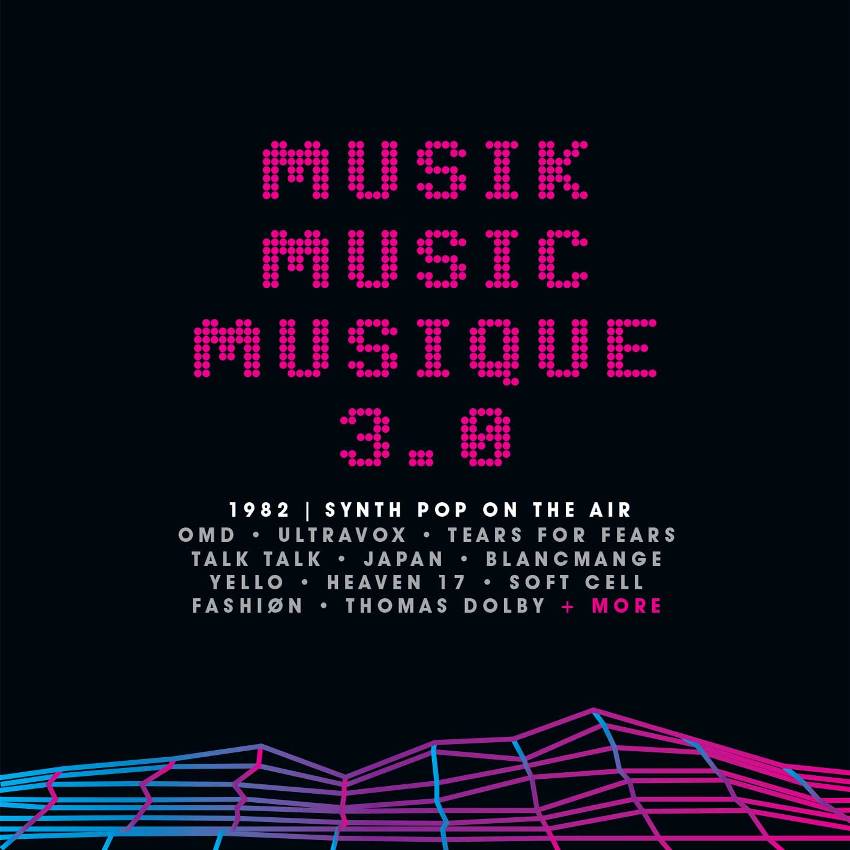
Cherry Red’s ‘Musik Music Musique’ series now reaches its third volume and 1982 when there was “Synth Pop On The Air”.
From the team behind the ’Close To The Noise Floor’ compendiums, the excellent ‘Electrical Language’ set but also the rather confused ‘Music For New Romantics’ box, this 3CD collection documents the year after SOFT CELL hit No1 with ‘Tainted Love’ in the summer of 1981 while THE HUMAN LEAGUE did likewise with ‘Don’t You Want Me?’ to bag that year’s Christmas topspot. 1982 began with KRAFTWERK belatedly reaching a No1 too with ‘The Model’, a track from 1978’s ‘The Man Machine’.
It was as if the world had caught up with the sound of the synth. The period was also notable for affordable silicon chip based polysynths such as the Roland Juno 6 and Korg Poly 6 entering the market. In tandem with the improvement in quality of cassette-based 4-track Portastudios, electronic music became more accessible with basic home studios now a hive of musical creativity.
While the big hitters such as SOFT CELL, OMD, BLANCMANGE, THE HUMAN LEAGUE and ULTRAVOX are represented by album tracks and B-sides alongside breakthrough singles by NEW ORDER, FASHIØN and HEAVEN 17, the curiosity value of ‘Musik Music Musique 3.0’ is boosted by a greater proportion of lesser known tracks and acts compared with the first two compendiums.
Often dismissed as an MOR act thanks to the Giorgio Moroder produced ‘Take My Breath Away’, BERLIN are provided a platform for the provocative and more classically Moroder-esque ‘Sex (I’m A….)’. Meanwhile with a not dissimilar throbbing template, DEAD OR ALIVE’s ‘What I Want’ in previously unreleased demo form captures the band in transition from proto-goth to HI-NRG disco and sounding like both simultaneously.
Wonderful lost synthpop jewels include the melodramatic ‘Juliet’ from PASSION POLKA and the bouncy SPANDAU BALLET inspired instrumental ‘Profile Dance’ by SERGEANT FROG, an early alias of PWL mixmaster Phil Harding. Echoing the slightly overblown vocal styles of the period, ‘Future Shock’ by COMMUNICATION falls under the spell of ASSOCIATES while both ‘Climb Down’ from THIRTEEN AT MIDNIGHT and ‘Instant Feeling’ by AERIAL FX are percussively anxious.
The two best rare highlights both come with links to Glasgow; fronted by David Rudden, ENDGAMES played with a brand polished synthpop funk of which ‘First Last For Everything’ is a good example. Meanwhile, LEISURE PROCESS were the duo comprising of Ross Middleton and Gary Barnacle whose small portfolio of singles were all produced by Martin Rushent; although the vocals were virtually unintelligible over the clattering Linn Drum, pulsing synths, squawky guitar and sax, ‘Love Cascade’ remains a cool dancefloor friendly number reflecting the decadent spirit of the times.
The underrated COLOURBOX are represented by the 1982 single version of ‘Breakdown’ while DRINKING ELECTRICITY’s ‘Good Times’ explores a synth art funk hybrid that threatens to turn into ‘The Locomotion’. An actual cover version, JULIE & THE JEMS take on ‘1-2-3’ is a reflection of how commercial pop had become synthed up, especially when it is learnt that front woman Julie Harris was part of the line-up of TIGHT FIT that got to No1 later in 1982 with ‘The Lion Sleeps Tonight’; incidentally that rework was produced by Tim Friese-Greene who later became Mark Hollis’s writing partner in TALK TALK who themselves are represented on ‘Musik Music Musique 3.0’ by their slightly underwhelming debut single ‘Mirror Man’.
There is a surprise in that Arthur Brown of ‘Fire’ fame with his synth experiment ‘Conversations’ and it is suitably crazy and enjoyable in the manner of early FALCO. The late Austrian himself is represented by ‘Maschine Brennt’ while German neighbours DIE KRUPPS’ ‘Goldfinger’ is a welcome inclusion that exposes their more DAF-like origins.
Adding a less confrontational continental tone, ‘Par Hasard’ by MIKADO is a slice of delightful electro-lounge, while Belgium’s TELEX bring swing into the mix with ‘Sigmund Freud’s Party’ and Switzerland’s YELLO exude their quirky playfulness on ‘Heavy Whispers’, albeit with a darker disposition.
It is interesting to look back at the lesser remembered Kim Wilde single ‘Child Come Away’ and Toyah’s 1982 re-recording of ‘Ieya’ which were both synth dominated but failed to crack the Top 40 despite the sound being ubiquitous on the airwaves. There was the beginning of a notable synth backlash after the triumph of 1981 and DEXY’S MIDNIGHT RUNNERS fiddly ‘Come On Eileen’ becoming the best-selling UK single of 1982 was a surefire sign. And that was without the Musicians Union motion to ban synths from recording and live performance.
Cult acts of the period FAD GADGET, THE PASSAGE, FIAT LUX, SECTION 25 and POEME ELECTRONIQUE along with the two Thomases, Dolby and Lang don’t miss out on the party, but notably absent are bands who had been part of earlier sets such as NEW MUSIK and VISAGE whose 1982 albums have worthy material to mine.
Closing with OMEGA THEATRE and the quite bizarre but entertaining ‘Robots, Machines & Silicon Dreams’, its classic pop theatrics are not entirely surprising as its creator John Carter co-wrote the 1970 Eurovision runner-up ‘Knock, Knock Who’s There?’ for Mary Hopkin, ‘Let’s Go to San Francisco’ for THE FLOWER POT MEN and ‘Beach Baby’ for THE FIRST CLASS.
However, as before, there are minor quibbles; while the correct 1982 versions of NEW ORDER’s ‘Temptation’, TEARS FOR FEARS ‘Pale Shelter’ and Paul Haig’s ‘Justice’ feature, ‘European Son’ by JAPAN comes in the earlier John Punter B-side version rather the snappier 1982 Steve Nye single remix. And then having mentioned in the booklet that OMD’s ‘She’s Leaving’ was released as a slightly remixed 1982 single in Benelux territories, the compilation goes with the familiar 1981 ‘Architecture & Morality’ album cut. Meanwhile the inclusion of ‘Sex Dwarf’ from 1981’s ‘Non Stop Erotic Cabaret’ is a head scratcher when the 1982 SOFT CELL B-sides ‘Insecure Me’, ‘….So’ or ‘It’s A Mug’s Game’ would have been more interesting.
Lessons have still not been learnt from previous booklets with photos of OMD from 1984 and DEAD OR ALIVE from 1985 appearing. Again, the booklet notes are a mixed bag; why bother to bang on about the John Foxx-era of ULTRAVOX with the limited word count when by 1982, the Midge Ure-led version were an established hit machine? Also, why does the story of JOY DIVISION need to be repeated ad nauseam in the context of NEW ORDER?
Meanwhile, DRAMATIS (who are represented by their best single ‘The Shame’) returned to being Gary Numan’s live backing band in 1983, not 1982! Then with the biggest gaff in the TEARS FOR FEARS section, Curt Smith played bass NOT guitar and vice versa for Roland Jaime Orzabal de la Quintana to give his full name!
So full marks for the amount of lesser known material gathered on ‘Musik Music Musique 3.0’, but please get the accompanying booklet sorted out for ‘Musik Music Musique 4.0’ as there have been enough opportunities now to get that side of the operation right. Roll on 1983…
As the world steadily emerged from a painful pandemic that put many lives on hold, nostalgia appeared to be the commodity most in demand as the music industry took steps to recover.
No matter which era, anything musically from the past was more desirable that anything that reminded the public of the past 20 or so months. The first escape destination in the summer for many restricted to staying on their own shores were the established retro festivals.
Meanwhile television provided an array of documentaries ranging from chart rundowns of past decades and informative classic song analysis on Channel 5 to Dylan Jones’ look at ‘Music’s Greatest Decade’ on BBC2 and Sky Arts’ ‘Blitzed’ with all the usual suspects such as Boy George, Philip Sallon, Marilyn, Gary Kemp and Rusty Egan.
SPARKS had their own comprehensive if slightly overlong film ‘The SPARKS Brothers’ directed by Edgar Wright, but the Maels’ musical ‘Annette’ starring Adam Driver was a step too far. Meanwhile the acclaimed ‘Sisters With Transistors’ presented the largely untold story of electronic music’s female pioneers.
It was big business for 40th anniversary live celebrations from the likes of HEAVEN 17, THE HUMAN LEAGUE, OMD and SOFT CELL, while other veterans such as NEW ORDER and ERASURE returned to the live circuit with the biggest indoor headlining shows of their career.
Meanwhile for 2022, Midge Ure announced an extensive ‘Voices & Visions’ tour to present material from the 1981-82 phase of ULTRAVOX.
Also next year and all being well, GOLDFRAPP will finally get their belated 20th Anniversary tour for their marvellous debut ‘Felt Mountain’ underway while there are rescheduled ‘Greatest Hits’ live presentations for PET SHOP BOYS and SIMPLE MINDS.
Always money for old rope, but also giving audiences who missed them at their pioneering height an opportunity to catch up, ‘best of’ collections were issued by YELLO and TELEX while JAPAN had their 1979 breakthrough album ‘Quiet Life’ given the lavish boxed set treatment. Meanwhile, while many labels were still doing their best to kill off CD, there was the puzzling wide scale return of the compact cassette, a poor quality carrier even at the zenith of its popularity.
“Reissue! Repackage! Repackage! Re-evaluate the songs! Double-pack with a photograph, extra track and a tacky badge!” a disgraced Northern English philosopher once bemoaned.
The boosted market for deluxe boxed sets and the repackaging of classic albums in coloured vinyl meant that the major corporations such as Universal, Sony and Warners hogged the pressing plants, leaving independent artists with lead times of nearly a year for delivery if they were lucky.
But there was new music in 2021. Having achieved the milestone of four decades as a recording act, DURAN DURAN worked with Giorgio Moroder on the appropriately titled ‘Future Past’ while not far behind, BLANCMANGE took a ‘Commercial Break’ and FIAT LUX explored ‘Twisted Culture’. David Cicero made his belated return to music with a mature second album that was about ‘Today’ as Steven Jones & Logan Sky focussed on the monochromatic mood of ‘European Lovers’. Continuing the European theme but towards the former Eastern Bloc, Mark Reeder gave a reminder that he was once declared ‘Subversiv-Dekadent’ and fellow Mancunians UNE became inspired by the ‘Spomenik’ monoliths commissioned by Marshal Tito in the former Yugoslavia.
For those who preferred to immerse themselves in the darker present, Gary Numan presented ‘Intruder’, a poignant concept album produced by Ade Fenton about Mother Earth creating a virus to teach mankind a lesson! Meanwhile ITALOCONNECTION, the project of Italo veterans Fred Ventura and Paolo Gozzetti teamed up with French superstar Etienne Daho to tell the story of ‘Virus X’! The video of the year came from UNIFY SEPARATE whose motivation message to ‘Embrace The Fear’ despite the uncertainty reflected the thoughts of many.
Despite the general appetite for nostalgia, there was some excellent new music released from less established artists with the album of the year coming from Jorja Chalmers and her ‘Midnight Train’ released on Italians Do It Better. The critical acclaim for the UK based Aussie’s second long playing solo offering made up for the disbandment of the label’s biggest act CHROMATICS, as it went into its most prolific release schedule in its history with albums by GLÜME, JOON, DLINA VOLNY and LOVE OBJECT as well as its own self-titled compilation of in-house Madonna covers.
Attracting a lot of attention in 2021 were NATION OF LANGUAGE, who with their catchy blend of angst, melody and motorik beats welcomed synths as family in their evolving sound while also providing the song of the year in ‘This Fractured Mind’, reflecting the anxieties of these strange times. At the other end of the spectrum, DIAMOND FIELD went full pop with an optimistic multi-vocalist collection that captured the spirit of early MTV while BUNNY X looked back on their high school days with ‘Young & In Love’.
ACTORS delivered their most synthy album yet while as LEATHERS, they keyboardist Shannon Hamment went the full hog for her debut solo effort ‘Reckless’. FRONT LINE ASSEMBLY released a new album and some of that ‘Mechanical Soul’ was brought by their Rhys Fulber into his productions this year for AESTHETIC PERFECTION.
Featuring second generation members of NEW ORDER and SECTION 25, SEA FEVER released their eclectic debut ‘Folding Lines’ as fellow Mancunian LONELADY added sequencers and drum machines to her post-punk funk template. But Glasgow’s CHVRCHES disappointed with their fourth long player ‘Screen Violence’ by opting to sound like every other tired hipster band infesting the land.
The most promising artist to breakthrough in 2021 was Hattie Cooke whose application of traditional songwriting nous to self-production and arrangement techniques using comparatively basic tools such as GarageBand found a wider audience via her third album ‘Bliss Land’. In all, it was a strong year for female synth-friendly artists with impressive albums from Karin My, Laura Dre, Alina Valentina, Robin Hatch and Catherine Moan while comparative veterans like Fifi Rong, Alice Hubble, Brigitte Handley and Alison Lewis as ZANIAS maintained their cult popularity.
With ‘The Never Ending’ being billed as the final FM ATTACK album and PERTURBATOR incorrectly paraphrased by Metal Hammer in a controversial “synthwave is dead” declaration, the community got itself in a pickle by simultaneously attacking THE WEEKND for “stealing from synthwave”, yet wanting to ride on the coat tails of Abel Tesfaye, misguidedly sensing an opportunity to snare new fans for their own music projects.
With THE WEEKND’s most recent single ‘Take My Breath’, there was the outcry over the use of a four note arpeggio allegedly sampled from MAKEUP & VANITY SET’s ‘The Last City’. But as one online observer put it, “Wow, an arpeggiated minor chord. Hate to break it to you but you might want to check out what Giorgio Moroder was doing 50 years ago. We’re ALL just rippin’ him off if that’s how you think creativity works”. Another added “If a four note minor key arpeggiated chord can go to court on the basis of copyright law, we are in for a hell of a few years my synthy friends”. It outlined once again that there are some who are still under the impression that music using synths was invented by Ryan Gosling in 2011 for ‘Drive’ soundtrack ??
There were also belated complaints that 2019’s A-HA inspired ‘Blinding Lights’ had a simple melody and needed five writers to realise it… but then, so did UTRAVOX’s ‘Slow Motion’ and DURAN DURAN’s ‘Rio’! Collaboration, whether in bands, with producers or even outsiders has always been a key aspect of the compositional process. If it is THAT simple, do it yourself! As Andy McCluskey of OMD said on ‘Synth Britannia’ in 2009 about the pioneering era when Ryan Gosling was still in nappies: “The number of people who thought that the equipment wrote the song for you: ‘well anybody can do it with the equipment you’ve got!’ “F*** OFF!!”
Over the last two years, THE WEEKND has become the biggest mainstream pop act on the planet, thanks to spectacles such as the impressive gothic theatre of the Super Bowl LV half time showcase while in a special performance on the BRITS, there was a charming presentation of the ERASURE-ish ‘Save Your Tears’ where he played air synth in a moment relatable to many. But everything is ultimately down to catchy songs, regardless of synth usage.
So ELECTRICITYCLUB.CO.UK would like to present a hypothetical case to consider… if someone uses the arpeggio function with a sparkling patch from a Juno 6 synth in a recording, does Cyndi Lauper sue for infringing the copyright of ‘All Through The Night’ or the original songwriter Jules Shear or even the Roland Corporation themselves as they created it? More than one producer has suggested that THE WEEKND’s soundbite came from a hardware preset or more than likely, a software sample pack, of which there are now many.
However, sample culture had hit another new low when Tracklib marketed a package as “A real game-changer for sample based music. Now everyone can afford to clear samples” with rapper and producer Erick Sermon declaring “Yo, this is incredible. They’re trying to put creativity back into music again. By having samples you can actually pay for and afford”.
Err creativity? How about writing your own songs and playing or even programming YOUR OWN instrumentation??!? One sampling enthusiast even declared “I might go as far as to say you don’t really like dance music if you’ve got a problem with adding a beat to a huge (even instantly recognizable) sample”… well guess what? ELECTRICITYCLUB.CO.UK LOATHES IT!!! ?
In 2021, music promotion became a bit strange with publicists at all levels keen more than ever to have their clients’ press releases just cut ‘n’ pasted onto online platforms, but very reluctant to allow albums to be reviewed in advance in the event of a potential negative prognosis. While cut ‘n’ paste journalism has been a disease that has always afflicted online media, in a sad sign of the times, one long established international website moved to a “pay to get your press release featured” business model. The emergence of reaction vloggers was another bizarre development while the “Mention your favourite artist and see if they respond to you” posts on social media only added more wood to the dumbing down bonfire already existing within audience engagement.
It was as if the wider public was no longer interested in more in-depth analysis while many artists turned their publicity into a reliance on others doing “big ups” via Twitter and Facebook. But then, if artists are being successfully crowdfunded with subscriptions via Patreon, Kickstarter, Bandcamp and the like, do they need a media intermediary any longer as they are dealing direct with their fanbases?
However, it wasn’t all bad in the media with ‘Electronically Yours With Martyn Ware’ providing insightful artist interviews and the largely entertaining ‘Beyond Synth’ podcast celebrating its 300th show. Due to their own music commitments, Steven Wilson and Tim Bowness were less prolific with their discussion show ‘The Album Years’ but it was still refreshing for commentators to be able to say that a record was sh*t when it actually was, rather than conform to the modern day adage that all music is good but not always to the listener’s taste! And while various programmes came and went, other such as ‘Operating//Generating’, ‘KZL Live’ and ‘Absynth’ came to prominence.
Post-pandemic, interesting if uncertain times are ahead within the music industry. But as live performance returns, while the mainstream is likely to hit the crowd walking, will there be enough cost effective venues to host independent artists? Things have been tough but for some, but things might be about to get even tougher.
However, music was what got many through the last 18 months and as times are still uncertain, music in its live variant will help to get everyone through the next year and a half and beyond.
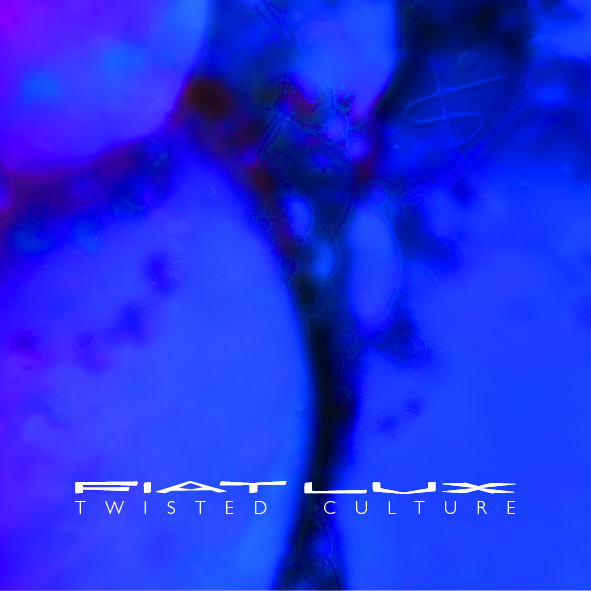
Lost but found, before 2019, there were no FIAT LUX albums but there is now a third.
Reflecting the weightier matters of the world, ‘Twisted Culture’ is about “living life as best you can, no matter what is thrown at you” according to the nucleus of Steve Wright and David P Crickmore. Their only previously released body of work had been the six song ‘Hired History’ EP in 1984 on Polydor Records. The lack of a hit single saw their intended debut album ‘Ark Of Embers’ short-sightedly shelved by the label in 1985. However, Cherry Red came to the rescue and issued a double CD package containing both works in 2019.
This coincided with the release of ‘Saved Symmetry’, an album of completely new 21st Century material recorded after FIAT LUX reformed to celebrate the 35th anniversary of their formation. Despite the worldwide pandemic, FIAT LUX kept busy recording the follow-up, with Will Howard taking over as the third FIAT LUX member on sax and woodwinds from the sadly missed Ian Nelson who passed away in 2006.
The bittersweet ‘(How Will We Ever) Work This Way’ opens ‘Twisted Culture’ with some catchy grown-up new wave disco although lyrically, it captures the zeitgeist. Building towards a burst of slinky sax from Will Howard, ‘Cul De Sac’ uses a sparse arrangement for its colourful backdrop.
Unusually for FIAT LUX, ‘Basement City Living’ is something of a frantic avant dance adventure which swirls, wobbles and even features a drop! There’s unsettling pitch shifted voices lingering too but when Crickmore’s bass signature kicks in, despite the unorthodox backing and Wright’s spoken and screamed contribution, this can only be FIAT LUX.
As a possible relative of ‘Basement City Living’, ‘Tighter’ uses similar pacey electronic qualities although is more fully formed as a song, possessing both rock accents and trancey gothic moods. It’s odd but enjoyable for those who “only came here for fun”. At the other end of the spectrum with predominantly piano and clarinet, ‘The Night We Should Have Met’ is a classic Olde English FIAT LUX ballad with a wonderful Barber shop quartet round to finish.
With its pulsing bass, synth sweeps and E-Bow in the vein of one-time FIAT LUX producer Bill Nelson, ‘Hope’ is a glorious set-piece over seven minutes. Bubbling with vintage synth, ‘It Wasn’t Supposed To Be Now’ is another number in the classic FIAT LUX vein, all uptempo with a chorus reminiscent of Marc Almond and Frippish guitar solos, although all that tension is offset by bursts of slinky sax.
Sax led and adopting a steadfast drum machine backbone, ‘Breathe You In’ offers a sensitive love ballad before continuing at a similar pace, ‘This Is Your Lifetime’ sees acoustic guitar and Bansitar combine for a muzakal song of hope. With a warm harmony of voices, it ends the album on an encouraging note despite the ‘Twisted Culture’ of the past few years.
Those who enjoyed ‘Saved Symmetry’ will appreciate ‘Twisted Culture’. Meanwhile those who were less enticed by its emphasis on mood may find the more uptempo and experimental numbers that feature on its successor appealing enough to return to the distinctly different path of FIAT LUX. In many ways, ‘Twisted Culture’ is the stronger and more varied collection.
We use cookies to ensure that we give you the best experience on our website. If you continue to use this site we will assume that you are happy with it.









Follow Us!