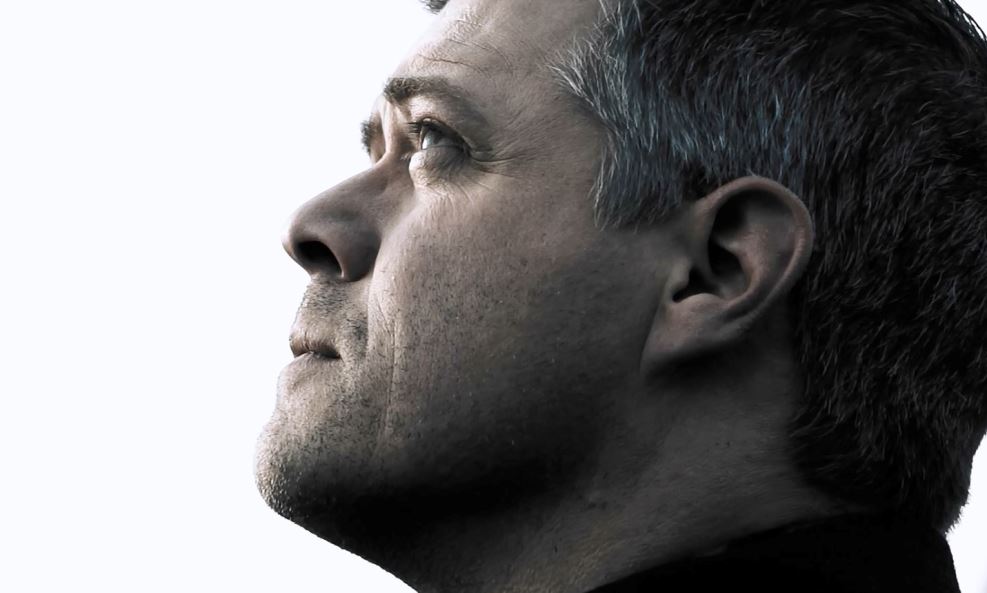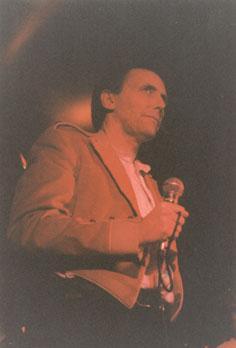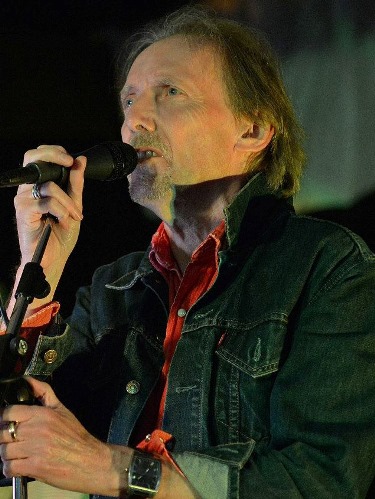
If there is one person who has probably sparked the realisation of a long-awaited second WHITE DOOR album, then it has to be the synth Superswede Johan Baeckström.
A solo artist in his own right but also a member of synth duo DAILY PLANET, the young Johan Baeckström was a fan of the first WHITE DOOR album ’Windows’ released in 1983.
When he needed B-sides for the singles from his own 2015 solo debut ’Like Before, he covered ’Jerusalem’ and ’School Days’.
Although Baeckström has been unashamedly candid about the influence of Vince Clarke on his music, his musicality was also been shaped by the small catalogue of songs by Mac Austin, Harry Davies and John Davies.
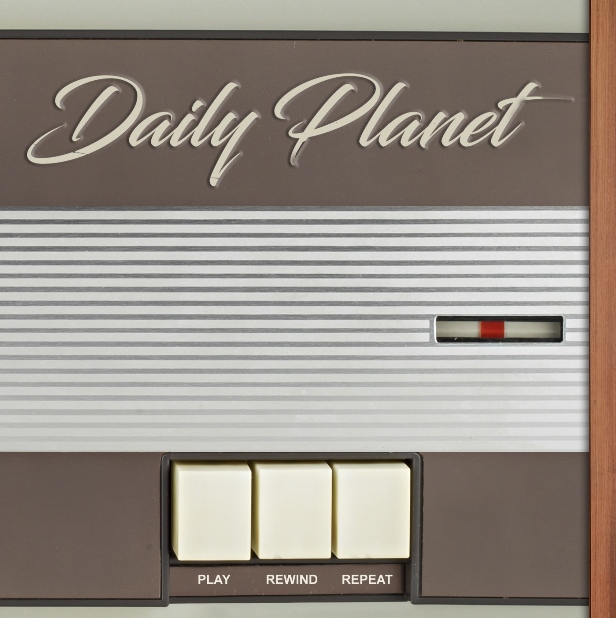
While Mac Austin and Harry Davies have continued to perform in their prog combo GRACE over the years, Baeckström sowed the seeds of a WHITE DOOR reunion when he and DAILY PLANET bandmate Jarmo Olilia invited Austin to provide lead vocals on ‘Heaven Opened’ on their 2017 album ‘Play Rewind Repeat’.
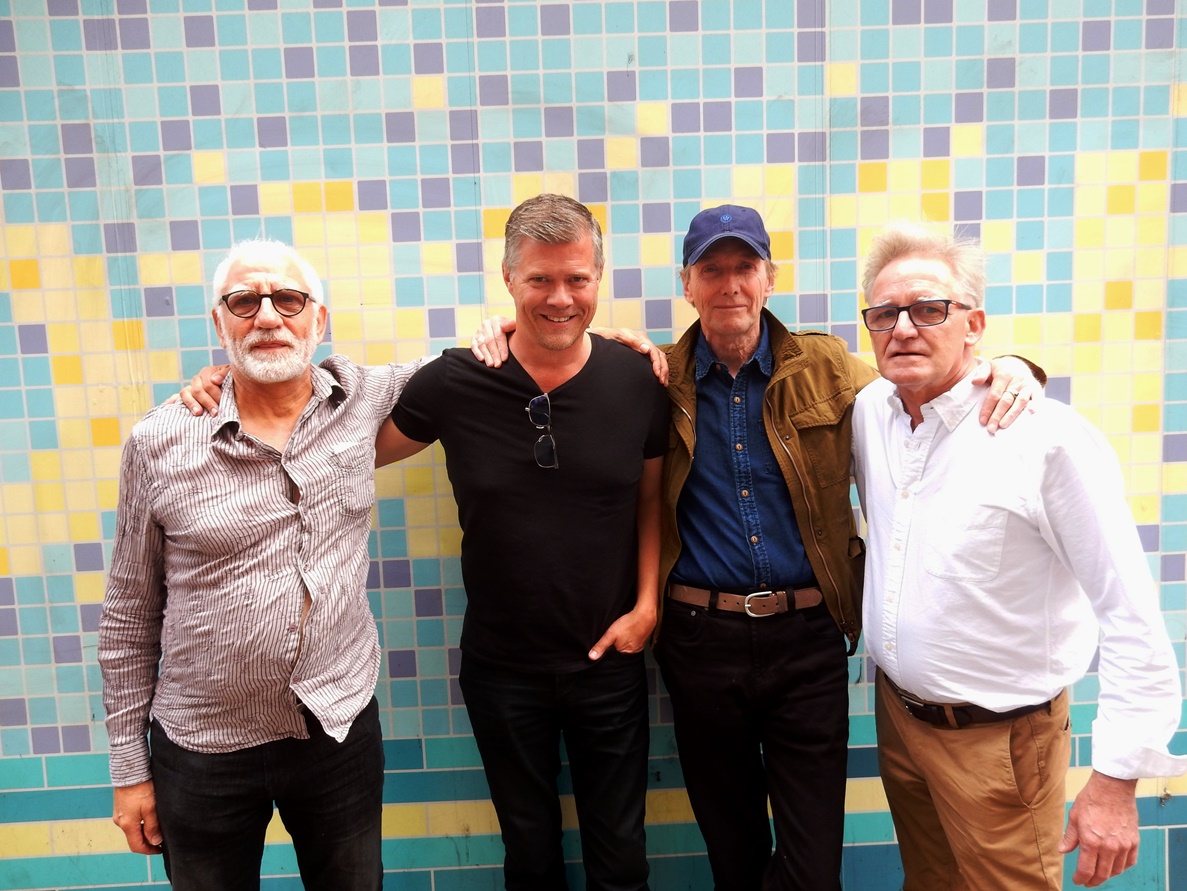
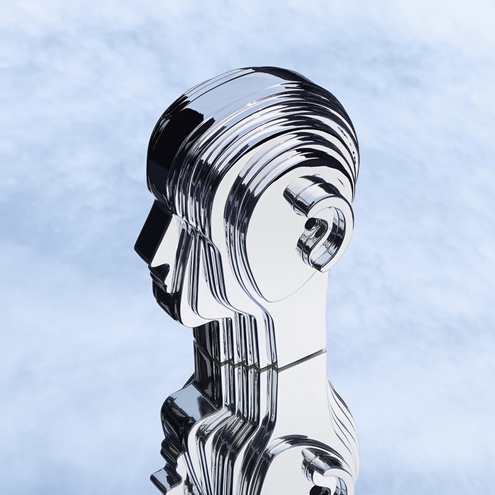
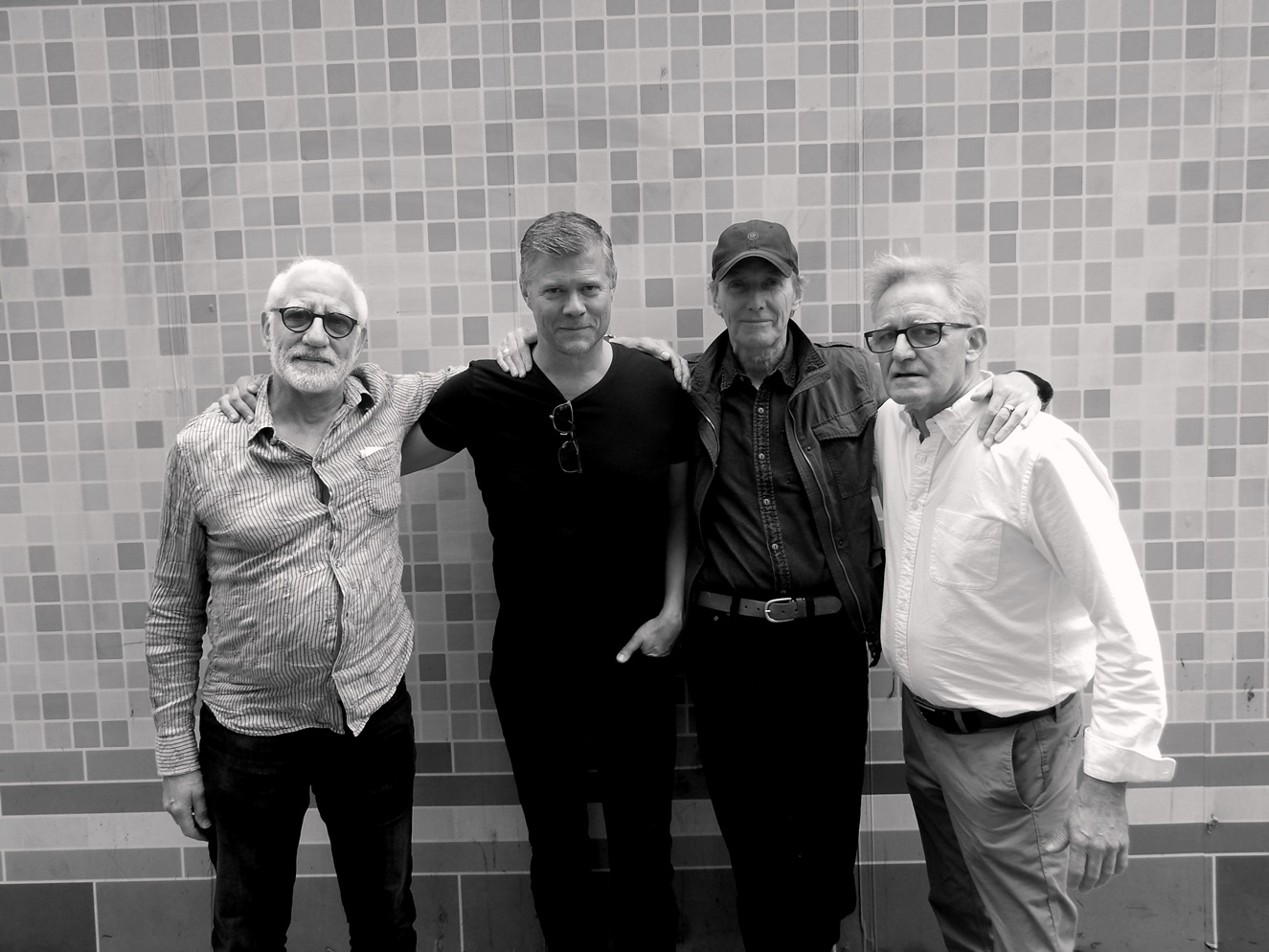
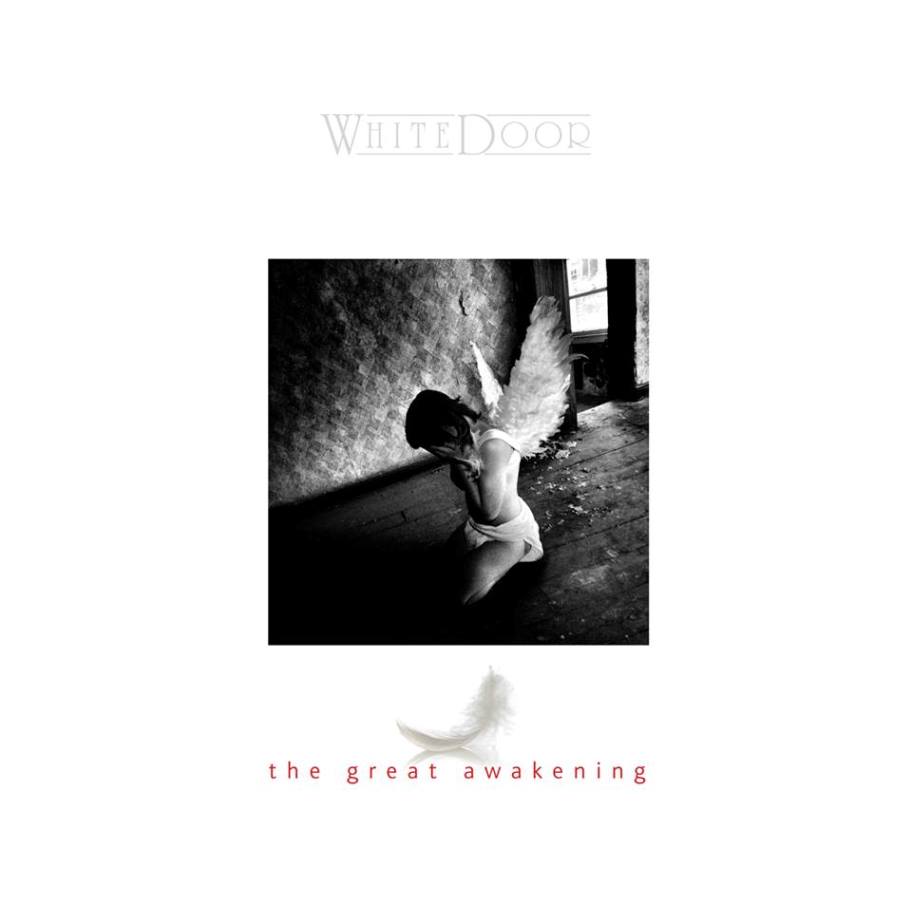
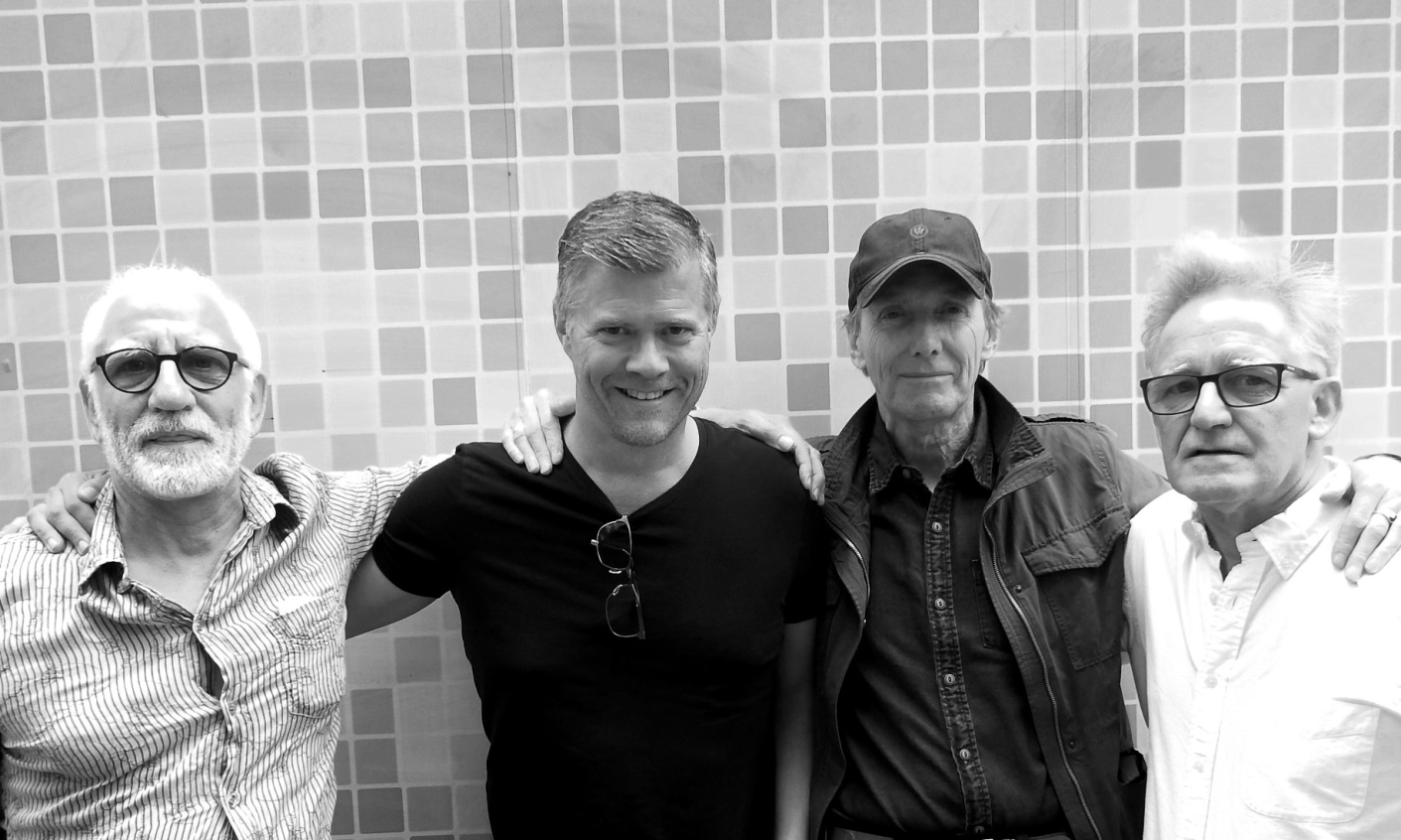
That sparked a WHITE DOOR reunion and as a newly confugured quartet, Mac Austin, John Davies, Harry Davies and Johan Baeckström now present ’The Great Awakening’. Baeckström gives the pulsing Vince Clarke-isms a breather and swaps it for the more polyphonically formed keyboard interventions of his other heroes like Howard Jones.
A joyous tune that sets the scene, the exotic sophistication of ’Among The Mountains’ possesses the soaring windscreen poise of A-HA with a flawless vocal from Mac Austin while the soundscape is sweetened by flute, providing an interesting timbral contrast.
Acknowledging the theme of ’Get Carter’ but with a more brassy flair, ’Resurrection’ surprises with a bouncy Giorgio Moroder inspired stomp and the lift of a rousing chorus. Meanwhile Mac Austin manages to sound like a cross between Morten Harket and Chris De Burgh over some beautifully symphonic synth and subtle slapped bass in a guest appearance from Baeckström’s son Simon.
’Soundtrack Of Our Lives’ captures the joys of spring, with the English folk austere that was very much part of WHITE DOOR’s make-up playing a key role with the harmonious vocal arrangement.
A sparkling production with space for all the elements to shine, there’s even a few classic Linn Drum sounds thrown in too. Yes, they are more recollections of A-HA although of course, the ’Windows’ album came out a year before ’Hunting High & Low’.
Holding down the steadier mood with a synth arpeggio, the richly layered ’Lullaby’ makes what appears to be a simple arrangement sound grand and complex in a cleverly configured traditional tune that steadily builds and surprises with a burst of saxophone in the final third which also glistens ivory-wise in the manner of Howard Jones.
Beginning with a slightly stuttering rhythm, ’Angel Of Tomorrow’ bursts into life with a spacey buoyant pomp that captures an air of Vangelis.
An elated majestic tone ensues as staring mortality in the face, ’The Great Awakening’ celebrates an embracment of life and second chances with a range of complex synth motifs. All wondefully complimenting one another, it is akin to a casade of church bells ringing on a Sunday morning.
The spritely ’Simply Magnificent’ does as the title suggests and is pure sequenced synthpop in the vein of early ALPHAVILLE, the distant transistor radio ending acting a nice tribute to bygone listening experiences.
Ending the album, ’Beautiful Girl’ is classic WHITE DOOR and a song which Harry Davies describes as ”a wonderful song for making babies to”. Vocally like a modern hymn with patterns of hooky chimes, there’s even a surprising lilt of sax that suits the electronic backdrop, with a gorgeous sweeping polysynth conclusion that CHINA CRISIS would be proud of, recalling the feel of their appropriately titled tune ‘The Soul Awakening’.
Hopeful, mature and joyous, ’The Great Awakening’ grandly blows away the attempted sensitive synth overtures of the young pretenders almost half their age. It is twilight magic provided by the sorcerers and their apprenctice. Nearly four decades on, WHITE DOOR have again passed the test with commendation.
Of his role in ’The Great Awakening’, Johan Baeckström said to ELECTRICITYCLUB.CO.UK: ”I really wanted to do my best to maintain the WHITE DOOR sound and spirit in the production on this album”.
Mission accomplished ?
’The Great Awakening’ uses the following synthesizers: Roland Jupiter 6, Roland Juno 106, Akai AX73, Minimoog, Korg Mono/Poly and ARP Odyssey
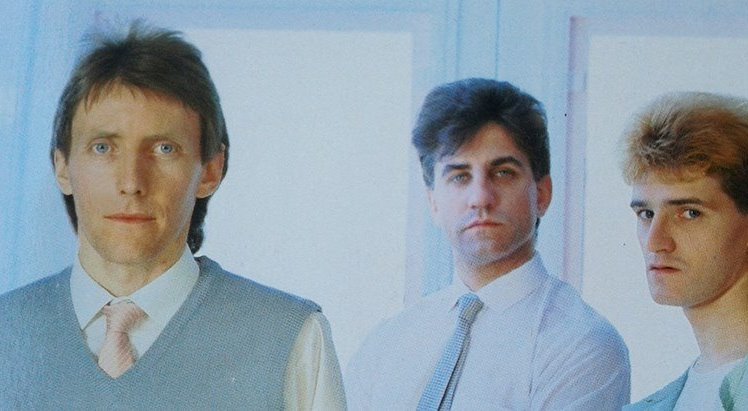
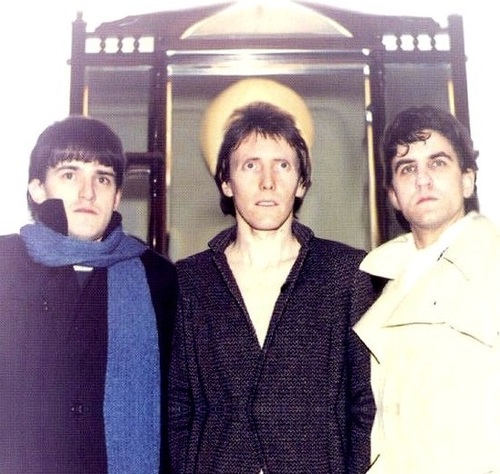
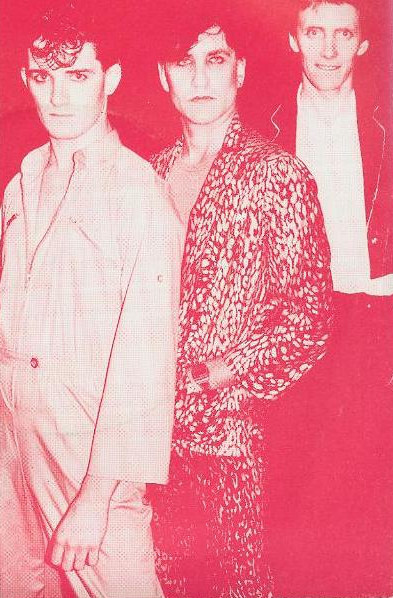
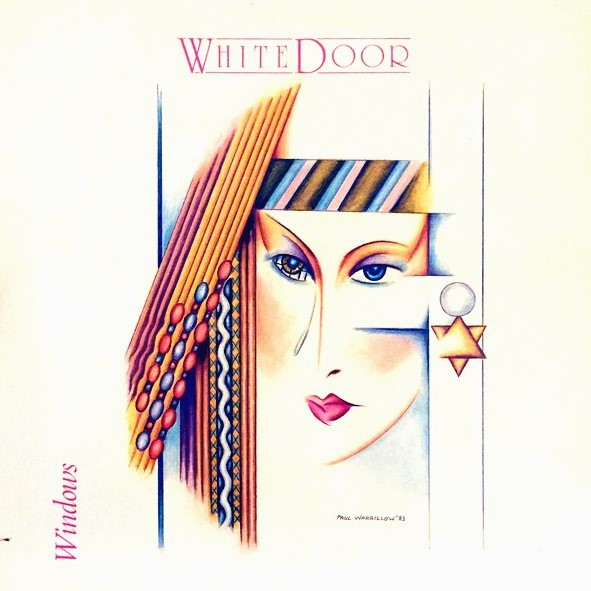
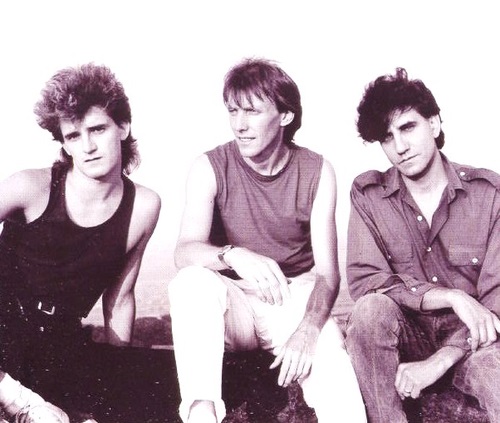
Melodic synth trio WHITE DOOR released their only album ‘Windows’ in 1983.
But despite the title song being a Record Of The Week on Simon Bates’ BBC Radio1 show, it was unable to gain wider traction. WHITE DOOR were to gain cult status over the years and one young fan was Swedish synthesist Johan Baeckström who later covered ’Jerusalem’ and ’School Days’ from ’Windows’ in 2015. Although Baeckström has been unashamedly candid about the influence of Vince Clarke on his music, his sound and that of his other project DAILY PLANET has also been shaped by the Andy Richards produced songs of Mac Austin, Harry Davies and John Davies.
While Mac Austin and Harry Davies have continued to perform in their prog rock combo GRACE over the years, Baeckström sowed the seeds of a WHITE DOOR reunion when he and DAILY PLANET bandmate Jarmo Olilia invited Austin to provide lead vocals on ‘Heaven Opened’, on their 2017 album ‘Play Rewind Repeat’.
Then, there was a live reunion in 2019 when Baeckström invited Austin and the Davies brothers to join him for renditions of ’Jerusalem’ and ’School Days’ in London. So after 37 years, a long awaited second album from WHITE DOOR will emerge this April featuring eight new songs to follow-up ‘Windows’.
A four way collaboration between Mac Austin, John Davies, Harry Davies and Johan Baeckström, the newly confugured quartet present ‘The Great Awakening’. Three of the band kindly chatted to about their recorded return…
At what point did a new WHITE DOOR album become a realistic proposition?
Harry: Johan and Mac are best to answer that. But for me it is when we heard a first draft by Johan of a song we recorded on a phone.
Mac: I think the relationship evolved over time, Johan got in touch about covering ’School Days’ I think it was, then a while later I was asked to do a vocal for the DAILY PLANET album which was a real honour. In the meantime we were messaging about the music we were both doing and eventually Johan asked if we had thought of doing a second WD album and that was that.
So the WHITE DOOR line-up has been expanded?
Harry: We feel that the producer is an integral part of any band and Johan is both a song writer and a perfect producer for WHITE DOOR. Without Johan’s input, this album would not have happened. He is also more photogenic than the rest of us.
Mac: Yes mate we are now a four piece, well it worked for THE BEATLES. Couldn’t be happier. Johan has given us so much, the music is massively richer from Johan’s presence.
The new line-up made a two song live debut at Electrowerkz in London in June 2019, how was that for you?
Mac: It was a great experience, meeting yourself Chi and the moment we met Johan for the first time. I really enjoyed the gig though I did cock up ’Jerusalem’, it was a real great couple of days.
Harry: It was very surreal for me, although my input to the performance was minimal, I was still very nervous.
Is having Johan in the band almost like fulfilling the role Andy Richards played in ‘Windows’?
Harry: Yes, and more so, Johan instantly identified himself with that genre of music of the 80s.
Mac: It is in a way because of his great technical ability and beautiful playing. but with Johan we also have his amazing vocals and writing skills which takes us on to a different level creatively
Were there any particular musical reference points you discussed and had in common?
Mac: The main reference point was we all loved ’Windows’ and wanted to build on that album and hearing Johan’s albums, we seemed to be very close in our writing and sound. Although until we started to get the first drafts back from Johan, I did not know just how good this combination could be.
With remote working happening between England and Sweden, how was the creative dynamic?
Johan: We´re fortunate to live in an age where technology has made the world a lot smaller and with great tools for communication and transfer of different data. A lot of the tracks started with the guys in the UK sending me rough demos from which I could start my programming and pre-production work. Vocals and woodwinds were recorded in a studio in the UK and then sent to my studio in Sweden where I would add my backing vocals and finalize the production and mixing.
What synth toys were being brought into the production?
Johan: Most of the synths in my studio was used for this album but compared to my solo work, I’ve leaned a lot more on poly synths for this project, so the Roland Jupiter 6, Roland Juno 106 and Akai AX73 was used quite extensively on all the tracks and even the good old Yamaha DX7 was called for on a couple of the tracks. The most used mono synths were probably the Minimoog, the Korg Mono/Poly and the ARP Odyssey.
How was it to wear the WHITE DOOR hat, did you find yourselves slipping into GRACE or DAILY PLANET modes? Or is that irrelevant, that the WHITE DOOR chemistry is because it’s the four of you?
Johan: Well, for me the WHITE DOOR music has been a part of me since I was a teenager, and the WD sound has always been an inspiration in my other projects. Having the opportunity to actually be part of making a follow-up album with these wonderful guys, is a blessing and I really wanted to do my best to maintain the WHITE DOOR sound and spirit in the production on this album – familiar, but still fresh.
Mac: For me as a vocalist, it’s the instrumentation that makes the difference. Johan was influenced by the ’Windows album’ and had covered ’School Days’ and ’Jerusalem’, so the WHITE DOOR sound was easy for him to reproduce. Our demos were very loose, giving him the opportunity from these ideas to create great sound tracks for the vocals. The way we work for WHITE DOOR is completely different than GRACE where the guitar and keyboard sound is very up front, with real drums making a much harder sound. I find with WD, the vocal melodies are much more intricate and easier to develop.
‘The Great Awakening’ and ‘Among The Mountains’ are quite grand titles, what are they touching on lyrically?
Harry: The two songs are intrinsically linked lyrically. In 2015, I was diagnosed with a life changing condition that left me very fatigued and dependant on blood transfusions. I loved hill and long distance walking especially in Scotland, which I found impossible to pursue, sometimes I found it difficult to walk across the road.
‘Among the Mountains’ is about mourning that loss. As time went by my condition was deteriorating both physically and mentally. A search began for a stem cell donor. A possible donor was found and was given an appointment with a leading transplant specialist. You can imagine my elation and excitement to get my life back. That is where ’The Great Awakening’ came from. John was going through a very at a difficult time and that influenced him with the chord structure. In the end, the donor was not suitable but with an amazing support team I am off the transfusions and doing ok.
’Beautiful Girl’ has something of a classic WHITE DOOR feel, what was its genesis?
Johan: It´s funny that you say that – the seed to this song was actually a chord progression and melody that Jarmo and I was working on for DAILY PLANET, over 20 years ago. I remember that we talked about how this chorus almost felt like a mix between WHITE DOOR and A-HA. I sent it over to Mac to see if he, Harry and John could do something with it. After a while, I got a demo back with the complete song structure that you hear on the album today, with an even stronger melody line in the chorus as well as brand new, killer verses.
Mac: When Johan sent over the music demo, John played the chords and I just started to sing along with lyrics from a song idea I had years ago that seemed to fit this music. We worked out the structure and I finished the lyric and sent our demo back to Johan for him see what or if he could do anything with it. The rest is history as they say.
What are your own favourite tracks from the album?
Harry: Of course ‘Mountains’ and ‘Awakening’ mean such a lot to me, but I love ‘Beautiful Girl’, it’s a wonderful song for making babies to and the lyrics take me back to the 70s and watching the girls dancing around their handbags. But if I’m doing the housework, ‘Simply Magnificent’ takes some beating.
Mac: For me it depends on the mood I’m in, they are all very strong and I think ’Beautiful Girl’ has a great hook; ’Among The Mountains’ and ’The Great Awakening’ mean a lot because of the incredible moving lyric by Harry which moves me every time I hear them. ’Lullaby’ was written years ago to help my two girls to feel safe in the beds. I’m not sure it worked but they both love it. ’Angel Of Tomorrow’ is a great song to sing I love it.
Johan: I can´t really say one song is more of a favourite than the other, but the first one I started working on was ’Lullaby’, which I got a demo of from Mac in a very early stage of the project and I fell in love with it right away. I could instantly hear in my head what it should sound like, production wise, and I must say I am very happy with how it turned out. That, track made me realise that ”I think we can actually do this – bring WHITE DOOR back to life again”, so this makes ’Lullaby’ a bit special to me, I guess.
Music is an ageless artform? Discuss! 😉
Harry: I would like someone else to start that.
Mac: For me, most music records moments in time, whether it be country, folk, punk, prog, blues, even classical, they capture those moments with lyrical poetry and music to not only relate the stories but lay an emotional thread with the style of music. I believe it will always be the case.
What next? Any thoughts about playing live together for a full WHITE DOOR set?
Harry: Love to, barring problems with corona virus and the ‘B’ word, we have started to discuss a set list. Be interesting to get feedback to help us decide on tracks maybe.
Mac: I would love that, I am so proud of this music it would really work in a live situation.
Johan: Yes, that is certainly in the scope when the world has come back to some sort of normal again. Watch the WHITE DOOR facebook page for info.
ELECTRICITYCLUB.CO.UK gives its sincerest thanks to WHITE DOOR
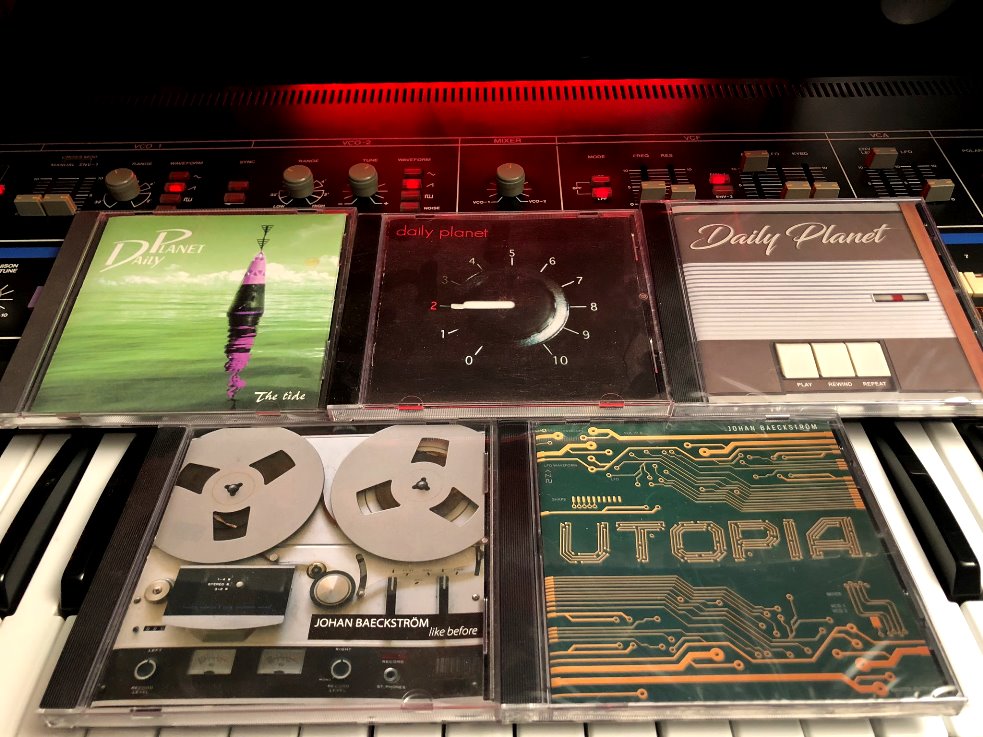
With a pair of excellent albums ‘Like Before’ and ‘Utopia’ now under his belt, Swedish synthesist Johan Baeckström has more than established his solo credentials.
Best known as a member of DAILY PLANET, Baeckström had been making plans to return to music on his own prior to an unexpected reunion of the acclaimed duo in 2014 with the appropriately titled ‘Two’. Since then, Baeckström has maintained a solo career in parallel with DAILY PLANET.
DAILY PLANET’s most recent album ‘Play Rewind Repeat’ saw a guest vocal from Mac Austin of WHITE DOOR on the sublime tune ‘Heaven’. Baeckström had already covered two WHITE DOOR songs ‘School Days’ and ‘Jerusalem’ for B-sides, so it was not entirely a surprise when it was announced that he would be joining WHITE DOOR for the recording of their long awaited follow-up to the 1983 long player ‘Windows’.
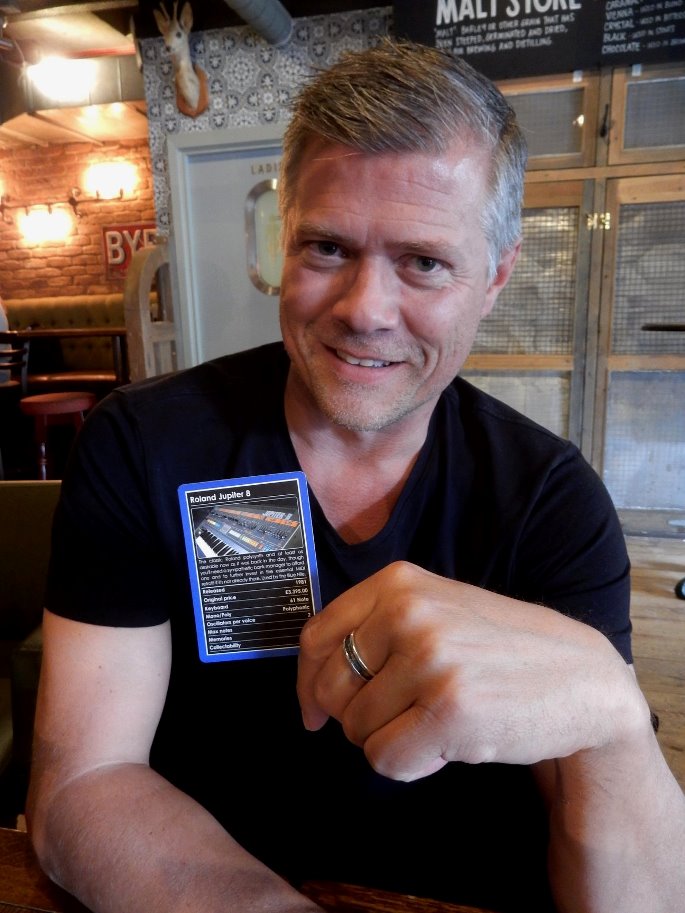
From his studio utopia via the wonders of online communication, Baeckström challenged ELECTRICITYCLUB.CO.UK to a round of Vintage Synth Trumps and told a few interesting stories about his fabulous collection of electronic keyboards and much more.
The first card is the Roland Jupiter 8, so what have been your experiences with this?
I have almost none, I don’t think I’ve ever played one. I’ve seen them and it’s an important icon synth, that Howard Jones cover of ‘New Song’ with the Jupiter 8 made a huge impact and made me think synthesizers looked cool. But I always thought the Jupiter 6 looked better, it had a nicer design with a better colour scheme, I have one of those and that’s one of my favourites. I know what a Jupiter 8 sounds like, I’ve heard a million demos and it’s on lots of records, it defined the early / mid 80s polysynth sound.
So how close can you get a Jupiter 6 to sound like a Jupiter 8 aesthetically?
I think they are quite different because the Jupiter 8 to me sounds a bit softer and lush. The Jupiter 6 can be lush as well but it’s got a sharper edge to it, which suits my music better as it’s quite percussive and detailed; it’s warm but not as warm as the Jupiter 8. The Jupiter 6 can do harsh, crispy sounds which you can´t really do on the Jupiter 8 because of the multiband filter on the 6, for example.
Which recordings of yours are quite dominated by the Jupiter 6?
When I bought it, the first thing I did to try it was a cover of WHITE DOOR ‘School Days’! It turned out quite nice and I released it as a B-side as you know. Everything on that is the Jupiter 6, also a DAILY PLANET song on the ‘Play Rewind Repeat’ album called ‘Drown’, everything is the Jupiter 6 except for the bass which is a Pro-One.
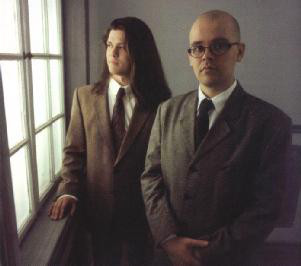
You mentioned about how you saw the cover for Howard Jones ‘New Song’ when you were younger, but at the time of DAILY PLANET’s first album, you had very long hair… often that’s not a fashion requisite associated with synths? *laughs*
I probably didn’t want to be like everyone else, I started to grow my hair long when I was 14 years old, at first I had “synthpop” hair with everything standing straight up! Then I grew the hair from the neck like Nik Kershaw and then I grew it all very long, I think it was down to my waist at its longest!
Were you a rocker?
I had a time in a rock band when I was 16-17, more a pop rock band like TOTO! I’m not ashamed of it! *laughs*
It was good music, I feel stronger about this now when I heard Daniel Miller in an interview and he admitted he was a big fan of TOTO! If he can admit it, I can!
Of course, Daniel Miller had quite long hair when he started making music with synths…
… it’s the interest on TOTO that does it! *laughs*
So saving money on hair conditioner has enabled you to buy more synths? *laughs*
That is true! *laughs*
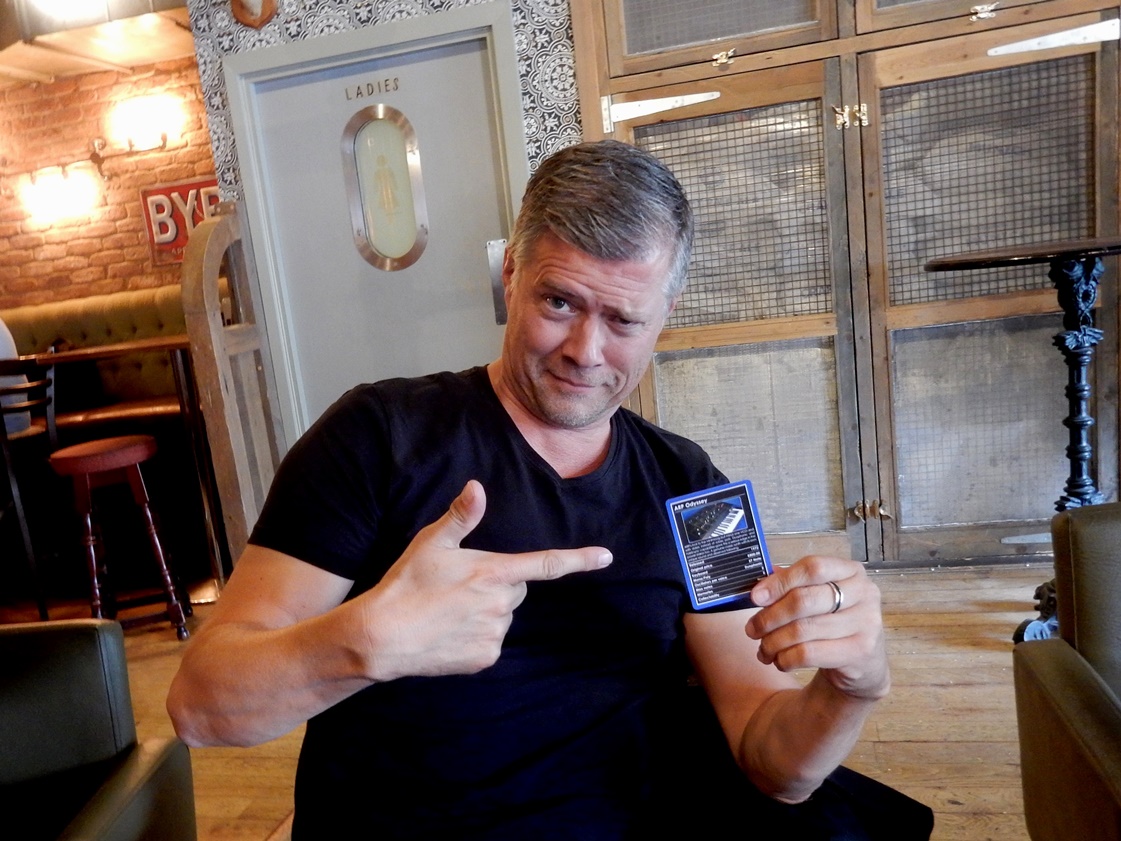
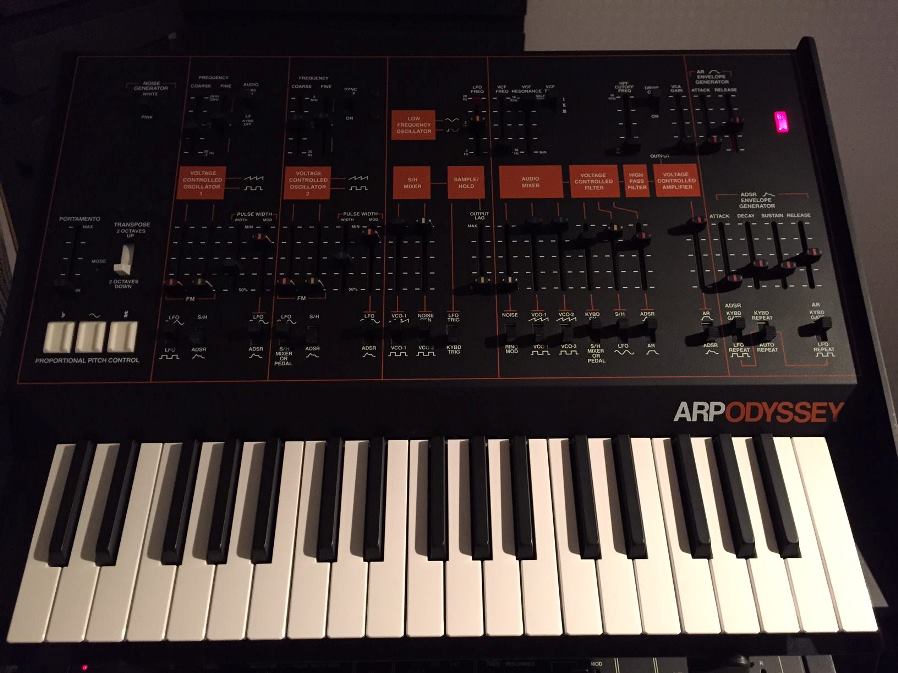
Next card, it’s the ARP Odyssey…
I have the reissue from Korg and I use it quite extensively. It’s the same as with the Jupiter 6, it has a sharp edge to it and this Korg one has all three filter types that it was released with. The first is a two-pole filter which is very crispy and has a lot of higher frequencies coming through. It can do everything from bass to percussion.
So when you buy a synth, are you influenced by the bands they are associated with?
I’m sure I am… for example to me, the Jupiter 8 IS Howard Jones and the Pro-One IS Vince Clarke, he basically built an album around that synth. The Odyssey I know Billy Currie of ULTRAVOX used it a lot but so did KRAFTWERK. So yes, to a certain extent.
Do you use the mini-keyboard on the Korg ARP Odyssey reissue or do you MIDI up another full-sized keyboard to it?
I have very few modules, most of my synthesizers have keyboards because when I create sounds and write music, I like to play the instrument I’m programming. So for that, mini-keys are fine but I would probably not bring it out to play live, I would miss a few notes here and there because it’s too small. I would have preferred a full sized keyboard but this was not an option on this reissue by Korg and I’m not prepared to cough up the money for an original one, or the FS version of the reissue.
Was the acquisition of so many synths what led to you building a new studio, or was it to allow for expansion possibilities in the future?
We actually bought a new house so we moved, and one of the rooms in the basement of this house was everything I needed to build a studio, it just needed a new floor, some paint and acoustic panels. The old one was getting a bit cramped so it’s nice to have a bigger studio and in this one, I can have a lounge with a sofa and table, so it’s a much nicer working environment.
The next card is the Korg 800DV…
It’s a good looking one with lots of wood on the sides, but I have no relation to it.
You said your B-side ‘Synth Is Not Dead’ was sort of tongue-in-cheek?
That’s true, I did it for fun which is why it wasn’t put on any album. On the other hand, I think it turned out quite nice so that’s why it came out as a B-side digitally. And thanks to you, some people seem to like it! *laughs*
Next card… oh, here’s an Octave Kitten!
I remember the Octave Cat was a competitor to the ARP Odyssey, I think John Davies from WHITE DOOR still has a Kitten, he used that on the demos for the ‘Windows’ album.
You mentioned the Octave Cat was a competitor to the ARP Odyssey, it had basically the same circuit design!
Yeah, it was a rip-off! That was the Behringer of its day! *laughs*
I think it’s quite interesting how there is so much litigation with song copyright now, but in the synthesizer world, copying is common, even back in the day. Like the circuitry for the Simmons SDS-V was based on the ARP 2600… any thoughts on this modern day cloning thing like with Behringer?
I’m having a hard time with this cloning of everything. If you take the Simmons example, if it’s a total rip-off, then that’s not a nice thing to do because there was probably some patent, but on the other hand, that was a drum module so it’s different from a synthesizer, so perhaps that doesn’t matter.
What Behringer is doing, I suppose it’s positive for people to buy synthesizers which are now largely unobtainable. I mean if you want to buy a vintage Minimoog, it costs a fortune, something like £4000 but a Behringer clone, which from what I heard sounds quite close, is what £250? *laughs*
On the other hand, it’s not their products, they “stole” it! But the patents are free, it’s nothing illegal, it just comes down to ethics and morals. Everyone has to make their own decision as to whether to support it or not, but I can see myself buying Behringer. I haven’t yet but if they do release an Oberheim OBX-a clone and it sounds as it should, I can’t see myself resisting! *laughs*
Talking of American synths, the next one is the Prophet 5…
That’s an icon, probably the one that has meant the most as far as how synthesizers look and behave today. The Minimoog was the first, but the Prophet 5 with its architecture, memories and five octave keyboard, the sound of it was amazing. Now you can get the new Prophets which sound pretty much the same and can do much more, so it’s still relevant after all these years.
I’ve never had one myself, I played it once or twice. I don’t think I would get one now as they are so expensive and I have the Prophet 08, and if I want to come even close to that sound, I can get the Prophet 6. It’s a beautiful instrument to look at as well, it’s a fantastic design in my eyes.
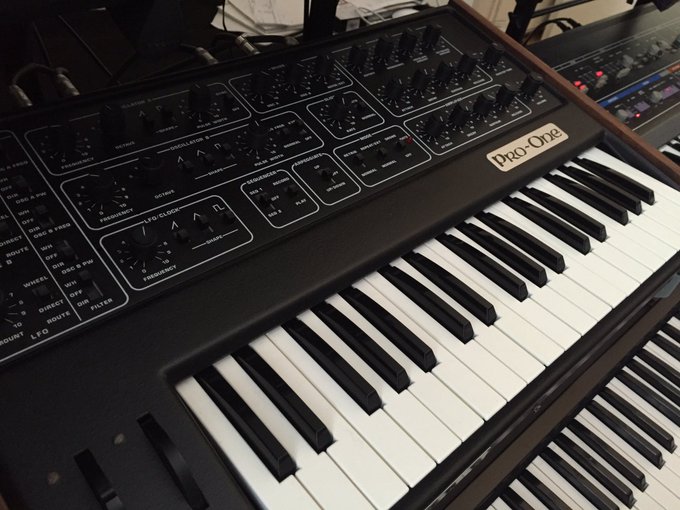
The next card is the Pro-One, tell us about your relationship with it…
I haven’t had my one for too long, I bought it in 2014 and I still can’t understand why I didn’t get one sooner, I should have had one in the 80s. It’s probably my favourite synth, at least my favourite monosynth. It sounds amazing and has superfast envelopes which make perfect bass and percussion sounds, sharp blips and blops, y’know *laughs*
It’s got a great modulation matrix, if you compare it with the Minimoog for example, you can do much more with a Pro-One. It’s always a reward to programme it because whatever you do, it sounds great. But the build quality is so-so, it’s quite plastic and the knobs are a bit flimsy, it’s not built like a tank, it’s more like a Trabant! *laughs*
It’s interesting that you mention the build quality of synths, a lot of these machines are quite fragile and not built to be taken on the road. But one vintage synth which is still around now that tends to end up on stage is the Roland Juno 60. Why do you think that one has been able to survive the years better than any others?
I think the reason the Juno 60 still gets used on stage is because it is quite stable as it uses DCOs. With a Jupiter 6 or Jupiter 8, temperatures can mess up the tuning. It was built very solidly, they seem to stand the test of time and it’s not like the Juno 106 which has these chips which go bad after 30 years. I’ve used my Juno106 live a few times, it’s no problem but you’re right, you see the Juno 60 more.
Another card, it’s a Korg Trident…
Oh! I had one! It’s quite a strange synth, because it’s three machines in one, a polysynth, a string machine and a brass machine, which you could combine. It had very fat sounds coming from it, it was huge and looked very powerful, I loved the way it looked. I got it very cheap after the first DAILY PLANET album ‘The Tide’, but I never used it on any records as it had no MIDI; as I sequence everything, MIDI is quite important for me.
Someone offered to trade it with me for a Roland D20!! It was not great but at least it had MIDI, so I traded it! I think you’d get £80 for a D20 today whereas a Trident gets £2500 so it wasn’t my best decision! I regret it still today, I wish I still had it and have been looking for one. Perhaps Behringer can clone one for me *laughs*
So synths that don’t get used much get traded in?
Not today, but back then I had no money. I could have installed a MIDI kit for the Trident but would have cost me £300 which I didn’t have because I was young and unemployed. So the only thing that made sense was to trade it for something I could use. A few of my synthesizers are not used very much but I don’t trade.
Saying that I did trade a Micro-Korg which I had not used for three years, although it was on ‘Synth Is Not Dead’ for the vocoder, that was probably the only time I recorded with it. I posted up on a Swedish synth forum and got offered a Roland JV1080 and P330 piano module, now I haven’t used them for two years, it’s probably time to trade those as well!
ELECTRICITYCLUB.CO.UK can’t imagine you using piano sounds much, but is that a possible direction for the future?
On the new WHITE DOOR album, there are a few piano sounds while on my latest album ‘Utopia’, they are on the cover song I did ‘Into The 80s’, there’s a CP70 type sound low in the background of the middle. But you won’t hear anything like CHICAGO piano! *laughs*
OK, the next card which will lead an interesting discussion, it’s the Moog Prodigy…
I’ve never had one but I’m told it’s great, it’s pretty much a slimmed down Minimoog with two oscillators instead of three, everything from Moog is great in different ways, because the newer ones are not the same as the older ones, but if I had to choose, the older Moogs are the ones that sound the best, Howard Jones, Vince Clarke and DEPECHE MODE use it…
Now this is where we’re going with the conversation. So the Moog Prodigy was the one that Fletch was “seen” with in early DEPECHE MODE videos and TV appearances, he later moved onto the Moog Source. So did you have any feelings or thoughts about Martin Gore getting the Moog Innovation Award?
I saw you had a rant about that! I best be quiet about it *laughs*
I actually don’t have an opinion. Exactly what that award is meant to represent, I’m not sure…
That’s ELECTRICITYCLUB.CO.UK’s point, Martin Gore was never seen with Moogs, we could understand Gary Numan getting the award. We don’t question his ability as a songwriter during the imperial phase of DEPECHE MODE, but he was NEVER the synth innovator in the group, so we struggled with the title of that award; if it was a Moog Songwriter award, it would be different. The synth innovators in DEPECHE MODE were Vince Clarke first, and then Alan Wilder…
I agree, those Martin Gore song demos that leaked out, it’s not synthesizer virtuoso stuff so he is not the innovator, sound wise. He was a genius with his songwriting and one of the best there ever was, so what the hell? He can have an award just for the songs. But as an innovator, Alan Wilder would deserve it more, but more so Vince.
You recently covered DEPECHE MODE ‘It Doesn’t Matter Two’? Why that song and particularly a Martin Gore voiced one?
That is one of my all-time favourite songs and this will make me sound cocky, but the arrangement on the original is a shame, it’s such a great song but it’s got this silly “bop-boop-bop-boop” arrrangement. They could have done so much more with it. I guess I don’t like that kind of vocal sampling which they built it around. So my cover is what I wanted it to sound like, it’s an amazing song… that shows you how good it is if I can keep listening to it even though I didn’t like the original arrangement and production.
Did you do ‘It Doesn’t Matter Two’ because your voice is more Martin Gore’s key than Dave Gahan’s?
No, but you’re right, I’m more in his key than Dave’s, I just love the song and had this idea for a new arrangement, I think it turned out quite nice. I was asked to do a DM cover for a Swedish podcast called ‘Blå Måndag’, so I decided to do this one since it´s been one where, after a few beers, me and my friends use to singalong and do harmonies to by the piano!
And the next card is a Korg MS20…
Another classic! I have the reissue, it was one of the first I bought when I started rebuilding my collection back in 2013, I’d sold everything I had back in the 90s to go to software. After that, I got a Prophet 08 and a Moog Little Phatty. I still use it a lot but less with this recent album, probably because I had more synthesizers to choose from.
It’s good for noise effects, it’s got a great filter for bass and percussion sounds like on ‘Nobody’s Friend’ from the second DAILY PLANET album and ‘Talking In My Sleep’ on my first solo album. However, the envelopes are too slow for really good snappy bass and percussion. I think the Pro-One has a better low-end and has more powerful oscillators. With the MS20, I use the ring modulator a lot for metallic sounds, I used it for hi-hat type sounds.
How did you find your first ever UK gig?
It was nice, the people who were there were very dedicated. I was very thankful for all who came to see the show.
It also saw you on stage with WHITE DOOR, you’ve joined the band now and there is a new album?
I hadn’t met the WHITE DOOR guys before, they’re really nice chaps and to have them do the show with me was a bit surreal as I was listening to them when I was a teenager. It was hard to imagine then I would be on stage with them! It was good but we hadn’t rehearsed so it probably could have been a more perfect performance, but I think people enjoyed it and we had a really fun time.
WHITE DOOR sprung from a prog rock band called GRACE who they still perform as, and a live video that came from a recent festival was fascinating, they were doing this track called ‘The Poet’ which started like WHITE DOOR, then mutated into GENESIS and before you knew it, it had turned into JETHRO TULL! *laughs*
Yes, there is the same “melody language” (as we say in Sweden) with WHITE DOOR and GRACE, although they are very different bands.
I would think that a lot of the way WHITE DOOR turned out is partly thanks to producer Andy Richards who later worked with FRANKIE GOES TO HOLLYWOOD and OMD, he was the machine wizard. The demos for the ‘Windows’ album were electronic and John Davies had synthesizers but there was also guitars and real bass.
How is the WHITE DOOR album coming along?
It’s coming along nicely, it’s been a slow process but we almost have enough material for an album. I’ve played a few tracks to close friends who love WHITE DOOR and they say it sounds like WHITE DOOR. Now that’s important, when DAILY PLANET reunited in 2014, my plan was that we should not try something too modern, what people wanted was DAILY PLANET to sound like DAILY PLANET. The same approach is what I’m doing with WHITE DOOR although it will sound fresh and be better sounding because of the technology, but there will be a clear connection to the old stuff.
The final card is an ARP 2600…
I’ve never had one, my first connection with it was one of those early software emulations in the early noughties. It’s been used by a lot of artists that inspired me, Daniel Miller’s kick drum on the ‘Speak & Spell’ and ‘Upstairs At Eric’s’ is amazing, plus they also did the “voice” of R2-D2 with it!
But my friend Daniel Bergfalk who mixed my solo albums and joins me on stage sometimes, actually has two of TTSH clones and I’ve played a lot with that, it’s basically the same. It’s amazing and I will probably get one someday, but not an original and that would now cost the same as a car! Probably a TTSH although there are rumours that Behringer will be doing a clone!*laughs*
You’re performing at Pop+Synth Festival in Copenhagen this November with SOFTWAVE, TRAIN TO SPAIN and OCTOLAB?
I’ve never played in Denmark before so it’s gonna be great to enter a new market live.
Why do you think Denmark seemingly has not had an interest in electronic pop in the way neighbours like Sweden, Norway and Finland have?
There never has been, all the acts I know from Denmark are rock like GASOLIN’ but then, there’s not such a big music scene there at all, I can’t even think of many Danish bands in any genre…
ELECTRICITYCLUB.CO.UK knows one and that’s LUKAS GRAHAM, f***ing hate that song ‘7 Years’! Such inane childish lyrics! *laughs*
I don’t know them! It sounds horrible!
Oh and there’s TRENTEMØLLER who has been featured on ELECTRICITYCLUB.CO.UK…
TRENTEMØLLER is Danish? I thought he was Norwegian! *laughs*
ELECTRICITYCLUB.CO.UK gives its warmest thanks to Johan Baeckström
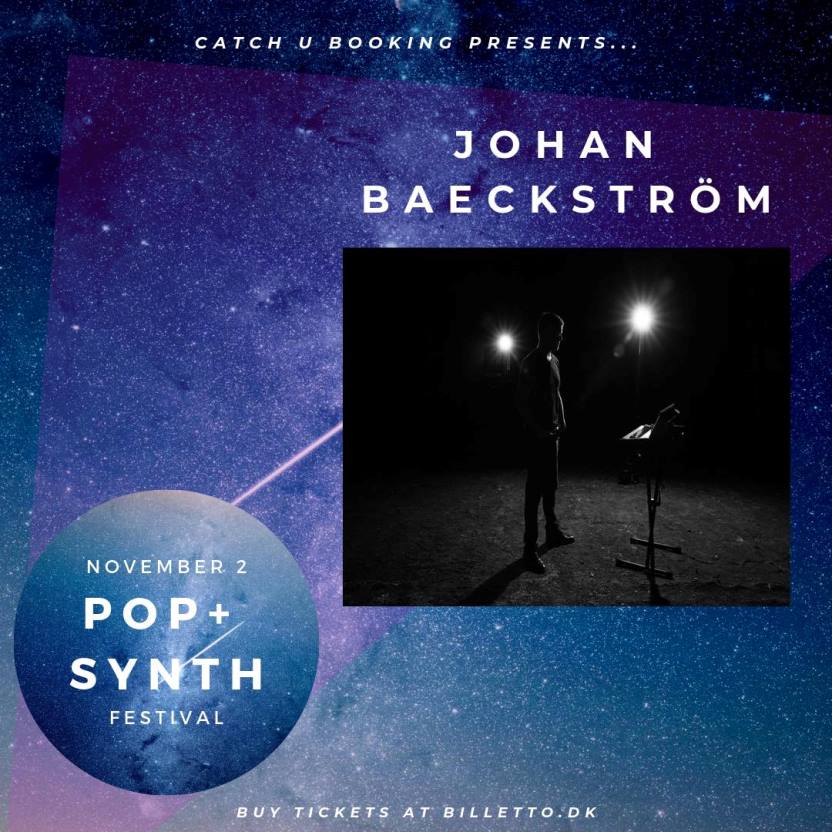
Johan Baeckström plays the ‘Pop+Synth Festival’ at Krudttønden in Copenhagen on Saturday 2nd November 2019, also performing are SOFTWAVE, TRAIN TO SPAIN, OCTOLAB plus many more acts, tickets available from https://billetto.dk/e/pop-synth-festival-billetter-365508
The world found itself in a rather antagonistic and divisive state this year, as if none of the lessons from the 20th Century’s noted conflicts and stand-offs had been learnt.
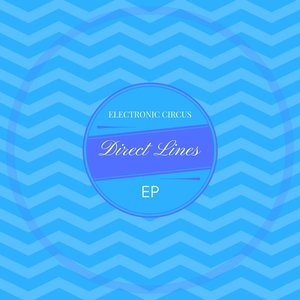
Subtle political messages came with several releases; honorary Berliner Mark Reeder used the former divided city as symbolism to warn of the dangers of isolationism on his collaborative album ‘Mauerstadt’. Meanwhile noted Francophile Chris Payne issued the ELECTRONIC CIRCUS EP ‘Direct Lines’ with its poignant warning of nuclear apocalypse in its title song. The message was to unite and through music as one of the best platforms.
After a slow start to 2017, there was a bumper crop of new music from a number of established artists. NINE INCH NAILS and Gary Numan refound their mojo with their respective ‘Add Violence’ and ‘Savage (Songs From A Broken World)’ releases, with the latter recording his best body of work since his imperial heyday.
But the first quarter of the year was hamstrung by the anticipation for the 14th DEPECHE MODE long player ‘Spirit’, with other labels and artists aware that much of their potential audience’s hard earned disposable income was being directed towards the Basildon combo’s impending album and world tour. Yet again, reaction levels seemed strangely muted as ‘Spirit’ was another creative disappointment, despite its angry politicised demeanour.
Rumours abounded that the band cut the album’s scheduled recording sessions by 4 weeks. This inherent “that’ll do” attitude continued on the ‘Global Spirit’ jaunt when the band insulted their loyal audience by doing nothing more than plonking an arena show into a stadium for the summer outdoor leg.
Despite protestations from some Devotees of their dissatisfaction with this open-air presentation, they were content to be short-changed again as they excitedly flocked to the second set of European arena dates with the generally expressed excuse that “it will be so much better indoors”.
By this Autumn sojourn, only three songs from ‘Spirit’ were left in the set, thus indicating that the dire record had no longevity and was something of a lemon. Suspicions were finally confirmed at the ‘Mute: A Visual Document’ Q&A featuring Daniel Miller and Anton Corbijn, when the esteemed photographer and visual director confessed he did not like the album which he did the artwork for… see, it’s not just ELECTRICITYCLUB.CO.UK 😉
Devotees are quick to say all criticism of DEPECHE MODE is unfair, but the band can’t help but make themselves easy targets time and time again. But why should the band care? The cash is coming, the cash is coming…
Luckily, veteran acts such as OMD and Alison Moyet saved the day. The Wirral lads demonstrated what the word spirit actually meant on their opus ‘The Punishment Of Luxury’, while the former class mate of Messrs Gore and Fletcher demonstrated what a soulful, blues-influenced electronic record should sound like with ‘Other’.
As Tony Hadley departed SPANDAU BALLET and Midge Ure got all ‘Orchestrated’ in the wake of ULTRAVOX’s demise, the ‘Welcome To The Dancefloor’ album directed by Rusty Egan, to which they contributed, became a physical reality in 2017.
Now if DM plonked an arena show into the world’s stadiums, KRAFTWERK put a huge show into a theatre. The publicity stunt of 2012, when Tate Modern’s online ticket system broke down due to demand for their eight album live residency, did its job when the Kling Klang Quartett sold out an extensive UK tour for their 3D concert spectacular.
No less impressive, SOULWAX wowed audiences with their spectacular percussion heavy ‘From Deewee’ show and gave a big lesson to DEPECHE MODE as to how to actually use live drums correctly within an electronic context.
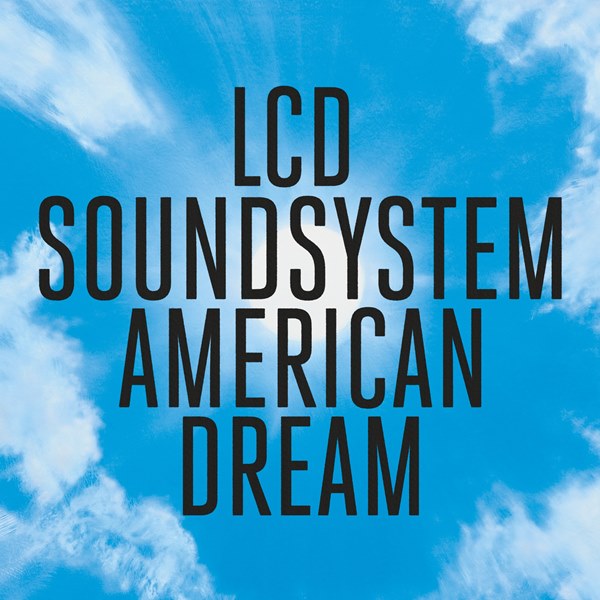
Mute Artists were busy with releases from ERASURE, LAIBACH and ADULT. but it was GOLDFRAPP’s ‘Silver Eye’ that stole the show from that stable. LCD SOUNDSYSTEM returned after seven years with their ‘American Dream’ and it was worth the wait, with the most consistent and electronic record that James Murphy’s ensemble has delivered in their career.
To say Neil Arthur was prolific in 2017 would be an understatement as he released albums with BLANCMANGE and FADER while Benge, a co-conspirator on both records, worked with I SPEAK MACHINE to produce ‘Zombies 1985’ which was one of the best electronic albums of the year; and that was without the JOHN FOXX & THE MATHS stage play soundtrack ‘The Machines’.
Despite JAPAN having disbanded in 1982, solo instrumental releases from Steve Jansen and Richard Barbieri were particularly well-received, while David Sylvian made a return of sorts, guesting on ‘Life Life’ for ‘async’, the first album from Ryuichi Sakamoto since recovering from his illness. On the more esoteric front, Brian Eno presented the thoughtful ambience of ‘Reflection’, while THE RADIOPHONIC WORKSHOP had ‘Burials In Several Earths’.
2017 was a year that saw acts who were part of the sine wave of Synth Britannia but unable to sustain or attain mainstream success like BLUE ZOO, B-MOVIE, FIAT LUX and WHITE DOOR welcomed back as heroes, with their talent belatedly recognised. Germany had something of a renaissance as veterans Zeus B Held and ex-TANGERINE DREAM member Steve Schroyder came together in DREAM CONTROL as another TD offshoot QUAESCHNING & SCHNAUSS offered up some impressive ‘Synthwaves’, while there actually was a new TANGERINE DREAM album, their first without late founder member Edgar Froese.
The Swedish synth community again delivered with DAILY PLANET, PAGE, REIN, VANBOT, ANNA ÖBERG, 047 and LIZETTE LIZETTE all delivering fine bodies of work, although KITE were missed, with their German tour cancelled and release of their ‘VII’ EP postponed due to vocalist Nicklas Stenemo’s illness; ELECTRICITYCLUB.CO.UK wishes him all the best in his recovery.
Across the Baltic Sea, Finnish producer Jori Hulkkonen released his 20th album ‘Don’t Believe In Happiness’ while nearby in Russia, a duo named VEiiLA showcased an unusual hybrid of techno, opera and synthpop and ROSEMARY LOVES A BLACKBERRY offered a ‘❤’.
One of the year’s discussion points was whether Synthwave was just synthpop dressed with sunglasses and neon signs but whatever, Stateside based Scots but Michael Oakley and FM-84 made a good impression with their retro-flavoured electronic tunes. It wasn’t all about the expats and in a territory as big as North America, there came a number of up-and-coming home grown electronic artists with LOST IN STARS, PARALLELS, PATTERN LANGUAGE, SPACEPRODIGI, COMPUTER MAGIC and BATTLE TAPES all gaining traction.
Canada’s PURITY RING infuriated some of their fanbase by working with KATY PERRY on three tracks for her album ‘Witness’. AESTHETIC PERFECTION’s new singles only policy was paying dividends and the Electro Mix of ‘Rhythm + Control’, which featured the promising newcomer NYXX, was one of the best tracks of 2017.
Female solo artists had strong presence in 2017 as FEVER RAY made an unexpected return, ZOLA JESUS produced her best work to date in ‘Okovi’ and Hannah Peel embarked on an ambitious synth / brass ‘Journey to Cassiopeia’. Meanwhile, SARAH P. asked ‘Who Am I’ and MARNIE found ‘Strange Words & Weird Wars’ as ANI GLASS and NINA both continued on their promising developmental path.
Respectively, Ireland and Scotland did their bit, with TINY MAGNETIC PETS and their aural mix of SAINT ETIENNE and KRAFTWERK successfully touring with OMD in support of their second album ‘Deluxe/Debris’, while formed out of the ashes of ANALOG ANGEL, RAINLAND wowed audiences opening for ASSEMBLAGE 23. Other new(ish) acts making a positive impression this year included KNIGHT$, MOLINA, ANNEKA, SOFTWAVE and KALEIDA.
Despite getting a positive response, both iEUROPEAN and SOL FLARE parted ways while on the opposite side of the coin, Belgian passengers METROLAND celebrated five years in the business with the lavish ‘12×12’ boxed set
Overall in 2017, it was artists of a more mature disposition who held their heads high and delivered, as some newer acts went out of their way to test the patience of audiences by drowning them in sleep while coming over like TRAVIS on VSTs.
With dominance of media by the three major labels, recognition was tricky with new quality traditional synthpop not generally be championed by the mainstream press. With Spotify now 20% owned by those three majors, casual listeners to the Swedish streaming platform were literally told what to like, as with commercial radio playlists.
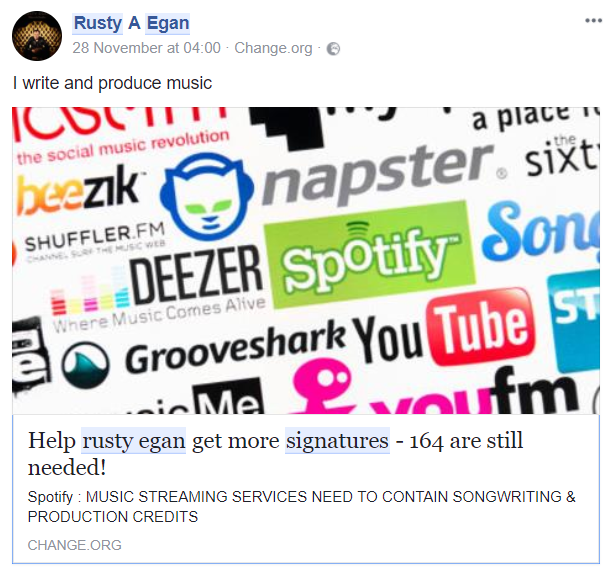
It is without doubt that streaming and downloading has created a far less knowledgeable music audience than in previous eras, a petition to request platforms to display songwriting and production credits was timely; credit where credit is due as they say…
While ELECTRICITYCLUB.CO.UK does not dismiss Spotify totally and sees it as another tool, it should not be considered the be all and end all, in the same way vinyl is not the saviour of the music industry and in physics terms, cannot handle the same dynamic range as CD. Music is not as emotionally valued as it was before… that’s not being old and nostalgic, that is reality. It can still be enjoyed with or without a physical purchase, but for artists to be motivated to produce work that can connect and be treasured, that is another matter entirely.
However, many acts proved that with Bandcamp, the record company middle man can be eliminated. It is therefore up to the listener to be more astute, to make more effort and to make informed choices. And maybe that listener has to seek out reliable independent media for guidance.
However, as with the shake-up within the music industry over the last ten years, that can only be a good thing for the true synthpop enthusiast. And as it comes close to completing its 8th year on the web, ELECTRICITYCLUB.CO.UK maintains its position of not actually promoting new acts or supporting any scene, but merely to write about the music it likes and occasionally stuff it doesn’t… people can make their own mind up about whether to invest money or time in albums or gigs.
Yes, things ARE harder for the listener and the musician, but the effort is worthwhile 😉
It was a year when the veterans re-established their standing within electronic pop.
That was not to that comparatively newer acts weren’t making a good impression, it was just that a fair number of established acts gave their all and were producing some of their best work since their imperial heyday. Great tracks by SPARKS, OUTERNATIONALE, SPACEPRODIGI, iEUROPEAN, PARALLELS, SOL FLARE, SOFTWAVE, KNIGHT$, 2RAUMWHONUNG and KITE BASE made it onto the shortlist, but despite their quality, they did not make the final listing.
Also not included are songs from ‘Welcome To The Dancefloor’, the debut album from Rusty Egan; although gaining a physical release this year, it was reviewed by ELECTRICITYCLUB.CO.UK in the Autumn of last year when download versions of the long player were distributed to those who had purchased it in advance via Pledge Music. Meanwhile, its closing track ‘Thank You’ was included in our 30 Songs Of 2016.
So restricted to purchasable releases only and one song per artist moniker, here are ELECTRICITYCLUB.CO.UK’s 30 Songs Of 2017 in alphabetical order…
AESTHETIC PERFECTION Rhythm + Control – Electro Mix
Additionally featuring NYXX on vocals, ‘Rhythm + Control’ saw Daniel Graves take AESTHETIC PERFECTION’s industrial pop to the next level via his new singles only policy. The magnificent Electro Mix successfully realised this oddball blend of Darren Hayes, Britney Spears and Marilyn Manson. With a mightily elastic bassline, when asked whether The Electricity Club had gone crazy coming up with the comparison, Daniel Graves replied “God no. Spot on, guys!”
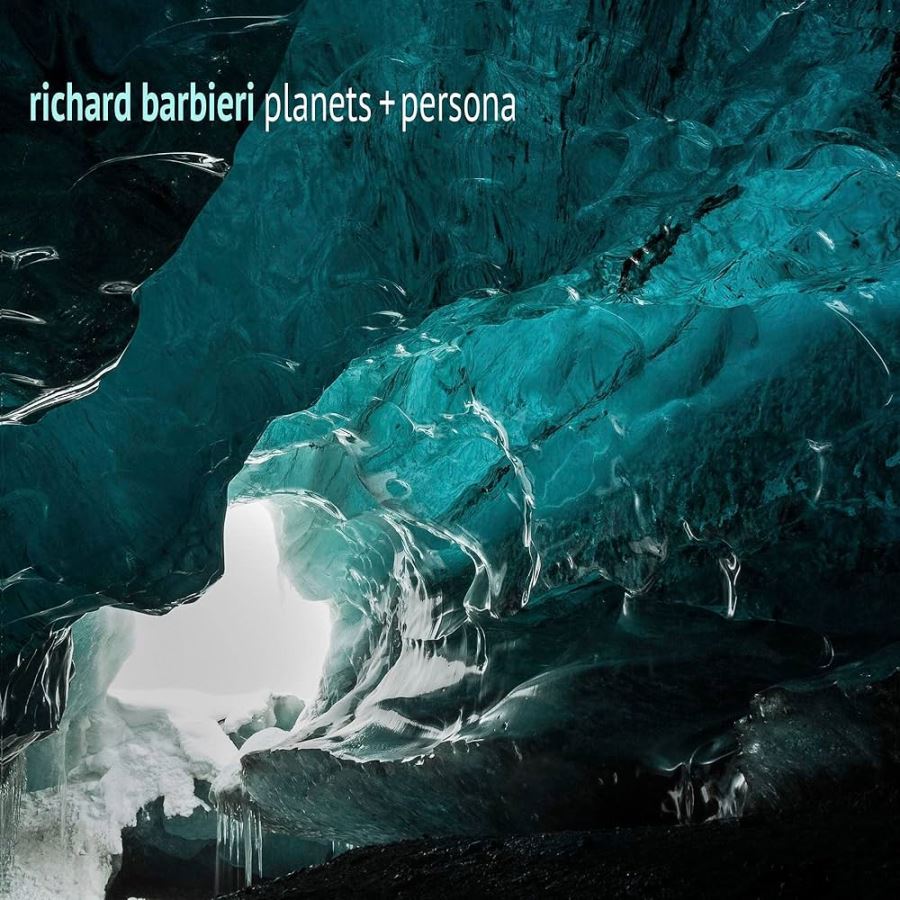
From only the third solo album in the long career of Richard Barbieri, ‘Solar Sea’ was a sleazy rhythmic excursion into another world. With the one-time JAPAN sound designer using a Roland System 700 for its bassline, the track’s atonal jazz feel was augmented by the haunting voice manipulations of Lisen Rylander Löve through a vintage Soviet submarine microphone and warping noises offset by soothing brass inflections and live drums.
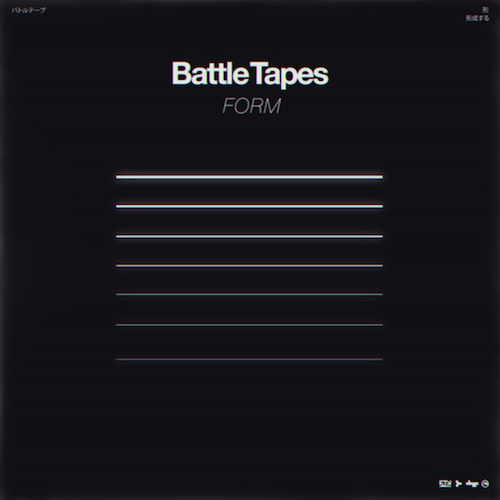
The American electronic rock quartet BATTLE TAPES continued to develop from their 2015 debut album ‘Polygon’ via their ‘Form’ EP. The best track ‘Control’ hinged around a syncopated filtered synth bass and a brilliantly catchy chorus sung by Josh Boardman, with enough guitars for power and texture without distracting from the overall electronic aesthetic, and even coming over like a heavier Stateside version of SIN COS TAN.
CLIENT LIAISON featuring TINA ARENA A Foreign Affair
“International in flavour, cosmopolitan in style” and sounding like a long lunch followed by a round of cocktails, Australian duo CLIENT LIAISON roped in one-time TV talent show star Tina Arena to duet on a lush slice of romantic pop that also rode on the current fashion for Synthwave. ‘A Foreign Affair’ could have easily been a Rat Pack movie song.
Johan Baeckström made positive waves with his debut solo album ‘Like Before’ in 2015 but reunited with his musical partner Jarmo Ollila, producing an excellent third album with more tempo variation than their 2014 offering ‘Two’. Featuring the guest vocals of Mac Austin from cult synth trio WHITE DOOR who were one of the inspirations for DAILY PLANET, ‘Heaven Opened’ was an uncomplicated but wonderfully poignant slice of classic synthpop.
ELECTRONIC CIRCUS is the musical vehicle of Chris Payne, the one-time Numan band member who also co-wrote ‘Fade To Grey’. With a symphonic theme bursting with melody and musicality like ULTRAVOX galloping across the plains of Normandy, the brilliant neo-instrumental ’The Trapeze’ was given a wondrous tone of humanistic unity when Payne’s wife and daughter joined in on the final straight in Latin.
FADER are the synth superduo featuring BLANCMANGE’s Neil Arthur and Benge; ‘3D Carpets’ captured an independent post-punk intensity, like JOY DIVISION or THE CURE but realised with analogue electronics rather than guitars. While the pair worked on their parts separately, their creative dynamic produced a great debut album in ‘First Light’.
Available on the ‘First Light’ via Blanc Check Records
From the Welsh synth songstress’ first EP, the fabulous ‘Geiriau’ was a driving sequential drama that had more than a passing resemblance to the first part of SPARKS’ ‘No1 Song In Heaven’. Revolving around ANI GLASS’ experience of flying the nest and returning years later to reconnect with her Welsh and Cornish heritage, it was a spacey and futuristic soundtrack for a wonderfully uplifting homecoming.
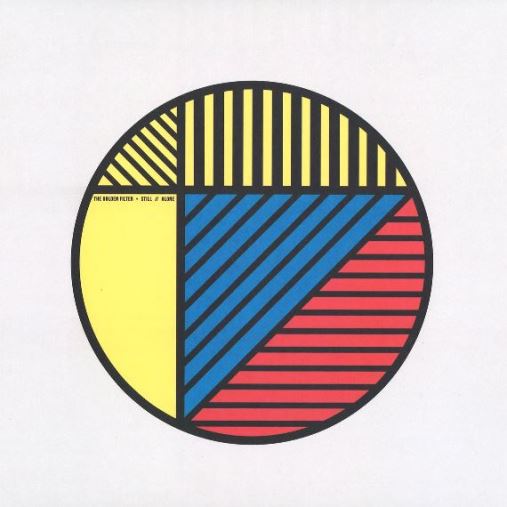
‘Volupsa’, the promising Nordic flavoured debut album from THE GOLDEN FILTER came out in 2010, but the Aussie American duo of vocalist Penelope Trappes and synth programmer Stephen Hindman took their time with the follow-up ‘Still//Alone’, having relocated to London after spending several years based in New York. The hypnotic pulse of ‘Rivers’ with its precise drum machine pointed to a female fronted OMD, complete with a catchy riff and synthy jabbing bassline.
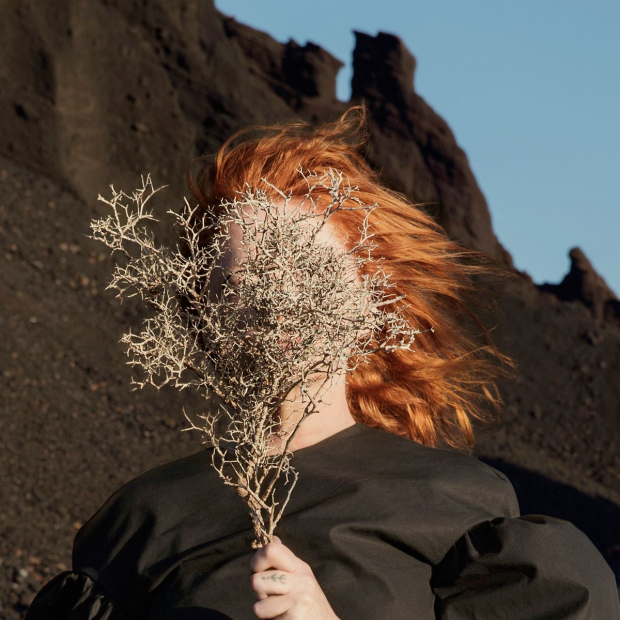
The immensely catchy ‘Systemagic’ was a prize electronic gem from the seventh GOLDFRAPP album ‘Silver Eye’, reminiscent of the lusty and beat laden electronic material from ‘Black Cherry’. But its riff asked the question as to whether you will always find Alison Goldfrapp in the kitchen at parties? In the event of Jona Lewie filing a lawsuit, the lucrative income from the song’s use in a BMW advert may ease any potential net payout.
Available on the album ‘Silver Eye’ via Mute Artists
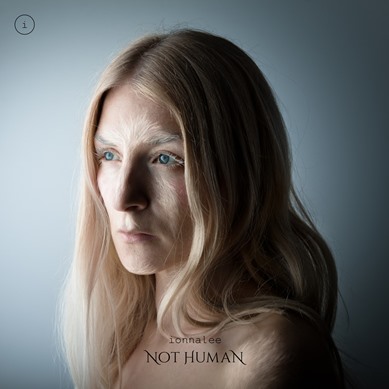
After three acclaimed albums as IAMAMIWHOAMI with producer Claes Björklund, Jonna Lee went solo in 2017 although it was actually difficult to hear the join on the glorious ‘Not Human’, so seamless was the transition; there were still the icy electronic soundscapes, spacey dance beats and uplifting Scandipop vocals while the delightfully odd visuals were all present and correct.
Available on the download single ‘Not Human’ via To Whom It May Concern
I SPEAK MACHINE is the audio / visual collaboration between musician Tara Busch and filmmaker Maf Lewis. Soundtracking their film ‘Zombies 1985’, the story was one of greed and self-obsession in Thatcher’s Britain as a businessman drives home, oblivious to the zombie apocalypse going on around him. Co-written and co-produced with Benge, the brilliant ‘Shame’ with its cascading synths and noise percussion was a wonderful hybrid of THROBBING GRISTLE, THE HUMAN LEAGUE and GOLDFRAPP.
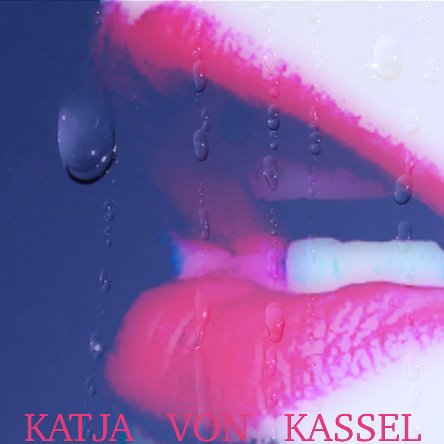
After a number of years gigging around London, Katja von Kassel finally unleashed released her electro Weimer Cabaret to the world. The pulsating ‘In Little Rooms (Show Me Love)’ captured an aesthetic which closely resembled that of Ronny, a former protégé of Rusty Egan. Attached to Alex Gray’s intricate filmic electronics, Fraulein von Kassel’s deep vocal detachment was art cool sexy.
Swedish duo KITE unleashed their darkest offering yet in ‘Demons & Shame’. Shaped by a ritualistic drum mantra and brooding bass drones, as the title suggested, the song confronted the despair that life occasionally throws up while pursuing visions and dreams. If Ennio Morricone composed music for Nordic Noir dramas, it would sound a bit like this. Vocalist Nicklas Stenemo literally screamed his frustration over an epic synthetic soundscape from Christian Berg, laced with nocturnal Arctic overtones and the spectre of THE KNIFE.
Available on the single ‘Demons & Shame’ is released by Progress Productions
James Murphy returned as LCD SOUNDSYSTEM after seven years with this widescreen musical statement reflecting on the political situation in the US. Glancing across the Atlantic and back to the Winter Of Discontent, this 3/4 synth laden tune that had more than a passing resemblance to THE HUMAN LEAGUE’s ‘Circus Of Death’. So did “The Clown” referred to in that song remind Murphy of someone in particular?
Having started out in a more rave inclined environment, Lizette Nordahl ventured into more synthy climes and her debut mini-album had the air of KITE is all over it, which was not entirely surprising as its co-producers were Nicklas Stenemo and Christian Berg from the acclaimed duo. ‘Rest’ with its swirling synth sounds and widescreen Nordic atmosphere had an optimistic air of acceptance despite the melancholic tone and majestic growls.
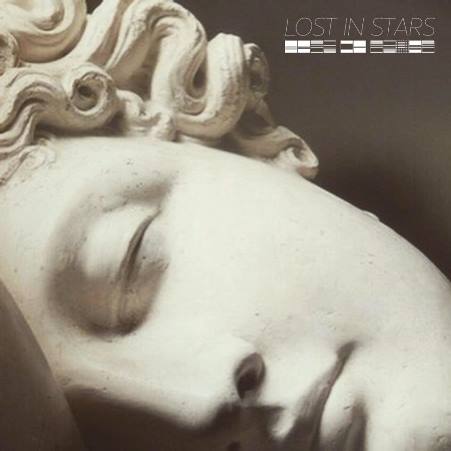
Led by British born musician Dylan Willoughby, LOST IN STARS is a floating ensemble which also includes Elena Charbila aka KID MOXIE and producer/songwriter Darren Burgos. The latter takes the lead vocal on the spirited electronic pop of ‘Sky’; now if NEW ORDER were from Los Angeles instead of Manchester, they would have sounded like this.
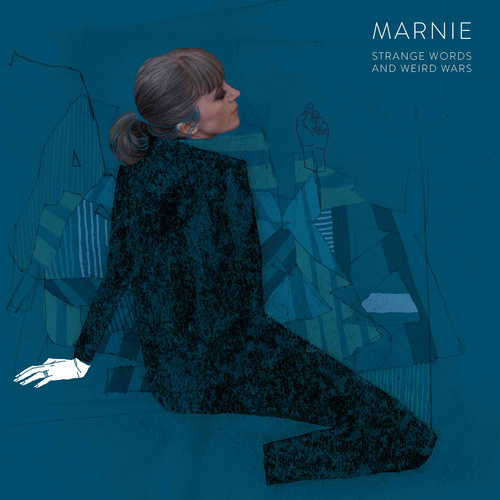
After releasing her first solo album ‘Crystal World’ in 2013, Helen Marnie added more prominent choruses and guitar onto her second, resulting in a catchy Scandipop style. ‘Bloom’ was an optimistic burst of synth laden pleasure and while not totally dissimilar to LADYTRON, it was without their usual hardness or gothic gloom.
Having worked successfully in 2013 with Guy Sigsworth on ‘the minutes’, an acclaimed album which saw Alison Moyet return to the synthesized music forms to compliment her powerful and self-assured voice, the follow-up ‘Other’ was a natural progression. The startling orchestrated electro-dub drama of ‘Alive’ gave Moyet’s two former classmates in DEPECHE MODE a stark lesson in how to actually fully realise electronic blues. Indeed, it was ‘In Chains’, the lame opener from ‘Sounds Of The Universe’ gone right…
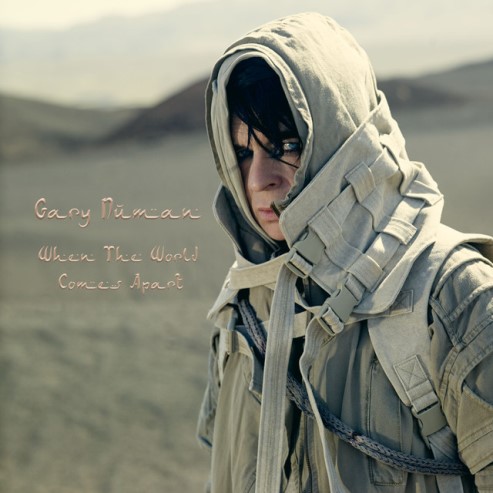
With the narrative of ‘Savage’ provoked by Donald Trump’s withdrawal of the United States of America from the Paris Climate Accord, the mighty apocalyptic rock of ‘When The World Comes Apart’ was something of a revelation for Gary Numan. Using synths as the dominant instrument and having guitars less obviously prominent in the mix, with its richly anthemic chorus, this was the magnificent crossover song that both old and new Numanoids had been waiting for.
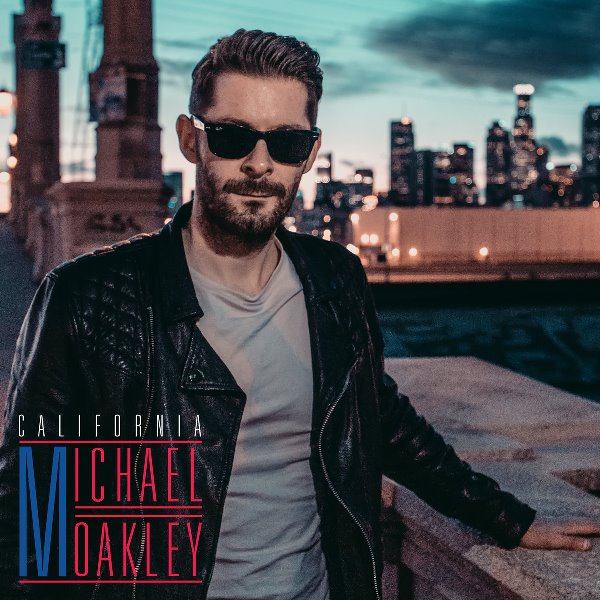
Michael Oakley is a talented Glaswegian who describes his music as “Melancholic postcards from my heart wrapped up in synthesisers and drum machines”. The melodic ‘Rabbit In The Headlights’ came complete with Italo “woah-oh” chants and whether it was Synthwave, synthpop, electropop, Italo or whatever, it showcased Oakley’s fine songwriting abilities, regardless of genre.
The excellent ‘One More Time’ was a classic bittersweet OMD stomper, where “everything you gave me didn’t last”. Using electronic percussion as opposed to drum machines, the enticing verse and uplifting bridge were set to a plethora of gorgeous textures and distorted synth to add a touch of enigmatic weirdness. While Andy McCluskey cried “you can break my heart just one more time”, the track’s star was Paul Humphreys with his crystalline synth sounds laced with some portamento bounce.
As well as keyboards and violin, Hannah Peel can also play the trombone. Featuring an array of analogue synthesizers and a 29-piece colliery brass band, ‘Mary Casio: Journey to Cassiopeia’ was her instrumental story about a fictional elderly musical stargazer. Beginning with the lift-off of ‘Goodbye Earth’, Miss Peel’s electronic arpeggios and synthetic noise built up to a crescendo of brass and timpani for a quite unusual combination of two very different musical worlds.
Available on the album ‘Mary Casio: Journey to Cassiopeia’ via My Own Pleasure
From the ashes of ANALOG ANGEL came forth RAINLAND. Their self-titled calling card was a vibrant synthpop statement, embroiled in a musicality that provided a journey through the Grampian Mountains. Ian Ferguson had already proved himself a worthy vocalist in his previous combo with dulcet tones not dissimilar to a certain Midge Ure and this was allowed to reign free on ‘Rainland’. Meanwhile, the ivories of Derek MacDonald stylistically aped the symphonic overtones of Billy Currie.
Between 1980 to 1984, RHEINGOLD were at the forefront of Die Neue Deutsche Welle, releasing three albums and achieving their first domestic hit ‘3klangsdimensionen’ in 1981. Led by Bodo Staiger, ‘Im Lauf Der Zeit’ was their first album of new material for many years. The melodic synth of ‘Paradieshafen’ drove along a beautiful instrumental that came over like a dream collaboration between OMD and Michael Rother.
Available on the album ‘Im Lauf Der Zeit’ via Lucky Bob Records / Soulfood
With hypnotising hints of Kate Bush and percolating Ryuichi Sakamoto style textures, ‘Who Am I’ by electropop goddess Sarah P. was an ode to “humanity, the world we live in and our importance (or unimportance) as individuals and/or as a whole”. And as the Greek-born songstress announced that “I don’t know where I come from… do you know my name?”, a metronomic beat kicked in to lead a dramatic house-laden climax.
Available on the album ‘Who Am I’ via EraseRestart Records
From ‘From Deewee’, the first new SOULWAX album since 2004’s ‘Any Minute Now’, ‘Conditions Of A Shared Belief’ was a modular synth lover’s wet dream from the Dewaele brothers. With a retro-futuristic collage of detuned blippy sounds and a backbone of smashing white noise percussion recalling THE HUMAN LEAGUE in their Martyn Ware and Ian Craig Marsh phase, it was complimented by some suitably abstractly pitched TALKING HEADS inspired vocals.
TINY MAGNETIC PETS had their best year yet with a UK tour opening for OMD and to accompany it was their second album ‘Deluxe/Debris’. Featuring Wolfgang Flür, the album’s best song ‘Never Alone’ sounded appropriately like SAINT ETIENNE fronting KRAFTWERK. Paula Gilmer has one of the best voices in modern synthpop and her alluring tone no doubt added to the song’s breezy dreamlike state.
Available on the album ‘Deluxe/Debris’ via Happy Robots Records
What happens when you cross anthemic Scottish indie with cinematic Swedish synth? You get US: a cover of a 2001 song with an acoustic but modern flavour by Swedish singer-songwriter Stakka Bo aka Bo Johan Renck, this was perfect for the voice of Andrew Montgomery of GENEVA and the electronics of Leo Josefsson of LOWE to showcase their different musical sensibilities for their debut single.
The adventurous third VANBOT album ‘Siberia’ was composed and recorded during a 17 day journey on the Trans-Siberian railway. The crystalline ‘Collide (Krasnoyarsk)’ though captured a more Nordic vibe with its gorgeous melodies, while the surrounding rhythmic pace of a train ride made its presence felt. An aural exploration of the relationship between time, location and emotion, ‘Siberia’ was a bold musical experiment.
We use cookies to ensure that we give you the best experience on our website. If you continue to use this site we will assume that you are happy with it.
Follow Us!