Tag: The Blitz Club (Page 1 of 3)

Lost Albums: STEVE STRANGE Le Palais De Danse

The final artistic testament of the late Steve Strange receives a belated release.

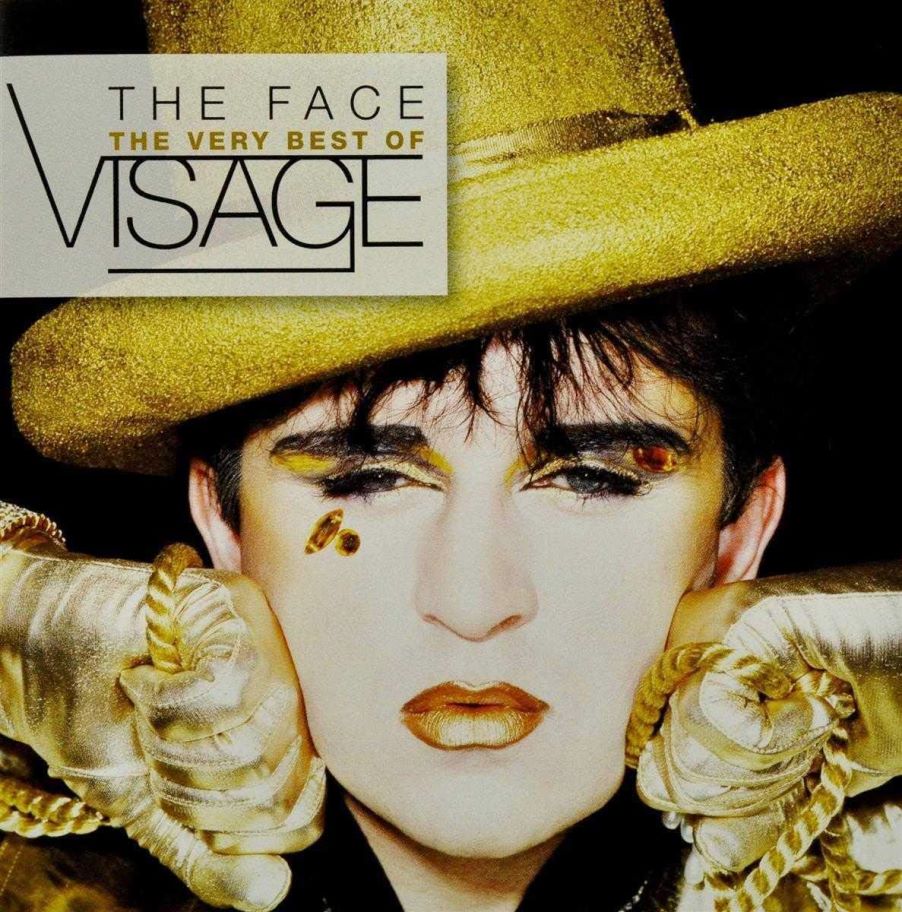
Having fronted colourful gatherings at Billy’s, The Blitz Club and Club For Heroes, Steve Strange was the undisputed poster boy of the New Romantic era. As the flamboyant frontman of synthpop pioneers VISAGE, his place in modern pop culture was cemented with the video to ‘Fade To Grey’, the biggest selling single of 1981 in West Germany. Later he co-established The Camden Palace with Rusty Egan where he mingled with the A-List but also juggled the demons that came to his doorstep and would continue to haunt him.

Towards the end of his tumultuous life, interspersed with club night revivals and various iterations of VISAGE, he was quietly sculpting an intended solo record alongside long-time collaborator, co-writer, bass maestro and post-Midge Ure VISAGE member Steve Barnacle. After Steve Strange passed away in 2015, word got out about this Lost Album and various parties were keen to make it public.

Now fully realized through Barnacle’s painstaking dedication, ‘Le Palais De Danse’ comes out as comprehensive 2CD deluxe package on Cherry Red Records. Appended by extended versions, single edits and dance mixes as well as liner notes from Barnacle himself, while VISAGE devotees will recognise 4 of these tracks, this collection presents the intended direction for Steve Strange’s solo bow.

The ‘Le Palais De Danse’ title song acts as a direct nod to David Bowie while ‘Breathe Life’ comes as a  brassy soul excursion featuring pitch-corrected vocals from Strange that differs from the version on ‘Hearts & Knives’. There’s the self-explanatory camp Europop of ‘Dirty & Flirty’ featuring a duet with Samantha Fox while ‘Insinuate’ is a semi-spoken diatribe against the gutter press, turbocharged by heavy rock guitar riffs.

In addition, there’s the out-and-out gay anthem ‘Boys’ and ‘Seven Deadly Sins (Part One)’, a reggae-infused precursor to what eventually surfaced reworked on ‘Demons To Diamonds’. ‘Welcome To The Digital Age’ comes as alternative funk-rock workout of what was the B-side to the VISAGE single ‘Dreamer I Know’ while ‘Never Stop Dreaming’ (which had appeared as ‘Never’ for VISAGE) is a surprisingly rustic country-tinged ballad to close. ‘Le Palais De Danse’ acts as the closing chapter of Steve Strange and this intriguing artefact will be embraced by his many followers who saw him as an icon.

From his base in France, Steve Barnacle kindly spoke in-depth to ELECTRICITYCLUB.CO.UK about his time in VISAGE, the ill-fated STRANGE CRUISE and the long journey that led to the completion of ‘Le Palais De Danse’.

Photo courtesy of Steve Barnacle

When did you first meet Steve Strange?

The first time I met Steve was in 1982, it was for a ‘Top Of The Pops’ session for Night Train’. My elder brother Gary had played sax on ‘Night Train’, I was just asked to sit in while it was being recorded. Back in the day, you had to re-record your track for ‘Top Of The Pops’ and very occasionally, the Musicians Union and the BBC would send 2 representatives to the session, which was usually only 3 hours, to make sure it WAS being re-recorded. The stupid thing was, if you had 12 keyboard parts on the record, you had to book 12 keyboard players! You couldn’t overdub!

At this session is Rusty, Steve, me and my brother Gary and these guys show up. I hadn’t even heard ‘Night Train’ at that point but they wanted to watch what was going on and then leave with the final mix. We’re like “F*CK, WE’VE GOT TO RECORD IT!” so we had to act like we were going to record it. Rusty sets up the drum kit and plays ‘Night Train’ out of memory and singing the song to himself. Meanwhile, I’ve got a cassette of ‘Night Train’ and listening to how the bass goes and put it on while Gary was blowing his sax part. We had dodgy drums, dodgy bass, dodgy sax and then Steve had to go and do a lead vocal while having a total nervous breakdown! This track sounds f*cking horrendous, I WISH I had a copy of it! *laughs*

Steve was having a meltdown going “THIS IS GOING TO RUIN MY CAREER IF THEY PLAY THIS ON ‘TOP OF THE POPS’!” but Rusty does some quick thinking and goes “I KNOW WHAT I’M GOING TO DO”! He turns up the monitors and turns the treble up to full volume so that it made you feel sick! It sounded abysmal and it basically drove those 2 reps out. As soon as they left, we put the master on the mix! We got away with it! *laughs*

You properly became involved as a member of VISAGE with ‘Pleasure Boys’?

I knew Rusty from way back, the connection between him and Gary is they were in a funk band called HIT & RUN, they were one of the first things Rusty drummed in. The band needed a new lead singer and Gary asked me to deputise on bass as their regular bassist couldn’t make it for the auditions and that’s how I met Rusty. After we’d finished, Rusty told Gary that he liked the bass player and Gary told him that I was just helping out. So that connected me and Rusty.

Fast forward, I went away in 1983 to tour with a French guy Julien Clerc and when I came back, me and my partner  Cori Josias wrote ‘Takin’ It Straight’ which was a bit of a gay club anthem.  Rusty got us a publishing deal and he wanted to work with me and invited me to join VISAGE. So I became the musician in the band, me in the middle with Rusty and Steve! *laughs*

Steve was a bit of a primadonna, him and Rusty together, you can imagine was that was like! Steve was a bit paranoid about his voice because he wasn’t the greatest singer in the world. But they wanted to do a version of VISAGE that would go live because they had never played live. My brother Gary was involved and I got in the guitarist Andy Barnett.

The first thing I did was ‘Pleasure Boys’, Dave Formula and Billy Currie were involved in that and they were intrigued how I got the Minimoog bass to sequence. I had this brainwave of getting a sound that I liked on it and then dropping them both an octave, playing the track at half speed and doing two fingers on the keyboard… of course when it’s double speed, you don’t know any of the timing discrepancies but it sounds sequenced! So Billy and Dave thought I’d sequenced a Minimoog and were going “how the f*ck did you do that?” *laughs*

How did you find playing live bass over drum machines and sequencers?

I’ve been a home studio man since I was a teenager so I was fascinated by it all. When technology came along, that automatically involved drum machines and I just got used to it. It taught me a lot about my playing and getting behind the beat. It’s not something I’ve ever had any problem with but it was drummers who really suffered, there was many a freak out from them! *laughs*
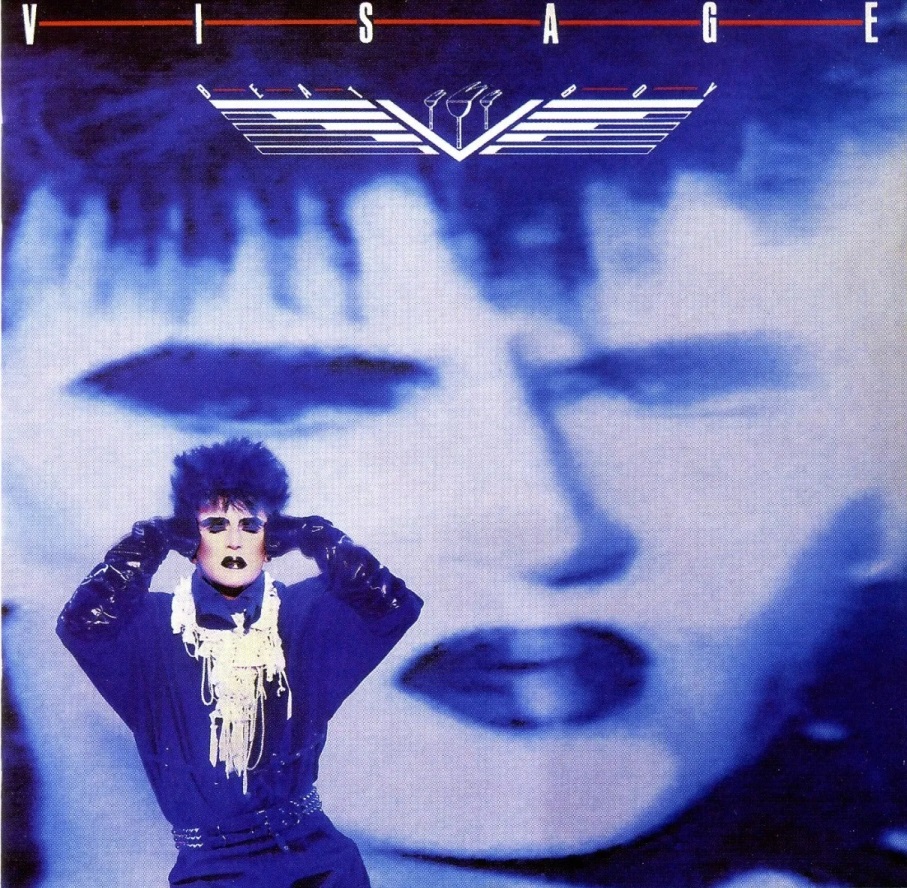
You were also involved in the ‘Beat Boy’ album, what do you remember about those recording sessions?

Steve was banging on about wanting to do something newer and band-like but for Rusty, the Fairlight was happening and he was into all the racket. So I was in the middle of it, trying to please both of them! Most of the writing was Steve coming over to my place, we’d do some demos to get an idea of something and then it morphed into what it became.

‘Beat Boy’ is a very strange album, it’s not a very good one… there’s some funky stuff on it with black girl singers and there’s some nice atmospheric stuff. But the funniest story of all is when the Polydor came to us; they said Jean-Philippe Iliesco (JP) who was VISAGE’s manager at the time had taken the rough mixes of ‘Beat Boy’ album for preview to the European labels and they wanted a soft pop synthy song on it…

Oh, they wanted another ‘Fade To Grey’??? *laughs*

Yeah! Please! Can we have another of those?! *laughs*

Anyway Rusty went “OH! F*CK OFF!” so I said to JP I’d try something with Steve and he said he had an idea and that was ‘Love Glove’; “What’s a Love Glove?” I said to him, “Is it a condom?” *laughs*

So I sat down with that brief, did it with a Roland drum machine and synths, finished ‘Love Glove’ and of course, everyone at the label loved it because it was more along the lines of what they expected to hear from VISAGE. But Rusty’s like “WOTS THIS F*CKING SH*T???!?” but everyone else loves it! So he goes “alright”, programmed a tambourine and a couple of things on it and took a writing credit for it! He didn’t write a f*cking note! *roars of laughter*

But we did agree on a 3 way write so that was hilarious and the European labels wanted ‘Love Glove’ to be the single although Rusty was going “NAH! ‘BEAT BOY’ IS THE F*CKING SINGLE!” but he got talked down… he hated it but that was the one track they did a proper video for.

‘Love Glove’ hit the Top50 but it didn’t go any further and there’s a really good reason for that! In the same month, Polydor did a VHS video mailout to all the clubs but they had to decide between VISAGE and LEVEL 42 ‘Hot Water’ because they couldn’t afford to do both. So Polydor said whoever charts the highest will get the mailout. VISAGE charted higher at first BUT they’d already decided on LEVEL 42! This was a real p*sser and ironically, my brother Gary played on both singles! *laughs*

I’ll tell you a funny story, the ‘Beat Boy’ album features JJ Jeczalik’s Fairlight quite heavily with Rusty’s drum sound samples and then THE ART OF NOISE come up with ‘Beat Box’ before VISAGE release ‘Beat Boy’, how mercenary! *laughs*

Photo courtesy of Steve Barnacle

How was the STRANGE CRUISE period for you after VISAGE?

‘Beat Boy’ came and went but Steve was happy being the face of VISAGE and getting all the attention. He had this thing about wanting a live band and doing it live, that was never going to happen with the old VISAGE members because of all their commitments. He fell out with Rusty, quelle surprise, they were fighting all the time! Steve had a small attention span and had his drug problem… so we’d have a session booked for vocals and a) you could see he was getting worse so it was pointless pursuing it and b) he was getting tired. Rusty would go “WE’VE BOOKED THE STUDIO! YOU’RE GONNA STAY ‘ERE ‘TIL YOU’VE F*CKING GOT IT RIGHT!” and it was the worst thing you could say to Steve.

So I’d ask Rusty to leave and ask him to let me do the vocals with Steve. I’d sing the guide vocal and Steve would get the idea and copy me listening to me through headphones and get the phrasing. Consequently, Steve said he liked working with me as it was much less stressful than Rusty.

But VISAGE were still under contract for another 2 albums that Polydor were legally obliged to finance and release. Steve started working with me outside of the VISAGE sphere and proposed doing this Sonny & Cher cover ‘And The Beat Goes On’. Steve said he had this model Leza Cruz who could sing a bit and that he wanted to call this project STRANGE CRUISE; we did an 8 track demo of it and he took it to Paris when he went to see DURAN DURAN, there was a big party for the launch of ‘A View To A Kill’ so EMI were there. So Steve bowls up to this party and people are asking about what he’d been up to and told them about ‘And The Beat Goes On’. It was played at the party and everyone went nuts for it.

Dave Ambrose, the A&R at EMI was there and said it was “a f*cking hit, if you weren’t signed to Polydor, I’d sign you up tomorrow, I luv that song!”; so Steve comes back, tells me that everyone went mad for it and that he’d been put in touch with a management company Smallwood Taylor who looked after IRON MAIDEN. They’d had an IRON MAIDEN meeting with Dave Ambrose and were looking to expand their roster with a well-known artist whose career could do with a real boost. Dave Ambrose suggested Steve Strange so we get this phone call from Smallwood Taylor… they’d asked to speak to me because they’d spoken to Steve and y’know, they wanted to speak to someone who made sense! *fits of laughter*

We went to see them, the walls were covered in platinum albums, plush meeting areas etc; they said they really liked the demos of the stuff I was writing with Steve. They wanted us to sign to EMI but I reminded them we were still signed to Polydor and they said “we’ll take care of that!”

Steve said he wanted a live band, record as a band and go out on the road, Smallwood Taylor said great; I pointed out they would need to be on retainers and it will cost a lot of money but they said “yes”… they didn’t say no to anything! It was too good to be true right?

Consequently, they went and found out about the Polydor contract and it’s something Rusty doesn’t mention; as far as I know, Polydor bought the rights to VISAGE, drew a line and let Steve go and move on to STRANGE CRUISE. So Smallwood Taylor paid money to JP, Rusty and Polydor to shut the contact down… it wasn’t that much because Polydor were relieved not to have to shell out on another VISAGE album! Apparently, Rusty claimed JP forged his signature on the piece on paper when the money was handed over and kept it! So Jean-Philippe Iliesco pocketed it and Rusty denied any knowledge of ever signing VISAGE over to anyone because he claimed JP faked his signature!

Photo courtesy of Steve Barnacle

Things didn’t quite take off for STRANGE CRUISE did it?

We started rehearsing STRANGE CRUISE and we got Wendy Wu in from THE PHOTOS to replace Leza Cruz, it was all going well. But Steve had brought in this guitarist who turned out to be epileptic and actually had a seizure while we were playing! That wasn’t going work! We replaced him with Frankie Hepburn and off we went.

On my behalf, the band said to Smallwood Taylor that I should produce the album but they preferred a big name producer to help the album along, so we ended up with Mike Hedges. Funnily enough, he lived about 200 metres from me in Willesden. We met him, he had ideas of having brass on the album and EMI were happy as well. Me and Steve were also signed to Zomba Music Publishing so there was some money floating around. Mike wanted to do the album in Germany at Hartmann Digital Studios in Bavaria where he had done ‘Vermin In Ermine’ with Marc Almond. It was a live-in studio so we went out there. It was a little German village where the church bells went off at 7 o’clock in the morning so Steve was going stir crazy because he couldn’t go clubbing and do his drugs!

It was a bit of a nightmare. Because he lived up the road from me, he kept popping round unannounced so I’d ask if he’d got the brass arrangements done and he was like “No! No! I’m working on that!”; I was going to use my brother as he has a really good horn section that was doing loads of work so we had them booked… but basically Mike Hedges was the wrong choice for that whole thing, he was a bit of a tw*t. He goes to me “how do you get a vocal out of Steve?” and I explained what he was like and the best way to do it, but decided to be a bit like Rusty and went “F*ck that! He’s going to stay there ‘til he’s got it right!”

Steve was having breakdowns, so I confronted Mike and we nearly came to blows as he was going about it completely the wrong way because he had no sympathy for Steve’s predicament or anything. We finished the album and he didn’t do any brass arrangements, in the end the keyboard player did them from ideas I sung to him.

The album was finished but we weren’t happy with the mixes so it had to be remixed and we ended up at Sarm West, spending loads of money. EMI opted to do a taster single ‘Rebel Blue Rockers’ with video to establish the band to get people to know they were around and then do the big launch with ‘And The Beat Goes On’. And we were going to start playing live which was the whole point of STRANGE CRUISE. But Steve went into his world while this was going on and after we did the video, he was back clubbing in London and asking for money all the time because of his drug problem. And then he got done for fraud!!!

WHAT??? 😳

YEAH! Because he was hosting people at his clubs, the managers of various other clubs would do the same. So Steve and one of his girl friends was out with the manager of this club who was hosting him, this guy had to leave but said to Steve that all food and drinks were on the house, stay as long as you like. As he left, he dropped his wallet and the girl picked it up and there was a lot of cash in it and a cheque book! She told Steve that she was going to be evicted from her flat unless she came up with some money, maybe he could sign a cheque in this guy’s name and cash it!

So picture the scene, Steve is there out with his heroin buddy! They nicked all the cash and he went into the bank the next morning with a cheque card, forged the guy’s signature and cashed £250 which was a lot of money then! She gave the girl the cash who then said to him, can you do it again, that’s not enough! MEANWHILE, the guy who dropped the wallet has called the bank that he’s lost his wallet, “please cancel everything” only for the bank to tell him that someone has cashed a cheque under his name! But Steve went back not realising to can only do this once a day and there was the long arm of the law on his shoulder! He got done!

EMI had done these press releases that Steve Strange had cleaned his act up and come back with a great new band which were ready to go, but they then see this bloody front page headline that Steve Strange is in court for fraud and embezzlement! I got wind of this and was like “WHAT THE F*CK?”, this was the worst possible thing you could choose to do at this time. He went to court and said he was out of his head on heroin and didn’t know what he was doing, that was his excuse! EMI went “F*CKING HELL” but Steve then f*cked off and disappeared!

By this time, my share of my publishing advance had gone to pay for the remixes… a song I had written as a B-side for Samantha Fox called ‘Dream City’ was making me a load of money but had all gone to that as well! So you can imagine how I felt! And because this co-publishing detail was with Steve, anything I earned paid off what was owed by both of us! I didn’t realise it was cross-collateralisation so any money that was owed would be grabbed before we saw any of it which is fair enough because they gave us a big advance. So I repaid that advance with a song that was nothing to do with Steve and he’s f*cked off! So you can imagine what I thought of Steve! *laughs*

So Steve was dead to me and it turns out he ran off to Ibiza and was hosting, selling T-shirts and making some kind of living for a couple of years. No one knew where he was, he’d just gone and back then, it was a lot harder to track people down. To put it into context, that’s why STRANGE CRUSE never happened, Steve wasn’t around to make it happen even if he was going to be forgiven by EMI which he wasn’t, so they actually just pulled the plug on the album and only pressed 2000 copies which is why it’s a collector’s album now! Most of the tracks were still the Mike Hedges mixes because we wouldn’t remix everything so I was just furious and livid. I went onto SPEAR OF DESTINY after that and didn’t have any contact with anyone of that lot for about 20 years!
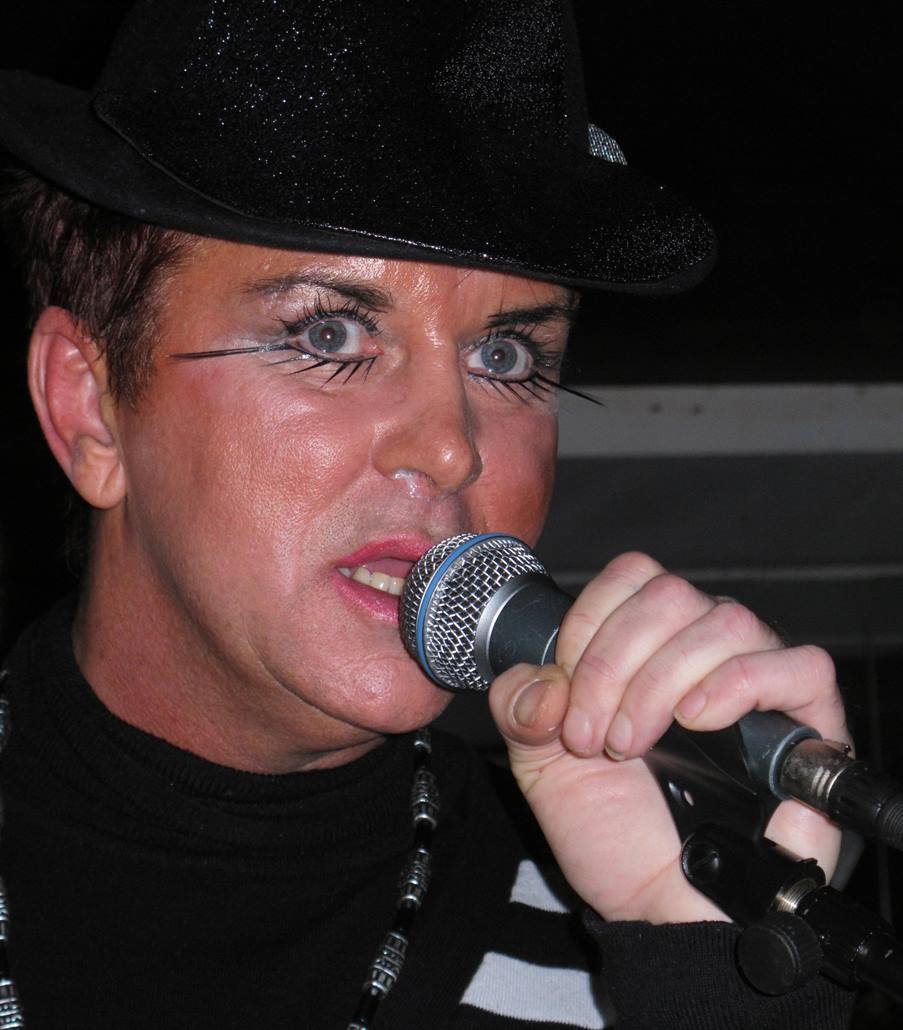
Photo by Richard Price

How did you become reunite with Steve Strange and thus begin work on what became ‘Le Palais De Danse’?

I got a call from the other JP, John Pitcher who had become involved in managing VISAGE; so because Steve was the only signatory on the original contract, he got a big chunk of money from 5 years of VISAGE royalties from America, like £70,000. Steve was short of money but he went to a lawyer about it who said he’d sort the payment for 30% and the tw*t said “yes”! Steve thought it was all for him and then he spent it all, knowing damn well it was VISAGE money! Rusty got wind of it and went ballistic!

Fair enough! Steve just cared about money in his pocket but it was the wrong thing to do. So John Pitcher enters the frame and suggests making a new VISAGE album and the initial royalties can go towards the money that Steve took that should have gone to Rusty and the others. So he got Steve and Rusty together despite Rusty calling Steve “a thieving c*nt” and everything else under the sun!

Photo by Richard Price

But Rusty didn’t stick around long…

Rusty wanted to be the producer but John Pitcher is also a control freak but does it in a more subtle business-like way… I don’t like John Pitcher, he’s been very shady. So Rusty now wants nothing to do with the record, the Midge Ure song ‘Become’ is withdrawn because Rusty is no longer involved so John Pitcher finishes the album he’s already started with his team and is determined to finish it. He thought it would be good to get some actual former VISAGE members involved in the new VISAGE other than Steve so he calls me! *laughs*

I told him about my last dealings with Steve Strange. He suggested jumping back in working with Steve again to bury the hatchet… well, there was a lot of water under the bridge so I said yes, that I’d like to do some co-writing with Steve and put a few tracks on the album. John Pitcher had already had the album written by his team but he said “sure” to get me involved and I ended up with one or two tracks on ‘Hearts & Knives’.

I lived in Dover then, Steve came down to stay for a week and while there was water under the bridge, he was the same old f*cking Steve… I’d never spent that much time with him just the two of us. We did that a few times so I thought we’d just write some songs and if they weren’t on this album, they could go on the next album etc. But then I realised John Pitcher has his own agenda and he’d go “oh, that’s a nice bassline, I’ll give you a writing credit on that track” which is what happened with ‘Hidden Sign’. He realised dealing with me that I was someone who knew what he was doing and was actually the guy who could pull it all together for him by keeping Steve under control. So he valued having me on board.

We wanted to play live which we finally managed to do but in that time, I realised while doing the second album ‘Demons To Diamonds’ that Pitcher was just milking it. He had this list of fans who were going buy the album regardless, he did all these mixes, orchestral versions etc AND kept most of the money! He gave me the most ludicrous deal which he led me to believe it was 2% of retail but was actually 0.2% of 1% of what Steve was getting! But I thought OK, maybe this has got legs so I put the live VISAGE band together… I drove Steve around the country in MY car, keeping tabs on him, I was the f*cking tour manager, musical director, the works!

We did the Hoxton show and then about 10 dates around the UK before ending up back in London for a gig that was more or less sold out; I thought that was the best show of the lot because we’d done all the other shows and we were a lot tighter. Steve was getting used to being on the road live because he was like a rabbit in headlights when we started. He actually did really well, he sang pretty well and it went down a storm. I was thinking maybe this could work…
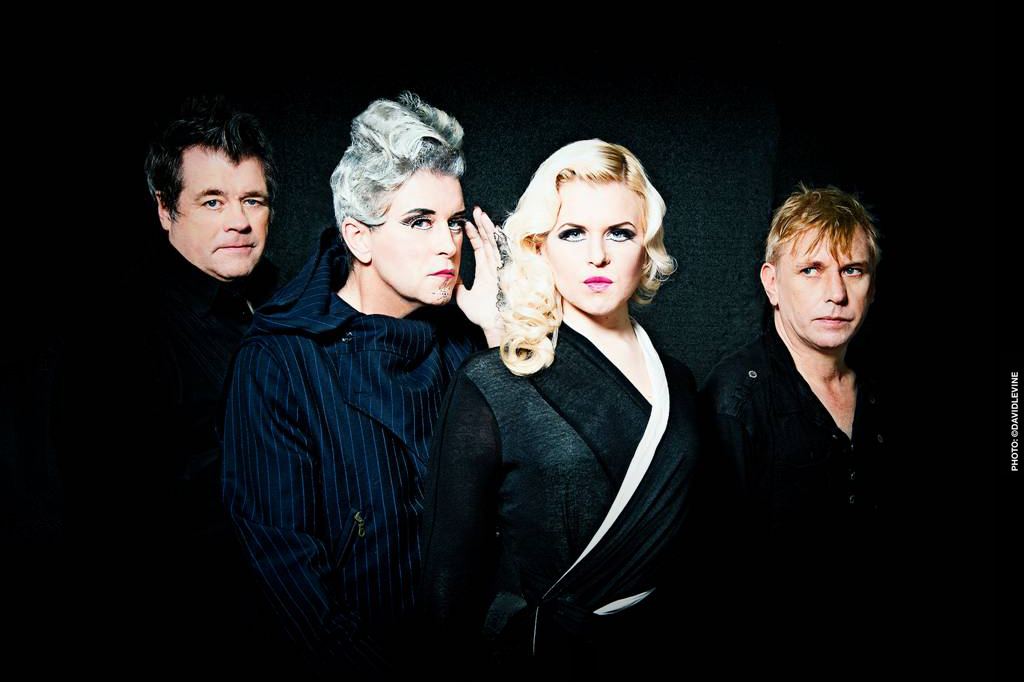
Photo by David Levine

So what happened next?

It was then like, what about the next album? So Steve had been coming down and talking about stuff, what we liked and how to arrange the songs. So say with ‘Breathe Life’ which was on ‘Hearts & Knives’, this version on ‘Le Palais De Danse’ is completely different and more funky. The songs on this album are basically what me and Steve discussed how we’d like them to go, but we had been handing over stems to John Pitcher. The title ‘Le Palais De Danse’ I saw on a poster and I told Steve that would be a great title for a song and he said “Yeah! Make a note of that!”

‘Never’ has one of Steve’s best vocals I think and it’s more electropop on ‘Le Palais De Danse’ while John Pitcher had done something else with it on ‘Demons To Diamonds’. The other songs that had been released before as VISAGE have been completely reworked in the way Steve and I talked about. He wanted to do this and wanted to that and one of the things he wanted to do was a coming out song called ‘Boys’ to shock everybody but John Pitcher wasn’t into that for some reason, so it was never done as VISAGE.

So I had Steve’s vocals where he’d been ghosting me and doing various bits with an idea to get out of the John Pitcher thing and do something ourselves when we got more control… but then he went off and died! So I’m left with these tracks! They were totally mine and I owned all the copyright as the main writer so I thought I’d finish the album myself with backing vocals, guitars etc. So that’s how the album ended up, it’s what we talked about. Like ‘Seven Deadly Sins’, I suggested a heavy reggae feel that Steve said “Yeah! Great!” although it was more like “I’ll go away and you do all the work!” *laughs*

Where did the camp Europop of ‘Dirty & Flirty’ with Samantha Fox come from?

So that song I mentioned earlier ‘Dream City’ was for Samantha Fox so I’d met her at her album launch party and at Zomba a few times. Steve knew her too and suggested writing a song for her with the title ‘Dirty & Flirty’, so it’s the usual “here’s a title, now you write the song!” *laughs*

Steve got hold of Sam and asked if she was interested and she was… it was meant to be a duet. She came down with her then-partner Myra who was also her manager to put her vocals on it with Steve.  Afterwards, they asked for the stems for their producer to remix it to be her next single but asked if I’d mind if they took Steve’s vocals off it! *lots of laughter*

Unfortunately Myra was then diagnosed with terminal cancer so obviously it went quiet. And before Myra passed away, Steve died!  So for the duet that’s on the album, I had to patch Steve’s vocals up to go with Sam’s.
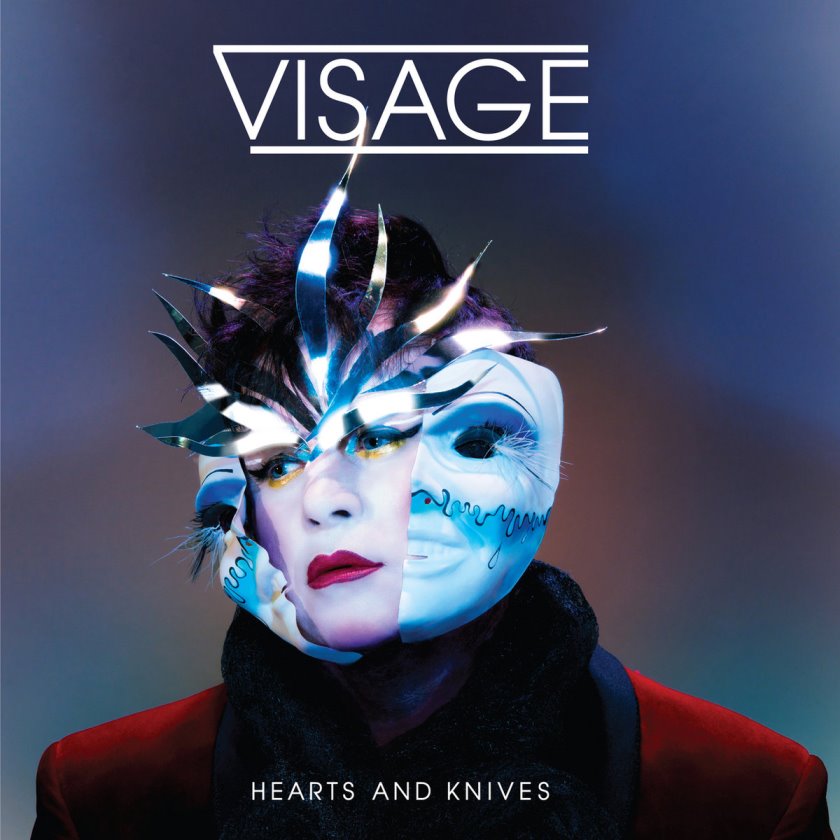
So what was the timeline for making this album?

Me and Steve started in 2012 about the time ‘Hearts & Knives’ was being made. Over that period, we kept writing and would record the songs anyway and if it John Pitcher rejected them for VISAGE, then we would do something else with them, that was the idea.

So lets’s get this right, ‘Breathe Life’ was on ‘Hearts & Knives’ and ‘Welcome To The Digital Age’ was on B-side of ‘Dreamer I Know’ while ‘Seven Deadly Sins’ and ‘Never Stop Dreaming’ aka ‘Never’ were on ‘Demons To Diamonds’?

Yes!

So when did things begin in earnest to make this material on ‘Le Palais De Danse’ suitable for release?

John Pitcher knew I had these vocals and these songs, so when Steve died, it made them more valuable. He kept banging on at me to do something with these tracks but by then, I didn’t really want any more to do with him! I started mixing them in the way me and Steve had talked about. At different times, 4 different labels were interested but when it came to actually releasing it, they all went cold. I got a bit despondent but I wanted to draw a line under it and have the tracks come out. It’s funny but Cherry Red who ARE releasing it had expressed interest and then passed on it!

How do you think the album stands up?

The ‘Le Palais De Danse’ album IS a bit different to what Steve has done in the past. I obviously finished it without any feedback from him but we’ve got approval from Steve’s sister Tanya. It’s been a massive convoluted journey because the last time I saw Steve, we’d fallen out! He pulled this horrendous stunt when we were playing this gig near Prague.

I’ve got to tell you this story… John Pitcher found out you could get the Prague Philharmonic pretty cheap so we flew over there to do those orchestral versions and this gig with them. It was the World Ski Flying Championships in Prague. Me and Logan Sky were the skeleton version of VISAGE without the drummer and using mostly backing tracks. Steve couldn’t quite get it into his head and asked me if this was the Olympics so I said “no, it’s not the Olympics!”… then he asked if it was the Paralympics so I went “Yeah! They go down the slope in wheelchairs… NO IT ISN’T THE PARALYMPICS!” Anyway, he was completely confused! *laughs*

There was about 10,000 people at the end of the ski jump on one side and on the other was the stage with proper lights, fireworks, everything as it was after the final! Steve gets a makeup artist who speaks English from Prague and we’re due to drive up there in a minibus . There’s a knock on his door but he tells her to tell them “I’m not in!”… what he wanted was the minibus to leave and for a limo to be put on for him and this makeup girl. We had to leave and were like “What the f*ck’s he doing?”

Because of Steve, we were late and missed the soundcheck etc! The place was full of drunk people and then the weather turned, so the actual ski jumping got cancelled. But we were there, the Prague Philharmonic were there, we were ready to go, what do we do? The promoters said to go ahead with the show!

The Master of Ceremonies announced to these 10,000 people that the ski jumping was cancelled because the weather was bad BUT he was also meant to say that the show was still going on so to stay for it! So the 10,000 crowd start f*cking off! Meanwhile, Steve is pulling another one and no-one can find him! So without Steve, we were being driven to the stage but the driver goes towards the crowd at a snail’s pace. Backstage it was very muddy and we had these dinner jackets to put on while walking on these planks! *laughs*

The promoters were yelling that the show’s gotta start and the intro on the backing track had started… once that happened, you couldn’t stop it! Everything was sequenced so it was on for the orchestra to play along to! But we still hadn’t got changed! It was mayhem and there’s still no sign of Steve! Then, he waltzes on giving it the big “I AM” while we were looking out and there’s about 4 drunken guys and a dog in the stand! *laughs*

I was furious with Steve so I left just before we were do a tour of Japan… that was my last conversation with him and it was a kind of “f*ck off”! We did later speak a couple of times on the phone but then he died. This has taken so long because of all the reasons I’ve mentioned. I did some extended mixes but I’ve finally drawn a line under it.

Who do you think this album is going to appeal to?

If people hear about it and get to listen to it, I think they’ll be quite interested because it’s got a kind of continuity to it which is what I wanted. At the end of the day, Steve sounds alright vocally which is an achievement in itself after what I’d been through with him and if you’d heard some of the outtakes that I’ve had to polish! He always liked it when I played with his vocals on the computer and made it sound better. I’m hoping they won’t be disappointed because they have an expectation of how they like someone to be.


In memory of Steve Strange 1959 – 2015

ELECTRICITYCLUB.CO.UK gives its warmest thanks to Steve Barnacle

Special thanks to Richard Peat

‘Le Palais De Danse’ is released by Cherry Red Records on 20th November 2026, information and pre-order at https://www.cherryred.co.uk/steve-strange-le-palais-de-danse-2cd-edition


Text and Interview by Chi Ming Lai
10th October 2026
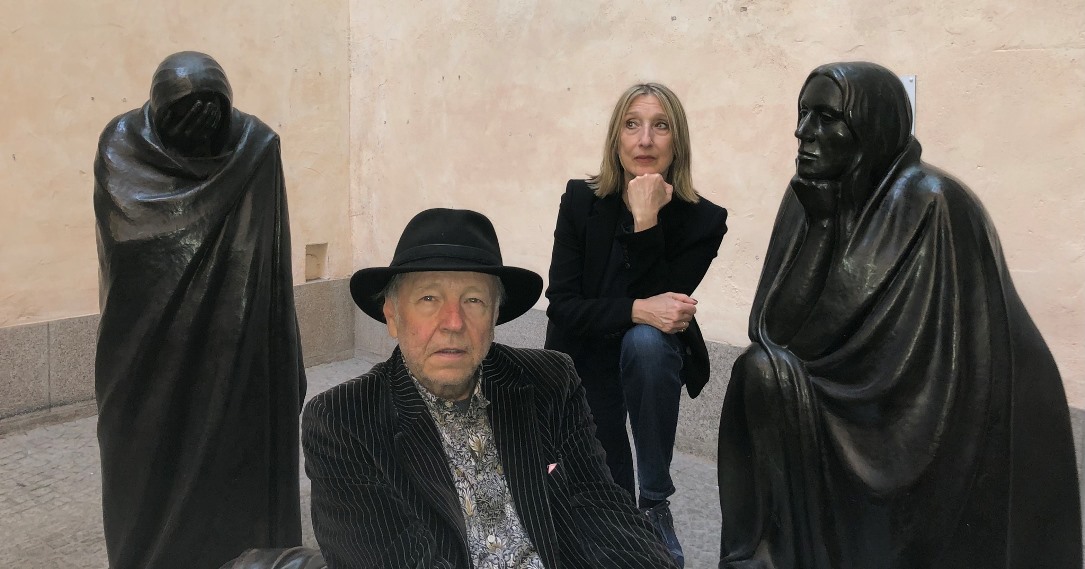
ZEUS B HELD & CLAUDIA BRÜCKEN: The 4 Ways To The Blitz Interview

Photo by Steve Schroyder

Paul Simon once sang that there were ’50 Ways To Leave Your Lover’ but for Zeus B Held and Claudia Brücken, there are ‘4 Ways To The Blitz’.

Originally making his name as the keyboard player of psychedelic rock band BIRTH CONTROL between 1973 – 1978, Zeus B Held is the producer, remixer and collaborator who can count GINA X PERFORMANCE, FASHION, DEAD OR ALIVE, ALPHAVILLE, DIE KRUPPS, SIMPLE MINDS, TRANSVISION VAMP, DREAM CONTROL and GURU GURU as well as John Foxx and Gary Numan among his credits.

Meanwhile Claudia Brücken undoubted queen of electronic avant-pop as the lead singer of PROPAGANDA, ACT, ONETWO and xPROPAGANDA as well as an acclaimed solo career and collaborations with Andrew Poppy and Jerome Froese to her name.

While the two Germans had not met until 2025, they came together to present an unofficial ode to The Blitz Club to coincide with an exhibition running at London’s Design Museum. ‘4 Ways To The Blitz’ offers 4 takes on the song ‘Dream Of The Blitz’. Recorded in London, Freiburg and Milano, Zeus B Held found he was bursting with ideas as to how this tune could sound, so created 4 different versions for a standalone release on his own newly inaugurated label Cisum Suez.

Zeus B Held and Claudia Brücken spoke to ELECTRICITYCLUB.CO.UK about their own ‘Dream Of The Blitz’…

You had not met before making ‘Dream Of The Blitz’, but how did you become aware of the other musically for the first time?

Claudia: I heard the Gina X tracks, cool production and melodies. I especially like the ‘No GDM’ track. It’s amazing that I only found out now that this track was inspired by and dedicated to Quentin Crisp and ‘The Naked Civil Servant’ – when I was in ACT, Thomas Leer and I did a song called ‘Snobbery & Decay’ which came out as a single and we released a 12″ which we named ‘(The Naked Civil) Snobbery & Decay’, it featured Quentin Crisp on the cover artwork.

Zeus: In 1984, I worked with JJ Jeczalik on the fourth Gina X album ‘Yinglish’ – at the same time he worked with Trevor Horn on PROPAGANDA’s first album – that’s when I heard the first time of the band – I remember, for me Claudia was the voice and the face of the project.

Photo by Steve Schroyder

What track is your favourite involving the other?

Zeus: I remember very vividly ‘Dr Mabuse’ and its song / melody, voices und production – and I love Claudia’s voice on ‘Duel’. I listened to it earlier on , it’s a damn Ohrwurm…

Claudia: It’s gotta be ‘No GDM’.

As Germans, how did you become you aware of The Blitz Club, did it remind you of scenes that you were involved in closer to home?

Claudia: Growing up in Düsseldorf, I spent a lot of time in the Ratinger Hof – which in a way was a parallel to The Haçienda in Manchester.

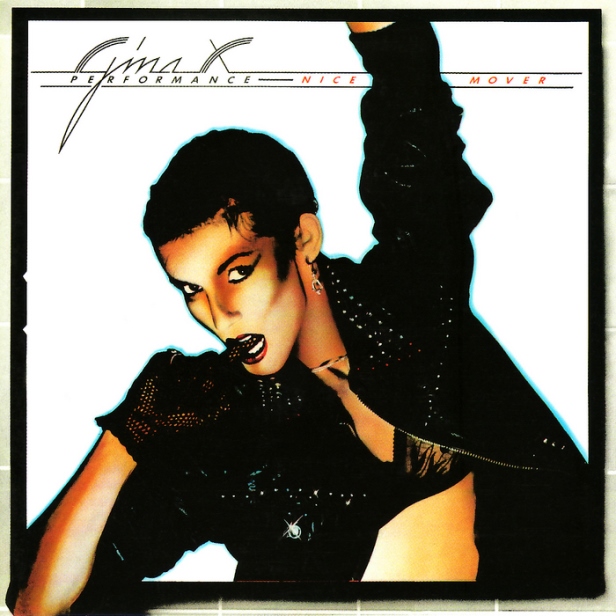
Zeus: Towards the end of the 70s, I got a bit bored with rock music and the typical clichés – so the GINA X PERFORMANCE started as a pure studio project – looking for new expression in sound and melodic approach – I heard the 1st time of The Blitz when EMI Cologne told me that tracks from the ‘Nice Mover’ album were played at this club. That’s when I also heard the name Rusty Egan for the first time.

What particularly influenced ‘Dream Of The Blitz’ musically and lyrically in the compositional process?

Zeus: Claudia and I spent some time of mutual brainstorming via phone – a lot of lyrical and melodic ideas ended up in the bin…

Claudia: Once we started working together in Zeus’ Freiburg studio, the breakthrough came with a mutual musical picture – and melody lines fitting to the words.

How did you filter all the ideas for the various different versions for this release? How would you describe them?

Claudia: When Zeus was doing a few dub mixes, we phoned and he said “pity we didn’t do a recording of you just reading the lyrics “ – well, so I went to work and became the story teller – I overdubbed my voice at my home studio – that became the Poetic Mix.

Zeus: Those were mainly different rhythmic and dynamic approaches – including half-time sections and more experimental outbursts. We also enjoyed changes in the harmonic content in various sections.

Photo by Steve Schroyder

The DREAM CONTROL Mix sees you reunite with Steve Schroyder? What was the concept for this version?

Zeus: Steve paid us a visit in the studio when we were in the middle of chasing a result – guess, he was the first person to hear a sketch of the song. And he also had the pleasure (and pressure) to do a spontaneous photo session of Claudia and me –

Claudia: With the DREAM CONTROL Mix of ‘Dream Of The Blitz’, we tried to give the song a somehow urgent and sequencer based dance flavour. My initial reaction when I heard it was “…it sounds a bit like DEAD OR ALIVE” – in a good way…

Do you each have a favourite version of ‘Dream Of The Blitz’?

Zeus: I love the Poetic Mix – where Claudia recites the words, tells the story and then launches into the singing…

Claudia: I like all of them….!

Will the two of you do any more music together?

Zeus + Claudia: We hope so, we are under no pressure and we’re both looking for the same thing: magic music transporting us and the listeners into new places.


ELECTRICITYCLUB.CO.UK gives its sincerest thanks to Zeus B Held and Claudia Brücken

‘4 Ways To The Blitz’ is released as a digital bundle by Cisum Suez, available from https://zeus-b-held.bandcamp.com/album/4-ways-to-the-blitz or https://theremusic.bandcamp.com/album/4-ways-to-the-blitz

http://zeusbheld.com/

https://www.facebook.com/Zeus-B-Held-162448230492382

https://www.instagram.com/zeusbheld/

https://www.claudiabrucken.co.uk/

https://www.facebook.com/ClaudiaBruckenMusic

https://www.instagram.com/claudiabrucken/


Text and Interview by Chi Ming Lai
20th March 2026

2021 END OF YEAR REVIEW


As the world steadily emerged from a painful pandemic that put many lives on hold, nostalgia appeared to be the commodity most in demand as the music industry took steps to recover.

No matter which era, anything musically from the past was more desirable that anything that reminded the public of the past 20 or so months. The first escape destination in the summer for many restricted to staying on their own shores were the established retro festivals.

Meanwhile television provided an array of documentaries ranging from chart rundowns of past decades and informative classic song analysis on Channel 5 to Dylan Jones’ look at ‘Music’s Greatest Decade’ on BBC2 and Sky Arts’ ‘Blitzed’ with all the usual suspects such as Boy George, Philip Sallon, Marilyn, Gary Kemp and Rusty Egan.

SPARKS had their own comprehensive if slightly overlong film ‘The SPARKS Brothers’ directed by Edgar Wright, but the Maels’ musical ‘Annette’ starring Adam Driver was a step too far. Meanwhile the acclaimed ‘Sisters With Transistors’ presented the largely untold story of electronic music’s female pioneers.

It was big business for 40th anniversary live celebrations from the likes of HEAVEN 17, THE HUMAN LEAGUE, OMD and SOFT CELL, while other veterans such as NEW ORDER and ERASURE returned to the live circuit with the biggest indoor headlining shows of their career.

Meanwhile for 2022, Midge Ure announced an extensive ‘Voices & Visions’ tour to present material from the 1981-82 phase of ULTRAVOX.

Also next year and all being well, GOLDFRAPP will finally get their belated 20th Anniversary tour for their marvellous debut ‘Felt Mountain’ underway while there are rescheduled ‘Greatest Hits’ live presentations for PET SHOP BOYS and SIMPLE MINDS.

Always money for old rope, but also giving audiences who missed them at their pioneering height an opportunity to catch up, ‘best of’ collections were issued by YELLO and TELEX while JAPAN had their 1979 breakthrough album ‘Quiet Life’ given the lavish boxed set treatment. Meanwhile, while many labels were still doing their best to kill off CD, there was the puzzling wide scale return of the compact cassette, a poor quality carrier even at the zenith of its popularity.

“Reissue! Repackage! Repackage! Re-evaluate the songs! Double-pack with a photograph, extra track and a tacky badge!” a disgraced Northern English philosopher once bemoaned.

The boosted market for deluxe boxed sets and the repackaging of classic albums in coloured vinyl meant that the major corporations such as Universal, Sony and Warners hogged the pressing plants, leaving independent artists with lead times of nearly a year for delivery if they were lucky.

But there was new music in 2021. Having achieved the milestone of four decades as a recording act, DURAN DURAN worked with Giorgio Moroder on the appropriately titled ‘Future Past’ while not far behind, BLANCMANGE took a ‘Commercial Break’ and FIAT LUX explored ‘Twisted Culture’. David Cicero made his belated return to music with a mature second album that was about ‘Today’ as Steven Jones & Logan Sky focussed on the monochromatic mood of ‘European Lovers’. Continuing the European theme but towards the former Eastern Bloc, Mark Reeder gave a reminder that he was once declared ‘Subversiv-Dekadent’ and fellow Mancunians UNE became inspired by the ‘Spomenik’ monoliths commissioned by Marshal Tito in the former Yugoslavia.

For those who preferred to immerse themselves in the darker present, Gary Numan presented ‘Intruder’, a poignant concept album produced by Ade Fenton about Mother Earth creating a virus to teach mankind a lesson! Meanwhile ITALOCONNECTION, the project of Italo veterans Fred Ventura and Paolo Gozzetti teamed up with French superstar Etienne Daho to tell the story of ‘Virus X’! The video of the year came from UNIFY SEPARATE whose motivation message to ‘Embrace The Fear’ despite the uncertainty reflected the thoughts of many.

Despite the general appetite for nostalgia, there was some excellent new music released from less established artists with the album of the year coming from Jorja Chalmers and her ‘Midnight Train’ released on Italians Do It Better. The critical acclaim for the UK based Aussie’s second long playing solo offering made up for the disbandment of the label’s biggest act CHROMATICS, as it went into its most prolific release schedule in its history with albums by GLÜME, JOON, DLINA VOLNY and LOVE OBJECT as well as its own self-titled compilation of in-house Madonna covers.

As Kat Von D teamed up with Dan Haigh of GUNSHIP for her debut solo record ‘Love Made Me Do It’, acts like DANZ CM, CLASS ACTRESS, GLITBITER, PRIMO THE ALIEN, PARALLELS, KANGA, R.MISSING, I AM SNOW ANGEL, XENO & OAKLANDER, HELIX and DAWN TO DAWN showed that North America was still the creative hub as far as electronically derived pop songs went.

Attracting a lot of attention in 2021 were NATION OF LANGUAGE, who with their catchy blend of angst, melody and motorik beats welcomed synths as family in their evolving sound while also providing the song of the year in ‘This Fractured Mind’, reflecting the anxieties of these strange times. At the other end of the spectrum, DIAMOND FIELD went full pop with an optimistic multi-vocalist collection that captured the spirit of early MTV while BUNNY X looked back on their high school days with ‘Young & In Love’.

ACTORS delivered their most synthy album yet while as LEATHERS, they keyboardist Shannon Hamment went the full hog for her debut solo effort ‘Reckless’. FRONT LINE ASSEMBLY released a new album and some of that ‘Mechanical Soul’ was brought by their Rhys Fulber into his productions this year for AESTHETIC PERFECTION.

In Europe, long playing debuts came from PISTON DAMP and WE ARE REPLICA while NORTHERN LITE released their first album completely in German and FRAGRANCE. presented their second album ‘Salt Air’. There was also the welcome return of SIN COS TAN, KID KASIO, GUSGUS, MARVA VON THEO and MAN WITHOUT COUNTRY.

Featuring second generation members of NEW ORDER and SECTION 25, SEA FEVER released their eclectic debut ‘Folding Lines’ as fellow Mancunian LONELADY added sequencers and drum machines to her post-punk funk template. But Glasgow’s CHVRCHES disappointed with their fourth long player ‘Screen Violence’ by opting to sound like every other tired hipster band infesting the land.

The most promising artist to breakthrough in 2021 was Hattie Cooke whose application of traditional songwriting nous to self-production and arrangement techniques using comparatively basic tools such as GarageBand found a wider audience via her third album ‘Bliss Land’. In all, it was a strong year for female synth-friendly artists with impressive albums from Karin My, Laura Dre, Alina Valentina, Robin Hatch and Catherine Moan while comparative veterans like Fifi Rong, Alice Hubble, Brigitte Handley and Alison Lewis as ZANIAS maintained their cult popularity.

In 2021, sometimes words were very unnecessary and there were fine instrumental synth albums from BETAMAXX, WAVESHAPER, КЛЕТ and Richard Barbieri, with a Mercury nomination received by Hannah Peel for ‘Fir Wave’. But for those who preferred Italo Noir, popwave, post-punk techno and progressive pop, Tobias Bernstrup, Michael Oakley, Eric Random and Steven Wilson delivered the goods respectively.

With ‘The Never Ending’ being billed as the final FM ATTACK album and PERTURBATOR incorrectly paraphrased by Metal Hammer in a controversial “synthwave is dead” declaration, the community got itself in a pickle by simultaneously attacking THE WEEKND for “stealing from synthwave”, yet wanting to ride on the coat tails of Abel Tesfaye, misguidedly sensing an opportunity to snare new fans for their own music projects.

With THE WEEKND’s most recent single ‘Take My Breath’, there was the outcry over the use of a four note arpeggio allegedly sampled from MAKEUP & VANITY SET’s ‘The Last City’. But as one online observer put it, “Wow, an arpeggiated minor chord. Hate to break it to you but you might want to check out what Giorgio Moroder was doing 50 years ago. We’re ALL just rippin’ him off if that’s how you think creativity works”. Another added “If a four note minor key arpeggiated chord can go to court on the basis of copyright law, we are in for a hell of a few years my synthy friends”. It outlined once again that there are some who are still under the impression that music using synths was invented by Ryan Gosling in 2011 for ‘Drive’ soundtrack ??

There were also belated complaints that 2019’s A-HA inspired ‘Blinding Lights’ had a simple melody and needed five writers to realise it… but then, so did UTRAVOX’s ‘Slow Motion’ and DURAN DURAN’s ‘Rio’! Collaboration, whether in bands, with producers or even outsiders has always been a key aspect of the compositional process. If it is THAT simple, do it yourself! As Andy McCluskey of OMD said on ‘Synth Britannia’ in 2009 about the pioneering era when Ryan Gosling was still in nappies: “The number of people who thought that the equipment wrote the song for you: ‘well anybody can do it with the equipment you’ve got!’ “F*** OFF!!”

Over the last two years, THE WEEKND has become the biggest mainstream pop act on the planet, thanks to spectacles such as the impressive gothic theatre of the Super Bowl LV half time showcase while in a special performance on the BRITS, there was a charming presentation of the ERASURE-ish ‘Save Your Tears’ where he played air synth in a moment relatable to many. But everything is ultimately down to catchy songs, regardless of synth usage.

So ELECTRICITYCLUB.CO.UK would like to present a hypothetical case to consider… if someone uses the arpeggio function with a sparkling patch from a Juno 6 synth in a recording, does Cyndi Lauper sue for infringing the copyright of ‘All Through The Night’ or the original songwriter Jules Shear or even the Roland Corporation themselves as they created it? More than one producer has suggested that THE WEEKND’s soundbite came from a hardware preset or more than likely, a software sample pack, of which there are now many.

However, sample culture had hit another new low when Tracklib marketed a package as “A real game-changer for sample based music. Now everyone can afford to clear samples” with rapper and producer Erick Sermon declaring “Yo, this is incredible. They’re trying to put creativity back into music again. By having samples you can actually pay for and afford”.

Err creativity? How about writing your own songs and playing or even programming YOUR OWN instrumentation??!? One sampling enthusiast even declared “I might go as far as to say you don’t really like dance music if you’ve got a problem with adding a beat to a huge (even instantly recognizable) sample”… well guess what? ELECTRICITYCLUB.CO.UK LOATHES IT!!! ?

In 2021, music promotion became a bit strange with publicists at all levels keen more than ever to have their clients’ press releases just cut ‘n’ pasted onto online platforms, but very reluctant to allow albums to be reviewed in advance in the event of a potential negative prognosis. While cut ‘n’ paste journalism has been a disease that has always afflicted online media, in a sad sign of the times, one long established international website moved to a “pay to get your press release featured” business model. The emergence of reaction vloggers was another bizarre development while the “Mention your favourite artist and see if they respond to you” posts on social media only added more wood to the dumbing down bonfire already existing within audience engagement.

It was as if the wider public was no longer interested in more in-depth analysis while many artists turned their publicity into a reliance on others doing “big ups” via Twitter and Facebook. But then, if artists are being successfully crowdfunded with subscriptions via Patreon, Kickstarter, Bandcamp and the like, do they need a media intermediary any longer as they are dealing direct with their fanbases?

However, it wasn’t all bad in the media with ‘Electronically Yours With Martyn Ware’ providing insightful artist interviews and the largely entertaining ‘Beyond Synth’ podcast celebrating its 300th show. Due to their own music commitments, Steven Wilson and Tim Bowness were less prolific with their discussion show ‘The Album Years’ but it was still refreshing for commentators to be able to say that a record was sh*t when it actually was, rather than conform to the modern day adage that all music is good but not always to the listener’s taste!  And while various programmes came and went, other such as ‘Operating//Generating’, ‘KZL Live’ and ‘Absynth’ came to prominence.

Post-pandemic, interesting if uncertain times are ahead within the music industry. But as live performance returns, while the mainstream is likely to hit the crowd walking, will there be enough cost effective venues to host independent artists? Things have been tough but for some, but things might be about to get even tougher.

However, music was what got many through the last 18 months and as times are still uncertain, music in its live variant will help to get everyone through the next year and a half and beyond.


ELECTRICITYCLUB.CO.UK’s year in music is gathered in its 2021 Playlist – Missing U at
https://open.spotify.com/playlist/4rlJgJhiGkOw8q2JcunJfw


Text by Chi Ming Lai
17th December 2021

The Electronic Legacy of VARIOUS ARTISTS

So come on, whose first album was a various artists compilation?

They were the biggest sellers for a decade and had dominated the UK album charts so much so that they were given their own!

In 1966, the Canadian budget household gadget firm K-Tel diversified into the territory of compilation albums with ‘25 Country Hits’; it was a surprise success and this comparatively new idea of collecting a number of artists onto an album based around a single theme was expanded further.

K-Tel negotiated directly with artists and labels for the rights to reproduce the original recordings, but where this was not possible, the company would contract “one or more of the original artists” to make a new recording for the compilation, under the premise that the public generally could not tell the difference between a re-recording and the original.

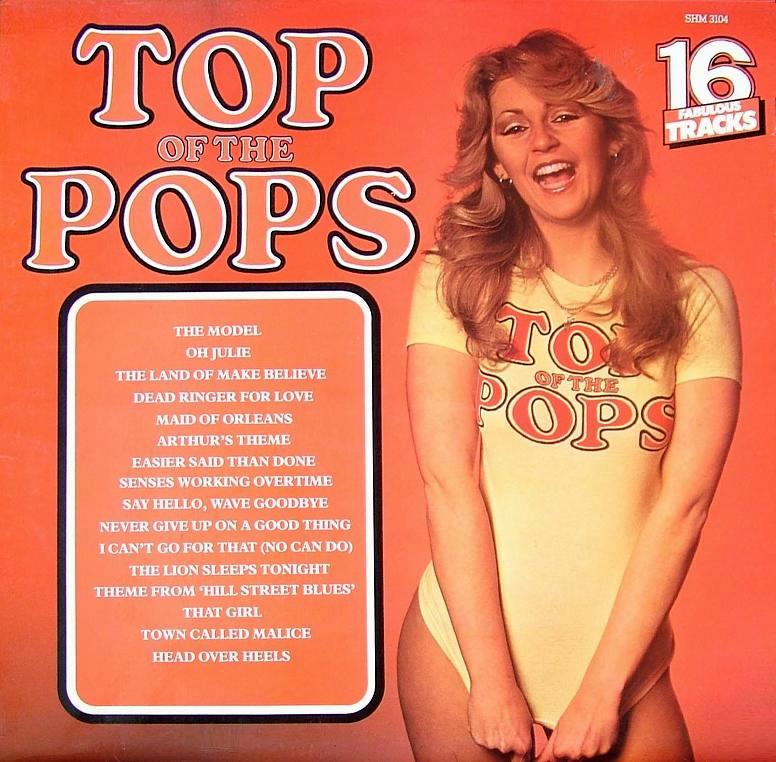
However, UK budget label Pickwick Records via their Hallmark imprint went one step further in 1968 by producing compilations of the latest hits but as rush-recorded soundalike cover versions under the title ‘Top Of The Pops’ which had nothing to do whatsoever with the BBC TV show; it was all perfectly legal thanks to an oversight by the corporation on trademark.

Purchasers unknowingly got treated to unique interpretations of ‘Autobahn’ and ‘The Model’ by anonymous session musicians who quite obviously had only learnt the song ten minutes before entering the studio. Although demand for such records had dimmed by 1981, acts such as SOFT CELL were still unable to escape with ‘Say Hello Wave Goodbye’ hilariously reduced to geezer pub rock! The singer was revealed to be one Martin Jay who a few years earlier had treated the world to his cloak and dagger take on ‘Are Friends Electric?’.

The albums from K-Tel attempted to cram as many songs as possible onto the 12 inch vinyl format. In order to accommodate this philosophy within its physical limitations, many of the tracks were faded out early or came in unusual and often clumsy edits. But even these versions were sought after by loyal fans, thus making the records they came from valued collector’s items.

The various artists compilation album changed forever in 1983 when Virgin and EMI joined forces to produce the ‘Now That’s What I Call Music’ series which at the last count had reached ‘Now 106’ and spawned numerous spin-offs and even cable TV channels. In 1984, Sony BMG and Warner Music joined in the action with the ‘Hits’ series, but such was the domination in the UK of these types of albums that in 1989, they were given their own chart and excluded from the main one!

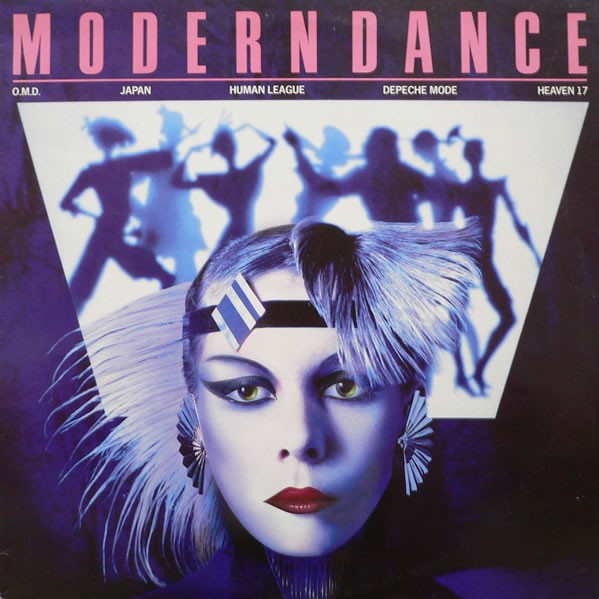
For electronic pop, ‘Machines’ released by Virgin Records in 1980 was one of the first attempts to gather music using synthesizers into one place, but the entry point for many new fans was 1981’s ‘Modern Dance’ on K-Tel. This well-thought out collection saw youngsters saving up their pocket money for their first record purchase or asking Santa to put it into their Christmas stocking, thanks to Radio1 DJ Peter Powell declaring that ‘Modern Dance’ was “The best of total danceability, the sounds of modern dance, on one LP!”.

As with greatest hits albums, what makes a great various artists compilation is a seamless listening experience where possible, or at least more killer than filler. However the continuous DJ mix was a particular irritant running through compilations for a period and rarely worked with classic material or recordings not specifically aimed at the clubland.

Staying within theme on a compilation though is VERY important and straying just slightly can spoil a whole concept, especially if it has been outlined in the title. Soul Jazz Records’ lushly packaged ‘Deutsche Elektronische Musik’ sets over two volumes contained a wide range of freeform experimental works from Germany, but occasionally forgot about the Trade Descriptions Act implications of its title. Meanwhile, ‘Reward’ by post-punk trip-poppers THE TEARDROP EXPLODES had a regular place on collections such as ‘Club For Heroes’, ‘New Romantic Classics’, ‘It’s Electric’ and ‘Our Friends Electric’ despite being brass dominated.

But the nadir came with ‘Synth Pop’, a 3CD collection by Sony Music in 2015 which totally missed the point by featuring AZTEC CAMERA and HAIRCUT 100!??! Now while the inclusion of IMAGINATION’s ‘Body Talk’ with its iconic Moog bassline could be justified, the set highlighted just how much the modern day definition of “synth pop” had become particularly blurred…

Although some listeners just want endless hits on various artists compilations, others want to be informed and introduced to some lesser-known or rare songs. However, this latter approach can meet with mixed results.

For example, Cherry Red’s ‘Close To The Noise Floor’ and the Trevor Jackson’s ‘Metal Dance’ series were historically fascinating, but not always easy collections to listen to in one sitting. With some of the music close to being unlistenable, it could be akin to studying a hefty text book… highly educational but not always entirely fun!
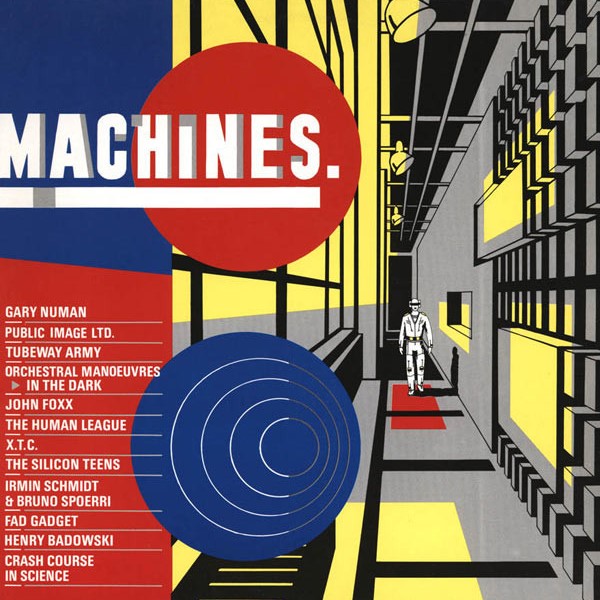
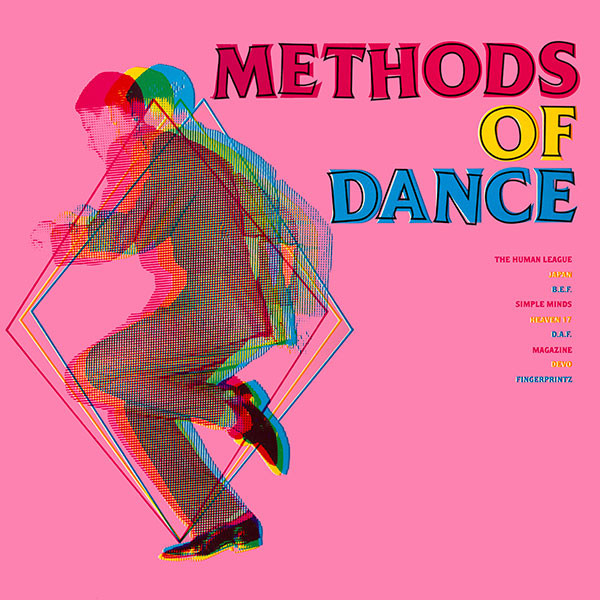
So ELECTRICITYCLUB.CO.UK takes a personal look at the electronic legacy of various artists via 20 notable compilation albums, each with valid reasons for their inclusion, presented in yearly and then alphabetical order within. Yes, several songs reoccur over a number of these releases, but perhaps that is more an indication of their timeless nature. These were tunes that were dismissed by the press and wider public back in the day, but are now considered classic and part of the cultural heritage.


MACHINES (1980)

Having seen the future and signed THE HUMAN LEAGUE as well as OMD through their Dindisc subsidiary, Virgin Records issued a long playing showcase of acts that used synthesizers as their primary instrumentation. Among the outsiders were TUBEWAY ARMY, FAD GADGET, SILICON TEENS and DALEK I LOVE YOU. XTC’s B-side ‘The Somnambulist’ appeared to be incongruous, but was from their synth experimentation period.

‘Machines’ was released by Virgin Records

https://www.discogs.com/Various-Machines/master/59149


METHODS OF DANCE (1981)

This compilation been the idea of David Sylvian, hence why it was named after the JAPAN song although their contribution would be ‘The Art Of Parties’. Virgin presented their embarrassment of riches including BEF, DEVO, DAF, SIMPLE MINDS and MAGAZINE while the primary selling point was a special dub edit of THE HUMAN LEAGUE’s ‘Do Or Die’ as a trailer to ‘Love & Dancing’. The cassette had more tracks including John Foxx and the actual undanceable ‘Methods Of Dance’ song!

‘Methods Of Dance’ was released by Virgin Records

https://www.discogs.com/Various-Methods-Of-Dance/master/43926


MODERN DANCE (1981)

1981 was when the sound of electronic pop was virtually everywhere, so ‘Modern Dance’ was perfect synthchronicity. Featuring the stellar cast of OMD, THE HUMAN LEAGUE, HEAVEN 17, JAPAN, DEPECHE MODE, SIMPLE MINDS, VISAGE, LANDSCAPE, FASHION and THE CURE as well as John Foxx and Gary Numan, an indicator of how supreme this compilation was came with the fact that its most obscure track ‘A World Without Love’ by THE NEWS was rather good!

‘Modern Dance’ was released by K-Tel Records

https://www.discogs.com/Various-Modern-Dance/release/504872


SOME BIZZARE ALBUM (1981)

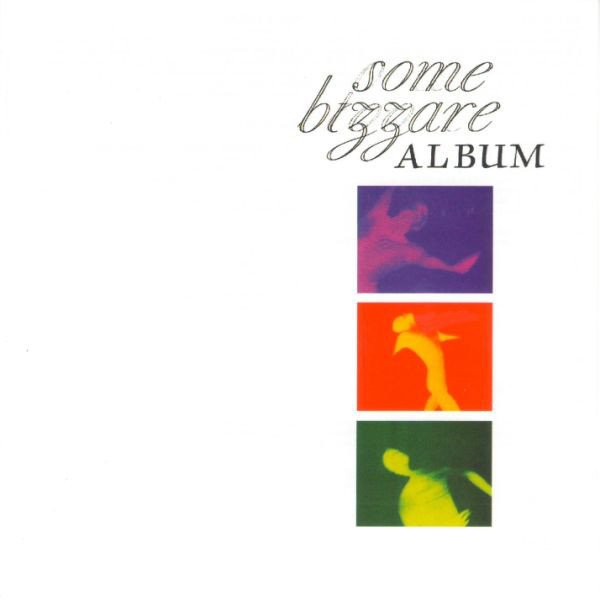
Stevo Pearce’s compendium of new Futurist acts has gone into folklore, having launched the careers of DEPECHE MODE, SOFT CELL, BLANCMANGE, THE THE and B-MOVIE. Several of acts who didn’t make it were also superb. THE FAST SET’s cover of Marc Bolan’s ‘King Of The Rumbling Spires’ was enjoyable electro-macabre while the rousing ‘Tidal Flow’ by ILLUSTRATION is one of the great lost songs of the era.

‘Some Bizzare Album’ was released by Some Bizzare

https://www.discogs.com/Various-Some-Bizzare-Album/master/2754


CLUB FOR HEROES (1992)

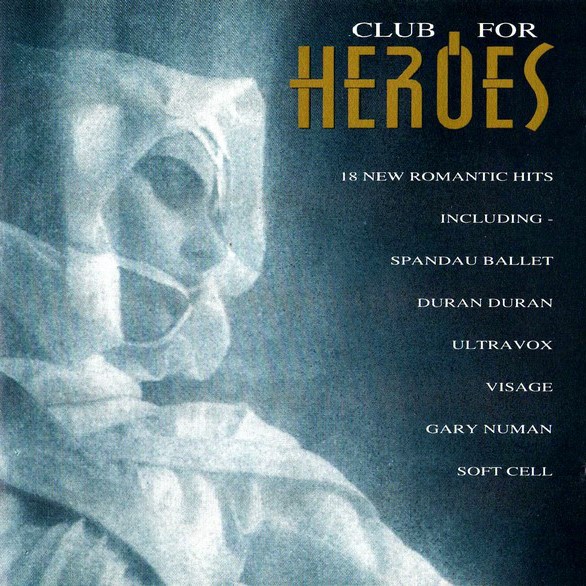
It took a few years to realise just how good the music from the New Romantic era was. This compilation was named after one of Steve Strange and Rusty Egan’s club nights. Featuring DURAN DURAN, SPANDAU BALLET, ULTRAVOX, VISAGE, SOFT CELL and JAPAN, others who also got into the party were YAZOO, ABC, TALK TALK and CLASSIX NOUVEAUX while most welcome were ICEHOUSE with their eponymous single.

‘Club For Heroes’ was released by Telstar Records

https://www.discogs.com/Various-Club-For-Heroes/master/120444


IT’S ELECTRIC (1994)

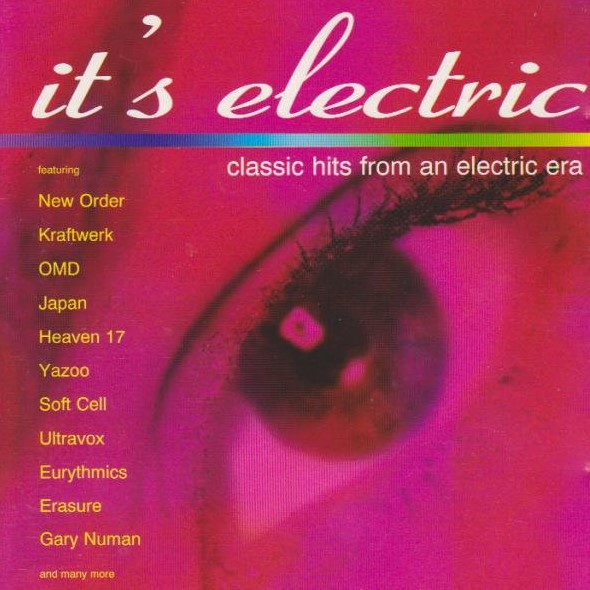
Gathering “Classic Hits From An Electric Era” including the full length ‘Blue Monday’ from NEW ORDER, ‘It’s Electric’ was largely, a more purist synth collection than ‘Club For Heroes’. Alongside the usual suspects were A FLOCK OF SEAGULLS, TEARS FOR FEARS, BRONSKI BEAT, KRAFTWERK, EURYTHMICS, BRONSKI BEAT and ERASURE. However, this collection featured the album version of ‘Tainted Love’ instead of the single, a mistake that would be repeated again and again.

‘It’s Electric’ was released by Dino Entertainment

https://www.discogs.com/Various-Its-Electric-Classic-Hits-From-An-Electric-Era/master/37974


DAWN OF ELECTRONICA (2000)

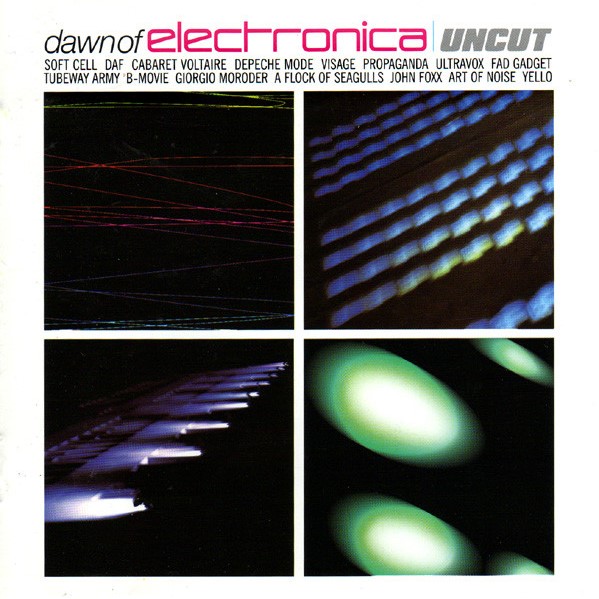
Celebrating “a music synonymous with futurism”, ‘Dawn Of Electronica’ included the album version of ‘From Here To Eternity’ by Giorgio Moroder and the Some Bizzare version of ‘Remembrance Day’ by B-MOVIE. With the likes of DAF, SUICIDE, ASSOCIATES, CABARET VOLTAIRE, PROPAGANDA, THE ART OF NOISE and YELLO alongside TUBEWAY ARMY, ULTRAVOX, JAPAN and SOFT CELL, this compilation was something a bit different to what had come before.

‘Dawn Of Electronica’ was released by Demon Music Group

https://www.discogs.com/Various-Dawn-Of-Electronica-Uncut/release/577680


ELECTRIC DREAMS (2002)

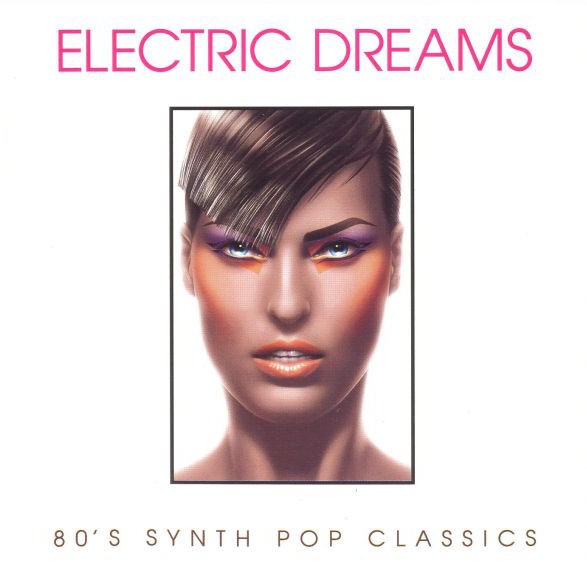
Like ‘Teenage Kicks’ for punk and new wave, there are far too many compilations named ‘Electric Dreams’. This 2CD affair from Virgin Records comprised of 38 “synth pop classics”. This was a compilation combining trailblazing analogue electro and the advent of digital sampling that actually worked. From ‘The Model’ and ‘Electricity’ to ‘Relax’ and ‘19’, with ‘We Are Glass’, ‘Yellow Pearl’, ‘Say Hello Wave Goodbye’ and ‘Absolute’ in between, this was one of the best releases of its type.

‘Electric Dreams’ was released by Virgin Records

https://www.discogs.com/Various-Electric-Dreams/release/322736


THIS IS HARDCORE (2002)

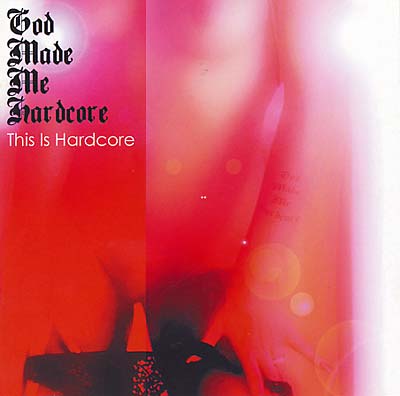
God Made Me Hardcore was a label set-up by Andy Chatterley and Richard Norris for electroclash tracks they had involvement in. ‘This Is Hardcore’ included some striking covers; THE DROYDS and MOON UNIT contributed SQUEEZE’s ‘Take Me I’m Yours’ and DEVO’s ‘Whip It’ respectively, while there was also a brilliant posh boy mash-up ‘Assault On The West End Girls’ by MUGATU. Siobhan Fahey of SHAKESPEAR’S SISTER and Irish combo RIVIERA also featured.

‘This Is Hardcore’ was released by God Made Me Hardcore

https://www.discogs.com/release/289143-Various-This-Is-Hardcore


THIS IS NOT THE 80s (2002)

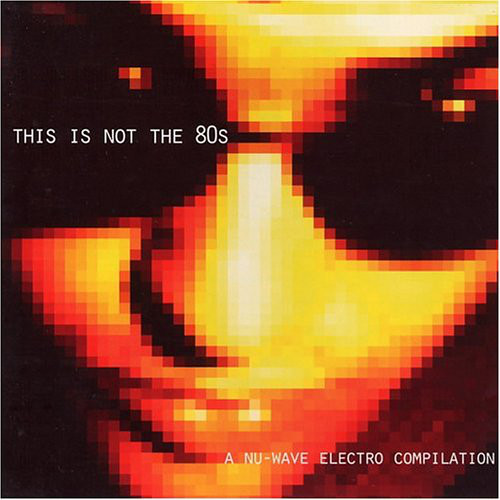
Subtitled “A Nu-Wave Electro Compilation”, this brought out the electro in Electroclash with gloriously klanky drum machines in abundance. The undoubted star was Miss Kittin with four tracks including the mighty scene anthem ‘You & Us’ with Michael Amato aka THE HACKER; meanwhile the man himself and Anthony Rother each had three contributions. FPU, DOPPLEREFFEKT and ADULT. were among those bringing the sound of electronic pop into the 21st Century.

‘This Is Not The 80s’ was released by Incredible / Sony Music

https://www.discogs.com/Various-This-Is-Not-The-80s-A-Nu-Wave-Electro-Compilation/master/375573


THIS IS TECH-POP (2002)

Compiled by Ministry Of Sound, ‘This Is Tech-Pop’ was a representative snapshot of the start of the 21st Century, although the “Tech-Pop or Electroclash or Synth-Core or Neu-Electro” legend highlighted dance music’s daft obsession with categorisation. The music from LADYTRON, FISCHERSPOONER, TIGA & ZYNTHERIUS, FC KAHUNA, WALDORF, SOVIET, FELIX DA HOUSECAT and GREEN VELVET was excellent but DJ mixing the tracks together clouded the listening experience.

‘This Is Tech-Pop’ was released by Ministry Of Sound

https://www.discogs.com/Various-This-Is-Tech-Pop/release/50649


ELECTRICITY 2 An Electronic Pop Sampler (2003)

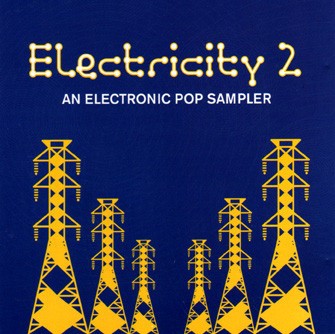
‘Electricity 2’ came at a time when the only platform for UK and Irish synth acts seemed to be Ninthwave Records in the USA. It featured HEAVEN 17’s first new song for six years in ‘Hands Up To Heaven’ as well as material by WHITE TOWN, SPRAY and EMPIRE STATE HUMAN. Highlights included ‘The Machines’ by MASQ which sounded like a bizarre Gaelic synthpop take on Gary Numan and the comical ‘Alan Cumming’ by TURD FERGUSON which sent up MISS KITTIN & THE HACKER.

‘Electricity 2’ was released by Ninthwave Records

https://www.discogs.com/Various-Electricity-2-An-Electronic-Pop-Sampler/release/730718


ROBOPOP Volume 1 (2003)

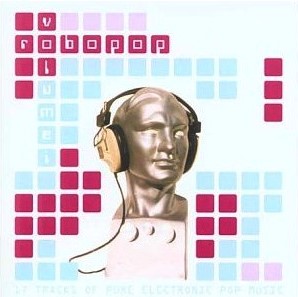
Compiled by Wayne Clements of Essex duo MACONDO, ‘Robopop’ was possibly the closest thing to the ‘Some Bizzare Album’ in the 21st Century. Heading the line-up were CLIENT and MY ROBOT FRIEND while Mute stalwarts KOMPUTER contributed ‘My Private Train’. The stand-outs though were machine funksters ALPINE STARS, irreverent retro-poppers BAXENDALE and VIC TWENTY featuring Piney Gir with a delicious synth cover of Lynsey de Paul’s ‘Sugar Me’.

‘Robopop Volume 1’ was released by Lucky Pierre Recordings
https://www.discogs.com/Various-Robopop-Volume-I/release/296881


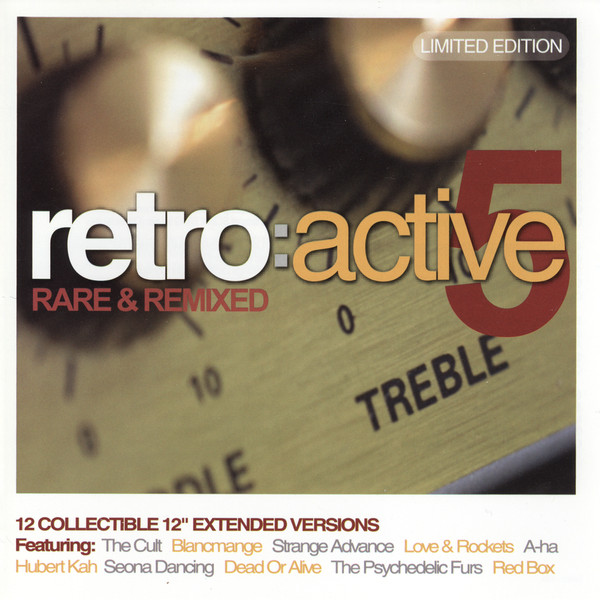
RETRO:ACTIVE 5 (2006)

Compiled by Alex Hush, now of U2 and ERASURE remixers DAYBREAKERS, ‘Retro:Active 5’ gathered 12 classic 12 inch extended versions into a listenable programme. A-HA and THE PSYCHEDLIC FURS led the way with BLANCMANGE and DEAD OR ALIVE in support, but the biggest selling points were the ultra-rare ‘Love Cascade’ from LEISURE PROCESS and ‘More To Lose’ by SEONA DANCING, the duo fronted by Ricky Gervais.

‘Retro:Active 5’ was released by Hi-Bias Records

https://www.discogs.com/Various-RetroActive5-Rare-Remixed/release/719639


ROBOPOP The Return (2006)

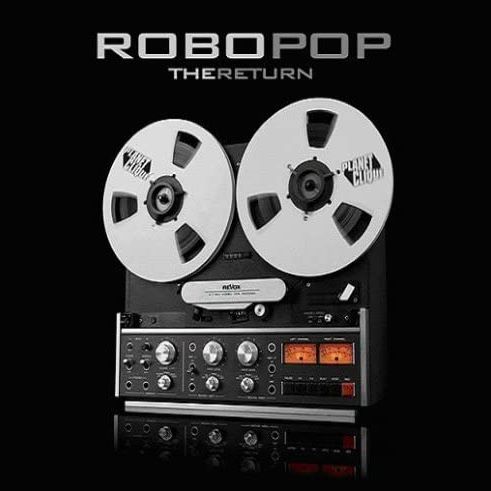
For ‘Robopop The Return’, Wayne Clements was joined by production duo MANHATTAN CLIQUE. Described as “Essential Electro Pop”, it was a much higher profile release than its predecessor with GOLDFRAPP, THE KNIFE, TIGA and DRAGONETTE all on board. Also present were THE MODERN relaunching as MATINEE CLUB while HUSKI, FORMATIC, LORRAINE and SOHO DOLLS were among the worthy lesser-known inclusions.

‘Robopop – The Return’ was released by Planet Clique / Lucky Pierre
https://www.discogs.com/Various-Manhattan-Clique-Robopop-The-Return/release/1410368


CHILLTRONICA A Definition No1 (2008)

A downtempo compilation by BLANK & JONES, the most exquisite tracks featured female vocalists with Sarah Nixey just pipping the highlight honours on her cover of JAPAN’s ‘Ghosts’ with INFANTJOY over Claudia Brücken on the hosting DJ duo’s ‘Don’t Stop’. Meanwhile, ‘Ghost Trains’ by Erlend Øye was a livelier number that worked alongside chilled out tracks by THE GRID, BLISS, MARCONI UNION, SPOOKY and DEPECHE MODE.

‘Chilltronica – A Definition No1’ was released by Soundcolours

https://www.discogs.com/Blank-Jones-Chilltronica-A-Definition-No1/release/1714901


ELECTRI_CITY 1_2 Elektronische Musik Aus Düsseldorf (2016)

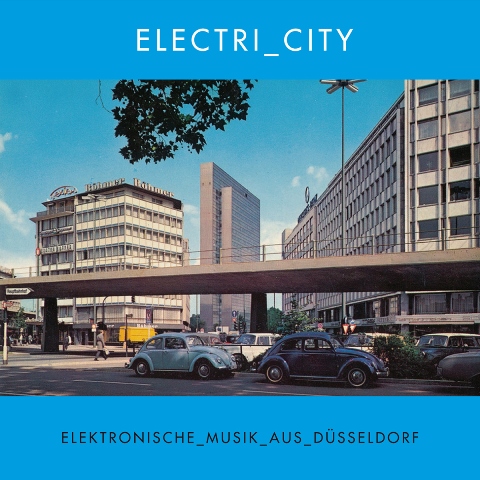
Tying in with the book about Düsseldorf’s music heritage, ‘ELECTRI_CITY 1_2’ gathered the more accessible elements of Deutsche Elektronische Musik, Kosmische and Neue Deutsche Welle. With RIECHMANN, DER PLAN, DIE KRUPPS, RHEINGOLD, DAF, LIAISONS DANGEREUSES, LA DÜSSELDORF, NEU! and pre-PROPAGANDA girl group TOPLINOS, this two volume collection was like a journey of discovery with the benefit of a local tour guide.

‘ELECTRI_CITY 1_2 – Elektronische Musik Aus Düsseldorf’ was released by Grönland Records

https://www.discogs.com/Various-ELECTRI_CITY-1_2/release/8919263


NEW ORDER Presents Be Music (2017)

Be Music was the moniker which NEW ORDER used to cover studio production work by all four members of the band. This boxed set gathered these varied recordings which involved them, with notable solo tracks from Marcel King, Paul Haig and Winston Tong alongside those of 52ND STREET, SECTION 25, THE BEAT CLUB, SHARK VEGAS and AD INFINITUM’s cover of ‘Telstar’ which many believed was NEW ORDER in disguise but actually only featured Peter Hook.

‘NEW ORDER Presents Be Music’ was released by Factory Benelux

https://www.factorybenelux.com/new_order_presents_be_music_fbn60.html


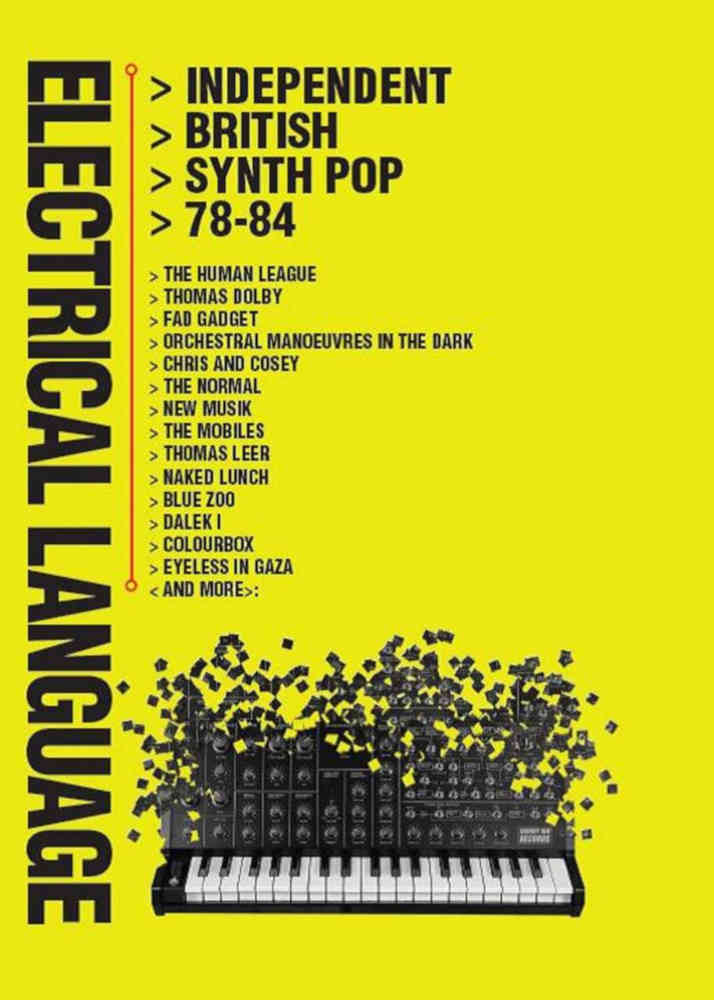
ELECTRICAL LANGUAGE Independent British Synth Pop 78-84 (2019)

The 4CD ‘Electrical Language – Independent British Synth Pop 78-84’ did as it said on the tin and with a far more accessible template, was all the better for it. With THE HUMAN LEAGUE, OMD, THE NORMAL and FAD GADGET included to draw in the more cautious consumer, purchasers were treated to a plethora of wonderful lesser known acts like FIAT LUX, BOX OF TOYS, LORI & THE CHAMELEONS, PASSION POLKA, TESTCARD F, EDDIE & SUNSHINE and JUPITER RED. Meanwhile, the best novelty item was a Schaffel driven cover of Alvin Stardust’s ‘My Coo Ca Choo’ by BEASTS IN CAGES; half of the band went on to form HARD CORPS!

‘Electrical Language – Independent British Synth Pop 78-84’ was released by Cherry Red Records

https://www.cherryred.co.uk/product/electrical-language-independent-british-synth-pop-78-84-various-artists-4cd-48pp-bookpack/


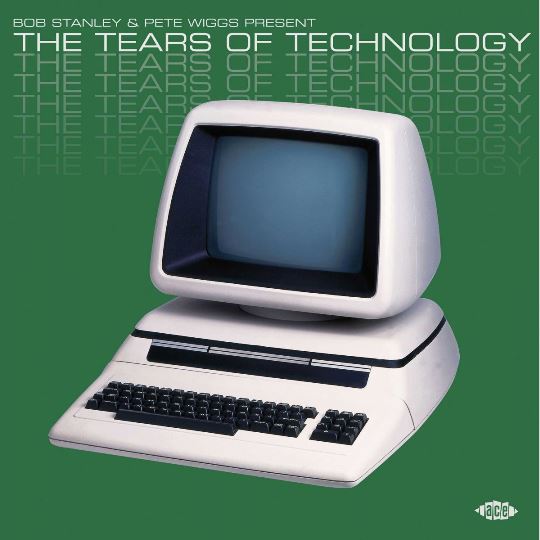
THE TEARS OF TECHNOLOGY (2020)

Compiled by Pete Wiggs and Bob Stanley of SAINT ETIENNE, ‘The Tears Of Technology’ gathered a heartfelt suite of music. OMD’s ‘Sealand’ sat alongside synthy diversions by THE TEARDROP EXPLODES and THE PALE FOUNTAINS, with the Merseyside connection extended to CARE and CHINA CRISIS. Scotland got also got a look in with Paul Haig and Thomas Leer. The rare ‘Direct Lines’ by Chris Payne’s ELECTRONIC CIRCUS found itself a place too.

‘The Tears Of Technology’ was released by Ace Records

https://acerecords.co.uk/bob-stanley-pete-wiggs-present-the-tears-of-technology-1


Text by Chi Ming Lai
2nd August 2020

25 SONGS OF THE BLITZ CLUB

Photo by Sheila Rock

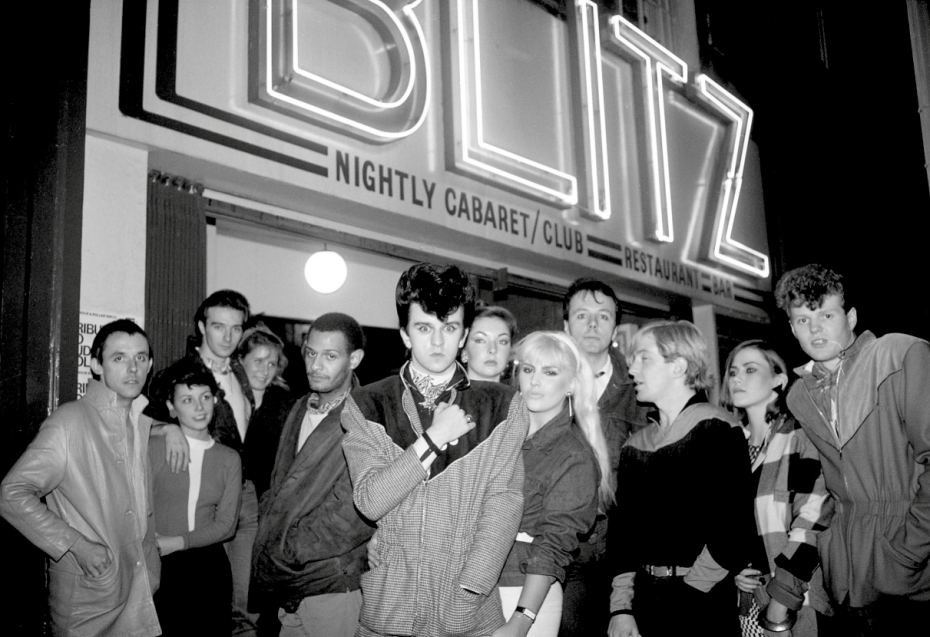
The soundtrack of The Blitz Club was provided by its resident DJ Rusty Egan and its story is more than well documented.

This vibrant post-punk scene had a flamboyant clientele who were dubbed ‘Blitz Kids’, ‘The Cult With No Name’ and ‘New Romantics’. It became the catalyst for several bands including VISAGE, SPANDAU BALLET and CULTURE CLUB, as well as assorted fashion designers, visual artists and writers.

Rusty Egan told ELECTRICITYCLUB.CO.UK: “I just played as much as I could fit in, it was not all disco. It was a bar and opened after work. I’d arrive 8.30–9.00pm and played all my faves till it was packed, then I got them dancing and at the end, I slowed down”. The dancing style at The Blitz Club often involved the swaying of arms at a distance from the face like slow motion maraca shaking so as not to spoil any carefully hairsprayed styles. Meanwhile, feet movements were often impossible as the small dancefloor was often overcrowded!

With Steve Strange as doorman and fashion gatekeeper, the concept for what was initially a “Bowie Night” came together at Billy’s nightclub in Soho in Autumn 1978 in an effort to find something new and colourful to escape the oncoming drabness in the Winter Of Discontent. After a disagreement with the owners of Billy’s, the pair moved their venture to The Blitz Club.

Although Rusty Egan had been a soul boy and an active participant in punk through a stint rehearsing with THE CLASH and then as a member of THE RICH KIDS with Midge Ure, the two friends became fascinated with electronic dance music though the Giorgio Moroder produced ‘I Feel Love’ by Donna Summer and KRAFTWERK’s ‘Trans Europe Express’ album which had been a surprise favourite in New York discos and whose title track referenced David Bowie.

“There was a couple of years of punk which Midge Ure and myself weren’t too impressed with in terms of the clubs and the environment in Thatcherite Britain, it was horrible in Manchester, Birmingham and Liverpool!” recalled Egan, “So we were just trying basically to grasp the good in life, trying to be positive in a very negative time.”

Although Egan curated an eclectic playlist of available synth works supplemented with soundtracks and relatable art rock tunes, tracks were comparatively scarce in this new innovative electronic form.

So with studio time available following the split of THE RICH KIDS, Ure and Egan hit upon the idea of making their own electronic dance music for The Blitz Club, fronted by Steve Strange. Ure came up with the name VISAGE for the project and presented the demo to his then employers at EMI Records, but it was rejected!

Undeterred, the pair recruited Billy Currie from a then-in hiatus ULTRAVOX plus MAGAZINE’s Dave Formula, John McGeoch and Barry Adamson to record the first VISAGE album at the-then newly constructed Genetic Studios of Martin Rushent.

When Billy Currie toured with Gary Numan in 1979, he and fellow keyboardist Chris Payne composed what was to become ‘Fade To Grey’; it was included on the eventual ‘Visage’ album released by Polydor Records in 1980 and the rest is history, reaching No1 in West Germany!

VISAGE was the beauty of the synthesizer played with symphonic classical overtones fused to the electronic dance beat of Neu Europa and visually styled like a cross between the Edwardian dandies and Weimar Cabaret. Midge Ure remembered “it was a major part of my life and Steve was a major part of that period”.

The meeting of Ure and Currie in VISAGE led to the diminutive Glaswegian joining a relaunched ULTRAVOX who released the iconic ‘Vienna’ album in 1980. Co-produced by Conny Plank, the German always thought in terms of sound and on the title song, he imagined an old man at a piano in a desolate theatre who had been playing the same tune for forty years.

And when Billy Currie came to record his ivory parts, that was exactly the feel which Plank had engineered. It was to become a ‘Bohemian Rhapsody’ for the New Romantic movement when it was released as a single, stalling at No2 despite being one of the best selling singles of 1981, gracing the UK charts at the same time as ‘Fade To Grey’.

Having started as a “Bowie Night”, the man himself became fascinated by this emergent cult with no name that he had inspired. In 1980, Jacqueline Bucknell, an assistant from his label RCA who was also a Blitz Kid, had taken Bowie down to The Blitz Club to cast extras to appear in a video for his new single ‘Ashes To Ashes’; among the chosen ones was Steve Strange.

Utilising Roland guitar synths and an ARP string machine with a final burst of ARP Odyssey, David Bowie saw ‘Ashes To Ashes’ as an epitaph for his artistic past as he lyrically revisited the Major Tom character from ‘Space Oddity’ over a decade on.

With this, The Blitz Club had now become a mainstream phenomenon as the BBC’s ‘Nationwide’ programme sent an investigative team in, signalling a changing of the guard in popular culture with parallel scenes going on at The Rum Runner in Birmingham, The Warehouse in Leeds and Crocs in Rayleigh from which DURAN DURAN, SOFT CELL and DEPECHE MODE were to respectively gain their fledgling followings.

The perceived elitist exclusivity of The Blitz Club had partly become legend as a result of Steve Strange refusing entry to Mick Jagger for his sporting of blue jeans. Playing on this and adopting its electronic aesthetic to attract attention, five lads from Islington formed SPANDAU BALLET and initially only performed at special events which were by invitation only. Essentially becoming The Blitz Club’s house band, the quintet later scored worldwide success with a less radical sanitised pop soul sound.

Singer Tony Hadley said to ELECTRICITYCLUB.CO.UK: “Our first album The ‘Journeys To Glory’ will always be one of my favourite Spandau albums, we were just young excited lads trying to make our mark on the world. There’s a rawness and energy on that album that is impossible to recreate. I love synthpop and still one of my favourite songs is SPANDAU BALLET’s first release ‘ To Cut A Long Story Short’.”

Not all enjoyed their visits to The Blitz Club; Billy MacKenzie notably highlighted the vapid nature of the scene in ASSOCIATES’ second hit single ‘Club Country’. But buoyed by its success, Steve Strange and Rusty Egan eventually vacated The Blitz Club and took over The Music Machine in 1982 and relaunched it as The Camden Palace, making it one of the UK’s first modern superclubs.

Using Dave Rimmer’s 2003 book ‘New Romantics: The Look’ as an initial reference point and calling on the memories of Rusty Egan himself to verify whether he had actually played these songs in his DJ sets, here are 25 Songs Of The Blitz Club selected by ELECTRICITYCLUB.CO.UK to celebrate the flamboyant legacy of that Blitz Spirit.


ROXY MUSIC Both Ends Burning (1975)

Following-up the hit single ‘Love In The Drug’, ‘Both Ends Burning’ was ROXY MUSIC’s second ‘Siren’ call. With Bryan Ferry’s stylised but anguished vocals, it was a track which laid down the sophisticated art pop trail that JAPAN and DURAN DURAN would later be pursuing. Featuring a prominent coating of ARP Solina string machine sweetened by hypnotic bass and squawky sax, ‘Both Ends Burning’ is probably the most under rated single in the Roxy canon.

Available on the ROXY MUSIC album ‘The Best Of’ via Virgin Records

https://www.roxymusic.co.uk/


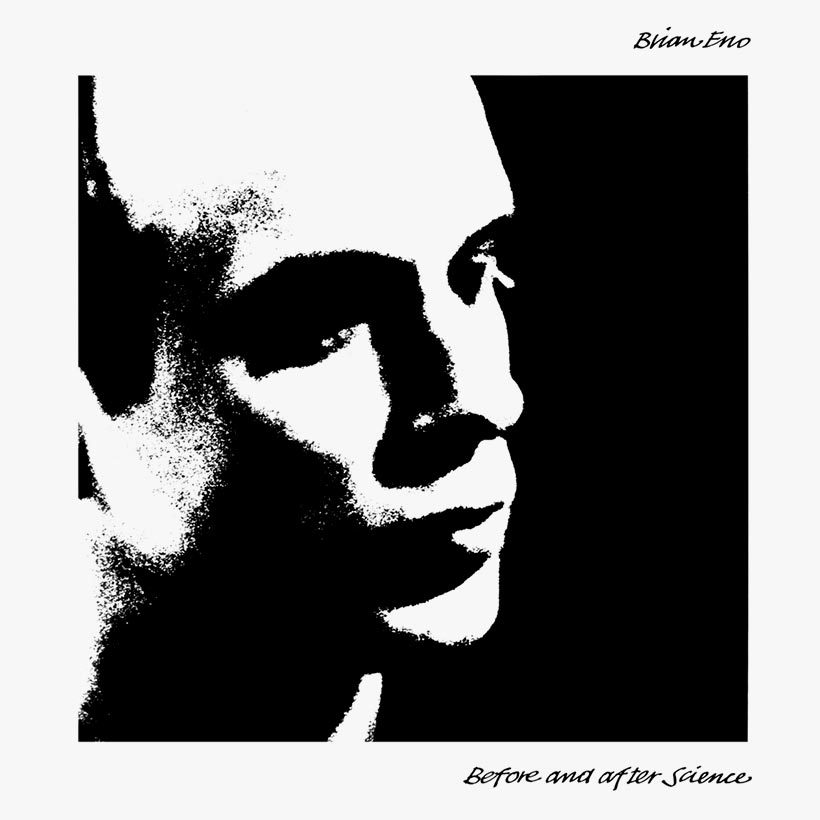
BRIAN ENO Kings Lead Hat (1977)

With a title that was an anagram of TALKING HEADS, the New York art school combo were the inspiration for the frantic metallic romp of ‘Kings Lead Hat’ which became a favourite at The Blitz Club. Brian Eno aped David Byrne in his vocal delivery, while he was later to produce three of the band’s albums as he moved further away from art rock as a solo artist. The song was later covered by ULTRAVOX in their live sets during the early phase their Midge Ure-fronted incarnation.

Available on the BRIAN ENO album ‘Before & After Science’ via Virgin Records

https://brian-eno.net/


KRAFTWERK Showroom Dummies (1977)

KRAFTWERK reacted as they generally did to negative criticism by writing a song. A response to a review that said their motionless persona at live performances was like ‘Showroom Dummies’, the sparse eerie atmosphere was punctuated by a tight and rigid electronic drum sound that was completely new and alien, something Rusty Egan was looking to emulate. Incidentally, the count-in of “eins zwei drei vier” was a deadpan Germanic parody of THE RAMONES!

Available on the KRAFTWERK album ‘Trans Europe Express’ via EMI Music

http://www.kraftwerk.com/


IGGY POP Nightclubbing (1977)

An Iggy Pop collaboration with David Bowie, the Vampiric glam of ‘Nightclubbing’ was the former James Osterberg’s commentary on what it was like hanging out with him every night. Utilising a simple piano melody and a cold Schaffel rhythm via the mechanical precision of a Roland drum machine, legend has it that Iggy insisted on keeping it, saying “it kicks ass, it’s better than a drummer”. Alongside ‘Lust For Life’, ‘Nightclubbing’ also featured in the soundtrack of ‘Trainspotting’.

Available on the IGGY POP album ‘The Idiot’ via Virgin Records

https://iggypop.com/


ULTRAVOX! Hiroshima Mon Amour (1977)

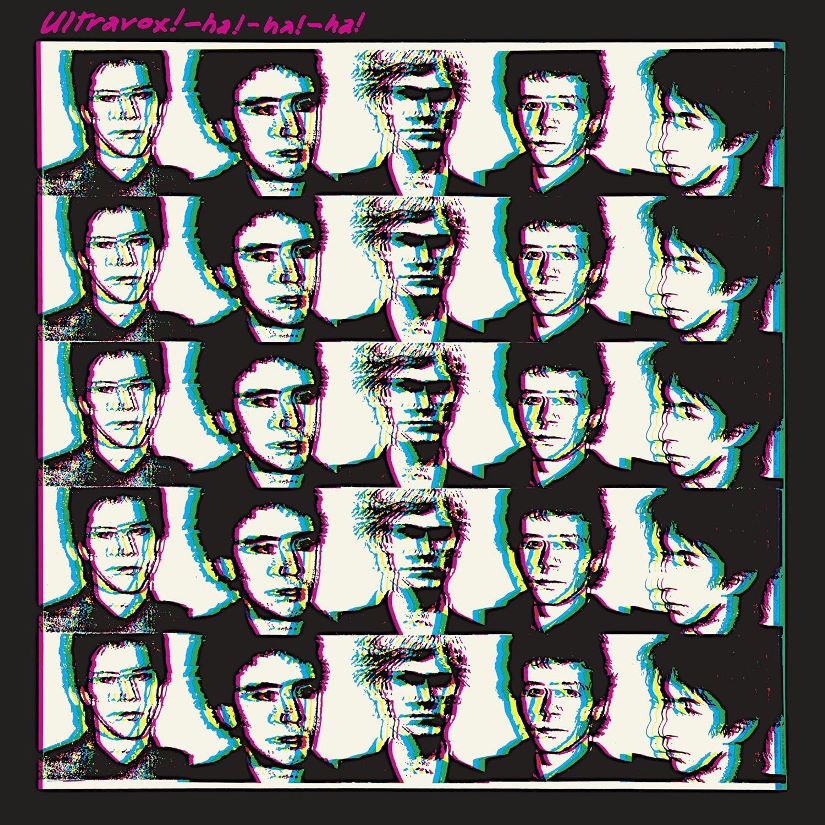
Utilising Warren Cann’s modified Roland TR77 rhythm machine, this was John Foxx moving ULTRAVOX! into the moody ambience pioneered by CLUSTER, away from the art rock of the self-titled first album and the punky interim single ‘Young Savage’. ‘Hiroshima Mon Amour’ had initially been premiered as a far spikier uptempo number for the B-side of ‘ROckWrok’. Incidentally, the ‘CC’ credited on saxophone is not Chris Cross, but a member of the art collective GLORIA MUNDI.

Available on the ULTRAVOX! album ‘Ha! Ha! Ha!’ via Island Records

http://www.metamatic.com/


LA DÜSSELDORF Viva (1978)

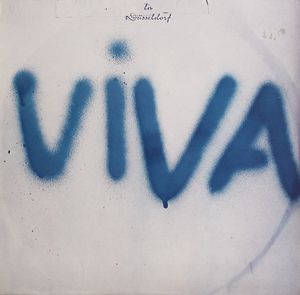
LA DÜSSELDORF’s second long player ‘Viva’ was their most successful album and the title track was a regular staple at The Blitz Club. An oddball slice of cosmic space rock sung in French and German by Klaus Dinger, proceedings were aided by the dual motorik thud of Hans Lampe and Thomas Dinger. Performed with the same group of musicians, ‘E-Musik’ by Dinger’s previous band NEU! had also been a favourite at The Blitz Club, influencing the intro of the ULTRAVOX B-side ‘Face To Face’.

Available on the LA DÜSSELDORF boxed set ‘Triple Album Collection’ via WEA Records

https://www.dingerland.de/


GIORGIO MORODER Chase (1978)

Commissioned by Alan Parker for the graphic prison drama ‘Midnight Express’, the noted director wanted some electronic accompaniment to the crucial chase scene of the film in the style of ‘I Feel Love’. The bassline from Giorgio Moroder’s own 1976 cover of ‘Knights In White Satin’ was reappropriated. The fruit of their labours was this Oscar winning Hi-NRG romp bursting with VANGELIS-like keyboard melodies, driven by an intense slamming and syncopated by popping pulses.

Available on the GIORGIO MORODER album ‘Midnight Express’ via Casablanca Records

https://www.giorgiomoroder.com/


THE NORMAL Warm Leatherette (1978)

Already a fan of German music and ‘Autobahn’ by KRAFTWERK in particular, Daniel Miller’s sense of experimentation and an adoption of punk’s DIY ethic led him to buying a Korg 700s synthesizer. Wanting to make a punk single with electronics, he wrote and recorded the stark JG Ballard influenced ‘Warm Leatherette’ as an independent single release on his own Mute Records. Meanwhile, The Blitz Kids came up with their own bizarre twisting and turning dance entering a human arch to accompany it…

Available on THE NORMAL single ‘Warm Leatherette’ via Mute Records

http://mute.com/category/the-normal


RIECHMANN Wunderbar (1978)

The late Wolfgang Riechmann is the forgotten man in the Düsseldorf axis having been in SPIRITS OF SOUND with Michael Rother and Wolfgang Flür; had his life not been tragically cut short, he certainly had the potential to become a revered and respected cult musical figure. The opening title track of his only album chimed like a Cold War spy drama before the beautifully almost oriental melodic piece imagined PINK FLOYD meeting CLUSTER over a delicate Schaffel beat.

Available on RIECHMANN album ‘Wunderbar’ via Bureau B

http://www.bureau-b.com/infotexte/Riechmann.Wunderbar.Bio.engl.pdf


VISAGE In The Year 2525 (1978 – released 1983)

ZAGER & EVANS’ pessimistic ditty was perfect fodder for the first VISAGE demo. Steered by Midge Ure using his freshly acquired Yamaha synths and punctuated by Rusty Egan’s incessant Roland drum machine and synthetic percussion, ‘In The Year 2525’ was perfectly resigned aural dystopia from its vocodered intro onwards. Steve Strange’s deadpan fronted the sombre tone perfectly but Ure’s vocal backing and counterpoints added that extra slice of musicality.

Available on the VISAGE album ‘The Face’ via Universal Records

http://www.visage.cc/


YELLOW MAGIC ORCHESTRA Firecracker (1978)

One of first Japanese bands to have a Top 20 hit single in the UK was YELLOW MAGIC ORCHESTRA in 1980. ‘Firecracker’ was a cover of a 1959 composition by Martin Denny but actually released as ‘Computer Game (Theme From The Invader)’. Recorded in 1978, the parent self-titled album was noted for its use of the then brand new Roland MC8 Micro-Composer to control the synthesizers. The result was a clean, exotic pop sound that was unusual, even in the synthpop heartland of Europe.

Available on the YELLOW MAGIC ORCHESTRA album ‘Yellow Magic Orchestra’ via Sony Music

http://www.ymo.org/


GINA X PERFORMANCE No GDM (1979)

Produced by Zeus B Held, ‘No GDM’ was written by androgynous art history student Gina Kikoine in honour of the “great dark man” Quentin Crisp and featured an array of ARP and Moog synths to signal the birth of a new European Underground. Unsurprisingly, the song gained heavy rotation at The Blitz Club. The nonchalant, detached vocal influence of GINA X PERFORMANCE went on to be heard in the music of LADYTRON, CLIENT and MISS KITTIN.

Available on the album ‘Nice Mover’ via LTM Recordings

http://www.ltmrecordings.com/gina_x.html


JAPAN Life In Tokyo (1979)

Working with Giorgio Moroder, David Sylvian submitted ‘European Son’ for the session in Los Angeles but it was rejected by the producer. Instead, the Italian offered several of his demos, of which, Sylvian picked the one he considered to be the worst so that he could stamp more of his own vision for the developing synthesized sound of JAPAN. Considered to be too avant-garde at its inception but ahead of its time, unbeknown to Moroder and Sylvian, they had just conceived DURAN DURAN!

Available on the JAPAN album ‘Assemblage’ via Sony BMG Records

http://www.nightporter.co.uk/


THOMAS LEER & ROBERT RENTAL Day Breaks Night Heals (1979)

Originally released on THROBBING GRISTLE’s Industrial Records, ‘The Bridge’ album saw Scottish duo Thomas Leer and Robert Rental trading vocal and instrumental duties. With an air of FAD GADGET, ‘Day Breaks Night Heals’ showcased some of Leer’s pop sensibility that was later apparent in his Arista solo period and in ACT with Claudia Brücken, while Rental maintained a dark experimental presence in this slice of artful electronic blues. Robert Rental sadly passed away in 2000.

Available on the album ‘The Bridge’ via The Grey Area

http://mute.com/category/thomas-leer-and-robert-rental


SIMPLE MINDS Changeling (1979)

Manipulating their influences like SPARKS and MAGAZINE with a very European austere, Glasgow’s SIMPLE MINDS were “underground, pulsating through” thanks to the rhythmic interplay of Derek Forbes’ bass with Mick McNeil’s synths. Charlie Burchill was now thinking beyond the sound of a conventional electric guitar while the precision of under rated drummer Brian McGee locked the glue. That just left Jim Kerr to throw his bizarre shapes and pontificate over this dark avant disco.

Available on the SIMPLE MINDS album ‘Real To Real Cacophony’ via Virgin Records

http://www.simpleminds.org.uk/


SPARKS Beat The Clock (1979)

Having graced the UK Top 20 again with the tremendous ‘No1 Song In Heaven’, SPARKS continued their Giorgio Moroder produced rejuvenation and had an even bigger hit with ‘Beat The Clock’. Percussively augmented by Keith Forsey who was later to produce Billy Idol, Russell Mael’s flamboyant falsetto more than suited the electronic disco sound while the programmed backing meant that Ron Mael could stoically maintain his image of doing nothing.

Available on the SPARKS album ‘No1 In Heaven’ via Lil Beethoven Records

https://allsparks.com/


TELEX Moscow Diskow (1979)

Belgian trio TELEX comprised of Marc Moulin, Dan Lacksman and Michel Moers, with the intention of “making something really European, different from rock, without guitar”. Opening their debut album ‘Looking for Saint Tropez’ which also contained their funereal robotic cover of ‘Rock Around The Clock’, ‘Moscow Diskow’ took the Trans-Siberian Express to Moscow, adding a funkier groove compared with KRAFTWERK’s ‘Trans Europe Express’ excursion for what was to become a cult international club favourite.

Available on the TELEX album ‘‘Looking For San-Tropez’ via EMI Music

https://www.facebook.com/TELEX-312492439327342/


THROBBING GRISTLE Hot On The Heels Of Love (1979)

From their third album ’20 Jazz Funk Greats’, the uncompromising THROBBING GRISTLE led by the late Genesis P-Orridge were neither jazzy or funky! Gloriously sequenced by Chris Carter on a Roland System-100M modular, ‘Hot On The Heels Of Love’ was mutant dystopian disco lento with a hypnotic rhythm punctuated by a synthetic whip-crack for that S&M twist as Cosey Fanni Tutti’s whispered vocals competed with pentatonic melodies and electronic drill noises!

Available on the THROBBING GRISTLE album ’20 Jazz Funk Greats’ via Industrial / Mute Records

https://twitter.com/ThrobbingGrstle


ZAINE GRIFF Ashes & Diamonds (1980)

Zaine Griff had a Bowie-esque poise was tailor made for The Blitz Club and Tony Visconti saw enough in him to produce his debut solo album ‘Ashes & Diamonds’. Featuring Hans Zimmer on synths, the title song was sitting just outside the Top 40 and earned a performance on ‘Top Of The Pops’ but the episode was pulled thanks to a Musicians Union strike. Demonstrating the song’s longevity despite it not being a major hit, it was recently covered live by American alternative rockers MGMT.

Available on the ZAINE GRIFF album ‘Ashes & Diamonds / Figvres’ via MIG Music

https://www.zainegriff.com/


THE HUMAN LEAGUE Being Boiled (1980)

‘Being Boiled’ was the first song Philip Oakey wrote with Martyn Ware and Ian Craig Marsh for THE HUMAN LEAGUE, his bizarre lyrics being the result of a confusion between Buddhism and Hinduism while highlighting the plight of silk worms. Intended to reimagine FUNKADELIC’s funky overtones as synthetic horns, this brassier re-recorded version with fatter electronic beats was included on the ‘Holiday 80’ EP and the ‘Travelogue’ album, becoming a dance staple of The Blitz Club.

Available as a bonus track on THE HUMAN LEAGUE album ‘Travelogue’ via Virgin Records

http://www.thehumanleague.co.uk/


SPACE Tender Force (1980)

Didier Marouani wrote the worldwide hit ‘Magic Fly’ but having left the band, Roland Romanelli and Jannick Top continued as SPACE. The rousing thrust of ‘Tender Force’ was, like ‘Magic Fly’, produced by Jean-Philippe Iliesco who later invited Rusty Egan to contribute a timbale heavy remix of this synth disco tune; he was to begin an ill-fated business relationship with Iliesco who was named by Midge Ure in his ‘If I Was’ autobiography as responsible for putting a wedge between him and Egan in VISAGE…

Available on the SPACE album ‘The Best Of’ via Nang Records

http://www.space.tm.fr


YELLO Bostich (1980)

Although now known as a duo, eccentric Swiss pioneers YELLO actually began as a trio of Dieter Meier, Boris Blank and Carlos Peron. Later remixed and extended, the military drum tattoo at the start of ‘Bostich’ was deceiving as an electronic throb quickly set in. This was perfect avant garde disco for The Blitz Club with a quirky range of vocal pitches from Meier while the track also included a style of speedy European rap later that was repeated on their only major UK hit ‘The Race’ in 1988.

Available on the YELLO album ‘Essential’ via Mercury Records

https://www.yello.com/


LANDSCAPE Einstein A Go-Go (1981)

Electronic pop music was often seen as pretentious, LANDSCAPE had their tongues firmly in their cheeks as evidenced by ‘Einstein A Go-Go’. “The song is a cautionary tale about the apocalyptic possibilities of nuclear weapons falling into the hands of theocratic dictators and religious extremists.” said the band’s Richard Burgess, “We talked about the track conceptually before we wrote it and our objective was to make a very simple, cartoon-like track with a strong hook that would belie the meaning of the lyrics!”

Available on LANDSCAPE album ‘From The Tea-Rooms Of Mars…’ via Sony Music

https://twitter.com/Landscape_band


SHOCK R.E.R.B. (1981)

Written as a B-side instrumental for The Blitz Club’s resident dance troupe SHOCK to work a routine to, ‘R.E.R.B.’ was constructed by Rusty Egan and Richard Burgess, hence the title. Burgess had been doing the linking interludes with a Fairlight on the first VISAGE album and brought in a Roland System 700 modular driven by the Micro-composer while Egan triggered the brain of the synthesized drum system that Burgess had been working on with Dave Simmons for its punchy drum fills.

Available on the SHOCK single ‘R.E.R.B.’ via Blitz Club Records

https://twitter.com/DJRustyEgan


SOFT CELL Memorabilia (1981)

Produced by Daniel Miller, one of the first SOFT CELL recordings on signing to Phonogram was the seminal ‘Memorabilia’. While not a hit, it was critically acclaimed and become a favourite at The Blitz Club. Dave Ball’s deep Roland Synthe-Bass and klanky Korg Rhythm KR55 provided a distinctive danceable backbone to accompany Marc Almond’s souvenir collecting metaphors about sexual promiscuity. After this, SOFT CELL were signed by Rusty Egan to Metropolis Music for publishing.

Available on SOFT CELL album ‘Keychains & Snowstorms: The Singles’ via Universal Music

https://www.softcell.co.uk/


ELECTRICITYCLUB.CO.UK presents the ‘The Blitz Spirit’ playlist capturing the era and beyond at: https://open.spotify.com/playlist/0y4GXXotg4BFPZ6qMklwdx


Text by Chi Ming Lai with thanks to Rusty Egan
13th April 2020

« Older posts